
PODCAST · society
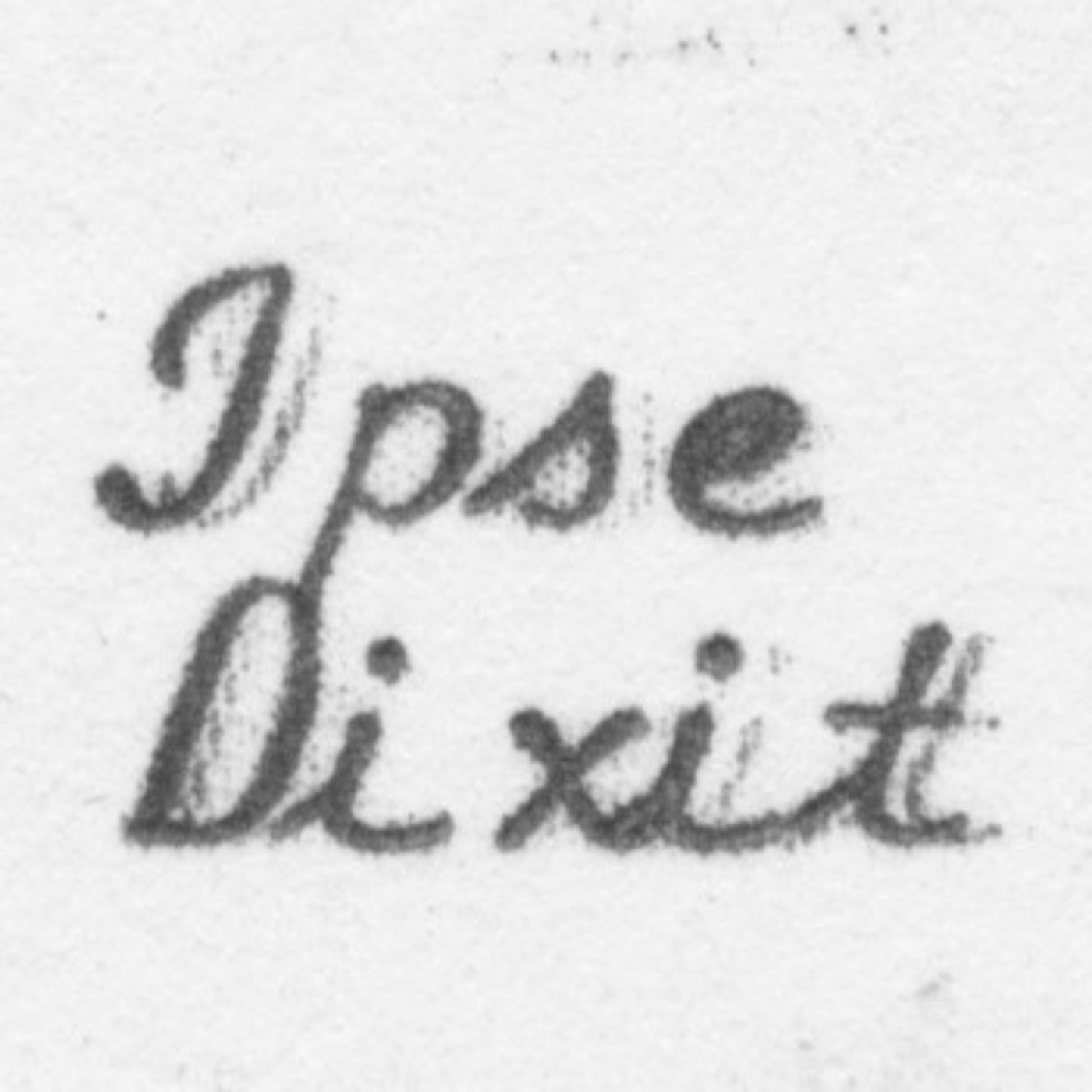
Ipse Dixit
by CC0/Public Domain
Ipse Dixit is a podcast on legal scholarship. Each episode of Ipse Dixit features a different guest discussing their scholarship. The podcast also features several special series."From the Archives" consists historical recordings potentially of interest to legal scholars and lawyers."The Homicide Squad" consists of investigations of the true stories behind different murder ballads, as well as examples of how different musicians have interpreted the song over time."The Day Antitrust Died?" is co-hosted with Ramsi Woodcock, Assistant Professor of Law at the University of Kentucky College of Law, and consists of oral histories of the 1974 Airlie House Conference on antitrust law, a pivotal moment in the history of antitrust theory and policy.The hosts of Ipse Dixit are:Brian L. Frye, Spears-Gilbert Associate Professor of Law at the University of Kentucky Colleg
-
838
Richard Heppner on Gamifying Civil Procedure
In this episode, Richard L. Heppner, Jr., Associate Dean for Faculty Scholarship and Associate Professor of Law at the Thomas R. Kline School of Law of Duquesne University, discusses TAG!: The Jurisdiction Game, his new board game based on the rules of civil procedure. Heppner begins by explaining why he decided to create the game and how he developed the rules. He describes how he used the game in his civil procedure classes and how it can help students learn how to understand and apply the rules of civil procedure. The game is now available for purchase! Heppner is on Bluesky.This episode was hosted by Brian L. Frye, Professor of Law at Tulane University School of Law. Frye is on Twitter at @brianlfrye and on Bluesky at @brianlfrye.bsky.social. Hosted on Acast. See acast.com/privacy for more information.
-
837
Lisa Ramsey on Trademarks & Free Speech
In this episode, Lisa P. Ramsey, Professor of Law at the University of San Diego School of Law, discusses her new book "Trademarks and Free Speech: Conflicts and Resolutions," which is published by Cambridge University Press. Ramsey begins by explaining what trademarks are, what they protect, what kind of rights they create, and why they exist. She identifies how trademark law comes into conflict with the First Amendment and free speech, and how the abuse of trademarks can exacerbate the conflict. And she describes some ways in which trademark law could be changed in order to advance its legitimate purposes while minimizing conflicts with the First Amendment. Ramsey is on Twitter and Bluesky.This episode was hosted by Brian L. Frye, Professor of Law at Tulane University School of Law. Frye is on Twitter at @brianlfrye and on Bluesky at @brianlfrye.bsky.social. Hosted on Acast. See acast.com/privacy for more information.
-
836
Anna Law on Migration & Citizenship
In this episode, Anna O. Law, professor of political science and the Herbert Kurz Chair of Constitutional Rights at CUNY Brooklyn College, discusses her new book, "Migration and the Origins of American Citizenship: African Americans, Native Americans, and Immigrants," which is published by Oxford University Press. Law's book tells the story on migration to colonial America, the early American republic and the United States during Reconstruction. She explains that the conventional story of open migration controlled only by the federal government is misleading, because state and local government imposed considerable burdens on migration and migrants. She describes those laws, how they affected migration policy, and how they are still with us today. Law is on Twitter and Bluesky.This episode was hosted by Brian L. Frye, Professor of Law at Tulane University School of Law. Frye is on Twitter at @brianlfrye and on Bluesky at @brianlfrye.bsky.social. Hosted on Acast. See acast.com/privacy for more information.
-
835
Jerry Edwards on the Early History of the First Amendment
In this episode, Jerry Edwards, Associate Professor of Law at West Virginia University College of Law, discusses his draft article "The Reconstructed First Amendment." Edwards begins by reflecting on why the original understanding of the First Amendment is important in this historical moment. He then explains how the understanding of the First Amendment at the time of its ratification was very different from the modern understanding, and how that original understanding persisted long past the ratification of the 14th Amendment and Reconstruction. He also discusses how his historical observations might affect current debates over the interpretation of the First Amendment. Edwards is on Bluesky.This episode was hosted by Brian L. Frye, Professor of Law at Tulane University School of Law. Frye is on Twitter at @brianlfrye and on Bluesky at @brianlfrye.bsky.social. Hosted on Acast. See acast.com/privacy for more information.
-
834
Jon Lee on Sanctioning Lawyers Who Commit Crimes
In this episode, Jon J. Lee, Associate Dean for Faculty Development and Research and Frank Elkouri and Edna Asper Elkouri Professor in Law at the University of Oklahoma College of Law, discusses his article "Sanctioning Lawyer-Criminals," which is published in the Washington and Lee Law Review. Lee begins by explaining how the legal profession regulates itself and disciplines lawyers. He describes the history of how the legal profession has disciplined lawyers who commit crimes, including which crimes it has considered worthy of discipline and why. He presents an empirical study of how different jurisdictions currently discipline lawyers for criminal activity. And he reflects on how the legal profession ought to address criminality. Lee is on Twitter and Bluesky.This episode was hosted by Brian L. Frye, Spears-Gilbert Professor of Law at the University of Kentucky College of Law. Frye is on Twitter at @brianlfrye and on Bluesky at @brianlfrye.bsky.social. Hosted on Acast. See acast.com/privacy for more information.
-
833
Davies & Ellis on Brakhage & Sartre
In this episode, Byron Davies, a Marie Skłodowska-Curie fellowship with the Aresmur research group in aesthetics and art theory at the University of Murcia in Spain, and Addison Ellis, Assistant Professor of Philosophy at the American University in Cairo, discuss their article "Stan Brakhage, Jean-Paul Sartre and Existentialism: Cinema De Trop," which will be published in the journal Film-Philosophy. Davies and Ellis begin by explaining who Stan Brakhage was and describing his films and writings. They discuss how Brakhage was commissioned to make a film version of Jean-Paul Sartre's Nausea, his approach to Sartre's philosophical positions, and why he might have found a particular passage from Nausea especially compelling. They then discuss how studying Brakhage and Sartre in relation to each other can illuminate the work of both thinkers. This episode was hosted by Brian L. Frye, Spears-Gilbert Professor of Law at the University of Kentucky College of Law. Frye is on Twitter at @brianlfrye and on Bluesky at @brianlfrye.bsky.social. Hosted on Acast. See acast.com/privacy for more information.
-
832
Philip Hackney on Arts Tax Policy
In this episode, Philip Hackney, Professor of Law at the University of Pittsburgh School of Law, discusses his draft article, "Arts Tax Policy: Democracy or Plutocracy?," which will be published in the Loyola L.A. Law Review. Hackney begins by explaining how the tax code conceptualizes art. Then he explains how the tax code conceptualizes charitable organizations and treats them differently from non-charitable organizations. He reflects on the justifications for tax exemption and deduction, especially in relation to the arts sector, focusing on the equitably of subsidizing organizations that primarily benefit and are controlled by the wealthy. And he explains how tax policy could be more equitable and progressive in relation to the arts sector. Hackney is on Twitter and Bluesky.This episode was hosted by Brian L. Frye, Spears-Gilbert Professor of Law at the University of Kentucky College of Law. Frye is on Twitter at @brianlfrye and on Bluesky at @brianlfrye.bsky.social. Hosted on Acast. See acast.com/privacy for more information.
-
831
Daniel Schwarcz on AI and Human Legal Reasoning
In this episode, Daniel Schwarcz, Fredrikson & Byron Professor of Law and a Distinguished University Teaching Professor at the University of Minnesota Law School, discusses his draft article "Artificial Intelligence and Human Legal Reasoning," which he co-authored with Nicholas Bednar, David R. Cleveland, and Allan Erbsen. Schwarcz explains that he and his co-authors wanted to test the conventional wisdom that using artificial intelligence models to answer legal questions will inhibit the ability of law students and lawyers to learn how to answer those questions on their own. He describes their empirical study designed to test that hypothesis and its unexpected results. And he reflects on what we can learn from the study. Schwarcz is on Twitter and Bluesky.This episode was hosted by Brian L. Frye, Spears-Gilbert Professor of Law at the University of Kentucky College of Law. Frye is on Twitter at @brianlfrye and on Bluesky at @brianlfrye.bsky.social. Hosted on Acast. See acast.com/privacy for more information.
-
830
Bearer-Friend & Polcz on Taxing AI
In this episode, Jeremy Bearer-Friend, Associate Professor of Law at George Washington University Law School, and Sarah Polcz, Acting Professor of Law at UC Davis School of Law, discuss their article "Sharing the Algorithm: The Tax Solution to Generative AI," which is published in the Columbia Journal of Tax Law. Bearer-Friend and Polcz begin by outlining some of the social problems associated with generative AI and explaining why existing proposals to address those problems are inadequate. They then propose an alternative model, consisting of an equity tax on AI companies, and explain why it would be both effective and preferable to alternative approaches. Bearer-Friend is on Twitter and Bluesky. Polcz is also on Twitter and Bluesky.This episode was hosted by Brian L. Frye, Spears-Gilbert Professor of Law at the University of Kentucky College of Law. Frye is on Twitter at @brianlfrye and on Bluesky at @brianlfrye.bsky.social. Hosted on Acast. See acast.com/privacy for more information.
-
829
Aman Gebru on Truthmarks
In this episode, Aman Gebru, Assistant Professor of Law at the University of Houston Law Center, discusses his draft article "Truthmarks," which will be published in the American University Law Review. Gebru begins by explaining the purpose of trademark law and how it protects trademarks. He describes three uses of trademarks that are inconsistent with the policy goals of trademark law of conveying truth information to consumers: masking marks, zombie marks, and nonsense marks. And he reflects on how trademark law could mitigate the harms associated with those uses. Gebru is on Twitter.This episode was hosted by Brian L. Frye, Spears-Gilbert Professor of Law at the University of Kentucky College of Law. Frye is on Twitter at @brianlfrye and on Bluesky at @brianlfrye.bsky.social. Hosted on Acast. See acast.com/privacy for more information.
-
828
Urice & Frankel on Art Law
In this episode, Stephen K. Urice and Simon J. Frankel discuss their book Law, Ethics, and the Visual Arts, the sixth edition of which was just published by Cambridge University Press. Urice and Frankel describe the creation of the book and the academic study of art law by John Henry Merryman, and discuss their own respective background in art law. They explain how the study and practice of art law fits into the study and practice of law more generally. And the reflect on how they expanded and amended the book for this new edition. Urice and Frankel are on LinkedIn.This episode was hosted by Brian L. Frye, Spears-Gilbert Professor of Law at the University of Kentucky College of Law. Frye is on Twitter at @brianlfrye and on Bluesky at @brianlfrye.bsky.social. Hosted on Acast. See acast.com/privacy for more information.
-
827
Sam Williams on the Jokerfication of Law
In this episode, Sam Williams, Associate Professor of Law and Reference and Instruction Librarian at the University of Idaho College of Law discusses several of his articles, including “The Law is Weirder than AI,” which was published in 2024 with the Hofstra Law Review, and “The Jokerfication of Law,” which was published with Hedgehogs and Foxes. Williams discusses how these pieces shed light on the nature of the weird and the eerie in law and legal scholarship, and how professors should think of their roles in an increasingly chaotic world. He also shares his thoughts on weird and silly legal scholarship, the place for such scholarship in the broader legal academic literature, and inspirations for his work—including Ipse Dixit’s very own Brian Frye. Williams is on Bluesky at @sawilliams.bsky.social. This episode was guest hosted by Michael Smith, Associate Professor of Law at the University of Oklahoma College of Law. Michael Smith is on Bluesky at @msmith750.bsky.social Hosted on Acast. See acast.com/privacy for more information.
-
826
Christopher Brooks on Appellate Judicial Section
In this episode, Christopher T. Brooks, Professor of History at East Stroudsburg University, discusses his work on appellate judicial selection. He explains that state appellate judges are usually either elected or appointed with the advice of nominating committees. He argues that both methods are flawed, and that it would be better for judges to be appointed by elected nominating committees. Brooks is on LinkedIn.This episode was hosted by Brian L. Frye, Spears-Gilbert Professor of Law at the University of Kentucky College of Law. Frye is on Twitter at @brianlfrye and on Bluesky at @brianlfrye.bsky.social. Hosted on Acast. See acast.com/privacy for more information.
-
825
Valentin Jeutner on Conceptual Legal Writing
In this episode, Valentin Jeutner, Associate Professor of Law at Lund University and Retained Lecturer in Law at Pembroke College, Oxford University, discusses his book "[l]ex machina: unlikely encounters of international law and technology," which is published by Lund University. Jeutner begins by introducing listeners to conceptual legal writing, describing its relationship to conceptual art and conceptual writing. He provides a preliminary taxonomy of conceptual legal writing and explains his own practice of conceptual legal writing. In particular, he reflects on how conceptual legal writing can help readers see legal texts in a new and different light. He also reads a short text composed using a conceptual legal writing method. You can read Jeutner's "Fragmentary Catalogue of Conceptual Legal Writing" here, and his book "The Aesthetic Authority of Law: Experiments with Legal Form" here. Jeutner is on Bluesky.This episode was hosted by Brian L. Frye, Spears-Gilbert Professor of Law at the University of Kentucky College of Law. Frye is on Twitter at @brianlfrye and on Bluesky at @brianlfrye.bsky.social. Hosted on Acast. See acast.com/privacy for more information.
-
824
Sharon Yadin on the Nature of Regulation
In this episode, Sharon Yadin, Senior Lecturer of Law and Regulation at the Yezreel Valley College School of Public Administration and Public Policy, discusses her draft article "The Hidden Nature of Regulation," which will be published in the Harvard Negotiation Law Review. Yadin begins by describing the conventional bifurcation of regulation into "hard" and "soft" approaches. She observes that in practice, regulation is always negotiated between regulators and regulated parties. And she explains how this alternative perspective on the nature of regulation should inflect our approach to it. Yadin is on Twitter and Bluesky.This episode was hosted by Brian L. Frye, Spears-Gilbert Professor of Law at the University of Kentucky College of Law. Frye is on Twitter at @brianlfrye and on Bluesky at @brianlfrye.bsky.social. Hosted on Acast. See acast.com/privacy for more information.
-
823
Jorge Contreras on Silly Patents
In this episode, Jorge L. Contreras, Distinguished University Professor, James T. Jensen Endowed Professor for Transactional Law, and Director of the Program on Intellectual Property and Technology Law at the University of Utah S.J. Quinney College of Law, discusses his draft article "Silly Patents." Contreras begins by describing why patents exist and how the patent system works. He observes that some patents are unusually "silly," because it doesn't seem like they should exist. He explains why the Patent Office issues silly patents and reflects on what they can tell us about the patent system. Contreras is on Twitter and Bluesky.This episode was hosted by Brian L. Frye, Spears-Gilbert Professor of Law at the University of Kentucky College of Law. Frye is on Twitter at @brianlfrye and on Bluesky at @brianlfrye.bsky.social. Hosted on Acast. See acast.com/privacy for more information.
-
822
Nikola Datzov on AI Judges
In this episode, Nikola Datzov, Associate Professor of Law at the University of North Dakota School of Law, discusses his article "AI Jurisprudence: Toward Automated Justice," which will be published in the Northwestern Journal of Technology and Intellectual Property. Datzov begins by briefly explaining how AI models works and why judicial systems are primed to use them in certain ways. He provides a taxonomy of how judges could use AI models. And he reflects on benefits and risks associated with the judiciary's use of AI.This episode was hosted by Brian L. Frye, Spears-Gilbert Professor of Law at the University of Kentucky College of Law. Frye is on Twitter at @brianlfrye and on Bluesky at @brianlfrye.bsky.social. Hosted on Acast. See acast.com/privacy for more information.
-
821
Mark Blankenship on the "Aesthetic Nondiscrimination" Doctrine
In this episode, Mark Edward Blankenship, Jr., Assistant Professor of Law at St. Thomas University College of Law, discusses his article "Reconsidering the 'Aesthetic Nondiscrimination' Doctrine in American Copyright Law," which is published in the Berkeley Journal of Entertainment and Sports Law. Blankenship begins by describing the origin of copyright's so-called "aesthetic nondiscrimination" doctrine. He explains how scholars have characterized its purpose of problems. And he analyzes the doctrine in light of discrimination law.This episode was hosted by Brian L. Frye, Spears-Gilbert Professor of Law at the University of Kentucky College of Law. Frye is on Twitter at @brianlfrye and on Bluesky at @brianlfrye.bsky.social. Hosted on Acast. See acast.com/privacy for more information.
-
820
John Tehranian on Copyright & Inequality
In this episode, John Tehranian, Paul W. Wildman Chair and Professor of Law at Southwestern Law School and a founding partner of One LLP, discusses his new book, "The Secret Life of Copyright: Intellectual Property and Inequality in the Age of AI," which is published by Cambridge University Press. Tehranian begins by describing the critical IP theory movement and how his work fits into that movement. Then he explains how copyright doctrine creates systemic inequality in the allocation and use of copyright, through its definition of ownership, joint authorship, and derivative works, as well as the relationship between copyright and the First Amendment. Tehranian is on Twitter. This episode was hosted by Brian L. Frye, Spears-Gilbert Professor of Law at the University of Kentucky College of Law. Frye is on Twitter at @brianlfrye and on Bluesky at @brianlfrye.bsky.social. Hosted on Acast. See acast.com/privacy for more information.
-
819
Stephen Cicirelli on Philosophy, Literature, and Plagiarism
In this episode, Stephen Cicirelli, a Lecturer of English at Saint Peter’s University, discusses philosophy, literature, and plagiarism. He begins by reflecting on his studies of Kierkegaard, and how it influenced his later work as an author. He describes some of his recent fiction and how it incorporates elements from his study of philosophy. And he explains how he addresses plagiarism and AI as a creative writing instructor. Cicirelli is on Twitter.This episode was hosted by Brian L. Frye, Spears-Gilbert Professor of Law at the University of Kentucky College of Law. Frye is on Twitter at @brianlfrye and on Bluesky at @brianlfrye.bsky.social. Hosted on Acast. See acast.com/privacy for more information.
-
818
Thomas Basboll on Plagiarism
In this episode, Thomas Basboll, a resident writing consultant at the Copenhagen Business School and the author of the Inframethodology blog, discusses his work on plagiarism, among other things. Basboll begins by introducing himself. He then discusses a series of articles he wrote on a plagiarism incident in the discipline of critical management studies. He reflects on the reaction to his articles - or the lack thereof - and what it can tell us about the institutional role of academic plagiarism norms. He also discusses alternative approaches to pedagogy and plagiarism that could be more effective. Basboll is on Twitter.This episode was hosted by Brian L. Frye, Spears-Gilbert Professor of Law at the University of Kentucky College of Law. Frye is on Twitter at @brianlfrye and on Bluesky at @brianlfrye.bsky.social. Hosted on Acast. See acast.com/privacy for more information.
-
817
Bill Childs on Amusement Park Law
In this episode, Bill Childs, a partner at Bowman and Brooke LLP and an adjunct professor at Mitchell Hamline School of Law, discusses his new casebook "Recreation and Risk," which is published by Carolina Academic Press. The book provides all the material for a law school class on the law of amusement parks, which covers torts, contracts, insurance, criminal law, and more. Childs begins by explaining how he became interested in amusement parks and the legal issues surrounding them. Then he explains why the subject matter makes for such an effective law school class, with a significant practical and experiential element. Childs is on Bluesky.This episode was hosted by Brian L. Frye, Spears-Gilbert Professor of Law at the University of Kentucky College of Law. Frye is on Twitter at @brianlfrye and on Bluesky at @brianlfrye.bsky.social. Hosted on Acast. See acast.com/privacy for more information.
-
816
Courtney Cox on Super-Dicta
In this episode, Courtney Cox, Associate Professor of Law at Fordham University School of Law, discusses her new article "Super-Dicta," which is published in the University of Pennsylvania Law Review. Cox begins by explaining what she means by "super-dicta," then reflects on what the concept can tell us about the judging process and jurisprudence more generally. Here is the abstract:A weird thing happens when a conscientious, rational judge lacks certainty and has the humility to know it: she will often decide cases for reasons that differ from the reasons in her opinions. To illustrate, suppose she thinks it’s 50/50 whether Defendant’s copying infringed or was fair use. She could rationally flip a coin. But if she does, and she finds for Defendant, it will not be because of fair use. Rather, it will be because she thought it was 50/50 whether the copying was fair use—and the coin landed tails.Coin-flip cases are rare, but uncertainty is not. There are more sophisticated tools for responding rationally when the judge’s doubts about what she ought to do are not in complete equipoise. And so, the point remains: when a judge is uncertain about what she ought to do and is rational in pursuit of that aim, the actual reason for her decision and the ratio decidendi will diverge. And unlike much of the literature arguing we cannot take opinions at face value, the phenomenon I describe arises from anti-cynical premises: a judge who aims at what is right.I call the judge’s actual reasoning “Super-Dicta.” Super-Dicta is so-called because it is super important: it is directly necessary to the decision—and not just causally, but as part of a judge’s rationale. But even though it is the decisive reasoning, it would appear to have the status of dicta: whether expressed, or not, Super-Dicta is not purely objective, limited to law or facts. It encompasses the judge’s subjective reasoning based on her uncertainty. That is, it is reasoning that resolves a case that is hard for the judge, not just hard.Should Super-Dicta appear in an opinion? That normative question is probably moot, at least if understood as one of substantive jurisprudence. While a coin flip may be rational, disclosing it is not. Accordingly, a judge responding rationally to uncertainty will not disclose that in her opinion. And if she tries, the resulting legal standard would turn on an odd consideration: facts about the judge, namely, that she is uncertain and the extent of her doubts. The result: judicial opinions—at least those by mere mortals—can be transparent or objective, but not both. So-called “hard case” doctrines must be revisited in this light.Cox is on Twitter and Bluesky.This episode was hosted by Brian L. Frye, Spears-Gilbert Professor of Law at the University of Kentucky College of Law. Frye is on Twitter at @brianlfrye and on Bluesky at @brianlfrye.bsky.social. Hosted on Acast. See acast.com/privacy for more information.
-
815
Saurabh Vishnubhakat on the Constitutionality of the Appointment of PTAB Judges
In this episode, Saurabh Vishnubhakat, Professor of Law and Director of the Intellectual Property and Information Law Program at Cardozo School of Law, discusses his draft article "Constitutional Structure in the Patent Office." Vishnubhakat begins by explaining how the patent application or "prosecution" process works, how the Patent Office adjudication process is structures, and how Patent Office administrative law judges are appointed. He then explains why the appointment process creates a constitutional problem under the Appointment Clause, based on recent Supreme Court opinions. Finally, he explains how the problem could be solved, and why the solution might improve patent policy and the patent adjudication process. Vishnubhakat is on Twitter and Bluesky.This episode was hosted by Brian L. Frye, Spears-Gilbert Professor of Law at the University of Kentucky College of Law. Frye is on Twitter at @brianlfrye and on Bluesky at @brianlfrye.bsky.social. Hosted on Acast. See acast.com/privacy for more information.
-
814
Richard Albert & Kevin Frazier on Using AI to Draft Constitutions
In this episode, Richard Albert, Hines H. Baker and Thelma Kelley Baker Chair in Law at the University of Texas School of Law, and Kevin Frazier, AI Innovation & Law Fellow at The University of Texas School of Law, discuss their draft article, "Should AI Write Your Constitution?" They begin by explaining how much constitution writing and amending in taking place in the world right now, and reflecting on the values that should inform the creation and amendment of constitutions. They describe their survey of international constitution writers, and how it informed their assessment of how AI can and should - and shouldn't! - be used in drafting and amending constitutions. They also provide a set of best practices for using AI in relation to constitutions. Albert is on Twitter and Bluesky. Frazier is also on Twitter and Bluesky.This episode was hosted by Brian L. Frye, Spears-Gilbert Professor of Law at the University of Kentucky College of Law. Frye is on Twitter at @brianlfrye and on Bluesky at @brianlfrye.bsky.social. Hosted on Acast. See acast.com/privacy for more information.
-
813
Laurie Gwen Shapiro on Amelia Earhart & Historical Research
In this episode, Laurie Gwen Shapiro, a writer and filmmaker, discusses her new book, "The Aviator and the Showman: Amelia Earhart, George Putnam, and the Marriage That Made an American Icon," which is published by Viking. Shapiro reflects on the process of researching and writing the book, and shares many fascinating stories and anecdotes about Amelia Earhart's life. She also describes her approach to historical research, and how she managed to uncover so much new information about an American icon. Shapiro is on Twitter and Bluesky.This episode was hosted by Brian L. Frye, Spears-Gilbert Professor of Law at the University of Kentucky College of Law. Frye is on Twitter at @brianlfrye and on Bluesky at @brianlfrye.bsky.social. Hosted on Acast. See acast.com/privacy for more information.
-
812
Jacob Schriner-Briggs on First Amendment Traditionalism
In this episode, Jacob M. Schriner-Briggs, a Visiting Assistant Professor at Chicago-Kent College of Law, discusses his article "Against First Amendment Traditionalism," which will be published in the Kentucky Law Journal. Schreiner-Briggs begins by observing that the Supreme Court has recently suggested that its "history and tradition" based interpretation of the Second Amendment is also appropriate for interpreting the First Amendment. He explains why such an approach would affect the First Amendment differently from the Second Amendment, potentially increasing the government's ability to regulate politically disfavored favored speech. And he argues that this would be a normatively undesirable outcome, in relationship to pluralist democratic values. Schriner-Briggs is on Bluesky.This episode was hosted by Brian L. Frye, Spears-Gilbert Professor of Law at the University of Kentucky College of Law. Frye is on Twitter at @brianlfrye and on Bluesky at @brianlfrye.bsky.social. Hosted on Acast. See acast.com/privacy for more information.
-
811
Jade Craig on Rate Covenants in Municipal Bonds
In this episode, Jade Craig, Assistant Professor of Law at the University of Mississippi School of Law, discusses his article, "Rate Covenants in Municipal Bonds: Selling Away Civil Rights and Fair Housing Goals." Professor Craig discusses revenue bonds that state and local governments issue to fund projects ranging from improvements to public utilities and toll roads to convention centers and retirement communities. Local governments repay revenue bond investors with money generated by fees associated with the funded project which are charged to members of the public who use the service. In charging these fees, governments are often bound by rate covenant provisions that require the government to charge fees sufficient to cover the debt—with little in the way of restrictions on how high those rates may go. Absent restrictions, and in the interest of repaying investors (and generating a profit for these investors), state and local governments often charge high fees for users, resulting in regressive rates that disproportionately harm low-income people and people of color. Professor Craig urges greater attention to the harms rate covenants pose to these communities and provides suggestions for how governments may better accommodate their constituents' civil rights while continuing to fund infrastructure and other projects through revenue bonds.Professor Craig's article was published in Volume 102 of the Denver Law Review and is available here. Professor Craig is on Twitter at @ProfJadeCraig. This episode was guest-hosted by Michael Smith, who will be joining the University of Oklahoma as an associate professor of law beginning in August 2025. Professor Smith is on Bluesky at @msmith750.bsky.social. Hosted on Acast. See acast.com/privacy for more information.
-
810
Franklin Graves on the New Creator Economy
In this episode, Franklin Graves, Senior Counsel at LinkedIn, discusses his article "Upload Complete: An Introduction to Creator Economy Law," which will be published in the Belmont Law Journal. Graves begins by explaining what he means by a creator and the creator economy. He reflects on what made the creator economy possible and the kinds of opportunities it provides to creators, platforms, and advertisers alike. He discusses how different bodies of law affect the creator economy, including privacy law, competition law, and copyright. And he offers his predictions for the future of the creator economy. Graves is on Twitter, Bluesky, and of course, LinkedIn.This episode was hosted by Brian L. Frye, Spears-Gilbert Professor of Law at the University of Kentucky College of Law. Frye is on Twitter at @brianlfrye and on Bluesky at @brianlfrye.bsky.social. Hosted on Acast. See acast.com/privacy for more information.
-
809
Michael Smith on Generative AI & the Purpose of Legal Scholarship
In this episode, Michael L. Smith, soon to be an Associate Professor of Law at the University of Oklahoma College of Law, discusses his article "Generative AI and the Purpose of Legal Scholarship," which will be published in the University of Massachusetts Law Review. Smith begins by describing recent law review articles claiming that the use of generative AI will transform legal scholarship. He asks whether that is true or desirable, observing that the use of generative AI may not be conducive to the production of high-quality legal scholarship. He reflects on the incentives of legal scholars and how the use of generative AI interacts with those incentives. And he offers some suggestions about how the legal academy should think about the use of generative AI to produce legal scholarship. Smith is on Bluesky.This episode was hosted by Brian L. Frye, Spears-Gilbert Professor of Law at the University of Kentucky College of Law. Frye is on Twitter at @brianlfrye and on Bluesky at @brianlfrye.bsky.social. Hosted on Acast. See acast.com/privacy for more information.
-
808
Ian Murray on Regulatory Arbitrage
In this episode, Ian J. Murray, a Forrester Fellow at Tulane Law School, discusses his article "The Offshore Origins of Regulatory Arbitrage: Charting a Critical Conceptual History," which will be published in the William and Mary Business Law Review. Murray begins by describing the concept of conceptual history and explaining the origin of the concepts of arbitrage and regulatory arbitrage. He reflects on how and why naming regulatory arbitrage affected the regulatory enterprise. And he discuss how it should affect the way we think about the rhetoric of regulation. This episode was hosted by Brian L. Frye, Spears-Gilbert Professor of Law at the University of Kentucky College of Law. Frye is on Twitter at @brianlfrye and on Bluesky at @brianlfrye.bsky.social. Hosted on Acast. See acast.com/privacy for more information.
-
807
Kevin Frazier & Alan Rozenshtein on AI in Legal Scholarship
In this episode, Kevin Frazier, an AI Innovation and Law Fellow at UT Austin School of Law and Contributing Editor at Lawfare, and Alan Rozenshtein, Associate Professor of Law at the University of Minnesota Law School, discuss their draft article "Large Language Scholarship: Generative AI in the Legal Academy." They begin by explaining what an AI model is, what kind of AI models they are talking about in their article, and how AI models are affecting legal scholarship. They explain how the legal academy has responded to the use of AI models, and reflect on how using AI models could enable legal scholars to produce better legal scholarship more efficiently. They also offer some pointers on effective AI use in legal scholarship. Frazier is on Twitter and Bluesky. Rozenshtein is also on Twitter and Bluesky.This episode was hosted by Brian L. Frye, Spears-Gilbert Professor of Law at the University of Kentucky College of Law. Frye is on Twitter at @brianlfrye and on Bluesky at @brianlfrye.bsky.social. Hosted on Acast. See acast.com/privacy for more information.
-
806
Nicholas Bruckman on "Minted"
In this episode, Nicholas Bruckman, a documentary filmmaker, discusses his new film "Minted," which documents the "non-fungible token" or NFT phenomenon of the early 2020s. Bruckman begins by describing his background as a documentary filmmakers, as well as how he became interested in cryptocurrencies and NFTs. He explains how he first started working on Minted and how the film developed over time. He reflects on how he constructed the story of the film and explained NFTs to a novice audience. And he speculates on the future of NFTs and digital art. Bruckman is on Twitter and Instagram.This episode was hosted by Brian L. Frye, Spears-Gilbert Professor of Law at the University of Kentucky College of Law. Frye is on Twitter at @brianlfrye and on Bluesky at @brianlfrye.bsky.social. Hosted on Acast. See acast.com/privacy for more information.
-
805
Michael Assis on Art, Digital Art & NFTs
In this episode, Michael Assis, a PhD candidate at the Bard Graduate Center, discusses his scholarship on art, digital art, and NFTs, including his dissertation in progress, Decentralized Objects: Non-fungible Tokens in the Age of Web3. Among other things, Assis explains what NFTs are and how they relate to the history and theory of art and digital art. He discusses how the concept of authenticity has evolved over time and what NFTs can tell us about the future of authenticity. Assis is on Twitter and Bluesky.This episode was hosted by Brian L. Frye, Spears-Gilbert Professor of Law at the University of Kentucky College of Law. Frye is on Twitter at @brianlfrye and on Bluesky at @brianlfrye.bsky.social. Hosted on Acast. See acast.com/privacy for more information.
-
804
From the Archives 114: Barbara Ringer on Implementing the Copyright Law: What Librarians Should Know.
At the 1977 American Association of Law Libraries Annual Meeting, Barbara Ringer, the eighth Register of Copyrights, gave a presentation titled "Implementing the Copyright Law: What Librarians Should Know," in which she explained how the Copyright Act of 1976, of which she was the principle drafter, would affect libraries and librarians. This is a recording of her presentation.Many thanks to Zvi S. Rosen for finding, digitizing, and providing this recording. Hosted on Acast. See acast.com/privacy for more information.
-
803
Zvi Rosen on the History of Copyright in Computer-Generated Works
In this episode, Zvi Rosen, Assistant Professor of Law at the Southern Illinois University Simmons Law School and incoming Associate Professor of Law at the University of New Hampshire Franklin Pierce School of Law, discusses his draft article "AI Authorship: A Case of History Repeating Itself?" Rosen explains how copyright law and the Copyright Office have wrestled with concept of copyright in computer-generated works, beginning with the first computer-generated works submitted for copyright registration in the 1950s. He argues that the Copyright Office of the 1950s and 1960s provided answers to those vexing questions that are still relevant today in relation to AI-generated works. Rosen is on Twitter and Bluesky. This episode was hosted by Brian L. Frye, Spears-Gilbert Professor of Law at the University of Kentucky College of Law. Frye is on Twitter at @brianlfrye and on Bluesky at @brianlfrye.bsky.social. Hosted on Acast. See acast.com/privacy for more information.
-
802
Jill Hasday on Women's Voices in the Women's Rights Movement
In this episode, Jill Hasday, Distinguished McKnight University Professor and Centennial Professor in Law at the University of Minnesota Law School, discusses her new book, "We the Men: How Forgetting Women's Struggles for Equality Perpetuates Inequality," which is published by Oxford University Press. Hasday explains how men have historically used rhetoric to minimize the role of women in claiming rights for women and discount the need for a women's rights movement. She discusses many different historical episodes, including the fight for the 19th Amendment, inclusion of sex discrimination in Title VII of the Civil Rights Act of 1964, and the ongoing struggle to ratify the Equal Rights Amendment to show how women were systematically written out of women's history. And she explains why it's important to commemorate the role of women in order to continue the fight for equal rights. Hasday is on Twitter and Bluesky.This episode was hosted by Brian L. Frye, Spears-Gilbert Professor of Law at the University of Kentucky College of Law. Frye is on Twitter at @brianlfrye and on Bluesky at @brianlfrye.bsky.social. Hosted on Acast. See acast.com/privacy for more information.
-
801
Rohan Grey on Digitizing the Public Fisc
In this episode, Rohan Grey, Assistant Professor of Law at Willamette University School of Law, discusses his draft article "Digitizing the Fisc." Grey begins by explain how the Trump administration and Elon Musk have seized unilateral control of the administrative state through federal payment systems. He explains how those systems work and why their current structure makes it impossible for Congress to prevent a determined president from hobbling the administrative state. He proposes an alternative structure for the public fisc, using digital currency system managed by Congress. He explains how that alternative system would enable Congress to assert its full power over the budget and protect the government from a rogue executive. Grey is on Twitter and Bluesky. You can find more information on his website.This episode was hosted by Brian L. Frye, Spears-Gilbert Professor of Law at the University of Kentucky College of Law. Frye is on Twitter at @brianlfrye and on Bluesky at @brianlfrye.bsky.social. Hosted on Acast. See acast.com/privacy for more information.
-
800
Dan Rabinowitz on AI Litigation Analytics
In this episode, Dan Rabinowitz, founder and CEO of Pre/Dicta, a litigation analytics platform that uses artificial intelligence to predict the outcome of lawsuits, explains how the platform works, why it is useful, and who might find value in using it.This episode was hosted by Brian L. Frye, Spears-Gilbert Professor of Law at the University of Kentucky College of Law. Frye is on Twitter at @brianlfrye and on Bluesky at @brianlfrye.bsky.social. Hosted on Acast. See acast.com/privacy for more information.
-
799
Gregory Dickinson on Preventing Online Fraud
In this episode, Gregory M. Dickinson, Assistant Professor of Law at the University of Nebraska-Lincoln College of Law, discusses his article "The Patterns of Digital Deception," which is published in the Boston College Law Review. Dickinson begins by explaining why it's important to prevent online fraud, but also important to prevent it effectively and efficiently. He observes that many current legislative efforts to prevent online fraud will probably be ineffective, in part because they target technologies that have both fraudulent and non-fraudulent uses, and in part because they will be easy for fraudsters to avoid, He argues that different approaches may be more effective, including encouraging private litigation and targeting regulation to specific bad actors. Dickinson is on Twitter at @gmdickinson.This episode was hosted by Brian L. Frye, Spears-Gilbert Professor of Law at the University of Kentucky College of Law. Frye is on Twitter at @brianlfrye and on Bluesky at @brianlfrye.bsky.social. Hosted on Acast. See acast.com/privacy for more information.
-
798
Jonathon Booth on the Satanic Panic
In this episode, Jonathon J. Booth, Associate Professor of Law at the University of Colorado Law School, discusses his draft article, "A New Satanic Panic." Booth begins by describing the "satanic panic" of the 1980s and early 1990s, during which many people were prosecuted for and even convicted of crimes associated with imaginary satanic rituals. He explains how the satanic panic began and why so many people found it compelling. And he argues that we should be wary of a new version of the satanic panic emerging today. Booth is on Twitter at @JBooth_history.This episode was hosted by Brian L. Frye, Spears-Gilbert Professor of Law at the University of Kentucky College of Law. Frye is on Twitter at @brianlfrye and on Bluesky at @brianlfrye.bsky.social. Hosted on Acast. See acast.com/privacy for more information.
-
797
Sarah Fackrell on the Counterfeit Sham
In this episode, Sarah Fackrell (formerly Burstein), Professor and Co-Director of the Program in Intellectual Property Law at Chicago-Kent College of Law, discusses her article The Counterfeit Sham, which is published in the Harvard Law Review. Fackrell begins by explaining why counterfeiting is uniquely bad and why design patent infringement is different from counterfeiting. She then explains how some design patent plaintiffs are using counterfeit rhetoric to convince judges to give them litigation advantages that might be appropriate for plaintiffs in counterfeiting cases, but not in design patent infringement cases. Fackrell posts on Bluesky here.This episode was hosted by Brian L. Frye, Spears-Gilbert Professor of Law at the University of Kentucky College of Law. Frye is on Twitter at @brianlfrye. Hosted on Acast. See acast.com/privacy for more information.
-
796
Samantha Alecozay on the Corporate Transparency Act
In this episode, Samantha Alecozay, a practicing faculty member at St. Mary’s University School of law, and the founding attorney of Alecozay Law Firm, PLLC, discusses her forthcoming article, “The Small Business Killer: How FinCEN Enforcement of the CTA Could Destroy the Last Bastion of the American Dream,” which will be published by the Lincoln Memorial University Law Review. In the meantime, it’s available to download on SSRN.Alecozay describes the Corporate Transparency Act, which came into effect on January 1, 2024. The CTA is meant to create a national database of owner information for certain business entities with the goal of combating money laundering. But, as Alecozay details, the law both fails to target the most likely culprits and applies to a vast array of innocent businessowners. Failure to provide the detailed information requested may result in civil penalties of nearly $600 per day, and only a small portion of the millions of businesses affected are aware of the law’s requirement. Alecozay addresses the challenges of enforcing such a broadly applicable statute, as well as the potential for significant damages and disruption to businessowners caught unawares by the CTA’s requirements.This episode was hosted by Michael L. Smith, Assistant Professor of Law at St. Mary’s University School of Law. Smith is on Twitter (or “X”) at @msmith750, and is on BlueSky at @[email protected]. Hosted on Acast. See acast.com/privacy for more information.
-
795
Rohan Grey on Spending & Inflation
In this episode, Rohan L. Grey, Assistant Professor of Law at Willamette University College of Law, discusses his new article "Public Spending, Price Stability, and the Green Transition: A Reassessment," which is published in the George Washington Journal of Energy and Environmental Law. Grey begins by explaining why inflation is a policy problem and how we have historically tried to manage it. He identifies some weaknesses of the traditional methods of managing inflation and describes some alternative approaches that could be more efficient and effective. He then explains one potential way of applying those methods to the environmental crisis by nationalizing oil and gas companies. Grey is on Twitter at @rohangrey.This episode was hosted by Brian L. Frye, Spears-Gilbert Professor of Law at the University of Kentucky College of Law. Frye is on Twitter at @brianlfrye. Hosted on Acast. See acast.com/privacy for more information.
-
794
Matt Steilen on Magna Carta and Common Counsel
In this episode, Matthew Steilen, Professor of Law at the University of Buffalo School of Law, discusses his draft article "Magna Carta and the Origins of Legislative Power," which is part of a book project. Steilen begins by explaining the origins and purpose of Magna Carta. He then focuses on Chapter 12 of Magna Carta, which requires "common counsel." He explains why the conventional wisdom about the meaning of Chapter 12 is wrong, and how it was really about requiring spirited debate. He reflects on why that was important and how it informed the development of legislative speech. He also reflects on the historiography of Magna Carta. Steilen is on Twitter at @MJSteilen.This episode was hosted by Brian L. Frye, Spears-Gilbert Professor of Law at the University of Kentucky College of Law. Frye is on Twitter at @brianlfrye. Hosted on Acast. See acast.com/privacy for more information.
-
793
Oliver Traldi on Political Beliefs
In this episode, Oliver Traldi, a John and Daria Barry Postdoctoral Research Fellow at the James Madison Program at Princeton University, discusses his new book "Political Beliefs: A Philosophical Introduction," which is published by Routledge. Here is the description of the book:Anyone who’s had an argument about politics with a friend may walk away wondering how this friend could possibly hold the beliefs they do. A few self-reflective people might even wonder about their own political beliefs after such an argument. This book is about the reasons that people have, and could have, for political beliefs: the evidence they might draw on, the psychological sources of their views, and the question of how we ought to form our political beliefs if we want to be rational.The book’s twenty-four chapters are divided into four larger parts, which cover the following: (1) the differences between political and other types of beliefs, (2) theories of political belief formation, (3) sources of our political beliefs and how we might evaluate them, and (4) contemporary phenomena – like polarization, fake news, and conspiracy theories – related to political beliefs. Along the way, the book addresses questions that will arise naturally for many readers, like:Does the news you choose to watch and your own social media leave you stuck in an “information bubble”?Are you committed to a certain ideology because of the history of your society?Are people who believe “fake news“ always acting irrationally?Does democracy do a good job of figuring out what’s true?Are some political beliefs good and some evil?As the book investigates these and other questions, it delves into technical, philosophical topics like epistemic normativity, the connection between belief and action, pragmatic encroachment, debunking arguments, and ideology critique. Chapter summaries and discussion questions will help students and all interested readers better grasp this new, important area on the border of politics and philosophy.Traldi is on Twitter at @olivertraldi. The PDF version of his book is available for free on the Routledge website.This episode was hosted by Elizabeth Schiller, who is the Staff Director for the Virginia Access to Justice Commission. Hosted on Acast. See acast.com/privacy for more information.
-
792
Alison LaCroix on the Interbellum Constitution
In this episode, Alison L. LaCroix, Robert Newton Reid Professor of Law, Associate Member of the Department of History at the University of Chicago Law School, discusses her new book, "The Interbellum Constitution: Union, Commerce, and Slavery in the Age of Federalisms," which is published by Yale University Press. LaCroix explains what made interbellum America unique and what we can learn from interbellum constitutional thought. She describes the unique features of interbellum constitutional ideology and reflects on what it can tell us about constitutional thought today.This episode was hosted by Brian L. Frye, Spears-Gilbert Professor of Law at the University of Kentucky College of Law. Frye is on Twitter at @brianlfrye. Hosted on Acast. See acast.com/privacy for more information.
-
791
Naomi Sunshine on Reclaiming German Citizenship
In this episode, Naomi Sunshine, a director in the Public Interest Law Center and Supervising Attorney in the Immigrants Right Clinic at NYU Law School, discusses the process of reclaiming German citizenship under Article 116 Paragraph 2 of the Basic Law, which provides for the restoration of German citizenship to former German citizens deprived of their German citizenship due to “political, racial, or religious grounds” in the time period from January 30, 1933 to May 8, 1945, and their descendants. One of the primary purposes of Article 116 was to restore the German citizenship of denaturalized German Jews. Sunshine describes her family story and explains the process of applying for German citizenship under section 116. She also describes the experience of becoming a German citizen. Here is a link to the application for German citizenship under Article 116.This episode was hosted by Brian L. Frye, Spears-Gilbert Professor of Law at the University of Kentucky College of Law. Frye is on Twitter at @brianlfrye. Hosted on Acast. See acast.com/privacy for more information.
-
790
Henry Oliver on Late Bloomers
In this episode, Henry Oliver, a writer, speaker, and brand consultant based in London, discusses his new book, "Second Act: What Late Bloomers Can Tell You About Reinventing Your Life." Oliver begins by explaining what he means by a "late bloomer" and what their stories can tell us about success. He discusses many historical examples of late bloomers, describing their similarities and differences. And he shares some strategies about achieving success later in life that we can glean from their examples. Oliver is on Twitter at @HenryEOliver. You can also subscribe to his Substanck The Common Reader.This episode was hosted by Brian L. Frye, Spears-Gilbert Professor of Law at the University of Kentucky College of Law. Frye is on Twitter at @brianlfrye. Hosted on Acast. See acast.com/privacy for more information.
-
789
Phillips & Baumann on the Major Questions Doctrine & the SEC
In this episode, Todd Phillips, Assistant Professor at the Georgia State University J. Mack Robinson College of Business, and Beau J. Baumann, a Ph.D. student at Yale Law School, discuss their article "The Major Questions Doctrine's Domain," which will be published in the Brooklyn Law Review. Phillips and Baumann begin by explaining what the major questions doctrine is, how it works, and why it's important. They describe how litigants are challenging SEC enforcement actions against crypto token using MQD-based challenges. And they explain why the MQD shouldn't apply to agency enforcement actions based on judicial interpretations of the scope of agency power, only an agency's own interpretation of its power in the context of legislative rulemaking. Baumann is on Twitter at @beau_baumann and Phillips is on Twitter at @tphillips.This episode was hosted by Brian L. Frye, Spears-Gilbert Professor of Law at the University of Kentucky College of Law. Frye is on Twitter at @brianlfrye. Hosted on Acast. See acast.com/privacy for more information.
We're indexing this podcast's transcripts for the first time — this can take a minute or two. We'll show results as soon as they're ready.
No matches for "" in this podcast's transcripts.
No topics indexed yet for this podcast.
Loading reviews...
ABOUT THIS SHOW
Ipse Dixit is a podcast on legal scholarship. Each episode of Ipse Dixit features a different guest discussing their scholarship. The podcast also features several special series."From the Archives" consists historical recordings potentially of interest to legal scholars and lawyers."The Homicide Squad" consists of investigations of the true stories behind different murder ballads, as well as examples of how different musicians have interpreted the song over time."The Day Antitrust Died?" is co-hosted with Ramsi Woodcock, Assistant Professor of Law at the University of Kentucky College of Law, and consists of oral histories of the 1974 Airlie House Conference on antitrust law, a pivotal moment in the history of antitrust theory and policy.The hosts of Ipse Dixit are:Brian L. Frye, Spears-Gilbert Associate Professor of Law at the University of Kentucky Colleg
HOSTED BY
CC0/Public Domain
CATEGORIES
Loading similar podcasts...
Frequently Asked Questions
How many episodes does Ipse Dixit have?
Ipse Dixit currently has 50 episodes available on PodParley. New episodes are automatically indexed when they're published to the podcast feed.
What is Ipse Dixit about?
Ipse Dixit is a podcast on legal scholarship. Each episode of Ipse Dixit features a different guest discussing their scholarship. The podcast also features several special series."From the Archives" consists historical recordings potentially of interest to legal scholars and lawyers."The Homicide...
How often does Ipse Dixit release new episodes?
Ipse Dixit has 50 episodes. Check the episode list to see recent publication dates and frequency.
Where can I listen to Ipse Dixit?
You can listen to Ipse Dixit on PodParley by clicking any episode. We provide an embedded audio player for direct listening, and you can also subscribe via your preferred podcast app using the RSS feed.
Who hosts Ipse Dixit?
Ipse Dixit is created and hosted by CC0/Public Domain.
URL copied to clipboard!