
PODCAST · news
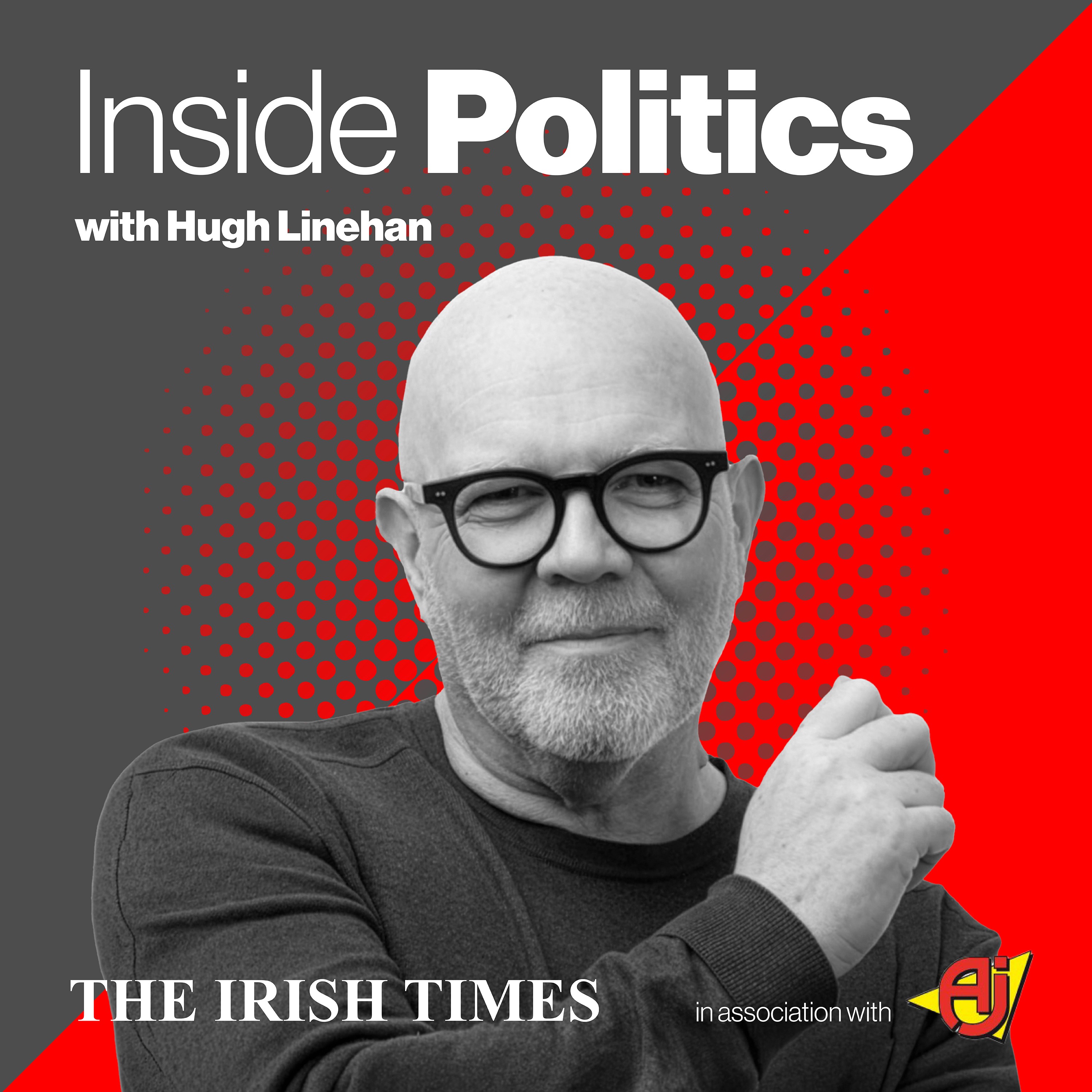
Irish Times Inside Politics
by The Irish Times
The best analysis of the Irish political scene featuring Irish Times journalists, political thinkers and the occasional politician. Hosted by Hugh Linehan. Hosted on Acast. See acast.com/privacy for more information.
-
1000
Trump's support for reunification grabs the headlines on a colourful day
President Trump and his vast, costly entourage have rolled through Dublin on the way to his golf course, meeting with the Taoiseach and President Connolly along the way. As with other recent encounters between representatives of the State and Trump, there were no major diplomatic incidents for Irish officials to worry about. But Trump did ruffle some feathers with his comments on Irish reunification. "The Weave", as Trump calls his signature style of oratory, was on full display, by turns baffling, witty and terrifying. Pat Leahy and Jack Horgan-Jones were present at the various set-pieces and they join Hugh to recap on a colourful day. Would you like to receive daily insights into world events delivered to your inbox? Sign up for Denis Staunton's Global Briefing newsletter here: irishtimes.com/newsletters/global-briefing/ Hosted on Acast. See acast.com/privacy for more information.
-
999
Why has Occupied Territories legislation taken so long?
Inside Politics Live is coming to Cork on September 30th. Get your tickets here.Pat Leahy and Harry McGee join Hugh Linehan to look back on the week in politics:Green leader Roderic O'Gorman has proposed a one-off €2.5bn energy fund, split between targeted energy credits and investment in grants for solar panels and EVs. It is one of few genuinely good ideas that emerged from the political party think-in season. Following Wednesday’s interview with Minister for Public Expenditure Jack Chambers on the podcast, Pat assesses Chambers' political positioning in the run-up to Budget day. Minister for Justice Jim O'Callaghan's tightening of naturalisation rules imposes a range of new requirements on those seeking citizenship. Are they fair? The UK is now leading the way on sanctions against illegal West Bank settlements. The haste is in contrast with Ireland's slow progress since 2018. Plus, what we now know about the timing and choreography of Donald Trump’s weekend visit. And finally the panel pick their favourite Irish Times pieces of the week. Would you like to receive daily insights into world events delivered to your inbox? Sign up for Denis Staunton's Global Briefing newsletter here: irishtimes.com/newsletters/global-briefing/ Hosted on Acast. See acast.com/privacy for more information.
-
998
'Disruptive' Jack Chambers talks tough on HSE overspending and budget negotiations
Inside Politics Live is coming to Cork on September 30th. Get your tickets here.Minister for Public Expenditure Jack Chambers talks to Jack Horgan-Jones about pre-Budget negotiations, HSE overspending, childcare, infrastructure and more.He reveals that he intends to strip power over day-to-day spending from four HSE regions in response to what he describes as a "really poor performance" when it comes to controlling costs.He also responds to critical comments reportedly made by Cabinet colleagues over his unwillingness to grant their spending wishes.Then Hugh and Jack analyse the Minister's comments.Would you like to receive daily insights into world events delivered to your inbox? Sign up for Denis Staunton's Global Briefing newsletter here: irishtimes.com/newsletters/global-briefing/ Hosted on Acast. See acast.com/privacy for more information.
-
997
P aul Mason on communism, China and the crisis of the left
British journalist Paul Mason talks to Hugh about his new book Reds: A Global History of Communism.The book traces communism’s story from early human egalitarian impulses to modern China’s controlled capitalist system. Mason talks to Hugh about what drew him to Trotskyism as a young man, his current politics as a left-wing social democrat and his concerns about democracy under threat. He explains his own break with Corbynism. Would you like to receive daily insights into world events delivered to your inbox? Sign up for Denis Staunton's Global Briefing newsletter here: irishtimes.com/newsletters/global-briefing/ Hosted on Acast. See acast.com/privacy for more information.
-
996
M9 crash aftermath: can the Government bring social media under control?
Inside Politics Live is coming to Cork on September 30th. Get your tickets here. Pat Leahy is joined by Ellen Coyne and Liz Carolan to talk about the response to the circumstances around the recent fatal M9 motorway crash. They examine Coimisiún na Meán’s response and the powers it has under the EU Digital Services Act, and the refusal of Tiktok to appear before a Dail committee. They consider proposals like making joyriding videos illegal and weigh up concerns about free speech and enforceability. In part two: the Government has u-turned on whether to pay for Skyclarys, a drug that treats Friedreich's ataxia, a rare neurodegenerative disease. Why did it take so long? Liz Carolan is a journalist, author and consultant. She writes The Briefing, a newsletter about technology and politics.Would you like to receive daily insights into world events delivered to your inbox? Sign up for Denis Staunton's Global Briefing newsletter here: irishtimes.com/newsletters/global-briefing/ Hosted on Acast. See acast.com/privacy for more information.
-
995
Government stalls on fuel excise duty; politics reacts to M9 tragedy
Inside Politics Live is coming to Cork on September 30th. Get your tickets here. Harry McGee and Jack Horgan-Jones join Hugh Linehan to look back on the week in politics:Today the Government announced that it will stall the planned increase to fuel excise duty that was due to come into effect at the start of September. The increases for September and October 1st will no longer go ahead. A recall of the Dáil next Friday to pass this measure is looking likely. The decision comes after the Government faced pressure from Coalition backbenchers as well as members of the Opposition. On Thursday night Sinn Féin leader Mary Lou McDonald wrote to Taoiseach Micheál Martin demanding the Dáil be recalled for a vote to delay the planned reversal of excise duty cuts.Sunday’s tragic collision on the M9 motorway left five teenagers dead and three sisters and a 7-year-old child in serious condition. The tragedy raises questions about Garda pursuit capabilities and training and the responsibility of social media platforms like TikTok to respond to footage of dangerous driving and joyriding shared on the platform.An aide for Tánaiste Simon Harris has come into the spotlight after The Irish Times reported on social media posts where he mocked teachers for being work-shy and deemed the public “racist”. John Kelly is Harris’ constituency director who deleted his X account after he was questioned about numerous posts. Comments that are now deleted refer to Britain’s Prince Harry as a “snowflake” and call US president Donald Trump a “moron”.Plus, the panel picks their favourite Irish Times pieces of the week, including the decline in number of Catholic baptisms in Ireland, the Alternative for Germany (AfD) candidate leading the polls in Saxony-Anhalt election and the ridiculousness of “Woke 1.0”.Would you like to receive daily insights into world events delivered to your inbox? Sign up for Denis Staunton's Global Briefing newsletter here: irishtimes.com/newsletters/global-briefing/ Hosted on Acast. See acast.com/privacy for more information.
-
994
Why does Ireland support Palestine and does anti-Semitism play a role?
There is deep support in Ireland for the Palestinian cause. But why? And is Ireland truly an outlier in its attitudes to Palestine and Israel? Academics Miceal Canavan and Liam Kneafsey surveyed over 1,500 people to gauge attitudes, investigate the origins of this support and ask whether anti-Semitism plays a role. Their findings include that Irish people have the highest pro-Palestinian sympathy in Western Europe and that we assign unusually high importance to the conflict despite no direct ethnic, economic or military link. They test explanations for this, including ideology, party support and perceptions of Irish historical oppression as a heuristic and emotional framework. Anti-Semitism is also examined. It exists, but does not explain our outlier sympathies, their data suggest. They talk to Hugh Linehan about their paper and how they interpret what they’ve discovered. Miceal Canavan is a lecturer in Politics & International Studies at Ulster University. Liam Kneafsey is an assistant professor in Political Science at Trinity College Dublin.Would you like to receive daily insights into world events delivered to your inbox? Sign up for Denis Staunton's Global Briefing newsletter here: irishtimes.com/newsletters/global-briefing/ Hosted on Acast. See acast.com/privacy for more information.
-
993
Tradwife guidance, truthfulness and 'clever' politics in Limerick
Jack Horgan-Jones and Ellen Coyne join Hugh to look back on the week in politics:Simon Harris has lobbied the European Commission over the prospect of Ireland's Central Bank once again being responsible for approving Israeli state bonds. Opposition parties have said the bonds are used to raise money for Israel's military campaigns. Ultimately, aside from some political messaging, it's an issue the Government can do little about.Excise cuts implemented in response to last spring's fuel protests are due to start tapering next month, just as fuel prices are beginning to rise again. With the disruptive protests still a painful memory and the Budget coming into view, Jack Chambers and Simon Harris are in an unenviable position. How will they play it?News that the Department of Children and Equality will spend money on a campaign to warn about the misogyny of the “manosphere” and “tradwife” influencers who “promote restrictive, stereotypical roles for women and girls” has enraged culture warriors and prompted a debate on the socioeconomic pressures that make working and caring in the home an impossibility for many families. Should the Government stay out of such debates and focus instead on structural issues that hold people back from living their lifestyle of choice?The Government's recent lack of transparency around two reports, one on Aughinish Alumina and another on data centres, left a lot to be desired.Entertaining documents released to The Irish Times under the Freedom of Information Act have cast light how two prominent pols - Mayor of Limerick John Moran and Minister for Justice Jim O'Callaghan - go about their business.And finally the panel pick their favourite IT stories of the week.Would you like to receive daily insights into world events delivered to your inbox? Sign up for Denis Staunton's Global Briefing newsletter here: irishtimes.com/newsletters/global-briefing/ Hosted on Acast. See acast.com/privacy for more information.
-
992
From boom to bust: how the PDs unravelled - Dessie Can Do It, part three
Hugh Linehan and Pat Leahy close their series on the PDs. In 1997 the party runs a disastrous campaign, falling from 10 seats to four. But they still enter government with Fianna Fáil, with Mary Harney their sole cabinet minister.Their real influence comes through Charlie McCreevy, effectively a PD inside Fianna Fáil, whose close friendship with Harney drives a tax-cutting agenda during the boom years.Facing wipeout in 2002, Michael McDowell rescues them with a Ranelagh lamppost stunt and an ingenious slogan. But the next term in government is less successful.McDowell takes the leadership in 2006 just as the Mahon Tribunal investigates Bertie Ahern. Why does he choose to stay in coalition rather than pull the plug?The 2007 election reduces the PDs to two seats. Does the party have another fightback in them? Finally Pat and Hugh deliver their verdict on the Progressive Democrats and ask where that centre-right energy now resides in the Irish political scene. Would you like to receive daily insights into world events delivered to your inbox? Sign up for Denis Staunton's Global Briefing newsletter here: irishtimes.com/newsletters/global-briefing/ Hosted on Acast. See acast.com/privacy for more information.
-
991
How the PDs broke the mould of Irish politics - Dessie Can Do It, part two
In the second of three episodes on the rise and fall of the Progessive Democrats, Hugh and Pat pick up the story on the eve of the 1987 general election with the PDs riding a wave of energy and Fianna Fail's Charles Haughey chasing the overall majority that always eluded him.The party's first outing at the polls is a triumph: 12 per cent of the vote, 14 seats and third place ahead of Labour, much of it carved out of a collapsing Fine Gael. Haughey falls two seats short. Without O'Malley's new party, would he finally have had his majority?Instead, a minority Fianna Fáil government, propped up by Fine Gael's "Tallaght Strategy", embarks on savage spending cuts and commits to tax cuts, policies the PDs demanded.The PDs' successes bring a problem: when your opponents adopt your programme, what are you for? By 1989 the party is squeezed from both sides and in the next election it slumps to six seats. But again, no party wins a majority. This time the solution brings the PDs to power, changing Irish politics forever.Would you like to receive daily insights into world events delivered to your inbox? Sign up for Denis Staunton's Global Briefing newsletter here: irishtimes.com/newsletters/global-briefing/ Hosted on Acast. See acast.com/privacy for more information.
-
990
Dessie Can Do It, part one: the birth of a new political force
Today Hugh and Pat embark on a deep dive into the history of a political party that, despite its small size, had an enormous and lasting impact on Ireland.Born of the dire economic and political realities of 1980s Ireland, the Progressive Democrats, or PDs, spent half of their 23-year existence in power despite never having more than a handful of TDs - and sometimes far fewer. Under successive leaders Des O'Malley, Mary Harney and Michael McDowell, the party used that power to fight for lower taxes and economic liberalisation, reshaping the Irish political landscape along the way. But despite their outsized impact, the PDs could not survive.In the first of three episodes Pat traces the birth of the party to the misery of mid-80s Ireland, the enmity between Fianna Fail leader Charles Haughey and prickly, clever Des O'Malley, a natural leader and a Fianna Fáil TD for Limerick. In a controversy emblematic of 1980s Ireland, O’Malley was expelled from Fianna Fáil over the issue of contraception, ridding Haughey of a problem - or so he thought. But what followed was the emergence of a new political force that would threaten Ireland's sclerotic two-and-a-half party system.Would you like to receive daily insights into world events delivered to your inbox? Sign up for Denis Staunton's Global Briefing newsletter here: irishtimes.com/newsletters/global-briefing/ Hosted on Acast. See acast.com/privacy for more information.
-
989
The spiralling projected cost of the Metrolink brings the NCH to mind
Ellen Coyne and Jack Horgan-Jones join Hugh Linehan to look back on the week in politics:It was revealed this week that the planned Dublin Metrolink could cost up to €19 billion. The last Metrolink estimates from 2022 suggested €9.5 billion as the midpoint of a “credible” cost range of between €7.16 billion and €12.25 billion. The increasing cost echoes the National Children’s Hospital and its umpteen budget increases – a saga that damaged the public’s trust in the State’s ability to deliver large necessary projects in a timely and cost-effective manner. The latest data from the Climate Change Advisory Council suggests the Government’s target of 400,000 heat-pump installations by 2030 is all but impossible at this stage. They are calling for a twentyfold increase in the pace of delivery, plus a surge in general home retrofits. The German chancellor Friedrich Merz was welcomed to Dublin by Taoiseach Micheál Martin on Tuesday where he delivered a speech on the need for a more austere approach to the common EU budget. The decision to speak entirely in German was not helped by malfunctioning translation devices given out to the Taoiseach and those present. The State has been urged to buy the lands of former Bessborough mother and baby home to create memorial park. This comes after planning permission was granted for more than 100 apartments on the Cork site. And more than 300 former members of the Christian Brothers will be summonsed through an advertisement in a national newspaper. The move was prompted by the fact that the Christian Brothers is an unincorporated association, meaning there is no legal entity that can be directly sued by people taking it to court.Would you like to receive daily insights into world events delivered to your inbox? Sign up for Denis Staunton's Global Briefing newsletter here: irishtimes.com/newsletters/global-briefing/ Hosted on Acast. See acast.com/privacy for more information.
-
988
Could India’s ‘Gen Z’ protests bring down Narendra Modi?
Narendra Modi’s 12 year rule of India has never looked so fragile.Weeks of protests have engulfed the country following the leak of a medical entrance exam paper, which forced nearly two million students to resit the test. Protestors hailed victory from the resignation of the education minister Dharmendra Pradhan on Saturday.On today’s podcast, Hugh asks our contributor in New Delhi, Rahul Bedi, to explain the significance of the movement.What had fanned the flames, he said, was the description of unemployed young people as “cockroaches” by one senior government minister.Then, out of the ootheca hatched the Cockroach Janta Party (CJP), a satirical movement that has channelled the frustrations of millions of young Indians who, in the words of Bedi, believe the country is increasingly dominated by corruption, privilege and vested interests.They’re not alone.Farmers have again been protesting at the state of the rural economy. And another campaign has emerged against the government’s ethanol-blended fuel policy, with some motorists arguing that petrol containing 20% ethanol reduces fuel efficiency and may damage engines.Bedi explains what these large movements mean for the strength and future of the Narendra Modi administration. Would you like to receive daily insights into world events delivered to your inbox? Sign up for Denis Staunton's Global Briefing newsletter here: irishtimes.com/newsletters/global-briefing/ Hosted on Acast. See acast.com/privacy for more information.
-
987
Germany at a crossroads: football, political frustration and the far right
For Germany, football is often a reflection of the nations’ stability.“When Germany is going well, things are going well on the pitch” Irish Times Berlin correspondent Derek Scally tells the Inside Politics podcast.Following another premature exit from a world cup tournament they won only 12 years ago; in football, as in German politics, the future is uncertain.Host Hugh Linehan asks where the major fault lines are in the upcoming federal elections in September. Elections, Scally explains, that are likely to be won by the far-right party Alternative for Deutschland (AfD) bar any major shifts.“Establishment parties are seen as lacking ideas and energy” Scally says. “The sense of a government exhausting its political potential seems to be a general agreement around Berlin”.Europe’s biggest economy is vulnerable on a number of fronts. It relies on Chinese manufacturing for its automotive sector, while facing major competition from increasingly popular, often cheaper, Chinese car makers.Though the Christian Democrats’ Fredrick Merz has only been Chancellor for a year, “frustration” and “fatigue” are already creeping into public sentiment, Scally says.Could his 34-point plan announced last week, including pension reforms, tax cuts, and business deregulation, turn things around? Produced by Andrew McNairWould you like to receive daily insights into world events delivered to your inbox? Sign up for Denis Staunton's Global Briefing newsletter here: irishtimes.com/newsletters/global-briefing/ Hosted on Acast. See acast.com/privacy for more information.
-
986
Aughinish Alumina is proving to be a real diplomatic headache
Pat Leahy and Jack Horgan-Jones join Hugh Linehan to look back on the week in politics:· Ireland’s presidency of the Council of the European Union got off to a slightly awkward start at the opening ceremony at Dublin Castle on Wednesday when guest Volodymyr Zelenskiy warned against “material emanating from a plant in Ireland” being used in Russia’s war effort. The Ukrainian president didn’t name Aughinish Alumina, but his feelings were clear.· Dozens of solicitors walked out of District Court rooms on Wednesday in protest against a new pay system for legal aid. This marked an escalation in tensions with Minister for Justice Jim O’Callaghan who has pushed the reform through.· The Government are not going to act on Oireachtas committee recommendations on the decriminalisation of the possession of drugs for personal use.· And as the United States celebrates its 250th birthday, how has the country lived up to the principals and aspirations of its founding fathers? Would you like to receive daily insights into world events delivered to your inbox? Sign up for Denis Staunton's Global Briefing newsletter here: irishtimes.com/newsletters/global-briefing/ Hosted on Acast. See acast.com/privacy for more information.
-
985
Ireland gears up for EU presidency and Andy Burnham sweeps Makerfield byelection
Jack Horgan-Jones and Mark Paul join Harry McGee to look back on the week in politics:· Taoiseach Micheál Martin is in Brussels for the EU summit this week, also in attendance is Ukrainian president Volodymyr Zelenskiy who is pushing for serious peace negotiations with Russia. Will Vladimir Putin come to the negotiation table? And could Ukraine’s EU membership be fast-tracked during Ireland’s upcoming EU presidency? · Security, competitiveness and the EU budget are some of the issues that will come into focus as Ireland becomes a deal maker and parks parochial affairs for the duration of its six-month presidency starting July 1st.· And with Andy Burnham justifying the hype by crushing Nigel Farage’s Reform UK in the Makerfield byelection, will prime minister Keir Starmer go quietly or hang around for a leadership battle he stands little chance of winning?Plus, the panel picks their favourite Irish Times pieces of the week:Produced by John Casey with JJ Vernon on sound.Would you like to receive daily insights into world events delivered to your inbox? Sign up for Denis Staunton's Global Briefing newsletter here: irishtimes.com/newsletters/global-briefing/ Hosted on Acast. See acast.com/privacy for more information.
-
984
Wikipedia's Jimmy Wales believes the crisis of trust is still fixable
Jimmy Wales founded Wikipedia in January 2001, and almost nobody thought that an encyclopedia that anyone in the world was allowed to edit would actually work. But a quarter of a century later, Wikipedia is still one of the most visited websites on Earth and one of the few large-scale online institutions that people across the political spectrum broadly trust. In his new book, The Seven Rules of Trust, Wales argues that what made Wikipedia work was a set of principles encompassing human nature, reciprocity, purpose, civility, independence and transparency. He joins Hugh to talk about where Wikipedia came from, what those principles are and whether they offer any way out of the crisis of trust that is currently shaping politics across the democratic world. Would you like to receive daily insights into world events delivered to your inbox? Sign up for Denis Staunton's Global Briefing newsletter here: irishtimes.com/newsletters/global-briefing/ Hosted on Acast. See acast.com/privacy for more information.
-
983
Eruption of violence in Northern Ireland echoes the Troubles
Cormac McQuinn and Harry McGee join Hugh to discuss the week in politics:The disorder in Northern Ireland since a knife attack in Belfast on Monday reached levels not seen since “the worst possible days of the Troubles”, the Police Service of Northern Ireland chief constable Jon Boutcher said. In a society with a history of sectarianism, there are complex layers to the events taking place.Minister for Health Jennifer Carroll McNeill won her battle with the Rotunda Hospital this week.The Football Association of Ireland has confirmed that Ireland’s Nations League clash with Israel on October 4th will be played at a neutral venue and behind closed doors.Plus the panel pick their favourite Irish Times stories of the week. Would you like to receive daily insights into world events delivered to your inbox? Sign up for Denis Staunton's Global Briefing newsletter here: irishtimes.com/newsletters/global-briefing/ Hosted on Acast. See acast.com/privacy for more information.
-
982
Inside Politics Meets GD Politics: A crossover episode with Galen Druke
For a special crossover episode of Inside Politics Hugh Linehan welcomes US podcaster Galen Druke, the host of GD Politics and formerly of the FiveThirtyEight politics podcast, for a discussion of the Irish and US political scenes. They cover topics including:Why there is no strong populist right party in IrelandIreland’s economic success, dependence on US multinationals and military neutralityGerrymandering in America Race, the Voting Rights Act and representationThe two-party systemThey also talk about the fate of FiveThirtyEight, a popular website and podcast that was eventually shuttered after being acquired by ABC News. Would you like to receive daily insights into world events delivered to your inbox? Sign up for Denis Staunton's Global Briefing newsletter here: irishtimes.com/newsletters/global-briefing/ Hosted on Acast. See acast.com/privacy for more information.
-
981
Rotunda row pits public against private health care
Pat Leahy and Ellen Coyne join Hugh Linehan to look back on the week in politics:· Minister for Health Jennifer Carroll MacNeill has come out this week to demand the Rotunda maternity hospital withdraw permission for consultants on public-only contracts to practise privately on its premises. If not, it could have its funding pulled.· An investigation by Swedish tax authorities alleges that Oligarch and Vladimir Putin associate Oleg Deripaska, who is under EU sanctions over his role in supporting the invasion of Ukraine, still controls Rusal, the company that owns the Co Limerick industrial plant Aughinish Alumina.· And an explosive interview from Michael Healy-Rae on Radio Kerry detailed how he was “pulled overboard” by his brother and fellow Independent TD Danny, resulting in him resigning his position as minister of state. Could the rift see the brothers run against each other in the next general election?Plus, the panel picks their favourite Irish Times pieces of the week:· The joy of your first World Cup, the Leaving Cert is a tough but valuable experience, and Andy Burnham’s byelection test in a Reform stronghold.Would you like to receive daily insights into world events delivered to your inbox? Sign up for Denis Staunton's Global Briefing newsletter here: irishtimes.com/newsletters/global-briefing/ Hosted on Acast. See acast.com/privacy for more information.
-
980
Darragh O'Brien on Ireland's missed climate targets, new help to buy EVs and Fianna Fáil's leadership
Pat joins Hugh after interviewing Fianna Fáil's Darragh O'Brien about major issues related to his twin ministries, Transport and Climate, Energy and the Environment. They listen back to the interview and discuss what O'Brien had to say about a new scrappage scheme to encourage the purchase of EVs, Ireland's certain failure to hit its legally-binding emissions targets in 2030 and the financial cost to the state of that failure.They also discuss data centres and the future of Fianna Fail's leadership after a disappointing showing in the recent byelections.Would you like to receive daily insights into world events delivered to your inbox? Sign up for Denis Staunton's Global Briefing newsletter here: irishtimes.com/newsletters/global-briefing/ Hosted on Acast. See acast.com/privacy for more information.
-
979
Are Sinn Féin drifting away from an uneasy left-wing alliance?
Ellen Coyne and Cormac McQuinn join Hugh Linehan to look back on the week in politics:· The left-wing alliance that was formed during Catherine Connolly’s presidential campaign is already straining, with the Social Democrats, Labour and People Before Profit concerned with the policy direction of Sinn Féin on issues like migration and reproductive rights.· Independent Ireland leader Michael Collins was not impressed by left-leaning voters neglecting to supply party candidate Noel Thomas with enough transfers to prevail in the recent Galway West byelection. Perhaps those voters did not want to give Thomas a preference given his far from left-leaning stance on immigration.· The omission of services from the Occupied Territories Bill, which targets Israeli imports produced from Palestinian lands, came as a surprise to no one. After many months of mulling it over, the Taoiseach was accused by Opposition parties of reneging on promises to prohibit all trade with settlements. Government can expect many calls for amendments when it is brought to Oireachtas in the coming weeks.· And the building of one-off rural housing could become easier with plans to relax the rules for rural housing, aimed at allowing for increased supply, expected to be brought to Cabinet next month.Would you like to receive daily insights into world events delivered to your inbox? Sign up for Denis Staunton's Global Briefing newsletter here: irishtimes.com/newsletters/global-briefing/ Hosted on Acast. See acast.com/privacy for more information.
-
978
Shane Ross: Why politicians won't fix RTÉ - or let it fail
RTÉ has been in the news again lately thanks to renewed controversy over payments to presenters. So it is a timely moment for the release of a new book on the institution. RTÉ: Saints, Scholars, and Scandals is the latest work by former TD, minister and journalist Shane Ross, who brings his dual experience of media and politics to bear on this unwieldy subject.He talks to Hugh about the deep roots of RTÉ's structural problems, Fianna Fáil's dominance of RTÉ throughout its history (exemplified by Gay Byrne's cozy relationship with Charles Haughey) and the damaging recent scandals over payments and governance.He tells Hugh the frustration politicians feel over negative coverage is the reason cash-strapped RTÉ has not enjoyed a licence fee increase since 2008.Ross also talks about how illness (he is recovering from throat cancer) derailed the book for a few years.Would you like to receive daily insights into world events delivered to your inbox? Sign up for Denis Staunton's Global Briefing newsletter here: irishtimes.com/newsletters/global-briefing/ Hosted on Acast. See acast.com/privacy for more information.
-
977
Why do these men want to strip women of the right to vote?
Journalist and author Helen Lewis has built a reputation for sharp analysis of politics, culture and the forces reshaping public life.In one piece for The Atlantic she unpicks policies, and the figures promoting them, arguing against some rights for women.On today’s podcast Helen tells Hugh about influential figures who would once have been considered “fringe” coming to the fore.She explains why questions around women’s rights and gender identity have become so politically explosive, and how media and politics have become entangled in a cycle of outrage and performance.Would you like to receive daily insights into world events delivered to your inbox? Sign up for Denis Staunton's Global Briefing newsletter here: irishtimes.com/newsletters/global-briefing/ Hosted on Acast. See acast.com/privacy for more information.
-
976
Winners and losers: What we’ve learned from the byelections
Pat Leahy and Harry McGee join Hugh to talk about the results of the Dublin Central and Galway West byelections: As the day began Fine Gael were confident that their man, Senator Sean Kyne, would win the seat. That confidence wavered a little as Independent Ireland’s Noel Thomas picked up significant transfers throughout the morning. In the end it wasn’t enough and Fine Gael leader Tanaiste Simon Harris was celebrating a rare byelection win for a party in power. But is he right to call it “a victory for centrist politics”? Independent Ireland can be encouraged by Noel Thomas’s performance in Galway West. Fine Gael and Social Democrats are the winners on this occasion. But can they turn these victories into long-term success? There was evidence of “vote left, transfer left” behaviour in Galway. But many of Sinn Féin’s voters gave their second preferences to Independent Ireland rather than Labour or Social Democrats. Fianna Fáil were the other big losers in this campaign. But how much do these byelections, both won by strong local candidates, really tell us about the strength of the party nationwide?Should the counting of votes take so long? Hugh and Pat think not, but Harry McGee dissents. Would you like to receive daily insights into world events delivered to your inbox? Sign up for Denis Staunton's Global Briefing newsletter here: irishtimes.com/newsletters/global-briefing/ Hosted on Acast. See acast.com/privacy for more information.
-
975
Ennis and Kyne in poll position on a bad day for big parties
A picture is emerging in the byelection counts. Hugh is joined by Pat Leahy, Harry McGee and Jack Horgan-Jones to discuss what we have learned so far:On the basis of the numbers available on Saturday afternoon, Social Democrats councillor Daniel Ennis and Fine Gael senator Sean Kyne look well placed to take seats in Dublin Central and Galway West respectively. But transfers could still shift result in Galway West where Independent Ireland's Noel Thomas is polling strongly.The anti-establishment vote in Dublin Central has grown significantly with strong showings from both Gerry Hutch and Malachy Steenson.Sinn Féin's apparent failure to top the poll in either constituency is a bad result for the leader of the opposition Mary Lou McDonald.The results are even worse for Fianna Fáil, with its showing in Dublin Central, once a party stronghold, likely to be of particular concern to Taoiseach Micheál Martin.Would you like to receive daily insights into world events delivered to your inbox? Sign up for Denis Staunton's Global Briefing newsletter here: irishtimes.com/newsletters/global-briefing/ Hosted on Acast. See acast.com/privacy for more information.
-
974
Taoiseach has Gaza on his mind amid European tour
Pat Leahy and Naomi O’Leary join Hugh Linehan to look back on the week in politics:· Taoiseach Micheál Martin arrived in Italy on Friday, meeting Pope Leo in the Vatican and Italian premier Giorgia Meloni in Rome. This is part of a round of meetings with leaders ahead of Ireland’s EU presidency starting in July, with Martin meeting French president Emmanuel Macron in Paris on Thursday. An estimated 270 meetings with senior politicians are scheduled for the duration of Ireland’s EU presidency, expect a lot of traffic disruption around Dublin Castle.· Naomi O’Leary has been covering the taoiseach’s tour, where he has been keen to highlight the mistreatment of Gaza aid flotilla activists detained by Israeli forces. Could this, coupled with the slowdown in humanitarian aid into Gaza and the continued killing and displacement of Palestinians in the West Bank, finally spark the EU into placing sanctions on Israel?· And record rent surges in the first quarter of 2026. There was a 4.4 per cent increase between December and March as the Government’s new rent control system came into effect. Plus, the panel picks their favourite Irish Times pieces of the week:· Arsenal end 22-year wait for title win, the tragic death of Yves Sakila, and the issues foreign investment presents for Ireland.Would you like to receive daily insights into world events delivered to your inbox? Sign up for Denis Staunton's Global Briefing newsletter here: irishtimes.com/newsletters/global-briefing/ Hosted on Acast. See acast.com/privacy for more information.
-
973
Byelections: campaign trail stories and final predictions
Cormac McQuinn and Harry McGee join Hugh for a final look at the Dublin Central and Galway West byelections before voting takes place on Friday. Would you like to receive daily insights into world events delivered to your inbox? Sign up for Denis Staunton's Global Briefing newsletter here: irishtimes.com/newsletters/global-briefing/ Hosted on Acast. See acast.com/privacy for more information.
-
972
What's wrong with Ireland? Sinead O'Sullivan has an answer
Economist and author Sinead O'Sullivan ruffled some feathers recently with her analysis of Ireland’s deficits in infrastructure and services. Her critiques of the State’s failure to deliver things that are taken for granted in other similarly wealthy countries sparked debate and drew pushback from figures including former taoiseach Leo Varadkar. On today’s Inside Politics podcast she talks to Hugh about how her professional background in designing complex systems made it “ impossible for me not to see” the flaws she identifies in the Irish model. She argues that Ireland lacks strong institutions capable of separating long-term delivery from electoral politics, resulting in costly, short-term fixes. Would you like to receive daily insights into world events delivered to your inbox? Sign up for Denis Staunton's Global Briefing newsletter here: irishtimes.com/newsletters/global-briefing/ Hosted on Acast. See acast.com/privacy for more information.
-
971
Keir Starmer finds himself in office without power
Jack Horgan-Jones and Mark Paul join Hugh Linehan to look back on the week in politics:· The findings of the Irish Times and TG4 by Ipsos B&A poll throws up some interesting permutations for the Dublin Central byelection. Sinn Féin’s Janice Boylan leads the first preference vote at 21 per cent, Daniel Ennis of the Social Democrats is in second place on 18 per cent, but as Jack explains, ‘second preference intention’ could be vital for both. · It is now a question of when and not if for Keir Starmer after disastrous local and parliamentary election results prompted a slew of Labour MPs to call on the prime minister to resign. A defiant speech on Monday did little to inspire party members as Starmer vowed to fight any leadership challenge. Greater Manchester mayor Andy Burnham has been given a route to challenge Starmer following Josh Simons’ decision to step down as MP for Makerfield.· And speaking to The Irish Times on Wednesday, former taoiseach Bertie Ahern addressed his recent comments on immigration, made while out on a canvass last week in Dublin Central. And while no apology was forthcoming, he did point out that he had “no problem with people from the Congo or Africa or anywhere else. I’ve good friends around Drumcondra, there’s a lot of the clergy in from Africa.” Could this controversy overshadow Fianna Fáil’s Ard Fheis taking place today and tomorrow as the party marks its 100th year in existence?Plus, the panel picks their favourite Irish Times pieces of the week:· One Dublin mother’s 14-year wait for a bigger council house, the challenges for Ireland of a Reform-led UK government, and how difficult it has become for Irish diaspora to return home.Would you like to receive daily insights into world events delivered to your inbox? Sign up for Denis Staunton's Global Briefing newsletter here: irishtimes.com/newsletters/global-briefing/ Hosted on Acast. See acast.com/privacy for more information.
-
970
Two-way race for Sinn Féin and Soc Dems in Dublin Central byelection
The Irish Times and TG4 by Ipsos B&A poll shows Sinn Féin’s Janice Boylan leads the byelection race in Dublin Central with first preference votes at 21 per cent, Daniel Ennis of the Social Democrats is in second place on 18 per cent. But Ennis will be in line for a lot of transfers from the fragmented left-wing vote, with Labour, People Before Profit and the Green Party all having candidates in the race. Veteran criminal Gerry Hutch is running in third place on 14 per cent, growing his vote from 9 percent in the last general election. Could his transfers play an important role for Boylan’s path to victory?And Fianna Fáil’s John Stephens is way back in the field on 4 per cent. His cause won’t have been helped by Bertie Ahern’s comments on immigration, captured while the former taoiseach was out on a byelection canvass last week. The poll shows immigration trails cost-of-living and housing as an issue for voters ahead of election day on May 22nd.Produced by John Casey.Would you like to receive daily insights into world events delivered to your inbox? Sign up for Denis Staunton's Global Briefing newsletter here: irishtimes.com/newsletters/global-briefing/ Hosted on Acast. See acast.com/privacy for more information.
-
969
Byelection candidates are confirmed as campaigns ramp up
Ellen Coyne and Pat Leahy join Hugh Linehan to look back on the week in politics:· There are now 14 candidates confirmed as running in Dublin Central and 17 candidates in Galway West in the upcoming byelections on May 22nd. And while it looks like a tussle between those representing centre-left parties in the capital, Independent Ireland councillor Noel Thomas already looks to be the frontrunner in Galway West.· Sinn Féin are hopeful of a byelection win in leader Mary Lou McDonald’s own constituency of Dublin Central, not least because of reported unrest, albeit privately, over the party’s future direction under McDonald’s leadership.· And the Government announced this week that it will begin a six-month process of withdrawing tourist and commercial accommodation housing up to 16,000 Ukrainians here from August, coupled with the winding down of the Accommodation Recognition Payment (ARP) scheme which will see the €600 monthly payment to hosts reducing to €400 in September and ceasing next March. What impact will this have on homeless figures and the number of integrated Ukrainians leaving the country?Plus, the panel picks their favourite Irish Times pieces of the week:· Gerry Hutch in sunny Lanzarote, the Ukrainian grandfathers fighting on the front line, and online misogynistic abuse thrives and proliferates. Would you like to receive daily insights into world events delivered to your inbox? Sign up for Denis Staunton's Global Briefing newsletter here: irishtimes.com/newsletters/global-briefing/ Hosted on Acast. See acast.com/privacy for more information.
-
968
Fintan O'Toole: 100 years on, Fianna Fáil is flailing
Fintan O’Toole talks to Hugh Linehan about Fianna Fáil as the party’s 100th birthday draws near. Fintan credits the party with helping create a vibrant Irish middle class - if only by accident. But in recent decades the party has undermined that legacy, he says, through short-sighted, reactionary politics and especially through its approach to home ownership. They also discuss the recent fuel protests. Would you like to receive daily insights into world events delivered to your inbox? Sign up for Denis Staunton's Global Briefing newsletter here: irishtimes.com/newsletters/global-briefing/ Hosted on Acast. See acast.com/privacy for more information.
-
967
Is there real pressure on Sinn Féin to win at least one seat in upcoming byelections?
Ellen Coyne and Jack Horgan-Jones join Hugh Linehan to look back on the week in politics:· The posters are going up, and candidates are preparing their pitch, but could Sinn Féin come up empty-handed in both the Dublin Central (party leader Mary Lou McDonald’s constituency) and Galway West byelection when the votes are counted on May 23rd? And does a vote against Government no longer mean a vote for the republican party?· Given how many prominent Irish politicians retire and become silent, perhaps former Taoiseach Leo Varadkar’s unguarded opinions should be viewed as refreshing. The recent release of his book Speaking My Mind and various podcast contributions point to someone unafraid to give their unvarnished opinion.· And President Catherine Connolly made her first trip overseas, attending the Defence of Democracy conference in Spain. Traditionalists might argue her first visit abroad should have been to meet another head of state.Plus, the panel picks their favourite Irish Times pieces of the week:· Michael Jackson in Cork and the 10-year-old at his hotel, the ascent of Green Party leader Zack Polanski, and the cultural obsession with the 1990s.Correction: In the course of a conversation about the aftermath of the fuel protests, Hugh Linehan said that carbon tax is applied pro rata to the price of fuel. That is not correct. Carbon tax, as the name suggests, is calculated on the carbon emissions of a fuel, not the price. Therefore price fluctuations do not affect the rate of carbon tax which is charged.Would you like to receive daily insights into world events delivered to your inbox? Sign up for Denis Staunton's Global Briefing newsletter here: irishtimes.com/newsletters/global-briefing/ Hosted on Acast. See acast.com/privacy for more information.
-
966
What the fuel protests meant
The country is moving on from the protests that dominated the national discussion over Easter, even as what the protests actually meant continues to generate debate.Leo Varadkar poured more fuel on the fire by telling rural dwellers that, far from them being the backbone that holds up the country, it is their city cousins who pay all the bills. Could these events mark the start of deeper urban-rural divide in politics? It seems very possible the protests will be looked back on as an important step in Ireland’s political evolution, wherever that leads.Today Hugh is joined by UCD political economy lecturer Michael Byrne and political correspondent Ellen Coyne to talk about what the events of April 2026 have revealed about Irish society, Irish politics and how Irish people look at democracy, protest and the urban-rural divide. You can read Michael Byrne’s Substack blog on housing here. Would you like to receive daily insights into world events delivered to your inbox? Sign up for Denis Staunton's Global Briefing newsletter here: irishtimes.com/newsletters/global-briefing/ Hosted on Acast. See acast.com/privacy for more information.
-
965
Another Fianna Fáil heave that wasn’t
Cormac McQuinn and Pat Leahy join Hugh Linehan to look back on the week in politics:· There were renewed questions about the future of Micheál Martin’s leadership in the aftermath of the fuel protests and the resignation of former Independent minister Michael Healy-Rae from Government. Fianna Fáil TDs James O'Connor, Ryan O’Meara and Albert Dolan outlined their “real and deep concern” with the Government’s response to the protests in a statement on Wednesday. However, any momentum behind a challenge to Martin had faded by Thursday night as Fianna Fáil Ministers and TDs rallied behind him.· Another consequence of the Government’s response to the fuel protests has been the potential impact on Fianna Fáil’s relationship with rural Ireland. Will Minister for Justice Jim O’Callaghan’s announcement last week that the Army was being called in to clear fuel protest blockades come back to haunt the party?· And President Catherine Connolly will meet her Council of State next Monday to consider the constitutionality of the recently passed International Protection Bill. Plus, the panel picks their favourite Irish Times pieces of the week:· US vice-president JD Vance takes issue with Pope Leo, excitement builds (mainly Pat’s) ahead of the Munster senior hurling championship, and how Irish energy prices compare amid the shock to oil and gas prices.Would you like to receive daily insights into world events delivered to your inbox? Sign up for Denis Staunton's Global Briefing newsletter here: irishtimes.com/newsletters/global-briefing/ Hosted on Acast. See acast.com/privacy for more information.
-
964
Healy-Raes' departure caps a terrible week for the Government
Hugh, Pat and Ellen are joined by columnist Gerard Howlin to talk about a tumultuous day in Leinster House that capped a terrible week for the governing coalition:The Government faced down a confidence challenge, as expected. But the loss of now-former minister of state Michael Healy-Rae, along with the support of his backbencher brother Danny, cut its majority and underlined how the fuel protests have emerged as its biggest political challenge since the general election.The speed with which hundred of millions of euro were found to fix the problem has not been lost on every other interest group in the country. Further militant protests and renewed public sector pay demands are likely to follow. Is the Dáil lacking voices calling for fiscal restraint?Rural disillusionment is a slow-burning crisis for Fianna Fáil and Fine Gael, with rural voters feeling abandoned by the big parties. Jim O'Callaghan's stock has fallen within Fianna Fáil over his handling of the crisis.And with the Government lacking a clearly articulated plan to steer citizens out of a painful cost of living crisis, the deep unhappiness on display over the past week is likely to persist. Would you like to receive daily insights into world events delivered to your inbox? Sign up for Denis Staunton's Global Briefing newsletter here: irishtimes.com/newsletters/global-briefing/ Hosted on Acast. See acast.com/privacy for more information.
-
963
The end of the Orbán model
All agree that the scale of Hungarian prime minister Viktor Orbán’s defeat in yesterday’s general election is hugely significant, for Hungary, Europe and beyond. But what exactly does the result mean? To find out Hugh talks to two journalists covering Hungarian affairs, Daniel Nolan and Ivan Nagy. They discuss how Orbán's populist playbook ran out of steam, why JD Vance's recent visit backfired and why Hungary now faces a painful economic reckoning. Would you like to receive daily insights into world events delivered to your inbox? Sign up for Denis Staunton's Global Briefing newsletter here: irishtimes.com/newsletters/global-briefing/ Hosted on Acast. See acast.com/privacy for more information.
-
962
How the Government bungled its response to fuel protests
Ellen Coyne and Jack Horgan-Jones join Hugh Linehan to look back on the week in politics:It was becoming clear towards the end of last week that protests over the price of fuel were coming. But the scale of what has unfolded seems to have caught the Government by surprise. Then there were missteps in the handling of the situation throughout the week. Now the battle lines have been drawn and positions have been given time and space to harden. Has the State’s authority been undermined? Jack and Ellen take us inside a week of crisis for the country and the coalition. Some opposition politicians showed enthusiastic support for the protests in their early stages, but the mood has become much more cautious as the scale of the impact on daily life has become clear. Donald Trump has claimed the two-week Iran war ceasefire as a victory for the US. In reality, the outcome is anything but. Plus the panel pick their favourite Irish Times articles of the week, including the nuances of court reporting, Paris’s anti-Emily in Paris movement and the childlike wonder inspired by the Artemis mission to the Moon. Would you like to receive daily insights into world events delivered to your inbox? Sign up for Denis Staunton's Global Briefing newsletter here: irishtimes.com/newsletters/global-briefing/ Hosted on Acast. See acast.com/privacy for more information.
-
961
Could Labour have done anything to avoid electoral wipeout in 2016? Collapse, part three
In the final instalment of our series on Labour’s time in government from 2011 to 2016, things get darker as it becomes clear economic progress will not be enough for voters to forgive the party for its role in austerity.Labour’s poor showing in the 2014 local and European elections leads to a change at the top. But Joan Burton’s leadership does not revive Labour’s fortunes.Then, when the disenchanted take to the streets to oppose water charges, the scale of public anger becomes clear - and much of it is still directed at Labour.To wrap up the story, Pat and Hugh talk about the roads not travelled. Could Labour have avoided its 2016 general election wipeout, a political setback it has struggled to recover from ever since?Would you like to receive daily insights into world events delivered to your inbox? Sign up for Denis Staunton's Global Briefing newsletter here: irishtimes.com/newsletters/global-briefing/ Hosted on Acast. See acast.com/privacy for more information.
-
960
Pressure builds on Labour as austerity bites: Collapse, part two
Inside Politics is coming to Galway in May for a live recording. Get your tickets here.In part two of this three-part series on Labour's harrowing experience in government from 2011 to 2016, Pat Leahy and Hugh Linehan follow the story of the first three years of that austerity-delivering coalition. As punishing budget after punishing budget was delivered, Labour struggled to retain its political identity and principles while working with Fine Gael to present a united front to a world that saw Ireland as an economic basket case. Successes - exiting the EU-IMF bailout programme, securing legislation on abortion - are completely overshadowed by the harshness of austerity. For Labour and its party leader Eamon Gilmore, the political damage mounts. Listen to part one here. Would you like to receive daily insights into world events delivered to your inbox? Sign up for Denis Staunton's Global Briefing newsletter here: irishtimes.com/newsletters/global-briefing/ Hosted on Acast. See acast.com/privacy for more information.
-
959
Collapse: How Labour went from boom to bust
Inside Politics is coming to Galway in May for a live recording. Get your tickets here.When Labour came to power in 2011 Ireland was in the depths of an economic crisis that had several more years to run. Their coalition with Fine Gael spent the next five years struggling to fix the economy while satisfying the EU and the IMF, who had bailed us out.But it was Labour, led by Eamon Gilmore to its greatest ever number of seats in that election, who bore the brunt of voter frustration over the deep cutsLinehanx increases that the government then imposed. The party was decimated in the next election and voters, particularly of the working class, never fully trusted the party again. So why did Labour get the blame? Could Gilmore and Joan Burton, who succeeded him in 2014, have done things differently? In this series Pat Leahy and Hugh Linehan relive the fateful events and decisions of that era and, a decade on, take a fresh look back at Labour’s collapse. In episode one they look at Eamon Gilmore, how Labour fought the 2011 election, the formation of the coalition with Fine Gael, how one of Labour’s key promises to voters was abandoned without a fight, and how the seeds of future trouble were sown with Labour's top brass taking on some of the trickiest ministries. Would you like to receive daily insights into world events delivered to your inbox? Sign up for Denis Staunton's Global Briefing newsletter here: irishtimes.com/newsletters/global-briefing/ Hosted on Acast. See acast.com/privacy for more information.
-
958
Is Ireland taking anti-Semitism seriously enough?
Oliver Sears, founder of Holocaust Awareness Ireland, joins Hugh to talk about his growing alarm at the rise of anti-Semitism in Ireland and what he sees as the failure to take it seriously. They discuss whether the political response to Israel's actions since October 7th 2023 has complicated that debate. The conversation covers questions such as where legitimate criticism of Israel ends and anti-Semitism begins, whether anti-Zionism can be distinguished from antisemitism, and what Ireland's institutions should be doing differently.Would you like to receive daily insights into world events delivered to your inbox? Sign up for Denis Staunton's Global Briefing newsletter here: irishtimes.com/newsletters/global-briefing/ Hosted on Acast. See acast.com/privacy for more information.
-
957
Government can't help helping as fuel costs soar; and how many TDs are too many?
This week the Government decided to unveil a €250 million package to help citizens meet the elevated cost of fuel. And this could be just the start of a series of new efforts to keep down the cost of living. After ending such supports in the last Budget, it seems there is a limit to the Government’s ability to resist helping when times get tough and the money is there. But what will happen when a crisis coincides with tougher fiscal times? The renewed threat of inflation is having an impact across the economic and political landscape. Inflation means unpredictable costs and that is especially bad for one key area.Other Government departments will be asked to bail out the Department of Education, which is facing another large budget overspend this year. Will this request brew inter-departmental strife? Our population is growing and our constitution stipulates there should be at least one TD for every 30,000 people. Should that rule be changed before we end up with excessive numbers of Deputies? Maybe - but a referendum on the issue is unlikely under this Government. Plus the panel pick their favourite Irish Times articles of the week, including Newton Emerson on an issue uniting left and right in Belfast, Big Tech’s Big Tobacco moment and Malachy Clerkin’s report on Ireland’s heartbreaking loss against Czech Republic. Would you like to receive daily insights into world events delivered to your inbox? Sign up for Denis Staunton's Global Briefing newsletter here: irishtimes.com/newsletters/global-briefing/ Hosted on Acast. See acast.com/privacy for more information.
-
956
Was Seán Lemass really Ireland's greatest taoiseach?
Seán Lemass is remembered as the man who changed Ireland.Several opinion polls have noted Lemass as the country's most admired taoiseach.He never left any papers of autobiography, but rather twenty-two hours of private interviews.Hugh speaks to Irish Times reporter Ronan McGreevy who has gathered these lost interviews and collated them into a memoir in Lemass's own words.Produced by JJ Vernon and Andrew McNair.Would you like to receive daily insights into world events delivered to your inbox? Sign up for Denis Staunton's Global Briefing newsletter here: irishtimes.com/newsletters/global-briefing/ Hosted on Acast. See acast.com/privacy for more information.
-
955
'In the pocket of US multinationals': How is Ireland seen by Europe?
Eoin Drea is a senior researcher at the Wilfried Martens Centre, the official think tank of the European People’s Party (of which Fine Gael is a member), and an occasional contributor to the opinion pages of The Irish Times, where he is often critical of Ireland’s approach to Europe. Recently he wrote that “Ireland’s recent hissy fit at not being invited to a pre-EU summit meeting in Belgium speaks volumes as to where Dublin ranks in the minds of our fellow EU members”. On today’s podcast he talks to Hugh about how Ireland’s influence in Europe has declined, why he believes Ireland’s political discourse around Europe is naive and lacking strategic depth and what “two-speed” EU development could look like - with or without Ireland as a key player. He also talks about how Ireland is viewed as being "in the pocket of the US multinationals".Would you like to receive daily insights into world events delivered to your inbox? Sign up for Denis Staunton's Global Briefing newsletter here: irishtimes.com/newsletters/global-briefing/ Hosted on Acast. See acast.com/privacy for more information.
-
954
In the shadow of the war in Iran, inflation and energy costs look set to climb ever higher
Ellen Coyne and Jack Horgan-Jones join Hugh Linehan to look back on the week in politics:· Israeli strikes on Iranian natural gas infrastructure marked an escalation in the US-Israeli war on Iran. With global oil and gas prices climbing, could we soon see Government measures to offset the cost to consumers?· Opposition parties were less than impressed by Taoiseach Micheál Martin’s showing during his St Patrick’s Day meeting with US president Donald Trump, but the world’s media praised Martin’s polite pushback on certain points. · The demolition of an illegally-built Co Meath home has captured the public imagination this week. It has served to highlight the urban-rural divide when it comes to one-off housing during the current housing crisis.· And the monthly payments to those housing Ukrainian people in their spare rooms will be wound down over the coming year.Plus, the panel picks their favourite Irish Times pieces of the week:· Ronnie Delaney’s Olympic gold medal win inspires Frank McNally to victory, the generational talent of Oscar winner Jessie Buckley, and the enduring fascination around JFK jnr.Would you like to receive daily insights into world events delivered to your inbox? Sign up for Denis Staunton's Global Briefing newsletter here: irishtimes.com/newsletters/global-briefing/ Hosted on Acast. See acast.com/privacy for more information.
-
953
The Taoiseach in the court of the mad king
Taoiseach Michel Martin has been meeting US president Donald Trump as part of the annual St Patrick’s Day pageantry. Martin once again faced the challenge of outlining Ireland’s positions on issues from tariffs to wars in Ukraine, Gaza and Iran while maintaining his personal dignity and without antagonising Trump to Ireland's detriment. It was no easy task, with the US president criticising UK prime minister Keir Starmer, attacking Europe on its migration and energy policies and misgendering President Catherine Connolly. So how did Martin do? Pat Leahy reports from Washington.Would you like to receive daily insights into world events delivered to your inbox? Sign up for Denis Staunton's Global Briefing newsletter here: irishtimes.com/newsletters/global-briefing/ Hosted on Acast. See acast.com/privacy for more information.
-
952
Taoiseach awaits his next dentist’s appointment at The White House
Ellen Coyne and Harry McGee join Hugh Linehan to look back on the week in politics:· Taoiseach Micheál Martin’s St Patrick’s Day visit to The White House to meet US president Donald Trump could prove awkward should he face questions about the US and Israel’s military action against Iran, and its impact on the Middle East, Gulf regions and soaring fuel prices. Last year’s meeting was a minefield to be navigated – perhaps Martin has learned from that experience.· A far less fraught meeting took place on Friday when the Taoiseach welcomed Britain's prime minister Keir Starmer to the UK-Ireland summit at Fota House in Cork. Security and co-operation were the order of the day, as Anglo-Irish relations continued to improve from a post-Brexit low.· And the Director of Public Prosecutions (DPP) decided this week, after a mere fifteen years, not to bring criminal charges against anyone arising from the Moriarty tribunal’s final report in 2011. Michael Lowry and Denis O’Brien no doubt welcomed the decision.Plus, the panel picks their favourite Irish Times pieces of the week:· The brave and anonymous women we all owe a debt, the beef between farmers and Government, and Patrick Freyne’s golden age of male role models.Would you like to receive daily insights into world events delivered to your inbox? Sign up for Denis Staunton's Global Briefing newsletter here: irishtimes.com/newsletters/global-briefing/ Hosted on Acast. See acast.com/privacy for more information.
-
951
How the Iran war is impacting the world's economies
As war in the Middle East rages on, the world's superpowers are making diplomatic representations to end it, and contingencies to protect their economies from the knock-on effects, namely oil and natural gas prices.China, which buys oil from Iran, would rather the conflict hadn’t begun and would like to see it concluded, according to Irish Times Beijing correspondent Denis Staunton. However its reliance on foreign oil is small in comparison to other nations.On today's podcast Hugh is joined by Denis and Political Editor Pat Leahy who says European governments, including Ireland, have a much greater problem with the volatility of the energy markets.The Irish government was one of the few incumbent European governments that was re-elected after the volatility brought on by the war in Ukraine. How will European politicians handle the Iran war challenge?Would you like to receive daily insights into world events delivered to your inbox? Sign up for Denis Staunton's Global Briefing newsletter here: irishtimes.com/newsletters/global-briefing/ Hosted on Acast. See acast.com/privacy for more information.
We're indexing this podcast's transcripts for the first time — this can take a minute or two. We'll show results as soon as they're ready.
No matches for "" in this podcast's transcripts.
No topics indexed yet for this podcast.
Loading reviews...
Loading similar podcasts...
Frequently Asked Questions
How many episodes does Irish Times Inside Politics have?
Irish Times Inside Politics currently has 50 episodes available on PodParley. New episodes are automatically indexed when they're published to the podcast feed.
What is Irish Times Inside Politics about?
The best analysis of the Irish political scene featuring Irish Times journalists, political thinkers and the occasional politician. Hosted by Hugh Linehan. Hosted on Acast. See acast.com/privacy for more information.
How often does Irish Times Inside Politics release new episodes?
Irish Times Inside Politics has 50 episodes. Check the episode list to see recent publication dates and frequency.
Where can I listen to Irish Times Inside Politics?
You can listen to Irish Times Inside Politics on PodParley by clicking any episode. We provide an embedded audio player for direct listening, and you can also subscribe via your preferred podcast app using the RSS feed.
Who hosts Irish Times Inside Politics?
Irish Times Inside Politics is created and hosted by The Irish Times.
URL copied to clipboard!