
PODCAST · comedy
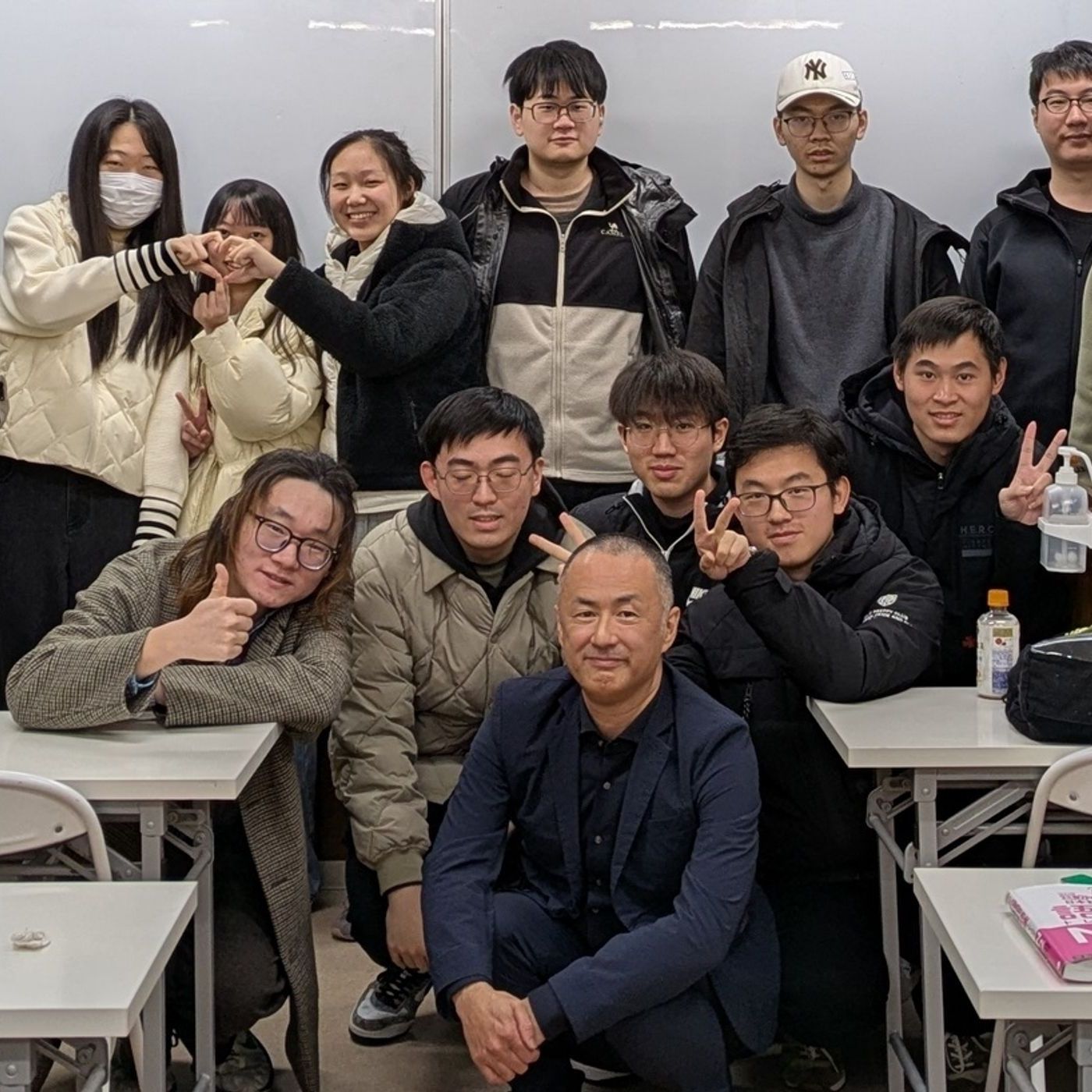
Japanese teacher Shishoh & his students 日语老师示承和他的学生们
by Shishoh Shinoda
Welcome to “Japanese Teacher Shinoda Shishoh and His Students.”This podcast brings you real Japanese, not textbook phrases. Shinoda is a unique teacher—logical, sharp, and surprisingly humorous. He turns grammar into practical tools and everyday conversations into powerful learning moments.Each episode features honest dialogues with students from around the world. You will hear their mistakes, progress, and breakthroughs, along with clear explanations and useful tips you can apply immediately. Topics include daily conversation, business Japanese, job interviews, and study strategies.Shinoda is also an entrepreneur and creative thinker who approaches language like a problem to be solved. He pushes for accuracy but always with encouragement and wit. If you want Japanese that works in real life, beyond JLPT and memorized patterns, this podcast is for you.Come for the language—stay for Shinoda’s humor and the voices of his students.<a rel="noopener noref
-
43
Australia guy and Japanese teacher talk about Olympic coach 2
The conversation begins with a discussion about the Chinese New Year celebration and then transitions into a discussion about the emotional impact of the Olympics.TakeawaysChinese New Year celebrationOlympics and emotional impactChapters00:00 Chinese New Year Celebration
-
42
Australia guy made Ramen, talking in Japanese
The conversation covers a culinary exchange between Australia and Tokyo, including a discussion about ramen and cooking experiences. It also delves into travel experiences, specifically exploring the city of Hakata. The exchange of culinary knowledge and travel experiences forms the core of the conversation.TakeawaysCulinary exchangeTravel experiencesChapters00:00 Culinary Exchange in Australia and Tokyo
-
41
How to pass Housei Univ. Austraila guy and Japanese teacher talking in Japanese
The conversation begins with an introduction and discussion about university acceptance. It then moves on to the topic of university entrance exams, followed by a discussion on language proficiency and its role in the application process. The conversation concludes with a focus on the guest's interest in finance.TakeawaysGlobal Business ProgramLanguage ProficiencyInterest in FinanceChapters00:00 Introduction and University Acceptance
-
40
Chinese student pass Job interview by Shishoh
The conversation begins with an introduction and discussion about a career transition. It then moves on to the topic of interview preparation for a new job opportunity.TakeawaysCareer transitionInterview preparationChapters00:00 Introduction and Career Transition
-
39
Morning conversation between a Luxembourg lawyer and a Japanese teacher
The conversation begins with an introduction and discussion of work schedules, followed by a conversation about the absence of sunrise in Europe.TakeawaysTime differenceSunrise in EuropeChapters00:00 Introduction and Work Schedule
-
38
Engineer Behind Urban Flow & Bouldering Journey talking with Japanese teacher #japaneseconversation
joined by Winston, a systems engineer from Australia, to discuss the fascinating intersection of infrastructure technology and personal physical wellness.Winston shares insights into his recent professional project: developing an advanced system designed to regulate and optimize urban traffic flow. We dive into the complexities of managing real-world data to reduce congestion and improve city living.Beyond the screen, Winston is an avid bouldering enthusiast. However, after a recent hiatus, a return to the climbing wall resulted in a shoulder injury, sparking a conversation about the physical demands of the sport and the importance of listening to one's body. As he recovers, Winston is shifting his focus toward low-impact recovery, planning to trade the climbing chalk for the swimming pool. Join us as we explore his journey through technical challenges and his new path toward fitness and rehabilitation.*Español* En este episodio, nos acompaña Winston, un ingeniero de sistemas australiano, para conversar sobre la fascinante intersección entre la tecnología de infraestructura y el bienestar físico personal. Winston comparte detalles sobre su reciente proyecto profesional: el desarrollo de un sistema avanzado diseñado para regular y optimizar el flujo del tráfico urbano. Analizamos las complejidades de gestionar datos en tiempo real para reducir la congestión y mejorar la vida en las ciudades.Fuera de la oficina, Winston es un entusiasta de la escalada en bloque (bouldering). Sin embargo, tras un breve descanso, su regreso a las paredes de escalada le provocó una lesión en el hombro, lo que dio lugar a una charla sobre las exigencias físicas de este deporte y la importancia de escuchar al propio cuerpo. Mientras se recupera, Winston está enfocando su rutina hacia actividades de bajo impacto, planeando cambiar el magnesio de escalada por la piscina. Acompáñenos a explorar su trayectoria a través de los desafíos técnicos y su nuevo camino hacia la salud y la rehabilitación.*中国語 (简体中文)* 在本期节目中,我们邀请到了来自澳大利亚的系统工程师 Winston,共同探讨基础设施技术与个人健康之间的奇妙交汇。Winston 分享了他最近的职业项目:开发一套旨在调节和优化城市交通流量的先进系统。我们深入探讨了如何利用现实数据缓解交通拥堵并改善城市生活的复杂性。在工作之余,Winston 是一位攀岩(抱石)爱好者。然而,在久违地重返攀岩墙后,他不慎弄伤了肩膀,这引发了我们关于运动强度以及倾听身体信号重要性的讨论。在康复期间,Winston 正将重心转向低冲击力的运动,计划将攀岩粉换成游泳池。欢迎收听本期节目,了解他在技术挑战中的探索,以及他通往健身与康复的新路径。
-
37
Working Holiday to a Dream Job in Japan — French Man’s Real Career Journey #workingholidayinjapan
The conversation covers the guest's interest in Japan, career journey, influence of anime and manga, travel experience, challenges of obtaining a working holiday visa, and a comparison of living in Tokyo and Osaka. The guest's cultural influence on career choices and the impact of anime and manga on foreign interest in Japan are key takeaways. The conversation covers the speaker's work experience in Japan, transition to job hunting, and the use of recruitment agencies. It also delves into interview preparation and experience, as well as advice for job seekers.TakeawaysCultural Influence on Career ChoicesImpact of Anime and Manga on Foreign Interest in Japan Job hunting in JapanInterview preparationUsing recruitment agenciesChapters00:00 Comparison of Living in Tokyo and Osaka20:57 Using Recruitment Agencies28:35 Advice for Job SeekersThis episode tells a powerful and honest story about perseverance, adaptability, and courage in a foreign country. Shishoh Shinoda sits down with Gaille, a French man who successfully found a full-time job in Japan after starting his journey on a Working Holiday visa.Gaille came to Japan from France with hope, curiosity, and uncertainty. He chose Osaka as his home and immediately began working to support himself. While many people imagine life in Japan as exciting and glamorous, the reality can be far more demanding—especially when job hunting in a second language. Gaille worked two customer-service jobs at the same time: one in a restaurant in Osaka, and another at teamLab in Kyoto, a world-famous digital art space. These jobs required constant communication with Japanese customers, teamwork with Japanese staff, and the mental strength to keep smiling even on exhausting days.While working long hours, Gaille never gave up on his goal of finding a professional job in Japan. He studied Japanese seriously, learned how Japanese companies think, rewrote his resume again and again, and attended interviews with determination. Rejections came—but he didn’t stop.Eventually, his efforts paid off. Gaille was accepted by one of the largest electronics manufacturers in Japan, a company known worldwide. For Shishoh, who supported and guided him through language learning and interview practice, this success was deeply moving. This episode is not just about getting a job—it’s about resilience, trust, and believing in yourself when the odds feel overwhelming.If you are dreaming of working in Japan, or if you are struggling in a foreign country, this conversation will give you realistic insight, motivation, and hope.----------------------------------------🎧 DESCRIPCIÓN DEL PODCAST (ESPAÑOLEste episodio presenta una historia real e inspiradora sobre perseverancia, adaptación y valentía en el extranjero. Shishoh Shinoda conversa con Gaille, un hombre francés que logró encontrar empleo en Japón después de comenzar su camino con una visa de Working Holiday.Gaille llegó a Japón desde Francia sin garantías, solo con determinación y ganas de aprender. Decidió vivir en Osaka y empezó trabajando para mantenerse económicamente. Mientras muchas personas imaginan Japón como un lugar fácil y fascinante, la realidad puede ser dura, especialmente cuando se busca trabajo en otro idioma.----------------------------------------🎧 播客说明本期播客讲述的是一个真实而感人的故事,关于坚持、适应以及在异国他乡不断挑战自我的勇气。篠田师匠与来自法国的盖尔(Gaille)展开对谈,分享他如何从打工度假签证起步,最终成功在日本找到正式工作的经历。
-
36
What It Really Takes to Work with Doctors: A Pakistani Perspective in Japan
The conversation covers the guest's background, education, career path, work experience, challenges in the Japanese medical industry, and advice for foreigners moving to Japan. It also delves into the guest's current job, the use of medical devices and AI in healthcare, and the perception of Japan from an international perspective. The conversation concludes with a discussion on personal hobbies and health.TakeawaysInsights into the challenges of working in the Japanese medical industryAdvice for foreigners moving to JapanChapters00:00 Introduction and Background05:06 Challenges in the Japanese Medical Industry11:26 Perception of Japan from an International Perspective16:37 Personal Hobbies and Health
-
35
Engineer Behind Urban Flow & His Bouldering Journey talking with Japanese teacher
joined by Winston, a systems engineer from Australia, to discuss the fascinating intersection of infrastructure technology and personal physical wellness. Winston shares insights into his recent professional project: developing an advanced system designed to regulate and optimize urban traffic flow. We dive into the complexities of managing real-world data to reduce congestion and improve city living.Beyond the screen, Winston is an avid bouldering enthusiast. However, after a recent hiatus, a return to the climbing wall resulted in a shoulder injury, sparking a conversation about the physical demands of the sport and the importance of listening to one's body. As he recovers, Winston is shifting his focus toward low-impact recovery, planning to trade the climbing chalk for the swimming pool. Join us as we explore his journey through technical challenges and his new path toward fitness and rehabilitation.Español En este episodio, nos acompaña Winston, un ingeniero de sistemas australiano, para conversar sobre la fascinante intersección entre la tecnología de infraestructura y el bienestar físico personal. Winston comparte detalles sobre su reciente proyecto profesional: el desarrollo de un sistema avanzado diseñado para regular y optimizar el flujo del tráfico urbano. Analizamos las complejidades de gestionar datos en tiempo real para reducir la congestión y mejorar la vida en las ciudades.Fuera de la oficina, Winston es un entusiasta de la escalada en bloque (bouldering). Sin embargo, tras un breve descanso, su regreso a las paredes de escalada le provocó una lesión en el hombro, lo que dio lugar a una charla sobre las exigencias físicas de este deporte y la importancia de escuchar al propio cuerpo. Mientras se recupera, Winston está enfocando su rutina hacia actividades de bajo impacto, planeando cambiar el magnesio de escalada por la piscina. Acompáñenos a explorar su trayectoria a través de los desafíos técnicos y su nuevo camino hacia la salud y la rehabilitación.中国語 (简体中文) 在本期节目中,我们邀请到了来自澳大利亚的系统工程师 Winston,共同探讨基础设施技术与个人健康之间的奇妙交汇。Winston 分享了他最近的职业项目:开发一套旨在调节和优化城市交通流量的先进系统。我们深入探讨了如何利用现实数据缓解交通拥堵并改善城市生活的复杂性。在工作之余,Winston 是一位攀岩(抱石)爱好者。然而,在久违地重返攀岩墙后,他不慎弄伤了肩膀,这引发了我们关于运动强度以及倾听身体信号重要性的讨论。在康复期间,Winston 正将重心转向低冲击力的运动,计划将攀岩粉换成游泳池。欢迎收听本期节目,了解他在技术挑战中的探索,以及他通往健身与康复的新路径。
-
34
A Miracle Pass! Celebrating Valentin’s JLPT N3 Success: From "I Failed" to Victory with Shishoh
In this heartwarming episode, Shishoh Shinoda sits down with Valentin from Italy to celebrate a truly unexpected milestone: passing the JLPT N3!Despite a stressful self-assessment after the exam that led him to believe he had failed, the official results brought a wonderful surprise. We dive into the emotional rollercoaster of waiting for the scores, the specific challenges Valentin faced during his studies, and the sheer joy of achieving a goal that seemed out of reach.Whether you are currently struggling with your Japanese studies or waiting for your own exam results, Valentin’s journey is a powerful reminder that hard work often pays off in ways we don't expect. Join us for an inspiring conversation filled with laughter, relief, and practical insights into the N3 journey. Congratulations, Valentin!🇬🇧 English (approx. 1000 characters)Valentin’s success story is nothing short of remarkable.After moving from Luxembourg to Italy, he decided to challenge himself by learning Japanese seriously. His goal was the JLPT N3 exam—a level that many learners underestimate, but which actually requires solid grammar, vocabulary, reading comprehension, and listening skills.What makes this achievement truly impressive is the time frame. Valentin passed JLPT N3 after studying Japanese for only one year. Even more striking is the fact that he himself had very little confidence before the exam. He often said, “I don’t think I’m ready,” or “Maybe I should wait another year.”But instead of giving up, we studied side by side. Lesson by lesson, mistake by mistake, we analyzed his weak points, rebuilt his foundation, and turned anxiety into concrete strategies. This was not a one-sided teaching process—it was teamwork.When the result came, his joy exploded. All the doubts vanished in an instant, replaced by pride, relief, and pure happiness. His success proves that with the right guidance, consistency, and mutual trust, even ambitious goals can be achieved in a surprisingly short time.Valentin’s journey shows that Japanese is not about talent—it is about commitment, structure, and believing in the process.🇨🇳 中文(约1000字)瓦伦丁从卢森堡移居到意大利后,决定认真挑战日语学习,并把目标定在了JLPT N3。很多人低估了N3的难度,但实际上,它要求学习者在语法、词汇、阅读和听力方面都具备扎实的基础。真正令人惊叹的是,他学习日语仅仅一年就通过了N3考试。更重要的是,在考试前,瓦伦丁本人并没有自信。他反复说:“我觉得还没准备好”“也许明年再考比较稳妥。”但我们没有选择退缩,而是并肩前行。我们一起分析错误、拆解弱点、重新构建学习方法,把焦虑转化为可执行的策略。这并不是单方面的教学,而是真正的“二人三脚”。当合格结果公布的那一刻,他的喜悦彻底爆发。所有的不安和怀疑,在一瞬间化为自豪、安心与纯粹的快乐。他的成功证明了:学习日语并不是天赋的比拼,而是方法、持续性,以及在正确引导下对过程的信任。瓦伦丁的经历告诉我们,只要方向正确、努力持续,短时间内取得突破是完全可能的。🇮🇹 Italiano (circa 1000 caratteri)La storia di Valentin è davvero straordinaria.Dopo essersi trasferito dal Lussemburgo all’Italia, ha deciso di affrontare seriamente lo studio della lingua giapponese, ponendosi come obiettivo il JLPT N3. Un livello spesso sottovalutato, ma che in realtà richiede una solida comprensione di grammatica, vocabolario, lettura e ascolto.Ciò che rende questo risultato eccezionale è il tempo: Valentin ha superato il JLPT N3 dopo solo un anno di studio.
-
33
A Real Conversation with a Ukrainian Woman: Work, Hobbies, and Neighbor Conflicts | Japanese Teacher
The conversation begins with an introduction and discussion about the guest's work as a video editor. It then transitions to a conversation about the guest's new apartment and noise issues. The guest also talks about creating new words and their experience with language models like GPT-3.TakeawaysVideo editingOnline workCreating new words📝 YouTube Description(English)In this podcast episode, Japanese teacher Shishoh Shinoda sits down for an honest and relaxed conversation with a Ukrainian woman, exploring her everyday life beyond headlines and stereotypes.They talk about her work and professional background, what she enjoys doing in her free time, and how her hobbies reflect her personality and values. The conversation then naturally moves into a very human topic: neighbor troubles. From cultural misunderstandings to small conflicts that arise in daily life, she shares real experiences that many listeners around the world can relate to.This episode is not an interview in a strict sense, nor a formal language lesson. It is a genuine dialogue between two people from different cultures, built on curiosity, respect, and humor. The discussion flows freely, touching on how cultural backgrounds shape communication styles, personal boundaries, and expectations in everyday situations.Perfect for listeners interested in:Cross-cultural conversationsUkrainian perspectives on daily lifeReal, unscripted podcast dialogueLanguage learning through natural conversationJapanese teacher–student style discussions with depth and warmthWhether you are learning Japanese, interested in Ukraine, or simply enjoy thoughtful conversations about life, work, and relationships, this episode offers a calm and engaging listening experience.🎧 Sit back, listen, and enjoy a real conversation across cultures.
-
32
2026.1.31 Israel guy & Japanese teacher How to pass N1 JLPT
Shishoh-sensei sits down with Neo, a sharp and endlessly curious man from Israel who has just conquered one of the most intimidating language exams in the world: JLPT N1. But don’t expect a dry, textbook-style “study tips” lecture. This is a lively, humorous, and surprisingly human conversation.Neo talks candidly about his journey—how he got lost in kanji forests, survived endless listening sections, and occasionally wondered whether Japanese was actually invented to test human patience. Shishoh-sensei, with his trademark wit and calm confidence, responds with stories, jokes, and brutally honest advice that only a seasoned Japanese teacher can deliver.What makes this conversation special is the contrast: Neo’s analytical, slightly overthinking mindset meets Shishoh’s relaxed, almost philosophical approach to language learning. They laugh about mistakes, argue playfully about the “right” way to study, and agree on one thing—passing N1 is not about being perfect, but about understanding how Japanese thinks.This episode is packed with practical insights, motivational moments, and plenty of laughter. Whether you are aiming for JLPT N1 or just enjoy hearing two smart people joke about serious learning, this conversation will leave you inspired—and smiling.🇪🇸 Introducción en EspañolEn este episodio, el maestro Shishoh conversa con Neo, un hombre israelí inteligente y curioso que acaba de lograr una hazaña impresionante: aprobar el JLPT N1, uno de los exámenes de japonés más difíciles del mundo. Pero no se trata de una charla rígida ni académica. Es una conversación llena de humor, ironía y reflexiones muy humanas.Neo comparte su experiencia real: la confusión con los kanji, el sufrimiento en la comprensión auditiva y esos momentos existenciales en los que uno se pregunta por qué decidió aprender japonés. Frente a esto, Shishoh-sensei responde con bromas, ejemplos inesperados y consejos directos, fruto de años de enseñanza.La química entre ambos es clave. El enfoque lógico y analítico de Neo choca —en el buen sentido— con la filosofía relajada del maestro, creando un diálogo dinámico y entretenido. Entre risas, llegan a una conclusión clara: aprobar el N1 no es memorizarlo todo, sino entender la mentalidad del idioma japonés.Una charla útil, motivadora y muy divertida para estudiantes serios… que no se toman demasiado en serio.在这一期节目中,日本语教师“师匠老师”与来自以色列的Neo展开了一场轻松又充满智慧的对谈。Neo刚刚通过了被称为“日语学习终极关卡”的 JLPT N1,但这次对话并不是严肃的学习报告,而是一场幽默感十足的杂谈。Neo坦率地分享了自己的学习经历:被汉字折磨、听力考试时大脑一片空白,以及无数次怀疑人生的瞬间。师匠老师则用他特有的冷静与幽默回应,把“学习方法”讲得像人生哲学一样自然。两人的对话充满反差:Neo理性、认真、略带完美主义,而师匠老师则显得从容、洒脱,甚至有点“随性”。正是在这种碰撞中,听众能听到最真实的N1合格秘诀——不是死记硬背,而是理解日语的思维方式。这是一场既有干货、又让人忍不住发笑的对谈。不论你是否准备N1,都能从中获得启发与动力。JLPT N1, Japanese language learning, JLPT study tips, how to pass JLPT N1, Japanese exam preparation, language learning podcast, Japanese conversation, studying Japanese abroad, Israeli Japanese learner, Shishoh sensei, advanced Japanese, kanji study, listening practice, motivation for language learners, funny language learning stories, bilingual life, serious study funny talk, Japanese mindset, learning strategies, language exam success
-
31
2026,1,31 Chinese IT engineer and a Japanese teacher. Favorite foods and fruits. N1, JLPT.
The conversation covers topics related to favorite foods and fruits, as well as engaging with AI for knowledge and conversation.TakeawaysFavorite foods and fruitsEngaging with AI for knowledge and conversationIn this delightful and unexpectedly philosophical conversation, Shishoh-sensei sits down with Rabbi, a Chinese IT engineer who is currently working in Japan while skillfully wielding AI as his daily tool of survival. What begins as a light chat about favorite foods and fruits soon turns into a humorous cultural exchange that feels both casual and oddly profound.Rabbi, with the calm logic of an engineer and the curiosity of a foodie, explains how his tastes have evolved since coming to Japan. He talks about the shock of discovering how seriously Japan treats food—where even a simple apple seems to carry a backstory, a philosophy, and possibly a moral lesson. Shishoh-sensei, ever playful and sharp-tongued, counters with witty observations about how engineers analyze food the same way they analyze code: optimizing flavor, efficiency, and emotional output.The two laugh over misunderstandings—why some fruits are treated like luxury items, why certain foods feel “too perfect,” and how AI might someday recommend the ideal fruit based on mood, weather, and existential anxiety. Beneath the jokes, the conversation gently reveals how food becomes a bridge between cultures, professions, and ways of thinking. It’s a warm, clever dialogue where laughter does most of the teaching.🇪🇸 EspañolEn esta conversación divertida y sorprendentemente profunda, el maestro Shishoh charla con Rabbi, un ingeniero informático chino que trabaja en Japón utilizando la inteligencia artificial como parte esencial de su vida diaria. Lo que comienza como una simple charla sobre comidas y frutas favoritas rápidamente se convierte en un intercambio cultural lleno de humor e ingenio.Rabbi explica cómo su relación con la comida ha cambiado desde que llegó a Japón. Le llama la atención cómo incluso una fruta común puede ser tratada casi como una obra de arte. Shishoh-sensei responde con bromas afiladas, comparando la forma en que los ingenieros piensan sobre la comida con la manera en que optimizan algoritmos: todo debe tener sentido, equilibrio y propósito.Entre risas, hablan de frutas carísimas, sabores “demasiado perfectos” y la posibilidad de que algún día la IA recomiende la fruta ideal según el estado de ánimo. Más allá de las bromas, la charla muestra cómo la comida une culturas, generaciones y formas de pensar. Es una conversación ligera, inteligente y muy humana.🇨🇳在这场轻松又充满智慧的对话中,日本语老师师匠先生与在日本工作的中国IT工程师拉比先生展开了一次妙趣横生的交流。拉比是一位善于运用AI技术的工程师,而这次他们聊的却不是代码,而是食物和水果。拉比分享了自己来到日本后饮食观念的变化。他惊讶地发现,在日本,连水果都仿佛有“身份”和“哲学”,价格高得让人忍不住思考人生。师匠先生则用幽默的方式调侃工程师看待食物的方式——就像分析程序一样,讲究效率、结构和最终体验。两人一边笑谈昂贵的水果,一边畅想未来AI是否能根据心情、天气甚至人生阶段推荐最合适的水果。在欢笑背后,这段对话自然地展现了饮食如何成为文化交流的桥梁,也让人感受到不同背景的人之间真诚而温暖的连接。Japanese language podcast, cultural conversation, Chinese engineer in Japan, AI engineer life, food and culture, favorite foods, favorite fruits, cross cultural humor, learning Japanese
-
30
2026-1-30 Australia student & Japanese teacher, How to pass JLPT N2
The conversation begins with a celebration of success and the use of AI for language learning. It then transitions to a discussion about preparation for university entrance exams, highlighting the importance of language study and future plans.TakeawaysLanguage learning with AIPreparation for university entrance🎙️ Podcast Introduction (English)Today’s episode features an inspiring and deeply human conversation between Shishoh Shinoda, a Japanese language teacher known for his sharp insight and warm humor, and Mac, his student from Australia, who has just achieved a major milestone: passing the JLPT N2.Rather than focusing only on textbooks or grammar tricks, this episode explores the real secrets behind Mac’s success. How did he stay consistent? What moments almost made him quit? And how did Shinoda-sensei guide him through doubt, plateaus, and frustration—not just as a teacher, but as a mentor?The conversation unfolds naturally, with Mac honestly reflecting on his learning habits, daily routines, and the psychological shifts that helped him move from “studying Japanese” to living with Japanese. Shinoda-sensei responds with thoughtful commentary, breaking down why certain methods worked, and why mindset matters just as much as vocabulary lists.This episode is not only for JLPT learners. It speaks to anyone pursuing a long-term goal, reminding us that progress is rarely linear, and that success often comes quietly—after patience, repetition, and trust in the process.Calm, reflective, and quietly motivating, this dialogue captures the joy of genuine achievement and the bond between teacher and student forged through perseverance.🎙️ Descripción del Podcast (Español)El episodio de hoy presenta una conversación sincera e inspiradora entre Shishoh Shinoda, profesor de japonés reconocido por su profundidad intelectual y su humor sereno, y Mac, su alumno australiano, quien acaba de lograr un gran objetivo: aprobar el JLPT N2.En lugar de limitarse a técnicas de estudio o consejos superficiales, la charla se adentra en los verdaderos factores que llevaron al éxito de Mac. ¿Cómo mantuvo la constancia? ¿Qué dificultades emocionales enfrentó? ¿Y de qué manera Shinoda-sensei lo acompañó, no solo como docente, sino como guía?Mac comparte con honestidad su rutina diaria, sus errores, sus dudas y los cambios mentales que marcaron la diferencia en su aprendizaje. Shinoda-sensei analiza estas experiencias con claridad, explicando por qué ciertos enfoques funcionan y cómo la actitud influye profundamente en los resultados.Este episodio no es solo para quienes preparan el JLPT. Es una conversación universal sobre disciplina, paciencia y crecimiento personal. Una prueba de que el éxito no siempre es ruidoso, sino el resultado silencioso de la perseverancia.Una charla tranquila, reflexiva y profundamente motivadora.🎙️ 播客介绍(中文)本期播客是一段温暖而富有深度的对话,由日本语教师篠田师匠(Shishoh Shinoda)与他的澳大利亚学生Mac共同展开。今天,Mac 刚刚成功通过了 JLPT N2 考试,这是他长期努力的成果。这期节目并不是简单地分享学习技巧,而是深入探讨了“成功背后的真正原因”。Mac 坦诚地讲述了自己的学习节奏、心理挣扎,以及几次差点想要放弃的时刻。师匠则以冷静而睿智的视角,分析哪些方法真正奏效,以及为什么“学习态度”往往比学习方法更重要。对话中没有夸张的说教,只有真实的经验交流。Mac 从“学日语的人”,逐渐变成了“用日语生活的人”。这种转变,正是他通过 N2 的关键。
-
29
2026-1-30 Japanese teacher & Luxembourg lawyer talking food, sports
The conversation covers topics related to favorite foods, cultural experiences through sports, and the influence of sports on cultural references. It delves into the personal preferences of the speakers and their experiences with sports and cultural activities.TakeawaysFavorite sports and activitiesCultural experiences through sportsChapters00:00 Favorite Foods and Cultural Preferences
-
28
2026-1-30 Japanese teacher & Luxembourg lawyers talking food, sports
The conversation covers topics related to favorite foods, cultural experiences through sports, and the influence of sports on cultural references. It delves into the personal preferences of the speakers and their experiences with sports and cultural activities.https://motiview.appTakeawaysFavorite sports and activitiesCultural experiences through sportsChapters00:00 Favorite Foods and Cultural Preferences
-
27
Japanese teacher and a Chinese assistant professor about tempura and fried chicken
🎙️ What happens when a Japanese language master with a deep love for food sits down with a brilliant Chinese female professor to talk about tempura and karaage?You get a conversation that starts with crispy batter and juicy fried chicken—and slowly unfolds into a rich, humorous, and surprisingly profound exploration of culture, memory, identity, and the meaning of everyday life.In this unique podcast episode, Shishoh Shinoda, a veteran Japanese teacher known for his sharp insights and warm humor, welcomes Weichang, a Chinese professor with an exceptional academic background and a genuine curiosity about Japanese culture. Their meeting place is not a lecture hall or a conference room, but the delicious and familiar world of Japanese fried food.At first glance, tempura and karaage may seem like simple comfort foods. But as the conversation deepens, these dishes become powerful symbols. Tempura, with its delicate technique and emphasis on lightness, opens the door to discussions about precision, tradition, and aesthetic balance in Japanese culture. Karaage, bold, juicy, and deeply satisfying, leads to reflections on everyday life, popular culture, and the kind of food that brings people together regardless of background.What makes this episode truly special is the chemistry between the two speakers. Shishoh brings stories from his life as an educator, entrepreneur, and food shop owner, while Weichang adds the perspective of a Chinese intellectual who has observed Japan both from the outside and from within academic circles. Their dialogue moves effortlessly between laughter and serious thought—sometimes within the same sentence.Listeners will hear:Why food is often the fastest way to understand a cultureHow tempura and karaage reflect different philosophies of cooking and livingPersonal memories connected to taste, smell, and shared mealsCultural differences and surprising similarities between Japan and ChinaAnd why “simple food” is never really simpleThis is not a food review podcast. It’s a human conversation, grounded in everyday experiences but enriched by deep knowledge and mutual respect. The discussion feels like sitting at a table with two fascinating people, listening as the topic naturally drifts from food to education, from culture to personal values, and back again.For learners of Japanese culture, lovers of food, or anyone interested in thoughtful cross-cultural dialogue, this episode offers something rare: a sense of warmth, intelligence, and authenticity. No scripts. No pretension. Just real conversation—crispy on the outside, rich on the inside.Whether you’re a fan of tempura, a karaage enthusiast, or simply someone who enjoys meaningful conversations that start with food and end with insight, this episode will leave you hungry—in the best possible way.Press play, relax, and enjoy a conversation where fried food becomes a bridge between cultures.
-
26
Japanese teacher & Australia student talking weather, job, book, hobbies
The conversation covers a range of topics including weather comparison between Australia and Japan, the occupation and interests of the speakers, programming of traffic signals, and food preferences. The dialogue provides insights into the cultural and lifestyle differences between the two speakers.TakeawaysWeather comparisonOccupation and interestsFood preferencesChapters00:00 Weather Comparison08:01 Traffic Signal Programming🎙️ EnglishIn this podcast episode, Shishoh, a Japanese language teacher known for his sharp insights and warm humor, sits down with Winston, an Australian living in Melbourne. Their conversation flows naturally through topics that reveal both the city and the person behind it.Winston talks about Melbourne’s famously changeable climate — how one day can bring sunshine, wind, and rain all within a few hours — and how this unique weather shapes daily life, mindset, and even humor. The discussion then turns to Winston’s personal interests: the sports he loves, the way Australians relate to physical activity, and how sports culture in Melbourne differs from that in other cities around the world.Beyond sports, Winston shares his hobbies and reading habits, introducing books that have influenced his thinking and values. Through these stories, listeners gain a deeper understanding of Australian culture, not as stereotypes, but as lived experience.This episode is not an interview in the formal sense, but a relaxed, intelligent conversation between teacher and learner, friend and friend. It offers language learners, travelers, and curious minds a vivid glimpse into life in Melbourne — and into the thoughts of a thoughtful Australian who enjoys reflecting on culture, climate, and the small details of everyday life.🎙️ 中文宣传文在这一期播客中,日本语教师师匠先生与居住在墨尔本的澳大利亚人温斯顿展开了一场轻松而富有深度的对话。话题从墨尔本独特多变的气候开始,自然地延伸到城市生活方式与个人兴趣。温斯顿生动地描述了墨尔本“一天四季”的天气特点,以及这种气候如何影响当地人的生活节奏、思维方式,甚至幽默感。随后,两人聊到了他热爱的运动,探讨了澳大利亚的体育文化,以及体育在个人生活和社会关系中所扮演的重要角色。除了运动,温斯顿还分享了自己的兴趣爱好和喜欢的书籍,谈到阅读如何塑造他的价值观与世界观。这些内容让听众看到一个真实而立体的澳大利亚人形象,而不是停留在表面的文化印象。这期播客并非正式采访,而是一场自然流畅、充满思考的交流。对于语言学习者、对海外生活感兴趣的人,或是单纯喜欢跨文化对话的听众来说,这一期节目将带来关于墨尔本、关于澳大利亚人日常思考方式的真实视角。🎙️ In questo episodio del podcast, Shishoh, insegnante di giapponese noto per la sua capacità di stimolare conversazioni profonde e spontanee, dialoga con Winston, un australiano che vive a Melbourne. Il loro scambio è rilassato, intelligente e ricco di sfumature culturali.Winston racconta il clima particolare di Melbourne, famoso per i suoi cambiamenti improvvisi, e spiega come questo influisca sulla vita quotidiana e sul modo di pensare delle persone. La conversazione prosegue poi sui suoi interessi personali: gli sport che ama, il ruolo dello sport nella società australiana e le differenze culturali rispetto ad altri Paesi.Non manca un momento dedicato ai libri e alla lettura. Winston parla dei testi che lo hanno colpito maggiormente e di come la lettura abbia contribuito a formare il suo punto di vista sul mondo. Attraverso queste
-
25
Japanese teacher & Israel guy hoping to enter Japanese Univ. talking novels
Bridging Worlds Through Words: The Literary and Ambitious Journey of Neo and Shinoda ShishoIntroduction: An Unlikely Duo Bound by LanguageIn the vast landscape of podcasts covering language learning and cross-cultural experiences, few offer a dynamic as compelling and specific as the new series hosted by Shinoda Shisho and Neo. This podcast is not merely a series of Japanese lessons; it is an ongoing dialogue between a dedicated mentor and an exceptionally ambitious student, chronicling a journey that spans continents, literary genres, and future business dreams.The hosts bring vastly different backgrounds to the microphone. On one side is Shinoda Shisho ("Shisho" meaning "master" or "teacher" in Japanese), a seasoned Japanese language instructor with a deep appreciation for the nuances of his native tongue. On the other side is Neo, a driven young man hailing from Israel, whose passion for Japan extends far beyond the superficial. Together, they create a space that explores the immense challenges of mastering a second language to an artistic level, and the concrete plans necessary to build a life in a new country.The Literary Connection: Beyond Textbook JapaneseThe heartbeat of this podcast lies in Neo’s extraordinary relationship with the Japanese language. He is not studying Japanese simply to navigate daily life as a tourist; he is studying it to inhabit it creatively.A central theme of their discussions is their shared love for profound literature. Neo is an avid admirer of Keigo Higashino, one of Japan’s most celebrated mystery authors. Specifically, Neo holds Higashino’s masterpiece, The Devotion of Suspect X (容疑者Xの献身), in the highest regard.For an Israeli learner of Japanese, deeply appreciating such a complex work—renowned for its intricate psychological plotting, themes of ultimate sacrifice, and mathematical logic—is a significant achievement. In the podcast, Shinoda Shisho and Neo dissect why this book resonates so powerfully with Neo, using it as a springboard to discuss advanced vocabulary, subtle cultural concepts, and the dark beauty of Higashino’s storytelling.The Ultimate Challenge: Writing the Japanese NovelHowever, Neo is not content with just consuming Japanese literature; he is determined to contribute to it. Perhaps the most fascinating aspect of the podcast is the documentation of Neo’s current project: writing his own original novel, entirely in Japanese.This is a Herculean task for a non-native speaker. The podcast offers listeners a "behind-the-scenes" look at this creative struggle. Shinoda Shisho acts not only as a language teacher but as an editor and literary mentor, guiding Neo through the labyrinthine complexities of Japanese grammar, narrative structure, and emotional expression. They openly discuss the hurdles Neo faces in translating his thoughts into authentic Japanese prose, making the podcast an invaluable resource for advanced language learners who dream of creative expression.The Blueprint for the Future: Economics and International TradeWhile literature fuels Neo’s artistic soul, he possesses an equally strong pragmatic side. The podcast also serves as a platform to discuss his concrete, ambitious blueprint for his future in Japan.Neo’s eyes are firmly set on moving to Japan. His academic goal is to gain admission to a Japanese university to major in economics. He views understanding the financial and economic backbone of the country as essential to his long-term integration and success.But the university degree is just a stepping stone. Neo reveals his ultimate career ambition in the podcast: to establish his own trading company after graduation. He envisions a future where he can leverage his multi-cultural background—connecting Israel, Japan, and the wider world through commerce
-
24
Japanese teacher & Chinese assistant professor about environmental issues
🎙️In this episode of the podcast, Japanese language teacher Shishoh Shinoda sits down for a deep and thought-provoking conversation with Weiqian, a passionate Chinese researcher specializing in environmental issues. What begins as a friendly dialogue soon develops into a rich exploration of one of the most urgent challenges facing our world today: air pollution and the removal of environmental contaminants.This is not a dry academic lecture. Nor is it a shallow discussion filled with buzzwords. Instead, this episode offers listeners something rare and valuable: a genuine cross-cultural conversation in which knowledge, lived experience, and curiosity meet.Weiqian brings to the table her strong background in environmental research, particularly in the areas of air quality, atmospheric pollution, and pollution control technologies. She explains complex topics—such as particulate matter, industrial emissions, and pollutant filtration—in a way that is both accurate and accessible. Even listeners without a scientific background will find themselves following along with interest, gaining a clearer understanding of how air pollution actually works and why it is so difficult to control.Shishoh, on the other hand, plays the role of the thoughtful interviewer. As a Japanese language teacher who has spent years speaking with students from all over the world, he knows how to ask the kinds of questions that invite deeper thinking. He challenges assumptions, asks for clarification, and occasionally steps back to reflect on the broader human and social implications of environmental problems. His perspective keeps the conversation grounded, relatable, and surprisingly personal.One of the most compelling aspects of this episode is how it connects global environmental issues with individual responsibility and social systems. Air pollution is not discussed as an abstract concept, but as something that affects real people, real cities, and real lives. Weiqian shares insights into how pollution impacts daily life in different regions, how government policy and industrial behavior shape air quality, and why technological solutions alone are not enough without social awareness and political will.The discussion also dives into the science of pollution removal. From advanced filtration systems to innovative chemical and physical processes used to capture harmful substances, Weiqian explains what is currently possible—and what still remains out of reach. Listeners will come away with a clearer picture of both the promise and the limitations of modern environmental technology.At the same time, the conversation never loses its human warmth. There are moments of laughter, curiosity, and mutual respect. Shishoh and Weiqian do not always immediately agree, but that is precisely what makes the dialogue engaging. Their exchange models something increasingly rare in today’s world: intelligent disagreement paired with genuine listening.Another unique feature of this podcast episode is its multilingual and multicultural background. Although the discussion is conducted in a shared language, the perspectives come from different educational systems, cultural histories, and social realities. This gives the conversation a depth that cannot be achieved in a purely domestic or monolingual context. Environmental problems do not respect national borders, and this episode reflects that truth beautifully.Listeners who are interested in environmental science, sustainability, global policy, or cross-cultural dialogue will find this episode especially rewarding. But even those who simply enjoy thoughtful conversation between intelligent and curious people will be drawn in. This is an episode that invites you not only to learn, but to think—and perhaps to rethink your own assumptions about pollution.
-
23
Japanese teacher & Italian student talking his dream, hobbies
A Deep and Thought-Provoking Conversation: Shishoh Sensei Talks with Valentin from ItalyIn this special episode of the podcast, Shishoh Sensei welcomes Valentin, a highly intelligent and ambitious student from Italy who dreams of becoming a diplomat at the Ministry of Foreign Affairs. What unfolds is not a casual chat, but a rich and intellectually stimulating dialogue that crosses borders, disciplines, and generations.Valentin is not only a student with a clear career goal; he is a sharp political thinker with a deep interest in international relations, diplomacy, and global power dynamics. His understanding of world politics, European affairs, and Japan’s position on the global stage is remarkable, especially for someone still in the academic phase of his life. From the very beginning of the conversation, it becomes clear that this episode is designed for listeners who enjoy serious ideas, structured thinking, and meaningful discussion.Shishoh Sensei, known for his ability to guide conversations with both rigor and warmth, skillfully draws out Valentin’s perspectives. Rather than lecturing, the two engage in a genuine exchange of ideas. They discuss what it truly means to become a diplomat—not as a title, but as a lifelong commitment to negotiation, responsibility, and ethical judgment. Valentin speaks candidly about why he chose this path, what inspired him to aim for the Ministry of Foreign Affairs, and how he prepares himself intellectually and mentally for such a demanding career.The conversation naturally expands into broader political themes. They touch on international diplomacy, the role of nation-states in a rapidly changing world, and how young people today perceive global responsibility. Valentin offers insights shaped by his European background, while Shishoh Sensei provides a Japanese perspective grounded in experience, history, and cultural nuance. This contrast does not create conflict; instead, it enriches the discussion, revealing how different political cultures can complement one another.One of the most compelling aspects of this episode is its clarity. Complex political ideas are not simplified into slogans, nor are they hidden behind jargon. Instead, they are carefully unpacked through dialogue. Listeners who are interested in politics, international relations, or public service will find themselves nodding along, reflecting, and occasionally pausing the episode just to think.Language learners will also find great value here. The conversation demonstrates how intellectual discussion can be conducted calmly, respectfully, and logically. It is a powerful example of how language is used not just to communicate information, but to shape arguments, express uncertainty, and build mutual understanding. This makes the episode especially valuable for advanced learners of Japanese and English who aspire to discuss serious topics at a high level.What makes this episode truly stand out is its tone. Despite the seriousness of the subject matter, the atmosphere remains open and human. Shishoh Sensei’s thoughtful questions create space for Valentin to speak freely, while Valentin’s sincerity and discipline give weight to every answer. There is no performance here—only honest thinking, careful listening, and intellectual curiosity.This podcast episode is highly recommended for listeners who are interested in global politics, diplomacy, academic ambition, and cross-cultural dialogue. It is also ideal for young people who are considering careers in public service or international organizations and want to understand what that path really entails.In a world where political discussion is often reduced to noise and polarization, this conversation offers something rare: depth, balance, and respect. Shishoh Sensei and Valentin remind us that serious conversation still matters
-
22
Japanese teacher & Ukrainian student talking Manga Anime Work
In this episode, Shishoh Sensei welcomes T, a Ukrainian woman currently living in Paris, France, for a warm, friendly, and deeply engaging conversation that effortlessly crosses borders, cultures, and lifestyles. What makes this dialogue especially captivating is the natural way personal stories, global experiences, and shared passions come together in one relaxed yet thoughtful exchange.T moved from Ukraine to Paris and now works remotely as an engineer, a lifestyle that allows her to connect with people and cultures far beyond her physical location. Throughout the conversation, she offers honest and insightful reflections on what it means to live between countries, adapt to new environments, and maintain a sense of identity while embracing change. Her perspective is calm, intelligent, and refreshingly down-to-earth, making listeners feel as though they are chatting with a close friend rather than listening to a formal interview.One of the central themes of this episode is T’s deep love for Japanese anime and manga. Far from being a casual fan, she speaks passionately about how Japanese storytelling, visual expression, and character development have influenced her imagination and worldview. She explains which works left the strongest impressions on her, why Japanese creators excel at depicting emotion and inner conflict, and how anime and manga often communicate universal themes that resonate across cultures. Shishoh Sensei skillfully connects these points to language, culture, and the subtle philosophy embedded in Japanese creative works.The conversation naturally flows between topics without ever feeling forced. From everyday life in Paris to remote work as an engineer, T shares what her daily routine looks like and how working from home has reshaped her relationship with time, creativity, and personal freedom. She talks openly about the advantages and challenges of remote work, especially as someone living abroad, offering listeners a realistic picture of modern international lifestyles rather than an idealized fantasy.What makes this episode particularly enjoyable is the tone: light, friendly, and full of small moments of laughter. Shishoh Sensei’s relaxed style encourages spontaneous comments, personal anecdotes, and playful exchanges. Rather than focusing on heavy political or social themes, the conversation centers on human connection—how shared interests like anime, technology, and curiosity about other cultures can bring people together even when their backgrounds are vastly different.Another highlight of the episode is how Japan appears as a cultural bridge. Although neither speaker currently lives in Japan, Japanese anime, manga, and language serve as a common ground that connects Ukraine, France, and Japan in an unexpected way. T explains how Japanese pop culture became part of her life, while Shishoh Sensei adds context from a Japanese perspective, creating a dialogue that feels both informative and emotionally genuine.Listeners who enjoy anime, manga, technology, remote work, or cross-cultural conversations will find this episode especially rewarding. It speaks to a global generation—people who work online, live internationally, and build identity through interests rather than borders. The episode also offers encouragement: curiosity, creativity, and openness can turn cultural differences into sources of joy rather than distance.This podcast episode is perfect for anyone who enjoys relaxed yet meaningful conversations. Whether you are an anime fan, an engineer, a remote worker, a language learner, or simply someone fascinated by how people live across cultures, this conversation offers warmth, insight, and inspiration. It reminds us that friendship and understanding often begin with something simple—shared curiosity and the willingness to listen.
-
21
JPN teacher & Korean student conversation daily life, N1 JLPT
In this episode of the podcast, Shishoh Sensei sits down for a lively and insightful conversation with Kim, a Korean woman who works in graduate school administration. What begins as a casual dialogue quickly unfolds into a rich, multi-layered discussion that bridges Japan and Korea through culture, food, daily life, and contemporary trends.Kim is not just familiar with Japan—she truly understands it. Through her professional experience and personal interest, she has developed a deep knowledge of Japanese society, academic culture, and everyday customs. Throughout the conversation, she shares thoughtful observations about how Japanese universities function behind the scenes, offering listeners a rare glimpse into the administrative world that supports graduate students. Her explanations are clear, grounded, and refreshingly honest, making complex systems easy to understand even for those unfamiliar with academia.One of the most engaging aspects of this episode is Kim’s cultural fluency. She speaks with ease about Japanese traditions, social norms, and unspoken rules, highlighting subtle differences that are often overlooked by outsiders. Rather than presenting Japan through stereotypes, she describes it as a living, evolving society—one shaped by history but constantly adapting to modern realities. Shishoh Sensei skillfully guides the conversation, asking questions that bring out both humor and depth, allowing listeners to feel as if they are part of the discussion.Food, of course, plays a central role. Kim’s knowledge of Japanese cuisine goes far beyond sushi and ramen. She talks enthusiastically about regional dishes, everyday comfort foods, and the cultural meaning behind what people eat and when they eat it. Her descriptions are vivid and personal, revealing how food reflects values such as seasonality, balance, and community in Japan.The conversation then naturally shifts to Korea, where Kim truly shines as a cultural insider. She introduces listeners to food trends currently popular in Korea, from street food innovations to viral café items and evolving home-cooking styles. These trends are not discussed superficially; instead, Kim explains why certain foods become popular, how social media influences eating habits, and what these trends say about contemporary Korean society. For listeners interested in Korea beyond K-pop and dramas, this section offers fresh and authentic insight.What makes this episode particularly compelling is the way Japan and Korea are compared—not competitively, but thoughtfully. Differences in taste, lifestyle, and social expectations are explored with curiosity and mutual respect. Shishoh Sensei’s perspective as a Japanese language teacher adds another layer, connecting cultural discussion with language learning and communication. The result is a conversation that feels both educational and deeply human.Despite the richness of the topics, the tone of the episode remains warm and approachable. There are moments of laughter, small personal anecdotes, and spontaneous reactions that make the dialogue feel natural rather than scripted. Kim’s calm intelligence and Shishoh Sensei’s playful yet incisive style create an excellent balance, keeping listeners engaged from start to finish.This podcast episode is ideal for anyone interested in Japan, Korea, cross-cultural exchange, food culture, or the realities of academic life. Whether you are a student, a language learner, a foodie, or simply someone curious about how neighboring cultures influence and understand each other, this conversation offers something meaningful. It reminds us that culture is best understood not through textbooks, but through genuine dialogue between people who live it every day.
-
20
JPN teacher & Australia student studying to enter JP Univ. N2 JLPT
What happens when a seasoned Japanese teacher—known by his students simply as Shishoh—sits down for an honest, curious, and occasionally hilarious conversation with a teenage student from Australia who dreams of studying in Japan?You get a podcast episode that is far more than a language lesson.In this episode, Shishoh Sensei talks with M, a young man from Australia who has set his sights firmly on entering a Japanese university. But this conversation goes deeper than entrance exams, grammar drills, or polite expressions. It is a rare, refreshing look into how ambition, cultural curiosity, and youthful determination collide in real time.M is not just “studying Japanese.” He is studying Japan—its education system, its way of thinking, its expectations, and its contradictions. He speaks openly about why he wants to enter a Japanese university, what attracts him to Japan as a society, and how he imagines his future after graduation. Most strikingly, M shares his dream of starting his own company after university, a goal that surprises, amuses, and genuinely impresses Shishoh Sensei.Shishoh, known for his sharp logic, dry humor, and refusal to sugarcoat reality, does not simply praise the dream. Instead, he challenges it—kindly but firmly. What does it really mean to “start a company” in Japan? What kind of thinking does Japanese society reward, and what kind does it quietly resist? Is university a stepping stone, a safety net, or a battlefield? Through probing questions and playful teasing, Shishoh guides M to clarify his ideas, confront uncomfortable realities, and refine his vision.What makes this episode special is the balance. M is young, but not naïve. He listens carefully, responds thoughtfully, and shows a seriousness that goes far beyond his age. At the same time, his honesty—his occasional uncertainty, his excitement, his laughter—reminds listeners what it feels like to stand at the edge of adulthood, imagining a future that is still wide open.The conversation flows naturally between topics:Japanese university life, cultural differences between Australia and Japan, the meaning of independence, the risks of entrepreneurship, and the quiet pressure young people feel to “choose the right path.” Shishoh Sensei adds stories from his own experiences as a teacher and entrepreneur, grounding the discussion in reality while never extinguishing M’s enthusiasm.This is not a motivational speech.It is not a success story told after the fact.It is a conversation in the middle of becoming.Listeners who are interested in studying in Japan, learning Japanese seriously, or understanding how Japanese society views ambition and individuality will find this episode deeply relatable. Parents, educators, and mentors may also recognize something familiar: the delicate moment when guidance must replace instruction, and questions must replace answers.Above all, this episode is warm, funny, and human. There are moments of laughter, moments of tension, and moments of surprising insight. It reminds us that education is not just about knowledge—it is about dialogue, friction, and trust.If you enjoy real conversations that cross borders, generations, and worldviews, this episode is for you.🎧 Tune in and listen to a young man on the brink of his future—and a teacher who knows exactly how to push him forward without pushing him down.
-
19
Japanese teacher & Luxembourg student; lawyer studying for N2 JLPT
🎙️What happens when a sharp-witted Japanese language teacher known simply as Shishoh sits down with a Luxembourg-based lawyer who combines razor-sharp intellect with childlike mischief?You get a podcast episode that is thoughtful, unpredictable, and—above all—unexpectedly hilarious.This episode of “Shishoh and His Students” is not your typical language-learning talk, nor is it a dry professional interview. Instead, it’s a lively, honest, and often laugh-out-loud conversation between a seasoned Japanese teacher and his student: a lawyer from Luxembourg who proves that being highly professional and wonderfully playful are not mutually exclusive.From the very first minutes, listeners are drawn into an easygoing back-and-forth where ideas bounce freely, jokes land without warning, and moments of genuine reflection quietly sneak in between bursts of laughter.⚖️ A Lawyer Who Refuses to Be BoringThe Luxembourg lawyer in this episode immediately breaks stereotypes.Yes, he is a trained legal professional. Yes, he deals with serious matters.But no, he is not stiff, robotic, or self-important.Instead, he is charmingly humorous, delightfully cheeky, and refreshingly human. He jokes about himself, pokes fun at cultural misunderstandings, and isn’t afraid to laugh—sometimes at the absurdity of life, sometimes at his own mistakes. His humor is not forced; it’s natural, warm, and deeply disarming.Yet beneath that playful exterior lies someone who works incredibly hard. He speaks candidly about the discipline required to become a lawyer, the pressure of responsibility, and the persistence needed to keep improving—especially when learning a foreign language like Japanese. The contrast is fascinating: a man who can crack a joke one second and discuss serious commitment the next, without ever losing authenticity.🧠 Shishoh’s Special Talent: Drawing Out the Person Behind the TitleShishoh, known for his unique teaching style that blends logic, curiosity, and humor, does what he does best: he doesn’t interview a résumé—he talks to a person.Rather than focusing solely on achievements, certifications, or career paths, Shishoh gently nudges the conversation toward mindset, personality, and lived experience. Why study Japanese while practicing law? What does effort really look like behind the scenes? How do humor and discipline coexist in daily life?The result is a conversation that feels less like a podcast recording and more like eavesdropping on two people enjoying a genuinely good talk.🌍 Culture, Language, and the Joy of Being ImperfectListeners will also enjoy the cross-cultural flavor woven throughout the episode. Differences between Japan and Europe surface naturally—sometimes thoughtfully, sometimes comically. Misunderstandings become punchlines. Language mistakes become shared victories.There is something deeply reassuring about hearing a successful professional openly talk about struggling, practicing, failing, and trying again. Especially when he does so with a grin.This episode quietly delivers an important message: effort doesn’t have to be grim. Serious goals don’t require serious faces all the time. You can work hard, aim high, and still remain playful.🎧 Why You’ll Love This EpisodeYou enjoy smart conversations that don’t take themselves too seriouslyYou’re interested in language learning, culture, or international perspectivesYou like hearing professionals speak honestly—without egoYou appreciate humor that comes from character, not performanceIf any of that sounds like you, this episode will feel like a breath of fresh air.Come for the jokes. Stay for the insight.
-
18
Japanese teacher & Chinese student; Assistant professor researching air pollution
🎙️ What happens when a Japanese language teacher who thinks deeply about society, education, and life sits down with a passionate Chinese environmental researcher who believes the future can still be changed?You get a conversation that is intelligent, playful, unexpectedly funny—and quietly powerful.In this episode of our podcast, Shishoh Shinoda, a Japanese language teacher known for his sharp insights and unconventional humor, talks with Weiqian, one of his students and a dedicated Chinese environmental researcher. What begins as a relaxed teacher–student chat quickly turns into a lively exchange of ideas that crosses borders, disciplines, and ways of thinking.This is not a stiff academic interview.And it is not a scripted language lesson either.It is a genuine, human conversation.🌏 Meet Weiqian: A Researcher Who Truly CaresWeiqian is not the kind of researcher who hides behind technical jargon or speaks only in abstract theories. She studies environmental issues because she genuinely cares about the world we live in—and it shows in every part of the conversation.She talks about:Why she chose environmental research in the first placeWhat frustrates her about how society treats environmental problemsHow research, policy, and everyday human behavior are deeply connectedAnd why doing nothing is also a choice—with consequencesHer words are thoughtful, honest, and grounded in real experience. You can feel her curiosity, her sense of responsibility, and her quiet determination to contribute something meaningful to society.At the same time, she speaks with warmth and humor. She laughs easily, reacts naturally, and isn’t afraid to question assumptions—including her own. This balance of seriousness and openness makes her not just impressive, but deeply relatable.🎓 A Teacher–Student Relationship That Feels RealShishoh and Weiqian share more than just teacher and student roles. Their relationship is built on trust, mutual respect, and intellectual curiosity. Shishoh doesn’t simply “teach” her; he listens, challenges, jokes, and sometimes provocatively pushes the conversation in unexpected directions.This dynamic creates a rare atmosphere:Serious topics are discussed without becoming heavyComplex ideas are explored without becoming boringCultural differences become sources of insight, not barriersListeners will hear moments where they laugh together, moments where they pause to think, and moments where a simple question suddenly opens a much deeper discussion.😂 Smart, Fun, and Surprisingly EntertainingYes, this episode deals with environmental research and social issues—but don’t worry. This is fun.Shishoh’s unique style brings lightness and humor into the conversation. He asks questions that are sometimes blunt, sometimes philosophical, and sometimes hilariously unexpected. Weiqian responds with intelligence, quick wit, and a refreshing sincerity that keeps the exchange lively.The result is a podcast episode that feels less like a lecture and more like sitting at a table with two thoughtful people who genuinely enjoy talking with each other.You might find yourself:Smiling at their playful back-and-forthNodding along to insights you hadn’t considered beforeSuddenly reflecting on your own relationship with the environment🌱 Why This Episode MattersEnvironmental issues often feel overwhelming, distant, or abstract. This conversation makes them human.By hearing Weiqian speak—not as a headline or a statistic, but as a person—you begin to understand why environmental research matters on a personal level.
-
17
Japanese teacher & Chinese student Hokkaido guraduate school N1 JLPT level
🎙️ A Joyful, Thought-Provoking, and Unexpectedly Human Conversation— Japanese Teacher Shishoh × A Chinese Graduate Student at Hokkaido UniversityWhat happens when a Japanese teacher who thinks like a philosopher sits down to talk with a Chinese graduate student studying at one of Japan’s most prestigious universities?You don’t just get a language lesson.You don’t just get academic talk.And you certainly don’t get a stiff, scripted interview.You get a conversation that breathes.This podcast features Shishoh, a Japanese language teacher known for his sharp logic, dry humor, and brutally honest worldview, and L, a Chinese graduate student currently studying at Hokkaido University Graduate School. Together, they explore language, study, life in Japan, cultural misunderstandings, ambition, frustration, and the small absurdities of everyday thinking.What makes this podcast special is not the topic list.It’s the chemistry.🎧 Not a “Teaching Podcast,” But a Real ConversationThis is not a one-way lecture.Shishoh does not “teach down.”L does not simply “answer correctly.”Instead, the two think together.They challenge each other.They laugh.They pause.They get stuck—and then move forward.Sometimes they talk about Japanese language nuances.Sometimes about graduate school life in Japan.Sometimes about why studying hard does not always lead to clarity.And sometimes, they drift into unexpected philosophical territory—without even noticing.Listeners often realize something halfway through the episode:“Wait… I’m learning Japanese, but I’m also learning how to think.”🧠 Who Is Shishoh?Shishoh is not your typical Japanese teacher.He is known among his students for:Explaining grammar logically, not magicallyQuestioning assumptions instead of memorizing rulesUsing humor to expose contradictions in language and societyTreating students as thinking adults, not exam machinesHe has taught students from all over the world—especially advanced learners aiming for:Graduate school in JapanProfessional careers using JapaneseHigh-level academic discussionIn this podcast, Shishoh speaks naturally, sometimes sharply, sometimes gently, always honestly. He doesn’t try to sound impressive. He tries to sound true.🎓 Who Is L?L is a Chinese graduate student studying at Hokkaido University, one of Japan’s top national universities.But L is not just a “good student.”He is thoughtful.Self-reflective.Sometimes uncertain.Sometimes surprisingly bold.He talks openly about:What it’s really like to study in Japanese at graduate-school levelThe pressure international students feel—but rarely say out loudDifferences between Chinese and Japanese academic thinkingWhy “being good at Japanese” is not the same as “thinking in Japanese”L doesn’t try to sound perfect.And that honesty is exactly why the conversation works.🌏 Language as a Tool for ThinkingOne of the core themes running quietly through the podcast is this:Japanese is not just a language.It is a way of organizing thought.Through casual back-and-forth dialogue, the listener begins to notice:How ambiguity works differently in JapaneseHow politeness shapes reasoningHow silence can mean more than wordsHow “correct Japanese” can still miss the point
-
16
Japanese teacher & USA student talking about daily life N2 JLPT level
A 50-Minute Conversation That Changes How You Experience Japanese— Fun, Sharp, and Unexpected with Shishoh ShinodaWhat happens when a Japanese teacher from Tokyo meets a student living in Florida for a one-on-one conversation lesson?You don’t get a stiff textbook dialogue.You don’t get robotic drills.You get 50 minutes of laughter, insight, and real Japanese.This lesson is a live, unscripted conversation between Shishoh Shinoda, a veteran Japanese teacher known for his sharp logic and playful humor, and a motivated learner based in Florida, USA. Different cultures, different time zones, different life experiences — all meeting in Japanese.And that’s exactly why it works.Real Conversation, Not “Teaching Theatre”Many Japanese lessons pretend to be conversational.This one actually is.The conversation flows naturally:Daily life in Florida vs. JapanCultural misunderstandings that textbooks never mentionHow Japanese people really think and reactWhy certain phrases sound “right” — and others sound strangeWhen being polite helps, and when it backfiresShishoh doesn’t interrupt every sentence.He lets the conversation breathe — then steps in at precisely the right moment to explain why something works or doesn’t.That balance is rare.Why This 50 Minutes Feels DifferentShishoh Shinoda is not just correcting grammar.He is reading the learner.He listens to:ToneIntentionCultural assumptionsLogical structureThen he responds with:Clear explanationsUnexpected metaphorsSharp but warm humorPractical alternatives that learners can use immediatelyMistakes are not treated as “errors.”They are treated as clues.This makes the student relax — and when the student relaxes, Japanese starts coming out naturally.Humor That Unlocks LanguageLaughter is not a bonus here.It’s a tool.Jokes are used to:Lower psychological barriersMake abstract grammar memorableHighlight cultural differences without embarrassmentTurn confusion into curiosityThe Florida student laughs.Shishoh laughs.And suddenly, Japanese stops feeling like a “foreign language” and starts feeling like a shared space.Perfect for Learners Who Want More Than Polite PhrasesThis lesson is ideal for learners who:Are tired of scripted conversationsWant to think in Japanese, not translateCare about nuance, tone, and social logicWant to sound natural — not “textbook correct”Enjoy intellectual but friendly conversationEven advanced learners discover things they’ve never been taught before.A Window into Japanese ThinkingWhat makes this session special is not just language — it’s perspective.Shishoh often pauses the conversation to explain:Why Japanese people avoid direct answersHow silence functions as communicationWhen ambiguity is kindnessWhy logic in Japanese is often emotional, not linearFor learners outside Japan, this insight is priceless.One Lesson, Many TakeawaysAfter 50 minutes, students walk away with:New expressions they actually rememberA better sense of timing and toneConfidence in speaking freely
-
15
Japanese teacher & USA student conversation N2 JLPT 日本語会話
The conversation covers the topics of language learning through anime and books, challenges of internet outage and repair, and engagement with Japanese language learning resources. The discussion begins with an introduction and language learning, followed by a segment on internet outage and repair, and concludes with a focus on Japanese language learning resources. The conversation delves into the topic of four-character idioms in Chinese and Japanese, with a focus on their meaning and significance. The speakers express their interest in these idioms and share personal experiences related to them.TakeawaysLanguage learning through anime and booksChallenges of internet outage and repairEngagement with Japanese language learning resources Four-character idioms in Chinese and JapaneseInterest in Japanese four-character idiomsSure — here’s a long-form promotional text in English (約600〜700 words/およそ4000 characters相当) for a 50-minute fun and engaging conversation lesson between a student in Florida and Japanese teacher Shishoh Shinoda.コピーとしてそのままWeb・SNS・LPに使える構成にしてあります。A 50-Minute Conversation That Changes How You Experience Japanese— Fun, Sharp, and Unexpected with Shishoh ShinodaWhat happens when a Japanese teacher from Tokyo meets a student living in Florida for a one-on-one conversation lesson?You don’t get a stiff textbook dialogue.You don’t get robotic drills.You get 50 minutes of laughter, insight, and real Japanese.This lesson is a live, unscripted conversation between Shishoh Shinoda, a veteran Japanese teacher known for his sharp logic and playful humor, and a motivated learner based in Florida, USA. Different cultures, different time zones, different life experiences — all meeting in Japanese.And that’s exactly why it works.Real Conversation, Not “Teaching Theatre”Many Japanese lessons pretend to be conversational.This one actually is.The conversation flows naturally:Daily life in Florida vs. JapanCultural misunderstandings that textbooks never mentionHow Japanese people really think and reactWhy certain phrases sound “right” — and others sound strangeWhen being polite helps, and when it backfiresShishoh doesn’t interrupt every sentence.He lets the conversation breathe — then steps in at precisely the right moment to explain why something works or doesn’t.That balance is rare.Why This 50 Minutes Feels DifferentShishoh Shinoda is not just correcting grammar.He is reading the learner.He listens to:ToneIntentionCultural assumptionsLogical structureThen he responds with:Clear explanationsUnexpected metaphorsSharp but warm humorPractical alternatives that learners can use immediatelyMistakes are not treated as “errors.”They are treated as clues.This makes the student relax — and when the student relaxes, Japanese starts coming out naturally.Humor That Unlocks LanguageLaughter is not a bonus here.It’s a tool.Jokes are used to:Lower psychological barriersMake abstract grammar memorableHighlight cultural differences without embarrassmentTurn confusion into curiosityThe Florida student laughs.Shishoh laughs.And suddenly, Japanese stops feeling like a “foreign language”
-
14
0124 Shishoh Japanese teacher & his student M from Austraila hoping to enter japanese univ
A Podcast About Learning, Discipline, and the Quiet Struggle Toward a DreamWhat does it really mean to study for something that matters?Not the glamorous version.Not the motivational slogans.But the long nights, the self-doubt, the silent repetition, and the stubborn decision to continue anyway.This podcast is a series of conversations between Shisho Shinoda, a Japanese language teacher known for his uncompromising logic and deep human insight, and M, a young man from Australia who has come to Japan with a clear and demanding goal: to enter a Japanese university.M is not a prodigy.He is not chasing trends.He is simply serious.He studies every day.He asks difficult questions.He confronts his own limits honestly.And he keeps going.More Than Language LearningThis podcast is not just about learning Japanese.It is about:What it means to commit to learningHow foreign students experience Japan beyond textbooksThe psychological pressure of academic competitionThe loneliness of studying abroadThe difference between “wanting” and “doing”And how discipline quietly shapes a person over timeThrough natural, unscripted dialogue, you will hear how M thinks, struggles, adapts, and grows—while Shinoda responds not as a cheerleader, but as a teacher who believes in clarity, responsibility, and intellectual honesty.There are no exaggerated success stories here.Only reality.Why This Podcast Is DifferentMost educational podcasts try to inspire you.This one tries to tell the truth.Shinoda does not soften reality for comfort.He challenges assumptions.He questions vague thinking.He demands precision—both in language and in thought.M, in turn, does not pretend to have answers.He speaks openly about confusion, fatigue, fear, and determination.The result is a rare kind of conversation:Calm but intenseLogical but humanEducational without being instructionalHonest without being dramaticIt feels less like a “show” and more like sitting quietly in the room while two people think seriously about life and learning.For Whom Is This Podcast?This podcast is for:Students who want to study in JapanLearners who are tired of shallow motivationPeople interested in how real learning happensEducators who care about substance, not performanceAnyone who believes effort matters more than talentAnyone walking a long path that others do not fully understandIf you are looking for quick tips or easy encouragement, this podcast may feel uncomfortable.But if you are looking for depth, truth, and intellectual companionship, you will feel at home.A Quiet Record of BecomingThere is something powerful about listening to a person before they succeed.Before the results are known.Before the story is complete.Before anything can be romanticized.This podcast is a record of that moment.Not “how I made it,”but “how I am trying.”And that is far more rare.Join the ConversationBy listening to this podcast, you are not just consuming content.You are witnessing:A young man shaping his future through disciplineA teacher practicing education as dialogue, not instructionA cross-cultural exchange grounded in seriousness and respect
-
13
0124 Japanese teacher Shishoh & my student from Israel who wnats to go Japan
Bridging Cultures Through Language: A Conversation with NeoIntroduction: More Than Just a LessonWhat happens when a Japanese language teacher and a dedicated student from Israel sit down to talk? You get more than just a grammar lesson—you get a window into two different worlds colliding in the most harmonious way.In our latest podcast episode, I am joined by my student, Neo, for a candid and lively discussion that goes far beyond the textbook. As a Japanese teacher, my mission has always been to move past rote memorization and dive into the "living" language—the kind of Japanese that builds relationships and fosters deep understanding.Meeting Neo: From Tel Aviv to Tokyo (Metaphorically)Neo brings a fascinating perspective to the table. Living and working in Israel while navigating the complexities of the Japanese language is no small feat. In this episode, we explore Neo’s journey: what drew him to Japan, the hurdles he has faced as an Israeli learner, and the surprising cultural similarities we’ve discovered along the way.Neo’s approach to learning is a testament to the idea that language is a tool for connection. We don't just talk about "how" to say things; we talk about "why" we say them. Whether it’s discussing the nuances of business etiquette or sharing a laugh over a common cultural misunderstanding, Neo’s curiosity makes every conversation an adventure.The Highlights: What You’ll HearThis episode is packed with moments that will resonate with language learners and culture enthusiasts alike:The "Aha!" Moments: Hear Neo describe the moment Japanese concepts finally clicked for him and how his background in Israel influences his worldview.The Joy of Connection: We delve into the stories that make us laugh—those "lost in translation" moments that eventually become our favorite memories.Language as a Bridge: We discuss how mastering Japanese has opened new doors for Neo, not just professionally, but personally.A Teacher’s Perspective: I share my insights on what makes Neo’s learning style so effective and how other students can find the same joy in their studies.Why You Should ListenIf you are a student of Japanese, this podcast is a goldmine of natural conversation. You’ll hear authentic Japanese being used in real-time, complete with the rhythm, intonation, and "fillers" that textbooks often leave out.If you are a fan of cross-cultural exchange, you’ll enjoy the warmth and mutual respect that defines our teacher-student relationship. It is a reminder that despite the thousands of miles between Japan and Israel, human connection knows no borders.Final Thoughts: Join the ConversationEducation is not a one-way street. Every time I sit down with Neo, I learn as much as he does. This podcast is a celebration of that exchange—a tribute to the hard work of students and the passion of teachers.We invite you to plug in your headphones, grab a cup of coffee, and join us for this special episode. Let’s celebrate the beauty of the Japanese language and the wonderful stories that bring us together.Call to ActionListen now on our YouTube channel and join the community of learners who are discovering the heart of Japan.Podcast Title: Japanese Teacher Shishoh & His StudentsEpisode: A Global Dialogue with Neo (Israel)Host: Shishoh Shinoda
-
12
0124 Japanese teacher Shishoh & his student from Australia JLPT N1 level conversation
The conversation covers Japanese language study, economic terms study, the impact of exchange rates, and the effects of exchange rates on travel. The speakers discuss the challenges and implications of exchange rate fluctuations on the economy and travel opportunities for Japanese citizens.今天,我和一位來自澳洲的男學生聊天。我們聊的是經濟學。他的日文程度是N1。오늘은. 호주에서 온 남자 학생이 아닙니다. 경제학에 관한 것입니다. 일본어 레벨에서는 엔완입니다.# Join the Cult of Linguistic Chaos: Why Shishoh Shinoda’s Podcast is the Only Japanese Lesson You Won’t Sleep ThroughAre you tired of Japanese textbooks that treat you like a polite robot? Do you feel a soul-crushing boredom every time a generic voice asks you where the nearest post office is? (**Plot twist: It’s 2026, everyone uses Google Maps.**)If you want to stop sounding like a 1990s translation software and start sounding like a human being with opinions, quirks, and a healthy dose of skepticism, then welcome to the Shishoh Shinoda Podcast.--- Shishoh Shinoda?Imagine a philosopher who got lost in a hardware store, found a copy of the Manyoshu, and decided that authority is a scam. That’s Shishoh Shinoda (pronounced She-no-da She-show).He isn’t your typical "bow-and-smile" sensei. He is a DIY enthusiast who would rather fix a broken toaster than follow a rigid curriculum. He is a libertarian soul trapped in a world of groupthink, a man who believes your spirit and your body are on a permanent "it’s complicated" relationship status.Shishoh doesn’t just teach you Keigo (honorifics); he teaches you how to navigate the absolute absurdity of Japanese corporate life while maintaining your dignity as an individual. Our Students: The Business Analysts & The RebelsThis isn’t a classroom for tourists. Our lead student is a N2-level Business Analyst working in the cutthroat world of non-life insurance. He spends his days defining system requirements for auto insurance—which is basically like playing Tetris but with more legal liability.He’s a vegetarian cyclist who avoids meat, fish, and boring metaphors. He needs precise, surgical Japanese to tell his colleagues that their system design is a disaster, but to do it with the grace of a samurai. What Happens in the Podcast?Each episode is a collision of worlds. You’ll hear:1. The Requirements Definition Wars: Watch as we try to find the "perfect word" to explain why a database migration failed, without making the Project Manager cry.2. Anti-Authority Rants: Occasionally, Shishoh might veer into why the "Seven Sages of the Bamboo Grove" had the right idea about quitting society, or why rigid hierarchies are the enemy of innovation.3. The "Never Forget" Segment: Shishoh is a man who holds a grudge like a precious heirloom. Learn how to express your long-term dissatisfaction in perfect, polite Japanese.---## The Curriculum (The Shinoda Method)Every session follows a strict, non-negotiable structure (because even rebels need a framework):| Component | What You Get || --- | --- || 5 Vocabulary Gems | Not "Apple." More like "Stakeholder Alignment." || 5 Keigo Power Moves | How to sound humble while actually being the smartest person in the room. || 2 Dialogue Patterns | Real-world scenarios. Less "Where is the station?" and more "We need to pivot the API strategy." |---## Why You Should Subscribe* No Corporate Fluff: We don’t talk about system architectures like Paid Membership Pro or Pabbly Connect. We talk about human connection.
-
11
0124 日本教师与来自中国的拉比的对话 conversation between a Japanese teacher and Rabi from China
The conversation begins with an introduction and background information about the guest, focusing on cultural and professional backgrounds. It then transitions to a discussion about the guest's work experience, followed by a conversation about the guest's favorite food and the conclusion of the conversation.对话以对嘉宾的介绍和背景信息开始,重点关注其文化和职业背景。随后,对话过渡到对嘉宾工作经历的讨论,接着是嘉宾最喜欢的食物,最后结束对话。對話以對嘉賓的介紹和背景資訊開始,重點關注其文化和職業背景。隨後,對話過渡到嘉賓工作經驗的討論,接著是嘉賓最喜歡的食物,最後結束對話。대화는 게스트에 대한 소개와 배경 정보로 시작하며, 특히 문화적 및 직업적 배경에 초점을 맞춥니다. 그런 다음 게스트의 업무 경험에 대한 이야기로 이어지고, 좋아하는 음식에 대한 대화로 마무리됩니다.TakeawaysCultural backgroundProfessional backgroundChapters00:00 Introduction and Background
-
10
0123 Japanese teacher Shishoh & Gen from China studying at Japanese graduate school
The conversation covers topics such as cultural exchange, research and study, photography and art, and future plans. The guests share insights about their experiences and aspirations, providing a glimpse into their personal and professional lives.对话内容涵盖文化交流、科研学习、摄影艺术以及未来规划等话题。嘉宾们分享了各自的经历和抱负,让我们得以一窥他们的个人生活和职业生涯。이번 대화에서는 문화 교류, 연구 및 학업, 사진 및 예술, 그리고 미래 계획과 같은 주제를 다룹니다. 참석자들은 자신의 경험과 포부에 대한 통찰력을 공유하며, 개인적인 삶과 직업적인 삶을 엿볼 수 있는 기회를 제공합니다.TakeawaysCultural ExchangeResearch and StudyPhotography and ArtFuture PlansChapters00:00 Future Plans
-
9
0123 Japanese teacher Shishoh & M from Australia hoping to enter Japanese Univ.
The conversation begins with an introduction and cultural exchange between the host and the guest. They discuss favorite foods and recent activities, followed by a conversation about academic aspirations and the desire to study economics. The dialogue then shifts to entrepreneurship and the guest's past involvement in sports, specifically soccer. The conversation concludes with a farewell and gratitude.TakeawaysCultural exchangeAcademic aspirationsChapters00:00 Introduction and Cultural Exchange
-
8
0122 Shishoh & K from Taiwan 台湾
The conversation covers K-san's recent experiences in Tokyo, including family visits, dining experiences, and a visit to a unique bar. The discussion also touches on a live performance and a visit to a temple. The conversation concludes with a brief exchange of farewells.TakeawaysCultural experiences in TokyoUnique dining experiencesExploring new places in TokyoChapters00:00 Live Performance and Temple Visit
-
7
0122 Shishoh & Son from China
The conversation begins with an introduction and background information about the guest. It then transitions into a discussion about physical activity and exercise, followed by a conversation about the guest's interest in literature and reading. The guest's dedication to physical activity and interest in literature are the main takeaways from the conversation.TakeawaysPhysical activityLiterature and readingChapters00:00 Introduction and Background
-
6
0121-Shishoh & N from France
The conversation covers N-san's favorite food, leisure activities, and recent movie experience. N-san expresses a preference for vegetables and Japanese cuisine, enjoys visiting cafes and watching movies, and recently watched a cute Japanese movie of the live-action genre.TakeawaysFavorite food: vegetables and Japanese cuisineLeisure activities: visiting cafes and watching moviesRecent movie experience: watched a Japanese movieMovie genre: cute and live-actionChapters00:00 Leisure Activities and Movie Preferences
-
5
0121-Shishoh & M from Australia
The conversation covers the guest's busy work schedule, programming, and the summer season in Australia. It also discusses the hot weather in Australia and the desire for outdoor activities and hiking.TakeawaysBusy work scheduleProgramming and summer in AustraliaHot weather in AustraliaOutdoor activities and hikingChapters00:00 Introduction and Work Schedule
-
4
0121-Shishoh & T from Ukraine
A casual conversation between two individuals discussing various topics such as the weather, exercise, walking, and favorite foods.TakeawaysCasual conversations can cover a wide range of topicsDifferent cultural backgrounds influence food preferencesChapters00:00 Introduction and Weather
-
3
Shishoh & G
The conversation begins with the introduction of the guest, an American lawyer in Japan. The guest shares insights about their work and background. The discussion then transitions to the guest's experience living in Tokyo, including the areas they lived in and their professional journey in Japan.TakeawaysAmerican lawyer in JapanLiving in TokyoChapters00:00 Introduction and Guest's Background
-
2
002-Shishoh & S test
これはテストです。遠隔録音の。
-
1
000-Shishoh and Ri
Title (English): How to Conquer UTokyo? 🌸 A Heartwarming Chat with Shishoh & Ri (Success, Logic, and... Love?)Title (Chinese / 简体): 东大合格生秘籍公开!🌸 篠田老师×李同学:从日语逻辑到心动瞬间的温暖对谈考上东京大学大学院的秘诀究竟是什么?是没日没夜的苦读,还是某种不为人知的“逻辑”?在本期节目中,篠田示承(Shishoh)老师与刚刚斩获东大录取通知书的李同学进行了一场既知性又充满温情的深夜对谈。示承老师以其标志性的幽默与敏锐,带你走进东大合格生最真实的世界。精彩看点:为何选择日本? 聊聊李同学最初来日的心路历程,那些关于梦想与勇气的瞬间。日语学习的“系统逻辑”: 拒绝死记硬背!听示承老师拆解如何用逻辑思维攻克N1/N2高阶日语。东大生活实录: 站在日本最高学府的顶点,最近的生活节奏是怎样的?东京恋爱物语: 留学生在东京的真实恋爱现状,老师与学生之间的辛辣又温暖的吐槽。这不只是一段关于学习的对话,更是一次关于“成长”的心灵按摩。如果你也想找回学习的动力,千万不要错过示承老师与东大学霸的思想碰撞!What does it take to get into the University of Tokyo (UTokyo)? Is it just hard work, or is there a "logic" behind it?In this episode, Japanese Teacher Shishoh sits down with his student Ri, who recently passed the prestigious UTokyo graduate school exam! While their conversation is full of laughter and heartwarming moments, Shishoh dives deep into the intellectual side of Japanese learning.Highlights:The Journey to Japan: Why did Ri choose Japan? The raw, honest story of starting a new life.The Secret of Japanese Logic: Forget rote memorization. Shishoh and Ri discuss how to master N1/N2 levels through systematic thinking.UTokyo Life: What is it actually like to study at Japan’s top university?The Love Lab: A fun, unfiltered chat about the dating scene for international students in Tokyo.This isn't just a lesson; it’s a "Motiview" for your soul. Whether you’re aiming for a top school or just need a boost of motivation, Shishoh’s wit and Ri’s success story will give you the energy you need.
We're indexing this podcast's transcripts for the first time — this can take a minute or two. We'll show results as soon as they're ready.
No matches for "" in this podcast's transcripts.
No topics indexed yet for this podcast.
Loading reviews...
ABOUT THIS SHOW
Welcome to “Japanese Teacher Shinoda Shishoh and His Students.”This podcast brings you real Japanese, not textbook phrases. Shinoda is a unique teacher—logical, sharp, and surprisingly humorous. He turns grammar into practical tools and everyday conversations into powerful learning moments.Each episode features honest dialogues with students from around the world. You will hear their mistakes, progress, and breakthroughs, along with clear explanations and useful tips you can apply immediately. Topics include daily conversation, business Japanese, job interviews, and study strategies.Shinoda is also an entrepreneur and creative thinker who approaches language like a problem to be solved. He pushes for accuracy but always with encouragement and wit. If you want Japanese that works in real life, beyond JLPT and memorized patterns, this podcast is for you.Come for the language—stay for Shinoda’s humor and the voices of his students.<a rel="noopener noref
HOSTED BY
Shishoh Shinoda
CATEGORIES
Loading similar podcasts...
Frequently Asked Questions
How many episodes does Japanese teacher Shishoh & his students 日语老师示承和他的学生们 have?
Japanese teacher Shishoh & his students 日语老师示承和他的学生们 currently has 43 episodes available on PodParley. New episodes are automatically indexed when they're published to the podcast feed.
What is Japanese teacher Shishoh & his students 日语老师示承和他的学生们 about?
Welcome to “Japanese Teacher Shinoda Shishoh and His Students.”This podcast brings you real Japanese, not textbook phrases. Shinoda is a unique teacher—logical, sharp, and surprisingly humorous. He turns grammar into practical tools and everyday conversations into powerful learning moments.Each...
How often does Japanese teacher Shishoh & his students 日语老师示承和他的学生们 release new episodes?
Japanese teacher Shishoh & his students 日语老师示承和他的学生们 has 43 episodes. Check the episode list to see recent publication dates and frequency.
Where can I listen to Japanese teacher Shishoh & his students 日语老师示承和他的学生们?
You can listen to Japanese teacher Shishoh & his students 日语老师示承和他的学生们 on PodParley by clicking any episode. We provide an embedded audio player for direct listening, and you can also subscribe via your preferred podcast app using the RSS feed.
Who hosts Japanese teacher Shishoh & his students 日语老师示承和他的学生们?
Japanese teacher Shishoh & his students 日语老师示承和他的学生们 is created and hosted by Shishoh Shinoda.
URL copied to clipboard!