
PODCAST · health
Jon Teaches Sean About His Brain
by viking_warrior21
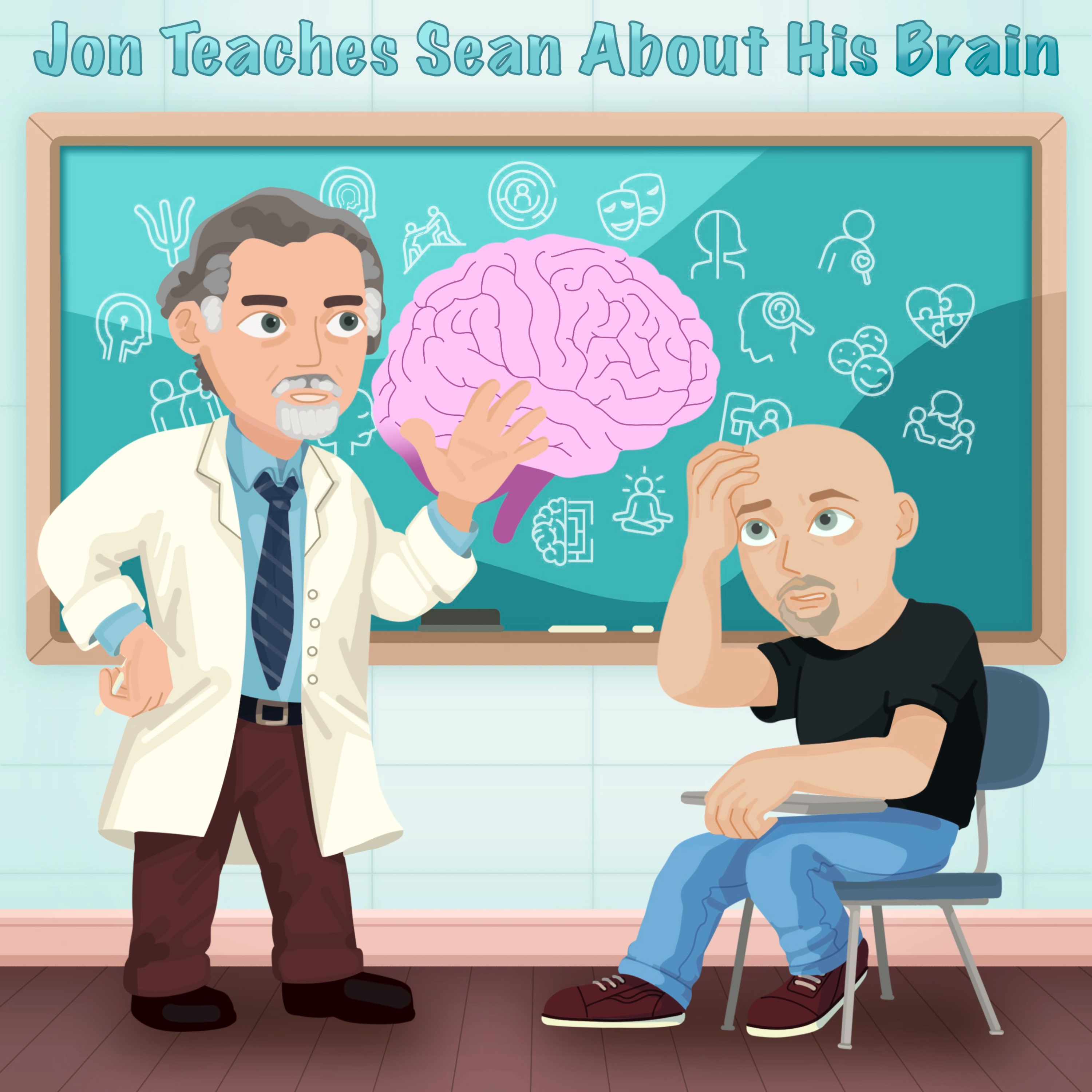
Join Professor Jon, a brain expert with a knack for making neuroscience fun, as he explains the wonders of the brain to his curious but sometimes clueless friend Sean. From memory to emotions to why Sean is terrified of baby kittens, every episode is packed with fascinating insights and plenty of laughs. Whether you're a science geek or just brain-curious, this podcast is your new favorite listen. Streaming now—let's dive into the fantastic world inside your head!
-
65
The One Who Wouldn't Come Down
The conversation delves into a crisis call involving a person threatening to jump from a height, the engagement in conversation, understanding the person's perspective, the shift in the conversation, the negotiator's role, post-crisis reflection, and an exploration of crisis and the brain. The conversation delves into the distinction between acute and chronic episodes of depression, the role of logic and reasoning in suicidal crises, the importance of effective communication and validation, and the impact of vicarious trauma on first responders and the need for seeking help.TakeawaysActive listening and thoughtful conversation are crucial in crisis negotiation.Understanding the psychological pain and cognitive dysregulation in crisis situations is essential for effective intervention. Understanding the difference between acute and chronic episodes of depressionThe importance of effective communication and validation in crisis interventionChapters00:00 The Crisis Call09:31 Engaging in Conversation15:06 The Conversation Shift25:11 Post-Crisis Reflection37:53 Understanding Acute vs. Chronic Episodes49:21 The Role of Logic and Reasoning59:24 Effective Communication and Validation01:08:06 Vicarious Trauma and Seeking Help
-
64
I Swear I Only Had Two Beers
The conversation delves into the brain's compensation for alcohol impairment, the behavioral indicators of impairment, and the impact of alcohol on memory formation and self-monitoring. It explores the pharmacological effects of alcohol and its classification as a depressant, shedding light on the brain's vulnerability and compromised assessment of impairment. The conversation delves into the impact of alcohol on memory formation, state-dependent memory, divided attention, rationalization, legal limits, DUI stops, prevention, the Melanbea test effect, and planning for safety. It highlights the impaired judgment and decision-making associated with alcohol consumption and the importance of sober planning for safety.TakeawaysAlcohol impairs self-monitoring and memory formationBehavioral indicators of impairment are often genuine and not deliberate lies Alcohol's impact on memory formationThe significance of sober planning for safetyChapters00:00 Introduction to the Brain's Compensation06:11 Field Sobriety Test and Behavioral Indicators13:51 Breath Test and Reaction to Results22:06 Alcohol's Pharmacological Effects31:58 Memory Formation and Alcohol Blackouts37:21 Divided Attention and Impairment43:04 Driving Impairment and Legal Limits51:39 Prevention and Decision-Making57:44 Planning for Safety
-
63
He Seemed Fine to Me
A police officer recounts an encounter with a cooperative and talkative individual, later realizing the person's manic state and need for medical attention. The conversation delves into the neural pathways and neurochemistry of bipolar disorder, highlighting the complexity of mental health and the challenges of identifying and addressing such conditions. The conversation delves into the complexities of mental health, medication, and the challenges of identifying and responding to behavioral health crises. It also explores the impact of neurochemistry on creativity and the difficulties faced by law enforcement in distinguishing mental health crises from other situations.TakeawaysMania is often misread and misunderstood, leading to challenges in recognizing and addressing mental health conditions.The neural pathways and neurochemistry of bipolar disorder play a crucial role in understanding and managing the condition. Medication for mental health conditions requires ongoing management and should not be discontinued without medical advice.The challenges of identifying and responding to mental health crises, the impact of neurochemistry on creativity, and the difficulties faced by law enforcement in distinguishing mental health crises from other situations.Chapters00:00 The Complexity of Mental Health and Bipolar Disorder31:49 The Complexity of Medication and Neurochemistry39:39 Challenges in Identifying Mental Health Crises53:14 Training and Response to Mental Health Crises
-
62
Sir, This is a Neighborhood
The conversation delves into a police officer's experience responding to a domestic dispute call, highlighting the complexities of human relationships and the emotional toll of police work. It explores the back channel argument and the impact of unresolved outcomes on officers. The conversation delves into the concept of the back channel and emotional reactions, exploring the threat response and energy ramp-up, unconscious responses and misunderstandings, cycles of conflict and reconciliation, the discharge of energy and reconciliation, tunnel vision and threat perception, the dopamine hit and relief, the self-feeding cycle and unconscious choices, regulating through conflict and dopamine hits, triangulation and external threats, calibration of back channel systems, early relationship experiences and calibration, emotionally focused therapy and rewiring the brain, and understanding the call in a new light.TakeawaysComplexities of human relationshipsEmotional toll of police work Emotional reactions are influenced by the back channel and threat response.Cycles of conflict and reconciliation are driven by unconscious responses and the discharge of energy.Understanding the call in a new light reveals the importance of early relationship experiences and the potential for rewiring the brain through therapy.Chapters00:00 Arriving at the Scene09:08 Hearing Their Stories15:26 Leaving the Scene20:26 The Unresolved Outcome27:11 The Back Channel Argument32:50 The Back Channel and Emotional Reactions38:01 The Dopamine Hit and Relief43:47 Calibration of Back Channel Systems54:24 Emotionally Focused Therapy and Rewiring the Brain
-
61
The Smartest Person in the Room
The conversation covers the experience of responding to a suicide crisis, the neuroscience of gambling addiction, and the impact of intelligence on decision-making. It delves into the challenges of crisis intervention, the neurological processes of gambling addiction, and the role of intelligence in rationalizing destructive behaviors. The conversation delves into the psychological impact of shame, the struggle of secrecy in addiction, the neuroscience of decision-making in suicidal ideation, and the importance of supporting a loved one with addiction. It also explores the impact of calmness in crisis intervention and the role of judgment in addiction support. The hosts reflect on the call and its handling, providing insights into the understanding of shame and guilt.https://988lifeline.org/TakeawaysSuicide intervention and crisis responseUnderstanding the neuroscience of gambling addictionThe impact of intelligence on decision-making Shame vs. guiltThe psychological impact of shameThe struggle of secrecy in addictionThe neuroscience of decision-making in suicidal ideationSupporting a loved one with addictionChapters00:00 Crisis Intervention and Suicide Response14:34 Neuroscience of Gambling Addiction22:05 Impact of Intelligence on Decision-Making29:28 The Struggle of Secrecy in Addiction36:15 The Role of Judgment in Addiction Support46:56 Reflections on the Call
-
60
The House That Stuff Built
The conversation delves into the experience of a welfare check, the encounter with a person living with hoarding disorder, and an in-depth exploration of hoarding disorder as a mental health condition. The discussion highlights the challenges and complexities of understanding and addressing hoarding disorder, shedding light on the co-morbidities and social implications of the condition. The conversation delves into the psychology and brain science of hoarding disorder, highlighting the impact on mental health and the need for intervention and treatment. It provides valuable insights into the complexities of hoarding and the importance of understanding and addressing the disorder with empathy and professional support.TakeawaysHoarding disorder is a recognized mental health condition with specific diagnostic criteria.Social anxiety is a common co-morbidity with hoarding disorder. Understanding hoarding disorderImpact of hoarding on mental healthChapters00:00 The Welfare Check16:01 Understanding Hoarding Disorder28:29 The Psychology of Hoarding38:16 The Brain Science of Hoarding45:19 Intervention and Treatment
We're indexing this podcast's transcripts for the first time — this can take a minute or two. We'll show results as soon as they're ready.
No matches for "" in this podcast's transcripts.
No topics indexed yet for this podcast.
Loading reviews...
ABOUT THIS SHOW
Join Professor Jon, a brain expert with a knack for making neuroscience fun, as he explains the wonders of the brain to his curious but sometimes clueless friend Sean. From memory to emotions to why Sean is terrified of baby kittens, every episode is packed with fascinating insights and plenty of laughs. Whether you're a science geek or just brain-curious, this podcast is your new favorite listen. Streaming now—let's dive into the fantastic world inside your head!
HOSTED BY
viking_warrior21
Loading similar podcasts...
Frequently Asked Questions
How many episodes does Jon Teaches Sean About His Brain have?
Jon Teaches Sean About His Brain currently has 6 episodes available on PodParley. New episodes are automatically indexed when they're published to the podcast feed.
What is Jon Teaches Sean About His Brain about?
Join Professor Jon, a brain expert with a knack for making neuroscience fun, as he explains the wonders of the brain to his curious but sometimes clueless friend Sean. From memory to emotions to why Sean is terrified of baby kittens, every episode is packed with fascinating insights and plenty of...
How often does Jon Teaches Sean About His Brain release new episodes?
Jon Teaches Sean About His Brain has 6 episodes. Check the episode list to see recent publication dates and frequency.
Where can I listen to Jon Teaches Sean About His Brain?
You can listen to Jon Teaches Sean About His Brain on PodParley by clicking any episode. We provide an embedded audio player for direct listening, and you can also subscribe via your preferred podcast app using the RSS feed.
Who hosts Jon Teaches Sean About His Brain?
Jon Teaches Sean About His Brain is created and hosted by viking_warrior21.
URL copied to clipboard!