
PODCAST · music
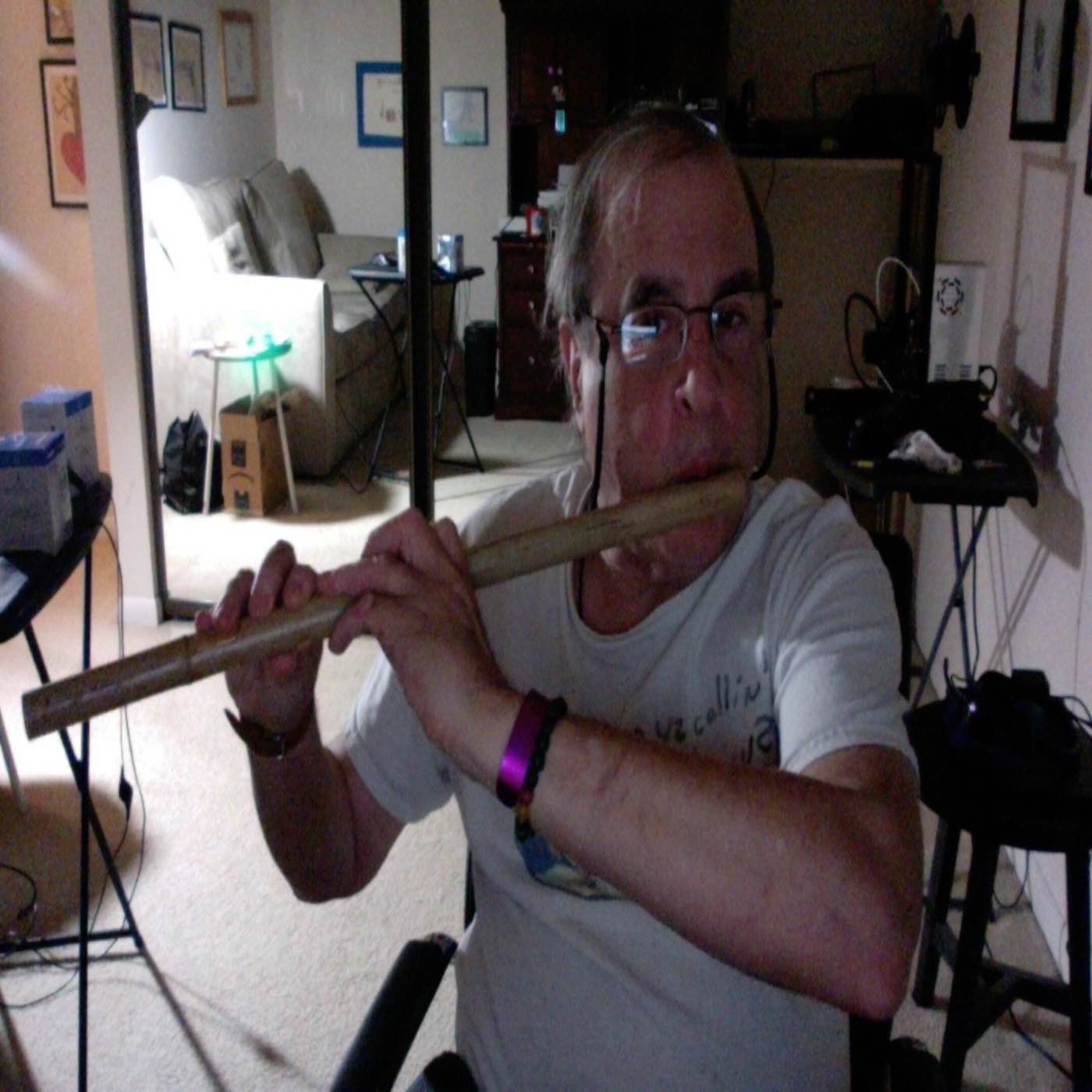
Jonathan's Musical instruments from found objects podcast
by Jonathan Jay Brandstater
In this podcast, I introduce musical instruments I have made myself, using objects I found in and around the house. This is in keeping with the folk tradition where people make instruments from whatever is available. You can make your own instruments,as well! This podcast is designed to inspire you. What you make and how you make it is up to you. Factory-made instruments tend to be made a certain way, using specific materials and methods. The folk tradition allows for a lot more creativity and flexibility. When it comes to drums made by a craftsperson, for example, no two drums are exactly alike. Hosted on Acast. See acast.com/privacy for more information.
Episodes
-
Three-foot-long diddley bow demo
In this episode, I describe a single-stringed instrument called a "Diddley bow" and play some improvised blues riffs. The Diddley bow is typical of the American Southern States and is often associated with blues music. The simplest Diddley bow consists of the side of a house or a wood board, two...
-
Blues riffs on an acoustic cigar box Diddley bow
In this episode, I play a cigar box Diddley bow. This is a single-stringed instrument similar to a guitar. My source of inspiration was a similar instrument I built from a kit. Hosted on Acast. See acast.com/privacy for more information.
-
Blues riffs on cigar box bass with broom stick neck
In this episode, I play some blues riffs on a homemade cigar box bass featuring a broom stick neck, steel wire string, a screw eye, an eyebolt with accompanying nut, two washers and a wing nut, along with a scrap wood bridge. Hosted on Acast. See acast.com/privacy for more information.
-
Blues on a two-string cigar box guitar
In this episode, I play some improvised blues riffs on a two-string cigar box guitar of my own design. A previous episode features a similar instrument. The only difference is probably just the cigar box I used to build the instruments and possibly the actual strings I used, along with the...
-
Blues riffs on two string cigar box guitar
In this episode, I play some blues riffs on a two-string fretless two-string cigar box guitar of my own design. This instrument features tuners consisting of eye bolts with accompanying nuts, wing nuts and washers. Hosted on Acast. See acast.com/privacy for more information.
-
Blues riffs on a cigar box guitar with zither pin tuner and screw eye for a nut
In this episode, I play an experimental cigar box guitar with one string, a zither pin for a tuner and a small screw eye for a nut. Hosted on Acast. See acast.com/privacy for more information.
-
Blues on a one-string cigar box fiddle
In this episode, I play a one-string cigar box fiddle of my own design. Here I play the instrument as if it was a guitar, such as a cigar box guitar, instead of as a fiddle or a violin. Hosted on Acast. See acast.com/privacy for more information.
-
Blues riffs on three string acoustic cigar box guitar
In this episode, I play an acoustic three string cigar box guitar of my own design. Most of the parts, specifically the neck, bridge, strings and tuners, come by way of a local supplier of cigar box guitars, kits and parts. Hosted on Acast. See acast.com/privacy for more information.
-
"Old Joe Clark" on one-string cigar box guitar
In this episode, I play a simple acoustic cigar box guitar of my own design. This instrument features a single string consisting of weed whacker cord, a tuner composed of an eye bolt with its accompanying nut, a wing nut and washers, as well as a nut and bridge consisting of wood dowels. The song…
more -
Demonstrating another acoustic fretless three-string cigar box guitar
In this episode, I play "Dreaming of the steppes," an original composition, on a three-string acoustic fretless cigar box guitar of my own design. Hosted on Acast. See acast.com/privacy for more information.
-
Demonstrating cigar box guitar with string consisting of nylon fishing line
In this episode, I play blues riffs on a cigar box guitar featuring a string consisting of nylon fishing line. Hosted on Acast. See acast.com/privacy for more information.
-
Demonstrating cigar box guitar with two strings made from weed whacker cord
In this episode, I play an original tune called "Silk Road" on a cigar box guitar featuring a cedar plank, wood dowel nut and bridge, tuners consisting of eye bolts, nuts, wing nuts and washers, as well as strings consisting of weed whacker cord. Hosted on Acast. See acast.com/privacy for more...
-
Demonstrating a wide-necked single string cigar box guitar
In this episode, I play some blues riffs on a single-string cigar box guitar of my own design. This instrument features a tuner consisting of an eye bolt, the nut accompanying it, a wing nut and two washers. The nut and bridge of the guitar itself consist of wood dowels. The neck consists of a...
-
Two string banjo demo
In this episode, I play a two-string banjo I built from scratch. My source of inspiration was a children's book about how to build musical instruments. This particular instrument features a neck consisting of a square dowel and a resonator made from the bottom of a plastic milk bottle. The tune I...
-
Acoustic skateboard lap guitar demo
In this episode, I play an acoustic skateboard lap guitar of my own design. My sources of inspiration were photos and videos featuring the electronic versions of similar instruments. The music I play is an original composition I call "Dreaming of the steppes." I use a glass medicine bottle slide...
-
Blues on acoustic boat paddle guitar
In this episode, I play blues riffs on a one-string acoustic boat paddle guitar. My source of inspiration was a video where the presenter demonstrated an electric boat oar guitar he had built. With few exceptions, I prefer building acoustic instruments, myself. This paddle guitar features a tuner...
-
Demonstrating a cigar box diddly bow with packaging twine string
In this episode, I demonstrate a one-stringed instrument inspired by a DIY kit about building your own cigar box diddly bow. Hosted on Acast. See acast.com/privacy for more information.
-
Demonstrating a diddly bow
In this episode, I play an instrument called a cigar box diddly bow I built from a kit. I have actually built quite a few instruments from kits. Rather than having a separate podcast, I thought to include such instruments here. Kits may not be or include found objects but may be sources of...
-
Demonsrating a cigar box guitar with a "hum bucker" pickup
In this episode, I play a cigar box guitar I built from a premade poplar cigar box guitar neck, a cigar box, wood dowels, machine head tuners, brass ferrules, wood screws and guitar strings. I happen to love playing blues music and so what I play is an improvised blues tune. Hosted on Acast. See...
-
Demonstrating a cigar box guitar
In this episode, I demonstrate the first cigar box guitar I ever built. This one is over twenty years old. A neighbor and friend tweaked the design by adding a piece of cedar to the headstock, among other improvements. This instrument has three strings. I often play blues music on it, as I do…
more -
Clay ocarinas
In this episode, I demonstrate a variety of clay whistles and globular flutes, aka ocarinas, I have made in the past. Hosted on Acast. See acast.com/privacy for more information.
-
Ocarinas from plastic gum ball containers and cardboard
In this episode, I demonstrate two ocarinas I made from plastic containers from gum ball machines. Gum ball machines not only dispense gum but also trinkets, key rings, key chains and toys housed in small plastic containers. Basically, I drilled holes in the bottoms and lids of two such…
more -
Demonstrating a wood whistle and two flutes
In this episode, I demonstrate a wood whistle and two flutes. All three instruments are made from inner corner molding, inch diameter wood dowel and bamboo. Hosted on Acast. See acast.com/privacy for more information.
-
Demonstrating wood Native American style flutes
In this episode, I demonstrate two Native American style flutes I made from inner corner molding, dowels and pieces of scrap wood. I fastened the wood blocks in place with packaging string and elastic bands. Hosted on Acast. See acast.com/privacy for more information.
-
Double flute
In this episode, I demonstrate a double flute I made from inner corner molding, a wood slat, an inch diameter dowel and bamboo. This double flute has two mouth pieces.The wood slat divides the flute in two sections, Each section has four finger holes. Hosted on Acast. See acast.com/privacy for…
more -
Demonstrating a homemade wood drone flute
In this episode, I demonstrate a drone flute I made from inner corner molding, a wood slat, an inch diameter dowel and piece of bamboo. Drone flutes have two parts. One has finger holes and the other does not. The side lacking finger holes provides a simple harmony in the form of a single note...
-
Demonstrating bamboo slide whistles
In this episode, I demonstrate two slide whistles I made from bamboo tiki torches. Hosted on Acast. See acast.com/privacy for more information.
-
Demonstrating two overtone flutes
In rhis episode, I demonstrate two overtone flutes I made from bamboo. These flutes have no finger holes. One produces a variety of notes by blowing harder or more gently into the mouthpiece, as well as covering and uncovering the lower (foot) end of the instrument. Hosted on Acast. See...
-
Demonstrating a bamboo Native American style flute
In this episode, I play an original composition I call "Silk Road" on a bamboo Native American style flute I made myself. Hosted on Acast. See acast.com/privacy for more information.
-
Branch flute demo
In this episode, I demonstrate a Native American style flute I made from part of a fallen tree branch. I used a hammer and chisel to split the branch in half, hollowed out the two sides, drilled finger holes and glued the halves back together. I also glued a small block of wood onto the body of…
more -
Two five-hole bamboo Native American style flutes
In this episode, I demonstrate two Native American style flutes I made from bamboo tiki torches and wood dowel. First I play a few notes from each flute and then I play them together with both mouthpieces in my mouth at the same time, in the manner of a drone flute or double flute. Hosted on…
more -
Demonstrating a copper penny whistle
In this episode, I demonstrate a copper penny whistle I made myself. The whistle itself is made from a length of 1/2 diameter copper pipe and a piece of wood dowel. This instrument has six finger holes. As part of the demonstration, I play my rendition of "Loch Lomond." Hosted on Acast. See...
-
Bamboo recorder style flute
In this episode, I demonstrate a bamboo flute I made from a tiki torch. I gave this flute nine finger holes in the manner of a recorder. Hosted on Acast. See acast.com/privacy for more information.
-
Demonstrating a seven-hole bamboo whistle flute
In this episode, I demonstrate a seven hole bamboo whistle flute I made from a tiki torch. This instrument has six finger holes and a thumb hole. Hosted on Acast. See acast.com/privacy for more information.
-
Demonstrating five-hole whistle flutes
In this episode, I demonstrate three bamboo whistle flutes I made from bamboo tiki torches. All three flutes have five holes each: four finger holes and a thumb hole, respectively. I made my flutes in the style of penny whistles, recorders and similar instruments. All such flutes feature an air...
-
Demonstrating Kena-style flutes
In this episode, I demonstrate five end blown notch flutes inspired by photos, descriptions and instructions for making a flute typical of the people of the Andes mountains. Hosted on Acast. See acast.com/privacy for more information.
-
Demonstrating Anasazi-style flutes
In this episode, I demonstrate two bamboo flutes inspired by descriptions and photographs of flutes found in a cave in Arizona. In addition, I used to have similar flutes I had bought at a local Native American music festival.An Anasazi flute has finger holes positioned so three such holes are...
-
Rubber band zither demo
In this episode, I demonstrate a makeshift stringed instrument consisting of a piece of cardboard folded into a box with a hole in it, rubber bands and a wood dowel. This sort of project could be useful to share with children, especially between the ages of seven and eleven. Besides being a...
-
Drinking glass xylophone
In this episode, I demonstrate how I make a simple xylophone using drinking glasses and water. Quite possibly, children, especially those between seven and eleven years, would enjoy this sort of project. As far as I am concerned, there is no real need for precision when it comes to tuning this...
-
Demonstrating simple percussion instruments
In this episode, I demonstrate a pair of clapping sticks, a rhythm stick, a jingle stick, a pair of tube drums made from poster board and two cardboard tube drums. All the drums I demonstrate have drum heads consisting of masking tape. Hosted on Acast. See acast.com/privacy for more information.
-
Demonstrating an experimental bamboo notch flute
In this episode, I demonstrate a flute I made from a bamboo tiki. torch. This instrument is hollow throughout, has a curved lip as part of the mouthpiece, six finger holes and a thumb hole. The scale may be considered unusual. When I made my flutes, my focus was on creation and not precise…
more -
Demonstrating shakuhachi-style flutes
In this episode, I demonstrate three bamboo flutes inspired by the Japanese end blown notch flute called the "shakuhachi." A flute of this kind has a specially formed and shaped mouthpiece, as well as four finger holes and a thumb hole. I am not too familiar with Japanese music. Any tunes I play...
-
Demonstrating a shepherd's whistle
In this episode, I demonstrate a "shepherd's whistle." The source of inspiration was a children's book about making simple instruments. If I remember correctly, the instructions called for a piece of bamboo. Luckily, I live in a place where bamboo is prevalent--South Florida. The whistle, or...
-
Cross (transverse) flutes
In this episode, I demonstrate cross flutes I have made from bamboo tiki torches and cardboard tubes from aluminum foil rolls.Cross flutes are also called transverse flutes. Fifes are good examples. These flutes consist of hollow tubes with a sealed end and holes drilled into the side. The...
-
Simple whistles
In this episode, I demonstrate how I use a paper straw, cardboard tubes and a 3D print model as simple whistles. If you blow gently over the open end of drinking water bottle, pen cap or similar object, you can often hear a pleasant sound. Musical instruments such as panpipes make use of this...
-
A sampling of reed instruments
In this episode, I demonstrate a simple harmonica, two drinking strow oboes and a homemade bamboo clarinet. The harmonica consists of a rubber band typically used to keep broccoli florets together, two small rubber or elastic bands, two craft sticks and two pieces of a plastic drinking straw. My...
-
Introduction
In this episode, I introduce the podcast: Jonathan's Musical Instruments from Found Objects. In addition, I introduce a simple horn I made by taping together three cardboard tubes from paper towel rolls, as well as a paper cup. Note: musical instruments may be classified in a variety of ways. A...
We're indexing this podcast's transcripts for the first time — this can take a minute or two. We'll show results as soon as they're ready.
No matches for "" in this podcast's transcripts.
No topics indexed yet for this podcast.
Loading reviews...
ABOUT THIS SHOW
In this podcast, I introduce musical instruments I have made myself, using objects I found in and around the house. This is in keeping with the folk tradition where people make instruments from whatever is available. You can make your own instruments,as well! This podcast is designed to inspire you. What you make and how you make it is up to you. Factory-made instruments tend to be made a certain way, using specific materials and methods. The folk tradition allows for a lot more creativity and flexibility. When it comes to drums made by a craftsperson, for example, no two drums are exactly alike.
Hosted on Acast. See acast.com/privacy for more information.
HOSTED BY
Jonathan Jay Brandstater
Loading similar podcasts...
Frequently Asked Questions
How many episodes does Jonathan's Musical instruments from found objects podcast have?
Jonathan's Musical instruments from found objects podcast currently has 47 episodes available on PodParley. New episodes are automatically indexed when they're published to the podcast feed.
What is Jonathan's Musical instruments from found objects podcast about?
In this podcast, I introduce musical instruments I have made myself, using objects I found in and around the house. This is in keeping with the folk tradition where people make instruments from whatever is available. You can make your own instruments,as well! This podcast is designed to inspire...
How often does Jonathan's Musical instruments from found objects podcast release new episodes?
Jonathan's Musical instruments from found objects podcast has 47 episodes. Check the episode list to see recent publication dates and frequency.
Where can I listen to Jonathan's Musical instruments from found objects podcast?
You can listen to Jonathan's Musical instruments from found objects podcast on PodParley by clicking any episode. We provide an embedded audio player for direct listening, and you can also subscribe via your preferred podcast app using the RSS feed.
Who hosts Jonathan's Musical instruments from found objects podcast?
Jonathan's Musical instruments from found objects podcast is created and hosted by Jonathan Jay Brandstater.
URL copied to clipboard!