PODCAST · music
Juke In The Back
by Matt The Cat
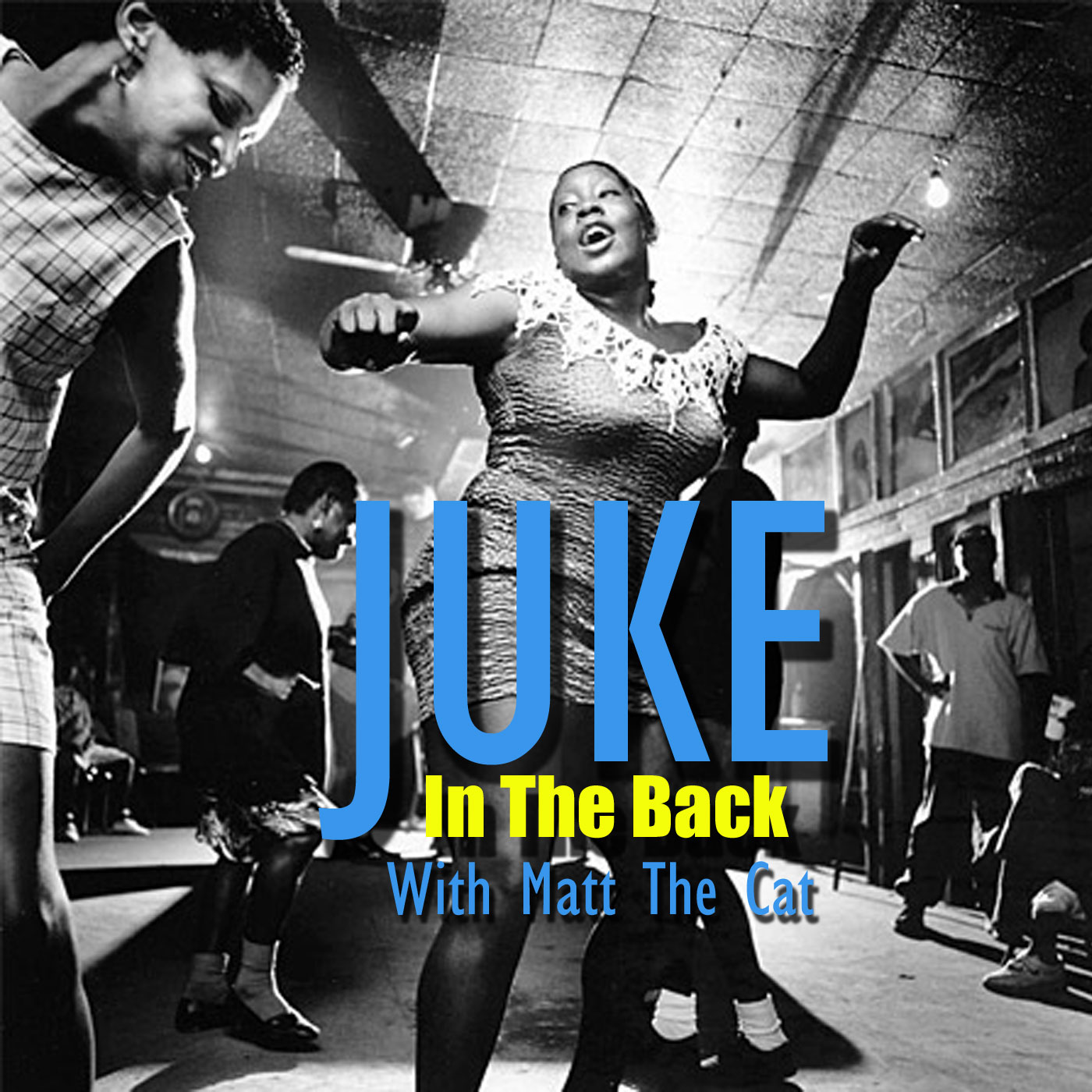
At the end of the Second World War, economics forced the big bands to trim their once great size and thus, the Jump Blues combo was born. Between 1946-1954, rhythm and blues laid the tracks for what was to become Rock n’ Roll. So how come, 75 years later, this vibrant and influential music is still so unknown to so many? Matt The Cat is going to change that with the radio program, “Juke In The Back.” These were the records that you couldn’t hear on the jukebox in the front of the establishment. To hear all this great 1950s rhythm & blues, you had to go to “Juke In The Back.”
-
7
Episode #844 – Parrot Records
Air Week: July 6-12, 2026 Parrot Records This week, “Juke In The Back” focuses on a tiny Chicago R&B record label with a big sound; Parrot Records. The label was started by Chicago DJ Al Benson in late 1952 and it closed its doors in 1956. During its period of operation, Parrot recorded some smokin’ R&B with Willie Mabon, Mabel Scott and J.B. Lenoir and smooth vocal group sounds from The Flamingos, the 5 Thrills and the Orchids. Matt The Cat highlights both the hits and misses and brings you the story behind the story on this often forgotten R&B label on “Juke In The Back.” LISTEN BELOW
-
6
Episode #843 – 250th 4th of July R&B Picnic
Air Week: June 29-July 5, 2026 250th 4th of July R&B Picnic This week, “Juke In The Back” waves the banner high in celebration of America’s 250th birthday with one of America’s great contributions to the world. No, it’s not a representative democracy, motion pictures, space flight or a free economy, but its cuisine. America’s food in song with some good ol’ red, white and Rhythm & Blues. Dig in on an hour of classic R&B about hot dogs, cole slaw, potato salad, ribs and ice cream sung by Nat “King” Cole, Amos Milburn, Louis Jordan, the “5” Royales and many more. Matt The Cat invites you to groove to our R&B 4 th of July picnic and the “soul that came before rock n’ roll” on the Juke In The Back. LISTEN BELOW
-
5
Episode #842 – Chuck Berry, Pt. 3 – 1958
Air Week: June 22-28, 2026 Chuck Berry, Pt. 3 – 1958 Chuck Berry has been called the “Father of Rock n’ Roll” and with good reason. He took the blues of T-Bone Walker and B.B. King, the guitar riffs of Carl Hogan and mixed it with the fiddle and Western Swing music of Bob Wills & His Texas Playboys. Then he rolled it all into one big sonic blast. Rhythm & Blues become Rock n’ Roll when Chuck Berry began writing songs aimed at teenagers, finally granting them their own music. The “Juke In The Back” presents the final part of a 3 part feature on Chuck Berry’s early career. This week, Matt The Cat focuses on Berry’s recorded and released output during the pivotal year of 1958. He began the year with a bang and the #1 R&B tune “Sweet Little Sixteen.” 1958 was also the year that gave us “Reelin’ and Rockin’,” “Johnny B. Goode,” “Around and Around” and “Carol.” Just like in the first parts of this series, this week’s program is packed with some fantastic and seldom-heard instrumentals, showcasing Chuck Berry’s true guitar chops. So dig this final “Juke In The Back” treatment of the legendary “Shakespeare Of Rock n’ Roll,” Chuck Berry. LISTEN BELOW
-
4
Episode #841 – Chuck Berry, Pt. 2 – 1956-57
Air Week: June 15-21, 2026 Chuck Berry, Pt. 2 – 1956-57 Chuck Berry has been called the “Father of Rock n’ Roll” and with good reason. He took the blues of T-Bone Walker and B.B. King, the guitar riffs of Carl Hogan and mixed it with the fiddle and Western Swing music of Bob Wills & His Texas Playboys. Then he rolled it all into one big sonic blast. Rhythm & Blues become Rock n’ Roll when Chuck Berry began writing songs aimed at teenagers, finally granting them their own music. The “Juke In The Back” presents part 2 of a 3 part feature on Chuck Berry’s early career. This week, Matt The Cat presents every studio recording made by Chuck Berry from the middle of 1956 to the end of 1957. We pick up where part 1 left off as the hits continue with “School Day (Ring! Ring! Goes The Bell)” topping the R&B chart during the spring of ’57. We’ll also dig the demo and hit versions of “Rock and Roll Music” as well as some great, but overlooked Berry instrumentals. We end this week’s program with the demo version of “Sweet Little Sixteen” and will pick it up next week on part 3 with the evolution of that important Chuck Berry tune. Don’t miss the “Shakespeare Of Rock n’ Roll” on this week’s “Juke In The Back.” LISTEN BELOW
-
3
Episode #840 – Chuck Berry, Pt. 1 – 1955-56
Air Week: June 8-14, 2026 Chuck Berry, Pt. 1 – 1955-56 Chuck Berry has been called the “Father of Rock n’ Roll” and with good reason. He took the blues of T-Bone Walker and B.B. King, the guitar riffs of Carl Hogan and mixed it with the fiddle and Western Swing music of Bob Wills & His Texas Playboys. Then he rolled it all into one big sonic blast. Rhythm & Blues become Rock n’ Roll when Chuck Berry began writing songs aimed at teenagers, finally granting them their own music. The “Juke In The Back” presents part 1 of a 3 part feature on Chuck Berry’s early career. This week, Matt The Cat explores Chuck Berry’s first full year of recording for the legendary Chess Records in Chicago. We’ll look at his recordings from his first session, held in May, 1955 to his fourth session from April, 1956 and everything in-between. Some of the titles you’ll know by heart, like “Maybellene,” “You Can’t Catch Me” and “Roll Over Beethoven,” but others might be new to your ears, like the eerie “Down Bound Train” and the very bluesy “Wee Wee Hours.” Chuck Berry defined Rock n’ Roll guitar and his influence is felt every time some one picks up a guitar with the intention of tearing the house down. Next week, we’ll finish up 1956 and begin 1957. LISTEN BELOW
-
2
Episode #839 – Arthur Lee Maye & The Crowns
Air Week: June 1-7, 2026 Arthur Lee Maye & The Crowns Arthur Lee Maye did something that few had ever done. He concurrently had a career as a R&B singer, leading the LA-based group Arthur Lee Maye & The Crowns while also playing minor and major league baseball as an outfielder for the Milwaukee Braves. Both of his careers virtually began in 1954 and since Lee Maye was busy playing baseball from April until October, he could only make records during the off-season. These records consisted of some of the greatest West Coast Rhythm & Blues Vocal Group sounds you’re ever going to hear. Maye and the Crowns began on the Modern Records family of labels, jumping from Flair to RPM to the parent company without scoring a significant hit. Then it was off to Art Rupe’s famed Specialty Records for a one-off single, before recording a few sides for Johnny Otis’ Dig Records. Richard Berry, who famously recorded the original “Louie Louie” for Flip Records in 1956 was an original member of the group and it was also the Crowns with Lee Maye who backed Berry on his first solo sides. However, the Crowns did not receive any credit on those early Berry recordings. Several of Maye’s records; “Gloria” and “Set My Heart Free” have become vocal group classics. Matt The Cat digs in and aims for the fences this week as we present the seldom heard, but nonetheless brilliant recordings of Arthur Lee Maye and the Crowns. LISTEN BELOW
-
1
Episode #838 – Imperial Records, Pt. 11 – 1957-58
Air Week: May 25-31, 2026 Imperial Records, Pt. 11 – 1957-58 Imperial Records was a major player among the indie labels of the late 1940s and the entirety of the 1950s. Started in Los Angeles in 1946 by Lew Chudd, a Canadian raised in Harlem, Imperial began filling the ethnic and cultural voids left by the majors at the time. Chudd knew there was a large market for Latino Music in America, so he headed to Mexico City and recorded some Mexican jump bands that sold very well. He then included square dance records which also racked up sales as now square dances could be held without callers. He began recording Rhythm & Blues in 1947 and by ’49, he had hired Dave Bartholomew to scout talent in fertile New Orleans. The Braun Brother had beat him to The Crescent City by recording Paul Gayten and Annie Laurie first, but with Bartholomew’s help, Chudd was able to sign Fats Domino, Smiley Lewis, Archibald and Jewel King, dominating the New Orleans R&B scene. This week, we conclude our Imperial series with part eleven, focusing on Imperial’s R&B releases from the end of 1957 and the beginning of 1958. There’s a new hit-maker in town as Imperial signs the young heartthrob, Ricky Nelson as well as other Rockabilly, Rock and Pop acts. Chudd begins to move the label away from Rhythm & Blues and that great New Orleans sound that brought the hits over the past decade. Fats is still able to chart and does so with gusto as “What Will I Tell My Heart,” “Wait & See,” “When I See You,” “Sick & Tired” and “The Big Beat” all make the charts. Ernie Freeman scores one of Imperial’s best-sellers with his cover of the Bill Justis tune, “Raunchy” and Bobby Mitchell records the first version of “I’m Gonna Be A Wheel Someday.” 1958 is a great place for us to stop as we’ve covered Imperial’s R&B heyday over the past eleven week’s on your source for the “soul that came before Rock n’ Roll,” the “Juke In The Back.” LISTEN BELOW
-
0
Episode #837 – Imperial Records, Pt. 10 – 1957
Air Week: May 18-24, 2026 Imperial Records, Pt. 10 – 1957 Imperial Records was a major player among the indie labels of the late 1940s and the entirety of the 1950s. Started in Los Angeles in 1946 by Lew Chudd, a Canadian raised in Harlem, Imperial began filling the ethnic and cultural voids left by the majors at the time. Chudd knew there was a large market for Latino Music in America, so he headed to Mexico City and recorded some Mexican jump bands that sold very well. He then included square dance records which also racked up sales as now square dances could be held without callers. He began recording Rhythm & Blues in 1947 and by ’49, he had hired Dave Bartholomew to scout talent in fertile New Orleans. The Braun Brother had beat him to The Crescent City by recording Paul Gayten and Annie Laurie first, but with Bartholomew’s help, Chudd was able to sign Fats Domino, Smiley Lewis, Archibald and Jewel King, dominating the New Orleans R&B scene. This week, we continue our Imperial series with part ten, focusing on Imperial’s R&B releases from 1957. Fats Domino continues his hit streak as both “Blue Monday” and “I’m Walkin'” top the R&B chart and “Valley of Tears” stalls at #2. These 3 singles would also crack the pop top 10! Dave Bartholomew records a cult favorite about the Signifying Monkey and produces some great sides from James “Sugarboy” Crawford, Faye Adams and Chris Kenner. Blues shouter Roy Brown returns to the charts in ’57 on Imperial with “Let The Four Winds Blow” and a cover of Buddy Knox’s Rockabilly hit, “Party Doll.” The line between R&B and Rock n’ Roll is blurred as we keep those records spinning on part ten of the Imperial Records Story on this week’s “Juke In The Back.” LISTEN BELOW
-
-1
Episode #836 – Imperial Records, Pt. 9 – 1956, Pt. 2
Air Week: May 11-17, 2026 Imperial Records, Pt. 9 – 1956, Pt. 2 Imperial Records was a major player among the indie labels of the late 1940s and the entirety of the 1950s. Started in Los Angeles in 1946 by Lew Chudd, a Canadian raised in Harlem, Imperial began filling the ethnic and cultural voids left by the majors at the time. Chudd knew there was a large market for Latino Music in America, so he headed to Mexico City and recorded some Mexican jump bands that sold very well. He then included square dance records which also racked up sales as now square dances could be held without callers. He began recording Rhythm & Blues in 1947 and by ’49, he had hired Dave Bartholomew to scout talent in fertile New Orleans. The Braun Brother had beat him to The Crescent City by recording Paul Gayten and Annie Laurie first, but with Bartholomew’s help, Chudd was able to sign Fats Domino, Smiley Lewis, Archibald and Jewel King, dominating the New Orleans R&B scene. This week, we continue our Imperial series with part nine, focusing on Imperial’s R&B releases from the second half of 1956. Fats Domino has the biggest hit of his entire career with “Blueberry Hill,” a tune that Dave Bartholomew did not think he should record. It sold millions and millions and topped the R&B charts and landing at a whopping #2 on the pop chart. Matt The Cat presents the story behind that monumental release as well as spinning some great and seldom heard vocal group records from The Barons, The Victorials, The Dukes and The Honey Bees, a female group. We’ll also dig on some solid R&B releases from Johnny Fuller, Ernie Freeman and Gloria Jean Pitts as we keeps those records spinning on part nine of the Imperial Records Story on this week’s “Juke In The Back.” LISTEN BELOW
-
-2
Episode #835 – Imperial Records, Pt. 8 – 1956, Pt. 1
Air Week: May 4-10, 2026 Imperial Records, Pt. 8 – 1956, Pt. 1 Imperial Records was a major player among the indie labels of the late 1940s and the entirety of the 1950s. Started in Los Angeles in 1946 by Lew Chudd, a Canadian raised in Harlem, Imperial began filling the ethnic and cultural voids left by the majors at the time. Chudd knew there was a large market for Latino Music in America, so he headed to Mexico City and recorded some Mexican jump bands that sold very well. He then included square dance records which also racked up sales as now square dances could be held without callers. He began recording Rhythm & Blues in 1947 and by ’49, he had hired Dave Bartholomew to scout talent in fertile New Orleans. The Braun Brother had beat him to The Crescent City by recording Paul Gayten and Annie Laurie first, but with Bartholomew’s help, Chudd was able to sign Fats Domino, Smiley Lewis, Archibald and Jewel King, dominating the New Orleans R&B scene. This week, we continue our Imperial series with part eight, focusing on Imperial’s R&B releases from the first half of 1956. Fats Domino keeps the momentum going after breaking through to the Pop Charts in 1955 with “Ain’t It A Shame.” In early ’56, he scores with “Bo Weevil, “My Blue Heaven” and “I’m In Love Again” and will have the biggest hit of his entire career later in the year. Bobby Mitchell leaves to The Toppers to become a solo star and scores the only charting record of his entire career this year with “Try Rock and Roll.” Dave Bartholomew is behind Mitchell’s breakout record as well as 2 charting singles for Smiley Lewis the year and more great releases from The Spiders, who are now being billed at Chuck Carbo & The Spiders. Out in LA, Imperial is still making some great vocal group records with the Jewels and The Barons and Matt The Cat keeps those records spinning as he features part eight of the Imperial Records Story on this week’s “Juke In The Back.” LISTEN BELOW
-
-3
Episode #834 – Imperial Records, Pt. 7 – 1955, Pt. 2
Air Week: April 27-May 3, 2026 Imperial Records, Pt. 7 – 1955, Pt. 2 Imperial Records was a major player among the indie labels of the late 1940s and the entirety of the 1950s. Started in Los Angels in 1946 by Lew Chudd, a Canadian raised in Harlem, Imperial began filling the ethnic and cultural voids left by the majors at the time. Chudd knew there was a large market for Latino Music in America, so he headed to Mexico City and recorded some Mexican jump bands that sold very well. He then included square dance records which also racked up sales as now square dances could be held without callers. He began recording Rhythm & Blues in 1947 and by ’49, he had hired Dave Bartholomew to scout talent in fertile New Orleans. The Braun Brother had beat him to The Crescent City by recording Paul Gayten and Annie Laurie first, but with Bartholomew’s help, Chudd was able to sign Fats Domino, Smiley Lewis, Archibald and Jewel King, dominating the New Orleans R&B scene. This week, we continue our Imperial series with part seven, focusing on Imperial’s R&B releases from the second half of 1955. Last week in the first part of 1955, Matt The Cat alluded to Fats Domino’s big crossover breakthrough and in June it happened when “Ain’t It A Shame” topped the R&B chart and crossed over to a whopping #10 on the Pop chart. It became the biggest selling R&B record of 1955 and along with Chuck Berry’s “Maybellene” helped to usher in Rock n’ Roll. Though 1955 was a strong year for Fats, Dave Bartholomew, The Spiders and Imperial’s New Orleans roster, the Los Angeles vocal groups were also making a dent with The Barons and The Jewels having a few solid releases. Blues legend Roosevelt Sykes stops by Imperial for a quick few singles, while guitarist Jimmy Nolen gives us a glimpse of his future greatness. Matt The Cat keeps those records spinning as he features part seven of the Imperial Records Story on this week’s “Juke In The Back.” LISTEN BELOW
-
-4
Episode #833 – Imperial Records, Pt. 6 – 1955, Pt. 1
Air Week: April 20-26, 2026 Imperial Records, Pt. 6 – 1955, Pt. 1 Imperial Records was a major player among the indie labels of the late 1940s and the entirety of the 1950s. Started in Los Angels in 1946 by Lew Chudd, a Canadian raised in Harlem, Imperial began filling the ethnic and cultural voids left by the majors at the time. Chudd knew there was a large market for Latino Music in America, so he headed to Mexico City and recorded some Mexican jump bands that sold very well. He then included square dance records which also racked up sales as now square dances could be held without callers. He began recording Rhythm & Blues in 1947 and by ’49, he had hired Dave Bartholomew to scout talent in fertile New Orleans. The Braun Brother had beat him to The Crescent City by recording Paul Gayten and Annie Laurie first, but with Bartholomew’s help, Chudd was able to sign Fats Domino, Smiley Lewis, Archibald and Jewel King, dominating the New Orleans R&B scene. This week, we continue our Imperial series with part six, focusing on Imperial’s R&B releases from the first half of 1955. We’re splitting 1955 up into 2 parts to really focus on this pivotal year for Imperial and the world of music in general. Rhythm & Blues was really hitting the mainstream in ’55 and beginning to get its new name, Rock ‘n Roll. Before Fats Domino crossed over later in the year, he enjoyed a few million-sellers in early ’55 with “Thinking Of Your” and “Don’t You Know.” He’d soon score one of the first true Rock n’ Roll hits a few months later with “Ain’t It A Shame.” Dave Bartholomew kept busy producing Fats’ records as well as putting out great singles from relatively unknowns like Joan Scott, The Hawks and Billy Tate. The Spiders continued to score hits in ’55 and Pee Wee Crayton was releasing some solid sides that unfortunately missed the national R&B charts. Matt The Cat keeps those records spinning as he features part six of the Imperial Records Story on this week’s “Juke In The Back.” LISTEN BELOW
-
-5
Episode #832 – Imperial Records, Pt. 5 – 1954
Air Week: April 13-19, 2026 Imperial Records, Pt. 5 – 1954 Imperial Records was a major player among the indie labels of the late 1940s and the entirety of the 1950s. Started in Los Angels in 1946 by Lew Chudd, a Canadian raised in Harlem, Imperial began filling the ethnic and cultural voids left by the majors at the time. Chudd knew there was a large market for Latino Music in America, so he headed to Mexico City and recorded some Mexican jump bands that sold very well. He then included square dance records which also racked up sales as now square dances could be held without callers. He began recording Rhythm & Blues in 1947 and by ’49, he had hired Dave Bartholomew to scout talent in fertile New Orleans. The Braun Brother had beat him to The Crescent City by recording Paul Gayten and Annie Laurie first, but with Bartholomew’s help, Chudd was able to sign Fats Domino, Smiley Lewis, Archibald and Jewel King, dominating the New Orleans R&B scene. This week, we continue our Imperial series with part five, focusing on Imperial’s R&B releases from 1954. Fats Domino is still Imperial’s biggest star, but he only scores 2 charting records in ’54, while a new vocal group out of New Orleans, The Spiders, rack up 3. Their debut single, “I Didn’t Want To Do It,” establishes them as the most successful vocal group on Imperial. Pee Wee Crayton joins the roster, filling out an already stacked list of blues greats that includes T-Bone Walker. We’ll hear 14 year old future great, James Booker as Little Booker making his debut on Imperial and some great vocal group records from Bobby Mitchell & The Toppers, The Hawks and The Bees. Matt The Cat keeps those records spinning as he features part five of the Imperial Records Story on this week’s “Juke In The Back.” LISTEN BELOW
-
-6
Episode #831 – Imperial Records, Pt. 4 – 1953
Air Week: April 6-12, 2026 Imperial Records, Pt. 4 – 1953 Imperial Records was a major player among the indie labels of the late 1940s and the entirety of the 1950s. Started in Los Angels in 1946 by Lew Chudd, a Canadian raised in Harlem, Imperial began filling the ethnic and cultural voids left by the majors at the time. Chudd knew there was a large market for Latino Music in America, so he headed to Mexico City and recorded some Mexican jump bands that sold very well. He then included square dance records which also racked up sales as now square dances could be held without callers. He began recording Rhythm & Blues in 1947 and by ’49, he had hired Dave Bartholomew to scout talent in fertile New Orleans. The Braun Brother had beat him to The Crescent City by recording Paul Gayten and Annie Laurie first, but with Bartholomew’s help, Chudd was able to sign Fats Domino, Smiley Lewis, Archibald and Jewel King, dominating the New Orleans R&B scene. This week, we continue our Imperial series with part four, focusing on Imperial’s R&B releases from 1953. Fats Domino dominated the Imperial roster, racking up four charting singles in ’53, one going all the way to #2 nationally. Lew Chudd sent bluesman T-Bone Walker to New Orleans to work with bandleader and producer Dave Bartholomew and record at Cosimo Matassa’s famous J&M Recording Studio, while the “unsung hero” of this series, Lil’ Son Jackson continued recording in Fort Worth, TX. We’ll hear the debut singles from Bobby Mitchell & The Toppers as well as some rare sides from Lil’ Willie Gibson, “Boogie Bill” Webb and Rose Mitchell. Matt The Cat keeps those records spinning as he features part four of the Imperial Records Story on this week’s “Juke In The Back.” LISTEN BELOW
-
-7
Episode #830 – Imperial Records, Pt. 3 – 1951-52
Air Week: March 30-April 5, 2026 Imperial Records, Pt. 3 – 1951-52 Imperial Records was a major player among the indie labels of the late 1940s and the entirety of the 1950s. Started in Los Angels in 1946 by Lew Chudd, a Canadian raised in Harlem, Imperial began filling the ethnic and cultural voids left by the majors at the time. Chudd knew there was a large market for Latino Music in America, so he headed to Mexico City and recorded some Mexican jump bands that sold very well. He then included square dance records which also racked up sales as now square dances could be held without callers. He began recording Rhythm & Blues in 1947 and by ’49, he had hired Dave Bartholomew to scout talent in fertile New Orleans. The Braun Brother had beat him to The Crescent City by recording Paul Gayten and Annie Laurie first, but with Bartholomew’s help, Chudd was able to sign Fats Domino, Smiley Lewis, Archibald and Jewel King, dominating the New Orleans R&B scene. This week, we continue our Imperial series with part three, focusing on the last half of 1951 and all of 1952. Due to a disagreement with Lew Chudd, Imperial was without Dave Bartholomew for most of this period, but Fats Domino kept crankin’ out the hits with producer and songwriter Al Young, including his first R&B #1, “Goin’ Home.” Lil’ Son Jackson, T-Bone Walker and Big Jay McNeely released some great records during this period and Smiley Lewis had his first charting record with “The Bells Are Ringing.” Bartholomew returned to the fold in April of ’52 and produced some scorchers from Fats, Tommy Ridgley and a beautiful, obscure single with Allen Matthews. Matt The Cat keeps those records spinning as he features part three of the Imperial Records Story on this week’s “Juke In The Back.” LISTEN BELOW
-
-8
Episode #829 – Imperial Records, Pt. 2 – 1950-51
Air Week: March 23-29, 2026 Imperial Records, Pt. 2 – 1950-51 Imperial Records was a major player among the indie labels of the late 1940s and the entirety of the 1950s. Started in Los Angels in 1946 by Lew Chudd, a Canadian raised in Harlem, Imperial began filling the ethnic and cultural voids left by the majors at the time. Chudd knew there was a large market for Latino Music in America, so he headed to Mexico City and recorded some Mexican jump bands that sold very well. He then included square dance records which also racked up sales as now square dances could be held without callers. He began recording Rhythm & Blues in 1947 and by ’49, he had hired Dave Bartholomew to scout talent in fertile New Orleans. The Braun Brother had beat him to The Crescent City by recording Paul Gayten and Annie Laurie first, but with Bartholomew’s help, Chudd was able to sign Fats Domino, Smiley Lewis, Archibald and Jewel King, dominating the New Orleans R&B scene. This week, we continue our Imperial series with part two, focusing on the 78s released during the 2nd half of 1950 and into the first half of ’51. Fats, Smiley and Jewel are back, but with the departure of Bartholomew over an argument in late ’50, Imperial turns to more down-home blues recordings. We’ll dig on some stellar records from accomplished bluesmen: Country Jim, Smokey Hogg, Mercy Dee and Lil’ Son Jackson. The future Guitar Slim made his very first records for Imperial before topping the charts in ’54 for Specialty with “The Things That I Used To Do.” Child actor and future music producer H.B. Barnum made his musical debut on shellac with Chudd and Imperial in 1950 and blues icons T-Bone Walker and Big Joe Turner recorded some fine sides for the label as well. Matt The Cat keeps those records spinning as he features part two of the Imperial Records Story on this week’s “Juke In The Back.” LISTEN BELOW
-
-9
Episode #828 – Imperial Records, Pt. 1 – 1947-50
Air Week: March 16-22, 2026 Imperial Records, Pt. 1 – 1947-50 Imperial Records was a major player among the indie labels of the late 1940s and the entirety of the 1950s. Started in Los Angels in 1946 by Lew Chudd, a Canadian raised in Harlem, Imperial began filling the ethnic and cultural voids left by the majors at the time. Chudd knew there was a large market for Latino Music in America, so he headed to Mexico City and recorded some Mexican jump bands that sold very well. He then included square dance records which also racked up sales as now square dances could be held without callers. He began recording Rhythm & Blues in 1947 and by ’49, he had hired Dave Bartholomew to scout talent in fertile New Orleans. The Braun Brother had beat him to The Crescent City by recording Paul Gayten and Annie Laurie first, but with Bartholomew’s help, Chudd was able to sign Fats Domino, Smiley Lewis, Archibald and Jewel King, dominating the New Orleans R&B scene. This week, we begin a series looking at the huge impact that Imperial Records had on R&B during the late 1940s into the mid-1950s. In part 1, Matt The Cat will showcase Imperial’s earliest R&B releases from 1947-1950. We’ll see how the boogie woogie stylings of Dick Lewis, “Poison” Gardner, Charlie “Boogie Woogie” Davis and Lloyd Glenn gave way to the New Orleans blues of Tommy Ridgley, Jewel King, Smiley Lewis and Fats Domino, who would become the biggest artist ever on the Imperial label. It’s Imperial Records, part 1 on this week’s “Juke In The Back.” LISTEN BELOW
-
-10
Episode #827 – Live 1951: Midnight Matinee
Air Week: March 9-15, 2026 Live 1951: Midnight Matinee This week, the “Juke In The Back” presents a unique program designed to put the listener in a front row seat for a live rhythm review performance. So often, we wonder what a live program would have been like before the dawn of Rock n’ Roll? Well, thanks to the preservation of this 2 week program in Los Angeles from late September and early October of 1951, we can catch a glimpse. Promoter Bill Lester intended to hold weekly midnight concerts at the Olympic Auditorium in downtown LA, but after 2 weeks, the late-night shows were scraped, due to the fact that they were losing money. Lester hired LA disc jockey, Hunter Hancock, who was a trailblazer in playing R&B on the radio to emcee the shows. Some of the biggest names in West Coast R&B performed; Big Jay McNeely, Floyd Dixon, Maxwell Davis and Peppermint Harris. What’s spectacular is the lesser-known talent; Madelyn Perkins, Ernie Andrews, Smilin’ Smokey Lynn and the Gospel group, the Golden Keys. Radio station KMPC agreed to air the first half hour of these 2 hour concerts, which should have led to greater promotion of the event, but alas, after 2 weeks it was done. We are so fortunate that Bill Lester recorded portions of these shows, so that 75 years later, we can still experience the excitement and joy of the music. Sit back as Matt The Cat takes you to the Olympic Auditorium in Los Angeles for the Midnight Matinee, an exciting jaunt into the world of the live R&B review show. LISTEN BELOW
-
-11
Juke In The Back Promo
1940s & â€50s Rhythm & Blues At the end of the Second World War, economics forced the big bands to trim their once great size and thus, the Jump Blues combo was born. Between 1946-1954, rhythm and blues laid the tracks for what was to become Rock n†Roll. So how come, 70 years later, this vibrant and influential music is still so unknown to so many? Matt The Cat is going to change that with the radio program, “Juke In The Back.†These were the records that you couldnâ€t hear on the jukebox in the front of the establishment. To hear all this great 1950s rhythm & blues, you had to go to Juke In The Back.
-
-12
Juke In The Back: Demo The Show
Click below to hear a demo episode of “Juke In The Back.”
We're indexing this podcast's transcripts for the first time — this can take a minute or two. We'll show results as soon as they're ready.
No matches for "" in this podcast's transcripts.
No topics indexed yet for this podcast.
Loading reviews...
ABOUT THIS SHOW
At the end of the Second World War, economics forced the big bands to trim their once great size and thus, the Jump Blues combo was born. Between 1946-1954, rhythm and blues laid the tracks for what was to become Rock n’ Roll. So how come, 75 years later, this vibrant and influential music is still so unknown to so many? Matt The Cat is going to change that with the radio program, “Juke In The Back.” These were the records that you couldn’t hear on the jukebox in the front of the establishment. To hear all this great 1950s rhythm & blues, you had to go to “Juke In The Back.”
HOSTED BY
Matt The Cat
CATEGORIES
Loading similar podcasts...