
PODCAST · society
Jung At Harp
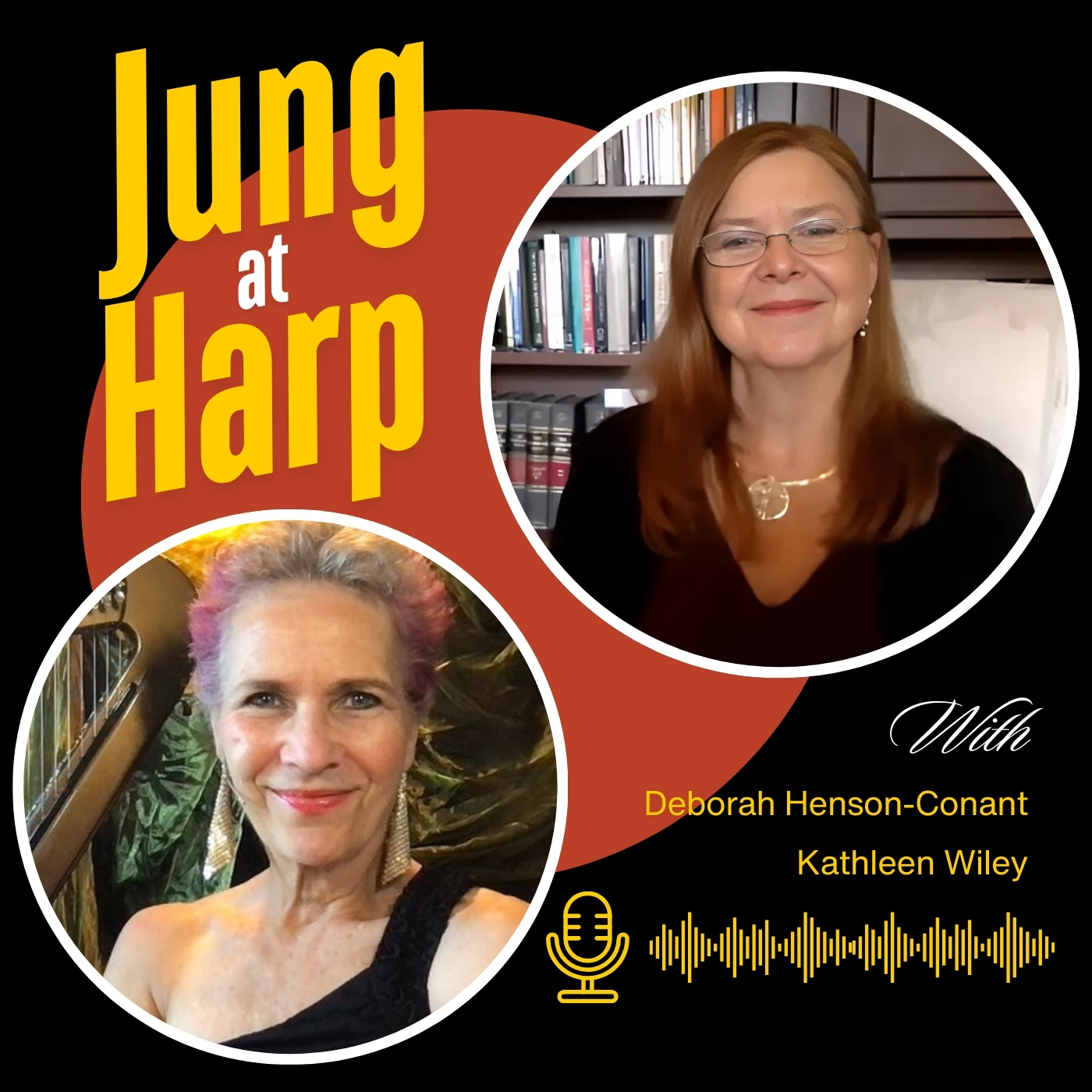
by Deborah Henson-Conant & Kathleen Wiley
Jung at Harp – Where Music and Psyche MeetJoin us most Fridays at 9:15 AM ET for Jung at Harp—a weekly conversation between composer Deborah Henson-Conant and Jungian analyst Kathleen Wiley exploring the deep connection between music, psychology, and self-expression. This series isn't about teaching, selling, or proving anything. It's about curiosity, exploration, and the art of conversation. What happens when a psychoanalyst and a musician discuss creativity, freedom, and the human experience? New ideas unfold, perspectives shift, and deeper understanding emerges. Jung at Harp began as a simple car ride conversation—one that neither wanted to end. Now, it's an ongoing dialogue, shared with the world, about how music and the mind shape each other and transform our lives.
-
91
[226] Jung at Harp #226 Resistance to Connection - What Does it Mean?
Jung at Harp – Connection or Control? Connection or control? Which one do you cultivate in your art, your work, and your relationships—and why does it matter? In this episode of Jung at Harp, Jungian psychoanalyst Kathleen Wiley and composer/performer Deborah Henson-Conant explore the difference between connection and control, and how these two ways of relating can shape the way we create, work, and connect with others. Through an open conversation about music, psychology, creativity, and life, Kathleen and Deborah invite us to look at where we may be trying to control an experience—and what might happen if we instead focused on connection. In this episode: Connection versus control in creativity and relationships How our need for control can affect artistic expression What it means to cultivate genuine connection Exploring the relationship between music, psychology, and life How awareness can change the way we create and relate to others 💬 Question for you: Where do you notice yourself choosing control over connection—and what might change if you chose connection instead? 🎵 Jung at Harp Join Kathleen Wiley, Jungian Psychoanalyst, and Deborah Henson-Conant, composer and performer, for a weekly-ish conversation exploring music, psychology, creativity, and life. 📅 Most Fridays at 9:15-ish EST 🌐 JungAtHarp.com #JungAtHarp #Connection #Control #Creativity #MusicAndPsychology #JungianPsychology #SelfExpression #Relationships #Harp
-
90
[225] Jung at Harp #225 Connection or Control?.mp3
Jung at Harp – Connection or Control? Connection or control? Which one do you cultivate in your art, your work, and your relationships—and why does it matter? In this episode of Jung at Harp, Jungian psychoanalyst Kathleen Wiley and composer/performer Deborah Henson-Conant explore the difference between connection and control, and how these two ways of relating can shape the way we create, work, and connect with others. Through an open conversation about music, psychology, creativity, and life, Kathleen and Deborah invite us to look at where we may be trying to control an experience—and what might happen if we instead focused on connection. In this episode: Connection versus control in creativity and relationships How our need for control can affect artistic expression What it means to cultivate genuine connection Exploring the relationship between music, psychology, and life How awareness can change the way we create and relate to others 💬 Question for you: Where do you notice yourself choosing control over connection—and what might change if you chose connection instead? 🎵 Jung at Harp Join Kathleen Wiley, Jungian Psychoanalyst, and Deborah Henson-Conant, composer and performer, for a weekly-ish conversation exploring music, psychology, creativity, and life. 📅 Most Fridays at 9:15-ish EST 🌐 JungAtHarp.com #JungAtHarp #Connection #Control #Creativity #MusicAndPsychology #JungianPsychology #SelfExpression #Relationships #Harp
-
89
[224] Jung at Harp #224 Cultivating Human Presence
🎵 Jung at Harp – #224 Cultivating Human Presence In a world increasingly shaped by technology, how do we continue to cultivate genuine human presence? In this episode of Jung at Harp, Kathleen Wiley and Deborah Henson-Conant explore the relationship between human presence and technological and technical processes. Where do they meet? Where do they interfere with one another? And perhaps most importantly, how can they work together to enhance rather than diminish our experience of being fully present? Through their conversation for discovery, Kathleen and Deborah reflect on the choices we make when navigating technology, creativity, music, psychology, and human connection. Rather than treating technology and human presence as opposites, they consider how awareness and intention can help us understand the role each plays in our lives. This conversation invites us to consider: How can we embrace technological progress without losing the qualities that make our experiences deeply human? In this episode: What it means to cultivate human presence Human presence versus technological processes The difference between technical skill and genuine presence Where technology and human connection intersect When technology enhances the human experience When technical processes begin to interfere with presence The importance of awareness and intentional choice Presence within music, creativity, and performance Finding balance between technology and humanity Staying connected to ourselves and others in a technological world 💬 Question for you: When does technology enhance your ability to be present, and when does it get in the way? Share your thoughts in the comments. 🎼 About Jung at Harp Hosted by Kathleen Wiley, Jungian Psychoanalyst and harpist, and Deborah Henson-Conant, Grammy-nominated harpist, composer, performer, educator, and creativity mentor. Together they explore music, psychology, creativity, and life through weekly-ish conversations for discovery. Join them most Fridays around 9:15-ish EST at JungAtHarp.com. #JungAtHarp #HumanPresence #Psychology #Creativity #Technology #HumanConnection #Mindfulness #Music #Harp #CarlJung #SelfAwareness #PersonalGrowth
-
88
[223] Jung at Harp #223 Why "Perfect" is Killing Your Music
Jung at Harp – Episode 223 Why "Perfect" is Killing Your Music Many harpists believe they need to master every note, technique, and piece perfectly before they are ready to share their music with others. But what if the pursuit of perfection is actually keeping you from making music? In Episode 223 of Jung at Harp, Kathleen Wiley and Deborah Henson-Conant explore how the pressure to play perfectly can create a constant feeling of "I'm not good enough yet." Instead of experiencing music as a form of self-expression, we can become focused on avoiding mistakes, following the rules, and trying to sound like we think we are supposed to sound. This episode invites us to look beyond perfection and discover what becomes possible when we allow ourselves to play, explore, experiment, and express ourselves with the skills we have right now. In this episode: Why the pursuit of perfection can keep musicians stuck The difference between playing correctly and expressing yourself How the fear of mistakes affects creativity Why you don't have to be "good enough" before sharing your music Finding beauty in simplicity Moving from judgment to curiosity How limitations can become opportunities for creativity Giving yourself permission to discover your own musical voice 🎵 Your music doesn't have to be perfect to be meaningful. Sometimes the most powerful music comes when we stop asking, "Did I play that perfectly?" and start asking, "What can I express with what I have right now?" 💬 Question for you: Has the pursuit of perfection ever stopped you from playing or sharing your music? What would change if you gave yourself permission to simply explore? 🎼 About Jung at Harp Jung at Harp brings together Jungian psychology, music, creativity, and the human experience through conversations between Kathleen Wiley and Deborah Henson-Conant. Each episode explores questions that invite us to look deeper, think differently, and discover new possibilities in ourselves and our creative lives. #JungAtHarp #Harp #Harpist #Music #Creativity #SelfExpression #Perfectionism #MusicEducation #CreativeFreedom #PersonalGrowth
-
87
[222] Jung at Harp #222 - When to Find a Bigger Box?
Why Listen? How do we know when we've outgrown the "box" we're living in? Are our limitations keeping us stuck—or are they the very conditions that make creativity, growth, and self-expression possible? And what if the answer isn't to escape the box, but to discover a bigger one? In this episode of Jung at Harp, Jungian Psychoanalyst Kathleen Wiley and Grammy-nominated composer and performer Deborah Henson-Conant explore the surprising relationship between limitations, creativity, and human potential. Together, they ask what it means to recognize the invisible boxes we live within and how expanding our perspective can transform the way we learn, create, and relate to ourselves and others. Through stories from music, education, and everyday life, Kathleen and Deborah examine the difference between limitations and conditions, the power of teaching principles instead of rigid rules, and why true learning begins when we move beyond perfectionism into curiosity and exploration. They also reflect on the importance of understanding the "box" someone else is in before trying to help them grow beyond it. Join two harp players—Jungian Psychoanalyst Kathleen Wiley and composer/performer Deborah Henson-Conant—for another conversation where music, psychology, and everyday life come together in unexpected ways. Questions explored include: What does it mean to be "in a box"? How do we know when it's time to find a bigger one? Are limitations obstacles—or opportunities for creativity? What's the difference between limitations and conditions? Why is understanding someone else's perspective essential for teaching and growth? How can simplicity lead to deeper self-expression? What happens when we focus on principles instead of perfection? Topics explored include: Psychological limitations and expanding consciousness Creativity within constraints Human potential and authentic self-expression Learning through experience Music education and creative practice Perfectionism versus exploration Empathy, teaching, and perspective The beauty of simplicity Join us for another conversation of discovery where music becomes a doorway into psychology, imagination, and deeper understanding. JungAtHarp.com
-
86
[221] Jung at Harp_#221 Supposed there is an order that supersede perfectionism
Why Listen? Is perfection truly the highest standard we should strive for—or is there a deeper order beyond perfection that allows us to fully become who we are? How do perfectionistic patterns shape the way we live, create, and connect with ourselves and others? In this episode of Jung at Harp, Jungian Psychoanalyst Kathleen Wiley and Grammy-nominated composer and performer Deborah Henson-Conant explore the ways perfectionism can limit our growth and keep us from experiencing the fullness of our true Self. They reflect on the difference between chasing an ideal of perfection and embracing the wholeness that already exists within us. Through conversation, reflection, and curiosity, Kathleen and Deborah examine how perfectionism appears in creativity, relationships, work, and personal identity. They explore the possibility that there is a greater order—one that does not require us to be flawless, but invites us to live in alignment with our authentic nature. Join two harp players—Jungian Psychoanalyst Kathleen Wiley and composer/performer Deborah Henson-Conant—for another conversation where music, psychology, and everyday life come together in unexpected ways. Questions explored include: Where do perfectionistic patterns show up in our lives? How does perfectionism prevent us from living fully? What is the difference between perfection and wholeness? How can we move beyond the need to "get everything right"? What does it mean to trust the greater order of our true Self? How can embracing our wholeness transform creativity and self-expression? Topics explored include: Perfectionism and personal growth The psychology of the true Self Wholeness vs. the pursuit of perfection Creativity and authenticity Self-acceptance and inner transformation Living in alignment with a deeper order Join us for another conversation of discovery where music becomes a doorway into psychology, imagination, and deeper understanding. JungAtHarp.com
-
85
[220] Jung at Harp #220 Music: Presentation or Participation?
Why Listen? Is music meant to be a polished presentation in front of an audience—or a shared experience of participation, connection, and play? Where do these two ways of thinking about music come from, and how do they shape the way we learn, perform, and experience sound? In this episode of Jung at Harp, Jungian Psychoanalyst Kathleen Wiley and Grammy-nominated composer and performer Deborah Henson-Conant explore the tension between performance as perfection and music as participation. They look at how cultural expectations, training systems, and personal psychology influence whether we approach music as something to "get right" or something to enter into together. Through conversation, reflection, and curiosity, Kathleen and Deborah examine how these paradigms affect creativity, confidence, and joy in making music. They explore what is lost—and what is gained—depending on whether music becomes a presentation or a participatory experience, and how shifting that perspective can open new space for expression and connection. Join two harp players—Jungian Psychoanalyst Kathleen Wiley and composer/performer Deborah Henson-Conant—for another conversation where music, psychology, and everyday life come together in unexpected ways. Questions explored include: Is music about presentation or participation? Where do our ideas of "perfect performance" come from? How does audience expectation shape musical expression? What changes when music becomes collaborative instead of evaluative? Can mistakes become part of musical connection? How do we reconnect with joy in making music? Topics explored include: Performance anxiety and perfectionism Music education and cultural expectations Improvisation and collaboration Psychology of performance Creativity and self-expression Music as connection vs. display Join us for another conversation of discovery where music becomes a doorway into psychology, imagination, and deeper understanding. JungAtHarp.com
-
84
[219] Jung at Harp #219 Freeing Ourselves from the Inner Tyrant
Why Listen? How do we know when it's time to say no to the inner tyrant—and what does it actually take to declare freedom from the voices that keep us trapped? And once we begin to loosen their grip, what are the next steps toward a more open, authentic life? In this episode of Jung at Harp, Jungian Psychoanalyst Kathleen Wiley and Grammy-nominated composer and performer Deborah Henson-Conant explore the idea of the "inner tyrant"—that critical, controlling inner voice that pushes us, limits us, and often convinces us we are not enough. Together, they ask what it means to recognize this voice, question its authority, and begin the process of stepping beyond it. Through conversation, reflection, and curiosity, Kathleen and Deborah explore how inner pressure, self-judgment, and fear of failure shape our choices and identity. They look at what it takes to challenge these patterns, and how freedom may begin the moment we stop obeying the demands of our inner imprisoners. Join two harp players—Jungian Psychoanalyst Kathleen Wiley and composer/performer Deborah Henson-Conant—for another conversation where music, psychology, and everyday life come together in unexpected ways. Questions explored include: When do we recognize the voice of the inner tyrant? What does it mean to say "no" to it? Why do we internalize critical or controlling voices in the first place? How does the inner tyrant shape our decisions, relationships, and self-worth? What happens when we stop obeying it? What are the first steps toward psychological freedom? Topics explored include: The inner critic and Jungian psychology Self-sabotage and internalized pressure Freedom from perfectionism Identity, fear, and self-worth Emotional patterns and transformation Reclaiming inner authority and authenticity Join us for another conversation of discovery where music becomes a doorway into psychology, imagination, and deeper understanding. JungAtHarp.com
-
83
[218] Jung at Harp #218 Enough is enough! (or is it__)
Why Listen? When is enough truly enough—and why does it so often feel like it isn't? In this episode of Jung at Harp, Jungian Psychoanalyst Kathleen Wiley and Grammy-nominated composer and performer Deborah Henson-Conant explore the powerful and often challenging question of "enoughness." Why do so many of us feel the need to prove ourselves, defend ourselves, compare ourselves, or constantly strive for more? What happens when we begin to let go of that struggle? Through conversation, reflection, and curiosity, Kathleen and Deborah examine the emotional, psychological, and cultural forces that shape our sense of worth. Together, they explore what it means to feel enough, why that feeling can be so difficult to hold onto, and how releasing the need for constant validation may open the door to greater freedom and self-acceptance. Join two harp players—Jungian Psychoanalyst Kathleen Wiley and composer/performer Deborah Henson-Conant—for another conversation where music, psychology, and everyday life come together in unexpected ways. Questions explored include: When is enough truly enough? Why do we often feel like we are not enough? What drives the need to prove, disprove, or justify ourselves? How do expectations from family, culture, and society affect our sense of worth? What happens when we stop measuring ourselves against others? How can we develop a deeper sense of self-acceptance? Topics explored include: Jungian psychology and self-worth The search for validation and belonging Identity, expectations, and comparison Personal growth and self-acceptance Letting go of perfectionism Freedom, authenticity, and emotional well-being Join us for another conversation of discovery where music becomes a doorway into psychology, imagination, and deeper understanding. JungAtHarp.com
-
82
[217] Jung at Harp #217 What if Solar Consciousness were Feminine - instead of Masculine
Why Listen? What if the energy we associate with the sun, consciousness, and illumination were understood through a feminine lens rather than a masculine one? In this episode of Jung at Harp, Jungian Psychoanalyst Kathleen Wiley and Grammy-nominated composer and performer Deborah Henson-Conant explore a thought-provoking question: What if Solar Consciousness were feminine in nature instead of masculine? Across cultures and throughout history, the sun has often been associated with masculine qualities—power, authority, rationality, and leadership. But what new perspectives emerge when we imagine solar energy as feminine? How might this shift influence our understanding of psychology, creativity, relationships, spirituality, and personal growth? Through conversation, reflection, and curiosity, Kathleen and Deborah explore the symbolic meanings behind solar consciousness and examine the opportunities, possibilities, and insights that may arise from viewing it through a different archetypal lens. Join two harp players—Jungian Psychoanalyst Kathleen Wiley and composer/performer Deborah Henson-Conant—for another conversation where music, psychology, mythology, and everyday life come together in unexpected ways. Questions explored include: What is Solar Consciousness? Why has the sun traditionally been viewed as masculine? What qualities might define a feminine expression of solar energy? How do archetypes shape the way we understand ourselves and the world? What new possibilities emerge when we reconsider familiar symbols? How can changing symbolic perspectives influence creativity and personal growth? Topics explored include: Jungian psychology and archetypes Feminine and masculine symbolism Solar consciousness and self-awareness Mythology, culture, and collective imagery Creativity, identity, and transformation The relationship between symbolism and daily life Join us for another conversation of discovery where music becomes a doorway into psychology, imagination, and deeper understanding. JungAtHarp.com
-
81
[216] Jung at Harp #216 Collaboration_ What Does it Take
Collaboration: What Does it Take? | Jung at Harp Episode 216 Why Listen? Collaboration sounds simple in theory. People come together, share ideas, and create something meaningful. But what actually makes collaboration work? In this episode, Deborah Henson-Conant explores the challenges and rewards of creative collaboration, reflecting on what it takes to truly work together with another person. From music and performance to everyday relationships, collaboration asks for trust, communication, flexibility, and the willingness to listen beyond our own perspective. Join Grammy nominated composer and performer Deborah Henson-Conant for another thoughtful conversation about music, creativity, psychology, and life. Usually joined by Jungian Psychoanalyst Kathleen Wiley, who is currently on tour, Deborah continues the conversation by exploring questions many creatives and collaborators face: How do people with different ideas create something together? What happens when creative visions do not fully align? How do trust, ego, vulnerability, and communication shape collaboration? Through personal reflection and artistic experience, Deborah looks at collaboration not just as a creative process, but as a human one. Whether in music, relationships, teaching, or teamwork, collaboration often challenges us to stay open, adaptable, and present with others. Rather than focusing only on the final result, this episode explores what happens inside the process itself and why collaboration can sometimes teach us as much about ourselves as it does about the work we create together. Topics explored include: What makes collaboration successful Creativity and shared vision Trust, communication, and vulnerability Balancing individual expression with teamwork Listening as an essential creative skill The psychology behind working with others Join us for another conversation where music becomes a doorway into creativity, reflection, and life itself. JungAtHarp.com
-
80
[215] Jung at Harp #215 Which is Easier_ Composing or Improvising
Which is Easier? Composing or Improvising? | Jung at Harp Episode 215 Why Listen? Music is music… right? But is composing the same as improvising? What really separates the two? And where do creativity, structure, instinct, and emotion fit into the process? In this episode, Deborah Henson-Conant explores the fascinating relationship between composing and improvising, reflecting on how music can emerge either from careful construction or spontaneous expression. Through personal stories, musical insight, and thoughtful reflection, this conversation opens the door to understanding creativity from two very different but deeply connected perspectives. Join Grammy nominated composer and performer Deborah Henson-Conant for a conversation about music, creativity, psychology, and life. Usually joined by Jungian Psychoanalyst Kathleen Wiley, Deborah continues today's discussion while Kathleen is away on tour, exploring questions that musicians, artists, and creators of all kinds often ask themselves: Do we discover music differently when we improvise versus when we compose? Is improvisation complete freedom, or does it require its own discipline and structure? And why do some people feel more comfortable creating in one form than the other? Drawing from years of performance and creative experience, Deborah reflects on the balance between preparation and spontaneity, structure and intuition, and how both composing and improvising can teach us something deeper about listening, confidence, and self expression. Topics explored include: The difference between composing and improvising Structure versus spontaneity in creativity Why improvisation requires discipline and trust How musicians develop confidence in creative expression The psychology of creativity and artistic process Listening, intuition, and discovering music in the moment Join us for another thoughtful conversation where music becomes a doorway into creativity, reflection, and life itself. JungAtHarp.com
-
79
[214] Jung at Harp #214 When There's Discord What's Missing?
Jung at Harp | Episode 214: When There's Discord – What's Missing? Why Listen? What if discord isn't something to avoid, but something inviting us to pay closer attention? In this episode, Kathleen Wiley and Deborah Henson-Conant explore the idea that tension, conflict, and emotional dissonance may point toward something unseen, unheard, or missing beneath the surface. Through music, psychology, and personal reflection, they uncover how discord can become a doorway to deeper understanding, creativity, and connection. Join Jungian Psychoanalyst Kathleen Wiley and Grammy-nominated composer/performer Deborah Henson-Conant for a thoughtful conversation about music, psychology, creativity, and life. In this episode, Kathleen and Deborah explore the role of discord — not as something to instantly fix or silence, but as an important signal. Whether in relationships, music, creative work, or within ourselves, moments of tension often reveal unmet needs, missing perspectives, or parts of ourselves asking to be acknowledged. Drawing connections between musical harmony and emotional life, they reflect on how curiosity and listening can transform discomfort into discovery. Rather than rushing toward resolution, this conversation invites us to stay present long enough to hear what the discord may be trying to communicate. Topics explored include: The difference between eliminating discord and understanding it How tension can reveal what's missing beneath the surface Listening as a creative and emotional practice Musical dissonance as a metaphor for life and relationships Curiosity, reflection, and discovery through discomfort
-
78
[213] Jung at Harp #213 Our Relationship to Resistance and Discord
*]:pointer-events-auto scroll-mt-[calc(var(--header-height)+min(200px,max(70px,20svh)))]" dir="auto" data-turn-id= "request-69d88705-fbc8-839e-bbc8-8c3385c04777-1" data-testid= "conversation-turn-10" data-scroll-anchor="true" data-turn= "assistant"> Jung at Harp | Episode 213: Our Relationship to Resistance and Discord Why listen? What do we do when we encounter resistance—within ourselves, in our relationships, or in the creative process? And could discord actually have something important to teach us? In this episode, Kathleen Wiley and Deborah Henson-Conant explore the emotional and creative tension that arises when things don't flow smoothly. From musical dissonance to personal conflict, they unpack how resistance can challenge us, shape us, and sometimes even guide us toward transformation. Discord is often something we try to avoid or resolve quickly—but in music and in life, tension can create movement, depth, and meaning. This conversation looks at how discomfort, friction, and uncertainty may actually be essential parts of growth and expression. Rather than seeing resistance as failure, what if we learned to listen to it differently? In this episode, you'll discover: Why resistance often appears during periods of growth The creative role of discord and tension in music and life How discomfort can reveal deeper truths and emotions Ways to work with resistance instead of against it How conflict and contrast can lead to transformation and clarity Join two harp players—a Jungian psychoanalyst and a composer/performer—for a thoughtful conversation about music, psychology, and life. 🕘 Live at 9:15-ish EST on most Fridays 🎧 Watch and listen: JungAtHarp.com
-
77
[212] Jung at Harp Episode #212 The Conversation of Improvisation
Jung at Harp | Episode 212: The Conversation of Improvisation Why listen? Is improvisation completely different from memorization—or are they more connected than we realize? In this episode, we explore the surprising relationship between structure, memory, spontaneity, and creative freedom. In Kathleen's absence this week, Deborah Henson-Conant dives into the living conversation between memorization and improvisation. While they may seem like opposites, both rely on deep listening, pattern recognition, trust, and presence. Many musicians think memorization is rigid while improvisation is free—but what if both are simply different pathways into connection and expression? This episode unpacks how familiarity creates freedom, how structure can support spontaneity, and why improvisation is less about "making things up" and more about responding in the moment. Whether you're a musician, creative artist, or someone navigating uncertainty in everyday life, this conversation offers insight into how we balance preparation with intuition. In this episode, you'll discover: The similarities between memorization and improvisation Why structure can actually increase creative freedom How improvisation becomes a real-time conversation The role of listening, trust, and familiarity in creativity Why being fully present matters more than being "perfect" Join two harp players—a Jungian psychoanalyst and a composer/performer—for a weekly-ish conversation about music, psychology, and life. 🕘 Live at 9:15-ish EST on most Fridays 🎧 Watch and listen: JungAtHarp.com
-
76
[211] Jung at Harp #211 Adventures in Support
*]:pointer-events-auto scroll-mt-[calc(var(--header-height)+min(200px,max(70px,20svh)))]" dir="auto" data-turn-id= "request-69d88705-fbc8-839e-bbc8-8c3385c04777-1" data-testid= "conversation-turn-6" data-scroll-anchor="true" data-turn= "assistant"> Jung at Harp | Episode 211: Adventures in Support Why listen? What does it really mean to feel supported? And how do we recognize the kind of support that actually helps us grow—in music, in life, and in our relationships? In this episode, Kathleen Wiley and Deborah Henson-Conant explore the many forms of support we rely on—and sometimes overlook. From inner resilience to external encouragement, they unpack how support shapes our creativity, health, and sense of connection. Support isn't always obvious. Sometimes it looks like structure, sometimes like freedom. Sometimes it challenges us instead of comforting us. So how do we know what's truly helping us move forward? This conversation invites you to reflect on the systems, people, and inner resources that hold you—and to reconsider what kind of support you might need next. In this episode, you'll discover: The different forms support can take in music and life Why real support isn't always comfortable or easy How internal and external support systems work together The role of boundaries, structure, and community in growth How to identify what truly supports you right now Join two harp players—a Jungian psychoanalyst and a composer/performer—for a thoughtful conversation about music, psychology, and life. 🕘 Live at 9:15-ish EST on most Fridays 🎧 Watch and listen: JungAtHarp.com
-
75
[210] Jung at Harp #210 What Is the VALUE of Self-Expression?
*]:pointer-events-auto scroll-mt-[calc(var(--header-height)+min(200px,max(70px,20svh)))]" dir="auto" data-turn-id= "request-69d88705-fbc8-839e-bbc8-8c3385c04777-0" data-testid= "conversation-turn-4" data-scroll-anchor="true" data-turn= "assistant"> Jung at Harp | Episode 210: What Is the VALUE of Self-Expression? Why listen? We spend years building skills—but at what point do those skills actually become self-expression? And how much skill do you really need to express something meaningful? In this episode, Kathleen Wiley and Deborah Henson-Conant explore the relationship between technique, creativity, and personal voice. Is skill the gateway to expression—or can it sometimes get in the way? Many people believe they're "not ready" to express themselves until they reach a certain level. But what if expression isn't something you earn later… what if it's available right now? Through a blend of psychology and musical insight, this conversation unpacks how values, identity, and inner permission shape the way we create—and share. This episode invites you to rethink what it means to be "good enough," and to discover how your unique voice can emerge at any stage of your journey. In this episode, you'll discover: The real relationship between skill and self-expression Why waiting to be "good enough" can block creativity How personal values influence the way you create The difference between technical mastery and authentic voice How to access self-expression at any level of experience Join two harp players—a Jungian psychoanalyst and a composer/performer—for a reflective conversation about music, psychology, and life. 🕘 Live at 9:15-ish EST on most Fridays 🎧 Watch and listen: JungAtHarp.com
-
74
[209] Jung at Harp #209 Why does EASY feel WRONG?
Jung at Harp | Episode 209: Why Does EASY Feel WRONG? Why listen? Have you ever worked so hard to improve your skills… only to feel like something's off when things finally get easier? In this episode, we explore why ease can feel uncomfortable, even "wrong," and how that mindset might be holding back your creativity, confidence, and growth. What happens when mastery starts to feel natural? For many of us, there's a strange moment where ease triggers doubt. If it's not hard, is it still valuable? Did we skip something? Are we "cheating"? In this conversation, Kathleen Wiley and Deborah Henson-Conant unpack the psychology behind effort, identity, and the stories we attach to hard work. Drawing from Jungian insights and musical experience, they explore how we internalize struggle as proof of worth—and why letting go of that belief can open the door to deeper creativity and freedom. This episode looks at the hidden resistance to ease, the fear of outgrowing struggle, and how true mastery often feels lighter, not heavier. What if ease isn't a shortcut—but a sign that something is finally working? In this episode, you'll discover: Why we associate effort with value—and ease with doubt The psychology behind feeling "undeserving" when things flow How identity and past struggles shape our relationship with growth Why ease can actually signal mastery, not mediocrity How to embrace flow without losing depth or meaning Join two harp players—a Jungian psychoanalyst and a composer/performer—for a thoughtful, honest conversation about music, psychology, and life.
-
73
[208] Jung at Harp #208 A-B1-A-B2-A-B3-A
Jung at Harp | Episode 208: A-B1-A-B2-A-B3-A The Powers of Form Form or structure is the second principle in the 7 principles of creative expression developed by Deborah Henson-Conant. But why is form such a powerful force in both creativity and freedom? In this episode of Jung at Harp, Deborah and Jungian psychoanalyst Kathleen Wiley explore how structure shapes, supports, and even expands creative possibility. Using the musical pattern A-B1-A-B2-A-B3-A as a starting point, they reflect on how repetition and variation work together to create both coherence and surprise. Rather than limiting creativity, form provides a foundation that allows expression to unfold with greater clarity and intention. From a Jungian perspective, structure can also mirror psychological patterns, offering a framework through which the psyche organizes experience and meaning. This conversation invites listeners to reconsider the role of form not as restriction, but as a dynamic partner in creativity. When we understand and engage with structure, we can move more freely within it, discovering new layers of expression and insight. This episode invites you to reflect on: • Why form is a core principle of creative expression • The meaning behind patterns like A-B1-A-B2-A-B3-A • How repetition and variation create both stability and surprise • The relationship between structure and creative freedom • Jungian perspectives on patterns within the psyche • How form can guide rather than limit expression • Recognizing patterns in music, thought, and behavior • Using structure to deepen creative exploration • Finding freedom through understanding form Why listen? If you're interested in creativity, music, or the deeper patterns that shape expression and experience, this episode offers a compelling look at the power of form. Deborah and Kathleen invite you to explore how structure can become a source of freedom, helping you create with more intention, confidence, and depth. Join Deborah Henson-Conant and Kathleen Wiley for their weekly-ish conversations on music, psychology and life, typically around 9:15 EST on most Fridays.
-
72
[207] Jung at Harp #207 The Thing about Beavers
Jung at Harp | Episode 207: The Thing about Beavers Beavers create entire ecosystems that support life far beyond themselves, shaping environments where many different forms of life can thrive. But within each of those living beings exists another kind of ecosystem — an inner world shaped by thoughts, emotions, reactions, and self talk. In this episode of Jung at Harp, Deborah Henson-Conant and Jungian psychoanalyst Kathleen Wiley explore the relationship between the outer environments we create and the inner environments we carry within us. Through a Jungian lens, they reflect on how our internal landscape influences not only our creative expression, but also how we interact with others and shape the world around us. When those "inner ecosystems" include self talk, emotional patterns, and unconscious responses, they become powerful forces that can either support or disrupt both personal and collective harmony. This conversation invites listeners to consider how awareness of their inner environment can lead to more intentional creation — in music, relationships, and life itself. Just as beavers shape the physical world, we are constantly shaping our psychological and creative ecosystems, often without realizing it. This episode invites you to reflect on: • The idea of ecosystems as both external and internal • How inner environments influence outer experiences • The role of self talk in shaping perception and behavior • Emotional reactions as part of a living inner system • Jungian perspectives on the psyche as an ecosystem • How awareness can transform internal patterns • The connection between inner balance and creative expression • Creating supportive environments within and around us • Living more intentionally through self awareness Why listen? If you're interested in how your inner world shapes your creativity, relationships, and daily experience, this episode offers a rich and thoughtful perspective. Deborah and Kathleen invite you to explore your own "inner ecosystem" and consider how cultivating awareness within can lead to more balanced, creative, and meaningful ways of living. Join Deborah Henson-Conant and Kathleen Wiley for their weekly-ish conversations on music, psychology and life, typically around 9:15 EST on most Fridays.
-
71
[206] Jung at Harp #206 Share What Speaks to You
Jung at Harp | Episode 206: What Speaks to You? What speaks to you and how does it speak? In this episode of Jung at Harp, Deborah Henson-Conant and Jungian psychoanalyst Kathleen Wiley explore the subtle, personal, and often surprising ways meaning, inspiration, and inner guidance make themselves known in our lives. Through a blend of musical insight and Jungian reflection, they consider how each person is attuned to different signals, whether through sound, emotion, image, intuition, or lived experience. What resonates with one person may be completely different for another, yet each form of "speaking" carries the potential to guide creativity, self understanding, and authentic expression. This conversation invites listeners to become more aware of the unique language through which life communicates with them and how learning to listen can deepen both artistic practice and personal growth. By recognizing what truly speaks to us, we open a pathway to more intentional, responsive, and meaningful living. This episode invites you to reflect on: • What it means for something to truly "speak" to you • The different ways inspiration and meaning show up • Listening beyond words through emotion, sound, and intuition • Jungian perspectives on symbols and inner communication • How personal resonance shapes creative expression • Recognizing your unique "language" of inspiration • Deepening awareness through attentive listening • Following what calls you in music and in life • Allowing meaning to emerge rather than forcing it Why listen? If you're curious about how inspiration, intuition, and meaning show up in your life, this episode offers a thoughtful exploration of listening on a deeper level. Deborah and Kathleen invite you to discover how tuning into what truly speaks to you can enrich your creativity, strengthen your self awareness, and guide your path forward. Join Deborah Henson-Conant and Kathleen Wiley for their weekly-ish conversations on music, psychology and life, typically around 9:15 EST on most Fridays.
-
70
[205] Jung at Harp #205 Why Write it Down
Jung at Harp | Episode 205: Why Write it Down What does it mean to "go to the source" — and why does it matter? In this episode of Jung at Harp, Deborah Henson-Conant and Jungian psychoanalyst Kathleen Wiley explore the idea of source as the wellspring of creativity, meaning, and inner alignment. Whether in music, psychology, or daily life, returning to the source invites us to reconnect with what is most essential and alive within us. Through a reflective and exploratory conversation, they consider what "your source" might be — a place of inspiration, intuition, or deeper knowing — and how we can access it more consistently. From a Jungian perspective, this journey often involves turning inward, listening closely, and engaging with the unconscious as a partner in creative and personal growth. Rather than seeking answers solely from the outside world, this episode invites listeners to cultivate a relationship with their own inner origin — where ideas, music, and authentic expression begin. By learning how to return to that source, we can create with more clarity, purpose, and depth. This episode invites you to reflect on: • What it really means to "go to the source" • Identifying your personal source of creativity and insight • How to access deeper inspiration in music and life • Jungian perspectives on the unconscious as a creative wellspring • Practices for reconnecting with inner alignment • The difference between external validation and inner knowing • Why authentic expression begins from within • Listening as a pathway to creative clarity • Returning to source as an ongoing practice Why listen? If you're seeking deeper connection to your creativity, purpose, or inner life, this episode offers a thoughtful exploration of where it all begins. Deborah and Kathleen invite you to consider how returning to your source — again and again — can transform not only your music, but the way you experience and engage with life. Join Deborah Henson-Conant and Kathleen Wiley for their weekly-ish conversations on music, psychology, and life — typically around 9:15 EST on most Fridays.
-
69
[204] Jung at Harp #204 Why Spiders Balloon on the Wind
*]:pointer-events-auto scroll-mt-[calc(var(--header-height)+min(200px,max(70px,20svh)))]" dir="auto" tabindex="-1" data-turn-id= "request-WEB:1431f0e7-1719-468f-93ab-96123d98422f-2" data-testid= "conversation-turn-6" data-scroll-anchor="true" data-turn= "assistant"> Jung at Harp | Episode 204: Why Spiders Balloon on the Wind When spiders "balloon" into the air, releasing a thread of silk and allowing the wind to carry them to unknown places, they surrender to a force greater than themselves. In this episode of Jung at Harp, Deborah Henson-Conant explore this fascinating natural phenomenon as a metaphor for creativity, improvisation, and trust. Just as the spider releases control and lets the wind guide its journey, musicians — and creators of all kinds — often face a similar choice: to tightly control what unfolds, or to surrender to the rhythm, the pattern, and the living flow of the music. Through a Jungian lens, this conversation explores the tension between control and surrender, and how letting go can open the door to deeper creativity and authentic expression. Drawing parallels between nature, improvisation, and the psyche, Deborah and Kathleen reflect on how creative patterns can provide a structure that supports freedom rather than limiting it. When we allow ourselves to trust the process — whether in music or in life — unexpected discoveries often emerge. This episode invites you to reflect on: • The phenomenon of spiders "ballooning" and what it symbolizes • The balance between control and surrender in creativity • How improvisational patterns create space for freedom • Trusting rhythm, structure, and the unfolding moment • Jungian ideas about surrendering to forces beyond the ego • Why improvisation requires both skill and openness • The role of intuition in creative expression • Letting music guide rather than forcing outcomes • How surrender can lead to surprising creative discoveries Why listen? If you're fascinated by creativity, improvisation, or the deeper psychological dynamics behind artistic expression, this episode offers a powerful metaphor for the creative process. Deborah and Kathleen invite listeners to consider how learning to trust the "wind" — in music, creativity, and life — can open pathways to freedom, discovery, and transformation. 🕸️🎶
-
68
[203] Jung at Harp | Episode 203: Exploring the Unnoticed: Discovering through Play
Jung at Harp | Episode 203: Exploring the Unnoticed: Discovering through Play What does it take to approach life with curiosity, spontaneity, playfulness, and non-judgment — and what might become possible when we do? In this episode of Jung at Harp, Deborah Henson-Conant and Jungian analyst Kathleen Wiley explore the creative and psychological power that emerges when we loosen our need to control, evaluate, or perfect our experiences. Through conversation and reflection, they consider how curiosity and play open pathways for creativity, deeper self-discovery, and a more authentic relationship with life. From a Jungian perspective, approaching life with openness and non-judgment allows us to engage more freely with the unconscious, inviting insights and creative impulses that might otherwise remain hidden. Rather than striving for certainty or perfection, this episode explores the idea that creativity often flourishes in spaces of exploration, experimentation, and wonder. When we allow ourselves to play — in music, in thought, and in daily life — we create room for new possibilities to emerge. This episode invites you to reflect on: • What it means to live with genuine curiosity • The creative power of spontaneity and playfulness • How non-judgment creates space for exploration • Jungian perspectives on openness to the unconscious • Letting go of perfectionism in creative work • Why creativity often begins with experimentation • The relationship between play and psychological freedom • How curiosity can transform everyday experiences • Opening new possibilities through a spirit of wonder Why listen? If you're interested in creativity, psychology, or the inner attitudes that shape how we experience life, this episode offers a thoughtful invitation to rediscover curiosity and play. Deborah and Kathleen explore how stepping beyond judgment and embracing spontaneity can unlock deeper creativity, richer self-awareness, and a more vibrant way of living.
-
67
[202] Jung at Harp #202 What Difference Does Love Make in Music and Life_
Jung at Harp | Episode 202: Tapping Into the Creative Power of Love They say all you need is love — but what does that truly mean when it comes to creativity, music, and personal growth? In this episode of Jung at Harp, Deborah Henson-Conant and Jungian analyst Kathleen Wiley explore the mysterious and powerful force we call love — not simply as an emotion, but as a generative source of expansion, connection, and creative energy. Together, they reflect on how love can serve as a gateway to deeper artistic expression and a more meaningful relationship with life itself. Through a Jungian lens, the conversation considers love as a dynamic psychological force that fuels imagination, dissolves creative blocks, and invites us into a fuller experience of being alive. Rather than treating love as a vague ideal, this episode explores how we might consciously cultivate its presence in our creative process and daily life — allowing it to shape the way we make music, connect with others, and engage with our inner world. This episode invites you to reflect on: • What people really mean when they say "all you need is love" • Love as a source of creative expansion and inspiration • How emotional openness influences musical expression • The relationship between love, vulnerability, and creativity • Jungian perspectives on connection and the creative psyche • Cultivating love as a practice rather than a passive feeling • How creative work can become an act of love • Removing inner barriers that block creative flow • Expanding both music and life through deeper connection Why listen? If you're curious about the deeper emotional and psychological forces that shape creativity, this episode offers a thoughtful exploration of love as a living creative power. Through conversation and reflection, Deborah and Kathleen invite listeners to consider how cultivating love — within ourselves and in our creative work — can open new pathways for music, imagination, and personal transformation.
-
66
[201] Jung at Harp - #201 When One is Missing .... Strings of Passion and Jung's Basic Principles
Jung at Harp | Episode 201: The 7 Strings of Passion and Jungian Principles In this episode of Jung at Harp, with Kathleen Wiley unavailable, Deborah Henson-Conant takes listeners on a reflective solo exploration of the 7 Strings of Passion — principles of creative expression — and their intriguing parallels with Jungian psychology. Through this lens, Deborah examines how creativity, inner life, and psychological dynamics may be more deeply connected than we often realize. Blending artistic insight with psychological curiosity, this episode considers how the forces that shape creative expression — such as tension, contrast, flow, and authenticity — also echo fundamental Jungian ideas about balance, energy, and the movement of the psyche. Rather than a formal lecture, the conversation unfolds as an intuitive inquiry into how creative principles may illuminate personal growth and self-understanding. This episode invites you to reflect on: • The deeper meaning behind the 7 Strings of Passion • How creative expression mirrors psychological processes • Connections between artistic dynamics and Jungian thought • The role of tension, contrast, and resolution in both psyche and art • Why creativity is not just output, but a way of being • How inner resistance can shape creative flow • The relationship between authenticity and psychological alignment • Seeing creativity as a dialogue with the unconscious • Expanding self-awareness through artistic metaphors Why listen? If you're drawn to creativity, psychology, or the invisible patterns that shape both, this episode offers a rich and thought-provoking perspective. Deborah's solo reflection opens space for listeners to consider creativity not merely as a skill, but as a living psychological process. Even in Kathleen's absence, the spirit of Jung at Harp continues — exploring the fertile intersection of music, psyche, and lived experience.
-
65
[200] Jung at Harp_#200 Travelling Buddies_ Overwhelm & Anxiety ... Grounding & Support
Jung at Harp | Episode: Coexisting States – Overwhelm, Anxiety, Grounding, and Support In this episode of Jung at Harp, Jungian psychoanalyst Kathleen Wiley and harpist, composer, and mentor Deborah Henson-Conant explore how certain inner states tend to travel together in our lived experience. Rather than viewing emotions and body sensations as isolated events, they reflect on how patterns like overwhelm and anxiety often coexist and reinforce each other — while other pairings, such as grounding and support, can gently redirect us toward stability and resilience. Through a blend of psychology, felt-sense awareness, and lived reflection, this conversation invites listeners to notice the subtle relationships between mind, body, and emotional states. How do these internal companions shape our reactions, choices, and sense of self? And how might cultivating grounding alter the entire trajectory of our experience? This episode invites you to reflect on: • How emotional and somatic states can coexist and "travel together" • The connection between overwhelm and anxiety in daily life • Why certain inner patterns feel self-reinforcing • The role of grounding as a counterbalancing state • How support — internal and external — shifts our nervous system • Listening to the body as part of psychological awareness • Recognizing state patterns without judgment or self-criticism • Small shifts that can interrupt cycles of stress and reactivity • Moving toward steadiness rather than fighting inner experience Why listen? If you've ever wondered why certain feelings seem to arrive as a package deal — or why shifting your state can sometimes feel impossible — this episode offers a thoughtful and compassionate lens. By understanding how internal states interact, we gain more than insight; we gain choice, perspective, and the possibility of responding differently. Sometimes, meaningful change begins not by eliminating anxiety, but by inviting grounding and support into the picture.
-
64
-
63
[198] Jung at Harp #198 What if it's not working_
Jung at Harp | Episode: #198 What If It's Not Working? In this episode of Jung at Harp, Jungian psychoanalyst Kathleen Wiley and harpist, composer, and mentor Deborah Henson-Conant explore a question many of us quietly struggle with: What do we do when something in our life just isn't working? Through personal stories, metaphors, and Jungian psychology, they reflect on resistance, projection, purpose, and the subtle difference between engagement and proving ourselves. From Instagram hacks to childhood toys, from music practice to creative identity, this conversation uncovers how pushing harder often creates more resistance — and how letting go can open unexpected pathways forward. Rather than offering quick fixes, this episode invites listeners into a deeper inquiry: What if "not working" isn't a failure, but a signal to shift perspective, reconnect with purpose, and return to authentic engagement? This episode invites you to reflect on: • What it really means when something "isn't working" • How resistance and over-effort can create compensatory pushback • The Jungian principle of compensation and psychological balance • Why stopping, breathing, and slowing down can restore flow • The difference between engagement and trying to prove yourself • How projection shapes our relationship with tools, platforms, and people • Why reconnecting with purpose can unlock creative movement • How creativity, learning, and growth happen in layers — not perfection • What it means to show up grounded in your true self Why listen? If you've been feeling stuck, frustrated, or caught in cycles of effort without results, this episode offers a compassionate and thought-provoking lens. What If It's Not Working? reminds us that real change often begins not with force, but with awareness, curiosity, and reconnection to what genuinely matters. Sometimes, what isn't working is pointing us toward a deeper truth — and a more authentic way forward.
-
62
[197] Jung at Harp #197 Debunking Feke
Jung at Harp | Episode: #197 Debunking Feke In this episode of Jung at Harp, Deborah Henson-Conant and a fellow harp player dive into a provocative question: Can we step into our confidence by letting go of the idea of being "fake"? Drawing from Jungian ideas and personal reflection, they explore how beliefs about authenticity, performance, and self-judgment shape the way musicians and humans show up in their creative lives. This conversation invites listeners to rethink what it means to be real in music and in life. Rather than chasing an ideal of perfection or fearing that we are somehow "phony," Deborah and her co-host challenge the very notion of feke/fake as a limiting concept. This episode invites you to reflect on: • What we mean when we label something or someone as "fake" • How the fear of being inauthentic can block confidence and creativity • Why giving up the concept of perfection can be liberating • How musicians wrestle with identity, image, and self-expression • What Jungian psychology can teach us about inner truth and artistic presence • How embracing imperfection can strengthen artistic voice • Ways to cultivate confidence that are grounded in honesty, not performance Why listen? If you've ever felt insecure about your playing, your ideas, or your sense of self, this episode offers a fresh perspective. Debunking Feke isn't about dismissing standards or effort — it's about freeing yourself from fear-based thinking so you can engage more fully in your creative journey and your life.
-
61
[196] Jung at Harp #196 Bring the Music
Jung at Harp | Episode: Real Gratitude Isn't Perfect — It's Whole In this introspective solo episode of Jung at Harp, harpist-composer Deborah Henson-Conant invites listeners into a reflective exploration of gratitude through a Jungian lens. She challenges the common notion that gratitude must be positive, cheerful, or spiritually flawless. Instead, Deborah presents gratitude as a profound and grounded relationship with one's whole self, including both light and shadow. Through personal insight and philosophical inquiry, Deborah explores why trying to force gratitude while dismissing difficult emotions can feel incomplete, and how embracing the full spectrum of experience enriches both inner life and creative expression. This episode invites you to reflect on: • Why real gratitude includes both joy and struggle • How ignoring anger, sadness, or pain can limit connection with self and others • The difference between toxic positivity and true emotional presence • How Jung's concept of the shadow contributes to wholeness • Why accepting all your feelings strengthens creative confidence • How emotional honesty deepens musical expression and improvisation • Why gratitude becomes more meaningful when it embraces complexity • What it means to build an honest, whole-self relationship Why listen? If you've ever felt pressured to just be grateful, even when life feels hard or mixed, this episode offers a more compassionate understanding. Deborah shows that gratitude is not about perfection but about wholeness. When you make space for your entire experience—including difficult emotions—it deepens your creativity, enriches your inner life, and allows gratitude to be truly grounded and human.
-
60
[195] Jung at Harp #195 The Power of Gratitude
Jung at Harp | Episode: Real Gratitude Isn't Perfect — It's Whole In this reflective solo episode of Jung at Harp, harpist-composer Deborah Henson-Conant explores a powerful Jungian idea: that real gratitude is not about being cheerful, positive, or spiritually "perfect." It's about holding the full truth of who we are—our light and our shadow—at the same time. Drawing from personal insight, musical storytelling, and Jungian themes, Deborah unpacks why forcing gratitude while ignoring harder feelings can leave us feeling incomplete, and how embracing conflicting emotions can actually deepen our sense of wholeness. Starting with the question, "Can you be grateful and angry at the same time?" Deborah guides listeners into a deeper understanding of gratitude as a relationship with the self, not a performance. She shares how acknowledging both gifts and wounds allows musicians, creators, and humans to live—and create—from a more grounded, authentic place. This episode invites you to reflect on: • Why genuine gratitude includes both positive and difficult emotions • How suppressing anger or sadness can block real connection and creativity • The difference between "toxic positivity" and true emotional presence • How Jung's concept of the shadow helps us embrace the parts we often avoid • Why honoring all your feelings strengthens your creative voice • How musicians can use emotional honesty to deepen expression and improvisation • Why gratitude becomes more powerful when it makes room for complexity • What it means to build a relationship with your whole self—not just the "good" parts Why listen? If you've ever felt pressure to "just be grateful" even when you're hurting, angry, or overwhelmed, this episode offers relief and clarity. Deborah shows how real gratitude isn't about perfection—it's about wholeness. When you say yes to your entire experience, your creativity expands, your music deepens, and your inner life becomes more honest and alive. This episode is an invitation to let gratitude be real, grounded, and human—woven from all the parts of you, not just the polished ones.
-
59
[194] Jung at Harp #194 Imperfect vs Incomplete
Jung at Harp | Episode 194: Imperfect vs. Incomplete In this thoughtful episode of Jung at Harp, harpist-composer Deborah Henson-Conant and Jungian psychoanalyst Kathleen Wiley explore what it really means to create something that is imperfect yet complete. Through stories about creativity, music, improvisation, external feedback, and personal growth, they open a conversation about the tension between perfectionism and genuine expression. Starting with a simple moment of noticing an "imperfect" hair day, the discussion unfolds into deeper reflections on Deborah's newly released holiday fake book, the creative process behind it, and the discomfort of sharing work that will continue to evolve. This episode offers insight into how musicians and creators can embrace incompleteness as part of the journey rather than a flaw. The conversation invites you to reflect on: • The difference between something imperfect and something incomplete, and why they are not the same • How musical structure and patterns create a safe foundation for freedom in improvisation • Why creative work feels "never finished," and how embracing process can open new understanding • How external feedback can both affirm and challenge, helping us grow into more authentic expression • The power of simple musical patterns and why musicality isn't dependent on complexity • The emotional courage required to strip away performance personas and play from genuine self-expression • How having a clear process supports completion and helps creators move forward • The importance of connection: how even one person deeply moved by your work can be enough • The ripple effect of creative acts, even when they feel small or unseen Why listen? If you struggle with perfectionism, hesitate to share your work, or worry about whether what you create is "good enough," this episode offers reassurance and perspective. Imperfect vs. Incomplete shows that creative work is part of an ongoing evolution—and that music, expression, and human connection flourish not because of perfection, but because of authenticity. Through stories from their musical lives, teaching, and personal experiences, Deborah and Kathleen reveal how embracing imperfection can open the door to freedom, learning, and impact—sometimes reaching exactly the one person who needs it most.
-
58
[193] Jung at Harp #193 What do _Fake_ and _Cheat_ mean when it comes to music_
Jung at Harp | Episode: Unlocking Musical Flow Through Ritual & Rhythm In this inspiring episode of Jung at Harp, harpist-composer Deborah Henson‑Conant and Jungian psychoanalyst Kathleen Wiley explore how ritual and rhythm can serve as gateways into deeper musical flow — freeing you from the "practice grind" and into vibrant creative play. Through personal stories, practical prompts and musical insight, this episode invites you to: 🔄 Create meaningful rituals — warm-ups, transitions or space-clearing methods that set the tone before you play. 🕰️ Use rhythm beyond time-keeping — exploring pulse, groove and bodily movement as gateways into presence. 🎼 Let structure enable freedom — discovering how the right structure becomes scaffolding for musical spontaneity. ✨ Bridge intention & improvisation — using rhythm and ritual to shift from mechanical practice into expressive creation. 🌿 See your instrument as partner — treating your harp (or whatever you're playing) not just as object, but as collaborator in the ritual of music-making. Whether you're preparing for performance, teaching, or simply playing for your own joy — this conversation will help you invite flow, focus, and freedom through the power of ritual and rhythm. ✨ Why listen? If you've felt stuck in a mechanical practice loop, or find it hard to move from warming up into genuine expression, this episode is your invitation. Unlocking Musical Flow Through Ritual & Rhythm shows you how simple intentional patterns can open the door into creative abundance — so your music becomes a lived experience, not just a task.
-
57
[192] Jung at Harp #192 How Do Mindset and Context Trap us ... or Free Us_
Jung at Harp | #192: How Do Mindset and Context Trap Us … or Free Us? In this thought-provoking episode of Jung at Harp, Jungian psychoanalyst Kathleen Wiley and harpist-composer Deborah Henson-Conant dive into the subtle yet powerful forces of mindset and context — exploring how our inner world and outer environment shape not just our music, but our lives. Together they explore how our assumptions, mental habits, and physical settings can either act as invisible constraints or gateways to deeper freedom. Through candid conversation and humorous anecdotes, they invite you to: 🎵 Recognize the hidden frames — Discover what mindset and context you're operating in, whether it's limiting or liberating. 🧠 Shift from "trapped" to "free" — Learn how simple reframes and new perspectives can unlock creative and personal potential. 🎼 Use your environment as a partner — Explore how your practice space, tools, and surroundings can serve you instead of them draining you. 💫 Turn mindset into music — Hear how Deborah and Kathleen translate psychological insights into sonic metaphors and musical experiments. 🌱 Embrace growth through change — Whether your challenge is musical, emotional, or relational, this episode reminds you that context isn't fixed — it can be reshaped. Whether you're a musician, a creative professional, or someone curious about inner transformation, this conversation provides a fresh lens to see how your real world and your internal world interact. ✨ Why listen? If you've ever felt stuck in your playing, practice, or life — as though something invisible is holding you back — this video is your invitation to lift the lid. How Do Mindset and Context Trap Us … or Free Us? reveals how the environments we create (and the beliefs we carry) either constrain or expand us — and gives you tools to choose freedom.
-
56
[191] Jung at Harp #191 Stretto
Jung at Harp | Episode 191: Stretto – When Music Imitates Life In this reflective solo episode of Jung at Harp, harpist-composer Deborah Henson-Conant (DHC) explores the musical and psychological idea of stretto the overlapping of themes that creates tension, energy, and, ultimately, transformation. Without her usual co-host Kathleen Wiley, DHC takes listeners on a journey through music, creativity, and problem-solving from the challenges of arranging "Carol of the Bells" for harp to life-changing moments of artistic surrender. Along the way, she connects the dots between musical structure and personal growth, revealing how technical obstacles can become gateways to creative breakthroughs. Through music, storytelling, and metaphor, Deborah invites you to: 🎵 See structure as liberation how boundaries and challenges can spark innovation. 💡 Embrace imperfection discovering freedom through "good enough" progress. 🪶 Transform frustration into flow turning impasses into opportunities for creative growth. 🌉 Find meaning in musical metaphors from descending bass lines to emotional build-ups. 💞 Hold opposites with compassion allowing transformation to emerge from tension. What begins as a study of a holiday tune unfolds into a rich reflection on artistry, surrender, and community reminding us that the places we feel stuck often hold the seeds of our most meaningful transformations. ✨ Why listen? If you've ever faced a creative or personal roadblock, this episode will remind you that challenges aren't dead ends they're invitations. Stretto reveals how constraint and discomfort can lead to innovation, resilience, and heart-centered growth — in music, work, and life itself.
-
55
[190] Jung at Harp #190 What Matters Most ... and what's the Gift that Wants to be Seen
Jung at Harp | Episode 190: What Matters Most — and the Gift that Wants to Be Seen In this illuminating episode of Jung at Harp, Jungian psychoanalyst Kathleen Wiley and harpist-composer Deborah Henson-Conant explore two essential questions: What matters most? and What's the gift that wants to be seen? Why listen? If you've ever found yourself overcomplicating your art, your music, or even your life, this episode invites you to rediscover simplicity — not as a limitation, but as a gateway to fluency and authenticity. "What Matters Most" reminds us that freedom and creativity grow from presence, repetition, and allowing what's already within us to unfold. Through heartfelt dialogue, humor, and live musical reflection, Deborah and Kathleen uncover how the deepest gifts often arise when we stop striving and start listening. They explore: Simplicity as strength — how doing less on the harp (and in life) can reveal more resonance, power, and beauty. Fluency through repetition — why mastery and self-expression come not from complexity, but from doing the simple things over and over until they become second nature. Letting the head serve the heart — how to balance intellect and intuition so that your creativity flows effortlessly. Trusting your essence — releasing comparison and allowing your unique gift to emerge as it wants to be seen. Structure as freedom — finding joy and flow through clear frameworks that support your natural creativity. From reflections on playing with others to stories of rediscovering old songs like "Late Last Night," this episode celebrates the paradox of simplicity — that what's easy is often what's truest. Whether you're a musician, artist, or seeker longing to reconnect with your authentic flow, this conversation will inspire you to honor what matters most and to trust that your gift, just as it is, is enough.
-
54
[189] Jung at Harp #189 Living and Playing from Heart
Jung at Harp | Episode 189: Living and Playing from the Heart In this heartfelt episode of Jung at Harp, Jungian psychoanalyst Kathleen Wiley and harpist-composer Deborah Henson-Conant explore what it truly means to live and play from the heart in life, creativity, and music. ✨ Why listen? If you've ever felt held back by perfectionism, self-doubt, or the pressure to "get it right," this episode is your invitation to return to what's real your heart. Living and Playing from the Heart reminds you that freedom doesn't mean doing more it means listening deeply, embracing your humanness, and finding joy in the simple act of creation. Together, they dive into how freedom and fluency in music (and in life) come not from endless options, but from embracing structure, limitation, and presence. Deborah shares her discovery that true musical freedom blossoms when we simplify focusing on one choice at a time while Kathleen reflects on how self-worth, practice, and compassion free us from shame and perfectionism. Through personal stories, playful metaphors, and deep psychological insight, this episode invites you to: 🎵 Shift from perfection to play letting go of "getting it right" and rediscovering joy through experimentation. 💖 Transform shame into creativity recognizing that self-worth isn't about comparison or competition. 🧩 See structure as freedom finding musical and emotional liberation through small, repeatable practices. 🌿 Honor what you already have realizing that your current skills and heart's expression are enough. ✨ Create from the heart, not from fear embracing authenticity in music, art, and life. Whether you're a musician, a creative, or simply someone yearning to live more fully, this conversation will inspire you to trust your inner rhythm and see your heart as both your compass and your home.
-
53
[188] Jung at Harp #188 Structure is Freedom
Jung at Harp | Episode 188: Structure is Freedom – Conversations with Jung, AI, and the Blues ✨ Why listen? If you've ever felt trapped by "doing it right" or overwhelmed by creative chaos, this episode offers a fresh perspective: structure isn't your enemy it's your ally. Learn how to use form to find freedom, and how music itself can teach you the art of being free without being lost. In this thought-provoking solo episode of Jung at Harp, harpist-composer Deborah Henson-Conant explores the powerful paradox of structure and freedom and how these two forces shape not only our music, but our creativity, learning, and inner life. With co-host Kathleen Wiley away, Deborah invites an unexpected dialogue partner: Carl Jung, through an AI conversation experiment. Together, they explore how musical structure, storytelling, and psychological frameworks intertwine to create a container for creative expression. Drawing from her own experiences in Hip Harp Academy, Deborah reveals how the structures we build in music, in thought, and in life don't confine us, but free us to express more deeply and authentically. You'll hear stories and reflections that illuminate: 🎵 How "structure is freedom" the banks that let the river of creativity flow 📖 Why some stories stretch musical form, inviting music to follow meaning, not the other way around 🌀 The role of tension and release in storytelling through the blues 💡 How simple frameworks like "Don't get caught anywhere" can unlock improvisation for anyone 🧭 Why expert coaching and structure can expand freedom instead of limiting it From conversations about Jungian psychology to the blues' hidden architecture, Deborah invites you to reimagine structure not as a cage but as a living frame one that holds, supports, and guides your creative flow.
-
52
[187] #187 A Conversation of One ... or How to Have a Useful Conversation with Yourself
Jung at Harp | Episode 187: Conversation of One – The Mechanics of Discovery ✨ Why listen? If you've ever struggled to stay inspired when you're learning or creating alone, this gentle, thought-provoking episode reminds you that discovery doesn't depend on having all the answers — it begins the moment you start asking questions. In this introspective solo episode of Jung at Harp, harpist-composer Deborah Henson-Conant explores what it means to have a "conversation of one" — and how talking to yourself can become a pathway to discovery, creativity, and learning. With co-host Kathleen Wiley away, Deborah turns inward, inviting listeners to join her in real-time reflection on how we learn, discover, and create meaning — even when we're alone. She unpacks the mechanics of discovery through stories from her own learning journey, from studying with mime artist Tony Montanaro to developing her Hip Harp Academy, where she combines information, community, and coaching to inspire musical growth. You'll hear insights about: 🎵 The three pillars of discovery – learning materials, community, and coaching 💭 Why talking to yourself out loud can spark creativity and self-awareness 📚 The difference between learning and discovery — and why both matter 🌱 How simple patterns and foundational forms can lead to freedom and creative flow 🎶 The importance of showing up — even when you don't feel ready Through her spontaneous reflections, Deborah shows that a "conversation of one" is never truly solitary. Each listener becomes part of a larger dialogue about music, creativity, and the joy of exploration.
-
51
[186] Jung at Harp #186 Letting Go_ What it takes to truly let go
Jung at Harp | Episode 186: Letting Go – What it Takes to Truly Let Go Why listen? If you've ever been told to "just let go" and found yourself wondering how, this episode is for you. Letting go isn't about forcing release—it's about finding the structure, trust, and playfulness that allow real freedom to emerge. Whether in music, creativity, or daily life, Deborah and Kathleen explore the paradox that true release often requires both structure and surrender. In this episode of Jung at Harp, harpist-composer Deborah Henson-Conant and Jungian psychoanalyst Kathleen Wiley dive into the elusive art of letting go. What does it really mean? Why is it so hard when all the advice seems to be "stop trying"? And how can music—especially improvisation—offer a pathway into release? Deborah shares stories from her teaching, including how a simple phrase—"don't get caught anywhere"—can unlock breakthroughs for harpists in just minutes. Kathleen connects these moments to Jungian ideas, embodiment practices, and the elemental energies of earth, air, fire, and water. Together, they reflect on why some people need grounding, others need fire, and all of us need trust in order to truly let go. Through laughter, stories, and lived insights, they invite listeners to: Discover how small structures can create big breakthroughs. See why "letting go" starts with feeling safe enough to release. Recognize your own energetic style—earthy, fiery, airy, or watery—and how it shapes your path to freedom. Explore how repetition, play, and even being "walked through" a process can open the door to transformation. Embrace the paradox that freedom and release often arise from gentle structure. Listen and join the conversation at JungAtHarp.com.
-
50
[185] Jung at Harp #185 Embodied Music_ When the Muse is YOU
Jung at Harp | Episode 185:Embodied Music – When the Muse is YOU Why listen? If you've ever longed to feel more freedom in your music—or in your life—this conversation invites you to experience creativity as something you are, not something you have to chase. Whether you're a musician, a dancer, or simply someone seeking a deeper connection to your own body and spirit, you'll discover how movement, play, and a simple musical foundation can open the door to authentic self-expression. In this episode of Jung at Harp, harpist-composer Deborah Henson-Conant and Jungian psychoanalyst Kathleen Wiley explore what it means to embody music when you are the muse. Starting with the question of how to "release," they dive into a rich discussion of improvisation, physical movement, and the powerful link between body and psyche. Deborah shares her journey of learning to improvise by trusting her body, describing how the harp's unique structure allows freedom once a basic progression is set. Kathleen connects this to Wilhelm Reich's insights on how emotions live in the body—and how letting go of muscular tension frees creative energy. Together they reflect on moments of flying, swimming, dancing, and the joy of being both leader and follower of one's own muse. Through stories, laughter, and musical examples, they invite listeners to: Build a simple foundation, then grow functionality, fluency, and finally freedom in music—or any art. Release perfectionism and the "outer authority" of sheet music to find personal expression. Use movement—whether running, swimming, dancing, or playful harp gestures—to unlock creativity. Embrace the interplay of body and mind, where every note, gesture, and breath can carry inspiration. Listen and join the conversation at JungAtHarp.com.
-
49
[184] Jung at Harp #184 Cotentment vs Fulfillment
Jung at Harp | Episode 184: Contentment vs. Fulfillment Why listen?If you've ever hesitated to share your art or felt "not good enough," this conversation offers a gentle reminder: true fulfillment isn't about proving yourself—it's about allowing your unique creative energy to flow. Whether you're a musician, a maker, or simply someone seeking more presence in daily life, this episode will inspire you to cultivate contentment and let self-expression lead you toward wholeness. In this episode of Jung at Harp, harpist-composer Deborah Henson-Conant and Jungian psychoanalyst Kathleen Wiley explore the subtle but powerful difference between contentment and fulfillment—and how our creative lives can lead us to both. Starting with Kathleen's experience of a day filled with quiet contentment, they follow a rich conversation about music, shame, creativity, and the courage it takes to keep expressing ourselves. Deborah shares stories of discovering the harp's simple joys, the power of three chords on a ukulele, and the lifelong dance between feeling "enough" and fearing judgment. Together they reflect on how play, silliness, and self-expression can free us from perfectionism and reconnect us to joy. Through anecdotes, reflections, and the language of music, they invite listeners to: Notice the difference between checking off accomplishments (fulfillment) and simply being in the flow (contentment). Release perfectionism and shame so creativity can emerge—whether through a harp, a garden, or a playful idea. Practice for nourishment, not performance, allowing music or any art form to become a path to self-care and discovery. Embrace silliness and laughter as powerful antidotes to self-criticism and as doorways to freedom and connection. Honor the shadow and the gold—the parts of ourselves revealed when we create without fear. Listen and join the ongoing conversation at JungAtHarp.com.
-
48
[183] Jung at Harp #183 Garden Variety Creativity - What is it_
🌱 Jung at Harp | Episode 183: Garden Variety Creativity – What Is It? 🎧 Why Listen If you've ever wondered whether your creativity "counts," this conversation will inspire you to see the beauty in both your everyday expressions and your loftiest artistic visions. You'll discover how ordinary acts of creativity—like making music together or crafting something simple—can be just as meaningful as high art performances. In this episode of Jung at Harp, Jungian psychoanalyst Kathleen Wiley and harpist-composer Deborah Henson-Conant explore the idea of garden variety creativity—the kind of everyday artistry that nurtures both individuals and communities. Through stories of Deborah's grandmothers—one who saw music as high art and another who saw it as community service—they reflect on how creativity shows up in both extraordinary and ordinary ways. Highlights from this episode: Two visions of art: high transformation vs. communal connection. Music as both alchemy and invention—individual brilliance and collective synergy. How community expression frees us to be more authentic. The metaphor of gardens: valuing both manicured artistry and the wild beauty of everyday creations. Why honoring "small flowers" of creativity matters as much as large artistic achievements.
-
47
[182] Jung at Harp #182 Self-Healing Thru Self-Expression
Jung at Harp | Episode 182: Self-Healing Through Self-Expression In this episode of Jung at Harp, harpist-composer Deborah Henson-Conant and Jungian psychoanalyst Kathleen Wiley explore how self-expression can open the door to self-healing. They look at the harp not just as a musical instrument, but as a pathway to embodiment, authenticity, and wholeness—where heart, hands, and spirit connect. Through stories, reflections, and even live musical examples, Deborah and Kathleen talk about how creativity and healing intertwine. They share how letting go of perfection, comparison, and productivity pressures can transform music-making into a safe space for discovery, play, and integration. You'll hear conversations and examples that invite you to: Approach your instrument—or any creative act—as a tool for self-healing, not performance. Recognize the connection between heart, body, and hands in authentic expression. Release comparison and judgment to rediscover joy in creativity. Use simple musical "snippets" as safe structures for exploration and improvisation. Embrace discovery as a healing process, not just a technical one. Create safe spaces—personally and in community—for authentic self-expression. Why listen? If you've ever felt blocked by "not being good enough," or if practicing feels more like pressure than play, this episode offers a fresh perspective. It reminds us that self-healing comes not from pushing harder, but from allowing creativity to flow freely—from the heart, through the hands, into wholeness.
-
46
[181] Visioning from your Essence
Jung at Harp | Episode 181: Visioning from Your Essence In this episode of Jung at Harp, harpist-composer Deborah Henson-Conant and Jungian psychoanalyst Kathleen Wiley explore what it means to "vision from your essence" to let creative ideas grow from your inner life force, even when they start out uncertain, messy, or incomplete. Through personal stories and reflections, they talk about how the first spark of a vision often feels awkward or even shameful, but with trust, community, and openness, it can take shape and become something deeply meaningful. Together, they look at how music, movement, and body awareness can connect us to our authentic selves. You'll hear conversations and examples that invite you to: Trust the raw beginnings of creative ideas, even when they don't look polished. Recognize your "essence" as the source of vision, not external expectations. See how community support helps fragile beginnings grow into something real. Explore practices like body awareness, relaxation, and rhythm to stay connected. Shift from self-judgment to curiosity, letting yourself be moved by the process. Why listen? If you've ever felt your ideas were "not good enough" or feared they were too strange to share, this conversation offers a gentle reminder: nothing can become something when you allow space for it, and when you honor the essence it comes from.
-
45
[180] Jung at Harp - #180 Musical Vacations - Playing Music to Relax
Jung at Harp | Episode 180: Musical Vacations – Playing Music to Relax In this uplifting episode of Jung at Harp, Jungian psychoanalyst Kathleen Wiley and harpist-composer Deborah Henson-Conant explore the idea of taking a "musical vacation" stepping away from pressure and perfectionism to play music simply for joy. They share how picking up your harp for a few carefree minutes can feel like a stroll through your inner garden refreshing, freeing, and full of curiosity. You'll hear stories, playful exercises, and creative tips that invite you to: Play without pressure focus on enjoyment, not "getting it right." Reconnect with childlike curiosity through musical games and exploration. Turn small moments into mini-vacations, even in the middle of a busy week. Release perfectionism and fear, making space for authentic self-expression. Find harmony in nature's rhythms and mirror them in your own music. Whether you're an experienced musician or just starting out, this episode reminds you that your harp can be a space of renewal anytime you need it. Why listen? If your musical practice feels heavy or routine, this warm, encouraging conversation will help you rediscover the simple joy of playing your personal "musical vacation." Disclaimer: There may be minor audio dropouts in this episode, but the conversation is clear, insightful, and deeply resonant.
-
44
[33] Why do we Binge_ - Jung at Harp - #33 - 201113
Tune in for a deep conversation about creativity, psychology, and artistic growth! Why do we binge — on food, media, or even thought? In this episode of Jung at Harp, Deborah Henson-Conant and Kathleen Wiley explore the deeper psychological patterns behind binge behavior. They unpack how internal disconnection, emotional overwhelm, and unconscious coping mechanisms can lead us to seek quick relief — and how creative expression can offer a path to awareness and healing. This insightful conversation examines the root causes of bingeing and why it's often a symptom of unmet needs or unexpressed emotions. Through music, storytelling, and psychological insight, Deborah and Kathleen reflect on how reconnecting with the body and our inner truth can transform compulsive habits into opportunities for self-understanding and growth. Each episode in this series reflects one of the seven principles in Deborah's Strings of Passion framework: Impulse, Structure, Character, Roles, Practice(s), Deconstruction, and Lift-Off. Disclaimer: There may be minor audio dropouts in this episode, but the conversation is clear, insightful, and deeply resonant.
-
43
[179] Jung at Harp #179 Possibility and Inner Resources – What's the Relationship_
What's the relationship between experience possibility and accessing our inner resources? That's our question today. Join two harp players -- Jungian Psychoanalyst Kathleen Wiley and composer/performer Deborah Henson-Conant for a weekly-ish conversation about music, psychology and life. 9:15-ish EST on most Fridays. JungAtHarp.com
-
42
[178] Jung at Harp #178 Bring yourself to your art and let your art bring you to the world.
Bring yourself to your art and let your art bring you to the world. What does this mean? That's what we'll look at today through twin lenses of psyhology and creativity. Join two harp players -- Jungian Psychoanalyst Kathleen Wiley and composer/performer Deborah Henson-Conant for a weekly-ish conversation about music, psychology and life. 9:15-ish EST on most Fridays. JungAtHarp.com
We're indexing this podcast's transcripts for the first time — this can take a minute or two. We'll show results as soon as they're ready.
No matches for "" in this podcast's transcripts.
No topics indexed yet for this podcast.
Loading reviews...
ABOUT THIS SHOW
Jung at Harp – Where Music and Psyche MeetJoin us most Fridays at 9:15 AM ET for Jung at Harp—a weekly conversation between composer Deborah Henson-Conant and Jungian analyst Kathleen Wiley exploring the deep connection between music, psychology, and self-expression. This series isn't about teaching, selling, or proving anything. It's about curiosity, exploration, and the art of conversation. What happens when a psychoanalyst and a musician discuss creativity, freedom, and the human experience? New ideas unfold, perspectives shift, and deeper understanding emerges. Jung at Harp began as a simple car ride conversation—one that neither wanted to end. Now, it's an ongoing dialogue, shared with the world, about how music and the mind shape each other and transform our lives.
HOSTED BY
Deborah Henson-Conant & Kathleen Wiley
Loading similar podcasts...
Frequently Asked Questions
How many episodes does Jung At Harp have?
Jung At Harp currently has 50 episodes available on PodParley. New episodes are automatically indexed when they're published to the podcast feed.
What is Jung At Harp about?
Jung at Harp – Where Music and Psyche MeetJoin us most Fridays at 9:15 AM ET for Jung at Harp—a weekly conversation between composer Deborah Henson-Conant and Jungian analyst Kathleen Wiley exploring the deep connection between music, psychology, and self-expression. This series isn't about...
How often does Jung At Harp release new episodes?
Jung At Harp has 50 episodes. Check the episode list to see recent publication dates and frequency.
Where can I listen to Jung At Harp?
You can listen to Jung At Harp on PodParley by clicking any episode. We provide an embedded audio player for direct listening, and you can also subscribe via your preferred podcast app using the RSS feed.
Who hosts Jung At Harp?
Jung At Harp is created and hosted by Deborah Henson-Conant & Kathleen Wiley.
URL copied to clipboard!