
PODCAST · society
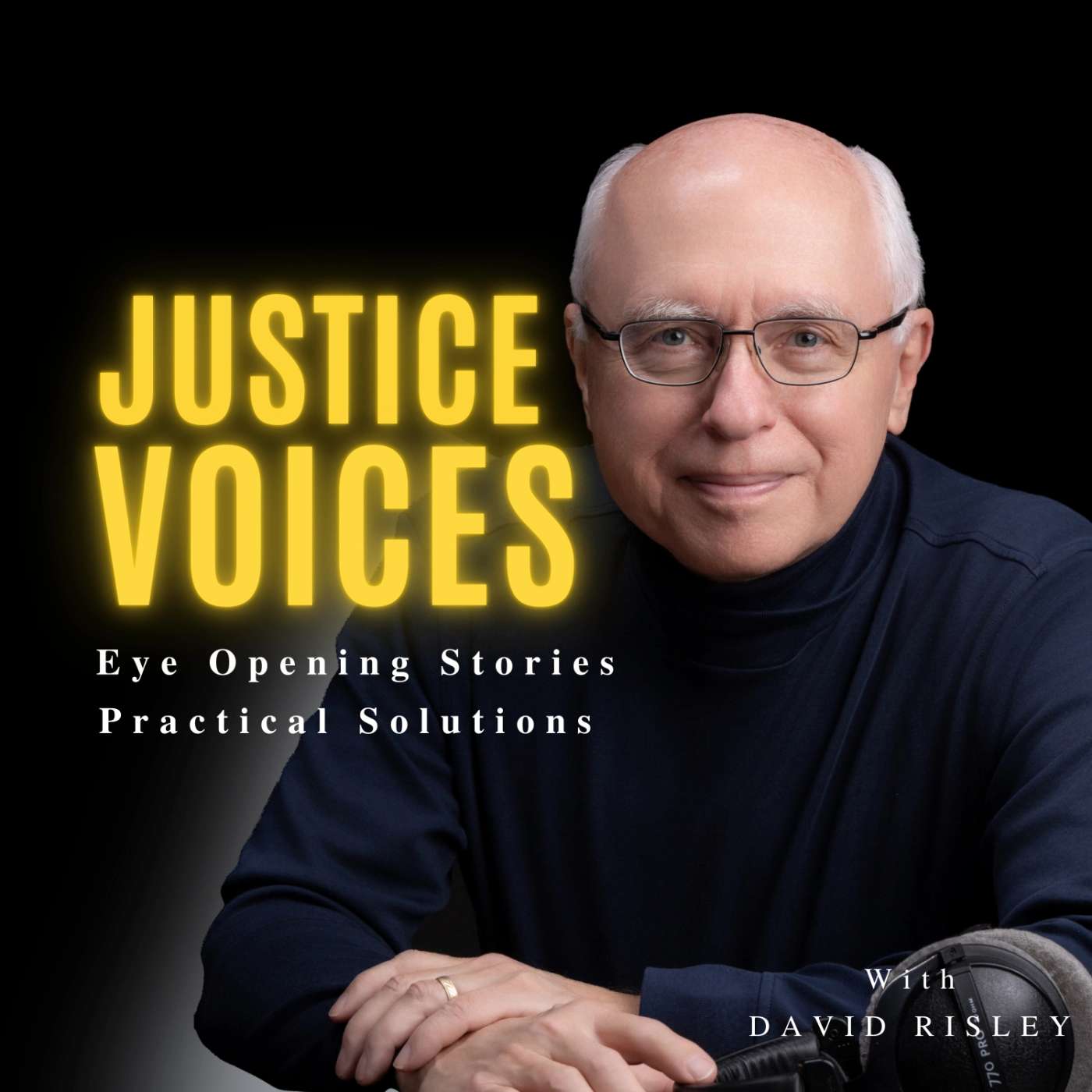
Justice Voices
by Eye-Opening Stories, Practical Solutions
We can do better. Listen and have your eyes opened:• See criminal justice reality and needed reforms through real-life stories of people with lived experience with crime on both sides of the law.• Learn about practical solutions for breaking the cycle of crime, achieving healing for victims, and building safer communities.Hosted by David Risley, former career federal prosecutor and former Director of Public Safety Policy in the Illinois Governor's Office.Co-hosting many episodes is Lynard Joiner, who went to prison for 17 years in a case prosecuted by Mr. Risley, and who is now Executive Director of Shifting Into New Gear (SING), delivering reentry services and support to people returning to society after release from prison.What Makes Us Unique• Unexpected Partnership: The partnership of Mr. Risley and Mr. Joiner, who first met on opposite sides of a federal courtroom on opposite sides of the law, enables listeners to get the real story from both perspectives and demonstrates th
Episodes
-
Ep. 27: Sonya Massey and Mental Health Board
Sonya Massey Called for Help. A Deputy Shot and Killed Her. Here's What Has to Change. Sonya Massey was a mother, a sister, a cousin. She was managing lupus, raising her children, living her life in Springfield, Illinois. In the early hours of July 6, 2024, she called police because she heard...
-
Ep. 25: Healing Trauma in High Crime Communities
Healing from trauma and helping others heal from trauma in the high crime community of East St. Louis, Illinois, Skyla Pawnell and Gloria Hicks share their powerful stories of transformation from being victims to community healers.
-
Ep. 24: Breaking free from addiction and a cycle of crime and jail
Rickey Brown shares his story of breaking free from an addiction-driven cycle of crime and jail. He graphically describes what it is like to see the world through the eyes of an addict.
-
Ep. 23: From 9 Times in Prison to Prison Guard–Rachelle Conley
Exploitation of women in prison by prison guards--the problem and solutions. Rachelle Conley shares her eye-opening story of being incarcerated nine times to becoming a correctional officer. Rachelle presents a vivid narrative of her challenging childhood, struggles with addiction, and the…
more -
Ep. 22: Faith Coalition–Restorative Justice and Justice in Healthcare
Restorative justice and justice in healthcare: two aspects of the justice mission of the Faith Coalition for the Common Good in Springfield, Illinois. This episode features a conversation between host David Risley and three guests from the Faith Coalition: Tyshianna Bankhead (executive director);...
-
Ep. 21: Turning a High Crime Community Around — Deana Perez
How can a high crime community turn around and what does it take to make that happen? Deana Perez of Bright Star Community Outreach discusses the TURN model as a big part of the answer.
-
Ep. 20: Pastor Chris Harris — Bright Star Community Outreach and TURN Model for Safer Communities
Pastor Chris Harris speaks about Bright Star Community Outreach, NATAL training, the TURN Center in Bronzeville in south Chicago, and the TURN Model of coalition building to reduce trauma and build safer communities.
-
Ep. 19: Problem-Solving Courts – Video Conversation With Judge Jeff Ford
Judge Jeff Ford (ret.), a pioneer of problem-solving courts and past president of the Illinois Association of Problem-Solving Courts, provides an inside look into this growing approach to criminal justice and explains his experience with creating and managing problem-solving courts in Champaign...
-
Ep. 18 – Virgia Brewer: From Decades of Abuse and Trauma to Present Happiness (What Made the Difference)
Virgia Brewer. To meet this wonderful woman today, you would have no idea she is a survivor of decades of abuse and trauma, beginning as a sexually exploited child – exploited and abused by family members no less, beginning at age seven. Now she is happy. Hear what made the difference.
-
Ep. 17: Lenore Anderson – Victims’ Rights and the Future of Public Safety
Lenore Anderson discusses the connection between victims' rights and public safety, and how increasing services for victims can reduce crime.
-
Ep. 16 (excerpts) – Lisa Daniels: A Mother Who Forgave Her Son’s Killer and Lives Restorative Justice
Lisa Daniels: Finding Healing Through Restorative Practices Lisa Daniels transformed her grief into purpose after forgiving her son’s killer. As founder of the Darren B. Easterling Center for Restorative Practices, —named after her son—she embodies the principles of restorative justice and the...
-
Ep. 16 – Lisa Daniels: A mother who forgave her son’s killer and lives restorative justice
Lisa Daniels lives the principles of restorative justice as a mother who forgave her son's killer and asked for leniency at his sentencing.
-
Ep. 15: Christmas Reflections on Criminal Justice and Punishment
On the eve of Christmas, David Risley challenges both the philosophical and moral underpinnings of our prevailing approach to criminal justice and punishment.
-
Ep 14 Part 2: Michael Tafolla
Part 2 of Michael Tafolla's story and his message about trauma, violence, transformation, and restorative justice.
-
Ep. 14 – Michael Tafolla
Michael Tafolla shares part 1 of his story of childhood trauma from chronic victimization by gang-related gun violence and how as a teenager he became what he feared when he took up the gun, leading him to prison for murder, where he changed his life.
-
Ep. 13 – Pastor Jennifer Stephens
Pastor Jennifer Stephens shares her story of experiencing the trauma of victimization, self-medication with alcohol, jail and prison, support from church and family, reentry to community life after release, barriers faced because of her felony record – amounting to permanent punishment – resource...
-
Ep. 12: Eddie Bocanegra of READI Chicago – A Video Interview
Eddie Bocanegra Video: His Journey from Gang Violence to READI Chicago Eddie Bocanegra grew up in Little Village on Chicago’s west side. His neighborhood felt like a combat zone. At 14, Eddie joined a street gang for protection, identity, belonging, and respect. By 18, he went to prison for a...
-
Ep. 11: Reality (Allah) Lovett
From a public safety policy and justice reform standpoint, this is one of the most important episodes of Justice Voices published to date. Richard Lovett, who prefers to go by the name Reality Allah, is the Reentry Coordinator for READI Chicago and a board member of the Fully Free campaign of...
-
Ep. 10: Willette Benford, Chair of Fully Free campaign
Willette Benford is Board Chair of the Fully Free campaign of Heartland Alliance. In this episode she tells the story of how she was convicted and sentenced to 50 years in prison, developed a transformational relationship with God, worked while in prison to improve her life and the lives of…
more -
Ep. 9: Cedric Frison of the Fully Free campaign and READI-Chicago
Cedrick Frison shares wisdom gained from the hard lessons of living life on the streets of the west side of Chicago, including the effects of drug use, the trauma of living with violence both at home and on the street, and going to prison nine times before breaking free from that cycle and…
more -
Ep. 8: Fully Free campaign of Heartland Alliance
The Fully Free campaign of Heartland Alliance aims to end “permanent punishment” for people seeking to lead law-abiding lives after release from prison. Campaign manager Marlon Chamberlain (whose personal story was featured in Episode 7) shares his personal experience and describes examples of…
more -
Ep. 7: Marlon Chamberlain
Marlon Chamberlain manages the Fully Free campaign of the Heartland Alliance in the Chicago area. In this episode he shares his personal story and insights gained from serving over a decade in federal prison, returning home to community and family life, and following the path that led him to…
more -
Ep. 6: Sam Dent
In this episode of Justice Voices, you will hear from guest Sam Dent, who served a mandatory minimum 20 years in prison in a case host David Risley prosecuted around the same time as the case he prosecuted against co-host, Lynard Joiner. Mr. Dent was one of Mr. Joiner’s early clients in his...
-
Ep. 5: Insights from Illinois Commission on Criminal Justice and Sentencing Reform
This episode provides a big picture overview of why our criminal justice system needs improvement, especially regarding our overuse of prisons, by exploring the gold mine of information and perspective in the 2016 report of the Illinois Commission on Criminal Justice and Sentencing Reform. The...
-
Ep. 4: Violentization (part 2)
The root cause of violentization is trauma from chronic exposure to violence, usually beginning in childhood or adolescence. Victims of violence become victimizers. Why? Because at some point the victim of chronic violence makes the decision that this is a violent, dog-eat-dog world and that to...
-
Ep. 4: Violentization (part 1)
What makes violent people violent? The short answer is violentization. Dangerous violent people almost invariably choose to become violent to survive physically and emotionally in what they perceive as a dog-eat-dog world, a perception rooted in the chronic trauma of being the victim of repeated...
-
Ep 3b: Donna Lomelino (Part Two)
Unless we understand the psychological impact of chronic abuse on victims, we can fail them. Even worse, we can misjudge them, including misjudging them in court. That’s why this part 2 of Donna Lomelino’s story is so important and instructive.
-
Ep 03a: Donna Lomelino (Part 1)
This episode of Justice Voices will be emotionally intense. Facing realities involved in criminal justice policy sometimes is, including facing the reality of what a lifetime of abuse and exploitation can do to people. Some prisons are physical, made of concrete and steel. Other prisons are...
-
Ep 02: Lynard Joiner Update
In this update to Episode 1, host David Risley, a former career federal prosecutor, has a conversation with one of his former defendants, Lynard Joiner, founder and CEO of Shifting Into New Gear (SING).
-
Ep 01: Lynard Joiner
“Going to prison saved my life.” That is what guest, Lynard Joiner, said during this conversation with host, David Risley. It is also the subtitle of an autobiographical book written by Lynard Joiner, titled, LJ’s Cocoon.
-
Ep 00: Prison is Crime College — 3 Doses of Reality
That is the first of three doses of criminal justice reality described in this introductory episode by Justice Voices founder and host, David Risley, former career federal prosecutor and former Director of Public Safety Policy in the Illinois Governor's office.Reality dose #2: Prisons do only one...
-
Covid Special Episode: Lynard Joiner
Lynard Joiner almost died from COVID-19 and even 8 months later still suffers from long-term lung and heart damage. He shares his experience and a message: “COVID is for real. Do the right thing, wear your mask, stay safe and help keep others safe.”
We're indexing this podcast's transcripts for the first time — this can take a minute or two. We'll show results as soon as they're ready.
No matches for "" in this podcast's transcripts.
No topics indexed yet for this podcast.
Loading reviews...
ABOUT THIS SHOW
We can do better. Listen and have your eyes opened:• See criminal justice reality and needed reforms through real-life stories of people with lived experience with crime on both sides of the law.• Learn about practical solutions for breaking the cycle of crime, achieving healing for victims, and building safer communities.Hosted by David Risley, former career federal prosecutor and former Director of Public Safety Policy in the Illinois Governor's Office.Co-hosting many episodes is Lynard Joiner, who went to prison for 17 years in a case prosecuted by Mr. Risley, and who is now Executive Director of Shifting Into New Gear (SING), delivering reentry services and support to people returning to society after release from prison.What Makes Us Unique• Unexpected Partnership: The partnership of Mr. Risley and Mr. Joiner, who first met on opposite sides of a federal courtroom on opposite sides of the law, enables listeners to get the real story from both perspectives and demonstrates th
HOSTED BY
Eye-Opening Stories, Practical Solutions
CATEGORIES
Loading similar podcasts...
Frequently Asked Questions
How many episodes does Justice Voices have?
Justice Voices currently has 32 episodes available on PodParley. New episodes are automatically indexed when they're published to the podcast feed.
What is Justice Voices about?
We can do better. Listen and have your eyes opened:• See criminal justice reality and needed reforms through real-life stories of people with lived experience with crime on both sides of the law.• Learn about practical solutions for breaking the cycle of crime, achieving healing for victims, and...
How often does Justice Voices release new episodes?
Justice Voices has 32 episodes. Check the episode list to see recent publication dates and frequency.
Where can I listen to Justice Voices?
You can listen to Justice Voices on PodParley by clicking any episode. We provide an embedded audio player for direct listening, and you can also subscribe via your preferred podcast app using the RSS feed.
Who hosts Justice Voices?
Justice Voices is created and hosted by Eye-Opening Stories, Practical Solutions.
URL copied to clipboard!