
PODCAST · religion
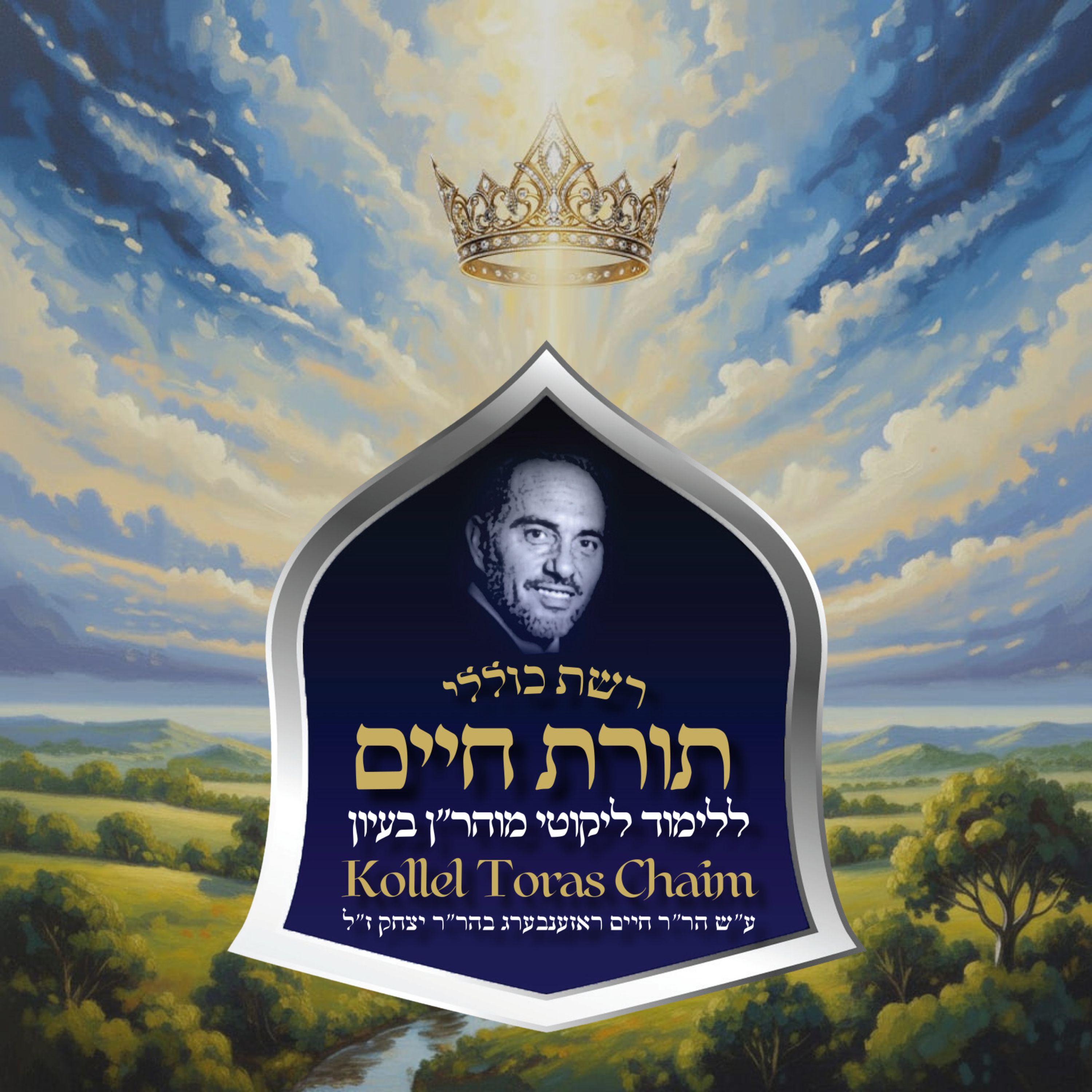
Kollel Toras Chaim All Shiurim
by Nachman Fried
You can find individual podcast pages for each of our mashpi'im on Apple Podcasts and Spotify. Kollel Toras Chaim was established to learn Rebbe Nachman torah in depth and to live with his torah for several months with chaburas in various cities learning together in memory of Chaim Rosenberg, z’l was lost in the Surfside, Florida collapse.Download our learning pamphlet👇dropbox.com/scl/fi/hcslptmzndt90tc1btpd7/Full-Learning-Packet.pdf?rlkey=8nttej9k8ll7jvzztj7j9bf9p&dl=0Feel free to reach out to us by email [email protected] or by WhatsApp 👉wa.me/message/V5CZUWK7S73ZI1Subscribe to our WhatsApp status for exclusive updates, short clips and more. We are also available on:Spotify👉 spotify.link/kM3z0uNHyDbApple Podcasts👉 podcasts.apple.com/us/podcast/likutei-moharan-toras-chaim/id1656165865WhatsApp Status👉wa.me/message/A4K2UWEKJZ76O1Join our Torah only WhatsApp Group👉 chat.whatsapp.com/F0BGrjjcIWOGsbRVAGPDNj
-
500
Why Am I Here? Rebbe Nachman's Promise: "I Do Teshuvah For You"Erev RH Uman 5787
Why are we really in Uman? A talk from the heart, given on Erev Rosh Hashanah 5787 at the Heichal HaTorah in Uman by Nachman Frid. Rebbe Nachman said: "Davened or not, slept or not, ate or not, just be by me on Rosh Hashanah." Why? Because the Rebbe is building something bigger than we can understand, and each of us was chosen to be part of it, with our kedushah and our tzimtzum, our strengths and our weaknesses. In this shiur: The story of getting to Uman for Rosh Hashanah 2001, just after 9/11, when no planes were flying A Likutey Moharan that sat on a shemos shelf for 10 years, and the life it changed Why learning one Torah b'iyun for months brings more growth than a quick weekly inspiration From Likutey Moharan Torah 4, the three steps of getting close to the tzaddik: Re'iyas pnei hatzaddik: coming to the tzaddik, a place of unconditional love, like a mother Nesinas tzedakah latzaddik: breaking ga'avah by learning that the giver is really the receiver Vidui devarim: "l'saper lefanav kol libo," telling him your whole heart Hishtadlus without ego, and what separates Havayah from Elokim Chayei Moharan 304: "Ich tu teshuvah far aich." I do teshuvah for you, and I have the power to fix everything up until now A new reading: at the tziyun, the Rebbe can turn our failures from b'meizid into b'shogeg The biggest yetzer hara in Uman: not going to the tziyun How to bring Uman home, to your wife, your family and your whole year Uman Sheli: giving 15 minutes of your time to the Rebbe's Rosh Hashanah 📖 Learn with us: Starting after Sukkot, we're beginning Likutey Moharan from Torah 1 and learning it in depth at least until Purim. [Add link / contact info] This shiur is dedicated l'ilui nishmas David ben Eliyahu z"l and l'ilui nishmas Yisrael Meir Yosef ben Peiga Yachet z"l. Ashreinu shezachinu l'hiskarev l'Rabbeinu! Kesivah v'chasimah tovah. #Uman #RoshHashanah #RebbeNachman #Breslov #LikuteyMoharan #Teshuvah #Uman5787 #Torah
-
499
There Is No Gray Area- sadness and depression is Only the Absence of Simcha torah 23 tinyana sc3
Last week we said the Rebbe wants you to chase the sadness and force it into the simcha. This week the question is how — and the answer turns out to change what sadness even is. The Rebbe writes that the man outside the circle is b'atzvus u'marah shechora. But who said so? Maybe he's just standing outside, in a perfectly fine mood. The answer is that there is no third option. If you are not connected, you are not b'simcha — and you are already somewhere on the ladder: atzvus, marah shechora, yisurim, daagos, yagon va'anacha, disconnect. Which means yagon va'anacha does not exist on its own. It is only ever the absence of simcha. It is what fills the room when the connection isn't there. And that changes the avodah completely. You are not fighting something. You are restoring something. What we go through: • Al pi mashal, not l'mashal — why the mashal is the doorway into hasimcha and not an illustration of it • Sason v'simcha yasigu — the simcha reaching the yagon, not you reaching the simcha • Remembering sameach u'merakeid: your child's wedding, and the fact that you infected everyone in the room • You were once the man outside the circle who got pulled in — so you already know both sides of the mashal • The Pac-Man: tracing the moment of joy back to its source, getting empowered, and eating the deygus around you • Milsa d'shtusa — a spiritual defibrillator. Going down the sliding pond in Rechavia. The Rebbe, the shades drawn, and the music on twelve • Sitting with yourself for fifteen minutes, with no phone — and why for some of us that is the hardest avodah in the Torah • Why I need your recognition to feel b'simcha, and what it would mean to give myself my own • Thanking Hashem for the gloominess, because it came from the other side of sason v'simcha and it belongs in the inventory This is not a shtickel Torah. It is a workshop. #Breslov #RebNachman #LikuteiMoharan #Simcha #Hisbodedus #Chassidus #Emuna #TorahShiur
-
498
Nobody Promised — Except This Rebbe ·The Condition Everybody Forgets
Before we go back into the Torah, we have to be clear about whose Torah we are learning. This is not just another sefer. This is not just another tzaddik. This is the tzaddik who took responsibility for every single Yid and refuses to judge him — and not only the Yid. V'ra'ah kol am ha'aretz. We look at Chassidus and think fanatics. This Rebbe was the most open-minded person there was, and he had room for everybody. And he did something nobody else did. Not Moshe Rabbeinu, not Rabbi Shimon bar Yochai. He made a promise, and he took two eidim to hold him to it — Rav Aharon the Rav and Reb Naftali. Whoever comes to my kever, gives a pruta l'tzedaka, and says ten Kapitlach Tehillim. And then the condition everybody leaves out: v'kibel alav shelo yashuv od l'ivlato — and he takes it on himself not to go back to his folly. In the Rebbe's own Yiddish: ich vel zich leigen in der leng un in der breit — I will lay myself out, the length and the breadth of it, to do this person a favor. And by the peyos, vel ich im aroisnemen — I will pull him out. From She'ol Tachtis u'mitachtav. We also go into what emuna actually is: not understanding, and believing anyway — and emuna as loyalty. Why we say va'ya'aminu ba'Hashem u'v'Moshe avdo and not "and they believed in Hashem, and they believed in Moshe." One belief, not two. Not that the tzaddik is Hashem — but that belief itself means surrendering to something higher than you. That is the place we are going into before we open the Torah. The place of surrender. #Breslov #RebNachman #Emuna #Teshuva #Uman #TikkunHaKlali #Chassidus #TorahShiur
-
497
The Tzaddik Is Called Ima — Torah 4, Seif Ches | Vidui Devarim Before Rosh Hashana
#Breslov #LikuteyMoharan #ViduyDevarim "Fifty-seven years of middos ra'os. I have to break them all. How am I going to do this?" That is the question sitting in the middle of Torah 4, and the Rebbe does not soften it. Umi sherotzeh leilech b'derech hakodesh — tzarich l'shaber kol hamiddos ra'os. Whoever wants to walk in the way of holiness has to break every bad middah he has. And then he tells you it does not take fifty-seven years. It takes three things you are missing. Part 2 of Torah 4 at Breslov New Hempstead, given 16 Elul — inside seif ches, two weeks before Rosh Hashana. WHAT BROKE, AND WHAT AI IS ACTUALLY DOING First the mechanism, because seif ches only lands if you have it. Havayah is not a name — it is the essence. Elokim is a name, and a name is the first definition of anything. The world was made with Elokim, with midas hadin, which means tzimtzum: taking something infinite and making it finite, so that the small thing holds the big one. At the briah the two came apart, malchus fell, and we stopped seeing Hashem inside the table and the chair and the car. At Matan Torah they were one again — Anochi Hashem Elokecha — and Klal Yisrael walked out with X-ray vision, seeing the oisyos haTorah standing inside every single davar. Davar and dibbur are the same word. That is why the mon had no definition: v'lo yad'u mah hu, too spiritual and too physical at once, and they were seeing both. Then chet ha'egel. We took the tziruf of lo yihyeh lecha elohim acheirim, and we destroyed it, and we built yihyeh lecha. Every aveirah since does the same thing — takes His letters, breaks the arrangement, and builds a different building out of them. Which leads somewhere unexpected. Every advance in technology is a tziruf osiyos taken from somewhere and reassembled — the same fallen malchus, recombined by people who have no idea what they are handling. "AI is the biggest spiritual thing in the world if you think about it." Because what is Olam Haba? One hub where all of it sits as one, ten times past anything we have built. The letters are there. They are just standing in the wrong order, which is exactly why we do not see Him in them. NOT YOUR AVEIROS — YOUR LIBO So what is the repair? Vidui devarim lifnei hechacham. And read how the Rebbe writes it: mesaper lefanav kol libo. His whole HEART. Not kol ma'asav. THE THREE BECHINOS — SEIF CHES INSIDE The Gemara's mashal: a man walking b'ishon laila v'afeilah, afraid of the thorns and the ditches, afraid of the wild animals and the robbers, and on top of it he does not know which road he is on. A lantern kills the first fear. Daylight kills the second. Only a crossroads answers the third. The Rebbe reads it as the tzaddik, three times over. All bad middos hang off the four yesodos: atzvus from domem, ta'avos from tzomeach, devarim beteilim from chai, ga'avah from medaber. And note the order — we assume ta'avah is the worst of them. It is not. Devarim beteilim sits higher. · Re'iyas pnei hatzaddik — v'hayu einecha ro'os es morecha — takes out domem and tzomeach. Atzvus and ta'avos, both gone. · Tzedakah to the talmid chacham — takes out chai and medaber. Leitzanus, devarim beteilim, ga'avah. Because ein ani ela min hada'as, and poverty was never only about the bank account. · Vidui devarim — and now the talmid chacham can be madricho b'derech yeshara lefi shoresh nishmaso. You broke the middos that grow out of all four yesodos, so you have opened every layer, and he can finally reach the shoresh. THE TZADDIK IS CALLED IMA Ki hatzaddik hazeh nikra em — al shem shehu meinik l'Yisrael b'or Toraso. He is called a mother because he nurses Klal Yisrael with the light of his Torah, and Torah is called chalav. Watch a baby lying in his atzlus and his atzvus. His mother walks in and he is up and running. Not because she offered him anything — because she is his shoresh. And even when she is the one who just knocked over the Lego he spent an hour building — he still runs to her. Also inside: the three conditions at the tziyun, and the question nobody asks out loud — if l'kabel alav shelo yashuv od l'ivalto means I already did teshuvah, then what do I need the Rebbe for? Why the parashas derachim is not a choice between the talmid chacham and yom hamisa but the two of them as one thing. The chacham who made himself ayin, and what that has to do with mecheini na misifrecha. Why erev Rosh Hashana after vasikin is a madhouse in Uman. Money as identity, and tzedakah as the cheapest way to unlayer an ego. And a thirty-eighth consecutive Rosh Hashana, with an open offer: tell me your meniah after the shiur — I have heard them all, and I have chiddushim on how to get out of every one. #Breslov #LikuteyMoharan #RebbeNachman #RebNachmanOfBreslov #Uman #UmanRoshHashana #RoshHashana #Torah4 #SeifChes #ViduyDevarim #AnochiHashem #Tzaddik #Chassidus #Teshuva #Tzedakah #Middos #Atzvus #Gaava #NewHempstead #Shiur #TorahShiur #Elul #Emuna #JewishSpirituality
-
496
Torah 4 Before Uman: Belief Means I Don't Understand | Breslov New Hempstead
#Breslov #LikuteyMoharan #UmanRoshHashanaIn 1958 a twelve-year-old boy asked his mother if he could daven Rosh Hashana with the Breslover chassidim on the Lower East Side. She said no.So he went to the Mir, and he closed his eyes, and he imagined himself standing with them. And then he asked Hashem for one thing: that next year he should be by the Rebbe's tziyun.This was Cold War Russia. There was no getting into the country, let alone to Uman. Nobody was talking about Uman at all. He got there in 1969.That boy was the maggid shiur's father. The letter he wrote about it — to Moshe Yaakov Eisner a"h, an elter bochur already learning in Eretz Yisrael — turned up years later.Part 1 of Torah 4 at Breslov New Hempstead, given 16 Elul, exactly two weeks before Rosh Hashana."WHO SAYS?"The shiur opens on a question from the room, and the answer goes straight at the word itself. Who says Reb Nachman is true? Who says the Tikkun HaKlali works? Who says Reb Noson didn't write Likutey Moharan himself?The word "who says" is already kefirah. Because "who says" means: I do not want to believe, I want to understand.And the first platform of Yiddishkeit is not understanding. It is belief — and belief means I do not understand. Only from that platform does Hashem give the matanah we ask for three times a day: da'as. You start understanding from the platform of not understanding. Tachlis hayedia shelo neida.Which is the whole problem of this Torah, because Torah 4 opens k'she'adam yodea — when a person KNOWS that everything that happens to him is for his good. Knowing, not believing. The Rebbe never says the word emunah here. And yet the entire mechanism that gets you to that yedia runs through emunah and through vidui devarim to the tzaddik.THE TRAILEREverybody has had the moment: that was Hashem. That was clear Hashem.That moment is a sneak preview of a trailer of a tiny piece of the movie. Because for that one thing to happen to you at that hour, the whole briah had to be built a certain way. The dots go all the way back to brias ha'olam — and you will never see far enough back to watch them connect.ROSH HASHANA ON SHABBOSTwo weeks out — and really two weeks to the second day, which is when the ungezetzt actually starts. The first day everybody is still excited. The second day your head is already leaving, and you start asking: what did I do here? What did I get?A year when Rosh Hashana falls on Shabbos has no shofar and no tashlich the first day. October 7th was such a year. COVID was such a year. And so were good years.So what makes the difference? Not the answer you would expect — the answer given here is about what you bring, and why you came.MEN HOT ZICH GEFREGTAnd then the thing the maggid shiur heard from his shver in the name of Rav Gedalya Kenig zecher tzaddik livracha, about the years the tziyun was shut and there was not even a minyan there:מען האט זיך געפרעגט דער רבי רשות פאר מען האט פארמאכטThey asked the Rebbe's permission before they closed it.Sit with what kind of emunah says a sentence like that.Also inside: the kibbutz on 16th Avenue and 55th Street, fifty or sixty men, and a father telling his son the whole world is going to come — while the son, embarrassed, looked around the room and counted. Reb Shmuel Breines and the Breines boys before Ne'ilah, and Likutey Tefillos ayin-vav, and being told that if you say it you will stand at the tziyun next year. Reb Tzvi Aryeh Rosenfeld's Talmud Torah for boys who went to public school, and what came out of it. The Rebbe and Rabbi Shimon bar Yochai — mi ron, who will sing when they cannot come to me — and ani ron. And 216 years later, fifty thousand people, thirty hours of travel, to a town in the middle of nowhere.יא געדאווענט נישט געדאווענט, יא געשלאפן נישט געשלאפן, יא געגעסן נישט געגעסן — אבי זיי ביי מיר ראש השנה.He is not asking for your feelings. He is not asking for your da'as. He is asking for your presence.Part 2 goes inside seif ches.#Breslov #LikuteyMoharan #RebbeNachman #RebNachmanOfBreslov #Uman #UmanRoshHashana #RoshHashana #Torah4 #AnochiHashem #Emuna #EmunaPeshuta #ViduyDevarim #Tzaddik #Chassidus #NewHempstead #Shiur #TorahShiur #TzviAryehRosenfeld #GedalyaKenig #Elul #JewishSpirituality
-
495
"Who Gave You the Right to Touch My Pandora's Box?" | The Lost Princess — Shiur 18
#Breslov #LostPrincess #SippureiMaasiyos"Who gave you the right to touch my Pandora's box?"Facing shame is the hardest thing there is, and the reason is that we do not face it — we bury it. Sleep is the best trick: whatever you did, you go to sleep, and by the next morning it is locked away. Two sleeps and you are good to go. And then somebody walks into your life and triggers the exact place you buried, and you are certain they had no right.This shiur opens there, with a story from that week the maggid shiur says he is embarrassed to tell — "and I love sharing about me, because it opens things up." I had the biggest ego in the world. I was gifted with a mouth that could convince anybody of anything. And I am telling you that I was wrong — not because I thought I was wrong. I thought I was right. And it could be that I was right. But I was wrong even when I was right, because the way you act when you are right does not give you a pass. There is no pass.From there into the maaseh.THE LOST PRINCESSThe Rebbe tells you the ending before he tells you the story — the greatest storytelling in the world — and then spends eight pages on the search. Through the deserts, the forests, the fields. He does not find her. So he goes back to start again, and this time he notices a path on the side he had walked straight past the first time.The castle. The soldiers he was too intimidated to approach, who do not stop him. Room after room until the grand ballroom — the music, the delicacies, the king on his throne. And the announcement, and the queen.WHO THE PRINCESS ISThe Shechina. Kudsha Brich Hu and the Shechina — the two energies — and the Shechina is in everything: domem, tzomeach, chai, medaber. V'asu li mikdash v'shachanti b'socham — b'toch kol echad v'echad, inside each and every one. So where is the golus? In us. The golus is the place where a man is cut off from his own self, and the Aibishter is in pain over it.And the Sheni L'Melech does not wait to be asked. There is no dialogue in the story. He sees the king in that pain and he gets up on his own: I cannot take seeing you like this. I will go.THE CHIDDUSH — UBIKESH SHEYITNU LOHere is the piece to listen for. He asked that they GIVE him — u'vikesh sheyitnu lo. Not sheyiten, singular, one sum handed over. Sheyitnu — ongoing, constant, again and again. He does not know how long the search will take or what it will cost, so he does not ask for an amount. He asks for a connection that keeps giving.Because if the king had simply handed him the money, he would have had the money and lost the king — and the king in pain is the whole engine of the search. Take away the connection and there is nothing driving him to look.And the same word, u'vikesh, is used nine times in that one paragraph — each time meaning something different.Also inside: ma'os l'tzois and the contract we signed; geulah pratis and geulah klalis; chatzos as the third halacha in Shulchan Aruch and why nobody does it; Reb Nachman's chatzos — six hours after tzeis hakochavim — and getting up at three in the morning to say one kapitel, Al Naharos Bavel.It ends on gratitude. You stare at the one black dot and never count the 5,999 white boxes. Be grateful. U'vakeish — request. V'holeich l'vakeish — and go on searching.May we all be zoche to find our lost princess.#Breslov #LostPrincess #SippureiMaasiyos #RebbeNachman #RebNachmanOfBreslov #BasHaMelech #Shechina #Chassidus #Teshuva #Shame #Ego #Gratitude #Chatzos #Tikkun #Shiur #TorahShiur #JewishSpirituality #Emuna #Hisbodedus #GeulahPratis
-
494
Don't Push the Sadness Aside — Chase It Into the Circle-LM 23 TINYANA SC 2
Everyone knows you're supposed to be b'simcha. Almost nobody is told what to do with the sadness that's still standing there.Rebbe Nachman opens Torah 23 Tinyana with a mashal: a circle of Yidden dancing, and one person standing outside, and the ones inside grab him and drag him in against his will until he's dancing with them. And then he tells us the circle is inside you. When you feel simcha, the marah shechora steps aside on its own — it can't coexist with joy. But that's the small thing. The Rebbe wants more: chase it. Run after the sadness, snatch it, force it into the simcha — until the marah shechora itself turns into simcha and becomes part of your inventory of joy.This is the second shiur on the Torah, and it's mostly questions. That's deliberate — the point isn't to collect answers, it's to live in the kasha until the Rebbe answers you himself.What we go through:• Why the Rebbe opens b'inyan hasimcha — a phrase he uses nowhere else — and then says not one word about simcha before handing us a mashal• Al pi mashal, not l'mashal — and the strangeness of a mashal for simcha that is itself simcha• The chart: sasson, simcha, hasimcha, sameach, chedva, kedusha on one side — yagon va'anacha, atzvus, marah shechora, yisurim, daagos, sitra achra on the other• Sasson is external, simcha is internal; yagon is the ache, anacha is the krechtz• One thought at a time — but many feelings at once, and which feelings cannot coexist• Sasson v'simcha yasigu — a new pshat: not that you attain the simcha, but that the simcha reaches your yagon• The yagon va'anacha of the sitra achra that refuses to be a merkava — and why it has to be forced• Chotfin · machnisin · umachrichin — three stages of b'al korcho, and what state the person is in at each one• Imahem gam kein — the diyuk that carries the whole Torah: I was outside the circle too. I have the same pulls. I just found something, and it isn't my light, it's ours• The white dots and the black dots• how do you actually do this? — and the answer: hisbodedus, and not hatzileini hoshieini• Mesaper lefanav kol libo — not what you did, what you're feeling. Our relationships are transactional; ego talks to ego. "What are you feeling right now?" opens the door for the real you• V'ha'arev na, k'ish echad b'lev echad, and why v'ahavta l'reiacha kamocha is literal• Why Ponevezh was the day I stopped learningWomen's shiur. Part of an ongoing series on Torah 23 Tinyana — there are 125 questions on this Torah, and we're not going to answer all of them.#Breslov #RebNachman #LikuteiMoharan #Simcha #Chassidus #Hisbodedus #Emunah #TorahShiur #JewishWomen
-
493
"Rebbe, Show Me How to Let Go" — Torah 4 | Breslov New Hempstead
#Breslov #LikuteyMoharan #ViduyDevarim Two words in Torah 4 make people flinch: vidui devarim — spoken confession, in front of a talmid chacham. It sounds like something we are not. This shiur is the long answer to why it isn't, and to what the Rebbe is actually asking a person to do. A full shiur on Likutey Moharan, Torah 4 — Anochi Hashem Elokecha — given at Breslov New Hempstead in the weeks before Rosh Hashana. The Rebbe opens by saying a person has to KNOW — not believe — that everything that happens to him is for his good, and that knowing it is a taste of Olam Haba. From there the shiur builds the whole mechanism: how Havayah and Elokim came apart at the briah, how every davar in the world is holding a tziruf of osios haTorah, what an aveira actually breaks, why the letters land on a person's bones, and how vidui devarim in front of a tzaddik who has made himself ayin draws those letters back out and rebuilds malchus dikedusha. Along the way: — ROSH HASHANA 5762. Six weeks after burying his father, no flights out of America, driving to Canada and being turned back at the border — and the LOT counter at the airport that opened the whole thing up. What Reb Luzer zichrono livracha said at the window in Uman when he finally got there. — IS VIDUI THE OPPOSITE OF TORAH 282? If Reb Nachman tells us to find the nekuda tova, how does he also tell us to stand and name what we did wrong? Two Toros, two different avodos — and why we do not mix them. — THE VIDUI NOBODY SAYS OUT LOUD. "I come here every year and promise I will never do it again, and I come back with worse. So who am I fooling? Am I using the Rebbe as a pass?" Said in the room, not smoothed over. — YOU ARE IN SURGERY. The first hirhur teshuva a person ever had — the one he squashed and forgot — and why the whole operation started there. — "HE TALKS TO YOU." How a tzaddik who is not here gives a person a derech. Ends with shailos from the chevra, l'chaim, and Umen Umen Rosh Hashana.
-
492
-
491
Elul: The King Is in the Field — and He's Asking You to Face Your Shame
Elul is taught to most of us as pachad — dread, the Days of Awe closing in. Chassidus says the opposite. Ani l'dodi v'dodi li: the King takes off the uniform and comes out to the field to be with us. You take one step toward Him, and He comes the rest of the way.But what does it actually take to close that step? Reb Nachman gives the answer in four words — ikar haTeshuvah she'yishma bizyono, yiddom v'yishtok. The main thing in teshuvah is to hear your own humiliation, accept it, and stay quiet.In this shiur we work through why that is, and why it's harder than anything else we're asked to do:• Yira isn't fear — it's awe, and what an eved Hashem really is• Vayidom Aharon — why yiddom means acceptance before it means silence• Shuva and busha — the same letters, rescrambled• The vort on ki seitzei la'milchama: shivyo as roshei teivos for she'yishma bizyono yiddom v'yishtok• Ego = Edge God Out — how the "I" got built in the first place, out of a shame we refused to face• Shminis shebe'shminis — the eighth of an eighth you're allowed to keep• The scoreboard: transactional relationships, ahava she'tluya b'davar, and why in an "us" it's always fifty-fifty• People-pleasing as a form of taking• The hardest question of the night, from the floor: if Hashem is all-loving, why does closeness have to come through humiliation?• Where the 2-7 unsuited hand comes in — and turning that feeling into tefillah• Hatakiruni — how facing shame gives you the peek at the lost princessGiven over in the Eilech V'anaseh chabura, Chodesh Elul.#Elul #Breslov #Teshuva #RebNachman #Chassidus #RoshHashana #LikuteiMoharan
-
490
Did Confession Start With Christianity? | Likutey Moharan 4 | R' Jonathan Rietti – Shiur #15
Rabbi Jonathan Rietti continues the series on Likutey Moharan, Torah 4, with Shiur #15 — mapping the three levels of Vidui Devarim and answering, head-on, the charge that Breslov's practice of confession was borrowed from the Church. Rebbe Nachman taught that the only way to take back the malchus we hand over to the nations is Vidui Devarim before a talmid chacham amiti. That teaching earned Breslov the nickname "Viduniks" — and 200 years of criticism from within Klal Yisrael. In this shiur R' Rietti shows that vidui devarim is not just older than Catholic confession, it is a mitzvas asei d'Oraisa that runs from the third chapter of Bereishis straight through the korbanos of Vayikra. Covered in this shiur: • The three levels: vidui before HaKadosh Baruch Hu, vidui before a tzaddik / talmid chacham, and vidui at the tzaddik's kever• Rabbi Tovia Singer and the FBI counterfeit-detection analogy — why you don't need to be a bokie in Christianity to answer it• Adam HaRishon: "Ayekah" as an invitation to say one word — "Chatati" — and what the world would have looked like had he said it• Chava's missed moment, and Rashi/Midrash on why Hashem asked questions He already knew the answers to• David HaMelech before Nasan HaNavi: one word that lifted a death sentence• Kayin: the first depression in the Torah, and the difference between "Lamah" and "Madua"• Yehuda and Tamar: how "Tzadka mimeni" earned the crown of malchus and the Davidic dynasty• The Golden Calf: Moshe Rabbeinu doing vidui on behalf of Klal Yisrael — "mecheini na misifrecha"• Korbanos: semicha and vidui in front of the kohen, thousands of times a day, for over a thousand years• "Ashrei hador shehanasi shelo mevi kapara al shig'so" — why we want leaders with the courage to admit a mistake• Reb Zusha's talmid, the search for "the tzaddik whose followers do vidui," and the scene outside Rebbe Nachman's room• The Baal Shem Tov's talmid who refused to confess three times — the story behind Torah 4• Q&A: If you can go straight to Hashem, why go through a tzaddik? Avraham Avinu and "v'nivrechu becha kol mishpechos ha'adamah"• Hisbodedus, Rebbe Nachman's openness about his own falls, why there is no yeridas hadoros for the individual, and emunah vs. daas Next week b'ezras Hashem: the Rambam's lashon in Hilchos Teshuvah, and vidui before a talmid chacham when the tzaddik is no longer in this world. Recorded live at Breslov New Hempstead, August 16, 2026. CHAPTERS0:00 Intro, dedication, and review of Torah 4 §1–34:00 Vidui devarim before a talmid chacham amiti5:17 "Viduniks" — the criticism of Breslov6:10 Catholic confession: 1,700 years vs. 3,3387:17 The three levels of vidui devarim8:24 There is nothing original in Christianity9:41 R' Tovia Singer and the FBI counterfeit-bill test13:38 The first vidui in the Torah — Adam HaRishon15:00 Moshe Rabbeinu transposing Yehuda's vidui16:44 A tzaddik who is mechaper for his generation17:57 Why we shied away from the tzaddik for 1,800 years21:45 "Ayekah" — an invitation to a conversation24:57 Adam blames Chava; the blame game29:33 David HaMelech: "Chatati LaShem"31:46 Kayin's korban and the first depression in the Torah34:39 "Lamah" or "Madua"? Which direction the question faces38:33 Kayin kills Hevel — the second invitation, refused42:20 "Tzadka mimeni" and the crown of malchus45:43 The Golden Calf — Moshe's vidui for Klal Yisrael50:54 Korbanos: semicha and vidui before the kohen54:14 "Ashrei hador shehanasi shelo mevi kapara"58:35 Reb Zusha and the Viduniks60:25 The Baal Shem Tov's talmid who refused to confess63:39 Q&A: Why go through the tzaddik at all?68:03 Hisbodedus, and Rebbe Nachman's honesty about falling71:07 No yeridas hadoros for the individual73:49 Emunah vs. daas — the pilot analogy77:11 Closing 📖 Source text: Likutey Moharan, Torah 4 (Anochi Anochi Hu Mochachem)🎧 Part of the ongoing Likutey Moharan series with R' Jonathan Rietti — subscribe for weekly shiurim.💬 Questions or comments? Leave them below. HASHTAGS#JonathanRietti #Breslov #LikuteyMoharan #RebbeNachman #ViduiDevarim #Vidui #Teshuvah #Tzaddik #Chassidus #Hisbodedus #TorahShiur #JewishLearning #Emunah #Judaism #Kiruv #NewHempstead #BaalShemTov #Torah
-
489
Where Did Vidui Devarim Come From? | Likutey Moharan 4 | R' Jonathan Rietti – Shiur #13
Rabbi Jonathan Rietti continues his series on Likutey Moharan, Torah 4 — "Anochi Anochi Hu Mochechem" — with Shiur #13, tracing the origins of Vidui Devarim, verbal confession, and why Rebbe Nachman places it at the center of a person's spiritual repair.In this shiur: where the practice of confessing aloud is first sourced in the Torah and Gemara, why speaking one's failings out loud does something that thinking them never can, the role of the tzaddik and the talmid chacham in receiving that confession, and how vidui connects to korbanos, teshuvah, and hearing "Anochi Hashem" inside every circumstance of life.Recorded live at Breslov New Hempstead, August 2, 2026.🎧 Part of the ongoing Likutey Moharan series with R' Jonathan Rietti. Subscribe for new shiurim each week.📖 Source text: Likutey Moharan, Torah 4💬 Questions or comments? Drop them below.#JonathanRietti #Breslov #LikuteyMoharan #RebbeNachman #Vidui #Teshuvah #Torah #Chassidus #Hisbodedus #NewHempstead #Shiur #JewishLearning #Emunah #Judaism #TorahShiur
-
488
Torah 4 at G4 — Viduy Devarim -The Envelope in My Father's Likutey Moharan
Twenty-five years ago, my father — a Breslever chassid — was niftar in his sleep at fifty-five. The night he died, going through his things, I found an envelope from his travel agency marked Tzedakah LaTzadik, with a hundred dollars inside. A few days later my brother found a letter folded into his Likutey Moharan, dated a month before his petirah, written in Yiddish and addressed to Rebbe Nachman himself: when I fall on hard times, I pick myself up and come to you, and I am misvadeh to you… This shiur is about what my father knew.We're in Likutey Moharan, Torah 4, at the heart of the Torah: vidui devarim lifnei talmid chacham — spoken admission before the tzaddik. The Rebbe teaches that every aveirah rearranges the letters of Hashem's own dibbur and engraves them on our very bones — and denial buries them under layer after layer of ego. Vidui, spoken out loud before the tzaddik who has made himself ayin — nothing, "leftover" — lifts the words off the bones, breaks the bad tziruf, and rebuilds the original letters, until kol atzmosai tomarna — your very bones can praise Him.Three gifts stand a person at the crossroads and save him from everything: re'iyas pnei hatzadik, tzedakah latzadik, vidui devarim. Even from death — because a Jew connected to the tzaddik never stops; the mission continues. And the deepest answer to the question we all carry — when am I going to find my purpose? — turns out to be the same answer my father left in that envelope.We should all be zocheh to stand this Rosh Hashanah in Yerushalayim Ir HaKodesh with the heilige Rebbe, Moshiach Tzidkeinu, bimheira b'yameinu — amen.Hashtags:#RebbeNachman #Breslov #LikuteyMoharan #Torah4 #Vidui #Teshuvah #Tzaddik #Chassidus #Emunah #Uman #RoshHashanah #TorahShiur #Yahrtzeit #NeverGiveUp
-
487
"Why Rebbe Nachman Says Vidui Belongs Before a Talmid Chacham"TORAH 4 AT G4
We continue our journey through Likutey Moharan, Torah 4 — and this shiur goes to the heart of the Torah: vidui devarim lifnei talmid chacham, spoken admission before a talmid chacham.The Rebbe opens a door that sounds impossible: to taste Olam Haba in this world — to see Hashem everywhere, even in the dinim, even in the dark. The Gemara in Pesachim says that le'atid everything will be "kulo Hatov Vehametiv" — not that we will make a different bracha, but that we will see differently. BaElokim ahallel davar, uva'Hashem ahallel davar— Dovid Hamelech is teaching us the order: you come to Havayah through Elokim, a ladder standing on the ground with its head in the heavens. Not by flipping out and running from your life — by walking through it.But how do we get there after everything we've buried? The Rebbe's chiddush is the way back: every aveirah takes the letters of Hashem's own dibbur and rearranges them — engraved on your very bones. Denial layers it over; ego (Edge God Out) protects it; what we did twice already feels permitted. And vidui — spoken, out loud, before a talmid chacham who has made himself ayin, "leftover," nothing — takes the words off your bones, breaks the bad tziruf, and rebuilds the original letters. Kol atzmosai tomarna — until your very bones can praise Him. That is why Moshe, the ultimate anav, could say im tisa chatasam — the tzaddik who is nothing can carry everything.Re'iyas pnei hatzadik. Tzedakah latzadik. Vidui devarim. Three gifts that stand a person at the parshas derachim — the crossroads — and save him from everything. Even from death itself, because a Jew who is connected to the tzaddik never stops — the mission continues.And the shiur closes with a story I have never told this way: my father's yahrtzeit was last week. Twenty-five years ago, the night he was niftar, I found an envelope marked "tzedakah latzadik" with a hundred dollars in it — and days later, folded into his Likutey Moharan, a letter, written a month earlier, addressed to Rebbe Nachman of Breslov himself. What that letter said is the whole shiur.We should all be zocheh to stand this Rosh Hashanah in Yerushalayim Ir HaKodesh with the heilige Rebbe, Moshiach Tzidkeinu, bimheira b'yameinu — amen.Hashtags:#RebbeNachman #Breslov #LikuteyMoharan #Torah4 #Vidui #Teshuvah #Tzaddik #TalmidChacham #Chassidus #Emunah #Uman #RoshHashanah #TorahShiur #Recovery #NeverGiveUp
-
486
Falling Is NOT Failing — Start Again, Every Single Day | Likutei Moharan Torah 4 – Rietti Shiur 12
We complete our review of the first paragraph of Likutei Moharan Torah Dalet (4) and prepare to enter the "controversial" subject of viduy devarim — admitting one's mistakes before a Tzaddik — showing its precedent throughout the Torah, long before Breslov. We continue with Rav Yitzchok Breiter's Seven Pillars of Emunah: everything that happens to us — b'meizid, b'shogeg, or b'oneis — is 100% Min HaShamayim, an invitation from Hashem to turn to Him and close the gap.Topics covered: where is my bechira? The gap between where I am and where I want to be • Ein Od Milvado — Hashem is the only power (Va'eschanan 4:39) • culpability: how can wrongdoers be Min HaShamayim? • Likutei Moharan 261: falling from your level is the beginning of coming closer • Sichos HaRan 48: start again — even 100 times a day • there is no word for "failure" in Lashon Hakodesh • "now is a new now" — Hayom Yeladeticha • the Shema Yisrael as a parenting blueprint: veshinantam levanecha — it's all in the chewing.#Breslov #RebbeNachman #LikuteiMoharan #Emunah #StartAgain #Torah #Chassidus #EinOdMilvado #Bitachon #JewishInspiration #Hisbodedus #RavNachman #TorahShiur #JewishParenting #Spirituality
-
485
Everything That Ever Happened to You Was For Your Good | Likutei Moharan Torah 4 – Rietti Shiur 11
In this shiur we continue our iyun on the first paragraph of Likutei Moharan Torah Dalet (4) and take a deep dive into Torah 155 on atzvus — sadness, anxiety, worry, and fear — and how they block emunah, patience, and tefillah. We explore the da'as that everything that happens to us, the seemingly good and the seemingly bad, is 100% Min HaShamayim and letovaso — for our ultimate good — and how knowing this is a taste of Olam Haba.Topics covered: the censored ksav yad addition to Torah 155 • Hashem Echad u'Shemo Echad — no split between Havayah and Elokim • erech apayim: how emunah creates patience • "Hakol b'yedei Shamayim chutz m'yiras Shamayim" • the world as a movie: everyone is an actor with a script from the Director • introduction to vidui devarim (admitting one's mistakes before a Tzaddik) and its sources throughout Tanach and Shas • Rav Yehuda Fataya's Minchas Yehuda • an incredible story of emunas chachamim with the Tasher Rebbe.#Breslov #RebbeNachman #LikuteiMoharan #Emunah #Torah #Chassidus #Simcha #Atzvus #Bitachon #JewishInspiration #Hashgacha #RavNachman #TorahShiur #Jewish #Spirituality
-
484
Why Did the Rebbe Flip Dovid HaMelech's Posuk? | Likutey Moharan Torah 4
Dovid HaMelech says בֵּאלֹקִים אֲהַלֵּל דָּבָר, בַּה' אֲהַלֵּל דָּבָר — and the Rebbe brings it backwards. Why?A shiur on Likutey Moharan Torah 4 — Anochi Hashem Elokecha — working through why a person who knows that everything that happens to him is for his good is already tasting Olam Haba.What we go through:• Havaya and Elokim — the Name that is a name, and the One that isn't• Why there had to be a creation at all, if everything was already one — the Arizal on the yichud of achor b'achor becoming panim b'panim, and why separation is the only road to face-to-face• Elokim as teva, as malchus, as davar — and why Malchus being in galus isn't your fault• Every aveira rearranges the tzirufim of Lo yihyeh lecha — the machriv, and v'nokem bo: why it takes revenge on you• V'sehi avonosam chakukah al atzmosam — why it gets engraved on you personally• Viduy devarim, and why it is never only about you• A mashal about a colorblind seventeen-year-old and the color of a new car — three men looking at the same car and seeing three different things• And the answer to the opening question: the Rebbe is moving us from looking for Havaya through the screen of Elokim, to seeing Elokim through the screen of HavayaSources: Likutey Moharan 4 · Tehillim 56:11 · Zecharya 14:9 · Likutey Moharan 1, 2, 61, 62 · the Arizal on the nesirah · Dina d'malchusa dina · b'reishis bara Elokim — ra'ah she'ein ha'olam miskayem, shitef imo midas harachamimR' Nachman Fried#Breslov #LikuteyMoharan #RebbeNachman #Uman #Chassidus #Emuna
-
483
Grab Your Sadness and Make It Dance: LM Torah 23 Tinyana beiyun | Women's Shiur, Class 1
We begin learning Likutei Moharan Torah 23 Tinyana b'iyun — one of the Rebbe's shortest Torahs, and one of the deepest. Rebbe Nachman opens with a mashal everyone knows: people are dancing at a simcha, and they grab the one standing outside the circle — the one in sadness, in marah shechorah — and pull him in against his will, until he too is dancing. Then the Rebbe reveals the nimshal: you can do the same thing with your own emotions. When a moment of simcha comes, don't just enjoy it — chase down your worry, your ache, your sadness, drag it into the circle, and watch it convert into joy itself. In this first class we build the map of the Torah and learn how to ask questions on every word: • The mashal and the nimshal: forcing the marah shechorah into the simcha • "Sason v'simcha yasigu, v'nasu yagon va'anacha" — chasing the sadness that flees from joy • Why simcha and atzvus cannot exist in the same moment • The Sitra Achra: where yagon va'anacha really comes from • The biggest words in the Torah: HaSimcha means Kedusha • Three leshonos — hasimcha, sameach, besimcha — and why every word is medayek • The Arizal's secret: b'simcha is the same letters as machshavah — joy lives in the mind • Moach shalit al halev: you can control your feelings, because thought comes before emotion • The black dot and the white page: why we focus on the one thing wrong instead of the thousands of things right • A sneak preview of milsa d'shtusa — the Rebbe's advice to do something silly Bring a notebook — write down your questions, share the Torah with a friend, and learn it b'chavrusa. The tachlis is not to learn the Torah but to live it. #LikuteiMoharan #RebbeNachman #Breslov #Simcha #Torah23 #WomensShiur #Joy #Emunah #TorahStudy
-
482
The Rebbe Is Talking to You: An Introduction to Learning Likutei Moharan B'Iyun —sc Class 1
Before we open a single line of Likutei Moharan, we need to know how to open it. Rebbe Nachman said "ikkar hatzaddik hu toraso" — the main thing of the tzaddik is his Torah. Even higher than Uman. This introductory class lays the foundation for learning the Rebbe's Torah b'iyun — not as another sefer, but as a face-to-face encounter with the Rebbe himself. Topics covered: • The three ways of getting close to the tzaddik: re'iyas pnei hatzaddik, tzedakah to the tzaddik, and viduy devarim • Shimush and the power of example — why a child learns from what you are, not what you say • A personal memory of Rav Gedaliah Kenig zt"l: the Kiddush that's still burning fifty years later • Tzedakah to the tzaddik — "ziru lachem l'tzedakah," planting seeds that return kiflei kiflayim • Viduy: not confession — admitting. Facing the shame we deny every time we fall • "Panav, sichlo v'nishmaso" — the tzaddik's face, mind, and soul are inside his Torah, and he's talking directly to you • The three daily practices Reb Nosson received from the Rebbe • How to learn b'iyun: surrender first — don't fit the Rebbe into what you already know • No question is a stupid question, no letter is extra — and never say "I got it," because you never got it • The longest distance in the world: from the head to the heart — and why daily hisbodedus bridges it Whether you've learned Likutei Moharan for years or you're opening it for the first time, this class is the doorway in. Open, surrender, and let the Rebbe talk to you. #LikuteiMoharan #RebbeNachman #Breslov #Hisbodedus #TorahStudy #Iyun #Viduy #Emunah #Uman
-
481
The Lost Princess 16: Cornered by Anxiety, Asleep for Years -Ego, Shame & the Voice That Wakes Us Up
Continuing Rebbe Nachman's story of the Lost Princess, we return to a small detail with a big message: why does the Rebbe tell us the viceroy went to lie down in the corner?The corner, it turns out, is anxiety — two emotions fighting each other, past and future battling over the present. The viceroy finally reaches the palace, tastes the festivities, and then shuts down, fighting the very feeling he spent years searching for — until the lost princess herself touches him and tells him: this is the place of lo tov.Topics covered:• The corner as anxiety: when two feelings fight and we freeze instead of listening• Why we crush the inner voice calling us back — and how to hear it again• The 70-year sleep: spiritual slumber, checking boxes, and living life on autopilot• Hayom — Rebbe Nachman's urgency of today: even one minute left in the day still counts• Why the deepest Gehinnom is busha — the shame of missed opportunities• Ikkar teshuvah: facing shame and humiliation as the greatest tikkun for ego• A deep chiddush on relationships: your spouse (or parent, or sibling) as the voice of the lost princess, sounding the alarm when we stop providing physically, emotionally, and spiritually• The messenger vs. the message: why blaming the other person keeps us the victimMay we let go of ego, face the shame that unlayers it, hear the voice of our own lost princess, and be zoche to see Havayah in everything — and binyan Beis Hamikdash bimheirah b'yameinu, Amen.#RebbeNachman #LostPrincess #SipureiMaasios #Breslov #LikuteiMoharan #Anxiety #Ego #Teshuvah #Hisbodedus #NineDays
-
480
Feeling Hashem's Pain: The Hidden Light We Lost with the Beis Hamikdash | Erev Tisha B'Av 5786
Three days before Tisha B'Av, this shiur asks a piercing question: have we gotten so comfortable in golus that we no longer feel what we lost?Based on a Torah from Rebbe Nachman in Likutei Moharan, we explore what the Beis Hamikdash really gave us — the daily korban tamid that brought constant kapparah — and why kapparah is about far more than forgiveness. It's about restoring our da'as: the spiritual lenses to see Havayah within Elokim, Hashem's presence hidden behind the screen of physicality.Topics covered:• The Nine Days and shavuah shechal bo — getting comfortable in our discomfort• Ashes at the chuppah: remembering the churban at our moments of greatest simchah• The Dor De'ah at Matan Torah — seeing spirituality in every physical object• Havayah and Elokim: why nature hides Hashem's essence• How aveiros scramble the osios of Hashem's dibur — and how viduy and hisbodedus restore them• The eitzah of Rebbe Nachman: viduy before the tzaddik and the avodah of Uman• A practical kabbalah for the days before Tisha B'Av: a few minutes of hisbodedus to feel Hashem's pain — and our ownMay we be zoche this year to see Tisha B'Av transformed into the greatest Yom Tov, with the geulah pratis and geulah klalis. Amen.#TishaBav #NineDays #LikuteiMoharan #RebbeNachman #Breslov #Hisbodedus #BeisHamikdash #Emunah #Geulah
-
479
The Nine Days According to Rebbe Nachman: Turning Darkness into Connection | R' Mordche Gottlieb
A shiur delivered by R' Mordche Gottlieb in Miami Beach, FL, as we enter Rosh Chodesh Av and the Nine Days.Why did the Eibershter create galus at all? Wouldn't a world of pure geulah have been a better plan? Rebbe Nachman of Breslov gives an original answer: the purpose of galus is not just to escape it — the galus itself becomes part of your geulah.R' Gottlieb explains: the world is filled with countless powers, energies, and wisdoms that seem to run by themselves — money, success, strength, intelligence, and today even AI. A person can live an entire life enjoying these powers while completely disconnected from their Source. But that's exactly the point: when a person looks at a world that could be seen as disconnected and declares Hashem Echad — he gives the Eibershter true malchus, because אין מלך בלא עם, and there's no real kingship without free choice.Topics covered:• What we're really saying in Shema Yisrael — recognizing Achdus HaBorei in a fragmented world• Why Hashem created bechirah — a robot's recognition means nothing• אל יתהלל חכם בחכמתו — the chacham, gibbor and oshir: don't erase your strengths, reconnect them• Kaas is fire, gaava is greatness — how middos ra'os become fuel for avodas Hashem• True anava: not being a nebech, but knowing where your strength comes from• What nechama really means — and what we'll understand looking back at our hardships when Mashiach comes (הזורעים בדמעה ברינה יקצורו)• How to use the Nine Days: don't run from the pain — recognize the galus and demand a geulah• Divrei chizuk on Eretz Yisrael today: the open nissim of the war, the pain of machlokes among Yidden, and why davening for Klal Yisrael's geulah brings your ownR' Gottlieb also introduces Letayel B'Toraso (לטייל בתורתו) — a worldwide project where thousands of Yidden, from all communities, learn the same Torah in Likutey Moharan together, b'iyun, over months. Learning Rebbe Nachman's Torah the way Rebbe Nachman himself instructed makes this "deep sefer" accessible to everyone. To join the program in America, contact R' Nachman Fried.#RebbeNachman #Breslov #LikuteyMoharan #Galus #Geulah #NineDays #TishaBAv #Emunah #Chizuk #Nechama
-
478
R' Rietti | LM 4 #10 — Your Past Is Kidnapping Your Present: the rebbes Cure for Anxiety & Regret
Shiur #10 in Rabbi Jonathan Rietti's in-depth (b'iyun) series on Likutey Moharan — Torah Dalet (4).When a person knows that everything that happens to him is for his good — כשאדם יודע שכל מאורעיו הם לטובתו — this itself is a taste of Olam Haba. But if everything is truly l'tovah, that has to include every mistake, every regret, every painful memory. So what does Hashem want us to do with our past?In this shiur, Rabbi Rietti takes us through Rebbe Nachman's revolutionary understanding of the mind: all suffering and exile exist only to the degree that da'as is missing (Torah 21), Hashem makes room for us inside the suffering itself — בצר הרחבת לי (Torah 195), and atzvus — anxiety, worry, depression — is not caused by our circumstances but by our own thinking about them (Torah 155). Because ein shum ye'ush ba'olam klal — there is no despair in the world at all.Topics covered:• "BaHashem ahalel davar" — praising Hashem from the same place of simcha, in good times and bad• Kaveh means EXPECT, not hope — waiting for Mashiach like you wait for a bus you know is coming• ביום ההוא יהיה ה' אחד ושמו אחד — why in the future there will be only one bracha: HaTov v'HaMeitiv• "If I would know Him, I would be Him" — da'as as the bridge between this world and eternal life• Life and death separated by only one amah — the equanimity of true tzaddikim• The world as a movie set: everyone is reading Hashem's script, only you choose your response• Anxiety over tuition, bills and parnassah — where the stress really comes from and how to surrender it• Mai d'hava hava — the past is the past; why Torah beats therapy on handling worry• דאגה בלב איש ישחנה — and the end of the pasuk most therapists have never read: ודבר טוב ישמחנה• Kol d'avid Rachmana l'tav avid — training yourself on every bump in the roadSources: Likutey Moharan I: Torah 4, Torah 21:11, Torah 78, Torah 155, Torah 195; Tehillim 4:2 & 116; Zechariah 14:9; Yeshayahu 5:13 & 11:9; Nedarim 41; Pesachim 50a; Sotah — mai d'hava hava; Mishlei 12:25; Shulchan Aruch OC 230:5; Kuzari; Pele Yoetz; Me'am Lo'ezNext shiur: Vidui Devarim — the true Torah sources of verbal confession in Yiddishkeit.#RebbeNachman #LikuteyMoharan #Breslov #JonathanRietti #Emunah #Anxiety #Torah #Chizuk #BRI
-
477
The Lost Princess #15 — Never Give Up on Your Wants: The Power of Yearning
Part 15 of The Lost Princess — a heart-share journey through Rebbe Nachman's tale of Aveidas Bas Melech, learned not as a fairy tale but as a mirror of our own search to come home to ourselves. For Rebbe Nachman, the whole avodah is the ratzon — the yearning. Not what you manage to achieve, but what you allow yourself to long for. The wanting itself is precious. And the deepest tragedy isn't failing — it's giving up on your wants, letting the will go quiet until you no longer want what you once wanted. In this shiur we walk the tale word by word — the king and his lost daughter, the father's pain, the viceroy who rises and says "Eilech V'anaseh — let me go and try," the path off to the side, the castle of lo tov where the princess is hidden in plain sight. And then we bring it home: the lost princess is your own self, and the way back is not to conquer the forest but to never stop yearning for her. A few minutes a day of hisbodedus — "Who am I? What am I feeling right now? What is my lost princess trying to tell me?" — and to let yourself long for her again. To want what you once wanted, and refuse to give up on your wants. To bind yourself to the tzaddik, to Rebbe Nachman, to Tikkun Haklali — the one who lifts a person out of shmad, where the will is crushed and disguised, and into ratzon, true and living desire, clearing away the self-doubt that keeps us from wanting to come close. A preparation for the summer, for Rosh Hashanah, and im yirtzeh Hashem, for Uman — together. Eilech V'anaseh — "Let me go and try." A chabura founded by Gavriel Hass and facilitated by Nachman Fried, using the story of the Lost Princess as a workshop for honest self-reflection and inner growth. Not a group of people who have it figured out — a group of people who decided to try. Together. #RebbeNachman #Breslov #LostPrincess #Yearning #Ratzon #LikuteyMoharan #Hisbodedus #TikkunHaklali #Teshuvah #Emunah #Uman #Chassidus #TorahShiur #EilechVanaseh #JewishWisdom
-
476
The Lost Princess #14-Meeting Failure Without Falling Into Yiush
Shiur 14 in R' Nachman Fried's heart-share on Rebbe Nachman's tale of the Lost Princess (Aveidas Bas Melech). This one turns on the avodah of the viceroy's year of yearning — and what it asks of us. It opens with viduy: not "confession" but admission — ashamnu, bagadnu — saying it plainly and starting brand new, because teshuvah is never about what will be; its whole power is right now. From there: the astonishing reach of a single hirhur teshuvah, one fleeting thought of return that you think did nothing, while far away it moves worlds; and how to meet failure not as proof to despair over but as the very place teshuvah begins — to fall and not collapse into yiush. At its heart is the Bas Melech's instruction to the viceroy: choose a place, sit for a year, and do nothing but yearn, long, and want her back. Because the end and the beginning are one — and the only real foolishness, the Rebbe teaches, is that we stop yearning, stop longing, stop wanting the very things our soul once wanted with its whole strength. Woven through with personal story and the tale itself, it closes on a single word: Ashreinu. In this shiur: Viduy as admission — and why teshuvah is only ever "now," a new hatchala The far-reaching power of one hirhur teshuvah Meeting failure without falling into yiush — not running from the fall The viceroy's year of yearning: choosing a place and longing to free her "The end and the beginning are together" The foolishness of letting the yearning die — and how to want again #LostPrincess #AveidasBasMelech #RebbeNachman #Breslov #Teshuvah #HirhurTeshuvah #Yearning #Yiush #Uman #JewishWisdom #Chassidus #NachmanFried
-
475
The Lost Princess #12 — Accountability, Not Blame: How Your Soul Meets You After You Fall
Part 12 of The Lost Princess — a heart-share journey through Rebbe Nachman's tale of Aveidas Bas Melech, learned not as a fairy tale but as a mirror of our own search to come home to ourselves. There's a voice that meets us after we fall. For most of us it's the voice of blame — and it buries us. This shiur is about a different voice. The viceroy returns after his first failure — he was so close, and on the very last day he ate, and lost everything. Now he stands before the Bas Melech again, and watch what she does. She doesn't rage. She doesn't shame him. But she also doesn't pretend it didn't happen. She tells him the plain truth — "had you come that day, you would have taken me out" — and in the very same breath she makes the next task easier, because she knows the yetzer hara is strongest on the last day. That is the whole secret: accountability, not blame. She holds him to what happened without ever crushing him for it. It turns out this is exactly how we have to learn to speak to ourselves after we fall — honest about the truth, but never cruel; facing what happened, but making the path walkable again, and refusing to let ourselves give up. Because the main thing was never that you fell. The main thing is that you don't fall asleep. And we come home to the week's avodah: five minutes a day of hisbodedus to meet your inner child — the part of you that doesn't need to be fixed or proven, only loved — and to start noticing, with honesty, how much we rationalize and justify to ourselves all day long. Eilech V'anaseh — "Let me go and try." A chabura founded by Gavriel Hass and facilitated by Nachman Fried, using the story of the Lost Princess as a workshop for honest self-reflection and inner growth. Not a group of people who have it figured out — a group of people who decided to try. Together. Hashtags #RebbeNachman #Breslov #LostPrincess #Accountability #Chizuk #Teshuvah #Hisbodedus #InnerChild #SelfCompassion #Emunah #Uman #Chassidus #TorahShiur #EilechVanaseh #NeverGiveUp
-
474
The Lost Princess — Deal, NJ (Part 1): Finding the Self You Lost
The opening shiur of The Lost Princess in Deal, NJ — a heart-share journey through Rebbe Nachman's tale of Aveidas Bas Melech, learned not as a fairy tale but as a map back to ourselves. It begins with the story that changed my life: losing my closest friend, Chaim z"l, and discovering — in his own words, three weeks before he passed — that the one thing that gave him comfort through his hardest years was the Likutei Moharan. That loss is what made me truly own Rebbe Nachman. From there we walk the whole tale — the king and his lost daughter, the viceroy who says "let me go and try," the path off to the side, the castle of lo tov where the princess is hidden — and we bring it home to where we actually live. Because the lost princess is your own self — your neshama, the part of you that knows what you really want. And the way to find her is closer than you think: a few quiet minutes of hisbodedus, asking one honest question — what am I feeling right now? Not "calm," not "serene" — those are states. The real feelings live underneath: fear, failure, rejection. And under the fear, ask "what am I afraid of?" — and dig, and dig again, until you get a peek at her. And then comes the yearning. Because you can only yearn for something you once had. If you have ever, even once, felt that krechtz for Hashem — that ache to be close, that delight of connection — that was her. That feeling of connection to Hashem is your lost princess. Yearn for it. Long for it. Want it. May we be zoche to a geulah pratit and a geulah klalit, and bring Moshiach. Eilech V'anaseh — "Let me go and try." A chabura founded by Gavriel Hass and facilitated by Nachman Fried. Not a group of people who have it figured out — a group of people who decided to try. Together. #RebbeNachman #Breslov #LostPrincess #Hisbodedus #Yearning #Teshuvah #Emunah #Uman #LikuteiMoharan #Chassidus #TorahShiur #EilechVanaseh
-
473
Stories of Rav Gedalya Kenig & the Mesorah of Daas Rabbeinu | Hilula Drasha · R' Nachman Fried
On the hilula (yahrzeit) of Rav Gedalya Aharon Kenig zt"l, R' Nachman Fried shares personal memories and the story of a life given entirely to Rebbe Nachman — recorded at Breslov, New Hempstead.R' Fried — whose father became a Breslover at the age of ten, drawn close by Reb Tzvi Rosenfeld, and who himself married into Rav Gedalya's family — traces the mesorah of Daas Rabbeinu down the generations, and tells the story of a dreamer whom nearly everyone thought was "off": the man who believed hageulah teluyah b'binyan Tzfas, that the redemption itself is bound up in the building of Tzfas — and who, with R' Fried's shver, was among the very first to move there and make it real.In this drasha:Growing up around Rav Gedalya — the stories a grandson remembersThe chain of Daas Rabbeinu: the Rebbe → Reb Nosson → Reb Nachman Tulchiner → Reb Avraham b'Reb Nachman → Reb Avraham Sternhartz (rebbe of both Rav Gedalya and Reb Tzvi Rosenfeld)"Hageulah teluyah b'binyan Tzfas" — Rav Gedalya's dream, and the first families to move to TzfasThe coins and the retzonos: "Gedalya, mit dem vestu boien Tzfas?" — how every single coin was the ratzon of another YidA life of mesiras nefesh — collecting, dreaming, and never once giving up#RavGedalyaKenig #Breslov #NachmanFried #Tzfas #RebbeNachman #Hilula #DaasRabbeinu #NachalNovea #Yahrzeit #Emunah #ChaimKrame
-
472
The Ultimate Daas — What Rebbe Nachman Wants You to Know | LM Torah 4 · R' Jonathan Rietti (Shiur 9)
Shiur #9 in R' Jonathan Rietti's b'iyun on Rebbe Nachman's Likutey Moharan, Torah 4 (Part 1) — Breslov, New Hempstead, with BRI and Reb Chaim Kramer. This single paragraph, R' Rietti says, is the ikar — it sets the tone for the entire Torah. Having laid out Hilchos Kabbalas Yissurin last week, he now reaches the heart of it: the daas Rebbe Nachman is defining — the knowing that everything that happens comes b'kavana from Hashem, only for your benefit, and that this whole world of gashmiyus is nothing but a kli to find Him inside. In this shiur: The ultimate daas — knowing Hashem is good, and only good, all the time Tachlis (תכלית): the kli hidden between the two tavs, and why this world is preparation for the next Im yistakel al hatachlis — how looking at the true purpose lets you reinterpret the "bad" as rak tovos gedolos, only great benefits Every red light, every sichsuch with a parent, a child, an in-law — b'kavana meHashem, l'tovaso The two reasons the hard things come — and what Hashem is really after Continuing ahavas Hashem and blessing al hara k'shem she'mevarech al hatova #LikuteyMoharan #RebbeNachman #Breslov #JonathanRietti #Torah4 #Daas #Emunah #Tachlis #OlamHaba #Bitachon #ChaimKramer #BRI
-
471
Suffering — Do You Know How to Respond? | LM Torah 4 · R' Jonathan Rietti (Shiur 8)
Shiur #8 in R' Jonathan Rietti's b'iyun series on Rebbe Nachman's Likutey Moharan, Torah 4 (Part 1) — Breslov, New Hempstead, with BRI and Reb Chaim Kramer. If yissurin are simply part of living in this world — the potholes and bumps no one escapes — then the real question was never how much we get, but how well we respond. This week R' Rietti opens the "Hilchos Yissurin," the laws of receiving suffering: how a person moves from an intellectual "it's for the good" to keshe'adam yodea — actually experiencing that everything, the sweet and the bitter alike, is only l'tovaso, with no gray and no wiggle room. In this shiur: "Hilchos Yissurin" — where the laws of accepting suffering actually live (in Shas, in the Rambam, and beyond Shulchan Aruch) Chayav adam levarech al hara k'shem she'mevarech al hatova — the Mishnah in Brachos (9:5) and blessing the bad like the good Ahavas Hashem b'chol levavcha — serving Him with both the yetzer tov and the yetzer hara The real hishtadlus is tefillah — asking Hashem that everything, good and hard, become a platform to find Him Todah la'Hashem for the good, and todah la'Hashem for the not-good — emunah as a daily exercise The Rambam's words: even in eis hamari, in ka'as and rogez — and why anger, gaava, sinah, kinah and taavah are the yetzer hara of the mind #LikuteyMoharan #RebbeNachman #Breslov #JonathanRietti #Torah4 #Yissurim #Emunah #Bitachon #ThankYouHashem #Suffering #ChaimKramer #BRI
-
470
I'll Thank You for the Tough Times — Likutey Moharan Torah 4 | R' Jonathan Rietti (Shiur 7)
hiur #7 in R' Jonathan Rietti's b'iyun series on Rebbe Nachman's Likutey Moharan, Torah 4 (Part 1) — recorded at Breslov, New Hempstead, in partnership with BRI (Breslov Research Institute) and Reb Chaim Kramer. Rebbe Nachman opens Torah 4 with a life-changing idea: keshe'adam yodea she'kol me'ora'osav hem l'tovaso — when a person truly knows that everything that happens to him, the sweet and the bitter alike, is for his benefit — that knowing is itself me'ein Olam Haba, a taste of the World to Come, the world of only good, the world where every question finally has its answer. From there R' Rietti opens up how we come to thank Hashem not only for the open chessed but with both of His Names — ba'Elokim ahallel davar, baHashem ahallel davar (Tehillim 56:11) — praising Him exactly the same in the times of rachamim and the times of din. In other words: I'll thank You for the tough times too. In this shiur: Keshe'adam yodea — why knowing (not only feeling) that it's all l'tovasi is a glimpse of Olam Haba This world of questions vs. the World to Come, the world of answers Ba'Elokim / baHashem ahallel davar — praising Hashem through both Names, in chessed and in din Hallel = simcha: why real praise flows from joy (Radak) "In the moment you can't always feel it" — Reb Nosson's honesty, and how to live the yediah anyway The mind and the body — "I have cancer, I am not cancer": stress, pain, and the power of the mind Moving into Vidui Devarim — the "bullet" used against Breslov for years, and why confession before the tzaddik is a mitzvas aseh d'Oraisa found all over the Torah (Rambam; the korban chatas/asham; Parashas Chukas and the snakes) Reshaim, Olam Haba, and the tzaddik who shares a chelek of his own — the candle that lights other candles without losing its flame With appreciation to Reb Shmuel & Motti Seitlin, Tzvi Nachman Fried, Tzvi Goldring, Reb Chaim Kramer, and BRI. #LikuteyMoharan #RebbeNachman #Breslov #JonathanRietti #Torah4 #Hodaah #Emunah #Bitachon #ThankYouHashem #OlamHaba #VidueiDevarim #ChaimKramer #BRI #Teshuvah
-
469
What a Real Friend Truly Is — Remembering Chaim ben Yitzchak z"l
Words spoken on 14 Tammuz, five years after the petirah of my dearest friend, Chaim ben Yitzchak z"l — taken in the Surfside collapse — built on a single pasuk: chaver ani l'chol asher yireucha u'l'shomrei pikudecha (Tehillim 119:63), from the very ches that begins his name.What is a real friend? Of all our relationships, a friend is the one we choose — not the family we're born into, but the soul we pick. And Dovid HaMelech reveals that the true depth of that bond was never in the gashmius — not the trips, not the good times — but in l'chol asher yireucha: the spiritual thread, the yiras Shamayim, that two friends share. Which is why a real connection doesn't end when a person leaves this world. It can grow even deeper. Chaim was my mentor, the older brother I never had — and he has changed my life more since he passed than in all the years he was here.This is also about who Chaim became: a man who made himself last, always; whose humility was forged in the hardest years of his life, caring for his wife; the tzaddik he quietly became. He told me that the one thing that brought him comfort in his darkest times was the Likutei Moharan, Rebbe Nachman's Torah — and that is the very thing we are continuing now.And one thing we cannot let ourselves pack away: the way he was taken was not ordinary. It was a message — to those who were close, and to all of Klal Yisrael. May we hear it, be m'orer one another, do teshuvah, and merit the geulah. May his neshamah have an aliyah, and may he be a meilitz yosher for his family — Shmueli, Yehuda, and Shana — and for all of Klal Yisrael.#RebbeNachman #Breslov #Friendship #Tehillim #Hesped #Chizuk #Emunah #Teshuvah #Uman #LikuteiMoharan
-
468
Rabba Bar Chana Part 4
R' Reboh Torah 4 Shiur 24
-
467
Rabba Bar Chana Part 3
R' Reboh Torah 4 Shiur 23
-
466
Rabba Bar Chana Part 2
R' Reboh Torah 4 Shiur 22
-
465
Rabba Bar Chana
R' Reboh Torah 4 Shiur 21
-
464
Kabbalah 101
R' Moshe Chaim Eade Torah 4 - Shiur 18
-
463
Where do Jews get their Power?
R' Moshe Chaim Eade Torah 4 - Shiur 17
-
462
Purging the Evil from the World
R' Moshe Chaim Eade Torah 4 - Shiur 16
-
461
Get out of the PIT OF DESPAIR! Money is a Means
R' Moshe Chaim Eade Torah 4 - Shiur 15
-
460
How to Find Lost Souls
R' Moshe Chaim Eade Torah 4 - Shiur 14
-
459
The PSYCHOLOGY of your SOUL
R' Moshe Chaim Eade Torah 4 - Shiur 13
-
458
Talmudic Stories You Were Never Told
R' Moshe Chaim Eade Torah 4 - Shiur 12
-
457
POV: ⏳ Time Is Running Out & There’s ONE Person You Need To See!
R' Moshe Chaim Eade Torah 4 - Shiur 11
-
456
Don’t WORSHIP THE BAAL!
R' Moshe Chaim Eade Torah 4 - Shiur 10
-
455
Your deeds are CREATING REALITY
R' Moshe Chaim Eade Torah 4 - Shiur 9
-
454
The Arizal’s CURE to shoulder pain
R' Moshe Chaim Eade Torah 4 - Shiur 8
-
453
JEWISH Rabbi Exposes the SECRETS of KABBALAH
R' Moshe Chaim Eade Torah 4 - Shiur 7
-
452
The Secrets that are written on your BONES
R' Moshe Chaim Eade Torah 4 - Shiur 6
-
451
Rescue the Hostages
R' Moshe Chaim Eade Torah 4 - Shiur 5
We're indexing this podcast's transcripts for the first time — this can take a minute or two. We'll show results as soon as they're ready.
No matches for "" in this podcast's transcripts.
No topics indexed yet for this podcast.
Loading reviews...
ABOUT THIS SHOW
You can find individual podcast pages for each of our mashpi'im on Apple Podcasts and Spotify. Kollel Toras Chaim was established to learn Rebbe Nachman torah in depth and to live with his torah for several months with chaburas in various cities learning together in memory of Chaim Rosenberg, z’l was lost in the Surfside, Florida collapse.Download our learning pamphlet👇dropbox.com/scl/fi/hcslptmzndt90tc1btpd7/Full-Learning-Packet.pdf?rlkey=8nttej9k8ll7jvzztj7j9bf9p&dl=0Feel free to reach out to us by email [email protected] or by WhatsApp 👉wa.me/message/V5CZUWK7S73ZI1Subscribe to our WhatsApp status for exclusive updates, short clips and more. We are also available on:Spotify👉 spotify.link/kM3z0uNHyDbApple Podcasts👉 podcasts.apple.com/us/podcast/likutei-moharan-toras-chaim/id1656165865WhatsApp Status👉wa.me/message/A4K2UWEKJZ76O1Join our Torah only WhatsApp Group👉 chat.whatsapp.com/F0BGrjjcIWOGsbRVAGPDNj
HOSTED BY
Nachman Fried
CATEGORIES
Loading similar podcasts...
Frequently Asked Questions
How many episodes does Kollel Toras Chaim All Shiurim have?
Kollel Toras Chaim All Shiurim currently has 50 episodes available on PodParley. New episodes are automatically indexed when they're published to the podcast feed.
What is Kollel Toras Chaim All Shiurim about?
You can find individual podcast pages for each of our mashpi'im on Apple Podcasts and Spotify. Kollel Toras Chaim was established to learn Rebbe Nachman torah in depth and to live with his torah for several months with chaburas in various cities learning together in memory of Chaim Rosenberg, z’l...
How often does Kollel Toras Chaim All Shiurim release new episodes?
Kollel Toras Chaim All Shiurim has 50 episodes. Check the episode list to see recent publication dates and frequency.
Where can I listen to Kollel Toras Chaim All Shiurim?
You can listen to Kollel Toras Chaim All Shiurim on PodParley by clicking any episode. We provide an embedded audio player for direct listening, and you can also subscribe via your preferred podcast app using the RSS feed.
Who hosts Kollel Toras Chaim All Shiurim?
Kollel Toras Chaim All Shiurim is created and hosted by Nachman Fried.
URL copied to clipboard!