
PODCAST · society
Kumusta, Kumare!
by NAPIESV
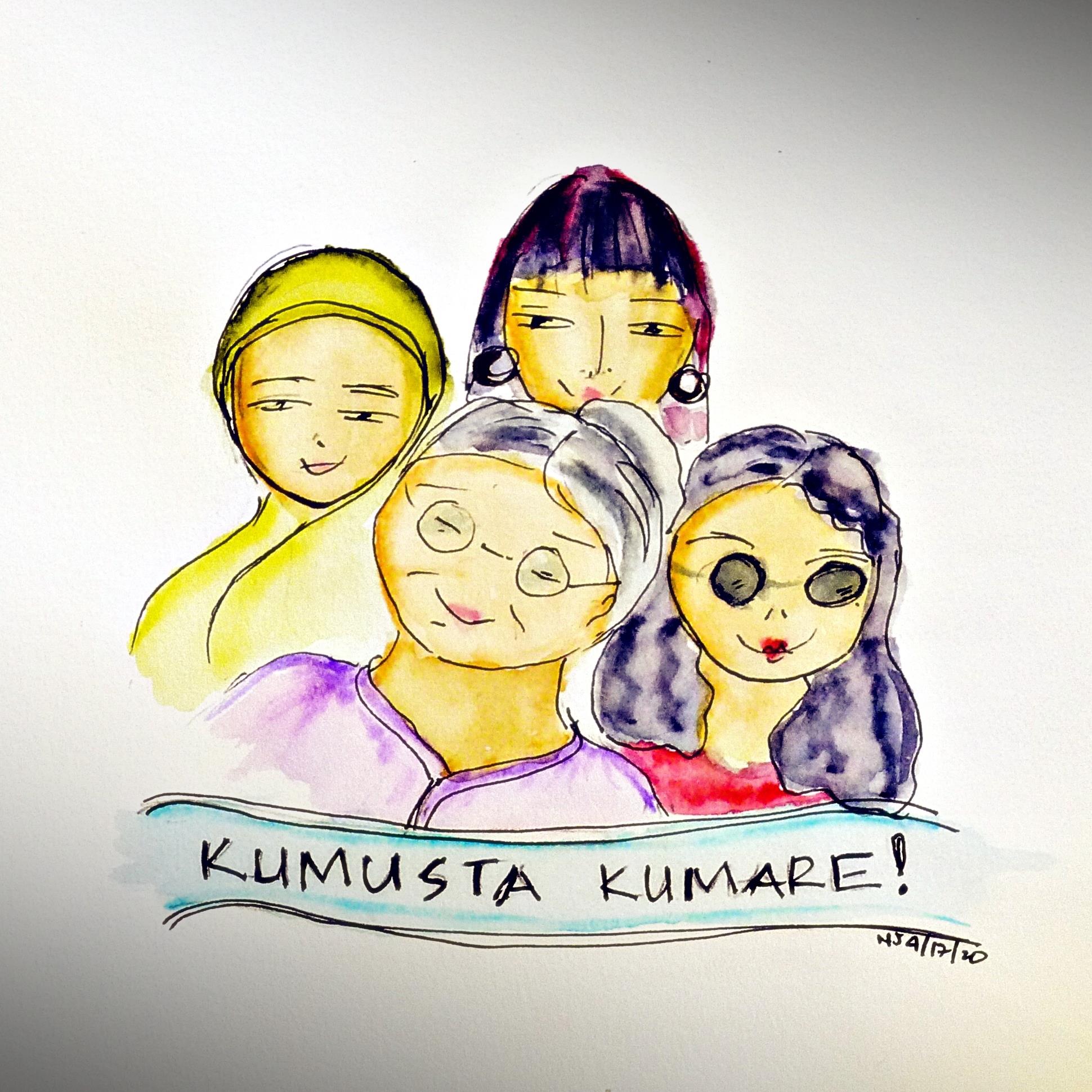
"Kumusta, Kumare!" Is the podcast program of the National Asians & Pacific Islanders Ending Sexual Violence (NAPIESV) Bersama-Sama Project in the Philippines. We will focus on issues affecting women & girls in the Philippines and connect this to Filipino Diaspora in the United States. Kumusta is, of course, "How are you?” while Kumare (pronounced koo-mah-re) is a borrowed term from the Spanish comadre literally translated as co-mother. Technically, Filipinos use kumare or it's shortened form "mare" in addressing their children’s godmothers but more commonly as a term of endearment, more like how one would use the term “sister/sistah”.
-
8
Part 2: Role of U.S. Colonization and Militarization in the Sex Trade in the Philippines
This episode is a continuation of our discussion on the sex trade in the Philippines. Last episode, we provided an introduction about the role of U.S. occupation/militarization on the sex trade in the Philippines. Our in-house herstorian, Emma, provided a connection between the U.S. occupation/militarization and the sex trade. For this episode, we will discuss sexual objectification and hypersexuality of Asian women, its connection to U.S. occupation and the sex trade, and to the work of Monsoon Asians & Pacific Islanders in Solidarity. For this episode, Lata D’Mello, Monsoon’s Director of Programs and Outreach who is based in Iowa City will join our conversation.Music from www.purple-planet.com. Thank you!
-
7
Part 1: Role of U.S. Colonization and Militarization in the Sex Trade in the Philippines
For this episode, our kumares, Mira, Rochelle, and Emma, will explore the role of U.S. occupation/militarization in the sex trade in the Philippines. There have been several studies and documentaries on this issue, but this does not mean that this issue ended or has gotten better for the individuals who are part of the sex trade.Credits: Background music: "Hard Fought Victory", https://www.purple-planet.com Featured music: "Base Militar", Inang Laya (Becky Demetillo Abraham, Karina Constantino David)Audio clips: "Under the sun : Olongapo Rose", BBC-TV production in association with Arts and Entertainment.Audio materials used for educational purposes only. No copyright infringement intended.
-
6
In Conversation and In Sisterhood with Moro People's CORE
In this episode, we are in conversation with Moro People’s CORE or MoroPCORE, a Mindanao-based organization that NAPIESV is supporting under our Bersama-sama Project. Moro People's Community Organization for Reform and Empowerment is a non-profit organization working for community empowerment and peace through education, organization and mobilization. Its mission is to reach out, educate, organize and mobilize the community for empowerment. It believes that through grassroots efforts, a genuine peace can be realized through dialogue, mediation, negotiation, consultation and meaningful talks. Let’s get to know our sister organization and check out the interview with Zaynab Ampatuan and Ivy Ampatuan.Music credits: "Hard Fought Victory" https://www.purple-planet.com"Improvisation 1" Live at WFMU on Rob Weisberg's Show on 9/27/2008 by Electric Kulintang, licensed under a Attribution-NonCommercial-ShareAlike 3.0 International License.
-
5
Part Two: Ending Rape Culture in the Philippines
This is the second part of our discussion on Ending Rape Culture in the Philippines. At our last episode, we discussed in detail and dispelled the different rape myths which, even to this day, are still largely accepted as truths by a lot of folks and institutions here in the Philippines and around the world. This time, we will talk about what exactly is rape culture, its roots, and how women, throughout our history, persistently and fiercely struggle to overcome it. Music CreditsHard Fought Victory -- https://www.purple-planet.com"Babaylan" -- composed by Tony Palis and performed by Talahib People's Music. Live multitrack recording at the CStudio.
-
4
Part One : Ending The Rape Culture in the Philippines
In this episode, we will discuss sexual violence, but specifically the rape culture in the Philippines. This is the first of the two-part episode that we’re having for this topic: what it is exactly, why it exists and persists, and how do we end it as women and as a society that wants to realize genuine equality and development as a nation.
-
3
Women Workers in the Philippines: A step in creating workers solidarity and global communities of struggle
In this episode, we will discuss the plight of women workers in the Philippines. We’ll be hearing from Liza, a contractual worker at a factory producing luxury bags for big brands like Michael Kors, Coach, Louis Vuitton , as well as Tin and Din, tenacious women labor leaders from the province of Laguna. “Kumusta, Kumare!” is Bersama-sama Philippines Team podcast and a way for our team to discuss issues facing women and girls in the Philippines. Music: https://www.purple-planet.com
-
2
Community Kitchen + Women’s Work: Continuing Struggle and Victories
TRANSCRIPT[music]Rochelle: Hello, everyone! Welcome to the second episode of Kumusta, Kumare!, NAPIESV - Bersama-sama Project Philippine Team’s podcast.Mira: Kumusta, mga kumare! I’m Mira Yusef, based here in Iowa and can’t wait to do a lot of stuff when we can safely travel and be with other folks!Rochelle: I’m Rochelle Aguilar, literally hot and bothered here in Angeles City. [laughter]Emma: And I’m Emma, locked down but my mind, heart and spirit still roam wild and free here in South Luzon. [laughter][Music]Mira: NAPIESV or the National Asian & Pacific Islander Ending Sexual Violence is a U.S.-based organization and our mission is to end sexual violence in the Asian and Pacific Islander (API) communities and build healthy communities through transformative justice and social change.Last year, we started the Bersama-sama Project in the Philippines, Indonesia, and Guam in order for immigrant/refugee/settler communities from Asia and the Pacific to connect to their home countries. By building this relationship, communities will be able to both reconnect with traditional/cultural practices and share movement-building strategies. Rochelle: In this episode, we’re diving deep into the nuts and bolts of organizing women-led community kitchens while in lockdown, bayanihan style.Emma, our in-house food historian (sorta) will share with us how they’re able to operate community kitchens in several workers communities surrounding the export processing zones in Laguna.Emma: Joining us also is women and children’s rights activist, Dimple Paz, of Lingap Gabriela and a volunteer of Bayanihang Marikenya Marikenyo and who, together with nine others volunteers, were arrested and detained on May 1, Labor Day, for supposedly violating the lockdown orders while serving food for public utility jeepney and pedicab drivers who are not able to work due to the lockdown. More about their story later. Mira: Before we proceed with the main segment of this episode, a brief update on the latest news in the Philippines. [music]Rochelle: As of May 23rd, the Department of Health of the Philippines has reported that there are 13,777 confirmed COVID-19 cases, roughly 7,000 more cases, and 401 more deaths from last month, April 23rd, despite the hard lockdown in Luzon. The death toll is now at 863 with over 50 percent declared posthumously. There are also 25,048 suspected and 803 probable cases. Meanwhile, an independent local COVID-19 monitor, covid19stats.ph, which gets their data from the Johns Hopkins Corona Resource Center and the DOH NCov tracker shows that there are 20,264 reported positive cases with a discrepancy of over 6,000 due to laboratory case validation and processing backlogs.The tracker also noted that there are 9.87 average days of delays in the DOH reporting on the number of deaths. Earlier this month, a team of experts from the University of the Philippines -- UP COVID-19 Pandemic Response Team -- pointed out...
-
1
Philippines + COVID-19 Lockdown: Impact on Women and Girls
Kumusta, Kumare?Episode 01In this pilot episode of Kamusta Kumare, Mira introduces NAPIESV, the work that they do with the API communities in the continental US and the Asia Pacific region. Rochelle Aguilar and Emma Rubio, members of NAPIESV Philippines staff, share their thoughts and experiences on the impact of the coronavirus lockdown on women in the country. Kumusta is, of course, "How are you?” while Kumare (pronounced koo-mah-re) is a borrowed term from the Spanish comadre literally translated as co-mother. Technically, Filipinos use kumare or its shortened form mare in addressing their children’s godmothers but more commonly as a term of endearment, more like how one would use the term “sister/sistah”. Segment 1: Greetings And Intros00:04 - 01:03Rochelle: Hello, everyone! Welcome to the first episode of Kumusta, Kumare!Emma: This podcast is hosted by the National Organization of Asian Pacific Islander Ending Sexual Violence - Bersama-sama Philippines TeamAll: Hello, everyone! My name is Mira Yusef and I'm with NAPIESV and I am the US-based staff. And I'm Rochelle, I'm from the Philippine-based staff. My name is Emma, I'm from the Philippine-based staff. Mira: Kumusta, Kumare will focus on issues affecting women and girls in the Philippines and connecting this to the Filipina diaspora in the United States.NAPIESV’s herstory and what it means for the API communities in the US.01:03 - 02:50Mira:<span style="background-color: transparent; color: rgb(0, 0,...
We're indexing this podcast's transcripts for the first time — this can take a minute or two. We'll show results as soon as they're ready.
No matches for "" in this podcast's transcripts.
No topics indexed yet for this podcast.
Loading reviews...
ABOUT THIS SHOW
"Kumusta, Kumare!" Is the podcast program of the National Asians & Pacific Islanders Ending Sexual Violence (NAPIESV) Bersama-Sama Project in the Philippines. We will focus on issues affecting women & girls in the Philippines and connect this to Filipino Diaspora in the United States. Kumusta is, of course, "How are you?” while Kumare (pronounced koo-mah-re) is a borrowed term from the Spanish comadre literally translated as co-mother. Technically, Filipinos use kumare or it's shortened form "mare" in addressing their children’s godmothers but more commonly as a term of endearment, more like how one would use the term “sister/sistah”.
HOSTED BY
NAPIESV
Loading similar podcasts...
Frequently Asked Questions
How many episodes does Kumusta, Kumare! have?
Kumusta, Kumare! currently has 8 episodes available on PodParley. New episodes are automatically indexed when they're published to the podcast feed.
What is Kumusta, Kumare! about?
"Kumusta, Kumare!" Is the podcast program of the National Asians & Pacific Islanders Ending Sexual Violence (NAPIESV) Bersama-Sama Project in the Philippines. We will focus on issues affecting women & girls in the Philippines and connect this to Filipino Diaspora in the United States. Kumusta is,...
How often does Kumusta, Kumare! release new episodes?
Kumusta, Kumare! has 8 episodes. Check the episode list to see recent publication dates and frequency.
Where can I listen to Kumusta, Kumare!?
You can listen to Kumusta, Kumare! on PodParley by clicking any episode. We provide an embedded audio player for direct listening, and you can also subscribe via your preferred podcast app using the RSS feed.
Who hosts Kumusta, Kumare!?
Kumusta, Kumare! is created and hosted by NAPIESV.
URL copied to clipboard!