
PODCAST · religion
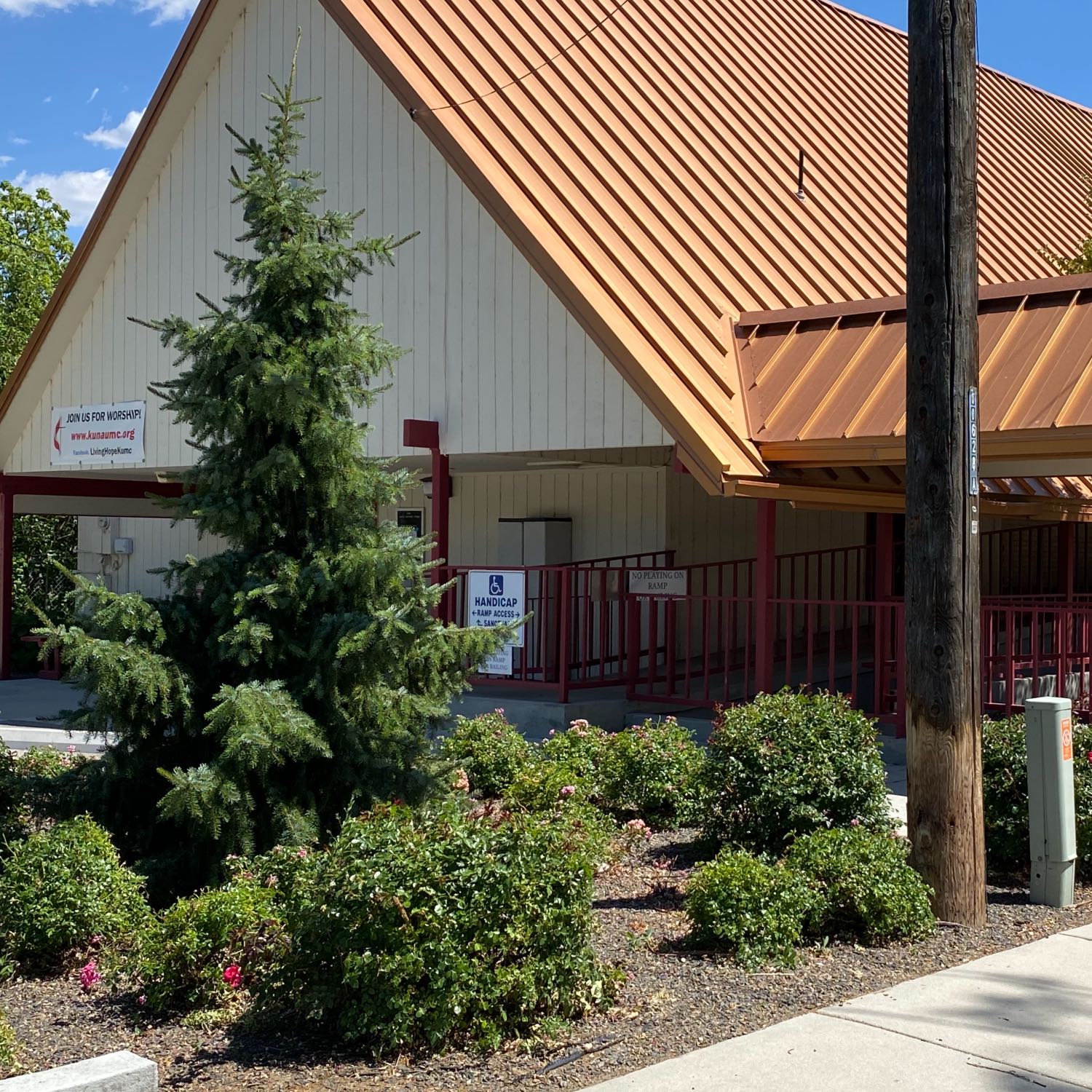
Kuna United Methodist Church Sermons
by Kuna United Methodist Church
Sermons of Kuna United Methodist Church in Kuna, Idaho
-
169
Hope in the Gospels. June 14, 2026
Our sermon series on hope continues as we look for hope in the gospels and find that Jesus embodied hope. Everything about him was bringing people out of despair, disorientation, into restoration. And then he sends us to continue to work.
-
168
Hope in the Prophets. June 7, 2026.
God gives us hope in times of disorientation, when everything is just falling apart. Then hope changes everything.God's primary way of giving hope is through other people. God did a lot of that through the prophets, ministering to the people of God going through a horrible exile. Pastor Mia walks us through the history of the exile and the prophets who spoke God's hope in times of despair. Those words still speak to us today, and call us to give hope to others.
-
167
Pentecost: Miracle of Understanding. May 24, 2026
Pentecost is the miracle in which the Holy Spirit arrived on earth in spectacular fashion. Our spiritual ancestors experienced noise, wind, wildfire, and languages as they began speaking in their mother tongues. Pentecost is the occasion that’s often celebrated as the birthday of the church. At the time of Pentecost, Jerusalem was full of people who believed God resided in the temple. They were there to worship God instead of trying to be in relationship with God. Unlike idols, who wanted slaves and demanded sacrifices, God asked for loyalty. But while God remained faithful to the people, they were revering idols and breaking the commandments. When the early Hebrews built the tower of Babel to get as high as God, God responded by giving them different languages. As a result, they could no longer communiicate with each other to reach that lofty and unholy goal. Hundreds of years later, Pentecost healed the brokenness of Babel. When the Holy Sprit prompted the people to speak in their mother tongues, there was understanding despite all of the different languages. With the Holy Spirit, we are compelled by the miracle of a God-given understanding that includes minds, hearts, and relationships. God wants us to share this miracle with others by seeking to be understood or seeking to understand. Our interest in understanding people who are different from us is one of the ways our Christian faith sets us apart. When we understand others and love them, God is transforming the world through us.
-
166
2nd Sunday of Easter. Resurrection stories. April 12, 2026
Cheering, clapping, and looking shocked. Mision control photos from last week’s successful completion of the Artemis II moon flyby show those joyous reactions as NASA scientists and engineers experienced the same wonderful event in different ways. That’s also how it was for the disciples after the resurrection.John’s Gospel (John 20:19‑31) describes how the disciples handled the news of Jesus rising from the dead. Each disciple responded to the same wonderful thing in a different way. There was elation and there was uncertainty. One disciple—who became known as Doubting Thomas—said he would not believe unless he could see the wounds in Jesus’s hands and side.In reality, Thomas wasn’t doubtful. He was afraid the Risen Christ was too good to be true, so he guarded his heart. Thomas couldn’t accept Jesus was alive until he had physical proof. Thomas needed to see for himself.Jesus didn’t chastise Thomas for not believing. Jesus provided the comfort Thomas needed to accept the miracle of the resurrection instead, telling him to touch the wounds from the crucifixion. With that comfort, Thomas’s shock moved to acceptance, and he became the first one to call Jesus God.We’re no different than Thomas. We can experience God and feel it’s too good to be true. Accepting the resurrection can be a struggle, and we too, need comfort from Jesus to help us believe our own eyes and our senses.
-
165
Roll Down Like Waters: EASTER! April 5, 2026
Imagine this. You’re sitting in a packed room in a house in the Mediterranean. You’re there, listening to a story from a new scroll and the reader says, “Overcome with terror and dread, they fled from the tomb. They said nothing to anyone, because they were afraid.”The new story, from Mark’s Gospel, is about Jesus’s resurrection. Three of the women in the room with you remember the day well—they were there. Forty years have past since Salome, Mary the mother of James, and Mary Magdalene took spices to the tomb where Jesus was placed after the Crucifixion and discovered he was gone.Before this story was written in Mark’s Gospel, you heard Mary Magdalene tell it herself. After describing her initial terror, Mary would continue, “But it didn’t take long, and the fear melted away.” She would describe seeing Jesus alive again, taking to him, and touching his arm. She could’t hold in the good news any longer, so he went out and told people, “Let me tell you about Jesus Christ, the Son of God. Let me tell you the good news.”Imagine after hearing Mary tell this story so many times, you now see her listening as it’s being read aloud from writing. She’s beaming!Today, we know the resurrection story because Salome, Mary the mother of James, and Mary Magdalene told the disciples, and because Peter, James, and John believed them. The resurrection changed them all, and they couldn’t contain their excitement. They told and retold about the resurrection, and after a few decades they wrote it down. On this Easter, Mark’s resurrection story is read in churches throughout the world, and we all celebrate the gift of Jesus who sets us free.
-
164
Roll Down Like Waters: Palm Sunday. March 29, 2026
And here we are. It’s Holy Week, the days leading up to Easter. Palm Sunday begins the final pages in the story of Jesus, and things are getting exciting.After three years of teaching, healing, and performing miracles in the country, Jesus decided to go to the big city of Jerusalem. As with most things Jesus did, his arrival was full of symbolic meaning. Like emperors returning from victorious battles, Jesus rode into town on an animal and was welcomed by a cheering crowd. But Jesus wasn’t sitting on a great war horse; his ride was a colt or a donkey. The crowd was so excited to see Jesus, they made a carpet for him with their clothing and palm branches. God had come for them, and they saw the Lord’s glory.After his arrival, Jesus went straight to the temple. He spent Monday, Tuesday, and Wednesday, teaching. That’s not all. Jesus drove out the money-changers, a woman anointed him with expensive oil, and he foretold his death and resurrection. During those three days, the religious leaders tried to entrap Jesus by asking him tricky questions. They plotted to get rid of him.On Thursday, the Passover celebration began. Jesus gathered with his disciples, including the one who would betray him, to pray and share a meal with bread and wine. After supper, they went to the Garden of Gethsemane. Jesus prayed fervently—he knew what was coming. The disciples fell asleep—they didn’t understand what was about to happen. Then soldiers arrived and dragged Jesus away.On Friday morning, Jesus was convicted in a Roman court. His disciples had run away. Every person Jesus healed, taught, and fed had abandoned him. The people who cheered Jesus’s arrival just a few days before turned their backs on him. After beatings and a torturous journey to a place called Golgotha, executioners crucified Jesus on a cross. When Jesus died, the sky went dark, the earth rumbled, the temple curtain tore apart, and the people realized they had failed God.When it was over, caretakers placed Jesus’s body in a tomb and rolled a stone in front of the entrance. Because sundown and Passover were approaching, there was no time for burial preparations. On Sunday morning, the women went to the tomb to finish the burial and what they saw made no sense. The stone was rolled away. There was no body. And then an angel appeared with the best news ever—Jesus was alive. Jesus rose from the dead, just like he said.The story of Holy Week is filled with highs and lows. During Holy Week, we recall the final pages of Jesus’s story in real time and we remember how God still comes for us today and every day.
-
163
Rolling Down Like Waters: God has work for us to do. March 22, 2026
Eight centuries before the birth of Christ, the Prophet Isaiah had a thing or two to say about how we live our lives. Chapters 56-66 of the Book of Isaiah are addressed to the Israelites who have returned home to devastation in Jerusalem, after the Babylonian exile. With generations of banishment ended, they need to rebuild their lives, their community, and what it means to be a God follower.When they returned to Jerusalem, the Israelites were no longer bound by the restrictions of exile. Humans don’t always handle freedom wisely, however, so God gave them instructions. First, God told the Israelites to fight injustice and workplace exploitation, to free the oppressed, to cancel debits, and to feed, clothe, and shelter those in need. This guidance has been enacted into law through civil rights, bankruptcy, and labor legislation, along with programs such as SNAP benefits and Section 8 Housing.In addition to advising the Israelites on how to care for others, God also provided instruction on we all are to live our lives. Eliminate unfair practices, victim blaming, and gossip, and share generously with the hungry and down-and-out. Consistently following these instructions isn’t easy. Manipulation and victim shaming still occur, and judgey Christians continue to point out others’ sins.There is work for us to do as we strive to live as God’s faithful representatives. When we heed the same instructions that God gave the newly freed Israelites, others will identify us as God followers. With the example of how we conduct our lives, we will be known for our ability to make community livable through restoration, rebuilding, and renovation.
-
162
Roll Down Like Water: Christ's Representatives. March 8, 2026
Lent and baptism go hand in hand. In the early church, Lent was a time of preparation for baptism. Today, we can use the season of Lent to remember our baptismal promises and discover our place in the story of salvation.In baptism, water symbolizes washing away sin and we make four promises, naming the kind of life we will have in Christ. First, we renounce wickedness and repent our sins. This is the moment of letting go and relaxing into God, much like water flows over a waterfall. Then we accept God’s power for resisting evil, injustice, and oppression. Next, we confess that Jesus Christ is our Savior and put our whole trust into God’s grace. And finally, we promise to remain faithful members of Christ’s church.Baptism is about taking on the identity of a Christ-follower—distinguishing ourselves as Christians. When we make our baptismal promises, we take on the role of being Christ’s representatives in the world. This is important, because people will make judgements about Jesus based on our actions. Here are a few questions to ask yourselves. Do we take care of others? Do we forgive and ask for forgiveness? Are we kind when it’s difficult? Do we stand up for people who are attacked?When we don’t do these things, we give Jesus a bad name. Each of us called in baptism has been handed work called ministry. We’re all empowered for work in the church and work on behalf of the church. The life of following Christ and nurturing others is something we get to do together—we call it church.
-
161
Roll Down Like Waters: Communities of Forgiveness. March 15, 2026
During baptism, the candidate or the parents of a candidate make a set of promises. Then the church community makes promises in return, telling the newest member of God’s family that they’re not alone in their faith journey. The community’s promise includes surrounding the baptismal candidate with love and forgiveness.Baptism is a celebration of salvation and initiation into Christian community. But where there is community, there are people. Where there are people, there is conflict. And where there is conflict, there is the need for forgiveness.Forgiveness done well is astounding. We’ve seen it after terrible events. When a white supremacist murdered nine African American members of a South Carolina church 2015, AME Bishop John Bryant said, “He wanted to start a race war, but he came to the wrong place.” In 2006, a 33-year-old man barricaded himself in a one-room Amish schoolhouse. He shot ten girls, killing five and injuring five. Then he killed himself. Despite the devastating losses, 40 members of the Amish community joined the man’s grieving parents at his funeral.Talk about forgiveness can be difficult to take in. Does it mean putting all the burden on the victim and letting the perpetrator off? In the early church, people promised love and forgiveness, but it wasn’t unconditional. Serious sin meant getting expelled from church, and the only way to return was to make a public confession and do public penance. The ability to connect and choose love was one of Jesus’s superpowers. As he and two other enemies of the Roman state hung on crosses, one of the men ridiculed Jesus and the other defended Jesus. In that moment, Jesus assured the defender that he would join Jesus in paradise. Jesus modeled forgiveness, love, and community building right up to his death. When we, the community, make promises during baptism, we’re pledging to recommit to following Jesus and his ways.
-
160
Roll Down Like Waters: Each One Named. February 22, 2026
In his prophecies, a shepherd named Amos described God’s grace. He said, “But let justice roll down like waters, and righteousness like an ever-flowing stream” (Amos 5:24).English translations for the biblical meaning of the justice and righteousness described by Amos differ from our everyday usage and are somewhat incomplete. In the biblical sense, justice is an idea of fairness, receiving our due, or the conclusion of justice. In other words, a response that is right. Righteousness describes a core quality of God that includes holiness, faithfulness, integrity, and the life-giving power of restoration. God puts things in right relation, and we can share this quality with God.The image of water rolling down is also about baptism. Lent, the current liturgical season, originated from the 40-day preparation for baptism. At the beginning of a baptism, parents or sponsors share the name of the baby, child, or adult being baptized. Names are important, because they become a part of our identity and connect us to the name giver. During baptism, we are called by name to be children of God.One of the most influential writings in church history is the apostle Paul’s letter to the church in Rome. Throughout the letter, Paul repeats the theme that God’s love and salvation is available to all. Paul describes the new reality of the resurrection that connects God’s people to the love of Christ. Paul says that bond is unbreakable, even when it looks like we’ve have failed or God has been beaten. In times of hardship, God saves.The Bible includes multiple instances of justice and righteousness being used together. When water rolls down, nothing pushes it. With Amos’s description of rolling water, we’re reminded that the connection to God and church is a process of relaxing into God’s grace, justice, and righteousness.
-
159
Questions to God: What is heaven like? February 8, 2026
What is heaven like? Will we know our loved ones when we get to heaven? Jesus talked about the kingdom of heaven using parables. The kingdom of heaven is like a mustard seed. The kingdom of heaven is like a farmer who planted a field. The kingdom of heaven is like a pearl. Despite these teachings, we don’t have a concrete understanding of what the kingdom of heaven is like.So, what does the Bible tell us about heaven? Scripture says, the kingdom of heaven is where God is the ruler, where God’s will is done, that exists now and not yet. However, when we think of heaven, we generally mean something specific in the afterlife. For example, a place of paradise, reward, happiness, or freedom from pain.Many of us have likely formed beliefs about heaven, but we really can’t know if we’re right or wrong until we die. Jesus was the only one who died and came back to tell us about it, and he didn’t say much. Instead, Jesus focused on inviting us to follow him. Jesus repeatedly told us about God’s love, and we are like God when we are at our best—loving, peace-filled, courageous, and giving.Ultimately, we can believe in the next life because Jesus said it was so. We can only trust that we will have closeness with God and that we will recognize our loved one who are already there. Guessing about what heaven is like from this side of the gave changes nothing, except everything that we believe about heaven in the next life affects our lives today. Like Jesus said, when we believe that heaven is where God’s will is done, then we start living today by doing God’s will today
-
158
Questions to God: How can we have faith? February 1, 2026
God, how can we have faith in you? And how do we keep faith in times of difficulty? Trying to answer these questions of faith is a feat that leads to more questions. God, are you real? And if you are real, are you worth my loyalty?At the start of the Protestant Reformation in the 1500s, everyone believed in God and people made decisions based on which church was truly following God. Then things changed. Use of the printing press spread, the Scientific Revolution began, democracy took root, and people started asking questions. For the first time, they stopped automatically assuming God existed.Having faith begins with an awareness that both transcendent and imminent thinking exist. Transcendent thinking is the realm of spirituality, ideas, and cosmic order. The focus of imminent thinking is on earthiness, physicality, and natural order. In other words, it’s a comparison of things we can and cannot see.In a quest for a perfect understanding of God, some people reject everything that is not religious and they do not tolerate questions. This behavior never works, because Jesus is the only person in Scripture who had perfect faith. Everyone else doubted or failed in some way. Trusting that God is real is to have confidence in something we cannot see.If God is real, is God worth my loyalty? When we acknowledge that God is really the creator of the universe and the Savior who comforts and protects, loyalty to God makes sense. The question about faith in times of difficulty is really a question about loyalty. However, we have trust issues when bad things happen and God doesn’t intervene. Ultimately, God knows things we don’t and that power makes God worth our loyalty.If you have questions and doubts about faith, it’s okay. God never promised to make our lives easy or pain free. Instead, God’s promise was to be with us, to comfort us, and save us for a mission worthy of our whole lives.
-
157
Questions to God: Why do you allow suffering? January 18, 2026.
Why do you allow suffering? Why do bad things happen to good people? Because these two questions to God persist, suffering is one of the most common reasons for rejecting God. You've heard the statement, "I can't believe in a God who would let that happen."The attempt to make sense of God's role in suffering is a monumental task. Sometimes the good we do leads to suffering and sometimes suffering just happens at random. We want suffering to make sense, but it can end up leading to more questions. There is an assumption that bad things should only happen to bad people, so when bad things happen to good people, we wonder if those people are actually bad.When suffering occurs, we're focused on who is to blame. Because we're invested in the idea that bad things happen for a reason, we blame victims or we find a way to justify the suffering. Jesus wasn't interested in assigning blame. John's Gospel describes Jesus's encounter with a man who was born blind. When the disciples asked whether the man or his parents sinned, Jesus replied, "Neither this man nor his parents sinned, but this happened so that the works of God might be displayed in him." Then he healed the man. Jesus takes a different approach to suffering. In John 11, he weeps with sisters Mary and Martha after learning their brother Lazarus has died. Jesus didn't blame the sisters for the death of Lazarus. Instead, Jesus grieved with Mary and Martha. In other words, he joined them in their suffering. When Jesus tells us, "Take up your cross and follow me," his message is twofold. Jesus is saying you will suffer—and I will with be with you. When we suffer, God joins us instead of taking our pain or grief away. A grieving widow once summed up the relationship between God and suffering when she told a group of friends, "Without suffering, there is no resurrection."
-
156
Questions to God: Why do you allow evil? January 11, 2026
When people are grappling with injustices or disasters, they ask God, “Why do you allow evil to exist,” and “Can you stop evil?” Although there isn’t a precise answer to either of these questions, clues in Scripture provide some clarity. Guest speaker Patrick Meisen shares the insights he gained while examining these questions to God. Christian Apologetics, a branch of theology focused on defending and explaining Christian faith, phrases the question of evil another way: If God is all-powerful, all-knowing, and all-good, then why is there so much suffering in the world? The relationship between evil and suffering exists, because evil can lead to suffering. Evil is classified as moral or natural. Humans are responsible for moral evil, and natural evil is the result of natural disasters or disease. The Bible includes examples of each. In the Book of Job, an innocent and upright man demands an explanation from God after a storm kills his children. And in the Book of Habakkuk, a prophet complains to God about persistent injustice in Judah and God’s seeming inaction.When God responds in these stories, we learn that human knowledge is too limited to understand the full context of these events. Furthermore, we discover that it’s okay to question and lament while holding onto faith in God. When we suffer, God is there with us. God constantly works to prevent evil. God sent the Old Testament prophets to warn about evil and the Holy Spirit to guide us. Occasionally, God prevents evil through miracles. Most of the time, however, God heads off evil through us. When you see evil and it makes you angry, God is calling you to prevent it. Because God gave humans free will, it’s up to us to choose whether to do good.
-
155
Sanctuary, Room for All: Refuge & Sanctuary. January 4, 2026
God makes room when lives depend on it. Matthew's Gospel tells story of three magi who follow the Christmas star to find the stable where Jesus was born. King Herod, the story's villian is threatend by the birth of Jesus, so he tries to trick the Magi into revealing the baby's location. But God intervenes. In one dream, God advises Joseph to flee to Egypt with Mary and Baby Jesus. And in another, God tells the Magi to travel home via a different route. Then the nightmare begins. When Herod realizes he's been tricked, he's so angry he orders the killing of all boys ages two and under. The slaughter of those little ones is known as the Massacres of the Innocents.Rulers have historically used their power to hurt the innocent. Today, supression by the powerful continues, even in the United States. The 2017 and 2018 family separation policy allowed taking small children, including infants, from their parents and housing them for weeks in poor conditions. Last year, swarms of masked agents started arresting people with out due process during immigration raids at workplaces and in neighborhoods. Both of those directives have been difficult to witness, and now we're left to wonder what will happen after this weekend's events in Venezuela.The description of Herod and the Innocents is difficult to take in, especially during the Christmas season. So why include such a sad story in the Gospels? Two reasons: iIt's honest and it shows the power of God's joy. The happiness of finding Jesus doesn't depend on life's circumstances, because no darkness if too much for the light of Christ. In frightening times, God's presence in our hearts can provide refuge.
-
154
Sanctuary: Room in Relationships. December 14, 2025
Who understands you best right now? With Sanctuary relationhips, we can share joy, fear, and be our full selves. Both life-long and seasonal relationships can provide santuary. The most important sactuary relationship in which we are fully seen is with God, but we also need people who understand us. This is why God makes room for us to have relationships with one another.Luke 1:24-45 describes the connection between Mary and Elizabeth, cousins who both became miraculously and unexpectedly pregnant. The older Elizabeth struggled with infertility for years, and Mary was a virgin teenager chosen to bear the Son of God. Despite their joy, both women feared scorn and judgement for their out-of-the-ordinary pregnancies. Mary and Elizabeth shared an experience that only they could understand.God didn't call Elizabeth to be pregnant alone, and God didn't call Mary to be pregnant alone. God made room for a relationship in which the cousins were sanctuary for each other. God is constantly making room in relationships, sending someone into our lives to bring insight and understanding. Sometimes that person is not someone we expect. And sometimes we reject this gift from God, because we don't see it coming. This week, Pastor Mia describes how we can use the Advent season to cooperate with God in making room for relationships.
-
153
Sanctuary: Room in your heart. December 7, 2025
Decluttering a house full of stuff is like repentance. When we let go of things we don’t need, we have a change of mind, then a change of heart, and finally a change of behavior. When we repent, we’re cleaning our hearts and souls. Simply put, repentance is a spiritual decluttering.During the Advent season, repentance helps us prepare for the birth of Jesus by making room for God and those God loves. Repentance also gives us room to seek God and it gives us room for God to nurture us.All of us have moments of worshiping the idol of self reliance. We tell God, “You can step back,” and then we struggle. When we finally repent and accept God’s care, we become capable of nurturing others. The core of nurturing others is actively showing interest in their perspectives, thoughts, worries, and giftedness, which makes them feel seen and heard.This week, Pastor Mia explains that when we make room in our hearts, we can make room for acceptance. We can accept others as they are. We can accept ourselves and our failures. And we can accept God exactly as is. When we repent, we make room for new habits, room for new compassion, and room for wonder.
-
152
Sanctuary: Making Room When Pressure Closes In. November 30, 2025
In Joshua 2:1-21, a woman named Rahab hid a pair of Israelites who were spying on the city of Jerico and the surrounding land. When pressure closed in, Rahab threw her loyality to God. Despite the risk, she provided sanctury to the spies and in doing so she changed her trajectory. When Rahab made room for the spies, she found refuge in God.Sanctuary is a sacred or holy place, and it is a place of safety. We naturally provide sanctuary by standing in solidarity with others who are in peril. Regardless of whether we're directly affected by a crisis or being a supportive ally, standing in solidarity means we could take a hit because we've put ourselves close to those who suffer. Solidarity is a holy action. God demonstrated solidarity with us by taking on the risk of becoming the human, Jesus.With the season of Advent now underway, God invites us to make room for others. However, the stress of preparing for Christmas grows in many forms. Will the shopping, baking, and gift wrapping be done in time? And for some us, offering hospitality during the Christmas season is daunting. Making space for a holiday get together is a challenge when you're going to be dealing with family tension. In this time of anticipation, Pastor Mia reminds that we can find our sanctuary in God because the Creator is making room for us as the pressure closes in.
-
151
Honesty. Do not falsely testify against your neighbor. November 16, 2025.
The Ninth Commandment tells us, "Do not testify falsely against your neighbor." While God is commanding us to be honest, there's more to to consider. This week, Pastor Mia explains the meaning is twofold. Don't falsely accuse others of wrongdoing and don't back up false accusations.When God revealed the Ten Commandments to Moses, the Israelites lacked the necessary structure for learning how live with one another. After being freed from slavery, they needed a court system to deal with disputes almost instantly. The Ninth Commandment is a reminder that both truth and dishonesty have power. At its worst, false witness damages lives. Anyone in prison for crimes they didn't commit knows this devastation all too well.Despite his many healing works, Jesus was a victim of false testimony. Matthew 26 describes how Jesus was put on trial by the high priests and Roman authorities for blasphemy. After struggling to find witnesses, two came forward and recounted Jesus saying, "I can destroy God's temple and rebuild it in three days." Jesus wasn't talking about a building used for worship. Instead, he was referring to the temple of his body. Jesus's enemies twisted his words to use them as the catalyst for his conviction and crucifixion.Context matters. It did then and it does now. Besides its place in the judicial system, false witness finds its way into our daily lives and we might not realize it. Did you fact check the that eye-catching meme in your social media feed before sharing it? If not, you might've spread misinformation. That too, is a form of false witness. When we gossip, spread rumors, and reveal information shared in confidence, we've fallen off the Ninth Commandment's guardrails. God commands us to avoid false testimony, because he wants us to to be careful with our words. After all, as James 3 says, "Blessing and cursing come from the same mouth."
-
150
Words of Life: Do not commit adultery
Being unfaithful in marriage is not an option for Jesus followers. God tells us, "You must not commit adultery" in the 7th Commandment. When couples are married, they promise to be loyal to one another. In others words, no affairs, no infidelity, and no sexual intercourse with another person.Adultery was a problem in the ancient world and, despite declining for decades, it continues to be a problem. Adultery is not limited to sexual relationships outside of marriage. Non-physical affairs, pornagraphy addiction, and virtual relationsnips are all unfaithful. Adultery isn't limited to marriage. It occurs in committed relationships as well.When Moses brought the Ten Commandments down from Mt. Sinai, the Hewbrews had a much different understanding of adultery. Then it was all about the behavior of women, who were considered property. Because wives were paid for with a bride price, the mindset was that a woman was being stolen from her husband if she committed adultery. Exposed adultery resulted in severe punishment — public execution for both the married woman and the man who stole her.The theme of adultery is woven throughout the Bible. The book 2 Samuel describes King David's affair, three chapters of Proverbs are devoted to adultery, it's discussed in the Sermon on the Mount, and Jesus refuses to condemn an adulterous woman in John 8. Instead, he points out our hypocrisy and quickness to judge others without addressing our own sinfulness. If you've committed adultery, Jesus is ready to forgive you.Although the 7th Commandment specifically tells us to avoid adultery, Pastor Mia reminds us that faithfulness in marriage also requires sustained care. Do you pay attention to your spouse? Are you compassionate? Do you listen? Are you a good partner in managing household and family responsiblities? Do you express your love and does your spouse hear you? Faithfulness and this kind of love is a daily decision that requires our whole heart.
-
149
Words of Life: Honor Your Father & Your Mother. October 19, 2025
Now that we've gone through the first four commandments about our posture toward God, we turn to God's commandments about how we are to live with one another, beginning with "Honor your father and your mother." Honoring ancestors is an ancient tradition that extends beyond cultures and peoples. In Jesus time, people had come up with human rules that people were using to dismiss caring for their parents in their old age, and Jesus did not approve. Honor matters.Honoring loving parents is easy and looks different than honoring abusive parents, even abusive parents who have attempted reconciliation. Forgiveness then becomes the way we move forward, honestly letting go of the resentment instead of dying by our own poison.Pastor Steve Tollefson brings today's message of honor and forgiveness.
-
148
Words of Life: Remember the sabbath day and treat it as holy. October 12, 2025
God has a response to the craziness in life, "Remember the Sabbath day and treat it as holy." In the Fourth Commandment, God tells us rest is not optional.With so many things going on, we ignore the rest and renewal that God commands and then we suffer. The consequnce of neglecting the spiritual garden leads to literal and figurative death in the form of burnout, health problems, and broken relationships. God's commandment to rest once a week is important and it's a first. Before the Fourth Commandment, no other god, deity, or ruler had ever ordered a day off for renewal and revereance for God.The Fourth Commandment can help us be our best selves. And ironically, it might be one of the most challenging for many us. Why is obeying the commandment for rest and renewal so difficult? One reason is our society admires and rewards overwork. We forget the Fourth Commandment applies to everyone--which includes each of us.On the Sabbath, we can take the time to connect to God. That's why church is important. Pastor Mia tells us the renewal we receive by connecting to God isn't recovery from the past week. It's rejuvenation for taking on the week ahead.
-
147
Words of Life: Do not use the Lord your God's name as if it is no significance. October 5, 2025
Don't cuss! That's one typical childhood interpretation of the Third Commandment. Of course, we shouldn't mix God's name in with a string of nasty language. However, the use of naughty words isn't the primary meaning of "Do not use the Lord your God's name as if it were of no significance."One purpose of the Third Commandment is to stress the importance of keeping promises and telling the truth, epscially when using God's name. Think about the oath witnesses take in the American court system. They swear to "Tell the truth, the whole truth, and nothing but the truth, so help me God." We need to be able to believe each other to function in society.The Ten Commandments give us guidance for living together. The Third Commandment, reminds us that integrity matters. When you're known as a Christian, others see your speech and actions as a reflection of your character--and God's. Despite good intentions, we sometimes break the Third Commandment unintentionally. This type of violation happens when heartbreaking life events such as a cancer diasnosis and the death of a child are attributed to God's will. In these scenarios, we're using God's name in ways that are inconsistent with God's character. Pastor Mia reminds us that representing God well in our daily lives is not optional. Think about what you say and what you do. Your words and actions can color God's reputation.
-
146
Stay on the Trail & Keep Walking. September 14, 2025.
This week, Pastor Mia shares the final lessons learned during a pilgrimage on the Camino de Santiago in Spain. In pilgrimage, the journey is the point and the destination matters. The Gospel of James teaches us this wisdom, telling us to stand firm and be patient as we wait for the coming of the Lord.There is a correlation between backpacking on a physical trail and the spiritual journey. After walking mile after mile on a trail, exhaustion sets in. Spiritual life is like that too. We want it to be thrilling. We want to put forth our best selves in faith. However, when there is no excitement and we’ve grown tired, spiritual life becomes a matter of simply showing up. In other words, stay on the trail and keep on walking.As you near the end of the journey, you may finally realize your pack is too heavy. Instead of leaving behind the things you didn’t need, you kept them. Spiritual life is similar. We each have spiritual baggage we continue to carry, until we take the time to examine it and get rid of what we don’t need.On a journey, the exhaustion is real. Stand firm. Stay on the trail and keep on walking. And long the way, be filled with joy as you reach the end of one journey and begin another.
-
145
Our way is made by others. September 7, 2025.
Every year thousands of pilgrims travel the Camino de Santiago, a route in Spain that leads to the burial site of St. James. This week, Pastor Mia explains how walking a path such as the Camino is a reflection of the spiritual journey. By making a physical journey we learn that our way is made by others.The Camino de Santiago was built by others. Some people dedicated their lives to developing the route. Others posted signs marking the route for pilgrims. Others laid pavers to show which way to walk when there was a fork in the road. And others built stone bridges for crossing streams and rivers. Like those others who made the way for pilgrims to travel the Camino, others made the way for our spiritual life. Today we have Scriptures, because our our ancestors in faith wrote about their experiences with God. Traditions, including Sunday worship and communion, were also handed down by our spiritual ancestors. And the prophets set the example of being faithful even under pressure.There are others who make our way in faith. Who made the way for you? And how are you making the way of faith for those who follow?
-
144
We travel the same road differently. August 31, 2025
Pilgrimage — both the physical journey of walking the Camino de Santiago and the spiritual journey each of us takes toward God — is different for each of us. Our backgrounds, burdens, and hopes shape the way we travel. Some of us come with strength, others with wounds or worries, and still others with questions about belonging or purpose. Yet, what unites us is not sameness of thought or experience, but hearts bound together in Christ.Pastor Mia shows how wisdom is essential for the journey. Wisdom is not just knowledge, but faithful discernment — knowing when to push forward, when to rest, and how to support one another. The letter of James reminds us that when we lack wisdom, we can simply ask God, who delights in giving it. Sometimes wisdom is practical, like knowing when to take a break or accept help. Other times, it’s deeper: learning to lay down the baggage we carry, or to show gentleness and compassion to fellow travelers whose journeys look different from our own.
-
143
Pilgrimage: the Journey is the Point. August 24, 2025
A pilgrimage trail in Northern Spain attracts thousands of walkers each year. Their destination is the Santiago de Compostella where, according to tradition, the bones of St. James the Apostle are buried. For the next four weeks, Pastor Mia shares some of her experiences and lessons learned as she and two companions walked the last 73 miles of the Camino de Santiago. Pilgrimage to sacred destinations has long been a religious practice. Pilgrimage is holy, physical, and spiritual. Reaching the destination at the end of a pilgrimage is exhilarating, but that’s not the point. It’s the journey that matters. Spiritual maturity grows not from rushing to the destination, but from faithfully walking step by step on the journey. After all, faith is lived out in action.For Pastor Mia, walking the Camino was a concrete way to reflect on her spiritual journey. At first, she questioned whether she could physically walk ten miles a day, carrying a backpack and pushing past physical exhaustion. In many ways, she says she felt the same way when she took her baptismal vows nearly 30 years ago.When day one of walking the Camino arrived, Pastor Mia realized she could meet the challenge and she learned the first of many lessons that apply to the spiritual journey. When you think it’ll be too difficult or faith asks too much, instead of expecting failure, expect that you can.
-
142
Who Do You Follow? August 17, 2025
We live in a world saturated with voices—media, culture, influencers, even well-meaning friends and family—all shaping our beliefs and perceptions. Sometimes, these voices distort the truth, just as the serpent did in Eden, or as false prophets did in Jeremiah’s day. We must be discerning, recognizing that not every voice speaks truth, and that even our own understanding is filtered through years of cultural influence. The challenge is to seek the “wheat” and not the “straw”—to hunger for what truly satisfies, even as we acknowledge that we will sometimes get it wrong.Seminarian Mary Riedl brings her own very relatable story to the element of faith, leading us to greater wisdom in listening to the voice of God.
-
141
The Promise & The Thief. August 10, 2025.
Trusting God is not always easy, especially when life feels uncertain or promises seem delayed. Belief is just the beginning—trust is what transforms our lives Pastor Mia shares stories of Abraham and Jesus to illustrate how trusting God's promises, even when they seem impossible, leads to abundant life and spiritual growth. She encourages us to practice spiritual disciplines like worship and community, which help us stay alert and open to God's work in our lives. Ultimately, trusting in God's care allows us to live with confidence, readiness, and joy, knowing that God shows up for us always.God’s treasure is worth everything we have, and God’s kingdom is already among us, waiting for us to receive it with open hands.
-
140
Jesus Declines. August 3, 2025
In the Parable of the Rich Fool, Jesus warns us to "Be on your guard against all kinds of greed" (Luke 12: 13-21). Greed, like all sin, is sneaky. We don't decide to be greedy. We slide into it with justifications.We want things and money, often because we believe they'll provide security. However, things and money aren't the problem. The problem is within us. We allow things and money to get in the way of being rich toward God. Greed isn't an ecomonic issue. Both poor and rich can be greedy, and both poor and rich can be rich toward God.Greed blocks us from trusting God and that behavior is nothing new. Pslam 49, from thousands of years ago, addresses trust in wealth and trust in God. So does Paul's letter to the Colossians, written just a few years after the resurrection. Paul portrayed greed as idolaty. Instread of trusting God to save us, we put our trust in something else.Building trust takes time and it can be destoyed in moments, so we're naturally suspicious. In reality, we can't survive without some level of trusting. Pastor Mia reminds us that Scripture includes story after story of God keeping promises. God has always been faithful to us, even when were were not faithful to God.
-
139
Pestering God. July 27, 2025
The sin in the city of Sodom angered God. Because violence, pride, and the failure to care for the poor was rampant, God planned to destroy the city (read about it Genesis ch. 20)Although God’s servant Abraham was aware of Sodom’s sin, he pleaded with God on behalf of the innocent people there. Abraham asked, what if there are 50 or 45 or 40 or 30 or 20 or 10 innocent people? Abraham actually kept badgering God!In Abraham’s exchange with God, he prays with boldness and confidence as he advocates for the vulnerable. Abraham persists, not to pressure God, but because he trusts in God’s justice enough to plead for God's mercy.The story of Abraham pleading with God is an example of prayer we can follow. Abraham’s prayer is active, courageous, and a costly act of love. This week, Pastor Mia tells us that it’s okay to pester God.
-
138
Re-Shaped: Inside Out. June 22, 2025
An animated movie and the baptism of Jesus have something in common. Both are about change. The film "Inside Out" portrays the emotions of a young girl who moves to a new city, and Jesus's baptism was the beginning of a transformation that prepared people for the change of the coming Messiah.Dealing with change is difficult and uncomfortable. Change can cause some of the emotions portyed by the characters "Inside Out" movies, including sadness, fear, and anger. When we change, we trade the certainty of how things are now for the uncertainty of what will be different.Change is necessary for long-term survivial. Two businesses, Eastman Kodak and Blockbuster Video, were both worth billions of dollars in the 1990s. However, both filed for bankruptcy years later, because they didn't adapt to the growing use of digital photography and streaming video. Churches need to adapt as well. The COVID pandemic was the catalyst for the widespread adoption of livestreaming Sunday worship.In addition to businesses and churches, adapting to fulfill the goals of the kingdom of Heaven is necessary for Christians. Those changes include implementing routines of Sunday worhip, daily prayer, community service, and being ready to share your faith story. This week's guest speaker, Patrick Miesen, reminds us that although those practices aren't easy, they're worthwhile. Faith pushes away things that provide short-term gratification in favor of things that are long term and meaningful.
-
137
Re-shaped. We Were Made for This. June 15, 2025
The one constant in the universe is change. This week, Pastor Mia helps us understand how we were made for change. God created us to be moldable, like clay, to be shaped and reshaped. Neuroplasticity, the ability to rework our brains by building new neural connections, makes spiritual growth possible.Change is constant, and so is God. As God molds and shapes us, we change but God remains the same. This theory is fundamental to understanding how prayer works. When we pray, we don’t convince God to do what we want. Instead, God has given us the gift of repentance which makes change possible.With repentance, we can turn toward God by changing our hearts, our minds, and our ways. Go allows us to repent again and again and again. This is good news for all of us who mess up. It’s not complicated. When we go astray, we can start over. What matters is that we walk in the right direction, toward God.
-
136
PENTECOST! Emerge, Journey. June 8, 2025
On Pentecost Sunday, we celebrate the beginning of the human community called the church. This journey started when Jesus’s apprentices, the disciples, were filled with the Holy Spirit and became the apostles who went out to preach. Today, the journey continues with us and the places we will go. Despite the rewards, faith journeys aren’t always without challenges. One of the difficulties is the realization that the destination constantly seems out of reach. The more we learn about God, the more we realize the day we know it all is never going to happen in this life. In this moment, we need to understand that God is found in both the journey and destination. God has been there all along—we need to realize it.Part of a faith journey is constant change and constant reformation. One of the first changes after Pentecost is described in the Acts of the Apostles when Peter stated, “God shows no partiality.” Peter realized God accepts people who were not of Jewish descent, God accepts the people who worship him, and God accepts the people who do what’s right.Peter’s realization was big moment in the church’s metamorphosis. Pastor Mia reminds us that there have been more transformational moments since then and more are to come. Every wall we build to separate ourselves, God will bring down.
-
135
Emerge: Fly, Daring to New Heights
Mark’s Gospel tells the story of four people tearing a hole in the roof of a crowded building so they could lower a paralytic down to Jesus for healing. They didn’t do the healing, however, they were essential to the story. Healing for the paralytic was an urgent matter for the four . They couldn’t wait for Jesus to finish preaching to the crowd—they needed to get the paralytic to Jesus immediately. Their faith and creativity caught Jesus’s attention. He forgave the paralytic’s sins and gave the order to, “take your mat and go home.”During the encounter with the paralytic, Jesus had a mission to forgive and to heal. He still has the mission to forgive and heal. Today, the forgiveness and healing is for each of us. This week, Pastor Mia highlights an important theme in the story of the paralytic. With Christ’s healing, we can emerge from darkness like a butterfly leaving the cocoon and taking flight. To fly, we must be dedicated to our own healing and we need the help of others to make it possible.
-
134
Emerge: Let Go, Leave behind what you no longer need. May 25, 2025
Carrying a rock on the Camino de Santiago became a powerful symbol of letting go—of burdens, grief, or sin. As I journeyed, I realized the rock I needed to release was my hyper-vigilance, a habit born from years of living in an unsafe home environment. Though it once served a purpose, it had become damaging, and God made it clear it was time to lay it down. Letting go is never easy, even when we know it’s necessary. It requires deep trust that God will be present and faithful as we step into the unknown. The transformation of a caterpillar into a butterfly offers a vivid image of this process. As a caterpillar, clinging to the branch is survival; as a butterfly, letting go is the only way to soar. The spiritual life is much the same: we must release what no longer serves us, even if it once kept us safe. The mantra “gulp, leap, soar” captures this journey—pausing to breathe, taking the risk, and discovering that God’s faithfulness holds us up. Until we let go, we cannot experience the freedom and strength God has prepared for us.The Israelites, freed from slavery, struggled with the uncertainty of the wilderness. They longed for the familiarity of Egypt, even though it meant bondage. God provided for them in new ways—manna and quail—teaching them to trust in unfamiliar freedom. We, too, often resist change, preferring the comfort of what we know, even if it limits us. Yet, the only way forward is to trust God and step into the unknown.
-
133
Emerge: Open, Into the Light
When Jesus rose from the dead, the whole world changed and there was no going back. The disciples who followed Jesus knew things would never be the same after the crucifixion, but they didn’t see the future clearly. When they encountered a stranger on the road to Emmaus, their eyes were opened. At that moment, the disciples discovered Jesus is Lord.This week, Pastor Mia highlights the ways in which the disciples’ journey to Emmaus mirrors our faith journey. The disciples prayed together, and today Christians practice faith in community at Sunday worship, Bible study, and singing together. The disciples also ate meals together. Communion and fellowship are part of today’s worship experience.On the road to Emmaus, the disciples experienced a mysterious encounter with God. Perhaps you’ve had a vision or a strong experience with God. Furthermore, Jesus opened the disciples minds to understanding the scriptures. The stranger the disciples encountered chastised them for looking for the God they wanted, instead of the God who is. We are no different.For the disciples, faith was not the arrival but the journey. It is the same for us. When a stranger joins us and a truth is received, our lives are changed.
-
132
Emerge: Coming Out, Leaving Comfortable Places
Mary Riedl, guest preacher, takes us into the difficulty of leaving comfortable places. It's difficult for butterflies, and it's difficult for us. But we are made for it. Leaving comfortable places is where we find life. What safe grave do you need to leave?
-
131
Emerge this Easter: Tombs & Cocoons
Wombs, tombs, and cocoons. In this message about emergence and transformation, Pastor Mia reminds us that Easter is God’s invitation to new life. The transformation to new life begins in the dark. Sometimes the darkness is a place of pain or sorrow—a tomb. And sometimes the darkness is a place of safety and warmth—a womb. Emerging from the darkness is challenging, especially when it’s comfortable, because we aren’t sure about the new life promised. Like Jesus and like caterpillars, we have an instinct to move toward transformation. However, emerging to that new life requires the willingness to trust the darkness where transformation begins.At the crucifixion, Jesus’s disciples betrayed him and they ran and hid. After the resurrection, it all changed. Those disciples publicly preached about Jesus the Christ Risen, and ultimately they were executed for their teachings. That’s a big a transformation.With the resurrection, we can emerge with Jesus out of the darkness. Like a butterfly emerging from a cocoon, we can be unfurled to all the beauty God calls us to be.
-
130
Savior: Jesus Gives Us the Victory
The crowds who followed Jesus lived under violent and repressive Roman occupation. They needed to be saved and couldn’t do it themselves. Because they witnessed Jesus’s teaching and healing, they believed Jesus was the new king would give them the victory. And so, when Jesus arrived in Jerusalem on Palm Sunday, they welcomed him with a parade.The victory those crowds anticipated was a military defeat of their Roman rulers, not the moral victory that Jesus delivered. After the Crucifixion, Rome was still in charge, and so where the Pharisees and Herod and the temple leaders. What Christ’s early followers didn’t immediately realize was that when Jesus died on the cross, he was actually launching the victory. Jesus didn’t conquer an empire. Instead, he conquered death by dying.On this Palm Sunday, Pastor Mia reminds that that the victory was given to early Christians and it is given to us. However, we sometimes miss God’s enormous strength. When a group of women approached Jesus’s tomb on Easter Sunday, they discovered the huge stone at the entrance had been rolled away. God cleared the way for those women and God clears the way for us. After all, only God can move the stone that blocks our way to a free and full life.
-
129
Savior: Jesus restores your relationship. April 6, 2025
All relationships have problems. Failed relationships aren’t necessarily caused by big issues like abuse. More likely, failed relationships are the accumulation of many little things brought on by neglect and disconnection.We’ve all neglected our relationship with God. We don’t keep the sabbath, we worship the idols of consumerism and materialism, and we fail to help the needy. You could say, God is like that friend should call but you never get around to it.Jesus, however, got around to dealing with the disconnect. He died on the cross so God could be close to us in a relationship we give freely, by choice.Jesus restores our relationship with God. This week, Pastor Mia reminds us that following Christ and modeling our lives after him improves all of our relationships. When we stop trying to save ourselves, our relationships change because we are free to love and care for each other.
-
128
Savior: Jesus Makes Us Clean. March 30, 2025
We all have something we're powerless against. Death is one. The other is the collection of things that get in between us and God. When we admit we are powerless and finally turn to God, Jesus washes away the things that suppress us from living in full relationship with the Lord.When Jesus makes us clean, he's not washing dirt off our bodies. Instead, he's cleansing us from another type of grime, the captivity of sin and death that make us feel spritually dirty. In this context, clean means life and unclean means death. When we're tainted with sin, we can try to ignore it and we can justify it. However, the result is guilt and self doubt. Although we want sprititual cleanliness, we simply can't achieve it on our own.At the Last Supper, Jesus humbled himself to an act of service, washing the disciples' feet. In that moment, Jesus demonstrated that faith and loyalty to God are part of being clean. The next day, a reluctant Pontius Pilate turn Jesus over to the authorities to be crucified. Then Pilate washed his hands of the matter, blaming his decision on the crowds Like Pilate, we can try to stifle our guilt, mistakes, and failures, or we can follow the example of Jesus. In other words, there are handwashers, and there are footwashers. On this fourth Sunday of Lent, Pastor Mia asks, which one are you?
-
127
Savior: Jesus shows you how to live. March 23, 2025.
In this third Sunday of Lent, we explore the profound ways Jesus is our Savior, focusing on Jesus as a moral example. Jesus teaches us to live a life of love, integrity, and selflessness. Jesus' life is a testament to kingdom living, calling us to shift from self-centeredness to self-giving. Through actions and teachings, Jesus provides a model for moral and ethical living, inspiring us to embody the image of God within us.Jesus' life inspires us to live with love and integrity, challenging us to reflect God's character in our daily lives.We are reminded of historical figures like Rosa Parks and Oscar Romero, who, inspired by Jesus, stood against injustice and oppression. Their courage and moral fortitude exemplify how one person's actions can ignite a movement towards justice and righteousness. Jesus as a Moral Example: Jesus' life serves as a powerful moral example, teaching us to live with love, integrity, and selflessness. His actions and teachings guide us to embody the image of God within us, inspiring us to reflect God's character in our daily lives. [19:35]- The Power of One: Jesus' life inspires us to initiate change through selfless actions. Our individual efforts can create a ripple effect, leading others towards love and righteousness.
-
126
Savior: Jesus sets you free
John the Baptist proclaimed Jesus is the Lamb of God who takes away the sin of the world, but how? This week guest speaker Pastor Steve Tollefson wrestles with the question, how did Jesus set us free from sin?When we try to understand how Jesus’s death on a cross makes it possible for sins to be forgiven, the thing we’re trying to understand is atonement. Atonement is the reconciliation of God and people through the sacrifice of Jesus dying on the cross. Scholars have worked to understand atonement by developing various theories. They include the Ransom Theory of Atonement, the Satisfaction Theory of Atonement, and the Moral Theory of Atonement. Although there is some truth in each of these distinct theories, they also have commonalities. The life, death, and resurrection of Jesus happened for the purpose of leading us to unity with God.
-
125
Savior: Jesus Takes Our Place. March 9, 2025
God became human to save us, but what was God saving us from? On this first Sunday of Lent, Pastor Mia takes on that question.God's covenant with the Israelites included rules intended to help the people live their lives with order and decency. The Israelites, however, disobeyed God's commandments by continually worshipping idols and neglecting to keep the Sabbath. Because of the people's failures, the covenent was broken.You'd likely expect punishment for the Isralites when they broke God's covenvent, but punishment wasn't God's remedy. After all, God is love and a loving God wouldn't create people just to send them to hell.When we see Jesus dying on the cross, we see God, because everything God did to save us was about relationships. God wants our freely given love and connection more than anything else. The death and resurrection of Jesus was so saving, because God ultimately paid the price for our sins by becoming human to take our place.
-
124
A glimpse. March 2, 2025
The Transfiguration of Jesus was a pivotal moment, providing a glimpse at the divine nature of Christ. It is when Jesus, accompanied by Peter, James, and John, ascends a mountain and is transformed, his appearance becoming flashes white like lightening.The disciples' reaction to this event is one of awe and confusion, as they struggle to comprehend the full significance of what they have witnessed. This mirrors our own spiritual journeys, where we encounter moments that challenge our understanding and push us to see beyond the immediate and the tangible. Pastor Mia helps us notice the way God continues giving us glimpses of Jesus present with us.
-
123
Resurrection: How does that work?
How does resurrection work? The Apostle Paul took a shot at answering that question in his first letter to the Corinthians. In his explanation, Paul says a physical body dies and is raised as a spiritual body. Because we have physical bodies, we understand how they work. But what are the spiritual bodies Paul is talking about?Paul attempts to explain the connection between physical and spiritual bodies with the analogy of seeds and plants. Seeds are bare and dry, and plants are lush and green. Therefore, it’s not obvious that plants come from seeds. In other words, Paul is saying is our physical bodies are like seeds and our spiritual bodies are like plants—they’re different and connected.Trying to explain Jesus’s resurrection exasperated Paul, because he was trying to explain the unexplainable. Essentially, faith is for why and what questions, not questions of how.For some of us, Paul’s explanation is helpful. For others, it doesn’t help at all. That’s why Pastor Mia reminds us that the most important things in life don’t need to be understood to be real. What’s important is that we’re bothers and sisters of Jesus, which gives us inheritance to God’s kingdom.
-
122
The Walk: Rhythm of Life. February 9, 2025
Pastor Mia concludes the series, The Walk: Essential Practices of the Christian Life with a look at the weekly rythmn between work and rest. A pendulum swinging back and forth can help us visualize the movement between work and rest. We're created to work, and God epxects us to work. Working provides a sense of purpose and it lets us experience the joy of contribution, but rest is important too. The Book of Genesis tells us God rested after spending six days creating the world and everything in it.The Sabbath is for you too. The expectation to rest is one of the Ten Commandments; God instructs us to keep the Sabbath to the Lord your God. Failing to observe the Sabbath is as serious as theft and murder! Jesus took time to rest, spending days away from the discliples and crowds before he continued preaching. Rest comes first, because it's preparation for the coming week. In other words, keeping the Sabbath is God's starting point for you. Work is important. Does your weekly work-rest pendulum needs to swing to the other side?
-
121
The Walk: Three Essential Relationships. Feb 2, 2025
As we move further along in the Walk: Essential Practices for the Christian Life, Pastor Mia helps us understand the significance of deeper relationships.Christian living includes three relationship dimensions: Up, In, and Out:Up is the relationship with God.In is the relationship with close friends.Out is the relationship with the crowds.Jesus maintained the three relationship dimensions by constantly praying “up” to God, his father. Jesus spent time with his “in” people, the disciples and women including Mary Magdalene, Susanna, and Joanna. The crowds were Jesus’ “out” people. He didn’t wait for the crowds to come to him. He went to them.Living Up, In, and Out are essential for our spiritual well being. Jesus kept the three relationship dimensions in balance. We, however, might be strong in only one or two of them. Getting better takes being intentional and leaving our comfort zones. We can begin the journey by acting justly, loving mercy, and walking humbly with God.
-
120
The Walk: Kairos moments and Continuous Breakthrough
The journey into the Kingdom of God doesn’t follow a linear path. Discipleship is a cyclical process of observation, reflection, discussion, planing, accountability, and action.As Pastor Mia continues guiding us through The Walk: Essential Practices of Christian Life, we learn Kairos moments can prompt us to enter the discipleship circle. Kairos moments are events of higher emotion when time slows down. Kairos moments can be beautiful or painful. They can also be personal or something shared. Kairos moments are opportunities for growth. When we enter the discipleship circle, we move through a process of repenting and believing. Repentance in the discipleship circle isn’t condemnation. Instead, it’s changing your mind through a process of observation, reflection, and discussion.Discipleship doesn’t end with repentance. The circle continues with the state of believing change is possible. This is the point for planning, accountability, and taking action.Our lives are a series of loops around the discipleship circle in which we continue growing closer to the Lord. Simply put, each time we repent and believe, we are walking more fully into the Kingdom of God.
We're indexing this podcast's transcripts for the first time — this can take a minute or two. We'll show results as soon as they're ready.
No matches for "" in this podcast's transcripts.
No topics indexed yet for this podcast.
Loading reviews...
ABOUT THIS SHOW
Sermons of Kuna United Methodist Church in Kuna, Idaho
HOSTED BY
Kuna United Methodist Church
CATEGORIES
Loading similar podcasts...
Frequently Asked Questions
How many episodes does Kuna United Methodist Church Sermons have?
Kuna United Methodist Church Sermons currently has 50 episodes available on PodParley. New episodes are automatically indexed when they're published to the podcast feed.
What is Kuna United Methodist Church Sermons about?
Sermons of Kuna United Methodist Church in Kuna, Idaho
How often does Kuna United Methodist Church Sermons release new episodes?
Kuna United Methodist Church Sermons has 50 episodes. Check the episode list to see recent publication dates and frequency.
Where can I listen to Kuna United Methodist Church Sermons?
You can listen to Kuna United Methodist Church Sermons on PodParley by clicking any episode. We provide an embedded audio player for direct listening, and you can also subscribe via your preferred podcast app using the RSS feed.
Who hosts Kuna United Methodist Church Sermons?
Kuna United Methodist Church Sermons is created and hosted by Kuna United Methodist Church.
URL copied to clipboard!