
PODCAST · society
Left To Their Own Devices
by Toronto Star
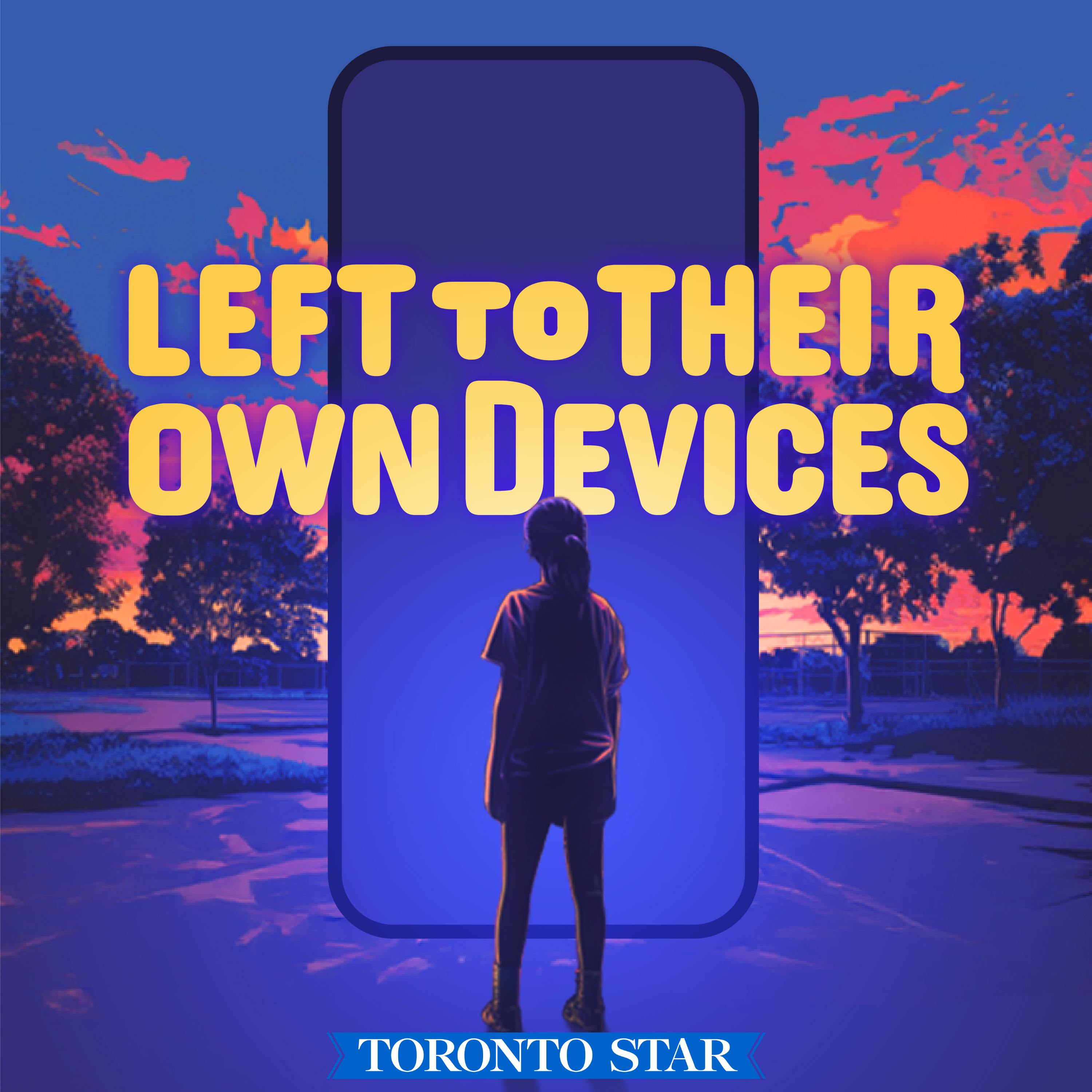
We gave children the most powerful tools in human history. Then, we left them to their own devices.When she was 12 years old, Ava Smithing spiraled down a social media rabbit hole that nearly cost her life. A decade later, she discovered she wasn't alone: Big Tech had rewritten childhood and adolescence for her entire generation. Armed with questions and a year to find answers, Ava embarked on a cross-continent investigation into a hidden digital world. She met teens in 12-step programs for social media addiction, young girls wrestling with compulsive porn use, and boys who had been blackmailed by international cybercriminals. This isn't a self-help guide to digital wellness. It's a survival story from the front lines of 21st century childhood: where young people are re-writing the playbook for what it means to be human in a hyperconnected world.
-
13
In conversation with Jonathan Haidt, author of The Anxious Generation
The last few months have been a turning point. In late March, New Mexico Attorney General Raul Torrez won his case against Meta, with a jury finding that Facebook and Instagram's parent company had engaged in "unconscionable" trade practices targeting children. Days later, a California jury ruled that Meta and YouTube had addicted a young girl to their platforms. And Australia is now four months into its landmark social media ban for kids under 16. At the center of this movement is social psychologist Jonathan Haidt, whose New York Times bestseller The Anxious Generation laid out the case for a phone-free childhood. What once read as provocation is now policy: France and Malaysia have passed their own bans, and Canada and the US are weighing similar moves. But many researchers — and young people themselves — aren't convinced. Ava Smithing argues that social media companies need to reimagine their business models entirely, not just lock kids out. In this live conversation from Columbia University's Bollinger Forum, Haidt and Smithing meet across the generational and ideological divide. They dig into Haidt's "Great Rewiring" theory, the toll of "attentional destruction," and the tension between protecting children and honoring the reality of Gen Z's digital-first communities. Editor's note: We are also honoured to inform you that Left To Their Own Devices was just nominated for a prestigious Peabody Award. "We are grateful and honored to receive a Peabody nomination. We created Left to Their Own Devices to shine a light on the experiences of young people online," said Ava Smithling, host of Left To Their Own Devices. "We believe these stories deserve to be heard, and more importantly, to be believed. A Peabody nomination validates our work and recognizes the gravity of the harm these platforms inflict on young people. This recognition makes our team's work and the fight for safer online community spaces harder to ignore."
-
12
Bonus panel discussion: A conversation on building healthy digital habits for youth
Today's technology has redefined childhood and adolescence. In a virtual conversation on Thursday, January 22 editor Ceri Marsh was joined by Ava Smithing, host of this podcast Left to Their Own Devices, and Dr. Michele Locke, psychologist and co-founder of the Toronto chapter of Unplugged Canada, to discuss youth and technology. They discussed how devices influence children's relationships, development and mental health – with actionable, family-friendly strategies to navigate screen time – and ways to encourage healthy digital habits and foster meaningful offline connections. We gave children the most powerful tools in human history. Then, we left them to their own devices.
-
11
Left to Our Own Devices
On December 10, 2025, Australia will be the first country in the world to ban social media for kids. It's a radical step, and lawmakers around the world are taking notice. In the U.S., eight states have proposed similar legislation. In Canada, Quebec and Nova Scotia are reportedly considering bans of their own. These policies are popular, but they're also controversial – and some experts worry they could isolate a generation of children. But on the other side of the world, a very different story is unfolding. In North America, where governments have yet to regulate social media in any meaningful way, young people are taking matters into their own hands. Young people like Maddie Freeman, who started a grassroots movement to wean her peers off social media after a wave of youth suicides devastated her community. So, as Australia's landmark ban takes effect, only one question remains: will kids figure out how to make social media work for them? Or will governments make that decision for them?
-
10
The Worst Sex Ed Class Ever
The numbers are staggering. In the US, 71% of teenagers say they've watched porn in the last week. In Canada, 88% of boys have seen it by the age of fourteen. And in the UK, one in four kids have been exposed to pornography by the time they turn eleven. Even more alarming: this early consumption has been linked to rising rates of domestic violence among teens. In this episode, Ava meets Harrison and Nat – two young people whose journeys began on gaming platforms, and ended in the throes of compulsive porn use. Their stories might sound extreme, but they're part of a troubling pattern: kids are encountering pornography younger and younger, often when they're not even looking for it. What happens when an entire generation learns about the birds and the bees from extreme, often violent, online pornography?
-
9
Under the Influence
When Ghyslain Raza – aka the "Star Wars Kid" – became the internet's first viral sensation, it nearly destroyed him. More than twenty years later, many young people today are desperate for that kind of fame – even if it means making their most embarrassing moments available for public consumption. According to one recent poll, more than half of all Gen Zs want to be influencers – online creators who turn their lives into content. To try and understand this phenomenon, Ava tracks down Sophie Fergi, an 18-year old influencer with millions of followers, and journalist Taylor Lorenz, who tracked the rise of content creators like Sophie in her book Extremely Online. Is the influencer boom a sign of narcissism run amok? Or has social media finally democratized fame and given young people a voice? Maybe it's both.
-
8
See You in Court
In the absence of meaningful regulation, thousands of young people are now looking to the justice system to hold Big Tech accountable. In this episode, we go inside three landmark lawsuits that could finally force social media companies to answer for the damage they've done. New Mexico's Attorney General, Raul Torrez, has seen the darkest corners of the internet. After twenty years prosecuting child sex crimes, he knows exactly where predators hunt today: social media. In a groundbreaking lawsuit against Meta, Torrez is alleging that Facebook and Instagram have become a "breeding ground for predators". And he's determined to change that. Meanwhile, in Toronto, Duncan Embury is spearheading a lawsuit on behalf of twenty three different school boards in Ontario. School boards who say that Snapchat, TikTok and Instagram have made teaching next to impossible. Duncan and his team believe that these platforms are knowingly targeting kids while they're at school. And he says that if that doesn't stop, these platforms won't just disrupt education. They'll destroy it. On the other side of the continent, Laura Marquez Garrett is representing more than 4,000 kids who allege they've been broken by social media. And Laura is seeing some disturbing patterns in their stories. Patterns that suggest – not just that social media companies are harming kids – but that they know it.
-
7
Yahoo Boys
The West African cybercriminals who call themselves the Yahoo Boys have perfected dozens of cons – including the infamous Nigerian Prince email scam. But recently, they've discovered something far more lucrative: the extortion of teenage boys. In just two years, sextortion cases targeting teens have exploded by 18,000 percent. The Yahoo Boys have made millions. And they've left a trail of devastation in their wake that has reached even the most remote communities. In a tiny Manitoba town, one family is still piecing their lives back together after their son became a victim of a deadly sextortion scam. Their story reveals how quickly a predator can weaponize shame – and how little stands between our kids and catastrophe. The platforms know about this crisis. Snapchat alone receives 10,000 reports of sextortion every month. Yet the scams continue, largely unchecked. So one man has decided to do something about it. Cyber analyst Paul Raffile has made it his mission to infiltrate the Yahoo Boys' networks, expose their methods, and bring them to justice – even when no one else will.
-
6
Blackmailed
Like a lot of lonely teenagers, Sarah found refuge on social media. In her lowest moments, she'd reach for her phone, connecting with strangers on Snapchat and Wizz – an app that's been called "Tinder for kids." But those digital friendships quickly became something more sinister. A torrent of older male users solicited her, and then, when she spurned their advances, blackmailed her. For years, Sarah's life was in turmoil. And then she met a woman named Carol Todd, who took her under her wing. Carol understood what Sarah was going through, because the same thing had happened to her daughter, Amanda Todd, more than a decade earlier. Now, Carol and Sarah are demanding change. What will it take to keep young women safe on the internet?
-
5
Brain Rot
Are screens rewiring kids' brains and creating a generation of depressed teens? After Jonathan Haidt published his mega-bestseller The Anxious Generation, a lot of parents became convinced that they were. But the science tells a more complicated story. Ava interviews several scientists studying technology's impact on our brains, then takes matters into her own hands. She meets up with Dr. Emma Duerden, Canada Research Chair in Neuroscience and Learning Disorders, to conduct her own experiment: monitoring a teenager's brain activity in real-time while she scrolls through her phone. What they discover might surprise you.
-
4
Big Tech's Origin Story
You'd be hard-pressed to find a young person who uses Facebook regularly. But to understand why social media has had such a profound, and sometimes devastating, effect on kids, you need to understand Facebook's origin story first. Ava tracks down two of Silicon Valley's most prominent insiders: Roger McNamee and Frances Haugen. Together, they trace Facebook's rise into a global behemoth and reveal how decisions made in boardrooms left millions of children vulnerable to social media's most damaging effects. Ava also speaks with Nir Eyal, author of Hooked: How to Build Habit-Forming Products, who explains how digital platforms are engineered to keep us coming back for more. In Eyal's world, the stickier the technology, the better. But at what cost to the next generation?
-
3
A Tale of Two Algorithms
Algorithms are the invisible engines that drive every scroll, swipe or click. And, in the last few years, it's become clear that they can devastate young lives. But Ava discovers they might also be capable of saving them. She speaks with two teens with radically different stories. When 12-year-old CeCe Neltner went online to find workout tips, her social media feeds devolved into a torrent of eating disorder content. Today, she says she's lucky to be alive. Meanwhile, thousands of miles away, Keira MacDuff was battling a mysterious chronic illness that doctors dismissed as teenage drama – until TikTok's algorithm led her to a life-changing diagnosis. Did TikTok save Keira's life?
-
2
Internet Addicts Anonymous
When she was 12 years old, Ava Smithing spiralled down a social media rabbit hole that nearly cost her life. A decade later, she discovered she wasn't alone: Big Tech had hijacked childhood and adolescence for an entire generation. In this ten-part investigative podcast, Ava crosses the continent to uncover a hidden digital world. She'll meet teens with millions of followers, young girls wrestling with compulsive porn use, and boys blackmailed by international cybercriminals lurking in their DMs. In the first episode of Left to Their Own Devices, Ava dives into the debate over technology addiction. The condition is absent from the official list of mental health disorders used by psychiatrists, but undeniable to those who live it. Inside an Internet and Technology Addicts Anonymous meeting, she hears firsthand from people who say their lives have been consumed by screens. And, she sits down with psychiatrist Dr. Anna Lembke – author of Dopamine Nation – who's watched her patient' struggles shift from substance abuse to compulsive relationships with social media, gaming, and online content. This podcast isn't a self-help guide to digital wellness. It's a survival story from the front lines of 21st century childhood.
-
1
Introducing Left to Their Own Devices
We handed kids the most powerful technology in history. Then we walked away. This is what happened next. When she was 12 years old, Ava Smithing spiraled down a social media rabbit hole that nearly cost her life. A decade later, she discovered she wasn't alone: Big Tech had rewritten childhood and adolescence for her entire generation. Armed with questions and a year to find answers, Ava embarked on a cross-continent investigation into a hidden digital world. She met teens in 12-step programs for social media addiction, young girls wrestling with compulsive porn use, and boys who had been blackmailed by international cybercriminals. This isn't a self-help guide to digital wellness. It's a survival story from the front lines of 21st century childhood: where young people are re-writing the playbook for what it means to be human in a hyperconnected world. Subscribers to the Toronto Star will be able to access episodes early.
We're indexing this podcast's transcripts for the first time — this can take a minute or two. We'll show results as soon as they're ready.
No matches for "" in this podcast's transcripts.
No topics indexed yet for this podcast.
Loading reviews...
ABOUT THIS SHOW
We gave children the most powerful tools in human history. Then, we left them to their own devices.When she was 12 years old, Ava Smithing spiraled down a social media rabbit hole that nearly cost her life. A decade later, she discovered she wasn't alone: Big Tech had rewritten childhood and adolescence for her entire generation. Armed with questions and a year to find answers, Ava embarked on a cross-continent investigation into a hidden digital world. She met teens in 12-step programs for social media addiction, young girls wrestling with compulsive porn use, and boys who had been blackmailed by international cybercriminals. This isn't a self-help guide to digital wellness. It's a survival story from the front lines of 21st century childhood: where young people are re-writing the playbook for what it means to be human in a hyperconnected world.
HOSTED BY
Toronto Star
CATEGORIES
Loading similar podcasts...
Frequently Asked Questions
How many episodes does Left To Their Own Devices have?
Left To Their Own Devices currently has 13 episodes available on PodParley. New episodes are automatically indexed when they're published to the podcast feed.
What is Left To Their Own Devices about?
We gave children the most powerful tools in human history. Then, we left them to their own devices.When she was 12 years old, Ava Smithing spiraled down a social media rabbit hole that nearly cost her life. A decade later, she discovered she wasn't alone: Big Tech had rewritten childhood and...
How often does Left To Their Own Devices release new episodes?
Left To Their Own Devices has 13 episodes. Check the episode list to see recent publication dates and frequency.
Where can I listen to Left To Their Own Devices?
You can listen to Left To Their Own Devices on PodParley by clicking any episode. We provide an embedded audio player for direct listening, and you can also subscribe via your preferred podcast app using the RSS feed.
Who hosts Left To Their Own Devices?
Left To Their Own Devices is created and hosted by Toronto Star.
URL copied to clipboard!