
PODCAST · education
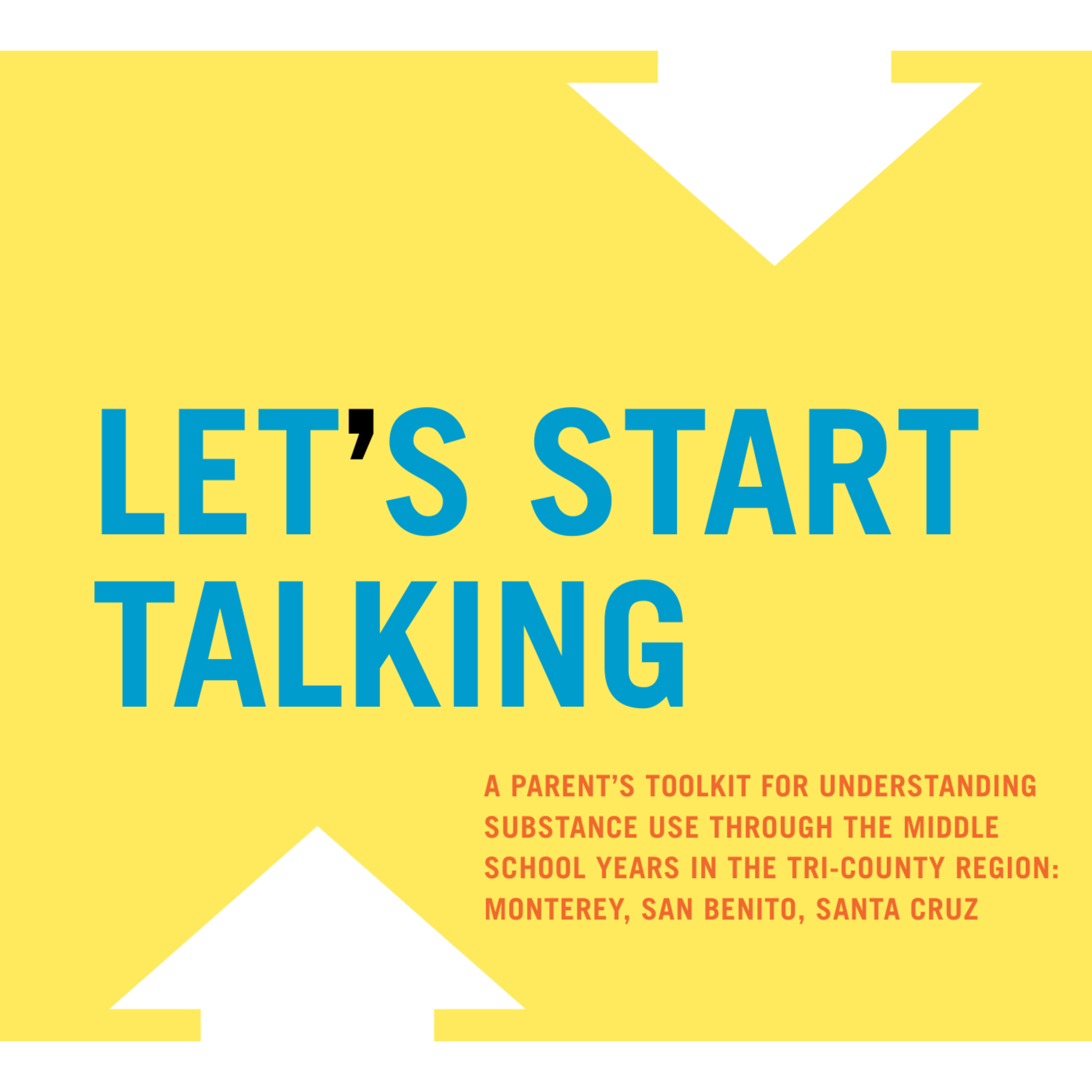
Let's Start Talking
by Central Coast Tri-County Collaborative
A parent's toolkit for understanding substance use through the middle school years in the tri-county region. Download the PDF for free at bit.ly/letstalksaferxThis video was produced by GadgetBox, created by the Tri-County Collaborative and funded by the California Department of Public Health (CDPH), supported by Grant Number 23-10947. Its contents are solely the responsibility of the authors and do not necessarily represent the official views of the California Health and Human Services Agency, the CDPH, or the Tri-County Collaborative. Services Agency, the CDPH, or TCC.
-
7
Full Let's Start Talking Audiobook
As our youth face earlier exposure to drugs, a turbulent world, and growing mental‑health pressures, open conversations with our youth are more important than ever. It explains why middle school feels like a sudden shift and shows how those changes raise emotional and behavioral risks, especially for early‑maturing and trans/nonbinary youth. The audiobook gives clear, low‑pressure strategies to start and sustain conversations, listen without judgment, set boundaries, and model coping skills. It outlines common substances and warning signs, explains protective actions (parental monitoring, belonging, positive activities), and offers simple resilience tools for the whole family. Urgent realities—rising overdoses and suicide risk—are addressed with calm, actionable next steps and where to find help locally. Practical, compassionate, and concise, this recording equips caregivers to connect, protect, and strengthen their families.Check out the following resources:hipscc.org/saferx CCODP.org sbcopioidtaskforce.org Check out our resource packet from our previous Let’s Talk webinar: bit.ly/AODCresources Narrated by Natalia DominguezAudiobook recording and production by Andy Zenczak (gadgetbox.net) This video was produced by GadgetBox, created by the Tri-County Collaborative and funded by the California Department of Public Health (CDPH), supported by Grant Number 23-10947. Its contents are solely the responsibility of the authors and do not necessarily represent the official views of the California Health and Human Services Agency, the CDPH, or the Tri-County Collaborative.
-
6
Ch. 6: Finding Support
You made it! Our last episode closes out with a call-to-action that moves parents from information to connection. This chapter summarizes Let’s Talk and the Central Coast Tri-County Coalition’s mission—grounded in compassion, dignity, and equity—to prevent substance harms and ensure fair access to support and treatment across the region. It explains where to find help (healthcare providers, school counselors) and points listeners to local resource hubs for therapeutic care and services.Practical next steps, partner credits, and a clear invitation—“Let’s make time to talk.”—leave listeners empowered to reach out, connect, and protect their families and communities.Check out the following resources:hipscc.org/saferx CCODP.org sbcopioidtaskforce.org See our resource packet from our previous Let’s Talk webinar: bit.ly/AODCresources Narrated by Natalia DominguezAudiobook recording and production by Andy Zenczak (gadgetbox.net) This video was produced by GadgetBox, created by the Tri-County Collaborative and funded by the California Department of Public Health (CDPH), supported by Grant Number 23-10947. Its contents are solely the responsibility of the authors and do not necessarily represent the official views of the California Health and Human Services Agency, the CDPH, or the Tri-County Collaborative.
-
5
Ch. 5: Uppers, Downers, All Arounders
This chapter gives you tools to start and continue low-pressure conversations with middle-schoolers about substances. Learn when and how to talk (use everyday moments, ask open questions, listen first, and teach basics), what to watch for, and where to find trusted resources. This chapter equips parents to recognize danger, have ongoing conversations, and protect developing brains.Not an expert? No problem! Learn clear, balanced information on common drug types. The chapter organizes substances into easy-to-understand categories (legal for anyone, legal for adults, prescription, over‑the‑counter, illegal), explains routes of use and why they matter, and provides concise spotlights on uppers (stimulants), downers (depressants), and all‑arounders (hallucinogen), plus practical sections on vaping, alcohol, and cannabis. It covers risks like cognitive and mental-health effects, addiction, accidental poisonings, impaired driving, and more—and lists common warning signs adults can recognize.Narrated by Natalia DominguezAudiobook recording and production by Andy Zenczak (gadgetbox.net) This video was produced by GadgetBox, created by the Tri-County Collaborative and funded by the California Department of Public Health (CDPH), supported by Grant Number 23-10947. Its contents are solely the responsibility of the authors and do not necessarily represent the official views of the California Health and Human Services Agency, the CDPH, or the Tri-County Collaborative.
-
4
Ch. 4: Parenting to Support Our Middle Schoolers
Hardships are unavoidable, but they’re also the raw material of resilience. This chapter shows how to help your preteen bend without breaking — teaching them the skills to stretch, recover, and grow. Learn the Seven C’s framework (Competence, Confidence, Connection, Character, Contribution, Control, Coping) that turns everyday moments into resilience-building opportunities.You’ll get strategies for modeling strong coping, coaching your child through choices, and creating family rituals that reinforce safety and belonging. Simple exercises—making shared “feel-good” lists, co‑brainstorming healthy vs. unhealthy coping, creating a household code word for time-outs, and more—make resilience a family practice. You don’t need to be an expert to help your child stay safe.Narrated by Natalia DominguezAudiobook recording and production by Andy Zenczak (gadgetbox.net) This video was produced by GadgetBox, created by the Tri-County Collaborative and funded by the California Department of Public Health (CDPH), supported by Grant Number 23-10947. Its contents are solely the responsibility of the authors and do not necessarily represent the official views of the California Health and Human Services Agency, the CDPH, or the Tri-County Collaborative.
-
3
Ch. 3: The Load They Carry - Mental Health
This chapter plunges into what makes today’s middle‑school years uniquely intense: nonstop social media, disturbing news and drills, pandemic aftershocks, widening economic gaps, and easier access to more potent substances (including fentanyl and high‑THC products).You’ll find practical guidance on how risks and protections interact from the friends who shape behavior to the household rules that matter. Learn the ways parental monitoring, belonging, and positive activities build resilience. Clear lists of common risks and protective factors help you spot warning signs early — from anxiety and trauma to peer pressure and access to drugs — and actionable steps show how to respond (know their friends, reach out to other parents, create shared adult supervision, and offer safe ways to belong). The chapter also confronts the hardest realities — rising local overdoses, suicide risk, and the lasting toll of the 2020s— while giving calm, concrete advice for starting conversations, staying present, and getting help (including 988 for crisis support). Practical, urgent, and compassionate, this chapter equips caregivers to turn overwhelming challenges into protective action and real connection.Narrated by Natalia DominguezAudiobook recording and production by Andy Zenczak (gadgetbox.net) This video was produced by GadgetBox, created by the Tri-County Collaborative and funded by the California Department of Public Health (CDPH), supported by Grant Number 23-10947. Its contents are solely the responsibility of the authors and do not necessarily represent the official views of the California Health and Human Services Agency, the CDPH, or the Tri-County Collaborative.
-
2
Ch. 2: The Changes That Are Coming
Middle school can seem like a whirlwind. This chapter guides you on understanding why your child may seem different overnight. Learn why puberty can hit as early as 10 for some and why those early starters face greater emotional and behavioral risks. Discover how physical changes can be deeply confusing for trans and nonbinary youth and when to seek medical or mental‑health support.You’ll get practical, no-nonsense advice for staying connected: how to respond without jokes or dismissal, validate feelings without enabling hurtful behavior, and teach real coping tools you can model. Understand the brain behind the drama — why teens feel more than they think, why risk can be both dangerous and a learning opportunity, and how your steady presence still matters even as peers take center stage.Narrated by Natalia DominguezAudiobook recording and production by Andy Zenczak (gadgetbox.net) This video was produced by GadgetBox, created by the Tri-County Collaborative and funded by the California Department of Public Health (CDPH), supported by Grant Number 23-10947. Its contents are solely the responsibility of the authors and do not necessarily represent the official views of the California Health and Human Services Agency, the CDPH, or the Tri-County Collaborative.
-
1
Ch. 1: Let's Start Talking
A parent's toolkit for understanding substance use through the middle school years in the tri-county region: Monterey, San Benito, Santa CruzNarrated by Natalia DominguezAudiobook recording and production by Andy Zenczak (gadgetbox.net) This video was produced by GadgetBox, created by the Tri-County Collaborative and funded by the California Department of Public Health (CDPH), supported by Grant Number 23-10947. Its contents are solely the responsibility of the authors and do not necessarily represent the official views of the California Health and Human Services Agency, the CDPH, or the Tri-County Collaborative.
We're indexing this podcast's transcripts for the first time — this can take a minute or two. We'll show results as soon as they're ready.
No matches for "" in this podcast's transcripts.
No topics indexed yet for this podcast.
Loading reviews...
ABOUT THIS SHOW
A parent's toolkit for understanding substance use through the middle school years in the tri-county region. Download the PDF for free at bit.ly/letstalksaferxThis video was produced by GadgetBox, created by the Tri-County Collaborative and funded by the California Department of Public Health (CDPH), supported by Grant Number 23-10947. Its contents are solely the responsibility of the authors and do not necessarily represent the official views of the California Health and Human Services Agency, the CDPH, or the Tri-County Collaborative. Services Agency, the CDPH, or TCC.
HOSTED BY
Central Coast Tri-County Collaborative
CATEGORIES
Loading similar podcasts...
Frequently Asked Questions
How many episodes does Let's Start Talking have?
Let's Start Talking currently has 7 episodes available on PodParley. New episodes are automatically indexed when they're published to the podcast feed.
What is Let's Start Talking about?
A parent's toolkit for understanding substance use through the middle school years in the tri-county region. Download the PDF for free at bit.ly/letstalksaferxThis video was produced by GadgetBox, created by the Tri-County Collaborative and funded by the California Department of Public Health...
How often does Let's Start Talking release new episodes?
Let's Start Talking has 7 episodes. Check the episode list to see recent publication dates and frequency.
Where can I listen to Let's Start Talking?
You can listen to Let's Start Talking on PodParley by clicking any episode. We provide an embedded audio player for direct listening, and you can also subscribe via your preferred podcast app using the RSS feed.
Who hosts Let's Start Talking?
Let's Start Talking is created and hosted by Central Coast Tri-County Collaborative.
URL copied to clipboard!