
PODCAST · arts
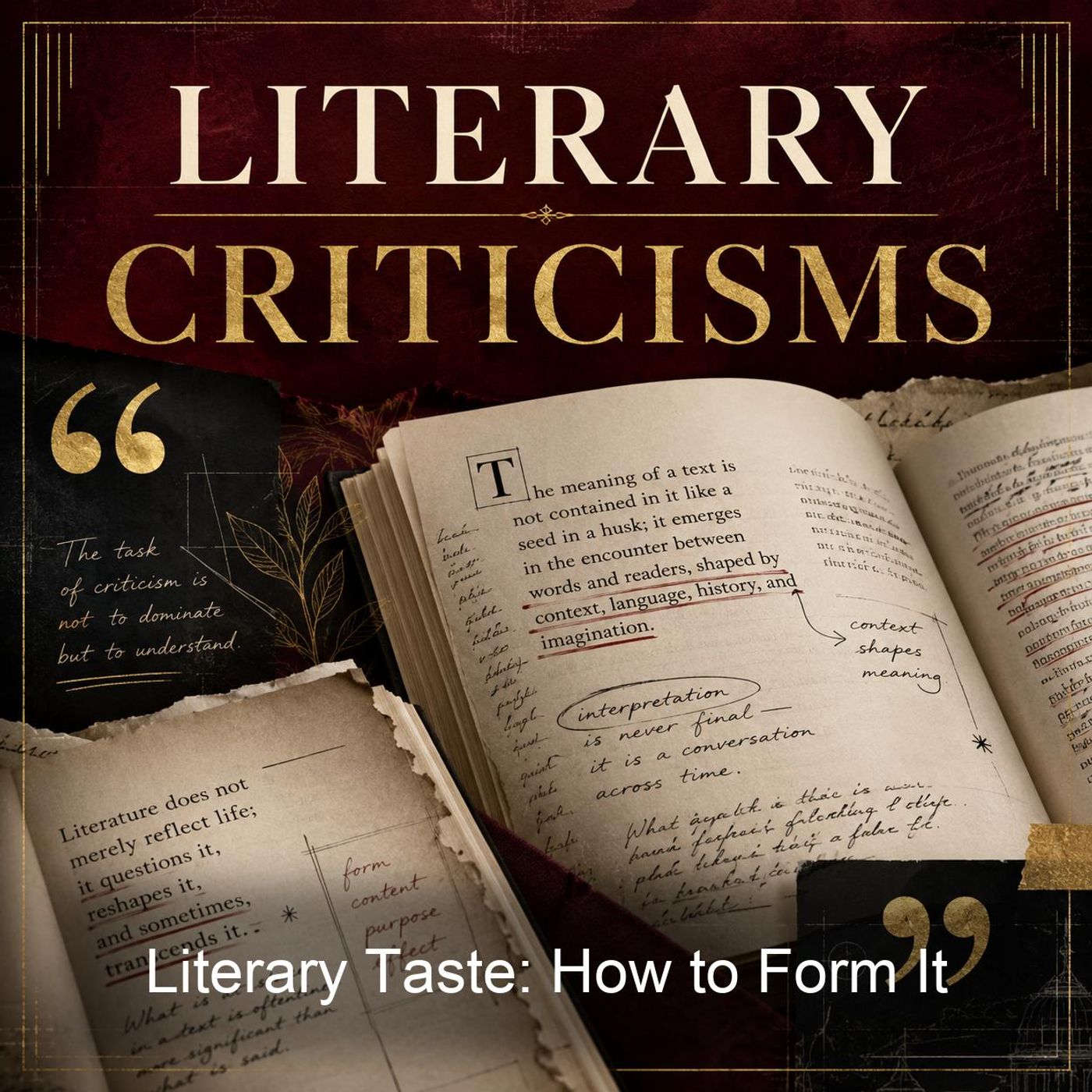
Literary Taste: How to Form It
by Arnold Bennett
Arnold Bennett describes a method for enjoying literature, and suggests the contents of a comprehensive library. Chapters 1-10 and 14 describe his method for learning to enjoy literature. Chapters 11, 12, and 13 contain detailed lists of the 337 volumes required to complete a comprehensive library of English works. This reading is from the 1913 version at Project Gutenberg, and so does not contain the revisions made by Swinnerton for the 1939 edition, which included authors of the early Twentieth Century. Swinnerton's revisions are available from Wikipedia. (Summary by Timothy Ferguson)
-
1
Voice and Public Speaking-John Poole Sandlands
Arnold Bennett describes a method for enjoying literature, and suggests the contents of a comprehensive library. Chapters 1-10 and 14 describe his method for learning to enjoy literature. Chapters 11, 12, and 13 contain detailed lists of the 337 volumes required to complete a comprehensive library of English works. This reading is from the 1913 version at Project Gutenberg, and so does not contain the revisions made by Swinnerton for the 1939 edition, which included authors of the early Twentieth Century. Swinnerton's revisions are available from Wikipedia. (Summary by Timothy Ferguson)
-
0
Alarms and Discursions-G. K. Chesterton
Arnold Bennett describes a method for enjoying literature, and suggests the contents of a comprehensive library. Chapters 1-10 and 14 describe his method for learning to enjoy literature. Chapters 11, 12, and 13 contain detailed lists of the 337 volumes required to complete a comprehensive library of English works. This reading is from the 1913 version at Project Gutenberg, and so does not contain the revisions made by Swinnerton for the 1939 edition, which included authors of the early Twentieth Century. Swinnerton's revisions are available from Wikipedia. (Summary by Timothy Ferguson)
-
-1
Companionable Books-Henry van Dyke
Arnold Bennett describes a method for enjoying literature, and suggests the contents of a comprehensive library. Chapters 1-10 and 14 describe his method for learning to enjoy literature. Chapters 11, 12, and 13 contain detailed lists of the 337 volumes required to complete a comprehensive library of English works. This reading is from the 1913 version at Project Gutenberg, and so does not contain the revisions made by Swinnerton for the 1939 edition, which included authors of the early Twentieth Century. Swinnerton's revisions are available from Wikipedia. (Summary by Timothy Ferguson)
-
-2
House by the Side of the Road-Sam Walter Foss
Arnold Bennett describes a method for enjoying literature, and suggests the contents of a comprehensive library. Chapters 1-10 and 14 describe his method for learning to enjoy literature. Chapters 11, 12, and 13 contain detailed lists of the 337 volumes required to complete a comprehensive library of English works. This reading is from the 1913 version at Project Gutenberg, and so does not contain the revisions made by Swinnerton for the 1939 edition, which included authors of the early Twentieth Century. Swinnerton's revisions are available from Wikipedia. (Summary by Timothy Ferguson)
-
-3
Anarchism and Other Essays (Version 2)-Emma Goldman
Arnold Bennett describes a method for enjoying literature, and suggests the contents of a comprehensive library. Chapters 1-10 and 14 describe his method for learning to enjoy literature. Chapters 11, 12, and 13 contain detailed lists of the 337 volumes required to complete a comprehensive library of English works. This reading is from the 1913 version at Project Gutenberg, and so does not contain the revisions made by Swinnerton for the 1939 edition, which included authors of the early Twentieth Century. Swinnerton's revisions are available from Wikipedia. (Summary by Timothy Ferguson)
-
-4
Robert Browning-G. K. Chesterton
Arnold Bennett describes a method for enjoying literature, and suggests the contents of a comprehensive library. Chapters 1-10 and 14 describe his method for learning to enjoy literature. Chapters 11, 12, and 13 contain detailed lists of the 337 volumes required to complete a comprehensive library of English works. This reading is from the 1913 version at Project Gutenberg, and so does not contain the revisions made by Swinnerton for the 1939 edition, which included authors of the early Twentieth Century. Swinnerton's revisions are available from Wikipedia. (Summary by Timothy Ferguson)
-
-5
English Prose Style-Herbert Read
Arnold Bennett describes a method for enjoying literature, and suggests the contents of a comprehensive library. Chapters 1-10 and 14 describe his method for learning to enjoy literature. Chapters 11, 12, and 13 contain detailed lists of the 337 volumes required to complete a comprehensive library of English works. This reading is from the 1913 version at Project Gutenberg, and so does not contain the revisions made by Swinnerton for the 1939 edition, which included authors of the early Twentieth Century. Swinnerton's revisions are available from Wikipedia. (Summary by Timothy Ferguson)
-
-6
Monday or Tuesday-Virginia Woolf
Arnold Bennett describes a method for enjoying literature, and suggests the contents of a comprehensive library. Chapters 1-10 and 14 describe his method for learning to enjoy literature. Chapters 11, 12, and 13 contain detailed lists of the 337 volumes required to complete a comprehensive library of English works. This reading is from the 1913 version at Project Gutenberg, and so does not contain the revisions made by Swinnerton for the 1939 edition, which included authors of the early Twentieth Century. Swinnerton's revisions are available from Wikipedia. (Summary by Timothy Ferguson)
-
-7
Charles Dickens-G. K. Chesterton
Arnold Bennett describes a method for enjoying literature, and suggests the contents of a comprehensive library. Chapters 1-10 and 14 describe his method for learning to enjoy literature. Chapters 11, 12, and 13 contain detailed lists of the 337 volumes required to complete a comprehensive library of English works. This reading is from the 1913 version at Project Gutenberg, and so does not contain the revisions made by Swinnerton for the 1939 edition, which included authors of the early Twentieth Century. Swinnerton's revisions are available from Wikipedia. (Summary by Timothy Ferguson)
-
-8
Egyptian Tales, translated from the Papyri, Series Two XVIIIth to XIXth Dynasty-William Matthew Flinders Petrie
Arnold Bennett describes a method for enjoying literature, and suggests the contents of a comprehensive library. Chapters 1-10 and 14 describe his method for learning to enjoy literature. Chapters 11, 12, and 13 contain detailed lists of the 337 volumes required to complete a comprehensive library of English works. This reading is from the 1913 version at Project Gutenberg, and so does not contain the revisions made by Swinnerton for the 1939 edition, which included authors of the early Twentieth Century. Swinnerton's revisions are available from Wikipedia. (Summary by Timothy Ferguson)
-
-9
Human Machine-Arnold Bennett
Arnold Bennett describes a method for enjoying literature, and suggests the contents of a comprehensive library. Chapters 1-10 and 14 describe his method for learning to enjoy literature. Chapters 11, 12, and 13 contain detailed lists of the 337 volumes required to complete a comprehensive library of English works. This reading is from the 1913 version at Project Gutenberg, and so does not contain the revisions made by Swinnerton for the 1939 edition, which included authors of the early Twentieth Century. Swinnerton's revisions are available from Wikipedia. (Summary by Timothy Ferguson)
-
-10
How to Sing (Meine Gesangskunst)-Lilli Lehmann
Arnold Bennett describes a method for enjoying literature, and suggests the contents of a comprehensive library. Chapters 1-10 and 14 describe his method for learning to enjoy literature. Chapters 11, 12, and 13 contain detailed lists of the 337 volumes required to complete a comprehensive library of English works. This reading is from the 1913 version at Project Gutenberg, and so does not contain the revisions made by Swinnerton for the 1939 edition, which included authors of the early Twentieth Century. Swinnerton's revisions are available from Wikipedia. (Summary by Timothy Ferguson)
-
-11
Literary Taste How to Form It-Arnold Bennett
"Literary Taste: How to Form It" by Arnold Bennett delves into the art of developing one's literary preferences and understanding the nuances of taste in literature. This timeless work offers insights into the importance of cultivating a discerning palate for reading, emphasizing how personal experiences and individual sensibilities shape our appreciation of literature. Bennett's reflections on literary taste encourage listeners to engage deeply with texts, fostering a lifelong love of reading that transcends generations. Its enduring relevance lies in the ongoing quest for cultural enrichment and the personal growth that comes from understanding and enjoying literature in all its forms.
-
-12
Literary Taste How to Form It - Arnold Bennett
Arnold Bennett describes a method for enjoying literature, and suggests the contents of a comprehensive library. Chapters 1-10 and 14 describe his method for learning to enjoy literature. Chapters 11, 12, and 13 contain detailed lists of the 337 volumes required to complete a comprehensive library of English works. This reading is from the 1913 version at Project Gutenberg, and so does not contain the revisions made by Swinnerton for the 1939 edition, which included authors of the early Twentieth Century. Swinnerton's revisions are available from Wikipedia. (Summary by Timothy Ferguson)
We're indexing this podcast's transcripts for the first time — this can take a minute or two. We'll show results as soon as they're ready.
No matches for "" in this podcast's transcripts.
No topics indexed yet for this podcast.
Loading reviews...
ABOUT THIS SHOW
Arnold Bennett describes a method for enjoying literature, and suggests the contents of a comprehensive library. Chapters 1-10 and 14 describe his method for learning to enjoy literature. Chapters 11, 12, and 13 contain detailed lists of the 337 volumes required to complete a comprehensive library of English works. This reading is from the 1913 version at Project Gutenberg, and so does not contain the revisions made by Swinnerton for the 1939 edition, which included authors of the early Twentieth Century. Swinnerton's revisions are available from Wikipedia. (Summary by Timothy Ferguson)
HOSTED BY
Arnold Bennett
Loading similar podcasts...
Frequently Asked Questions
How many episodes does Literary Taste: How to Form It have?
Literary Taste: How to Form It currently has 14 episodes available on PodParley. New episodes are automatically indexed when they're published to the podcast feed.
What is Literary Taste: How to Form It about?
Arnold Bennett describes a method for enjoying literature, and suggests the contents of a comprehensive library. Chapters 1-10 and 14 describe his method for learning to enjoy literature. Chapters 11, 12, and 13 contain detailed lists of the 337 volumes required to complete a comprehensive library...
How often does Literary Taste: How to Form It release new episodes?
Literary Taste: How to Form It has 14 episodes. Check the episode list to see recent publication dates and frequency.
Where can I listen to Literary Taste: How to Form It?
You can listen to Literary Taste: How to Form It on PodParley by clicking any episode. We provide an embedded audio player for direct listening, and you can also subscribe via your preferred podcast app using the RSS feed.
Who hosts Literary Taste: How to Form It?
Literary Taste: How to Form It is created and hosted by Arnold Bennett.
URL copied to clipboard!