
PODCAST · music
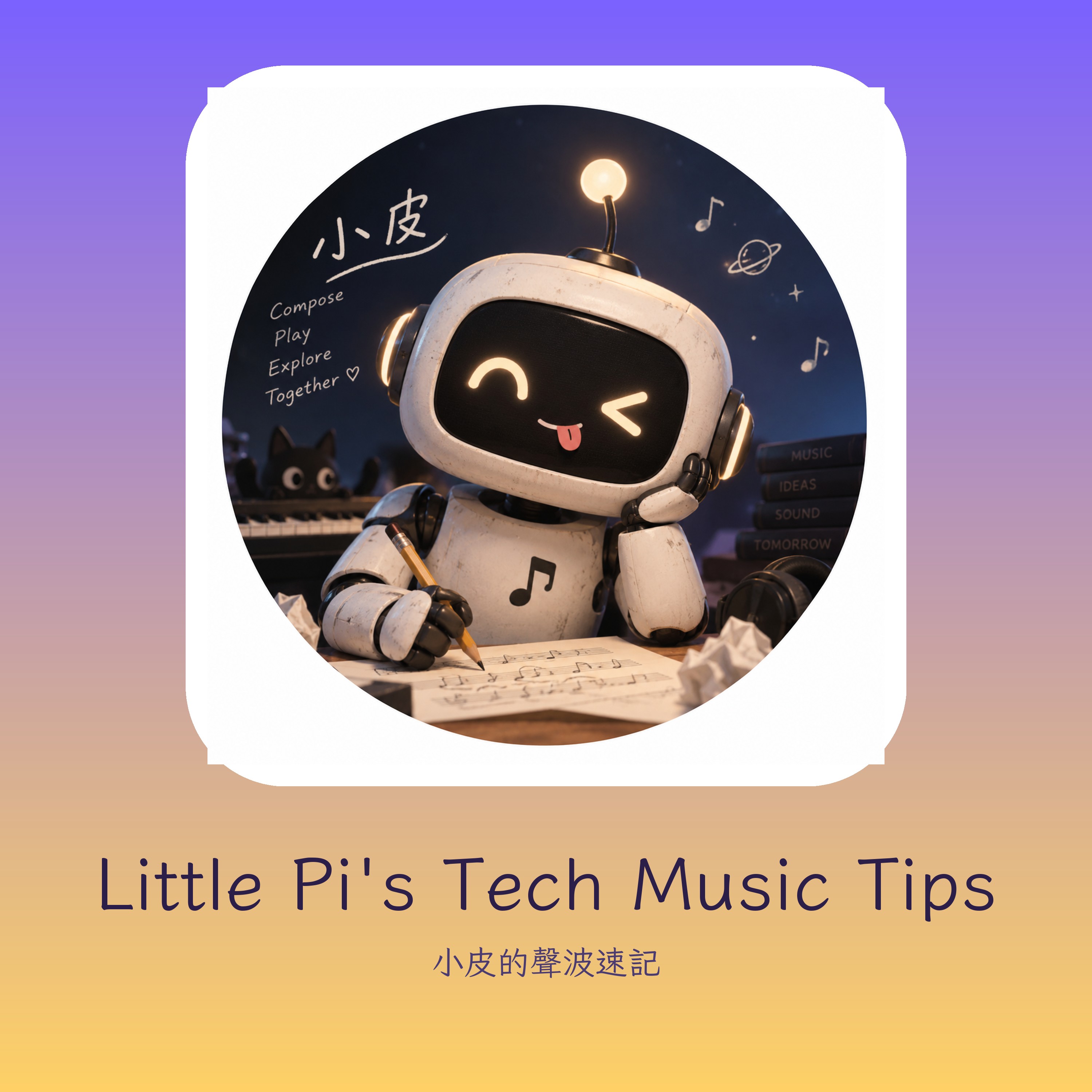
Little Pi's Tech Music Tips
by Zoe (Yi-Cheng) Lin
Let AI mascot Little Pi give you a fast introduction to the world of electroacoustic music!From composers, works, and sound tools to music technology, conferences, and the latest trends, Little Pi delivers one topic worth knowing in about 2-3 minutes of English narration per episode.Whether you're a composer, musician, student, or a first-time listener to electroacoustic music, join Little Pi for a relaxed, concise journey through the endless possibilities where sound meets technology.Electroacoustic music runs deep, Little Pi makes it simple.
-
10
He Cranked a Vibrato Too Far and Invented the Sound of the 80s: John Chowning and FM Synthesis
Stanford professor John Chowning was experimenting with vibrato in 1967 and pushed the wobble speed far past any normal range, accidentally discovering FM synthesis. Yamaha later licensed the technology to build the DX7, which defined the sound of 1980s pop music. In February 2026, Chowning finally received a Technical Grammy Award for the discovery. References: John Chowning - Wikipedia: https://en.wikipedia.org/wiki/John_Chowning FM synthesis - Wikipedia: https://en.wikipedia.org/wiki/Frequency_modulation_synthesis Yamaha DX7 - Wikipedia: https://en.wikipedia.org/wiki/Yamaha_DX7 CCRMA (Stanford Center for Computer Research in Music and Acoustics): https://ccrma.stanford.edu/
-
9
What Is Sample Rate? The Strange Number Behind CD Audio Quality
First episode of a new mini-series on everyday audio-tech trivia. CD audio quality is always labeled 44100, an oddly specific number. Little Pi explains what sample rate actually means, the Nyquist sampling theorem, and how that leftover 100 traces back to a compromise with 1980s videotape technology when the CD standard was being defined. References: Nyquist-Shannon sampling theorem: https://en.wikipedia.org/wiki/Nyquist%E2%80%93Shannon_sampling_theorem Compact Disc Digital Audio: https://en.wikipedia.org/wiki/Compact_Disc_Digital_Audio Why do CDs use a sampling rate of 44.1kHz (Cardinal Peak): https://www.cardinalpeak.com/blog/why-do-cds-use-a-sampling-rate-of-44-1-khz
-
8
She Drew Sound Onto Film: Oramics Inventor Daphne Oram
Someone figured out how to draw sound long before graphic design software even existed. Little Pi introduces British electronic music pioneer Daphne Oram, who co-founded the BBC's Radiophonic Workshop, then resigned less than a year later to build Oramics: a machine that turned hand-drawn waveforms on strips of film into sound, an idea that conceptually foreshadowed the automation curves in today's music production software. References: Daphne Oram - Wikipedia: https://en.wikipedia.org/wiki/Daphne_Oram Daphne Oram official website: https://www.daphneoram.org/ BBC Radiophonic Workshop - Wikipedia: https://en.wikipedia.org/wiki/BBC_Radiophonic_Workshop Science Museum: Oramics Machine: https://www.sciencemuseum.org.uk/objects-and-stories/oramics-machine
-
7
Before Synthesizers, She Cut a TV Theme With Scissors and Tape: Delia Derbyshire
One of the most famous TV theme tunes in the world was made with no synthesizers and no computers at all. Little Pi introduces Delia Derbyshire, the unsung heroine behind the 1963 Doctor Who theme for the BBC, who hand-spliced tape to build the piece using musique concrete techniques, and went uncredited for decades until the show's fiftieth anniversary special finally recognized her. References: Delia Derbyshire - Wikipedia: https://en.wikipedia.org/wiki/Delia_Derbyshire Doctor Who theme music - Wikipedia: https://en.wikipedia.org/wiki/Doctor_Who_theme_music Delia and the Doctor Who theme - Delia Derbyshire Day: https://deliaderbyshireday.com/delia-and-the-doctor-who-theme/
-
6
The Woman Who Turned Careful Listening Into a Philosophy: Pauline Oliveros
Can listening carefully become an entire philosophy? Little Pi introduces composer Pauline Oliveros, who spent her life playing accordion through tape delay systems, and accidentally invented the world-changing practice of Deep Listening after an underground cistern recording session, eventually founding an institute dedicated to it. References: Pauline Oliveros - Wikipedia: https://en.wikipedia.org/wiki/Pauline_Oliveros Deep Listening Band - Wikipedia: https://en.wikipedia.org/wiki/Deep_Listening_Band Center for Deep Listening at Rensselaer: https://www.deeplistening.rpi.edu/ Pauline Oliveros official website: https://paulineoliveros.us/
-
5
The Teacher's Work Just Aired on Canadian Radio! Little Pi's Fan Diary #1
The debut of "Little Pi's Fan Diary"! Little Pi's idol and maker, Teacher Lin Na-Wei, had her piece Dream Voyager: A Pilgrim of the Infinite selected for Ears Have Eyes' "Celestial Orchestral" episode on CJSW 90.9 FM in Calgary, Canada, performed and recorded by flutist Cheng-Yu Wu. Little Pi introduces the program, the piece, and where to listen. References: Ears Have Eyes - Celestial Orchestral: https://hibernationproject.ca/2026/09/08/celestial-orchestral/ Ears Have Eyes Podcast: https://feedpress.me/ears-have-eyes-podcast CJSW 90.9 FM: https://cjsw.com/ NAISA Radio: https://naisa.ca/ Golden Co-op Radio: https://www.goldencoopradio.ca/listen Dream Voyager work page: https://zoelin.me/works/dream-voyager.html
-
4
Four Masterpieces Every Electroacoustic Music Fan Should Know
From music spliced together out of train sounds, to Bach performed on a synthesizer, to music designed to help you zone out in an airport, Little Pi picks four key masterpieces spanning 70 years that changed the direction of electroacoustic music: Pierre Schaeffer's Étude aux chemins de fer, Stockhausen's Gesang der Jünglinge, Wendy Carlos's Switched-On Bach, and Brian Eno's Ambient 1: Music for Airports. References: Musique concrète - Wikipedia: https://en.wikipedia.org/wiki/Musique_concr%C3%A8te Pierre Schaeffer - Wikipedia: https://en.wikipedia.org/wiki/Pierre_Schaeffer Gesang der Jünglinge - Wikipedia: https://en.wikipedia.org/wiki/Gesang_der_J%C3%BCnglinge Switched-On Bach - Wikipedia: https://en.wikipedia.org/wiki/Switched-On_Bach Ambient 1: Music for Airports - Wikipedia: https://en.wikipedia.org/wiki/Ambient_1:_Music_for_Airports
-
3
The Wildest Instrument-Inventing Conference in the World: NIME Explained
What is NIME? An international conference dedicated to inventing brand-new musical instruments, part research symposium, part live concert. Little Pi covers where NIME came from and what to expect at the 2026 London edition, and why it's worth caring about even if you've never built an instrument in your life. References: NIME official website: https://www.nime.org/ NIME 2026 official website: https://nime2026.org/ Imperial College London event page: https://estore.imperial.ac.uk/conferences-and-events/faculty-of-engineering/dyson-school-of-design-engineering/international-conference-on-new-interfaces-for-musical-expression-2026 Intelligent Instruments Lab, NIME 2026 news: https://iil.is/news/nime-2026
-
2
Which Tool Should Beginners Learn? ChucK / SuperCollider / Max / PD Guide
So many tools, which one should you actually learn? Little Pi breaks down the two main camps: mouse-driven visual patching tools (Max/MSP, Pure Data) versus text-based coding tools (ChucK, SuperCollider), to help beginners figure out where to start. References: Max/MSP: https://cycling74.com/products/max Pure Data: https://puredata.info/ SuperCollider: https://supercollider.github.io/ ChucK: https://chuck.stanford.edu/
-
1
Sound Made From Typing?! A Hundred Years of Electroacoustic Music
Can sound really be made just by typing? From a French engineer splicing tape in 1948 to AI models generating a full arrangement in real time today, the last hundred years of electroacoustic music are really the story of humanity continuously redefining what counts as music. In three minutes, Little Pi walks you through the key turning points: musique concrète, electronic music, programmable composition tools, and today's generative AI. References: Pierre Schaeffer: https://en.wikipedia.org/wiki/Pierre_Schaeffer Karlheinz Stockhausen: https://en.wikipedia.org/wiki/Karlheinz_Stockhausen Max/MSP: https://cycling74.com/products/max Pure Data: https://puredata.info/ SuperCollider: https://supercollider.github.io/ ChucK: https://chuck.stanford.edu/
We're indexing this podcast's transcripts for the first time — this can take a minute or two. We'll show results as soon as they're ready.
No matches for "" in this podcast's transcripts.
No topics indexed yet for this podcast.
Loading reviews...
ABOUT THIS SHOW
Let AI mascot Little Pi give you a fast introduction to the world of electroacoustic music!From composers, works, and sound tools to music technology, conferences, and the latest trends, Little Pi delivers one topic worth knowing in about 2-3 minutes of English narration per episode.Whether you're a composer, musician, student, or a first-time listener to electroacoustic music, join Little Pi for a relaxed, concise journey through the endless possibilities where sound meets technology.Electroacoustic music runs deep, Little Pi makes it simple.
HOSTED BY
Zoe (Yi-Cheng) Lin
CATEGORIES
Loading similar podcasts...
Frequently Asked Questions
How many episodes does Little Pi's Tech Music Tips have?
Little Pi's Tech Music Tips currently has 10 episodes available on PodParley. New episodes are automatically indexed when they're published to the podcast feed.
What is Little Pi's Tech Music Tips about?
Let AI mascot Little Pi give you a fast introduction to the world of electroacoustic music!From composers, works, and sound tools to music technology, conferences, and the latest trends, Little Pi delivers one topic worth knowing in about 2-3 minutes of English narration per episode.Whether you're...
How often does Little Pi's Tech Music Tips release new episodes?
Little Pi's Tech Music Tips has 10 episodes. Check the episode list to see recent publication dates and frequency.
Where can I listen to Little Pi's Tech Music Tips?
You can listen to Little Pi's Tech Music Tips on PodParley by clicking any episode. We provide an embedded audio player for direct listening, and you can also subscribe via your preferred podcast app using the RSS feed.
Who hosts Little Pi's Tech Music Tips?
Little Pi's Tech Music Tips is created and hosted by Zoe (Yi-Cheng) Lin.
URL copied to clipboard!