
PODCAST · education
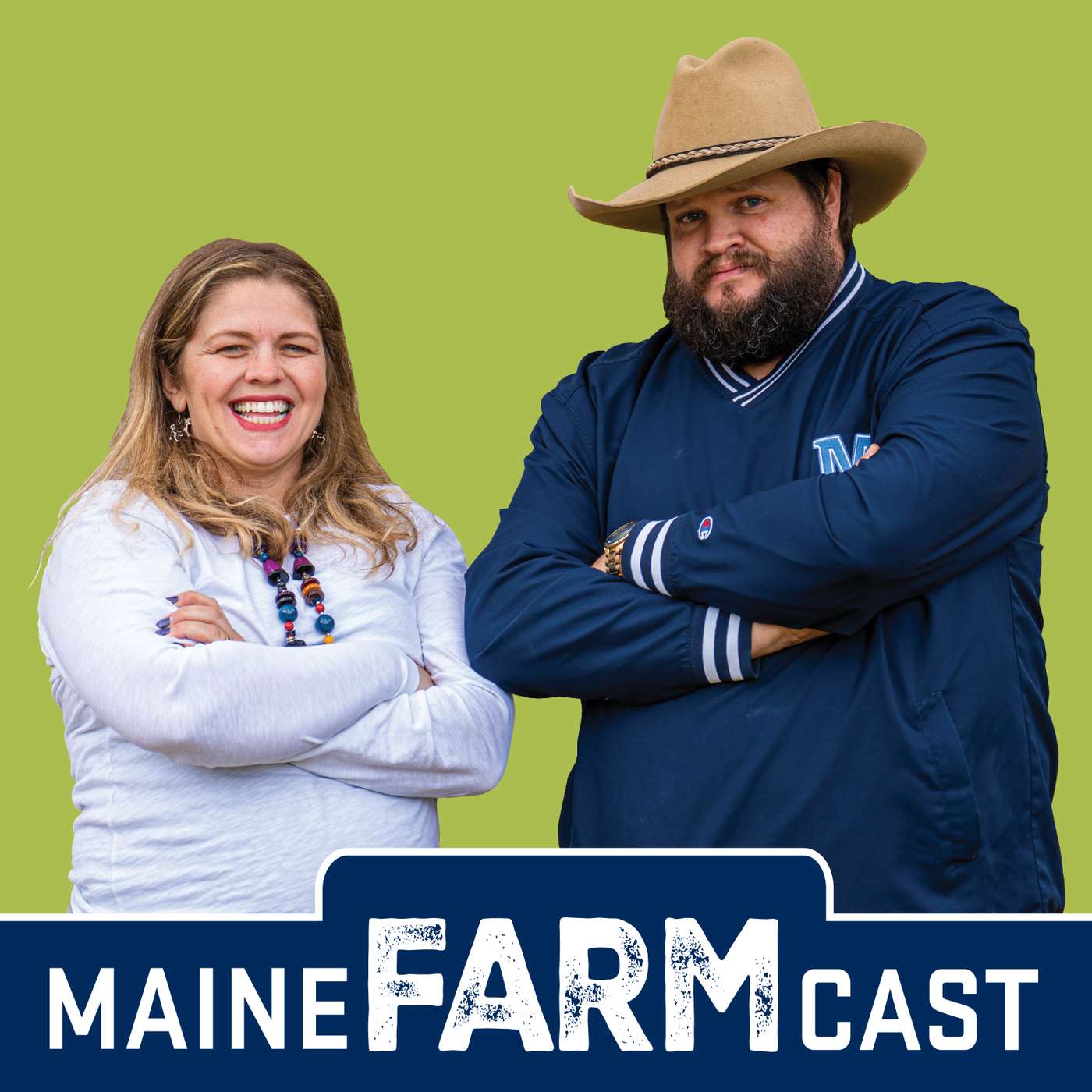
Maine Farmcast
by University of Maine Cooperative Extension
The Maine Farmcast features weekly conversations with experts from across the country sharing insights and advice for both new and seasoned farmers running operations of any size. Hosted by three livestock specialists from the University of Maine Cooperative Extension, the show brings you world-class expertise paired with practical advice about how to apply cutting-edge research to improve the efficiency and sustainability of your farming operation.
-
110
Maintaining Hoof Health and Lameness Prevention with Jacki Perkins
In this episode of the Maine Farmcast, host Glenda Pereira sits down with Jacki Martinez Perkins to discuss management practices that can help maintain hoof health in livestock and horses and prevent lameness. Martinez Perkins serves as the organic dairy and livestock specialist for the Maine Organic Farmers and Gardeners Association and is a valuable resource for farmers across Maine.Zinpro locomotion scoring (PDF)Contact Jacki Martinez PerkinsUniversity of Maine Cooperative Extension is an equal opportunity institution and provider committed to nondiscrimination. For more information, visit extension.umaine.edu/nondiscrimination.
-
109
Ben and Jerry's Low Carbon Dairy Pilot Project with Amber Blodgett
In this episode of the Maine Farmcast, host Dr. Glenda Pereira sits down with Amber Blodgett to learn about the Ben and Jerry's Low Carbon Dairy Pilot Project. Amber is the Dairy Research & Outreach Specialist for the UVM Extension Northwest Crops and Soils Team. Listeners will learn about different the project, and the specific intervention opportunities to potentially decrease greenhouse gas emissions. You can reach Amber at [email protected] Tri-State Webinar Recording (YouTube)University of Maine Cooperative Extension is an equal opportunity institution and provider committed to nondiscrimination. For more information, visit extension.umaine.edu/nondiscrimination.
-
108
Pile It On with the King of Compost: From the Backyard to the Farm
Recorded outdoors around a table at Knight Family Farm in Garland, Maine, this episode features plenty of fresh air, farm sounds, barbecue and a conversation about things that are not always quite so fresh. Dr. Colt Knight is joined by longtime friend Mark King, organics management specialist with the Maine Department of Environmental Protection and one of Maine’s leading composting experts. Mark explains how anything from kitchen scraps and horse manure to livestock mortalities and food-processing waste can be transformed into a valuable soil amendment.Mark and Colt discuss the basics of building and managing a compost pile, small-scale composting with lobster-trap wire bins, compost-bedded livestock packs, carcass composting, food waste recovery and anaerobic digesters. Mark also shares information about the five-day Maine Compost School and the new Maine Master Community Composter program, which is designed to help communities prepare for Maine’s changing approach to food waste disposal. Whether you manage a farm, keep a backyard garden or simply want to keep food scraps out of the landfill, this episode offers practical advice for turning waste into a useful resource.Maine Compost SchoolMaine Compost School Sessions and CalendarMRRA Food Recovery Council and Maine Master Community Composter ProgramMaine DEP Composting InformationUniversity of Maine Cooperative Extension is an equal opportunity institution and provider committed to nondiscrimination. For more information, visit extension.umaine.edu/nondiscrimination.
-
107
MOFGA: From Certification to Community With Jacki Martinez Perkins
In this episode of the Maine Farmcast, host Glenda Pereira sits down with Jacki Martinez Perkins to discuss the role the Maine Organic Farmers and Gardeners Association (MOFGA) plays in promoting organic agriculture through education, advocacy and connection. Jacki serves as MOFGA’s organic dairy and livestock specialist and is a valuable resource for farmers across Maine.Contact Jacki50th annual Common Ground Country Fair, Sept. 25-27, 2026Transition to Organic Partnership Program (TOPP)University of Maine Cooperative Extension is an equal opportunity institution and provider committed to nondiscrimination. For more information, visit extension.umaine.edu/nondiscrimination.
-
106
Fair Season: Biosecurity and Animal Health Considerations with Owen Cortner
In this episode of the Maine Farmcast, host Dr. Glenda Pereira talks with Dr. Owen Cortner about biosecurity, heat stress and other animal health considerations when exhibiting animals at fairs. Cortner is a livestock specialist in the Division of Animal and Plant Health at the Maine Department of Agriculture, Conservation and Forestry.Contact the Maine DACF animal health teamMaine DACF Heat Stress Best Practices at Events and Fairs (PDF)Maine DACF Animal Exhibition Recommendations (PDF)Watch: Biosecurity practices for livestock at fairs, shows and exhibitionsUniversity of Maine Cooperative Extension is an equal opportunity institution and provider committed to nondiscrimination. For more information, visit extension.umaine.edu/nondiscrimination.
-
105
Serving Those Who Feed Us: Tommy Higgins Explains FSA County Committees
How do farmers help shape USDA programs in their communities?In this episode of the Maine Farmcast, Glenda Pereira and Colt Knight welcome Tommy Higgins, Maine state executive director of the U.S. Department of Agriculture’s Farm Service Agency, for a conversation about the important role FSA county committees play in supporting agriculture.Higgins shares his journey from military service to leading Maine’s Farm Service Agency. He also explains how local producers help guide FSA programs through county committees. The discussion covers who can serve, how committee members are nominated and elected and why producer participation is essential to ensuring local voices are heard.The conversation also highlights several FSA programs available to producers, including farm ownership and operating loans, Dairy Margin Coverage, farm storage facility loans, specialty crop assistance and disaster programs that help farmers recover from drought, severe weather, livestock losses and other unexpected challenges.Whether you are a beginning farmer, an established producer or simply want to better understand the resources available through USDA, this episode offers practical information about how FSA serves Maine agriculture and how you can become involved.Listen to our previous episode, “Episode 44: Farm Service Agency with Lucia Brown and Amanda May”County Committee Elections (nomination deadline Aug. 3, 2026)Assistance for Specialty Crop Farmers Program (enrollment deadline Aug. 7, 2026)University of Maine Cooperative Extension is an equal opportunity institution and provider committed to nondiscrimination. For more information, visit extension.umaine.edu/nondiscrimination.
-
104
Don't Graze by Guesswork: The Math Behind Better Pastures with Jeff Lehmkuhler
How much forage do your cattle really need, and how much grass is actually available in your pasture?This week, Dr. Colt Knight welcomes Dr. Jeff Lehmkuhler back to the Maine Farmcast for a practical conversation about the numbers behind successful grazing management. They explain how estimating forage inventory, calculating dry matter intake and using simple tools such as grazing sticks and plate meters can help producers make better stocking and rotation decisions before pasture problems develop.The conversation goes beyond the math to explore pasture health, drought planning, grazing efficiency, animal nutrition and the reasons adaptive management consistently outperforms guesswork. Whether you are grazing a few cows or managing hundreds of acres, this episode offers practical strategies to protect your pastures, improve livestock performance and get more value from every acre of forage.Northeast Grazing GuideMaine Pasture Management CourseMaine Farmcast Episode 49: Grazing Plans with Dr. Jaime GarzonSustainable Pasture Management videoUniversity of Kentucky grazing management websiteUniversity of Maine Cooperative Extension is an equal opportunity institution and provider committed to nondiscrimination. For more information, visit extension.umaine.edu/nondiscrimination.
-
103
Emerging Pathogens Affecting Ruminant Livestock in Maine with Annie Leahy
In this episode of the Maine Farmcast, host Dr. Glenda Pereira sits down with Annie Leahy, a recent University of Maine zoology graduate and incoming Clemson University DVM student, to discuss her honors thesis on emerging pathogens affecting ruminant livestock in Maine. Leahy’s research analyzed cases submitted to UMaine’s Veterinary Diagnostic Lab between September 2022 and January 2025, covering 633 ruminant cases across cattle, goats, sheep and alpacas.UMaine Veterinary Diagnostic LabUMaine Extension small ruminant programmingUniversity of Maine Cooperative Extension is an equal opportunity institution and provider committed to nondiscrimination. For more information, visit extension.umaine.edu/nondiscrimination.
-
102
Screwworm: Small Pest, Massive Consequences
A pest that many producers thought was confined to the history books is making headlines again. In this episode, Dr. Colt Knight sits down with Ashley Wright of the University of Arizona Cooperative Extension to discuss New World screwworm, a devastating livestock pest that has reemerged in North America. They explain what screwworm is, how it differs from ordinary fly strike and why veterinarians and livestock producers are taking the threat so seriously.The conversation covers the history of screwworm eradication, recent cases detected in the southern United States, impacts on cattle markets and cross-border livestock movement, and practical steps producers can take to protect their animals. From wound management and biosecurity to sterile fly control programs, this episode provides timely information every livestock owner should know as the industry works to prevent another major outbreak.University of Maine Cooperative Extension is an equal opportunity institution and provider committed to nondiscrimination. For more information, visit extension.umaine.edu/nondiscrimination.
-
101
Stars, Stripes and Stetsons: The Story Behind America’s Most Iconic Hat with Dean Fish
This Independence Day week, Dr. Colt Knight is joined by Dr. Dean Fish of Arizona’s Anchor F Cattle Co. to explore one of America’s most recognizable symbols: the cowboy hat. From John B. Stetson’s original design in the 1860s to today’s custom-crafted masterpieces, Colt and Dean trace the history, function and cultural significance of the hat that helped shape the American West. Along the way, they discuss cowboy etiquette, hat-making traditions, regional styles and why a good hat is much more than a fashion statement.Whether you’re a lifelong cowboy, a weekend horse owner or someone who has never worn a hat, this conversation offers a fascinating look at the traditions, values and craftsmanship that continue to influence rural America. Pull up a chair, grab a slice of apple pie and join us as we celebrate Independence Day with a story that is uniquely American.
-
100
Why Is Meat So Expensive? The Perfect Storm Behind Rising Prices with Gregg Rentfrow
Why does a ribeye cost so much more than it did a few years ago?In this episode of the Maine Farmcast, Dr. Colt Knight sits down with Dr. Gregg Rentfrow, meat science specialist at the University of Kentucky, while attending North Carolina State University’s BBQ Camp. Together, they break down the many factors driving today’s record-high meat prices, including historically low cattle inventories, rising feed and fertilizer costs, inflation, avian influenza, drought, international trade disruptions and livestock disease concerns.From beef and pork to poultry, the conversation explores why consumers continue to pay premium prices and what that means for farmers, processors and families at the grocery store. The discussion also takes a broader look at changing protein consumption trends in the United States and around the world. Colt and Gregg examine the rise of chicken as America’s most-consumed protein, the resurgence of animal-based protein demand, the challenges facing local meat processors and the future of plant-based meat alternatives.Along the way, they share insights into pork production, food processing, consumer perceptions and why predicting future food prices may be harder than ever. Whether you’re a farmer, food enthusiast or simply wondering why your grocery bill keeps growing, this episode provides valuable context on the forces shaping today’s food system.University of Maine Cooperative Extension is an equal opportunity institution and provider committed to nondiscrimination. For more information, visit extension.umaine.edu/nondiscrimination.
-
99
Gut Check: Microbiomes in Agriculture and Health with Dr. Sue Ishaq
In this episode of the Maine Farmcast, host Colt W. Knight sits down with Sue Ishaq, associate professor and microbiome researcher at the University of Maine, to explore the fascinating world of microbes and their role in animal and human health. From her nonfarm upbringing and path through animal science to building a dynamic research lab, Ishaq shares how curiosity and a few career pivots led her into the rapidly evolving field of microbiome science.The conversation dives into cutting-edge research on how microbes interact with diet, including the surprising health benefits of foods such as broccoli sprouts and the role of gut microbes in producing anti-inflammatory compounds. Along the way, they connect microbiome science back to livestock production, comparing human digestion to ruminant systems and discussing probiotics, diet shifts and microbial resilience. Whether you’re a farmer, student or just curious about what’s happening inside your gut, this episode offers an engaging and practical look at the invisible world shaping health and agriculture.Learn more about Dr. Sue IshaqUniversity of Maine Cooperative Extension is an equal opportunity institution and provider committed to nondiscrimination. For more information, visit extension.umaine.edu/nondiscrimination.
-
98
Robots on the Dairy Farm
In this episode of the Maine Farmcast, Dr. Glenda Pereira celebrates June Dairy Month with a solo episode on how robotics are shaping dairy farm management. She discusses the benefits and considerations of milking robots, including milk production, labor, cow traffic, facility design and the importance of consistency in daily routines.Dr. Pereira also takes a closer look at manure robots and how they can support cleaner walkways, improved hoof and udder hygiene, reduced labor needs and fewer disruptions to cow behavior, especially in robotic milking systems. Listeners will hear about practical considerations such as floor type, maintenance, internet and power needs, winter weather challenges and backup plans.A June 30, 2026 field day will give participants the opportunity to see milking robots and manure robots in action.Episode ResourcesVictor Cabrera. 2026. “Making the Switch to Robots: A New Budgeting Tool for Transitioning to Automatic Milking Systems.”Doerfler, Martin and Bernhardt. 2017. “Implications of Robotic Walkway Cleaning for Hoof Disorders in Dairy Cattle." (PDF)University of Maine Cooperative Extension is an equal opportunity institution and provider committed to nondiscrimination. For more information, visit extension.umaine.edu/nondiscrimination.
-
97
Don’t Do This: Farming Mistakes We’ve All Made with Dr. Richard Brzozowski
In this episode of the Maine Farmcast, host Colt W. Knight is once again joined by Richard Brzozowski, professor emeritus and former Extension livestock specialist, for a practical and story-driven discussion on common mistakes new farmers make and how to avoid them. Drawing from decades of experience in Extension and agriculture, Brzozowski shares insights from working with beginning farmers, along with reflections from his travels observing agricultural systems around the world.The conversation covers critical topics such as starting too big, failing to keep records, making poor equipment decisions and relying on a single market outlet. Listeners will hear real-world examples, from livestock purchasing mistakes to infrastructure design flaws, and learn why building a strong network of trusted advisers is essential. Whether you are just getting started or looking to refine your operation, this episode delivers practical, no-nonsense advice to help you avoid costly pitfalls and build a more resilient farm business.University of Maine Cooperative Extension is an equal opportunity institution and provider committed to nondiscrimination. For more information, visit extension.umaine.edu/nondiscrimination.
-
96
Little Boots, Big Lessons: Parenting on the Farm
Raising kids on a farm comes with a unique mix of challenges, responsibilities and rewards. In this episode of the Maine Farmcast, we dive into what it really means to parent in an agricultural setting. From chore schedules and safety considerations to balancing farm work with family life, our conversation explores how farm families pass along values such as work ethic, resilience and stewardship while navigating the realities of modern agriculture.We discuss the benefits of growing up around livestock and land, the lessons children learn through hands-on experiences, and how farm parents adapt as operations, expectations and family dynamics change over time. Whether you are raising the next generation on a working farm, considering how to safely involve kids in daily chores or simply curious about farm family life, this episode offers thoughtful insights, practical perspectives and a few relatable moments along the way.University of Maine Cooperative Extension is an equal opportunity institution and provider committed to nondiscrimination. For more information, visit extension.umaine.edu/nondiscrimination.
-
95
From Barns to Biotech: The IDEXX Story and the Power of Diagnostics with Rick Linscott
In this episode of the Maine Farmcast, Glenda and Colt sit down with Rick Linscott, a retired senior scientist from IDEXX Laboratories, based in Westbrook, Maine. Rick reflects on his 35-year career with the Maine-based diagnostics company, tracing its evolution from early livestock and poultry testing to its global work in companion animal, water quality and biomedical diagnostics. Listeners will get a behind-the-scenes look at how diagnostic tools are developed, why livestock testing remains critical despite representing a smaller share of the market, and how Maine has become a hub for biotech innovation.Learn about IDEXXLivestock SNAP testsThis episode was recorded at the 2026 Maine Agricultural Trades Show in Augusta, Maine.University of Maine Cooperative Extension is an equal opportunity institution and provider committed to nondiscrimination. For more information, visit extension.umaine.edu/nondiscrimination.
-
94
A Passion for Wool: Spinning Stories and Sheep with Dr. Erin Percival Carter
On this episode of the Maine Farmcast, Dr. Glenda Pereira, assistant Extension professor and state dairy specialist with University of Maine Cooperative Extension, talks with Dr. Erin Percival Carter, associate professor of marketing at the University of Maine. Although Carter is a UMaine professor, the conversation focuses on her role as a diversified farmer, including her naturally colored Corriedale sheep flock, hand-spinning wool and the Maine Fiber Frolic.Learn more about Carter’s research programMaine Fiber Frolic, June 6-7, 2026Wisconsin Dairy State Cheese CompanyUniversity of Maine Cooperative Extension is an equal opportunity institution and provider committed to nondiscrimination. For more information, visit extension.umaine.edu/nondiscrimination.
-
93
Planning for Success in Animal Agriculture with Dr. Richard Brzozowski
In this episode of the Maine Farmcast, host Colt W. Knight sits down with longtime colleague, mentor and former Extension administrator Richard Brzozowski to reflect on a lifetime in agriculture and the realities of raising livestock. From early 4-H experiences and dairy farm work to decades of Extension service, Brzozowski shares stories that highlight how a passion for animals develops and why not everyone is naturally suited for livestock production. The conversation blends humor and hard-earned wisdom, offering listeners a candid look at what it truly means to work with animals.The discussion dives into the benefits and drawbacks of farm animal enterprises. Together, they explore how livestock can convert forage into valuable products, improve soil health and provide personal fulfillment while also requiring daily care, financial planning and risk management. From zoonotic diseases and market volatility to the importance of starting small and building a realistic business plan, the episode provides practical guidance for anyone considering livestock production, whether as a lifestyle or a business.University of Maine Cooperative Extension is an equal opportunity institution and provider committed to nondiscrimination. For more information, visit extension.umaine.edu/nondiscrimination.
-
92
Forage Quality: Preparing for a Successful First Cutting with Joe Lawrence
On this episode of the Maine Farmcast, Dr. Glenda Pereira, assistant extension professor and state dairy specialist for the University of Maine Cooperative Extension, speaks with Joe Lawrence, dairy forage systems specialist with the Cornell PRO-DAIRY team. Lawrence works with the New York dairy industry as a private-sector certified crop adviser and as a field crops educator for Cornell Cooperative Extension. They discuss key tips farmers should consider as they prepare for the spring planting and harvesting season.Learn more about Joe LawrenceDynamic Harvest SchedulesStrategic Forage Storage PlanningUniversity of Maine Cooperative Extension is an equal opportunity institution and provider committed to nondiscrimination. For more information, visit extension.umaine.edu/nondiscrimination.
-
91
Revitalizing the Northeast Livestock Expo: Youth, Education, and Opportunity with Dana Brown
In this episode of the Maine Farmcast, Dr. Colt Knight talks with Dana Brown, a dairy nutritionist, former president of the Maine Beef Producers Association and livestock producer, about the revival and impact of the Northeast Livestock Expo, known as NELE. They discuss how the long-running Maine event has evolved into a multi-species educational experience that brings together youth, producers and industry partners. From its roots in livestock shows and sales, NELE now emphasizes hands-on learning and continues to connect young people with agriculture.The conversation highlights a renewed focus on youth development through beef judging clinics, livestock handling demonstrations, public speaking training and marketing competitions. Knight and Brown also discuss the challenges of rebuilding in-person programming after the COVID-19 pandemic and how NELE is adapting to meet the needs of today’s agricultural community. With free admission for youth, interactive learning opportunities and an emphasis on building confidence and communication skills, the episode underscores the importance of investing in the next generation of agricultural leaders.Northeast Livestock ExpoNortheast Livestock Expo FacebookThe Northeast Livestock Expo wouldn’t be possible without these sponsors:United Ag and Turf - Northeast Chapter, Fairfield, Maine.Maine Association of Agricultural FairsRolleston Veterinary ServicesMaine Dairy Industry Association Maine Fair Foundation Pineland FarmsExpress Electric EEC, INCCentral Maine Dairy EquipmentBrookside Plumbing INCCounty Line Electric INCFrontier TrailersAlcom LLC3D Equipment Coops Trailer - ArrowQuip University of Maine Cooperative ExtensionUniversity of Maine Cooperative Extension is an equal opportunity institution and provider committed to nondiscrimination. For more information, visit extension.umaine.edu/nondiscrimination.
-
90
Insuring the Farm: What Every Producer Should Know with Courtney Morse
In this episode of the Maine Farmcast, host Colt W. Knight sits down with Courtney Morse of Robinson Insurance Agency to discuss a topic many farmers avoid until it is too late: farm insurance. From hobby farms to full-scale agribusinesses, Morse shares practical insights on how insurance needs evolve as operations grow and diversify. The conversation highlights common misconceptions, including the risks of relying solely on homeowners policies and the importance of clearly communicating farm activities, side businesses and livestock ownership to an insurance provider.Listeners will gain a better understanding of how to protect their farms through comprehensive coverage options that combine property, liability, livestock and business assets into a single farm package. The episode explores real-world scenarios, including storm damage, equipment losses, agritourism risks and livestock liability, while emphasizing the value of proactive planning and honest conversations with an insurance agent. Whether starting out or expanding into farm stands, events or direct sales, the episode offers guidance to help safeguard operations and avoid costly surprises.University of Maine Cooperative Extension is an equal opportunity institution and provider committed to nondiscrimination. For more information, visit extension.umaine.edu/nondiscrimination.
-
89
Emerging Threats to Plant Health: A Discussion on Fusarium Diseases of Garlic With Dr. Alicyn Smart
On this episode of the Maine Farmcast, Dr. Glenda Pereira, assistant Extension professor and state dairy specialist for University of Maine Cooperative Extension, talks with Dr. Alicyn Smart, a doctor of plant medicine and plant pathologist and director of the Plant Disease Diagnostic Laboratory at the University of Maine. Dr. Smart also is the executive director of the National Plant Diagnostic Network. One goal of the network is to strengthen U.S. agricultural biodefense and enable rapid communication and response to new pathogens.The UMaine Plant Disease Diagnostic Laboratory has seen an increase in an emerging garlic pathogen, fusarium. Her team has sought funding to address major unknowns about fusarium and hopes to develop resistant garlic, improve diagnostic detection tools and identify cultural practices to reduce the disease in garlic plants.Submit a plant sample to the UMaine Plant Disease Diagnostic Lab: https://extension.umaine.edu/ipm/plant-disease/Listen to the previous episode with Dr. Alicyn Smart https://extension.umaine.edu/podcasts/maine-farmcast/episode-91/University of Maine Cooperative Extension is an equal opportunity institution and provider committed to nondiscrimination. For more information, visit extension.umaine.edu/nondiscrimination.
-
88
Kick This Pig: 100 Episodes Later
After 100 episodes of the Maine Farmcast, Dr. Colt W. Knight and Dr. Glenda Pereira take a moment to reflect on the journey. What started as a leap into the unknown has grown into a weekly podcast connecting farmers, researchers, and agricultural professionals across the country. Guided by the simple mindset of “just do it,” this milestone episode looks back at the early days, the evolution of the show, and how conversations with guests have influenced both the podcast and their Extension work.Along the way, Colt and Glenda revisit some of their favorite moments, from meaningful discussions on sustainability and calf care to unforgettable stories and lighthearted debates, including the ongoing chocolate milk conversation. Blending humor, insight, and gratitude, this episode captures the heart of the Maine Farmcast: real conversations, practical knowledge, and the people who shape agriculture every day. Whether you’ve been listening since Episode 1 or are just tuning in, this episode celebrates 100 episodes and looks ahead to what’s next.Featured Maine Farmcast EpisodesEpisode 1 – Ventilation with Dr. Morgan Hayeshttps://extension.umaine.edu/podcasts/maine-farmcast/episode-01/Episode 13 - Heat Stress Considerations for Dairy Farms with Dr. Bethany Dado-Sennhttps://extension.umaine.edu/podcasts/maine-farmcast/episode-13/Episode 15 – Shades of Green: Cows, Agrivoltaics, and Climate Resilience with Dr. Brad Heinshttps://extension.umaine.edu/podcasts/maine-farmcast/episode-15/Episode 22 – Beef Sustainability with Dr. Sebastian Mejia Turcioshttps://extension.umaine.edu/podcasts/maine-farmcast/episode-22/Episode 25 – Swine Genetics with Randy Shipley (Shipley Swine Genetics)https://extension.umaine.edu/podcasts/maine-farmcast/episode-25/Episode 32 – Calf Chronicles: The 5 Cs of Dairy Calf Care with Bethany Dado-Sennhttps://extension.umaine.edu/podcasts/maine-farmcast/episode-32/Episode 41 – Getting to Know your Hosts Part 1 with Dr. Glenda Pereirahttps://extension.umaine.edu/podcasts/maine-farmcast/episode-41/Episode 43- Getting to Know your Hosts Part II with Dr. Colt W. Knighthttps://extension.umaine.edu/podcasts/maine-farmcast/episode-43/Episode 52 – Oink if you are Ready to Get Started Raising Pigs!https://extension.umaine.edu/podcasts/maine-farmcast/episode-52/Episode 68 – Brains, Bears and Butchery: Tall Tales from Extension Life with Dr. Gregg Rentfrowhttps://extension.umaine.edu/podcasts/maine-farmcast/episode-68/The University of Maine System (the System) is an equal opportunity institution committed to fostering a nondiscriminatory environment and complying with all applicable nondiscrimination laws. Consistent with State and Federal law, the System does not discriminate on the basis of race, color, religion, sex, sexual orientation, transgender status, gender, gender identity or expression, ethnicity, national origin, citizenship status, familial status, ancestry, age, disability (physical or mental), genetic information, pregnancy, or veteran or military status in any aspect of its education, programs and activities, and employment. The System provides reasonable accommodations to qualified individuals with disabilities upon request. If you believe you have experienced discrimination or harassment, you are encouraged to contact the System Office of Equal Opportunity and Title IX Services at 5713 Chadbourne Hall, Room 412, Orono, ME 04469-5713, by calling 207.581.1226, or via TTY at 711 (Maine Relay System). For more information about Title IX or to file a complaint, please contact the UMS Title IX Coordinator at www.maine.edu/title-ix/.
-
87
Why Maine Farmers Need Marketing, Not Just Better Fences with Erin Percival Carter
In this episode of the Maine Farmcast, hosts Colt Knight and Glenda Pereira are joined by Dr. Erin Percival Carter, associate professor of marketing at the University of Maine, to examine one of the biggest challenges facing Maine farmers today: making farm businesses profitable while competing outside the commodity system. Drawing on her background in agriculture, consumer behavior research and farming experience, Carter explains why simply being a good farmer is not enough and why marketing, pricing and understanding target customers are critical to long-term success. From the realities of Maine’s higher production costs to the limits of “if you build it, they will come” thinking, the conversation reframes marketing as a necessary business tool rather than an afterthought.Learn more about Dr. Carter's research programhttps://umaine.edu/business/people/erin-percival-carter/Looking to write your own positioning statement? Here is a resourcehttps://online.hbs.edu/blog/post/brand-positioning-statementThe University of Maine System (the System) is an equal opportunity institution committed to fostering a nondiscriminatory environment and complying with all applicable nondiscrimination laws. Consistent with State and Federal law, the System does not discriminate on the basis of race, color, religion, sex, sexual orientation, transgender status, gender, gender identity or expression, ethnicity, national origin, citizenship status, familial status, ancestry, age, disability (physical or mental), genetic information, pregnancy, or veteran or military status in any aspect of its education, programs and activities, and employment. The System provides reasonable accommodations to qualified individuals with disabilities upon request. If you believe you have experienced discrimination or harassment, you are encouraged to contact the System Office of Equal Opportunity and Title IX Services at 5713 Chadbourne Hall, Room 412, Orono, ME 04469-5713, by calling 207.581.1226, or via TTY at 711 (Maine Relay System). For more information about Title IX or to file a complaint, please contact the UMS Title IX Coordinator at www.maine.edu/title-ix/.
-
86
Corn Silage Hybrids: Understanding the Influence of Management, Weather and Genetics with Joe Lawrence
In this episode of the Maine Farmcast, Dr. Glenda Pereira, assistant extension professor and state dairy specialist for the University of Maine Cooperative Extension, speaks with Joe Lawrence, dairy forage systems specialist with the Cornell PRO-DAIRY team. Lawrence works with the New York dairy industry as a private-sector certified crop adviser and as a field crops educator for Cornell Cooperative Extension. They discuss the annual Commercial Corn Silage Hybrid Evaluation Program in New York and Vermont and its application to the Northeast and dairy farms.Learn more about Joe Lawrence2025 New York and Vermont Corn Silage Hybrid Trial ResultsUnderstanding Growing Degree DaysThe University of Maine System (the System) is an equal opportunity institution committed to fostering a nondiscriminatory environment and complying with all applicable nondiscrimination laws. Consistent with State and Federal law, the System does not discriminate on the basis of race, color, religion, sex, sexual orientation, transgender status, gender, gender identity or expression, ethnicity, national origin, citizenship status, familial status, ancestry, age, disability (physical or mental), genetic information, pregnancy, or veteran or military status in any aspect of its education, programs and activities, and employment. The System provides reasonable accommodations to qualified individuals with disabilities upon request. If you believe you have experienced discrimination or harassment, you are encouraged to contact the System Office of Equal Opportunity and Title IX Services at 5713 Chadbourne Hall, Room 412, Orono, ME 04469-5713, by calling 207.581.1226, or via TTY at 711 (Maine Relay System). For more information about Title IX or to file a complaint, please contact the UMS Title IX Coordinator at www.maine.edu/title-ix/.
-
85
Inside the Sample: How DNA Testing Transforms Farm Management with Dr. Tom Rounsville
In this episode of the Maine Farmcast, hosts Colt and Glenda are joined by Dr. Tom Rounsville, an applied molecular genetics specialist with University of Maine Cooperative Extension, for an engaging, wide-ranging conversation that blends humor, science and real-world problem-solving. What starts as a spirited debate about bald eagles, hawks and other wildlife quickly transitions into Dr. Rounsville's work applying molecular tools and DNA technologies to challenges facing Maine residents, producers and natural resources. He explains how genetic testing and molecular diagnostics are used across Extension programs, from veterinary and plant disease diagnostics to aquaculture and wildlife research, highlighting how these tools help identify pathogens, species and emerging risks.Learn more about Dr. Thomas RounsvilleLearn more about Tom's bobcat researchThe University of Maine System (the System) is an equal opportunity institution committed to fostering a nondiscriminatory environment and complying with all applicable nondiscrimination laws. Consistent with State and Federal law, the System does not discriminate on the basis of race, color, religion, sex, sexual orientation, transgender status, gender, gender identity or expression, ethnicity, national origin, citizenship status, familial status, ancestry, age, disability (physical or mental), genetic information, pregnancy, or veteran or military status in any aspect of its education, programs and activities, and employment. The System provides reasonable accommodations to qualified individuals with disabilities upon request. If you believe you have experienced discrimination or harassment, you are encouraged to contact the System Office of Equal Opportunity and Title IX Services at 5713 Chadbourne Hall, Room 412, Orono, ME 04469-5713, by calling 207.581.1226, or via TTY at 711 (Maine Relay System). For more information about Title IX or to file a complaint, please contact the UMS Title IX Coordinator at www.maine.edu/title-ix/.
-
84
Maine's Most Influential Sheep: A History of the Katahdin Breed with Tom Hodgman
On this episode of the Maine Farmcast, Glenda and Colt are joined by returning guest Tom Hodgman. The conversation includes the origin story of the Katahdin sheep, a breed developed right here in Maine that has gone on to become one of the most influential sheep breeds in North America. Tom explains how the Katahdin breed came about from a decades-long vision by Maine breeder Michael Piel.The conversation spans everything from breed development and record-keeping to genetics, hybrid vigor, parasite resistance, and why Katahdins are uniquely suited for modern production systems such as intensive grazing and solar grazing. Along the way, we discuss what makes this hair sheep breed so adaptable, why data-driven selection matters, and how Maine quietly played a major role in shaping a national livestock success story. Whether you are a sheep producer, a genetics nerd, or just love a good agricultural origin story, this episode offers insight, perspective and plenty of appreciation for a breed whose time has truly come.More information about the Katahdin breed:Katahdin Breed Origin and HistoryThe University of Maine System (the System) is an equal opportunity institution committed to fostering a nondiscriminatory environment and complying with all applicable nondiscrimination laws. Consistent with State and Federal law, the System does not discriminate on the basis of race, color, religion, sex, sexual orientation, transgender status, gender, gender identity or expression, ethnicity, national origin, citizenship status, familial status, ancestry, age, disability (physical or mental), genetic information, pregnancy, or veteran or military status in any aspect of its education, programs and activities, and employment. The System provides reasonable accommodations to qualified individuals with disabilities upon request. If you believe you have experienced discrimination or harassment, you are encouraged to contact the System Office of Equal Opportunity and Title IX Services at 5713 Chadbourne Hall, Room 412, Orono, ME 04469-5713, by calling 207.581.1226, or via TTY at 711 (Maine Relay System). For more information about Title IX or to file a complaint, please contact the UMS Title IX Coordinator at www.maine.edu/title-ix/.
-
83
Potatoes and Midcoast Maine with Brett Johnson
On this episode of the Maine Farmcast, Dr. Glenda Pereira, an assistant Extension professor and state dairy specialist with the University of Maine Cooperative Extension, talks with Brett Johnson, an assistant Extension professor and the sustainable agriculture and farm business management educator. The episode focuses on Johnson’s programming, including learning about and addressing agricultural needs in Midcoast Maine, as well as potato varieties and products.Learn more about Brett Johnson:https://extension.umaine.edu/about/staff-directory/brett-johnson/ UMaine Extension events in Waldo County:https://extension.umaine.edu/waldo/events/The University of Maine System (the System) is an equal opportunity institution committed to fostering a nondiscriminatory environment and complying with all applicable nondiscrimination laws. Consistent with State and Federal law, the System does not discriminate on the basis of race, color, religion, sex, sexual orientation, transgender status, gender, gender identity or expression, ethnicity, national origin, citizenship status, familial status, ancestry, age, disability (physical or mental), genetic information, pregnancy, or veteran or military status in any aspect of its education, programs and activities, and employment. The System provides reasonable accommodations to qualified individuals with disabilities upon request. If you believe you have experienced discrimination or harassment, you are encouraged to contact the System Office of Equal Opportunity and Title IX Services at 5713 Chadbourne Hall, Room 412, Orono, ME 04469-5713, by calling 207.581.1226, or via TTY at 711 (Maine Relay System). For more information about Title IX or to file a complaint, please contact the UMS Title IX Coordinator at www.maine.edu/title-ix/.
-
82
Robots, Research and Really Good Chocolate Milk with Patricia Henderson
Glenda and Colt sit down with Patricia Henderson, farm superintendent of the J.F. Witter Center at the University of Maine. Henderson shares her journey from growing up on a diversified livestock farm in Aroostook County to becoming a UMaine alum and helping develop the university’s robotic milking facility. The conversation highlights student learning, faculty research and livestock programs, along with a spirited and surprisingly passionate debate about the best chocolate milk.Learn about the UMaine J. Franklin Witter Teaching & Research Centerhttps://umaine.edu/wittercenter/Video of new Dairy Barn at the J. F. Witter Centerhttps://www.youtube.com/watch?v=kElRe70mNkgThe University of Maine System (the System) is an equal opportunity institution committed to fostering a nondiscriminatory environment and complying with all applicable nondiscrimination laws. Consistent with State and Federal law, the System does not discriminate on the basis of race, color, religion, sex, sexual orientation, transgender status, gender, gender identity or expression, ethnicity, national origin, citizenship status, familial status, ancestry, age, disability (physical or mental), genetic information, pregnancy, or veteran or military status in any aspect of its education, programs and activities, and employment. The System provides reasonable accommodations to qualified individuals with disabilities upon request. If you believe you have experienced discrimination or harassment, you are encouraged to contact the System Office of Equal Opportunity and Title IX Services at 5713 Chadbourne Hall, Room 412, Orono, ME 04469-5713, by calling 207.581.1226, or via TTY at 711 (Maine Relay System). For more information about Title IX or to file a complaint, please contact the UMS Title IX Coordinator at www.maine.edu/title-ix/.
-
81
Navigating Vet School Applications with Maddy Philbrick (Part 2)
On this episode of the Maine Farmcast, Dr. Glenda Pereira, assistant Extension professor and state dairy specialist for the University of Maine Cooperative Extension, has a conversation with Maddy Philbrick, a UMaine graduate who is now attending veterinary school. This is a two-part series in which Maddy discusses her journey in applying to and getting accepted to veterinary school. During this second episode, Maddy discusses choosing your school and doing research, interviewing for vet school, paying for vet school, and other tips and tricks.The Veterinary Medical College Application Service (VMCAS)https://vmcas.cas.myliaison.com/applicant-ux/#/loginResources for UMaine Animal and Veterinary Science studentsUMaine Health Professions Planning Guide (PDF)https://umaine.edu/healthcareers/wp-content/uploads/sites/97/2017/02/Health-Professions-Guide.pdfUMaine Foundation Charles E. Gilbert Loan Programhttps://umainefoundation.org/types-of-gifts/charles-e-gilbert-loan-program/The University of Maine System (the System) is an equal opportunity institution committed to fostering a nondiscriminatory environment and complying with all applicable nondiscrimination laws. Consistent with State and Federal law, the System does not discriminate on the basis of race, color, religion, sex, sexual orientation, transgender status, gender, gender identity or expression, ethnicity, national origin, citizenship status, familial status, ancestry, age, disability (physical or mental), genetic information, pregnancy, or veteran or military status in any aspect of its education, programs and activities, and employment. The System provides reasonable accommodations to qualified individuals with disabilities upon request. If you believe you have experienced discrimination or harassment, you are encouraged to contact the System Office of Equal Opportunity and Title IX Services at 5713 Chadbourne Hall, Room 412, Orono, ME 04469-5713, by calling 207.581.1226, or via TTY at 711 (Maine Relay System). For more information about Title IX or to file a complaint, please contact the UMS Title IX Coordinator at www.maine.edu/title-ix/.
-
80
Navigating Vet School Applications with Maddy Philbrick (Part 1)
On this episode of the Maine Farmcast, Dr. Glenda Pereira, assistant Extension professor and state dairy specialist with the University of Maine Cooperative Extension, talks with Maddy Philbrick, a UMaine graduate who is now attending veterinary school. This two-part series follows Philbrick’s journey through the veterinary school application and acceptance process. In part one, she discusses application timelines, letters of recommendation, and crafting a personal statement. Tune in next week for part two.The Veterinary Medical College Application Service (VMCAS)https://vmcas.cas.myliaison.com/applicant-ux/#/loginResources for UMaine Animal and Veterinary Science studentshttps://go.umaine.edu/find-a-major/animal-and-veterinary-sciences/https://umaine.edu/career/The University of Maine System (the System) is an equal opportunity institution committed to fostering a nondiscriminatory environment and complying with all applicable nondiscrimination laws. Consistent with State and Federal law, the System does not discriminate on the basis of race, color, religion, sex, sexual orientation, transgender status, gender, gender identity or expression, ethnicity, national origin, citizenship status, familial status, ancestry, age, disability (physical or mental), genetic information, pregnancy, or veteran or military status in any aspect of its education, programs and activities, and employment. The System provides reasonable accommodations to qualified individuals with disabilities upon request. If you believe you have experienced discrimination or harassment, you are encouraged to contact the System Office of Equal Opportunity and Title IX Services at 5713 Chadbourne Hall, Room 412, Orono, ME 04469-5713, by calling 207.581.1226, or via TTY at 711 (Maine Relay System). For more information about Title IX or to file a complaint, please contact the UMS Title IX Coordinator at www.maine.edu/title-ix/.
-
79
Diagnosing Plant Problems with Dr. Alicyn Smart
On this episode of the Maine Farmcast, Dr. Glenda Pereira, assistant extension professor and state dairy specialist for the University of Maine Cooperative Extension, has a conversation with Dr. Alicyn Smart, a doctor of plant medicine and the plant pathologist and director of the Plant Disease Diagnostic Laboratory at the University of Maine. As a plant pathologist, Dr. Smart helps her clients diagnose plant pathogen issues with a goal of minimizing and preventing plant health diseases. Dr. Smart is also the executive director of the National Plant Diagnostic Network.Submit a plant sample to the UMaine Plant Disease Diagnostic Lab:https://extension.umaine.edu/ipm/plant-disease/Ready to learn more? Checkout the micro-credential offered by the UMaine Plant Disease Diagnostic Lab and earn pesticide credits! https://extension.umaine.edu/micro-credentials/Interested in seeing plant disease imageshttps://extension.umaine.edu/ipm/ipddl/plant-disease-images/The University of Maine System (the System) is an equal opportunity institution committed to fostering a nondiscriminatory environment and complying with all applicable nondiscrimination laws. Consistent with State and Federal law, the System does not discriminate on the basis of race, color, religion, sex, sexual orientation, transgender status, gender, gender identity or expression, ethnicity, national origin, citizenship status, familial status, ancestry, age, disability (physical or mental), genetic information, pregnancy, or veteran or military status in any aspect of its education, programs and activities, and employment. The System provides reasonable accommodations to qualified individuals with disabilities upon request. If you believe you have experienced discrimination or harassment, you are encouraged to contact the System Office of Equal Opportunity and Title IX Services at 5713 Chadbourne Hall, Room 412, Orono, ME 04469-5713, by calling 207.581.1226, or via TTY at 711 (Maine Relay System). For more information about Title IX or to file a complaint, please contact the UMS Title IX Coordinator at www.maine.edu/title-ix/.
-
78
Maine’s Fields, Forests, and Food Systems: An Interview with Amanda E. Beal, Commissioner of the Maine Department of Agriculture, Conservation and Forestry (DACF)
Recorded live from the 2026 Maine Agricultural Trades Show, this special episode of the Maine Farmcast features an in-depth conversation with Maine Commissioner of Agriculture, Conservation and Forestry Amanda Beal. Commissioner Beal joins hosts Dr. Glenda Pereira and Dr. Colt Knight to reflect on her agricultural roots, career path, and current role leading one of Maine’s most vital agencies. From growing up on a dairy farm to serving as President of the National Association of State Departments of Agriculture, Beal shares insights on leadership, collaboration, and the importance of saying “yes” to hard opportunities.The discussion also explores what makes Maine agriculture unique, including its diversity of farms and commodities and the strength of its agricultural community, and looks ahead to the future. Commissioner Beal highlights key initiatives focused on climate resilience, healthy soils, drought preparedness, market access, and youth and women in agriculture, including Maine’s recognition of 2026 as the Year of Women in Agriculture. This live episode captures both the energy of the Trade Show floor and a thoughtful conversation about where Maine agriculture has been and where it is headed.The University of Maine System (the System) is an equal opportunity institution committed to fostering a nondiscriminatory environment and complying with all applicable nondiscrimination laws. Consistent with State and Federal law, the System does not discriminate on the basis of race, color, religion, sex, sexual orientation, transgender status, gender, gender identity or expression, ethnicity, national origin, citizenship status, familial status, ancestry, age, disability (physical or mental), genetic information, pregnancy, or veteran or military status in any aspect of its education, programs and activities, and employment. The System provides reasonable accommodations to qualified individuals with disabilities upon request. If you believe you have experienced discrimination or harassment, you are encouraged to contact the System Office of Equal Opportunity and Title IX Services at 5713 Chadbourne Hall, Room 412, Orono, ME 04469-5713, by calling 207.581.1226, or via TTY at 711 (Maine Relay System). For more information about Title IX or to file a complaint, please contact the UMS Title IX Coordinator at www.maine.edu/title-ix/.
-
77
Udderly Educational: Learning from Experts at the Northeast Regional 2025 Dairy Challenge
On this episode of the Maine Farmcast, Dr. Glenda Pereira, Assistant Extension Professor and State Dairy Specialist for the University of Maine Cooperative Extension, records an episode on the road. During October 2025, Glenda traveled to Wooster, Ohio for the 2025 Northeast Regional Dairy Challenge where 88 students participated in a farm evaluation competition. At the competition, there were many dairy experts present who provided mentorship and support to students at the competition. This was an opportunity to speak with experts; Doug Benedict from Dairy one Integrated Farming Solutions discussed network and IT on dairy farms and Dr. Philip Schroeder who is a Professor and Department Chair at Alfred State College in NY, discussed his knowledge of soil properties. The dairy challenge is a great place to network and learn from the dairy industries leading experts. Learn about the dairy challenge contesthttps://www.dairychallenge.org/contests/Learn about Dairy One's Integrated Farming Solutions https://dairyone.com/services/integrated-farming-solutions/farm-it/Philip Schroeder, Professor and Department Chair at Alfred Statehttps://www.alfredstate.edu/directory/schroepdThe University of Maine System (the System) is an equal opportunity institution committed to fostering a nondiscriminatory environment and complying with all applicable nondiscrimination laws. Consistent with State and Federal law, the System does not discriminate on the basis of race, color, religion, sex, sexual orientation, transgender status, gender, gender identity or expression, ethnicity, national origin, citizenship status, familial status, ancestry, age, disability (physical or mental), genetic information, pregnancy, or veteran or military status in any aspect of its education, programs and activities, and employment. The System provides reasonable accommodations to qualified individuals with disabilities upon request. If you believe you have experienced discrimination or harassment, you are encouraged to contact the System Office of Equal Opportunity and Title IX Services at 5713 Chadbourne Hall, Room 412, Orono, ME 04469-5713, by calling 207.581.1226, or via TTY at 711 (Maine Relay System). For more information about Title IX or to file a complaint, please contact the UMS Title IX Coordinator at www.maine.edu/title-ix/.
-
76
Lambing Without Guesswork: Experience-Driven Sheep Management with Tom Hodgman
In this episode of the Maine Farmcast, we head to Waldoview Farm in Winterport, Maine, to sit down with longtime sheep producer Tom Hodgman for a deep, practical conversation on lambing season preparation and small ruminant management. With decades of experience raising Katahdin sheep, Tom shares what really matters when lambing time approaches—from body condition scoring and breeding management to stocking the medicine cabinet, setting up a lambing space, and knowing when preparation can make the difference between losing and saving lambs. This is a boots-on-the-ground discussion rooted in real-world experience, not theory.Tom and his team are hosting a hands-on workshop this upcoming February 2026. Be sure to follow the link below if you would like to sign up and attend this workshop.Contact Tom Hodgman: https://www.katahdinsforsale.com/lambing-workshop/ https://www.facebook.com/waldoviewkatahdins/Recommended books and resources: Managing Your Ewe And Her Newborn Lambs by Laura Lawsonhttps://www.betterworldbooks.com/product/detail/managing-your-ewe-and-her-newborn-lambs-9780963392312 Small Ruminant:Production Medicine and ManagementCody W. Faerber, DVM,Lyle G. McNeal, Ph.D,Robert L. Harding, DVM,Kevin L. Hill, DVM,J. D. Bobb, DVM,Scott Horner,Jonathan Merriam,S. Mario Durrant, DVMAnimal Health Publications, 2004 - Goatshttps://www.abebooks.com/9780970115959/Small-Ruminant-Production-Medicine-Management-0970115954/plpThe University of Maine System (the System) is an equal opportunity institution committed to fostering a nondiscriminatory environment and complying with all applicable nondiscrimination laws. Consistent with State and Federal law, the System does not discriminate on the basis of race, color, religion, sex, sexual orientation, transgender status, gender, gender identity or expression, ethnicity, national origin, citizenship status, familial status, ancestry, age, disability (physical or mental), genetic information, pregnancy, or veteran or military status in any aspect of its education, programs and activities, and employment. The System provides reasonable accommodations to qualified individuals with disabilities upon request. If you believe you have experienced discrimination or harassment, you are encouraged to contact the System Office of Equal Opportunity and Title IX Services at 5713 Chadbourne Hall, Room 412, Orono, ME 04469-5713, by calling 207.581.1226, or via TTY at 711 (Maine Relay System). For more information about Title IX or to file a complaint, please contact the UMS Title IX Coordinator at www.maine.edu/title-ix/.
-
75
Digging Deep: Understanding Soil Health and Fertility
In this episode of the Maine Farmcast, Dr. Colt Knight sits down with Dr. Jaime Garzon of UMaine Extension and Dr. Leandro Vieira from Louisiana State University to dig into what really makes soil healthy. The trio explores the critical relationship between soil fertility, structure, and biology, from pH and organic matter to microbial diversity and grazing management. Dr. Vieira shares his journey from a ranching family in southern Brazil to soil science research in the U.S., while Dr. Garzon explains how Maine’s acidic soils and high organic matter present both challenges and opportunities for producers.Listeners will gain a deeper understanding of why soil testing is the foundation of any fertility plan, how overgrazing affects both root structure and soil integrity, and why balancing nutrients is essential for forage production. With practical examples, lively discussion, and even a few Florida field stories involving hurricanes, gators, and raccoons, this episode blends science and humor to help farmers manage their land more effectively, one soil sample at a time.The University of Maine System (the System) is an equal opportunity institution committed to fostering a nondiscriminatory environment and complying with all applicable nondiscrimination laws. Consistent with State and Federal law, the System does not discriminate on the basis of race, color, religion, sex, sexual orientation, transgender status, gender, gender identity or expression, ethnicity, national origin, citizenship status, familial status, ancestry, age, disability (physical or mental), genetic information, pregnancy, or veteran or military status in any aspect of its education, programs and activities, and employment. The System provides reasonable accommodations to qualified individuals with disabilities upon request. If you believe you have experienced discrimination or harassment, you are encouraged to contact the System Office of Equal Opportunity and Title IX Services at 5713 Chadbourne Hall, Room 412, Orono, ME 04469-5713, by calling 207.581.1226, or via TTY at 711 (Maine Relay System). For more information about Title IX or to file a complaint, please contact the UMS Title IX Coordinator at www.maine.edu/title-ix/.
-
74
Maine Christmas Tree Industry Spotlight with Brett Johnson
On this episode of the Maine Farmcast, Dr. Glenda Pereira, Assistant Extension Professor and State Dairy Specialist with the University of Maine Cooperative Extension, speaks with Brett Johnson, Assistant Extension Professor and Sustainable Agriculture and Farm Business Management Educator. They have a cheerful conversation about Maine Christmas tree production, and Brett shares tips on how to keep a live tree healthy for a longer period of time. You can contact Brett at 207.832.0343 or [email protected] more about Brett Johnsonhttps://extension.umaine.edu/about/staff-directory/brett-johnson/ Learn more about the Maine Christmas Tree Associationhttps://www.mainechristmastree.com/The University of Maine System (the System) is an equal opportunity institution committed to fostering a nondiscriminatory environment and complying with all applicable nondiscrimination laws. Consistent with State and Federal law, the System does not discriminate on the basis of race, color, religion, sex, sexual orientation, transgender status, gender, gender identity or expression, ethnicity, national origin, citizenship status, familial status, ancestry, age, disability (physical or mental), genetic information, pregnancy, or veteran or military status in any aspect of its education, programs and activities, and employment. The System provides reasonable accommodations to qualified individuals with disabilities upon request. If you believe you have experienced discrimination or harassment, you are encouraged to contact the System Office of Equal Opportunity and Title IX Services at 5713 Chadbourne Hall, Room 412, Orono, ME 04469-5713, by calling 207.581.1226, or via TTY at 711 (Maine Relay System). For more information about Title IX or to file a complaint, please contact the UMS Title IX Coordinator at www.maine.edu/title-ix/.
-
73
Swientists Unite: Biosecurity and Beyond – Keeping the Bacon Safe
In this episode of The Maine Farmcast, Dr. Colt W. Knight sits down with Dr. Jacqueline Nolting, Assistant Professor and Extension Specialist in Animal Biosecurity at The Ohio State University, to discuss one of the most critical threats facing agriculture today, African Swine Fever (ASF). Dr. Nolting shares her journey from growing up on a small Ohio hobby farm to leading national education and preparedness efforts for the U.S. swine industry. Together, they explore the origins of her innovative Swientist Program, a nationwide youth initiative that uses hands-on education to teach disease prevention, animal handling, and real-world biosecurity practices.Listeners will gain practical insight into how to prevent the spread of disease, from safe quarantine and disinfection protocols to responsible livestock exhibition and international travel precautions. Dr. Knight and Dr. Nolting break down the science behind ASF and why proactive education is the key to protecting herds both large and small. Whether you raise one pig or one thousand, this episode delivers the essential knowledge every producer needs to help keep our pigs healthy, our farms strong, and our bacon safe.Learn more about Dr. Noltinghttps://vet.osu.edu/people/jacqueline-noltingLearn more about the Swientist Programhttps://vet.osu.edu/departments-offices/veterinary-preventive-medicine/swientistLearn more about disease transmission in show pigshttps://pmc.ncbi.nlm.nih.gov/articles/PMC6749708/Learn more about African Swine Feverhttps://www.aphis.usda.gov/animal-disease/swine/protect-pigsThe University of Maine System (the System) is an equal opportunity institution committed to fostering a nondiscriminatory environment and complying with all applicable nondiscrimination laws. Consistent with State and Federal law, the System does not discriminate on the basis of race, color, religion, sex, sexual orientation, transgender status, gender, gender identity or expression, ethnicity, national origin, citizenship status, familial status, ancestry, age, disability (physical or mental), genetic information, pregnancy, or veteran or military status in any aspect of its education, programs and activities, and employment. The System provides reasonable accommodations to qualified individuals with disabilities upon request. If you believe you have experienced discrimination or harassment, you are encouraged to contact the System Office of Equal Opportunity and Title IX Services at 5713 Chadbourne Hall, Room 412, Orono, ME 04469-5713, by calling 207.581.1226, or via TTY at 711 (Maine Relay System). For more information about Title IX or to file a complaint, please contact the UMS Title IX Coordinator at www.maine.edu/title-ix/.
-
72
Maine Cattle Health Assurance Program (MeCHAP) Meeting Highlights with Maddy Philbrick
On this episode of the Maine Farmcast, Dr. Glenda Pereira, Assistant Extension Professor and State Dairy Specialist for the University of Maine Cooperative Extension, has a conversation with Maddy Philbrick who is the Animal Health Livestock Specialist for the Maine Department of Agriculture, Conservation, and Forestry. Maddy recently attended the Maine Cattle Health Assurance Program (MeCHAP) meeting in November of 2025 and during this episode we highlight what was shared at the meeting. MeCHAP provides livestock and dairy producers with assistance in addressing key animal health risk areas important to their farm, through an objective assessment of on farm conditions and practices, herd risk management plan development and diagnostic testing. Contact Maddy Philbrick by emailing [email protected] Education for Backyard Producers (December 15, 2025)Learn more about the MeCHAP programThe University of Maine System (the System) is an equal opportunity institution committed to fostering a nondiscriminatory environment and complying with all applicable nondiscrimination laws. Consistent with State and Federal law, the System does not discriminate on the basis of race, color, religion, sex, sexual orientation, transgender status, gender, gender identity or expression, ethnicity, national origin, citizenship status, familial status, ancestry, age, disability (physical or mental), genetic information, pregnancy, or veteran or military status in any aspect of its education, programs and activities, and employment. The System provides reasonable accommodations to qualified individuals with disabilities upon request. If you believe you have experienced discrimination or harassment, you are encouraged to contact the System Office of Equal Opportunity and Title IX Services at 5713 Chadbourne Hall, Room 412, Orono, ME 04469-5713, by calling 207.581.1226, or via TTY at 711 (Maine Relay System). For more information about Title IX or to file a complaint, please contact the UMS Title IX Coordinator at www.maine.edu/title-ix/.
-
71
In Vitro Fertilization with Dr. Jessica Motta
In this episode of the Maine Farmcast, host Dr. Colt W. Knight sits down with Dr. Jessica C. Lemos Motta, a new faculty member in the University of Maine’s School of Food and Agriculture. Dr. Motta shares her inspiring journey from growing up on small farms in Brazil to becoming a veterinarian, researcher, and now reproductive physiologist in Maine. She reflects on her hands-on experiences with cattle reproduction, her passion for teaching courses like reproductive physiology and dairy management, and her cutting-edge research focused on improving embryo production in dairy cattle.Listeners will also hear about Dr. Motta’s path through rigorous international training, her perspective on agricultural education, and how Maine farmers can collaborate with her on reproduction-focused research projects. Whether you’re a student, producer, or simply curious about the future of livestock reproduction, this conversation offers unique insights into both the science and the people driving agricultural innovation in Maine.Learn more about Dr. Jessica C. Lemos MottaRegister for Maine Cattlemen’s CollegeLearn more about the Maine Beef Producers AssociationThe University of Maine System (the System) is an equal opportunity institution committed to fostering a nondiscriminatory environment and complying with all applicable nondiscrimination laws. Consistent with State and Federal law, the System does not discriminate on the basis of race, color, religion, sex, sexual orientation, transgender status, gender, gender identity or expression, ethnicity, national origin, citizenship status, familial status, ancestry, age, disability (physical or mental), genetic information, pregnancy, or veteran or military status in any aspect of its education, programs and activities, and employment. The System provides reasonable accommodations to qualified individuals with disabilities upon request. If you believe you have experienced discrimination or harassment, you are encouraged to contact the System Office of Equal Opportunity and Title IX Services at 5713 Chadbourne Hall, Room 412, Orono, ME 04469-5713, by calling 207.581.1226, or via TTY at 711 (Maine Relay System). For more information about Title IX or to file a complaint, please contact the UMS Title IX Coordinator at www.maine.edu/title-ix/.
-
70
Maine EFNEP: Empowering Healthy Living Through Nutrition and Cooking with Alex Gayton
On this episode of the Maine Farmcast, Dr. Glenda Pereira, Assistant Extension Professor and State Dairy Specialist for the University of Maine Cooperative Extension, has a conversation with Alex Gayton who is the Assistant EFNEP Coordinator & Social Media Coordinator. The Expanded Food and Nutrition Education Program (EFNEP) delivers interactive food and nutrition education. You can contact Alex Gayton at 207.581.3872 and [email protected] more about the UMaine EFNEP program:https://extension.umaine.edu/food-health/efnep/ Want to try a new recipe? Watch Mainely Dish recipe videos Follow UMaine EFNEP on social media https://www.facebook.com/UMaineEFNEP https://www.instagram.com/umaineefnep/ https://www.tiktok.com/@umaineefnepThe University of Maine System (the System) is an equal opportunity institution committed to fostering a nondiscriminatory environment and complying with all applicable nondiscrimination laws. Consistent with State and Federal law, the System does not discriminate on the basis of race, color, religion, sex, sexual orientation, transgender status, gender, gender identity or expression, ethnicity, national origin, citizenship status, familial status, ancestry, age, disability (physical or mental), genetic information, pregnancy, or veteran or military status in any aspect of its education, programs and activities, and employment. The System provides reasonable accommodations to qualified individuals with disabilities upon request. If you believe you have experienced discrimination or harassment, you are encouraged to contact the System Office of Equal Opportunity and Title IX Services at 5713 Chadbourne Hall, Room 412, Orono, ME 04469-5713, by calling 207.581.1226, or via TTY at 711 (Maine Relay System). For more information about Title IX or to file a complaint, please contact the UMS Title IX Coordinator at www.maine.edu/title-ix/.
-
69
Building Better Beef: Youth, Leadership, and the Cattlemen’s College
In this episode of The Maine Farmcast, Dr. Colt W. Knight sits down with Ashton Caron, vice president of the Maine Beef Producers Association, to talk about youth leadership, livestock shows, and the future of Maine’s beef industry. From his early 4-H days in Corinna to his success in UMaine’s GPS Cows program and beyond, Ashton’s journey reflects the power of hands-on agricultural education. Together, they discuss the differences between New England’s fair-based livestock shows and the large-scale jackpot competitions of the Midwest, and how these experiences have shaped his perspective on breeding, business, and community.The conversation also dives into the Maine Beef Producers Association’s programs, including Cows for Kids, youth scholarships, and the upcoming Maine Cattlemen’s College, which this year focuses on reproductive technologies like artificial insemination and embryo transfer. Ashton and Dr. Knight highlight how local producers can get involved, improve herd management, and strengthen Maine’s beef network through collaboration, education, and shared experience. Whether you’re a 4-H alum, a new producer, or a seasoned cattleman, this episode offers inspiration and practical insight into Maine’s growing beef community.Register for Maine Cattlemen’s Collegehttps://extension.umaine.edu/livestock/cattlemens-college/Learn more about the Maine Beef Producers Associationhttps://www.mainebeefproducersassociation.com/The University of Maine System (the System) is an equal opportunity institution committed to fostering a nondiscriminatory environment and complying with all applicable nondiscrimination laws. Consistent with State and Federal law, the System does not discriminate on the basis of race, color, religion, sex, sexual orientation, transgender status, gender, gender identity or expression, ethnicity, national origin, citizenship status, familial status, ancestry, age, disability (physical or mental), genetic information, pregnancy, or veteran or military status in any aspect of its education, programs and activities, and employment. The System provides reasonable accommodations to qualified individuals with disabilities upon request. If you believe you have experienced discrimination or harassment, you are encouraged to contact the System Office of Equal Opportunity and Title IX Services at 5713 Chadbourne Hall, Room 412, Orono, ME 04469-5713, by calling 207.581.1226, or via TTY at 711 (Maine Relay System). For more information about Title IX or to file a complaint, please contact the UMS Title IX Coordinator at www.maine.edu/title-ix/.
-
68
Food Safety Education with Dr. Gülsün Akdemir Evrendilek
On this episode of the Maine Farmcast, Dr. Glenda Pereira, Assistant Extension Professor and State Dairy Specialist for the University of Maine Cooperative Extension, has a conversation with Dr. Gülsün Akdemir Evrendilek who is an Associate Extension Professor and Seafood Technology and Food Safety Specialist at UMaine. Today's topic touches on aspects of food safety from the processing side, as this is one of the many areas of which she has expertise. In her role, Dr. Evrendilek supports seafood producers.Learn more about Dr. Evrendilek and her programshttps://extension.umaine.edu/about/staff-directory/gulsun-akdemir-evrendilek/Contact Dr. Evrendilek at [email protected] or (207) 581-1378.The University of Maine System (the System) is an equal opportunity institution committed to fostering a nondiscriminatory environment and complying with all applicable nondiscrimination laws. Consistent with State and Federal law, the System does not discriminate on the basis of race, color, religion, sex, sexual orientation, transgender status, gender, gender identity or expression, ethnicity, national origin, citizenship status, familial status, ancestry, age, disability (physical or mental), genetic information, pregnancy, or veteran or military status in any aspect of its education, programs and activities, and employment. The System provides reasonable accommodations to qualified individuals with disabilities upon request. If you believe you have experienced discrimination or harassment, you are encouraged to contact the System Office of Equal Opportunity and Title IX Services at 5713 Chadbourne Hall, Room 412, Orono, ME 04469-5713, by calling 207.581.1226, or via TTY at 711 (Maine Relay System). For more information about Title IX or to file a complaint, please contact the UMS Title IX Coordinator at www.maine.edu/title-ix/.
-
67
Managing the Unknown: Risk and Reward on the Farm with Chris Howard and Dr. David Handley
In this episode of The Maine Farmcast, Dr. Colt W. Knight sits down with Chris Howard, project manager for the University of Maine’s Crop Insurance and Risk Management Program, and longtime Extension Specialist Dr. David Handley to unpack the essential—but often overlooked—topic of managing risk on the farm. From weather disasters and market swings to labor shortages and legal liabilities, they discuss how every farm, no matter the size or experience level, faces a unique mix of risks that can make or break long-term success.Chris and David share practical advice on business planning, farm recordkeeping, and the real value of programs like the USDA’s Pasture, Rangeland, and Forage Insurance, Whole-Farm Revenue Protection, and disaster assistance through the Farm Service Agency. Whether you’re a beginning farmer looking to secure your first enterprise or a seasoned producer facing drought, this episode offers tools and stories to help you protect your farm’s future. UMaine Extension’s crop insurance and risk management programsThe University of Maine System (the System) is an equal opportunity institution committed to fostering a nondiscriminatory environment and complying with all applicable nondiscrimination laws. Consistent with State and Federal law, the System does not discriminate on the basis of race, color, religion, sex, sexual orientation, transgender status, gender, gender identity or expression, ethnicity, national origin, citizenship status, familial status, ancestry, age, disability (physical or mental), genetic information, pregnancy, or veteran or military status in any aspect of its education, programs and activities, and employment. The System provides reasonable accommodations to qualified individuals with disabilities upon request. If you believe you have experienced discrimination or harassment, you are encouraged to contact the System Office of Equal Opportunity and Title IX Services at 5713 Chadbourne Hall, Room 412, Orono, ME 04469-5713, by calling 207.581.1226, or via TTY at 711 (Maine Relay System). For more information about Title IX or to file a complaint, please contact the UMS Title IX Coordinator at www.maine.edu/title-ix/.
-
66
From Butcher Blocks to Classrooms: The Story of Maine Meat Cutting School
In this episode of the Maine Farmcast, Dr. Colt Knight and Dr. Glenda Pereira take listeners behind the scenes of the Maine Meat Cutting School, a hands-on program that has become one of the most in-demand educational opportunities offered by UMaine Cooperative Extension. Born out of a need to address Maine’s limited meat processing capacity, the school has evolved into a three-day immersive experience that blends classroom learning with practical carcass breakdown, food safety training, and even composting instruction. Listeners will hear about the origins of the program, the challenges of sourcing animals and facilities, and how the course was refined to maximize student engagement and hands-on time at the cutting table.The conversation also highlights the school’s remarkable impact and popularity, with waitlists stretching years long and participants traveling from across the U.S. to attend. From homesteaders and aspiring processors to professional chefs and meat industry employees, the course attracts a diverse audience eager to gain skills and insights. The hosts also discuss new digital resources, including upcoming 4K instructional videos, and the school’s role in fostering collaboration with meat scientists nationwide. This episode offers a comprehensive look at how Maine is carving out sustainable, innovative solutions for its livestock and processing industries while educating the next generation of meat professionals.The University of Maine System (the System) is an equal opportunity institution committed to fostering a nondiscriminatory environment and complying with all applicable nondiscrimination laws. Consistent with State and Federal law, the System does not discriminate on the basis of race, color, religion, sex, sexual orientation, transgender status, gender, gender identity or expression, ethnicity, national origin, citizenship status, familial status, ancestry, age, disability (physical or mental), genetic information, pregnancy, or veteran or military status in any aspect of its education, programs and activities, and employment. The System provides reasonable accommodations to qualified individuals with disabilities upon request. If you believe you have experienced discrimination or harassment, you are encouraged to contact the System Office of Equal Opportunity and Title IX Services at 5713 Chadbourne Hall, Room 412, Orono, ME 04469-5713, by calling 207.581.1226, or via TTY at 711 (Maine Relay System). For more information about Title IX or to file a complaint, please contact the UMS Title IX Coordinator at www.maine.edu/title-ix/.
-
65
Simulators, Science and Sires: Building Better Herds
In this episode of The Maine Farmcast, Dr. Colt Knight and Dr. Glenda Pereira co-host a deep dive into artificial insemination (AI), the original AI that has been revolutionizing livestock genetics for decades. They discuss the inspiration behind UMaine Extension’s new hands-on AI training program, funded by the Mitchell Center and supported by partners including the Maine Beef Producers Association and the National Pork Board. Listeners learn how simulators and practical demonstrations are helping producers master breeding techniques for cattle and swine while tackling real-world challenges like biosecurity, timing, and estrus detection.The conversation moves from the science of reproductive physiology to the art of precision timing, exploring hormone cycles, synchronization protocols, and the technology driving genetic gain. From dairy net merit values to crossbreeding for hybrid vigor, Knight and Pereira unpack how Maine’s livestock producers can improve herd quality and profitability through smart breeding decisions. They also preview the upcoming Maine Cattlemen’s College (December 6, 2025), where participants can gain firsthand AI experience with UMaine’s simulators and reproductive tract models. Whether you’re a seasoned breeder or just AI curious, this episode brings the classroom and the barnyard together to show how genetics, education, and innovation are shaping Maine’s agricultural future.If you are interested in attending the Maine Cattlemen’s College Artificial Insemination training, please contact Melissa Babcock, [email protected], to be added to the waitlist or if you are interested in attending future AI workshops. The next in-person workshop after this podcast episode release will be offered on December 6, 2025, in Augusta, Maine.The University of Maine System (the System) is an equal opportunity institution committed to fostering a nondiscriminatory environment and complying with all applicable nondiscrimination laws. Consistent with State and Federal law, the System does not discriminate on the basis of race, color, religion, sex, sexual orientation, transgender status, gender, gender identity or expression, ethnicity, national origin, citizenship status, familial status, ancestry, age, disability (physical or mental), genetic information, pregnancy, or veteran or military status in any aspect of its education, programs and activities, and employment. The System provides reasonable accommodations to qualified individuals with disabilities upon request. If you believe you have experienced discrimination or harassment, you are encouraged to contact the System Office of Equal Opportunity and Title IX Services at 5713 Chadbourne Hall, Room 412, Orono, ME 04469-5713, by calling 207.581.1226, or via TTY at 711 (Maine Relay System). For more information about Title IX or to file a complaint, please contact the UMS Title IX Coordinator at www.maine.edu/title-ix/.
-
64
Reins, Research, and Robert Causey: A Look into UMaine’s Horse Program
In this episode of the Maine Farmcast, host Dr. Colt Knight welcomes his colleague and close friend, Dr. Robert Causey—known affectionately as “the horse professor”—for an in-depth conversation about the University of Maine’s equine program. A veterinarian, researcher, and Associate Professor of Animal and Veterinary Sciences, Dr. Causey has dedicated over two decades to building and sustaining UMaine’s horse program, with a focus on student experience, community partnerships, and impactful research.Dr. Causey shares his path into the horse industry, from growing up in the UK to earning his DVM from the University of Minnesota and a PhD in Theriogenology (reproductive veterinary medicine) from LSU. Listeners will hear how a mix of opportunity, personal circumstances, and student advocacy brought him to UMaine during the infamous ice storm of 1998—and how his work with Standardbred horses laid the foundation for a teaching and research program that has endured despite changing budgets and leadership.The conversation explores everything from training philosophies and early program development to Dr. Causey’s collaborative research on equine reproduction, fetal development, mucosal immunity, and the surprising effectiveness of nasal vaccines. With a mix of humor, history, and heartfelt reflection, this episode offers an inside look at how one professor’s passion has shaped Maine’s equine education and prepared generations of students for careers in veterinary medicine and beyond.The University of Maine System (the System) is an equal opportunity institution committed to fostering a nondiscriminatory environment and complying with all applicable nondiscrimination laws. Consistent with State and Federal law, the System does not discriminate on the basis of race, color, religion, sex, sexual orientation, transgender status, gender, gender identity or expression, ethnicity, national origin, citizenship status, familial status, ancestry, age, disability (physical or mental), genetic information, pregnancy, or veteran or military status in any aspect of its education, programs and activities, and employment. The System provides reasonable accommodations to qualified individuals with disabilities upon request. If you believe you have experienced discrimination or harassment, you are encouraged to contact the System Office of Equal Opportunity and Title IX Services at 5713 Chadbourne Hall, Room 412, Orono, ME 04469-5713, by calling 207.581.1226, or via TTY at 711 (Maine Relay System). For more information about Title IX or to file a complaint, please contact the UMS Title IX Coordinator at www.maine.edu/title-ix/.
-
63
Maine Maple Industry and Education Initiative with Jason Lilley
On this episode of the Maine Farmcast, Dr. Glenda Pereira, Assistant Extension Professor and State Dairy Specialist for University of Maine Cooperative Extension, has a conversation with return guest Jason Lilley who is an Assistant Extension Professor of Sustainable Agriculture and Maple Industry Educator at UMaine Extension. While Jason is based in Cumberland County he has statewide responsibilities to support maple producers. Today's topic is about the Maine Maple Industry and programs that Jason is leading to support maple producers. You can contact Jason at [email protected] and 207-581-8368.Learn more about the Maple Syrup Production resource hubLearn more about Jason LilleyThe University of Maine System (the System) is an equal opportunity institution committed to fostering a nondiscriminatory environment and complying with all applicable nondiscrimination laws. Consistent with State and Federal law, the System does not discriminate on the basis of race, color, religion, sex, sexual orientation, transgender status, gender, gender identity or expression, ethnicity, national origin, citizenship status, familial status, ancestry, age, disability (physical or mental), genetic information, pregnancy, or veteran or military status in any aspect of its education, programs and activities, and employment. The System provides reasonable accommodations to qualified individuals with disabilities upon request. If you believe you have experienced discrimination or harassment, you are encouraged to contact the System Office of Equal Opportunity and Title IX Services at 5713 Chadbourne Hall, Room 412, Orono, ME 04469-5713, by calling 207.581.1226, or via TTY at 711 (Maine Relay System). For more information about Title IX or to file a complaint, please contact the UMS Title IX Coordinator at www.maine.edu/title-ix/.
-
62
Flowering in the North Conference with Dr. Ankit Singh
On this episode of the Maine Farmcast, Dr. Glenda Pereira, Assistant Extension Professor and State Dairy Specialist for University of Maine Cooperative Extension, has a conversation with return guest Dr. Ankit Singh who is an Assistant Extension Professor of Sustainable Agriculture and Ornamental Horticulture at UMaine Extension. Dr. Singh is based in York County, and has statewide responsibilities for ornamental horticulture. Together, they discuss the upcoming Flowering in the North Conference. You can contact Dr. Singh at [email protected] and 207-324-2814.2026 Flowering in the North Conference, January 27-29, 2026 in Portland, MaineLearn more about Dr. Ankit SinghThe University of Maine System (the System) is an equal opportunity institution committed to fostering a nondiscriminatory environment and complying with all applicable nondiscrimination laws. Consistent with State and Federal law, the System does not discriminate on the basis of race, color, religion, sex, sexual orientation, transgender status, gender, gender identity or expression, ethnicity, national origin, citizenship status, familial status, ancestry, age, disability (physical or mental), genetic information, pregnancy, or veteran or military status in any aspect of its education, programs and activities, and employment. The System provides reasonable accommodations to qualified individuals with disabilities upon request. If you believe you have experienced discrimination or harassment, you are encouraged to contact the System Office of Equal Opportunity and Title IX Services at 5713 Chadbourne Hall, Room 412, Orono, ME 04469-5713, by calling 207.581.1226, or via TTY at 711 (Maine Relay System). For more information about Title IX or to file a complaint, please contact the UMS Title IX Coordinator at www.maine.edu/title-ix/.
-
61
From Butcher Shop to Advocacy: The Story Behind Slicing Through the Stigma
In this episode of the Maine Farmcast, Dr. Colt W. Knight, Associate Extension Professor and State Livestock Specialist with the University of Maine Cooperative Extension, sits down with Niki Sargent, co-owner of Windham Butcher Shop and Southpaw Packing. While known for her leadership in Maine’s meat industry, Niki joins Colt to share a different mission, her work as founder of the Slicing Through the Stigma initiative. Partnering with NAMI Maine, the program provides awareness, resources, and support for farmers, meat industry professionals, veterinarians, and rural Mainers who are facing mental health challenges.Together, they discuss the importance of breaking down stigma around mental health, the heavy toll of stressors like farm finances, grief, veterinary burnout, and rural isolation, and the practical steps individuals can take to seek help. Listeners will learn about resources such as 988 Suicide and Crisis Lifeline, Man Therapy, the Maine Crisis Line, and support pages hosted by Southpaw Packing. This candid conversation encourages open dialogue, emphasizes that it’s okay not to be okay, and highlights how community initiatives and small businesses can make a real difference in supporting farmer well-being.University of Maine Cooperative Extension – Programs, research, and resources for Maine’s farming community - https://extension.umaine.edu/Cultivating Wellness - https://extension.umaine.edu/agriculture/maine-frsan/agricultural-resilience/Maine Agrability - https://extension.umaine.edu/agrability/Southpaw Packing – USDA-inspected processing facility & Southpaw Meat Market in Raymond, ME - https://southpawpacking.com/Slicing Through the Stigma – Mental health initiative founded by Niki Sargent - https://southpawpacking.com/health-wellness/NAMI Maine – Mental health education, resources, and training - https://www.namimaine.org/988 Suicide & Crisis Lifeline – 24/7, free and confidential support for people in distress - Crisis - https://988lifeline.org/Man Therapy – Online mental health resource designed especially for men - https://mantherapy.org/Maine Crisis Line – 24/7 phone support for Mainers in crisis - https://heretohelpmaine.com/The University of Maine System (the System) is an equal opportunity institution committed to fostering a nondiscriminatory environment and complying with all applicable nondiscrimination laws. Consistent with State and Federal law, the System does not discriminate on the basis of race, color, religion, sex, sexual orientation, transgender status, gender, gender identity or expression, ethnicity, national origin, citizenship status, familial status, ancestry, age, disability (physical or mental), genetic information, pregnancy, or veteran or military status in any aspect of its education, programs and activities, and employment. The System provides reasonable accommodations to qualified individuals with disabilities upon request. If you believe you have experienced discrimination or harassment, you are encouraged to contact the System Office of Equal Opportunity and Title IX Services at 5713 Chadbourne Hall, Room 412, Orono, ME 04469-5713, by calling 207.581.1226, or via TTY at 711 (Maine Relay System). For more information about Title IX or to file a complaint, please contact the UMS Title IX Coordinator at www.maine.edu/title-ix/.
We're indexing this podcast's transcripts for the first time — this can take a minute or two. We'll show results as soon as they're ready.
No matches for "" in this podcast's transcripts.
No topics indexed yet for this podcast.
Loading reviews...
ABOUT THIS SHOW
The Maine Farmcast features weekly conversations with experts from across the country sharing insights and advice for both new and seasoned farmers running operations of any size. Hosted by three livestock specialists from the University of Maine Cooperative Extension, the show brings you world-class expertise paired with practical advice about how to apply cutting-edge research to improve the efficiency and sustainability of your farming operation.
HOSTED BY
University of Maine Cooperative Extension
Loading similar podcasts...
Frequently Asked Questions
How many episodes does Maine Farmcast have?
Maine Farmcast currently has 50 episodes available on PodParley. New episodes are automatically indexed when they're published to the podcast feed.
What is Maine Farmcast about?
The Maine Farmcast features weekly conversations with experts from across the country sharing insights and advice for both new and seasoned farmers running operations of any size. Hosted by three livestock specialists from the University of Maine Cooperative Extension, the show brings you...
How often does Maine Farmcast release new episodes?
Maine Farmcast has 50 episodes. Check the episode list to see recent publication dates and frequency.
Where can I listen to Maine Farmcast?
You can listen to Maine Farmcast on PodParley by clicking any episode. We provide an embedded audio player for direct listening, and you can also subscribe via your preferred podcast app using the RSS feed.
Who hosts Maine Farmcast?
Maine Farmcast is created and hosted by University of Maine Cooperative Extension.
URL copied to clipboard!