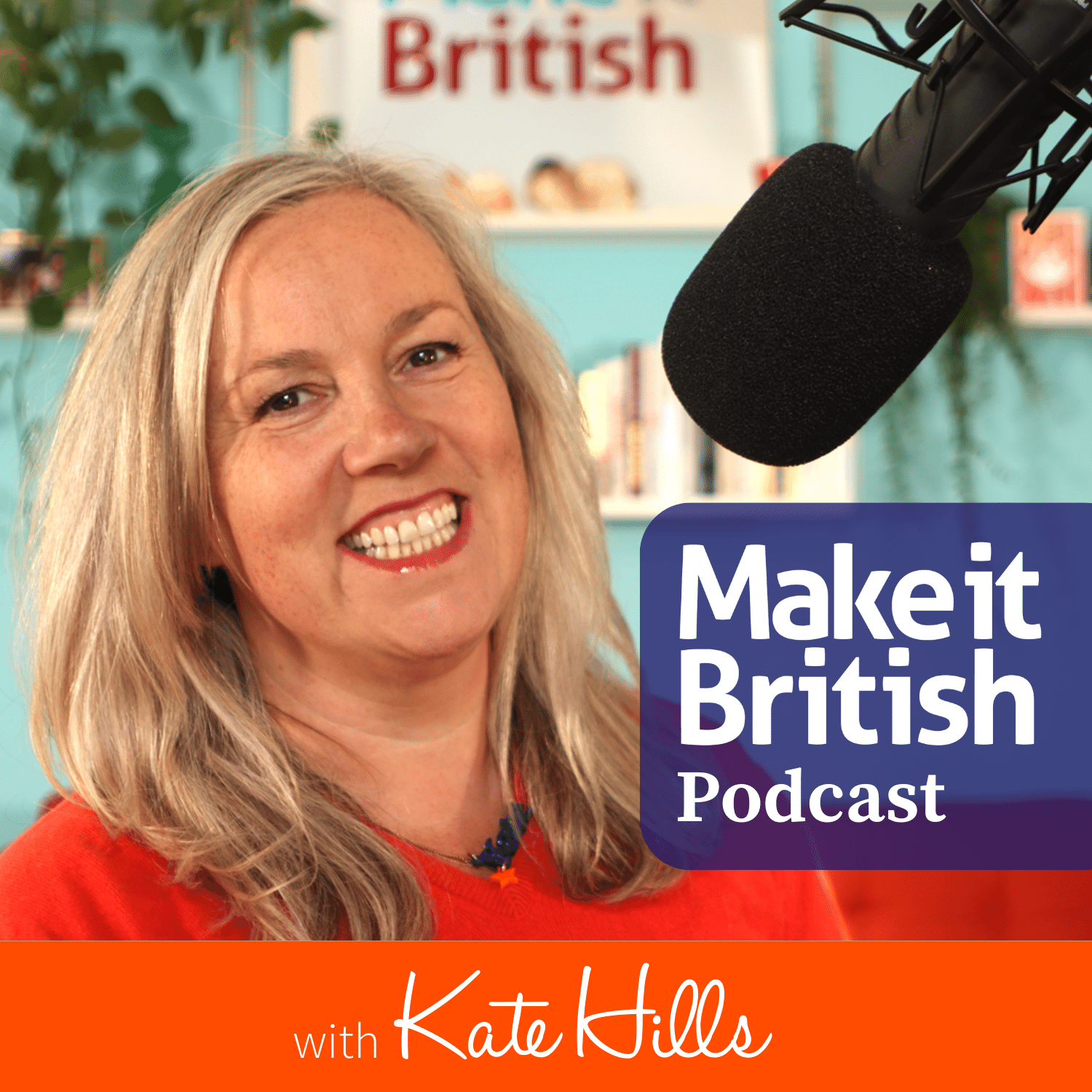
Make it British Podcast

PODCAST · arts

Make it British Podcast

Kate Hills is on a one-woman mission to save UK manufacturing.In this podcast she shines the light on British brands and manufacturers, and goes behind the scenes of their businesses.With tips, hints and tricks to help you manufacture in the UK and buy British.Never has there been a more critical time to get behind 'made in Britain'.

  1. 300

    A Visit to Laxtons Spinning Mill with Carly Smith & Rochelle Tracey

    In this episode of the Women in Wool series, I visited Laxtons Yarns in Baildon, Yorkshire, a fourth generation family spinning mill that is now employee-owned.I was given a full tour of the mill floor by commercial director Carly Smith and national accounts manager Rochelle Tracey, before sitting down with them to talk about British wool, the future of the business and the exciting relaunch of their hand knitting range.Laxtons spin worsted and fancy yarns for hand knitting, machine knitting and weaving. Their Sheepsoft yarn is a blend of Blue Faced Leicester and Masham British wool and travels less than 50 miles from fleece to finished yarn.Almost the entire workforce is women.In this episode we cover:Behind the scenes of how the fibre is spun into yarn.How Laxtons became employee owned in 2024 and what that means for the future of the business in Yorkshire.Why 52% of everything Laxtons spins is now British wool, and how that has grown.The relaunch of their hand knitting range as Bramble & Fleece.The shift happening across Yorkshire mills, with more women now leading businesses in what has traditionally been a male dominated industry.About LaxtonsLaxtons Yarns is a fourth generation family spinning mill based in Baildon, Yorkshire. They spin worsted and fancy yarns for hand knitting, machine knitting and weaving, with over 52% of their yarn made from British wool. In July 2024 the business became employee owned, securing its future in Yorkshire. Their hand knitting range is relaunching as Bramble & Fleece in 2026.Website: laxtons.com | bylaxtons.comInstagram: @laxtonsyarns🚀 Ready to create a British-made product business that's built to last? Without faffing about, wasting wads of cash, or struggling with unreliable factories. Apply for the British Brand Accelerator: makeitbritish.co.uk/apply

  2. 299

    For the Love of Knitting with Genevieve Sweeney

    In this episode of the Women in Wool series, I take a trip to the beautiful Essex countryside to visit knitwear designer Genevieve Sweeney in her micro factory, where she designs, programmes, knits, and finishes her collection in house.We talk about the realities of owning your own industrial knitting machine - from learning to keep the yarn and machine happy, to breaking needles in tears and coming out the other side.We also hear about Genevieve's mission to revive the almost forgotten art of hand Intarsia, a knitting technique synonymous with Scottish knitwear.About Genevieve SweeneyGenevieve Sweeney is a knitwear designer and maker based in Essex. Known for her distinctive use of colour, texture and geometric patterning, Genevieve works with natural fibres including Lambswool and naturally-dyed Merino.You can find Genevieve and Genevieve Sweeney at:Website: genevievesweeney.comInstagram: @genevievesweeneyGenevieve forst appeared on the Make it British Podcast in Episode 39 in March 2019.You can listen to that episode here🚀 Ready to create a British-made product business that's built to last? Without faffing about, wasting wads of cash, or struggling with unreliable factories. Apply for the British Brand Accelerator: makeitbritish.co.uk/apply

  3. 298

    5 Steps to Finding a UK Manufacturer

    🚀 Ready to create a British-made product business that's built to last? Without faffing about, wasting wads of cash, or struggling with unreliable factories. Apply for the British Brand Accelerator: makeitbritish.co.uk/apply In this episode I'm sharing the recording of a recent webinar I ran - 5 Steps to Finding a UK Manufacturer.Learn my signature 5 Step Factory Readiness Method™ which has helped hundreds of small business owners to get their products made in the UK.Find out why manufacturers don't get back to you (and how to make sure you get a reply).Why sampling costs can spiral out of control and how to avoid it.What a tech pack is, why you need one and how to create a tech pack quickly and easily without using a designer.If you are trying to get a product made in the UK and want a clear, practical framework to follow without making costly mistakes, this episode will give you exactly that.In this episode you will also hear me mention a cost price calculator that I have developed.Try the Cost Price CalculatorFollow Kate @makeitbritish on Instagram

  4. 297

    The Great British Wool Revival with Harriet Fletcher-Gilhuys, Fashion Roundtable

    In this episode of the Women in Wool series, I'm joined by Harriet Fletcher-Gilhuys from Fashion Roundtable.Harriet is the project lead for The Great British Wool Revival and is also working with the King's Foundation on an event in May 2026 to promote the use of British wool.If you're a designer, maker or brand wanting to work with British wool but not sure where to start, the Great British Wool Revival is the resource you need to know about. It maps the entire wool supply chain from sheep to spinning, dyeing, knitting and weaving and Harriet is here to walk us through exactly how to use it.In this episode we cover:What The Great British Wool Revival is and how to use it to find farms, spinners, dyers and manufacturers near youHow to plan a traceable British wool supply chain from scratch, and why you should allow a full year from first conversation to finished productHow to get around minimum order quantities by pairing up with other small designersWhy the website is already being used in 80 countries and what that tells us about the global shift towards homegrown fibresThe two-day wool summit at Dumfries House in Scotland bringing together farmers, designers, makers and policymakers, and how to get involvedIf you care about British farming, UK manufacturing and using fibres that actually grow on our hillsides, this episode will give you a practical look at how it can be done.About the Great British Wool RevivalThe Great British Wool Revival is a free online platform built to make British wool more accessible, from farmer through to finished product. Launched in September 2024 in collaboration with the King's Foundation and funded by Yoox Net-a-Porter, it maps the entire wool supply chain and includes a terminology guide, a directory of mills, spinners and dye houses, and step-by-step guidance for designers wanting to work with British wool.The Great British Wool Revival WebsiteFashion Roundtable websiteInstagram: @greatbritishwoolrevival🚀 Ready to scale your UK-made brand? Apply for the British Brand Accelerator at makeitbritish.co.uk/applyFollow Kate @makeitbritish on Instagram

  5. 296

    Building a British Tweed Tailoring Label in Yorkshire with Isabelle Randall

    In this episode of the Women in Wool series, I'm joined by Isabelle Randall, a fashion designer and tailor based in Scarborough, Yorkshire, who has been running her own label for over 21 years.Isabelle works in British tweeds and wool fabrics, making everything bespoke in her atelier. We talk about the Yorkshire mills she loves working with, her tailoring process, and why her bespoke approach keeps customers coming back again and again.We also get into what it feels like, as a designer who makes everything herself, to hand over the responsibility of production to a manufacturer for the first time.In this episode we cover:Which Yorkshire mills Isabelle works with and why she chooses British tweeds and wool fabricsHow her bespoke tailoring process works from initial consultation to finished garmentWhy her made-to-order approach builds long-term customer loyaltyWhat it's really like to hand over production to a manufacturer when you've always made everything yourselfWhy holding out for customers who understand and value the work is better than chasing every saleIf you care about British farming, UK manufacturing and using fibres that actually grow on our hillsides, this episode will give you a practical look at how it can be done.About Isabelle RandallIsabelle Randall is a fashion designer and tailor based in Scarborough, Yorkshire, with over 21 years of experience running her own label. She works exclusively in British tweeds and wool fabrics, creating bespoke garments from her atelier.You can find Isabelle and her label at:Website: isabellerandall.comInstagram: @isabellerandall🚀 Ready to scale your UK-made brand? Apply for the British Brand Accelerator at makeitbritish.co.uk/applyFollow Kate @makeitbritish on Instagram

  6. 295

    How British Wool Helps Brands Source Local Fibre with Louisa Knapp, British Wool

    In this episode of the Women in Wool series, I’m joined by Louisa Knapp, Marketing Executive at British Wool.Based in Bradford, British Wool operates as a farmers' cooperative that collects, grades, and auctions fleece for around 35,000 sheep farmers across the UK. Whether you’re a designer wondering how to source British wool or you’re just curious about what happens to a fleece after it’s sheared, you’re going to love this episode.In this episode we cover:How the British Wool cooperative operates and makes it easy for brands to use traceable wool.The British wool supply chain and how new digital systems making it easier to track wool back to the farm.Why wool is a wonderful fibre and how British Wool are pushing up the price the farmer's receive for their fleece.Launching new regional labels to guarantee Scottish and Welsh wool traceability.About British WoolBritish Wool is a member-led organisation that handles the collection, grading, and marketing of UK fleece to support 35,000 farmers. They work with brands and manufacturers to provide traceable supply chains and increase the global demand for British wool.You can find out more about British Wool atWebsite: www.britishwool.org.ukInstagram: @britishwool🚀 Ready to scale your UK-made brand? Apply for the British Brand Accelerator at makeitbritish.co.uk/applyFollow Kate @makeitbritish on Instagram

  7. 294

    The Reality of Running a Knitwear Micro Factory with Kate Stalker from OUBAS Knitwear

    In this episode of the Women in Wool series, I’m joined by Kate Stalker, founder of OUBAS Knitwear.Kate runs a knitwear micro factory in the Lake District, where she designs and manufactures fully fashioned knitwear using natural fibres, including British wool. After studying knitwear at Winchester School of Art, she returned to Cumbria and started the business with a single hand flat knitting machine in her parents’ utility room.Today OUBAS produces knitwear on industrial knitting machines, with everything knitted, linked and finished in house by a small team. The business combines design, manufacturing and small batch production all under one roof.If you’re interested in British wool, knitwear manufacturing or what it takes to run a small clothing factory in the UK, this episode gives a real behind the scenes look at how it works.In this episode we cover:How Kate started OUBAS with one knitting machine and began selling at local markets and craft fairsWhy she chose to base the business in the Lake District rather than moving to LondonWhat it takes to run a knitwear micro factory with industrial knitting machinesWhat “linking” is and why fully fashioned knitwear is so labour intensiveHow knitwear is finished after it comes off the knitting machineThe reality of pricing knitwear when every garment takes hours to produceHow made to order production helps reduce waste and allows a wider size rangeWhy small batch knitwear manufacturing is becoming increasingly important for emerging brandsIf you care about British farming, UK manufacturing and using fibres that actually grow on our hillsides, this episode will give you a practical look at how it can be done.About OUBAS KnitwearOUBAS Knitwear is a British knitwear brand and micro factory based in the Lake District. The business produces fully fashioned knitwear using natural fibres including British wool, with garments knitted and finished in house.Alongside its own collection, OUBAS also works with other brands and designers, offering knitwear sampling, development and small batch production.You can find Kate and Oubas Knitwear at:Website: www.oubasknitwear.co.ukInstagram: @oubasknitwear🚀 Ready to scale your UK-made brand? Apply for the British Brand Accelerator at makeitbritish.co.uk/applyFollow Kate @makeitbritish on Instagram

  8. 293

    Launching a Brand with Traceable British Wool with Dee McGilvray, CLÒ FOLD

    In this first episode of the Women in Wool series, I’m joined by Dee McGilvray, founder of CLÒ FOLD.Dee has launched a womenswear brand built entirely around 100 percent British traceable wool. In just five months, alongside a full time job, she has taken an idea rooted in farming and the British countryside and turned it into a finished product made entirely in the UK.Her first piece is a wool gilet woven in Yorkshire using traceable wool sourced through British Wool. Every part of the supply chain, from farm to finished garment, has been kept in Britain.This isn’t just a story about launching a fashion brand. It’s about supporting farmers, restoring value to British wool and building a genuinely local supply chain.In this episode we cover:Why so much British wool goes to waste and why farmers are often paid very little for itHow Dee built a fully traceable supply chain starting with British WoolWhat traceable wool actually means and how customers can scan a QR code to see which farms their garment came fromWorking with UK mills, manufacturers and suppliersWhy launching with one product was a smart moveThe reality of starting a brand quickly and testing demand in small batchesWhy wool is one of the most underrated fibres in British fashionIf you care about British farming, UK manufacturing and using fibres that actually grow on our hillsides, this episode will give you a practical look at how it can be done.About CLÒ FOLDCLÒ FOLD is a British womenswear brand built on the principle of land led living. Every garment is made using traceable British wool, with full transparency from farm to finished product.You can find Dee and CLÒ FOLD at:Website: www.clofold.comInstagram: @clofoldMake sure you join her mailing list to hear about upcoming launches including traceable British wool welly socks and future outerwear pieces.🚀 Ready to scale your UK-made brand? Apply for the British Brand Accelerator at makeitbritish.co.uk/applyFollow Kate @makeitbritish on Instagram

  9. 292

    Series 8 Trailer: Women in Wool

    Series 8 of the Make it British podcast is here!After many of you asked, “Where’s the podcast gone?”, it's coming back with a brand-new themed series: Women in Wool.Over the past few months, I've been recording interviews behind the scenes. As the conversations unfolded, a clear thread emerged. Every guest was a woman. And every one of them was working with the same fibre - Wool.This new series shines a spotlight on the women driving innovation, craftsmanship and revival across the UK wool supply chain – from farming and spinning to weaving, knitting and manufacturing.🐑 Why Wool? Why Now?The UK textile industry was built on wool. Entire towns, trades and skills grew around it, yet over recent decades, wool has been pushed aside by cheaper synthetic fibres.Now, the tide is starting to turn.Recent cultural moments have helped bring wool back into the spotlight:The 'Traitors effect' with Claudia Winkleman’s tartans, tweeds and knits dominating headlines.The Princess of Wales visiting Welsh mill Melin Tregwynt and wearing Welsh wool.Growing attention on natural fibres and fully traceable supply chains.The launch ofThe Great British Wool Revival, a platform dedicated to strengthening British wool supply chains.At a time when brands are preparing for Digital Product Passports and increased traceability requirements, wool stands out as one of the very few fibres we can genuinely grow and process here in the UK.👩‍🦰 Why Women in Wool?While the textile industry has historically been male-dominated, more and more women are now leading businesses across every stage of the wool supply chain.From micro-factories to knitwear brands, from farming to finishing, female founders are shaping the future of British wool. This series celebrates them.🎙️Be My GuestIf you work in wool, or know a woman who does, and would like to be featured in the Women in Wool series, email [email protected] with the subject line Women in Wool.🧡 Love the Podcast?If you’re a regular listener and this show has helped you, please take a moment to leave a review. Reviews help more people discover the amazing prhttps://www.instagram.com/makeitbritish/oducts still being made and manufactured in Britain.Want to start or grow a British-made brand?There are several ways that we can work together depending on what stage your business is at.➡️ Let's Work Together!Follow Kate on Instagram @makeitbritish

  10. 291

    BONUS: The 3 Part Framework for Developing Profitable UK-Made Products

    🚀 Want to join British Brand Accelerator? Apply here: makeitbritish.co.uk/applyGot a question before applying?DM me on Instagram: @makeitbritish

  11. 290

    SOS: Stop Wasting Time Contacting the Wrong Factories 🏭

    Not all factories are created equal!And if you’re contacting 20 different manufacturers hoping one will say yes — you're doing it the hard way.In this episode of MANUFACTURING SOS, I’m talking about one of the most common mistakes I see when people start looking for a UK manufacturer: assuming every factory can make every kind of product.You’ll learn why factory specialisms matter, how MOQs and capacity make a difference, and what you actually need to look for when shortlisting a manufacturer.I’ll also share why I took down my free directory of UK manufacturers and the surprising truth about what manufacturers really said about being in it.▶️ Watch this episode on YouTubeListen now to find out:🏭 Why not every factory with a sewing machine is right for your product🧵 What kind of research you really need to do before reaching out🛑 The red flag that means a manufacturer isn’t a good fit🍷 What looking for a factory partner and choosing a wine having in common!Get a copy of my UK Manufacturers List▶️ Watch all 5 episodes of MANUFACTURING SOS on YouTube🚀 Ready to scale your UK-made brand? Apply for the British Brand Accelerator at makeitbritish.co.uk/apply

  12. 289

    SOS: Why Ordering Too Much Stock is a Costly Mistake

    In this episode in the MANUFACTURING SOS series, I’m breaking down why placing a big order with your manufacturer, especially on your first production run with them, can be a costly mistake.You’ll learn why it’s always smarter to treat your first production run as a test, how to avoid tying up all your money in stock, and how to respond when a manufacturer insists on high MOQs.If you’re at the stage of placing your first order with a factory, or wondering how many units to start with, don’t miss this one.▶️ Watch this episode on YouTube🎧 Listen now to find out:📦 Why ordering big on your first run is rarely a good idea🧪 How to treat your first production like a product test👚 How to avoid ending up with stock you can’t sell⭐️ Why less really is more when you're building a UK-made brand🎧 Subscribe to the Make it British podcast so you don’t miss the rest of this special MANUFACTURING SOS seriesGet my Range Plan Template Here▶️ Watch the full series on YouTube🚀 Ready to scale your UK-made brand? Apply for the British Brand Accelerator at makeitbritish.co.uk/apply

  13. 288

    SOS: What’s the REAL Cost of Skipping Tech Packs? 📐

    Think tech packs are optional? Or that your manufacturer can just "sort it for you"?Think again.In this episode of Manufacturing SOS, I’m breaking down exactly what happens when you don’t have a proper tech pack, and why skipping this step is one of the most expensive mistakes you can make.You’ll learn why a tech pack is your blueprint, not just a boring admin task, and how trying to wing it will cost you more in sampling, quality control, and wasted materials.I’m also busting the myth that you need to spend thousands on a designer to create one – and showing you what to include (in plain English).Whether you’ve been told you don’t need one, or you’ve been avoiding it because it sounds too techy, this episode is your wake-up call.▶️ Watch this episode on YouTubeListen now to find out:🧵 What a tech pack actually is and why it matters💸 How skipping it costs you money, time, and control🧠 Why pay £100s to get one made📋 What to include in a tech pack (and how to keep it simple)🎧 Subscribe to the Make it British podcast so you don’t miss the rest of this special MANUFACTURING SOS seriesGet my Tech Pack Template Here▶️ Watch the full series on YouTube🚀 Ready to scale your UK-made brand? Apply for the British Brand Accelerator at makeitbritish.co.uk/apply

  14. 287

    SOS: Never ask a factory for the price until you do THIS 💷

    What UK Manufacturers Really Think When You Ask About PriceIf the first thing you ask a factory is “How much?” — you’re not alone.But it might explain why you’re not getting the response you hoped for.In this episode of Manufacturing SOS, I’m unpacking what actually happens when you lead with price, and why it’s one of the fastest ways to put off the best manufacturers.You’ll learn how to work backwards from a realistic retail price, how to spot when your margins just don’t add up, and what to do before you ever ask for a quote.You’ll also get a reality check on what it really costs to make something in the UK — and why bartering isn’t a strategy.If you want to be taken seriously by UK factories and avoid wasting everyone’s time (including your own), this episode is for you.▶️ Watch this video on YouTubeListen now to find out:💸 Why asking for price too soon makes you look unprepared🧮 How to calculate a realistic target cost price🧵 Why most founders get their garment costings completely wrong📉 What happens when you treat manufacturing like price shopping🔁 What to say to a factory instead of “how much is this to make?”🎧 Subscribe to the Make it British podcast so you don’t miss the rest of this special MANUFACTURING SOS series▶️ Watch the full series on YouTube🚀 Ready to scale your UK-made brand? Apply for the British Brand Accelerator at makeitbritish.co.uk/apply

  15. 286

    SOS: Why UK Manufacturers are Ghosting You 👻

    If your inbox is full of unanswered emails to factories, it's not personal. It's a sign you're making critical mistakes that scream 'newbie'.In this first episode in this special series MANUFACTURING SOS I’m diving into one of the most common frustrations I hear from founders - that they've contacted manufacturers and no one got back to them.Sound familiar?Before you assume UK manufacturers are just ignoring you, you need to hear this.I’m sharing the real reasons factories hit delete, including vague enquiries, missing tech packs, and the one thing they’ll always check before replying to you.You’ll also hear a cautionary tale about what happens when you work with a so-called UK manufacturer that turns out to be a middleman. Spoiler: it nearly cost one founder £30k.If you want to stop wasting time and make sure you’re actually factory-ready, this episode is for you.▶️ Watch this episode on YouTubeListen now to find out:🚩 What red flags instantly tell a manufacturer you're not ready👻 The mistake that gets your enquiry ghosted 75% of the time💌 Why your email address and Instagram feed matter more than you think👬 How to avoid falling for middlemen posing as UK factories🤓 What to do before you ever send that first email🎧 Subscribe to the Make it British podcast so you don't miss the rest of this special MANUFACTURING SOS series.▶️ Watch the full series on YouTube🚀 Ready to scale your UK-made brand? Apply for the British Brand Accelerator at makeitbritish.co.uk/apply

  16. 285

    Introducing Manufacturing SOS

    Brand New Mini Series Coming Soon: Manufacturing SOSAfter a year-long hiatus, the Make It British Podcast is coming back!Series 7 is currently in the works, but while you wait, I’ve got something special for you…Introducing a brand new mini series called Manufacturing SOS.This special series is for anyone who’s starting or scaling a clothing, accessories or homeware brand and wants to get their products made in the UK without wasting time, money or losing their mind in the process.Each episode is short and straight to the point. And in my usual no-nonsense style, I’ll be breaking down the most common manufacturing mistakes I see brands make, and how to avoid them.These are the things I hear the same mistakes I hear again and again during the hundreds of conversations I’ve had with brand founders over the last few years. They’re also the things I know UK manufacturers wish more brands understood before they reached out.Some of the mistakes I’ll be sharing might already be painfully familiar. But hopefully by hearing them now, you’ll avoid making the same ones, and potentially save yourself thousands in the process.Whether you’ve:Contacted a factory and not heard backReceived disappointing samplesOr you’re doing your homework before you begin…This Manufacturing SOS series is for you.🎬 First episode drops very soon.Make sure you're subscribed to the Make It British podcast on your favourite podcast platform and to my YouTube channel if you’d prefer to watch the video version.🎓 Want my full step-by-step framework?If you're ready to get serious about developing and manufacturing your product in the UK, watch my FREE masterclass:The 3-Part Framework for Growing a Profitable UK-Made Brand👉 Get instant access at makeitbritish.co.uk/masterclass

  17. 284

    Bonus: How to Find a UK Manufacturer

    Finding a UK manufacturer doesn’t have to be a challenge!In this bonus episode, I share the recording of my recent webinar, where I break down the 5 essential steps to finding your perfect manufacturing partner.What You’ll Learn in This Episode:Why manufacturers don’t respond to emails—and how to fix it.The biggest mistakes small businesses make when looking for a factory.How to prepare before reaching out to a manufacturer to save time and money.The 5 steps you need to follow to confidently approach the right manufacturing partner.Why finding a manufacturer isn’t just about Googling names—and what to do instead.Resources & Links Mentioned:Join Get Set for Manufacturing: In just 4 weeks, learn exactly how to get your products made in the UK and find your perfect manufacturing partner.Mentioned in this episode:British Brand Accelerator

  18. 283

    300 - Words of wisdom from UK manufacturers featured on this show

    Welcome to episode 300!Celebrating the 300th episode of this podcast I look back at some of the amazing guests that I've had on this show from the world of UK fashion and textile manufacturing. Manufacturers that have shared their stories, their challenges, and their successes with us.Episodes / Manufacturers featured in this episode:Episode 102 - David Collinge | John Spencer TextilesEpisode 005 - Keith Hanshaw | The Leather Satchel CompanyEpisode 088 - Chris Woodford | Crown NorthamptonEpisode 193 - Ian Maclean | John Smedley MBEEpisode 55 - Lance Mitchell | Mitchell InterflexEpisode 113 - Ruth Masson | Harris TweedEpisode 290 - Christopher Nieper | David Nieper OBEEpisode 96 - Richard Ince | Ince UmbrellasEpisode 004 - Jo Ashburner-Farr | Red Dragon FlagmakersEpisode 254 - Chris Childs | ContradoEpisode 21 - Jenny Holloway | Fashion EnterEpisode 31 - Mick Cheema | Basic PremierEpisode 299 - A visit to Vagabond bags with Simon MichelsonEpisode 118 - David Williams | Stoll GBEpisode 203 - Saed Saleh | Mars KnitwearEpisode 060 - Diana Kakkar | Maes LondonEpisode 252 - Maxine Wells | Intimate Apparel SamplesEpisode 080 - Mustafa Fuat | Gosha LondonEpisode 054 - Peter Philips | Abbey EnglandEpisode 292 - David Courtney | Courtney & CoThis episode also marks the final episode of series 6. I'll be taking a break from podcasting for a while. Whilst there won't be making any new episodes for you to listen to, there are over 150 hours of previous episodes to catch up and re-listen to.HANDY LINKSBritish Brand Accelerator - Work closely with me to start or grow your UK-made brand.Newsletter - Subscribe for a weekly dose of inspiration and advice on making in the UKMake it British WebsiteYouTubeInstagramMentioned in this episode:British Brand Accelerator

  19. 282

    299 – A Visit to Vagabond Bags

    Join me on a tour round a factory!In this episode I'm chatting with Simon Michelson, owner of Vagabond Bags, a sewing factory in Swindon that makes cosmetic bags, shower caps and hot water bottle covers.Meet some of the people working in the factory, hear about the jobs they do and find out how many shower hats one person can make in a day. Spoiler - it's quite a lot!HANDY LINKSBritish Brand Accelerator - Work closely with me to start or grow your UK-made brand.Newsletter - Subscribe for a weekly dose of inspiration and advice on making in the UKMake it British WebsiteYouTubeInstagramMentioned in this episode:British Brand Accelerator

  20. 281

    298 – What’s going on with UK manufacturers? [with special guests]

    I'm joined today by 3 amazing people that work tirelessly in the UK fashion and textile industry.You may have seen in the press recently that several high profile brands have been affected by the close of Matches, but did you know about the knock on affect that has had on the UK manufacturers?I also heard yesterday the sad news that the Mackintosh factory in Lancashire is closing. What the heck is going on?So I went live on Instagram with 3 special guests to discuss the topic, and this episode is your opportunity to hear the full discussion if you missed the live.My guests are:Tamara Cincik from think tank Fashion RoundtableMustafa Fuat from Gosha LondonDiana Kakkar from Maes LondonSome of the keys points we discussed:How the Matches collapse has impacted local manufacturers.The financial instability of fashion brands.Why the industry needs to be regulated.How other countries support their local production.How public procurement buying British could help the entire industry.The grants and tax credits needed to make local production more affordable.Why lobbying for changes in government policies is essential.The need for STEAM education, putting creativity back on the curriculum.Watch the original Instagram live hereMentioned in this episode:British Brand Accelerator

  21. 280

    297 – The Biggest Mistake Made by Product Businesses

    The title says it all. Listen to find out what it is!HANDY LINKSBritish Brand Accelerator - Work closely with me to start or grow your UK-made brand.Newsletter - Subscribe for a weekly dose of inspiration and advice on making in the UKMake it British WebsiteYouTubeInstagramMentioned in this episode:British Brand Accelerator

  22. 279

    296 – Behind the Scenes at KC Manufacturing with Adam Robertson and Nina Falk

    Join me on a visit to KC Manufacturing (previously Kalopsia Collective) in Dumferline, Scotland to meet with husband and wife team Adam Robertson and Nina Falk.KC Manufacturing is a social enterprise specialising in small batch manufacturing.Discover:How Adam & Nina met and ended up setting up their business.What it's like to run a factory together as husband and wife.Why 'made in Scotland' is so important.How KC Manufacturing are supporting other UK textile firms.The challenges of working with deadstock materials.Where Adam & Nina got the funding to set up their factory.How they get young people to work in the industry.About KC ManufacturingKC Manufacturing websiteEpisode 51 - Small Batch Manufacturing with Adam Robertson, Kalopsia Collective.HANDY LINKSBritish Brand Accelerator - Work closely with me to start or grow your UK-made brand.Newsletter - Subscribe for a weekly dose of inspiration and advice on. making in the UKMake it British WebsiteYouTubeInstagramMentioned in this episode:British Brand Accelerator

  23. 278

    295 – 4 Reasons NOT to Make in the UK

    Regular listeners to this podcast will know that I am all about encouraging brands to manufacture locally. But in some cases, it might not make good sense to do so.In this episode I explain the 4 reasons why you might NOT want to make in the UK.Want my advice on whether your product should or could be made here? Reach out to my with a direct message on Instagram @makeitbritish hereHANDY LINKSBritish Brand Accelerator - Work closely with me to start or grow your UK-made brand.Newsletter - Subscribe for a weekly dose of inspiration and advice on. making in the UKMake it British WebsiteYouTubeInstagramMentioned in this episode:British Brand Accelerator

  24. 277

    294 – How to get people onto your mailing list

    One of the questions that came up on one of our recent British Brand Accelerator group coaching calls was so good, I thought I'd bring it to you on the podcast this week.The question was about whether a small business that makes in the UK should be offering a discount when someone opts in to their newsletter, and whether this strategy works.It opened a whole discussion amongst the group about the pros and cons of discounting and other ideas for getting potential customers to sign up to your newsletter.So if you are wondering the same thing about discounting, this episode is for you!Sign up the the British Brand Accelerator waitlist here - www.makeitbritish.co.uk/waitlistMentioned in this episode:British Brand Accelerator

  25. 276

    293 – Save English Fine Cottons

    This week I’m bringing some very sad news - that the UK’s only cotton spinning mill, English Fine Cottons, which brought cotton spinning back to Greater Manchester in 2018, has very sadly gone into administration.In case you don’t know about the history of English Fine Cottons, it was set up by the technical textile spinners Culimeta-Saveguard, who invested £4.8m of its own money, £2m of which was a loan from the Greater Manchester Combined Authority, to regenerate a former Victorian cotton mill and install new technology to create luxury yarn. A further £1m was awarded as a grant by the N Brown Textile Growth Programme.English Fine Cottons was the start of something very exciting in UK manufacturing, and for this to have happened is tragic. The collapse into administration is caused by the parent group Culimeta-Saveguard going down, and unfortunately that has taken the cotton spinning down with it. Something needs to be done to save our only cotton spinning mill, otherwise this is history repeating itself.So today's episode is a remastered version of a visit that I did to English Fine Cottons in 2019, along with an interview with Andy Ogden, who was the general manager at the time.Mentioned in this episode:British Brand Accelerator

  26. 275

    292 – Reviving the UK Button Making Industry with Courtney & Co Button Makers

    Today's guests are Andrea and David Courtney from Courtney & Co buttonmakersBack in 2012 I was contacted by someone who was trying to save the UK’s last remaining horn button maker - Grove & Sons. He was looking for investors to buy up the machinery and pattern books from the business so that the art of natural button making in the UK was not lost.Well it turns out that the investor that this guy eventually found was someone called David Courtney, who saw an ad to buy the machinery and patterns, and decided that he wanted to help.But things are never as easy as the seem, and this initial investment took David Courtney down a very long and winding path to bring button making back to the UK.Over a decade later and David Courtney now has an amazing button-making factory in the Cotswolds, with state of the art machinery, producing buttons from 3 different types of materials. He’s also enlisted his lovely wife Andrea to head the factory up, and they now supply the most beautiful buttons to brands and designers wanting an authentic UK-made button, still made using the original patterns that David saved from Grove & Sons.This interview was recorded onsite in their factory in Bourton-on-the-Water, Gloucestershire, and Andrea and David recount the full tale of how Courtney & Co buttons got to where they are today.About Courtney & CoCourtney & Co WebsiteCourtney & Co on InstagramFURTHER RESOURCESQuiz: Are you ready to work with a UK factory? HANDY LINKSBritish Brand AcceleratorMake it British WebsiteYouTubeInstagramMentioned in this episode:British Brand Accelerator

  27. 274

    291 – Micro Factories & Supply on Demand: UK Manufacturing at its Best

    This episode celebrates 15 years since I registered the domain makeitbritish.co.uk and busts some of the myths about UK manufacturing.You'll find out:Why I started Make it British and why I'm such a firm believer in UK manufacturing.The current UK manufacturing landscape.How the UK fashion and textile industry is made up of 1,000s of micro factories.How many garment factories there really are in the UK.The benefits of making in the UK.And why supply on demand is best done locally.To see the video recording of this talk, go to makeitbritish.co.uk/microfactoriesWant to work together? Fill in this form so I can find out more about your business goals, and I'll get back to you with ways I can help.Mentioned in this episode:British Brand Accelerator

  28. 273

    290 – From the archive: Why UK Manufacturing is More Sustainable with Christopher Nieper OBE

    Christopher Nieper OBE is the managing director of David Nieper, a womenswear business in Alfreton in Derbyshire. The firm was set up by Christopher's parents sixty years ago and is now one of the most vertical textile operations in the UK. Christopher recently invested in state-of-the-art digital printing equipment so that the factory can print it's own fabric onsite. David Nieper already prints all their own catalogues and produce their own knitwear in house, alongside the garment production.In this episode you can hear about the research Christopher commissioned from Nottingham university looking at the greenhouse gas emissions produced to make clothing at the David Nieper factory in Derbyshire. The study then compared these findings to the emissions produced by making garments in China, Turkey and Bangladesh and then shipping them to the UK. It makes for very interesting insights into how making in the UK can be quantified as more sustainable. A big advocate for slow fashion, Christopher has also found that his customers keep and wear his clothes 10 times longer than average. Listen to this episode to discover: How the David Nieper factory uses 'just-in-time' manufacturing to achieve a 98% sell-through on their garmentsChristopher's plans to make the David Nieper factory the greenest factory in Europe, recovering the heat generated by the factory to use as renewable energyHow he's changing the attitudes of young people in his local town by giving them a taste of what it's like inside a real manufacturing environmentThe charity that the business has set up to help rebuild a local secondary school that was in the bottom 2% of schools in the UK and make it over-subscribed for the first time in 30 yearsChristopher's idea for a labelling scheme for clothing that ranks the environmental sustainability of every garmentThis episode is the recording of a talk that Christopher did at Make it British Live! Online event in October 2020.About David NieperWatch my Instagram reel showing behind the scenes at the David Nieper factory.David Nieper website Stay in TouchBritish Brand Accelerator - Find out how you can work with me to build your British-made brandMake it British websiteMentioned in this episode:British Brand Accelerator

  29. 272

    289 – Creating Adaptive Clothing with Caron McLuckie from Bealies Adaptive Wear

    In this episode of the Make it British podcast, Karen McCluckie, the director of Bealies Adaptive Wear, shares her inspiring journey of creating adaptive clothing for wheelchair users and disabled individuals.Motivated by her son's disability and the lack of suitable clothing options in the market, Karen embarked on a mission to design stylish and functional joggers tailored to the needs of wheelchair users. From the initial idea to overcoming challenges and securing funding, Karen discusses the process of bringing her innovative designs to the market while juggling her role as a social worker.With a commitment to UK manufacturing and a vision for expanding her product range, Karen's story highlights the power of innovation and determination in creating inclusive fashion solutions.About Caron McCluckieCaron on LinkedinBealies Adaptivewear WebsiteMentioned in this episode:British Brand Accelerator

  30. 271

    288 – Why You Should Visit Your Factory

    This week I’ve been in the Midlands visiting factories, which is always one of my favourite things to do.I’d planned to take my podcast mic with me and get an episode to you today with an interview with one of the manufacturers, but sadly I was in such a rush when I set off early Sunday morning that I left my mic behind!So on today’s episode instead I'm discussing one of the amazing factories I went to see, and also sharing a recording from the archives - which is to encourage you to get out there and visit factories yourself!Mentioned in this episode:British Brand Accelerator

  31. 270

    287 – How To Sell Your Products

    Today's episode is all about selling and sales, and how it's closely linked to product development.A lot of creative business owners say that they aren't any good at selling, so the natural tendency is to drop their prices or default back to making more products.I'm going to give you a different way of looking at sales, so that selling doesn't make you feel like a used car salesman.Mentioned in this episode:British Brand Accelerator

  32. 269

    286 – 21 Tips for Building a Great British Brand

    Hear from 21 business founders as they give their tips on starting and growing a British-made brand.These snippets were taken from 21 different guest interviews on this podcast.If you want to listen to the full episodes you can find them as follows:Ep.142 Julie Deane, Cambridge Satchel CompanyEp.076 Jack Millington, Billy TanneryEp.143 Kath Whitworth, Celtic & CoEp. 41 Paul Smithers, Halycon BlueEp 179 Rebecca J MillsEp 171 Rich Keegan & Linda Souto Maior, Usual ObjectionsEp 23 Sian Reekie, Hettie CoEp 78 Katie Walker FurnitureEp 27 Matt Booth, Both BarrellsEp 139 Rachael Attwood, BritannicalEp 108 Steff McGrath, Something WickedEp 82 Joel, Chudleigh, Made to LastEp 96 Richard Ince, James Ince & Sons UmbrellasEp 120 Emma WillisEp 39 Genevieve SweeneyEp 129 Samanth Brooke, Waring BrookeEp 88 Chris Woodford, Crown NorthamptonEp 141 Emma Mathews, SockoEp 153 Gillian Tusting, TustingEp 86 Pippa Dziubinski, The Little Art CollectionEp 183 Brant Richards, HebTroCoHere you will find a list of all of the episodes of this podcast, which you can filter by guest, subject and topicSo I hope that has inspired you to make in the UK if you aren’t already!If you'd like to launch or grow a British-made brand, I'm here to help. Reach out to me via Instagram DM @makeitbritish or drop me an email and I will get back to you with ways that I can help.HANDY LINKSBritish Brand AcceleratorMake it British WebsiteYouTubeInstagramMentioned in this episode:British Brand Accelerator

  33. 268

    285 – I Never Looked at Manufacturing Anywhere Else with Catherine Bedford, Dashel Cycle Helmets

    On today’s episode I’m chatting with Catherine Bedford, founder of Dashel Cycle HelmetsCatherine had the idea for an innovative and stylish cycle helmet whilst watching the London 2012 Olympics. She set about creating her vision, and it took 5 years to develop and launch the Dashel helmet. All Dashel helmets are made in the UK, and in this episode Catherine talks about:How she set about developing a new and innovative product.How she found factories to then make the helmetsSome of the safety testing that bike helmets have to go through. How she got PR and found stockists when she first launched.How she got her first stockists.And how the bike industry has been affected by Brexit.Mentioned in this episode:British Brand Accelerator

  34. 267

    284 – Repair Is The New Cool with Thami Schweichler, United Repair Centre

    Welcome to Episode no.284!Circularity is the buzzword on everyone's lips right now. It's no wonder, when you hear that 350,000 tonnes of clothing goes to landfill in the UK every year. Something needs to be done to stop the mass-consumption that the UK in particularly seems to be pretty bad at!The United Repair Centre, a collaboration between outdoor brand Patagonia, social enterprise Makers Unite, and the Amsterdam Economic Board, is a much needed resource for the clothing industry. And they've opened one up in London!On this episode I chat with one of the United Repair Centre co-founders, Thami Schweichler.We chat about how the URC repair process has combined technology with sewing skills to make repair and circularity available to all, and how any brand can get involved in offering a repair service to their customers.ABOUT UNITED REPAIR CENTREUnited Repair Centre WebsiteUnited Repair Centre InstagramThami Schweichler LinkedinHANDY LINKSBritish Brand Accelerator - My mentoring programmeKate's Sunday Journal - My newsletterMake it British WebsiteYouTubeInstagramMentioned in this episode:British Brand Accelerator

  35. 266

    283 – Tackling Textile Waste as a Slow Fashion Designer with Lydia Bolton

    Today's guest is Lydia Bolton, a slow fashion designer tackling textile waste by upcycling unwanted fabrics and garments and turning them into one-off pieces.As well as having her own label, Lydia also teaches others how to upcycle with workshops that she runs and in her partnerships with big brands such as Lidl, Nike, Adidas and Lime bikes.We chat about:How Lydia started out in fashion and textiles and where she learnt to sew.The challenges of upcycling and making one-off pieces.Where she sources her raw materials from and how deadstock can be a misleading term.Her decision to only rent and not sell her garments going forward.How she collaborates with big brands to spread the word about upcycling.How she is teaching people to sew with her upcycling workshops.ABOUT LYDIA BOLTONLydia's WebsiteLydia on InstagramHANDY LINKSBritish Brand AcceleratorMake it British WebsiteYouTubeInstagram

  36. 265

    FAQ: Where’s The Best Place To Source Fabrics?

    How to find fabrics, leathers and other raw materials for your brand, and avoid the most common mistake that many people make when sourcing fabric.FURTHER RESOURCESUK Fabric Mills on the Make it British websiteHANDY LINKSBritish Brand AcceleratorMake it British WebsiteYouTubeInstagramRate This Podcast

  37. 264

    FAQ: How Many Factories Should I Sample WIth?

    Sampling with UK manufacturers can be quite a different ball game to sampling with manufacturers overseas. Here's why you might not want to sample with lots of different factories.FURTHER RESOURCESQuiz: Are you ready to work with a UK factory? HANDY LINKSBritish Brand AcceleratorMake it British WebsiteYouTubeInstagram

  38. 263

    FAQ: Do I Really Need To Provide The Factory With A Tech Pack?

    Tempted to skip this step? Find out why that might be a bad idea, and how having a tech pack can save you money in the long run.FURTHER RESOURCESTech Pack BundleQuiz: Are you ready to work with a UK factory? HANDY LINKSBritish Brand AcceleratorMake it British WebsiteYouTubeInstagramRate This Podcast

  39. 262

    FAQ: Should I Get My Manufacturer To Sign An NDA?

    A Non Disclosure Agreement is a legal document you might ask a manufacturer to sign in order to protect your designs.Find out what the pros and cons are of asking a manufacturer to sign an NDA, and what the alternatives are.FURTHER RESOURCESHow to find a UK manufacturerHANDY LINKSBritish Brand AcceleratorMake it British WebsiteYouTubeInstagramRate This Podcast

  40. 261

    FAQ: How Do I Approach A Manufacturer?

    What are the secrets to getting a response from a manufacturer when you reach out to them? I explain how to word your approach and why you might not be getting a response.FURTHER RESOURCESHow to get manufacturers to respond to your emailsHow to find a UK manufacturerWhy manufacturers aren't getting back to your emailsHANDY LINKSBritish Brand AcceleratorMake it British WebsiteYouTubeInstagramRate This Podcast

  41. 260

    FAQ: How Much Does It Cost To Start A Brand?

    What are the main costs that you will incur to start a brand, and how can you save money by making your product in the UK?FURTHER RESOURCES25 Hidden Costs of Starting a BrandHow Much Does it Cost to Start a UK-Made Fashion Brand?How to Start a UK Made BrandHANDY LINKSBritish Brand AcceleratorMake it British WebsiteYouTubeInstagramRate This Podcast

  42. 259

    FAQ: How Do I Find The Right Manufacturer For My Brand?

    Discover the best ways to the ideal UK manufacturers for your brand, and how to ensure that they get back to you every time.FURTHER RESOURCESMake it British Manufacturer Directory5 Steps to Finding a UK ManufacturerHow to Start a UK Made BrandHANDY LINKSBritish Brand AcceleratorMake it British WebsiteYouTubeInstagramRate This Podcast

  43. 258

    FAQ: Can A Manufacturer Source My Fabric For Me?

    You might think that having the factory source your fabric for you sounds like the easiest option, but that's not always the case.In this episode I explain what your options are when it comes to fabric sourcing, and why many UK clothing manufacturers operate on what is known as a CMT basis.FURTHER RESOURCESCMT or Full Service Manufacturer: What's the difference?5 Steps to Finding a UK ManufacturerHow to Start a UK Made BrandHANDY LINKSBritish Brand AcceleratorMake it British WebsiteYouTubeInstagramRate This Podcast

  44. 257

    FAQ: How long does it take to launch a brand?

    Find out how long on average it might take to launch a brand and what the main variables are that will affect it.FURTHER RESOURCES5 Steps to Finding a UK ManufacturerHow to Start a UK Made BrandHANDY LINKSBritish Brand AcceleratorMake it British WebsiteYouTubeInstagramRate This Podcast

  45. 256

    FAQ: How Do I Go From Idea To Prototype?

    Discover the essential steps to turn your idea into a successful prototype.Get practical advice on how to bring your concept to life efficiently and cost-effectively and how to common pitfalls.FURTHER RESOURCES5 Steps to Finding a UK ManufacturerHow to Start a UK Made BrandHANDY LINKSBritish Brand AcceleratorMake it British WebsiteYouTubeInstagramRate This Podcast

  46. 255

    272 – Happy New Year! What’s coming in 2024?

    Welcome to Episode 272 of the Make it British PodcastStarting off the new year with something a bit different. This episode explains everything.Looking out for my special FAQ series, starting on Monday 7th January.HANDY LINKSBritish Brand AcceleratorMake it British WebsiteYouTubeInstagramRate This Podcast

  47. 254

    271 – 3 Things I Learnt This Year

    Hello and Welcome to Episode 271!As 2023 draws to a close, and for my last podcast episode of the year, I reflect back on the 3 biggest lessons that I've learnt this year.I also want to say a massive thank you to everyone that has listened to this podcast over the last 12 months. I cannot believe I am now at episode 271!The Make it British Podcast will be back on 5th January 2024.See you then!MENTIONED IN THIS EPISODEPlan Your Year - My annual planning workshop is the one thing you need to get your vision, goals, projects and tasks mapped out for 2024.British Brand Accelerator - The best way to work with me in 2024. Apply now!Reels Rockstars - The Instagram Reels course that I took that I highly recommend if you want to up your Instagram marketing next year.HANDY LINKSBritish Brand AcceleratorMake it British WebsiteYouTubeInstagramRate This PodcastMentioned in this episode:British Brand Accelerator

  48. 253

    270 – Sustainability Insights for Small Businesses with Mark Shayler

    Welcome to episode 270!In this episode I'm chatting with the fascinating Mark Shayler about all things sustainability.Mark is the author of You Can't Make Money From a Dead Planet, he consults with businesses big and small to help them do better when it comes to their environmental footprint, and he is one of the co founders of Reasons to be Cheerful, a platform for spreading good cheer and hope in a world that can sometimes feel bereft of both.We discuss the environmental cost per wear of a garment; why wool is such a great fibre; which is better - recycled polyester versus cotton ( the answer may surprise you); and what other fibres we could be growing in the UK to be more regenerative.About Mark ShaylerMark is a sustainability consultant, author of You Can't Make Money From A Dead Plant, and one of the founders of publishing and events company Reasons to be Cheerful.Mark Shalyer's WebsiteBuy Mark's Book - You Can't Make Money From A Dead PlanetMark Shayler on InstagramHANDY LINKSBritish Brand AcceleratorMake it British WebsiteYouTubeInstagramRate This PodcastMentioned in this episode:British Brand Accelerator

  49. 252

    269 – Stop Winging it & Have Your Best Year Ever!

    Hello and welcome to episode 269 of the Make it British podcast!At the time of recording this we are just a month away from the start of 2024, and that can only mean one thing - time to start planning!If that idea fills you with dread, because you are a 'wing it and see' type of person, maybe next year needs to start a little differently.In this episode I give you tips on how to stop winging it and start planning.And if you need someone to hold you accountable to making that plan, I have an offer for you.I am hosting my ever-popular online planning party very soon. It’s my Plan Your Year workshop, and you’re invited!In this pre-Christmas online workshop, we'll get goals set, projects planned and tasks mapped out for your coming year.I’ll be showing you how to make planning easy and fun, and you’ll walk away with a completed plan of action for the coming year.Sound good?If you want to join us, you can secure your spot by going to makeitbritish.co.uk/planyouryearEveryone with a ticket will also receive the recording and a special workbook.RESOURCES MENTIONEDPlan Your Year - My Online Planning PartyHANDY LINKSBritish Brand AcceleratorMake it British WebsiteYouTubeInstagramRate This PodcastMentioned in this episode:British Brand Accelerator

  50. 251

    268 – From Start-Up to Export Champion with Laura Ward from Exeat

    Welcome to Episode 268 of the Make it British Podcast!In this episode, I am joined by Laura Ward, founder of the luxury British tennis brand Exeat.Exeat is the UK's most exported luxury tennis apparel brand, and Laura herself is the winner of many awards, including Global Startup of the Year. She's also one of the government's UK export champions, and the brand has been feature in Vogue, Forbes, The Financial Times, and Vanity Fair.In this episode, she's going to give you tips on how to export your brand globally and how she's managed to get such amazing press in such a short space of time.ABOUT EXEATExeat WebsiteExeat InstagramRESOURCES MENTIONEDUK Export AcademyCiment PleatingMade in the UK, Sold to the World HANDY LINKSBritish Brand Accelerator - Apply now to work with me to launch or grow your British-made brand.UK Manufacturers ListMake it British WebsiteYouTubeInstagramRate This PodcastMentioned in this episode:British Brand Accelerator

Type above to search every episode's transcript for a word or phrase. Matches are scoped to this podcast.

Searching…

No matches for "" in this podcast's transcripts.

Showing of matches

No topics indexed yet for this podcast.

Loading reviews...

ABOUT THIS SHOW

Kate Hills is on a one-woman mission to save UK manufacturing.In this podcast she shines the light on British brands and manufacturers, and goes behind the scenes of their businesses.With tips, hints and tricks to help you manufacture in the UK and buy British.Never has there been a more critical time to get behind 'made in Britain'.

HOSTED BY

Kate Hills

URL copied to clipboard!