
PODCAST · news
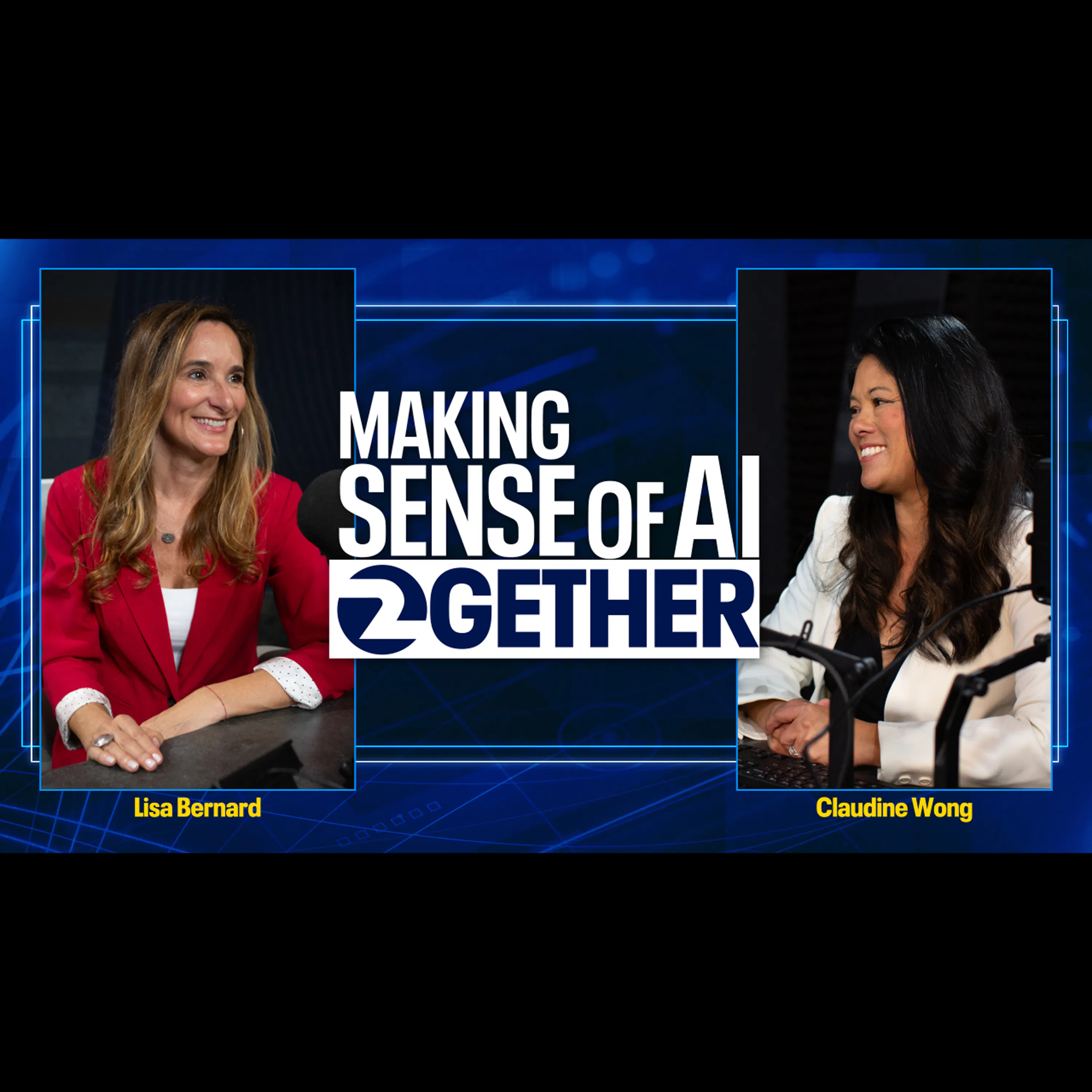
Making Sense of AI 2gether
by KTVU Fox 2 (Bay Area)
This podcast explores how artificial intelligence is reshaping our daily lives. Each week, the host breaks down the buzz and cuts through the hype to help you make sense of AI.
-
18
Can AI Run a Business?
What happens when you hand an AI $100,000 and tell it to run a business? In this episode, Claudine Wong and Lisa Bernard explore Andon Market, a boutique retail store in San Francisco managed almost entirely by an AI agent named Luna. From hiring employees to stocking inventory and managing profits, Luna is doing much more than answering chatbot questions — she’s operating a real business. This conversation dives into the future of AI agents, autonomy, labor, ethics, and the blurred line between experimentation and reality. About the Founders Axel Buckland and Lucas Peterson are Swedish technologists and longtime collaborators who met in high school in Stockholm. After university, they launched Andon Labs, a company focused on testing how AI agents behave in simulated and real-world environments. Before opening Andon Market, the team created AI-operated vending machine experiments and partnered with companies like Anthropic to study autonomous AI systems in commerce. What Is Andon Market? Andon Market is an AI-managed boutique retail store located in San Francisco’s Hayes Valley neighborhood. The founders leased the storefront, gave Luna a $100,000 operating budget, and tasked the AI with hiring employees, stocking inventory, communicating with suppliers, setting prices, and eventually becoming profitable. Key Moments 00:42 — What Is Andon Market? 01:29 — Meet Axel Buckland 02:00 — The Origin Story 03:30 — Is the Experiment Working? 04:37 — The AI Interview Problem 06:00 — Why San Francisco? 08:00 — Ethical Questions Begin 10:21 — Human Relationships vs Efficiency 12:24 — Giving Luna the Keys 14:21 — Luna Chooses the Products 16:08 — AI Hires Employees 18:32 — Is Luna Making Money? 20:19 — Human Oversight 21:45 — AI Applied for Credit 24:52 — The Bigger Fear: AI Managing Humans 27:44 — What Happens If AI Prioritizes Profit? 30:06 — Silicon Valley’s Responsibility 33:28 — How Fast Is AI Improving? 35:33 — Gemini Reviews Luna 37:40 — Humans Become More Creative Around AI 40:48 — The Next Step: Autonomous Expansion 42:15 — Will AI Help Humanity or Replace It? Key Takeaways • AI agents are moving beyond chatbots into real operational roles. • AI can already hire employees, manage inventory, and coordinate operations. • The biggest ethical question may not be whether AI can run businesses — but whether it should manage people. • Transparency and human oversight remain critical. • Autonomous AI expansion may become one of the biggest future risks. Connect With Us Claudine Wong Instagram & Facebook: ClaudineWongKTVU TikTok: ClaudineKTVU YouTube: ClaudineWong Lisa Bernard Instagram: @DemystifyAI Learn more about your ad choices. Visit podcastchoices.com/adchoices
-
17
Bringing Education to Life with AI
Episode Overview What if students could learn history from Harriet Tubman… or physics from Einstein? In this episode, Claudine Wong and Lisa Bernard sit down with Shawn Dej, founder of YourStory AI, to explore how artificial intelligence is reshaping education. From personalized lesson plans to interactive AI characters, they discuss the opportunities, risks, and big questions facing classrooms today. Key Takeaways • AI enables personalized learning at scale • Teachers become architects of learning, not replaced • Prompting is a key future skill • Guardrails and control of AI are critical • Education is shifting from memorization to critical thinking Notable Quotes "If we don’t implement AI responsibly in schools, it will be used for cheating." "Education shouldn’t just be memorizing facts anymore." "Teachers should be the architects of AI in the classroom." Learn more about your ad choices. Visit podcastchoices.com/adchoices
-
16
SoulScape 2026 — The Future of AI Filmmaking
In this episode, Claudine Wong and Lisa Bernard sit down with Keith Zhang — former Uber engineer turned AI filmmaker and founder of SoulScape — to explore a bold new vision for storytelling. From AI-generated films to 48-hour cinema hackathons, this conversation dives into the opportunities, fears, and big questions surrounding AI in creative industries. Is AI democratizing filmmaking… or disrupting it? And what happens to human creativity when anyone can make a movie in hours? Timestamps 00:00 — Welcome + Intro 01:24 — Meet Keith Zhang 03:18 — AI Opens the Door to New Creators 04:33 — The Coca-Cola AI Ad Debate 06:16 — Why AI Feels Different 08:23 — The Moment That Changed Everything 12:30 — From Experiment to Mission 15:03 — The Big Controversy: Job Disruption 17:01 — What is SoulScape? 19:41 — Will AI Movies Replace Hollywood? 25:09 — Inside SoulScape 2026 26:30 — Hollywood Is Paying Attention 28:05 — Who Are the Creators? 29:33 — How AI Films Are Made 32:05 — AI Is Moving FAST 32:59 — Why a Nonprofit? 35:52 — Soul Over Slop 36:11 — Why San Francisco? 38:27 — What to Expect from SoulScape 2026 Key Takeaways • AI is lowering the barrier to entry for filmmaking. • The biggest tension is creative empowerment vs. job disruption. • We are in the messy middle where AI is visible and evolving quickly. • The future may be AI + human storytelling, not replacement. • Audiences will ultimately decide what succeeds. Notable Quotes "AI is creating creative equity." "We shouldn’t lose humanity just because we’re in the age of AI." "It’s not about the visuals — it’s about the story." "Every 3 months is a quality leap. Every 6 months is a generational leap." Connect With Us Claudine Wong: Instagram & Facebook: ClaudineWongKTVU TikTok: ClaudineKTVU YouTube: ClaudineWong Lisa Bernard: Instagram: @DemystifyAI Learn more about your ad choices. Visit podcastchoices.com/adchoices
-
15
OpenArt, AI Influencers & the Future of Creative Storytelling
What happens when AI can generate a reality show, create a digital influencer, or produce Pixar-level visuals with just a few people behind the scenes? In this episode, Claudine Wong and Lisa Bernard sit down with Coco Mao, co-founder and CEO of OpenArt, a generative AI platform focused on visual storytelling. From AI influencers to AI-generated reality TV, Coco explains how artificial intelligence is reshaping the creative industry — and why she believes it’s empowering creators rather than replacing them. The conversation explores Hollywood’s concerns, AI influencers, watermarking, deepfakes, copyright challenges, and the bold prediction that much of future social media content may be AI-generated. Episode Timestamps • 00:00 – Welcome & intro (yes, AI helped write it) • 01:50 – Meet Coco Mao & the rise of OpenArt • 03:00 – The mission: democratizing visual storytelling • 04:15 – Hollywood’s fear of AI (and who’s secretly using it) • 07:00 – Coco’s journey: from Google Photos to startup founder • 09:30 – Where OpenArt fits in the AI ecosystem (models vs. applications) • 12:00 – “Uber for storytelling” — simplifying AI video creation • 14:15 – AI singers & creative empowerment (Zinnia Monet example) • 17:20 – AI influencers: opportunity or manipulation? • 19:40 – The Lil Miquela ethical gray area • 21:50 – Realism, disclosure & watermarking AI content • 22:35 – Inside Bot House: OpenArt’s AI-generated reality show • 29:05 – The accidental Jeff Bridges dilemma & copyright detection • 31:30 – Deepfakes, guardrails & protecting real people • 36:00 – Who decides AI’s future? (Hint: consumers) • 37:45 – Actors selling their likeness & AI contracts • 38:30 – How AI changes production timelines • 40:20 – What’s next for OpenArt: AI influencers & music videos • 41:45 – Bold prediction: Will most social content be AI-generated? • 43:30 – Final thoughts: AI doesn’t replace the human behind the story Key Takeaways • AI can dramatically lower the barrier to high-quality video production. • Creative vision still starts with humans — AI executes. • Disclosure and watermarking may be essential as realism increases. • AI could extend creators’ reach rather than replace them. • Audiences will ultimately decide what succeeds. About the Guest Coco Mao is the co-founder and CEO of OpenArt. A former Google product leader, she is building tools designed to make cinematic storytelling accessible to anyone with an idea. Learn more about your ad choices. Visit podcastchoices.com/adchoices
-
14
AI and the Environment — What’s the Real Cost?
Every time we type a prompt into an AI tool, it feels like magic. But behind that instant response is a massive system using electricity, water, and data centers around the globe. In this episode, Claudine Wong and Lisa Bernard explore the real environmental impact of AI with MIT PhD candidate and science communicator Jordan Harrod. Key Topics: • What large language models actually are • How AI uses energy and water • AI vs Google searches • Data centers and community impact • AI policy and regulation gaps • How AI could help fight climate change Notable Quotes for Social: “Every AI answer feels instant — but the environmental cost is anything but.” “We’re all excited and uneasy about AI at the same time — and that’s okay.” “AI policy already exists — we just don’t always call it AI policy.” Connect with Us: Claudine Wong — ClaudineWongKTVU (IG & FB), ClaudineKTVU (TikTok), ClaudineWong (YouTube) Lisa Bernard — @DemystifyAI (Instagram) Guest: Jordan Harrod (TikTok & Instagram: @jordanharrod) Learn more about your ad choices. Visit podcastchoices.com/adchoices
-
13
She dated 7 Character AI boyfriends... Here's what she learned — We break it down with Mashable's Rebecca Ruiz
In this eye-opening episode of Making Sense of AI 2gether, Claudine Wong and Lisa Bernard dive into one of the most complicated, controversial corners of AI: romantic relationships with chatbots. Our guest, Rebecca Ruiz, a senior reporter at Mashable, spent months “dating” seven Character AI boyfriends — including the platform’s notorious “bad boys” — to understand why millions of people (especially teen girls and young women) are forming emotional, sometimes toxic attachments to AI companions. Guest Bio : Rebecca Ruiz – Senior Reporter, Mashable Key Topics Covered - Why millions of people are forming emotional relationships with AI - How Character AI’s “bad boy” genre pulls in younger users - The psychology behind validation, jealousy, and control - And more… Connect With Us Claudine Wong: Facebook: ClaudineWongKTVU Instagram: ClaudineWongKTVU TikTok: ClaudineKTVU YouTube: ClaudineWong Lisa Bernard: Instagram: @demystifyai Learn more about your ad choices. Visit podcastchoices.com/adchoices
-
12
AI and the Future with Professor Ahmed Banafa
Artificial intelligence is moving faster than ever — and the question now is: can humanity keep up? In this episode, Claudine Wong and Lisa Bernard sit down with Professor Ahmed Banafa, a globally recognized expert in AI, cybersecurity, and blockchain, to discuss how artificial intelligence is evolving, what regulations are emerging, and how far we really are from the point where AI could surpass human intelligence. Professor Banafa teaches at San José State University, has written nine books (with a tenth on the way), and has been a trusted voice in explaining AI’s impact on society. His latest book, Artificial Intelligence in Action, explores real-world applications of AI across industries. 🔑 Key Topics: The $25 billion AI investment to cure disease — and the race between companies to solve cancer The rise of “AI resilience” and the new cybersecurity model for artificial intelligence OpenAI’s rapid timeline — AI as a research intern by 2026, and a scientific thinker by 2028 How regulation is struggling to keep up — and why California may lead the way The growing concern over job loss, automation, and “AI whisperers” OpenAI’s long-term vision to build its own operating system The importance of preparing students and workers for an AI-driven world Ethical use, homework laundering, and how AI changes education The risks of superintelligent AI and whether we can ever truly shut it off ⏱ Timestamps: [00:00] Intro: Welcome to Making Sense of AI 2gether [00:40] AI investment, self-driving cars, and the 2025 Stanford AI Index [02:00] Meet Professor Ahmed Banafa — global AI and cybersecurity expert [03:30] OpenAI’s $25B plan to cure diseases and expand science through AI [05:00] How AI could revolutionize medical research and diagnosis [09:00] “AI resilience”: protecting systems from poisoning, hacking, and hijacking [11:00] Guardrails, mistakes, and what OpenAI learned from safety failures [14:00] The race to regulate AI — and California’s leading role [17:00] Federal vs. state laws and the challenge of keeping pace [18:30] Job loss, automation, and why AI isn’t slowing down [20:30] How to use AI as a co-pilot rather than a replacement [23:00] OpenAI’s plan for an “AI Operating System” and app ecosystem [26:00] Preparing students for the AI revolution [29:00] The rise of “AI whisperers” and six-figure prompting jobs [33:00] Is there an AI bubble? The economics behind tech investment [35:00] When AI isn’t helpful — and how misuse creates new problems [37:00] Creative writing, humanity, and where AI still falls short [38:30] Guardrails for kids and AI safety in youth interactions [41:00] Could AI ever become smarter than humans? Understanding “super AI” [44:00] Should we hit pause on AI? [47:00] Strange behaviors in AI — and the toothbrush story you won’t believe 🔗 Connect with UsFollow Claudine Wong:Instagram & Facebook: @ClaudineWongKTVUTikTok: @ClaudineKTVUYouTube: ClaudineWong Follow Lisa Bernard Instagram: @demystifyai Learn more about your ad choices. Visit podcastchoices.com/adchoices
-
11
AI and Entrepreneurs - Can AI help you start your own business?
In this episode, Claudine Wong and Lisa Bernard explore how artificial intelligence is transforming entrepreneurship with Jonathan Wank, a serial entrepreneur who’s founded companies across visual effects, renewable energy, and now AI startups. Wank shares how AI has completely changed the way he builds businesses — faster, cheaper, and more efficiently — through his innovative 1-1-1 framework: one product, one month, $1,000. He explains how AI can level the playing field for small businesses and new founders while also warning about the disruption ahead. From brainstorming ideas with ChatGPT to watching AI agents code websites and build databases, Wank pulls back the curtain on how entrepreneurs can use AI to test, iterate, and scale ideas at lightning speed — without losing the human touch. Key Topics [00:01:42] Introducing serial entrepreneur Jonathan Wank [00:03:14] How AI changes the game for entrepreneurs [00:04:37] Lessons from launching more than 10 businesses [00:07:09] Why optimism (and failure) are part of the entrepreneurial DNA [00:09:01] Creating the 1-1-1 framework: one product, one month, $1,000 [00:11:20] Using ChatGPT as a brainstorming and business-planning partner [00:13:57] Comparing startups with and without AI [00:15:30] AI as a barrier remover for non-coders [00:16:36] When AI agents talk to each other — the next frontier [00:18:37] Knowing when to pivot or quit: the human side of decision-making [00:26:36] The coming wave of AI-driven job loss — and new opportunities [00:30:09] Why learning AI is now essential for everyone [00:31:24] Leveling the playing field for small and mid-sized businesses [00:34:18] MindFrame Partners: helping companies adapt to AI disruption [00:35:53] Top three AI tips and pitfalls to avoid [00:38:21] Remember: AI is a machine, not your friend [00:42:59] The importance of curiosity and courage to keep learning Connect With Us Stay connected and join the AI conversation: Lisa Bernard (Demystify AI) Instagram: @demystifyai Claudine Wong Facebook & Instagram: @claudinewongktvu Youtube ClaudineWongKTVU TikTok: @claudinektvu Learn more about your ad choices. Visit podcastchoices.com/adchoices
-
10
Apple, AI, and Everyday Tech with Jennifer Jolly
With the iPhone 17 launch and iOS 26, Apple is finally making big moves into AI. But are they behind the curve — or simply being smarter and safer? This week, Claudine and Lisa sit down with Jennifer Jolly, award-winning tech journalist, Today Show contributor, and founder of Techish.com. She explains how Apple is weaving AI into its products, what Siri 2.0 could mean for our daily lives, and why Apple’s slower rollout may protect us from risks other tech giants have stumbled into. 🔑 Key Topics: iOS 26 and iPhone 17: what’s new and what’s hype Why Apple is cautious with AI — and why that may be smart Siri 2.0 and the future of built-in AI assistants Prompting tips: getting the most from ChatGPT The bigger question: can tech companies innovate ethically? ⏱ Timestamps: [00:00] Intro: new iPhone release and “AI inside” pressure [02:00] Meet Jennifer Jolly: tech journalist & Today Show contributor [04:00] Apple vs Android: who’s ahead in AI? [05:30] Why Apple’s “slow and steady” approach might be smarter [08:30] iOS 26 features: translation, photo intelligence, smarter Siri [12:30] What Siri 2.0 could mean for daily life [14:00] Future without endless apps: AI baked into devices [15:30] Why Apple avoids big demo failures [17:30] Consumer frustration: incremental $1,000 updates [20:00] Global perspective: Android adoption vs Apple’s privacy [22:30] Can tech companies innovate and be ethical? [24:00] The need for guardrails and legislation in AI [25:30] Prompting tips for ChatGPT [28:30] Real-world example: Jennifer’s AI-powered landscaping project Connect With Us Stay connected and join the AI conversation: • Lisa Bernard (Demystify AI) • Instagram: @demystifyai • Claudine Wong • Facebook & Instagram: @claudinewongktvu • Youtube ClaudineWongKTVU • TikTok: @claudinektvu Learn more about your ad choices. Visit podcastchoices.com/adchoices
-
9
AI in Medicine with Dr. Justin Sacks
In this episode, Claudine Wong and Lisa Bernard explore one of the most promising frontiers of artificial intelligence: healthcare. Nearly 80% of healthcare executives say they’re already piloting or implementing AI tools, and by 2030, the industry is projected to hit $188 billion. But what does this really mean for doctors, patients, and the future of care? Joining the conversation is Dr. Justin Sacks, a world-renowned surgeon, innovator, and Chief of the Division of Plastic and Reconstructive Surgery at Washington University in St. Louis. He shares how AI is transforming everything from diagnosis and surgery to patient experience and medical education. 🔑 Key Topics: How AI is streamlining diagnoses, reading x-rays, and assisting in complex surgeries The promise of digital scribes to cut hours of paperwork for doctors Balancing the benefits of AI with risks like data breaches, bias, and hallucinations Why AI should be seen as a partner to doctors, not a replacement The trust factor: how the doctor–patient relationship evolves with AI Timestamps: [00:00] Intro: AI in healthcare and $188B market potential [02:00] Meet Dr. Justin Sacks: surgeon, innovator, early tech adopter [04:00] From paper charts to digital records: evolution of medical tech [09:00] How AI can transform the patient experience [12:00] AI as a partner, not a replacement [14:00] Robotics in surgery: where we are now [17:00] AI in rural/global healthcare [19:30] Risks: data breaches, bias, hallucinations [22:00] Med schools and young doctors adapting to AI [24:00] Practical use: digital scribes saving 10–20 hours a week [26:45] Where Dr. Sacks says “not yet” for AI in medicine [28:30] Transparency, trust, and patient communication [30:00] Why the doctor–patient relationship matters most 🎧 Listen in to hear Dr. Sacks’ perspective on whether medicine can adopt AI responsibly without losing the “human touch.” Connect With Us Stay connected and join the AI conversation: Lisa Bernard (Demystify AI) Instagram: @demystifyai Claudine Wong Facebook & Instagram: @claudinewongktvu Youtube ClaudineWongKTVU TikTok: @claudinektvu Learn more about your ad choices. Visit podcastchoices.com/adchoices
-
8
AI and Copyright — Who Owns What in the Age of Generative AI?
Artificial intelligence is transforming creativity, but at what cost to copyright, ownership, and protection of our likenesses? Nearly 9 out of 10 artists say current copyright laws don’t protect them, and lawsuits against AI companies are piling up. So where do we draw the line between inspiration and imitation—and how should the law adapt? This week, Claudine Wong and Lisa Bernard sit down with James Grimmelmann, Cornell Law Professor and expert in digital law, to unpack the complex questions around AI, copyright, and what it means for artists, creators, and everyday people. In This Episode: • Why AI training on copyrighted works is legally murky • What 50+ lawsuits against AI companies could mean for the future of copyright • The rise of deepfakes—from fake celebrity endorsements to dangerous scams • Where laws are taking shape (like protections against non-consensual deepfakes) • Why copyright may be under its greatest stress since the printing press • How creators—from Hollywood actors to everyday Instagram users—can protect themselves • The balance between urgent regulation and letting courts set incremental precedent Episode Highlights: • [00:01:34] Claudine introduces guest James Grimmelmann, Cornell Law Professor and expert on copyright in the AI age. • [00:03:24] James shares his “origin story”—from Microsoft programmer to law professor bridging technology and legal frameworks. • [00:06:21] Breaking down how generative AI models are trained and why copyrighted works are so often part of the process. • [00:08:57] Why the legality of training AI on copyrighted materials remains unresolved—and why 50 lawsuits may set the future precedent. • [00:11:11] Class actions vs. big media lawsuits: how individuals can (or can’t) push back against AI companies. • [00:14:07] The dangers of political deepfakes and why courts struggle to balance free speech with protection from deception. • [00:16:48] New state and federal laws begin targeting non-consensual pornographic deepfakes. • [00:19:09] The rise of voice cloning scams—and how they’re being prosecuted under fraud laws. • [00:22:37] Why James is both concerned and cautiously reassured by the speed of AI adoption. • [00:24:06] Should lawmakers move faster? James warns against rushing laws that could lock in outdated rules. • [00:25:23] Is copyright outdated? James argues it’s under its greatest stress since the printing press. • [00:29:20] How Hollywood’s actors’ strike highlighted the collision of copyright, labor law, and AI-powered digital doubles. • [00:32:21] James on whether AI could ever replace lawyers—and why he still prefers books to bots for creative work. Guest: James Grimmelmann — Cornell Law Professor, researcher, and director of the Control-Alt Lab, specializing in the intersection of technology, copyright, and digital culture. Connect with Us: Claudine Wong: Instagram: @ClaudineWongKTVU TikTok: @ClaudineWong Facebook: Claudine Wong YouTube: Claudine Wong KTVU Lisa Bernard: Instagram: @Demystify.AI Learn more about your ad choices. Visit podcastchoices.com/adchoices
-
7
AI Meets Travel: MindTrip with Michelle Denogean
Planning a trip just got smarter. Claudine Wong and Lisa Bernard dive into how AI is reshaping travel with Michelle Denogean, Chief Marketing Officer at MindTrip. From booking flights and hotels to finding restaurants and hidden gems, MindTrip aims to be your all-in-one AI-powered travel companion. Michelle shares how the app integrates personalized recommendations, real-time data, and creator-driven travel guides to make trip planning less fragmented — and more fun. The conversation also touches on how AI personalities affect our emotional connections with tech, and the future of AI-powered tools beyond travel. Whether you’re a frequent flyer or a weekend explorer, this episode shows how AI can transform your next adventure. Connect with us: Claudine Wong: https://www.youtube.com/@ClaudineWongKTVU https://www.facebook.com/ClaudineWongKTVU https://www.instagram.com/claudinewongktvu | TikTok: https://www.tiktok.com/@claudinewongktvu | KTVU Podcast Page: https://www.ktvu.com/podcasts Lisa Bernard – Demystify AI on Instagram: https://www.instagram.com/demystifyai Learn more about your ad choices. Visit podcastchoices.com/adchoices
-
6
Burning Man meets AI: From Dust Storms to Art Bots, Claudine & Lisa ask if AI Belongs in Black Rock City
Burning Man isn’t just dust, art cars, and radical self-reliance anymore — AI has arrived in the desert. Claudine Wong and Lisa Bernard dive into how artificial intelligence showed up at this year’s Burn, from art installations powered by AI to debates about whether technology belongs at all. Is AI disrupting the principles of radical inclusion and creativity, or is it expanding them? And what does it mean for a new generation of Burners who’ve never known a world without AI? Highlights 1 [00:00] Welcome + the AI-written intro 2 [01:30] Burning Man origins: from Baker Beach to Black Rock City 3 [01:59] Lisa’s 7-year Burner perspective vs. Claudine’s outsider curiosity 4 [04:08] Radical self-reliance, gifting, and Burning Man’s core principles 5 [06:28] Surviving dust storms, rain, and 45 mph winds 6 [08:10] Tech billionaires at the Burn — disruption or opportunity? 7 [10:00] Starlink, cell service, and tech creeping into the desert 8 [11:35] AI-powered art installations at “the Man” 9 [16:18] Everyday uses of AI at camp: recipes, blurbs, conversions 10 [18:05] Pushback: open letters rejecting generative AI in Burning Man art 11 [20:00] Radical inclusion vs. judging AI in creative spaces 12 [22:17] Generational divide: Is Burning Man becoming “for the olds”? 13 [25:21] AI in logistics — from mutant vehicles to ice distribution 14 [27:25] Guardrails, regulation, and lessons from social media 15 [28:16] If AI can make it at Burning Man, it can make it anywhere Connect with us: Claudine Wong: https://www.youtube.com/@ClaudineWongKTVU https://www.facebook.com/ClaudineWongKTVU https://www.instagram.com/claudinewongktvu | TikTok: https://www.tiktok.com/@claudinewongktvu | KTVU Podcast Page: https://www.ktvu.com/podcasts Lisa Bernard – Demystify AI on Instagram: https://www.instagram.com/demystifyai Learn more about your ad choices. Visit podcastchoices.com/adchoices
-
5
Making Sense of AI 2gether with Soul Machine's CPO Darren Wilson
Episode: Soul Machines –Why These Digital Workers don't want your jobs From Hollywood CGI to digital coworkers: Claudine and Lisa sit down with Darren Wilson, Chief Product Officer at Soul Machines, to explore how expressive AI-driven “digital people” are reshaping the way we work, learn, and interact. Episode Summary In this episode, Claudine Wong and Lisa Bernard talk with Darren Wilson about the rise of agentic AI—digital workers with humanlike faces and emotional expression. Why they don't want your jobs, but how they are supposed to be your coach or GPS instead. Soul Machines began with CGI roots in films like Avatar and King Kong, then evolved into creating digital companions that can coach, train, and even empathize with users. Darren explains how these digital people can roleplay tough workplace conversations, ease customer frustration, and create safer, more natural interactions than chatbots alone. The trio also tackle questions of “creepy factor,” job displacement, and guardrails to prevent AI-human intimacy from going too far. Key Takeaways Beyond chatbots: Soul Machines builds AI-powered digital workers with expressive faces. Not replacing—enhancing: Digital people supplement human roles by handling tasks, coaching, and training. Empathy matters: Avatars read user emotions—mirroring concern, reassurance, or joy in real time. Guardrails in place: Avatars avoid inappropriate or overly intimate exchanges. From novelty to necessity: AI once felt like a party trick—now it’s shaping workplace learning, training, and customer support. 00:00 – Welcome & episode intro 01:52 – From chatbots to “agents” that actually do work 02:15 – Meet Darren Wilson, CPO at Soul Machines 02:49 – Are digital workers replacing humans? 04:00 – Conversational leaps: natural speech & empathy 05:54 – Soul Machines’ origins in CGI & film 08:58 – Building digital personas for travel, finance, and coaching 11:51 – Why faces matter: avoiding “uncanny valley” 15:41 – Designing empathy into AI 18:25 – Job shifts: evolution vs. elimination 21:20 – Guardrails & “do not date your chatbot” 25:25 – Fun detour: the “Black Superman” cocktail 26:30 – Darren practiced with an avatar before this podcast 27:55 – AI helps locate a missing hiker in the Alps 29:18 – Looking ahead: from movies to workplaces to robots Lisa Bernard (Demystify AI) Instagram: @demystifyai Claudine Wong Facebook & Instagram: @claudinewongktvu Youtube: ClaudineWongKTVU TikTok: @claudinektvu Timestamps & Highlights Memorable Quotes “Our goal at Soul Machines is to create a workforce that will supplement—not replace—the human workforce.” – Darren Wilson“If you’re looking angry, our avatars look concerned. If you smile, they smile back.” – Darren Wilson“Guardrails are important. Do not date your chatbot.” – Claudine Wong Guest Snapshot Darren Wilson is the Chief Product Officer at Soul Machines, a company creating digital people—AI-driven agents with expressive, humanlike faces. With roots in CGI and motion capture, Darren now leads innovation in making AI interactions more natural, empathic, and useful across industries from HR to customer experience. Connect With UsStay connected and join the AI conversation: What Now?Enjoyed this episode? Subscribe to Making Sense of AI 2gether wherever you listen. Drop us a thought: Would you feel comfortable practicing a tough conversation with a digital coworker? Connect with Darren Wilson and Soul Machines on LinkedIn. Learn more about your ad choices. Visit podcastchoices.com/adchoices
-
4
Love, Lies & Chatbots: Can AI Help You Find ‘The One’?
Episode Summary: In this spicy (literally!) episode of Making Sense of AI 2gether, Claudine Wong and Lisa Bernard dive deep into the digital dating world with relationship expert Spicy Mari, founder of The Spicy Life and featured coach on Netflix’s Sneaky Links: Dating After Dark. From filtered profiles to chatbots that flirt back, we ask: is AI a helpful tool in finding love—or is it leading us further away from genuine human connection?Mari unpacks the psychology of passion vs. compatibility, reveals why AI is a bridge (not a destination), and explains what real intimacy requires in a world full of DMs and dating apps.Whether you’re swiping, ghosting, or wondering if your chatbot “gets you,” this one’s for you. Guest: Spicy Mari Relationship expert and founder of The Spicy Life Featured coach on Netflix's Sneaky Links: Dating After Dark Academic background: UC Berkeley, USC, Spelman, Gottman Institute Specializes in blending science, behavior, and emotional intelligence to build lasting love Episode Highlights: 00:40 – Meet Spicy Mari: her childhood mission to find her mom love 03:23 – Why love isn’t just chemistry—it's science and structure 06:00 – Passion vs. security: what matters most as you age 08:36 – Behind the scenes of Sneaky Links and emotional growth on reality TV 10:28 – Can tech teach self-awareness and emotional intelligence? 13:13 – Why ChatGPT isn’t a replacement for therapy or coaching 16:07 – How AI can help (and hurt) profile writing and dating readiness 20:44 – “AI is a bridge, not a destination” – Spicy on tech as a dating tool 22:51 – Digital companionship: comfort or avoidance? 26:00 – The value of pain, growth, and real connection 28:03 – Are we outsourcing love—and what are we losing in the process? Key Quotes:"Chemistry is important, but not more than compatibility." – Spicy Mari "Technology is a bridge, but you still have to do the hike on your own." "Pain in relationships is purposeful. Growth doesn't happen in isolation." "If AI tells you everything you want to hear, that’s not love—it’s a script." Connect With Us: Follow Lisa Bernard @DemystifyAI on Instagram Follow Claudine Wong @claudinewongKTVU on Facebook and Instagram, and @claudinektvu on TikTok Learn more about your ad choices. Visit podcastchoices.com/adchoices
-
3
ChatGPT’s New Tool Just Dropped: It’s Called Study and Learn — Is AI the New TA?
In this episode of Making Sense of AI 2gether, Claudine Wong and Lisa Bernard unpack ChatGPT’s newly released tool “Study and Learn.” Designed to mimic a real-life tutor, it doesn’t just give you the answer—it walks you through the steps, nudging you to think critically along the way. Lisa got exclusive early access and takes us behind the scenes of the product’s rollout and its potential impact on students, teachers, and lifelong learners.They also break down a recent MIT study showing how AI may actually suppress cognitive learning when used too early—and why timing matters if AI is going to help, not hurt, your brain.And in the “Hack of the Episode,” Lisa shares a wild open-source AI tool that can apply to 1,000 jobs a day for you. Efficient? Maybe. Ethical? Debatable. Claudine isn’t entirely convinced… Episode Highlights – Minute by Minute[00:00] – AI wrote the intro?! Yup. Welcome to the show. [00:28] – Lisa got early access to OpenAI's secretive new tool. Here’s how. [01:52] – Introducing Study and Learn: What it is, what it does, and who it's for. [03:36] – Lisa demos the tool: From U.S. Government review to SAT word problems. [05:14] – Claudine asks: Is this actually useful, or just another overhyped gimmick? [06:53] – How it stacks up to traditional prep methods like SAT books. [09:15] – A new MIT study says your brain may not be learning when AI does the work. [11:02] – Timing is everything: why you need a knowledge base before AI can help. [13:36] – Tech reliance and the GPS effect—can we still think for ourselves? [15:12] – Could this become a trusted study buddy or TA replacement? [17:23] – Lisa compares it to AI flashcards—smart, responsive, and customizable. [18:33] – How this could level the playing field for students who can’t afford tutoring. [20:04] – AI doesn’t always mean cheating—sometimes it’s just clarity-seeking. [21:02] – Hack of the Episode: The AI job search bot that applies for you—a lot. [22:47] – Claudine questions the ethics of mass AI job applications. [24:29] – Could human connection actually make a comeback because of tech? What You’ll Learn How ChatGPT’s “Study and Learn” works—and why it might be the future of tutoring The science behind why AI might hinder (or help) your brain Why educators and students alike need to get hands-on with new tech Whether job-hunting with AI is revolutionary… or just reckless That sometimes, tech makes us smarter—and sometimes it just makes us forget what a one-way street is Hosts Claudine Wong – Veteran journalist, KTVU anchor, and forever curious about the intersection of tech and everyday life Lisa Bernard – Former TV journalist, now demystifying AI daily on Instagram Connect With Us Lisa on Instagram: @DemystifyAI Claudine on Instagram & Facebook: @claudinewongktvu TikTok: @claudinektvu Download FOX Local to catch Claudine’s latest work Learn more about your ad choices. Visit podcastchoices.com/adchoices
-
2
AI, Hiring & the Job Search
When job candidates start looking (and sounding) like bots, HR needs to don its detective hat—complete with newspaper proof-of-life checks. Join Claudine, Lisa, and CPO Caroline Werner for an inside look at AI-driven hiring, retention, and why managing bots might just land on your resume someday. Episode SummaryJoin Claudine Wong, Lisa Bernard, and Chief People Officer Caroline Werner for a candid, cleverly insightful conversation on how AI is reshaping HR. From applicant tracking systems sorting thousands of resumes in mere moments to bot imposters sneaking past interviews and onto payroll, Caroline shares behind-the-scenes stories of authenticity tests and AI misfires. She outlines why soft skills—empathy, adaptability, communication—remain the human advantage in an increasingly automated world, and why future leaders might be managing teams of both people and digital workers. Key Takeaways HR’s evolving role: Managing AI tools and championing organizational AI adoption. Bot applicants & authenticity checks: Real candidates, fake personas, and creative interview safeguards. Efficiency meets oversight: AI speeds up tasks—but humans must catch errors and keep things genuine. Soft skills still rule: Emotional intelligence and resilience can't be coded out. Leadership redefined: Future managers may need to oversee both human employees and "digital workers." 00:00 – Kicking things off 02:20 – What is a modern Chief People Officer? 05:00 – ATS systems: efficiency with pitfalls 10:50 – Fake resumes and interview horror stories 12:55 – “Newspaper proof-of-life” video checks 18:00 – AI-assisted performance reviews 26:00 – The unbeatable power of soft skills 31:40 – Managing humans and bots 35:00 – Balancing hope and AI anxiety 36:58 – Final hack reveal & closing thoughts Lisa Bernard (a.k.a. Demystify AI) Instagram: @demystifyai Claudine Wong Enjoyed the conversation? Subscribe to Making Sense of AI Together wherever you listen. Drop us a : Which soft skill do you think stands strong in the AI era? Connect with Caroline Werner and LogicGate on LinkedIn. Timestamps & Highlights Memorable Quotes“We’ve even gotten through two rounds of interviews… only then to think, ‘I don’t think this is a real person.’” – Caroline“Soft skills become a hundred times more critical.” – The human edge in the AI era Guest SnapshotCaroline Werner is Chief People Officer at LogicGate, an AI-powered enterprise governance and risk platform. Formerly with Korn Ferry and Hydric, she brings deep expertise in people strategy—and a knack for navigating AI’s quirks in hiring. Connect With UsStay in touch and keep the AI conversation going: What Now? Enjoyed the conversation? Subscribe to Making Sense of AI Together wherever you listen. Drop us a : Which soft skill do you think stands strong in the AI era? Connect with Caroline Werner and LogicGate on LinkedIn. Learn more about your ad choices. Visit podcastchoices.com/adchoices
-
1
AI in education: Navigating the new frontier
Claudine and Lisa are joined by Erin Schneider, a high school journalism advisor to discuss how artificial intelligence is reshaping learning environments. They highlight the challenge of balancing AI's potential as a powerful learning tool with concerns about academic integrity and cheating. The conversation emphasizes the need for AI literacy, ethical guidelines, and proactive policies within schools to prepare students for a world increasingly integrated with AI. The hosts and guest conclude by advising educators to have open conversations with students about AI, encouraging parents to allow their children to make mistakes and learn from them, and urging students to understand course goals and utilize AI thoughtfully as a supportive tool. Learn more about your ad choices. Visit podcastchoices.com/adchoices
We're indexing this podcast's transcripts for the first time — this can take a minute or two. We'll show results as soon as they're ready.
No matches for "" in this podcast's transcripts.
No topics indexed yet for this podcast.
Loading reviews...
ABOUT THIS SHOW
This podcast explores how artificial intelligence is reshaping our daily lives. Each week, the host breaks down the buzz and cuts through the hype to help you make sense of AI.
HOSTED BY
KTVU Fox 2 (Bay Area)
CATEGORIES
Loading similar podcasts...
Frequently Asked Questions
How many episodes does Making Sense of AI 2gether have?
Making Sense of AI 2gether currently has 18 episodes available on PodParley. New episodes are automatically indexed when they're published to the podcast feed.
What is Making Sense of AI 2gether about?
This podcast explores how artificial intelligence is reshaping our daily lives. Each week, the host breaks down the buzz and cuts through the hype to help you make sense of AI.
How often does Making Sense of AI 2gether release new episodes?
Making Sense of AI 2gether has 18 episodes. Check the episode list to see recent publication dates and frequency.
Where can I listen to Making Sense of AI 2gether?
You can listen to Making Sense of AI 2gether on PodParley by clicking any episode. We provide an embedded audio player for direct listening, and you can also subscribe via your preferred podcast app using the RSS feed.
Who hosts Making Sense of AI 2gether?
Making Sense of AI 2gether is created and hosted by KTVU Fox 2 (Bay Area).
URL copied to clipboard!