
PODCAST · education
Mathematical models: from sundials to number engines - for iPad/Mac/PC
by The Open University
Since the dawn of civilisation, humans have used everyday materials to create mathematical models of the world around them. This album explores the ancient Greeks' astrolabe as a model of the skies; the sundial, to tell the time; Babylonian clay tablets to record wages and trading of sheep; wooden tallies for bulk-buying beer, the Incas' use of knots and string, and the sophisticated number-engine invented by Charles Babbage. This material forms part of The Open University course MST121 Using mathematics.
Episodes
-
Mathematical models: from sundials to number engines
A short introduction to this album.
-
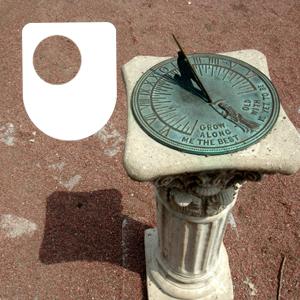
The sundial as a mathematical model
An ancient mathematical tool to measure the daily and annual cycles of the earth around the sun.
-
Reading the sky with the astrolabe
How the Greeks invented a two dimensional astrolabe as a conceptual model of the cosmos, and how it was used.
-
Recording sales in clay tablets
Clay tokens, an ancient system used to record goods changing hands.
-
Incas and their knots
How South American Incas kept records by the use of knots.
-
Wooden tallies for buying beer
How wholesale beer sales were recorded using notches on wooden tallies.
-
John Napier's mathematical creations
John Napier's method of multiplication and logarithms, and how Charles Babbage corrected his calculations.
-
Babbage's engine of precision
Charles Babbage's ingenious mechanical device to compute mathematical equations.
We're indexing this podcast's transcripts for the first time — this can take a minute or two. We'll show results as soon as they're ready.
No matches for "" in this podcast's transcripts.
No topics indexed yet for this podcast.
Loading reviews...
ABOUT THIS SHOW
Since the dawn of civilisation, humans have used everyday materials to create mathematical models of the world around them. This album explores the ancient Greeks' astrolabe as a model of the skies; the sundial, to tell the time; Babylonian clay tablets to record wages and trading of sheep; wooden tallies for bulk-buying beer, the Incas' use of knots and string, and the sophisticated number-engine invented by Charles Babbage. This material forms part of The Open University course MST121 Using mathematics.
HOSTED BY
The Open University
CATEGORIES
Loading similar podcasts...
Frequently Asked Questions
How many episodes does Mathematical models: from sundials to number engines - for iPad/Mac/PC have?
Mathematical models: from sundials to number engines - for iPad/Mac/PC currently has 16 episodes available on PodParley. New episodes are automatically indexed when they're published to the podcast feed.
What is Mathematical models: from sundials to number engines - for iPad/Mac/PC about?
Since the dawn of civilisation, humans have used everyday materials to create mathematical models of the world around them. This album explores the ancient Greeks' astrolabe as a model of the skies; the sundial, to tell the time; Babylonian clay tablets to record wages and trading of sheep; wooden...
How often does Mathematical models: from sundials to number engines - for iPad/Mac/PC release new episodes?
Mathematical models: from sundials to number engines - for iPad/Mac/PC has 16 episodes. Check the episode list to see recent publication dates and frequency.
Where can I listen to Mathematical models: from sundials to number engines - for iPad/Mac/PC?
You can listen to Mathematical models: from sundials to number engines - for iPad/Mac/PC on PodParley by clicking any episode. We provide an embedded audio player for direct listening, and you can also subscribe via your preferred podcast app using the RSS feed.
Who hosts Mathematical models: from sundials to number engines - for iPad/Mac/PC?
Mathematical models: from sundials to number engines - for iPad/Mac/PC is created and hosted by The Open University.
URL copied to clipboard!