PODCAST · education
Mindful Builder
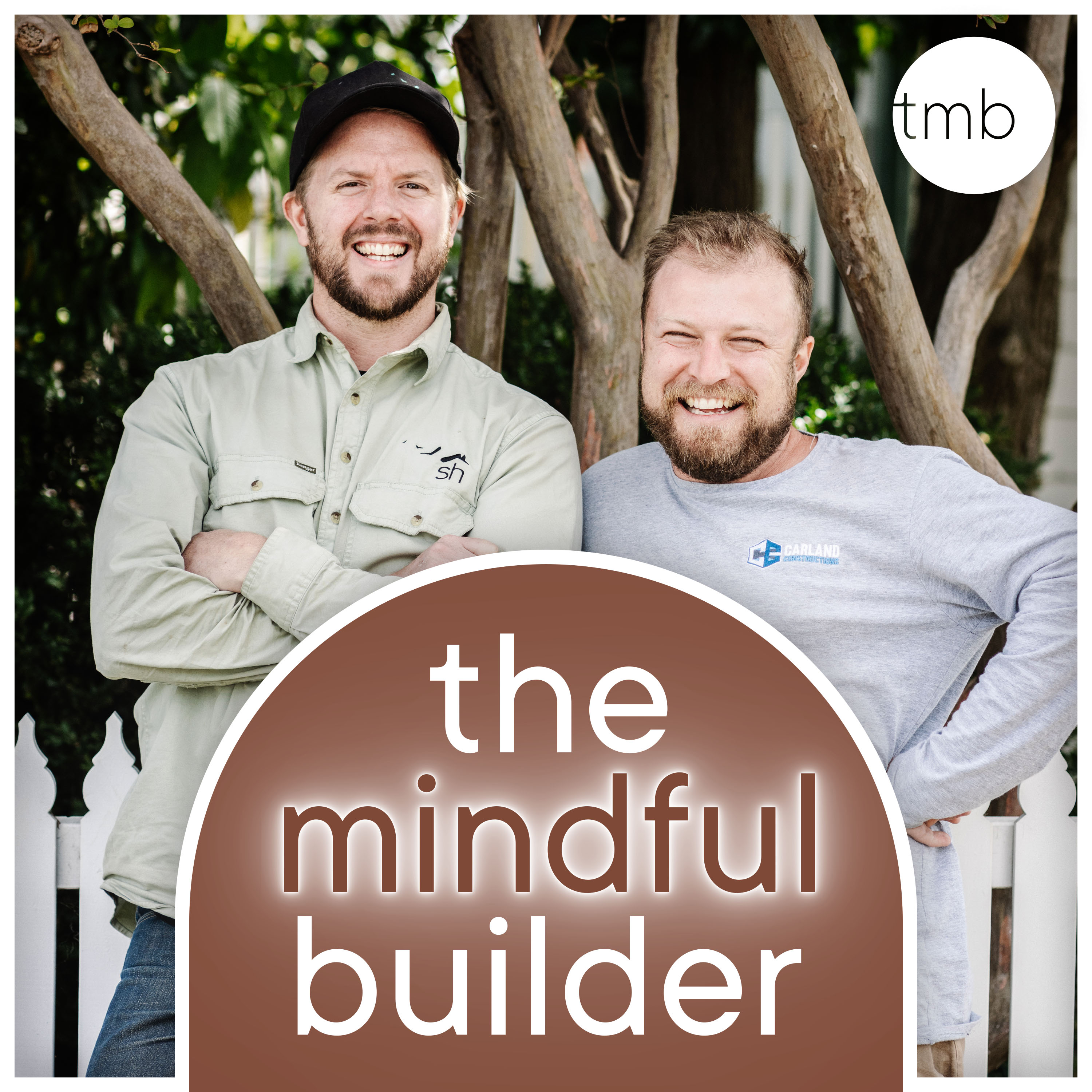
by Matthew Carland and Hamish White
Join Matt from Carland Constructions and Hamish from Sanctum Homes in a podcast discussing sustainable building practices and passive house concepts. They also talk to experts from all avenues of the building industry to share their knowledge and insights on what the industry looks like today.Further to this, Matt and Hamish are building a platform through the podcast to discuss mental health issues that arise in the building industry. The industry can be quite negative at times and there is a great deal of stigma around what it means to be a "tradie".Matt and Hamish are here to shine a light of positivity on the industry and share relatable topics that will help you in your own building or construction business.
-
125
The Day I Almost Quit Building for Good
James Turner from JTurner Constructions didn’t plan to start a building business. A torn ACL and a forced shift into subbie life pushed him into it, and he built the company the way most builders do: decks, renos, extensions, then new homes.Two and a bit years ago, he was ready to pull the pin. Bad estimating, people management gaps, COVID losses, and the mental load stacked up fast. A turning point came from an unexpected place: an eight-week men’s course (Rising Kings) that helped him rebuild structure through daily habits and exercise.From there, Zara D’Cotta’s course sparked a new interest in the health of homes, and Future Builder gave him the systems and support to start moving toward Passive House and high-performance building.This episode is a practical look at what it really takes to transition: filtering the noise, learning the fundamentals, marketing like a human, and selling health and comfort before you ever mention acronyms.CHAPTER MARKERS00:00 Intro01:00 Meet James Turner (J Turner Constructions)02:20 How the business started: ACL injury, subbie shift08:45 Exit meeting shock + the pivot into carpentry10:10 Nearly quitting: estimating, people, COVID losses11:30 Rising Kings: structure, habits, exercise, and the mental reset17:50 Zara DCottas course: holistic homes and health19:00 Kids health trigger: carpet, dust, mould, air filtration24:00 Future Builder call: systems, assets, and direction25:15 Discovering Passive House and high-performance building34:25 Marketing advice: document the journey, be vulnerable36:10 Content that works: face to camera, education, long game39:25 Fear of failure + getting comfortable in your skin44:05 Transition risk: don't shoot yourself in the foot49:00 PHPP as an optimisation tool + right-sizing systems50:20 MEGT Mindful Moment: resilience and career pivotsOur Sponsors:Pro Clima - https://mindful-builder.captivate.fm/proclimaMEGT - https://mindful-builder.captivate.fm/megtConnect with James:Website: https://jturnerconstructions.com.au/Instagram: https://www.instagram.com/jturnerconstructions/Connect with us on Instagram: @themindfulbuilderpodConnect with Hamish:Instagram: @sanctumhomesWebsite: www.yoursanctum.com.au/Connect with Matt: Instagram: @carlandconstructionsWebsite: www.carlandconstructions.com/Mentioned in this episode:Proclima Sponsor
-
124
The Tradie Who Lost It All and Came Back
“The difference between a good businessman and a bad businessman is the good one fails and learns.”A tradie builds momentum fast. Makes money fast. Spends it faster. Learns the hard way about GST, tax, super, and the cost of looking like you’ve “made it”. Then the pressure stacks up, burnout hits, and the whole thing starts to wobble.Andrew Hopkins (Hoppo from Hopkins Construction) walks through the real comeback: rebuilding a construction business with better boundaries, a stronger brand, and a work week that actually fits parenting. It also gets practical on social media for tradies (recording vs editing), why AI in construction is useless without clean systems, and how to handle trolls without losing sleep.If you’re a builder, carpenter, landscaper, or tradie thinking about starting a construction business, this is the reality check and the roadmap.CHAPTER MARKERS00:00: Intro04:36: Meet Andrew “Hoppo” Hopkins (Hopkins Construction)06:09: Leaving school early and starting a carpentry apprenticeship07:00: Getting suspended from an apprenticeship08:50: Snowboard accident + income protection for tradies11:05: Starting a business naive (tax, super, entitlements)13:11: Tradie overspending (Rangers, trailers, debt)18:10: Partnership breakup + learning from failure22:07: Burnout: when the business runs but you crash23:10: Tradie dads being present is hard27:13: Rebuilding life and work after the split29:10: Boundaries and setting expectations with clients31:39: Social media on site: recording vs editing37:31: AI in construction: fundamentals first41:10: How many hours content creation really takes48:10: Weird brand deals, saying no, and not being a sellout52:15: Trolls, comments, and protecting younger tradies56:28: MEGT Mindful Moment: advice for apprentices starting a businessOur Sponsors:Pro Clima - https://mindful-builder.captivate.fm/proclimaMEGT - https://mindful-builder.captivate.fm/megtConnect with us on Instagram: @themindfulbuilderpodConnect with Hamish:Instagram: @sanctumhomesWebsite: www.yoursanctum.com.au/Connect with Matt: Instagram: @carlandconstructionsWebsite: www.carlandconstructions.com/Mentioned in this episode:Proclima Sponsor
-
123
The Estimating Mistake That Costs You Thousands
“You’re at the mercy of the quality of the 2D plans.”We sit down with Tom from Vision 2 Estimating (V2E) to talk about why traditional construction estimating and 2D-only take-offs are costing builders real money. If you’re quoting off PDFs, squinting at elevations, and hoping the details sort themselves out on site, this conversation will hit. It’s about accurate building estimates, protecting margin, and pricing work properly in modern Australian residential construction.We take a look at why 3D modelling for builders is not about pretty renders; it’s about clarity. Tom explains how 3D estimating, quantity take-offs, and a proper Bill of Quantities (BOQ) help you see what 2D drawings often hide: junctions, returns, missing scope, and the “we’ll figure it out later” details that turn into budget blowouts. This is especially relevant for custom homes, high performance builds, and any project where small misses become expensive fast.A big theme is what Tom calls your builder DNA. Every builder has a way they build: preferred details, standard inclusions, sequencing, and products. V2E’s approach is to model and estimate based on how you actually build on site, so your pricing matches reality. We also touch on modern estimating tools like PlusSpec (SketchUp plugin), digital BOQs, and connected workflows that make pre-construction smoother and reduce rework, disputes, and variations.If you’re a builder, estimator, architect, or construction business owner trying to improve construction cost planning, tender pricing, and job profitability, check this episode out. We talk estimating systems, pre-construction services, reducing risk, and why better estimating is one of the fastest ways to lift building business profitability without working more hours. CHAPTER MARKERS00:00 Intro03:07 2D plans miss scope and costs06:55 Builder DNA and estimating accuracy08:21 Who owns pricing and variations15:14 Vignettes standards and estimating workflow18:03 Coordination meetings, RFIs, design clarity21:27 PlusSpec BOQ export and take-offs23:16 Builder-friendly BOQ and trade breakdown24:53 Cost codes setup for builders26:27 Import BOQ into estimating software27:02 Four cost buckets for budgeting30:08 Master price lists and cost control32:36 Model collaboration for builders and architects35:14 Estimating as a repeatable system36:59 Model viewer app for site teams39:25 Charging for pre-construction estimating47:40 AI estimating needs clean data50:07 Apprentices: estimating and building careersLINKS:Vision 2 Estimating: https://www.v2e.com.au/Our Sponsors:Pro Clima - https://mindful-builder.captivate.fm/proclimaMEGT - https://mindful-builder.captivate.fm/megtConnect with us on Instagram: @themindfulbuilderpodConnect with Hamish:Instagram: @sanctumhomesWebsite: www.yoursanctum.com.au/Connect with Matt: Instagram: @carlandconstructionsWebsite: www.carlandconstructions.com/Mentioned in this episode:Proclima Sponsor
-
122
The Hidden Danger in Every Old House
“If you can’t hit 0.6 ACH on a brand-new build, you probably shouldn’t be building.”Let’s stop tip-toeing around the reality of the Australian housing market. We are throwing up volume-built boxes and high-density apartments that are practically end-of-life before they’ve even seen their first winter. We sat down with Linden Thorley, architect, Passive House designer, and chair of the Australian Passive House Association Retrofit Committee.We take a look into why retrofitting the existing 9.5 million homes in Australia is the single biggest business opportunity for trades over the next decade. Linden walks us through the differences between a cosmetic renovation and a high-performance retrofit, detailing how his team utilises the PHPP (Passive House Planning Package) to model data and manage moisture, insulation, and ventilation risks case-by-case.We don't hold back on the real pain points of the industry either. We talk about the skyrocketing costs of business insurance, why Australian labour rates are fundamentally shifting project costs, and how to structure building contracts using provisional sums for airtightness so builders aren't crushed by unexpected site variations.Linden also breaks down his frustrations with legacy bank valuations that prioritise bloated 300-square-meter floor plans over highly efficient, smaller family homes.Finally, we hit the political wall: how heritage advisors and council planners are actively preventing energy efficiency upgrades, and the clever, practical drawing tricks CHAPTER MARKERS00:00 – Introduction02:08 – The Passive House Association Retrofit Committee & Playbook04:12 – Finding the Ideal Market: How Long Does the Shift Take?05:45 – Passive House as a Design-Agnostic Calculation Tool07:11 – Can a House Be Great If It Doesn’t Reach Certified EnerPHit?09:00 – Retrofitting Multi-Story Blocks vs. Standard Residential10:38 – Managing Airtightness Expectations with the Builder13:36 – How to Contract for Airtightness: The Provisional Sum Solution15:21 – Dealing with Double Brick and Suspended Timber Floors16:23 – The Spray Foam Debate in Subfloors vs. Walls18:41 – The New Build Advantage vs. Retrofit Blind Spots19:16 – A Case Study: Turning a 25 ACH House into an 8 ACH Home22:27 – Threading Centralized MVHR Systems Through Bulkheads23:28 – The Necessity of the ECI Process for Architects26:16 – Why Don’t We Just Knock Them All Down?27:43 – Renovation vs. Extension vs. Retrofit29:47 – Do We Overcomplicate the Carbon Conversation?31:14 – Lessons from Toronto: The 100 Macnab High-Rise Retrofit32:38 – Drawing the Line: When to Demolish an Existing Fabric37:28 – Forcing Council’s Hand with Legal NCC Clauses39:34 – Is Passive House Actually a Premium-Priced Product?41:11 – Breaking Down the True Cost of Australian Site Labour44:46 – Linden’s Fire Loss & Installing His Own INTELLO Membrane48:26 – Thermal Envelope vs. High-End Cabinetry53:03 – The Intensity Slump on Modern Australian Building Sites55:26 – Overheads, Insurance Hikes, and Free Market Economics57:41 – The 3-Story Walk-Up: How Codes Limit Small Footprint Living58:21 – Why Banks Hate Small Homes and Force Massive Floorplates01:01:45 – Macroeconomics, Inflation, and Building for the Top 10%01:08:37 – MEGT Mindful Moment: Harnessing the Un-Jaded Apprentice Mindset01:11:16 – Connect with Linden ThorleyLINKS:Our Sponsors:Pro Clima - https://mindful-builder.captivate.fm/proclimaMEGT - https://mindful-builder.captivate.fm/megtConnect with us on Instagram: @themindfulbuilderpodConnect with Hamish:Instagram: @sanctumhomesWebsite: www.yoursanctum.com.au/Connect with Matt: Instagram: @carlandconstructionsWebsite: www.carlandconstructions.com/Mentioned in this episode:Proclima Sponsor
-
121
The Builders Standing Up to a Broken Industry
“On paper, six or seven competitive builders trying to run one organisation together makes no sense.”In this episode, we sit down with Bec Kempster, the brilliant Chief Operating Officer (COO) of the Sustainable Builders Alliance (SBA), to talk about the messy, necessary business of upgrading the Australian construction sector. Recording from Matt’s newly completed Grand Designs home, we strip back the hype and discuss how the SBA transitioned from a grassroots cause into a highly structured, professional association shaking up national building standards.Bec shares insights from her eclectic background. Spanning commerce degrees, corporate head office fit-outs, and co-founding business coaching systems for architects, to reveal how the SBA is systematically tackling the biggest bottlenecks in the trade. We break down the SBA’s Theory of Change, detailing their current work with TAFEs to build localised trade courses, and their mission to establish crystal-clear definitions for high-performance builds so the market can finally stomp out greenwashing.We also take a look at the data from the SBA's newly released State of the Market report. Bec details the hidden category of "transitioning builders". These are tradespeople who build above code but fail to market it, and drops the statistical proof that builders who explicitly sell health, comfort, and performance secure nearly double the forward pipeline of their competitors.We chat about the reality of custom build costs, volume builder challenges, and why vulnerability and education are a builder's best defence against insolvency in a volatile economy.Whether you are a seasoned builder, an architect looking for better site execution, or a transitioning tradie ready to stop faking it, this episode delivers raw, unfiltered site-level truths.Make sure to listen through to the end to grab your 15% SBA membership discount code!4. CHAPTER MARKERS00:00:Introduction01:32: Meet Bec Kempster: Managing Six Builders05:05: From Nightclubs to Architect Coaching: Bec’s Journey09:44: The Business of Architecture vs. The Building Trade13:16: Leaving the Past & Aligning with Sustainability21:20: The Material Lifespan & Circular Economy22:36: Unpacking the Five Pillars of the Theory of Change23:51: TAFE Collaborations with Melbourne Polytechnic28:41: Industry Collaborations: From Renew to Master Builders30:10: Changing the Name? Builders Alliance vs. Building Alliance34:49: Overcoming the Industry’s Lack of Education39:06: Volume Builders & The Impact of 7-Star Verification40:04: State of the Market Report: The Transitioning Builder41:41: Documenting the Journey: Content Strategies for Tradies48:07: High Performance vs. Custom Build Realities49:45: The Real Cost of Matthew’s Grand Designs House51:55: Celebrating Social Traders CertificationLINKS:Our Sponsors:Pro Clima - https://mindful-builder.captivate.fm/proclimaMEGT - https://mindful-builder.captivate.fm/megtConnect with us on Instagram: @themindfulbuilderpodConnect with Hamish:Instagram: @sanctumhomesWebsite: www.yoursanctum.com.au/Connect with Matt: Instagram: @carlandconstructionsWebsite: www.carlandconstructions.com/Mentioned in this episode:Proclima Sponsor
-
120
Stop with the foil faced blanket
“Money turns to water.” In this episode, we sit down with Dave from Pro Clima (Technical Innovation Engineer) to talk about the real transition from being on the tools to quoting jobs, running projects, and trying to keep cash flow under control.Dave’s story is a good one. He started as a carpenter, spent years in the trade, then went back to uni and completed a Bachelor of Applied Physics before landing at Pro Clima. That mix of site experience and building science makes him one of the most practical voices in the high performance building space, especially when it comes to building envelope design, condensation management, and the details that keep homes durable.We get into the building details that keep failing across Australian housing: box gutters, flat roofs, balconies over living areas, and planter boxes. Different details, same problem. Waterproofing risk. Dave breaks down why these designs leak, why minimum compliance is not the same as good building, and what builders and designers can do earlier in the process to avoid expensive failures later.We also take a look at the NCC (National Construction Code), DTS (Deemed to Satisfy), verification pathways, and why “compliant” does not always mean “safe” or “durable”. If you care about building quality, moisture control, airtightness, and building homes that actually last, this episode will give you practical language and a better framework for decision-making.👇 CHAPTER MARKERS 👇00:00 Introduction01:15 Meet Dave From Pro Clima01:57 Carpentry To Physics Path04:39 Subbie Cashflow Reality09:08 Profit First Bank Buckets13:18 Carpentry As Career Launchpad15:34 Learning Passive House Fast20:10 Pro Clima Role And Bad Details21:52 Box Gutter Flow Risks23:35 Minimum Falls and Roof Pitch25:31 Why Box Gutters Fail26:27 Window Flashing vs Code27:22 DTS and Compliance Paths29:13 CodeMark and Site Proof31:51 Air Seals and Spray Foam33:31 Passive House on a Budget34:40 Three Envelope Basics36:28 Anticon Mythbusting38:32 Warm Roof and Truss Heels42:44 Mindful Moment ApprenticesLINKS:Our Sponsors:Pro Clima - https://mindful-builder.captivate.fm/proclimaMEGT - https://mindful-builder.captivate.fm/megtConnect with us on Instagram: @themindfulbuilderpodConnect with Hamish:Instagram: @sanctumhomesWebsite: www.yoursanctum.com.au/Connect with Matt: Instagram: @carlandconstructionsWebsite: www.carlandconstructions.com/Mentioned in this episode:Proclima SponsorProclima Sponsor
-
119
Chatting with Australias most dialled in builder
In this episode, we sit down with Jackson from Enduro Builders in Adelaide to talk high performance homes, energy efficient construction, and what it actually takes to build houses that perform year after year. We recorded inside a Passive House, and once you feel that level of comfort and stability, it’s hard to accept what “normal” housing has been getting away with.Jackson has been building certified Passive Houses and energy efficient homes in South Australia for more than a decade, and he keeps it simple. No magic. No secret sauce. Just good design, tight detailing, and refusing to cut corners where it counts. We take a look at what makes a home feel consistently warm (or cool), how the building envelope does the heavy lifting, and why comfort is a measurable outcome, not a marketing line.One of the best parts of this chat is how practical Jackson is about targets. Not every project needs certification, and not every client wants the same thing. We talk Passive House principles, performance tiers, and how to choose the right materials and systems for the brief, the budget, and the climate. The point is not the badge. The point is building performance, durability, and homes people can actually afford to live in.We also get into the real-world negotiations builders face: design vs function, heating choices (including hydronic heating and wood fires), and what “cosy” really means in a well-built home. Plus, Jackson shares why he’s using Cross Laminated Timber (CLT) in his own build, and why systems and processes are the backbone of a sustainable building business. If you’re a builder, architect, designer, or homeowner who cares about sustainable construction in Australia, this episode will shift how you think about good building.👇 CHAPTER MARKERS 👇00:00 Introduction01:08 Enduro Builders And Climasure03:33 Scaling Passive House05:50 Cost Premium Breakdown07:54 Airtight Ceiling Strategy11:01 Performance Solutions16:20 Three Build Standards17:34 Design Build Debate22:56 Selling Comfort Not Tech26:20 Rammed Earth Benefits29:07 Solar Shading Tradeoffs31:35 Hydronic Negotiations33:52 Designing His Own Home36:39 Forever House Priorities37:48 Design Choices and Tradeoffs38:50 Healthy Home and Fire Safety41:28 CLT Structure and Insulation43:43 Bushfire and Wind Detailing44:51 Windows and Supply Chain46:01 Interior Finishes and Joinery47:29 Build Schedule and Winter Risks51:43 Business Numbers and WIP57:09 Coaching and Better Systems01:03:27 Mindful MomentLINKS:Enduro Builders: https://www.endurobuilders.com.au/Climasure: https://www.climasure.com.au/Our Sponsors:Pro Clima - https://mindful-builder.captivate.fm/proclimaMEGT - https://mindful-builder.captivate.fm/megtCR Kennedy - https://www.crkennedy.com.au/Connect with us on Instagram: @themindfulbuilderpodConnect with Hamish:Instagram: @sanctumhomesWebsite: www.yoursanctum.com.au/Connect with Matt: Instagram: @carlandconstructionsWebsite: www.carlandconstructions.com/Mentioned in this episode:Proclima Sponsor
-
118
What is the end game of building ?
“Do we want 1.2 million crappy houses?” That’s the question Jesse Clark (pro clima) drops early in this episode, and it pretty much sets the tone. We talk about Australian housing supply, building quality, and why “more homes” is not the win if we’re locking in mould risk, discomfort, and expensive fixes for decades. If you care about better homes, healthier homes, and what the future of construction should actually look like, this one’s for you.Jesse’s whole approach is simple and repeatable building systems. We look at practical building science for real sites: the building envelope, airtightness, membranes, wraps, and the kind of construction details that can be done consistently across projects without relying on luck or one superstar tradie.A big focus is moisture management and ventilation, because moisture safety is the foundation of durable homes. We get into vapour-permeable assemblies, how leaky buildings happen, and why mould in Australian homes is often the outcome of small decisions made early. We also touch on the debate around energy efficiency and building codes (NCC), and how chasing energy targets without understanding moisture can create unintended consequences.If you’re a builder, architect, designer, certifier, or homeowner trying to understand high performance homes without the hype, this conversation will help. Topics include sustainable building, passive house principles, condensation control, indoor air quality, and what it takes to build homes that last in Australian climate zones.👇 CHAPTER MARKERS 👇00:00 Meet Jesse Clarke01:03 Simple Repeatable Systems01:36 Australia Study Origins02:12 Healthy Envelope Basics03:21 Tropics Mould Reality05:33 Future Building Trajectory07:17 Carbon Versus Health10:24 Energy Code Debate15:10 Density And Housing Targets19:13 Why Codes Move Slowly22:48 Standards Board Conflicts28:10 Membrane Standard Breakthrough30:57 R&D Heat and Vapour Tradeoffs34:48 Consensus Voting Explained38:22 Leaks and Insurance Policy Wraps42:04 Iterating to Build Better43:19 Builder Journey Timeline47:53 Mindful Moment ClosingLINKS:Our Sponsors:Pro Clima - https://mindful-builder.captivate.fm/proclimaMEGT - https://mindful-builder.captivate.fm/megtConnect with us on Instagram: @themindfulbuilderpodConnect with Hamish:Instagram: @sanctumhomesWebsite: www.yoursanctum.com.au/Connect with Matt: Instagram: @carlandconstructionsWebsite: www.carlandconstructions.com/
-
117
Politics vs building
We do not usually have politicians on the show, so sitting down with David Southwick, the Planning, Building, and Construction Minister for the Liberal Party’s Shadow government, made for a very different kind of conversation. Less product talk and site detail, more housing policy, building regulation, and the decisions that shape what builders can actually do on the ground. If you work in the construction industry in Australia, this episode is a useful look at the levers that affect your day to day.David’s path into politics is not the usual script. He has been a DJ, a businessman, and a small business owner, and that comes through in how he talks about the industry. A big theme is the need for governments to listen to builders, tradies, and industry experts, not just write rules from a distance. It is a practical conversation about decision-making, consequences, and what happens when policy does not match reality on site.We get into the messy part of the current housing market. Construction costs, interest rates, red tape, delays, and the pressure to increase housing supply fast. But we are not interested in building more homes if they are worse homes. We talk about affordability alongside build quality, comfort, durability, and the long-term cost of homes that underperform. This is where topics like tax, approvals, and compliance start to matter just as much as what happens on site.We also explore future-focused solutions like prefab housing, kit homes, and 3D printing in construction, plus the need for stronger trade education and longer apprenticeships to lift capability across the industry. The thread running through it all is confidence and certainty. Builders need stable settings to invest, hire, and train, and clients need confidence to commit. Whether you agree with David politically or not, this is a grounded builder reality check on how politics and construction intersect, and what needs to change to support better outcomes in Australian housing.👇 CHAPTER MARKERS 👇00:00 Welcome00:51 David’s Background Story03:40 Minister Role and Big Picture05:06 Housing Crisis and Targets06:10 Taxes and Cost Drivers08:08 Planning Delays and Infrastructure11:08 Confidence and Building Quality14:02 Future Housing and Prefab17:04 Tradies and Apprenticeships20:57 Rogue Builders and Regulation23:22 BPC Critique and Better Enforcement26:23 Promoting Good Builders27:08 Showcasing Great Builders27:59 Standards Should Be Accessible29:36 Minimum Financial Rules Critique31:25 Insurance Gaps And Defects34:41 NCC Freeze And Product Influence36:14 Cladding Liability Nightmare40:30 Red Tape Vs Quality Fixes45:22 Election Promises For Housing49:46 One Silver Bullet Certainty51:20 Getting Youth Into TradesLINKS:David Southwick: https://www.parliament.vic.gov.au/members/david-southwick/Our Sponsors:Pro Clima - https://mindful-builder.captivate.fm/proclimaMEGT - https://mindful-builder.captivate.fm/megtCR Kennedy - https://www.crkennedy.com.au/Connect with us on Instagram: @themindfulbuilderpodConnect with Hamish:Instagram: @sanctumhomesWebsite: www.yoursanctum.com.au/Connect with Matt: Instagram: @carlandconstructionsWebsite: www.carlandconstructions.com/Mentioned in this episode:Proclima Sponsor
-
116
More good and less bad
“I don’t understand why people build houses like this.” If you have ever said that on site after spotting a leaky junction, a sweaty wall, or a home that is freezing in winter and cooking in summer, you are not alone. This conversation is our pushback against the shortcuts that have become normal in the Australian building industry. The whole point of More Good and Less Bad is simple. Build better homes, make fewer mistakes, and deliver healthier, more comfortable results through better building performance and smarter decisions.We recorded this one at Pro Clima HQ in Sydney with Andy Marlow, director at Envirotecture and a certified Passive House designer. Andy has a rare ability to talk about sustainable building without the greenwashing and without making it feel like a lecture. The focus is on outcomes that matter to homeowners and builders alike. Homes that perform, homes that last, and homes that do not quietly fail behind the plaster.We also dig into the Living Building Challenge, because it is one of the few sustainability frameworks that does not let you cherry-pick the easy bits. It looks at the full picture of holistic sustainability in construction, including materials, energy, water, and health. Not because every project needs a badge, but because it forces better questions about what sustainable construction really means when you zoom out and look at long-term impact.Finally, we talk about making Passive House principles more buildable and accessible through Andy’s Passive House Design and Construct model. Pre-designed, high-performance homes that still leave room for personal choice, without reinventing the wheel every time. We also share the lessons we have learned the hard way, and why building with intention is about mindset, systems, and balancing the ideal with what is financially feasible and genuinely buildable on real sites.👇 CHAPTER MARKERS 👇00:00 Introduction01:55 Meet Andy Marlow - Envirotecture03:31 Andy’s Path to Architecture06:18 Living Building Challenge Explained10:32 Materials Red List and Declare17:08 Envirotecture Origins and Merge23:15 Passive House Beyond Five25:26 Quality Assurance and Certification31:39 Why Start PH Design Construct34:17 Cutting Costs With Standard Plans34:44 Builder Territories And Low Touch Builds37:13 Margins Overheads And Markup Debate37:54 Repeat Builds And Site Variables39:56 Prefab Options Straw Hempcrete47:52 Cost Transparency And Pricing Stages52:45 Solving Housing With Design Construct57:17 Certification Limits And Client Expectations01:02:07 Mindful Moment And Closing ReflectionsLINKS:Our Sponsors:Pro Clima - https://mindful-builder.captivate.fm/proclimaMEGT - https://mindful-builder.captivate.fm/megtCR Kennedy - https://www.crkennedy.com.au/Connect with us on Instagram: @themindfulbuilderpodConnect with Hamish:Instagram: @sanctumhomesWebsite: www.yoursanctum.com.au/Connect with Matt: Instagram: @carlandconstructionsWebsite: www.carlandconstructions.com/Mentioned in this episode:Proclima Sponsor
-
115
Ask us anything with Buildingsciology
“As builders, you have huge overheads. Massive.” Matt said it mid-conversation and it just sat there, because it is the part people outside the construction industry rarely see. They see the finished home and the invoice. They do not see the cash flow pressure, the holding costs, the insurances, the compliance, the admin load, the delays, and how quickly one wobble in the pipeline can hit a building business. That is where this chat with Jessica Kismet from Climasure, host of the Building Sciology Podcast, really goes.Jessica jumps in as guest host and asks the questions builders usually keep to themselves. Money pressure. Risk. Ego. Family. The emotional load of running a residential construction business in Australia, especially when the market is tight and the margin for error is small. If you are a builder, contractor, or tradie trying to stay steady through uncertainty, this episode will feel very familiar.We talk openly about the financial tightrope and what it means to actually know your numbers. Builder margins, overheads, pricing, and the real cost of delays are not optional knowledge anymore. Post-COVID, “she’ll be right” is not a strategy. This conversation gets into the learning curve, the mistakes, and the shift from running on instinct to running a more sustainable construction business that can last.We also get into bigger industry questions. Would we encourage our kids to become builders? Who is the real villain in the building industry, from legislation to contracts to banks and insurance? How do you set boundaries with clients, protect your process, and avoid the compromises that come back to bite you later? And we finish on the long game of building science, where better outcomes depend on builders, architects, and designers understanding the whole system, not just their part of it.👇 CHAPTER MARKERS 👇00:00 Introduction01:07 Passive House Display Tour02:34 Financial Edge Stories07:02 Learning Business Basics11:31 AI As A Coach13:02 Would You Encourage Kids16:10 Training Paths And Overwhelm20:12 Industry Villains And Red Tape29:56 Midlife Balance And Mortality32:16 Matt On Not Caring40:20 Client From Hell Stories44:37 Vetting Clients No Dickheads46:15 Fixed Price vs Cost Plus49:34 Quickfire Building Science50:55 Failures, Mould, and Leaks56:18 Builders vs Architects Buy In01:01:03 Mindful Moment ApprenticesLINKS:Our Sponsors:Pro Clima - https://mindful-builder.captivate.fm/proclimaMEGT - https://mindful-builder.captivate.fm/megtCR Kennedy - https://www.crkennedy.com.au/Connect with us on Instagram: @themindfulbuilderpodConnect with Hamish:Instagram: @sanctumhomesWebsite: www.yoursanctum.com.au/Connect with Matt: Instagram: @carlandconstructionsWebsite: www.carlandconstructions.com/Mentioned in this episode:Proclima Sponsor
-
114
How to stop working in your business
“Version one is better than version none.” James Brown means it in the most practical way possible for builders. A rough first system in your building business is better than no system at all. Not the perfect process. Not the spreadsheet you will build “when things slow down”. Just something written down that gets the ball rolling, so you can test it, hand it to someone else, and improve it over time.If you have ever felt like the business owns you, this conversation will feel familiar. Quoting at night, solving problems all day, trying to remember what you promised clients and trades, and living in your inbox. James runs Builders Escape and helps builders step out of that reactive loop by putting simple business systems and processes in place that make a construction business easier to run.We take a look at what systemisation actually looks like on the ground for the building industry. The goal is to make the invisible visible. Get the key steps out of your head, document them, and make them easy for your team to follow. Not a corporate manual. Just clear, repeatable processes that reduce mistakes, improve communication, and help you build a more reliable operation.James also walks through starting with your client journey from enquiry to handover, because that is where the cracks usually show up. Missed steps, repeated conversations, and tasks that rely on one person remembering everything. We also talk about AI in construction business and why it only works when your processes are clear. If you are a builder who wants better margins, fewer fires, and more time and headspace, this episode is your reminder to start with version one and iterate from there.👇 CHAPTER MARKERS 👇00:00 Mindful Builder Podcast Intro01:39 Meet James Brown from Builders Escape02:21 Freedom Through Systems for Building Businesses03:15 Systemisation Works in Any Construction Business04:43 Choosing Software and the EOS Operating System Metaphor05:55 What Is a System in a Building Company?08:09 Over-Systemising Pitfalls for Builders and Tradies10:04 Make the Invisible Visible: Documenting Processes16:43 Systems vs Policies vs Training in Construction Teams19:33 Where Builders Should Start with Systemisation20:21 Choosing a Systems Champion in Your Building Business21:36 Time, Authority, and Empowerment for Process Ownership22:16 Getting Your Team to Follow Systems and Processes27:35 Why AI Still Needs Systems in Construction Operations29:13 SystemHUB and AI Drafting for Process Documentation32:20 Systems Champion Lifecycle and Delegation34:29 Real Examples: How Systems Create Builder Leverage35:07 Start With the Client Flow: Enquiry to Handover38:20 Builder Leverage and BOFT Explained43:00 Minimum Viable Systems for Builders: Start with Version One46:06 Owner as Systems Architect: Leading Process Improvement49:15 Apprentices and Spaghetti Maps: Visualising Workflow51:51 Effective Over Efficient: What Actually Works on Site55:02 Contact Details and Wrap Up with Builders EscapeLINKS:Builders Escape: https://www.biztechguru.com.au/builders-escapeOur Sponsors:Pro Clima - https://mindful-builder.captivate.fm/proclimaMEGT - https://mindful-builder.captivate.fm/megtCR Kennedy - https://www.crkennedy.com.au/Connect with us on Instagram: @themindfulbuilderpodConnect with Hamish:Instagram: @sanctumhomesWebsite: www.yoursanctum.com.au/Connect with Matt: Instagram: @carlandconstructionsWebsite: www.carlandconstructions.com/Mentioned in this episode:Proclima Sponsor
-
113
This is a big can of worms
“Legally, you can still build a house with no membrane.”That line from Villy Yordanov, Pro Clima’s Innovation Engineer, sets the tone for this conversation about what is technically allowed versus what actually leads to durable, healthy homes. We unpack the gap between building compliance in Australia and real-world building performance, particularly in weatherproofing, moisture management, and the building envelope.A big focus is the NCC 2025 changes and how some cladding types can bypass performance solutions. On paper, that can look like simpler compliance. On site, it can create risk if builders assume “compliant” automatically means “safe” or “long-lasting”. We talk about why National Construction Code updates matter for builders, and how small decisions in wall systems can lead to big problems later like leaks, mould, and expensive rectification work.We also break down what membranes actually do in modern construction. They are not just there to “stop condensation”. They are part of a complete building envelope system that helps control water, air, and vapour. Alongside correct detailing, taping, penetrations, ventilation, and airtightness, membranes support durability, moisture safety, and better indoor comfort. If you are interested in building science, high-performance homes, or Passivhaus and Passive House principles, this episode connects the dots in plain language.Finally, we look at why warm climates are not a free pass. Tropical building in Australia brings extra humidity and a higher moisture risk, which makes good detailing even more important. The takeaway is simple. Builders who keep learning, understand systems, and treat weatherproofing as a whole-of-wall approach will build better homes and avoid costly failures. If you want practical insight into NCC compliance, membranes, airtight construction, and moisture control in the Australian construction industry, this one is worth a listen.👇 CHAPTER MARKERS 👇00:00 Introduction00:30 Inside Pro Clima HQ Sydney and Building Envelope Systems02:02 Meet Villy Yordanov, Pro Clima Innovation Engineer02:29 NCC 2025 Update Risks and Australian Building Compliance04:14 Cladding vs Membranes for Weatherproofing and Moisture Control07:48 Roof Airtightness Mistakes and Condensation Risk11:31 Condensation, Mould, and Timber Rot in Wall Systems14:31 Building Research, Testing, and Industry Funding16:57 Membrane Myths, Builder Education, and Installation Errors18:32 Masonry and Concrete NCC Exemptions Explained24:16 Steel Frame Ghosting, Thermal Bridging, and Airtightness27:39 Rigid Insulation Boards for High Rise Construction31:14 UV Exposure Testing Standards for Building Wraps and Membranes37:43 Tropical Construction, Vapour Barriers, and Humidity Management40:13 Tropical Home Comfort Strategy and Moisture Safety40:57 Why Insulation Still Matters in Hot Climates42:35 Vapour Barriers in the Tropics: When They Help and When They Hurt46:00 ERV vs HRV Ventilation Systems for Healthy Homes48:55 Membrane Billowing, Wind Loads, and Weatherproofing Failures54:50 NCC 2025 Control Layers: Water, Air, Vapour, and Thermal01:03:23 Ventilated Cavity Requirements and Drainage Planes01:07:31 Roof Ventilation, Moisture Movement, and Condensation Control01:12:01 Sandwich Panels Moisture Risk and Building Envelope Design01:13:15 Builder Mentorship, Training, and Learning Building ScienceLINKS:Our Sponsors:Pro Clima - https://mindful-builder.captivate.fm/proclimaMEGT - https://mindful-builder.captivate.fm/megtCR Kennedy - https://www.crkennedy.com.au/Connect with us on Instagram: @themindfulbuilderpodConnect with Hamish:Instagram: @sanctumhomesWebsite: www.yoursanctum.com.au/Connect with Matt: Instagram: @carlandconstructionsWebsite: www.carlandconstructions.com/Mentioned in this episode:Proclima Sponsor
-
112
Getting romantic with your craft
A German journeyman carpenter walks into our studio and within five minutes, we are thinking, hang on… have we made modern life way more complicated than it needs to be?Erik is living a tradition that feels almost impossible in 2026. He is travelling for three years and one day, working wherever he can, learning from other tradespeople, and doing it all without a mobile phone. Not as a gimmick. As a way of life.Erik’s story centres around the German tradition of the Journeyman Years, a rite of passage where carpenters leave home to sharpen their skills, meet other craftspeople, and learn how to work in completely different environments. It is part training, part travel, part personal development, with rules that force you to rely on people, not apps. No scrolling. No “just Google it.” Just real conversations, real problem-solving, and a level of presence most of us have to actively practise.We also talk about craftsmanship in construction and why the word craft still matters. Erik does not speak about carpentry like it is just a job. He speaks about it like it is a craft worth respecting, protecting, and getting better at for life. It had us reflecting on our own relationship with building in Australia, and how timelines, budgets, admin, and site pressure can flatten the work into something purely transactional.Then there is the cultural contrast of Germany vs Australia on site. Glue. Nail guns. Different methods, different materials, and a bit of culture shock. What stood out most was Erik’s curiosity. No judgement, no superiority, just a genuine desire to learn and understand why things are done the way they are. If you are into carpentry, building culture, construction life, and the mindset side of being a tradie, this conversation is a reminder that presence is not a personality trait. It is a practice.00:00 Introduction01:53 Meet Erik the Journeyman03:56 What Is a Journeyman09:34 Norway Copper Drill Pads12:30 Thailand to Australia Move13:32 No Phone Journeyman Life14:49 Guild History and Purpose19:48 Rules and Restrictions21:21 Journeyman Network in Australia22:22 First Impressions of Australian Construction IndustryOur Sponsors:Pro Clima - https://mindful-builder.captivate.fm/proclimaMEGT - https://mindful-builder.captivate.fm/megtConnect with us on Instagram: @themindfulbuilderpodConnect with Hamish:Instagram: @sanctumhomesWebsite: www.yoursanctum.com.au/Connect with Matt: Instagram: @carlandconstructionsWebsite: www.carlandconstructions.com/25:59 Uniform Rules Explained27:09 Tools and Travel Kit28:51 Life on Aussie Sites34:16 German Work Culture40:24 Master Carpenter Path43:56 Earring and Initiation45:12 Mindful Moment Wrap
-
111
Weekly Building Gossip - More Homes, Rising build costs and Silica Issues
Weekly Goss – April 23, 2026Matt and Hamish are back from Adelaide to discuss the latest housing developments in Canberra, a major safety crackdown on silica dust, and the importance of representation in the trades.In This Episode:The Canberra Housing Deal: The ACT and Commonwealth governments have signed a $250 million deal to deliver 4,900 homes, with over 1,700 reserved for first-home buyers.The Rising Cost of Building: A look at the staggering 74% increase in building costs since 2009 and the impact of global events on the industry.Silica Safety Crackdown: South Australia is leading a massive compliance campaign targeting silica dust. Any material with more than 1% silica (including cement sheeting, bricks, and tiles) is under the microscope.Health & Prevention: Matt shares a personal story regarding silicosis and emphasises why tradespeople must prioritise using vacuums and wearing masks, even when under pressure.Design Responsibility: Why architects and designers should be conscious of the materials they specify to reduce on-site cutting risks.Women in Trades: A shout-out to Sophie (@sister.carpentry) on Instagram for her work in encouraging women to join the construction industry.Key Resources & Mentions:Guest Spotlight: Follow Sophie @sister.carpentry on Instagram.South Australia Hosts: Huge thanks to Climasure, Pro Clima, and Endurobuilders for hosting the team in SA.Alternative Products: Mention of Weathertex and magnesium board as safer cladding alternatives.Upcoming Events:SBA Retrofit Playbook (May 7th): Featuring experts like Sarah from Coogee and Dylan from Orlin Construction. Tickets are roughly $30–$40.Passive House Conference (June 25-26, Victoria): Matt and Hamish will be hosting a breakaway room for builders and architects.Promo Code: Use themindfulbuilder for 10% off your tickets
-
110
What is a normal house?
We sit down with Helen from Renew to unpack why the idea of a sustainable home still gets treated like a luxury, when it should really be the baseline. We talk about the shift happening across the Australian building industry, where sustainable housing, energy efficient homes, and high-performance building are becoming more mainstream. Better design decisions, not just bigger budgets, can lead to healthier, more comfortable, and more resilient homes.We get into the practical side of sustainable design and what actually makes a difference in real homes. Things like orientation, shading, airtightness, draught-proofing, solar power, and all-electric homes all play a role in improving comfort and reducing running costs. For anyone interested in Passive House principles, building performance, home energy efficiency, and sustainable construction in Australia, this is full of useful insight without the usual fluff.We also talk about the people often left out of the sustainability conversation, especially renters. From low-cost upgrades like sealing gaps and using portable induction cooktops, to bigger policy changes around rental energy efficiency standards, this episode looks at how sustainable living can become more accessible. We also explore community-led housing, shared spaces, and projects like The Paddock in Castlemaine, which show that good sustainable development is not just about the house itself, but about how people live together.If you care about sustainable homes, Passive House construction, electrification, healthy homes, low energy building, and the future of sustainable housing in Australia, this is a conversation worth listening to. We also touch on Sustainable House Day and why seeing real projects in person can help make eco homes, green building, and climate-conscious design feel far more practical and achievable. Because the goal is not to make sustainable homes feel special. It is to make them feel normal.👇 CHAPTER MARKERS 👇00:00 Introduction01:08 Meet Helen From Renew02:49 Renew Origins And Mission04:20 Getting Off Gas Debate06:06 What Makes A Sustainable Home08:22 Rethinking Sustainability Language14:05 How Community Drives Policy18:39 Sustainable House Day Explained21:06 Retrofits And Electrification Journey24:32 Why Sustainability Should Be Standard27:14 Beyond Passive House28:56 Narrow Block Case Study31:36 Simple Sustainable Upgrades32:07 Sustainable House Day Impact41:50 Renters Practical Fixes44:10 Rental Standards Coming44:51 Ventilation Mould Liability50:11 Landlords Incentives Debate51:49 Energy Ratings Disclosure54:05 Real Estate Greenwashing54:31 Fixing Building Inspections57:15 Sustainable House Day Online01:01:16 Community-Centered Developments01:05:36 Why Councils Don’t Join01:22:16 Tours Spark Change01:22:54 EV Chats and Wrap-UpLINKS:Connect with Renew:https://renew.org.au/Sustainable House Day:https://sustainablehouseday.com/Our Sponsors:Pro Clima - https://mindful-builder.captivate.fm/proclimaMEGT - https://mindful-builder.captivate.fm/megtConnect with us on Instagram: @themindfulbuilderpodConnect with Hamish:Instagram: @sanctumhomesWebsite: www.yoursanctum.com.au/Connect with Matt: Instagram: @carlandconstructionsWebsite: www.carlandconstructions.com/Mentioned in this episode:Proclima Sponsor
-
109
Weekly Building Gossip - 16th April 2026
In this episode, Hamish and Matt navigate the "geopolitical bruises" impacting the Australian construction industry in early 2026. They discuss the sharp rise in material costs driven by global tensions, the controversial shift in Victorian builder licensing, and the silver lining of surging apprenticeship numbers. The duo emphasises that while the climate is "doomy," transparent communication and creative contract management (like provisional sums) are the keys to survival.Key Discussion Points1. The "Strait of Hormuz" Effect & Rising CostsThe industry is facing a second wave of price hikes, this time driven by geopolitical issues rather than the pandemic.Material Spikes: PVC piping is up 37%, cement is up 25%, and "quality products" have surged by 50%.Fuel Impact: The HIA warns of sustained fuel increases, potentially adding $8,000 to $15,000 to the cost of a new home.The Victoria Disadvantage: Matt notes that unlike other states, Victoria lacks a standard "rise and fall" clause in residential contracts, making it difficult for builders to pass on direct costs without risking insolvency.2. Navigating the Crunch: Practical SolutionsHamish and Matt share how they are protecting their businesses and clients:Provisional Sums (PS) & Prime Costs (PC): Moving volatile items (like concrete and PVC) into PS/PC categories to allow for real-time cost reconciliation.Early Deposits: Securing stock by paying deposits for tiles, joinery, and lighting months in advance to lock in prices."No Margin" Variations: Offering to pass on direct cost increases with zero builder margin to maintain trust and transparency.Granular Negotiations: Ensuring trade increases are only applied to the specific material (e.g., the PVC component of a plumbing quote) rather than the total labor/global price.3. The BPC (Formerly VBA) ControversyMatt critiques the Victorian Building Authority's transition to the Building and Plumbing Commission (BPC).AI & Online Exams: The BPC is moving toward a "trust and verify" model, replacing face-to-face interviews with online AI exams and reduced documentation (from 40 pages down to seven).The Risk: The hosts argue this "faster route" may invite "shit builders" into the industry who lack the communication skills and practical experience that an in-person assessor can "smell".4. Apprenticeship Surge & Labour TargetsThere is a "bright spot" in industry training thanks to federal incentives.Incentives: A $10,000 staggered incentive for apprentices is driving record commencements.Leading Trades: Carpenters and joiners are leading the way with ~6,400 new starters, followed by plumbers and electricians.State Rankings: Victoria is currently leading the race with over 5,000 new commencements.The 2029 Goal: The Master Builders Association estimates the sector needs 500,000 additional workers by 2029 to meet housing targets.Shoutout of the WeekDylan from Alwyn Projects: Recognized for his work in home retrofitting and his upcoming presentation at the SBA event. The hosts recommend following his mid-century project on social media.
-
108
The future of the mindful builder
The Australian building industry is shifting fast, and in this episode, we discuss what that really looks like on the ground. From economic pressure and labour shortages to changing technology and AI-driven disruption, this is an honest conversation about the reality of running a building business in a market that feels increasingly uncertain. If you are a builder in Australia, a construction business owner, or part of the wider residential construction industry, this episode will likely hit close to home.A big focus in this discussion is pre-construction and the hidden work that happens long before a project starts on site. We talk about planning, pricing, quoting, revisions, and the challenge of helping clients understand the real value of that early-stage work. In an industry where construction margins, project costs, and builder pricing are under pressure, these conversations matter. Better outcomes in the Australian construction industry start with clearer expectations and a more honest understanding of what good building actually takes.We also get into the mental and emotional side of staying in the game. When projects fall over, confidence drops, and the market feels shaky, builders need more than technical skill to keep moving forward. This episode explores builder resilience, construction industry challenges, and the importance of protecting your health, your mindset, and your business through difficult seasons. It is a grounded conversation for anyone navigating the pressure of running a building company in Australia right now.We also talk about why industry events and communities still matter, including the Passive Haus Conference, the Sustainable Builders Alliance, and the value of learning from other builders, designers, and architects who want to lift the standard.👇 CHAPTER MARKERS 👇00:00 Introduction | The Mindful Builder Podcast01:34 Building Industry Events and Podcast Updates02:12 Builder Reality Check in the Australian Construction Industry03:26 Pre-Construction Costs, Delays and Client Expectations05:09 What Is Changing in the Building Industry?07:37 Builder Margins, Profit and Construction Business Pressure09:48 Construction Insurance, Retention and Builder Risk11:30 Sustainable House Day for Builders and Homeowners15:00 Passive House Conference Australia 202620:29 Sustainable Builders Alliance Webinars and Industry Education24:02 SBA Growth, Industry Partnerships and Builder Support25:30 Why Builders, Designers and Architects Should Join SBA26:49 Designer Education, CPD and Demand for Better Building Knowledge28:09 Beer and BS Webinar for Builders and Construction Professionals31:11 Construction Sponsorship, Industry Support and Transparency33:09 Building Industry Newsletter and Education Mission34:23 Adelaide Building Event and Passive House Learning Opportunities37:06 Why Builders Need Ongoing Education and Training37:33 Pro Clima Resources, Building Science and Industry Support38:41 Wrap Up | What’s Next for Builders and Sustainable ConstructionLINKS:Connect with Sustainable Builders Alliance:https://www.thesba.com.au/Passive Haus Conferencehttps://www.passivhausassociation.com.au/thrive-2025-passivhaus-conference-2-1Pro Clima Upcoming Events:https://proclima.com.au/schedule/Our Sponsors:Pro Clima - https://mindful-builder.captivate.fm/proclimaMEGT - https://mindful-builder.captivate.fm/megtConnect with us on Instagram: @themindfulbuilderpodConnect with Hamish:Instagram: @sanctumhomesWebsite: www.yoursanctum.com.au/Connect with Matt: Instagram: @carlandconstructionsWebsite: www.carlandconstructions.com/Mentioned in this episode:Proclima Sponsor
-
107
Weekly Building Gossip - 9th April 2026
Episode Title: The NCC Maze, Red Tape Blues, and a Win for Passive HouseDate: 9 April 2026 Hosts: Matt & Hamish In this second instalment of The Weekly Gossip, Matt and Hamish navigate the "grey areas" of the 2025 National Construction Code (NCC) updates and the mounting administrative burden currently squeezing the life out of small building businesses. We also look at some progressive moves in South Australia and shout out a Kiwi builder doing the absolute "impossible" on the side of a cliff.Inside This Episode:The NCC "National" Discrepancy: Why are some states adopting the 2025 updates on 1 May while NSW and the ACT push it back to 2027? We discuss the confusion of a "National" code that isn't actually national.Mandatory Education: The hosts argue that government bodies, not just industry associations like the HIA or SBA, should be responsible for educating practitioners on code changes through mandatory sessions.Lead-Free Plumbing: Victoria is moving to lead-free plumbing standards by May 2026 to align with global safety standards—no grace period expected.The "Bullshit Jobs" of Construction: A deep dive into the HIA Small Business Conditions report, revealing that builders are spending a minimum of 10 hours a week just on "red tape" and administrative hurdles.Industry Stress & Retention: With 88% of small builders reporting increased personal stress and 68% considering closing their doors, we discuss the urgent need for a more supportive regulatory environment.Passive House as a Pathway: A massive win for South Australia, as they begin allowing Passive House standards as a performance-assessed pathway to meet thermal performance requirements.The Weekly Shout-Out: We head across the ditch to New Zealand to look at Josh from Compound and his mind-blowing project, "The Hill," in Queenstown.Important Dates & Events:HIA National Conference (Gold Coast): 17–18 April 2026.The Mindful Builder SA Road Trip: 20–21 April 2026. Join Matt and Hamish for a Q&A at Jackson’s display home (Enduro Builders).SBA Retrofit Event: 7 May 2026. Featuring Sarah Lebner, Dylan Orwin, and Helen Oakley.Passive House Association Conference (Thrive): 25–26 June 2026. Use promo code THEMINDFULBUILDER.
-
106
The future of onsite building technology
Construction technology is changing fast, and in this episode, we sit down with Vas from C.R. Kennedy to talk about the tools already reshaping the construction industry. From geospatial technology and 3D site scanning to total stations and robotic set-out systems, this conversation looks at how builders can improve accuracy, efficiency, and communication on site. If you are interested in construction innovation, building technology, and the future of smarter job sites, this episode is packed with practical insight.We explore how onsite construction technology is helping teams reduce mistakes, improve workflows, and give clients a clearer view of project progress. Vas shares how tools like 3D cameras, laser measuring systems, and digital site capture are making it easier to document existing conditions, track changes, and create more transparent building processes. For builders, architects, and contractors, this is where construction tech stops being a novelty and starts becoming a real competitive advantage.The episode also dives into the role of robotics in construction and emerging tools designed to support safety and productivity. We talk about robot dogs, automated inspections, and even exoskeleton technology that can help reduce physical strain on trades. It is a grounded look at how construction safety technology and automation in construction can support workers, not replace them, while helping the industry deal with labour pressure, precision demands, and rising expectations.If you want to stay ahead of where the Australian construction industry is heading, this conversation is well worth your time. We cover survey technology, construction site innovation, digital construction tools, and the growing role of smart building technology in everyday projects.👇 CHAPTER MARKERS 👇00:00 Intro | Construction Technology in Australia01:36 New Dad Life and Working in Construction Tech02:39 Postnatal Mental Health and Life on Site05:30 Meet Vas from C.R. Kennedy07:21 How Construction Technology Is Evolving07:58 3D Site Scanning in Construction13:05 Prefab Construction Needs Precision20:27 Construction Tech Costs, ROI and Team Training26:58 Future Technology in the Construction Industry27:31 Virtual Reality in Construction: Hype or Helpful?28:09 How Exoskeletons Could Support Trades On Site30:24 Robot Dogs in Construction Explained31:48 The Reality of Robotics in Construction34:02 AR Glasses and Digital Measuring on Site36:16 Will Robots Replace Trades in Construction38:34 Drones in Construction and Site Monitoring40:28 Construction Cameras and Site Security Technology45:43 Laser Layout Tools and Construction Workflow48:54 Mindful Moment | Adapting to New Building Technology50:30 How to Connect with Vas and C.R. KennedyLINKS:Connect with Vas:https://www.linkedin.com/in/vassili-achkar-b2013412b/C.R.Kennedy:https://www.crkennedy.com.au/Instagram:https://www.instagram.com/crkennedybuild/Our Sponsors:Pro Clima - https://mindful-builder.captivate.fm/proclimaMEGT - https://mindful-builder.captivate.fm/megtConnect with us on Instagram: @themindfulbuilderpodConnect with Hamish:Instagram: @sanctumhomesWebsite: www.yoursanctum.com.au/Connect with Matt: Instagram: @carlandconstructionsWebsite: www.carlandconstructions.com/Mentioned in this episode:Proclima Sponsor
-
105
Weekly Building Gossip - NCC Changes
This episode covers the latest updates in the Australian building industry, including new legislation, code transitions, and innovative materials. Hosts Matt and Hamish analyse recent news, government policies, and emerging technologies impacting builders and homeowners.Matt and Hamish from The Mindful Builder are launching a new, "short and sharp" weekly news segment. Capped at 10 minutes, the offshoot aims to provide a non-biased rundown of Australian building industry news, focusing on facts and positive stories while navigating a shifting legislative landscape.In their first wrap-up, they tackle the Victorian Government’s "Dodgy Builder" bill, which empowers the Building Plumbing Commission to halt defective work early and targets "phoenixing"—where builders fold companies to dodge warranty claims. While they welcome the move, they note it may inadvertently hike consumer costs through increased insurance premiums.The duo also discussed the NCC 2025 transition. While some states have delayed adoption, Victoria is moving ahead on 1 May 2026 with no transition period, introducing crucial lead-free plumbing requirements and mandatory condensation management. Hamish argued that any "pause" in standards must include mandatory as-built verification to ensure seven-star ratings are actually met.Other highlights include:Levy Relief: Victoria is winding down the combustible cladding levy, saving developers significant costs on large projects.EPA Crackdown: The EPA now considers poor moisture management during builds as "environmental pollution," holding builders liable for future mould growth.Fungi Tech: A "quirky" look at Swinburne University researchers using mycelium to grow fire-resistant, breathable structural blocks.The segment wraps up with a cheeky acknowledgement of their "work-it-out-as-we-go" style, promising more prepared insights in the coming weeks.
-
104
What is sustainable design and construction?
“Sustainable design is not just lower energy bills. It is health, comfort, moisture safety, and long-term performance.”We sat down with Marcus Strang, Technical Lead in Passivhaus at HIP V. HYPE, to explore what sustainable building design really means in practice. With a PhD from the University of Queensland and deep expertise in building science, Marcus shares how Passive House design is helping shape healthier, more energy efficient buildings in Australia.We unpack how Passivhaus principles go far beyond energy efficiency. This conversation covers thermal comfort, indoor air quality, moisture safety, and why high-performance homes need to respond to Australia’s diverse climate zones. Marcus explains how sustainable architecture is not about applying one formula everywhere, but about designing buildings that perform properly in their specific environment.A major focus of the episode is hygrothermal modelling and moisture movement in engineered timber buildings, including CLT construction. Marcus shares why condensation risk, mould prevention, and long-term durability are critical parts of sustainable construction, especially in hot and humid climates. If you care about building performance, timber construction, and low-energy design, this part of the conversation is especially valuable.We also talk about the bigger picture for the construction industry. How technical expertise, early design decisions, and better collaboration can help drive net zero carbon outcomes and more resilient buildings. If you are interested in Passive House Australia, sustainable design, building science, energy-efficient homes, and the future of high-performance construction, this episode is packed with practical insight.👇 CHAPTER MARKERS 👇00:00 Intro01:58 Favourite Passive House Build03:19 Meet Marcus Strang04:05 What Is High Performance07:44 Passive House In Humid Environments12:41 ERVs And Dehumidification14:08 Why Schools Need It20:30 Commercial Modelling And Roles22:52 Conflicts And Certification23:37 Avoiding Certification Failures25:29 Common Airtightness Mistakes27:07 Moisture Risk in Cavities27:29 Ventilated Brick Drainage28:22 Photo Checklist Workflow29:52 First Home Retrofit Plan33:12 Low Cost Efficiency Upgrades34:40 Step by Step Passive Retrofit35:01 Windows and Air Quality37:41 External Insulation Debate42:06 Airtightness Without Intello46:20 Apprentice Mindful Moment48:44 Embodied Energy Tooling50:57 EasyPH Controversy52:14 Wrap Up and ThanksLINKS:Connect with Marcus:https://hipvhype.com/our-approach/our-people?t=marcus-strangOur Sponsors:Pro Clima - https://mindful-builder.captivate.fm/proclimaMEGT - https://mindful-builder.captivate.fm/megtConnect with us on Instagram: @themindfulbuilderpodConnect with Hamish:Instagram: @sanctumhomesWebsite: www.yoursanctum.com.au/Connect with Matt: Instagram: @carlandconstructionsWebsite: www.carlandconstructions.com/Mentioned in this episode:Proclima Sponsor
-
103
Sustainability consulting and pushing boundries
“Sustainable buildings focus on what's invisible, not visible”In this episode of The Mindful Builder, we sit down with Roberto Petruzzi, an Environmentally Sustainable Design (ESD) specialist, to unpack what building performance and energy efficiency really mean in practice. We talk about energy modelling, building science, and why the details you cannot see often matter most for comfort, durability, and running costs.Roberto explains the unseen layers that shape high-performance homes, including airtightness, thermal performance, insulation continuity, ventilation strategy, glazing choices, and shading. These are the decisions that determine whether a home feels stable and comfortable, or whether it runs hot, cold, damp, or expensive. Sustainability is not about ticking boxes. It is about designing buildings that perform as intended in their climate.One of the most interesting parts of the conversation is Roberto’s take on restraint. Sometimes, the most sustainable decision is choosing not to build when financial or environmental constraints do not stack up. It is not a popular message in construction, but it is an honest one. Sustainability is not only about what you add to a project. It is also about what you avoid.We also dig into collaboration across the whole project team. Architects, engineers, builders, and clients need to be aligned early, because the biggest performance wins happen in the early design stage. If you care about sustainable architecture, energy efficient homes, ESD, and building better in Australia, this episode will give you a clearer way to think about it.👇 CHAPTER MARKERS 👇00:00 Welcome03:41 Budget Reality Checks05:48 Meet Robert Petruzzie07:26 From Switzerland to ESD09:24 What ESD Consultants Do11:12 Council Plans and Greenwashing15:17 Balancing Daylight and Thermal16:33 Perfect Buildings and Tradeoffs20:56 NAB HERS vs Passive House24:41 Air Change Assumptions25:37 HERS Rating Limitations26:21 What Is WUFI27:38 Retrofit Moisture Risks30:59 Reading Mould Index35:00 Parklife Wall Assemblies39:02 Airtightness Skills Gap40:02 Building the Backyard Pod43:24 Retrofit Priorities44:49 Curiosity for Apprentices45:52 Mandatory Airtight Testing46:50 Wrap UpLINKS:Connect with Roberto:https://hipvhype.com/our-approach/our-people?t=Roberto-PetruzziOur Sponsors:Proclima - https://mindful-builder.captivate.fm/proclimaMEGT - https://mindful-builder.captivate.fm/megtConnect with us on Instagram: @themindfulbuilderpodConnect with Hamish:Instagram: @sanctumhomesWebsite: www.yoursanctum.com.au/Connect with Matt: Instagram: @carlandconstructionsWebsite: www.carlandconstructions.com/Mentioned in this episode:Proclima Sponsor
-
102
From commercial to residential construction
“Commercial teaches you speed and logistics. Residential teaches you people.”In this episode, we sit down with Alistair Meallin, Director at Y Projects, to talk about what it really takes to build high-quality custom homes in Australia. With over a decade in construction and a construction degree from the University of Melbourne, Alistair shares the lessons he learned on big commercial sites and why he ultimately moved into residential building for the client connection.We unpack Alistair’s path through construction management and working with larger builders, including Icon Construction, and how those early years shaped the systems and standards he now brings to Y Projects. This is a practical look at site management, trade coordination, and what it means to run a building business without losing the human side of the job.A big part of the conversation is the design process and budget reality. Alistair explains why a successful build is not just the final product, but the client experience along the way, and how small design upgrades can stack up fast. Clear communication, grounded expectations, and aligning design with budget are key to avoiding stress and cost blowouts.We also talk team culture, staff retention, and advice for apprentices and future builders. Alistair shares why curiosity and learning the “why” matters, plus his vision for making custom-designed, high-quality residential construction more accessible.👇 CHAPTER MARKERS 👇00:00 Podcast Welcome02:59 Commercial Builder Lessons05:32 Defects And Retrenchment07:31 Mentorship Deep End08:56 High End Homes Shift11:21 Client Emotions Process15:05 Onboarding Handover Systems17:47 EBA Unions Explained21:50 Starting Y Projects22:25 Footscray Development Story28:22 Y Projects Name Origin29:34 Leaving Commercial For Townhomes32:21 Flexibility for Family33:10 Retention Through Realistic Timelines34:08 Carpenters Hours and Value35:24 Hiring for Team Fit35:56 Positive Site Leadership39:22 Frozen Yogurt Budget Trap42:57 Precon Costs and Risk45:28 Making Custom Homes Attainable48:43 ECI Early Budget Alignment51:34 Architect Retention Debate54:04 Builder Network and Support55:19 Advice for Apprentices59:59 Wrap Up and ContactLINKS:Y Projects:https://yprojects.com.au/Y Projects Instagram:https://www.instagram.com/yprojects/Our Sponsors:Proclima - https://mindful-builder.captivate.fm/proclimaMEGT - https://mindful-builder.captivate.fm/megtConnect with us on Instagram: @themindfulbuilderpodConnect with Hamish:Instagram: @sanctumhomesWebsite: www.yoursanctum.com.au/Connect with Matt: Instagram: @carlandconstructionsWebsite: www.carlandconstructions.com/Mentioned in this episode:Proclima Sponsor
-
101
Bridging the construction and Real Estate gap
“Architecture is not just drawings and pretty renders.” In this episode, we sit down with Roger from Borland Architecture to unpack the overlap between architecture, construction, and real estate, and why those worlds are far more connected than most people realise. This is a practical conversation about problem-solving, designing for real life, and making decisions that affect how people live every day.Roger shares his journey from Northwest Ireland to training in England, and how that hands-on background shaped his people-first approach to design. He describes his process as method acting, getting inside a client’s routines and priorities so the end result is not just an impressive plan, but a home that actually works. The kind of house that feels effortless to live in.We also talk about the gap between architectural education and real-world building outcomes, and why sustainability and practical thinking cannot be treated as optional extras. If we want energy-efficient homes, better building standards, and high performance design at scale, the industry needs training that reflects what actually happens on site.Finally, we dig into prefabricated high-performance homes and affordability through projects like StllHaus with Carbonlite, plus Roger’s take on real estate as a lever for better outcomes. We wrap with a Mindful Moment on AI in architecture, and why the human part of design is still the point. Listening, interpreting, and translating real needs into spaces that work.👇 CHAPTER MARKERS 👇00:00 Welcome01:26 Meet Roger Borland01:42 Farm Roots to Architecture04:15 Architecture Training Path05:08 Design as Method Acting07:15 Is Architecture School Broken10:03 Passive Solar Basics16:44 Reading the Site Deeply20:16 Sustainability Origins31:47 StllHaus Prefab Vision33:16 Build Timeline Iteration34:12 Orientation Passive House Standards34:46 Certification Optional Baseline35:31 Volume Builder Partnership37:24 Pricing Market Position40:48 Designing Smaller Better Homes41:47 Real Estate Design Concepts54:03 Pre Purchase Site Analysis58:30 Mindful Moment AI Future01:02:06 Where To Find RogerLINKS:Borland Architecture:https://www.borlandarch.com.au/Our Sponsors:Proclima - https://mindful-builder.captivate.fm/proclimaMEGT - https://mindful-builder.captivate.fm/megtConnect with us on Instagram: @themindfulbuilderpodConnect with Hamish:Instagram: @sanctumhomesWebsite: www.yoursanctum.com.au/Connect with Matt: Instagram: @carlandconstructionsWebsite: www.carlandconstructions.com/Mentioned in this episode:Proclima Sponsor
-
100
Learning from previous developments and designing sustainably
“Success looks great on social media. The reality is usually messier.”In this episode, we sit down with Liam Wallis, Founder and Managing Director of HIP V. HYPE, to talk about what sustainable development really looks like behind the highlight reel. Not just pretty renders and big announcements, but pressure, responsibility, and the constant work of improving systems so each project is better than the last.Liam shares why sustainable success is built through iteration, not perfection. Using ParkLife 2 as an example, we unpack how strategic planning, process improvement, and a long-term mindset help create high performance apartments that can scale without losing the values that matter. This is sustainable building that is practical, repeatable, and designed for real people.We also explore how lived experience shapes better design. From simple moves like bike storage on apartment levels to bigger performance goals like an eight and a half star NatHERS rating, Liam explains how energy efficiency, comfort, and lower running costs become tangible outcomes when you design for the long game. Better thermal performance. Smarter energy decisions. Homes that support people to live well.Finally, we talk about why experience is belief through the HV Hotel, and why community does not happen by accident. Liam breaks down the importance of community-centric design, feedback loops, and building places where residents feel connected and invested. We also touch on construction mental health, and why building better buildings means building better support systems for the people doing the work.👇 CHAPTER MARKERS 👇00:00 Introduction01:38 Park Life Two Intro10:13 Building In House Engineering12:11 What Park Life Two Is13:39 Lived Experience Design16:44 Solar And Regulations18:21 Electrification And Hot Water23:03 NatHERS And Passive House27:22 Design Versus Performance29:18 HV Hotel Experience33:59 Park Life Two Sales36:43 Owner Occupiers Vs Investors39:29 Collaborating With Builders42:23 Tendering And Capability44:08 Scaling Industry Capacity44:56 Open Sites And Trade Schools48:15 Parkside Project Vision49:19 Mindful Moment Mental Health52:51 Closing ReflectionsLINKS:Stay in HV Hotel:https://hipvhype.com/hotelParkLife 2 Project:https://hipvhype.com/projects/parklife-2Our Sponsors:Proclima - https://mindful-builder.captivate.fm/proclimaMEGT - https://mindful-builder.captivate.fm/megtConnect with us on Instagram: @themindfulbuilderpodConnect with Hamish:Instagram: @sanctumhomesWebsite: www.yoursanctum.com.au/Connect with Matt: Instagram: @carlandconstructionsWebsite: www.carlandconstructions.com/Mentioned in this episode:Proclima Sponsor
-
99
Carpenters and being proud about being a tradie
“I’m not just a carpenter.”That’s the energy Sam Aitken brings to this episode, and it is exactly what the construction industry needs more of. Carpentry is not a fallback job. It is craft, problem-solving, and leadership on-site. Sam is also using social media to show what pride in the trade actually looks like, without turning it into a glossy performance.We sit down with Sam to talk about his journey from Carisbrook to completing his apprenticeship in Ballarat, and why he stayed working with the same boss who trained him. We also unpack what that kind of loyalty says about standards, mentorship, and doing things properly, especially in an industry where good guidance can make or break a career.Sam pushes back hard on the idea of being “just a carpenter”. Whether he is framing, finishing, or solving the tricky problems nobody else wants, he treats the work like it matters, because it does. We talk about how good carpenters understand sequencing, tolerances, and how their decisions affect every other trade on site, and why attention to detail lifts the standard of the whole build.We also get into the future of carpentry, including specialisation, better pathways, and what it takes to develop mastery instead of just speed. Sam shares why teaching apprentices the “why” matters, and his message to new tradies is simple. Take pride in the job, keep learning, challenge the norm, and do not shrink your ambition just because someone told you it is “just carpentry”.👇 CHAPTER MARKERS 👇00:00 Introduction03:13 Who Is Sam? Instagram, Confidence & Showing Up Uncurated05:03 Volume-Build Reality: Pride, Budgets & Doing Quality Work Anyway07:51 Sam’s Path: Apprenticeship, Small-Town Roots & Staying With One Boss11:06 Rethinking Carpentry: Specialisation, Trade Shortages & Micro-Certs17:15 Teaching Apprentices: The ‘Why’, Leadership Mistakes & Better Communication23:36 Firm vs Abusive: Feedback Culture, Praise, and Raising Standards28:18 Why Carpentry Matters: Craft Pride & ‘I’m Just a Carpenter’ Mindset32:25 Becoming a ‘Professional’ Carpenter: Why Mastery Takes a Decade+33:38 Staying Loyal vs Going Solo: Security, Mentors, and Motivation34:25 The Apprenticeship Problem: Competency Gaps, Licensing, and the Housing Shortage39:33 Social Media as a Side Hustle (Without Losing the Craft)41:35 Building Better: Sustainable Builds, Wraps, and Site Quality Control44:40 Should Carpenters Be Licensed? Respect, Standards, and Advocacy47:29 Calling Out ‘Get Rich’ Courses Targeting Apprentices (Appointment Setting & High-Ticket Sales)53:27 Mindful Moment: Must-Have Tools + Advice for New Apprentices59:09 Final Wrap: Consistency, Rite-of-Passage Stories, and Where to Follow SamLINKS:Connect with Sam:Instagram:https://www.instagram.com/sammy_aitken/Our Sponsors:Proclima - https://mindful-builder.captivate.fm/proclimaMEGT - https://mindful-builder.captivate.fm/megtConnect with us on Instagram: @themindfulbuilderpodConnect with Hamish:Instagram: @sanctumhomesWebsite: www.yoursanctum.com.au/Connect with Matt: Instagram: @carlandconstructionsWebsite: www.carlandconstructions.com/Mentioned in this episode:Proclima Sponsor
-
98
Ask the builders anything - open discussion on our thoughts about the industry
High-performance building is not just about premium products. It is about the system. In this episode, we sit down with Sven Maxa from Maxa Design to unpack what Passive House building really looks like behind the scenes, from airtightness targets to the practical realities of delivering high-performance homes on site.This conversation flips the usual format, with Sven taking the lead and putting us (Hamish and Matt) in the hot seat. We get into the details that actually make or break a Passive House project, including airtightness testing, verification, contract clarity, and what happens when documentation looks great in renders but does not hold up on a building site.A major theme is collaboration between the architect, designer, builder, and trades. Passive House and building science only works when the whole team is aligned early, with transparent cost planning, clear communication, and strong documentation to avoid rework, delays, and budget blowouts.We wrap by looking at what needs to change in the Australian construction industry to lift standards at scale. Better legislation, better education, and a stronger baseline for residential construction.👇 CHAPTER MARKERS 👇00:00 Introduction02:18 Meet the Sponsors - Proclima03:05 Builder's Perspective on Passive House Contracts06:39 High Performance Homes: Products vs. Systems14:48 The Importance of Collaboration in Construction23:20 Challenges in Project Costing and Documentation36:51 Feasibility Studies and Square Meter Rates40:13 Site Inspections and Builder Reactions41:07 Quality Control on Site Visits41:57 Site Meeting Schedules and Coordination43:06 Importance of Passive House Principles44:50 Challenges in Australian Building Practices48:54 Air Tightness and Building Performance56:45 Biggest Mistakes and Lessons Learned01:03:38 Favourite Projects and Memorable Builds01:13:43 Future of Residential Construction01:20:46 Mindful Moments for ApprenticesLINKS:Connect with Sven:Maxa DesignOur Sponsors:Proclima - https://mindful-builder.captivate.fm/proclimaMEGT - https://mindful-builder.captivate.fm/megtConnect with us on Instagram: @themindfulbuilderpodConnect with Hamish:Instagram: @sanctumhomesWebsite: www.yoursanctum.com.au/Connect with Matt: Instagram: @carlandconstructionsWebsite: www.carlandconstructions.com/Mentioned in this episode:Proclima Sponsor
-
97
The leader of my energy efficient electric homes
“Most Aussie homes still don’t meet today’s energy standards.” In this episode, we sit down with Tim Forcey, a former chemical engineer turned home energy advisor who has assessed and advised in 1,000+ homes across Melbourne and Victoria. Tim is also qualified to assess homes using the Victorian Residential Efficiency Scorecard and runs the “My Efficient Electric Home” community with 120,000+ members. This conversation focuses on practical home energy efficiency, comfort upgrades, and how to reduce energy bills in real Australian homes.We break down the high-impact steps that make the biggest difference fast, including roof insulation checks, draft proofing for older homes, and smarter window coverings to improve thermal comfort. Tim explains why these building envelope upgrades matter before you spend money on bigger systems, and how small changes can reduce heat loss in winter and overheating in summer.We also explore electrification and sustainable home upgrades, including switching from gas to efficient electric appliances like heat pump hot water systems and induction cooking. Tim shares simple tools like humidity monitors to support healthy homes and indoor air quality, plus how community knowledge can help homeowners make better decisions. If you’re renovating, retrofitting, or trying to create an efficient electric home, this episode will give you a clear starting point.LINKS:Tim Forcey:https://timforcey.com.au/My Efficient Electric Home Handbook:https://timforcey.com.au/my-efficient-electric-home-handbook/Our Sponsors:Proclima - https://mindful-builder.captivate.fm/proclimaMEGT - https://mindful-builder.captivate.fm/megtConnect with us on Instagram: @themindfulbuilderpodConnect with Hamish:Instagram: @sanctumhomesWebsite: www.yoursanctum.com.au/Connect with Matt: Instagram: @carlandconstructionsWebsite: www.carlandconstructions.com/Mentioned in this episode:Proclima Sponsor
-
96
Building Your Clear Marketing Message
“Stop talking to everyone like they’re in the industry. Talk to them in ways that are going to evoke emotions and what’s important to them.”In this video, we sit down with Laura De Ridder from Sorted Digital Marketing to chat about why so much of the construction marketing we see misses the mark, and what builders and tradies can do instead to attract the right clients.We cover how to get clear on who you’re actually talking to, why storytelling builds trust faster than specs and spreadsheets, and how to use different platforms like Instagram, LinkedIn, and TikTok for different jobs. Laura also explains why authenticity matters more than polished ads, and why SEO is non-negotiable if you want to be found when people are searching for a builder.If you’re tired of relying on referrals alone and want marketing that feels practical, honest, and aligned with the work you do, this conversation will help you sharpen your message and show your value in a way clients actually connect with.👇 CHAPTER MARKERS 👇0:00 - Introduction: Building Better Through Education1:07 - Meet Laura from Sorted Digital Marketing2:22 - Why High Performance Building Isn't Mainstream3:29 - Laura's Background: Starting a Digital Marketing Agency4:16 - Organic Social Media vs Paid Ads Explained5:52 - Working with Passive House & High Performance Builders8:42 - Stop Talking Numbers: Speak to Your Customer Avatar10:10 - The Problem with Builder Social Media Content10:55 - Content Pillars: Creating Diverse Marketing Strategy12:03 - Understanding Different Social Media Platforms15:32 - Instagram as a Search Engine: SEO & Keywords20:20 - Copywriting Tips: Avoid ChatGPT Mistakes22:03 - Hashtags in 2024: The New 3-Hashtag Rule25:07 - Using AI Tools for Authentic Content Creation25:28 - Passive House Marketing: Too Technical for Consumers26:00 - Blower Door Tests: Making Technical Content Engaging27:15 - Negative Hooks: Why They Work on Social Media28:07 - Attention Spans & Social Media Dopamine Hits29:51 - Technology, Patience & Frictionless Society33:14 - Essential Marketing Channels: Website, Social & More34:38 - AI Search & Website SEO Strategy36:12 - Website Essentials: What Every Builder Needs37:21 - High Quality Content vs Phone Content37:45 - Blogs & Newsletters: Building Your Database43:01 - Content Ideas: Health, Comfort & Cost of Living63:25 - Diversity in Content Strategy65:56 - 2026 Marketing Trends: Authenticity Over AI67:27 - Personal Touch: Phone Calls & Client Check-ins70:02 - Video Hooks: Visual & Audio Engagement72:14 - Self-Filming Tips: Be Punchy, Don't Waffle74:08 - ASMR Content: The Power of Sound77:48 - Mindful Moment: Apprentice Development GuideLINKS:Sorted Digital Marketing:https://sorteddigital.com.au/Sorted Instagram:https://www.instagram.com/_sorted/Connect with us on Instagram: @themindfulbuilderpodConnect with Hamish:Instagram: @sanctumhomesWebsite: www.yoursanctum.com.au/Connect with Matt: Instagram: @carlandconstructionsWebsite: www.carlandconstructions.com/
-
95
Australia's most friendly builder?
“I remember crying, driving back to Geelong because it was just too much.” In this Mindful Builder Podcast episode, Devin Grant of Performance Membranes shares the real story behind building a successful construction business and what happens when the workload finally catches up with you.We talk burnout, six-day weeks, and the lessons Devin learned after starting Granted Constructions in 2013. Then we get into the practical side of Passive House building in Australia; why it’s not a “spaceship”, why it’s “just a house done right”, and what Devin’s learned from living in his own Passive House for 8+ years.We also unpack Devin’s work with Performance Membranes, training 2,500+ builders and trades in airtightness, weatherproofing, and building better-performing homes.👇 CHAPTER MARKERS 👇00:00 Introduction01:06 Meet Devin: A Journey in the Building Industry01:37 Early Career Challenges and Growth05:36 Transition to Commercial Projects08:35 Burnout and Rediscovery10:29 Discovering Passive House13:22 Living in a Passive House: Real Experiences21:31 Building Better: The Future of Construction27:06 The Origin of Performance Membranes29:19 Growth and Industry Impact30:08 Customer Retention and Training31:09 Product Sponsorship and Alignment31:48 The Evolution of Building Standards33:01 The Importance of Proper Membrane Use41:13 New Product Developments46:38 The Role of Industry Collaboration51:08 Supporting Apprentices and Future BuildersLINKS:https://proclima.com.au/Performance Membranes:https://membranes.buildInstagram:https://www.instagram.com/performancemembranesau/Connect with us on Instagram: @themindfulbuilderpodConnect with Hamish:Instagram: @sanctumhomesWebsite: www.yoursanctum.com.au/Connect with Matt: Instagram: @carlandconstructionsWebsite: www.carlandconstructions.com/
-
94
What's wrong with Australian windows?
“We’re dumping energy to maintain comfort.”That’s how Andre Griffs from BINQ sums up what’s happening in far too many Australian homes. We crank the heater, blast the air con, and wonder why the house still feels off. Often, the culprit is simple. The windows are not performing.We sat down with Andre to unpack what’s going wrong with Australian windows, why it matters more than most people realise, and what BINQ is doing differently to lift the standard.Windows aren’t a finishing touch. They’re a performance decision.And if Australia wants healthier, more comfortable, more energy-efficient homes, we can’t keep treating windows like a commodity. Conversations like this, with people like Andre pushing the industry forward, are how standards lift.If you’re building or renovating and you’ve never thought deeply about your windows, we hope this episode helps you to think differently and do more research in the future.👇 CHAPTER MARKERS 👇00:00 Introduction01:06 Sponsorship Shoutout01:33 Guest Introduction: Andre's Story02:37 Andre's Early Career and Education09:55 The Birth of BINQ Windows14:32 Challenges and Innovations in the Window Industry28:07 The Cost of Thermal Bridge-Free Design29:28 UPVC vs. Aluminum: Sustainability and Performance30:19 Recycling and Environmental Impact of PVC32:23 Challenges and Benefits of High-Performance Windows37:44 Key Factors in Choosing Windows44:27 Market Trends and Innovations in Windows50:32 The Importance of Trades and ApprenticeshipsLINKS:Website:https://www.binq.com.au/Instagram:https://www.instagram.com/binq_windows/Connect with us on Instagram: @themindfulbuilderpodConnect with Hamish:Instagram: @sanctumhomesWebsite: www.yoursanctum.com.au/Connect with Matt: Instagram: @carlandconstructionsWebsite: www.carlandconstructions.com/
-
93
Australia's building lag: The big WHY
"In Germany, you’d never see a timber frame left out in the rain." That’s just one of the eye-opening differences we uncovered with Daniel Jakobs, a master carpenter and construction engineer from Germany, on the Mindful Builder Podcast. Dan has spent over 20 years in high-performance, ecological construction, and now serves as Technical Sales Manager for pro clima® in Australia and New Zealand. If you’ve ever met him, you know he’s got a world-class hipster beard, a great sense of humour, and the rare ability to make building science fun.Dan shares what sets European building standards apart, from meticulous prefabrication and weatherproofing to the absolute importance of ventilation for healthy, durable homes.Discover why protecting timber, getting back to basics with tools, and prioritising proper airflow are non-negotiables for future-ready construction. Australia has the talent and the tools; now it’s about raising our standards. That means learning from the best of Europe, investing in better methods, and refusing to settle for more relaxed standards. For new apprentices and seasoned builders alike, it’s about being open to new ideas, looking after your craft, and building homes that are healthy, durable, and genuinely fit for the future.👇 CHAPTER MARKERS 👇00:00 Introduction 01:08 Special Offers and Promotions01:53 Exciting News and Announcements02:04 pro clima® Sponsorship05:12 The Future of Building05:47 Dan Jakobs Background and Journey06:15 Building Practices in Germany08:09 Challenges in Australian Building21:42 Treated Timber and Building Materials26:43 Challenges and Opportunities in Prefabrication28:03 Small Scale Prefab: A Practical Approach30:57 The Importance of Timber Quality and Sustainability32:06 Education and Training in Carpentry39:22 Innovations in Timber Products42:52 Addressing Mould and Moisture in Construction44:15 Encouraging Better Building Practices52:12 Tips for Apprentices and Industry Professionals58:43 ConclusionLINKS:https://proclima.com.au/Connect with us on Instagram: @themindfulbuilderpodConnect with Hamish:Instagram: @sanctumhomesWebsite: www.yoursanctum.com.au/Connect with Matt: Instagram: @carlandconstructionsWebsite: www.carlandconstructions.com/
-
92
Is Natural building only for hippies
"Is natural building just for green hippie owner-builders?" We sat down with Rachel from Natural Building Australia to tackle this question head-on. Rachel's academic background and hands-on experience reveal how natural building has evolved from 1990s counterculture to a professionalised industry attracting broader audiences. Thanks to hemp industry growth and increasing awareness of healthy building materials, natural building is becoming a legitimate mainstream option in Australian construction.Rachel discusses the challenges facing natural building - building codes that don't recognise materials used successfully for centuries, labour shortages, and higher costs for bespoke approaches. But she's optimistic about the future, highlighting community workshop builds that attract diverse participants, including architects wanting to get their hands dirty and more women changing the traditionally blokey building site culture.Natural building isn't just about sustainability - it's about health, community, skill building, and connection. Whether you're a builder, architect, or homeowner curious about alternatives to conventional construction, Rachel's insights demonstrate that natural building offers practical pathways for creating healthier homes and more connected communities.👇 CHAPTER MARKERS 👇00:00 Introduction to Natural Building03:10 Defining Natural Building04:53 Challenges and Misconceptions05:13 Historical Context and Evolution07:03 Mainstreaming Natural Building09:08 Regulatory Hurdles and Performance11:57 Labor and Cost Issues21:07 Straw Bale Construction24:59 Comfort and Performance in Natural Homes28:06 Innovative Cooling Techniques in Passive Design29:21 Balancing Comfort and Natural Building Methods30:10 Client Expectations and Building Regulations30:45 The Role of Architects and Builders in Sustainable Design32:00 Challenges and Misconceptions in Natural Building34:47 The Importance of Healthy Building Materials35:38 Encouraging Curiosity and Innovation in Building36:39 Resources and Community Support for Natural Building44:01 Hands-On Involvement and Learning Opportunities48:11 Integrating Natural Building into Apprenticeships52:35 Conclusion and Final ThoughtsLINKS:Natural Building Australia: https://naturalbuildingaustralia.org/place/rachel-goldlust-natural-building-consultant/Connect with us on Instagram: @themindfulbuilderpodConnect with Hamish:Instagram: @sanctumhomesWebsite: www.yoursanctum.com.au/Connect with Matt: Instagram: @carlandconstructionsWebsite: www.carlandconstructions.com/
-
91
2026 Building Trends?
A couple of years ago, we weren't sure if a podcast focused on thoughtful, evidence-based building would resonate with Australia's construction community. Turns out, builders, architects, and clients were hungry for exactly this kind of conversation - real talk about what works, what doesn't, mental health challenges, and how to navigate the shifting landscape of codes, client expectations, and new technologies.This year's conversations revealed clear themes: passive house principles are entering everyday builder vocabulary, communication between teams makes or breaks projects, and learning new techniques while unlearning old habits is essential for industry evolution. The Mindful Builder community proved that Australia's building industry is ready for deeper conversations about construction quality, performance, and collaboration. Here's to another year of building better, together - with honest conversations, practical insights, and a community committed to raising standards across Australian construction.👇 CHAPTER MARKERS 👇00:00 Introduction and Reflections on 202501:55 Sponsorship and Future Plans04:51 Personal and Professional Wins06:35 Challenges and Learnings13:09 Looking Ahead to 202616:51 Industry Trends and Predictions22:25 Upcoming Events and Series24:49 Closing Remarks and Holiday WishesLINKS:Connect with us on Instagram: @themindfulbuilderpodConnect with Hamish:Instagram: @sanctumhomesWebsite: www.yoursanctum.com.au/Connect with Matt: Instagram: @carlandconstructionsWebsite: www.carlandconstructions.com/
-
90
How to Unite Architects & Builders
"Architects design things we can't actually build."We sat down with Saxon Hall, Principal Architect at Align Architecture, to tackle the age-old tension between architects and builders. Saxon's unique perspective as a carpenter's son gives him insight into both sides of this divide.In this episode, we explore why communication breaks down between architects and builders, and more importantly, how to fix it. Saxon shares his 'Align Build Collaboration' method that brings builders into projects from day one, the debate around tender vs negotiated contracts, and why energy-efficient design doesn't have to sacrifice aesthetics.Saxon's diverse experience across residential, heritage, and sustainable projects proves that when architects understand building practicalities and builders appreciate design intent, everyone wins.Key topics: • Why early builder involvement saves headaches • Tender processes vs negotiated contracts • The poetic nature of architecture meets practical building • Climate-adapted, sustainable design solutions • Balancing collaboration with contractual obligations👇 CHAPTER MARKERS 👇00:00 Introduction and Saxon's Background01:52 Unique Projects in Tasmania04:13 Path to Architecture05:54 Builder-Architect Relationship07:57 Early Contractor Involvement09:30 Negotiated vs. Tender Contracts16:03 Cost Estimation Challenges30:13 Understanding Builder Transparency31:45 The Importance of Real-Time Costing33:47 Educating the Broader Community34:08 Passive House Design Challenges36:57 The Poetic Nature of Architecture42:10 Collaborative Construction Processes47:53 Balancing Tradition and Innovation53:20 Engaging with Align BuildLINKS:Align Build:https://align.build/Connect with us on Instagram:https://www.instagram.com/themindfulbuilderpod/ Connect with Hamish:Instagram: https://www.instagram.com/sanctumhomes/Website: www.yoursanctum.com.au/Connect with Matt: Instagram:https://www.instagram.com/carlandconstructions/Website: www.carlandconstructions.com/
-
89
Warm vs Cold Roof - Beer and Building Science Australia
The conversation delves into the mould issues arising in bushfire zones, exploring how sealed environments contribute to the problem and the ongoing search for evidence to address these challenges.takeawaysThe mould issue in roof spaces began in bushfire zones.Sealing buildings to prevent embers can lead to mould problems.Cold, bushy areas are particularly susceptible to mould.There is a need for more evidence regarding mould issues.Sealed environments create significant risks for mould buildup.Using tools like Wufi can reveal disastrous conditions.Building practices need to be reconsidered in bushfire zones.Health risks associated with mould are a growing concern.Awareness of mould issues is still limited among the public.Addressing mould requires a collaborative effort among experts.
-
88
Why isn't passive house growing?
"The message that passive house is better, just isn't reaching people." We explore what actually happens when passive house ambitions meet the realities of Australian building sites - from the builder's perspective, the architect's challenges, and the client's concerns.Today we’re discussing what it means to design and build a passive house with Sven Maxa from Maxa Designs: the learning curves, cost considerations, and collaboration required to bridge the gap between high-performance building theory and practical execution. We break down what changes for builders tackling their first passive house spec, how architects balance performance with design, and what clients need to know before committing to passive house principles.This isn't about chasing certification badges - it's about understanding whether passive house standards can improve building performance without making life harder for everyone involved.Whether you're a builder considering your first passive house project, an architect integrating performance requirements, or a homeowner exploring energy-efficient building options, this conversation reveals the real-world challenges and opportunities of passive house construction in Australia.👇 CHAPTER MARKERS 👇00:00 Introduction and Sponsor Acknowledgment01:54 Discussion on Passive House Adoption in Australia02:40 Maxa Design's Experience with Passive House03:19 Global Adoption of Passive House Standards05:36 Challenges in Marketing Passive House07:46 Cost Analysis and Financial Considerations14:55 Personal Experiences with Passive House26:00 The Importance of Certification and Quality Assurance29:39 Outdated Building Codes and Industry Challenges31:13 The Cost and Value of Certification32:56 Integrating Certification Without Client Awareness34:12 Design Documentation and Additional Costs38:55 Real-World Examples and Feasibility Challenges41:51 The Importance of Builder Engagement46:23 Sustainability and Passive House Certification51:26 Practical Advice for Aspiring Professionals55:02 Conclusion and Contact InformationLINKS:Maxa Designs:https://www.maxadesign.com.au/Connect with us on Instagram: @themindfulbuilderpodConnect with Hamish:Instagram: @sanctumhomesWebsite: www.yoursanctum.com.au/
-
87
From a soccer world cup to carpenter
“I learned about discipline and resilience at a very young age, all because of this passion that I held. Those lessons have certainly translated into my adult life.”In this episode, we sit down with Sally former Matilda, now a carpenter and business owner, to explore what it’s really like to transition careers in the building and construction industry. Sally shares her story of moving from elite sport to the tools, overcoming injury, facing health challenges, and building a new path based on shifting values and a growth mindset.Whether you’re a mid-career tradie, thinking about a change, or just looking for inspiration, Sally’s journey is a powerful reminder that it’s never too late to start a new chapter.👇 CHAPTER MARKERS 👇00:00 – Introduction & Sally’s Early Sporting Life02:15 – Chasing the Dream: From Backyard to World Cup05:30 – The Pressure of Success & Early Retirement08:10 – Identity Shift: “What Now?” After Sport10:45 – Discovering Carpentry & Starting an Apprenticeship13:20 – Breaking Barriers: Women in Construction16:00 – Building Community & Handy Humans Collective18:30 – Facing Adversity: Health Challenges & Resilience21:00 – Redefining Success & Adapting to Change23:15 – Mentoring the Next Generation25:00 – Lessons for Tradespeople: Growth, Values & CommunityLINKS:Handy Humans:https://www.instagram.com/_handyhumans/Connect with us on Instagram: @themindfulbuilderpodConnect with Hamish:Instagram: @sanctumhomesWebsite: www.yoursanctum.com.au/Connect with Matt: Instagram: @carlandconstructionsWebsite: www.carlandconstructions.com/
-
86
Do buildings need to be certified?
"Even if you finish the build, it's not too late to certify." That's what Emilia Iacovino from Detail Green tells builders who've completed high-performance homes without formal Passive House certification. But should you wait that long? We sit down with Emilia, one of only five Passive House certifiers in Australia, to explore whether certification is just bureaucratic red tape or if it delivers genuine value for builders and clients.Emilia's unconventional path, from architecture aspirations through electrical engineering and automotive work in Japan, gives her unique insight into both the technical requirements and practical realities of achieving Passive House standards in Australian conditions. She reveals common pitfalls that trip up projects, from incorrect climate file selection to inadequate documentation and explains why early design reviews prevent expensive on-site corrections.This conversation unpacks why Passive House focuses on building fabric first rather than just adding solar panels, the adoption challenges facing Australia's building culture and why certification provides accountability that protects both builder reputations and client investments in high-performance homes.LINKS:Connect with Emilia:Website: https://www.detailgreen.com.au/ Connect with us on Instagram: @themindfulbuilderpodConnect with Hamish:Instagram: @sanctumhomesWebsite: www.yoursanctum.com.au/Connect with Matt: Instagram: @carlandconstructionsWebsite: www.carlandconstructions.com/
-
85
Systems makes business run better
"I decided not to be the 'too busy' dad who missed seeing his kids grow up."That was the wake-up call for David Jenyns, founder of Systemology. For too long, he was trapped working 60+ hours a week in the business he built which is a common fate for many successful entrepreneurs. If your business cannot function for a week without you, you're not a business owner; you're an employee of a business you own.We recently sat down with systems expert Dave Jenyns to understand how entrepreneurs can transform struggle into structured, scalable success. The truth is, if you're stuck in the day-to-day grind, your business owns you. Ultimately, systematisation isn't just a business strategy; it's a commitment to personal freedom. You started your entrepreneurial journey to gain autonomy, not to become a prisoner to 60-hour weeks and constant crisis management. By implementing the insights of SYSTEMology and enlisting your Systems Champion, you gain the ability to step away, allowing your business to perform with consistency and precision. LINKS:Dave’s Website: https://www.systemology.com/Connect with us on Instagram: @themindfulbuilderpodConnect with Hamish:Instagram: @sanctumhomesWebsite: www.yoursanctum.com.au/Connect with Matt: Instagram: @carlandconstructionsWebsite: www.carlandconstructions.com/
-
84
The builder everyone should strive to be
"I had to sell personal belongings just to make payroll." Luke Davies isn't ashamed to admit the early struggles of his construction business. From a dairy farm in Sheffield, Tasmania, to running successful building and architecture enterprises, Luke's journey demonstrates what happens when resilience meets strategic learning. We sat down with Luke to understand how he transformed early failures into a thriving business model that's now helping other builders avoid the same mistakes.For builders facing the daunting 90% failure statistic, Luke's story offers practical lessons: admit what you don't know, invest in coaching and education, understand that building is about more than construction and recognise that homes profoundly impact the people living in them.Luke's evolution from struggling award-winner to successful business owner and industry educator proves that construction entrepreneurship requires more than technical skills. Understanding the deeper purpose of creating spaces that enhance wellbeing, combined with business acumen and community engagement, separates thriving businesses from those that become statistics.LINKS:Luke’s Book: https://www.amazon.com.au/Dream-Home-building-sanctuary-healthy/dp/1781338779Davies Construction Instagram:https://www.instagram.com/daviesconstructiontasConnect with us on Instagram: @themindfulbuilderpodConnect with Hamish:Instagram: @sanctumhomesWebsite: www.yoursanctum.com.au/Connect with Matt: Instagram: @carlandconstructionsWebsite: www.carlandconstructions.com/
-
83
The Queen of Passive House
"You're wearing a tin foil hat if you think Passive House will work in Australia." That’s probably what Clare Perry would have heard back in 2011 when she co-founded the Australian Passive Haus Association. Fast forward to today, and while Passive House hasn't yet become mainstream, the landscape has shifted dramatically. Industry appetite has grown, more building professionals are actively exploring the concept, and even government is starting to take notice. We sat down with Clare to understand how this shift happened and what it means for Australian builders.For builders considering Passive House, the question isn't whether to adopt these standards but when. Early adopters gain competitive advantages as client awareness grows and regulations tighten. The industry is moving toward higher performance standards, whether individual builders choose to lead or follow.Clare's journey from "tin foil hat" advocate to government sustainability director demonstrates how persistence and proven results shift entire industries. The Passive House revolution isn't coming, it's already here. The only question is whether you'll be part of driving this change or catching up later.LINKS:Australian Passive Haus Association:https://www.passivhausassociation.com.au/Connect with us on Instagram: @themindfulbuilderpodConnect with Hamish:Instagram: @sanctumhomesWebsite: www.yoursanctum.com.au/Connect with Matt: Instagram: @carlandconstructionsWebsite: www.carlandconstructions.com/
-
82
Treated Pine vs Standard Pine - Beer and Building Science
Welcome to beer and building science chats, where we touch on some very complicated topics in the Australian construction sector. We look to bring the smartest people into these conversations to help educate everyone around healthy and durable buildings.In this engaging episode, our panel of experts dives deep into the debate between treated and standard pine battens. Join the Australian Beer and Building Science crew as they explore the pros and cons of each option, discussing moisture resistance, environmental impact, and practical applications. Whether you're a builder, architect, or DIY enthusiast, this conversation offers valuable insights into making informed decisions for your next project. Tune in to discover which side of the fence you might land on!
-
81
The tradie that makes you laugh
”I'm just an average carpenter and builder a lost in a world of red tape”. Joel Griffs from Heidi Build isn't exaggerating. The modern builder's reality involves navigating compliance mazes, managing cash flow crises, and maintaining a social media presence all while trying to actually construct buildings. We sat down with Joel to understand how the builder's role has transformed and what it takes to survive in 2025.For those entering or continuing in the building industry, Joel's story offers both warning and encouragement: the work is harder than ever, but with the right approach, it's still possible to build a sustainable business while maintaining your sanity.LINKS:Heidi Build:https://www.heidibuild.com.auConnect with us on Instagram: @themindfulbuilderpodConnect with Hamish:Instagram: @sanctumhomesWebsite: www.yoursanctum.com.au/Connect with Matt: Instagram: @carlandconstructionsWebsite: www.carlandconstructions.com/
-
80
Construction and Building Trends
Becoming a father changes everything - including how you run a construction business. Matt just welcomed his first child, while Hamish became a dad for the third time, adding a daughter to his two boys. These life changes forced a complete reassessment of priorities, work schedules, and business operations. But fatherhood isn't the only transformation happening - AI, rising costs, and trade dynamics are reshaping the entire construction landscape. In this episode, we talk through the trends we’re seeing right now and what they’ll potentially look like into the future.LINKS:Connect with us on Instagram: @themindfulbuilderpodConnect with Hamish:Instagram: @sanctumhomesWebsite: www.yoursanctum.com.au/Connect with Matt: Instagram: @carlandconstructionsWebsite: www.carlandconstructions.com/
-
79
Australias most known architect
"The architect designed something we can't actually build." It wouldn’t be outlandish to believe that most builders have said this at least once, usually while staring at plans that look beautiful but ignore practical realities. We sat down with Amelia Lee from Undercover Architect to understand why architects and builders struggle to collaborate effectively, and more importantly, how to fix it.The industry's future depends on collaboration and education. Architects need to communicate their vision while welcoming practical construction input. Builders must openly share real-world challenges and constraints rather than silently struggling with impractical designs.Amelia's Home Method and other online courses have equipped thousands of homeowners with the knowledge to facilitate better architect-builder relationships. When clients understand both perspectives, they can bridge communication gaps and keep projects on track.When architects and builders work together harmoniously, respecting each other's expertise, the results benefit everyone - especially homeowners who deserve projects completed on time, on budget, and to quality standards.LINKS:The Undercover ArchitectConnect with us on Instagram: @themindfulbuilderpodConnect with Hamish:Instagram: @sanctumhomesWebsite: www.yoursanctum.com.au/Connect with Matt: Instagram: @carlandconstructionsWebsite: www.carlandconstructions.com/
-
78
The art of accurate estimates
"We love the design, but it's $200,000 over budget." Most builders have delivered this devastating news to clients who've invested months into plans they can't afford. Construction costs have surged 40.8% since 2020, fundamentally changing what's achievable within typical budgets. We sat down with Haydn Simmons from Price A Plan to understand how accurate estimating can prevent these painful conversations before they happen.For builders, partnering with specialists like Price A Plan means qualifying projects properly before investing time in detailed designs. For clients, it means understanding true costs upfront rather than discovering budget shortfalls after committing to plans.The question isn't whether you need accurate estimates; it's whether you can afford the consequences of getting them wrong. LINKS:Price A Planhttps://www.priceaplan.com.au/Connect with us on Instagram: @themindfulbuilderpodConnect with Hamish:Instagram: @sanctumhomesWebsite: www.yoursanctum.com.au/Connect with Matt: Instagram: @carlandconstructionsWebsite: www.carlandconstructions.com/
-
77
Australias Top Construction Lawyer
"The rules have changed again."Every Victorian builder has felt this frustration as legislation continues evolving. The latest changes to Victoria's building regulations are particularly significant, affecting everything from insurance requirements to dispute resolution processes. We sat down with Daniel Oldham, Principal Lawyer at Oldham Construction Lawyers, to understand what these changes actually mean for builders and homeowners.The legislative shifts aim to restore consumer confidence after years of industry challenges in Victoria. Daniel explained how new insurance regimes and monitoring systems are designed to protect homeowners from unexpected financial burdens while ensuring builders maintain higher standards.LINKS:Oldham Construction LawyersConnect with us on Instagram: @themindfulbuilderpodConnect with Hamish:Instagram: @sanctumhomesWebsite: www.yoursanctum.com.au/Connect with Matt: Instagram: @carlandconstructionsWebsite: www.carlandconstructions.com/
-
76
Construction loans and money chats
"The bank said no." Every builder has heard this from clients whose dreams hit financial reality. But what if we told you there are dozens of lenders beyond the big four banks, many offering better rates and specialised products for construction projects? We sat down with Sarah Zhou from Beyond Financial, who is Matt’s mortgage broker, to understand the different options you have in financing your build.Most people accept the first "no" they receive, not realising dozens of other options exist. Engaging experts early, exploring all available options, and ensuring your financing strategy matches your project ambitions can transform what seems impossible into an achievable reality.The question isn't whether financing exists for your project - it's whether you're working with someone who knows where to find it.LINKS:Beyond FinancialConnect with us on Instagram: @themindfulbuilderpodConnect with Hamish:Instagram: @sanctumhomesWebsite: www.yoursanctum.com.au/Connect with Matt: Instagram: @carlandconstructionsWebsite: www.carlandconstructions.com/
We're indexing this podcast's transcripts for the first time — this can take a minute or two. We'll show results as soon as they're ready.
No matches for "" in this podcast's transcripts.
No topics indexed yet for this podcast.
Loading reviews...
ABOUT THIS SHOW
Join Matt from Carland Constructions and Hamish from Sanctum Homes in a podcast discussing sustainable building practices and passive house concepts. They also talk to experts from all avenues of the building industry to share their knowledge and insights on what the industry looks like today.Further to this, Matt and Hamish are building a platform through the podcast to discuss mental health issues that arise in the building industry. The industry can be quite negative at times and there is a great deal of stigma around what it means to be a "tradie".Matt and Hamish are here to shine a light of positivity on the industry and share relatable topics that will help you in your own building or construction business.
HOSTED BY
Matthew Carland and Hamish White
Loading similar podcasts...