
PODCAST · kids
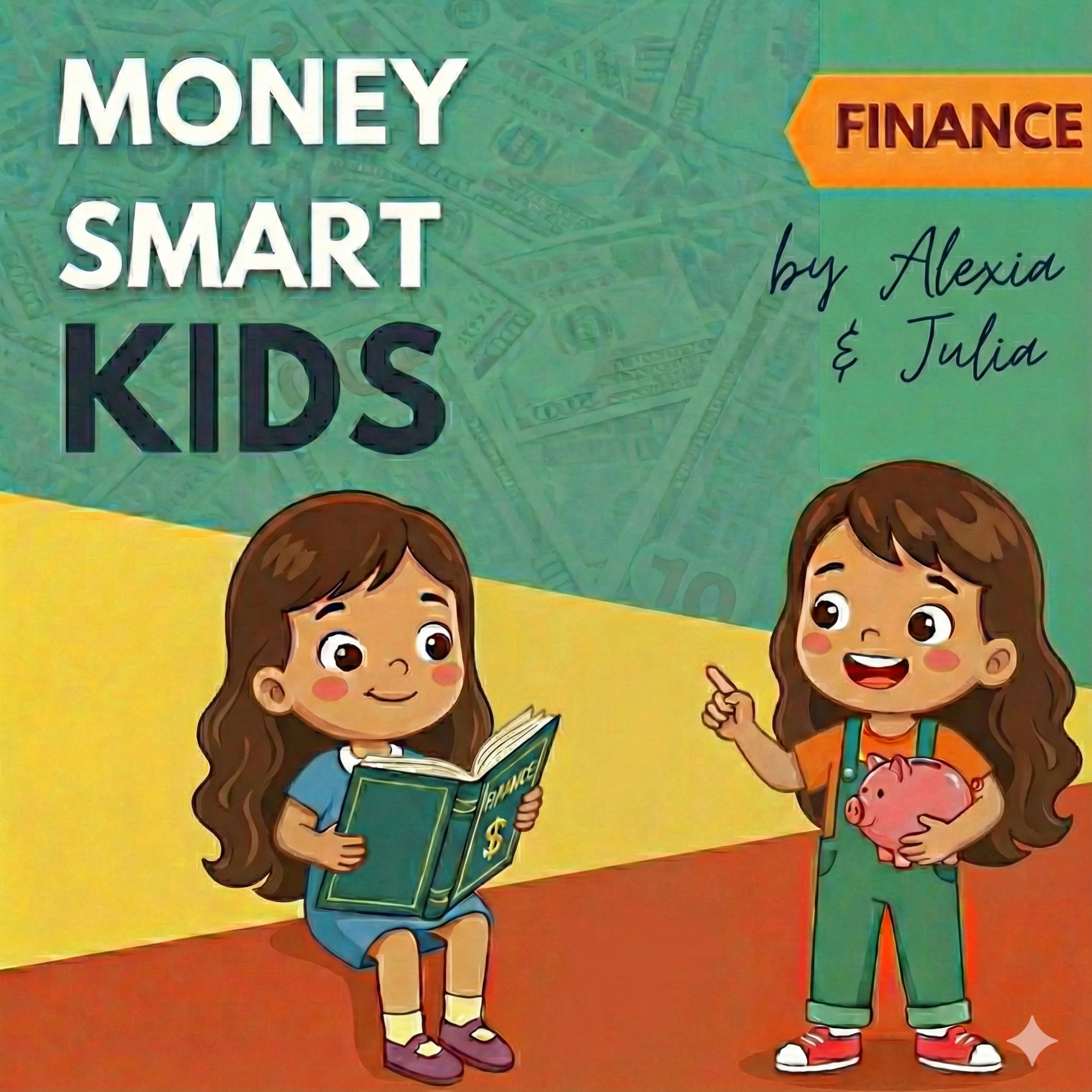
Money Smart Kids
by Libelula Labs
Have you ever wondered why money exists or how to start your own business? Join Alexia and Julia on 'Money Smart Kids,' a fun and educational podcast that explores fascinating questions about finance from a kid's perspective. Each week, our young hosts dive into topics like saving, spending, and even investing, making complex money concepts easy for children to understand. From learning about budgeting to understanding the difference between needs and wants, this podcast is packed with valuable lessons for young listeners.
-
12
How is Bitcoin Different from Traditional Money You Can Hold?
Bitcoin for Kids: Trust, Blockchains, and the Pizza StoryAlexia and Julia explain Bitcoin to kids by first defining money as something people agree to trust, like shells, gold, or dollars backed by trust rather than gold. They introduce Bitcoin as digital money that lives on computers and uses a blockchain, compared to a classroom where everyone holds identical, cheat-proof notebooks of all transactions, creating transparency with some privacy trade-offs. They describe how new Bitcoin is created through “mining,” where computers race to solve hard math puzzles, and emphasize the fixed supply of 21 million coins. The hosts note Bitcoin’s price can be highly volatile and tell the 2010 story of 10,000 Bitcoin spent on two pizzas, now worth millions. They recap key points, give a pop quiz, and challenge listeners to ask a grown-up whether they’d trust money they can’t hold.00:00 Bitcoin Without Coins00:56 What Makes Money02:05 Trust Without Gold02:44 Blockchain Notebook03:42 Privacy Tradeoffs04:15 Mining And Scarcity05:10 Volatility And Pizza06:26 How People Use Bitcoin06:55 Trust By Math07:46 Rapid Fire Recap08:25 Pop Quiz And Challenge09:15 Final Thoughts Subscribe
-
11
World Cup Wealth: The Financial Game Plan
Where the World Cup Money Really Goes: Players vs. Sponsors vs. FIFA | Money Smart KidsJulia tells Alexia she wants to quit fourth grade to become a pro soccer player, but they “follow the money” to explain how the World Cup profits as a massive money machine driven by a four-year wait and an audience of roughly half the planet. They break the cash into three “pockets”: players (club salaries, prize money, and especially endorsements), sponsors (brands paying for attention and logos everywhere), and FIFA (which owns the tournament rights and earns billions from broadcasting, sponsorships, tickets, and licensing). They show how only about 1,000 roster spots exist out of roughly 250 million organized players, making player wealth a pyramid with a tiny top. The key lesson is that the biggest money goes to ownership, not performance, and athletes should love the sport, take school seriously, and build skills and investments beyond short careers.00:00 Quitting for Soccer00:45 World Cup Money Machine01:18 Four Year Hype01:57 Three Money Pockets02:32 Player Pay Pyramid05:03 Sponsor Attention Game06:32 FIFA Owns the Rights07:35 Ownership Beats Doing08:44 Go Pro With a Plan09:55 Weekly Challenge Recap
-
10
The Great Money Mystery: Learn to Budget
Where Did My $10 Go?! The 3-Jar Budget (Save, Spend, Share)Julia thinks her $10 disappeared, but Alexia explains it’s not a mystery—it’s what happens when you spend without a plan. The episode introduces budgeting as a simple superpower: telling your money where to go instead of wondering where it went. Alexia teaches the easiest budget by splitting money into three jars—spend (fun purchases), save (bigger goals), and share (helping others)—and shows how tracking every purchase reveals “Gerald” spending, the sneaky little costs that add up. Through quick scenarios like a book fair choice, a game skin versus saving for Lego, and friend pressure to buy candy, Julia learns about trade-offs and sticking to her own budget. The mission: split money into three jars, track spending for a week, and find your Gerald.00:00 The Missing Ten Dollars00:52 Budget Basics Explained01:55 Three Jars Method03:19 Track Your Spending04:37 Real Life Money Choices06:06 Why Budgeting Matters06:48 Your Money Mission07:34 Case Closed and Subscribe
-
9
Money Smart Kids: The True Value of School
Fall in Love With School: Find Your “One Thing” (and the $2 Million Lesson)Money Smart KidsOn a sunny walk to school in New York City, the hosts of Money Smart Kids talk about “falling in love with school” by treating learning like setting up a new phone: elementary school builds the basics, middle school helps you explore interests, and high school helps you choose what to keep as classes connect to careers through electives, clubs, and deeper study. They emphasize you don’t have to love every subject—just find the one you love, because that passion can become a superpower and lead to expertise. They also frame education as the biggest investment, citing that high school graduates earn about $1 million more over a lifetime than dropouts, and college graduates about $1 million more than high school grads. Their practical tip is to find and record one interesting thing in every class each week, because knowledge stacks over time.00:00 Sunny Walk Intro00:34 Falling for School01:17 Brain as Phone02:06 Find Your One Thing03:36 Elementary Explore Mode04:29 Middle School Sparks05:24 High School to Careers06:19 College and Costs07:02 Education ROI Stat09:22 One Interesting Thing10:26 Arriving at School10:47 Final Takeaways Outro
-
8
Tiny Snowballs, Big Dollars: Mastering Compound Interest
How Kids Can Become Millionaires with the S&P 500 and Compound InterestOn Money Smart Kids, Julia and Alexia explain how a 10-year-old can nearly become a millionaire by age 40 using an S&P 500 index fund, which they describe as a “basket” of 500 major U.S. companies like Apple, Microsoft, Disney, and Amazon. They emphasize that picking one winning stock is unpredictable, so buying the basket spreads risk, and note the S&P 500 has averaged about 10% annual growth over roughly 90 years (though it varies year to year). Using compound interest and a snowball analogy, they calculate that investing $100 per week from age 10 to 40 totals $156,000 contributed and grows to about $989,000, while starting at 20 yields about $331,000, a difference of $658,000. They suggest ways kids can save and note even $20 per week could become nearly $200,000 by 40.00:00 Millionaire By Doing Nothing00:35 Meet Money Smart Kids01:21 What Is The S&P 50002:19 Why Buy The Basket03:22 Compound Interest Magic04:44 The Snowball Effect05:05 The Million Dollar Math06:58 Starting Late Costs You08:12 How Kids Can Start09:11 Your Weekly Money Mission09:38 Recap And Challenge Grownups10:19 Wrap Up And Next Episode*This is not financial advice.
-
7
Super Bowl Commercials: The $7 Million Gamble
Touchdown Talk: The Big Business of Super Bowl AdsIn this episode of Money Smart Kids, hosts Alexia and Julia dive into the fascinating world of Super Bowl commercials. They explore why these 30-second ads are so pricey, how companies measure the return on investment, and the risks involved in spending millions on a single commercial. The duo discusses the creativity behind these ads and plays a fun game of 'Fact or Fake' related to Super Bowl commercials. They also introduce a listener challenge, inviting kids to guess the cost of a specific Super Bowl ad. This episode is packed with fun facts, engaging stories, and valuable lessons on money management and smart spending.00:00 Introduction and Welcome00:18 Super Bowl Commercials: Why They Matter00:46 The Cost of Super Bowl Ads01:40 Return on Investment for Ads02:34 The World's Worst Super Bowl Commercial03:16 Why Kids Should Care About Ads03:56 Creativity in Super Bowl Ads04:22 Fact or Fake: Super Bowl Edition06:16 Guess That Price Game07:40 Conclusion and Wrap-Up
-
6
Broken Arms, Broken Cars & Broken Windows: Who Pays? Insurance!
Understanding Insurance: An Essential Guide for KidsIn this episode of Money Smart Kids, Alexia and Julia take on the important topic of insurance, explaining its purpose and how it works in a fun and engaging way. They describe insurance as a financial safety net for when unexpected accidents or emergencies happen. The hosts break down various types of insurance, such as health, car, home, life, and even pet insurance. They explain key concepts like premiums and deductibles and share practical advice on when and why you need insurance. The episode concludes with a recap of essential points to remember about insurance and an invitation for viewers to send in their money-related questions for future episodes.00:00 Introduction to Money Smart Kids00:45 What is Insurance?01:51 How Insurance Works04:14 Types of Insurance05:36 When Do You Need Insurance?06:45 Funny Insurance Story08:03 Key Takeaways and Conclusion
-
5
Do you have a Rainy Day Jar?
Money Smart Kids: The Power of Saving and Emergency FundsIn this episode of Money Smart Kids, 10-year-olds Alexia and Julia guide young listeners on the importance of saving money and understanding emergency funds. Through engaging stories of kids like Daisy and friends Liam and Zoe, they highlight why setting aside a portion of allowance can prevent future disappointments and handle unexpected emergencies. Listeners learn to start their own 'Rainy Day Jar,' contributing a bit each week to build a fund for real emergencies. The episode concludes with a fun quiz to reinforce the learning, ensuring kids understand how saving today helps secure their future.00:00 Introduction to Money Explorers00:36 Why Saving Money is Important01:04 The Story of Daisy and the Importance of Saving01:48 Understanding Emergency Funds02:17 Captain Save-a-Day: Be Your Own Superhero02:54 The Story of Liam and Zoe: Saving for the Unexpected03:40 Money Smart Kids Challenge: The Rainy Day Jar04:15 Quiz Time: Test Your Money Smarts04:55 Wrapping Up: Be a Money Smart Hero
-
4
Holiday Price Pop: The Kid’s Guide to Expensive New Year’s Dinners
Understanding Restaurant Prices on New Year's EveIn this special New Year's episode of Money Smart Kids, hosts Alexia and Julia discuss why restaurant prices skyrocket during holidays, focusing on their personal experience at a fancy restaurant on New Year's Eve. They break down the concepts of supply and demand, the cost of creating a festive atmosphere, holiday pay for staff, special holiday menus, and reservation fees. They also provide listeners with practical tips for dining out on holidays and emphasize the importance of understanding financial decisions. The episode concludes with a fun New Year's tradition involving eating 12 grapes for good luck.00:00 Introduction and New Year's Eve Experience01:52 Understanding Supply and Demand03:32 Special New Year's Atmosphere Costs04:35 Holiday Pay for Restaurant Staff05:54 Special Menus and Reservation Fees08:31 Is Dining Out on New Year's Worth It?09:30 Tips for Dining Out on Holidays10:33 Recap and Final Thoughts
-
3
Gold: The Shiny Investment!
In this episode of Money Smart Kids, 10-year-old Alexia and her 8-year-old sister Julia dive into the exciting world of gold! They discuss the many uses of gold beyond jewelry, its value as an investment, and why its price fluctuates. Alexia shares a thrilling personal story about finding a real gold ring, and the sisters explore key money lessons such as patience, valuing rare things, and diversification. Subscribe now to keep being money smart!00:00 Welcome to Money Smart Kids!00:35 The Gold Ring Story01:47 Why Gold is Valuable03:24 Gold Prices and Jewelry04:44 Fun with Gold Facts05:39 Lessons Gold Teaches Us07:21 Funny Money Mistakes08:22 Key Takeaways and Challenge09:18 Closing and Next Episode Teaser
-
2
Where does money come from?
Money Smart Kids Podcast Ep. 2: The Amazing Story of How Money is Made!Join Alexia and Julia, two curious kids, as they launch their new podcast series 'Money Smart Kids.' In this first episode, they dive into the fascinating world of how money is made, from coins at the US Mint to the paper bills. They even discuss the surprising news that the U.S. will stop making pennies soon and what that means for all of us. Learn how coins are made from metals, how paper money is crafted with special inks and papers, and why it's so expensive to produce these tiny pieces of currency. Don’t miss this fun and educational chat aimed at making kids more money smart!00:00 Welcome to Money Smart Kids!00:19 Where Does Money Come From?00:51 How Coins and Paper Money Are Made03:20 The End of the Penny08:19 The Future of Money and Final Thoughts
-
1
What is an allowance
We dive into the world of allowances so kids can understand them.
We're indexing this podcast's transcripts for the first time — this can take a minute or two. We'll show results as soon as they're ready.
No matches for "" in this podcast's transcripts.
No topics indexed yet for this podcast.
Loading reviews...
ABOUT THIS SHOW
Have you ever wondered why money exists or how to start your own business? Join Alexia and Julia on 'Money Smart Kids,' a fun and educational podcast that explores fascinating questions about finance from a kid's perspective. Each week, our young hosts dive into topics like saving, spending, and even investing, making complex money concepts easy for children to understand. From learning about budgeting to understanding the difference between needs and wants, this podcast is packed with valuable lessons for young listeners.
HOSTED BY
Libelula Labs
Loading similar podcasts...
Frequently Asked Questions
How many episodes does Money Smart Kids have?
Money Smart Kids currently has 12 episodes available on PodParley. New episodes are automatically indexed when they're published to the podcast feed.
What is Money Smart Kids about?
Have you ever wondered why money exists or how to start your own business? Join Alexia and Julia on 'Money Smart Kids,' a fun and educational podcast that explores fascinating questions about finance from a kid's perspective. Each week, our young hosts dive into topics like saving, spending, and...
How often does Money Smart Kids release new episodes?
Money Smart Kids has 12 episodes. Check the episode list to see recent publication dates and frequency.
Where can I listen to Money Smart Kids?
You can listen to Money Smart Kids on PodParley by clicking any episode. We provide an embedded audio player for direct listening, and you can also subscribe via your preferred podcast app using the RSS feed.
Who hosts Money Smart Kids?
Money Smart Kids is created and hosted by Libelula Labs.
URL copied to clipboard!