
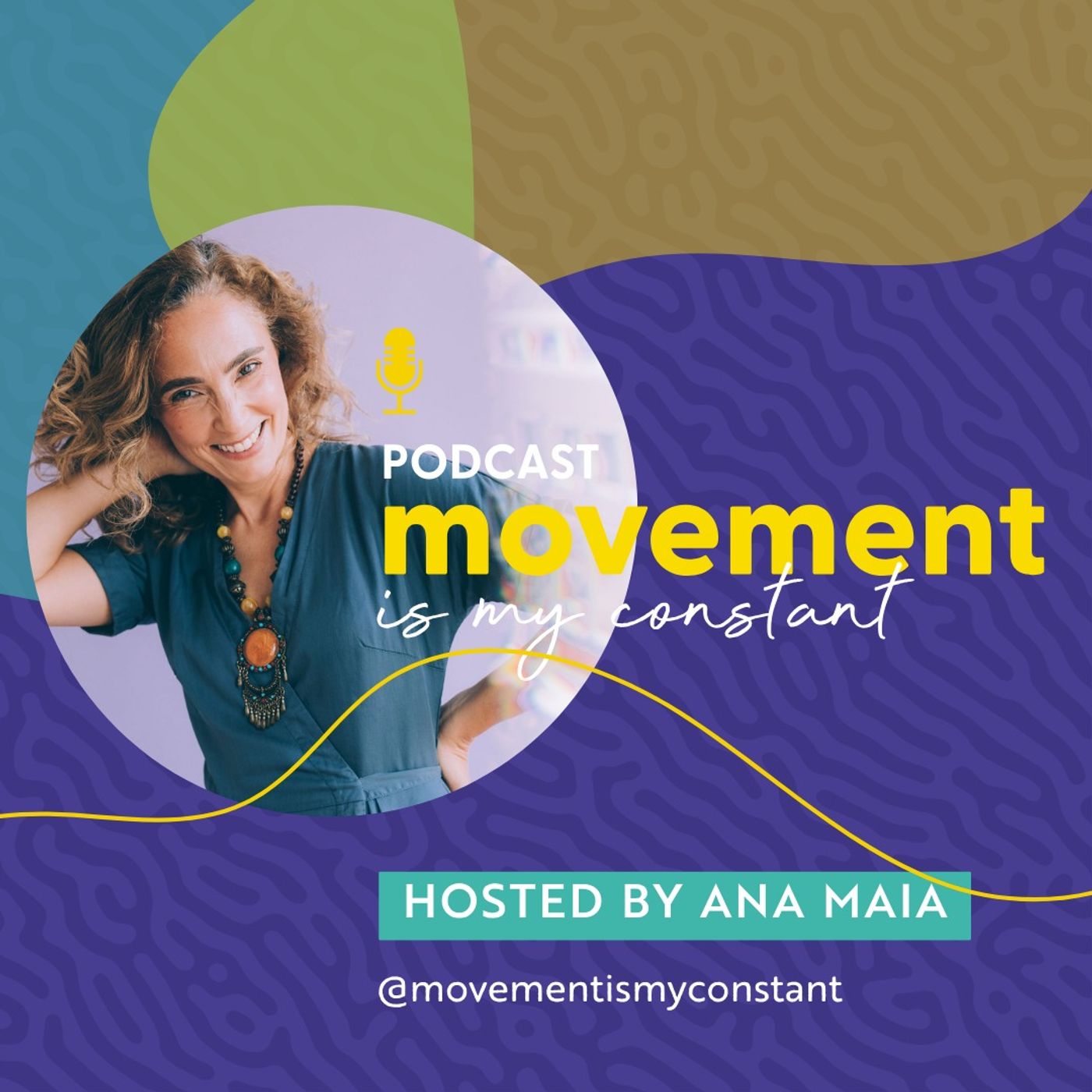
PODCAST · health
Movement Is My Constant: Real conversations on movement, mindfulness, and making meaningful change - for creatives, caregivers, and mission-driven humans
by Ana Maia Marques
This podcast is for the ones who hold space for others—therapists, coaches, educators, healthcare workers, NGO staff, facilitators, and creatives—yet often struggle to make space for themselves.Hosted by Ana, a mindfulness teacher and embodiment facilitator with a background in UX and a passion for thoughtful living, Movement Is My Constant explores how we can stay present, grounded, and resilient while navigating personal growth, life transitions, and the messy in-betweens.Through honest conversations with movement experts, scientists, and thinkers across disciplines, you'll get insights and tools that help you reconnect with your body, build emotional resilience, and move through change with more clarity and ease.You might be wondering..."How can I feel more grounded when life feels overwhelming?""What does mindfulness actually look like in everyday life?""How do I keep giving to others without burning out?""What role does movement play in emotional and mental clarity?""How d
-
73
The Radical Simplicity of Joy in Everyday Life
Episode overview Bracha Goetz delves into the transformative power of gratitude, illustrating how a simple shift in perspective can lead to profound changes in one's life. She emphasizes the importance of movement, not just as physical exercise, but as a way to connect with one's inner self and the world around us. Through her storytelling, Brach reveals how these practices have not only enriched her own life but have also inspired countless others to find joy and purpose. Her unique ability to distill complex ideas into accessible lessons makes her insights valuable for both children and adults, encouraging listeners to embark on their own journeys of self-discovery and fulfillment Resources & Links: 1. Nourish the Soul Feeling the Emptiness Within 2. The Happiness Box (Children’s Book) 3. Impact Publications (www.growingimpactpublications.com) 4. Gratitude and Resilience for Children - Book What we cover The emotional and physical experience of emptiness in childhood and adulthood The role of gratitude as a spiritual cure for food addiction and emotional disconnection The transformative power of daily gratitude practices and their rapid habit formation How appreciating simple pleasures, like an orange, unlocks lasting happiness The five levels of the pleasure ladder: from physical sensations to transcendence Movement as a vital contributor to emotional well-being and joy Strategies for teaching children about gratitude and resilience The importance of internal energy and intention in creating a meaningful legacy Neuroplasticity and the brain’s capacity to develop gratitude pathways Practical steps for shifting focus and overcoming feelings of disconnection About the guest Bracha Goetz is the Harvard-educated author of 47 children’s books and a candid memoir for adults about her journey to joy, Nourish the Soul: Filling the Emptiness Within. Her newest picture books include The Happiness Box and The Mother Who Always Said Yes. They can be found at www.growingimpactpublications.com. Call to action Subscribe to Movement Is My Constant wherever you listen. And if this episode sparked something, share it—with someone who could use a bit more self-worth in their life. For more at the intersection of movement, health, and systems change, join the newsletter at movementismyconstant.com/newsletter. 🎙️ More Episodes: movementismyconstant.com 📱 Follow on Instagram: @movementismyconstant ✨ Want to go deeper? Explore my mindfulness courses and 1:1 sessions at MiCa Mindfulness — designed to support caregivers, creatives, and mission-driven humans.Episode CreditsProduced, Edited and Mixed by Chris ForbesArtwork Design by Utterly CreateMusic is by Pictures of a Floating World from the Free Music archive.orgBe sure to follow and tag Movement is My Constant on Instagram🎧 Subscribe now and get grounded, insightful episodes that feel like a deep exhale
-
72
Movement as a Tool for Improving Focus and Executive Function in ADHD
Episode overview This episode challenges the common misconception that movement distracts from focus. Instead, it shows how intentional, mindless movement can support individuals with ADHD in both personal and professional settings. Led by expert psychologist Dr. Carey Heller, we explore practical strategies rooted in understanding regulation and executive function—transforming how we approach attention challenges. This episode reframes ADHD from a focus solely on attention lapses to a nuanced regulation challenge, emphasizing movement and environmental design as powerful tools for enhancement, not distraction. By understanding and supporting regulation, we can unlock potential in all settings. Resources 1. ADHD Evaluation as an Executive Functioning Support - Dr. Carey Heller 2. Goblins Tools - Tool to help break down tasks into manageable parts 3. Heller Psychology Group What we cover The shift in understanding ADHD from attention deficit to a regulation and executive functioning issue How movement, when mindless and controlled, can enhance focus rather than hinder it The role of movement in emotional regulation and managing impulsivity in ADHD Practical tools: use of desk Ellipticals, balance boards, fidget tools, and short mindfulness exercises The influence of environmental structure: from classroom layouts to workplace setups, supporting self-regulation Common emotional experiences of those with ADHD: frustration, shame, and feelings of regret, and how understanding can alleviate these The impact of sports and physical activity on self-regulation and executive functioning in children Long-term strategies for adults: organization systems, AI tools, and avoiding burnout through adaptive techniques The future of ADHD treatment with advances in tech, AI, and environment redesigns How to seek diagnosis and support, emphasizing the importance of comprehensive assessment and formal testing About the guest Dr. Carey Heller is a licensed psychologist and founding partner of Heller Psychology Group. He specializes in the evaluation and treatment of Attention-Deficit/Hyperactivity Disorder (ADHD), executive function issues, learning disabilities, and related items including anxiety. Call to action Subscribe to Movement Is My Constant wherever you listen. And if this episode sparked something, share it—with someone who could use a bit more self-worth in their life. For more at the intersection of movement, health, and systems change, join the newsletter at movementismyconstant.com/newsletter. 🎙️ More Episodes: movementismyconstant.com 📱 Follow on Instagram: @movementismyconstant ✨ Want to go deeper? Explore my mindfulness courses and 1:1 sessions at MiCa Mindfulness — designed to support caregivers, creatives, and mission-driven humans.Episode CreditsProduced, Edited and Mixed by Chris ForbesArtwork Design by Utterly CreateMusic is by Pictures of a Floating World from the Free Music archive.orgBe sure to follow and tag Movement is My Constant on Instagram🎧 Subscribe now and get grounded, insightful episodes that feel like a deep exhale
-
71
Midlife Recalibration: Redefining Women's Health with Raquel Devillé
Episode overview In this enlightening episode, Raquel Devillé delves into the transformative phase of midlife, redefining it as a period of recalibration rather than decline. Raquel emphasizes the importance of viewing bodily changes as a form of intelligence and recalibration, rather than mere symptoms. The conversation explores the role of somatic listening, which involves tuning into the body's signals to better understand and support women in their 40s and beyond. Raquel discusses how hormonal regulation acts as a communication system, often impacted by stress and trauma, and highlights the difference between adaptive responses and dysfunction, including neurodivergence and trauma responses. Practical somatic approaches such as Trauma Release Exercises (TRE), somatic experiencing, and brain spotting are introduced as effective methods for trauma and stress release. The episode also touches on the impact of chronic sitting, ergonomics, and movement variability on health, and reframes menopause as a period of freedom and self-discovery. Raquel advocates for building trusting relationships with healthcare providers and embracing holistic medicine to navigate these changes with resilience and curiosity. Resources & key concepts 1. Trauma Release Exercises (TRE) 2. Somatic Experiencing 3. Brain Spotting 4. Dr. Mindy Peltz 5. Raquel Devillé's Website (in French) What we cover Midlife as a reframing of decline: viewing bodily changes as intelligence and recalibration The role of somatic listening in understanding and supporting women in their 40s and beyond Hormonal regulation as a communication system, impacted by stress and trauma Adaptive responses versus dysfunction, including neurodivergence and trauma responses Practical somatic approaches: TRE, somatic experiencing, and brain spotting for trauma and stress release The impact of chronic sitting, ergonomics, and movement variability on health Menopause as a period of freedom and self-discovery, not just decline Building trusting relationships with healthcare providers and embracing holistic medicine About the guest Raquel Devillé, helps exhausted women remember how to listen and connect to their bodies. She works with sensitive, neurodivergent women between 45 and 60, highly sensitive, ADHD, autistic, who've spent their entire lives masking and over-adapting. Using somatic approaches: TRE®, Somatic Experiencing, Brainspotting, trauma-sensitive yoga, Raquel helps them dismantle the adaptations that no longer serve them. Call to action Subscribe to Movement Is My Constant wherever you listen. And if this episode sparked something, share it—with someone who could use a bit more self-worth in their life. For more at the intersection of movement, health, and systems change, join the newsletter at movementismyconstant.com/newsletter. 🎙️ More Episodes: movementismyconstant.com 📱 Follow on Instagram: @movementismyconstant ✨ Want to go deeper? Explore my mindfulness courses and 1:1 sessions at MiCa Mindfulness — designed to support caregivers, creatives, and mission-driven humans.Episode CreditsProduced, Edited and Mixed by Chris ForbesArtwork Design by Utterly CreateMusic is by Pictures of a Floating World from the Free Music archive.orgBe sure to follow and tag Movement is My Constant on Instagram🎧 Subscribe now and get grounded, insightful episodes that feel like a deep exhale
-
70
The Power of Yielding: Redefining Strength Through Meditation and Movement with Jeff Patterson
Episode overview Most high performers and everyday practitioners alike are missing out on the secret to sustainable strength: the power of yielding. Jeff Patterson, founder of Portland Tai Chi academy, martial arts and meditation center, with over 30 years of experience, reveals how embracing yielding — not as a sign of weakness, but as a strategic strength — can transform your performance, longevity, and mindset. This episode challenges the myth that force equals power and shows that true resilience lies in active patience, awareness, and strategic response. Through Jeff’s inspiring story, you'll discover how meditative practice evolves beyond mere relaxation into a dynamic tool for optimizing athletic performance, leadership, and aging like a river—fluid, adaptable, and strong. Jeff breaks down the five core regulations of practice: body, breath, mind, energy, and spirit — explaining how neglecting any can hinder your growth. He highlights chronic tension as a universal barrier to health and shares practical strategies to regulate and sustain vitality at any age. We explore the concept of yielding in physical, mental, and emotional realms—learning how subtle responsiveness can outmaneuver raw force. Jeff’s insights show that consistency, guidance, and the right mindset are essential to unlock these internal shifts. Most importantly, he offers a new lens on aging: rather than fighting it, flow with it, stay flexible, and find joy in continuous growth. This episode is perfect for athletes, entrepreneurs, anyone seeking long-term resilience, or practitioners eager to upgrade their internal training. By reframing strength as strategic yielding and internal discipline, you'll leave with a clear path to living with greater ease, clarity, and power. Hit play if you’re ready to see yielding as your ultimate competitive advantage — because sometimes, the strongest move is the one that responds wisely, not forcefully. Resources 1. The Yielding Warrior: One of Jeff's authored books, focusing on yielding as a strategic, mindful approach to performance and life. 2. The Art of Growth: Another book by Jeff, part of his works on meditative arts and personal development. 3. Dalai Lama: Referenced for a quote about meditation, emphasizing the importance of daily practice. 4. Phil Jackson: Cited for integrating meditation in high-performance sports, demonstrating its value in elite athletics. 5. Jade dragon: Part of a parable Jeff shared, symbolizing the results of steady, incremental effort. What we cover Jeff's journey from boxing to meditation reveals that consistent internal practice leads to profound life transformations. Yielding as a philosophical concept offers a strategic approach to physical, mental, and emotional harmony. Key to mastery is understanding the core principles: clarity of purpose, consistency, and guided mentorship. The story of the stonecutter exemplifies how repetition and patience shape both material and personal growth. Five pathways of meditative arts include performance enhancement, therapy, healthcare, philosophy, and spirituality—each valuable depending on the individual’s goal. Chronic tension stems from neglecting body regulation; practices focus on balancing relaxation and tension for health and mobility. Strategic use of the yin (long inhale, deep relaxation) and yang (short inhale, outward energy) breaths helps manage daily fluctuations and stress. Recognizing distractions in meditation teaches us resilience and living in balance—living the practice, not just doing it. The “aging like a river” metaphor emphasizes adaptability and gratitude over resistance to life's inevitable changes. High performers—athletes and creatives—benefit from meditation by sharpening focus, emotional regulation, and tapping into deeper awareness. The most common beginner challenge is mindset: belief in oneself and patience over immediate results. About the guest Jeff Patterson, founder of a thriving martial arts academy and meditation center that has served the Portland community for over 32 years, author and experienced teacher, Jeff bridges intense physical training with deep internal cultivation. He has taught thousands of students how to unlock their potential through the art of yielding — a practice that integrates breath, presence, structure, and performance. Call to action Subscribe to Movement Is My Constant wherever you listen. And if this episode sparked something, share it—with someone who could use a bit more self-worth in their life. For more at the intersection of movement, health, and systems change, join the newsletter at movementismyconstant.com/newsletter. 🎙️ More Episodes: movementismyconstant.com 📱 Follow on Instagram: @movementismyconstant ✨ Want to go deeper? Explore my mindfulness courses and 1:1 sessions at MiCa Mindfulness — designed to support caregivers, creatives, and mission-driven humans.Episode CreditsProduced, Edited and Mixed by Chris ForbesArtwork Design by Utterly CreateMusic is by Pictures of a Floating World from the Free Music archive.orgBe sure to follow and tag Movement is My Constant on Instagram🎧 Subscribe now and get grounded, insightful episodes that feel like a deep exhale
-
69
Repatterning Trauma Responses: Using predictability to create everlasting change
Episode overview In this conversation, Cedric Bertelli delves into the concept of emotional resolution and the methodologies he has developed to address trauma responses. The discussion explores how subtle awareness of our emotional landscape can shape our decisions, influence how we handle pressure, and affect our leadership styles. Cedric shares insights into the Emotional Health Institute and the EmRes® methodology, which focuses on resolving emotional patterns without revisiting past traumas. He emphasizes the brain's role in predicting emotional responses and how understanding this can lead to more effective trauma resolution. Cedric references the idea of "Repatterning Trauma Responses" through the EmRes® methodology, which involves understanding how the brain constructs emotional patterns and using this knowledge to resolve them. He also discusses the brain's predictability in constructing emotions, highlighting how predictions are constantly updated based on new experiences. Resources Emotional Health Institute - Cedric founded this institute, which focuses on emotional resolution. EmRes® (Emotional Resolution) - A methodology co-developed by Cedric for resolving emotional patterns. Dr. Jacques Fumex - A gastroenterologist from the University of Lyon in France, mentioned as a collaborator in developing the EmRes® methodology. René Descartes - Referenced in the context of the scientific revolution and its impact on separating the mind from the body. What we cover EmRes® does not revisit the past but focuses on resolving current emotional patterns The brain constructs emotions based on predictions and past experiences Physical sensations are key to understanding and resolving emotions Resilience is supported by a nurturing environment, not inherent to individuals Emotional resolution can be achieved without the need for cathartic experiences Societal pressures contribute to feelings of isolation and disconnection The future of emotional resolution lies in more research and accessibility of methods. Chapters 00:00 Introduction to Physical Intelligence 04:14 Cedric's Journey to Emotional Health 08:39 Understanding EmRes® Methodology 13:21 The Nature of Trauma and Resilience 18:15 Interoception and Emotional Awareness 22:41 The Role of the Practitioner in MRes 27:11 Cognitive vs. Somatic Approaches to Healing 31:51 The Subtle Signals of Emotional Resolution 33:21 Navigating Personal Experience in Therapy 34:32 The Importance of Client Safety and Comfort 37:02 Understanding Emotional Responses and Safety 38:56 Congruence of Emotions and Current Reality 40:51 The Impact of Chronic Stress and Burnout 43:29 Isolation in Modern Society 45:13 The Illusion of Individuality and Connection 46:20 Emotional Management in Leadership 48:54 Discomfort in Emotional Resolution 51:54 Living at the Epicenter of Life 52:51 Future of Trauma Resolution 55:34 Accessibility of Emotional Resolution Techniques 58:32 Practical Steps for Managing Emotions About the guest Cedric Bertelli, founder of the Emotional Health Institute and co-developer of Emotional Resolution®, or EmRes®. Cedric’s work explores how emotions are formed and resolved through the body, and how unresolved emotional patterns quietly shape our health, relationships, and leadership. He works internationally and brings a grounded perspective on emotional healing. Call to Action Subscribe to Movement Is My Constant wherever you listen. And if this episode sparked something, share it—with someone who could use a bit more self-worth in their life. For more at the intersection of movement, health, and systems change, join the newsletter at movementismyconstant.com/newsletter. 🎙️ More Episodes: movementismyconstant.com 📱 Follow on Instagram: @movementismyconstant ✨ Want to go deeper? Explore my mindfulness courses and 1:1 sessions at MiCa Mindfulness — designed to support caregivers, creatives, and mission-driven humans.Episode CreditsProduced, Edited and Mixed by Chris ForbesArtwork Design by Utterly CreateMusic is by Pictures of a Floating World from the Free Music archive.orgBe sure to follow and tag Movement is My Constant on Instagram🎧 Subscribe now and get grounded, insightful episodes that feel like a deep exhale
-
68
Light Touch Massage and Fascia: Rethinking Chronic Pain with Peter Stuart
Episode overviewPeter Stuart has spent decades working with people whose pain did not resolve through conventional treatments. In this conversation, we unpack why “doing the right thing” often is not enough, especially when fascia, trauma, and the nervous system are ignored or misunderstood.We talk about fascia as a communicative, responsive system rather than inert tissue, why aggressive techniques can backfire in chronic pain, and what it actually means to listen to the body rather than impose change on it. Peter also speaks candidly about the emotional and relational dimensions of manual therapy, and the responsibility practitioners have to educate, not just treat.This episode is for therapists questioning their methods, patients stuck in cycles of treatment without progress, and anyone interested in a more nuanced, humane model of healing.What we coverWhat fascia is, and why it matters more than most training programmes admitWhy chronic pain persists even when anatomy looks “fine”Light touch versus force, and why subtle input often creates deeper changeThe role of trauma, safety, and perception in physical healingHow therapists can work with the nervous system instead of against itWhy patient education is not optional if you want lasting resultsThe relational and empathic skills manual therapy actually requiresChapters00:00 Introduction to Peter Stuart and Fascia01:31 Understanding Fascia: Anatomy and Function05:28 The Impact of Fascia on Healing07:52 Gentle Touch Myofascial Release Explained09:37 The Shift from Traditional to Holistic Approaches16:06 Therapist Education and the Need for Intuition18:59 Burnout in Therapists: Finding Balance28:31 Trauma Beyond the Dramatic: Understanding Accumulated Stress33:13 The Importance of Rest and Cycles35:51 Volunteering and Community Connection39:19 Understanding Chronic Pain and Trauma43:42 The Role of Emotional Release in Therapy51:54 Empowering Therapists and Clients for ChangeAbout the guestPeter Stuart's seminarsLinkedinFacebook Call to ActionSubscribe to Movement Is My Constant wherever you listen. And if this episode sparked something, share it—with someone who could use a bit more self-worth in their life.For more at the intersection of movement, health, and systems change, join the newsletter at movementismyconstant.com/newsletter.🎙️ More Episodes: movementismyconstant.com📱 Follow on Instagram: @movementismyconstant ✨ Want to go deeper? Explore my mindfulness courses and 1:1 sessions at MiCa Mindfulness — designed to support caregivers, creatives, and mission-driven humans.Episode CreditsProduced, Edited and Mixed by Chris ForbesArtwork Design by Utterly CreateMusic is by Pictures of a Floating World from the Free Music archive.orgBe sure to follow and tag Movement is My Constant on Instagram🎧 Subscribe now and get grounded, insightful episodes that feel like a deep exhale
-
67
Why Fitness Is Not About Confidence but Self-Worth – with Nicole Zapoli
Episode NotesIn this conversation, Nicole Zapoli former Junior Olympic gymnast, a natural bodybuilding pro, a top five percent CrossFit Games Open athlete, and the author of Live FIT From the Inside Out, explores the profound connection between movement, emotional stability, and personal growth. Our conversation delves into the differences between self-worth and self-confidence, emphasizing the need for a deeper understanding of one's value beyond external achievements. What We CoverEvery workout is an opportunity to learn about oneselfMovement is a form of self-respect and honorMovement is essential for emotional stabilityVisualisation can help conquer fears before physical challengesSelf-worth is foundational and cannot be earned; it is inherentChallenging oneself physically can enhance self-respect and worth Chapters00:00 The Importance of Movement07:45 Building Resilience Through Discipline14:20 Overcoming Challenges and Getting Unstuck23:00 Understanding Self-Worth vs. Self-Confidence29:00 The Journey of Personal Growth35:00 Mindset: The Key to Sustainable Change37:20 Mindset and Fitness: The Core Connection43:30 Setting Goals: Overcoming Challenges in Training51:40 Embracing Growth: The Journey of Self-Respect01:00:00 Energy Boost: Quick Tips for Immediate Motivation About Nicole ZapoliNicole ZapoliLive FIT From the Inside OutFacebookInstagramYouTube Call to ActionSubscribe to Movement Is My Constant wherever you listen. And if this episode sparked something, share it—with someone who could use a bit more self-worth in their life.For more at the intersection of movement, health, and systems change, join the newsletter at movementismyconstant.com/newsletter.🎙️ More Episodes: movementismyconstant.com📱 Follow on Instagram: @movementismyconstant ✨ Want to go deeper? Explore my mindfulness courses and 1:1 sessions at MiCa Mindfulness — designed to support caregivers, creatives, and mission-driven humans.Episode CreditsProduced, Edited and Mixed by Chris ForbesArtwork Design by Utterly CreateMusic is by Pictures of a Floating World from the Free Music archive.orgBe sure to follow and tag Movement is My Constant on Instagram🎧 Subscribe now and get grounded, insightful episodes that feel like a deep exhale
-
66
Darryl Edwards on The Science of Play: Movement as a Complete Human Experience
Episode NotesIn this conversation, Darryl Edwards, founder of the Primal Play method explores the significance of movement and play in enhancing physical and mental health. Darryl shares his journey from a sedentary lifestyle to discovering the Primal Play method, which emphasises the importance of playful movement. We discuss the four pillars of the Primal Play method, the science behind movement, and the emotional and cognitive benefits of being active. The conversation highlights how adults can transform mundane tasks into playful activities, fostering a healthier relationship with movement and encouraging adaptability in their lives. What We CoverFor Darryl movement is the genesis of explorationPlay is a way to discover the inner childMovement is medicineHumans evolution to move is pivotal for hormonesMovement impacts the “feel good” hormonesPlay is an advanced way of working outLearning to turn something mundane into play Timestamps00:00 Introduction to Movement and Health02:39 Darryl's Journey to Movement05:24 The Primal Play Method Explained08:05 The Four Pillars of Primal Play10:40 Exercise Physiology and Health Benefits13:30 Cognitive Neuroscience and Movement18:11 The Role of Play in Movement25:59 Reconnecting with Our Inner Child32:16 The Joy of Movement and Play36:34 Play vs. Exercise: The Focus on Joy43:46 Caution in Adult Movement49:46 Sedentary Behavior and Its Consequences55:18 Adaptability Through Play56:28 Embracing Playfulness in Daily Life59:03 The Serious Side of Play01:03:42 Transforming Mundane Tasks into Play01:13:25 Stress Testing Adaptability through Play About Darryl EdwardsThe Primal Play MethodWhy Working Out Isn’t Working Out (TED Talk)PublicationsX (Twitter)FacebookPinterestInstagramLinkedin Call to ActionSubscribe to Movement Is My Constant wherever you listen. And if this episode sparked something, share it—with someone who could use a bit more play in their life.For more at the intersection of movement, health, and systems change, join the newsletter at movementismyconstant.com/newsletter.🎙️ More Episodes: movementismyconstant.com📱 Follow on Instagram: @movementismyconstant ✨ Want to go deeper? Explore my mindfulness courses and 1:1 sessions at MiCa Mindfulness — designed to support caregivers, creatives, and mission-driven humans.Episode CreditsProduced, Edited and Mixed by Chris ForbesArtwork Design by Utterly CreateMusic is by Pictures of a Floating World from the Free Music archive.orgBe sure to follow and tag Movement is My Constant on Instagram🎧 Subscribe now and get grounded, insightful episodes that feel like a deep exhale
-
65
Dr. Albert Bramante on Transforming Self-Sabotage into Growth: The Psychology of Movement and Mindset
Episode NotesWe talk about how self-sabotage often signals a stagnant mind—and how movement, both mental and physical, can reawaken creativity. Dr. Albert Bramante explains how language models shape perception, how responsibility differs from blame, and why true artistry thrives on intrinsic value rather than external validation.Drawing on his experience as a performance psychologist and talent agent, Dr. Bramante explores the pressures of the entertainment industry, where artists often chase admiration in saturated markets. He offers grounded tools for transforming obstacles into opportunities, developing routines that support creative flow, and understanding the psychology behind sustainable artistic practice.What We CoverAccountability over feelingsHow language shifts perceptionResponsibility versus culpabilityTaking back power through languageStagnation as a form of self-sabotageThe trap of external validationFinding joy in the intrinsic value of artThe role of curiosity in personal growthWhen effort creates resistanceFor artists, creatives, high-performance professionals, and curious movers who feel out of touch with their art in a world driven by external validation.About Dr Albert BramanteDr. Albert Bramante (he/him) is a talent agent, performance psychologist, and mindset expert who has spent over 20 years helping high performers—both in entertainment and beyond—overcome mental roadblocks. With a Ph.D. in Psychology and certifications in hypnosis and NLP, he bridges the gap between talent, business success, and the psychology of peak performance.Call to ActionIf you’ve ever felt stuck by self-doubt, struggled with external validation, or wanted to reconnect with your creative flow, this episode offers practical insights on transforming self-sabotage into growth. Dr. Albert Bramante shares strategies for shifting language, embracing responsibility, and cultivating curiosity so that artists, performers, and high-achievers can approach their work with intrinsic motivation and mental resilience.Subscribe to Movement Is My Constant wherever you listen. If this conversation resonates, share it — with an artist, performer, creative, or anyone seeking to embrace curiosity and flow in their craft.For more at the intersection of movement, health, and systems change, join the newsletter at movementismyconstant.com/newsletter.Let’s Connect🎧 Subscribe to Movement Is My Constant on your podcast app.🎙️ More Episodes: movementismyconstant.com📱 Follow on Instagram: @movementismyconstant ✨ Want to go deeper? Explore my mindfulness courses and 1:1 sessions at MiCa Mindfulness — designed to support caregivers, creatives, and mission-driven humans.Episode CreditsProduced, Edited and Mixed by Chris ForbesArtwork Design by Utterly CreateMusic is by Pictures of a Floating World from the Free Music archive.orgBe sure to follow and tag Movement is My Constant on Instagram🎧 Subscribe now and get grounded, insightful episodes that feel like a deep exhale
-
64
Moving Beyond Hustle Culture: Steven Puri on Flow States and Conscious Leadership
Episode SummaryIn this conversation, Steven Puri explores the evolution from hustle culture to a more mindful and embodied way of working and leading. We discuss curiosity, flow states, and intention in daily life, and how leadership rooted in service and humility can unlock personal and collective growth.Episode NotesIn this lively and story-rich episode, Steven Puri—former film executive turned tech entrepreneur and daily yogi—shares the turning points that led him from Hollywood’s high-pressure culture to building Sukha, a flow-state app designed to help people work with greater intention and joy.He talks about the lessons yoga brings to leadership, the balance between focus and busyness, and the feedback loops that sustain creativity and growth. Through personal anecdotes—from tiger forests in India to coding breakthroughs on a flight—Steven reflects on how curiosity and service can shape meaningful, sustainable success.What We CoverThe evolution from “hustle” to mindful productivityHow yoga reshaped Steven’s leadership and lifeTranslating flow and feedback loops into technologyThe role of curiosity and intention in meaningful workLeadership as service: creating the conditions for others to flourishThe importance of community and embodied awarenessAbout Steven PuriSteven Puri has been a senior executive on two major Hollywood lots (DreamWorks and Fox), raised over $20M in venture funding, and led three start-ups—one successful exit and two humbling failures. A daily yogi, he now channels his learning into Sukha, an app built to help knowledge workers and creatives achieve flow through mindful productivity.Call to ActionIf you’ve ever questioned the pressure to keep pushing or wondered how to work with more clarity and purpose, this episode is for you. It offers grounded insights on evolving beyond hustle culture, cultivating flow, and leading through service and mindfulness.Subscribe to Movement Is My Constant wherever you listen. If this conversation resonates, share it — with a teammate, a founder, a leader, or anyone seeking a more intentional way of working and living.For more at the intersection of movement, health, and systems change, join the newsletter at movementismyconstant.com/newsletter.Let's Connect🎧 Subscribe to Movement Is My Constant on your podcast app.🎙️ More Episodes: movementismyconstant.com📱 Follow on Instagram: @movementismyconstant ✨ Want to go deeper? Explore my mindfulness courses and 1:1 sessions at MiCa Mindfulness — designed to support caregivers, creatives, and mission-driven humans.Episode CreditsProduced, Edited and Mixed by Chris ForbesArtwork Design by Utterly CreateMusic is by Pictures of a Floating World from the Free Music archive.orgBe sure to follow and tag Movement is My Constant on Instagram🎧 Subscribe now and get grounded, insightful episodes that feel like a deep exhale
-
63
Jori Meijer on Hidden Body, Handstands, and the Subtle Art of Movement
In this episode, Jori Meijer delves into the transformative potential of movement through her work at Hidden Body, a movement school located in the Netherlands redefining physical education for the 21st century. She illuminates how movement is more than mechanics—it’s relational, cognitive, and emotional, connecting us to ourselves and others. From the structural insights of tensegrity to the disciplined experimentation of handstands, Jori emphasizes unlearning, progressive overload, and long-term relationships as catalysts for personal and collective growth.What We Cover:The evolution of human movement and its relevance todayUnderstanding tensegrity and the body as a living, adaptable organismHow progressive overload and unlearning improve efficiencyUsing the handstand as a metaphor for mastering diverse skillsThe relational and subtle dimensions of movement in practiceThe role of micro-communities in fostering growth and connectionAbout Jori Meijer:Jori Meijer is one of the co-founders of HiddenBody, a movement school located in the Netherlands redefining physical education for the 21st century. She guides students to explore both gross and subtle dimensions of movement, fostering curiosity, relational awareness, and embodied learning.Call to Action / Let’s Connect:Learn more about Jori's work at HiddenBody in Amsterdam, or follow her on Instagram at Jori MeijerSubscribe to Movement Is My Constant wherever you listen. For more content at the intersection of movement, health, and systemic change, join the newsletter at movementismyconstant.com/newsletter. ✨ Want to go deeper? Explore my mindfulness courses and 1:1 sessions at MiCa Mindfulness — designed to support caregivers, creatives, and mission-driven humans.Episode CreditsProduced, Edited and Mixed by Chris ForbesArtwork Design by Utterly CreateMusic is by Pictures of a Floating World from the Free Music archive.orgBe sure to follow and tag Movement is My Constant on Instagram🎧 Subscribe now and get grounded, insightful episodes that feel like a deep exhale
-
62
Why Posture Isn’t About Sitting Up Straight – Patrick Johnson on Alexander Technique and Mindfulness
Episode SummaryMany of us try to “fix” our posture by pulling our shoulders back or holding ourselves upright. Patrick Johnson suggests this approach is doomed to fail. Posture, he argues, isn’t a position to hold but a state of being shaped by attention, environment, and emotion.In this episode, Patrick—Alexander Technique teacher, scientist, and co-founder of Smartbody Studio in Amsterdam—explains why posture is less about correction and more about awareness. Drawing on years of teaching, research, and practice, he shows how habits of focus and tension pull us forward at the computer, how expanding awareness changes our embodied state, and why posture is inseparable from stress and presence.What We CoverThe myth of “fixing” posture and why it doesn’t work.How attention, stress, and environment shape our embodied state.The pyramid of practice: from stillness to non-goal-directed movement to everyday life.How running can shift from pushing through discomfort to the rhythmic pleasure of movement.Why Alexander Technique and mindfulness offer different yet complementary tools for presence.The challenge of teaching: embodying what you want students to experience.Patrick’s bigger question: how posture and awareness can help us enjoy life more—and help others do the same.About the GuestPatrick Johnson is an Alexander Technique teacher, scientist, and movement educator based in Amsterdam. Certified in 2010, he has taught internationally and co-runs Smartbody Studio with his wife, Jelena Petrovic. With over 40 peer-reviewed publications, his research explores posture, movement, and the intersection of Alexander Technique and mindfulness. Patrick also teaches anatomy and physiology to Pilates and Alexander teachers, leads workshops on running and walking, and has a long background in contact improvisation dance.Call to ActionLearn more about Patrick’s work at Smartbody Studio in Amsterdam, or follow him on Instagram at smartbody_alexander_technique.Subscribe to Movement Is My Constant wherever you listen. For more content at the intersection of movement, health, and systemic change, join the newsletter at movementismyconstant.com/newsletter.Let’s Connect🎧 Subscribe to Movement Is My Constant on your podcast app.🎙️ More Episodes: movementismyconstant.com📱 Follow on Instagram: @movementismyconstantIf this episode resonated, share it—with a friend, a coach, or anyone who has ever wondered why posture matters beyond “sitting up straight.” ✨ Want to go deeper? Explore my mindfulness courses and 1:1 sessions at MiCa Mindfulness — designed to support caregivers, creatives, and mission-driven humans.Episode CreditsProduced, Edited and Mixed by Chris ForbesArtwork Design by Utterly CreateMusic is by Pictures of a Floating World from the Free Music archive.orgBe sure to follow and tag Movement is My Constant on Instagram🎧 Subscribe now and get grounded, insightful episodes that feel like a deep exhale
-
61
Reflexology for Pain Relief and Preventive Care with Dr. Njideka Olatunde
Episode SummaryReflexology isn’t just a foot massage — it’s a powerful tool for pain relief, preventive healthcare, and emotional balance. In this episode, Dr. Njideka Olatunde, naturopath, author of Reflexology Today: A Family Affair, and founder of the Focus on Healing Wellness Institute, explains how reflexology works through the nervous system to reduce pain, relieve stress, and restore the mind–body–spirit connection. We explore why reflexology is recognized as healthcare in some countries but overlooked in the US, how intentional touch can act as a peace-making practice, and simple reflexology techniques you can use at home to support your own wellbeing.What We CoverHow reflexology works with the nervous system to relieve pain without medicationThe cultural roots of healing practices and why touch is a universal connectorWhy reflexology is recognized as healthcare in some countries but sidelined in the USReflexology as a peace-making tool for individuals, families, and communitiesThe patient–practitioner relationship and why healing begins with the question, “What do you want?”Practical techniques listeners can try at home, including Njideka’s “touchology handshake”About the GuestDr. Njideka Olatunde is the founder of the Focus on Healing Wellness Institute, a master reflexologist, educator, and consultant specializing in pain relief and preventive care. She is the author of Reflexology Today: A Family Affair and the creator of Touchology Reflexology Therapy. With decades of experience bridging traditional healing and modern healthcare, Dr. Olatunde has helped thousands of people reclaim control of their health without dependency on medication.Call to ActionVisit focusonhealing.com to explore Dr. Olatunde’s offerings.Subscribe to Movement Is My Constant wherever you listen. If this episode resonates, share it — with a friend, a therapist, a changemaker, or even a skeptic.For more at the intersection of movement, health, and systems change, join the newsletter at movementismyconstant.com/newsletter. Let’s Connect🎧 Subscribe to Movement Is My Constant on your podcast app.🎙️ More Episodes: movementismyconstant.com📱 Follow on Instagram: @movementismyconstantShare this episode with someone who’s curious about preventive healthcare or looking for natural approaches to pain relief ✨ Want to go deeper? Explore my mindfulness courses and 1:1 sessions at MiCa Mindfulness — designed to support caregivers, creatives, and mission-driven humans.Episode CreditsProduced, Edited and Mixed by Chris ForbesArtwork Design by Utterly CreateMusic is by Pictures of a Floating World from the Free Music archive.orgBe sure to follow and tag Movement is My Constant on Instagram🎧 Subscribe now and get grounded, insightful episodes that feel like a deep exhale
-
60
Encore: Mind-Body Connection, Morning Routines & Mindset with Rich Andoh
Editor’s Note – Encore ReleaseAs many of us transition from the slower rhythm of August into the energy of September, this feels like the right moment to revisit my conversation with Rich Andoh. His insights on morning routines, embodied learning, and the mind-body connection are a timely reminder of how movement can help us reset, sharpen focus, and prepare for what’s ahead. Whether this is your first listen or a return visit, notice what resonates with you now, at this point of re-entry.Episode OverviewIn this encore episode of Movement Is My Constant, Rich Andoh explores how movement shapes the mind-body connection, mindset, and personal growth. He unpacks why morning routines set the tone for mental clarity, emotional regulation, and resilience, and he challenges the limitations of traditional education by advocating for experiential, embodied learning.Rich explains why somatic awareness and kinetic intelligence are often overlooked, how attention and presence transform performance, and why educators must embody what they teach. He also offers practical advice for beginners looking to build body awareness and integrate movement into daily life.Episode HighlightsMorning routines as a foundation for clarity and focusReframing frustration to unlock growthMovement as a tool for self-awareness and cognitive developmentWhy direct, hands-on learning outperforms theory aloneThe role of educators in embodying their practicesAttention, focus, and mindfulness in movement trainingThe need for a unified framework for human movement studiesWhy physical experiences remain irreplaceable in a digital worldPractical entry points for starting a movement practiceWhat You’ll Learn✔️ How morning routines shape readiness and well-being✔️ Why reframing frustration creates growth opportunities✔️ The value of experiential learning in education and life✔️ How mindfulness and attention refine movement skills✔️ Simple practices to begin cultivating body awarenessLinks & ResourcesFollow Rich AndohInstagram: @hiddenbody.nlWebsite: hiddenbody.nlFollow Movement Is My ConstantInstagram: @movementismyconstantAll Episodes: movementismyconstant.comAdditional references:Carol Dweck: Growth MindsetAlia Crum: Empowering Mindsets to Optimize Health and Human Performance✨ Your Takeaway?What insight from Rich resonates most with you now? Share your reflections by tagging us on social media or leaving a review. ✨ Want to go deeper? Explore my mindfulness courses and 1:1 sessions at MiCa Mindfulness — designed to support caregivers, creatives, and mission-driven humans.Episode CreditsProduced, Edited and Mixed by Chris ForbesArtwork Design by Utterly CreateMusic is by Pictures of a Floating World from the Free Music archive.orgBe sure to follow and tag Movement is My Constant on Instagram🎧 Subscribe now and get grounded, insightful episodes that feel like a deep exhale
-
59
Clowning, Fooling, and IFS: Embodied Tools for Neurodivergence, Trauma Healing, and Burnout Prevention — with Holly Stoppit
Episode SummaryIn this episode of Movement Is My Constant, I explore the transformative potential of clowning therapy, fooling performance, and Internal Family Systems (IFS) parts work with Holly Stoppit — facilitator, dramatherapist, and artistic director of Beyond The Ridiculous. Holly shares how these creative therapy approaches combine performance, embodiment, and psychology to support neurodivergence, trauma healing, and burnout prevention.We discuss how embodying different parts of ourselves through movement-based therapy and playful improvisation can foster resilience, deepen embodied self-awareness, and open new pathways for growth. Whether you are a therapist, movement practitioner, or someone exploring self-development beyond thought, this conversation offers practical insight into the mind–body connection.What We CoverHome is Right Here, Wherever I Am — Holly’s poem, read by me, on the value of kinesthetic learning and embodied presence.The creative nature of “parts work” in IFS, and how it helps create healthy distance from challenging inner voices.Why pushing for awareness too quickly can lead to burnout, and how fooling can help break the cycle.How meditation begins before the cushion — posture, breath, and arriving as you are — plus Holly’s own tips for building a sustainable practice.About the GuestHolly Stoppit is the artistic director of Beyond The Ridiculous, a collective of solo improvisers who use authentic impulses to create truthful performance. As a facilitator, educator, dramatherapist, IFS therapist, clinical supervisor, and creative consultant, Holly offers embodied, creative, and reflective approaches to exploring the human condition.🔗 About HollyCall to ActionIf you want to understand why certain behaviours still drive actions you wish to change — or if you work with others to uncover unconscious patterns — this episode is for you. It offers fresh perspectives on using clowning in therapy, fooling for self-discovery, and somatic approaches to trauma recovery.We also explore how movement-based therapy can complement meditation and mindfulness, shifting from constant “doing” into genuine “being.” I share how my own teacher training shaped this approach, with a new US-based cohort opening soon. Find out more here and use this link to join, and your registration will also support the podcast.Subscribe to Movement Is My Constant wherever you listen. If this episode resonates, share it — with a friend, a therapist, a changemaker, or even a skeptic.For more at the intersection of movement, health, and systems change, join the newsletter at movementismyconstant.com/newsletter.Let's Connect🎧 Subscribe to Movement Is My Constant on your podcast app.🎙️ More Episodes: movementismyconstant.com📱 Follow on Instagram: @movementismyconstant ✨ Want to go deeper? Explore my mindfulness courses and 1:1 sessions at MiCa Mindfulness — designed to support caregivers, creatives, and mission-driven humans.Episode CreditsProduced, Edited and Mixed by Chris ForbesArtwork Design by Utterly CreateMusic is by Pictures of a Floating World from the Free Music archive.orgBe sure to follow and tag Movement is My Constant on Instagram🎧 Subscribe now and get grounded, insightful episodes that feel like a deep exhale
-
58
Redefining Chronic Pain: Move, Heal, and Take Back Control with Dr. Fawad Mian
What if chronic pain isn’t a life sentence—but a system failure?In this episode of Movement Is My Constant, I speak with Dr. Fawad Mian, a board-certified neurologist and regenerative medicine specialist, about why so many high-performing adults struggle to recover from chronic injuries—and what can actually help.We dig into the biology of chronic pain, why conventional treatments often fail, and how regenerative approaches like PRP, prolotherapy, and movement re-education are providing new options for those who’ve been told:"Take the pills, book the surgery, and learn to live with it."Whether you're an athlete, therapist, coach, or someone who refuses to accept surgery as the only answer, this conversation offers practical insights and a different path forward.What We CoverWhat chronic pain really is—and why it persistsWhy conventional treatments and insurance frameworks fall shortRegenerative therapies explained: PRP, prolotherapy, and moreMovement as medicine: what most rehab protocols missRewiring your mindset to become an active participant in healingWhy surgery isn’t always the only—or best—optionNotable QuotesThe problem with the steroid is that it has a couple of different effects. Number one, it's toxic to the cartilage, it's toxic to the bone, it's toxic to tissue, ultimately. - Dr. Fawad MianI always challenge people, look, I mean, let's just get you moving first. If that's what you can do, start doing that. - Dr. Fawad MianAbout the Guest:Dr. Fawad Mian is the founder of Vitality Integrative Wellness in New Jersey. He combines diagnostics, regenerative treatments, and movement re-education to help adults over 55 recover from chronic pain without drugs or surgery.🔗 Dr Fawad’s website: prolohealing.com📘 Getting to Pain Free — available on bookshop.orgCall to ActionIf you’re dealing with chronic pain—or have been told surgery is your only option—this episode is for you. There are alternatives. Start by listening, get informed, and begin building a healing plan that fits your body, not just the system.For more on movement-based recovery and building trust in your body, visit movementismyconstant.com/episodes/Let’s Connect🎧 Subscribe to Movement Is My Constant on your podcast app.📩 Join MiMC newsletter for movement-based resources and podcast updates.📱 Follow on Instagram: @movementismyconstantDisclaimer: This episode is for educational purposes only and is not medical advice. Please consult a qualified healthcare professional before making any decisions about your health or treatment. ✨ Want to go deeper? Explore my mindfulness courses and 1:1 sessions at MiCa Mindfulness — designed to support caregivers, creatives, and mission-driven humans.Episode CreditsProduced, Edited and Mixed by Chris ForbesArtwork Design by Utterly CreateMusic is by Pictures of a Floating World from the Free Music archive.orgBe sure to follow and tag Movement is My Constant on Instagram🎧 Subscribe now and get grounded, insightful episodes that feel like a deep exhale
-
57
From Movement to Meaning with Jo Hardy: How Embodiment Facilitation Transforms Emotion and Body Awareness
Episode Highlights 🌀 Dance as Divine ConnectionJo reflects on how movement becomes a form of prayer—a personal and collective ritual where “the dance space is also the divine.”🌀 Training Through Movement, Not Just TalkIn The Change Weaver, movement isn’t optional. Jo outlines how dance, hands-on exercises, and embodied presence are central to how she teaches facilitation.🌀 From Sitting to SensingJo shares her evolution from a mindfulness-heavy somatic psychotherapy practice to one that embraced standing up, moving, and listening through the body in motion.🌀 Breaking Free from PerformanceWhy trained dancers often arrive in embodiment spaces feeling trapped by perfectionism—and how conscious dance can return movement to a place of freedom and inquiry.What you'll learn Why movement can be a deeper form of inquiry than wordsHow trained facilitation supports emotional processing and somatic integrationThe difference between freeform movement and held embodiment practiceHow culture, trauma, and personal history show up in our bodiesThe ethics and subtle skills of facilitating embodied spacesHow embodiment supports emotional resilience, presence, and trustNotable Quotes“Movement can be a form of inquiry.”“Every cell in your body has the potential to perceive the wisdom of the moment.”“Facilitation is not just holding space—it’s participating in the space with integrity.”“The dance space is also the divine.”Chapters00:00 Welcome to Movement Is My Constant02:45 Jo’s Path from Therapy to Dance Facilitation09:19 Embodiment as Inquiry, Not Performance16:48 Facilitating Emotional and Somatic Process21:02 The Cultural Layers of Movement25:51 Building Safety and Trust in Embodied Spaces35:40 Movement as Integration: From Personal to Collective45:06 Spiritual Dimensions of Embodied Work51:17 Training the Next Generation of Facilitators59:18 Final ReflectionsResources and MentionsJo Hardy's websiteFollow Jo Hardy on Instagram: @consciousdanceJo's current training offering: The Changeweaver programLet's Connect🎧 Subscribe to Movement Is My Constant on your podcast app.📩 Join MiMC newsletter for movement-based resources and podcast updates.📱 Follow on Instagram: @movementismyconstant ✨ Want to go deeper? Explore my mindfulness courses and 1:1 sessions at MiCa Mindfulness — designed to support caregivers, creatives, and mission-driven humans.Episode CreditsProduced, Edited and Mixed by Chris ForbesArtwork Design by Utterly CreateMusic is by Pictures of a Floating World from the Free Music archive.orgBe sure to follow and tag Movement is My Constant on Instagram🎧 Subscribe now and get grounded, insightful episodes that feel like a deep exhale
-
56
Flow Over Force with Anthony Trahair: A Playful Take on Mental Health and Creative Recovery
In a world that glorifies urgency and endless productivity, what if the key to clarity, focus, and meaning lies in something as simple—and radical—as play? In this episode, Anthony Trahair shares his journey from chemistry student to circus performer to wellness coach, offering deep reflections on the role of movement and creativity in mental wellbeing.Whether you're feeling burnt out, overstimulated, or just disconnected from your creative edge, this conversation offers practical tools and fresh insights into how we might live, move, and work with more intention.Episode HighlightsWhy urgency makes us feel important (and why that's dangerous)Burnout culture, productivity myths, and nervous system overloadMovement as a form of emotional regulationFlow state, attention, and the link with neurodivergenceJuggling as metaphor and method for mental healthThe problem with “watch out!” and the power of mindful languageWhy screen time ruins downtimeThe value of daily practices before touching your phoneCreativity, curiosity, and how children learn presence through playKey Ideas & ReferencesMarshall Rosenberg – founder of Nonviolent Communication; referenced in how we can shift language to support emotional safety and creativity.The book PlayDHD by Kirten Milliken PhD – mentioned in the context of neurodivergence and reframing attention as a creative strength.The Urgency-Importance Matrix (also known as the Eisenhower Matrix) – used to explain how urgency often feels like importance but is usually a trap.The idea that school is no longer a clear path to employment or purpose, which contributes to disengagement.The importance of having a practice—something grounding you do daily before engaging with tech.🧩 Memorable Quote"If you start your day with your phone, your nervous system’s already hijacked. A practice, before anything else, is a way to claim your mind back." — Anthony Trahair🔗 Links & Resources🌐 Anthony Trahair – Official Website📘 Pearls of Juggling – Book by Anthony Trahair (available on his website)🧠 Marshall Rosenberg – Nonviolent Communication📚 PlayHD by Christine Miskinis – Book Info🎙️ More Episodes at Movement Is My Constant📲 Follow the Podcast on Instagram @movementismyconstant📣 Call to ActionIf you’re navigating a creative block, mental fatigue, or just want to bring more joy into your work, tag a friend or fellow mover who needs to hear this. Rate and review if it resonated ✨ Want to go deeper? Explore my mindfulness courses and 1:1 sessions at MiCa Mindfulness — designed to support caregivers, creatives, and mission-driven humans.Episode CreditsProduced, Edited and Mixed by Chris ForbesArtwork Design by Utterly CreateMusic is by Pictures of a Floating World from the Free Music archive.orgBe sure to follow and tag Movement is My Constant on Instagram🎧 Subscribe now and get grounded, insightful episodes that feel like a deep exhale
-
55
Touch, Trust & Transformation: How Contact Improvisation Builds Emotional Awareness with Tom Goldhand
What happens when we stop talking and start listening with our bodies?In this candid conversation, dancer and facilitator Tom Goldhand reveals how contact improvisation became a tool for emotional intelligence, embodied self-awareness, and relational trust. Starting dance at 25, Tom was drawn to the space between structure and spontaneity—where movement speaks louder than words.We explore how touch and play open pathways to transformation, why creating safe spaces is vital for partner work, and how curiosity fuels the flow state in dance. This episode is essential listening for teachers, dancers, and anyone exploring contact improvisation as a somatic practice for self-development. Episode HighlightsTom’s late start in dance and his journey from beginner to facilitatorHow touch unlocks emotional awareness and the challenges it bringsThe balance between safety and bravery in contact improvisationCuriosity and responsiveness as keys to flow and growthTeaching consent and boundaries through movement, without wordsPlayfulness as a serious tool for emotional transformationHolding space for emotional memory triggered by touchThe importance of community in your dance journeyThe washing machine metaphor: surrendering to collective rhythmApplying contact improvisation lessons beyond the dance floor What You’ll Learn✔️ How contact improvisation supports emotional healing and somatic awareness✔️ Why non-verbal communication can reveal deeper truths than words✔️ Strategies for creating emotionally safe and consent-aware movement spaces✔️ Differentiating touch as a technique vs. relational inquiry✔️ Cultivating bravery and presence over performance in dance✔️ Teaching and learning through structured spontaneity and flow✔️ Recognizing healthy, supportive dance communities for growth✔️ Preparing facilitators to hold emotional content safely✔️ Understanding how the body stores and releases emotional memory✔️ Practical methods to teach consent, boundaries, and risk in partner dance Links & Resources🌐 Tom Goldhand – Official Website📘 Facebook: Tom Goldhand🎙️ More Episodes at Movement Is My Constant📲 Follow the Podcast on Instagram @movementismyconstant ✨ Want to go deeper? Explore my mindfulness courses and 1:1 sessions at MiCa Mindfulness — designed to support caregivers, creatives, and mission-driven humans.Episode CreditsProduced, Edited and Mixed by Chris ForbesArtwork Design by Utterly CreateMusic is by Pictures of a Floating World from the Free Music archive.orgBe sure to follow and tag Movement is My Constant on Instagram🎧 Subscribe now and get grounded, insightful episodes that feel like a deep exhale
-
54
Beyond Loneliness: How Movement Builds Meaningful Human Connection with Margarida Guedes De Quinhones
🎧 Episode Highlights:🔹 The Power of Volunteering: How simple acts of service become catalysts for transformation and connection—for both giver and receiver🔹 Loneliness Across Generations: Why older adults and remote-working young adults face different versions of the same silent epidemic🔹 Reframing Aging: Challenging the outdated beliefs that reduce elders to care recipients, instead of full participants in society🔹 The Symbolism of a Bike Ride: Why “the right to feel the wind in your hair” is about freedom, dignity, and belonging🔹 Emotional Movement: How shared experiences in physical movement create emotional openness and trust🔹 Community Healing: How grassroots volunteer projects like Pedalar Sem Idade spark social change from the ground up🔹 Global Insights: Lessons from Portugal’s adaptation of a worldwide movement—and what every country can learn from it🧠 What You’ll Learn in This Episode:✔️ Why loneliness often goes unspoken—and how to recognize it in yourself and others✔️ How intergenerational volunteering can dissolve stereotypes and build empathy✔️ The emotional benefits of volunteering beyond physical movement✔️ How movement can become a medium for connection, storytelling, and healing✔️ What “being old” really means—and how to rewrite the narrative✔️ The importance of supporting community-based projects with donations and time✔️ Why small, consistent gestures are a powerful form of activism🔗 Links & Resources:🌍 Pedalar Sem Idade – Website📖 Cycling Without Age – Global Movement📸 Follow the Movement: Instagram @pedalarsemidadeportugal🎙️ More Episodes: movementismyconstant.com | Instagram @movementismyconstant✨ What Moved You?Did Margarida’s story shift how you think about aging, connection, or purpose?Share your reflections and tag us—we love hearing what landed with you.And don’t forget to subscribe, share this with a changemaker friend, or leave a review.Your voice helps the ripple keep moving. ✨ Want to go deeper? Explore my mindfulness courses and 1:1 sessions at MiCa Mindfulness — designed to support caregivers, creatives, and mission-driven humans.Episode CreditsProduced, Edited and Mixed by Chris ForbesArtwork Design by Utterly CreateMusic is by Pictures of a Floating World from the Free Music archive.orgBe sure to follow and tag Movement is My Constant on Instagram🎧 Subscribe now and get grounded, insightful episodes that feel like a deep exhale
-
53
Laughter as Medicine: Healing, Coaching, and Connection with Julia Johannsen
In this episode of Movement Is My Constant, I talk to Julia Johannsen, founder of the Institute of Systemic Laughter and SenseWise, about the deep, embodied power of laughter. We explore how laughter is more than just a joyful release — it’s a serious tool for healing trauma, resetting the nervous system, and creating instant connection. Julia shares micro practices and reflections that bring laughter into coaching, daily life, and even high-performance contexts.Whether you're a coach, a curious mover, or a self-development enthusiast, this episode invites you to reconnect with laughter as a natural resource for resilience and well-being.Episode HighlightsWhy laughter is older than language and a natural human bonding toolHow laughter can shake the body, reset the nervous system, and even release traumaThe link between laughter and embodiment: it’s movement, voice, and breath combinedPractical micro practices to shift your emotional state in minutesUsing laughter to access self-confidence, joy, and perspective before high-stakes momentsThe cultural layers of laughter and how it transcends verbal communicationHow to use laughter as a coaching resource — both in group and solo contextsWhy “joy is serious work” — and how it can serve your personal and professional growth🔗 Links & Resources:🌐 Julia’s Website – SenseWise📲 Follow Julia on Instagram🎙️ More episodes: movementismyconstant.com | Instagram @movementismyconstant✨ What Moved You?Did Julia’s wisdom spark a shift in your perspective? Tag us with your reflections or leave a review with your favorite takeaway. And don’t forget to subscribe for more episodes that blend movement, healing, and conscious growth. ✨ Want to go deeper? Explore my mindfulness courses and 1:1 sessions at MiCa Mindfulness — designed to support caregivers, creatives, and mission-driven humans.Episode CreditsProduced, Edited and Mixed by Chris ForbesArtwork Design by Utterly CreateMusic is by Pictures of a Floating World from the Free Music archive.orgBe sure to follow and tag Movement is My Constant on Instagram🎧 Subscribe now and get grounded, insightful episodes that feel like a deep exhale
-
52
Synchronicity, Flow & Free Will: Physics Meets Personal Growth with Sky Nelson-Isaacs
In this episode, theoretical physicist and musician Sky Nelson-Isaacs joins me to explore how synchronicity, grief, and joy shape the way we move through the world. Grounded in physics but deeply human in approach, Sky shares insights from his books Living in Flow and Leap to Wholeness—revealing how our experiences are not random, but part of a deeper web of meaningful connection.We unpack what it means to live in alignment with your values, how to work with emotional projection and disappointment, and why tuning into joy—even during struggle—can be a guiding force in decision-making. You’ll hear how grief isn't only about death, but also shows up in the small disappointments of life—and how honoring those emotions helps us avoid self-sabotage and build deeper relationships.This conversation bridges quantum physics, free will, embodied awareness, and inner healing, offering tools for those seeking to live more consciously—whether you’re navigating uncertainty, making hard choices, or simply trying to feel more at peace with yourself. Episode Highlights:🔹 Synchronicity & Meaning: How patterns in life aren’t random—and what they reveal about choice and awareness🔹 Grief as Emotional Flow: Reframing grief as an essential part of processing disappointment and reconnecting with authenticity🔹 Projection in Relationships: How our unresolved emotions shape the stories we tell about ourselves and others🔹 Free Will & Conscious Choice: Sky explains how physics supports the idea that our choices matter—especially when guided by joy🔹 Joy vs. Happiness: Why joy is a more reliable compass than fleeting happiness🔹 Embodiment for Emotional Regulation: Using awareness of the body to interrupt negative spirals and build resilience🔹 Inner Work + Collective Change: How doing the personal work creates authentic societal impactWhat You’ll Learn in This Episode:✔ How synchronicity can reveal meaning in daily life✔ Why grief and emotional honesty are key to breaking self-sabotage cycles✔ How to notice projections and reduce conflict in relationships✔ The science behind flow states and how to access them✔ How joy—not perfection—can guide sustainable decision-making✔ Why doing inner work supports authentic action in the world Links & Resources:📘 Living in Flow + Leap to Wholeness by Sky Nelson-Isaacs🔗 Sky’s Website | Instagram @skynelsonisaacs🎙️ More Episodes: movementismyconstant.com | @movementismyconstant ✨ What Moved You?Did Sky’s story or ideas spark something in you? Tag us with your reflections or leave a review with your favorite insight. And don’t forget to subscribe for more conversations that blend embodiment, meaning-making, and conscious performance. ✨ Want to go deeper? Explore my mindfulness courses and 1:1 sessions at MiCa Mindfulness — designed to support caregivers, creatives, and mission-driven humans.Episode CreditsProduced, Edited and Mixed by Chris ForbesArtwork Design by Utterly CreateMusic is by Pictures of a Floating World from the Free Music archive.orgBe sure to follow and tag Movement is My Constant on Instagram🎧 Subscribe now and get grounded, insightful episodes that feel like a deep exhale
-
51
Creativity Beyond Perfection: Rachel Blackman on Why Failure and Imagination Matter
Rachel Blackman explores how imagination, failure, and embodiment shape the creative process—and why safety, solitude, and nuance are essential for personal growth in a tech-driven world.She explains why imagination is central to creativity, how failure fuels discovery, and why safety is foundational in both coaching and personal growth.The conversation dives into the iterative nature of the creative process, the discomfort that often accompanies transformation, and how embodied practices can help us navigate uncertainty with resilience. Rachel also explores the political dimensions of embodiment, the nuanced understanding required around trauma, and why titration—balancing effort and rest—is key to sustainable growth.With increasing reliance on digital connection, Rachel reflects on the importance of solitude, the difference between being alone and feeling lonely, and how imagination can serve as a powerful tool for self-reflection, transformation, and reconnection. The episode concludes with a hopeful lens on adaptability, and the human capacity to remain resilient through change.Episode Highlights:Creativity, Iteration & the Role of FailureRachel shares how creativity is less about perfection and more about discovery, embracing mistakes as essential learning tools.Imagination as a Portal to the SacredFar from being frivolous, imagination is presented as a serious, transformative force that connects us to deeper truths and possibilities.The Importance of Safety in CoachingWe explore how psychological and emotional safety create the conditions for real growth, especially when navigating trauma or big life transitions.Titration in Personal DevelopmentRachel introduces the concept of titration—moving between challenge and rest—as a method for sustainable growth and nervous system regulation.Embodiment Is PoliticalWhy the body is not neutral in today’s world, and how becoming more aware of our embodied experiences can shift societal narratives.Solitude vs. LonelinessRachel makes a distinction between these two often-conflated states and reflects on how solitude can be a powerful space for reflection.Technology & DisconnectionHow modern tech impacts our ability to connect with ourselves and others—and what we can do to restore that connection.Imagination as a Tool for ReconnectionImagination isn’t just for creatives—it’s a tool for everyone seeking transformation, clarity, or a sense of belonging.What You’ll Learn in This Episode:Why creativity involves iteration, failure, and discoveryThe role of imagination in navigating uncertainty and changeHow trauma-informed approaches to coaching support growthWhy balancing effort and rest is essential for long-term developmentHow the body plays a central role in social and political awarenessWhat it means to be alone vs. to feel lonely—and why that mattersPractical ways to reconnect to yourself in a tech-heavy worldHow to use embodied imagination as a tool for resilience Links & Resources:Follow Rachel BlackmanInstagram: @rachel_blackmanWebsite: vibrantbody.co.uk Follow Movement Is My ConstantInstagram: @movementismyconstantAll Episodes: movementismyconstant.com Recommended Reading– The Politics of Trauma by Staci K. Haines– Radical Imagination by Max Haiven✨ What’s Your Key Takeaway?Did Rachel’s insights spark something in you? We’d love to hear your reflections! Tag us on Instagram or leave a review with your favorite moment from the episode. And don’t forget to subscribe to Movement Is My Constant for more conversations that blend embodiment, performance, and personal growth. ✨ Want to go deeper? Explore my mindfulness courses and 1:1 sessions at MiCa Mindfulness — designed to support caregivers, creatives, and mission-driven humans.Episode CreditsProduced, Edited and Mixed by Chris ForbesArtwork Design by Utterly CreateMusic is by Pictures of a Floating World from the Free Music archive.orgBe sure to follow and tag Movement is My Constant on Instagram🎧 Subscribe now and get grounded, insightful episodes that feel like a deep exhale
-
50
Mastering Mind-Body Connection: Rich Andoh on Morning Routines, Movement, and Mindset
Rich explains why somatic awareness and kinetic intelligence are often overlooked and how embodied learning can transform focus, performance, and mental resilience.The conversation dives into the importance of attention and awareness in movement training, the necessity of holistic movement practices, and why educators must embody the practices they teach. Rich also introduces the concept of neuromuscular development, explaining how direct experiences help individuals overcome fear and frustration, fostering a growth mindset that leads to deeper learning.With the rise of digital learning, Rich emphasises that physical experiences remain irreplaceable and discusses the future of human movement studies, calling for a unified movement education framework. The episode concludes with practical advice for beginners, highlighting how to develop body awareness, the benefits of mindfulness techniques, and how to use movement for mental clarity and emotional resilience.Episode Highlights:🔹 The Power of Morning RoutinesRich Andoh shares why starting the day with intention sets the tone for mental clarity, physical readiness, and overall well-being.🔹 Reframing Challenges for GrowthDiscover how shifting perspectives on frustration can transform obstacles into opportunities for learning and development.🔹 The Body-Mind Connection in MovementRich emphasizes that movement isn’t just physical—it’s an essential tool for deepening self-awareness and enhancing cognitive function.🔹 Experiential Learning in Physical EducationWhy traditional education falls short in valuing movement and how direct, hands-on experiences create lasting understanding.🔹 The Role of Educators in MovementEducators must embody what they teach—Rich discusses why personal engagement in physical practices is crucial for effective learning.🔹 Attention, Focus, and the Art of MovementHow refining attention sharpens movement skills and enhances overall mindfulness in daily life.🔹 A Unified Framework for Human Movement StudiesRich explores the need for a holistic approach to movement education that integrates different disciplines and perspectives.🔹 Embodied Experiences in a Digital AgeWith increasing reliance on screens, Rich highlights why real-world, physical experiences remain irreplaceable for learning and development.🔹 Starting Your Journey: Practical Advice for BeginnersIf you're new to movement awareness, begin with simple physical practices and cultivate a mindset of curiosity and openness.What You’ll Learn in This Episode:✔️ How morning routines shape mental and physical readiness✔️ Why reframing frustration can unlock growth in movement and life✔️ The importance of direct, experiential learning in physical education✔️ How educators can embody the practices they teach✔️ The role of mindfulness and attention in refining movement skills✔️ Why movement education should be integrated into everyday life✔️ Practical ways to start a movement practice and develop a growth mindsetLinks & Resources:Follow Rich AndohInstagram: @hiddenbody.nlHiddenBody: hiddenbody.nlFollow Movement Is My ConstantInstagram: @movementismyconstantAll Episodes Online: movementismyconstant.comCarol Dweck: Growth MindsetAlia Crumb: Empowering Mindsets to Optimize Health and Human Performance✨ What’s Your Key Takeaway?Did Rich’s insights resonate with you? We’d love to hear your thoughts! Share your favorite moment from this episode by tagging us on social media or leaving a review. Don’t forget to subscribe to Movement Is My Constant for more inspiring conversations on movement, resilience, and transformation! ✨ Want to go deeper? Explore my mindfulness courses and 1:1 sessions at MiCa Mindfulness — designed to support caregivers, creatives, and mission-driven humans.Episode CreditsProduced, Edited and Mixed by Chris ForbesArtwork Design by Utterly CreateMusic is by Pictures of a Floating World from the Free Music archive.orgBe sure to follow and tag Movement is My Constant on Instagram🎧 Subscribe now and get grounded, insightful episodes that feel like a deep exhale
-
49
The Mind-Body Connection: My Nguyen on Dance for Cognitive Function & Emotional Well-Being
In this conversation, My Nguyen explores the transformative power of dance in personal growth and emotional healing. My shares her journey from a childhood love of dance to a professional career, highlighting how dance helped her cope with grief after losing her mother. Using four pillars of dance as a tool for transformation: physical movement, cognitive focus, emotional expression, and community connection, My emphasises the importance of creating a safe space for self-expression in her dance classes, fostering confidence and belonging among her students.In this conversation, My Nguyen shares transformative stories of her dance classes, highlighting how they empower individuals to step out of their comfort zones and embrace personal growth. She discusses the importance of community and connection in dance, the role of movement in team building, and the valuable life lessons that can be learned through dance. My emphasises the significance of consistency and playfulness in both dance and everyday life, encouraging listeners to embrace joy and self-expression through movement. Episode Highlights:The Transformative Power of DanceMy Nguyen shares how dance serves as a powerful tool for personal growth, healing, and self-discovery, helping individuals connect with themselves on a deeper level.Overcoming Grief Through MovementMy opens up about using dance to process emotions and find solace after the loss of her mother, demonstrating how movement can be a pathway to healing.The Four Pillars of Dance as TransformationUnderstanding dance as a holistic tool for change: physical movement, cognitive focus, emotional expression, and community connection.Creating a Safe Space for Self-ExpressionMy highlights the importance of fostering an inclusive, judgment-free environment in her dance classes, allowing students to build confidence and embrace their authenticity.Community and Connection in DanceDance is more than movement—it’s a shared experience that builds trust, belonging, and support among participants.The Role of Playfulness and Joy in MovementSustaining a long-term relationship with movement means making it enjoyable. My emphasizes consistency, playfulness, and finding joy in every step.Empowerment Through Stepping Out of Comfort ZonesGrowth happens outside of comfort zones. My shares stories of how her classes help students develop confidence by embracing new challenges.Dance as a Tool for Team Building and MindfulnessFrom corporate environments to personal development, movement fosters communication, empathy, and mindfulness in everyday life.What You’ll Learn in This Episode:How dance can be a tool for personal transformationWhy movement is essential for emotional and mental well-beingThe importance of community and connection in personal growthHow to create a safe space for self-expressionWhy consistency and playfulness lead to lasting progressThe impact of dance on confidence and empowermentHow stepping out of your comfort zone leads to self-growthPractical ways to integrate movement into daily lifeRetreat:Don't forget to mention Movement is My Constant when booking your spot: She Blooms: A Holistic Self-love Retreat for WomenLinks & Resources:Follow My NguyenInstagram: @the_confidanceWebsite: The ConfidanceYouTube: The ConfidanceFollow Movement Is My ConstantInstagram: @movementismyconstantAll Episodes Online: MovementisMyConstant.com✨ What’s Your Key Takeaway?Did My’s story resonate with you? We’d love to hear your thoughts! Share your favorite moment from this episode by tagging us on social media or leaving a review. Don’t forget to subscribe to Movement Is My Constant for more inspiring conversations on movement, resilience, and transformation! ✨ Want to go deeper? Explore my mindfulness courses and 1:1 sessions at MiCa Mindfulness — designed to support caregivers, creatives, and mission-driven humans.Episode CreditsProduced, Edited and Mixed by Chris ForbesArtwork Design by Utterly CreateMusic is by Pictures of a Floating World from the Free Music archive.orgBe sure to follow and tag Movement is My Constant on Instagram🎧 Subscribe now and get grounded, insightful episodes that feel like a deep exhale
-
48
Challenging Myths: Tenille Hoogland on Women's Health and Aging in Sports
In this episode, I sit down with Tenille Hoogland, an integrated health and sport performance coach, to explore how training, nutrition, and recovery can be transformed for female athletes. Tenille shares her expertise on the unique challenges women face in sports, particularly during perimenopause and beyond, and highlights the importance of cultivating an athlete mindset.We dive into essential topics such as metabolic health, recovery, and the role of joy in movement, while also addressing common misconceptions about women’s fitness and performance. Whether you’re a professional athlete, a recreational enthusiast, or simply interested in optimising your health, this conversation provides valuable insights on how to train smarter, recover better, and embrace a holistic approach to well-being.Episode Highlights:The transformative approach to female athletic trainingTenille emphasizes the need for a paradigm shift in how female athletes approach training, considering hormonal changes and metabolic health.Understanding the athlete mindsetBeing an athlete isn’t just about competition—it’s about striving to be your best at any level of sport or movement.Why recovery is where real gains are madePrioritizing rest and recovery is crucial for optimizing performance and avoiding burnout.Metabolic health and its role in performanceEspecially for women in perimenopause and beyond, understanding how metabolism shifts is key to sustaining energy and strength.The power of finding joy in movementLong-term engagement in sports and fitness comes from embracing movement as something enjoyable rather than just a means to an end.The foundation of nutrition in training and recoveryProper fuelling supports performance, muscle growth, and resilience in training.Challenging misconceptions about aging and athleticismFitness progression can happen at any age, and muscle growth isn’t limited to youth.Holistic approaches to training and well-beingMental and emotional health play a vital role in an athlete’s success.Using grounding and visualisation techniques for motivationMindset tools can enhance performance and help athletes stay focused and inspired.Bridging the gap between recreational and elite athletesEffective coaching should be personalised and adaptable, catering to each individual’s needs and goals.What You’ll Learn in This EpisodeHow to redefine training for female athletes at all stages of lifeWhy recovery is as important as training itselfThe impact of metabolic health on performanceHow to cultivate an athlete mindset for successThe importance of joy in sustaining long-term movement habitsWhy nutrition plays a foundational role in fitness and well-beingHow to challenge outdated beliefs about aging and athleticismPractical ways to integrate visualisation and mindset strategies into trainingLinks & ResourcesTenille Hoogland’s Website & SocialsInstagram: @tenillehooglandWebsite: tenillehoogland.comYouTube: Tenille HooglandBooks and Resources MentionedEckhart Tolle, The Power of NowDr. Peter AttiaFollow Movement Is My ConstantInstagram: @movementismyconstantAll Episodes Online: MovementisMyConstant.com💬 What’s Your Key Takeaway?If Tenille’s insights resonated with you, we’d love to hear from you! What inspired you most from this episode? Don’t forget to subscribe to Movement Is My Constant for more stories on movement, resilience, and performance. Share this episode with someone who could benefit from these insights, and let us know your favorite moment by leaving a review or tagging us on social media! ✨ Want to go deeper? Explore my mindfulness courses and 1:1 sessions at MiCa Mindfulness — designed to support caregivers, creatives, and mission-driven humans.Episode CreditsProduced, Edited and Mixed by Chris ForbesArtwork Design by Utterly CreateMusic is by Pictures of a Floating World from the Free Music archive.orgBe sure to follow and tag Movement is My Constant on Instagram🎧 Subscribe now and get grounded, insightful episodes that feel like a deep exhale
-
47
Unlocking Holistic Health: Tom Swales on Movement, Trust, and Awareness For Healing
In this episode, I sit down with Tom Swales, a movement expert and holistic health practitioner, to explore the powerful connection between movement, trust, and healing. Tom breaks down the five lenses of holistic health—psychology, neurology, biology, chemistry, and physics—and explains how they influence our ability to recover and perform. He also shares insights on the role of trust in healing, the nervous system’s role in movement and pain, and how early movement development in children offers clues about efficient movement patterns.Whether you’re a movement enthusiast or someone looking for a holistic approach to well-being, this episode offers valuable takeaways on how awareness, consistency, and self-assessment can transform your health.Episode Highlights:The five key elements of holistic health and how they shape movement and healing Tom shares the five lenses of holistic health—psychology, neurology, biology, chemistry, and physics—offer a comprehensive framework for movement and recovery.Why movement is a feedback loop and how it reveals nervous system function. Tom shares that understanding pain and nerve function is crucial for movement efficiency as the The nervous system plays a critical role in healing and adaptation.How small breakthroughs in movement shift belief systems and accelerate recovery. Working with his clients Tom finds Trust and communication are essential in any healing process, while Consistency in practice leads to long-term benefits.The role of child development in movement efficiency.From his experience as a parent, Tom shares what we can learn from how kids transition from crawling to walking and why we often need to relearn natural movement patterns as adults.How to track progress with self-assessment techniques,Self-assessment enhances body awareness and proprioception and the key is to start small and find low barriers to entry for improving your health.What You’ll Learn in This Episode:Why building trust is essential for healing and recoveryHow self-awareness through movement leads to better outcomesThe importance of early childhood movement patterns in adult mobilityHow pain and nerve function influence movement efficiencyThe five lenses of holistic health and their role in rehabilitationWhy consistency and self-assessment are key to long-term progressHow movement can be used as a feedback loop for healingLinks & Resources:Tom Swales' Website & SocialsInstagram: @tom.swalesYouTube: @TommyswalesLinkedin: Tom SwalesBooks and ResourcesDr Mathew Walker: Why We SleepTom Swales' Free Masterclass: 8 Neurohacks for Rapid Client Results – How to Reduce Pain and Get Them Moving Faster and Better in 60 Seconds or LessMovement is My Constant Episode: Building Strength: Cindy Ngamba’s Journey from Challenges to TriumphFollow Movement is My ConstantInstagram: @movementismyconstantAll Episodes Online: MovementisMyConstant💬 What's Your Key Takeaway? If Tom's story resonates with you, we want to hear from you! What inspired you most from this episode? Don’t forget to subscribe to Movement Is My Constant for more extraordinary stories about resilience and adaptability. Share this episode with someone who could use a dose of inspiration, and let us know your favorite moment by leaving a review or tagging us on social media! ✨ Want to go deeper? Explore my mindfulness courses and 1:1 sessions at MiCa Mindfulness — designed to support caregivers, creatives, and mission-driven humans.Episode CreditsProduced, Edited and Mixed by Chris ForbesArtwork Design by Utterly CreateMusic is by Pictures of a Floating World from the Free Music archive.orgBe sure to follow and tag Movement is My Constant on Instagram🎧 Subscribe now and get grounded, insightful episodes that feel like a deep exhale
-
46
The Dance of Connection: Sabrine Ewies on Movement, Activism, and Belonging
In this episode of Movement is My Constant, I sit down with Sabrine Ewies, a dance artist and cultural connector, to explore the transformative power of dance as a universal language. We dive into the importance of playfulness in movement and discuss how dance can be a form of activism that brings communities together.Sabrine reflects on how art and dance have been powerful tools in her own journey of fostering community engagement and personal growth. She shares her thoughts on creating meaningful experiences in retreats, overcoming self-judgment, and nurturing a sense of belonging through movement. Sabrine also talks about her vision for The House of Enjoyment, a space dedicated to connection and creativity, and why being seen and authentic is so important in our individual paths to self-discovery.Episode Highlights:Dance as a universal language that bridges communities She believes that through movement, people can reconnect with their bodies, express their true selves, and rediscover the joy of being present. Her mission goes far beyond choreography and teaching steps. Cultural Heritage Shaping Artistic Expression and Personal GrowthSabrine describes dance as a primal form of communication, deeply rooted in cultural heritage. She shares how her experiences in Ghana, particularly in Accra, have shaped her understanding of dance as both an art form and a tool for activism Movement as activism, creating change and building community. Sabrine reflects on how dance can challenge personal and societal constraints, sharing her transformative experiences with Ghanaian dance. She explains how this practice dismantled limiting beliefs about the body and movement, offering a deeper connection to emotions, identity, and self-expression. The deeper meaning of dance beyond choreography and performance.Sabrine reflects on how this understanding reinforces the idea that dance is far more than choreography; it’s a rich, cultural language where every gesture conveys intention and connection. The importance of being present in the moment to enhance the dance experience.Sabrine highlights how being fully present in the moment brings freedom and joy to dance. She reflects on the spirit of Ghanaian dances like Azonto, where the focus shifts from performance to connection—with the music, the movement, and the people around you. Unlike styles she felt became overly focused on showmanship, Azonto rekindled a sense of community and genuine expression. This presence in the moment allows dance to transcend technique, creating a shared experience of joy and unity.What You'll Learn in This EpisodeHow dance serves as a universal language, fostering connection and community.The deeper meanings behind movement, beyond choreography and performance..The role of cultural heritage in shaping artistic expression and personal growth.Why being present in the moment enhances the joy and authenticity of dance.Links and Resources:Sabrine Ewies’ Social Media and ProjectsInstagram: @sabou___Mentorship: 1:1 coachFeatured DancerEddie Love on Instagram: @eddieloveSabrine’s Upcoming Workshops and RetreatsDance Retreats: registrationGhana Dance Camp: registration💬 What's Your Key Takeaway? If Sabrine's story resonates with you, we want to hear from you! What inspired you most from this episode? Don’t forget to subscribe to Movement Is My Constant for more extraordinary stories about joyful movement practices. Share this episode with someone who could use a dose of inspiration, and let us know your favorite moment by leaving a review or tagging us on social media! ✨ Want to go deeper? Explore my mindfulness courses and 1:1 sessions at MiCa Mindfulness — designed to support caregivers, creatives, and mission-driven humans.Episode CreditsProduced, Edited and Mixed by Chris ForbesArtwork Design by Utterly CreateMusic is by Pictures of a Floating World from the Free Music archive.orgBe sure to follow and tag Movement is My Constant on Instagram🎧 Subscribe now and get grounded, insightful episodes that feel like a deep exhale
-
45
Running as a Lifestyle: Jonathan Fors’ Path to the Marathon des Sables
In this episode, Jonathan shares his inspiring journey from a non-athletic background to becoming an ultra-runner. He discusses the role of mindfulness, the motivation behind setting ambitious goals, and the lessons learned from challenging ultra races. As he prepares for the upcoming Marathon des Sables, Jonathan delves into the physical and mental demands of endurance sports, highlighting the importance of training consistency, hydration, and embracing running as a lifestyle.The conversation also explores how pushing past perceived limits fosters personal growth and the need to disconnect from external pressures to focus on individual progress. Whether you’re a seasoned athlete or just starting out, Jonathan’s story offers valuable insights into resilience and self-discovery through running.Episode Highlights:From Struggles to PassionJonathan’s first run was far from glamorous—it was “horrible.” Yet, through persistence and curiosity, he discovered a deep passion for running, proving that initial struggles can be the foundation of long-term success and fulfillment.Mindfulness in MotionJonathan shares how running serves as a mindful practice, grounding him in the present moment. Whether it's the rhythmic sound of his footsteps or the serene landscapes he passes, running has become his way of reconnecting with himself and the world around him.Mental Resilience in Ultra RunningUltra-marathons test not only the body but also the mind. Jonathan emphasizes the importance of mental resilience, especially when tackling extreme conditions like heat and challenging terrains. Staying present and focused has been his key to pushing through physical discomfort.The Power of Goal SettingFrom 3km to 100km, Jonathan’s journey illustrates the transformative power of setting and achieving goals. Each milestone brought personal growth, revealing new levels of potential he hadn’t realized existed.Support and CommunityDuring tough moments, support from friends has been a vital motivator for Jonathan. This connection underscores the role of community in navigating challenges, both in running and life.Lessons from the Marathon des SablesAs Jonathan prepares for the infamous Marathon des Sables, he highlights the necessity of preparation, self-sufficiency, and body awareness. Running in sand, much like snow, requires adaptation and an understanding of one's limits.Pushing Beyond ComfortJonathan believes that uncomfortability often leads to growth. By stepping outside of his comfort zone, he has discovered unexpected personal transformations and a deeper sense of what feels right in his heart.Trusting the ProcessFor Jonathan, the training is what truly counts. Each step, breath, and moment of preparation informs not only his performance but also his mindset, reminding us to focus on our capabilities and tune out external pressures.Learning to Listen to the BodyThrough his journey, Jonathan has become more attuned to his body’s signals—knowing when he’s reached his halfway point by how he feels or recognizing when he needs to prioritize self-care.Finding Joy in the ConversationJonathan’s enthusiasm for sharing his experiences reflects the joy he finds in running and personal growth. His story is a testament to the transformative power of following what feels right in both body and spirit.Chapters00:00 Introduction to Movement and Running02:54 Jonathan's Journey to Ultra-Distance Running05:47 The Transition from Casual to Competitive Running09:07 Setting Goals and Finding Motivation12:03 Mental Strategies for Endurance Running14:53 Overcoming Challenges During Races18:11 The Importance of Mindfulness in Running21:04 Preparing for Future Challenges25:53 The Challenge of Ultra Running in Extreme Conditions30:45 Pushing Beyond Perceived Limits35:35 The Balance Between Comfort and Challenge42:20 Creating a Lifestyle of Movement and PrioritizationLinks and Resources:Connect with JonathanFollow his runs on StravaLearn more about Marathon Des SablesEpisode Transcript: Ana Maia Marques - Founder Movement is My Constant (00:02.403)Welcome to Movement is My Constant. This is the podcast for breaking stagnation patterns. Through interviews with movement researchers, I seek inspiration in their experience and encourage you to stay curious, to explore movement with awareness, knowing that the body contains the intelligence to make decisions and communicate with grace. Enjoy this space. My name is Anna and I'm your host today. Ana Maia Marques - Founder Movement is My Constant (00:38.35)I think many of us lose or at least forget what we're actually capable of. We forget that we can push beyond the sort of comfort limits. Ana Maia Marques - Founder Movement is My Constant (00:59.724)My guest today is Jonathan Forrest. To describe Jonathan's love for running would be like trying to describe outer space to a dog. He thrives in it, loves every second and is proudly 100 % addicted. But it wasn't always that way. Growing up, he had zero interest in anything even remotely exercise-related. While he has been running almost every day for six years straight now, it is only recently that he discovered his passion for ultra-distance running. In the past six months alone, he has completed over five races, all over 100 kilometers in distance, and is nowadays constantly on the hunt for the next challenge. Hi, Jonathan. Welcome to Movement is My Confidence. Thanks, it's to be here. So today I want to know about your experience with running, your experience not just with running, but you normally share really interesting posts. real, especially from your Instagram account where I started seeing a lot of your content. And it was really interesting to see how you share the moment of running. You create this reflections, you know, running in the rain. I love those ones. Like it really puts the perspective or how you feel also when you're more vulnerable on those moments where we are maybe tired or even injured. Like the one that you had, you were running the coast of Portugal and you you had to stop. And I find that very interesting also to share because we usually focus too much on the winnings, right? Like you win competitions or you make your goal, which is super important, but also the day-to-day aspects of running. find it really cool. And me myself also run, I don't run as long, I run shorter distances, but I love it. I can share the love and it's nice to see how one does talk about it as like a direct experience. Pretty cool. Very mindful approach. yeah, it's really a delight to have you on the show. So thank you so much for joining me. I'm just excited to get into it. So many, like you said, highs and lows to talk about. So exactly. Let's just get into it. All right. So I think what I wanted to know first is why running? Why do you run? That's a big one. mean, I run for many reasons. Like I've been running for now close to six years, almost every single day. Ana Maia Marques - Founder Movement is My Constant (03:24.579)Growing up, was never the sort of athletic person, never the person to join the cool football people in high school, for example, or like elementary school. I was very comfortable in front of the computer, just playing games with my online friends, some of which I knew in real life, some of which I didn't. But that was my happy place. Like I didn't want to move. But luckily, both my parents... used to be and still are very, very active. Like my dad has always been very much into like lifting super heavy weights at the gym. Like, would say competition level, like very into it. And the mom has always been very into sort of more endurance kind of sports. Like I think it's called orienteering in English. Orienteering? Yeah, orienteering. What is it about exactly? Because I don't think I know that word. It's running, but... You have to follow a specific map and find like kind of checkpoints and then you stamp this card you have. The goal of orienteering is to find all those different stamps in as short time as possible. This kind of navigation mixed with running. Super fun. Very cool. She's always been very into that and obviously runs a lot because of it. One day she sort of just asked me, hey Jonathan, do you want to go running? And I was sitting in front of the computer in a middle of an intense match, probably close to either winning or losing, but very much into it. And I said, no, no, no, no, go away, mom. No, I don't want to run. I'm happy here. But she kept asking. She kept asking like over and over and over. And eventually, I don't remember why, but for some reason I said yes, eventually. So we went together for a run and it was. Horrible. never again. Why would I go for a run again? It's a borderline torture. Oh my goodness. I thought you were going to say it was a life-changing experience. No, no, no, no, Oh my goodness. Maybe in a negative way, but not positive. Oh my goodness. Wow. Okay. How long do you remember? What did you do on that run? I don't remember how far it was, but I... Ana Maia Marques - Founder Movement is My Constant (05:47.78)Remember like the specific kind of courses that I did in the very beginning. The shortest one was three kilometers and like the first time running, I wasn't able to do that. I imagine maybe a kilometer was probably like the first run. Absolutely exhausted, hated it, felt miserable. But for whatever reason, I went out for another run and another one, and another one, and another one, and another one. And it's sort of just kind of. continued and I remember so well, like when I first managed to run that three kilometer course, had quite a lot of elevation as well. Trail style, me living in the middle of the countryside in Northern Sweden. like proper nature. That feeling of finally being able to run three kilometers was mind blowing. Wow, I can do this. So for some time, was the sort of distance that I was kind of like optimizing the time on them, trying to do it as fast as possible. But as I continued, felt stronger, of course. I got more in shape. I lost some weight. I wasn't necessarily like obese or anything when I was growing up, but definitely overweight wasn't healthy. My body felt better. I got healthier and it went from three kilometers to five kilometers to 10 kilometers. to eventually 20 kilometers, like, wow, half a marathon. Crazy. How long did that take between those 3K? I mean, you were young, so, you know, it's like a machine. You're still very young. But how long did it take you? I think it took a pretty long time still. Maybe like going from zero to like three kilometers. I imagine a couple of months. This is me casting from the top of my head. Like I actually have an auction. But going from like zero to 20 kilometers that I know to maybe like a year, two years, close to two years, say. There's so many things that you have to build up both physically and mentally to go from zero to something. It's new to the body, it's new to the mind, like building up joints and some parts of the body needs to be strengthened to do it in a healthy way. But I remember finally being able to do that distance and I felt it. Ana Maia Marques - Founder Movement is My Constant (08:09.554)incredible. I'm on top of the world. That's amazing. For some time, I stayed at that distance. I was sort of this like family hero. I was running more and longer and faster than my parents. was like, wow, oh my God, incredible. Unstoppable. I think it sort of stayed at that distance for quite a long time. Probably up until couple of years later. like the first time I went running, I think I was 15 and then it stayed at the half marathon distance until maybe I was 20, 21 when I started thinking, maybe I could give marathon a shot. Like maybe that's possible. And I did. And I was able to do that marathon distance eventually, but it's kind of interesting because I still don't have any sort of like specific memory of doing a marathon distance for the first time. It was never this sort of like wow moment. It's just sort of something I did. Like I'm thinking about it now and before recording this as well. I have zero recollection of doing a marathon distance like for the first time. Wow. Which is kind of interesting. And I think that is because As I progressed from like half marathon to marathon to now doing also 200 kilometer races. Yeah, we'll get there. That's a long story. Up until the point that I did my first 100 mile race, running these like ultra distances was just sort of something that I did for whatever reason. It wasn't part of a race, wasn't part of any organized events. It was just something that I figured. Hey, I feel like I can do it. So let's try. And most of the time I succeeded. didn't share it that much, like with friends, family. Definitely didn't share it on social media or anything. It was just my happy place. And that's the way it stayed for the longest, longest time. Actually up until early this year when I started doing races more, taking racism, ultra running more seriously. What changed for you two all of the sudden? Ana Maia Marques - Founder Movement is My Constant (10:35.602)Like you were saying, this was my happy place, like the 20K, it's that, you know, I'm running and I'm exploring and I'm playing. And now something changed in you that you said, okay. Yeah, I definitely still have running. Like running is still my happy place for sure. Like no, question about it. But there is that other aspect added to it to make it make sense. think go back to late last year, so 2023. When a friend of mine who have done several ultra races before, he asked me, hey Jonathan, you seem to be good at running. I think you should sign up for a hundred mile race. Good friend. Yeah, great friend. He asked me that in September, about six months prior to that hundred mile race, which was in May of this year. Actually more than six months, that's what. Seven, eight, long time at least like planted to train. And that made me switch something in my head. For the first time ever, I had a goal with my running. Like I had a distance that I needed to complete. That was way beyond what I least thought I was capable of. So like I put in the time, effort, energy to be as fit as possible, as fit as I had ever been before. And so I think that was like the first thing that changed in me having a goal at all. like I said, running was just this kind of fun thing I did. I didn't have much of a goal with it other than to feel good. That was the first part of the thing that clicked in my head. The second part was when I did the race itself. I did complete it. was a lot of ups and downs along the way. It's a story in itself. But just like kind of... skipping past that for now, least completing the race really clicked something in me. Like, shit, I can run for, it took me close to 35 hours. I can stay moving, running for 35 hours straight and over 6,000 meters of elevation combined positive and negative and yeah, a hundred miles, so 165 kilometers. But. Ana Maia Marques - Founder Movement is My Constant (13:03.498)I actually got lost, it ended up being 175 level 2s. So I did longer than I needed. But just like sort of completing that really lit the fire in me. Like, my God, I can do this. I'm addicted. Like I want to experience this again. Yeah. That's incredible. It's an incredible story. I'm hearing your words and I hope our listeners will also tune into this. Maybe for some of us who have had, you know, these challenges, like for me, I've had different challenges. Like when I did my first 20 K trail run here in Sintra, I realized, my gosh, I can't do it actually, you know? And I thought never. And the kind of reminder you're bringing now into the conversation of you do need to set up those goals so you can understand that you're actually are able. And I imagine that, you know, you do need to organize yourself in a way so that you are actually able to. So perhaps aspects of this you can share, like how do you keep moving during 160 K, 35 hours, no sleep, I suppose, or maybe like 10 minute pause or something. No. Okay. Yeah. How do you manage your energy like that? I'm still trying to figure it out. how I did and how I keep doing it. But that race definitely tested me in so many ways, like both physically and mentally. First of all, being at the start line of a hundred mile race, insane, doesn't make any sense. Like there's no way to wrap my head around what I have ahead of me. Like there's no way to know. And especially when it's a trail race. every single trail race, even if it's the same distance, will be completely unique. So yeah, I was at the starting line there. I knew that the weather conditions were going to be horrible the entire time. And they were. The coldest point was four degrees Celsius and it was raining the entire time. Not even a break of any sunshine or anything. It was just constant rain, so soaked from the beginning to end. Ana Maia Marques - Founder Movement is My Constant (15:21.165)I mean, there's many aspects, but if I would boil it down to something more kind of tangible, there's two parts to completing something like that for me. One being just stay moving. There's no point to stopping, especially when it's during conditions like I had the constant rain and very cold temperatures. If I stopped and my body will start cooling down, my joints will like start freezing up. It's going to be hard to get going again. Gonna have more pains, which will... make it hard physically, but also mentally to kind of get past that hurdle. So just stay moving really is like number one. And then second, don't think too much. There's no point to thinking like, my God, I got 70 miles left. I got 50 miles left. got 30 miles left. Like it doesn't matter. All that matters is am I able to take another step? If the answer is yes, then okay, take another step. And if the answer is no, then. and stuff, but let the body do its thing. I don't allow any sort of thinking about, I able to do this or like how am I going complete this insane thing? I focus so much on being mindful and just kind of clearing my head, staying in the moment, observing my surroundings as much as possible, soaking in the moment. Those are the two main things because there's no secret formula. Of course you got to be super fit and like your body needs to be adjusted to those type of conditions. That's not to be overlooked, of course. But even the fitness person, just because you're physically in good shape doesn't mean that you're able to complete something like this because it's so much about what's in here. I remember very clearly having several sort of dipping points. And I've noticed now after having done several, like this ultra distances, that for me, I typically have a pretty low mental point somewhere halfway along those distances. long distance, mean like the 160 K or so. anything above like a hundred kilometers. I start having this moment of doubt. let's say I'm in the middle of a hundred kilometers or more race after 50 kilometers. That's sort of the point where. Ana Maia Marques - Founder Movement is My Constant (17:42.809)After 50 kilometers, I start feeling like the kind of lack of energy, maybe want to like sit down, feeling the lack of calories, whatever. Anything up until that point, I feel pretty good mentally and physically. So that's the first point of challenge. That's when the race really starts. Right. What do you do in that moment? Yeah. So I had those low moments and during that 100 mile race, I... was this close to quitting. Like I was ready to throw in the towel and ask, no, I'm going home. Because I had this pain in my knee. remembered having that same pain previously in normal, just everyday sort of running. And I remembered how that had stopped me from doing daily runs before. And I think that's really kind of put something in my brain. fuck, like I know I can't do this. I can't have this pain now. Like I know it's a stop me from doing a simple 10 K daily run before. So how am going to do another, I don't know, 24 hours. So at that point I called my girlfriend who I had a crew of friends. Yeah. So I called my girlfriend explaining the situation. Like I got this knee thing and it's messing with me. And she was saying, you know, continue like take another hour to hours to see how it feels if it's the same. Okay, we'll talk again, but like if it gets better, it's better. So that's what I did. I continued, but even though we said those things on the phone mentally, I had already given up. was, I was just sort of waiting until the next checkpoint. So I was really screwed, but luckily, and I still give this person so much credit. Luckily, the guy, Charlie is his name, who made me sign up for this race in the first place. He was part of the people who was there to support me. And just randomly, I think two, three hours after I had that phone call, he was waiting along the route to just like walk around with me for a couple of kilometers. And he didn't know about my mental state at that point. was just complete luck for me. He's a unique individual in the best way possible. There's just something about that. Ana Maia Marques - Founder Movement is My Constant (20:07.289)conversation, that moment that's got me so fired up again. I've been thinking about it so many times since and I can't put a finger on like what happened. But there's just something in him, in his energy that got me fired up again and like, okay, let's go. Part of it I think is because he has done these distances before. It's like he knows what I'm going through. But yeah, after that conversation, I was ready to go. This is interesting because there's a few things here that can really make the difference. So I don't know if you want to share any of his words or the type of motivation he told you, how that shifts your brain into, okay, I'm fired up, you know, because you were really in a low point, like your ego, like in the sense of you can't do this was destroying your possibility of achievement. And then here it comes, your friend out of the blue, so to speak. What did he say or something like that, that you'd like to share? Of course I've been thinking about that moment like many times over since. And what I've come to realize is that he didn't say anything special. That's the thing. We were mostly sort of just kind of talking about like the current moments. Sort of just like, the surroundings are pretty cool. Like the nature is kind of nice. He knew that like course pretty well, because it's an organizer that he had done before. So he was saying like, yeah, in a couple of kilometers, it's going to be a lot of, and down, so like then you'll have some flats and kind of refocusing on the fact and not thinking too much about what they had. It's like, hey, we are here right now. These are the facts and that's it. There was no motivational speech. was no like, my God, you got this, not, let's go, let's go, let's go. No, just focus on what's now here being fully present. I think that was the key for me. And that's a mantra that I use a lot now while meditating. And this mantra that I say, I am here and this is now. And it's over and over. Yeah. That's an essential part of returning to presence. And it's an essential part of, you know, using mindfulness for our daily life, for instance, practicing mindfulness in our daily life. I love that it reminds me of how I do it. I always think of Ana Maia Marques - Founder Movement is My Constant (22:27.929)There's this step and then there's that step and then there's that step and that's how you build your running. You can bring a lot of presence, right? I I don't know what happens in your body, for instance, when you're focused on that fact, what changes? Do you want to explore that? So yeah, I was thinking about it on today's run. We have so much distractions around us every single day, all the time. Even now while recording, there's... hundred different things that could potentially distract me. There was just now the fire truck, I think it was outside and I hid my phone because even you're seeing my phone here on the table is for me distracting. have this like, the microphone is connected to this little thing on my computer that's making a little bar go up and down. Like there's so much distractions all the time. And I genuinely believe that most people don't actually have a single moment throughout the day where there is like zero distractions, where there is full focus on the present, on the now. That's not a jab at anyone else. That's just like sort of a reality of the world we're living in. And so for me, running provides such a good opportunity in space to take a moment and really focus in on what matters and what is actually. Because I could be worrying about whatever I have planned tomorrow, I could be worrying about finance issues. can worry about your finances. If your relationship troubles, you can worry about your relationship. There's so many things to worry about and think about. And rarely do we soak in the moment. Like how am I feeling now? I'm feeling great. Like right now I'm feeling calm. I'm feeling good. And so whatever is next after this or whatever was before this doesn't matter. So running provides such a great space to... hone in on these things. It's beautiful to feel how you're tapping into this sense of presence when we are running the step-by-step approach. I love it. And you're absolutely right. When we are so much in our thoughts or not so much in our thoughts, but projecting what's coming ahead, there's a lot of this worry that becomes a reality. And when that becomes a reality, we lose track of, okay, but what is actually physically real? Ana Maia Marques - Founder Movement is My Constant (24:55.098)What am I sensing that can tell me this is real? Where I am is real. What I'm touching is real. And the running it sounds that you combine this challenge, you're going to face another challenge pretty soon, I guess. Well, soon as in, you have to prepare up for it. And it's that, it's like this big challenge. can be a challenge for, it can be less kilometers for other people. still a challenge. It's physically draining. It's something out of our comfort zone, even if we train a lot for it. And then we have to know, but I chose this obviously, and I am here in this right moment. And every step will inform choices, whether I continue, whether I should stop, whether I need to refuel to rest, et cetera, and so on. So let's talk about that upcoming big challenge you have, the Marathon des Sables. Can you tell our listeners what it is? It's called the MDS Legendary, it's shorter version. It's a 250 kilometer race through the desert in Morocco. It's a staged race over the course of, I believe it's five days. I need to know that before I do it, I think it's five days. Otherwise you would go in one go. know, Jonathan. So the first four days you do around 50 kilometers per day. Even if you feel like you can do more, you can't. It's like you start and finish. Then the last day. You do about a hundred kilometers in one go. It's fully self-sufficient. The only thing the race organizers provide is attempts to sleep in and water rationing. So seven liters of water per day, but food, equipment, change of clothing, whatever else you need, you need to bring. So you can just imagine five days, we're going to be running most of it. And so the desert, you're going to need a lot of calories or I'm going to need a lot of calories. I'm thinking five days, probably at least 30,000 calories. And that's something I need to carry from start to finish from start to finish. exactly. So like the first day will be pretty heavy probably. And the second day will be slightly like, I see that some eating and so on, but it's going to be challenge. Although interestingly, I feel very calm and confident about it. Ana Maia Marques - Founder Movement is My Constant (27:21.408)I don't know if it's a fake false confidence, but because I did this thing semi-recently where I attempted to run through the entire length of Portugal from top to bottom, which is about 900 kilometers. I didn't make it to full distance, but I still made it about halfway. did believe it was 400 kilometers total. That was pretty much the same kind of setup as this base that I'm doing next year. Since I did about 50 kilometers per day and the last day I actually did 115 kilometers. Of course, it's not in the same kind of extreme conditions. It's not through the desert, it's some comfortable pavement. But just in terms of distance, I feel very comfortable. The reason I signed up for the race is because I know personally, I struggle a lot with the heat. I'm adjusted to heat coming from Northern. So you just went to the desert. Yeah. Okay, this is interesting. Okay. So your body doesn't adjust to the heat yet. I'm also not happy with running with heat to be fairly honest. And I'm talking Portugal heat. But what type of warm conditions will you find there? Because I guess there will be a bit drier. So not so humid as here in Portugal. In terms of conditions, the two biggest challenges will be the heat of course, and the sand. I mean, I'm from Northern Sweden, so like I know what it's like to run in snow, which I imagine least thick snow to be kind of similar to run in sand in the sense that like you take two steps forward and you kind of slide back one step. So like there's a lot of extra work, but the heat it's going to be up to, according to the organizers, it goes up to 45 Celsius at the peak. That's insane. A lot, a lot, lot. I struggle. Like 25, 30. But like I'm challenged. I know like from doing more races now, I'm learning better and better to kind of like take care of my body during these races, what I actually need. And I realized that generally I am terrible at drinking enough. I usually don't get enough liquids in. So that's going to be my main focus. I sweat a lot. I'm a sweaty boy. Ana Maia Marques - Founder Movement is My Constant (29:47.604)I did this sweat test, which I absolutely recommend anyone to do. It's basically a test to see how much you sweat over a specific period of time in your specific conditions. And super simple. mean, I'm sure you can do it more professionally, but the way I did it was just I weighed myself before I run and made sure to not eat or drink anything during the run. And then as soon as I get back home, I weigh myself again. Whatever the weight difference is, that's... the amount that you lose in water. It's probably not super accurate, it gives you sense at least. But it can get accurate if you do it multiple times. Yeah. Jonathan, I am curious just to kind of frame this into one of the topics that I wanted to talk also with you about is like the limits. You have also a talk between the perceived limit and the real limit. And I'd like to hear about your experience with that. I guess it ties again with what we talked about, you the mental rumination of worry and maybe believing we're not capable of. But then there's this aspect of when we push our limits, right? When do you know that, you know, the limit is real and you have to maybe stop or change? Or when do you know that, you know, no, I'm just trying to convince myself. How is your experience around the... So going back like a couple of years, I used to be training free diving, just diving. that without tubes. During the training for freediving, I was taught something that I still apply in basically everything I do. And it's that when I am underwater, maybe far away from the surface and I start to feel like I need more oxygen, I need to breathe, I'm running out of air. When that feeling comes, that's when I've reached about the middle point, like the halfway point of the capacity that I actually have. So have double the amount of oxygen left in me, but my body is telling me that I should go up. And I apply that in so many different things because I realized that it's true. During the training, I trusted the teacher and the coach and stayed underwater, even though my body was telling me to, hey, you don't have any air left. But sure enough, I didn't die. I'm still here. So like, obviously I did have a lot of air left. Ana Maia Marques - Founder Movement is My Constant (32:12.498)Okay. So applying that to running, example, reaching that point that I mentioned earlier, like sort of halfway through the races where I start to have like a mental dip. I would say that's an equivalent to the free diving halfway point in the sense that that's when the body starts to feel like, you know, I'm tired, like I should rest to recover properly and so on. The reality is that there's so much view left in it. You keep going. And I think it's kind of interesting to break down because most of us will never find our true potential in terms of like what we're capable to do physically. Our current lifestyle, and I say our current lifestyle in the sense of the world, is so focused on comfort. Everything is focused on convenience and things being as fast and efficient, humanly possible. I can tap on my phone and get food to the door in a couple of minutes. If I need to go somewhere, I also tap on my phone and the car will arrive outside the door. And I can work from my computer here and somehow money ends up in my bank. everything's so efficient. Everything's so easy. And I think many of us lose or at least forget what we're actually capable of. We forget that we can push beyond the sort of comfort limits. think many, as soon as it gets a little bit uncomfortable, like maybe I'm a little bit tired. I want to sit down. I'm thirsty. I'm hungry. Whatever. We give up. like, no, you know, I can't do this. Whatever it is, it doesn't even have to be running. be anything in your daily life. As soon as these feelings start, you're like immediately. it. Like, okay, stop, stop, stop, stop. We need to do whatever it is that brings comfort. But the reality is that the way I see it is that it's more or less sort of just a survival mechanism in us. But of course, just from an evolutionary, like biological standpoint, our body wants to be comfortable. Like if we have food available, we really want to eat. Ana Maia Marques - Founder Movement is My Constant (34:35.823)The body doesn't know that we have a fridge that's more or less infinite and a grocery store a couple blocks away. All the body knows is that, my God, there's food. We need to consume it while we still have it. Okay, let's go. It's about reminding yourself that, hey, no, like food will always be available. I have a bed. I can access these things whenever I want. So even though it's uncomfortable right now, doesn't mean that I have to stop. Doesn't mean that I'm... done, like I used all my energy in my body. There's so much more beyond that uncomfortable limits, whatever you want to call it. It's a shame. It makes me kind of sad in a way that so many won't discover what's beyond that limit because it's at the end of the day, what each of us are capable of as individuals. And that's really what has made me get so hooked on ultra running. Cause it really, really tests your limits. goes well beyond that uncomfortability limits. Yeah, there you have it. My friends always say, oh, you always have this punchline. There you have it. When I want to record. There you have it. It just comes out. It's interesting to hear about this perceived limits, how it's connected to our lifestyle. I also reflect about it and it's true. Running does give you, and maybe other people that do other sports will, you know. say that their sports will give them this. But I feel that running gives you so much freedom, the step-by-step, also the elements you can feel on your body, the connection with nature. And that is probably at the extreme opposite of comfort, like in our home or having the food available. It does give you this sense of like, what is going on here? What is wrong right now that we feel that we need to feel safe? We need to feel abundant, we need to have our own things and we are losing touch with environment obviously and with others. So it's a very interesting way to see the reason that you're pushing your limits is to show you safety is a construct. It's true what you said about evolution. Safety is for us a signal saying, everything is okay and good and you need the body doesn't recognize when it's going to end, guess, or that you can still access more I mean. Ana Maia Marques - Founder Movement is My Constant (37:04.177)But yeah, it's quite something. I feel the same. feel like we're too comfortable. And the problem with comfort is that we lose curiosity. And my podcast is all about curiosity. I'm curious about the people, but I also enjoy listening to guests like you that are trying to discover their own, you know, practices and sports. What is going on here? How can I shift? What can I do differently? Right? There's many parts to why I ultra running, but one of them is to sort of prove to myself that I'm not bound to the comfort that I have available. Like sure, I definitely appreciate having a roof over my head and a full fridge and a comfortable bed. Like I love these things, but I'm not bound by them. I'm not forced to have this in my life. Like I will survive without it. And for the longest time, up until very recently, ultra running for me was all about finding my breaking point, both physically and mentally. Like how far can I... push my body until my legs like literally give out underneath me and I'm mentally just like not there, laying in a fetal position, crying on the floor. Generally, like I wanted to find that point. How far can I go until it happens? I can say that so far I haven't been laying in a fetal position on the floor. But what I've discovered is that I've found a different kind of breaking point. What I thought I would find was what I just described, like on my legs it doesn't work anymore. But what I realized is that at least right now, my breaking points are actually like, for example, my immune system, which is what happened most recently on my run through Portugal. My body felt fine. My legs felt, to be completely honest, absolutely amazing. Like I hadn't even been running at all. What did fail me was my immune system. I got a cold, I got issues with my throat. So like these sort of things that combined with some other things made me realize that I did find my breaking points. Maybe I did. It's not what I expected, but it probably is one sort of breaking point. And ever since I realized that, I've sort of shifted my mindset from finding a breaking point and almost kind of like in a way, self torturing myself through running. Now it's purely about. Ana Maia Marques - Founder Movement is My Constant (39:31.845)Enjoyment again. Sure. Of course. I appreciate the moments of pain in my body while running because it kind of proves that I can push through pain. doesn't stop me. But for the most part, it's just about the enjoyment of like being in that moment, like we talked about before and taking in the surroundings and just sort of embracing the now. For me, like going back to what we said moments ago. how we're losing touch with Mother Earth and nature. I really strongly feel that the way we're going currently is not in a good direction. And I'm not even talking about like politically, it's just like sort of evolution point of view. We're going further and further away from nature, from the natural elements. Like the way we evolved as humans, as creatures, as animals. We are supposed to be... laying under a tree and cooking our food over an open fire after spending the whole day trying to hunt a deer with a bow and arrow. That's the way we evolved to be. Now, of course, that doesn't mean that we have to go to that of an extreme, but that is from a biological standpoint what we are made for. And so always being fed with social media or Netflix. Like I'm guilty myself of having three screens in front of me, all with different things at them all at once. And like I do these things, but I'm also fully aware of how, for lack of a better word, how fucked that is. there's nothing good about it. I mean, it's a balance we must find also. It's true. live in this society, right? I find that these practices of awareness and you know, including mindfulness in everything we do. It does bring us closer to sort of a nature. I like to call it evolution as well, because I find there's technological evolution and then there's a human evolution, which is not only the thinking, but now moving more into the human centric, you know, type of approach and living and application in life. And I find that awareness, mindfulness really help us. Ana Maia Marques - Founder Movement is My Constant (41:51.175)to come closer to that. And it's true. We have to shift our thinking. We have to become aware. OK, this is a reality. What can I do with it? Am I willing to change anything in my life to this? I think we have to be active agents. Yeah. Yeah. Most of us probably have a very busy day today. We have our job. have our family. So many things to keep track of. And so finding time to go for a run or go to gym, whatever, like connect with the sort of primal side of us. It can be tricky. Like it's hard to find that time, but I'd say it comes down to priorities. mean, of course we have certain things that we just sort of unnegotiably have to do, but many things can be pushed around and most of us have at least 20 minutes, half an hour, maybe even an hour to spend on exercise, for example. Now I have this business I've built and also I'm very free in terms of how I spend my time. And it's a very fortunate situation, but that wasn't always the case. That's relatively recently. So before I had this, I was doing my typical like 95 job, know, had very limited time, but I made exercise a priority. was part of those annoying people who was up at 5 AM working out. So annoying. But that was just like when I had time to do it and I made exercise. And I've always had exercise be a priority of my life. maybe I didn't have hours and hours of time to do it, but at least I got something done. It's uncomfortable, but uncomfortability leads often to very good things. Yes, completely agree. So that kind of puts us closer to my last topic. I would like to ask you if you would like to share some... tips because now you are really touching upon, you know, how you create these priorities. So indeed like tips, how do you create, can be for either the beginner, but it could also be for someone who is maybe on that edge of, know, I'm already running, but I want to, you know, set it up. Tips for consistency or creating priorities, but also making this a lifestyle. I personally run Ana Maia Marques - Founder Movement is My Constant (44:11.481)as a lifestyle, I don't run because you know, now I'm feeling great and I want that competition. I imagine myself running really until old age. So yeah, tips you might have, principles you like to apply. Well, like one thing, what I just said moments ago, like making it priority for sure, because we all have 24 hours in a day. And the only difference is how we spell it. I'm just going to repeat myself, but like we have a couple of things that we have to do, but then we have some things that we would like to do. And those are often the ones that kind of are pushed to the side and maybe doesn't even get done at all. So it's about like finding what feels right in the heart. What makes you happy? As cliche, kind of, that sounds like what makes you happy? Simple. We all know what makes us happy. But it's probably pushed away a little bit. So make that a priority, like find time for it. Don't even find time for it, make time for it. Like say no to some social events, say no to friends, whatever. And say that, hey, no, I actually don't have time because I'm gonna go for a run. I say no all the time, less now, but used to at least when I'm like in very hard kind of training cycles for races. Say no all the time to like evening events, because I need to be in bed at nine. Like that doesn't matter. I need to sleep. There's no way I'm going to be able to do these things that make me happy. Anyone that judges someone prioritizing what makes themself happy. I don't even know what to say about that. Like cut them out. They do not matter in your That's not a good person. Yeah, exactly. So that's one thing. Absolutely. Second thing I want to say is more for people just getting started with running and exercise in general is that it doesn't matter what you see online on social media, friends, family, whatever. Because again, there's so much distractions like input from third party sources that you have no control over or at least limited control over. Cut out the noise. Focus on, okay, I am able to walk for one kilometer. Nice. Amazing. Congrats. Like keep doing it. Keep going. I'm able to run five kilometer. Congrats. Like let's go. Just focus on what you're capable of and leave the outside noise. Ana Maia Marques - Founder Movement is My Constant (46:33.383)leave it behind. even for me, I'm very proud of the accomplishments in terms of running that I've done. I'm very proud of that. But there's always someone who is faster, stronger, better, can run further. And if I focus on that, I mean, I'm going to lose all motivation and a sense of self even. After I attempted the run through Portugal, I saw online someone who ran Continuously, I think it was for a little bit over two weeks, 15 days. Insane. my gosh. Absolutely insane. I have no idea how they did it. It was on a track, like the conditions were good, but still, I two weeks running. No sleep? Yeah, sleep. I bet. No, I was like, what? Yeah, I mean, probably not full nights. I don't know exactly like what happened there, but that was the pitch, like the way they described it, two weeks running. And like, I saw that right after not finishing my goal of running the entire length of Portugal since I only got halfway. So I was already like a little bit beaten down, like, you know, I didn't complete this thing that I set out to do. And then I see this guy who was doing it's continuously running for two weeks. mean, the natural response to that is like, my God, why am I even like trying? Like I should just give up, sit down, okay stop. Exactly. So that's really... kind of show such a prime example of a moment where it really matters to shut out the outside noise. Yeah. it, it out. Focus on what you are able to do and be happy about it. That's all that matters. That's all that matters. It goes back to finding the reality, right? It's your reality, not something out there that has been established by someone else, of which we have no information about conditions and everything. So. On that also is, especially with trail running. There's a couple of different official distances, right? There's the 31 kilometers, there's the Marathon distance, there's the 50, 100 and so on. While these are like templated distances, trail running is so unique in the sense that each course will be completely different. Even if it's the same course, the conditions will be different because the temperature might be different, might be different weathers, might be raining, so it's all muddy and whatever. Ana Maia Marques - Founder Movement is My Constant (48:57.435)There's so many kind of variables to it. So comparing even two hundred mile races against each other, that's not possible. You can't do that because they're most likely completely different. Sure, same distance, but that's the only thing they have in common. It's all unique. It's all unique. You're absolutely right. Well, my suggestion is that our listeners follow you. Because we are now very curious to see, you know, how the marathon, the Sable, we're all cheering for you, obviously, but for everything that leads up to it. Right? I mean, it's more about the training and the preparation and then the event will be the event. Exactly. Yeah. I post daily on Instagram about my exercise and training and mindset, like what I've been talking about now. Yeah, the race is one thing, honestly, the training leading up to any race is the real challenge. What requires consistency and being mindful, if anything, like when I was training for the hundred mile race, I was putting consistent 20 kilometer runs every single day over and over and over. was doing around 200 kilometers per week for some time there. That's a challenge. Running a hundred miles, that's also challenge, but the training is. The training is what counts. Yeah, exactly. So that's what I'm currently in. I'm getting back from my injury slowly, but ramping up. Okay. Well. I wish you good luck there, success with your trainings. And I really enjoyed your conversation and you know, the thoughts behind an ultra runner. Thank you. Yeah, it's been great. I'm so happy to talk about this with you. Thank you so much. Ana Maia Marques - Founder Movement is My Constant (50:48.539)Thank you for listening today. If you'd like to know more about today's guest, check out the show notes and additionally, you will find any resources shared during the conversation. If you enjoyed this episode, please subscribe to the show on your own Spotify account, Apple podcasts, or wherever you listen to your favorite podcast shows. If you'd like to stay updated and educated on the benefits of movement, the researchers and their creative explorations, please subscribe to the newsletter at Movement is My Constant. You will receive resourceful information and inspiration without a cost. can also follow me on social media by looking for Movement is My Constant on all social media channels. This episode was produced and edited by sound engineer Chris Forbes. Music is by Pictures of a Floating World from the free music archive.org. Thank you again for listening to this episode and for your support of the podcast and interest in movement research. ✨ Want to go deeper? Explore my mindfulness courses and 1:1 sessions at MiCa Mindfulness — designed to support caregivers, creatives, and mission-driven humans.Episode CreditsProduced, Edited and Mixed by Chris ForbesArtwork Design by Utterly CreateMusic is by Pictures of a Floating World from the Free Music archive.orgBe sure to follow and tag Movement is My Constant on Instagram🎧 Subscribe now and get grounded, insightful episodes that feel like a deep exhale
-
44
Building Strength: Cindy Ngamba’s Journey from Challenges to Triumph
In this episode, I’m joined by the extraordinary Cindy Ngamba, a medal-winning boxer from the Olympic Refugee Team. This special episode was recorded live at the WebSummit in Lisbon. Cindy opens up about her inspiring journey—from overcoming life’s hurdles to standing on the Olympic podium.We dive deep into her daily training routines, focusing on the mental and physical strategies she uses to stay resilient under pressure. Cindy’s story is one of unyielding determination, profound wisdom, and a relentless curiosity about navigating life’s challenges.Episode Highlights:Cindy’s Olympic Dream:Cindy shares her remarkable journey to the Olympics, representing the Olympic Refugee Team. Learn about who inspires her and the unique challenges she faced on her path to the podium.Mental Adaptability & Strength:Discover the mental training techniques Cindy uses to remain calm and focused in high-pressure situations. From mindfulness practices to therapy, Cindy provides practical insights that anyone can incorporate into their daily lives.Physical Training Routine:Cindy breaks down the grueling physical training required to excel as a world-class boxer. She explains how her routines are not only about building strength and endurance but also fostering mental discipline and resilience.Life as a Refugee Athlete:Cindy reflects on her unique perspective as a member of the Olympic Refugee Team. She shares the challenges she has faced—both in sport and in life—and how they have shaped her into the person she is today.Wisdom Beyond the Ring:Beyond boxing, Cindy discusses her curiosity about the human experience and how exploring her emotions and states of mind has enriched her life. Her insights are as inspiring as they are relatable.What You’ll Learn in This EpisodeBuilding mental toughness through intentional habits and practices.The importance of curiosity and self-reflection in personal growth.How challenges can be transformed into opportunities for greatness.Links and Resources:Follow Cindy Ngamba on InstagramLearn more about the Olympic Refugee Team and their mission: on their website and make sure to follow on Instagram💬 What's Your Key Takeaway?If Cindy’s story resonates with you, I want to hear from you! What inspired you most from this episode? Don’t forget to subscribe to Movement Is My Constant for more extraordinary stories about resilience and adaptability. Share this episode with someone who could use a dose of inspiration, and let me know your favorite moment by leaving a review or tagging Movement is My Constant on social media! ✨ Want to go deeper? Explore my mindfulness courses and 1:1 sessions at MiCa Mindfulness — designed to support caregivers, creatives, and mission-driven humans.Episode CreditsProduced, Edited and Mixed by Chris ForbesArtwork Design by Utterly CreateMusic is by Pictures of a Floating World from the Free Music archive.orgBe sure to follow and tag Movement is My Constant on Instagram🎧 Subscribe now and get grounded, insightful episodes that feel like a deep exhale
-
43
How to Feed the Right Wolf, with Eric Zimmer
In this episode of Movement Is My Constant, I’m joined by the incredible Eric Zimmer, host of the widely acclaimed podcast The One You Feed. Together, we take a deep dive into the transformative parable of the two wolves—a story that sheds light on the internal battles we face daily.Eric shares his insights on how this parable has shaped his life and work, offering practical tools to help you shift your mindset, cultivate positivity, and find balance in challenging times.About Eric ZimmerEric is the host of The One You Feed, a weekly podcast featuring conversations with leading scientists, authors, psychologists, spiritual teachers, and public figures. With a focus on actionable wisdom, his show helps listeners take meaningful steps toward a better, more fulfilling life.What You’ll Learn in This EpisodeThe life-changing lessons behind the parable of the two wolves.How to "feed the right wolf" through intentional thoughts and actions.Practical tools for cultivating positivity and resilience.The concept of finding the middle way when life feels overwhelming.How movement and mindfulness can support your journey toward inner peace.About the ParableThe two wolves parable, often attributed to the Cherokee tradition, tells the story of an internal struggle within us all. One wolf represents negative traits—anger, envy, greed—while the other embodies love, hope, and kindness. The wolf that thrives is the one you choose to feed.Links and ResourcesListen to Eric’s podcast, The One You FeedConnect with Eric ZimmerFollow Movement Is My Constant for more inspiring episodes💬 What’s Your Takeaway?Which wolf are you feeding today? Share your thoughts on Instagram or wherever you listen to podcasts! Don’t forget to subscribe, rate, and review to help others discover Movement Is My Constant! ✨ Want to go deeper? Explore my mindfulness courses and 1:1 sessions at MiCa Mindfulness — designed to support caregivers, creatives, and mission-driven humans.Episode CreditsProduced, Edited and Mixed by Chris ForbesArtwork Design by Utterly CreateMusic is by Pictures of a Floating World from the Free Music archive.orgBe sure to follow and tag Movement is My Constant on Instagram🎧 Subscribe now and get grounded, insightful episodes that feel like a deep exhale
-
42
Happiness Unlocked: Master the Art of Joy
In this episode, we delve into the transformative power of laughter and how it affects our overall well-being. Thomas and Elisabeth, from the Lisbon-based company Fall in Laugh, share their insights on the joy of laughter and its impact on health.Key Topics Covered:The Science of Laughter: Understanding how laughter lowers stress levels and boosts immunity.Physical Benefits: How laughter acts as a natural painkiller and massages internal organs through diaphragm movement.Mental Health Boost: The role of laughter in enhancing mood and resilience.Practical Tips: Simple ways to incorporate more laughter into your daily life.Quotes:“For the first time since 6 months I was feeling better and better” (Thomas is sharing his personal story) 07:20“The reason you don't live the life your desire is because you live the life you don't want”Resources Mentioned:Fall in Laugh website and Instagram accountHow to start your laughterConnect with Movement is My Constant:On InstagramMore about MiMCCall to Action: If you enjoyed this episode, please subscribe, rate, and review! Share your favorite laughter moments with us on social media using #FallInLaugh. ✨ Want to go deeper? Explore my mindfulness courses and 1:1 sessions at MiCa Mindfulness — designed to support caregivers, creatives, and mission-driven humans.Episode CreditsProduced, Edited and Mixed by Chris ForbesArtwork Design by Utterly CreateMusic is by Pictures of a Floating World from the Free Music archive.orgBe sure to follow and tag Movement is My Constant on Instagram🎧 Subscribe now and get grounded, insightful episodes that feel like a deep exhale
-
41
Ana and guests: Conversations Highlights
Today’s episode is a collection of highlights from interviews I’ve had this year.The goal is to sum up the extraordinary diversity of voices in this podcast that share their knowledge and experience about movement research, for the physical, mental and emotional body.In this episode you can find the following highlights:If we think of truth as something circular, we all have a vision, a perspective of it, the more perspectives, the more we are able to see the whole, Inez Aires - Inez Aires highlights her work with the Prison Yoga Project in Portuguese prisons, where yoga is used to address trauma and tension, providing a safe space for inmatesI didn't find one single person with the same perception that I have, BSP.Performs - BSP.Performs discusses synesthesia, a condition where senses blend, and how she uses it to ignite curiosity in her clients, exploring its various dimensions and how it can be developed.What is dance beyond the tricks the body can do, Mara Morgado - Mara Morgado reflects on the significance of being a woman in today's world, focusing on the importance of women's work beyond just physical capabilities in dance.Problems with mental health are often articulated by a kind of foreclosures of availabilities, Dr. Nicholas Samstag - In this highlight Dr Nicholas talks about neuroplasticity, explaining how mental health issues often stem from limitations in mental availability, and what can be done to maintain a healthy mind.There is no knowledge in the comfort zone, Beatrice Savaris - Beatrice shares insights from years of teaching, emphasizing the importance of stepping out of comfort zones to foster curiosity and achieve growth.There are strong evidences in scientific research on exercise to manage these levels of fatigue, Silvia Rodrigues - Silvia highlights the critical role of movement in helping breast cancer patients manage fatigue and regain a sense of identity, supported by scientific research. ✨ Want to go deeper? Explore my mindfulness courses and 1:1 sessions at MiCa Mindfulness — designed to support caregivers, creatives, and mission-driven humans.Episode CreditsProduced, Edited and Mixed by Chris ForbesArtwork Design by Utterly CreateMusic is by Pictures of a Floating World from the Free Music archive.orgBe sure to follow and tag Movement is My Constant on Instagram🎧 Subscribe now and get grounded, insightful episodes that feel like a deep exhale
-
40
Paola Brignoli: Sustainable Performance for Work Life Balance
In this episode, I am delighted to welcome Paola Brignoli, an expert in driving organisational change through inclusive approaches. Paola shares her extensive experience in fostering better leadership practices that enhance team dynamics and pave the way for sustainable performance. She emphasises the importance of inclusivity, ensuring every voice is heard and valued within the organisation.Key Topics DiscussedInclusive Approaches to Organisational Change: Paola explains how inclusivity can help organisations navigate change more effectively.Leadership and Sustainable Performance: Insights on how better leadership practices contribute to long-term success.The Importance of Rest: The critical role of rest in achieving peak performance and maintaining overall well-being.Wellbeing, Mental Health, and Soft Skills: The main pillars of Paola’s work and their significance in creating a healthy work environment.Yoga and Mindfulness: Specific practices recommended by Paola to improve work-life balance, reduce stress, and enhance productivity.Connect with Paola BrignoliLinkedInInstagramSubscribe and Review:If you enjoyed this episode, please subscribe and leave a review on Movement is My Constant. Your feedback helps us bring more inspiring and informative content to you.Join the Conversation:Follow us on Instagram and share your thoughts on this episode using #movementismyconstant. We love hearing from our listeners!Thank you for tuning in! ✨ Want to go deeper? Explore my mindfulness courses and 1:1 sessions at MiCa Mindfulness — designed to support caregivers, creatives, and mission-driven humans.Episode CreditsProduced, Edited and Mixed by Chris ForbesArtwork Design by Utterly CreateMusic is by Pictures of a Floating World from the Free Music archive.orgBe sure to follow and tag Movement is My Constant on Instagram🎧 Subscribe now and get grounded, insightful episodes that feel like a deep exhale
-
39
Silvia Rocha Rodrigues: Prescribing Exercise and Movement for Inflammatory Diseases
In this episode of Movement is My Constant I am joined by Silvia Rocha Rodrigues, a specialist in exercise oncology. Silvia dives deep into the transformative power of movement and exercise for breast cancer patients. She shares her expertise on how tailored exercise programs can significantly enhance the recovery process, reduce treatment side effects, and improve overall quality of life.Key topics Covered:Introduction to Silvia Rocha Rodrigues: Learn about Silvia's background and her journey into exercise oncology.The Role of Exercise in Cancer Recovery: Understand the benefits of prescribed movement and how it aids in the physical and emotional recovery of breast cancer patients.Personalised Exercise Programs: Discover the importance of customising exercise routines to meet the unique needs of each patient.Reducing Treatment Side Effects: Insights into how exercise can mitigate common side effects such as fatigue.Improving Quality of Life: How consistent physical activity contributes to better mental health, increased energy levels, and overall well-being.Scientific Evidence: Silvia shares the latest research and studies supporting the benefits of exercise for cancer patients.How to Move Forward: How to bring awareness to healthcare providers on incorporating exercise into cancer care plans.Resources:Silvia Rocha Rodrigues profileAbout the project (In Portuguese)Subscribe and Review:If you enjoyed this episode, please subscribe and leave a review on Movement is My Constant. Your feedback helps us bring more inspiring and informative content to you.Join the Conversation:Follow us on Instagram and share your thoughts on this episode using #movementismyconstant. We love hearing from our listeners!Thank you for tuning in! ✨ Want to go deeper? Explore my mindfulness courses and 1:1 sessions at MiCa Mindfulness — designed to support caregivers, creatives, and mission-driven humans.Episode CreditsProduced, Edited and Mixed by Chris ForbesArtwork Design by Utterly CreateMusic is by Pictures of a Floating World from the Free Music archive.orgBe sure to follow and tag Movement is My Constant on Instagram🎧 Subscribe now and get grounded, insightful episodes that feel like a deep exhale
-
38
Dr Nicholas Samstag: How to Navigate Mental Health
On this episode I am delighted to have Dr. Nicholas Samstag. Dr. Samstag Ph.D., PC, is a Clinical Psychologist and Psychoanalyst with over two decades of experience in the field of mental health. He has dedicated his career to helping individuals navigate the complexities of their mental well-being by exploring unconscious processes, dreams, and free associations for the purpose of unearthing the patient's historical narrative. Dr. Samstag specialises in treating anxiety, depression, and trauma-related disorders, and he is a strong advocate for the importance of mental health awareness. With persistent curiosity, Dr Samstag not only addresses the symptoms but also empowers his patients with the tools they need to lead healthier, more fulfilling lives. In addition to his clinical work, Dr. Samstag writes frequently sharing his insights on psychological research and therapy techniques. His commitment to mental health awareness and his empathetic approach make him a valuable voice in the ongoing conversation about mental well-being This episode interests anyone looking to better understand anxiety and depression, the impact of trauma (and what trauma is), practical coping strategies and empowerment through knowledge about mental health, breaking down stigmas, and learning how to seek help when needed. Find out more of his work, through Dr Nicholas Samstag website [https://www.nicholassamstag.com/] ✨ Want to go deeper? Explore my mindfulness courses and 1:1 sessions at MiCa Mindfulness — designed to support caregivers, creatives, and mission-driven humans.Episode CreditsProduced, Edited and Mixed by Chris ForbesArtwork Design by Utterly CreateMusic is by Pictures of a Floating World from the Free Music archive.orgBe sure to follow and tag Movement is My Constant on Instagram🎧 Subscribe now and get grounded, insightful episodes that feel like a deep exhale
-
37
Inez Aires: Prison Yoga Project, How to Gain Mental Freedom
In this episode, environmental engineer and yoga teacher, Inez Aires shares her experience working with prisoners for the Prison Yoga Project, in Portugal. Inez challenges how prisons are designed firstly questioning the reintegration process of a prisoner back into society, and then how we commonly see a prison design. Having travelled in many countries to “drink from the source” by immersing herself in ancestral rituals and spiritual practices, Inez reinforces the idea behind the Prison Yoga Project: to give prisoners access to mental and physical freedom with respect, and responsibility. This episode interests anyone who would like to know more about volunteer work, namely the Prison Yoga Project, or who is responsible for designing and creating social projects with a human centric approach. ✨ Want to go deeper? Explore my mindfulness courses and 1:1 sessions at MiCa Mindfulness — designed to support caregivers, creatives, and mission-driven humans.Episode CreditsProduced, Edited and Mixed by Chris ForbesArtwork Design by Utterly CreateMusic is by Pictures of a Floating World from the Free Music archive.orgBe sure to follow and tag Movement is My Constant on Instagram🎧 Subscribe now and get grounded, insightful episodes that feel like a deep exhale
-
36
Mara Morgado: healing society with feminine energy
This month I am joined by Mara Morgado, contemporary dancer facilitating dance laboratories for women of all ages. In her Body and Artistic Awareness Journeys - Laboratório do corpo - Mara educates on feminine energy as a healing process to prioritise rest, in a rushed society that priorities productivity. In our conversation we talk about what is feminine energy, why it is important to explore, support and nourish the female soul, and what can anyone identifying as men do to support women, and female identities. This episode interests you if you are looking to know how to create balanced working environments, how to establish parity in our societies, and how to educate future generations on feminism, the female body, soul, and energy. ✨ Want to go deeper? Explore my mindfulness courses and 1:1 sessions at MiCa Mindfulness — designed to support caregivers, creatives, and mission-driven humans.Episode CreditsProduced, Edited and Mixed by Chris ForbesArtwork Design by Utterly CreateMusic is by Pictures of a Floating World from the Free Music archive.orgBe sure to follow and tag Movement is My Constant on Instagram🎧 Subscribe now and get grounded, insightful episodes that feel like a deep exhale
-
35
BSP - The Extraordinary World of Synesthesia
In this episode, my guest known by the artistic name BSP, shares the direct experience of living with synesthesia. Although labelled as a condition, I find synesthesia a creative ability, and as a singer songwriter and artist, BSP navigates this world with a multiple sensory lens. This allows her to create immersive experiences on stage through sounds, melodies, and imagery on canvas. BSP has performed at the Tate Museum and her audiences have describe it as “her art a connection of voice, sound and paint”. Today we talk about synesthesia from a first person experience as we aim to uncover some myths, while hopefully support those who feel outcasts for such ability. This episode interests you on BSP's creative process BSP, and also if you wish to know more about synesthesia in the mental health context, or how to improve your creativity through open up the multi sensory experiences. ✨ Want to go deeper? Explore my mindfulness courses and 1:1 sessions at MiCa Mindfulness — designed to support caregivers, creatives, and mission-driven humans.Episode CreditsProduced, Edited and Mixed by Chris ForbesArtwork Design by Utterly CreateMusic is by Pictures of a Floating World from the Free Music archive.orgBe sure to follow and tag Movement is My Constant on Instagram🎧 Subscribe now and get grounded, insightful episodes that feel like a deep exhale
-
34
Beatrice Savaris - how to develop teaching skills from yoga philosophy
In this episode yoga teacher Beatrice Savaris shares the wisdom of a life worth of teaching. Long experienced in her personal practice and as a teacher, Beatrice travels between countries to teach students and accompany athletes passing on a deep understanding of the yoga philosophy, physical education, and spiritual development. She is sharing with us how wanna teachers should find their voice, an identity that will become a unique exchange of knowledge with the students in front of them. And how finding one’s voice is exactly part of the path of a teacher. There is no shortcuts when becoming a teacher and it’s a lifelong journey of growth. This episode interests you if you seek to know more about yoga teacher training, and how to apply further yoga philosophy in your life. For teachers, specially of Yoga and mindfulness trainings this is an episode that supports you as you’re building, or reflecting back at your career. ✨ Want to go deeper? Explore my mindfulness courses and 1:1 sessions at MiCa Mindfulness — designed to support caregivers, creatives, and mission-driven humans.Episode CreditsProduced, Edited and Mixed by Chris ForbesArtwork Design by Utterly CreateMusic is by Pictures of a Floating World from the Free Music archive.orgBe sure to follow and tag Movement is My Constant on Instagram🎧 Subscribe now and get grounded, insightful episodes that feel like a deep exhale
-
33
Raquel Ochoa - Finding True Freedom with Travel Writing
In this episode award-winning writer Raquel Ochoa, is explaining how bravery and curiosity have built her career as a travel writer. Raquel shares her stories of going to remote places and how it impacted her writing style. How intuition has fed her hunger to experience places and write about them, from a visceral place, a channel of her own experience. Her bravery is a key voice of all her stories. Recently Raquel has been invited to translate a beautiful essay by Henry Thoreau, a testimony of how moving in Nature, walking step by step, is an exercise in finding true freedom. For this episode I wanted to know more about this movement in nature as a spiritual experience. Moving in Nature is the direct experience of where our body is, connecting us to the right moment, the true place where we meet our physical self. Which in the end is the most genuine expression of presence. This is true freedom. This episode interests anyone who is looking to find true freedom. The answer resides in this conversation about movement in nature, and how to develop bravery and curiosity as tools whenever we feel an urge to challenge ourselves. ✨ Want to go deeper? Explore my mindfulness courses and 1:1 sessions at MiCa Mindfulness — designed to support caregivers, creatives, and mission-driven humans.Episode CreditsProduced, Edited and Mixed by Chris ForbesArtwork Design by Utterly CreateMusic is by Pictures of a Floating World from the Free Music archive.orgBe sure to follow and tag Movement is My Constant on Instagram🎧 Subscribe now and get grounded, insightful episodes that feel like a deep exhale
-
32
Femke Deckers - How to Become a Creative
In this episode Femke Deckers, Dutch author, workshop leader, and motivational speaker inspires people to become the best version of themselves. After a life changing event, Femke pursued her natural curiosity to search for her why. This led her to start a business offering creativity workshops, guiding teams to step outside of the thinking paths and connecting to their hearts: the why behind their work. Femke is also the author of “Schroef jezelf los” - loosely translated as “Unscrew yourself” - a book about revalidation, resilience, and creativity for life. This episode interests you, if you seek to know more about creativity, how to apply this skill in life and work, the attitudes that are at the heart of all creatives, and how creative processes can generate innovation. ✨ Want to go deeper? Explore my mindfulness courses and 1:1 sessions at MiCa Mindfulness — designed to support caregivers, creatives, and mission-driven humans.Episode CreditsProduced, Edited and Mixed by Chris ForbesArtwork Design by Utterly CreateMusic is by Pictures of a Floating World from the Free Music archive.orgBe sure to follow and tag Movement is My Constant on Instagram🎧 Subscribe now and get grounded, insightful episodes that feel like a deep exhale
-
31
Jorge Beleza - Health Benefits of Movement, Exercise, and Walking
In this episode my guest Jorge Beleza, with a PhD on Exercise Physiology, and a special interest on high-altitude mountaineering, is bringing his life-long passion over movement through insightful, and educated research he conducted with a team of experts to understand movement benefits for the prevention of liver disease. His interest in evolutionary history enriches our conversation as we go through the experiences of movement, specifically by walking in Nature and its impact on our body, mind, and overall wellbeing. Beyond the benefits of being in nature, Jorge points to the unique capacity humans have to adapt and adjust to the environment. This leads to creative thinking and is directly connected to survival and health. This episode interests anyone seeking knowledge on movement benefits for longevity, and how can walking in nature increases happiness, adaptation skills, and creativity. ✨ Want to go deeper? Explore my mindfulness courses and 1:1 sessions at MiCa Mindfulness — designed to support caregivers, creatives, and mission-driven humans.Episode CreditsProduced, Edited and Mixed by Chris ForbesArtwork Design by Utterly CreateMusic is by Pictures of a Floating World from the Free Music archive.orgBe sure to follow and tag Movement is My Constant on Instagram🎧 Subscribe now and get grounded, insightful episodes that feel like a deep exhale
-
30
Constanca Morais: How to Rethink Social Innovation
In this episode my guest is Constança Morais, dancer, teacher, therapist, economist, and founder of Release Embodied Arts. This organisation is shifting the way NGO’s and social innovation organisations design systems for social innovation. Constança shares the importance of working with emotions, specially for organisations who are responsible to change systems, and reorient solutions for humans and the planet. Bringing this work to the forefront of change, Constança hopes change makers and leaders in the field will be better connected to their emotions instead of individual demands. She reinforces that bringing the human dimension to the work (they do, it creates better connections with the different systems that are parts of human life. Otherwise we keep on doing the same (human) errors. Constança details the process of expressive therapy, how her workshops are led, and clarifies what trauma is (and isn’t). This episode my interest you if you are a social entrepreneur, or working in social innovation, looking to rethink systems design from a more human centric approach. ✨ Want to go deeper? Explore my mindfulness courses and 1:1 sessions at MiCa Mindfulness — designed to support caregivers, creatives, and mission-driven humans.Episode CreditsProduced, Edited and Mixed by Chris ForbesArtwork Design by Utterly CreateMusic is by Pictures of a Floating World from the Free Music archive.orgBe sure to follow and tag Movement is My Constant on Instagram🎧 Subscribe now and get grounded, insightful episodes that feel like a deep exhale
-
29
João Palma: How to Live with Impermanence and Uncertainty
New Episode! This time I am joined by João Palma: teacher, mentor, educator, and life long meditation student. João shares his thoughts, and teachings on impermanence and how this is best experienced through the body, always bringing a curious attitude. In this episode we look into: 🤔 Why it matters to embody impermanence 🤯 Why do we get stuck on beliefs of the self 😌 What to do, to get unstuck and find flow Thank you for listening 🎧 ✨ Want to go deeper? Explore my mindfulness courses and 1:1 sessions at MiCa Mindfulness — designed to support caregivers, creatives, and mission-driven humans.Episode CreditsProduced, Edited and Mixed by Chris ForbesArtwork Design by Utterly CreateMusic is by Pictures of a Floating World from the Free Music archive.orgBe sure to follow and tag Movement is My Constant on Instagram🎧 Subscribe now and get grounded, insightful episodes that feel like a deep exhale
-
28
Josephine Cantona: Diversity in Practices to Improve Movement Patterns
Joséphine Cantona is a Yoga teacher, Functional Patterns instructor and Coach. She is informing students, helping clients and developing her business on movement strategies that can support other practices, and most essentially the everyday movement, including the journeys to recovery. Josephine's experience from yoga was once rooted in the belief that one such practice would cover body, mind, and soul. Josephine's experience from Yoga was once rooted in the belief that such practice would be enough to attain a "perfect" physical, mental and spiritual body. But soon she found - learning from injuries and new practices - that Yoga could become a much deeper spiritual practice, when supported by other movement strategies that heightened awareness. On this episode: 💥 Understanding injuries: recovery and myths 🙌 Benefits of moving in different ways 👉 A look into spiritual pillars that support awareness Thank you for listening 🎧 ✨ Want to go deeper? Explore my mindfulness courses and 1:1 sessions at MiCa Mindfulness — designed to support caregivers, creatives, and mission-driven humans.Episode CreditsProduced, Edited and Mixed by Chris ForbesArtwork Design by Utterly CreateMusic is by Pictures of a Floating World from the Free Music archive.orgBe sure to follow and tag Movement is My Constant on Instagram🎧 Subscribe now and get grounded, insightful episodes that feel like a deep exhale
-
27
Katia Khomich: How to Move Through Motherhood with Mindfulness
Today I welcome Katia Khomich to the podcast. Our conversation flows between mindfulness, motherhood, mindset and our shared passion for bringing Self-Awareness tools to one of the most demanding roles in our lives: motherhood and parenthood. Katia combines her teachings with ancient wisdom, and the educational insights of modern science. As a mother herself Katia understands the importance of this work for her pregnancy, birthing and motherhood. In this episode we explore the benefits of mindfulness to: 🤷♀️ Accept the unknown 💥 Go through discomfort 💛 Being familiar with emotions Thank you for listening 🎧 ✨ Want to go deeper? Explore my mindfulness courses and 1:1 sessions at MiCa Mindfulness — designed to support caregivers, creatives, and mission-driven humans.Episode CreditsProduced, Edited and Mixed by Chris ForbesArtwork Design by Utterly CreateMusic is by Pictures of a Floating World from the Free Music archive.orgBe sure to follow and tag Movement is My Constant on Instagram🎧 Subscribe now and get grounded, insightful episodes that feel like a deep exhale
-
26
Maša Nobilo: How to Improve your Sleep with Movement and Embodiment
My guest on this episode is Maša Nobilo. Maša is a sleep coach bringing curiosity and playfulness to set a healthy and wholesome sleep routine. Listen to this episode where we explore: 🤷♀️ What does the sleep coach do? 📝 What habits can we create for a better night sleep? 🌙 What is night consciousness or dream Yoga? Stay up to date for the release by following and subscribing to the channel. Thank you for listening 🎧 ✨ Want to go deeper? Explore my mindfulness courses and 1:1 sessions at MiCa Mindfulness — designed to support caregivers, creatives, and mission-driven humans.Episode CreditsProduced, Edited and Mixed by Chris ForbesArtwork Design by Utterly CreateMusic is by Pictures of a Floating World from the Free Music archive.orgBe sure to follow and tag Movement is My Constant on Instagram🎧 Subscribe now and get grounded, insightful episodes that feel like a deep exhale
-
25
Ida Sundell: How to improve music learning through movement
My guest today is Ida Sundell. Violinist, teacher and researcher, Ida is looking to the ways of learning movement patterns to improve music learning, and the performance on stage. Ida has been researching movement, as well as awareness based practices that allow the musician a wider range of tools. Including a shift in mindset that welcomes the grace of failure. Much like athletes, musicians perform with a lot of pressure and need more variety in their learning process that is not only the old "right or wrong" views. Join me in this episode to debunk the myth of perfectionism in music learning, and how awareness based practices are fundamental for it. Please follow, share, and subscribe to this channel to support this work. Thank you for listening 🎧 ✨ Want to go deeper? Explore my mindfulness courses and 1:1 sessions at MiCa Mindfulness — designed to support caregivers, creatives, and mission-driven humans.Episode CreditsProduced, Edited and Mixed by Chris ForbesArtwork Design by Utterly CreateMusic is by Pictures of a Floating World from the Free Music archive.orgBe sure to follow and tag Movement is My Constant on Instagram🎧 Subscribe now and get grounded, insightful episodes that feel like a deep exhale
-
24
Lucy Griffith: How to make work more human with movement & awareness
My guest on today's episode is Lucy Griffith. With 20 years of experience in corporate health and wellbeing, and a background on dance education, Lucy brings a refreshing approach to the way we perceive productivity. "If we get back to what we fundamentally need as human beings, we can reinvent the way we work" On this episode we: 🤓 Debunk myths of productivity 🙌 Learn what needs to be in place for the future of work The current reality at work requires us to revisit our beliefs around success, happiness, and health. This is what Lucy is looking to achieve with her work, reminding us to connect to that central place that connects to our essential needs, as humans. Her inspiring mission is to bring a fresh and positive approach to wellbeing at the workplace. Make sure to follow Lucy Griffith to get updates on her work and offerings. Please follow, share, and subscribe to this channel to support this work. Thank you for listening 🎧 ✨ Want to go deeper? Explore my mindfulness courses and 1:1 sessions at MiCa Mindfulness — designed to support caregivers, creatives, and mission-driven humans.Episode CreditsProduced, Edited and Mixed by Chris ForbesArtwork Design by Utterly CreateMusic is by Pictures of a Floating World from the Free Music archive.orgBe sure to follow and tag Movement is My Constant on Instagram🎧 Subscribe now and get grounded, insightful episodes that feel like a deep exhale
No matches for "" in this podcast's transcripts.
No topics indexed yet for this podcast.
Loading reviews...
ABOUT THIS SHOW
This podcast is for the ones who hold space for others—therapists, coaches, educators, healthcare workers, NGO staff, facilitators, and creatives—yet often struggle to make space for themselves.Hosted by Ana, a mindfulness teacher and embodiment facilitator with a background in UX and a passion for thoughtful living, Movement Is My Constant explores how we can stay present, grounded, and resilient while navigating personal growth, life transitions, and the messy in-betweens.Through honest conversations with movement experts, scientists, and thinkers across disciplines, you'll get insights and tools that help you reconnect with your body, build emotional resilience, and move through change with more clarity and ease.You might be wondering..."How can I feel more grounded when life feels overwhelming?""What does mindfulness actually look like in everyday life?""How do I keep giving to others without burning out?""What role does movement play in emotional and mental clarity?""How d
HOSTED BY
Ana Maia Marques
CATEGORIES
Loading similar podcasts...
URL copied to clipboard!