
PODCAST · health
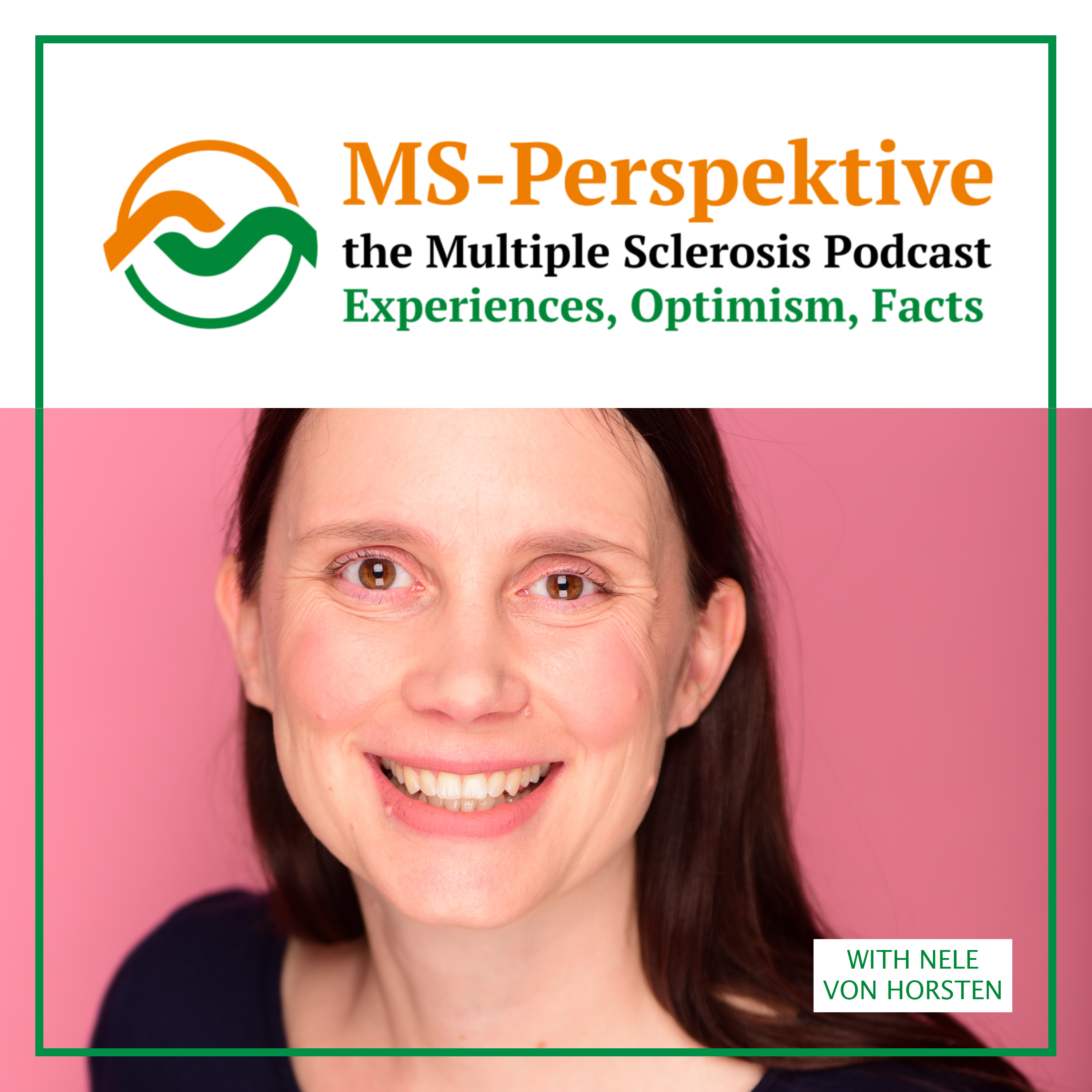
MS-Perspektive - The Multiple Sclerosis Podcast
by Nele von Horsten
In the MS-Perspektive Podcast, I present my view of multiple sclerosis and show you how you can make the best of the diagnosis. Because a beautiful and fulfilling life is also possible with multiple sclerosis.Here you will find information and strategies on how you can actively influence your course. In addition, I publish solo articles with my experiences, interview experts and on various topics related to living with MS as well as other affected people. In addition, there are a few episodes that serve the relaxation, positive attitude and stimulation.
-
184
#182: How excercise can influence multiple sclerosis – interview with Prof. Dr. Dr. Philipp Zimmer
This episode is the English translation and adaptation of my original German interview with Prof. Dr. Dr. Philipp Zimmer, first published in August 2023. Prof. Zimmer is a sports scientist, neuroscientist and expert in exercise immunology. In our conversation, we explore how physical activity and structured exercise can influence multiple sclerosis, what happens in the immune system when we exercise, and why strength, endurance and balance training can all play an important role for people living with MS. We also talk about fatigue, cognition, mobility, recovery and the question of how much exercise is actually helpful. You will learn: how exercise can influence the immune system why natural killer cells and regulatory T cells are important which MS symptoms may benefit from regular physical activity why aerobic exercise is particularly interesting from an immunological perspective why strength and balance training also matter how much exercise is generally recommended why more exercise is not always better how recovery and individual adaptation influence training how people with MS can get started even if they have not exercised much before why enjoying your chosen activity is so important for long-term motivation where to find exercise ideas and evidence-based resources for different levels of mobility Prof. Zimmer also explains why exercise is particularly valuable because it gives people with MS something they can actively contribute to their own health and wellbeing. Please note that this interview was originally recorded and published in 2023. Research continues to evolve, so I have added current and internationally relevant resources to the accompanying blog article and link list. The information in this episode is for educational purposes and does not replace individual medical advice. Links and resources Blog article Read the full English interview and accompanying resources on MS-Perspektive: https://ms-perspektive.de/en/ Note: Please replace this with the final direct URL of the English Prof. Zimmer article once it has been published. Original German interview Wie Sport die MS beeinflussen kann mit Prof. Dr. Dr. Philipp Zimmer: https://ms-perspektive.de/210-philipp-zimmer/ Prof. Dr. Dr. Philipp Zimmer English profile at TU Dortmund University: https://sport.kmst.tu-dortmund.de/en/institute/personnel/prof-dr-dr-philipp-zimmer/ WHO recommendations on physical activity World Health Organization – physical activity recommendations: https://www.who.int/europe/news-room/fact-sheets/item/physical-activity Exercise and physical activity resources for people with MS MS International Federation – Physical activity for people with MS: https://www.msif.org/resource/physical-activity-for-people-with-ms/ MS International Federation / European Multiple Sclerosis Platform – Keep moving with MS: https://www.msif.org/resource/keep-moving-with-ms/ MS Society UK – Simple exercises for MS: https://www.mssociety.org.uk/living-with-ms/physical-and-mental-health/staying-active/simple-exercises-for-ms Research PubMed – Fitness, physical activity, and exercise in multiple sclerosis: https://pubmed.ncbi.nlm.nih.gov/35084560/ Related English interviews and articles on MS-Perspektive How exercise boosts your immune system: What people with MS should know with David Walzik: https://ms-perspektive.de/en/153-exercise/ Multiple sclerosis and pain: How exercise and physical activity can help with Rasmus Christian Jungersen: https://ms-perspektive.de/en/175-rasmus/ Movement limitations in MS – how to maintain strength, balance and mobility: https://ms-perspektive.de/en/018-movement-limitations/ EBV insights: Shedding light on its impact on MS with Prof. Christian Münz: https://ms-perspektive.de/en/52-christian-muenz/ German exercise consultation mentioned in the interview DMSG Nordrhein-Westfalen – Sport-Sprechstunde: https://dmsg-nrw.de/sport-sprechstunde/ Please note that this service is primarily aimed at the German-speaking MS community. International listeners may find the MSIF, EMSP and MS Society UK resources above more directly useful. --- Until next time – make the most of your life, and ideally include some regular movement along the way. Nele For more information and positive thoughts, subscribe to my newsletter for free. Click here for an overview of all podcast episodes published so far.
-
183
#181: Stress and MS: factors, challenges and perspectives with Prof. Sigrid Arnade and Prof. Christoph Heesen
This episode is the English translation of my original German interview with Prof. Sigrid Arnade and Prof. Christoph Heesen, first published in April 2025. We explore what research currently tells us about stress and MS, where the evidence is still limited, and why psychological and social factors deserve a stronger place alongside biological aspects of multiple sclerosis care. We discuss: how severe stress and traumatic experiences may influence MS risk and disease activity why everyday stress is so difficult to study scientifically the difference between traumatic events and chronic stress resilience, self-efficacy and empowerment stress-management interventions and psychotherapy gaps in current MS research practical strategies for coping with stress why MS care should follow a genuinely biopsychosocial approach Useful links English blog article: https://ms-perspektive.de/en-181-stress/ Original German interview and blog article: Stress und MS. Faktoren, Herausforderungen und Perspektiven Lebensnerv Foundation: www.lebensnerv.de Institute of Neuroimmunology and Multiple Sclerosis (INIMS), Hamburg: www.inims.de "What is good for me, what is not good for me? And how can I strengthen the things that are good for me?" — Prof. Sigrid Arnade --- See you soon and try to make the best out of your life, Nele For more information and positive thoughts, subscribe to my newsletter for free. Click here for an overview of all podcast episodes published so far.
-
182
#180: Cannabis and multiple sclerosis. Benefits, risks, CHS and what you should know
Cannabis is a popular and often emotional topic in the MS community. Some people hope it may help with spasticity, pain, sleep or other symptoms, while others are concerned about side effects, cognitive changes, dependency, high-potency THC products or complications such as cannabinoid hyperemesis syndrome, or CHS. In this solo episode, I take a balanced look at what we currently know about cannabis and multiple sclerosis. I explain the difference between medical cannabinoid treatments such as Sativex/nabiximols, THC, CBD, recreational cannabis, edibles, concentrates and synthetic cannabinoid products. I also discuss where the evidence is strongest, where it is still uncertain, and why product type, dose and frequency matter. The episode was inspired in part by reporting from National Geographic on CHS and modern high-potency cannabis products. I also include current MS-specific research and practical questions you can discuss with your neurologist. In this episode Why cannabis is such a popular topic in the MS community What THC, CBD and other cannabinoids are Why cannabis is not one single treatment What Sativex/nabiximols is and where it is already used in MS What the evidence says about spasticity What we know, and do not yet know, about pain, sleep and bladder symptoms Why current research comparing THC and CBD is so interesting Why CBD should not automatically be considered an MS treatment Why cannabinoids do not replace disease-modifying MS therapy Possible effects on cognition in people with MS What cannabinoid hyperemesis syndrome, or CHS, is Why CHS can be difficult to recognize Why symptoms may continue for some time after stopping cannabis A practical CHS self-check Why high-potency THC products deserve special caution Why edibles can be difficult to dose The difference between prescription cannabinoids, recreational cannabis and synthetic cannabinoid receptor agonists such as K2 or Spice Why delta-8 THC deserves particular attention in the US A brief look at the legal situation in the US, Germany and other countries Practical questions to ask your neurologist before trying a cannabinoid-based treatment How to monitor whether a treatment is actually improving your quality of life Read the full blog post You can find the full article on: https://ms-perspektive.de/en/180-cannabis/ The blog post includes the detailed discussion behind this episode as well as the studies, reviews, official guidance and original sources used for the podcast, including research on MS spasticity, cognition, THC versus CBD, CHS and high-potency cannabis products. Important note This episode is intended to inform, not to promote or discourage cannabis use in general. Cannabinoid-based medicines may be helpful for some people with MS, particularly for certain symptoms, but benefits and risks depend on the exact substance, formulation, dose, frequency of use and individual situation. Please discuss any cannabinoid-based treatment with your neurologist or another qualified healthcare professional, especially if you already take other medications or experience cognitive problems, dizziness, balance issues, recurrent nausea or vomiting. The information in this episode does not replace individual medical advice. --- See you soon and try to make the best out of your life, Nele For more information and positive thoughts, subscribe to my newsletter for free. Click here for an overview of all podcast episodes published so far.
-
181
#179: Multiple Sclerosis without the noise. Dominic Shadbolt on 35 years with MS, treatment and real patient involvement
What does living with multiple sclerosis for 35 years teach you about treatment, disability, information and the role MS should have in your life? In this episode, I talk with Dominic Shadbolt, founder of theMSguide and PatientSignal, about his long MS journey – from years of denial to becoming an outspoken patient advocate. We discuss his experience with several disease-modifying therapies, his thoughts on HSCT, increasing disability and the importance of staying physically active. Dominic also shares why misinformation makes him angry, what genuine patient involvement should look like and why shared decision-making needs both informed patients and responsible healthcare professionals. Above all, his message is clear: take MS seriously, stay informed – but don't let it become your whole identity. In this episode, we talk about Dominic's life and almost 35 years with MS moving from denial to patient advocacy his journey through several MS treatments what he wishes he had known about HSCT earlier coping with increasing mobility limitations misinformation, miracle claims and trustworthy MS information communication between people with MS and healthcare professionals genuine patient involvement versus "patient washing" shared responsibility in treatment decisions AI, MRI and the challenge of predicting individual MS progression Dominic's work with theMSguide and PatientSignal CAR-T cell therapy and hopes for the future of MS treatment why MS should remain behind you rather than define your life Read the full interview: https://ms-perspektive.de/en/179-dominic-shadbolt/ Find Dominic online: https://themsguide.com/ https://dominicshadbolt.substack.com/ Related episodes: Aaron Boster – 10 red flags when to change your neurologist: https://ms-perspektive.de/en/004-aaron-boster/ aHSCT in MS with Prof. Roland Martin: https://ms-perspektive.de/en/40-ahsct-roland-martin/ AI-assisted MS care and the CLAIMS project: https://ms-perspektive.de/en/172-claims/ CAR-T cell therapy for MS with Prof. Barbara Willekens: https://ms-perspektive.de/en/163-car-t-cell-therapy/ Find Dominic online: theMSguide: https://themsguide.com/ Substack: https://dominicshadbolt.substack.com/ LinkedIn: https://www.linkedin.com/in/tmsg/ What would you like to leave our listeners with? Dominic Shadbolt: The world has not ended. I know that for many people it feels as though it has. But focus on the things you can do rather than only on the things you cannot. I have been highly athletic throughout my life. Now MS is taking away the function of my right leg. It feels as though my right leg is no longer part of the team. And I simply have to deal with that. There is a phrase I heard from a Belgian neurologist that I really like. MS is like your shadow. You should keep it behind you. If it comes into view, do something about it. But until then, keep it behind you. I think that is a great way of looking at it. Take the disease seriously. Get informed. Get treated. Pay attention when something changes. But do not make MS the whole of your life. --- See you soon and try to make the best out of your life, Nele For more information and positive thoughts, subscribe to my newsletter for free. Click here for an overview of all podcast episodes published so far.
-
180
#178: Tai Chi and Qigong for MS: Supporting Balance, Movement and Body Awareness – Interview with Mirko Lorenz
Tai Chi and Qigong can be gentle, adaptable ways to support balance, coordination, mobility and body awareness in people with multiple sclerosis. In this episode, I talk with Tai Chi instructor Mirko Lorenz about how these movement practices can be adapted for people with different levels of mobility and why slow, controlled movements can be surprisingly demanding. Read the full interview on my blog: https://ms-perspektive.de/en/178-taichi-qigong/ We discuss: the difference between Tai Chi and Qigong how Tai Chi may support balance and coordination the role of proprioception and body awareness how exercises can be adapted for reduced mobility seated practice and the use of chairs or walking aids gentle movement when spasticity or muscle tension is present concentration and the mental challenge of slow movement fatigue and the importance of adapting intensity how beginners can build up practice step by step when it makes sense to practise independently at home why guidance from an experienced instructor can be helpful practical observations from Mirko's work with people with MS and other neurological conditions what current research suggests about Tai Chi in MS why consistency, self-awareness and finding the right form of movement matter More information: https://taiji-therapy.com/ "Stay active in a way that feels right for you. Small, consistent steps can build confidence in your body and in what is still possible." --- See you soon and try to make the best out of your life, Nele For more information and positive thoughts, subscribe to my newsletter for free. Click here for an overview of all podcast episodes published so far.
-
179
#177: A First Diagnosis of Multiple Sclerosis: Symptoms, Tests, and Next Steps
What may be the first signs of multiple sclerosis? Which tests are needed to diagnose MS, and what happens after the diagnosis? In this episode, I speak with Dr Datzmann, Senior Consultant at the MS Centre of Bezirksklinikum Mainkofen in Germany. He explains why diagnosing MS is like putting together a puzzle. Important pieces include the medical history, neurological examination, MRI scans, cerebrospinal fluid testing and the exclusion of other conditions. We also discuss common early symptoms such as optic neuritis, sensory changes, walking difficulties, bladder problems and double vision. Dr Datzmann explains why a diagnosis may not always be confirmed after the first clinical event and how he supports people during this emotionally challenging time. Most importantly, he emphasises that MS does not automatically mean needing a wheelchair and that effective treatment options are available. This episode is an adapted English version of an interview originally conducted in German in February 2021. In This Episode Common early symptoms of multiple sclerosis Optic neuritis and sensory changes The role of the neurological examination MRI scans of the brain and spinal cord Cerebrospinal fluid testing and oligoclonal bands Conditions that may resemble MS Clinically isolated syndrome and the first relapse Communicating the diagnosis with empathy Treatment and follow-up care after diagnosis Cooperation between neurologists and specialised MS centres Diagnostic Update Since the original interview, the diagnostic criteria have been revised. The 2024 McDonald criteria, published in 2025, include additional imaging and laboratory biomarkers that may support an earlier and more accurate MS diagnosis in appropriate cases. This means that some people may receive a confirmed diagnosis sooner instead of remaining diagnosed with clinically isolated syndrome for an extended period. Learn more in my dedicated episode and article: https://ms-perspektive.de/en/139-2024-mcdonald-criteria/ Treatment Update Modern MS care increasingly considers early use of highly effective treatment for people with active disease. This approach is sometimes described as "hit hard and early" or "flipping the pyramid". The aim is to use the early window of opportunity to reduce inflammatory activity and protect the brain and spinal cord. To learn more, see Sequencing and Escalation in MS Treatment with Prof. Tomas Kalincik, Immunotherapy for MS with Prof. Tjalf Ziemssen and Brain Health: Time Matters in MS. Blog Article Read the full adapted English interview: https://ms-perspektive.de/en/177-first-diagnosis-ms/ Chapters 00:00 Introduction 00:57 Dr Datzmann's path into neurology 02:10 Common first symptoms of MS 04:35 How multiple sclerosis is diagnosed 06:34 Understanding MRI findings 07:51 Ruling out other conditions 08:59 Can MS be diagnosed after the first relapse? 10:44 How long does it take to receive a clear diagnosis? 12:27 Communicating the diagnosis with empathy 13:07 Explaining multiple sclerosis clearly 14:46 Why MS does not automatically mean a wheelchair 16:46 Personal experiences with MS treatment 18:23 Treatment advice after diagnosis 20:14 Follow-up care with a neurologist and MS centre 20:51 MRI, blood and cognitive monitoring 22:39 The Mainkofen MS Centre 24:09 Closing thoughts Conclusion: A Careful Diagnosis Creates the Basis for Early Treatment A first diagnosis of multiple sclerosis is based on several pieces of evidence. These include a detailed medical history, a neurological examination, MRI scans of the brain and sometimes the spinal cord, cerebrospinal fluid testing, and the exclusion of other conditions. The final diagnosis may not always be clear after the first neurological event. Regular follow-up checks can help identify further disease activity at an early stage. A calm and understandable conversation is just as important as the medical tests themselves. The diagnosis can initially feel frightening, but it does not automatically mean that an active and independent life is no longer possible. Today, a range of effective MS treatments is available. Together with specialised neurological care, they can help reduce inflammatory activity, protect neurological function, and maintain quality of life over the long term. About the MS Centre At the time of the interview, the Mainkofen MS Centre primarily served patients from Lower Bavaria and neighbouring regions. For current information about appointments, referrals, and contact details, please visit the clinic's official website. https://www.mainkofen.de/neurologie/multiple-sklerose/ --- See you soon and try to make the best out of your life, Nele For more information and positive thoughts, subscribe to my newsletter for free. Click here for an overview of all podcast episodes published so far.
-
178
#176: Progressive MS Research: Milestones, Setbacks and Hope with Tim Coetzee
Progressive MS research has made important advances, but many questions about disability progression, biomarkers, treatment, and quality of life remain unanswered. In this episode, I speak with Tim Coetzee, President and CEO of the National MS Society in the United States and Chair of the Executive Committee of the International Progressive MS Alliance. Tim explains why the Alliance was created and how MS organizations, scientists, clinicians, industry partners, and people affected by MS are working together instead of conducting research in isolation. We talk about the changing understanding of multiple sclerosis as a continuum, the biological mechanisms behind progression, and the search for reliable biomarkers. Tim also shares examples of new clinical-trial approaches and explains why studies need to include people who better represent the real-world MS community. You will also learn how medication, rehabilitation, symptom management, lifestyle, and social support can contribute to quality of life while researchers continue working toward treatments that slow, prevent, or reverse progression. Despite setbacks, Tim's message is encouraging: progress is happening every day, and the global MS community remains committed to finding effective solutions for people living with progressive MS. In This Episode, We Discuss Why the International Progressive MS Alliance was founded The difference between relapsing-remitting, secondary progressive, and primary progressive MS Why MS is increasingly understood as a biological continuum Important milestones in progressive MS research The Alliance's collaborative research networks The search for biomarkers that can predict progression How clinical trials for progressive MS are changing The influence of comorbidities on progression and research The importance of rehabilitation and symptom management Current research into fatigue, pain, cognition, and mobility What people living with progressive MS can realistically hope for today The Alliance's priorities for the coming years About Tim Coetzee Tim Coetzee is President and CEO of the National MS Society in the United States and Chair of the Executive Committee of the International Progressive MS Alliance. His work focuses on accelerating research, improving access to treatment and support, and helping people affected by MS live their best possible lives. Resources Blog article with the written interview: https://ms-perspektive.com/176-progressive-ms/ International Progressive MS Alliance National Multiple Sclerosis Society International Progressive MS Alliance on LinkedIn International Progressive MS Alliance Newsletter Tim Coetzee on LinkedIn Tim Coetzee on PubMed What would you like to leave our listeners with — especially those living with progressive MS or fearing progression? Tim Coetzee: There is progress happening every day, and there are researchers and organizations and people all over the world working hard to find treatments and therapies. We know this work is important and we are not finished until we have solved progressive MS. --- See you soon and try to make the best out of your life, Nele For more information and positive thoughts, subscribe to my newsletter for free. Click here for an overview of all podcast episodes published so far.
-
177
#175: Multiple Sclerosis and Pain. How Exercise and Physical Activity Can Help
Pain is one of the most common and life-impacting symptoms in multiple sclerosis. In this episode, Nele talks with Rasmus Christian Jungersen, PhD student at the Department of Exercise Biology at Aarhus University in Denmark, about the different types of MS pain and how exercise and physical activity may help. Rasmus explains the difference between neuropathic pain, nociceptive pain, spasticity-related pain, headaches, and mixed pain types. He also challenges one of the most common myths: chronic pain does not automatically mean ongoing tissue damage, and carefully adapted movement does not usually make pain worse in the long term. The conversation offers realistic, hopeful guidance for people with MS who want to move more, reduce fear of exercise, and improve quality of life despite pain. Read the full blog article here: https://ms-perspektive.com/175-rasmus/ What to expect in this episode Why pain is so common in multiple sclerosis The difference between neuropathic, nociceptive, musculoskeletal, and spasticity-related pain Why many people with MS experience more than one type of pain What central sensitization, neuroinflammation, and pain interference mean Why pain intensity is not the same as the impact pain has on daily life How exercise may help reduce pain biologically and psychologically Why light to moderate activity can already be helpful Why the best exercise is often the one you can sustain How to start safely and build up gradually Why temporary pain increase during or after exercise is not always a danger signal How exercise can be adapted for mobility limitations or disability Why a holistic approach to pain management is important What the EXpain project aims to investigate Scientific background mentioned in the article The blog article includes further reading on: Mechanism-based classification of pain in MS, including trigeminal neuralgia, Lhermitte's phenomenon, spasticity pain, musculoskeletal pain, migraine, and treatment-induced pain Pain types and lived experiences in people with MS, including dysesthetic extremity pain and spasticity-associated pain Exercise interventions for pain reduction in people with MS Possible mechanisms of exercise in chronic pain, including inflammation, oxidative stress, neuroplasticity, and descending pain modulation Exercise as a treatment option for chronic musculoskeletal pain The EXpain project, Rasmus' current research on exercise as a non-pharmacological pain treatment in MS Previous related episode: Holistic approach for pain management Contact Rasmus C. Jungersen on PubMed LinkedIn profile --- See you soon and try to make the best out of your life, Nele For more information and positive thoughts, subscribe to my newsletter for free. Click here for an overview of all podcast episodes published so far.
-
176
#174: MS Treatment Access in Australia. Deanna and Rachel on Living with Multiple Sclerosis, Advocacy, and the Future of Ocrevus, Kesimpta & Briumvi
Deanna Renee and Rachel Kerr speak about living with multiple sclerosis in Australia, the importance of lived experience in policy, and the current uncertainty around PBS access to Ocrevus and Kesimpta. Both were diagnosed with MS at 17 and have tried several treatments before finding options that work for them. They explain why treatment decisions should remain between people with MS and their neurologists, and why cost-driven switching can create fear and instability. Deanna also shares how her Community Advocacy Kit helps people speak up, even with limited energy. You can read the interview here: https://ms-perspektive.de/174-deanna/ Topics covered: Being diagnosed with MS as a teenager Why lived experience belongs in policy decisions PBS access, Ocrevus, Kesimpta and Briumvi Medication fear and treatment switching Low-spoons advocacy and community action Hope, realism and the future of MS research Resources mentioned: MS Australia: Your Voice Your Story Deanna Renee @circularblooms on Instagram, TikTok and Facebook Community Advocacy Kit via Deanna's bio and show notes Rachel, if a listener takes only one action after hearing this episode — for themselves or someone they love — what would you hope it is? Do one thing that helps your voice be heard. That could be writing to a minister, contacting your local representative, sharing an advocacy post, or encouraging someone else to speak up. And if you are not living with MS yourself, your voice still matters. Family members, partners, friends and colleagues can also help show decision-makers that treatment access affects whole communities, not only individuals. --- This episode is a reminder that lived experience is expertise. And when people with MS speak together, their voices can become impossible to ignore. See you soon and try to make the best out of your life, Nele For more information and positive thoughts, subscribe to my newsletter for free. Click here for an overview of all podcast episodes published so far.
-
175
#173: Immunoadsorption for MS Relapses. Interview with senior physician Anna-Katharina Eser
In this episode, I speak with Anna-Katharina Eser, senior physician at the MS Centre in Mainkofen, Germany, about immunoadsorption in multiple sclerosis. Immunoadsorption is a specialized blood purification procedure that may be used when an acute MS relapse does not improve sufficiently after high-dose corticosteroid treatment. Anna-Katharina Eser explains how the procedure works, why certain antibodies are filtered from the blood, how long treatment can take and which side effects may occur. She also discusses the difference between immunoadsorption and plasmapheresis, why corticosteroids are usually tried first, and why MS is not a dead end. This interview was originally published in August 2021 on the German MS-Perspektive podcast and has been translated and adapted for an international audience. Availability, clinical use and reimbursement may vary depending on your country and healthcare system. Topics covered: When immunoadsorption may be used in MS How "blood washing" works Possible side effects and treatment duration Difference between immunoadsorption and plasmapheresis Why corticosteroids are usually the first step Encouraging perspectives on life with MS Helpful international resources: National Multiple Sclerosis Society: https://www.nationalmssociety.org/ MS International Federation (MSIF): https://www.msif.org/ Multiple Sclerosis Society UK: https://www.mssociety.org.uk/ PubMed search for Anna-Katharina Eser: https://pubmed.ncbi.nlm.nih.gov/?term=Eser+AK&cauthor_id=41994667 PubMed: Immunoadsorption and multiple sclerosis: https://pubmed.ncbi.nlm.nih.gov/?term=Immunoadsorption+%2B+multiple+sclerosis Is there anything you would like to share with the listeners? Anna-Katharina Eser: Every person with MS should know that the diagnosis is not a dead end. I like the spirit of a quote often attributed to Albert Einstein: We all have difficult things to carry, because this is inseparable from life. But one thing helps: to stand together in friendship and help carry one another. --- Many thanks to senior physician Anna-Katharina Eser for this interview and for explaining immunoadsorption in such a clear and encouraging way. See you soon and try to make the best out of your life, Nele For more information and positive thoughts, subscribe to my newsletter for free. Click here for an overview of all podcast episodes published so far.
-
174
#172: AI for MS. How the CLAIMS Project Could Transform MS Care – with Prof. Friedemann Paul
In this episode, Prof. Friedemann Paul from Charité – Universitätsmedizin Berlin, Germany, explains how the European CLAIMS project aims to improve multiple sclerosis care through AI-assisted decision support. CLAIMS brings together MRI, OCT, blood biomarkers such as neurofilament light chain, clinical data and patient-reported outcomes to support more precise predictions of MS progression. This episode is supported by the European Charcot Foundation. We talk about precision medicine, RAW and PIRA progression, trust in AI, clinical validation, access, reimbursement and what it takes to bring such a tool into everyday neurological care. A key message of the episode: AI should support neurologists and shared decision making — not replace them. You can find the written interview here: https://ms-perspektive.de/172-claims/ Topics covered What CLAIMS aims to achieve for people with MS Why precision medicine matters in multiple sclerosis How MRI, OCT, biomarkers and patient-reported outcomes can be integrated RAW and PIRA progression explained Why AI will not replace neurologists How trust, transparency and data quality influence AI-supported care Validation, approval, reimbursement and implementation in daily practice How people with MS and clinicians can stay updated or get involved Resources mentioned CLAIMS project: https://www.claims.ms/ PROCLAIM study: https://www.claims.ms/proclaim/ European Charcot Foundation – CLAIMS initiative: https://www.charcot-ms.org/initiatives/claims-clinical-impact-through-ai-assisted-ms-care RECLAIM study protocol: https://www.frontiersin.org/journals/neurology/articles/10.3389/fneur.2025.1557947/full PROCLAIM study: https://clinicaltrials.gov/study/NCT07032246 icometrix / icobrain ms: https://www.icometrix.com/multiple-sclerosis What message would you like to leave with our listeners today? Prof. Friedemann Paul: There is hope for better management of the disease. We desperately need this because more and more people are being diagnosed with multiple sclerosis. And we need more and better data. If you have time and resources, please consider contributing to research. This could be an observational study, a therapeutic trial, a study on lifestyle or another local research project. It is really important. We can only improve outcomes in multiple sclerosis if we do more research. --- See you soon and try to make the best out of your life, Nele For more information and positive thoughts, subscribe to my newsletter for free. Click here for an overview of all podcast episodes published so far.
-
173
#171: The Gut-Brain Axis in Multiple Sclerosis. Interview with Prof. Dr. Anne-Katrin Pröbstel
The gut–brain axis in multiple sclerosis is an exciting field of research that connects the gut microbiome, immune system and central nervous system. In this interview, Prof. Dr. Anne-Katrin Pröbstel explains how B cells, especially IgA-producing B cells, may influence inflammation in MS and why not all immune cells are harmful. She also discusses what current research can and cannot yet tell us about diet, vitamin D, smoking and future treatment approaches. You can find the interview to read here: https://ms-perspektive.de/en/171-proebstel/ You'll learn: What the gut–brain axis means in multiple sclerosis. How B cells and IgA may be involved in MS. Why the gut microbiome is important for MS research. What role diet, fiber, vitamin D and smoking may play. Why much of this work is still basic research. How future therapies may become more targeted. Resources mentioned: www.proebstellab.com German Multiple Sclerosis Society Swiss Multiple Sclerosis Society National MS Society UKB NewsRoom - Bonn, Germany Is there anything you would like listeners to take away? Dr. Anne-Katrin Pröbstel: The audience is probably very diverse. Some listeners may live with MS themselves, others may be relatives, caregivers or professionals interested in the topic. What I would like to say is this: I have great respect for people living with MS and for the way they deal with this disease. At the same time, I believe that scientific progress can offer hope. Many physicians and researchers are working to better understand MS and to develop improved therapies. Progress is not always fast, but it is moving forward step by step. I would like to encourage people affected by MS to stay hopeful. --- See you soon and try to make the best out of your life, Nele For more information and positive thoughts, subscribe to my newsletter for free. Click here for an overview of all podcast episodes published so far.
-
172
#170: Vaccinations and MS – What You Need to Know with Dr. Thomas Grüter
In this episode, Nele talks with neurologist Dr. Thomas Grüter about vaccinations and multiple sclerosis. The original interview was published in German in December 2024. This English version has been translated and adapted for an international audience, because healthcare systems, vaccination schedules, reimbursement rules, and official recommendations differ from country to country. Dr. Grüter explains why infections can be more challenging for people with MS, how vaccinations may help reduce certain risks, and why timing is especially important when disease-modifying therapies are involved. He also discusses common myths, the difference between inactivated and live vaccines, and vaccination planning around pregnancy, breastfeeding, and MS treatment. Please always check the recommendations in your own country and discuss your personal vaccination plan with your healthcare professional team, including your neurologist. Topics covered in this episode: Why vaccinations matter for people with MS Common myths about vaccines and autoimmune diseases Inactivated vaccines versus live vaccines How MS therapies may influence vaccine response The best timing for vaccinations before or during MS treatment Vaccination planning around pregnancy and breastfeeding Where to find reliable vaccination information Resources mentioned: VAC-MAC project: https://www.vac-mac.de Blog article: https://ms-perspektive.com/170-vaccinations/ Please note: This podcast provides general information and encouragement. It does not replace medical advice. Vaccination recommendations may vary internationally, so please follow the guidance in your own country and speak with your healthcare team. Final message Dr. Thomas Grüter: Do not let myths discourage you. Vaccinations are one of the great achievements of modern medicine. They can provide effective protection against serious diseases. For people with MS, this protection can be especially important. Talk to your healthcare team, ask questions, and make informed decisions based on evidence rather than fear. --- See you soon and try to make the best out of your life, Nele For more information and positive thoughts, subscribe to my newsletter for free. Click here for an overview of all podcast episodes published so far.
-
171
#169: Multiple Sclerosis in Nepal. Diagnosis, Treatment and Access to Care
In this episode, Nele speaks with Dr. Ayush Chandra and Dr. Avinash Chandra about multiple sclerosis in Nepal. They explain why MS is still often diagnosed late, how limited access to MRI, neurologists and treatment affects people in rural and mountainous regions, and why awareness is so important for earlier diagnosis. The conversation also highlights the work of the Multiple Sclerosis Society of Nepal, advocacy for more affordable medication, and the hope for stronger international collaboration to improve MS care in low-resource settings. You can read through the interview here: https://ms-perspektive.com/169-ms-in-nepal Topics covered in this episode: Why MS has long been overlooked in Nepal How common MS appears to be and why reliable data is still limited Typical barriers to diagnosis, including MRI costs and lack of specialists Rural access challenges and the role of geography Treatment options in Nepal, including rituximab and adapted strategies The work and advocacy of the Multiple Sclerosis Society of Nepal Why awareness, education, telemedicine and local research matter Messages of hope for people with MS and their families Resources: Multiple Sclerosis Society of Nepal MS International Federation --- See you soon and try to make the best out of your life, Nele For more information and positive thoughts, subscribe to my newsletter for free. Click here for an overview of all podcast episodes published so far.
-
170
#168: From Fragmented Care to Connected Care: The MS360° Approach with Dr. Isabel Voigt
In this episode, Dr. Isabel Voigt from the MS Center Dresden introduces the MS360° approach, a digital-first hybrid care model designed to make multiple sclerosis care more continuous, proactive, and personalized. She explains why today's MS care can feel fragmented, how important changes may be missed between appointments, and how digital tools such as apps, wearables, patient-reported outcomes, and telemedicine could support earlier detection of disease progression. We also talk about the role of real-world data, artificial intelligence, digital twins, and patient participation in shaping the future of MS care. A special focus is placed on improving access to specialized care for people living outside larger cities. You can read through the interview here: https://ms-perspektive.de/en/168-ms360 Topics covered in this episode: Why MS care often feels fragmented How MS360° connects digital monitoring with in-person care The role of apps, wearables, and telemedicine Earlier detection of disease worsening How real-world data can support research and personalized treatment What artificial intelligence and digital twins mean for people with MS Why patient participation is key The future of connected, equitable MS care Links mentioned and further reading Original MS360° paper in npj Digital Medicine: https://www.nature.com/articles/s41746-026-02461-4 Dr. Isabel Voigt on LinkedIn: https://de.linkedin.com/in/isabel-voigt-77b6b2357 Multiple Sclerosis Living Lab Dresden: https://msz.uniklinikum-dresden.de/en/zkn/ms-living-lab #100: Digital Twins in MS Care with Prof. Tjalf Ziemssen: https://ms-perspektive.de/en/100-digital-twin/ #104: Leveraging AI in MS Care and Shared Decision-Making: https://ms-perspektive.de/en/104-ai-in-ms-care/ #158: Shared Decision Making in Multiple Sclerosis: https://ms-perspektive.de/en/158-rueffer/ #050: Future Treatment of MS with Prof. Tjalf Ziemssen: https://ms-perspektive.de/en/50-tjalf-ziemssen/ --- See you soon and try to make the best out of your life, Nele For more information and positive thoughts, subscribe to my newsletter for free. Click here for an overview of all podcast episodes published so far.
-
169
#167: Living with MS: Fatigue, Walking & Energy — Insights from Sanam
In episode #167, Sanam Saeedi shares her perspective on living with MS, fatigue, walking and energy. Diagnosed in 2019, she explains how symptoms such as foot drop, balance issues and fatigue changed her daily life — and why pushing through is not always the best answer. As a neurological movement and fatigue coach, Sanam focuses on awareness, pacing, stabilization, strengthening and tracking. Her message is practical and encouraging: MS requires strategy, not just motivation. By understanding patterns in sleep, stress, nutrition, energy and movement, people with MS can make small, sustainable changes that support confidence and quality of life. Here you can find the complete shortened interview transcript. Topics covered Sanam's diagnosis and personal journey with MS Why MS fatigue and movement are closely connected Foot drop, balance issues and gait changes Why compensation can increase fatigue Fatigue pacing and energy management Small everyday changes for more control Good days, bad days and symptom tracking Rebuilding body trust after setbacks Movement confidence and living well with MS Related episodes and resources mentioned Alan Kalron: movement, balance and training strategies in MS Anthony Feinstein: staying physical, social and cognitive active Isabel Voigt and MS360°: holistic, whole-person MS care More on ms-perspektive.de: fatigue management, pacing, gait, balance, foot drop, body trust and movement confidence What would you like to leave our listeners with today? Sanam Saeedi: Trust the process. I want people to believe that they can improve. It may not happen quickly. It may take time and consistency. But improvement is possible. You do not have to do everything at once. Start where you are. Learn your patterns. Make small changes. Keep going. How and where can interested people find you online? Website: https://lalikhealthandwellness.coachesconsole.com/welcome-let-s-get-started-html LinkedIn: Sanam Saeedi | LinkedIn Instagram: Instagram TikTok: @lalik_movement_coach YouTube: (2) Lalik Neuro Coach – YouTube Work email: [email protected] --- See you soon and try to make the best out of your life, Nele For more information and positive thoughts, subscribe to my newsletter for free. Click here for an overview of all podcast episodes published so far.
-
168
#166: Unseen MS Symptoms: A Patient Expert's Perspective from Iceland with Hjördís Ýrr Skúladóttir
What are unseen MS symptoms really like? In this inspiring episode, Hjördís Ýrr Skúladóttir from Iceland shares her personal journey with multiple sclerosis, from diagnosis and burnout to becoming a patient advocate and former Chair of the Icelandic MS Society. Together, we talk about invisible MS symptoms such as fatigue, bladder problems, and emotional exhaustion, while also exploring leadership, healthcare in Iceland, and the power of community support. Hjördís explains how her background in education and policing shaped her resilience and communication skills, and why she believes openness and compassion are essential for living well with MS. Topics discussed: Living with unseen MS symptoms MS fatigue and misconceptions Iceland's healthcare system The role of MS nurses Becoming a patient expert Leadership and advocacy Community support and empowerment Work-life balance with MS Hope for the future of MS care Resources & Links MS-Perspektive Podcast: https://ms-perspektive.com/166-hjoerdis Hjördis website on LinkedIn on Facebook on Instagram Iceland MS Society Icelandic MS Society Oceans of Hope
-
167
#165: MS Doesn't Define Me – How Patti Bevilacqua Turned Multiple Sclerosis into a Life of Purpose
What does it really mean to live a meaningful life with multiple sclerosis? In this episode, Patti Bevilacqua shares her deeply personal journey after being diagnosed with MS at just 22 years old. Instead of trying to "push through," she chose a different path—one shaped by self-awareness, resilience, and intentional living. Today, Patti is a speaker and advocate for people with invisible challenges. In this conversation, she opens up about identity shifts, career changes, and why MS does not define who she is. 👉 Read the full blog article here: https://ms-perspektive.com/165-patti 🔍 Topics covered in this episode: Patti's MS diagnosis at age 22 Early symptoms and first reactions Letting go of a dream career Living without disease-modifying therapies Navigating uncertainty in professional life Identity shifts and invisible challenges Becoming an advocate and public speaker Mindset, resilience, and purpose Why "MS doesn't define me" Living a meaningful life beyond diagnosis 🔗 Resources & Links: Patti Bevilacqua Website: https://patti-bevilacqua.com Newsletter: https://pattibevilacqua.substack.com LinkedIn: https://linkedin.com/in/patti-bevilacqua Instagram: https://instagram.com/fearlesswithms --- See you soon and try to make the best out of your life, Nele For more information and positive thoughts, subscribe to my newsletter for free. Click here for an overview of all podcast episodes published so far.
-
166
#164: EMSP 2026. Progress, Hope and Real Challenges in Multiple Sclerosis
The EMSP 2026 Conference in Berlin highlighted how much is currently evolving in multiple sclerosis (MS) – from improved diagnostics and emerging therapies to long-overdue topics like fatigue, PIRA, and menopause. In this episode, I share my personal insights from Day 1 on site and summarize the key developments from Day 2. We explore why the "MS iceberg" is still widely misunderstood, how new approaches like CAR-T and stem cell therapy are shaping the future, and why access to care across Europe remains a major challenge. 👉 Read the full blog article: https://ms-perspektive.de/en/164-emsp 🔎 What we cover in this episode Personal impressions from EMSP 2026 in Berlin Patient stories: MS and NMOSD McDonald Criteria 2024 and improved MS diagnosis The "MS iceberg" and invisible symptoms like fatigue Poster insights: fatigue as a key burden in MS MS Selfie and decision support tools for immunotherapies CAR-T cell therapy and stem cell therapy Menopause and MS PIRA (Progression Independent of Relapse Activity) Access to MS care across Europe 🔗 Mentioned resources & episodes 👉 Barbara Willekens on CAR-T cell therapy 👉 Christoph Heesen on stem cell therapy 👉 Roland Martin on aHSCT 👉 Riley Bove on menopause & MS 👉 Gavin Giovannoni on PIRA 👉 Fatigue article 👉 Article: From Fatigue to Focus (ECTRIMS insights) 👉 MS Selfie Microsite: https://msselfie.co.uk/ 👉 McDonald Criterie 2024 👉 Full blog article: https://ms-perspektive.de/en/164-emsp --- See you soon and try to make the best out of your life, Nele For more information and positive thoughts, subscribe to my newsletter for free. Click here for an overview of all podcast episodes published so far.
We're indexing this podcast's transcripts for the first time — this can take a minute or two. We'll show results as soon as they're ready.
No matches for "" in this podcast's transcripts.
No topics indexed yet for this podcast.
Loading reviews...
ABOUT THIS SHOW
In the MS-Perspektive Podcast, I present my view of multiple sclerosis and show you how you can make the best of the diagnosis. Because a beautiful and fulfilling life is also possible with multiple sclerosis.Here you will find information and strategies on how you can actively influence your course. In addition, I publish solo articles with my experiences, interview experts and on various topics related to living with MS as well as other affected people. In addition, there are a few episodes that serve the relaxation, positive attitude and stimulation.
HOSTED BY
Nele von Horsten
Loading similar podcasts...
Frequently Asked Questions
How many episodes does MS-Perspektive - The Multiple Sclerosis Podcast have?
MS-Perspektive - The Multiple Sclerosis Podcast currently has 19 episodes available on PodParley. New episodes are automatically indexed when they're published to the podcast feed.
What is MS-Perspektive - The Multiple Sclerosis Podcast about?
In the MS-Perspektive Podcast, I present my view of multiple sclerosis and show you how you can make the best of the diagnosis. Because a beautiful and fulfilling life is also possible with multiple sclerosis.Here you will find information and strategies on how you can actively influence your...
How often does MS-Perspektive - The Multiple Sclerosis Podcast release new episodes?
MS-Perspektive - The Multiple Sclerosis Podcast has 19 episodes. Check the episode list to see recent publication dates and frequency.
Where can I listen to MS-Perspektive - The Multiple Sclerosis Podcast?
You can listen to MS-Perspektive - The Multiple Sclerosis Podcast on PodParley by clicking any episode. We provide an embedded audio player for direct listening, and you can also subscribe via your preferred podcast app using the RSS feed.
Who hosts MS-Perspektive - The Multiple Sclerosis Podcast?
MS-Perspektive - The Multiple Sclerosis Podcast is created and hosted by Nele von Horsten.
URL copied to clipboard!