
PODCAST · business
Online Forex Trading Course
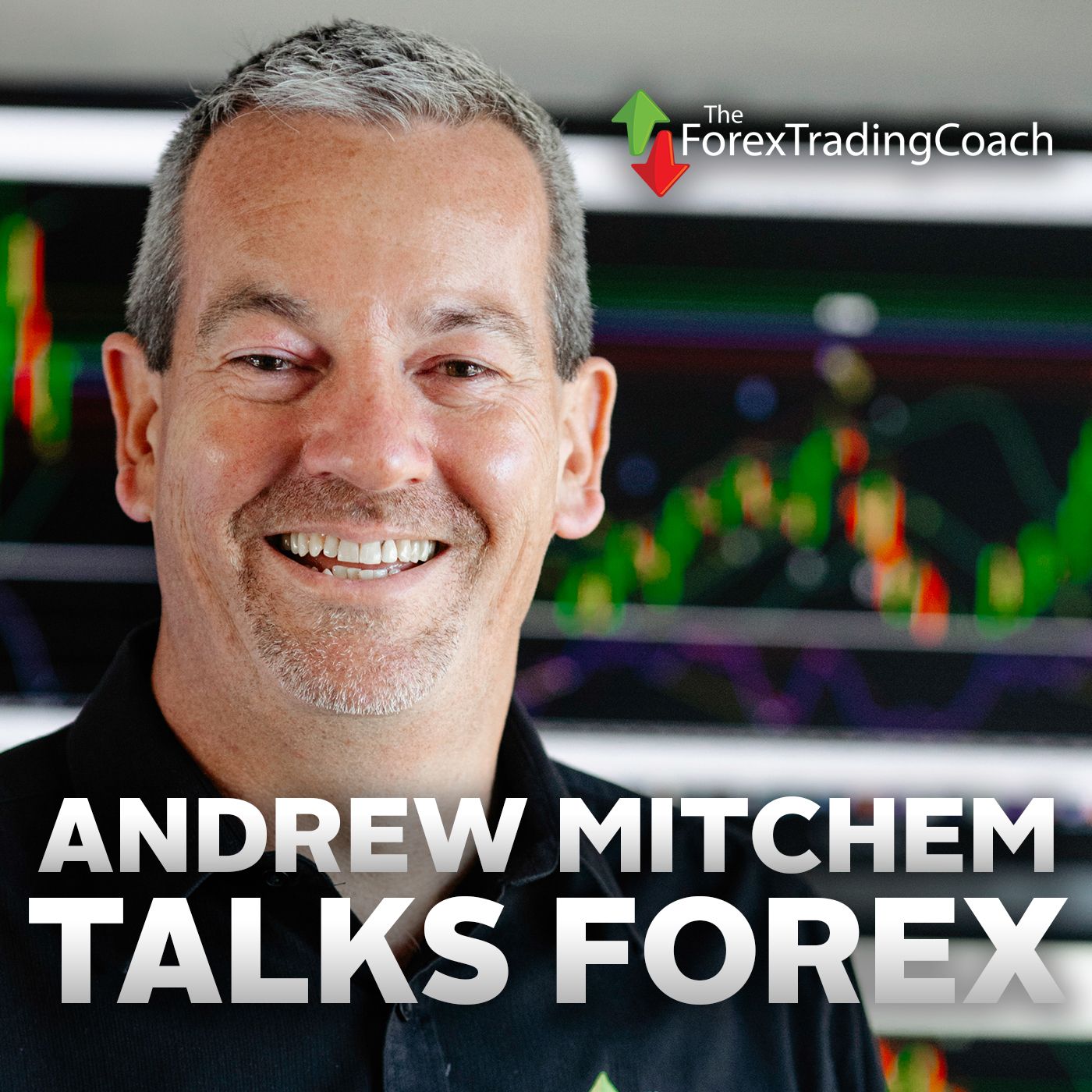
by Andrew Mitchem
I’ve been trading the Forex market full time for 17 years. I’ve developed a trading strategy that works consistently across all currency pairs, all time frames and at all times of the day, so there’s something that will suit you.I can help you if you are brand new to trading or if you’ve been trading for a while and require a successful strategy with the on-going support of a full time trader. I offer Forex coaching because I want to save you the time and money that I and so many other traders lose trying to figure out how to trade the markets. I’ve delivered my Forex coaching course to people in over 111 Countries around the world & I would like to help you to.
-
651
#649: If You Only Have $1,000 to Trade Forex, Watch This First
If You Only Have $1,000 to Trade Forex, Watch This First Podcast: Find out more about Blueberry Markets – Click HereFind out more about my Online Video Forex CourseBook a Call with Andrew or one of his team nowClick Here to Attend my Free Masterclass #649: If You Only Have $1,000 to Trade Forex, Watch This First In this video: 00:24 – Trading on holiday in Brisbane. 00:48 – Are you firstly profitable on your demo account? 01:30 – Position sizing on $1k account. 02:10 – Downsides to trading a $1k account. 03:20 – Trade the account properly. 03:48 – Forget how much money you are making. 04:22 – Focus on the percentage gain you make. I'm going to give you some tips about the best way to trade your account if it's, say, like a $500 or a $1,000 live account. Let's talk about that and more right now. Hey there, Traders! Andrew, The Forex Trading Coach for video and podcast number 649. Trading on holiday in Brisbane. I'm on holiday here in Brisbane with my wife. Been here for the last 10 days, having a great time around the area, and just received an email just a few minutes ago from someone that made a perfect video and podcast topic. They asked me, they said, "Look, I've got a $1,000 live account. How can I trade it? What are the best things to do and what should I be looking out for, you know, as a new trader with that size account?" Are you firstly profitable on your demo account? So to me, the important things are that you make sure that, 1st of all, before you go live, that you are profitable on your demo account. When you open a demo account, make sure you open that demo account with a similar size account than you would with your live account. So in other words, if this person is starting with $1,000 live, then start with a $1,000 demo. Don't start with, say, like a $100,000 demo and then go to $1,000 live because it's just not going to be the same. And the issue that I see with a number of brokers, you know, they sort of default to like a $100,000 or $500,000 demo account. And it's just not real when you go live. So that's the 1st point. Make sure that you're profitable. Position sizing on $1k account. When you go live, if you do start with something like $1,000, you're going to be really struggling when it comes to accurate position sizing. So you're probably, on most trades, going to end up just taking 0.01 lots. There's not a lot of choice that you have on that. Like, if you're still trying to keep that low risk and high reward-to-risk out of your trading, but you are probably going to struggle a little bit more when it comes to the real accurate position sizing. So I'd suggest that you go 0.01 on pretty much everything, and if your money management allows you to go up higher than that, then do so. But, you know, you're probably not going to get it very often. Downsides to trading a $1k account. And the issue that I see when someone has $1,000 now, for some people, $1,000 is a lot of money. For other people, $1,000 is basically play money. The downside for those where it's play money is that they go, "Oh look, it's just $1,000. I don't really care if I lose it. I'm just going to, you know, just play around with it basically." And the issue there is that they don't treat their trading properly. The other scenario, when the $1,000 is a lot, is that I look at it sometimes and think, well, if it's a huge amount of money for you, should you really be trading that $1,000? Would you potentially be better off understanding your strategy still, and then maybe putting some money into maybe a prop firm where you can prove to them that you can trade properly? Because, of course, you could do that with maybe, you know, $50, $100, a couple hundred dollars, depending on the size of the prop firm account that you're going into. But you might be better off rather than trading that $1,000 of your own money and trading that prop firm's funds. But of course, once you know what you're doing. Trade the account properly. So whichever way that you go, the important thing is that you trade it properly and you treat it like it was a lot more money. And so the key there is, like I said, low risk, low lot sizing, trading it properly. If your strategy says you close before the weekend, make sure you do it. Don't just go, "I don't really care if it stays open over the weekend," you know. And if that's not your strategy, make sure that you treat it properly. Forget how much money you are making. The other important thing to make sure that you do well on that $1,000 account is don't worry about how much money you're making. A lot of people say to me, like, "How can I make a living off trading with a $1,000 account?" And the answer simply is you can't. But it doesn't really matter. The point of a small account is to get you into the mindset and the mentality of trading live because it affects your head and your heart when you start trading live money as opposed to demo. And that's the downside, of course, with demo. You never have those true emotions in your trading, whereas you do when it starts to become real money. Focus on the percentage gain you make. So the key is not whether you can make, say, like, you know, turn your $1,000 into $2,000 or $5,000. That's just silly. This is gambling. The key for me is, let's say that you turned your $1,000 into, say, $1,200 or $1,400, $1,500. You know, it's a 20%, 30%, 40%, 50% return on your account with low risk. And then you can start compounding on that and getting more accurate position sizing once you start getting into, you know, up to $1,500-$2,000 and beyond. So really important that you understand the trading 1st, that you're profitable, you're comfortable 1st, and then trade your small $1,000 account, if that's the way you want to go, properly. And make the mistakes on the demo. And also you're going to potentially make a couple of mistakes when you 1st go live as well. That's fine. That's just part of the journey. But it's not going to cost you an absolute fortune. So I hope that helps. This is Andrew here at The Forex Trading Coach, enjoying Brisbane here, and I'll see you this time next week. Bye for now. Episode Title: #649: If You Only Have $1,000 to Trade Forex, Watch This First Find out more about Blueberry Markets – Click HereFind out more about my Online Video Forex CourseBook a Call with Andrew or one of his team nowClick Here to Attend my Free Masterclass
-
650
#648: This 10-Minute Trading Routine Saves Me Hours Every Day
This 10-Minute Trading Routine Saves Me Hours Every Day Podcast: Find out more about Blueberry Markets – Click HereFind out more about my Online Video Forex CourseBook a Call with Andrew or one of his team nowClick Here to Attend my Free Masterclass #648: This 10-Minute Trading Routine Saves Me Hours Every Day In this video: 00:26 – Important to trade a routine. 01:02 – Helps identify Strength and Weakness. 01:34 – Also trade H12, H8 and H6 charts. 02:20 – Eliminate pairs you don’t want to trade for the day. 02:55 – Only look at a candle on the close. 03:40 – Weekly chart scan. 04:32 – Check out my new Masterclass. 05:12 – Blueberry Markets as a Forex Broker. 05:26 – Use my 10 minute scan each new trading day. Today, I'm going to give you my 10 minute morning trading routine that saves me hours each day as a full time trader. Let's get into that more right now. Hey there, Traders! It's Andrew here, The Forex Trading Coach with video and podcast number 648. Important to trade a routine. I think it's really important that you have a routine in your trading. I think it's also really important that you don't spend too long doing your trading. But to do that, you need to know exactly what to look for. Now I have a very easy to follow and implement 10 minute trading routine that I do each day, and I do this at the completion of the trading day, which is 5 p.m. New York time. Now that happens to be my morning time here in New Zealand. And each day I go through the daily charts at the completion of the daily charts, when they've closed at 5 p.m. New York time. And that allows me to quite easily in 10 minutes, go and scan through the charts and see what's happening in the markets. Helps identify Strength and Weakness. I can easily identify strength and weakness. I can see which pairs looking like they're all moving up. So let's say all the Euro pairs for strong that day. And therefore that gives me the bias that maybe the euro strong. And maybe I should be looking at the pairs that have weakness and strength in the euro. So example let's say the US dollar was particularly weak all day. And I can see that the euro strong. Well, that's going to give me the bias that maybe the EUR/USD might be worth looking at, depending on its candle pattern and it's room to move, etc. when trading for that day. Also trade H12, H8 and H6 charts. So once I've scanned through those charts on the daily charts, I can also at the same time have a look through the charts on the 12 hour, the 8 hour, and the 6 hour, because, you see, they all close at the same time. And at that 5 p.m. New York time is a really important time for me as a trader. But if that doesn't work for you, don't worry about it. You don't have to be trading at exactly that time. You see, the beauty of trading those longer time frame charts and the beauty of trading using limit orders is you've got hours and hours and hours to actually place the trades, because with limit orders, let's say a buy limit, I'm looking for the price to move down first anyway and get me filled. So if you can't place those trades, let's say you're in Europe until your morning time. Most of the time those trades are not going to get filled anyway, so you don't have to be there. Bang on 5 p.m. New York time. Eliminate pairs you don’t want to trade for the day. Now, the other thing is when it comes to trading, is that because I've scanned through those charts, I've eliminated a lot of pairs. I don't want to look at that day, and that's going to massively help me throughout the rest of the day. My other important time that I like to look at charts is 5 a.m. New York time, because at that time, other timeframes such as the 12 hour. The 6 hour. The 4 hour, 2 hour charts also change over. And of course, it's European daytime by then as well. So by doing the morning scan, I can then help shortcut any other trading opportunities that I look at later in the day. Only look at a candle on the close. Now the other important thing is to only look at a candle on the close. So if you are looking at, say, 4 hour charts, just look at a 4 hour chart. Once the candle is completed, if you're 2 hours into a 4 hour chart, it's pointless looking at it because it's just going to move so much and you're just not doing yourself any favors. You're wasting time. So by identifying on the bigger time frame chart, the levels that I'm looking at, the pairs that I want to focus on, or the pairs that I don't want to focus on. That 10 minute morning scan for me saves me hours every day. It also means that I've fine tuned what I'm looking for, and I know exactly what charts to go and look at throughout the rest of the day. Now, if you do this, it's going to save yourself a lot of time and a lot of effort. Weekly chart scan. And think about this also because at the beginning of each week, I do the exact same scan on the weekly charts. Now, if I happen to have the weekly charts and the daily charts all showing me the same bias, let's say EUR/USD on the weekly chart was bullish and on the daily chart it's bullish. Well, guess what's likely to happen that day. Now if I see a good bullish setup on let's say a 4 hour chart, I now have strength on the daily, I have strength on the weekly and I have the quality set up, let's say, on that 4 hour chart. So you can either use the scan to take specific trades based off candle patterns on the weekly charts or the daily charts, or use that information if you wanted to trade shorter time frame charts because you're putting strength and weakness and that strength bias in your favor, it has to add more weight and likelihood to you having a successful trade. Check out my new Masterclass. So if you'd like to know more about how we do that and how we can help you to do the same, jump onto my masterclass if you've not already been on there. Look, we've been teaching people for over 17 years from right around the world. We've got clients in 111 countries. We know what works, we know what doesn't work, and we know how to impart that information and that knowledge that we have onto traders. So whether you're brand new and you're just starting out in trading and you're a bit lost and confused because let's face it, as a it's a minefield out there, or whether you're that frustrated trader that's been out there and, you know, tried everything under the sun and about to give up, well, we can help you as well. So jump onto that masterclass. Blueberry Markets as a Forex Broker. And if you're looking for a high quality, MT5 broker that offers so many markets, tight spreads, great people, great communication, fast withdrawals, I highly suggest you can set up Blueberry Markets are put linked to them as well. Use my 10 minute scan each new trading day. So this is Andrew here, The Forex Trading Coach. Don't forget the 10 minute routine at the start of the new day will save you hours. It makes your trading high probability outcome and makes your trading more enjoyable. And it also means you can do things like getting outside and enjoy the great outdoors, or do whatever it is that you want to do. But please don't sit on charts watching every pip of movement. It's just not enjoyable and it's not sustainable. Do the opposite. Trade less high quality trades, controlled risk, high reward to risk outcomes and you'll do well from your trading. Any questions? Send me an email, [email protected] I see this time next week. Bye for now. Episode Title: #648: This 10-Minute Trading Routine Saves Me Hours Every Day Find out more about Blueberry Markets – Click HereFind out more about my Online Video Forex CourseBook a Call with Andrew or one of his team nowClick Here to Attend my Free Masterclass
-
649
#647: I Never Move My Stop to Break Even… Here's Why
I Never Move My Stop to Break Even… Here's Why Podcast: Find out more about Blueberry Markets – Click HereFind out more about my Online Video Forex CourseBook a Call with Andrew or one of his team nowClick Here to Attend my Free Masterclass #647: I Never Move My Stop to Break Even… Here's Why In this video: 00:30 – Should you move your stop loss to breakeven. 01:05 – No relevance to the price you entered. 01:40 – Alternative ways to manage a trade. 02:38 – Take the full profit not a partial profit. 04:00 – Check out my new Masterclass. 04:12 – Blueberry Markets as a Forex Broker. 04:27 – Forget moving your stop to breakeven. Do you realize that the market doesn't care why you entered the trade or where you entered the trade? So why do people have this massive obsession with moving their stops to break even all the time? Let's talk about that and more right now. Hi there, traders! It's Andrew here at The Forex Trading Coach with video and podcast number 647. Should you move your stop loss to breakeven. Outside on another stunning winter's day here in Nelson, New Zealand. So today I want to talk about moving your stops to break even. Why do so many people do it? I've had so many discussions with people. It's got me into a bit of trouble in the past at certain trading conferences that I've been to because of my opinion. Now, I'm not saying don't move your stop to break even. If you have a strategy and it works, go for it. I'm not saying you shouldn't do it. But my question to you is, why do you do it? And what's the point in doing it? You see, so many people just think moving their stop to break even is a safe way of trading, and it protects losses, which in some ways it can do. But there are so many better things you could do. No relevance to the price you entered. You see, for me, moving a stop to break even has no relevance. The market doesn't care when you entered the trade, why you entered it, or what the price was. So you've just entered the trade at some random price. You're in the trade now. Simply putting your stop loss at that entry price, what does it mean? It means nothing. Technically, it means nothing. If you're a news trader, it means nothing. What is the point in doing it? And for me, it's just a bit of a fluffy, feel-good thing. You know, pretty brutally honest, but I think it's true that people just feel okay about not losing on the trade. Alternative ways to manage a trade. Now, the issue I have with that—well, there are many. Moving your stop loss to that price point has no relevance. So what you could do instead is maybe close part of your trade. You could move your stop loss, if you really want to, but to a technical level. Don't just put it simply at the price that you got filled at in the market. You could, on a buy trade, let's say, put it below the last swing high, or you could put it below a round number and stagger the trade up as it gets into profit. That's 1 thing you could do. Of course, if you wanted to do those types of things or partially close a trade, I would do it for a reason. I don't just do it because, you know, you feel like it. Do it for an absolute reason. And I think that's the important thing here. We've got to try and get our emotions out of trading and manage our trades for a reason, not simply because it feels good. Take the full profit not a partial profit. The other problem I have with moving stops and messing around with your trades is when you close a trade early, what you're doing is limiting your potential gains. Now think of it this way. For most people, if they take a loss, they take a full loss. If they move their stop loss to break even, they basically get nothing from the trade on the entire position, let's say. But what happens if you've already partially closed some of your trade and it gets to the full profit? Well, you're not gaining the full lot size of your original trade when you hit profit. So when you say you made a 2-to-1 trade or a 3-to-1, whatever it might be, you might only be making that on part of your original lot size. So your actual overall gain is nowhere near the amount it should be. So for me, it's quite important that you enter a trade for a reason. You put your stop loss at a safe level for a reason. You know your risk, your complete risk, if the trade goes completely against you, and you put your profit target at a level for a reason. So therefore, if you're risking, let's say, 0.5% and you make a 3-to-1 trade, you make the full 1.5% gain. I think it's really important that you do that because, like I said, if you take losses, then generally you're taking the whole loss anyway. So you want to make sure that when you hit a profitable trade, you get the full gain on that. Check out my new Masterclass. A few additional things for you. Have a look at our masterclass. You'll find it really useful if you're new to trading. It's about 20 minutes long. I'll put some details under this video and podcast. Blueberry Markets as a Forex Broker. And if you're out there looking for a really good broker, I can highly recommend Blueberry Markets. They're a really good bunch of people, with very quick withdrawals as well, very tight spreads on their trades, and lots and lots of markets on their MT5 platform. Forget moving your stop to breakeven. So that's it for this week. Just consider breaking even. Consider not doing it. Consider better ways of doing it, and try not just to feel fluffy, nice feelings about your trade simply because you've made $0. Episode Title: #647: I Never Move My Stop to Break Even… Here's Why Find out more about Blueberry Markets – Click HereFind out more about my Online Video Forex CourseBook a Call with Andrew or one of his team nowClick Here to Attend my Free Masterclass
-
648
#643: The Best Forex Pair? Everyone Gets This Wrong
The Best Forex Pair? Everyone Gets This Wrong Podcast: Find out more about Blueberry Markets – Click HereFind out more about my Online Video Forex CourseBook a Call with Andrew or one of his team nowClick Here to Attend my Free Masterclass #643: The Best Forex Pair? Everyone Gets This Wrong In this video: 00:22 – What is the best Forex pair to trade? 00:59 – Don’t limit your trading opportunities. 01:55 – Give yourself a higher probability of success. 02:25 – An example of Strength and Weakness. 03:50 – What are the current market conditions? 04:25 – Look at multiple FX pairs. 05:06 – Check out my new Masterclass. 05:15 – Book a call to talk with us. 05:28 – Blueberry Markets as a Forex Broker. Hey, traders! Do you know what the best forex pair is to trade? If you don't, listen up. I've got some interesting news to cover for you. Hey there, Traders! It's Andrew Mitchem here at The Forex Trading Coach with video and podcast number 643. What is the best Forex pair to trade? Now, I've been asked 4 times this week already by 4 different people. And it's the same question. It is, Andrew, can you tell me please, what's the best forex pair to trade? What should I be looking at? Now, what it does show me is that unfortunately, there's a lack of knowledge out there by so many people when it comes to trading, and they just always want to know what is the answer? What's the best thing, what time frame, what pair? What's my stop loss? Where should my profit target be? All those type of things. And it unfortunately shows that most people don't do enough research into trading. Don’t limit your trading opportunities. And the problem is, is that people see the major currencies like the EUR/USD or the USD/JPY, and they think that's the only pair I should trade. And I suppose, in all honesty, when I started, you know, it was the GBP/USD, the USD/CHF, the USD/JPY, and then later on the EUR/USD. And everybody thought those were the 4 pairs you should focus on trading. And the issue is, why just those 4 pairs? Now, when you think about it, all 4 of those that I've just mentioned are all US dollar dominated. And therefore, if you focus on pairs that are just US dollar dominated, you're not giving yourself a very good chance of success because they're all likely to move, much of the time, in the same direction. And because it depends if the US is strong or the US is weak. Give yourself a higher probability of success. And as a trader, I like to give myself the best probability chance of success. So when it comes to which pair is the right 1 to trade, I don't get aligned to any pair. I look at all the different pairs and you can very quickly scan through the charts, looking to see if there's a suitable trade there, yes or no. And the other reason I do that on a daily basis is because I also prefer to trade with strength and weakness. An example of Strength and Weakness. Now, give you an example. Let's focus again on the EUR/USD. What happens if for today the Euro is really strong and the US is really strong, and that's the only pair that you look at? Then you're trading 2 strong pairs together, and you see how the problem might come. 1, you're unlikely to get many setups or good setups. And what happens if you buy the EUR/USD because the Euro's got some strength, but you also know now that, and you would know this only if you look at more pairs. If you don't look at more pairs, you're not going to know this. The US dollar has got strength. So why would you be buying the EUR/USD if you know that the US dollar has got strength? And so, what about other pairs in the market? What about pairs like the CAD/JPY or the NZD/CHF? And so by analyzing multiple markets at the same time, you can soon understand which pairs are strong, which pairs are weak because, doesn't it make more sense to trade a strong currency against a weak currency? And so that, to me, adds more basis to my trading. And again, it's just adding more and more probability to my trading. So when someone says to me, what's the best pair? I can't answer it. And of course, there's more things on top of this, you know, to consider. What are the current market conditions? It depends on the day, what's happening in the market right now, what news has been, what news there might be coming up, what time frame chart you're looking at, what's the conditions? What's the time of year? Right now we're in the Northern Hemisphere summer. Does that mean that there's less price action in maybe, say, the Franc and the Euro? Maybe. You know, so all these things have got to come into it. What's the characteristic of the market right now? And so by picking 1 or 2 pairs and giving you that as the answer, that's not me doing my job. That's not what I suggest you do. Look at multiple FX pairs. I suggest that you scan through multiple pairs and give yourself a high-quality chance of a successful trade. Use strength and weakness. Use candle patterns. Don't limit yourself to just something against the US dollar. It's not a wise idea. And so there's a lot more you can be doing to help yourself there. And if you do want to look at pairs that include the US dollar, why not look at things like the AUD/USD or the NZD/USD? Because maybe if that US is still strong, maybe the Aussie and Kiwi are weak that day. So therefore you might be selling the AUD/USD or the NZD/USD. So all these things can certainly massively help you. Check out my new Masterclass. If you'd like to find out how we do this, and you'd like to learn from the way that we trade, have a look at my On-Demand Masterclass. I'll put a link to that here. Book a call to talk with us. If you'd like to book a call to speak to myself or 1 of my team, we're more than happy to do that. And we can cater for people right around the world. So it doesn't matter what time zone you're on, you can book a time with us and I'll put a link to that also here. Blueberry Markets as a Forex Broker. If you're out there looking for a really good broker where you can trade multiple time frames, multiple markets, multiple currency pairs, and non-forex markets as well, have a look at Blueberry Markets. I'll put a link to them here as well. So that's it for this week. This is Andrew Mitchem at The Forex Trading Coach, keeping you on the right side of your trades and putting probability in your favor. Episode Title: #643: The Best Forex Pair? Everyone Gets This Wrong Find out more about Blueberry Markets – Click HereFind out more about my Online Video Forex CourseBook a Call with Andrew or one of his team nowClick Here to Attend my Free Masterclass
-
647
#642: The Truth About Forex vs Stock Trading
The Truth About Forex vs Stock Trading Podcast: Find out more about Blueberry Markets – Click HereFind out more about my Online Video Forex CourseBook a Call with Andrew or one of his team nowClick Here to Attend my Free Masterclass #642: The Truth About Forex vs Stock Trading In this video: 00:22 – Should you trade Shares or Forex? 01:04 – Are shares erratic? 01:38 – You need to factor in the exchange rate. 02:31 – You are in charge when you trade Forex. 02:50 – People buy what they know and like. 04:40 – We trade the pattern, not the emotions. 05:12 – Different time frame charts and markets. 05:33 – Check out my new Masterclass. 05:49 – Blueberry Markets as a Forex Broker. 06:05 – Like, share and subscribe. So which is best to invest in, either forex trading or share trading? Let's talk about that really important topic and more right now. Hey Traders! Andrew Mitchem here at The Forex Trading Coach with video and podcast number 642. Should you trade Shares or Forex? Today I want to talk about share trading or forex trading, which is best, which is best for you, and what are the key differences. The reason I want to talk about this today is because I've just seen on the news, right now, that the SpaceX shares have dropped quite a lot. Now, about 1 month ago when SpaceX got launched, I had quite a few people who are friends say to me, "Hey look, Andrew, are you going to get in on this? Are you going to buy SpaceX shares?" Very roughly, they started at about $130 USD, quickly climbed to about $150, and I think they got to about $225 very quickly within a handful of days. Here we are 1 month later, and they've just dropped back below $130 again. Are shares erratic? The issue that I see there is it's kind of a little bit erratic. Now, I'm not saying that all shares do that, of course, but this is just an example of a very well-known share that's topical right now. So if you imagine that you jumped in there at $150, $175, $200, or even right at the top at $225, and here we are just a few weeks later and it's worth $130. You're going to start panicking, aren't you? That's quite erratic kind of behaviour, especially if you've gone and put some considerable sum of money into that. You need to factor in the exchange rate. The other thing I think that a lot of people outside of the US don't factor in is the exchange rate. Here in New Zealand right now, the New Zealand/US exchange rate is actually really quite poor. It's sitting around $0.56. It's very low. Therefore, that means that if you're buying something in US dollars, that's very, very expensive. So you've got to factor that in. Now let's say that you go and take your money out of the shares, and the Kiwi dollar rises up to about $0.70 against the US dollar. This same example, by the way, is typical whether you're in Canada, the UK, Europe, or anywhere else. You might have made some money on your shares, possibly, but by the time you bring it back at a better exchange rate, you're actually not making anything. So that's one thing to really consider as well for everybody outside of the US. You are in charge when you trade Forex. The other thing I think with forex is it's more consistent. You're in charge. Of course, you can buy, you can sell, you've got leverage, and you've got the ability to trade through prop firms as well. So all these advantages mean you don't need to put that amount of money straight into something and then sit and watch it, hoping it's moving up. People buy what they know and like. Another classic issue that I see, and SpaceX actually is a very topical one, is people were saying to me, "Hey Andrew, I like what Elon is doing," and all the other things that are out there. Of course, the news media kind of hypes it all up. People know SpaceX, they know Elon Musk, so they go and buy it. Now, I'm not saying you shouldn't do that, but what I am saying is people tend to follow things that they know. Another New Zealand classic is back years and years ago, I had a lot of friends that bought Air New Zealand. Here in New Zealand we don't have a huge amount of iconic companies, but Air New Zealand, being the national airline, is one of those. It's a globally recognised brand. Years ago I had a lot of friends buying Air New Zealand shares. Why did they buy them? Well, they bought them simply because they knew of Air New Zealand. It's topical, everybody flies on them here, and so they bought based on the name. Now I've just had a look back, and in 2000 Air New Zealand shares were $7.50. They peaked at around $7.50 per share. Right now, here we are some 26 years later, they're $0.43. Now imagine if you had invested $10,000, or bought 10,000 shares at $7.50 each. Today, 26 years later, they're down to $0.43. Now imagine what would have happened if you had invested in learning how to trade the forex market back in the year 2000, and the money that you could have made by understanding the markets, different time frame charts, choosing what to trade, whether to buy or sell, what time frames to use, how long you're in the market for. We trade the pattern, not the emotions. What I love about the forex market and the way that we trade is that we're trading the pattern. I don't just trade New Zealand pairs simply because I live here. It's completely irrelevant. If you're in the UK, you don't just trade the pound pairs. If you're in Australia, you don't just trade the Aussie pairs simply because you live there. We trade what we see setting up right now on the charts, and that takes the emotion out of it. You're trading the pattern, and that's key. Different time frame charts and markets. Just this week, for example, I've taken 2 weekly chart trades. One was a GBP/NZD sell and that hit profit. The other was an AUD/CHF buy and that hit profit. You've got longer time frame charts like that. Just last night I took a Nasdaq 100 3-hour chart trade. So you've got shorter time frame charts like that as well. You're trading the pattern, and that takes the emotion out of things a lot more. Check out my new Masterclass. If you'd like to find out how we do this and how we can help you do the same, I'll put a link here to my new masterclass. It's only about 15 minutes long. It's on demand. You can just click on it and watch it through. It teaches you about how we trade, what we're looking for, and how we can help you do the same. Blueberry Markets as a Forex Broker. If you're out there looking for a really good forex broker that you can trade not only forex but also other markets like metals, cryptos, indices, and commodities, and they're a great bunch of people as well, that's Blueberry Markets. I'll put a link to them here as well. Like, share and subscribe. Don't forget to like and share this around, especially if you've got friends that might be interested in starting trading, or maybe they're thinking about share trading. Like anything in life, there are pros and cons and traps with everything. I'm not saying don't trade shares. I'm not saying do trade forex. I'm just giving you some real-life examples that I've found through friends of mine, either like the New Zealand example from 26 years ago or like the SpaceX example from just 1 month ago when they launched and the price dropped. By the time you watch this, if you're watching this years later, the price might be way higher. Who knows? But the point is, do you want to be in control of what you're doing and decide for yourself? If you do, then maybe consider the forex market. This is Andrew here at The Forex Trading Coach. I'll see you this time next week. Bye for now. Episode Title: #642: The Truth About Forex vs Stock Trading Find out more about Blueberry Markets – Click HereFind out more about my Online Video Forex CourseBook a Call with Andrew or one of his team nowClick Here to Attend my Free Masterclass
-
646
#641: I Found a Trading Pattern That Repeats for Years
I Found a Trading Pattern That Repeats for Years Podcast: Find out more about Blueberry Markets – Click HereFind out more about my Online Video Forex CourseBook a Call with Andrew or one of his team nowClick Here to Attend my Free Masterclass #641: I Found a Trading Pattern That Repeats for Years In this video: 00:32 – How to use and understand Support and Resistance levels. 01:14 – What are Support and Resistance levels. 01:45 – UK Oil (Brent Crude Oil) price bounces at 70.00 02:20 – Charts from 2026 – 2014 showing bounces at 70.00 03:20 – Identify setups at these important levels. 04:38 – Check out my new Masterclass. 05:03 – Talk with us. 05:13 – Blueberry Markets as a Forex Broker. 05:52 – How to contact me for trading help. Do you realize how important support and resistance levels are? Do you know how to find them on your chart and how to take advantage of them to ensure you become a good trader? Let’s find out about that and more right now. The traders, it’s Andrew Mitchem here at The Forex Trading Coach with video and podcast number 641. Outside again on another beautiful winter’s day here in Nelson in New Zealand. How to use and understand Support and Resistance levels. So today I want to talk about support and resistance levels and how you can benefit from understanding them and using them in your trading. Now, it’s very easy in hindsight to go and look at support and resistance levels, and it’s very easy to scan back through your charts and go, “Oh look, the price bounced there and it bounced there,” and you conveniently almost ignore other levels that potentially in real time could have also been useful support and resistance levels but didn’t actually do anything. And so I find that a lot of people, you know, it’s a bit like Fibonacci levels. It’s something that’s very easy if you see a screenshot and ideal support and resistance levels, but in real time it potentially can be quite hard. What are Support and Resistance levels. So support and resistance levels, if you don’t know, are horizontal levels on your charts. And they are where historically prices bounced, reversed, stalled, etc. I tend to find that if you include a round number or look for round numbers, you’ll find that support and resistance levels tend to also form at those levels. Now you can go and find out all about round numbers from a video I’ve made just a few weeks ago. UK Oil (Brent Crude Oil) price bounces at 70.00 But if you look at your charts, a classic example I’m going to use today is UKOil, UK Brent Crude Oil. Go and have a look at your charts while you’re watching or listening to this, and have a look at the 70 level. Now just last week at the beginning of July, you see that the price would have come down to 70 and has now bounced right now as we are speaking. And so I’m going to put 4 screenshots up on screen for you right now for you to have a look at. Now, I’ve identified some of the support and resistance levels, not all of them. These charts you’re going to see right now are the UKOil daily chart. Charts from 2026 – 2014 showing bounces at 70.00 So the first chart you’ll see is from now back to 2023. You’ll see I’ve identified levels where the price has reversed at that 70 level. The next chart you’re going to see will be from 2023 back to 2021. Again, I’ve identified some of those levels so you can see the importance of those price bounce levels. The next chart, this third one, will be 2021 back to 2017. Again, lots of examples here. I have not identified all of them. But just to give you an idea of support and resistance, again, all happening at exactly 70. Then the fourth chart on screen right now is from 2017 all the way back to 2014. Again, lots and lots of examples. So here’s maybe 20-25 examples that I’ve just shown you there on the charts of 1 chart, 1 market, UK Brent Crude Oil bouncing at just that one level of 70. Identify setups at these important levels. Now don’t you think it would have been important last week to have looked at that chart? And by the way, the reason I’m talking about this is because I identified this exact thing to our clients on our forum site when we saw a buy trade on the market that you’ve just been looking at, and the price candle bounced at 70. Now, the important thing to note here is you can’t just go and look at every time that the price bounces at a level and say, “Oh, it’s hit that level, I’m taking a buy trade again,” or “It’s gone through that and bounced at 70 and now I’m taking a sell trade.” You can’t do that. You still need to have a strategy, some logic. From my point of view, we use candle formations and a number of other things that we look at and teach here at The Forex Trading Coach. But the 70 level was hit, the candle bounced at that level, and then formed a good strong bullish candle. So I put the 4 screenshots that you’ve just seen in front of you now on the forum site and said, “Look, here’s the reason. Not only the candle pattern in the right part of the chart, but now it’s bouncing at 70.” And hey, look, go back further in time and look at how important that level was. So the trade I actually took was a 12-hour chart trade. It’s a slightly longer time frame chart trade, and 70 was a massive level. So if you’d like to find out more about how we do this and how we teach our clients from around the world, with clients in 111 countries, how to do this, if you’ve not been on my new masterclass, it’s around 15 minutes long. It’s on demand, so you can just jump on whenever you like. Check out my new Masterclass. I’ll put a link to that masterclass so you can get onto that and have a look at some examples exactly like I’ve just mentioned, and see some actual trades that we’ve taken as well. I’ll put a link to that masterclass. Talk with us. If you’d like to speak to us, you can book a call to speak to myself or one of my team, and I’ll put a link to that here as well. Blueberry Markets as a Forex Broker. If you’re out there looking for a really good, high-quality broker that offers 12-hour charts, such as the trade I’ve just mentioned, and markets like that, not only forex but metals, indices, cryptos, and commodities, I’ll put a link to Blueberry Markets as well. They’re based over in Australia, and pretty much anybody from most countries around the world can open an account with Blueberry Markets. I highly recommend them. Great people, great service, and very good spreads. Withdrawal speeds are incredible. I’ll put a link to them so you can consider Blueberry Markets if you’re out there looking for a good, high-quality broker to trade through. How to contact me for trading help. So that’s it for this week. Don’t forget to like, share, and subscribe. Any questions? Please email me directly at [email protected]. See you this time next week. Bye for now. Episode Title: #641: I Found a Trading Pattern That Repeats for Years Find out more about Blueberry Markets – Click HereFind out more about my Online Video Forex CourseBook a Call with Andrew or one of his team nowClick Here to Attend my Free Masterclass
-
645
#640: If You Can’t Master This, You’ll Never Succeed in Trading
If You Can’t Master This, You’ll Never Succeed in Trading Podcast: https://portal.blueberrymarkets.com/en/sign-up?referralCode=t90r3z11ahttps://theforextradingcoach.com/online_video_coaching_forex_course.htmlhttps://theforextradingcoach.com/call-applicationhttps://theforextradingcoach.com/forex-training-masterclass/ #640: If You Can’t Master This, You’ll Never Succeed in Trading In this video: 00:24 – The mindset of successful traders. 01:13 – You need to be excited by trading. 02:40 – Don’t get too emotional with winning trades either. 03:30 – Accept losses if you traded your strategy correctly. 03:58 – Community is so important. 04:30 – Examples from my experience. 06:42 – Check out my new Masterclass. 07:00 – Blueberry Markets as a Forex Broker. 07:33 – How to contact me for trading help. Do you have the right mindset to be a successful trader? It’s a really important aspect of being a good trader or a poor trader. Let’s talk about what’s required and more right now. Hey traders, Andrew Mitchem here at The Forex Trading Coach for video and podcast number 640. The mindset of successful traders. Today I want to talk about mindset. It’s really, really important. And I’ve just been off a webinar where a lot of traders and investors from around the world were talking about the importance of mindset and what it requires to be that kind of person that is successful. You see, trading is not for everybody, and unfortunately, a lot of people see trading online as something to maybe give up the job because they hate the job, or they need some money or, you know, they think it’s a get-rich-quick scheme, or they just simply want to be lazy and think it’s a great way of making lots of money without any effort. And the reality is it’s not any of those. And if that’s your mindset, then it really is not something I suggest that you do because it’s going to end in disappointment and failure and just wasting money and time on your behalf. You see, the reality is that trading is much different. You almost need that entrepreneur kind of mindset to do it. You’ve got to be interested in it to start with. You’ve got to be excited by the markets. You’ve got to want to do it. Like, how much do you really, really want to do this? You need to be excited by trading. And that becomes a big part of it because what you do have to do is you have to have that mindset where you show up consistently. You have to be disciplined. You have to show up. You have to understand risk. You have to understand the strategy and stick to it. Now to me, good trading is almost boring, and I mean that in a really good way because you have to control emotions as a trader. Now you have to control your mindset, your heart, all the emotions that come into making and losing money. And so to do this properly, you have to trade your strategy, your system, and you almost have to forget the monetary value. You can’t treat it like a game. You can’t gamble. You have to stick to your rules, stick to your discipline. Pass on trades when they’re there. If you see the trades, take the trades. And you also need to not get knocked down and despondent when you have losing trades, and you have to accept there will be times where you get losing days, losing weeks, possibly losing months. And you have to look at this and go, well, did I stick to my plan? Did I stick to my strategy? And if you did, then fine, carry on. Don’t get too emotional with winning trades either. Likewise, the other side of the spectrum is you can’t get too stupidly carried away when you have profitable trades or lots of profitable trades. Yes, it’s really good. Yes, that’s why we’re doing it. Yes, we’re looking at making money. Of course we are. But you can’t get carried away and do stupid things because that’s where I see a lot of people do these things. You know, it’s almost like they’re bulletproof. They can’t fail. So they then start doubling up, or they take the stop losses out because, “I know the trade is going to reverse on me soon and come back into profit.” All those silly things that people who don’t have the correct mindset end up doing. And of course, it always, always backfires. It just always does. So have the mindset of consistency, showing up, sticking to your plan, being disciplined, almost being boring in your trading, your approach, and you will find that that will help you massively. Accept losses if you traded your strategy correctly. Now, I’ve talked about accepting losses, and it is something that you do have to accept. And you know you can’t go out there blaming the broker, blaming the market, blaming everything. If you did something silly and you broke your rules, then just blame yourself. If you stuck to your rules and the market just did something different, then you know, that’s the way it goes. Nothing is 100% guaranteed, and trading is all about probability and sticking to the same disciplined system. Community is so important. Also, I think community is a big part of things as well. If you’re sitting there just trading on your own, maybe off your phone or your laptop or your iPad, you’ve really got no sort of backup and support. And I think that community, being willing to help people, to share ideas, to invest in yourself, whether it’s your time or financial investment into someone else’s time and information and knowledge, all of those things become a big part of the mindset of someone who’s out there doing well. Examples from my experience. Now, I just want to give you a few examples of things that I’ve done in my life that could help you with your trading, especially if you’re struggling right now. I practiced karate for many, many years. I practiced it, my kids have been through it, and I taught it for many years also. Now, when you see someone practicing any sport, martial arts for example, what you see is the end result and you go, that looks really cool. And look how well they can kick or, you know, punch or block or do karate, whatever it might be. What you don’t see is all the hundreds or thousands of hours of discipline, of learning, of fitness, of turning up to the dojo when you’re absolutely shattered. It would be easier to stay home. You know, all those kinds of things that go into any sort of high to top-level sport. So you’ve got to show up, you’ve got to be disciplined, and it can work very nicely for you. Moving on from that, helping my wife raise 5 children. You know, it’s not easy. If you’ve got kids, you know how hard it is. There are a lot of times when you think, “You know, I can’t do something. I’m not going to do it today.” Other things I’ve done in my life include learning to fly a helicopter. You know, you’ve got to invest your time, your money. It’s hard. It’s really, really, really hard at times. So you just think, “Oh, it’d be easier to give up.” But you don’t. You show up, you do your exams, you learn your practical information. It’s a constant learning process, very expensive, and time-consuming. Other things I’m doing right now include learning to play the guitar and sing on stage. Again, hard. It’s easy to watch someone play a guitar and sing on stage. They’ve done it for years and years and they’re really good. You think, “Wow, I can do that.” What you don’t see is all the hours behind the scenes of learning to play that guitar and the songs, learning different chord formations and strumming patterns, learning the vocal techniques involved with singing, and then actually being able to stand on stage and do it in front of other people. So all these things take time, and I think to do anything good in life, and trading is just a perfect example, it does take time. Don’t expect miracles quickly. Seek help, be willing to learn, accept new ideas, be willing to seek mentors if that’s something you want to do. And it comes back to, again, how much do you really, really, genuinely want to do it? Check out my new Masterclass. So if you are one of those people who really, genuinely wants to learn how to trade, have a look at our masterclass. I’ll put a link to it here below. It’s only about 15-20 minutes. It’s on demand so you can click on it and have a look at it when it suits you. Just turn your phone off, put the kids to bed, watch it for 20 minutes, and you’ll learn so much from it. Blueberry Markets as a Forex Broker. And if you’re out there looking for a really good quality MT4 and especially MT5 broker, I can highly recommend Blueberry Markets. People from right around the world can open an account with them. I’ve been with them for years and I trade not only forex but also metals, commodities, cryptos, and indices with them as well. I’ve actually withdrawn some funds just this week from 3 different accounts. The funds were here within less than 24 hours, so really quick there as well. So I’ll put a link to Blueberry Markets if you’re out there looking for a good broker. How to contact me for trading help. Any other topics, feedback, or questions you have, please send me an email at [email protected]. I see you this time next week. Bye for now. Episode Title: #640: If You Can’t Master This, You’ll Never Succeed in Trading https://www.blueberrymarkets.net/lp/tftc-forex-brokerhttps://theforextradingcoach.com/online_video_coaching_forex_course.html
-
644
#304: Helping you trade the right way in 2019 and beyond
Podcast: Helping you trade the right way in 2019 and beyondIn this weekly video:00:21 – Happy New Year00:41 – A lot of political events01:14 – Having a strategy and a plan02:33 – My favourite time frame chart03:21 – H12, H8 and H6 charts04:01 – Take the higher probability trade setups04:38 – Shorter time frame charts05:33 – Forget about making pips2019, what does it hold for you as a Forex trader? Let's talk about that and more right now.Hey traders, Andrew Mitchem here, the Forex Trading Coach video and podcast number 304.Happy New YearHappy New Year and happy start to 2019. I want to discuss a few things with you on today's video and podcast that's going to help you as a trader into 2019 because quite likely we are going to see some fairly difficult trading conditions will be my guess at this stage.A lot of political eventsA lot of political events happening right now with Brexit still undecided, political unrest within Europe, issues in South Africa, China of course, and the US and Trump and difference enhancements in how the world and the market reacts to all of that. On top of that, you know there's still Russia and there's lots of things happening politically around the world that can affect us as traders whether we like it or not. Whether we're technical traders or fundamental traders, the political events do have a bearing.Having a strategy and a planWhat can we do about that? Well, to me it's really important that you obviously have a plan and you have a strategy in place. THat's kind of a given, but for me one of the things that I stress to my clients is having the ability to look at various timeframe charts throughout the day or the week and I think it's really important. Let's discuss that.If you're looking at say like the monthly charts or the weekly charts, of course for some people they're too big, they're too slow, they take too long to mature trades. Some people seem to think that they can't trade them because they don't have a big enough account or they can't afford such a big stop loss, which is actually incorrect, but that's a different subject. But for the me, the monthly and the weekly charts are trades that kind of tick along in the background doing their own thing, bigger picture, I'm happy to leave them in for several days, several weeks, sometimes even several months if needed, and they're sort of like … Kind of like the bread and butter behind the scenes. Still high reward to risk trades, in fact very high reward to risk.Spread virtually has zero effect at all on say like a monthly or weekly chart and they just sit there looking at the bigger trend, the bigger picture and very, very nice charts to trade when you see good setups.My favourite time frame chartCome down to slightly shorter than that and that's the daily chart. Now that's still after 15 years of trading, that is still my favourite timeframe chart to trade. Why? Because I can look once a day. It's faster than obviously like the weekly and the monthly. It has more relevance to what's happening in the market right now and it's juts a great chart to trade. Once a day look at the charts, are there any good setups on the daily charts? Yes or no? If there are, take them.Generally I find one or two, sometimes three or four a day and that's what I post to my clients on our membership site. Really high reward to risk trades, easy to place, put them on.H12, H8 and H6 chartsThe bigger picture is less of an issue, it's more riding that sort of … That movement within the course of a few days. Then you come down short a timeframe again. I've got software that allows us on MT4 to trade charts like twelve hours, eight hours, six hours, fantastic charts.
We're indexing this podcast's transcripts for the first time — this can take a minute or two. We'll show results as soon as they're ready.
No matches for "" in this podcast's transcripts.
No topics indexed yet for this podcast.
Loading reviews...
ABOUT THIS SHOW
I’ve been trading the Forex market full time for 17 years. I’ve developed a trading strategy that works consistently across all currency pairs, all time frames and at all times of the day, so there’s something that will suit you.I can help you if you are brand new to trading or if you’ve been trading for a while and require a successful strategy with the on-going support of a full time trader. I offer Forex coaching because I want to save you the time and money that I and so many other traders lose trying to figure out how to trade the markets. I’ve delivered my Forex coaching course to people in over 111 Countries around the world & I would like to help you to.
HOSTED BY
Andrew Mitchem
Loading similar podcasts...
Frequently Asked Questions
How many episodes does Online Forex Trading Course have?
Online Forex Trading Course currently has 8 episodes available on PodParley. New episodes are automatically indexed when they're published to the podcast feed.
What is Online Forex Trading Course about?
I’ve been trading the Forex market full time for 17 years. I’ve developed a trading strategy that works consistently across all currency pairs, all time frames and at all times of the day, so there’s something that will suit you.I can help you if you are brand new to trading or if you’ve been...
How often does Online Forex Trading Course release new episodes?
Online Forex Trading Course has 8 episodes. Check the episode list to see recent publication dates and frequency.
Where can I listen to Online Forex Trading Course?
You can listen to Online Forex Trading Course on PodParley by clicking any episode. We provide an embedded audio player for direct listening, and you can also subscribe via your preferred podcast app using the RSS feed.
Who hosts Online Forex Trading Course?
Online Forex Trading Course is created and hosted by Andrew Mitchem.
URL copied to clipboard!