
PODCAST · education
OT conversations
by Hao
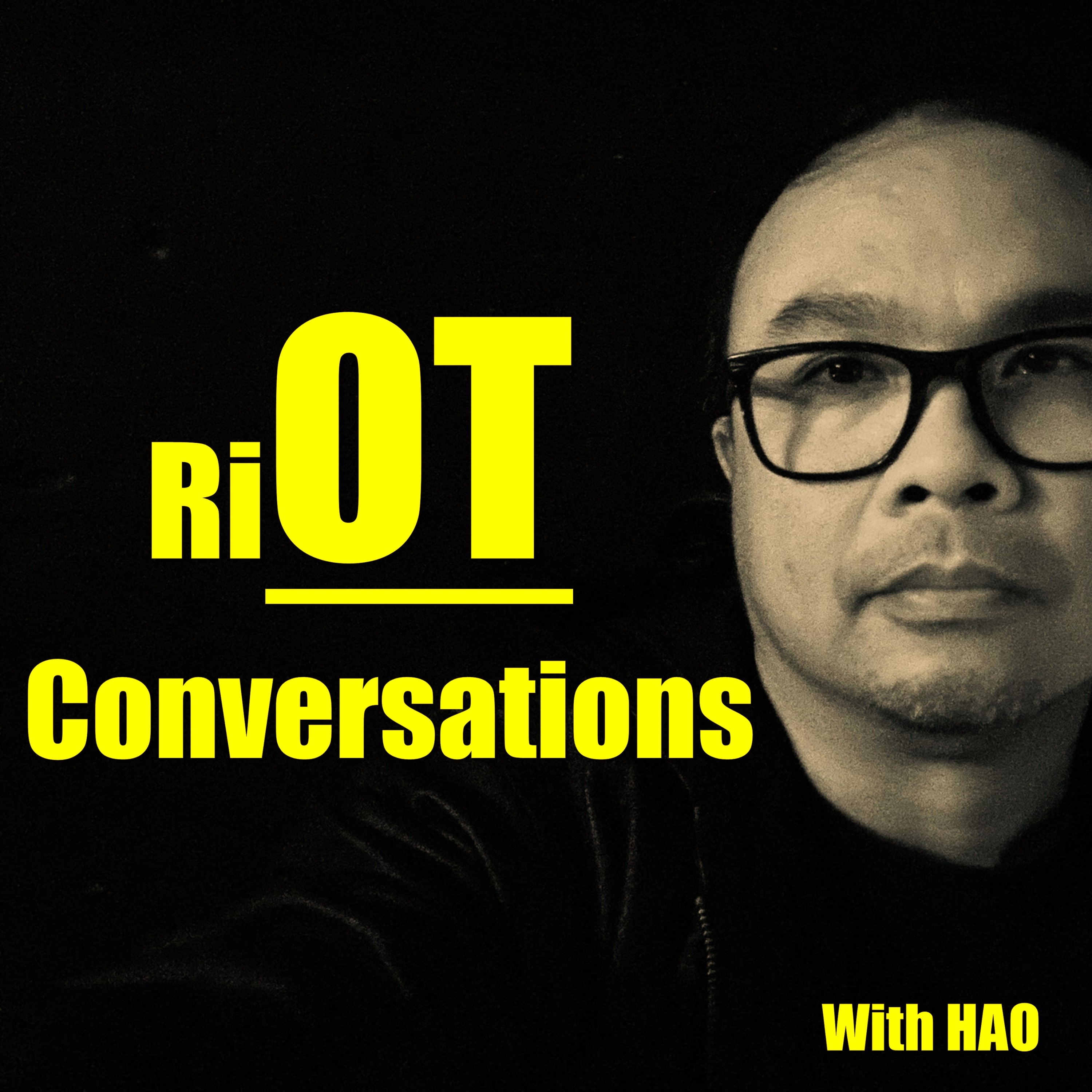
This is a UK-based Occupational Therapy podcast expressing personal clinical experiences, views, and aspirations for occupational therapy practice in the UK. It is aimed to help OT students and clinicians navigate their way through their clinical practice involving occupational therapy. When it gets controversial, it is Rant Involving Occupational Therapy. When I talk about foundation OT knowledge, it is Relevant Information about OT. When I celebrate amazing people I encounter, It's Rollicking Individuals of OT. If I 'yap' about anything I fancy, then, it is Random Information about Ordinary things. Whatever the theme, this OT conversation is a RIOT Conversation. Enjoy - HAODisclaimer: Topics discussed are personal opinions and do not represent any professional body or Trust/Health organization.
-
180
Gender Service and OT
In this episode of Occupational Therapy Conversations, I reflect on gender service as a developing specialist area and ask a difficult but important question: which profession is actually best placed to hold key parts of this work? I explore the shift from a centralised, medically led model toward a more regional and holistic approach, and I argue that occupational therapy has a far stronger place in this space than many people realise. From identity, roles, habits, values, self-management, and health maintenance, this conversation looks at why OT should not stay quiet while other professions plant their flag. A reflective, provocative RIOT-style episode on professional territory, specialist services, and speaking up for what OT can truly offer.
-
179
Understand VA and VV ECMO
Big machine. Big lines. Very sick patient. But what is ECMO actually doing? In this episode, Hao unpacks VV and VA ECMO in plain, human language — from the femoral vein to the internal jugular vein, from the femoral artery to the aorta, and the real difference between supporting lungs and supporting circulation. If ECMO has ever sounded intimidating, this is the episode that strips it down and makes it teachable.#ECMO #VVECMO #VAECMO #CriticalCare #ICU #CardiorespiratorySupport #RespiratoryFailure #CardiogenicShock #ECMOTeaching #BedsideTeaching #OccupationalTherapy #OTInCriticalCare #TherapyInICU #RIOTTalk #OTConversationsByHao
-
178
Bamford Classification for Stroke
What exactly is the Bamford Classification, and why does it still matter when we talk about stroke? In this episode, we break it down in a way that actually makes sense. No overcomplicated lecture, no dry textbook energy — just a clear walk through of the four classic stroke syndromes: TACS, PACS, LACS, and POCS.We talk about what the classification is really looking at, how it links clinical signs to patterns of brain injury, and why it became such a useful bedside way of thinking. More importantly, we make it practical. This is not just about memorising labels — it is about recognising patterns, understanding what you are seeing in front of you, and sharpening your clinical reasoning.Whether you are a student, therapist, nurse, doctor, or just someone trying to finally make stroke classification click, this episode gives you the Bamford framework in plain language. Clinical, simple, memorable.If stroke talk has ever felt like a pile of confusing acronyms, this one is here to sort your head out.
-
177
Thoracic Surgeries Simplified
In this episode, we talk about thoracic surgeries in different types of thoracic surgeries. We first looked at the anatomy as a review and then we explored the concerns of occupational therapy in this clinical area.
-
176
Spinal cord injury: a short talk
Spinal Cord Injury & Spinal Cord Syndromes — An OT-Led Clinical GuideSpinal cord injury isn’t just about paralysis — it’s about disrupted movement, sensation, autonomic control, identity, and occupation.In this episode of OT Conversations, we break down spinal cord injury in a clear, clinically practical way. We explore injury levels, complete vs incomplete lesions, and the classic spinal cord syndromes you must recognise in acute care, rehab, and critical care settings.You’ll learn:How spinal cord injuries are classifiedThe difference between upper and lower motor neuron patternsKey spinal cord syndromes (Central Cord, Anterior Cord, Brown-Séquard, Conus Medullaris, Cauda Equina)Why hand function is often the biggest functional bottleneckWhat spinal cord injury really means for activities of daily living, independence, and recoveryThis episode is grounded in occupational therapy reasoning, linking anatomy and neurology directly to function, participation, and real-world rehabilitation.Whether you’re a student, newly qualified therapist, or experienced clinician, this episode will help you see spinal cord injury through a functional, occupational lens — not just a neurological one.🎙️ Listen. Learn. Apply.Because understanding the cord means understanding the person.
-
175
Level up neuro talk
Here’s a neuro talk that should interest therapists because it’s so essential to your professional sanity 🤣
-
174
The Humanistic Frame of Reference: Why Meaning Comes Before Method
What happens when Occupational Therapy stops asking “What task is broken?” and starts asking “Who is this person becoming?”In this episode, we explore the Humanistic Frame of Reference in Occupational Therapy — not as a soft or abstract idea, but as a clinically powerful way of thinking and practising.Humanistic OT reminds us that people are not problems to be fixed. They are individuals with values, identities, losses, hopes, and a deep drive toward meaning. Function matters — but meaning is what sustains engagement, motivation, and recovery.We unpack:What the Humanistic Frame of Reference actually is (and what it isn’t)Why the therapeutic relationship itself is a skilled interventionHow concepts like choice, dignity, identity, and readiness shape outcomesWhere humanistic thinking fits in acute care, rehab, mental health, and long-term conditionsWhy UK OT practice often uses humanistic principles without ever naming themThis episode is for occupational therapists who:Feel the tension between targets and timingSense that readiness matters as much as performanceWant language to explain the “invisible” parts of their clinical reasoningKnow that sometimes the most powerful intervention is how you sit, listen, and paceHumanistic OT isn’t about abandoning structure or risk.It’s about knowing when to intervene, how to hold space, and why occupation must remain personal.If you’ve ever slowed a session because the person wasn’t ready —If you’ve ever prioritised dignity over speed —If you’ve ever felt that meaning came before method —This conversation is already part of your practice.🎙️ Listen, reflect, and bring the human back to the centre of Occupational Therapy.
-
173
Occupational Risk-Readiness-Re-entry Model
What does Occupational Therapy really assess when someone is preparing to leave hospital or re-enter everyday life? In this episode, we explore Occupational Risk, Readiness, and Re-entry—a practical way of understanding what UK OTs actually do in real systems. This conversation looks beyond task performance and independence to examine sustainability, timing, environment, support, and self-regulation. It’s about recognising where everyday life might fall apart, knowing when someone is truly ready, and supporting a return to life that holds outside the safety of healthcare settings. Ideal for clinicians, students, and anyone interested in the deeper reasoning behind OT decisions that are often felt but rarely named.
-
172
Owning a decision
At some point in your practice, discharge stops being a checklistand starts becoming a judgement.Not a date.Not a form.A decision you carry.In this episode of OT Conversations, we explore what happens when Occupational Therapists move beyond process and begin to own clinical judgement—especially in complex discharge decisions involving frailty, risk, capacity, and uncertainty.We talk about:The difference between difficulty and dangerWhy frailty does not automatically mean dependencyHow capacity shifts responsibility without removing accountabilityThe quiet emotional weight clinicians carry after the decision is madeAnd the moment you realise you know enough—but haven’t trusted it yetThis is an episode about professional maturity.About standing behind proportionate decisions.About judgement that is rarely loud—but deeply consequential.If you’ve ever replayed a discharge in your head on the way home,this conversation is for you.🎧 Listen. Reflect. And trust the thinking you’ve been building.
-
171
Bandaging
In this episode, let’s talk about bandaging.
-
170
The common oral motor interventions NICU OTs use
This episode is a riot journal review exploring the common ones used by NICU therapists. It is very insightful to know that across the pond, OTs have a higher clinical scope that we should aim to be at par with- Hao
-
169
The chamber between what is taught and what is known
There comes a point in practice where protocols are no longer enough. This piece reflects on the quiet shift from competence to judgement, and the inner work that shapes professional identity over time.
-
168
“Stop Teaching Energy Conservation Too Early”
We talk a lot about energy conservation in occupational therapy, but rarely about when it truly belongs. This episode explores why energy conservation only works after functional optimisation, why acute care is the wrong context for real application, and why patient-reported ease matters more than independence when measuring success.
-
167
The Dark side of not having a UK OT Model
This is what happens when the occupational therapy practice does not have a unified model
-
166
The UK OT model no one named
The UK doesn’t have a single, named occupational therapy model — and that isn’t a failure of theory. It’s a reflection of how UK OT actually works. In this episode, we unpack why UK practice grew without a branded model, how the NHS, social care, housing, and MDT culture shaped a different kind of professional reasoning, and why many experienced OTs feel uneasy saying “I don’t really use a model.” This conversation reframes that discomfort as maturity: model-literate, not model-bound practice. If you’ve ever felt that real OT work doesn’t fit neatly into diagrams, this episode puts words to what you’re already doing.
-
165
Restoring Trust: What Occupational Therapy Really Does
When illness or injury strikes, people don’t just lose function—they lose trust. Trust in their bodies, their routines, and their place in the world. In this episode, we explore what Occupational Therapy really does beneath the surface of washing, dressing, mobilising, and discharge planning. This is a reflective conversation about how ordinary activities become the rehearsal space for life itself, and how trust—quietly rebuilt through meaningful action—is often the true outcome of good OT practice. Ideal for clinicians, students, and anyone curious about the deeper work of recovery beyond checklists and independence scores.
-
164
Habits, Identity, and Why Change Fails at Work
Why do people push back against change—even when the evidence is clear and the outcome is better?In this episode, we unpack why resistance to change isn’t about stubbornness, laziness, or poor attitude. It’s about how the brain protects familiarity, identity, and psychological safety—especially in high-pressure workplaces like healthcare.Using an Occupational Therapy lens, this conversation explores habits, routines, professional identity, and why confidence rarely comes before change. We look at why pushing harder often fails, and why the same rehabilitation principles we use with patients are exactly what staff need during service redesign, new pathways, and cultural shifts at work.This episode is for clinicians, leaders, and educators who are tired of calling it “resistance” and want to understand what’s really happening underneath.Listen if you’ve ever thought:“This change makes sense… so why does it feel so hard?”
-
163
Perceptions on use of AMPAC : a journal review
This is a journal review regarding the perceptions OT in the usefulness of AMPAC - a journal review.
-
162
Responsibility is the prerequisite of clinical confidence
This episode challenges the belief that clinicians must feel confident before taking on responsibility. Drawing from real clinical culture and training environments, the episode reframes confidence not as a prerequisite for responsibility, but as a product of experience. It explores how avoidance disguised as safety can stall professional growth, and why scaffolded responsibility—rather than early escalation—builds capable, safe practitioners.Key Themes:Confidence as an outcome, not a starting pointResponsibility as a training tool, not a rewardThe hidden cost of removing responsibility “to be kind”Graduated responsibility vs. avoidanceWhy discomfort is a normal and necessary stage of developmentReframing safety around systems and escalation, not confidenceCore Message:If confidence is treated as a prerequisite, learning never begins.If responsibility is scaffolded, confidence is manufactured.Who This Episode Is For:Band 5 and Band 6 cliniciansSupervisors and practice educatorsService leads involved in workforce developmentAnyone navigating learning, responsibility, and professional confidenceTakeaway:Feeling unsure does not mean you are not ready.Responsibility—when bounded and supported—is how clinicians are built.
-
161
When Helping Early Does Not Help Band 5s
“Complex cases often get passed upward quickly—in the name of safety, support, or efficiency.But what if that very act is the reason our juniors never feel ready?In this episode, we explore how early escalation removes scaffolded learning, weakens autonomy, and quietly reshapes entire services.Because comfort is not competence—and complexity is the curriculum.”
-
160
How to manage complex cases
In this episode, we explore the common belief:“If a patient is complex, it’s automatically too much for me.”We break down why this thought traps early-career clinicians, how it reinforces avoidance, and why complexity often feels like a personal threat rather than a shared responsibility.The episode introduces three key ideas:Reframe Complexity Complexity doesn’t mean you lack capability—it simply means the situation needs structure and a step-by-step approach.Use Curiosity, Not Fear Instead of “this is too much,” shift to “what makes this complex, and what part is mine to start with?”Shared Responsibility Complex patients are not meant to be managed alone; joint reviews, senior support, and MDT collaboration are built for this purpose.By changing how we think about complex cases, we transform them from overwhelming to manageable—and from sources of fear into opportunities for growth and stronger clinical reasoning.
-
159
Behavioral FOR
In this episode, Hao breaks down one of the most practical and powerful tools in Occupational Therapy—the Behavioural Frame of Reference. If you’ve ever worked with patients who struggle to initiate, avoid activities, feel overwhelmed, or repeat unhelpful habits, this episode is for you.We explore how behaviour is learned, shaped, and strengthened through reinforcement, modelling, grading, and habit formation. You’ll learn how OTs use behavioural principles to support engagement, build routines, reduce fear, improve ADLs, and create meaningful change across respiratory medicine, neurorehabilitation, paediatrics, mental health, and acute inpatient care.Clear. Functional. Clinically grounded.This is behavioural science through an OT lens—simple, structured, and ready to use on the ward today.Press play, learn with me, and let’s elevate your practice one behaviour at a time.
-
158
Understand the Limbic System
In this episode, we explore the limbic system — the brain’s emotional and memory engine — and break down simple, practical ways to stimulate each part in isolation. From activating the amygdala through emotional cues, sharpening hippocampal function with memory and navigation tasks, regulating the hypothalamus through breathing and circadian routines, to boosting motivation via the nucleus accumbens, this session gives you clear, therapy-ready strategies. Perfect for clinicians, students, and anyone curious about how targeted sensory and cognitive experiences can wake up the emotional brain and support rehabilitation. Tune in, learn, and bring these tools straight into practice.
-
157
NDT frame frame of reference
In this episode of OT Conversations, we dive into the Neurodevelopmental Treatment (NDT) Frame of Reference — one of the foundational approaches used in neurological rehabilitation. Join me as we explore how NDT helps occupational therapists understand movement, muscle tone, postural control, and the power of hands-on facilitation.We unpack the key principles behind NDT, why it’s so widely used in stroke, brain injury, and cerebral palsy, and how guided, purposeful handling can retrain the nervous system toward more normal, efficient movement. Using everyday functional tasks, we look at how OTs help patients relearn balance, coordination, and control in the occupations that matter most.Whether you’re a student, a clinician, or someone curious about neurorehab, this episode brings clarity to what the NDT Frame of Reference is — and why it continues to shape modern OT practice across the world.
-
156
The structure of a Frame of Reference
In this episode of OT Conversations, we unpack one of the most fundamental ideas in occupational therapy — the Frame of Reference. It’s the lens through which OTs see their clients, make sense of problems, and choose interventions. We’ll explore what a frame of reference is, why it matters, and how different ones shape our practice — from biomechanical to cognitive, behavioural to MOHO.Join me as we translate theory into real-world examples, like helping a stroke survivor make a cup of tea again — and see how each frame of reference tells a different therapeutic story. Whether you’re a student, clinician, or just curious about OT thinking, this episode will help you see everyday practice in a whole new light.
-
155
Reawakening the somatic nervous system in critical care
When the body hibernates after critical illness, survival takes over — but movement, awareness, and engagement fall silent.In this episode of OT Conversations, Hao explores how occupational therapists use early sensory and proprioceptive stimulation to keep the connection between body and mind alive. Through gentle touch, rhythm, and human presence, we remind the body that movement still exists — long before active rehabilitation begins.This is a reflection on the hidden work of hands, the language of sensation, and the quiet moment where recovery truly begins.Listen, learn, and share — because every mindful touch matters.
-
154
Documenting the fat neck debate
In this quick and lighthearted episode, Hao shares a real workplace moment that turned into a professional lesson. What started as a funny debate between two speech therapists—how to describe a “fat neck”—becomes a reflection on anatomy, language, and respect in clinical documentation.Learn what adipose tissue really means, why saying “neck is huge” isn’t quite the same as “increased subcutaneous adipose tissue,” and how the words we choose shape both professionalism and patient dignity.Clinical. Neutral. Respectful.Because sometimes, even a “fat neck” can teach us something about how we speak as clinicians.
-
153
Let us understand the airway
In this episode, Hao unpacks the anatomy and purpose of the airway—from nose to alveoli—and explores why airway understanding matters in occupational therapy. Learn about airway protection, suctioning, positioning, and breath control, and discover how every occupation truly begins with a single breath.
-
152
Complexity of strength assessments
In this episode, Hao — your occupational therapist — unpacks one of the most familiar assessment tools in rehabilitation: muscle testing and muscle grading.We revisit the classic Oxford Scale and explore the more detailed Kapanji Scale, then dive deeper into what these numbers actually mean in clinical reasoning.When does muscle testing make sense? How do you interpret strength when the problem is neurological rather than purely biomechanical? And why should OTs always think beyond “score sheets” toward function, context, and occupation?🧠 Topics covered:Oxford and Kapanji scales made simpleUnderstanding the muscle–nerve–brain circuitWhen to use restorative vs. compensatory approachesThe role of OT in strength training and ADL preparationWhy clinical reasoning matters more than the number you write☕ Learn it, reflect on it, teach it over a cup of tea — and remember: anything you do matters and has an outcome.📌 Listen on Spotify, Apple Podcasts, or wherever you get your OT Conversations.#OccupationalTherapy #OTConversations #MuscleTesting #NeuroRehab #FunctionalResilience #OTEducation
-
151
When the Hand forgets
In this episode, We reflect on a bedside encounter that revealed something subtle but profound—a patient who could move her hand, but couldn’t quite find it. Through this story, we explore the hidden world of motor inattention, proprioceptive loss, and the delicate process of functional relearning that follows neurological injury.In this episode, I unpack that moment:How to differentiate motor inattention from sensory loss or neglect.Why reach, grasp, release is more than a movement pattern — it’s a window into cognition.And how repetition, context, and meaning rebuild proprioceptive maps and functional confidence.Rehabilitation isn’t about forcing movement; it’s about re-teaching awareness.It’s slow, deliberate, sometimes invisible — but it’s where recovery truly begins.
-
150
Social Prescribing
In this episode of OT Conversations, Hao explores the growing movement of social prescribing — the idea that connection, purpose, and community can be just as powerful as medicine.From gardening and art to volunteering and movement, social prescribing invites healthcare professionals to prescribe meaningful activity as part of healing.If that sounds familiar, it’s because it echoes the very heart of occupational therapy.Join Hao as he unpacks what social prescribing is, why it’s gaining global attention, and how occupational therapists can claim their place within it.Through reflection and real-world insight, this episode invites listeners to see how occupation itself is medicine, and why OT has always been — quietly, powerfully — at the centre of that truth.
-
149
Understand Cystic Fibrosis
In this episode, we’re talking about cystic fibrosis, how we support daily living, energy conservation, treatment adherence, and participation in the things that give life.
-
148
Engagement: the vital sign of OT
“Critical care isn’t just about survival—it’s about recovery. And that recovery starts the moment a patient shows they can engage. For us OTs, engagement itself is a vital sign. Whether it’s opening their eyes, following a simple command, or reaching for a cup, these are milestones that show the body and mind are healing. Our role is to capture those moments, to facilitate them, and to make sure they’re not lost in the noise of monitors and machines. Because in ICU, occupation isn’t a luxury—it’s the bridge back to life.”
-
147
Beyond Diagnosis: How OTs Support PIP Applications
Personal Independence Payment — or PIP. You’ve probably heard of it, maybe even applied for it. But do you really know what it’s about? It’s not about diagnosis. It’s about how your condition affects your daily life — washing, dressing, cooking, moving, engaging with othersIn this episode, we’ll talk about PIP and the unique role of occupational therapy. We’ll explore how OTs complete functional reports that describe not just the condition, but the reality: the fatigue, the breathlessness, the time it takes, the safety risks. The details that make all the difference in a PIP application.So listen to Occupational Therapy Conversations. Learn what PIP really means, and why occupational therapy is at the heart of showing how people live day to day. Because in the end, occupation is life.
-
146
Who is killing OT?
Let me ask you this—have you heard the rumour that some hospitals in the UK are stopping occupational therapists from taking vital signs? I hope it’s fake news, because if it’s true, that’s the slow death of our profession.Vital signs are not optional. They’re the foundation for safe, functional retraining. If we’re not monitoring them, then what are we really doing—just activity provision? That’s not OT.So today I’m introducing a new term: the Anti-OT. That’s anyone in our profession who—through incompetence or poor leadership—ends up dismantling what OT really is.Think about it. Are you protecting the profession, or are you unknowingly becoming an Anti-OT?
-
145
Understanding Orthostatic hypotension
Ever felt dizzy or lightheaded when standing up? That could be orthostatic hypotension—a sudden drop in blood pressure that affects safety, independence, and daily life.In this episode of OT Conversations, Hao, your occupational therapist, unpacks what orthostatic hypotension is, why it happens, and the symptoms to watch out for. We explore causes ranging from dehydration and medications to neurological conditions, and share practical management tips—from lifestyle adjustments to simple counter-manoeuvre exercises like ankle pumps, leg crossing, and buttock clenching.Most importantly, we look at the role of occupational therapy in keeping people safe, independent, and confident in their daily activities.👉 Listen now and learn how small strategies can make a big difference.
-
144
Learn about D2A
“Today on OT Conversations, we’re diving into Discharge to Assess. Why did the NHS bring it in? How did therapy response times — especially ours as OTs — play a role? We’ll talk honestly about our own shortcomings, why hospital-based assessments weren’t always serving patients well, and how shifting assessments into the community changed the game.It’s not just policy — it’s about risk, independence, and making sure people get home safely and quickly. Join me as we unpack what D2A really means, and why it challenges us as OTs to step up in a new way.”
-
143
Sensory Stimulation and Early Engagement in Critical Care
In this episode, we dive into the world of critical care occupational therapy and ask:👉 What’s the most frequent sensory stimulation we provide in ICU?👉 How do we really promote early engagement with patients who are barely responsive?From tactile input and proprioception to cognitive-perceptual retraining, I’ll walk you through how OTs use stimulation and engagement as the first steps toward recovery.It’s reflective, it’s practical, and it’s about making our hidden work visible.✨ Tune in, share with a colleague, and remember: anything you do matters, and has an outcome.
-
142
Missing the opportunity to define OT to the Board of Directors
How do you explain what you do when you can’t say your job title? In this episode, I share my experience in a high-pressure hospital board meeting, where I had to define occupational therapy without the words “occupational therapist.” I talk about the struggle, the stumble, and the reflection that followed — and what it taught me about adapting our language to different audiences.This isn’t just about boardrooms. It’s about how we, as OTs, communicate our value so that it truly lands.
-
141
Learn about Chorea
Chorea and OT“Chorea — sudden, dance-like movements that a person can’t control. But behind the movements are real challenges: eating, dressing, walking, even joining in social life. In this episode of OT Conversations, we’ll explore what chorea is, why it happens, and most importantly — how occupational therapy steps in. From adaptive strategies to assistive tech, from safety to identity — join me as we uncover the OT role in helping people live well with chorea.”
-
140
Learn about the basal ganglia
What if I told you there’s a part of your brain that doesn’t play the music, but makes sure the orchestra is in rhythm? That’s the basal ganglia—a set of deep brain hubs that control movement, habits, and even motivation.When it works well, you move smoothly, you learn skills, you stay focused. But when it breaks down—think Parkinson’s, Huntington’s, or even OCD—life gets a lot harder.Join me in this episode of OT Conversations as we explore the basal ganglia, the brain’s hidden conductor.
-
139
Learn about fronto-temporal dementia
In this episode of OT Conversations, Hao explores Frontotemporal Dementia (FTD) — a condition that often goes unnoticed compared to Alzheimer’s, yet profoundly affects the lives of patients and families. We break down what FTD is, how it differs from other dementias, and the unique ways it can change behavior, language, and social relationships.You’ll learn about the different types of FTD (behavioral variant, primary progressive aphasia, and movement-related forms), the symptoms to watch for, and the diagnostic process. More importantly, we’ll talk about management strategies, the vital role of occupational therapy, and how families can adapt to support loved ones living with this condition.This episode is for therapists, health professionals, caregivers, and anyone curious about how dementia can look very different from what you might expect.
-
138
Motor Neuron Disease
What happens when the body weakens but the mind stays sharp?In this episode of OT Conversations, we explore MND—its impact, its challenges, and the vital role of occupational therapy.From ALS to adaptive aids, CPAP to communication breakdowns—we talk real care, real people, and why your role matters.✨ Learn. Anticipate. Adapt.#OccupationalTherapy #MNDawareness #ALS #NeuroRehab #OTConversations #AdaptiveCare #DignityInDecline #PalliativeOT #MultidisciplinaryCare #HealthcarePodcast #CPAPsupport
-
137
Educating an Educational Lead about OT
In this episode of OT conversations I talk to the AHP education lead and I gave her an educational conversation regarding occupational therapy. She had lots of questions about occupational therapy and the answers that she got surprised her because it opened her eyes to the vast and the wonderful nature of occupational therapy. Do listen to this. It’s entertaining and you might pick up some pointers on how you can promote the profession as well.
-
136
“When Thinking Gets Cloudy: The Cognitive-Perceptual Frame of Reference”
“Cognitive-perceptual dysfunction remains one of the most challenging barriers to functional independence. In this episode of Occupational Therapy Conversations, we revisit the Cognitive-Perceptual Frame of Reference, exploring its evolution from the Quadraphonic and Dynamic Interactional models to contemporary practice. We’ll examine how OTs integrate remediation and compensation strategies — and reflect on what this means for clinical reasoning, assessment, and patient outcomes in neurorehabilitation.”
-
135
What is an Impella device?
“Imagine a pump, smaller than your finger, stepping in to do the work of a failing heart. That’s the Impella — a tiny mechanical device that can keep blood flowing when the heart can’t keep up. In this episode, we’ll explore what it is, why it’s used in life-threatening situations like heart attacks and cardiogenic shock, and the key precautions that keep patients safe. From the ICU to the therapy team, we’ll break down how this little device makes a big difference.”
-
134
Understand ECG
“Today we’re talking about ECGs — the electrocardiogram. It’s one of the most common tests in healthcare, capturing the heart’s electrical rhythm in just a few seconds. For occupational therapists, understanding ECGs isn’t about becoming a cardiologist — it’s about safety and context. An ECG can explain why a patient feels dizzy during a transfer, why activity needs pacing, or why therapy should pause until medical review. It reminds us that occupation happens within the realities of the body. By knowing the basics of ECG, we strengthen our role in rehabilitation, collaborate better with the wider team, and keep our patients safe while helping them rebuild their daily lives.”
-
133
OT talk involving NIV (Non invasive ventiulation)
In this episode of OT Conversations, the focus is on Non-Invasive Ventilation (NIV) and its significance for occupational therapists working in respiratory medicine. NIV provides ventilatory support without invasive methods like intubation or tracheostomy. The episode outlines the benefits, functionality, and challenges associated with NIV, explaining key terms like CPAP and BiPAP and their differences. It highlights the importance of proper mask fitting, patient cooperation, and routine monitoring, while emphasizing the vital role occupational therapists play in patient education, psychological support, and developing health maintenance routines. The talk aims to enhance understanding and application of NIV in clinical practice, ensuring better patient care and adherence.
-
132
Clinical Judgement and Seating Solutions: An OT Conversation on Tumble Forms
In this video, Hao and Maria discuss the use of Tumble Forms, a modular seating system, for a young child with spinal muscular atrophy (SMA). They emphasize the importance of proper positioning to support breathing and monitor the child's respiratory levels. The discussion covers a specific case where the child, with poor trunk muscle control, was gradually introduced to semi-upright positions using Tumble Forms to assess tolerance and avoid respiratory compromise. The episode also addresses inter-county therapy collaboration, differences in therapeutic approaches, and the critical role of parents in advocating for their child's care. The conversation delves into the broader implications of adaptive vs. restorative interventions in pediatric occupational therapy.
-
131
Can we have adaptive device to supplement muscle inactivity in critical care?
“What if a simple electrical pulse or a gentle compression could keep ICU patients from losing precious muscle strength?”Hi, I’m your Occupational Therapist, Hao, and on this episode of Occupational Therapy Conversations, we’re venturing into the high-stakes world of critical care, where ventilators breathe, ECMO oxygenates, and groundbreaking adaptive aids are rewriting the rehab playbook.Join me as we uncover:How devices like VADs and dialysis machines buy organs time to healThe untapped frontier of muscle-preservation tech that could slash post-ICU weaknessWhy early, proactive stimulation may be the key to defeating post-intensive-care syndromeIf you’re an OT, nurse, physio—or just fascinated by the future of healing—this is one conversation you don’t want to miss.
We're indexing this podcast's transcripts for the first time — this can take a minute or two. We'll show results as soon as they're ready.
No matches for "" in this podcast's transcripts.
No topics indexed yet for this podcast.
Loading reviews...
ABOUT THIS SHOW
This is a UK-based Occupational Therapy podcast expressing personal clinical experiences, views, and aspirations for occupational therapy practice in the UK. It is aimed to help OT students and clinicians navigate their way through their clinical practice involving occupational therapy. When it gets controversial, it is Rant Involving Occupational Therapy. When I talk about foundation OT knowledge, it is Relevant Information about OT. When I celebrate amazing people I encounter, It's Rollicking Individuals of OT. If I 'yap' about anything I fancy, then, it is Random Information about Ordinary things. Whatever the theme, this OT conversation is a RIOT Conversation. Enjoy - HAODisclaimer: Topics discussed are personal opinions and do not represent any professional body or Trust/Health organization.
HOSTED BY
Hao
Loading similar podcasts...
Frequently Asked Questions
How many episodes does OT conversations have?
OT conversations currently has 50 episodes available on PodParley. New episodes are automatically indexed when they're published to the podcast feed.
What is OT conversations about?
This is a UK-based Occupational Therapy podcast expressing personal clinical experiences, views, and aspirations for occupational therapy practice in the UK. It is aimed to help OT students and clinicians navigate their way through their clinical practice involving occupational therapy. When it...
How often does OT conversations release new episodes?
OT conversations has 50 episodes. Check the episode list to see recent publication dates and frequency.
Where can I listen to OT conversations?
You can listen to OT conversations on PodParley by clicking any episode. We provide an embedded audio player for direct listening, and you can also subscribe via your preferred podcast app using the RSS feed.
Who hosts OT conversations?
OT conversations is created and hosted by Hao.
URL copied to clipboard!