
PODCAST · fiction
Outsider Visions: How the Marginalized Imagined Tomorrow
by Atween Studios
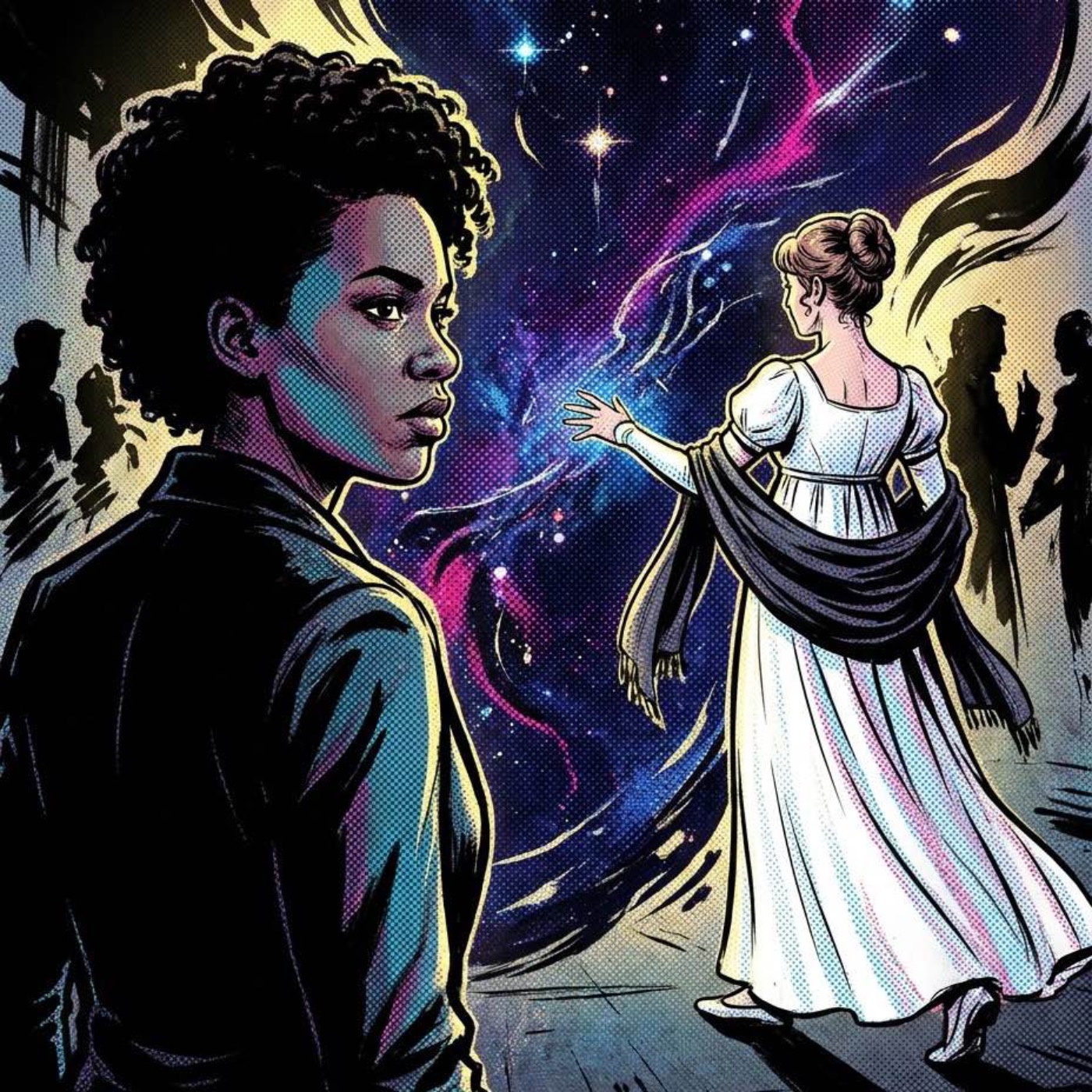
A history of science fiction podcast that centers the voices of those who used the genre to imagine liberation - from Mary Shelley's warning about unchecked power to Octavia Butler's visions of survival, revealing how outsiders have always used sci-fi to challenge the present by reimagining the future. Hosted on Acast. See acast.com/privacy for more information.
-
27
Fahrenheit 451's Burning Libraries: Bradbury's Anti-Censorship Manifesto
Ray Bradbury wrote Fahrenheit 451 (1953) in a UCLA library basement, on a rented typewriter, during the height of McCarthyism and the Hollywood blacklist. The novel imagines a future America where books are burned not by government decree but by popular demand — people chose television walls over literature, and the firemen simply serve the public will. The architecture of the novel is the architecture of conformity: the parlor walls that replace windows, the seashell radios that fill every ear, the suburban streets where no one walks. Bradbury was writing about the present: the House Un-American Activities Committee, the burning of 'subversive' books, the television culture that was replacing reading. This episode examines the novel's McCarthyite context, its prescient vision of media saturation, and its renewed relevance in the age of book bans, library defunding, and 'Don't Say Gay' legislation.SPOILERS! Please note that due to the nature of this podcast, each episode describes a novel in detail, including plot spoilers. Hosted on Acast. See acast.com/privacy for more information.
-
26
The Handmaid's Tale's Gilead: Atwood's Theocratic Architecture
Margaret Atwood's The Handmaid's Tale (1985) was written in West Berlin while the Wall still stood, at a time when Reagan-era religious conservatism was reshaping American politics. Atwood's rule: nothing in the novel that hasn't happened in history. The handmaid system draws on the Bible (Rachel and Leah), the Lebensborn program, Romanian forced reproduction policy, and the history of American slavery. The architecture of Gilead is the architecture of the female body made into state property: the Commander's house with its color-coded household, the Wall where executed bodies hang, Jezebel's brothel for elite men. This episode examines the novel's historical sourcing, its Reagan-era political context, and why it has become the defining image of reproductive rights activism — from the Dobbs decision protests to Project 2025.SPOILERS! Please note that due to the nature of this podcast, each episode describes a novel in detail, including plot spoilers. Hosted on Acast. See acast.com/privacy for more information.
-
25
The Monster's Mother: Frankenstein and Female Creation
Mary Shelley wrote Frankenstein at 18, grieving the death of her infant, excluded from formal education, the daughter of feminist Mary Wollstonecraft and anarchist William Godwin. The novel is not a horror story — it is a political manifesto about what happens when men play God without accountability. The laboratory is a masculine space of creation that bypasses the female body; the creature is excluded from every domestic and social space; the scientist's hubris destroys everyone he loves. Written at the dawn of the Industrial Revolution, Frankenstein asks who controls creation, who bears the consequences, and who gets to be human. This episode examines the radical political context of the novel's creation, the Villa Diodati summer of 1816, and why Shelley's warning has only grown more urgent in the age of AI and genetic engineering.SPOILERS! Please note that due to the nature of this podcast, each episode describes a novel in detail, including plot spoilers. Hosted on Acast. See acast.com/privacy for more information.
We're indexing this podcast's transcripts for the first time — this can take a minute or two. We'll show results as soon as they're ready.
No matches for "" in this podcast's transcripts.
No topics indexed yet for this podcast.
Loading reviews...
ABOUT THIS SHOW
A history of science fiction podcast that centers the voices of those who used the genre to imagine liberation - from Mary Shelley's warning about unchecked power to Octavia Butler's visions of survival, revealing how outsiders have always used sci-fi to challenge the present by reimagining the future. Hosted on Acast. See acast.com/privacy for more information.
HOSTED BY
Atween Studios
Loading similar podcasts...
Frequently Asked Questions
How many episodes does Outsider Visions: How the Marginalized Imagined Tomorrow have?
Outsider Visions: How the Marginalized Imagined Tomorrow currently has 3 episodes available on PodParley. New episodes are automatically indexed when they're published to the podcast feed.
What is Outsider Visions: How the Marginalized Imagined Tomorrow about?
A history of science fiction podcast that centers the voices of those who used the genre to imagine liberation - from Mary Shelley's warning about unchecked power to Octavia Butler's visions of survival, revealing how outsiders have always used sci-fi to challenge the present by reimagining the...
How often does Outsider Visions: How the Marginalized Imagined Tomorrow release new episodes?
Outsider Visions: How the Marginalized Imagined Tomorrow has 3 episodes. Check the episode list to see recent publication dates and frequency.
Where can I listen to Outsider Visions: How the Marginalized Imagined Tomorrow?
You can listen to Outsider Visions: How the Marginalized Imagined Tomorrow on PodParley by clicking any episode. We provide an embedded audio player for direct listening, and you can also subscribe via your preferred podcast app using the RSS feed.
Who hosts Outsider Visions: How the Marginalized Imagined Tomorrow?
Outsider Visions: How the Marginalized Imagined Tomorrow is created and hosted by Atween Studios.
URL copied to clipboard!