
PODCAST · health
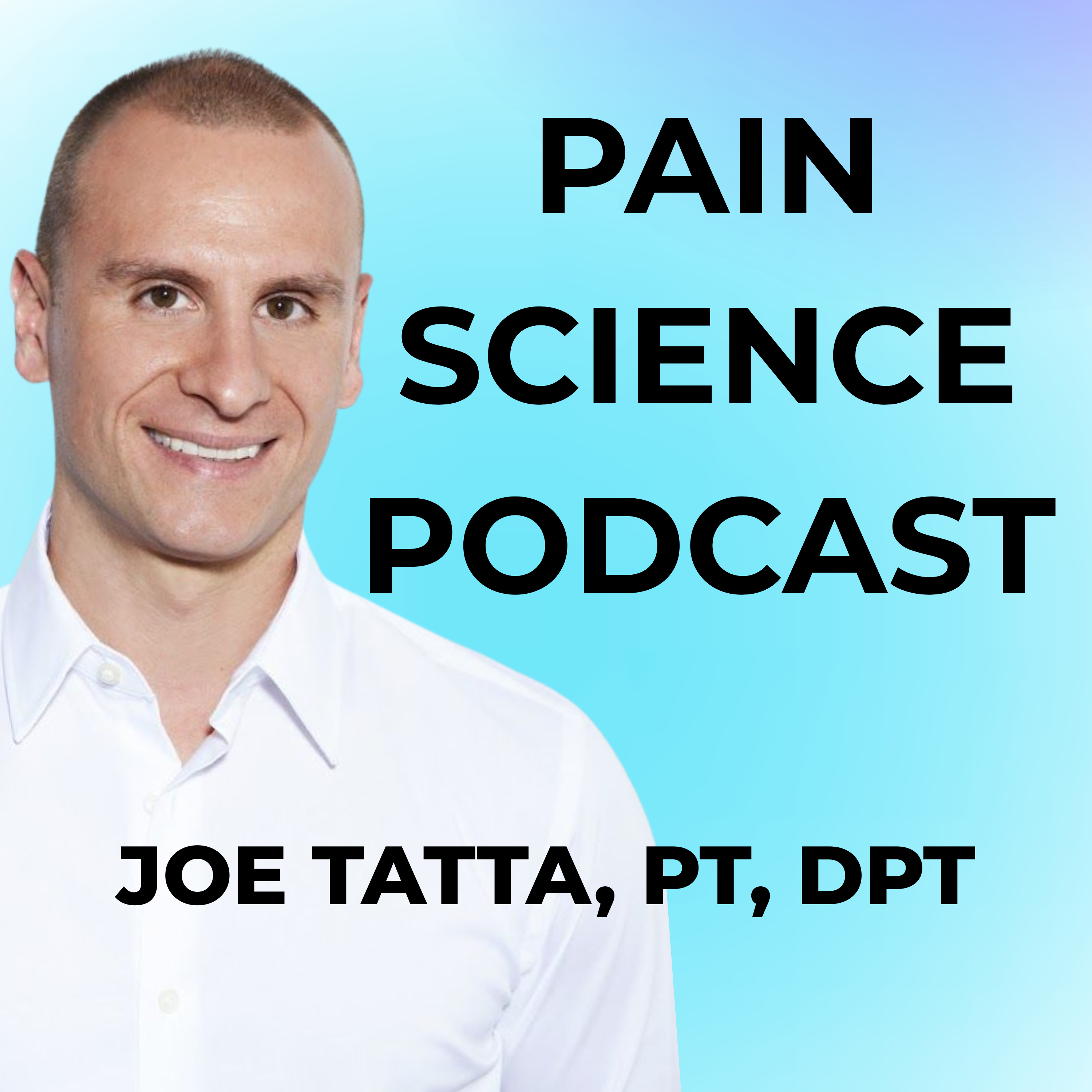
Pain Science Podcast
by Dr. Joe Tatta
The Pain Science podcast discusses science-backed solutions for chronic pain. Learn how to use the brain, body, mind, and behavior for pain relief and improve both physical and mental well-being. Hosted by Dr. Joe Tatta, a physical therapist and CEO of the Integrative Pain Science Institute, the podcast features a wide range of topics, including pain neuroscience, physical therapy, psychology, exercise, health, and wellness. Work from the Integrative Pain Science Institute has been published in top journals, including Physical Therapy and Rehabilitation Journal and the Journal of Physiotherapy in Mental Health. Dr. Joe Tatta is widely recognized for his contributions to pain science and mental health physical therapy. He developed PRISM—Pain Recovery and Integrative Systems Model, a process-based cognitive-behavioral approach for physical therapy; Pain Resilience Therapy, a strengths-based approach to treating chronic pain; and the Mental Health Physical Therapist Certification Progra
-
359
Creating Wellness Retreats that Transform Physical Therapists with Mai Huong Ho-Tran PT, DPT
Most physical therapists are taught to treat pain. Dr. Mai Huong Ho-Tran treats the whole person a shift that changes everything. In this conversation, we explore how experiential learning, mindful movement, and whole-person care can transform pain rehabilitation. Mai shares her Whole Health Framework, integrating breathwork, movement, behavior change, emotional intelligence, and provider wellness. We discuss her concept of an authentic appraisal, which expands the traditional orthopedic exam to consider adversity, emotional health, and clinician well-being. Mai Huong also opens up about burnout, compassion fatigue, authenticity, and the importance of keeping the healer well. She shares lessons from her Mount Madonna retreat and practices including Tai Chi, yoga, Pilates, and Feldenkrais. For clinicians seeking more effective, sustainable, human-centered care, this conversation offers a different way forward. Learn more at: holistichealthpt.com. Visit integrativepainscienceinstitute.com for CEU training in integrative, psychologically informed care for physical therapists and other practitioners. Thank you for listening, Joe Tatta, PT, DPT
-
358
How This Physical Therapist Built a Trauma Practice with Gina Calderone, PT, DPT
Physical therapists are rapidly expanding into mental and behavioral health care—and creating new models of practice that address the powerful connection between physical health, emotional wellbeing, and trauma. Dr. Gina Calderone, PT, DPT, shares how she built a cash-based physical therapy practice at the intersection of mind-body care and trauma-informed practice. We explore Gina's career path from fast-paced outpatient physical therapy to building a cash-based, integrative practice—and how that evolution ultimately led her to develop her own approach, Physioenergetic Therapy®. Along the way, Gina explains why she has increasingly focused her work on adolescents and young adults, including her Gen Zen retreats designed to support the mental and emotional wellbeing of younger generations. We explore the impact of trauma, bullying, adverse childhood experiences (ACEs), and chronic stress, as well as the important role nervous system regulation can play in both physical and emotional health. We also discuss what happens when emotional pain begins to show up in the body as physical symptoms—and why clinicians may need to look beyond a purely biomechanical model when symptoms cannot be fully explained by tissues, joints, muscles, or movement alone. This conversation is especially relevant for physical therapists and other healthcare professionals interested in mental health, trauma-informed care, mind-body approaches, and developing innovative models of practice. It also offers an inside look at how one physical therapist moved beyond a traditional practice model, identified the population she most wanted to serve, and built a cash-based practice around an approach that reflects her clinical interests and values. For physical therapists wondering what it can look like to build a career—and a practice—at the intersection of physical therapy, mental health, and trauma care, Gina's story offers an important example of where the profession is heading. To learn more about Dr. Gina Calderone and her work, visit: https://www.drginacalderone.com/ Visit integrativepainscienceinstitute.com for CEU training in integrative, psychologically informed care for physical therapists and other practitioners. Thank you for listening, Joe Tatta, PT, DPT
-
357
Reinventing Physical Therapy for Hypermobility Care with Erin Carr, PT, DPT
Most PTs are taught to move fast. Dr. Erin Carr built her practice by slowing down, and that shift changed everything. In this conversation, Erin Carr, PT, DPT, shares how she grew Beyond Integrative PT from $3,000 in savings into a cash-based concierge practice in Santa Monica, California. She explains why she focuses on whole-person care for chronic pain and hypermobility, how she blends manual therapy with nutrition and nervous system support, and why patients often need more time, trust, and validation than standard PT allows. We also discuss her journey into online care and the development of the Hypermobility Roadmap, her online membership for patients who need practical tools, education, and community. To learn more, visit: https://beyondintegrativept.com/ Visit integrativepainscienceinstitute.com for CEU training in integrative, psychologically informed care for physical therapists and other practitioners. Thank you for listening, Joe Tatta, PT, DPT
-
356
Manual Therapy Through a Pain Science Lens: What's Really Happening with Damian Keter PT, DPT, PhD
What actually happens in a patient's brain and body when you perform manual therapy? The answer may surprise you and change how you practice. In this episode, Joe Tatta, PT, DPT, sits down with Damian Keter, PT, DPT, PhD, a researcher whose clinical career led him to question the foundational explanations behind one of physical therapy's most widely used interventions. Damian breaks down what a "treatment mechanism" actually means, a term frequently misused in the literature, and shares findings from his systematic review on the mechanisms associated with manual therapy. The evidence reveals significant gaps: low-quality research, poor translational understanding, and the persistent influence of contextual factors that have nothing to do with the technique itself. Perhaps most provocatively, Damian addresses whether clinicians truly understand that manual therapy is no longer doing what we once thought,-realigning spines, correcting tissue abnormalities, or fixing structural problems. With wide variability across professions, training backgrounds, and regions, false ideologies continue to circulate and undermine the credibility of evidence-based practitioners. The good news? Understanding manual therapy through a mechanistic lens opens the door to smarter, more patient-centered practice. One where expectations, context, and the individual in front of you matter more than the technique you choose. Visit integrativepainscienceinstitute.com for CEU training in integrative, psychologically informed care for physical therapists and other practitioners. Thank you for listening, Joe Tatta, PT, DPT
-
355
Yoga, Pain Science, and Physical Therapy with Sherry Brourman, PT, C-IAYT
In this episode of the Pain Science Podcast, physical therapist Sherry Browerman discusses the intersection of yoga, physical therapy, and pain science. Sherry shares her journey of integrating these disciplines over 50 years, starting from her early experiences as an ice skater. They discuss how yoga and physical therapy can complement each other in understanding and managing pain. The conversation highlights the role of self-image and beliefs in movement and pain perception, emphasizing the importance of self-compassion and empowerment. Sherry also discusses how interoception, exteroception, and proprioception shape one's perception of movement and pain. Sherry's book, "From Bodily Knowledge to Intuitive Movement," serves as a foundation for exploring how these practices can lead to holistic healing and improved well-being. Visit integrativepainscienceinstitute.com for CEU training in integrative, psychologically informed care for physical therapists and other practitioners. Thank you for listening, Joe Tatta, PT, DPT
-
354
Inside Physiotherapy's Mental Health Journal with Moisés Magos, Physiotherapist
In this episode, we explore the growing integration of mental health into physical therapy with Moisés Magos, a physiotherapist and founder of the Journal of Physiotherapy in Mental Health. Drawing on over a decade of experience working with vulnerable populations—including individuals impacted by trauma, addiction, and displacement—Moisés shares the clinical and systemic gaps that led to the creation of the journal. The conversation highlights a critical shift in the profession: recognizing that mental health is not separate from physical rehabilitation, but deeply intertwined with patient outcomes. We discuss how traditional biomedical models often fall short in addressing the complexity of chronic pain and recovery, and why a more holistic, biopsychosocial approach is essential for modern practice. Moisés offers a compelling perspective on the unique role physical therapists play in mental health care, emphasizing the power of movement, embodiment, and therapeutic alliance as tools for psychological and physical healing. He also explains how the journal serves as a global platform to elevate research, amplify diverse voices, and foster international collaboration across disciplines. Learn more about the Journal of Physiotherapy in Mental Health here https://jptmh.com/index.php/jptmh/index Visit integrativepainscienceinstitute.com for CEU training in integrative, psychologically informed care for physical therapists and other practitioners. Thank you for listening, Joe Tatta, PT, DPT
-
353
How Diagnostic Labels Shape Pain with Stephen Martin, PT, MSc
In this episode, we explore how the words clinicians use to diagnose musculoskeletal pain can profoundly shape patient beliefs, behaviors, and clinical outcomes. Joined by Stephen Martin, PT, MSc, Senior Lecturer in Physiotherapy at the University of Winchester and PhD researcher on diagnostic language, we unpack emerging evidence showing that diagnostic labels are not neutral—they can act as powerful psychological signals that influence fear, recovery expectations, and even decisions around imaging and surgery. We discuss why multiple labels are often used for the same condition and how this inconsistency creates confusion for both clinicians and patients. The conversation dives into the tension between specific and non-specific diagnoses—where specific labels may validate pain but increase fear and medicalization, while non-specific labels may support recovery but reduce patient satisfaction. A central theme is whether the label itself matters most, or the explanation that surrounds it, with growing evidence suggesting that how a diagnosis is communicated may be more impactful than the label alone. You'll walk away with practical, evidence-informed insights on how to communicate diagnoses more effectively, reduce unintended harm, and support better outcomes in people living with pain. Visit integrativepainscienceinstitute.com for CEU training in integrative, psychologically informed care for physical therapists and other practitioners. Thank you for listening, Joe Tatta, PT, DPT
-
352
How To Measure Pain Beliefs with Roland Reezigt, PT, PhD(c)
In this episode of the Pain Science Podcast, we explore a key question in modern pain care: how do we measure whether pain science education actually changes the way people think about pain? Pain researcher and physiotherapist Roland Reezigt, PT, PhD(c) joins us to discuss the best way to measure pain beliefs and how to assess conceptual change after Pain Science Education. The conversation highlights the shift from simply delivering pain information to facilitating true reconceptualization of pain. We discuss the difference between pain knowledge, beliefs, and attitudes—and why conceptual change, not just learning facts, is the real goal of pain education. Reezigt also raises an important challenge: many commonly used questionnaires may not clearly measure what clinicians think they measure. For physical therapists, we explore which assessment tools are practical in busy clinical settings and how shifts in pain understanding translate into outcomes like reduced fear, greater self-efficacy, and meaningful behavior change. Visit integrativepainscienceinstitute.com for CEU training in psychologically informed pain care for physical therapists and other practitioners. Thank you for listening, Joe Tatta, PT, DPT
-
351
Primary Care Physical Therapy with Justin Carrier, PT, DPT
In this episode, Justin Carrier, PT, DPT, explores what "Primary Care Physical Therapy" truly means and why it represents a pivotal shift for the profession. Rather than functioning solely within a referral-based model, primary care physical therapy positions physical therapists as primary care providers for neuromusculoskeletal conditions—capable of evaluation, assessment, diagnosis, differential diagnosis, and management without unnecessary gatekeeping. This model improves timely access, reduces downstream costs, and aligns care with evidence showing that early conservative management leads to better outcomes. A central focus of the discussion is APTA Utah's recent legislative victory, which formally strengthened the role of physical therapists as primary care providers. The change removed key barriers that previously limited autonomous practice, allowing patients more direct access to PT services and clarifying the PT's role within the healthcare system. The legislation addressed real problems: delays in care, increased healthcare spending, and unnecessary reliance on imaging, opioids, or specialist referrals for common musculoskeletal issues. Visit integrativepainscienceinstitute.com for CEU training in psychologically informed pain care for physical therapists and other practitioners. Thank you for listening, Joe Tatta, PT, DPT Founder, Integrative Pain Science Institute
-
350
How Physical Therapists Became Treating Physicians in Montana with Emily Herndon, PT, DPT
Emily Herndon, PT, DPT, shares her inspiring journey of how Montana physical therapists became recognized as primary care providers, influencing legislation and expanding the scope of practice. Discover strategies for advocacy, legislative success, and transforming physical therapy into a true primary care profession. Visit integrativepainscienceinstitute.com for CEU training in psychologically informed pain care for physical therapists and other practitioners. Thank you for listening, Joe Tatta, PT, DPT CEO, Integrative Pain Science Institute
-
349
Physical Therapists Managing Mental Health With Mary Beth Osborne, PT, DPT
In this episode of the Pain Science Podcast, Dr. Mary Beth Osborne discusses the integration of mental health into physical therapy practice. She shares her personal experiences with suicide in her family, which have shaped her commitment to addressing mental health issues in her work. The conversation explores the importance of screening for mental health conditions, the role of physical therapists in providing holistic care, and the evolution of the PT Cares clinic at the University of Connecticut. Dr. Osborne emphasizes the need for physical therapists to be proactive in addressing mental health and the barriers that currently exist in the healthcare system. Visit integrativepainscienceinstitute.com for CEU training on psychologically-informed pain care for physical therapists and other practitioners. Thank you for listening, Joe Tatta, PT, DPT CEO, Integrative Pain Science Institute
-
348
APTA Expands PT Mental Health Role
In this episode, Dr. Joe Tatta discusses the recent policy changes by the American Physical Therapy Association regarding the role of physical therapists in behavioral and mental health. He emphasizes the importance of this policy in legitimizing the role of physical therapists in addressing mental health issues, moving from mere acknowledgment to active inclusion in practice. The discussion covers the historical context of these policies, the implications for physical therapy education and practice, and the ethical responsibilities that come with this expanded scope. Dr. Tatta highlights the need for competence and the importance of viewing physical therapists as whole health clinicians capable of integrating mental health into their practice. Visit integrativepainscienceinstitute.com for CEU training on integrative, psychologically-informed pain care for physical therapists and other practitioners. Thank you for listening, Joe Tatta, PT, DPT CEO, Integrative Pain Science Institute
-
347
Nutrition, Rheumatoid Arthritis, and the New Food Pyramid with Sara Brown, PT, DPT, MS
In this episode of the Pain Science Podcast, Joe Tatta, PT, DPT, welcomes Sarah Brown, PT, DPT, MS a doctor of physical therapy and nutritionist, to discuss the intricate relationship between food, the immune system, and chronic joint pain, particularly focusing on rheumatoid arthritis (RA). Dr. Brown shares her unique journey from physical therapy to nutrition, emphasizing the importance of combining movement and dietary changes to manage chronic pain effectively. They delve into the impact of diet on inflammation and pain, highlighting the significance of the Mediterranean diet and the potential benefits of an elimination diet for those suffering from RA. The conversation also explores the pathophysiology of rheumatoid arthritis, including genetic and environmental triggers, and the role of gut health in managing inflammation. Dr. Brown explains how lifestyle factors such as diet, stress, and sleep can influence the immune response and overall health. The episode concludes with practical advice on dietary changes, the importance of understanding food's role in health, and the potential of supplements like omega-3 fatty acids, curcumin, and resveratrol in alleviating symptoms of RA. This insightful discussion aims to empower listeners with knowledge and practical strategies to improve their health through nutrition and lifestyle adjustments. Visit integrativepainscienceinstitute.com for CEU training on integrative, psychologically-informed pain care for physical therapists and other practitioners. Thank you for listening, Joe Tatta, PT, DPT CEO, Integrative Pain Science Institute
-
346
Delivering Community Pain Care with Sharna Prasad, PT, DPT
In this episode of the Pain Science Podcast, Joe Tatta, PT, DPT, interviews Sharna Prasad, PT, DPT, about her journey from India to the U.S. and her experiences in pain management. They discuss the cultural influences on pain perception, the importance of understanding social determinants of health, and the need for a shift in physical therapy education. Dr. Prasad shares her insights on community empowerment, the development of pain education curricula, and the challenges faced in implementing new pain care models. Visit integrativepainscienceinstitute.com for CEU training on integrative, psychologically-informed pain care for physical therapists and other practitioners. Thank you for listening, Joe Tatta, PT, DPT CEO, Integrative Pain Science Institute
-
345
Treating Anxiety, Dizziness and Pain with Sarah Conover, PT, MHS, CHC
In this episode, Joe Tatta, PT, DPT, speaks with Sarah Conover, PT, MHS, CHC, a vestibular therapist with a background in treating conditions related to anxiety, dizziness, and pain. Sarah shared her journey, starting from her early career in the late 1980s, working in acute neuro care, to her current practice, which focuses on chronic vestibular issues. She highlighted the evolution of vestibular therapy and the increasing recognition of conditions like vestibular migraine, 3PD (persistent postural perceptual dizziness), and Mal de Débarquement syndrome. We delved into the intricate connections between the vestibular system and mental health, discussing how dizziness can trigger anxiety and other autonomic responses due to the close interplay between the vestibular system, the autonomic nervous system, and brain structures like the amygdala and hypothalamus. Sarah emphasized the importance of a holistic approach in treatment, incorporating mindfulness and acceptance-based strategies to help patients manage their symptoms. Sarah also shared her personal journey with anxiety and how it has influenced her practice. She employs a range of tools, including mindfulness practices, thought reframing, and expressive writing, to assist her patients in developing a sense of safety and acceptance regarding their symptoms. We also touched on the role of spirituality in healing, with Sarah explaining how she gently explores this aspect with her patients to support their overall well-being. To learn more about Sarah's work, visit her at dizzycoach.com Visit integrativepainscienceinstitute.com for more information and CEU courses on pain and mental health for physical therapists. Thank you for listening, Joe Tatta, PT, DPT CEO, Integrative Pain Science Institute
-
344
Integrating Mental Health and Pain Science into the Doctor of Physical Therapy Program
In this episode, Joe Tatta, PT, DPT, speaks with Dr. Sarah Case-Morris, assistant professor at the University of Michigan–Flint, to explore how mental health, pain science, and health and wellness promotion are being woven into the Doctor of Physical Therapy program. Dr. Case-Morris shares her inspiring journey from teaching assistant to shaping the next generation of PTs, and we dive into her research on how early-career therapists—trained in the biopsychosocial model—approach pain and mental health differently than those rooted in a more traditional biomedical lens. We also talk about the real-world challenges of implementing clinical practice guidelines, especially when it comes to screening for psychosocial risk factors in back pain. Sarah gives us a behind-the-scenes look at how she's integrating pain science, mental health, and health and wellness into her teaching—right as CAPTE requirements are evolving to highlight the mental, psychological, and emotional dimensions of health. This is an important conversation about the future of physical therapy education and how preparing students with a whole-person approach can change the way we care for individuals and communities. For more information, visit integrativepainscienceinstitute.com For CEU courses on pain and mental health, visit integrativepainscienceinstitute.com/course/ Thank you for listening, Joe Tatta, PT, DPT CEO, Integrative Pain Science Institute
-
343
The Power of Walking to Prevent Low Back Pain with Tash Pocovi, PhD
In this episode, Joe Tatta, PT, DPT, speaks with physiotherapist and researcher Tash Pocovi, PhD about her groundbreaking study in the Lancet on the effectiveness and cost-effectiveness of an individualized, progressive walking and education intervention for the prevention of low back pain recurrence. The trial, known as the Walk Back Trial, involved 24 physiotherapists across Australia who delivered an individualized and progressive walking program along with education. The participants, who were mostly sedentary, were given walking prescriptions tailored to their current activity levels, age, BMI, and comorbidities. The goal was to gradually increase their walking to 30 minutes most days of the week over six months. The results were promising, showing a relative risk reduction in low back pain recurrences and a reduction in care-seeking episodes. This has significant implications for both individual health and healthcare system burdens, highlighting the potential of simple interventions like walking combined with education. Dr. Pocovi also discussed the cost-effectiveness of the intervention, noting that it was highly likely to be cost-effective based on willingness-to-pay thresholds. The biggest savings were seen in reduced work absenteeism. For more information, please visit integrativepainscienceinstitute.com For CEU courses, please visit integrativepainscienceinstitute.com/course/ Love the show? Please subscribe, rate, and review. Thank you for listening, Joe Tatta, PT, DPT CEO, Integrative Pain Science Institute
-
342
Webinar: Help Your Patients Achieve Nutrition Goals to Manage Pain with Rose Pignataro, PT, DPT, PhD
In this special webinar episode, Joe Tatta, PT, DPT, and Rose Pignataro, PT, DPT, PhD, FAPTA, a leading researcher and physical therapist specializing in health behavior change, discuss how healthy eating can relieve chronic pain. They also discuss strategies to help patients adhere to and sustain nutritional changes. For more information, please visit integrativepainscienceinstitute.com For CEU courses, please visit https://integrativepainscienceinstitute.com/course/ Love the show? Please subscribe, rate, and review. Thank you for listening. Joe Tatta, PT, DPT CEO Integrative Pain Science Institute
-
341
TARGETing Back Pain with Psychologically-Informed Physical Therapy with Anthony Delitto, PT, PhD, FAPTA
In this episode, Joe Tatta, PT, DPT speaks with Anthony Delitto, PT, PhD, FAPTA a leading researcher in musculoskeletal pain, with over 100 peer-reviewed publications and a career dedicated to improving pain care. Dr. Delitto led the groundbreaking TARGET Trial, a $13-million PCORI-funded study investigating how early intervention with physical therapy—specifically, psychologically-informed physical therapy—can prevent acute low back pain from becoming chronic. In this episode, we dive into the findings of the TARGET Trial, how primary care providers can be trained to recognize risk factors for persistent pain, and why timely referral to physical therapy matters. We also discuss the critical role of physical therapists as primary care providers, the broader impact of poorly managed pain—including the overuse of opioids, unnecessary imaging, and low-value care—and what all of this means for patients, healthcare systems, and employers. For more information, please visit integrativepainscienceinstitute.com For CEU courses, please visit https://integrativepainscienceinstitute.com/course/ Love the show? Please subscribe, rate, and review. Thank you for listening, Joe Tatta, PT, DPT CEO Integrative Pain Science Institute
-
340
Webinar: Mental Health Physical Therapy with Joe Tatta, PT, DPT and Jeremy Fletcher, PT, DPT
In this episode, Joe Tatta, PT, DPT, and Jeremy Fletcher, PT, DPT present a webinar on the mental health physical therapist and the role of physical therapy in mental health. This webinar covers many topics, including: The role of the physical therapist in mental and behavioral health. Opportunities for physical therapy professionals to work in mental and behavioral health. Suggested education and training in mental health physical therapy. For CEU courses and the Mental Health Physical Therapist Certification, please visit integrativepainscienceinstitute.com/course Love the show? Please subscribe, rate, and review. Thank you for listening, Joe Tatta, PT, DPT
-
339
Becoming a Mental Health Physical Therapist with Jeremy Fletcher, PT, DPT
In this episode, Joe Tatta, PT, DPT, speaks with Jeremy Fletcher, PT, DPT, on becoming a mental health physical therapist. Dr. Fletcher has over two decades of experience in clinical practice, education, and administration. His work bridging physical therapy and mental health grew out of his experience in the military, teaching in doctor of physical therapy programs, working at the VA, and as the Chief Operating Officer of a $4M funded SAMSHA Certified Community Behavioral Health clinic. This conversation covers many topics, including: how mental health conditions like anxiety, depression, and PTSD affect physical therapy patient outcomes. the role of the physical therapist in mental and behavioral health. common misconceptions physical therapists hold about integrating mental health into physical therapy practice. opportunities for physical therapy professionals to work in mental and behavioral health. suggested education and training in mental health physical therapy. For questions about the Mental Health Physical Therapist Certification program, visit integrativepainscienceinstitute.com or email [email protected]. The next cohort opens on Saturday, Jan 4th. For CEU courses, please visit integrativepainscienceinstitute.com/course Love the show? Please subscribe, rate, and review. Thank you for listening, Joe Tatta, PT, DPT
-
338
Memory and Pain: What Science Reveals About This Surprising Connection with Anna Waisman, PhD Student
In this episode, Joe Tatta, PT, DPT speaks with Anna Weissman, a doctoral student in clinical psychology at York University in Canada. Anna's research focuses on memory and includes developing memory-based interventions to treat chronic pain and further understand how our brains process painful memories. In today's episode, we discuss how past experiences shape the way we perceive pain, what science reveals about the role of memory and chronic pain and the role of emotion in shaping painful memories. For more information, please visit integrativepainscienceinstitute.com For CEU courses, please visit integrativepainscienceinstitute.com/course Love the show? Please subscribe, rate, and review. Thank you for listening, Joe Tatta, PT, DPT Founder and CEO Integrative Pain Science Institute
-
337
Hypnosis for Pain Relief with David Spiegel, MD
In this week's episode of the Pain Science Education Podcast, we speak with Dr. David Spiegel, a renowned expert in the field of hypnosis. Dr. Spiegel has decades of experience studying the applications of hypnosis in managing chronic pain, non-communicable diseases, and even cancer. Our conversation delved into the evolution of hypnosis from its early misconceptions to its current status as a scientifically-backed therapeutic tool for pain relief. For show notes and additional resources, please visit integrativepainscienceinstitute.com For CEU courses, please visit integrativepainscienceinstitute.com/course Love the show? Subscribe, rate, and review. Here's How »
-
336
The New Science of Pain Science Education with Professor Lorimer Moseley, AO
In this episode, we speak with globally renowned pain researcher, Professor Lorimer Mosley. Lorimer is a clinician, scientist and educator whose investigates the role of the brain and the mind in chronic pain. He's a professor of clinical neurosciences and a foundation chair in physiotherapy at the University of South Australia. He has authored over 400 research articles and seven books on pain. He also leads a nonprofit organization called Pain Revolution, which you can learn more about by going to the website PainRevolution.org. On today's episode, we discuss new ways a clinician can deliver pain science education and how impactful this approach can be for people living with pain. For show notes, articles, and additional resources, please visit integrativepainscienceinstitute.com For CEU courses, please visit integrativepainscienceinstitute.com/course Love the show? Subscribe, rate, and review. Here's How »
-
335
How Pain Resilience Can Help People Living With Chronic Pain with John (Drew) Sturgeon, PhD
On this week's episode of the Pain Science Education Podcast, we explore the concept of pain resilience with our expert guest Dr. Drew Sturgeon. Dr Sturgeorn is a fellowship-trained licensed clinical psychologist and clinical assistant professor at the University of Michigan School of Medicine Department of Anesthesiology. Dr. Sturgeon shares his journey into pain resilience, influenced by his mentor Dr. Alex Zoutra's work on adult resilience and adaptation in chronic pain. We discuss the growing interest in pain resilience and its distinction from pain vulnerability. Dr. Sturgeon emphasizes that resilience should be viewed as a process rather than a trait, highlighting the importance of sustainability, recovery, and growth in the face of chronic pain. We explore the idea that resilience involves actively pursuing meaningful goals despite pain, rather than merely tolerating it. Dr. Sturgeon explains how positive emotions, acceptance, and cognitive-behavioral strategies can enhance resilience by helping individuals reframe their pain experience and maintain functionality. For show notes, articles, and additional resources, please visit integrativepainscienceinstitute.com For CEU courses, please visit integrativepainscienceinstitute.com/course Love the show? Subscribe, rate, and review. Here's How »
-
334
Psychedelic Medicine: Exploring Their Pain Management Potential with Maya Armstrong, MD
In this week's episode of the Pain Science Education Podcast, we delve into the intriguing and emerging field of psychedelic medicine for pain management. Our guest, Dr. Maya Armstrong, a board-certified physician in addiction and family medicine, shares her insights and research on this topic. Dr. Armstrong discusses her background and how her personal experience with chronic pain and her professional journey in addiction medicine led her to explore the potential of psychedelics in treating chronic pain. We explore the concept of pain as an emergent property of a complex system, emphasizing the importance of understanding pain beyond the traditional biopsychosocial model. For show notes, articles, and additional resources, please visit integrativepainscienceinstitute.com For CEU courses, please visit integrativepainscienceinstitute.com/course Love the show? Subscribe, rate, and review. Here's How »
-
333
TRE & Neurogenic Movement in Healing Trauma & Pain with Richmond Heath
This episode of the Pain Science Education Podcast delves into the interconnectedness between chronic pain and trauma, particularly focusing on the use of neurogenic movement to release trauma and alleviate chronic pain. Dr. Tatta introduces Richmond Heath, a physiotherapist from Australia with expertise in treating chronic pain and trauma through tension and trauma-releasing exercises (TRE). The discussion begins by highlighting the overlap between chronic pain and trauma, emphasizing that both are active processes generated by the brain and body. Physiotherapist Richmond Heath explains how trauma responses can manifest as immobility and tension in the body, leading to chronic pain over time. The conversation shifts to the concept of neurogenic movement, where the nervous system generates movement spontaneously without conscious control. This natural recovery response is explored as a tool for releasing tension and trauma stored in the body. For show notes, articles, and additional resources, please visit integrativepainscienceinstitute.com For CEU courses, please visit integrativepainscienceinstitute.com/course Love the show? Subscribe, rate, and review. Here's How »
-
332
Want Better Pain Outcomes? Simplify Pain Science and Develop Easy to Read Materials with Maria Garvey-Caruso, PT, DPT
Dr. Maria Garvey-Caruso is a physical therapist and author of the Pain Freedom Workbook. Her workbook is a concise and powerful tool that distills complex pain science education into a user-friendly format. The idea for the workbook stemmed from Dr. Garvey Carusos's desire to simplify complex pain science and provide whole-person approach to pain care for her patients. Throughout the episode, Dr. Garvey-Caruso shares insights into the development process of the workbook, highlighting the challenges of distilling vast amounts of information into a compact format. Overall, the episode sheds light on the innovative approach to pain science education through the Pain Freedom Workbook and underscores the importance of personalized and concise communication in the field of physical therapy and pain management. For show notes, articles and additional resources, please visit integrativepainscienceinstitute.com For CEU courses, please visit integrativepainscienceinstitute.com/course Love the show? Subscribe, rate, and review. Here's How »
-
331
The Integration of Pain Sciences into Physical Therapist Practice with Orit Hickman PT, DPT
Dr. Orit Hickman, owner of Pain Science Physical Therapy in Seattle, discusses implementing the latest pain science into clinical practice, focusing on the three types of pain: nociceptive, peripheral neuropathic, and nociplastic pain. Dr. Hickman shares her journey in integrating pain science into patient care and the importance of trauma-informed approaches. Tune in to learn how to evaluate and treat different types of pain and how to take a holistic approach to chronic pain. For show notes, articles and additional resources, please visit integrativepainscienceinstitute.com For CEU courses, please visit integrativepainscienceinstitute.com/course Love the show? Subscribe, rate, and review. Here's How »
-
330
The Power of Psychologically Informed Physical Therapy with Tawny Kross, PT, DPT
In today's episode, Dr. Tawny Kross, a physical therapist who integrates psychology into her practice, discusses the fusion of psychology and physical therapy, known as psychologically informed physical therapy, and its essential role in pain management. Dr. Kross shares insights from her work at the VA Medical Center and in her private practice, highlighting the importance of a whole person approach to pain care. We discuss the challenges and benefits of integrating cognitive behavioral techniques into physical therapy and improving pain literacy. Tune in to learn how to enhance pain care through a psychologically informed approach and gain valuable insights into the evolving landscape of physical therapy. For show notes, articles and additional resources, please visit integrativepainscienceinstitute.com For CEU courses, please visit integrativepainscienceinstitute.com/course Love the show? Subscribe, rate, and review. Here's How »
-
329
The Physical Therapist's Role In Managing Psychological Distress And Suicide Prevention With Ryan McGrath
Physical therapists can and do play a role in promoting mental health wellness in patients, including managing psychological distress and even suicide prevention. In today's episode, Australian physiotherapist Ryan McGrath uncovers the ways that physical therapists can identify and address signs of psychological distress in their patients. He talks about yellow flags as well as red flags and how you can implement effective assessment and management strategies for things like pain, catastrophizing depression, and how to screen for suicide. Ryan's PhD specifically looks at ways physiotherapists support clients with psychological distress. Whether you are a physical therapist, a physiotherapist, or another health professional, and if you're curious about the intersection of physical and mental health, this episode is for you. For show notes, articles and additional resources, please visit integrativepainscienceinstitute.com For CEU courses, please visit integrativepainscienceinstitute.com/course Love the show? Subscribe, rate, and review. Here's How »
-
328
Transforming Recovery Courts With Exercise To Support Substance Use Disorders With Walter Midkiff And The Honorable H. Lee Harrell
Dive into the transformative power of Recovery Courts as we explore the groundbreaking integration of exercise into addiction recovery programs in this episode. Dr. Joe Tatta welcomes Walter Midkiff and The Honorable H. Lee Harrell as they share their pioneering work in implementing Recovery Fitness as part of recovery court programs. Discover how exercise not only aids in substance use recovery but also enhances physical and mental well-being, fostering a supportive community and empowering individuals to overcome challenges and build resilience. Join us as we look into success stories, challenges, and the potential for expanding this innovative approach to fuel positive outcomes in recovery programs nationwide. For show notes, articles and additional resources, please visit integrativepainscienceinstitute.com For CEU courses, please visit integrativepainscienceinstitute.com/course Love the show? Subscribe, rate, and review. Here's How »
-
327
How PTs Can Help Patients With Medication Reduction & Tapering with Aimee Perron, PT, DPT
Patients often find themselves in a pickle of having prescribed different medications for different purposes, which eventually overlap and do more harm than good. Thankfully, this alarming situation can be solved through medication reduction and tapering. Dr. Joe Tatta explores the role of physical therapists in this process with Aimee Perron, PT, DPT. They explain the keystone position every PT can take in upholding safer medication management and implementing deprescription in the most responsible way. Aimee also discusses the importance of holding counseling sessions with patients to better understand their health goals and minimize their fear of polypharmacy. For show notes, articles and additional resources, please visit integrativepainscienceinstitute.com For CEU courses, please visit integrativepainscienceinstitute.com/course Love the show? Subscribe, rate, and review. Here's How »
-
326
Welcome To The Pain Science Education Podcast With Joe Tatta, PT, DPT
A lot of things have changed since we started the Healing Pain Podcast five years ago. From our conversations with leading names in the pain management and related fields, we have gone down the rabbit hole of no return, exposing us to the wide, wonderful, and in many ways, untamed world of pain science. What exactly is pain science? There is a lot to unpack about this concept, and we're excited to announce that that is going to be the focus of this podcast moving forward. In this episode, Dr. Joe Tatta, PT, DPT, announces the rebrand from Healing Pain Podcast to Pain Science Education Podcast. He explains the rationale behind the move and the new direction this whole initiative is taking. Exciting things are on the horizon starting this year, and it all starts here. Tune in! For show notes, articles and additional resources, please visit integrativepainscienceinstitute.com For CEU courses, please visit integrativepainscienceinstitute.com/course Love the show? Subscribe, rate, and review. Here's How »
-
325
Delivering Pain Science Education To The Public With Cormac Ryan, PhD
We've hinted at the start of this show's rebrand that there is a global dearth of attention to pain science education. Today's guest goes even further than that. He believes that pain should be a public health concern and that pain science education should be for everybody. It's hard not to agree with Cormac Ryan, PhD, as he presents a compelling case for raising the general public's pain literacy. After all, we now know that pain is a complex experience that is influenced by a lot of things around us, including society as a whole. Join this conversation and learn why we need to step up our efforts to educate the public and practitioners alike on the latest scientific understanding of pain and what people like Dr. Cormac Ryan are doing about that. For show notes, articles and additional resources, please visit integrativepainscienceinstitute.com For CEU courses, please visit integrativepainscienceinstitute.com/course Love the show? Subscribe, rate, and review. Here's How »
-
324
Episode 324 | Implementation Of Integrated Pain Management Programs: What Do Real-World Experiences Tell Us? With Trevor Lentz, PT, PhD, MPH
We have read studies on the implementation of integrated pain management programs, but do they apply in the real world? Join us as we explore the realm of integrated pain management programs with Trevor Lentz, PT, PhD, MPH. Dr. Trevor is a distinguished figure in physical therapy and an assistant professor in the Department of Orthopedic Surgery at Duke University School of Medicine. Driven by a commitment to enhancing care for those grappling with chronic pain, his research underscores the significance of non-pharmacologic treatments while addressing systemic healthcare hurdles. In this enlightening episode, Dr. Lentz joins Dr. Joe Tatta to unravel the essence of integrated pain management, drawing from real-world experiences and outcomes. Additionally, he dissects the pivotal implementation challenges faced by both providers and healthcare systems, delving into the unique and innovative strategies these programs employ under Dr. Lentz's insightful guidance. Don't miss out on this insightful conversation on the vital work of delivering integrated pain management programs.
-
323
Episode 323 | How To Live With Less Pain With Afton Hasett, PsyD
How exactly do we deal with chronic pain? The state of the science suggests that the answer may be different for different people. In this episode, Afton Hassett, PsyD, a renowned expert from the University of Michigan, delves into the complexities of chronic pain and the safe, effective ways to manage it. Drawing from her extensive research and her recently published book, Chronic Pain Reset, Dr. Hassett offers profound insights into the physical, emotional, and social aspects of pain. She emphasizes the importance of addressing the affective component of pain and the significance of behavioral activation in the recovery process. Her innovative approach combines neuroscience, behavioral therapy, and positive psychology to empower individuals living with chronic pain. Discover actionable strategies and practical solutions that can truly make a difference. Tune in to this episode to learn more and unlock a path toward thriving despite chronic pain. Love the show? Subscribe, rate, review, and share! Here's How » Join the Healing Pain Podcast Community today: integrativepainscienceinstitute.com Healing Pain Podcast Facebook Healing Pain Podcast Twitter Healing Pain Podcast YouTube Healing Pain Podcast LinkedIn Healing Pain Podcast Instagram
-
322
Episode 322 | Optimizing Movement And Rethinking Impairment-Based Paradigms With Andrew Guccione, PT, PhD, DPT, FAPTA
Is the movement system really a system or is it a theory with little clinical application? Should we move beyond impairment-based paradigms as physical therapists? Are we ready to embrace a more holistic approach to rehabilitation and pain management? These are questions that Dr. Joe Tatta addresses in this episode with his guest, Andrew Guccione, PT, PhD, DPT, FAPTA, a distinguished researcher and professor and a visionary thought leader in the physical therapy space. Dr. Guccione explores ideas that challenge the traditional impairment based as well as movement-based paradigms that are common in physical therapy and rehabilitation. Join in and be prepared to receive revolutionary ideas that are going to change the way we do pain management forever!
-
321
Episode 321 | A Trauma-Informed Approach To Pelvic Pain And Sexual Wellness With Rose Schlaff, PT, DPT, WHC, IF
According to statistics, there is a significant number of people who, at some point in their lives, will experience pelvic pain. Unfortunately, the lack of education about sexual wellness often keeps people from finding the right care they need. Talking about a trauma-informed approach to pelvic pain and sexual wellness, Dr. Joe Tatta interviews Rose Schlaff, PT, DPT, WHC, IF—a Doctor of Physical Therapy, Sexual Health Coach and Sexual Health Fellow (ISSWSH). Dr. Schlaff discusses the importance of bringing conversations around sexual health to the fore, especially in breaking down barriers that keep women and queer people from addressing their issues. Highlighting the benefits of a trauma-informed approach, she also exposes a gentler and easeful patient experience instead of the daunting misconception that tends to cloud people's ideas about seeking help in this area. Dr. Schlaff then takes us deeper into the episode by tapping into topics such as the desire puzzle, the role of the nervous system, successful sex, and the impact of heteronormative portrayals of sex in the media on the LGBTQ community. It is high time for us not to shy away from these important conversations. Let today's show remind you of the need to normalize sexual health simply because it is a vital part of our human life experience.
-
320
Episode 320 | Reviving Resilience And Transforming Trauma With Ray Chen, PT, PhD(c)
Reviving resilience and healing from trauma means shifting from a mindset of 'broken' to 'empowered,' and finding the strength within to transform pain into growth. For today's episode, Ray Chen, PT, and PhD candidate dives into integrative physiotherapy and explores the journey of resilience and healing. Tired of conventional pain management models that often leave patients feeling broken and helpless, Ray shares his personal and professional evolution in reimagining healthcare. His profound shift in mindset from pathology to healing has paved the way for a comprehensive and compassionate approach to chronic pain. Intrigued by the concept of meaning and its impact on the pain experience, Ray discusses the significance of helping clients connect with their inner strength, knowledge, and emotional resilience. See how the intersection of physical and emotional health, along with the power of resilience and growth, hold the key to transforming trauma and reviving resilience. Tune in now and start your path to recovery. Love the show? Subscribe, rate, review, and share! Here's How » Join the Healing Pain Podcast Community today: integrativepainscienceinstitute.com Healing Pain Podcast Facebook Healing Pain Podcast Twitter Healing Pain Podcast YouTube Healing Pain Podcast LinkedIn Healing Pain Podcast Instagram
-
319
Episode 319 | Exploring The Intersection Of Weight, Race, And Pain With Ericka Merriwether, PT, DPT, PhD
Weight and race both have direct connections to pain perception, but this aspect is seldom considered by many healthcare professionals. This leads to countless issues that make a person's pain even worse. Joining Dr. Joe Tatta to discuss how to solve this problem is Ericka Merriwether, PT, DPT, PhD. They dissect how to improve methods towards obesity and racial issues by exploring the intersection of weight, race, and pain. Dr. Ericka also explains how PTs should focus on promoting physical activity as medicine before delving deeper into psychological approaches and taking action on a patient's mental health. Love the show? Subscribe, rate, review, and share! Here's How » Join the Healing Pain Podcast Community today: integrativepainscienceinstitute.com Healing Pain Podcast Facebook Healing Pain Podcast Twitter Healing Pain Podcast YouTube Healing Pain Podcast LinkedIn Healing Pain Podcast Instagram
-
318
Episode 318 | Hope As A Therapeutic Intervention For Chronic Pain With Dillon Caswell, PT, DPT, SCS
The more we study pain and pain management, the more we realize how much power the person experiencing the pain has over their own experience and healing. This is why our job as practitioners is not to be the solution for our patients, but to help them find the solution for themselves. This powerful perspective is brought to us by Dillon Caswell, PT, DPT, SCS, a groundbreaking expert on using hope as a therapeutic intervention for chronic pain. In this episode, we learn how hope can easily be one of the most effective salves to pain that we have access to. This is not the passive yearning that we often associate with the word "hope". This is something much more powerful, and it may be the thing that makes a difference in your practice or in your life. Tune in to learn more!
-
317
Episode 317 | How A Sense Of Purpose Transforms Pain Into Wellness With Stephanie Hooker, PhD
Do you ever find yourself pondering the question: "What's my purpose in life?" Amidst life's trials, purpose becomes the bridge that carries us from pain to newfound strength, igniting a remarkable transformation. In this episode, we have special guest Stephanie Hooker, PhD, Research Investigator at HealthPartners Institute. Today, she explores how having a sense of purpose can go beyond simply giving life direction—it's an elixir for the heart and body, too. Stephanie demystifies the concept of purpose—what it truly means and how it varies from person to person. She unpacks the symbiotic relationship between purpose and behavioral activation, how purpose can change throughout different phases of life, and more. Tune in and get ready to view pain through a different lens—one that turns it into a stepping stone toward wellness.
-
316
Episode 316 | The End of Physiotherapy and Re-imaging a New Professional Identity with Dave Nicholls, PhD
Physiotherapy's future lies in embracing a kaleidoscope of perspectives, transcending boundaries, and redefining healing itself. For today's episode, we're joined by Dr. Dave Nicholls, author of "The End of Physiotherapy" and "Physiotherapy Otherwise". Dr. Nicholls is here to challenge conventional perspectives and explore the future of the vital healthcare discipline: Physiotherapy. He reveals the hidden potential in embracing a broader scope that includes social justice, psychology, and even phenomenology. He also uncovers why he advocates for a pluralistic approach, where various perspectives coexist to create a more diverse and effective healing landscape. Throughout the episode, Dr. Nicholls demonstrates that it's time for physiotherapists to bridge the gap between the physical and the psychological, ultimately reshaping the narrative of healthcare itself. Join us in this episode as we challenge the status quo and pave the way for a new era of healing.
-
315
Episode 314 | Pain & Pleasure: Decoding the Dopamine and Chronic Pain Connection with Anna Lembke, MD
Dopamine is a chemical formed in the brain that allows us to experience pleasure, reward, and motivation. The more of it that is released in the synapse, the more likely it can reinforce us to do a specific action all over again. In this episode, Dr. Joe Tatta is joined by Anna Lembke, MD, who discusses how dopamine is not only released through pleasurable activities but also relatively painful ones. She discusses how to achieve a complete pain-pleasure balance in today's world that keeps bombarding us with dopamine hits left and right – and most of the time, even at our own command. Dr. Anna also explains why pain can become addictive and what must be done to secure a healthy dose of pain in our lives.
-
314
Episode 315 | Inclusive Care: Understanding Trans And LGBTQ+ Health With Alivia Stehlik, PT, DPT
It is saddening to hear stories from members of the LGBTQ+ community who are denied healthcare services. Most of the time, doctors and medical practitioners refuse to attend to their needs because of personal preferences, political views, and religious beliefs. Alivia Stehlik, PT, DPT dedicates herself to turning this unfortunate situation around. Joining Dr. Joe Tatta, she talks about her advocacy as a queer trans woman currently serving in the US Army as medical team leader for the 3rd Security Force Assistance Brigade at Fort Cavazos, Texas. Alivia shares practical approaches to transform both the military and healthcare, making them more inclusive and accessible to the LGBTQ+ community. He explains why every medical practitioner should openly meet every human being wherever they are, helping them feel safe and secure regardless of sexual orientation or identity.
-
313
Breaking Boundaries: Unveiling The Crucial Role Of Physical Therapists In Addiction Recovery With Holly Johnson, PT, DPT
The role of the physical therapist in addiction recovery is multifaceted and it encompasses various aspects of the evaluation, the treatment of and support in recovery and addiction. At first glance, it may not seem that physical therapy fits within the addiction realm, but in fact, physical therapy and physical therapy in mental health and addiction is a perfect fit. This is a new topic for most people in our space, so we're bringing someone who can spearhead this conversation. Holly Johnson, PT, DPT, is a specialist in the intersection between physical therapy, chronic musculoskeletal pain and addiction and mental health. In this conversation, she highlights the need for PTs to educate and train themselves on psychologically informed care so they can make a difference in the lives of people who are recovering from addiction. Tune in and get to know the nuances of care along the intersection of seemingly disparate fields of practice.
-
312
Episode 312 | New Chronic Pain Approaches With Joe Tatta, PT, DPT
In this special episode, Dr. Joe Tatta shares updates on what he is up to and delves into new chronic pain approaches that revolutionize the medical field today. He talks about PRISM, or Pain Recovery and Integrative Model, a cognitive behavioral approach to physical therapy for the management of chronic pain that he has been working on for over two years. He also talks about how the biopsychosocial model is helpful in approaching pain's multidimensional nature. Furthermore, Dr. Joe elaborates the six critical domains involved in pain recovery and the two types of pain mindsets in literature.
-
311
Episode 311 | Pelvic Organ Prolapse And Pelvic Pain With Maureen Mason, PT, DPT, WCS
Pelvic organ prolapse is something that is not often talked about, but it causes much of the pelvic pain that women experience, especially after childbirth. Although symptoms can vary from patient to patient, pelvic organ prolapse typically involves a lot of discomfort and sometimes even unbearable pain. The fact that not many people talk about it prevents many women from getting access to all the therapies available to mitigate this condition. Maureen Mason, PT, DPT, WCS, joins us today to unpack this topic a little bit more and point us to the direction of care options that are backed by the current scientific consensus. She is the author of a book called Pelvic Rehabilitation: The Manual Therapy and Exercise Guide Across the Lifespan, where she talks about this stuff and more. Join in and learn more from her. Love the show? Subscribe, rate, review, and share! Here's How » Join the Healing Pain Podcast Community today: integrativepainscienceinstitute.com Healing Pain Podcast Facebook Healing Pain Podcast Twitter Healing Pain Podcast YouTube Healing Pain Podcast LinkedIn Healing Pain Podcast Instagram
-
310
Episode 310 | Disability, Inclusion & Justice: Why Do We Need To Talk About This? With Winston Kennedy, PT, DPT, PhD
Despite the continued advancements in healthcare, pressing issues still make access to care difficult, especially for those with disabilities. There are still barriers that we need to remove to make our systems more inclusive. Tackling the important topic of disability, inclusion, and justice, Dr. Joe Tatta interviews Winston Kennedy, PT, DPT, PhD. Dr. Kennedy is a physical therapist who holds a Master's degree in Public Health as well as a PhD in Kinesiology with a concentration on Adapted Physical Activity. He has been a strong advocate for the health and well-being of people with disabilities and their intersecting identities. In this episode, he dives deep into the value of bringing these conversations to light so we can have a better understanding of disability and translate that into how healthcare providers can better support these clients. Dr. Kennedy also dives deep into the intersectionality of disability, justice, and inclusion, letting us see disability from a cultural lens and the way our care impacts someone's social identity. Take part in this great conversation and help raise awareness on these important issues. Love the show? Subscribe, rate, review, and share! Here's How » Join the Healing Pain Podcast Community today: integrativepainscienceinstitute.com Healing Pain Podcast Facebook Healing Pain Podcast Twitter Healing Pain Podcast YouTube Healing Pain Podcast LinkedIn Healing Pain Podcast Instagram
We're indexing this podcast's transcripts for the first time — this can take a minute or two. We'll show results as soon as they're ready.
No matches for "" in this podcast's transcripts.
No topics indexed yet for this podcast.
Loading reviews...
ABOUT THIS SHOW
The Pain Science podcast discusses science-backed solutions for chronic pain. Learn how to use the brain, body, mind, and behavior for pain relief and improve both physical and mental well-being. Hosted by Dr. Joe Tatta, a physical therapist and CEO of the Integrative Pain Science Institute, the podcast features a wide range of topics, including pain neuroscience, physical therapy, psychology, exercise, health, and wellness. Work from the Integrative Pain Science Institute has been published in top journals, including Physical Therapy and Rehabilitation Journal and the Journal of Physiotherapy in Mental Health. Dr. Joe Tatta is widely recognized for his contributions to pain science and mental health physical therapy. He developed PRISM—Pain Recovery and Integrative Systems Model, a process-based cognitive-behavioral approach for physical therapy; Pain Resilience Therapy, a strengths-based approach to treating chronic pain; and the Mental Health Physical Therapist Certification Progra
HOSTED BY
Dr. Joe Tatta
Loading similar podcasts...
Frequently Asked Questions
How many episodes does Pain Science Podcast have?
Pain Science Podcast currently has 50 episodes available on PodParley. New episodes are automatically indexed when they're published to the podcast feed.
What is Pain Science Podcast about?
The Pain Science podcast discusses science-backed solutions for chronic pain. Learn how to use the brain, body, mind, and behavior for pain relief and improve both physical and mental well-being. Hosted by Dr. Joe Tatta, a physical therapist and CEO of the Integrative Pain Science Institute, the...
How often does Pain Science Podcast release new episodes?
Pain Science Podcast has 50 episodes. Check the episode list to see recent publication dates and frequency.
Where can I listen to Pain Science Podcast?
You can listen to Pain Science Podcast on PodParley by clicking any episode. We provide an embedded audio player for direct listening, and you can also subscribe via your preferred podcast app using the RSS feed.
Who hosts Pain Science Podcast?
Pain Science Podcast is created and hosted by Dr. Joe Tatta.
URL copied to clipboard!