
PODCAST · kids
Pawplexity Pawdcast
by Annika Tringali
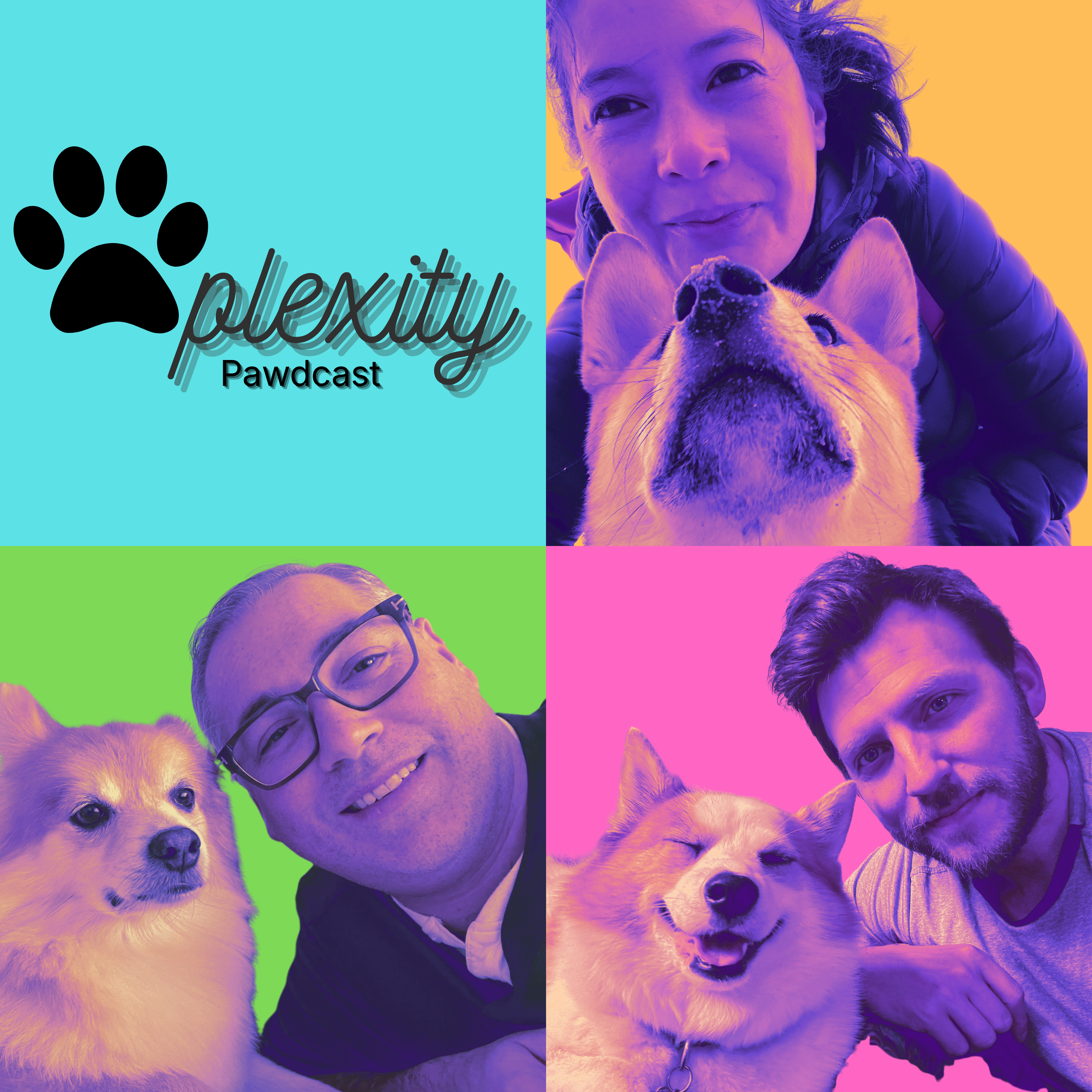
Pawplexity is a podcast about how living with dogs and cats keeps rewriting the way we live, the way we think, and the way we try to figure things out.I started this podcast because life with my dog is rarely just practical. It’s funny, chaotic, grounding, and often unexpectedly emotional. Loving a dog can stretch you and soften you. It can confront parts of you that have nothing to do with training and everything to do with relationship.Bruce and Ben join me in conversation as we talk about life with Makenzie, Bowie, Judge, and our wider pet family across Munich, Taormina, London, and Jersey. We talk about attachment. About absence and reunion. Or more simply: the small daily negotiations that shape a shared life with a pet.This isn’t a how-to podcast. It’s a space for conversation — one that acknowledges both the joy and the stress in what our pets teach us, and what they reveal about us. If you’ve ever had the sense that this bond is more layered than it firs
-
0
E8: When you have to correct your dog
Judge is stopped dead by a fart noise. Bowie begins his tiptoe across the room before anyone has said anything. Makenzie sits down on the pavement and refuses to move until she is asked rather than told. Correcting your dog looks very different depending on the dog, and none of it works quite the way you expect.In this episode, Annika, Bruce, and Ben sit with the moment of correction itself: not training methods or what is right or wrong, but the moment as it actually happens, what the dog does in it, and what we tell ourselves about it afterward.Bruce uses a fart noise. It stops Judge immediately, every time, and Bruce is completely unbothered about this. But Judge also once chewed a hole in the couch, covered the stuffing with his paw when Tatiana walked in, and scooted further over when she noticed something was wrong. She did not yet know anything had happened. He was not responding to her displeasure. He was getting ahead of it.Research on the guilty look, that particular combination of soft eyes and lowered head that makes you certain the lesson has landed, suggests it reflects the dog reading our emotional state rather than reflecting on what they did. Bruce disagrees, and he has the video. Both positions are in the room for the rest of the episode.The conversation moves through Bowie's tiptoe, Kenzie's thirty-second standoff on the pavement, the behaviours that get corrected over and over and keep coming back, what repair after a correction looks like, and who it is actually for. It also moves through a question that kept arriving the more they talked: what is the moment of correction actually doing, and what matters more than the correction itself?This is not advice about how to correct your dog. It is a conversation about what that moment exposes, in our dogs and in us.Find us on Instagram @pawplexitypodcast, on our webpage at www.pawplexity.dog, or wherever you listen.
-
-1
E7: Socialisation and the world our dogs grew up in
Judge grew up before the pandemic, in a house with a backyard in the United States, introduced to other dogs at parks and through a friend's Rottweiler named Trigger who showed him early where he stood. Bowie grew up during lockdown in Canada, going to the park every single day because the park was the only place anyone could go. Makenzie landed in London in September, afraid of the wind. Max is seven months old and already barking at everything outside, already learning from Judge that barking is what you do.In this episode, Annika, Bruce, and Ben talk about what it actually means to socialize a dog: not the checklist, not the 16-week window, and not whether your dog met enough puppies in class. Instead, they sit with a question that kept arriving once the recording started: are we socializing dogs for the life they are going to live? Or for the world we happen to be in at that moment?The conversation moves through three very different puppyhoods, through moves across countries and continents, through the specific adjustments each dog had to make when their world changed. Bruce talks about the moment Judge first had to poo on concrete. Ben talks about Bowie laying down the rules the instant he arrived at a house full of bigger dogs. Annika talks about the work she started about a year and a half ago with Makenzie, stepping between her and her triggers, and what Makenzie learned from that.The question underneath all of it: what does early socialization actually build? Not just familiarity with specific things, but something more portable. The kind of confidence that makes a new situation feel like a question rather than a threat.This is not advice about how to socialize your dog. It is a conversation about what that word means, and what we are actually hoping for when we use it.Find us on Instagram @pawplexitypodcast, on our webpage at www.pawplexity.dog, or wherever you listen.
-
-2
E6: Beyond the breed: the dog you actually live with
Judge is a Pomeranian. Bruce wanted a Rottweiler. Ben wanted a Husky and ended up with a Pomsky, which is close enough that he considers the matter settled. Annika never wanted a dog at all, then read everything there was to read about Shibas, decided they were genuinely not a good fit for a first-time owner, and got one anyway.In this episode, Annika, Bruce, and Ben sit with a question that kept surfacing once the recording started: who is the dog you actually live with? Not the breed description. Not the label on the tin. Not stubborn, or difficult, or easy, or typical. The specific animal who shows up in your kitchen in the morning, who has opinions about which treats are acceptable, who has developed a strategy for getting what they want from you that has nothing to do with any breed profile you have ever read.The conversation moves through what each of them originally thought they were getting, how that picture changed, and what replaced it. Bruce talks about Judge's relationship with larger dogs and with his own digestion. Ben talks about Bowie's particular gift for winding up other dogs without ever crossing a line. Annika talks about Makenzie at eleven months, making a beeline at the dog park for the biggest and most intimidating dogs available, and about the Great Dane no other dog would go near.There is a moment in the middle of the conversation where all three of them describe their dogs in terms of who those dogs are rather than what breed they belong to. The descriptions do not sound like any breed standard. They sound like people talking about someone they know well.The question underneath all of it: when we say "that's just how that breed is," what are we actually doing? And what do we miss when we stop there?This is not advice about how to read your dog. It is a conversation about what you find when you look past the breed and at the animal in front of you.Find us on Instagram @pawplexitypodcast, on our webpage at www.pawplexity.dog, or wherever you listen.
-
-3
E5: When your dog doesn't eat
We’re comfortable calling dogs individuals, until appetite hesitates. When a dog doesn’t eat, appetite suddenly becomes more than appetite. It becomes a signal. A measure of wellbeing and sometimes even a quiet measure of us.In this episode, we look at why eating isn’t consistent across dogs, how stress and context can shape hunger, and why “picky” is often the fastest explanation available. We talk about appetite as temperament, about presence at the bowl, and about how quickly feeding turns into something charged.Because food is one of the few places where care feels visible. When appetite pauses, that visibility fades and uncertainty moves in. An untouched bowl can shift the weight of an otherwise ordinary moment.
-
-4
E4: Leaving your dog alone
Leaving your dog alone is often treated as something simple: a life skill they have to learn, a routine part of everyday care. And yet, the moment of closing the door rarely feels simple.In this episode, we talk about the seconds before departure, the quiet shift in the room, and what lingers once you are gone. The anticipation before departure. The guilt and projection that can follow once you are out. The behaviour we monitor, interpret, and sometimes misunderstand when we come back.We reflect on attachment, training, routine, and the difference between visible quiet and genuine coping. What looks settled is not always the same as what is felt.
-
-5
E3: We are going to the vet
We do not usually think we need to prepare for a vet visit. It is part of responsible care. Routine. Expected.What often catches us off guard is everything that sits around it.In this episode, we talk about what does not fit into the word “routine”: the hesitation before the door, the shift in behaviour in the waiting room, the moment on the exam table when your dog is no longer participating but enduring. Because a clinic is not just a medical space. It is an environment shaped by memory, handling, and loss of control.Over time, dogs learn these spaces. Restraint, repetition, and predictability begin to shape how they respond. This is not a critique of veterinary care. It is a conversation about what these moments ask of our dogs — and of us.
-
-6
E2: The instructions we leave for our pet sitters
This one is about the lists: the notes we leave for our pet sitters, the carefully written routines, the extra paragraph we add just before we close the document.What starts as logistics often becomes something else: a way of managing the discomfort of leaving. A quiet attempt to transfer not just instructions, but the relationship itself.Care, control, daycare, and cultural expectations begin to sit underneath what looks like a simple handover.This isn’t advice about finding the perfect sitter. It’s a conversation about what leaving exposes — in our dogs, and in ourselves.Attachment, cortisol, and emotional expression sit quietly in the background, shaping why these notes often grow beyond practicality and what writing them does for us.
-
-7
E1: Our truth about puppyhood
*New episode every other Wednesday at 2:00pm CET*We thought we were ready.We had the books, the schedules, and the structure. What we did not expect was how destabilising puppyhood could feel, especially when everything on the surface looked easy.In this episode, we talk about the parts that did not match that picture: sleep deprivation, evening unraveling, mistaking quiet for calm, and the pressure to get things right from the beginning.Because puppies do not arrive as blank pages. They arrive with temperament, sensitivity, and their own way of meeting the world.This is not advice. It is a conversation about what puppyhood revealed — about our dogs, and about us.
We're indexing this podcast's transcripts for the first time — this can take a minute or two. We'll show results as soon as they're ready.
No matches for "" in this podcast's transcripts.
No topics indexed yet for this podcast.
Loading reviews...
ABOUT THIS SHOW
Pawplexity is a podcast about how living with dogs and cats keeps rewriting the way we live, the way we think, and the way we try to figure things out.I started this podcast because life with my dog is rarely just practical. It’s funny, chaotic, grounding, and often unexpectedly emotional. Loving a dog can stretch you and soften you. It can confront parts of you that have nothing to do with training and everything to do with relationship.Bruce and Ben join me in conversation as we talk about life with Makenzie, Bowie, Judge, and our wider pet family across Munich, Taormina, London, and Jersey. We talk about attachment. About absence and reunion. Or more simply: the small daily negotiations that shape a shared life with a pet.This isn’t a how-to podcast. It’s a space for conversation — one that acknowledges both the joy and the stress in what our pets teach us, and what they reveal about us. If you’ve ever had the sense that this bond is more layered than it firs
HOSTED BY
Annika Tringali
Loading similar podcasts...
Frequently Asked Questions
How many episodes does Pawplexity Pawdcast have?
Pawplexity Pawdcast currently has 8 episodes available on PodParley. New episodes are automatically indexed when they're published to the podcast feed.
What is Pawplexity Pawdcast about?
Pawplexity is a podcast about how living with dogs and cats keeps rewriting the way we live, the way we think, and the way we try to figure things out.I started this podcast because life with my dog is rarely just practical. It’s funny, chaotic, grounding, and often unexpectedly emotional. Loving a...
How often does Pawplexity Pawdcast release new episodes?
Pawplexity Pawdcast has 8 episodes. Check the episode list to see recent publication dates and frequency.
Where can I listen to Pawplexity Pawdcast?
You can listen to Pawplexity Pawdcast on PodParley by clicking any episode. We provide an embedded audio player for direct listening, and you can also subscribe via your preferred podcast app using the RSS feed.
Who hosts Pawplexity Pawdcast?
Pawplexity Pawdcast is created and hosted by Annika Tringali.
URL copied to clipboard!