
PODCAST · history
Perspectives on America's Wars
by Kieran Griss
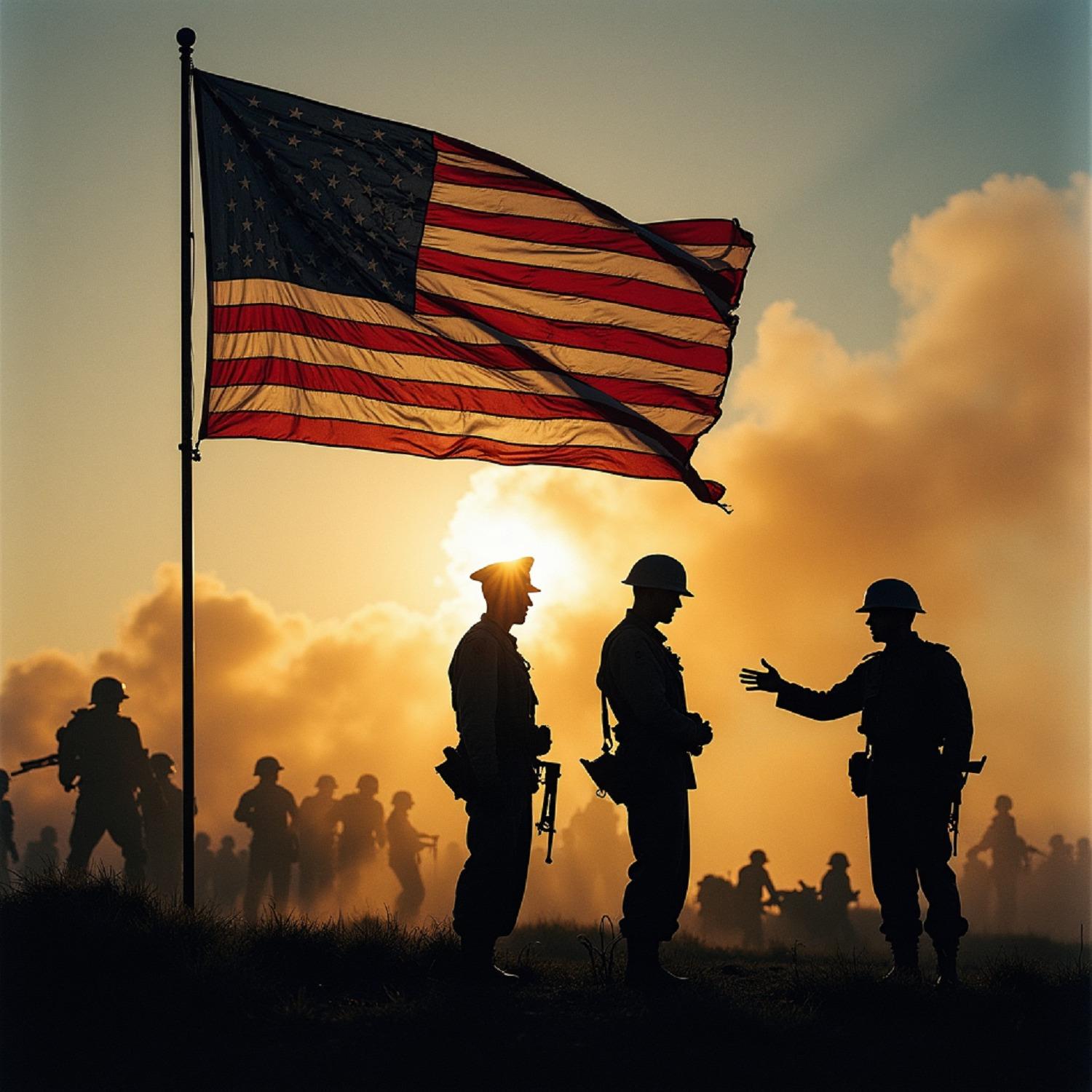
This podcast explores America's wars through the eyes of military experts and ordinary citizens. From the Revolutionary War to modern conflicts, each episode uncovers the strategic, political, and personal perspectives that shaped these wars. Hear from historians, veterans, and civilians as we analyze the motivations, consequences, and lessons learned from each conflict.
-
23
America’s Endless Military Budget – Security or Dependency
Episode 32 examines the enormous American military budget and the political, economic, and social system built around it. It explores the rise of the military-industrial complex, the influence of defense contractors and lobbyists, the revolving door between government and private industry, and the dependence of local communities on military jobs and contracts. The episode also considers the legitimate need for defense spending in a world of nuclear threats, cyberattacks, terrorism, and growing competition with China. Ultimately, it asks whether America’s military budget primarily protects the nation—or whether powerful institutions, industries, and political interests have become dependent on its continued expansion.
-
22
The Veteran Crisis – What Happens After the War Ends
Episode 31 explores the hidden human cost that continues long after soldiers return from the battlefield. It examines PTSD, moral injury, addiction, homelessness, unemployment, family strain, and the difficult transition from structured military life to civilian society. The episode also shows how veterans may carry invisible wounds even when they appear physically unharmed, while their families often share the burden of reintegration. Ultimately, it argues that honoring veterans requires more than ceremonies and expressions of gratitude—it demands lasting support, accessible treatment, stable housing, meaningful employment, and a national commitment that continues long after the war disappears from public attention.
-
21
Information Warfare – Winning Minds Instead of Territory
Episode 30 explores the rise of information warfare and how modern conflicts are increasingly fought by shaping perceptions rather than capturing territory. The episode examines the use of propaganda, social media manipulation, disinformation campaigns, psychological operations, and AI-generated deepfakes as tools for influencing public opinion and weakening adversaries. It also discusses how governments use digital platforms to spread narratives, undermine trust, and gain strategic advantages without direct military confrontation. As artificial intelligence and online communication continue to evolve, the episode asks whether controlling information—and ultimately influencing how people think—has become one of the most powerful weapons in modern warfare
-
20
Private Armies – The Rise of Modern Mercenaries
Episode 29 explores the growing role of Private Military Companies (PMCs) and how governments increasingly rely on private contractors to support military operations. The episode examines America's extensive use of contractors during the wars in Iraq and Afghanistan, the rise of armed security firms, and the emergence of organizations such as Russia's Wagner Group that blur the line between state and private military power. It also discusses the advantages and controversies of outsourcing warfare, including questions of accountability, legal responsibility, profit motives, and public oversight. Ultimately, the episode explores how modern conflict is no longer fought solely by national armies, but by an expanding network of governments, private companies, intelligence agencies, and specialized contractors that are reshaping the future of war.
-
19
The Proxy War Era – Fighting Without Direct Conflict
Episode 28 examines the rise of proxy warfare as a defining feature of modern international conflict. Instead of engaging in direct military confrontation, major powers increasingly support allies, partner forces, and local actors through weapons, funding, intelligence, training, and diplomatic backing. The episode explores how conflicts such as the war in Ukraine and various struggles across the Middle East have become arenas for larger geopolitical competition, allowing powerful nations to pursue strategic goals while avoiding direct war with one another. It also discusses covert operations, plausible deniability, information warfare, and the risks of escalation that accompany indirect involvement. Ultimately, the episode shows how proxy wars have become one of the primary ways nations compete in the twenty-first century, shaping global politics while blurring the line between war and peace.
-
18
Economic Warfare – Sanctions, Currency, and Global Pressure
Episode 27 explores how economic power has become a modern weapon of war. Instead of relying solely on armies and military force, nations increasingly use sanctions, trade restrictions, financial pressure, and currency dominance to influence rivals and achieve strategic goals. The episode examines the role of the U.S. dollar in global finance, the use of sanctions against countries such as Iran and Russia, the growing economic competition between the United States and China, and the rise of cyber threats targeting financial systems. It also explores the ethical and political challenges of economic warfare, asking whether financial pressure can truly serve as a peaceful alternative to military conflict. Ultimately, the episode shows how, in the twenty-first century, some of the most important battles are fought not on traditional battlefields, but through markets, banks, trade networks, and global economic systems.
-
17
Space Warfare – The Militarization of Orbit
Episode 26 explores the growing militarization of space and how orbit has become a critical domain of modern warfare. The episode examines the military importance of satellites for communication, navigation, intelligence gathering, and missile guidance, as well as the development of anti-satellite weapons designed to disable or destroy these vital systems. It also looks at the creation of the United States Space Force, the strategic competition between the United States, China, and Russia, and the risks posed by orbital debris and future conflicts in space. As humanity becomes increasingly dependent on space-based infrastructure, the episode asks whether outer space can remain a realm of cooperation—or whether it will become the next battlefield in the struggle for global power.
-
16
America and China – The Cold War of the 21st Century
Episode 25 explores the growing rivalry between the United States and China and why many experts describe it as the “Cold War of the 21st Century.” The episode examines the trade war, competition over advanced technology and semiconductors, military expansion in the Pacific, cyber warfare, and rising tensions surrounding Taiwan. It also explores how both nations are competing not only economically and militarily, but also for global influence and leadership over the future international order. Unlike the original Cold War, however, America and China remain deeply economically connected, making the rivalry both more complex and potentially more dangerous. The episode asks whether this competition can remain controlled—or whether it could eventually lead to a global conflict that reshapes the modern world.
-
15
The Age of AI Warfare – When Machines Choose Targets
Episode 24 explores the rise of AI warfare and how artificial intelligence is transforming the future of combat. The episode examines autonomous drones, machine-driven targeting systems, cyber warfare, and the growing fear that future battlefields may operate faster than humans can control. It also explores the ethical dilemmas surrounding AI weapons, including accountability, civilian casualties, and the possibility of machines making life-and-death decisions without human emotion or moral judgment. As the United States, China, and other global powers race to dominate military AI technology, the episode asks a chilling question: what happens when humans are no longer the ones truly deciding how wars are fought?
-
14
The Burden of Power – America’s Role in a Fractured World
This episode reflects on how the United States evolved from a revolutionary republic to a global superpower, exploring the moral and strategic tension of its dominance. It examines how America’s interventions, alliances, and ideals have shaped — and strained — its identity. The narrative portrays power as both responsibility and curse, emphasizing that America’s greatest challenge is not to win wars, but to reconcile its might with its moral purpose.
-
13
The Cost of Victory – America’s Veterans and the Invisible Battles at Home
This episode focuses on the human aftermath of war — the struggles of American veterans returning home. It traces the evolution of veterans’ experiences from World War II to the modern conflicts in Iraq and Afghanistan, exploring PTSD, suicide, homelessness, and the ongoing fight for mental health and reintegration. It highlights both the failures of government support and the resilience of those who find new meaning after service, emphasizing that the cost of victory is not paid in battle, but in the years that follow.
-
12
Can War Ever End – The Ethics and Future of American Power
This episode reflects on whether war can truly end or if it merely transforms with technology and ideology. It explores America’s evolving role as both global leader and perpetual combatant, highlighting how warfare has shifted from physical to digital and moral dimensions. The narrative examines autonomous weapons, the economics of conflict, and the human cost of endless war, concluding that true peace can only emerge from empathy, justice, and moral courage — not from dominance or deterrence.
-
11
Cyber War, Disinformation, and the New Battles of the 21st Century
This episode explores how modern warfare has shifted into cyberspace and online influence. Instead of tanks and bombs, nations now use hackers, ransomware, propaganda, and social media manipulation to attack rivals. Cyber weapons like Stuxnet, election interference, and data theft highlight a new kind of conflict where everyone — even ordinary citizens — can be targets or unwilling participants. The episode frames cyber warfare as a battle not just for infrastructure, but for trust and truth.
-
10
The War on Terror – Drones, Shadows, and Special Operations
This episode explains how modern warfare shifted after 9/11 from large-scale invasions to targeted operations using drones, special forces, and intelligence networks. Drone strikes and covert missions allowed the U.S. to fight terrorism globally without traditional battlefields — but raised moral, legal, and strategic questions. The War on Terror became a war without borders, fought in secrecy and silence, where victory became impossible to clearly define.
-
9
The Iraq War – Withdrawal and the Rise of ISIS
This episode explores the U.S. withdrawal from Iraq in 2011, the fragility of the Iraqi government, and the sectarian divisions that paved the way for ISIS. After the U.S. left, Iraq spiraled into instability, and by 2014, ISIS captured vast territory, declaring a “caliphate.”The U.S. was forced to return with airstrikes and advisors, fighting a new war without large ground forces. The episode highlights the human cost of withdrawal and the enduring challenge of building peace after military victory.
-
8
The Iraq War – Insurgency, Sectarian Conflict, and the Rise of Chaos
This episode examines the post-invasion years of the Iraq War, when the collapse of Saddam’s regime gave way to insurgency, sectarian violence, and political instability.The insurgency used guerrilla tactics, while groups like Al-Qaeda in Iraq stoked sectarian conflict between Sunni and Shia communities. The U.S. faced growing casualties and scandals like Abu Ghraib, which eroded trust. By 2006, Iraq was consumed by civil war-level violence.The episode highlights how the invasion’s aftermath created instability that reshaped Iraq and laid the groundwork for the rise of ISIS.
-
7
The Iraq War – Justifications and Reality
This episode explores the start of the Iraq War in 2003—from the Bush administration’s claims about weapons of mass destruction to the swift U.S.-led invasion that toppled Saddam Hussein.Though the military campaign was quick, the aftermath was chaotic. Looting, disbanded institutions, and poor planning fueled instability. An insurgency soon emerged, while the failure to find WMDs undermined the war’s legitimacy.The episode ends by showing how a war launched with confidence became the start of a long, complex conflict that would reshape Iraq and U.S. foreign policy.
-
6
Afghanistan – Withdrawal, Collapse, and the End of America’s Longest War
This episode examines the final years of the Afghanistan War, including Obama’s surge and drawdown, the 2020 Doha Agreement, and the Biden administration’s withdrawal in 2021.The rapid collapse of the Afghan government, the chaotic fall of Kabul, and the deadly airport evacuation marked a bitter end. The war left over 2,400 Americans and 170,000 Afghans dead, millions displaced, and the Taliban restored to power.The episode reflects on the war’s consequences: the limits of nation-building, the fragility of imposed democracies, and the enduring human cost of America’s longest war.
-
5
The War in Afghanistan – The Longest War
This episode explores the origins and early years of the War in Afghanistan, beginning after 9/11 when the U.S. invaded to topple the Taliban and destroy Al-Qaeda. Initial victories gave way to a long insurgency, complicated by Afghanistan’s geography, tribal politics, and the Taliban’s resilience.Efforts at nation-building faced corruption and mistrust, while the U.S. shift of focus to Iraq weakened the mission. By the late 2000s, the war had become prolonged, costly, and uncertain—marking the beginning of America’s longest war.
-
4
The Gulf War – America’s High-Tech Victory
This episode examines the Gulf War (1990–1991), sparked by Iraq’s invasion of Kuwait. The U.S. led a historic international coalition under the U.N., launching Operation Desert Storm, a high-tech campaign of airstrikes and a swift ground assault that liberated Kuwait in just over six weeks.While hailed as a decisive victory, the war raised questions about civilian casualties, the decision to leave Saddam Hussein in power, and the long-term U.S. presence in the Middle East. The Gulf War marked the beginning of America’s high-tech, post–Cold War military dominance, but also planted seeds of future conflict.
-
3
Vietnam – Exit, Collapse, and Consequences
This episode covers the final years of the Vietnam War, from Nixon’s Vietnamization strategy to the Paris Peace Accords and the complete U.S. withdrawal in 1973.Without U.S. support, South Vietnam collapsed under a North Vietnamese offensive, culminating in the Fall of Saigon on April 30, 1975. The war left profound consequences: millions dead in Vietnam, 58,000 Americans killed, a crisis of trust in U.S. government, and a deep reluctance to enter future wars without clear goals.The episode reflects on the war’s enduring legacy as a cautionary tale about the limits of military power.
-
2
Vietnam – America’s Longest War Begins
This episode explores the early years of the Vietnam War, from the roots of colonial conflict to America’s full-scale military involvement. After the Gulf of Tonkin Resolution (1964), U.S. combat troops were deployed, fighting a guerrilla enemy in brutal conditions.Despite overwhelming military power, the U.S. struggled to win both the battlefield and the support of the Vietnamese people. At home, televised images of destruction and death fueled a growing anti-war movement, especially after the Tet Offensive in 1968.By the decade’s end, the war had deeply divided American society, shattered public trust, and become a symbol of disillusionment.
-
1
The Korean War – The Forgotten Conflict
This episode explores the Korean War (1950–1953), where the U.S. led a United Nations force to defend South Korea from a North Korean invasion. After a dramatic turnaround with the Inchon Landing, the war escalated when China intervened, leading to a bloody stalemate near the 38th parallel.Despite massive casualties and destruction, the war ended in armistice, not peace, and left the Korean Peninsula divided to this day. The war marked America’s first Cold War military intervention, setting the tone for future conflicts—and earning the painful nickname: “The Forgotten War.”
-
0
The Cold War Begins – Wars Without Battlefields
This episode explores the early Cold War, a global power struggle between the U.S. and the Soviet Union. Although they never fought directly, they engaged in proxy wars, nuclear arms races, cultural battles, and ideological campaigns across the world.From the Truman Doctrine and McCarthyism, to Sputnik and CIA coups, the Cold War reshaped American policy and identity. It was a war fought with ideas, fear, and indirect violence—one that continues to influence geopolitics today.
-
-1
World War II – The Arsenal of Democracy
This episode explores America’s role in World War II, from its entry after the attack on Pearl Harbor to its emergence as a world superpower. The U.S. mobilized its economy and people, fought brutal battles across Europe and the Pacific, and used the atomic bomb to end the conflict.We examine the war’s impact on soldiers, civilians, minorities, and women, and the global legacy it left behind—from the United Nations to the Cold War, from Holocaust memory to nuclear power. World War II was both a victory and a transformation.
-
-2
World War I – The Reluctant Superpower
This episode explores how the U.S. was drawn into World War I after years of neutrality, motivated by German submarine attacks and the Zimmermann Telegram. President Wilson framed the war as a fight to "make the world safe for democracy."American troops played a crucial role in the final year of the war, but the peace that followed—the Treaty of Versailles—sowed seeds for future conflict. The episode highlights America’s rise to global influence, the internal changes the war triggered, and the beginning of its complex role as a world power.
-
-3
The Spanish-American War – America Steps Onto the World Stage
This episode explores the short but pivotal Spanish-American War of 1898, when the U.S. declared war on Spain—officially to free Cuba, but also to assert global power. The war resulted in U.S. control over Puerto Rico, Guam, and the Philippines, marking America’s emergence as an imperial power.Through expert commentary and personal accounts, the episode highlights the tension between America’s ideals and its actions, as well as the war’s lasting impact on U.S. foreign policy and identity.
-
-4
The American Civil War – A Nation Divided
This episode explores the causes, battles, and aftermath of the American Civil War (1861–1865)—the deadliest conflict in U.S. history. Sparked by the deep divide over slavery and states’ rights, the war erupted when Southern states seceded after Abraham Lincoln’s election. It became a brutal, four-year struggle between the Union and the Confederacy.We examine major battles, the Emancipation Proclamation, and the role of Black soldiers in shaping the war’s moral direction. The episode also delves into Confederate ideology, the post-war Reconstruction era, and the war’s enduring legacy. Through expert insights and firsthand accounts, this chapter reveals how the Civil War reshaped the meaning of freedom, unity, and American identity.
-
-5
The Mexican-American War – A War of Expansion or Aggression?
This episode explores the causes, course, and consequences of the Mexican-American War (1846–1848), one of the most controversial conflicts in U.S. history. Fueled by the belief in Manifest Destiny, the U.S. invaded Mexico after a border dispute, leading to fierce battles and the occupation of Mexico City.While the U.S. emerged victorious and gained vast territories through the Treaty of Guadalupe Hidalgo, the war sparked internal division, intensified the slavery debate, and left a lasting scar on Mexico. Voices from both soldiers and civilians reveal a deeper moral complexity, raising questions about national ambition and the price of expansion.
-
-6
The War of 1812 – America’s Forgotten War
This episode explores the causes, events, and legacy of the War of 1812—often called America’s “forgotten war.” Sparked by British interference with American trade and the impressment of sailors, the U.S. declared war to defend its sovereignty and national pride.Early military efforts were disastrous, with failed invasions of Canada and the burning of Washington, D.C.Despite setbacks, naval victories and the Battle of New Orleans helped restore American morale.The Treaty of Ghent ended the war without major changes, but it gave Americans a renewed sense of national identity.The war marked the decline of Native American resistance, the rise of American manufacturing, and launched figures like Andrew Jackson to national prominence.Though the war ended in a stalemate, it helped solidify the United States' standing as an independent nation ready to defend itself on the global stage.
-
-7
The Aftermath of Revolution – Building a Nation
After winning independence, the young United States faced economic collapse, political division, and external threats. This episode explores the fragile post-war years, covering key events such as Shays’ Rebellion (1786), the Constitutional Convention (1787), and the formation of the U.S. military.The Weakness of the Articles of Confederation left the government unable to enforce laws or raise funds, leading to unrest.Federalists vs. Anti-Federalists debated the role of central government, resulting in the U.S. Constitution and Bill of Rights.External threats from Britain, Spain, and Native American resistance forced the U.S. to build a standing army and navy.George Washington’s leadership stabilized the nation through economic reforms, military action, and neutrality in foreign conflicts.
-
-8
The Revolutionary War - A Fight for Independence
This episode explores the American Revolutionary War, covering its causes, key battles, strategies, and lasting impact. It examines the colonies' growing resistance to British rule, the outbreak of war at Lexington and Concord (1775), and crucial turning points like the Siege of Boston and Valley Forge. The episode also highlights the ideological struggle for freedom, personal stories of those affected, and the war’s legacy in shaping American democracy. It ends by setting the stage for the challenges faced by the newly independent United States.
We're indexing this podcast's transcripts for the first time — this can take a minute or two. We'll show results as soon as they're ready.
No matches for "" in this podcast's transcripts.
No topics indexed yet for this podcast.
Loading reviews...
ABOUT THIS SHOW
This podcast explores America's wars through the eyes of military experts and ordinary citizens. From the Revolutionary War to modern conflicts, each episode uncovers the strategic, political, and personal perspectives that shaped these wars. Hear from historians, veterans, and civilians as we analyze the motivations, consequences, and lessons learned from each conflict.
HOSTED BY
Kieran Griss
CATEGORIES
Loading similar podcasts...
Frequently Asked Questions
How many episodes does Perspectives on America's Wars have?
Perspectives on America's Wars currently has 32 episodes available on PodParley. New episodes are automatically indexed when they're published to the podcast feed.
What is Perspectives on America's Wars about?
This podcast explores America's wars through the eyes of military experts and ordinary citizens. From the Revolutionary War to modern conflicts, each episode uncovers the strategic, political, and personal perspectives that shaped these wars. Hear from historians, veterans, and civilians as we...
How often does Perspectives on America's Wars release new episodes?
Perspectives on America's Wars has 32 episodes. Check the episode list to see recent publication dates and frequency.
Where can I listen to Perspectives on America's Wars?
You can listen to Perspectives on America's Wars on PodParley by clicking any episode. We provide an embedded audio player for direct listening, and you can also subscribe via your preferred podcast app using the RSS feed.
Who hosts Perspectives on America's Wars?
Perspectives on America's Wars is created and hosted by Kieran Griss.
URL copied to clipboard!