
PODCAST · education
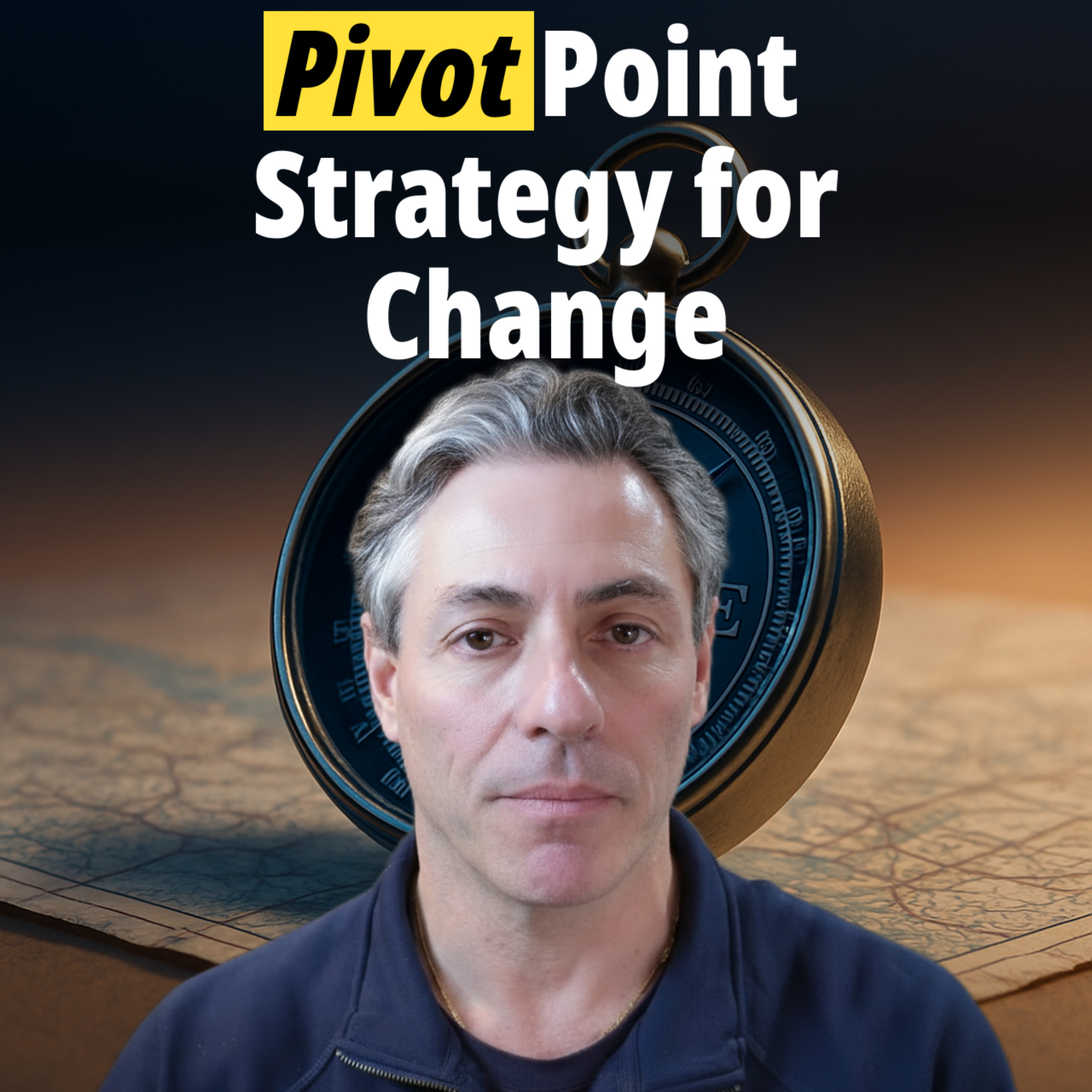
Pivot Point - Strategy for Change with Nik Michael
by Nik Michael
Pivot Point explores the critical moments where transformation begins—when fear meets courage and decisions reshape lives. Hosted by Nik Michael, a clinician with 30+ years in counseling and decades in business, education, investing, and entrepreneurship, each episode examines how people navigate emotional pressure, uncertainty, and risk. Through in-depth interviews across personal growth, business, finance, health, recovery, trauma, and parenting, we focus on the pivot point itself: the internal conflict, resistance, and courage that precede meaningful change.
-
69
Kim Costa: The Beautiful Life That No Longer Fit
Kim Costa built a life that looked exactly right — and then had to admit it wasn't hers. In this episode, she shares how a quiet internal discomfort, ignored for years, became the signal that changed everything.Kim is the creator of the Wheelhouse Method, an author, speaker, and top-performing realtor serving North America. Her framework treats your life like a house: four foundational pillars, eight areas of alignment, and the honest question of whether the space you're living in — literally and figuratively — still fits who you are.We talk about twenty-seven years in a career she was competent at but never built for. A broken back that forced her still long enough to start writing again. A decision to walk away from an Oprah opportunity because she couldn't stand in front of an audience and claim a life she hadn't actually chosen. And the fifteen years of real, unglamorous, one-step-at-a-time movement it took to get to the other side.What surprised her most after the pivot wasn't income or recognition. It was joy. Not the performed kind — the accessed kind. The feeling of doing work that draws on what you actually are.If there's a flat tire you've been driving on, this conversation is worth your time.Pivot Point: Strategy for Change with Nik Michael
-
68
Reframing Loss to Transformation - Kim Costa
What if the discomfort you feel isn't dissatisfaction, but a signal that you've outgrown your current life? In this inspiring conversation, Kim Costa shares how a quiet realization in her 50s led her to reinvent her life, redefine success, and create a path rooted in authenticity.Through her personal journey and the development of the Wheelhouse Method, Kim explains how our environments often reflect our inner lives—and how small changes can create powerful shifts in clarity, purpose, and well-being. This episode explores the courage to listen to what no longer fits, embrace change before crisis forces it, and build a life aligned with who you are becoming.If you're feeling stuck, questioning your next step, or seeking greater fulfillment, Kim's story offers practical wisdom and inspiration to help you find your own pivot point.https://lifestylefoundations.com/pivotpointnikmichael.comnikmichael.substack.com
-
67
The Caregiver’s Pivot: Love, Loss, and Letting Go
In this deeply personal and emotional episode of Pivot Point: Strategy for Change, Yvonne Manning shares her experience as primary caregiver for her mother through the progression of Alzheimer’s and dementia. This conversation is not about business, success, or external achievement — it is about the quiet internal pivot that happens when life calls you to care for someone you love while navigating grief, fear, uncertainty, and profound emotional change.Yvonne speaks openly about the weight of caregiving, the gradual losses that come long before goodbye, and the emotional complexity of watching a parent slowly change. Together, we explore what it means to surrender without giving up, ask for help without losing yourself, and continue moving forward while holding both fear and faith at the same time.This episode is a powerful reflection on resilience, presence, love, identity, and the hidden strength that emerges during life’s most difficult seasons. A moving conversation for anyone who has cared for a loved one, faced loss, or experienced a personal transformation that changed the way they see themselves and the world around them.pivotpointnikmichael.comnikmichael.substack.com
-
66
Diffuse Guilt: When Everything Feels Like Your Fault
In this episode of Pivot Point: Strategy for Change with Nik Michael, Nik explores the psychology of diffused guilt — the tendency to assume responsibility for other people’s emotions, discomfort, or reactions even when they may not belong to you.Through relatable examples drawn from relationships, work, parenting, caregiving, and everyday interactions, Nik examines how emotionally aware and responsible people often fall into patterns of over-apologizing, over-explaining, and carrying emotional burdens that were never truly theirs to hold.Blending clinical insight, Gestalt therapy concepts, and real-life application, this episode focuses on the small internal moments that become pivot points: the pause between feeling discomfort and automatically assuming fault.This is a conversation about boundaries, self-awareness, emotional accuracy, and learning to ask one powerful question:“What is actually mine here?”pivotpointnikmichael.comnikmichael.substack.com
-
65
Neurotic Repetition - The Repeating Pivot You Don't Notice
What if the patterns you keep repeating aren't failures — they're unfinished business? You changed the job, the relationship, the environment, and somehow the same feeling found you again. In this episode of Pivot Point: Strategy for Change with Nik Michael, Nik draws on Gestalt therapy and over two decades of clinical work to explore why we keep arriving at the same emotional outcomes no matter how much we change the circumstances around us — and what it actually takes to interrupt a loop that has been running longer than you realize. If you've ever looked at your life and recognized the same shape showing up in different clothes, this one is for you. The pivot is closer than you think.https://nikmichael.substack.com/p/the-loop-you-keep-living-in-pivot?utm_source=youtube
-
64
From Actor to Authority: Why Connection Wins in a World Flooded with Content
In this episode of Pivot Point, Stacy Kessler reveals adifferent kind of pivot—one that doesn’t necessarily look like change from the outside, but transforms everything internally. After building the kind of career most people are stillworking toward—decades across Off-Broadway, network television, and major national campaigns including Capital One, Verizon, Lancôme, and Mercedes-Benz—Stacy had reached what many would call arrival. Stability.Direction. But as the industry began to shift in real time, the traditional pathways she had trained for started to narrow, while something else accelerated in the opposite direction.Content didn’t just grow—it flooded the landscape. And inthat flood, something became undeniable: there is no shortage of content, but there is a shortage of connection.Instead of reinventing herself, Stacy made a more precisemove. She translated her skills. What she had spent years developing—presence, emotional truth, and the ability to create genuine connection—became exactlywhat the moment demanded.This conversation explores the deeper structure of a pivot:the cognitive shift in how you understand your value, the emotional process of letting go of the identity you’ve outgrown, and the behavioral move of applyingyour skills in a new context.It’s not about becoming someone new.It’s about finally seeing clearly who you already are.What’s your pivot point?
-
63
Wake Up to Die Again - Scott Lackey's Pivot Point
In this episode, Scott Lackey explores the concept of “lightning strike moments”—those pivotal experiences that fundamentally alter the trajectory of your life and identity. Drawing from his book, The Power of Lightning Strike Moments, he explains how these events—whether driven by loss, disruption, or unexpected opportunity—create a clear divide between who you were and who you’re becoming.The conversation moves beyond theory and into the lived reality of change. Scott emphasizes that these moments aren’t just external events; they force an internal reckoning. They challenge assumptions, expose blind spots, and demand a level of self-confrontation that many people spend years avoiding. Whether it’s losing a job, facing personal adversity, or stepping into an unfamiliar role, the common thread is that you can’t return to your previous way of thinking or operating.A key theme throughout the episode is the idea that growth doesn’t come from the event itself, but from how you respond to it. Scott highlights the importance of awareness, ownership, and intentional action in navigating these turning points. Instead of resisting or minimizing the impact, he encourages leaning into the discomfort as a catalyst for transformation.Ultimately, the episode frames change not as something to manage, but as something to engage with directly. Lightning strike moments may feel disruptive or even destabilizing, but they also carry the potential to redefine purpose, strengthen resilience, and create a more aligned version of who you are moving forward.
-
62
5 Rules to a Lasting Pivot - Stephen Rodriguez
In this episode of Pivot Point Strategy for Change, Nik Michael and Stephen Rodriguez unpack what a true pivot point really looks like.This is not a story about career change. It’s a breakdown of the internal mechanics of transformation—the mindset shift that makes change inevitable.Stephen explains how his real pivot didn’t happen when he moved from piano tuning into tech, marketing, and business. It happened earlier, when he made a critical internal choice:That moment—the point where staying the same is no longeracceptable—is what defines a pivot.Together, they break down why disruption alone doesn’t create change, the difference between external moves and internal expansion, how an “expand or die” mindset shapes growth, and why so many people stay stuck in waiting instead of choosing. Stephen’s 5 Rules for Navigating a Pivot Stephen also shares his five rules for navigating a pivot: get back up no matter what, find peace in the pieces, expand or die, study the living, listen to the dead, and master causes to achieve effects. This episode captures the heart of the podcast—the moment when staying on the same path is no longer an option, and what it takes to truly change direction. This episode reflects the core of Pivot Point Strategy for Change: real transformation doesn’t start when circumstances shift—it starts when your thinking does.
-
61
How to Make the Pivot - Stephen Rodriguez
In this episode of Pivot Point Strategy for Change, Nik Michael sits down with Stephen Rodriguez toexplore what a true pivot point really is—and what it isn’t.This isn’t a conversation about changing careers. It’s adeep dive into the internal shift that makes real change inevitable. Stephen shares how his defining pivot didn’t happen when he left piano tuning or entered the world of tech, marketing, and business. It happened earlier, in themoment he moved from “I want something different” to “I choose to act now.” Together, they break down why disruption alone doesn’t create change, the difference between external moves and internal expansion, how an “expand or die” mindset shapes growth, and why so many people stay stuck in waiting instead of choosing. Stephen also shares his five rules for navigating a pivot: get back up no matter what, find peace in the pieces, expand or die, study the living, listen to the dead, and master causes to achieve effects. This episode captures the heart of the podcast—the moment when staying on the same path is no longer an option, and what it takes to truly change direction.
-
60
Toxic Workplace Pivot - Kim Steiner Fource Recruiting
Pivot Point Strategy for Change — Kim SteinerWhat if the life you spent your entire career building is the very thing breaking you?This conversation is about toxic leadership, the quiet courage it takes to choose yourself, and what I’ve learned sitting across from people who finally do.There are moments that rewrite us—but not the obvious ones.Not the dramatic turning points we point to later and say, “that’s when everything changed.” It’s the slower erosion. The Sunday night dread we learn to normalize. The tension in our shoulders we laugh off. The version of ourselves we barely recognize anymore.In my work, I’ve learned something unsettling: the most dangerous place to stay isn’t the job that’s hard or demanding. It’s the one that slowly convinces you the damage it’s doing is your fault.That’s the real story beneath my conversation with Kim Steiner.On paper, Kim had the career many people chase—big-name brands, senior roles, a steady climb through media sales into a position most would call success. Number two to the president. Access. Travel. Status. The kind of role that makes people nod when you tell them what you do.But we didn’t spend much time on how she got there.We talked about what happened when she arrived—and realized the room she had worked so hard to enter was quietly dismantling her from the inside.She wasn’t naive. She knew the culture was complicated. She knew leadership came with a reputation. And still, she took the job—for reasons most of us understand: the prestige, the trajectory, the identity of who she believed she was supposed to become.And when the reality didn’t match the promise, she didn’t question the system.She questioned herself.That’s what makes an environment truly toxic. It doesn’t just wear you down—it rewires the story you tell yourself, until every signal that something is off becomes evidence that you are.In Kim’s case, the misalignment showed up in ways that were easy to dismiss at first.A leader who delegated the hardest decisions but kept the credit.Requests that pushed against her integrity, framed as “just how things are done.”A culture where power moved freely—but accountability didn’t.
-
59
Reframe Your Failure - Executive Coach Jen Coken's Perspective
High performers know this feeling: the results are solid, the success is real — but right at the edge of something bigger, something inside hesitates.Most people call it imposter syndrome. Jen Coken calls it what it actually is — a protection pattern.An executive coach, speaker, and author, Jen works with high-achieving leaders — especially women in STEM — to uncover the strategies they built earlier in life that once helped them succeed, but now quietly hold them back.In this episode, she breaks down how to identify those patterns, understand where they come from, and lead with them instead of against them.If you’ve ever found it easier to support someone else’s vision than your own, this conversation will resonate.Listen to Pivot Point: Strategy for Change with Nik Michael to rethink imposter syndrome — not as a flaw, but as a strategy ready to be understood.
-
58
The Velvet Sledgehammer: Jen Coken on Reframing Imposter Syndrome
In this episode of Pivot Point: Strategy for Change with Nik Michael, executive leadership coach Jen Coken reframes what most people call imposter syndrome into something far more useful — a protection pattern.High performers know that quiet hesitation that shows up right at the edge of something bigger — more visibility, more impact, more responsibility. The results are there. The success looks solid. Yet something inside pulls back. Jen explains why that instinct isn’t a flaw, but a strategy built by a younger version of yourself that once made perfect sense.Known as a velvet sledgehammer for her mix of warmth, humor, and precision, Jen shares how to recognize and lead alongside that protective pattern instead of fighting it. She has an uncanny ability to read a room, pinpoint what truly matters, and deliver just the right blend of compassion and no-nonsense clarity to wake people up.If you’ve ever found yourself championing someone else’s vision more easily than your own, this conversation will hit home — and open up a different way of seeing growth.
-
57
The Panic Caused Pivot - Don Munro
Pivot Point Strategy for Change — In this powerful episode, we explore how a sudden panic attack in a supermarket became the moment that unraveled Don’s carefully constructed life, exposing years of inherited narratives and suppressed truths.What followed was a profound transformation. Don takes us from a place of fear, hiding, and rejection to stepping fully into the spotlight as an actor, singer, and unapologetically authentic man.Along the way, he reveals the subtle but pivotal shifts that helped him reclaim his voice — embracing inner acceptance, reconnecting with spirituality on his own terms, and finding support through therapy and community. We break down what it really takes to move through a pivot point, whether it arrives as a crisis or a quiet inner nudge you can no longer ignore.Don’s story offers practical insight into letting go of inherited shame, listening to your body’s signals, and redefining what it means to live truthfully. This is more than a story of personal growth — it’s a reminder that self-revelation is often the gateway to freedom.If you’re at a crossroads, questioning your identity, or searching for the courage to be fully seen, this episode meets you there. It’s honest, grounded, and deeply human.Don Monroe is an actor, singer, and advocate whose journey from anxiety and suppression to confidence and self-acceptance now serves as a guiding light for others.Your pivot point isn’t as far away as it feels. It may already be here.
-
56
Unleash Your Inner Author - Amy Collette
On this episode of Pivot Point Strategy for Change, I sit down with Amy Collette, and what unfolds is much more than a conversation about writing a book. It becomes a deeperexploration of identity, fear, and what really happens when we allow ourselves to be seen. One of the most powerfuldistinctions Amy brings forward is the difference between being a “writer” and becoming an “author.” And I found myself really leaning into that during our conversation. A writer can stay in the space of thinking, drafting, and revisiting ideas over and over again. But an author makes a decision. An author steps into ownership. They claim their voice and recognize that their story—when it’scurated with intention—can actually serve someone else.As we spoke, I kept coming back to the type of person I see so often. The overthinker. The person with high standards, strong attention to detail, and a constant internal dialoguethat says, “Don’t leave anything out. Get it right.” And what happens is, when that person is working in isolation, they get stuck. Not because they’re not capable, but because they’re trying to make something perfect before it everhas a chance to exist. That’s where Amy’s workreally stands out. She doesn’t push people to tell everything. She guides them to focus on what matters. What’s meaningful. What will actually connect. And in that shift, something opens up. The pressure starts to release, and the process begins to flow. What also stood out to me washow much this conversation goes beyond writing. It’s really about what it feels like to be stuck in any area of life. Amy shared her own experience of being in a place where she couldn’t see a way forward, where even imagining something better felt out of reach. And I think that’s something a lot of people can relate to. But what she discovered—and what I think is so important—is that change didn’t come all at once. It came through small, consistent shifts. A gratitude practice. A different perspective. Just enough movement to begin creating space where there oncewasn’t any.And I found myself reflecting on this idea that personal growth isn’t something you arrive at. It’s somethingyou commit to. Daily. It’s a relationship with yourself that continues to evolve. If there’s one thing I hopeyou take from this episode, it’s this: the distance between where you are and where you want to be is often not about ability. It’s about permission. Permission to start before you feel ready. Permission to ask for help sooner. Permission to believe that something more is possible, even if you can’t fully see it yet.So if you’ve been feeling that pull—that sense that there’s something inside of you waiting to come forward—I hope this conversation gives you a way to think about it differently. Because the pivot point isn’t always loud or dramatic. Sometimes it’s quiet. Sometimes it’s just a decision. The moment you stop waiting…and start becoming.
-
55
The Pivot You Don’t See Coming—Until You Do - Darren Meyers
In this conversation, Darren Myers brings us into the moment that question became unavoidable for him. He had done everything “right”—a respected physics teacher and college counselor, committed, accomplished, and deeply invested in his work. Yet beneath that, something wasn’t sitting right. The system he was part of no longer reflected his value, and over time, that disconnect began to cost him—not just professionally, but personally.What makes Darren’s story compelling isn’t a dramatic, impulsive exit. It’s the slow accumulation of awareness. The subtle erosion of confidence. The quiet, persistent voice that keeps asking you to pay attention. He walks us through what it feels like when discontent isn’t loud, but steady—and how, eventually, that steady pressure becomes a turning point you can’t ignore.We explore what it means to recognize when your role no longer aligns with who you are, and the internal honesty required to admit that to yourself. Darren speaks candidly about the tension between security and self-respect, and the internal negotiations that happen before any outward change is made. Leaving a stable, familiar environment isn’t just a professional decision—it’s an emotional one, layered with doubt, fear, and responsibility.What unfolds is his transition from being part of a traditional system to building something entirely his own: Myers Advising, a business grounded in his values, his voice, and his way of working with students and families. Not as a reaction, but as a deliberate act of alignment.This episode isn’t about chasing a different job. It’s about recognizing when the life you’ve built no longer fits—and having the courage to take that realization seriously. Darren’s journey offers something more grounded than motivation. It’s a reminder that meaningful change often begins quietly, internally, before it ever becomes visible to the outside world.If you’ve been feeling that quiet restlessness—if something in your current path feels just slightly off—this conversation meets you there. Not with urgency, but with clarity. Because sometimes the most important shift isn’t what you do next, but the moment you finally decide to trust what you already know.https://nikmichael.substack.com/p/the-pivot-you-dont-see-cominguntil?utm_source=youtube
-
54
Gordon Gooding - NO FEAR
This segment of Pivot Point Strategy For Change featuresa conversation between Nik Michael and Gordon Gooding, LCSW, focusing on the challenges and strategies for individuals seeking change but feeling paralyzedby fear. Nik inquires about counseling approaches for those longing for change, while Gordon shares insights from his experience with clients who feel stuck, despite being successful. He emphasizes the importance of focusing on what one can do rather than what they can't, and taking small, deliberate steps towards change. The discussion also touches on balancing personal and professionallife, mindfulness, and being present with family. Gordon reflects on his journey and the mindset shifts that have helped him navigate his roles and responsibilities.
-
53
Dr. Richard Lustberg on the Psychology of a Pivot
In this episode of Pivot Point: Strategy for Change, I sit down with Dr. Richard Lustberg—psychologist and strategic advisor to businesses and corporations—to explore why so many high performers stay stuck.In my experience, most people don’t plateau because they lack ability. They plateau because they avoid the uncomfortable truths sitting just beneath the surface. So I wanted to ask a better question: what if facing those hidden constraints is actually the key to real, lasting change?That’s exactly where this conversation goes.Dr. Lustberg works at the intersection of psychology and strategy, and what he makes clear is this—high achievers often unknowingly sabotage their own progress. Not because they’re incapable, but because they’re operating inside invisible scripts and stabilizing patterns that keep them circling the same problems.In this conversation, I unpack that with him.We talk about how to identify those hidden patterns, how to recognize the real barrier beneath the surface, and what it actually takes to move from insight into action.This isn’t surface-level advice. It’s a more honest look at change.If you’re at a career crossroads, feeling stuck in a pattern you can’t seem to break, or running into resistance every time you try to move forward—this episode is designed to challenge how you’re seeing the problem.Because once you see it clearly, you can finally do something about it.This is for high achievers who want results. For strategists, coaches, and anyone ready to get honest about what’s really holding them back.This is where change starts—with the right question.What’s your pivot point?
-
52
Embracing My Values - Kim's Compass
In the latest episode of Pivot Point Strategy for Change, wedive deep into the quiet moments that lead to pivotal shifts. It’s not always a loud, dramatic change; sometimes it’s a subtle tension that reveals our true selves. Kim Steiner, our guest and seasoned professional, shares her journey from media sales to recruiting. She reflects on the discomfort ofchasing external validation while feeling internally misaligned. The pivotal question: Will I stay where I am, or will Ipivot? ✨ Listen to her powerful story of transformation and what itmeans to choose a path that aligns with your true self.
-
51
Kim Steiner - Fource Recruiting - The Pivot that Changed Everything
In this episode of Pivot Point: Strategy for Change,I break down why the traditional playbook no longer works. Gen Z isn’t chasinglifelong careers. They’re prioritizing purpose, flexibility, and continuous growth—and that shift is reshaping how organizations need to think about hiring, leadership, and retention. This isn’t a trend. It’s a structural change.I walk through how Gen Z defines success differently—shorter-term, purpose-driven, and highly adaptable—and what that means for workplaces built on stability and long-term loyalty. We get into:• Why the “long game” mindset is losing relevance• How AI is increasing the value of soft skills and human adaptability• What effective leadership looks like in a remote-first world• How to attract and retain purpose-driven talent• The mindset shifts required to stay competitiveIf you’re leading a team, building a company, or trying tostay ahead of where work is going—this episode will challenge how you’rethinking.Because ignoring this shift isn’t neutral—it’s a liability.What’s your pivot point?
-
50
Gordon Gooding - Imposter Syndrome, Grit, and Growth - Gordon's Pivot Point
Gordon Gooding’s Pivot Point - Strategy For Change with Nik MichaelMost people underestimate the quiet power of pivotpoints—those subtle moments when stepping into more requires redefining yourlimits, not just your goals. In this episode of Pivot Point: Strategy for Change, I sit down with licensed clinician and founder of Gooding Wellness Group, Gordon Gooding, to explore how a 30-year career in school social work evolved into a thriving private and group practice—not by luck, butthrough deliberate choice, stamina, and unshakeable grit.If you’re feeling stuck in a role that no longer fits whoyou are becoming, this conversation offers a practical and emotional blueprint for transformation. Gordon and I unpack the internal shifts that matter most—overcoming self-doubt, navigating imposter syndrome, and learning to trustthat you can grow into the responsibilities you once felt unprepared to hold. You’ll hear how he moved from feeling like “just” a school clinician to leading with purpose as an entrepreneur, supervisor, and builder of a purpose-driventeam. We dive into the hidden frameworks that fuel realresilience: patience when progress feels slow, deliberate action when fear says stay small, and the discipline to honor your own timing instead of comparing your path to everyone else’s. Gordon’s story challenges the myth that successis a single breakthrough moment; instead, he shows how it’s built over years of incremental wins, humbling setbacks, and a willingness to keep going when no one is clapping.This episode is especially relevant for clinicians, educators, entrepreneurs, or anyone standing on the edge of a big change and wondering, “Am I really ready for this?” We talk about why ignoring the signs of growth—boredom, misalignment, quiet dissatisfaction—is risky, and how yourcapacity to adapt is one of your greatest assets in both work and life. If you’re tired of feeling trapped, underutilized, or convinced you need one more credential before you can take the next step, this conversation will help you turn doubt into data and hesitation into forward motion.Gordon Gooding brings nearly three decades of experiencein mental health and education, and his journey from traditional systems into a values‑driven group practice is a masterclass in intentional change. This isn’t just a story; it’s a call to action. If you’re ready to challenge limiting beliefs, expand what you believe is possible at your age or stage, and step into your next evolution with confidence, hit play. Your next chapter won’t write itself—but your pivot point can begin right here.
-
49
Erin Treacy | When the Pivot Isn't a Choice — It's a Collapse
On this episode of Pivot Point: Strategy for Change with me, Nik Michael, I sit down with Erin Treacy, an executive coach and former restaurant owner whose body finally forced a full stop after years of quiet burnout and over functioning. In our conversation, Erin and I explore what burnout feels like from the inside, how high-capacity professionals mistake crisis for competence, and the subtle ways the mind tells convincing stories that justify “just a little more” until something breaks.We talk about the day her leg went numb on the cook line, the medical reckoning that followed, and the quieter pivots that came after—redefining success on her own terms, loosening her grip on control, and learning to lead with capacity instead of collapse. Along the way, we dig into agency as responsiveness rather than control, limits as a form of intelligence, and the thin line between true discipline and self-erasing disconnection for high achievers.If you’ve ever kept everything running while quietly running on empty, this episode is an invitation to listen to what your body is trying to tell you before your system enforces a pause on your behalf.
-
48
Megan Magee - When Survival Isn’t the Finish Line
When Survival Isn’t the Finish Line: Megan Magee on Rebuilding After CancerIn this powerful episode of Pivot Point Strategy for Change, host Nik Michael sits down with Megan Magee — a registered nutrition and dietetic technician and certified mind–body eating coach — to explore what happens after the moment most people would call “success.” Megan shares her journey through a cervical cancer diagnosis, aggressive chemotherapy and radiation, and the full-body breakdown that followed long after she was declared “cancer-free.” She recounts the pivotal moment an oncologist told her, “Your symptoms bog me down,” and walked out of the room — a shocking dismissal that fractured her trust in the system and ultimately became the catalyst for her life’s work.Together, Nik and Megan unpack what it means to rebuild trust in a body that feels like a stranger, to grieve identities that no longer fit (including her 20-year commitment to vegetarianism), and to navigate the gap between survival and true restoration. Megan describes how she pulled together a healing team, bridged Western intervention with Eastern and holistic approaches, and slowly reclaimed her health, not just her diagnosis.This episode is for anyone who has ever been told they’re “fine” while knowing, deep down, that they are anything but. It’s a conversation about self-advocacy, deep listening, and the long game of healing in a culture that wants quick fixes. Most of all, it’s the story of a practitioner who turned her most painful experience into a mission: to ensure that no one she works with is ever treated as an inconvenience, or left alone in the aftermath of treatment, the way she once was.Listen in if you’re navigating chronic illness, post-treatment limbo, medical dismissal, or simply learning to trust your own body again — and stay to consider your own answer to the question at the heart of this show: What’s your pivot point?
-
47
Amy Collette - How Gratitude Made Me Wealthy
On Pivot Point: Strategy for Change, I recently sat down with Amy Collette to explore the moment that fundamentally altered the trajectory of her life and work. Amy, a book coach and founder of the Unleash Your Inner Author program, helps speakers, coaches, and entrepreneurs transform lived experience and hard-earned wisdom into meaningful nonfiction books. But in this conversation, we focused on the pivot point that preceded all of it—the internal shift that changed how she relates to fear, uncertainty, and possibility.Amy’s turning point began in crisis. After losing two major clients within weeks, she found herself in what she describes as a state of perpetual fight-or-flight—heart racing, unable to sleep, her thoughts spiraling toward worst-case scenarios. She feared losing her home, her stability, and everything she had built. For months, she tried to think her way out of the anxiety. Nothing worked—until a single realization broke through: the circumstances didn’t need to change first. Something within her did.That insight led her back to a practice from her teenage years rooted in the Jewish tradition of Hakarat HaTov—the discipline of giving thanks daily. But Amy approached gratitude differently. This was not a cognitive exercise or performative positivity. Twice a day, morning and evening, she placed her hands over her heart, slowed her breathing, and intentionally felt gratitude in her body. It became somatic, embodied, and deliberate.The results were measurable. Within days, her nervous system began to regulate—she slept better and experienced genuine moments of calm. Within a week, her energy shifted so noticeably that new clients began reaching out, opportunities surfaced, and strained relationships softened. What began as a survival strategy evolved into a daily spiritual discipline.Amy realized she wasn’t inherently anxious or “naturally grumpy.” Those were patterned responses—habits, not identity. And habits can be replaced. Gratitude redirected her attention from scarcity to abundance, from threat to possibility. Her internal transformation preceded—and actively generated—external change.This episode is a powerful reminder that gratitude is not vague optimism. It is a structured, embodied practice capable of shifting physiology, perspective, and ultimately, outcomes. Whether you are navigating a difficult season or considering writing a book of your own, this is a conversation about how one disciplined practice can become the catalyst for profound change.
-
46
Nishant Patel - The Work
In this episode of Pivot Point: Strategy for Change, I sat down with clinical psychotherapist Nishant Patel who’s work bridges decades of clinical experience with timeless wisdom, offering a path to awareness, choice, and emotional freedom. For anyone standing at a crossroads—facing pressure, fear, or uncertainty—this episode is an invitation to examine the beliefs shaping your experience and to see what happens when they’re met with curiosity instead of control.Nishant came across Byron Katie’s method of inquiry, adeceptively simple process built on asking four questions that cut straight to the heart of belief. What happened next wasn’t an intellectual shift—it was a visceral unraveling. By questioning the thoughts he’d never thought to question—the ones about worth, anger, and self—he experienced something extraordinary. The suffering didn’t need to be fixed. It dissolved the moment the belief holding it in place collapsed. His story proves that real change often happens not throughfixing who we are but through understanding how our mind creates our suffering.
-
45
What is Pivot Point Strategy For Change?
Pivot Point: Strategy for Change with Nik Michael explores the exact moment when everything shifts—not the polished success story, but the raw, internal turning point when change becomes inevitable. Through unhurried, deeply reflective conversations, host Nik Michael guides guests back to that decisive instant: I'm not going to live this way anymore. Drawing on over thirty years as a psychotherapist, Nik helps people articulate the emotional triggers, cognitive realizations, and quiet decisions that sparked their transformation—whether walking away from a career, navigating profound loss, redefining identity after disruption, or choosing to rebuild when the path forward disappeared. These aren't conversations about how to change; they're about understanding what happens inside us when we finally stop running from the moment that asks us to become someone new. If you're standing at a crossroads—or have already made your turn—these stories will remind you that transformation begins long before the world can see it.
-
44
Jen Wilson - Executive and Leadership Coach - Full Episode on Pivot Point Strategy For Change with Nik Michael
Why Smart Leaders Know What to Change:But Still Don't Do ItIn this episode of Pivot Point Strategy For Change - I have a deeply honest conversation with executive coach Jen Wilson about why meaningful organizational change starts with the internal work most leaders avoid, and how trust inside teams is built through shared commitment, not strategic planningalone. We explore how trust is actually rebuilt during organizational disruption, and why so many leaders struggle to follow through even when they know exactly what needs to change. Jen breaks down the fears that derail decision-making: fear of failure, fear of visibility, and those relentless 3 a.m. thoughts that surface when the pressureof leadership feels overwhelming.We also examine how seemingly practical structures like meeting formats either strengthen trust or quietlyerode it, and why alignment with core values is essential for sustainable growth. Jen shares her own pivot point—that moment she returned home late one night, exhausted and empty despite her professional success, realizing her lifewas completely misaligned with her true values.This conversation digs into how to recognize the signs of misalignment before they become a crisis, how to listento your intuition (especially for women in leadership), and how to take practical steps toward realignment without needing a dramatic breakdown to justify the change. Jen emphasizes that transformation doesn't require drastic action. Instead, she advocates for small, incremental shifts that can lead tosignificant change—like her experience of simply visiting a different coffee shop, which opened her eyes to her own preferences and desires.We talk about navigating change without burning out, scaling organizations without losing yourself, and making meaningful personal and professional shifts when you're standing at acrossroads. Jen also addresses how leadership must evolve to meet the expectations of Gen Z and the generations that follow, and why creating a common language makes honest, courageous conversations possible within teams.This episode is for executives, entrepreneurs, therapists, coaches, and anyone who feels quietly misaligned,sensing that something needs to change but unsure where to start. Jen offers a free values workbook to help you clarify what you truly stand for, and we discuss the questions that reveal whether you're living in accordance with yourcore values: "What do I know to be true right now?" and "Am Iliving according to what matters most?"The journey of transformation begins with recognizing the need for change and being willing to embrace discomfort. This conversation reminds us that listening to our intuition andaligning our actions with our values are essential steps toward personal and professional fulfillment. By asking the right questions and taking small steps, we can navigate our own pivot points and create a more authentic, satisfyinglife.
-
43
Rebuilding Trust - Jen Wilson on Strategy For Change with Nik Michael
In this conversation, I sit down with Jen Wilson to explore how trust is rebuilt inside teams and why real organizational change always starts with the internal work we’re often tempted to avoid. We talk about what actually makes teams function well—being aligned around a shared outcome, doing the deeper personal and collective work, and creating a common language that allows for honest, courageous conversations. Jen also shares how practical structures, like how meetings are truly used, can either support or undermine trust and effectiveness.We then dig into a question I see come up again and again with leaders: why so many people understand what needs to change but struggle to follow through. Jen offers a powerful perspective on the fears that quietly get in the way, including the fear of failure, the fear of being seen, and the late-night “3 a.m. thoughts” that surface when the pressure of leadership feels overwhelming. This episode is for leaders and teams who want to build trust, improve team dynamics, and lead with greater clarity, self-awareness, and courage.
-
42
Michal LeBaron Part 1 Full Episode - Pivot Point Strategy For Change with Nik Michael
In my recent conversation with Michal LeBaron, Iwas struck by how her story embodies what I call a pivot point—that moment when a person takes radical ownership of their healing. Michal shared that her journey began in an unexpected way: a quiet decision, made whilesitting in her recliner, to simply say to herself, “I am choosing toheal.” It wasn’t dramatic, but it was powerful. That inner commitment became the turning point that changed everything for her. Before that moment, she described feeling defeated and even betrayed by her body. For years, she’d been locked in a battle with symptoms that seemed to signal breakdown rather than communication. But as we spoke,Michal reflected on how learning to interpret those signals differently transformed her experience. Once she began to view her body as a messenger instead of an enemy, everything softened. Her symptoms becamefeedback—information guiding her toward balance rather than proof of failure. As she put it, her body became “a partner, a friend, a teacher.”A central part of our discussion focused on the nervoussystem and its profound role in healing. Michal realized that her challenges weren’t just about external triggers like food or environment—they were rooted in an overworked regulatory system. The body, she explained, hadbeen doing its best to keep her safe, even when it looked like it was breakingdown. By tending to her nervous system, she discovered a more empowered way toapproach her well-being—one built on trust, not control.We also talked about the mindset shift that made thishealing possible. Michal described moving from a place of frustration andself-blame to one of compassion and curiosity. She began to ask herself, “Howam I caring for myself through this? Do I truly support myself when things gethard?” That self-inquiry opened a door to deeper self-nurturing,turning her inner dialogue into a practice of partnership rather than punishment. As our interview closed, Michal spoke about gratitude—anemotion she never expected to feel toward the challenges that had once caused her so much suffering. She now sees her symptoms as allies, guiding her to realign with health, awareness, and authenticity. At one point she wonderedaloud, “What happens when I no longer need my symptoms to alert me?” It was such a powerful reflection—one that stayed with me long after our conversation ended.Michal’s story is a beautiful reminder that healing oftenbegins not with a treatment or diagnosis, but with a decision. It’s the quiet pivot from fear to trust, from resistance to listening. Her journey shows that the body, when approached with respect and curiosity, has a remarkable way ofguiding us back to ourselves.
-
41
Pivot Point Strategy For Change: The Silent Crisis in Men's Health
Pivot Point Strategy For Change. Why do so many men wait until they’re at a breaking point before seeking help—or never seek help at all? In this powerful episode, we uncover the deep emotional, cultural, and psychological forces that keep men silent, suffering, and isolated, even when they’re surrounded by people who care.We explore the “Man Box”—the invisible prison of expectations that tells boys and men to stay tough, hide emotion, and never ask for help. You’ll learn how these early messages shape lifelong patterns: emotional shutdown, anger, withdrawal, substance use, workaholism, and even physical symptoms like headaches, chest tightness, and chronic fatigue.This episode dives into what male depression really looks like, why men often minimize their pain, and how untreated emotional struggles can escalate into serious health risks, broken relationships, and—in too many cases—suicide. We break down the biggest barriers men face when trying to access support, including shame, stigma, fear of judgment, fear of being labeled, and discomfort with vulnerability.But we don’t stop at the problem. We offer the roadmap.Listeners will learn strategies that actually help men engage in therapy and emotional support: using performance-focused language, starting with concrete questions, offering practical entry points, leveraging role models, and removing friction around scheduling or finding help. We discuss how to keep men engaged beyond crisis management and how to support them with compassion, boundaries, and respect throughout their healing journey.Whether you’re a partner, family member, therapist, or a man struggling silently yourself, this episode is a deeply human, research-supported guide to understanding male mental health in a way that finally makes sense.This conversation is raw, honest, and full of practical insight. It sheds light on the masks men wear, the reasons they stay silent, and the path forward—toward connection, vulnerability, emotional safety, and real healing.If you love a man who’s hurting…If you are a man who’s hurting…Or if you simply want to understand the inner battles so many men face—This episode is essential listening.
-
40
Pivot Point Strategy For Change: Male Code - The Hidden Emotional Rules of Men
Male Code: The Hidden Emotional Rules of Men. In this episode of Pivot Point Strategy for Change, Nik Michael explores the themes presented in Dr. Robert Garfield's book, 'Breaking the Male Code.' The conversation delves into the hidden emotional rules that shape men's lives, the impact of emotional isolation, the importance of male friendships, and the urgent need to rethink masculinity. Garfield argues that the traditional male code restricts emotional expression and connection, leading to loneliness and mental health issues. The episode emphasizes the need for men to develop emotionally intimate friendships and to embrace vulnerability as a strength.
-
39
Vic's Strategy for Change - Pivot Point Strategy For Change with Nik Michael
Pivot Point: Strategy for Change with Nik MichaelIn this follow-up episode of Pivot Point: Strategy for Change, I welcome back Vic for a powerful and deeply honest continuation of his story.When Vic first joined the podcast, he shared his pivot point with remarkable courage—opening up about his experience with alcoholism, the internal conflicts he faced, the emotional triggers that fueled denial, and the moment when he could no longer avoid the truth of where his life was headed. That conversation resonated with so many listeners because it wasn’t polished or performative—it was real.In this episode, we explore what happens after the initial pivot point.Vic reflects on how recovery evolves over time, how perspective shifts once the crisis moment has passed, and what it truly means to continue choosing growth, accountability, and self-awareness day after day. We talk about identity before change, how “success” can be misunderstood, and what people on the outside often assume is going well—while deeper struggles remain hidden.This conversation also examines the psychological and emotional experience of disruption: the fear of letting go, what feels most at risk when change becomes unavoidable, and how support systems play a critical role in sustaining long-term recovery. Vic reminds us that recovery is not a single decision or a final destination—it is an ongoing process shaped by new challenges, new insights, and new pivot points along the way.As we close, one message is clear: pivot points don’t end with one moment. Life continues to unfold, and growth requires continued reflection, honesty, and willingness to evolve.I’m grateful to Vic for returning to this space and trusting it once again with his story—not just of where he’s been, but of where he is now.
-
38
The Hero's Journey - Expand or Die - Stephen Rodriguez on Pivot Point Strategy For Change
Hosted by Nik Michael, In this episode, we talk about what it really means to stand in the wreckage and chooseresilience—how grief can coexist with growth, and how discomfort, when embracedfully, can become one of life's most powerful teachers.Stephenshares the five rules he lives by today—principles forged in hardship that havebecome the blueprint for helping others rise beyond their own setbacks.If you'veever found yourself at that edge—tired, uncertain, wondering if there's enoughleft in you to keep going—this conversation is for you.Becausepivot points don't wait for the right timing. They arrive when we're tested.And how we respond defines everything that follows.
-
37
Stephen Rodriguez on Pivot Point - Strategy For Change with Nik Michael
In this powerful episode of Pivot Point: Strategy For Change, host Nik Michael sits down with Stephen Rodriguez, founder of Elevate Business, to explore what happens when life dismantles everything you thought was secure—and forces a defining choice. After enduring profound personal loss, the devastation of Hurricane Harvey, a collapsing business, and the theft of his entire body of work, Stephen found himself at a true pivot point: break, or rebuild.This conversation goes beyond entrepreneurship into resilience, grief, identity, and the psychology of choosing forward motion under extreme pressure. Stephen shares the raw emotional reality of standing in the wreckage, the moment that crystallized his resolve, and the five life rules forged through hardship that now guide his work helping others rise after setbacks.Listeners will gain insight into navigating uncertainty, embracing discomfort as a catalyst for growth, and recognizing pivot points before momentum is lost. If you are facing burnout, loss, transition, or a season where nothing feels stable, this episode offers a grounded, human framework for rebuilding—one decision at a time.Pivot Point: Strategy for Change examines the moments when staying the same is no longer possible—and how the choices we make under pressure define everything that follows. Explore the journey of personal growth and transformation as we delve into the challenges of facing one's dark side. This episode uncovers the pivotal decisions and internal struggles that shape who we become, highlighting the power of choice and responsibility in overcoming adversity. Join us for an introspective discussion that resonates with anyone seeking to navigate their own path to enlightenment.
-
36
Decision Fatigue: Pivot Point Strategy For Change with Nik Michael
Parenting comes with thousands of daily decisions—and over time, that constant demand can lead to decision fatigue. In this video, we break down what decision fatigue is, how it impacts parenting, and why it can make even simple choices feel overwhelming. You’ll learn the signs to watch for, the psychological forces at play, and practical tools that help parents reduce mental overload, strengthen routines, and stay emotionally regulated. Whether you’re a new parent or raising teens, this guide offers real strategies for managing stress and improving family dynamics.Ever feel mentally exhausted after a long day of making decisions — even simple ones? That’s decision fatigue, a hidden form of mental burnout that affects focus, motivation, and self-control.In this video, we’ll break down: What decision fatigue really isHow it impacts your brain and emotionsWhy your willpower drops as the day goes onAnd simple, research-backed strategies to recharge your mind and regain clarityBy understanding the psychology behind decision fatigue, you can make better choices, protect your energy, and stay focused on what matters most.
-
35
SHOT to BNKK - Pivot Point Strategy For Change
From Safety Shot to BNKK - Bonk - When a company makes a huge pivot - it is a Metamorphosis! Explore the bold transformation of Safety Shot into BNKK, a company navigating the crossroads of wellness beverages and digital assets. Discover the strategic pivot that challenges traditional business models and redefines market identity. Join Nik Michael as he delves into the complexities of this radical change and its implications for investors and industry leaders.
-
34
Pivot Point Strategy For Change - Introjects: The Hidden "Shoulds"
*Introjects are the invisible rules we absorb from childhood—messages like “Don’t be selfish,” “Be grateful,” or “Handle it on your own.” We take them in automatically, without questioning whether they truly fit who we are today. In Gestalt Therapy, introjects are beliefs we’ve “swallowed whole” without ever digesting or examining them. Some become healthy values, but others turn into rigid “shoulds” that create guilt, anxiety, people-pleasing, or self-criticism.This video explains how these inherited rules quietly shape our choices, relationships, and identity—and why learning to examine and rewrite them is a powerful step toward living with authenticity and self-awareness.**
-
33
The Power of the Pivot: What I Learned from Billion-Dollar Course Corrections
In “The Power of the Pivot — What Companies and Investors Can Teach Us,” host Nik Michael explores how strategic pivots aren’t just for startups and boardrooms—they’re a practical framework for your own life, work, and money. Through stories from companies like Amazon, Netflix, Apple, Instagram, and Slack, the episode shows how some of the biggest successes were born from moments when the old way stopped working and leaders chose to change direction instead of clinging to what was familiar.Nik then turns to the investing world—highlighting shifts in strategy from figures like Warren Buffett, as well as trends in index investing, real estate, and tech. These examples become metaphors for everyday decisions: when to stop chasing what’s “cheap” and start investing in quality, when to trade quick wins for long-term stability, and how to match your level of risk to the season of life you’re in.The episode lands with a set of reflection questions designed to help you spot your own pivot points: the quiet data in your life that suggests it’s time to adjust course. Whether you’re navigating a career change, rethinking your finances, rebuilding after a setback, or simply feeling that “this can’t be it” nudge, “The Power of the Pivot” offers a clear, encouraging way to think about change—not as failure, but as strategy for your future.
-
32
The Healing Power of Self-Compassion - Michal LeBaron on Pivot Point Strategy for Change Nik Michael
The Healing Power of Self-Compassion: Michal LeBaron's Journey What happens when your body becomes a mystery, when doctors can’t explain your pain, and your own immune system turns against you? For Michal LeBaron, founder of Chronic Illness Solution, that wasn’t just a question—it was her reality.Bedridden. Exhausted. Out of answers.But what if healing didn’t come from the outside—not from another pill, protocol, or expert advice—but from within your own nervous system?In this episode of Pivot Point: Strategy for Change, host Nik Michael sits down with Michal for an honest, eye-opening conversation about her extraordinary recovery from years of chronic illness. Faced with medical uncertainty, Michal made a radical leap: she learned to turn off her stress response and allow her body to do what it was designed to do—repair and heal.Her story isn’t just about overcoming adversity. It’s about rediscovering the body’s innate ability to heal itself, and the moment she chose to trust it again.Sometimes, the biggest pivot point is when you stop fighting your body—and start listening to it.
-
31
Healing from within - Pivot Point Strategy For Change - Michal LeBaron
In this episode of Pivot Point: Strategy for Change,host Nik Michael sits down with Michal LeBaron, founder of Chronic Illness Solution, In this powerful closing segment, Michal LeBaron shares the defining moment that changed everything in her healing journey — the moment she made an inner decision to heal, long before she had any proof that recovery was possible.She explains how this shift activated her brain’s ability to see new opportunities, opened new pathways for healing, and transformed her identity from patient to a fully present, empowered human being.Michal reveals why healing the nervous system is not just about reducing symptoms, but about reclaiming peace, purpose, and the freedom to live as your authentic self.If you’ve ever felt stuck, dismissed, or uncertain of what’s possible for your body or your life, this conversation may be the reminder you need:Healing is real. The choice begins within. And you don’t have to give up — there is another way.
-
30
Healing within - Michal LeBaron on Pivot Point Strategy For Change with Nik Michael
In this episode of Pivot Point: Strategy for Change, host Nik Michael sits down with Michal LeBaron, founder of Chronic Illness Solution, to explore one of the most overlooked components of healing: self-compassion and the nervous system’s role in chronic illness recovery.Michal shares her extraordinary journey from being bedridden with autoimmune and genetic disorders to fully healing her body by targeting something traditional medicine often ignores—the stress-activated nervous system. Through emotional awareness, self-compassion, trauma recovery, and deep regulation of the parasympathetic system, Michal transformed her health and now helps others do the same.If you’ve struggled with chronic symptoms, autoimmune flare-ups, burnout, trauma, or the emotional weight of feeling “stuck” in your own body, this conversation offers hope, clarity, and a new path forward. Learn why the nervous system may be the missing link, how self-compassion accelerates healing, and what it takes to rebuild trust with your body.Years ago, Michal was bedridden — struggling not just with a diagnosis, but with a lack of hope.Physicians offered no real solutions. Treatments failed. But she refused to accept defeat.What Michal discovered was far more profound than symptom management. She learned how to work directly with her nervous system — the control center for stress and healing. In doing so, she unlocked her body’s own repair mechanisms.Now Michal helps others do the same: neutralizing chronic stress, enabling repair, and redefining what recovery means.Her own pivot point didn’t just heal her body — it sparked a mission to serve others.
-
29
Pivot Point - Strategy For Change with Nik Michael - Robert Esposito - Gen Z Millennial Workers
In this clip from Pivot Point with Nik Michael, guest Robert Esposito — founder of U.S. Relocators and author of Nobody Move — opens up about one of today’s biggest workplace challenges: understanding and leading the new generation of workers.Robert and Nik dive into an honest conversation about Generation Z and Millennial employees—how they think, communicate, and approach work in ways that often differ from older generations. From shifting values and digital habits to changing expectations about purpose and flexibility, this dialogue gets to the heart of why connecting across generations is both challenging and essential.Robert shares real-world experiences from running his company, U.S. Relocators, where he’s learned that leading effectively means listening differently—recognizing that today’s younger workforce wants more than a paycheck. They want meaning, mentorship, and mutual respect.Nik explores how cultural shifts, mental health awareness, and technology have shaped this generation’s worldview—and why understanding these dynamics is critical to building strong teams and sustainable organizations.
-
28
Pivot Point - Strategy For Change - Robert Esposito - From Acting to Moving
Pivot Point - Strategy for Change with Nik MichaelListeners will hear stories that are raw, grounded, and inspiring—moments of frustration that led to innovation, challenges that sparked reinvention, and the mindset tools that helped Robert and his team at U.S. Relocators stay adaptable and connected through it all.Nik Michael’s conversation style brings warmth, curiosity, and a genuine human touch. He invites Robert to reflect not only on what changed in his business, but what changed within him. The result is an episode that captures the essence of Pivot Point: the power of self-awareness, courage, and compassion in creating a life that moves forward with purpose.Whether you’re an entrepreneur navigating uncertainty, a parent modeling resilience for your children, or someone standing at your own crossroads—this conversation will remind you that movement is the first step toward transformation.
-
27
Pivot Point - Strategy For Change with Nik Michael - Episode 002 Robert Esposito
In this inspiring episode of Pivot Point, host Nik Michael sits down with Robert Esposito, founder of U.S. Relocators and author of Nobody Move, to explore how moments of disruption can spark transformation—both in business and in life.Robert shares the emotional and psychological journey behind his personal pivot point—what pushed him to grow, adapt, and build one of the most respected relocation companies on Long Island. From helping families start fresh in new homes to helping his own team evolve through challenge and change, Robert’s story is about resilience, leadership, and redefining success.Together, Nik and Robert dive into:What it really means to pivot with purposeThe emotional and cognitive motivators behind lasting changeBuilding a business rooted in integrity and connectionHow Nobody Move captures the mindset behind progress and perseveranceThis episode blends real-world insight with deep emotional intelligence—showing that strategy for change isn’t just about business—it’s about humanity.
-
26
Self - Sabotage - Pivot Point - Strategy For Change
On The Pivot Point Podcast with Nik Michael, we explore how self-sabotage forms, how it operates in everyday life, and what it takes to break free from it. Through honest conversations, psychological insight, and personal reflection, Nik helps listeners identify the beliefs and inner voices that keep them stuck—often without realizing it.This episode invites listeners to notice the subtle ways they undermine their own happiness and success, and to begin pivoting toward self-trust, emotional clarity, and empowered action. Whether you’re working to improve relationships, confidence, or career goals, this conversation will help you see that self-sabotage isn’t a sign of weakness—it’s an invitation to heal the parts of yourself that are afraid of thriving.
-
25
Procrastination - Stop Waiting for the Perfect Moment | Overcoming Procrastination & Fear of Failure
You’ve had the idea. You’ve made the plan. But you still haven’t started.In this episode of Pivot Point with Nik Michael, we uncover why procrastination isn’t laziness — it’s fear. Fear of failure. Fear of success. Fear of change.Join Nik as he explores how to reframe your mindset, break through mental blocks, and take action even when it’s uncomfortable. You’ll hear real stories from a former athlete and an entrepreneur who both faced fear and learned to create their own pivotal moment.This isn’t about being “productive.” It’s about unlocking your true potential and finally bringing your ideas to life.What’s your pivot? Share your story at pivotpointnickmichael.com
-
24
Cognitive Defusion - Pivot Point - Strategy For Change with Nik Michael
Learn to step back from your thoughts with Cognitive Defusion, a guided ACT practice for mindfulness, stress relief, and anxiety management. Observe your thoughts without judgment and regain mental clarity in minutes. Perfect for stress relief, mindfulness, anxiety reduction, and mental clarity, cognitive defusion helps you create space between your thoughts and your actions, allowing you to respond rather than react.Find calm and clarity with Cognitive Defusion, a mindfulness-based ACT practice. Learn to step back from overwhelming thoughts, reduce stress, and respond to life with awareness and balance.
-
23
Pivot Point - Strategy For Change - with Nik Michael
The "Pivot Point - Strategy for Change with Nik Michael" podcast, available on Spotify, delves into transformative personal stories of struggle, resilience, and renewal. Hosted by Nik Michael, each episode features candid conversations with individuals who have navigated significant life challenges—such as overcoming addiction, leaving unhealthy relationships, or embarking on new career paths. The podcast aims to uncover the pivotal moments that led to these life changes, offering listeners insights into the emotional and psychological processes involved in personal transformation.For instance, one of the episodes, titled "V's - 35 years + Free of ETOH and Dry Goods," discusses a guest's journey to recovery from alcoholism, highlighting the struggles of addiction, the importance of support systems, and the ongoing nature of recovery as a personal journey of growth and transformation
-
22
Mindful Breathing - Pivot Point - Strategy For Change
Mindful Breathing Pivot Point is a guided mindfulness practice designed to help you pause, breathe, and reset. Through simple breathing exercises, this session supports stress relief, relaxation, and mental clarity. Perfect for meditation, anxiety reduction, sleep preparation, or a mid-day reset, mindful breathing helps you stay present and calm in moments of overwhelm. Whether you’re starting your day, winding down at night, or need a quick mindfulness break, this breathing meditation offers a powerful pivot point toward balance and inner peace. mindfulness, meditation, breathing exercises, stress relief, relaxation, calm, anxiety, guided breathing, sleep, reset.
-
21
V's - 35 years + Free of ETOH and Dry Goods
In this conversation, V's journey of recovery from alcoholism, discussing pivotal moments that led him to seek help. He explores the struggles of addiction, the emotional triggers that motivated his recovery, and the importance of support systems. He emphasizes the challenges of denial and acceptance in addiction, and the ongoing nature of recovery as a personal journey of growth and transformation.
We're indexing this podcast's transcripts for the first time — this can take a minute or two. We'll show results as soon as they're ready.
No matches for "" in this podcast's transcripts.
No topics indexed yet for this podcast.
Loading reviews...
ABOUT THIS SHOW
Pivot Point explores the critical moments where transformation begins—when fear meets courage and decisions reshape lives. Hosted by Nik Michael, a clinician with 30+ years in counseling and decades in business, education, investing, and entrepreneurship, each episode examines how people navigate emotional pressure, uncertainty, and risk. Through in-depth interviews across personal growth, business, finance, health, recovery, trauma, and parenting, we focus on the pivot point itself: the internal conflict, resistance, and courage that precede meaningful change.
HOSTED BY
Nik Michael
CATEGORIES
Loading similar podcasts...
Frequently Asked Questions
How many episodes does Pivot Point - Strategy for Change with Nik Michael have?
Pivot Point - Strategy for Change with Nik Michael currently has 49 episodes available on PodParley. New episodes are automatically indexed when they're published to the podcast feed.
What is Pivot Point - Strategy for Change with Nik Michael about?
Pivot Point explores the critical moments where transformation begins—when fear meets courage and decisions reshape lives. Hosted by Nik Michael, a clinician with 30+ years in counseling and decades in business, education, investing, and entrepreneurship, each episode examines how people navigate...
How often does Pivot Point - Strategy for Change with Nik Michael release new episodes?
Pivot Point - Strategy for Change with Nik Michael has 49 episodes. Check the episode list to see recent publication dates and frequency.
Where can I listen to Pivot Point - Strategy for Change with Nik Michael?
You can listen to Pivot Point - Strategy for Change with Nik Michael on PodParley by clicking any episode. We provide an embedded audio player for direct listening, and you can also subscribe via your preferred podcast app using the RSS feed.
Who hosts Pivot Point - Strategy for Change with Nik Michael?
Pivot Point - Strategy for Change with Nik Michael is created and hosted by Nik Michael.
URL copied to clipboard!