
PODCAST · government
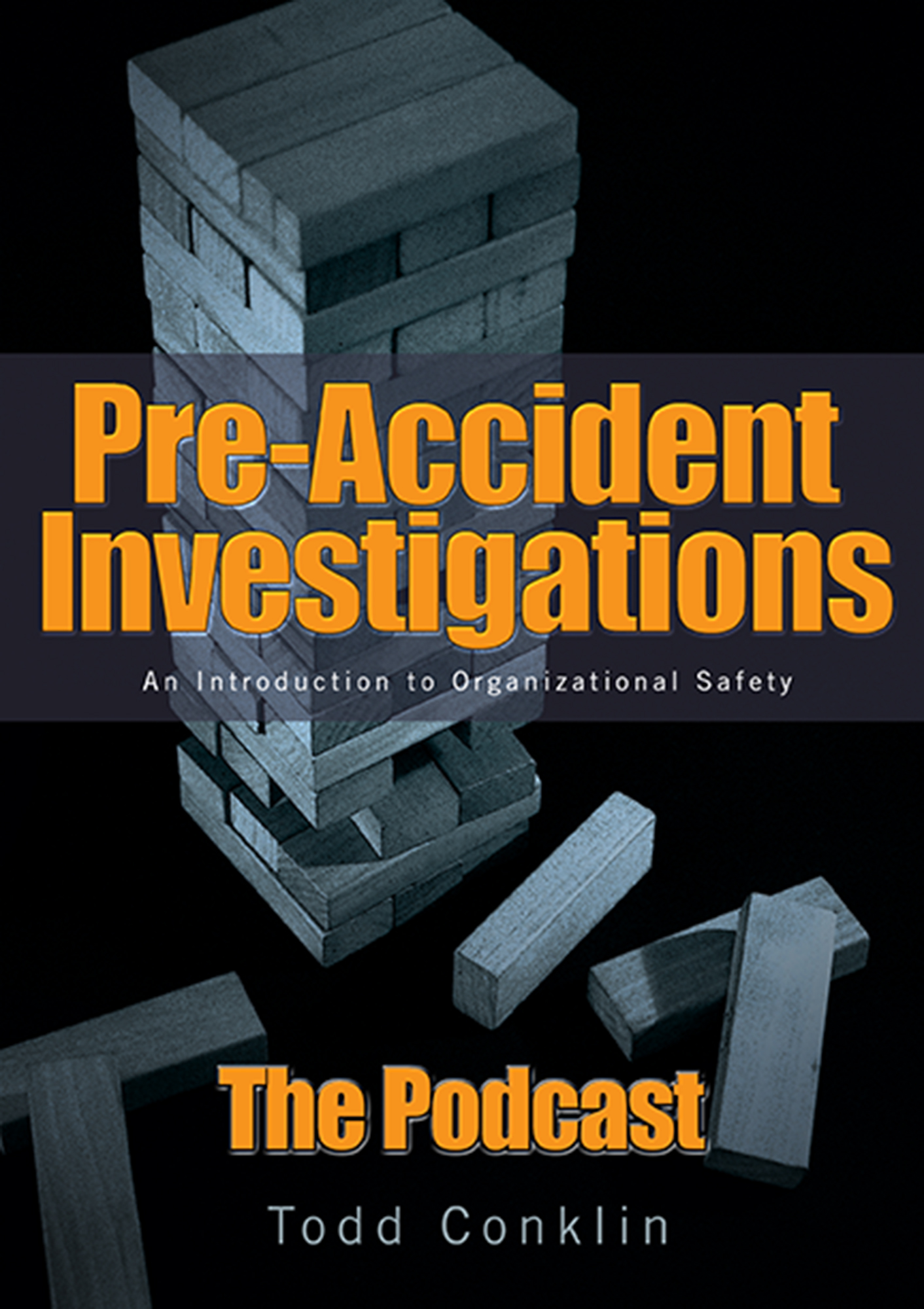
PreAccident Investigation Podcast
by Todd Conklin
The Pre Accident Podcast is an ongoing discussion of Human Performance, Systems Safety, & Safety Culture.
-
600
PAPod 615 - Leaders First: Why Safety Starts at the Top
Todd joins James Newman and Ken Madsen on a special excerpt from the Counter-Errorism podcast to discuss productive safety, leadership change, and how investigations should inform solutions rather than impose them. They cover practical ideas: shifting leaders' thinking, treating workers as problem-solvers, using judgments of need, and how DOE-style investigations differ from industry practices.
-
599
PAPod 614 - Accountability Labs: Learning to Have Each Other’s Back
Todd Conklin hosts Jen Long on the Pre-Accident Investigation Podcast to introduce "accountability labs": practical, small-group exercises that help teams practice having each other’s back instead of weaponizing blame. The episode explains how labs create psychological safety and readiness through real scenarios, skill-building, and debriefs so participants develop the language and muscle memory to speak up when it matters. Listeners will learn who benefits (middle managers, safety teams, healthcare, operations), what to expect from a lab, and the promise—and risks—of turning accountability into a sustained, constructive practice.
-
598
PAPod 613 - Don't Shoot the Dog: A Song for Safer Workplaces
Host Todd talks with safety professional and singer-songwriter Toni Vere about human and organizational performance (HOP), accountability, and the power of fixing systems instead of blaming people. Toni performs "Don't Shoot the Dog," a song that turns shop‑floor experience and worker expertise into a memorable lesson on creating safer, smarter workplaces.
-
597
PAPod 612 - Speak Up or Stay Silent: Amy Edmondson on Psychological Safety
Host Todd Conklin chats with Harvard’s Amy Edmondson about psychological safety, learning from failure, and how leaders can create workplaces where people speak up and learn. They cover just culture, systems thinking, and practical steps to choose curiosity over certainty. This warm, wide-ranging conversation blends research with real-world stories and leaves listeners with a clear call to action: build environments that support candid dialogue and collective learning.
-
596
PAPod 611 - Command–Adapt Paradox: Rethinking Safety for a Riskier World - David Woods - PART TWO
Part two of a deep conversation with Professor David Woods examines five decades of safety practice and argues for a stronger science base, foresight, and continual revitalization. Topics include the Command–Adapt Paradox, the fluency law, the law of stretch systems, and the novelty inequality, showing why plans must be paired with guided adaptability. The episode urges putting safe and effective outcomes first, working together to innovate, and rebuilding practical tools and research so safety programs scale and adapt in an increasingly complex world. Here is the cited article for your reading pleasure: https://link.springer.com/chapter/10.1007/978-3-031-45055-6_8#:~:text=The%20Command%E2%80%93Adapt%20Paradox%20arises,%E2%80%9D%E2%80%94being%20poised%20to%20adapt.
-
595
PAPod 610 - Rock the Boat: Reimagining Safety Science with Dr. David Woods PART ONE
https://link.springer.com/chapter/10.1007/978-3-031-45055-6_8#:~:text=The%20Command%E2%80%93Adapt%20Paradox%20arises,%E2%80%9D%E2%80%94being%20poised%20to%20adapt. Todd hosts Dr. David Woods in a two-part episode challenging the current state of safety science, arguing for more synthesis across disciplines and a shift from one-off fixes to ongoing capacity for safe, effective, and viable organizations. They examine the history and fragmentation of safety work, the rise of resilience thinking, barriers like short-term pressure and limited budgets, and why the safety community must collaborate to create stronger, long-term approaches.
-
594
PAPod 609 - Ra Donda Brings Us Up to Speed on Her Effort to Change the World
Join Ra Donda Vought and Todd Conklin and they meet up to discuss how Ra Donda has refined her message to the world and how surprised she is in other, non-medical industry. It is always so much fun to talk with Ra Donda - she has great energy and is so much fun to spend time in discussion. See what you think - I think you will enjoy this Pod a bunch.
-
593
PAPod 608 - Modern Safety: How Children's Hospitals Are Rewriting the Rules
Join Todd and Dr. Anne Lynne from the CHOL conference as they explore “modern safety” in children’s hospitals and the SPS mission — how new lenses on risk, leadership behaviors, and a willingness to try small experiments are reshaping safety, reliability, and improvement work. They discuss practical examples like reducing unplanned extubations, the role of leaders in creating capacity and permission, and how sharing success stories fuels innovation and wider adoption across healthcare.
-
592
PAPod 607 - Croquet Mallets & Outlaws: My Family’s Bonnie and Clyde Encounter
Host Todd interviews his mother, Gyla Conklin, who recounts a true 1933 encounter when her father, Bill Brock, and friends were held up by Bonnie and Clyde near Meade, Kansas. The episode highlights a dramatic rescue at a park, a croquet mallet that saved the day, and a family newspaper account. Short, vivid, and personal, this episode underscores why recording family stories matters and offers a human look at a famous criminal story.
-
591
PAPod 606 - At the Cusp: How Leadership, Compassion and Worker Voice Are Rewriting Safety
Todd Conklin talks with Rob Fisher about how leadership, workforce shifts and compassion are reshaping safety and reliability. They explore why organizations must move from fixing problems to improving systems, and how worker engagement becomes the key source of learning. The episode covers practical approaches—small experiments, better leader conversations, and data from observations (TEDS)—that help leaders act differently without adding more work. They also discuss legacy, cultural change, and why a pull from curious leaders and workers is replacing the old push. Listen for concrete questions leaders can ask, ways to prototype improvements, and a reminder that compassion leads and safety follows.
-
590
PAPod 605 - When a Meeting Becomes an Emergency: Restoring the Room
This episode recounts a medical emergency that occurred during a large conference and explains how a quick critical incident stress debrief helped restore the group and the organization. Todd outlines a simple restoration framework—who's hurt, what they need, and who will help—and walks through a seven-step debrief process that turns trauma into learning, supports people emotionally, and improves future response.
-
589
PAPod 604 - On the Edge: Risks, Resilience, and Red Bull’s Adventure Athlete
Host Todd Conklin interviews Red Bull athlete Will Gadd about adventure sports, recent tragic incidents (a parachute crash in Butler, Mo., a Moab base-jump, and a bungee failure), and how the outdoor world approaches risk. The episode explores the difference between being robust and being resilient, the limits of individual skill, and how controls, recoverability, and community learning can reduce harm in high‑hazard activities.
-
588
PAPod 603 - Procedures: The Double-Edged Sword of Safety
In this episode Todd Conklin explores the paradox of procedures: they keep work stable but also limit flexibility. He explains how procedures can be both necessary and constraining in high-risk, high-consequence environments. Todd highlights the value of incremental safety—making small, thoughtful changes over time—while building communities of practice to better prepare organizations for an uncertain future. He closes with practical advice: treat procedures as thresholds rather than one right way, focus on learning from everyday work, foster resilient systems, and remember to take care of yourself while having some fun.
-
587
PAPod 602 - From Brazil with Safety: Gilval and the New View Revolution
Todd Conklin talks with Gilval Menezes about Brazil’s growing movement to adopt the New View of safety: translating resources into Portuguese, building community, publishing a field guide, and running learning teams to shift culture away from blame. They discuss practical work on HOP implementation, the cultural challenges of translation, the urgency driven by workplace fatality rates, and the push to develop methods that fit Brazil and wider Latin America.
-
586
PAPod 601 - Rethinking Safety: AI, Pre-Jobs, and the Power of Listening
Todd chats with Ron Gantt about the future of safety — from AI-driven pre-task tools to the limits of rote checklists — and why listening to frontline workers matters more than ever. They explore leadership’s role in shaping responses to incidents, bridging power gaps with contractors, and designing systems that actually support real work. Through examples from healthcare to construction and candid anecdotes, the episode argues for intentional, human-centered change: test tools in context, focus on creating success, and set leaders up to respond thoughtfully when things go wrong.
-
585
PAPod 600 - The Future of Safety: Learning Teams, Storytelling, and Not-Knowing
In this part two conversation, Todd Conklin and Bob Edwards explore what the future holds for operational learning and safety. They discuss learning teams, storytelling, the power of curiosity and not-knowing, and how the people closest to the work provide the best solutions. The episode highlights successes from pediatric patient safety, the Navy, and industry examples, and emphasizes cultural shifts away from quick fixes and metrics toward continuous, practical improvement and clearer stop-work practices.
-
584
PAPod 599 - Learn Like Bob: How Pediatric Teams Saved 30,000 Babies
Todd Conklin and Bob Edwards discuss Solutions for Patient Safety (SPS), a grassroots movement of learning teams that used operational learning to dramatically reduce harm in pediatric care. The episode covers emotional stories from the SPS meetings, practical methods like soak time and learning teams, the power of continuous improvement, and the real-world impact of saving thousands of young lives.
-
583
PAPod 598 - What If Risk Never Leaves? Exploring Transportable Hazards
In this episode, Todd Conklin questions whether risk can ever truly be removed or if it simply moves around. He distinguishes between hazards and risk, discusses how organizations shift risk through contracting and worker practices, and argues that while hazards can be managed, risk remains dynamic and persistent. Todd also highlights the role of controls, barriers, and margin in starting work safely, and teases upcoming conversations on psychological safety, AI and safety, and leadership.
-
582
PAPod 597 - From the way, way, way, way, back machine...Pain as a Predictor: Martha Acosta on Finding the Signals Before Failure
Todd Conklin interviews Martha Acosta, a pioneer in human performance and instructional design, about using organizational "pain points" and paradoxes as early indicators of system failures. They discuss why near misses and workplace frustrations are valuable signals and how leaders can turn those tensions into opportunities for learning and improvement. The episode offers practical advice for managers: be present, look for pressure points across roles, and treat minor pains as diagnostic cues to prevent larger incidents. Martha translates high-level ideas into actionable steps leaders can use tomorrow.
-
581
PAPod 596 - Incremental Safety Practices: Reductive vs. Inductive Safety
Todd Conklin reviews Erik Hollnagel’s new book "Incremental Safety Practices" and explains the core idea that safety efforts fall into two approaches: reductive (removing hazards) and inductive (building resilient systems). He urges listeners to view safety as an ongoing capacity managed in everyday work rather than a static goal achieved after eliminating risks. The episode invites organizations to reflect on whether their programs focus on hazard removal, resilience building, or both, and emphasizes paying attention to incremental improvements (or erosions) in safety culture and practice.
-
580
PAPod 594 - Bridging Cultures: Safety, Migrant Workers, and the Heart of Agribusiness
Coming into this episode, Todd Conklin welcomes Al Thomson to discuss safety in the primary sector, focusing on migrant Pacific workers and a human-centered approach. Al shares how Monarch Platform blends pastoral care, cultural understanding, and contemporary safety (HOP) to support a diverse workforce across New Zealand’s agriculture and horticulture industries. The conversation covers cultural differences in risk perception, village success planning, measuring workforce capacity with role-specific “bingo” competencies, and the importance of humility, vulnerability, and leadership in creating meaningful safety outcomes.
-
579
PAPod 593 - Young Voices, System Thinking: A Conversation on Safety with Mousa Yassin
Host Todd chats with Mousa Yassin about shifting safety culture from blaming individuals to designing systems that tolerate failure and recover quickly. They cover life-saving rules, the concept of recoverability, lessons from software engineering like chaos testing, and the importance of learning over punishment. The episode emphasizes practical ways to build resilient systems, nurture learning teams, and make safety training engaging and effective.
-
578
PAPod 592 - How a Near-Miss Sparked the Learning Team Movement
Todd Conklin tells the origin story of "learning teams," sparked by a self-reported near-miss at Los Alamos involving a postdoc and an arcing wrench. Rather than pursuing a punitive investigation, a group of workers gathered to identify what needed to be learned, uncovering broader gaps in postdoc training and safety planning. The episode explains how learning teams prioritize asking better questions, collecting the right data, and designing system-focused solutions. Conklin describes how this approach spread across the lab and why it remains a fast, effective tool for operational improvement.
-
577
PAPod 591 - Workers Are the Solution: A Conversation with Corey Pitzer
Todd Conklin talks with Corey Pitzer about fatality prevention, Human and Organizational Performance (HOP), and how safety thinking has shifted globally. They explore controversial views—treating workers as problem-solvers, tensions between engineering/energy-based approaches and systemic/new-view thinking—and use real examples to show why designing systems that absorb variation matters more than trying to eliminate risk.
-
576
PAPod 590 - Gird Your Loins: NASA, Risk, and the Return of Recrudescence
Todd interviews Professor David Woods about recent NASA mishaps and a growing cultural shift toward "cheaper, faster" decision-making that sacrifices safety. They explore how past safety gains have lost vitality, highlight cascading modern risks (the "messy nine"), and argue for mutual assistance and revitalized resilience practices. Wood's most recent writing on this is available in the Bulletin of Atomic Scientists called: Cheaper, Faster, and Who Gives a Damn about Anything Else. The episode connects space, aviation, cloud outages, and AI-driven engineering to show why coordinated foresight and cross-disciplinary cooperation are essential to prevent far-reaching harm in today’s complex systems.
-
575
PAPod 589 - Failing Safely: Todd Conklin on Resilience, Recovery, and Real Work
In this episode, Todd Conklin joins Amir Shahzad to discuss human and organizational performance, resilience, and how to design systems that allow failures to be caught and recovered before they become disasters. They explore the gap between work as imagined and work as done, the value of learning from everyday work, and practical steps leaders can take to create safer, more resilient workplaces. They also cover cultural change, the role of procedures, adaptive behavior, and the potential—and risks—of AI in safety, all delivered with a mix of practical advice and light-hearted rapid-fire questions.
-
574
PAPod 588 - Weak Signals, Big Consequences: The RaDonda Story
Hosts Todd and Brent discuss an upcoming restorative workshop centered on RaDonda Vought's account of the Emory Hospital event. The episode highlights how normal performance variability can combine into serious failures, the value of storytelling, and the importance of learning and building resilience across complex systems. The workshop in Santa Fe (March 31–April 1) invites healthcare and high‑risk industry professionals to move from “what” happened to “how” to apply lessons in practice. For more information or to register, contact [email protected].
-
573
PAPod 587 - Start in the Black: How Sleep Debt Impacts Safety
Host Todd Conklin interviews fatigue expert Mark Rosekind, PhD about his path from sleep research to roles at NASA, the NTSB, and NHTSA, and how sleep science applies across transportation and safety-critical work. Key takeaways: think of sleep like a bank account (sleep debt), "start in the black" before major schedule changes, the benefits of strategic naps, and systemic ways organizations can reduce fatigue to improve performance, health, and safety.
-
572
PAPod 586 - VUCA, Uncertainty, and the Case for Innovation
Todd Conklin discusses VUCA (Volatility, Uncertainty, Complexity, Adaptation) and argues that innovation and safety improve when organizations embrace uncertainty and gather more diverse information and perspectives. He mixes personal travel and Olympics anecdotes, touches on aviation and healthcare examples, and invites listeners to a hands-on workshop to explore these ideas further.
-
571
PAPod 585 - When Safety Stalls: Who Will Reinvent the Field?
In this clip from the Pre‑Accident Investigation Podcast and Punk Rock Safety, Todd joins Ron, Ben, and David to debate why safety innovation is stalling, where new ideas are coming from, and who’s pushing practice forward. They explore barriers like regulatory pressure, the pull of “normal,” and the difference between improving safety and redesigning work. Using examples from pediatric intensive care and other domains, the conversation highlights pockets of progress, the danger of idea corruption, and the need to embrace experimentation, rethink systems, and find the next generation of thinkers to advance safety practice.
-
570
PAPod 584 - How Pediatric Hospitals Cut Fatal Extubations by 60% — 12,500 Lives Saved
This episode tells the real-life story of how the Society for Patient Safety and a network of children’s hospitals used learning teams, proactive safety huddles, and simulations to reduce unplanned extubations in neonatal ICUs — cutting rates by 60% and preventing thousands of deaths. It covers the data, the frontline-led solutions, the narrowing of racial disparities, and an invitation to a small conference in Santa Fe to learn and share improvement practices.
-
569
PAPod 583 - When Normal Variability Breaks: The ReDonda Story
This episode previews a small workshop in Santa Fe where Todd Conklin, Ann Lyren, and guest ReDonda Vaught will explore a tragic patient safety case. They frame accidents as the unexpected combination of normal performance variability and discuss how to learn from such incidents. Listeners will hear about the meeting goals (March 31–April 1), opportunities to chart the event, and practical tactics for organizations to identify and respond to accumulating risks, with cross-industry lessons and a focus on improving safety culture.
-
568
PAPod 582 - Accountability vs. Blame: Who Really Owns Safety?
Todd Conklin breaks down why accountability is an act of clarity, not blame or discipline, and why leaders and workers share responsibility for operational safety. He highlights the need to set roles before incidents occur, contrasts accountability with performance management, and announces a case-study workshop about Redonda’s Vanderbilt story in Santa Fe (March 31–April 1).
-
567
PAPod 581- Measuring the Invisible: When 'Nothing Happened' Breaks Safety Metrics
Todd Conklin explores why its so difficult to measure events that never happen and how traditional safety metrics can mislead organizations. He argues for focusing on metrics that validate safeguards and create desired outcomes rather than only counting accidents. The episode also touches on automation risks, the limits of frequency-based measures, and the need for better leading indicators and verification practices to keep systems safe even when nothing appears to go wrong.
-
566
PAPod 580 - Start Right, End Safe: Building Better Encounters in 2026
Todd Conklin opens 2026 reflecting on why how we begin interactions and jobs matters more than we often realize. He uses stories from travel, aviation, and workplace examples to show that the start of an encounter often predicts its outcome. Conklin urges listeners to choose kindness, psychological safety, and deliberate planning—start the job when the right controls are in place—rather than beginning from hate, division, or aggression. He links these opening choices to organizational resilience, safety, and reliability. The episode is a New Year’s call to focus on how we start conversations and work: start safe, be kind, and build cultures that help people succeed in difficult and high-risk environments.
-
565
PAPod 579 - Stepping Back Almost 10 Years...Another Trip Around the Sun: 2016 Safety Recap & 2017 Resolve
10. New Year’s Eve recap reflecting on a busy 2016 and the journey ahead into 2017. 9. Host shares personal travel highlights and experiments in gratitude and generosity. 8. Announces a 2017 focus on seeking and affirming the fundamental goodness in people. 7. Reviews safety’s evolution: from compliance (Safety One) to safety-by-design (process safety). 6. Explains the current phase emphasizing human performance and managing variability rather than blaming workers. 5. Notes that incidents have become rarer and traditional metrics are less predictive. 4. Discusses fatalities as outlier events that require different thinking and study. 3. Invites listeners to run small sociological experiments to improve everyday interactions. 2. Celebrates the collective progress in safety and the privilege of contributing to that change. 1. Ends with a New Year’s wish: be with each other, keep managing uncertainty wisely, and have a great 2017.
-
564
PAPod 578 - Choose Gratitude: A Thanksgiving 2021 Reminder
This special Thanksgiving 2021 episode shares one simple piece of advice: be grateful. It highlights the power of gratitude during hard times and encourages you to pause and appreciate what you have. When the world feels difficult, instead of meeting pain with pain, reflect on the people, support, and good things in your life. Gratitude helps you move forward with strength and perspective. Learn something every day, have fun, and be good to each other.
-
563
PAPod 577 - Near Misses: The Unexpected Gift That Keeps Workers Safe
In this episode Todd Conklin uses the season of gift-giving to explain near-miss reporting: why it matters, how it shows whether controls worked or luck saved the day, and how organizations should respond with gratitude and learning—not punishment.
-
562
PAPod 576 - From Continuous Improvement to Continuous Capacity: 10 Operational Indicators You Need
This episode shifts the safety conversation from continuous improvement to continuous capacity, introducing a practical dashboard of 10 operational indicators—five system capacities (exposure to unforgiving energy, robustness of safeguards, error tolerance/recoverability, detectability of variance, and recovery capacity) and five human capacities (sensitivity to variation, frontline insight, quality of learning, psychological safety, and supervisor load). Host Todd Conklin explains how these measurable and observable indicators link engineering controls with human and organizational factors, and why monitoring them regularly helps leaders improve resilience and manage high‑risk operations more effectively.
-
561
PAPod 575 - Vancouver Workshop: A Case Study in Failure, Justice, and Resilience
Todd Conklin talks with Brent Sutton and Jeff Lyth about the upcoming HOP Workshop in Vancouver (Jan 28–29, 2026), centered on Redonda’s powerful firsthand story of patient safety, complex systems, restorative justice and resilience — lessons that translate across industries. Day one features Redonda’s narrative and panel discussion; day two focuses on hands‑on learning and innovation. Please attend, this workshop will be amazingly good for the soul! For tickets and details visit hopconference.com.
-
560
PAPod 574 - Margin for Safety: Lessons from 50 Years in the Cockpit
This episode explores human performance and aviation safety, contrasting airline procedures with general aviation risks. Guests discuss building safety margins, the importance of planning vs. acting, and how economic pressures can erode resilience. Highlights include treating near-misses as learning opportunities, practical tips for pilots to increase recoverability, and real-world examples from naval operations and long-term flying experience.
-
559
PAPod 573 - The Stability Trap: Why Safe Organizations Still Fail
Jay Allen interviews Todd Conklin about his new book, The Stability Trap, exploring why even safe, stable organizations can fail. They discuss the "drive to zero," complacency, pressures on middle management, wearables and data, and lessons from aviation and the pandemic. The episode also covers how AI was used to reorganize the book’s ideas and help craft its ending, and offers practical reframes: treat safety as a capacity, see workers as system monitors, and retool systems to match capacity with risk. The book is available now.
-
558
PAPod 572 - The Stability Trap: Why Safety Success Can Lead to Failure
Host Todd introduces his new book, The Stability Trap, and shares a sneak peek episode created with an AI-generated interview. The episode explores why organizations that appear safe can still experience accidents and how success itself can erode safety capacity. The discussion outlines the core ideas: safety as the presence of capacity, the three R's (redefine safety, reframe the worker, relearn investigation), and a five-stage practical blueprint for leaders, safety professionals, frontline workers, supervisors, and system integration. Short and practical, the episode is a teaser for the book and invites listeners to reflect on whether their organizations maintain the resilience, confidence, and systems needed to recover when things go wrong.
-
557
PAPod 571 - Fail Fast, Learn Faster: A Conversation on Human Performance and Recovery
In this episode Todd Conklin joins Jowanza Joseph to explore modern safety thinking: why human error is normal, how context shapes behavior, and why leadership response and system recoverability matter more than blame. They draw on examples from Los Alamos, AWS outages, SpaceX and everyday technology to show how organizations can design systems that tolerate failure and learn from it. Listeners will get practical insights into the five principles of human performance and how to build resilient systems that fail safely and recover quickly.
-
556
PAPod 570 - Safety Differently Down Under: Todd Conklin in Auckland
Todd Conklin joins the Brisbane Safety Differently Book Lab in Auckland for a lively discussion about leadership, accountability, and learning from everyday work. The group explores why safety is the presence of control, how leaders should respond after incidents, and why learning is the new currency of safety. Todd shares stories about writing his books, engaging with workers, and practical steps leaders can take to build confidence and capacity while fostering a learning culture.
-
555
PAPod 569 - PART TWO: 11 Seconds: How a System, Not a Nurse, Failed
Part two of the RaDonda Vaught story examines what emerged after the event: investigation details, system design flaws, communication breakdowns, and the tiny timing error that mattered. RaDonda Vaught recounts how normalized overrides, software defaults, and organizational assumptions created conditions for failure. The episode explores the chilling effects of criminalizing mistakes, the human cost across patients and providers, and the case for shifting from blame to system-focused learning and improvement.
-
554
PAPod 568 - PART ONE: Charged for a Mistake: The Nurse, the Error, and a System That Failed
In this episode, nurse RaDonda Vaught tells the detailed, context-rich story of a medication error at Vanderbilt that led to criminal charges. She walks through the events, system issues (including a recent EHR rollout and medication-dispensing delays), distractions, and decision points that contributed to the mistake. RaDonda describes how workarounds, unclear documentation in radiology, drug supply changes, and interruptions combined to produce a tragic outcome, and she explains the immediate clinical response. The episode sets up a follow-up discussion about what was learned and how systems can be improved.
-
553
PAPod 567 - Open Questions 2025: From Metrics to Monitors — Rethinking Safety
Episode: an extended open Q&A from the Pre-Accident Investigation Conference in Santa Fe covering big-picture safety topics. Speakers discuss the limits of traditional metrics, the power of real-time monitoring, shifting focus from managing risk to maintaining control, validating controls in the field, learning teams, contractor relationships, and prioritizing high-information events. Anecdotes and practical guidance illustrate how organizations can learn without blame.
-
552
PAPod 566 - Blame Stops Improvement: How Blame Silences Learning
Todd Conklin explores how blame shuts down learning and prevents organizational improvement, arguing that blaming individuals creates a chilling effect that blocks thousands of future learning opportunities. He connects blame to misunderstandings about human error, emphasizes psychological safety, and urges leaders to ask "what failed" before asking "who failed," while sharing personal anecdotes and reflections.
-
551
PAPod 565 - Fear, FOMO & Fixing Safety: A Conversation with Brent Sutton
Todd Conklin and Brent Sutton discuss the short-term future of safety thinking—covering the rise and fall of lean/TQM, how commodification can slow innovation, and why fear, FOMO and complacency shape which ideas stick. They explore leaders' responsibility, weak signals, and the need for small 'safe-to-fail' experiments to keep systems resilient. Set in Santa Fe with lighthearted moments (including breakfast burritos and a cheese debate), the episode blends history, practical insight and a call to stay curious about evolving workplace complexity.
We're indexing this podcast's transcripts for the first time — this can take a minute or two. We'll show results as soon as they're ready.
No matches for "" in this podcast's transcripts.
No topics indexed yet for this podcast.
Loading reviews...
ABOUT THIS SHOW
The Pre Accident Podcast is an ongoing discussion of Human Performance, Systems Safety, & Safety Culture.
HOSTED BY
Todd Conklin
CATEGORIES
Loading similar podcasts...
Frequently Asked Questions
How many episodes does PreAccident Investigation Podcast have?
PreAccident Investigation Podcast currently has 50 episodes available on PodParley. New episodes are automatically indexed when they're published to the podcast feed.
What is PreAccident Investigation Podcast about?
The Pre Accident Podcast is an ongoing discussion of Human Performance, Systems Safety, & Safety Culture.
How often does PreAccident Investigation Podcast release new episodes?
PreAccident Investigation Podcast has 50 episodes. Check the episode list to see recent publication dates and frequency.
Where can I listen to PreAccident Investigation Podcast?
You can listen to PreAccident Investigation Podcast on PodParley by clicking any episode. We provide an embedded audio player for direct listening, and you can also subscribe via your preferred podcast app using the RSS feed.
Who hosts PreAccident Investigation Podcast?
PreAccident Investigation Podcast is created and hosted by Todd Conklin.
URL copied to clipboard!