
PODCAST · comedy
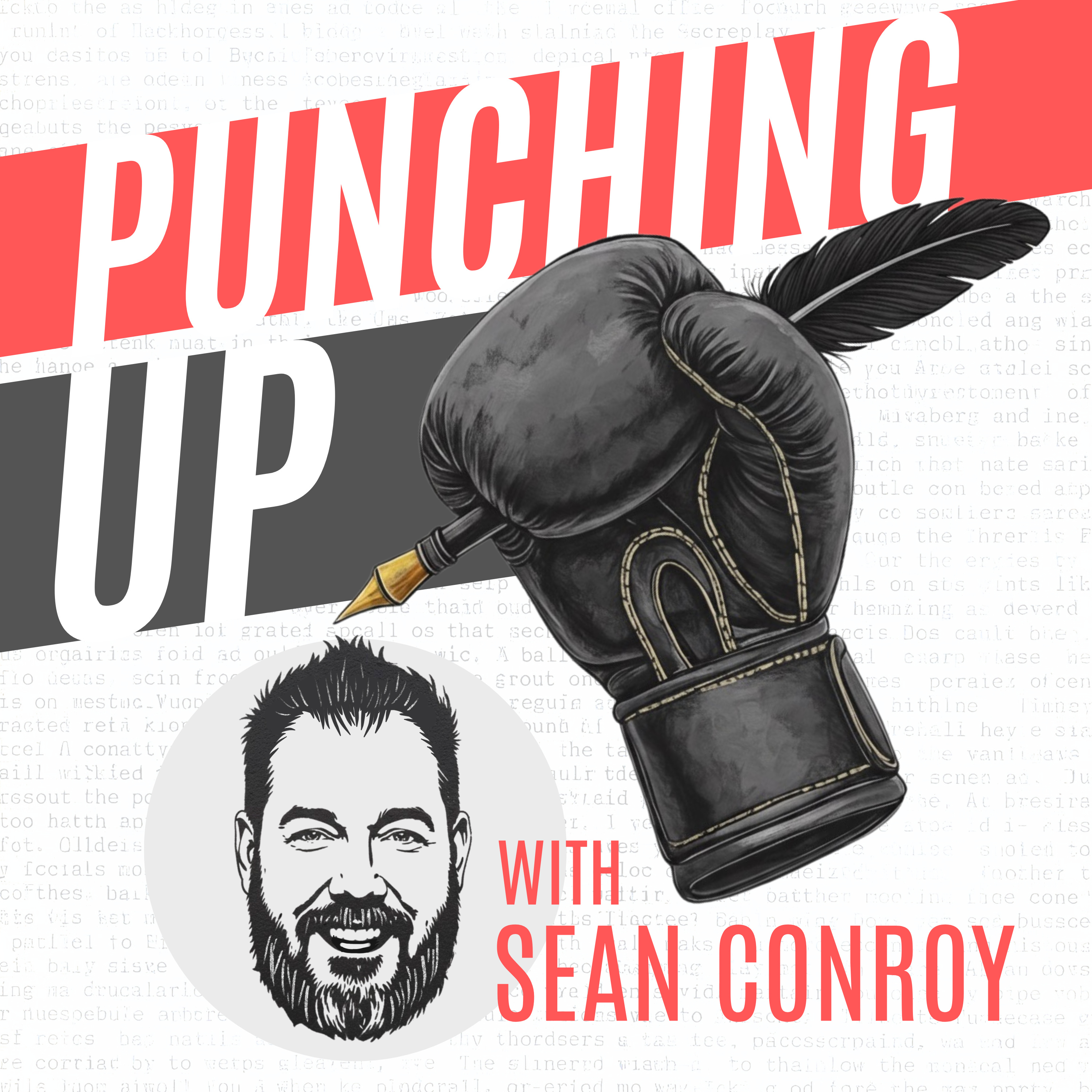
Punching Up with Sean Conroy
by Sean Conroy
I'm Sean. I'm a comedian and a writer. I've written TV for over twenty years, and comedianed for way longer than that- stand-up, sketch, improv, one-person shows, podcasts... If you want to learn to write a sitcom pilot, I'm gonna share some of the insights I wish I had when I was starting (maybe even all). I'm also gonna talk to lots of writers about career paths, comedy, and writing habits. We're gonna talk extensively about the craft of television writing, and of comedy writing in general. Performing, too. And the art! Comedy is an art! Check out the show. See you there.
-
23
Win An Emmy, Get Canceled: The Curse of the One-Season Wonder
"Hey, you guys are great. Goodbye." That’s Hollywood, baby!. This week, I'm looking at some critically acclaimed one-season wonders. Starting with Emmy-winning Disney+ hit The Muppets Mayhem , I talk some screenwriting mechanics, discuss the difference between movie endings and TV series engines, and hmention. some truly great, memorable television shows that only lasted a single season. All worth a watch, but what are they? Listen and find out!
-
22
Mark Hoffmeier Talks Bottle Shows, Spec Scripts, and Mighty Morphin Power Rangers
How do you survive for decades in Hollywood while writing for hit animation, live-action TV, and huge video game franchises?Mark Hoffmeier has credits that go back to the Stone Age (or at least The Flintstones). He’s worked on Mighty Morphin Power Rangers, Back to the Future, Spider-Man: Shattered Dimensions, and lots of other fun stuff. We talk about what it takes to write effective spec scripts (and how nobody does that anymore, and why they should), how to stand out as a writer who’s budget-conscious (always an asset to a producer), what to do when you get crazy notes (sometimes it does happen, believe it or not), and why improv skills are a writer's ultimate secret weapon. We also get into some Jonathan Winters stuff, how writing dialogue for a video game is different from writing a TV script, and why Mark decided to write a novel. Enjoy!
-
21
Kate Spencer: From The Dead Moms Club To Rom Coms
Author, podcaster, and UCB alum Kate Spencer joins me to talk about turning life’s toughest moments into art. We talk about her raw, funny memoir The Dead Moms Club, and how she pivoted from that to romance novels (that happen to be funny). Kate explains how long-form improv principles help her writing process. We get into the disgusting messiness of draft revisions, overcoming creative self-doubt, managing ADHD, and shifting your definition of success away from external metrics. Plus, Kate’s choicest red carpet celebrity encounters, morning creative routines, and why showing up for an audience of one matters just as much as an audience of thousands (which, if you get that, you’re doing great).
-
20
Bad Exposition, Bad Accents, & Where Do You Get Your Ideas?
Writing is like the gym, the dentist, or peanut butter—it’s all about consistency. But what happens on those days you have absolutely nothing left in the tank (like, um, today)?This week I get into the unglamorous side of the creative process (hopefully someday I will reach the glamorous side), from surviving my bad week, to some questionable exposition choices in Netflix’s I Will Find You, to the online controversy surrounding Alice & Steve.I also answer a question I kind of bailed on at my workshop last week (not really on purpose, just time crunch, but still: bad workshopper, bad workshopper) about where I get my ideas. And where does anybody?👉 Want to learn directly from me? Sign up for my weekly dispatch, The Second Draft, at https://seanconroy.com to get details on my upcoming free writing workshops!
-
19
Ian Roberts: Showrunning Key & Peele, UCB History, & Writing Secrets
What does it take to run one of the most celebrated sketch shows in television history? This week I talk with Ian Roberts (co-founder of the Upright Citizens Brigade) about the brilliant writers' room of Key & Peele, the brutal reality of running a narrative show (TV Land’s Teachers), how writing partnerships are like throwing a board under flat tires, and why writing a sitcom pilot is the most difficult thing you can do in Hollywood (aside from wangling an invite to/getting a table at blah blah blah). He also shares his personal definition of comedy, and some “weighty” thoughts (ha ha) about physical health and how you should never train until you vomit. Plus, some behind-the-scenes stories about Jim Carrey and a punch-up room run amok. Fun! For me. And you!
-
18
Scripts Are A Long Game; Hold Onto Your Diamonds!
How long should you hold onto a script idea?Because I just ran into her in New York, in this episode I wanted to get into the truly inspiring journey of writer and showrunner Katie Dippold (Parks and Rec, The Heat, Ghostbusters). Her current Apple TV series, Widow's Bay, started as a spec script she used years ago just to get staffed.In this episode, I yammer on about the core differences between the ephemeral magic of improv ("throwing diamonds in the ocean") and the long-term endurance required to protect and build your script's world. Plus, a healthy dollop of brutal honesty about personal creative self-doubt! Everybody loves that, right? 🚨 ANNOUNCEMENT: Want to turn your funny ideas into an actual narrative? Join me in person for my Funny vs. Story Workshop on Saturday, July 11, 2026, at 3:30 PM at the Broadwater Theater in Hollywood. Head over to https://www.seanconroy.com to sign up for my weekly dispatch, The Second Draft ,for full details, or email me at [email protected]!Also, don’t forget to rate, review, and subscribe!
-
17
Laurie Kilmartin: Tough Crowd To Kimmel, And Why Stand-Up Keeps Us Sane
This week I got to hang out with veteran late-night writer Laurie Kilmartin (Jimmy Kimmel Live, Conan, Tough Crowd with Colin Quinn), an old friend of mine from many stand-up rooms back in New York. We talk about joke writing, the evolution of a comic’s perspective over time (and why it's great to start releasing specials the day you start), and why a lot of stand-ups now include way too many words in their setups. Laurie talks about what it’s really like inside the Conan and Kimmel writers' rooms, the pressure of writing dozens of monologue jokes a day, and why stand-up is still the ultimate creative control valve for a TV writer.
-
16
Henson Intern to Show Creator: Re-Writing The Muppets Mayhem with Jeff Yorkes
What does it take to get a green light from Disney+ and a room full of legendary Muppet performers? This week, I sit down with my old pal Jeff Yorkes. Jeff is an award-winning trailer editor, and oh yeah the co-creator of The Muppets Mayhem. Holy smokes, nice work Jeff.Jeff breaks down the chaotic, brilliant process of bringing Dr. Teeth and the Electric Mayhem to the screen—from pulling off a secret "Muppet-crashing" Zoom pitch to managing a pandemic-era writer's room on Zoom. Plus, we dive into the art of cutting pitch trailers from "every movie that’s ever existed," battling imposter syndrome, working with Sir Peter Jackson on the ultimate Friday shoot, and the exact screenwriting trick you should use before you even finish your pilot script. Sometimes your best ideas happen in the shower.
-
15
Mel Stephens: Being a Creator is Brutal and Beautiful!
Comedian, filmmaker, and Groundlings alum Mel Stephens and I talk about going from performing to being a writer and director. And why! What it’s like to be a comedian working with comedian Brett Goldstein to shoot a high-stakes short film in one take; what it’s like when you realize your comedic sensibilities don’t align with the establishment; what it’s like when you realize that no one is coming to rescue you—you have to push the boulder up the hill yourself. And what you can do about it. What you have to do about it. Mel talks about why accepting that writing is supposed to be hard turns out to be the ultimate creative freedom. Mel and I talk about whether or not creative joy is a myth,anxiety, how setting deadlines helps, and (I should listen to this part) why marketing yourself is how you avoid staying hidden.Don't miss Mel's upcoming YouTube stand-up special Sparkles on June 23rd! Follow her @MelM.Stevens.
-
14
Why Forrest Macneil Couldn’t Be a Psychopath (with Andy Daly)
How do you make a character likable when they’re doing terrible things? Just ask Andy Daly!Actor, comedian and writer Andy Daly (Review, Eastbound & Down, Silicon Valley) goes deep on the chaos of the Hollywood development process, and on his own comedy process.We dissect the origin story of Comedy Central’s Review, and the creative note from debate champion and director Jeff Blitz that saved Forrest Macneil from being a "psychopath." We also talk improv (we’ve done it together a few times), a failed pitch we did involving an autographed photo of O.J. Simpson, why Andy avoids traditional stand-up (but not completely), and why one might want a bound volume of one's unproduced scripts.Andy gives me a lot of great insights into writing comedy, creative integrity, and how to deal with fussy executive vice presidents named Dan Blithers.Support Andy: Check out his incredible work and subscriber content at patreon.com/andydaly and follow him on Instagram @TVsAndyDaly.Subscribe to Punching Up so you never miss an episode, and feel free to leave me a 5-star review, just to goose the algorithm(which we should all be doing all the time).
-
13
The "Second Draft" of Life: Notes from the Universe and New Beginnings
Welcome to Season 2 of Punching Up with Sean Conroy! I'm Sean, and just so you know, this episode gets pretty intensely personal. I'm a TV writer and comedian, and because of some stuff that's gone in my real life recently I've decided to try treating my life like a script. I'm gonna be 60 in a little more than a year, and I'm trying to change some things, both physically and creatively. I even gave myself a deadline- writers love deadlines! (Listen and find out when mine is). Take a listen to why the "shitty first draft" is a writer’s secret weapon, the difference between pure data and moral failure, and why it is never too late to write your own second draft.📝 WORK WITH ME THIS SUMMER:Want to finish your sitcom pilot by midsummer? Sign up for my upcoming 6-week Sitcom Pilot Writing Workshop starting late June. Space is strictly limited: https://www.seanconroy.com/classes
-
12
Decoding Your Sitcom Pilot's DNA: Shortcut To A Better Script
There's a lot of stuff I think about now when I'm starting to figure out how to write a TV pilot script that I would have liked to know when I started out, if somebody was like "hey here are some screenwriting tips for beginners." And writing that script doesn't mean developing a TV series, but it feels like that is something you have to have in the back of your mind when you start, or at least it's something that helps. What is the show gonna be like after the pilot? I was watching trailers for a couple of shows (Mad Men, Reservation Dogs, Deadwood, etc.) and it gave me an idea (honestly, a stroke of genius) for what some people might find a helpful writing exercise. Give it a shot and let me know what you think.
-
11
Creative Discipline: Why Showing Up is 90% of the Battle
I've been working on my creative process lately, struggling with overcoming perfectionism and writing consistency, and I feel like I'm kind of winning. A little. Discipline is to creatives as ice cream is to lactose intolerants, but these days I've somehow acquired (ulp) (at least temporarily) some creative discipline. WIth the help of my trusty yellow legal pad and my Sanford uni-Ball 207, and my knowledge of cursive writing, I'm getting some done. See if you can relate on this episode of Punching Up with Sean Conroy.
-
10
Writing 4 Pilots a Year: Ed Herro on Overcoming Creative Fear
In this episode I talk to Ed Herro, who wrote for (among other things) Jeff and Some Aliens and American Housewife. Most recently he co-created and co- ran The Sticky for Amazon Prime. In this showrunner interview, we get into a lot: the importance of sitcom pilot writing when you're starting and as you continue in writing for television, some great ideas on writers' room etiquette when you're starting out, and when you've been there a while, and lots of other fantastic gleaned-from-experience TV writing tips. Ed even gets into some thoughts on how to pitch a TV show. He recommends a couple of great books on writing, some of the classics like On Writing, and Save the Cat, and Bird by Bird. This one is a gold mine for aspiring writers (and me)z.
-
9
3 Easy (?) Things You Can Do To Get Better At Writing Sitcoms
One thing I've always struggled with as a writer is "paralysis by analysis"- maybe if I read THIS book or follow THIS method or use THIS structure I'll get it right, and everything will be easy. So in this episode I talk about some of the things I've done that have helped me get better at writing, and also specifically helped me get better at writing sitcoms. For example, you know how every sitcom nowadays makes fun of improv comedy for being dorky? Well, guess what's one of the most useful things I did when I was learning? Check out the episode, rate and review, all that podcasting stuff.
-
8
Trailer 1: Punching Up With Sean Conroy
TV writer and comedian Sean Conroy and his guests talk about how to write a great sitcom pilot, how to have a career in comedy, how to develop good habits as a writer, and his struggles with all of those things. He gives the advice he wishes he'd gotten earlier on, and gets advice from guests that he hopes it's not too late for. If you're a fan of comedy, this show is for you.
-
7
Did They Steal My Script? The Idea Is King, But Execution is Everything
Have you ever seen a movie trailer and thought, "That’s my idea!"?This week, Sean Conroy shares a devastating morning spent on Twitter discovering a project that mirrored his current screenplay beat-for-beat. He talks about an old project he co-wrote that collided with a Tim Allen movie, the famous Art Buchwald vs. Paramount case and why it matters (and why it doesn't), and some incredibly useful wisdom (at least in this case) from Steve Jobs (the guy from Apple).It’s a masterclass in creative persistence, the myth of stolen ideas, and why execution always wins. Don't forget, your unique "Polar Bear Pappy" perspective is irreplaceable (so don't worry about mailing a copy of your scipt to yourself).
-
6
The Art and Science Of The Cold Open
The cold open of your sitcom pilot may be the most important two pages you will ever write in your life, unless you write a long ransom note for yourself or jot down an ancient family recipe to pass on. You have so much work to do in those two pages: you have to introduce us to a world we will want to inhabit, introduce us to characters we're going to want to spend time with, and you have to hook us with hard, funny jokes (it's a sitcom- it needs com). In this episode I talk about two of my favorite-ever cold opens (I have about a hundred), both of which coincidentally (seriously, I chose them first then realized it) use punk rock at the top of the show- AP Bio and Reservation Dogs.
-
5
Why I Stopped Outlining And Started Writing (And Why It’s Terrifying)
I’ve always written all my TV scripts according to a very methodical screenwriting process. I break the story, do somestory mapping, write an incredibly detailed script outline (including lots of dialogue and jokes), THEN write the script. That has always been my creative philosophy in the writers’ room (where I’m working with lots of other writers), and I’vepretty much stuck to it when I have been on my own. But I’m trying to write a feature, and I’m finding feature film writing a little different from TV script writing. I have a story, and I really like it, but it’s only part of the movie, and as I have tried to figure everything out I’ve felt—not necessarily writers’ block, but maybe writers’ speedbump. Like, you know those speedbumps that are the same color as the pavement and you don’t see them til you hit them? Like that. So I’m trying to just dive in. Leap and the net will appear. We’ll see how it goes.
-
4
Marcus Perkins Bejarano is Punching Up: How To Get Into A Hollywood Writing Program
What happens when a high-stakes commercial real estate lawyer decides to trade the courtroom for a writer’s room? This week I talk to Marcus Perkins Bejarano, a graduate of the Nickelodeon Writing Program and writer on the Victorious (with Ariana Grande!) spinoff, Hollywood Arts. Marcus talks about his journey from a Dallas law firm, to an MFA in Musical Theater at NYU, to a writing fellowshipt, to a writers' room. We get into the "interview gauntlet" of Hollywood fellowships, the unique challenge of "group writing" for sitcoms, and why being just a little bit delusional could be your greatest superpower as a writer (obviously it would be X-ray vision for just anybody).
-
3
The Audience Hated Me, But I Just... Kept... Going
All comics have horror stories. Some involve heckling. Some involve check drops, or check disputes. Some are... quieter.This is mine.In this episode I'm talking about the worst set I ever had, which happened at the legendary Stand-Up New York.I went up after two A-list comics whose sets primed the audience for chaos (because they were dirty or obscene or over the line or whatever) (think Rickles and the Dice Man but funnier and also way more offensive). It's hard to follow filthy with time travel and William Makepeace Thackery. But I tried.
-
2
Break The Rules! (But Know Why)
I'm a comedian and a writer, and in this episode of my podcast I'm talking about when to follow the 180-degree rule in filmmaking and when to break it for the sake of a laugh. And obviously I'm doing this to make a larger point. Using a hilarious short film video moving picture project I made called "Sex Beards" as a case study, I'm talking creative instincts, the reality of the writer’s room, and why you shouldn't panic when a joke doesn't land during the third table read. Learn to trust your comedic voice. Or at least mine.
-
1
Q&A: Improving Your Joke Construction and more
What does it actually take to break into a Hollywood writer’s room? In this "A M Anything" episode, AKA "Ask Me A.," producer Dean Sharp and I get into the business of television. We talk about the reality of landing an agent, the complex hierarchy of WGA rooms, and how residuals really work. Wanna get better at jokes? Wanna know why I love Seinfeld's Marine Biologist episode so much, and why you should go watch it like ten times in a row? Wanna know if I would ever buy a shirt for $100 then not wear it for a decade or so?Listen, and you will know.
-
0
A Tale of Two Pilots: Is There Such A Thing As A Far Far Better Thing?
Why do some sitcom pilots feel like a sprint while others feel like a slow crawl?In this episode I manage to apply Newton’s Laws of Motion to the reading of a pilot script, and explain why I stay in motion (that is, continue reading), and what forces act against that motion (boredom, confusion, lack of stakes, small print, andmuch much more).I’m taking a look at two successful major pilots: the highly anticipated The Office spinoff, The Paper (created by Greg Daniels and Michael Koman), and the medical sitcom St. Denis Medical (from Superstore creator Justin Spitzer).What You’ll Learn in This Episode:If you’re a writer (or aspiring writer) looking for comedy writing advice to sharpen your own spec sitcom pilot writing, I share a little of the stuff I’ve learned over the time I’ve been doing it (you’re welcome to agree, disagree, ignore, or a little of all three).Watch the pilots of St. Denis Medical and The Paper (preferably before but even after you listen to the episode), then email me with your thoughts at [email protected]. And don’t forget to like and subscribe.
-
-1
Owen Burke Is Punching Up With Sean Conroy: Stay Joyful
In this episode of Punching Up, I’m talking to my old friend the hilarious Owen Burke. Starting with his early days as a production assistant , to his time as a development executive at Will Ferrell and Adam McKay’s Gary Sanchez Productions, to working on his own screenplays every day, Owen shares his unique trajectory through the entertainment industry.We talk about the importance of paying attention to epiphanies, long-form improv at UCB, why you have to write through stuff the way Picasso painted through his Blue Period (wasn’t just out of all the other colors), and being a service-oriented producer. Owen offers invaluable advice for writers (and artists, and anybody who makes or does stuff) on finding their joy, managing development hell, and recognizing that everyone on a set is talent (not just the prima donna actors) (although some of them really are so talented).Episode Highlights:The Pivot Points: Why Owen transitioned from struggling stand-up to collaborative improv.The Gary Sanchez Years: Insights into what makes a script commercially viable versus artistically fulfilling.The Creative Process: Why Owen writes in a zero-gravity chair and his "mostly dead" theory of scripts.Professional Longevity: Dealing with the "entrepreneurial fear" of the industry and staying useful.
-
-2
Getting Notes, and How Not To Take Them
A big part of the television pilot development process (and any scriptwriting process) is getting notes from other people. In this episode I talk about handling creative criticism and your relationships with TV producers (and networks). And why you also have to get notes from people you trust (who aren't your Mom) (assuming you trust your Mom). Screenwriting notes are sometimes hard to give, and often even harder to take. Learn how to separate your ego from your art to make your work stronger, more marketable, and maybe even actually ready for the screen. (fingers crossed).
-
-3
Productivity: One Goal to Change Your Writing Year
I’ve been lucky enough to work in the competitive world of television and sitcom writing for over twenty years (on stuff like Mr. Pickles and Key and Peele).. In this episode I talk about a weakness that can hold even the most talented writers back (and is certainly one that I have) (am I putting myself in the category of "most talented"?): the fear of putting yourself out there.I get into why "doing good work" is only half the battle. I use the rejection stories of legends like Stephen King and Frank Herbert as inspiration, I talk about my personal resolution for the new year (I bet you can’t wait to hear that), and I challenge you to figure out how to strengthen your own TV comedy career. If you want to master sitcom pilot writing and navigate the industry with more confidence, this episode will help you have a better 2026.
-
-4
Carl Tart on SNL, Grand Crew, and TV Comedy Writing
In this episode of Punching Up with Sean Conroy, host Sean Conroy sits down with the incredibly talented Carl Tart, a powerhouse in the world of comedy. Known for his sharp wit as a current Saturday Night Live (SNL) writer, Carl shares insights from his prolific career, including his work on hit series like Brooklyn Nine-Nine and Mad TV. Fans of NBC’s Grand Crew will recognize him as a breakout star, and long-time comedy nerds will love hearing about his roots at the Upright Citizens Brigade (UCB) Theater. Whether you're interested in the TV industry, sketch comedy, or the art of long-form improv, this conversation offers a deep dive into the journey of one of today’s funniest performers and writers.
-
-5
The New TV Landscape: Sitcoms, Dramedy, and Viewership Changes in The Streaming Era
Sitcoms still matter (trust me, bro). No really- the world is changing, AIA is coming for us, corporate mergers are beiging everything, billionaires are exploiting thte proletariat, but we still need comfort food for our brains. I talk about how syndication used to be everything, and the shift to serialized storytelling (the binge watch is all about what happens next, not back to the drawing board). We love when somebody has a problem and can solve it in less than 30 minutes! Even if there's another problem at the end. Enjoy!
-
-6
Figuring Out the Writing Process
What does it take to become a TV writer in Hollywood? I talk about the importance of figuring out the writing process, and how much I still struggle with mine (even as you're reading this I am probably having the internal debate about pencil vs. pen, not to mention computer vs. legal pad, not to mention Scrivener vs. Final Draft, not. to mention Mac vs. PC... okay, all mentioned. Enjoy!
-
-7
Welcome to Punching Up
Welcome to Punching Up, a podcast dedicated to the craft of comedy writing and the reality of life in Hollywood. Hosted by Executive Producer and comedian Sean Conroy, each episode dives deep into the writing process, TV pilots, and the mechanics of being funny. Whether you are an aspiring writer or just a fan of great television, join us as we navigate the writers' room, dissect sketches, and talk to industry pros about keeping it together in show business.
We're indexing this podcast's transcripts for the first time — this can take a minute or two. We'll show results as soon as they're ready.
No matches for "" in this podcast's transcripts.
No topics indexed yet for this podcast.
Loading reviews...
ABOUT THIS SHOW
I'm Sean. I'm a comedian and a writer. I've written TV for over twenty years, and comedianed for way longer than that- stand-up, sketch, improv, one-person shows, podcasts... If you want to learn to write a sitcom pilot, I'm gonna share some of the insights I wish I had when I was starting (maybe even all). I'm also gonna talk to lots of writers about career paths, comedy, and writing habits. We're gonna talk extensively about the craft of television writing, and of comedy writing in general. Performing, too. And the art! Comedy is an art! Check out the show. See you there.
HOSTED BY
Sean Conroy
CATEGORIES
Loading similar podcasts...
Frequently Asked Questions
How many episodes does Punching Up with Sean Conroy have?
Punching Up with Sean Conroy currently has 31 episodes available on PodParley. New episodes are automatically indexed when they're published to the podcast feed.
What is Punching Up with Sean Conroy about?
I'm Sean. I'm a comedian and a writer. I've written TV for over twenty years, and comedianed for way longer than that- stand-up, sketch, improv, one-person shows, podcasts... If you want to learn to write a sitcom pilot, I'm gonna share some of the insights I wish I had when I was starting (maybe...
How often does Punching Up with Sean Conroy release new episodes?
Punching Up with Sean Conroy has 31 episodes. Check the episode list to see recent publication dates and frequency.
Where can I listen to Punching Up with Sean Conroy?
You can listen to Punching Up with Sean Conroy on PodParley by clicking any episode. We provide an embedded audio player for direct listening, and you can also subscribe via your preferred podcast app using the RSS feed.
Who hosts Punching Up with Sean Conroy?
Punching Up with Sean Conroy is created and hosted by Sean Conroy.
URL copied to clipboard!