
PODCAST · society
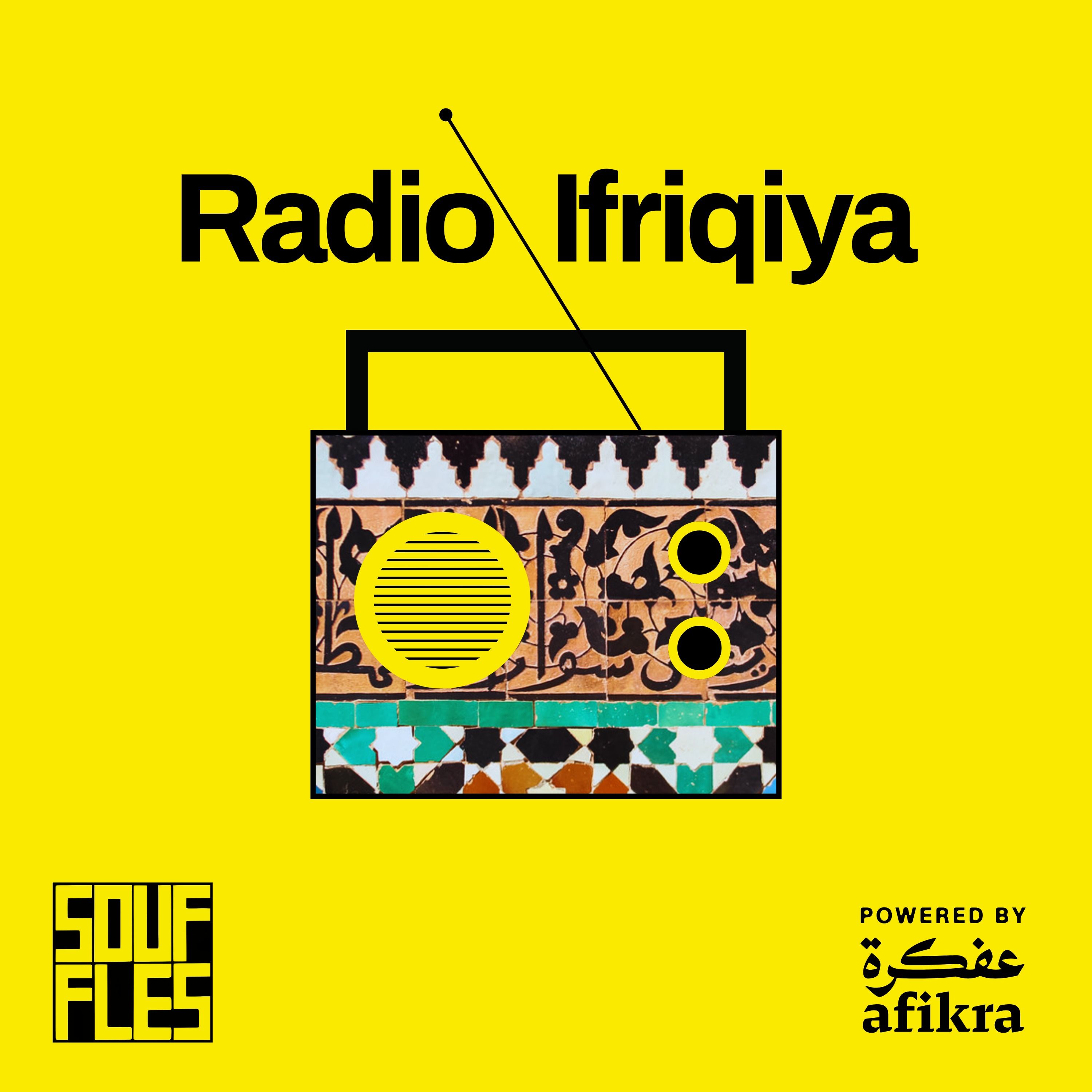
Radio Ifriqiya | Powered by afikra
by afikra
Radio Ifriqiya is the podcast of Souffles Monde, a new platform reviving the radical spirit of Souffles/Anfas to rethink decolonization, knowledge, and culture from an African and Afro-Arab perspective. Through conversations with scholars, artists, and thinkers across the continent, this podcast series fosters South–South dialogue, translation, and intergenerational exchange. Powered by afikra.
-
10
Death in the Mediterranean: African Migration to Europe | Ahlam Chemlali & Younous Arbaoui
This episode explores the intersection of migration policies, colonial history, and human rights in the North African borderlands. Guests Dr. Ahlam Chemlali and Dr. Younous Arbaoui discuss how European Union (EU) externalization policies impact daily life in Tunisia and the broader Mediterranean. The conversation centers on the lived experiences of those affected, from migrants forced into dangerous routes to Tunisian fishermen confronted by death at sea. By examining the ripple effects of border intensification and persistent colonial tropes, the conversation highlights the need for state accountability and the protection of the fundamental right to life. 01:31 Introduction 02:44 The Significance of Studying the Mediterranean 08:18 Narrative Ethnography and Lived Experiences in Zarzis 11:14 Legal Frameworks and the Responsibility of North African States 14:44 The Visceral Reality of Death and Identification 25:21 Distinguishing Between Hard Law and Soft Law 29:32 Grassroots Efforts and the Struggle for Dignity 36:53 Confronting Colonial Tropes in Modern Discourse 45:54 Regional Agency and the Path to Accountability 53:32 Climate Change and Hidden Environmental Consequences Dr. Ahlam Chemlali researches migration and borders, with a particular focus on European externalization policies and their political, social and human consequences. Her work examines how Europe governs migration both within and beyond its territorial boundaries, including through partnerships with third countries, the outsourcing of asylum procedures, and external border control mechanisms. Her research is situated at the intersection of migration, smuggling, gender, violence, and border governance, and places particular emphasis on the lived experiences and everyday realities of people on the move. Chemlali’s work is grounded in extensive field research in North Africa, particularly in the Maghreb. She has strong regional expertise in the MENA region and the Mediterranean, with a focus on migration routes, state practices, and power dynamics shaping border regimes. Connect with Ahlam Chemlali 👉 https://dk.linkedin.com/in/ahlamchemlali Dr. Younous Arbaoui is an Assistant Professor of Migration Law at Vrije Universiteit Amsterdam, where he leads the Global Migration Law Hub and the Global Rights-Making Network. His academic research centers on global migration governance, with a specific focus on the legal frameworks connecting the European Union and North Africa. Beyond his academic role, Dr. Arbaoui is a dedicated practitioner and advocate in the region; he is the founder and chair of the Clinique Juridique Hijra in Morocco, which provides legal aid to asylum seekers, and serves as the editor-in-chief of Revue Hijra, an interdisciplinary journal dedicated to migration law and policy. Connect with Younous Arbaoui 👉 https://nl.linkedin.com/in/younous-arbaoui-607b3316 Hosted by Amine Bit 👉 https://instagram.com/amine.bit Amine Bit is a Columbia University graduate of Comparative Literature and Society, who served as the Events Editor of The Columbia Review and currently works with Souffles Monde. FOLLOW & RATE THE RADIO IFRIQIYA:» Apple Podcasts: https://podcasts.apple.com/us/podcast/radio-ifriqiya-powered-by-afikra/id1858526703» Spotify: https://open.spotify.com/show/1VynJbFfAioUDyM6nmiqa3» Anghami: https://play.anghami.com/podcast/1079305298 THIS SERIES IS PART OF THE AFIKRA PODCAST NETWORKExplore all episodes in this series: https://www.youtube.com/playlist?list=PLfYG40bwRKl6WCw08uLTDai3ePhVUQvvz Hosted by Simplecast, an AdsWizz company. See pcm.adswizz.com for information about our collection and use of personal data for advertising.
-
9
Nostalgic Rebels: Politics, Aesthetics, and Selfhood in Postcolonial Morocco | Dr. Khalid Lyamlahy
We delve into the complex intersection of revolt and nostalgia in postcolonial Moroccan literature with author and scholar Khaled Lyamlahy who offers specific, evidence-based insights into the diverse trajectories of three influential writers, Abdellatif Laâbi, Abdelkebir Khatibi, and Mohammed Khaïr-Eddine, and discusses how their unique experiences with activism, imprisonment, and exile shaped their work. An assistant professor at the University of Chicago, Dr. Lyamlahy helps us explore his latest book, Nostalgic Rebels, which complicates traditional narratives of Moroccan postcoloniality. He emphasizes that nostalgia is not merely a backward-looking emotion but a transformative force capable of reinventing the future. He confronts the notion that these literary movements are static, asserting that writing has a deep responsibility to provoke thought and ask difficult questions. The conversation also delves into the unique challenges of translation and the poetic power of fragments, highlighting the need for deeper literary dialogue between North and Sub-Saharan Africa. 0:00 Introduction 1:38 Origins and Evolution of "Nostalgic Rebels" 4:56 Defining Revolt Beyond Politics 10:21 Complicating Nostalgia in Postcolonial Studies 13:58 Mapping Authors as Trajectories 19:36 Prison, Travel, and Wandering, the Three Experiences of Exile 23:33 Translation as a Mode of Thinking 35:14 The Power of Fragments and Silences 41:19 The Intersection of Poetics and Politics in Writing 46:32 Future Projects Khalid Lyamlahy is assistant professor of French and Francophone Studies at the University of Chicago where he teaches francophone North African literature. He is the author of Nostalgic Rebels: Politics, Aesthetics, and Selfhood in Postcolonial Morocco (Liverpool University Press, 2025). Connect with Khalid Lyamlahy 👉 https://instagram.com/khalid_lyamlahy Hosted by Amine Bit 👉 https://instagram.com/amine.bit Amine Bit is a Columbia University graduate of Comparative Literature and Society, who served as the Events Editor of The Columbia Review and currently works with Souffles Monde. FOLLOW & RATE THE RADIO IFRIQIYA:» Apple Podcasts: https://podcasts.apple.com/us/podcast/radio-ifriqiya-powered-by-afikra/id1858526703» Spotify: https://open.spotify.com/show/1VynJbFfAioUDyM6nmiqa3» Anghami: https://play.anghami.com/podcast/1079305298 THIS SERIES IS PART OF THE AFIKRA PODCAST NETWORKExplore all episodes in this series: https://www.youtube.com/playlist?list=PLfYG40bwRKl6WCw08uLTDai3ePhVUQvvz Hosted by Simplecast, an AdsWizz company. See pcm.adswizz.com for information about our collection and use of personal data for advertising.
-
8
L’histoire du Kawkaw
Kawkaw est un projet initié par Younes Baba-Ali, sur invitation du centre culturel LE 18 à Marrakech en 2016. Pensé comme une résidence ayant donné lieu à une exposition collective et à une série de rencontres, il a réuni cinq artistes du Grand Maghreb et ouvert un espace de dialogue et de recherche par la pratique artistique, dont ce podcast prolonge aujourd’hui les réflexions. Face à une scène artistique nord-africaine en pleine mutation, Kawkaw illustre la volonté de créer de nouvelles perspectives et d'explorer les opportunités et le potentiel inexploité de cette région. Kawkaw, qui signifie cacahuète en darija, est synonyme d'un aliment populaire, partagé avec plaisir, riche en saveurs et commun à tous les pays du Maghreb. Le programme incarne ce processus de décloisonnement et de partage dans le domaine artistique. Le podcast prolonge ce geste de décorticage en explorant les couches d’histoires, de langues et de circulations reliant Afrique du Nord et Afrique de l’Ouest, malgré les séparations coloniales et les héritages de l’esclavage et du racisme. Des chercheurs en musique, cinéastes, écrivains, historiens, architectes et artistes invité·es (Mohamed Arejdal, Taoufik Ben Amor, Mamadou Diouf, Ali Essafi, Hadia Gana, Carlos Perez Marin, Katy Léna Ndiaye & Oumar Sall) retracent les significations du mot “Kawkaw”, les routes caravanières, la transe et les musiques de guérison, et les trajectoires artistiques comme outils pour réinventer une géographie culturelle commune. 00:00 Naissance de Kawkaw 01:19 Décortiquer les histoires 02:20 Voyage d’un mot 03:11 Cacahuete en Tunisie 04:54 Kawkaw au Maroc 05:46 Kawkaw au Sénégal 07:22 Colonialisme et arachide 11:34 Piste égyptienne 14:18 Géographies du Maghreb 16:17 Trajectoires de l’artiste 22:43 Parasol et mémoire 27:35 Walata carrefour sahélien 31:30 Caravanes et connexions 36:23 Libye: se découvrir africaine 44:16 Musique transe et métissage 47:32 Panafricanismes d’après-guerre 55:15 Routes anciennes et conclusion Mohamed Arejdal a développé une œuvre aux multiples facettes, explorant les territoires de son Maroc méridional natal, où il enseigne aujourd'hui. Connectez-vous avec Mohamed Arejdal 👉 https://instagram.com/arejdalmohamed Né au Maroc, Ali Essafi s'est tourné vers le cinéma documentaire après des études de psychologie en France. Parmi ses œuvres, on compte « General, Here We Are », « The Silence of the Beet Fields », « Ouarzazate Movie » et « Shikhat’s Blues ». Connectez-vous avec Carlos Perez Marin 👉 https://instagram.com/carlosperezmarin Hadia Gana est née à Tripoli, en Libye. Elle vit et travaille à Paris et a bénéficié de résidences à la Fondation Thami Mnyele (Amsterdam), à Ashkal Alwan (Beyrouth), au 18 (Marrakech) et à Sacatar (Brésil). Son travail est exposé dans le monde entier. Connectez-vous avec Hadia Gana 👉 https://instagram.com/hadiagana Katy Lena Ndiaye enrichit son expérience au cinéma et à la télévision depuis près de vingt ans. Elle dirige aujourd'hui, au Sénégal, la société de production IndigoMood Films. Connectez-vous avec Katy Léna Ndiaye 👉 https://instagram.com/indigomoodfilms Mamadou Diouf est professeur titulaire de la chaire Leitner d'études africaines et directeur de l'Institut d'études africaines de l'Université Columbia. Oumar Sall est un auteur et critique installé à Dakar, où il travaille également comme médiateur éducatif et soutient des initiatives entrepreneuriales dans les industries culturelles et créatives. Sa pratique artistique explore l'évolution des expressions artistiques dans des contextes de mobilité. Connectez-vous avec Oumar Sall 👉 https://sn.linkedin.com/in/oumar-sall-652077204 Le professeur Ben Amor est spécialiste de langue et de linguistique arabes, de langue et d'identité, de musique arabe et de musique soufie. Hébergé par Aude Tournaye 👉 https://instagram.com/aude.tournaye Younes Baba-Ali 👉 https://instagram.com/younes.babaali FOLLOW & RATE THE RADIO IFRIQIYA:» Apple Podcasts: https://podcasts.apple.com/us/podcast/radio-ifriqiya-powered-by-afikra/id1858526703» Spotify: https://open.spotify.com/show/1VynJbFfAioUDyM6nmiqa3» Anghami: https://play.anghami.com/podcast/1079305298 THIS SERIES IS PART OF THE AFIKRA PODCAST NETWORKExplore all episodes in this series: https://www.youtube.com/playlist?list=PLfYG40bwRKl6WCw08uLTDai3ePhVUQvvz Hosted by Simplecast, an AdsWizz company. See pcm.adswizz.com for information about our collection and use of personal data for advertising.
-
7
الهوية والذاكرة من الأمازيغ إلى فلسطين | محمد أوبنعل
يتحدث معنا الباحث الأكاديمي محمد أوبنعل عن الهوية الثقافية الغنية للشعب الأمازيغي في المغرب، وروابطه التاريخية والمعاصرة مع القضية الفلسطينية. ويناقش أيضاً تأثير الإستعمار على الهوية الأمازيغية، وأساليب التضامن مع الهوية الفلسطينية. كما تُسلط الضوء على شخصيات مؤثرة في حركات المقاومة وأهمية التعاون الثقافي والأكاديمي للأجيال القادمة، مع التركيز على الروابط العميقة بين الثقافة، التاريخ والهوية 00:00 مقدمة عن اللغة والثقافة الأمازيغية 2:35 القضية الفلسطينية في الوعي الثقافي الأمازيغي 5:56 تأثير القضية الفلسطينية على البحث الأكاديمي 13:31 رموز أمازيغية ودورهم في مقاومة الصهيونية 19:02 مسؤولية الجيل الجديد تجاه فلسطين محمد أوبنعل باحث في علم الاجتماع الاقتصادي وسوسيولوجيا الثقافة يشتغل أساسا على تحولات المجتمع الأمازيغي والنخب الاقتصادية Connect with Mohamed Oubenal 👉 https://instagram.com/moub.oum Hosted by Soraya El Kahlaoui👉 https://instagram.com/souriyya FOLLOW & RATE THE RADIO IFRIQIYA:» Apple Podcasts: https://podcasts.apple.com/us/podcast/radio-ifriqiya-powered-by-afikra/id1858526703» Spotify: https://open.spotify.com/show/1VynJbFfAioUDyM6nmiqa3» Anghami: https://play.anghami.com/podcast/1079305298 THIS SERIES IS PART OF THE AFIKRA PODCAST NETWORKExplore all episodes in this series: https://www.youtube.com/playlist?list=PLfYG40bwRKl6WCw08uLTDai3ePhVUQvvz Hosted by Simplecast, an AdsWizz company. See pcm.adswizz.com for information about our collection and use of personal data for advertising.
-
6
In the Footsteps of Malcolm X | Herb Boyd
We spoke with Harlem legend and national treasure, Herb Boyd—a journalist, jazz historian, activist, and organizer who has been writing and publishing for nearly 70 years. He discusses his expansive life's work, his political evolution, and his early encounters with Malcolm X. Boyd first met Malcolm X in Detroit in 1958 and later followed him to Morocco in 1964. His life journey has followed in Malcolm X's political footsteps, spanning from Harlem to East Africa, West Africa, and the Middle East. Boyd shares that Africa marked the beginning of his journey and was critical in developing his international perspective. He delves into the research for his recent book "Malcolm X, The CIA, and Other Blacks" which considers Malcolm X's suspicions of being under surveillance by the CIA. This investigation led him to focus on a mysterious figure named Leo Miles, who pops up 10 times with Malcolm X during his travels, particularly in Cairo, Kenya, and Tanzania. Boyd discusses Leo Miles' suspicious association with the MPLA (People's Movement for the Liberation of Angola) and why he was eventually suspected of being an agent by foreign forces, possibly the Portuguese or the CIA. The conversation broadens to encompass the surveillance of other Black activists by the CIA, including Maya Angelou, Robert Williams, the Black Panthers, and Kwame Ture (Stokely Carmichael). Boyd connects these movements to the struggles against American imperialism and discusses his own travels to Palestine, including trips with Stokely Carmichael to Beirut and with Reverend Al Sharpton. He also highlights his contribution to the volume "For Gaza's Children". Boyd reflects on Malcolm X's perpetual importance as an internationalist, whose ideas remain relevant to contemporary global issues like the current UN situation, Ukraine, Haiti, and Gaza. Even at the age of 87, he is finishing a biography of Max Roach, a history of Harlem titled "Epic Harlem", and a novel about the Black Studies Movement. 00:00 Introducing Herb Boyd: Harlem Legend and Activist 01:54 Following Malcolm X’s Footsteps 03:00 Morocco, Dar Es Salaam and the International Perspective 04:47 The Significance of Early African Travels 06:19 Malcolm X, Leo Miles and the CIA Connection 09:33 The CIA's Surveillance of Black Activists 11:32 The Caribbean Connection: Walter Rodney and C.L.R. James 12:53 Maya Angelou: Cultural Ambassador in West Africa and Egypt 15:51 Traveling to Egypt and Malcolm X’s Impact on the International Community 19:05 Interviewing Maya Angelou and Her Claim of James Baldwin as her Little Brother 20:41 The African-American Beachhead in Ghana 21:37 Travels to Palestine 22:52 Contributing to Gaza’s Children 24:47 The Torturous Roads of Activism: From Detroit to Guatemala 28:37 Connecting American Imperialism to Global Struggle 37:22 Why Malcolm X’s Internationalism Is Perennially Important 43:17 Herb Boyd’s Ongoing Projects: Max Roach, Epic Harlem and a Novel on Black Studies Herb Boyd is a journalist, activist, teacher, and has authored or edited 23 books, including his most recent one, The Diary of Malcolm X co-edited with Ilyasah Shabazz. His book Baldwin's Harlem, a biography of James Baldwin, was a finalist for a 2009 NAACP Image Award. In 1995, with Robert Allen, he was a recipient of an American Book Award for Brotherman--The Odyssey of Black Men in America, an anthology. Other biographies include Pound for Pound—The Life and Times of Sugar Ray Robinson and a young adult book on Dr. Martin Luther King, Jr. He is an adjunct professor at City College of New York. Hosted by Hisham Aidi 👉 https://instagram.com/uptown_berber FOLLOW & RATE THE RADIO IFRIQIYA:» Apple Podcasts: https://podcasts.apple.com/us/podcast/radio-ifriqiya-powered-by-afikra/id1858526703» Spotify: https://open.spotify.com/show/1VynJbFfAioUDyM6nmiqa3» Anghami: https://play.anghami.com/podcast/1079305298 THIS SERIES IS PART OF THE AFIKRA PODCAST NETWORKExplore all episodes in this series: https://www.youtube.com/playlist?list=PLfYG40bwRKl6WCw08uLTDai3ePhVUQvvz Hosted by Simplecast, an AdsWizz company. See pcm.adswizz.com for information about our collection and use of personal data for advertising.
-
5
Herb Boyd on Malcolm X's Legacy, CIA Surveillance & Solidarity with Gaza
We spoke with Harlem legend and national treasure, Herb Boyd—a journalist, jazz historian, activist, and organizer who has been writing and publishing for nearly 70 years. He discusses his expansive life's work, his political evolution, and his early encounters with Malcolm X. Boyd first met Malcolm X in Detroit in 1958 and later followed him to Morocco in 1964. His life journey has followed in Malcolm X's political footsteps, spanning from Harlem to East Africa, West Africa, and the Middle East. Boyd shares that Africa marked the beginning of his journey and was critical in developing his international perspective. He delves into the research for his recent book "Malcolm X, The CIA, and Other Blacks" which considers Malcolm X's suspicions of being under surveillance by the CIA. This investigation led him to focus on a mysterious figure named Leo Miles, who pops up 10 times with Malcolm X during his travels, particularly in Cairo, Kenya, and Tanzania. Boyd discusses Leo Miles' suspicious association with the MPLA (People's Movement for the Liberation of Angola) and why he was eventually suspected of being an agent by foreign forces, possibly the Portuguese or the CIA. The conversation broadens to encompass the surveillance of other Black activists by the CIA, including Maya Angelou, Robert Williams, the Black Panthers, and Kwame Ture (Stokely Carmichael). Boyd connects these movements to the struggles against American imperialism and discusses his own travels to Palestine, including trips with Stokely Carmichael to Beirut and with Reverend Al Sharpton. He also highlights his contribution to the volume "For Gaza's Children". Boyd reflects on Malcolm X's perpetual importance as an internationalist, whose ideas remain relevant to contemporary global issues like the current UN situation, Ukraine, Haiti, and Gaza. Even at the age of 87, he is finishing a biography of Max Roach, a history of Harlem titled "Epic Harlem", and a novel about the Black Studies Movement. 00:00 Introducing Herb Boyd: Harlem Legend and Activist01:54 Following Malcolm X’s Footsteps03:00 Morocco, Dar Es Salaam and the International Perspective04:47 The Significance of Early African Travels06:19 Malcolm X, Leo Miles and the CIA Connection09:33 The CIA's Surveillance of Black Activists11:32 The Caribbean Connection: Walter Rodney and C.L.R. James12:53 Maya Angelou: Cultural Ambassador in West Africa and Egypt15:51 Traveling to Egypt and Malcolm X’s Impact on the International Community19:05 Interviewing Maya Angelou and Her Claim of James Baldwin as her Little Brother20:41 The African-American Beachhead in Ghana21:37 Travels to Palestine22:52 Contributing to Gaza’s Children24:47 The Torturous Roads of Activism: From Detroit to Guatemala28:37 Connecting American Imperialism to Global Struggle37:22 Why Malcolm X’s Internationalism Is Perennially Important43:17 Herb Boyd’s Ongoing Projects: Max Roach, Epic Harlem and a Novel on Black Studies Herb Boyd is a journalist, activist, teacher, and has authored or edited 23 books, including his most recent one, The Diary of Malcolm X co-edited with Ilyasah Shabazz. His book Baldwin's Harlem, a biography of James Baldwin, was a finalist for a 2009 NAACP Image Award. In 1995, with Robert Allen, he was a recipient of an American Book Award for Brotherman--The Odyssey of Black Men in America, an anthology. Other biographies include Pound for Pound—The Life and Times of Sugar Ray Robinson and a young adult book on Dr. Martin Luther King, Jr. He is an adjunct professor at City College of New York. Hosted by Hisham Aidi 👉 https://instagram.com/uptown_berber FOLLOW & RATE THE RADIO IFRIQIYA:» Apple Podcasts: https://podcasts.apple.com/us/podcast/radio-ifriqiya-powered-by-afikra/id1858526703» Spotify: https://open.spotify.com/show/1VynJbFfAioUDyM6nmiqa3» Anghami: https://play.anghami.com/podcast/1079305298 THIS SERIES IS PART OF THE AFIKRA PODCAST NETWORKExplore all episodes in this series: https://www.youtube.com/playlist?list=PLfYG40bwRKl6WCw08uLTDai3ePhVUQvvz Hosted by Simplecast, an AdsWizz company. See pcm.adswizz.com for information about our collection and use of personal data for advertising.
-
4
AFCON 2025! The View from Brussels | Youssef Faraj
We explore the recent African Cup of Nations (AFCON) tournament and its impact on the Moroccan diaspora, particularly in Brussels, which hosts one of Europe's largest Moroccan-origin communities. A youth worker, educator, and football fan, Youssef Faraj joins the discussion to dissect how the tournament was experienced, its effect on community relations, Pan-Africanism, colonial memory, and integration into Belgian society. Faraj highlights the strong feeling of being "robbed" among the Moroccan diaspora following the controversial penalty decision on Brahim Díaz, which has since led to a noticeable shift in inter-diaspora relations. We also delve into the complex history and relationship between the Moroccan and Congolese communities in Brussels. The conversation covers the distinct migration streams and urban geography of both groups in the city, touching on issues like ethnic-based districts, economic disparities in shop ownership, and the concept of a pan-African district. A central theme is the contrasting football allegiances: while Moroccans overwhelmingly root for Morocco, the rationale for Congolese supporting the Belgian national team is explored as a nuanced form of "decoloniality" and a path to empowerment through sport, given the lack of infrastructure in Congo. This leads to a discussion of why Moroccan players born in Belgium, such as Saibari, Adnan, and Talbi, often choose Morocco over Belgium, which has sparked accusations of being "traitors to the nation" in Belgium. The episode closes by examining the identity crisis Morocco faces in Africa, where it is often perceived as not African enough. 00:00 Introduction02:30 The Mood in Brussels After the AFCON Final 04:28 Moroccan and Congolese Communities: A History of Relations in Brussels06:33 Urban Geography and Segregation10:36 The Respect and Trigger Points Between Moroccans and Congolese Communities in Brussels12:50 Why Congolese Choose Belgium, and Moroccans Choose Morocco15:20 Colonial Memory and Sport16:05 The Moroccan Connection to Home and the "Traitors to the Nation" Debate18:24 AFCON's Impact on Brussels' Public Space and Police Response24:15 Allegiances in Brussels: Moroccan, Congolese, and Pan-Africanist Support31:43 Street Football Culture and Its Role in Moroccan Youth Life36:40 The Stereotype: Moroccan Talent vs. Institutional Acceptance42:54 Xenophobia and the Far Right48:10 AFCON's Soundtrack: Music, Language, and Brussels Creole50:30 Moroccan Identity and the Need for African Introspection53:05 The Arab-Slavery Narrative and Chemism as a Challenge to Moroccan Africanity57:21 The Final Aftermath: Segregated Celebrations and the Politics of Space Youssef Faraj is a consultant and project manager who is immersed in football and sports culture in Belgium. His interests range from education and youth to organizational culture change and learning design, particularly non-formal education. Connect with Youssef Faraj 👉 https://x.com/yofaraj Hosted by Hanane Harrath & Hisham Aidi Hanane Harrath specializes in contemporary politics and history of the Arab world, as well as contemporary Islam, she began her career in print media (Le Monde des religions, Le Nouvel Observateur, Le Courrier de l'Atlas) before moving into broadcasting. Connect with Hanane Harrath 👉 https://instagram.com/hananeharrathHisham Aidi is a Moroccan-American political scientist, author, music critic, filmmaker, and senior lecturer in international relations at the School of International and Public Affairs at Columbia University. His research interests include comparative race politics, art and social movements, and the political economy of development. Connect with Hisham Aidi 👉 https://instagram.com/uptown_berber FOLLOW & RATE THE RADIO IFRIQIYA:» Apple Podcasts: https://podcasts.apple.com/us/podcast/radio-ifriqiya-powered-by-afikra/id1858526703» Spotify: https://open.spotify.com/show/1VynJbFfAioUDyM6nmiqa3» Anghami: https://play.anghami.com/podcast/1079305298 THIS SERIES IS PART OF THE AFIKRA PODCAST NETWORKExplore all episodes in this series: https://www.youtube.com/playlist?list=PLfYG40bwRKl6WCw08uLTDai3ePhVUQvvz Hosted by Simplecast, an AdsWizz company. See pcm.adswizz.com for information about our collection and use of personal data for advertising.
-
3
Visualizing Histories Inside the Margins of Morocco & North Africa | Aomar Boum
Professor Aomar Boum talks about his latest book, The Last Rekkas, which offers an indigenous, counter-visual approach to the work of colonial artist-ethnographers. A collaboration with his daughter, Majdouline Boum Mendoza, that combines her visual work with the life stories of his father Faraji that's thought to be Morocco’s last known rekkas, a mail courier who walked thousands of miles delivering letters under colonial rule. The Last Rekkas is a decolonial project, which began with ethnographic studies in the 1990s in a village in Southern Morocco that uses art and text to center the stories of marginalized "ordinary people". A sociocultural anthropologist who holds the Maurice Amado Endowed Chair in Sephardic Studies at the University of California, professor Boum discusses his work on religious and ethnic minorities in the Middle East and North Africa. The conversation explores the book’s multimodal approach, contrasting it with Boum’s previous work "Undesirables" and reflecting on the tradition of Moroccan historian Mokhtar Soussi. We also delve into the necessity of engaging with colonial ethnography to create alternative narratives, using figures like Jean Besancenot to frame the story of his father, a mail carrier (rekkas) whose history was centralized but his voice erased. The episode concludes with a discussion of the book's audience—the coming generations of Moroccans—and how materiality and space, like cemeteries and everyday objects, can serve as archives to uncover untold histories in North Africa. 00:00:00 Introduction00:00:59 Centering Marginalized Histories Through Visuality00:01:58 The Impetus Behind "The Last Rekkas"00:03:30 Conversations with Faraji, the Author's Father00:06:57 Majdouline Boum Mendoza's Archival Art Centered Around Her Grandfather 00:11:19 Multimodal Dimensions of Ethnography: From Undesirables to The Last Rekkas00:16:38 The Book's Genre: An Illustrated Story00:18:57 A Dialogue with Colonial Ethnography and Mokhtar Soussi00:23:36 Engaging with the Colonial Archive to Create Counter-Visuality00:34:15 Faraji, The Rekkas, and The Work of Jean Besancenot00:40:29 A Foundationally Decolonial Project00:44:14 The Audience: The Coming Generations of Moroccans00:48:50 Space and Materiality as Archives00:57:59 Current and Future Projects: Inside the Margins Aomar Boum is a Moroccan-born cultural anthropologist and historian at UCLA, holding the Maurice Amado Chair in Sephardic Studies, known for his research on religious and ethnic minorities (Jews, Baha'is, Shia, Christians) in North Africa and the Middle East, Jewish-Muslim relations, and Holocaust history, authoring books like Memories of Absence and The Holocaust and North Africa, and co-founding initiatives like the Moroccan Jewish Studies Initiative. A sociocultural anthropologist who holds the Maurice Amado Endowed Chair in Sephardic Studies at the University of California, Boum has written many books including "Memories of Absence: How Muslims Remember Jews in Morocco" (2013); "Historical Dictionary of the Arab Uprisings" (2020); "Undesirables: A Holocaust Journey to North Africa" (2023); and "The Last Rekkas: Chronicles of a Pedestrian Messenger in Southern Morocco" (2024).Connect with Aomar Boum 👉 https://www.linkedin.com/in/aomar-boum-916b74a Hosted by Amine Bit 👉 https://instagram.com/amine.bit Amine Bit is a Columbia University graduate of Comparative Literature and Society, who served as the Events Editor of The Columbia Review and currently works with Souffles Monde. FOLLOW & RATE THE RADIO IFRIQIYA:» Apple Podcasts: https://podcasts.apple.com/us/podcast/radio-ifriqiya-powered-by-afikra/id1858526703» Spotify: https://open.spotify.com/show/1VynJbFfAioUDyM6nmiqa3» Anghami: https://play.anghami.com/podcast/1079305298 THIS SERIES IS PART OF THE AFIKRA PODCAST NETWORKExplore all episodes in this series: https://www.youtube.com/playlist?list=PLfYG40bwRKl6WCw08uLTDai3ePhVUQvvz Hosted by Simplecast, an AdsWizz company. See pcm.adswizz.com for information about our collection and use of personal data for advertising.
-
2
L'histoire de Souffles | Jocelyne Laabi
Dans cet épisode, nous avons l'honneur d'accueillir Jocelyne Laabi, née à Lyon en 1943 et fascinée par le Maroc depuis son enfance. Elle nous partage son parcours depuis son arrivée à Meknès à l'âge de sept ans, sa prise de conscience du racisme et du colonialisme, et son implication dans la revue 'Souffles'. Nous explorons également son appréhension de la langue arabe, la scène théâtrale universitaire, son mariage avec l'activiste et poète Abdellatif Laabi, et ses années de résilience pendant l'emprisonnement de son mari. Jocelyne Laabi dépeint son amour pour le Maroc et les combats sociaux et politiques qui ont marqué sa vie. Elle aborde également ses contributions littéraires, notamment ses contes pour enfants et sa propre autobiographie, 'La Liqueur d'Aloès'. 00:00 Introduction et jeunesse05:15 Enfance à Lyon et arrivée au Maroc15:30 Découverte de la Littérature et du Théâtre24:20 Rôle dans la Revue Souffles30:45 L'arrestation et la Résilience face à l'Adversité 45:00 Enseigner au Maroc et en France 55:30 Écrire des Contes et des Ouvrages Historiques 01:06:00 Réflexions sur la Justice et l'Intégrité Jocelyne Laâbi est une auteure et militante née en 1943 à Lyon. Elle a déménagé au Maroc à un jeune âge et a été témoin de la lutte nationaliste pour l'indépendance. Épouse du poète et activiste Abdellatif Laby, elle a contribué à la revue 'Souffles' et a publié plusieurs œuvres, dont son autobiographie 'La Liqueur d'Aloès'. Aujourd'hui, elle est reconnue pour sa résilience et son engagement envers la justice socialePrésenté par Hanane Harrath & Hisham AidiHanane Harrath est diplômée en histoire, ancienne élève de Sciences Po et titulaire d'un Master en Études Arabes de l'école doctorale de Sciences Po Paris, elle a d'abord travaillé dans la recherche académique et les relations internationales avant de devenir journaliste en 2007. Spécialisée en politique contemporaine, en histoire du monde arabe et en islam contemporain, elle a débuté sa carrière dans la presse écrite (Le Monde des religions, Le Nouvel Observateur, Le Courrier de l'Atlas) avant de s'orienter vers l'audiovisuel. Après des passages à TV5 Monde (Paris) et Medi1 TV (Rabat), elle est actuellement rédactrice en chef et animatrice d'une émission pour la chaîne 2M. Dans ce cadre, elle rencontre pendant une heure une figure de proue (artistes, intellectuels, militants, leaders politiques, etc.), au Maroc ou à l'étranger, afin de les découvrir sous un jour nouveau et de partager leurs réflexions sur les défis de nos sociétés.Suivez Hanane Harrath 👉 https://instagram.com/hananeharrathHisham Aidi est un politologue, auteur, critique musical et cinéaste maroco-américain. Il est maître de conférences en relations internationales à la School of International and Public Affairs de l'Université de Columbia. Ses recherches portent sur la politique comparée des races, l'art et les mouvements sociaux, ainsi que l'économie politique du développement. Son livre Rebel Music: Race, Empire, and the New Muslim Youth Culture, consacré au hip-hop mondial, a été lauréat de l'American Book Award en 2015.Suivez Hisham Aidi 👉 https://instagram.com/uptown_berber FOLLOW & RATE THE RADIO IFRIQIYA:» Apple Podcasts: https://podcasts.apple.com/us/podcast/radio-ifriqiya-powered-by-afikra/id1858526703» Spotify: https://open.spotify.com/show/1VynJbFfAioUDyM6nmiqa3» Anghami: https://play.anghami.com/podcast/1079305298 THIS SERIES IS PART OF THE AFIKRA PODCAST NETWORKExplore all episodes in this series: https://www.youtube.com/playlist?list=PLfYG40bwRKl6WCw08uLTDai3ePhVUQvvz Hosted by Simplecast, an AdsWizz company. See pcm.adswizz.com for information about our collection and use of personal data for advertising.
-
1
The Rebirth of Souffles & the Power of Cultural Dialogue | Hisham Aidi & Zakia Salime
Welcome to the very first edition of Radio Ifriqia, a new podcast powered by afikra. In the first episode, we delve into the history and relaunch of the influential Moroccan magazine, Souffles (Anfās in Arabic, meaning "breath" or "spirit"), with founding editors Hisham Aidi (Columbia) and Zakia Salime (Rutgers). Souffles was originally launched in 1966 by a group of Moroccan writers and artists who came of age writing in Paris and were steeped in Pan-Africanism, decolonial movements, and anti-liberation movements of the era. They are credited with coining the phrase "cultural decolonization", challenging the dominance of colonial paradigms in newly independent Morocco and examining what it meant to decolonize knowledge and culture. It was the first truly transatlantic, transcontinental magazine, connecting North Africa to the Middle East, Asia, and Latin America. The original magazine lasted from 1966 to 1972 but the editors have resurrected it, relaunching the magazine in 2022 on the 50th anniversary of its closure as "Souffles Monde". The relaunch is driven by a commitment to bring academic research to a lay audience and reignite the tradition of decolonizing knowledge and challenging structures of power—the very spirit of Souffles. This discussion explores the magazine's initial intellectual pillars, the importance of historical reference points from the region, the continued relevance of debates on language and identity, and the new team's commitment to creating a dialogue among scholars across generations and geographic boundaries in the spirit of Pan-Maghrebism and South-South conversations. 0:00 Welcome to Radio Ifriqia1:50 The Historical Context of Souffles in Morocco3:30 The Founding Members of Souffles4:28 Coining "Cultural Decolonization"5:40 Souffles Monde: Relaunching a Vintage Magazine of the North African Left7:41 The Magazine's Closure and Relaunch8:24 The Meaning of the Title "Souffles"10:16 Bridging the Generational Gap in Scholarship11:55 Centrality of the Palestinian Struggle14:47 Intellectual Pillars of the Original Magazine16:16 Where the Maghreb Fits on the African-Arab Spectrum16:31 Challenging Intellectual Domination by External Actors17:59 The Intentionality of a Magazine, Not a Journal18:46 Translation and Highlighting Scholarship from the Global South21:07 A Transformational Experience for the Editors23:32 Bringing Academic Research to a Lay Audience24:32 Inserting the Maghreb into South-South Conversations25:11 Progressive Movements in North Africa27:46 Hopes for the Podcast and Distribution29:19 Conveying the History of Progressivism to the Younger Generation30:20 Balancing Crude Culturalism with Political Economy32:01 Forging Global South Connections and Dialogues33:32 Why This is a Critical and Plastic Moment34:19 Depolarizing Intellectual Discourse35:18 Renewing Interest in Questions of Justice37:06 The Importance of the Podcast as an Entry Point38:03 Decolonization is a Marathon and a Relay Race Hisham Aidi is a Moroccan-American political scientist, author, music critic, filmmaker, and senior lecturer in international relations at the School of International and Public Affairs at Columbia University. His research interests include comparative race politics, art and social movements, and the political economy of development. His book Rebel Music: Race, Empire, and the New Muslim Youth Culture on global hip hop was a 2015 winner of the American Book Award.Connect with Hisham Aidi 👉 https://instagram.com/uptown_berberZakia Salime is Assistant Professor in Sociology and Women's and Gender Studies at Rutgers University, where she teaches courses in comparative feminism(s), gender, globalization, social movements, international inequalities, and postcoloniality. Her research interests include, race, empire, the political economy of the "war on terror," development policies, Islamic societies and movements, and Middle East and US relations. Connect with Zakia Salime 👉 https://www.linkedin.com/in/zakia-salime-58760a53 Hosted by Mikey Muhanna 👉 https://instagram.com/mikey_mu FOLLOW & RATE THE RADIO IFRIQIYA:» Apple Podcasts: https://podcasts.apple.com/us/podcast/radio-ifriqiya-powered-by-afikra/id1858526703» Spotify: https://open.spotify.com/show/1VynJbFfAioUDyM6nmiqa3» Anghami: https://play.anghami.com/podcast/1079305298 THIS SERIES IS PART OF THE AFIKRA PODCAST NETWORKExplore all episodes in this series: https://www.youtube.com/playlist?list=PLfYG40bwRKl6WCw08uLTDai3ePhVUQvvz Hosted by Simplecast, an AdsWizz company. See pcm.adswizz.com for information about our collection and use of personal data for advertising.
We're indexing this podcast's transcripts for the first time — this can take a minute or two. We'll show results as soon as they're ready.
No matches for "" in this podcast's transcripts.
No topics indexed yet for this podcast.
Loading reviews...
ABOUT THIS SHOW
Radio Ifriqiya is the podcast of Souffles Monde, a new platform reviving the radical spirit of Souffles/Anfas to rethink decolonization, knowledge, and culture from an African and Afro-Arab perspective. Through conversations with scholars, artists, and thinkers across the continent, this podcast series fosters South–South dialogue, translation, and intergenerational exchange. Powered by afikra.
HOSTED BY
afikra
Loading similar podcasts...
Frequently Asked Questions
How many episodes does Radio Ifriqiya | Powered by afikra have?
Radio Ifriqiya | Powered by afikra currently has 10 episodes available on PodParley. New episodes are automatically indexed when they're published to the podcast feed.
What is Radio Ifriqiya | Powered by afikra about?
Radio Ifriqiya is the podcast of Souffles Monde, a new platform reviving the radical spirit of Souffles/Anfas to rethink decolonization, knowledge, and culture from an African and Afro-Arab perspective. Through conversations with scholars, artists, and thinkers across the continent, this podcast...
How often does Radio Ifriqiya | Powered by afikra release new episodes?
Radio Ifriqiya | Powered by afikra has 10 episodes. Check the episode list to see recent publication dates and frequency.
Where can I listen to Radio Ifriqiya | Powered by afikra?
You can listen to Radio Ifriqiya | Powered by afikra on PodParley by clicking any episode. We provide an embedded audio player for direct listening, and you can also subscribe via your preferred podcast app using the RSS feed.
Who hosts Radio Ifriqiya | Powered by afikra?
Radio Ifriqiya | Powered by afikra is created and hosted by afikra.
URL copied to clipboard!