PODCAST · society
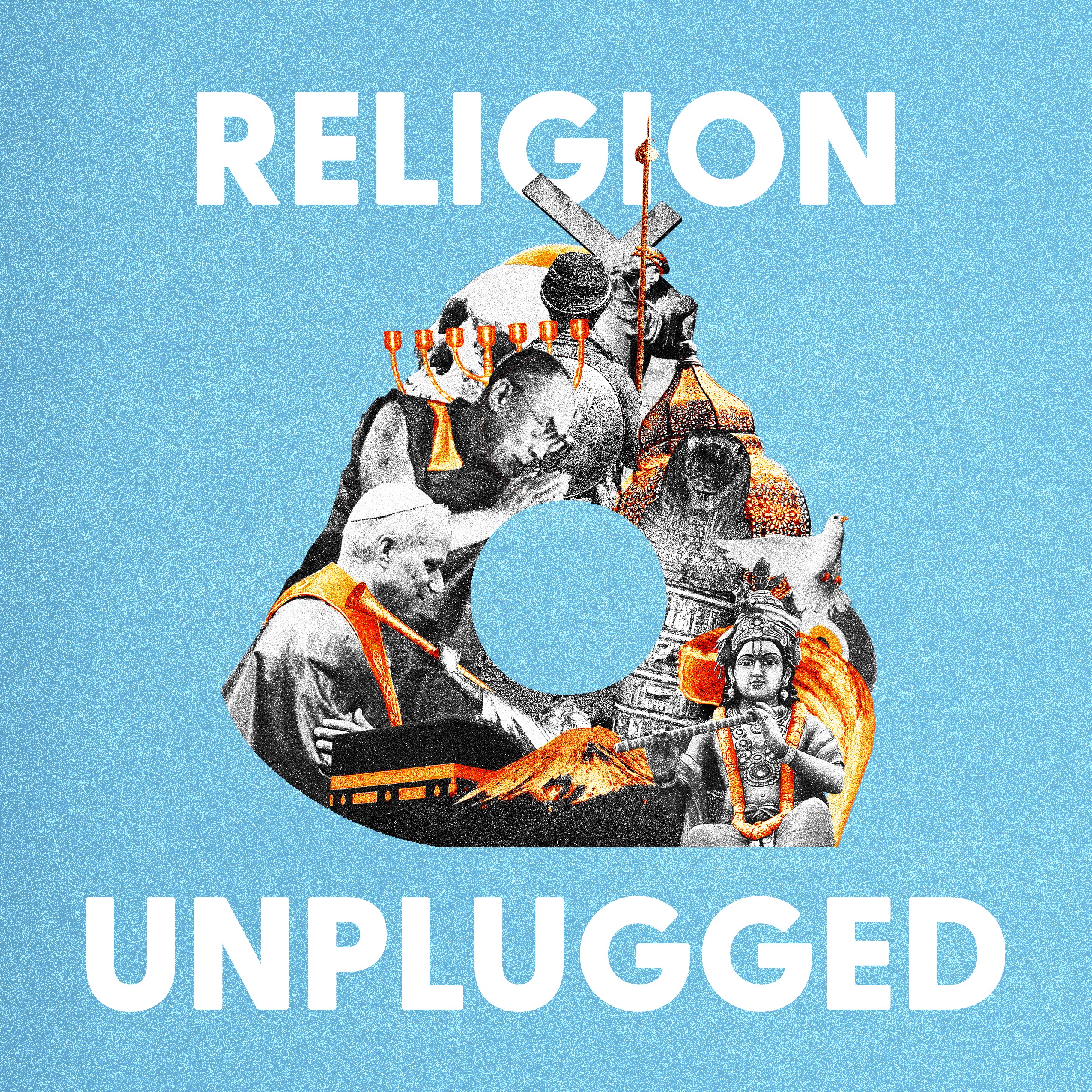
Religion Unplugged
by The Media Project
Religion explored through candid conversations and original reporting. This podcast is powered by The Media Project, a network of more than 1,000 journalists worldwide. TMP acknowledges that religion is growing and becoming more, not less important in the world.
-
231
Are Big Churches As Healthy As Small Ones?
In C.S. Lewis’s Mere Christianity he says: “the Church exists for nothing else but to draw men into Christ, to make them little Christs. If they are not doing that, all the cathedrals, clergy, missions, sermons, even the Bible itself, are simply a waste of time”This idea—that the point of the church is to make disciples is, at its core, not a highly contested one. But ideas about the way disciples are made and the context in which discipleship happens are much more varied.And, in these conversations, the question of a church’s size looms large.On the one hand you have the small church. It could be anywhere from just a handful of members to a few hundred, but, in any case, there is a much greater likelihood for congregants to build personal relationships with those leading the church, a greater sense of a tight-knit community where everybody knows one another and oftentimes a wide variety of ages in attendance, with some congregants having attended for the bulk of their lives.On the other hand you have the large church. Maybe its attendance is in the upper hundreds, the thousands or even the ten-thousands. This substantial attendance often means the ability to acquire a large chunk of land and employ a staff of seasoned professionals for everything from worship leaders who sound like pop-stars to trained baristas for their in-house cafes. And, with these resources and this influence, there is a greater ability to quickly raise money for disaster relief or needs in the congregation. There may be more comfort for new believers to not feel like they are standing out in the crowd. And the culture might be one which more naturally attracts non-christians.Criticism from one size of church to the other is not uncommon—the small churches will say congregants don’t know their pastors at large churches. The large churches will say the small churches aren’t going to reach unbelievers.But, what size is right for a church? Is there one at all? To find out, I spoke with Karl Vaters. Vaters was a pastor for decades, and now he creates resources dedicated to helping small churches thrive. Back in 2024, he wrote a book called “De-Sizing The Church” which investigates the way many churches pursued growth in attendance above all else, often to their detriment. Vaters’ book doesn’t demonize church growth, but instead asks pastors and congregants to consider what it means to be a healthy christian community, without anchoring that health to merely the number of people in the pews.
-
230
Pope Leo XIV Before The Papacy
This week marks one year since Cardinal Robert Prevost became Pope Leo XIV.The late Cardinal Francis George who once presided over Leo’s hometown of Chicago famously said that there would never be an American Pope until the United States went into political decline.Whether Leo’s election to the papacy confirms this decline or proves Cardinal George incorrect, the reality of an American pope came as a surprise to most of us.Following the controversial papacy of Pope Francis, efforts to predict and understand the cardinals who were most likely to take his place were plentiful.Every major news outlet submitted its predictions for who would succeed Francis. Maybe another Italian with Cardinal Pizzaballa or Zuppi? Maybe the pontiff would be an African like Cardinal Sarah or Cardinal Turkson? Or Maybe the conclave would make history in electing Cardinal Tagle as the first Asian pope? But, on most of these lists, Robert Prevost, the American who ministered in Chiclayo, Peru, was absent.So, almost immediately after Prevost entered the central balcony at St. Peter’s Basilica, there was a scramble to find out who he was, and what his priorities would be during his papacy.And while several books have been published about Leo, it seems the definitive biography of Prevost’s life is finally here.Elise Ann Allen’s “Pope Leo XIV: The Biography” was published last week. Allen is a Vatican reporter who currently works as a Senior Correspondent at The Crux. She knew Prevost before he was pope and was the first to interview him after his election to the papacy.On this week’s episode, I spoke to Allen to find out who Pope Leo XIV is, what has shaped his ministry and what he might hope to accomplish in his years as pope.
-
229
Can Virtue Save American Conservatism?
This July, the United States will celebrate its 250th year as an independent nation.The Founding Fathers established the U.S. on the foundation of the ideals they believed in. The Declaration of Independence famously says: “We hold these truths to be self-evident, that all men are created equal, that they are endowed by their Creator with certain unalienable Rights, that among these are Life, Liberty and the pursuit of Happiness.--That to secure these rights, Governments are instituted among Men, deriving their just powers from the consent of the governed…”Here we see equality, justice and the knowledge of a creator being upheld and dignified.We see similar themes in the constitution. Its preamble reads: We the People of the United States, in Order to form a more perfect Union, establish Justice, insure domestic Tranquility, provide for the common defense, promote the general Welfare, and secure the Blessings of Liberty to ourselves and our Posterity, do ordain and establish this Constitution for the United States of America.Again, justice appears, as does peace, perfection and blessings.All of these ideas are deeply intertwined with religious principles. And, this remains true despite the great variety of belief present among the founding fathers. While some were certainly Christians, many were very skeptical of Christianity and several others were deists.But for the Founding Fathers, these were not principles that only religious people could respect, they were common virtues—ideas that all Americans ought to see as essential to a flourishing society.But, while this virtue is baked into the very founding documents of our nation, what does its role look like in politics today?To find out, I spoke with Stephanie Slade. Slade is a senior editor at Reason magazine and the author of an upcoming book called “Fusionism.” In her book, Slade argues that the pursuit of virtue and liberty ought to be at the center of American policymaking. She argues that there was a time when conservative politicians in particular exhibited this balance well, but that, today, politicians who openly fight for legislation that upholds both virtue and liberty are largely absent from the most powerful rooms on American soil.
-
228
How Both Fantasy and History are balanced in House of David
At Religion Unplugged, we talk a lot about how faith shows up in modern movies and tv shows. And, more and more, we are noticing a positive shift. Movies about religion are getting better funding, booking high profile actors and holding their own at the box office.One of the projects, that fits this category is Amazon’s House of David. “House of David” follows the Biblical epic that is the life of King David, which has, so far, traced his journey from a nobody shepherd boy to a great warrior who slays the giant Goliath. All while the Errant King Saul rules the Israelites. The Show stars Michael Iskander as David, Ali Suliman as King Saul, and Stephan Lang as Samuel the Prophet.When the series came out last year, Religion Unplugged’s Culture Critic, Joseph Holmes, said he believed it had potential to be even better than The Chosen, which has across the board, turned heads for its radical commitment to both Biblical accuracy and excellent artistry. With the release of House of David’s second season, Joseph called it “one of the best things the faith-based film space has ever made.”One of Joseph’s most consistent praises for the show has been its ability to balance history and fantasy in a way that treats the story both as an epic Bronze Age myth and as the carefully told story of a man whose life is deeply important to millions of people all around the world.On this week’s show, Holmes interviewed Jon Gunn, Executive Producer. The two talk through this balance of myth and reverence, the evolution of faith in film, the complications of portraying romance in a time where arranged marriage was the norm, and more.
-
227
In God’s Name: Stories Of Faith and Vigilante Justice
Categorizing those who do violence is a messy business.What one writer might call the actions of a terrorist, another might refer to as the work of a freedom fighter.The very individuals who are called heroes, warriors and revolutionaries by some, can be categorized as villains, murderers, and radicals by another.But when the morality of a violent person is highly controversial or just ambiguous, we have a separate, more fuzzy term–we call them a vigilante.The earliest uses of vigilante seem to be taken from the Spanish word for watchmen, vigilante.Various dictionaries state that a vigilante is somebody who seeks to act outside of the law to enact justice.For religious people, the idea that what is right and wrong is bigger than just was is legal or illegal, is extremely familiar.While much of the legal system may coincide with a religious person’s worldview, it is virtually unthinkable that the two would be fully aligned outside of a theocracy.And, most religious people are content to keep away from legal, but spiritually impermissible wrongdoing by means of their own community and self control.But for some, this hasn’t been enough. The wrongdoing of fellow citizens and governors is so egregious to them, that they have no choice but to act out–in sometimes violent ways.In order to understand what kind of person is willing to take the law into their own hands for the sake of their God, I explored religious vigilantism in recent history, very recent history and ancient history.These stories cover Christianity, Islam, and Judaism in three separate acts with violence ranging from verbal harassment to mass suicide.#vigilante #vigilantes #abolition #abolitionism #johnbrown #johnbrownsbody #muslimpatrol #zealots #zealot #simonthezealot #christianity #islam #judaism
-
226
Can Conservative Christians Take Back Mainline Churches?
When you picture an American church building, what do you think of? Is it a gothic, palatial cathedral that dwarfs its neighboring buildings and carries with it an air of ancient mystery? Is it a small, white chapel with a sharp steeple and a quiet humility about its presence? Or does an American church conjure up a visual that isn’t all that glorious and isn’t all that quaint—something like a strip mall or a sprawling campus of boxy structures reminiscent of a convention center?While many Americans might picture the latter, equating all American Christianity with the sort of no-bells-and-whistles aesthetic approach of evangelicalism, American christianity is no stranger to beautiful architecture.In nearly every American city, beautiful, complex church buildings can be found—spires, stained glass, clock towers, and vaulted ceilings are not only present in American protestant churches, they are downright common.In fact, some of the most historically American church traditions such as the PCUSA and the Episcopal Church are in possession of many of these houses of worship. But for many conservative protestants, the beauty of the church building stands in sharp contrast to the theological departure many of the mainline traditions have from orthodoxy. With many mainline traditions affirming LGBTQ lifestyles and, more importantly, calling into question core Christian doctrines such as the bodily resurrection of Christ or the authority of scripture, it has been generally accepted that theologically conservative believers ought to steer clear of the mainline and join more orthodox congregations—even if they meet in an old bank or a local elementary school.But, that position may be changing. In 2023, Christian Gen-Z YouTuber Richard Ackerman, known online as Redeemed Zoomer, began Operation Reconquista. Operation Reconquista, which now appears to have changed its name to Operation Reformation, is a movement of American Christians who believe that restoring orthodoxy in mainline churches is possible and deeply important. And they don’t discriminate by denomination. Operation Reformation seeks to reform the Episcopal Church, The United Methodist Church, The Presbyterian Church USA, The Evangelical Lutheran Church of America and others. Their strategy is to have Christians join the few, but findable mainline congregations who hold to more traditional Christian views, thus strengthening the conservative minority as the progressive majority, in their view, inevitably dies out.And, though it certainly is a motivation, the movement isn’t merely about reclaiming the physical church buildings. It is about reclaiming the cultural influence that many of these denominations hold in the American public. These churches often already have robust networks of service and outreach organizations, they are located conveniently in the center of American towns and they are generally well connected to many facets of American life, from local government to community events.To better understand why conservative Christians are beginning to consider joining a mainline church and why their presence just might be effective, Culture Critic Joseph Holmes interviewed Joe Colletti, who is known online as Young Anglican. Colletti was previously a member of the Anglican Church in North America, but has recently left the ACNA to join The Episcopal Church. Though he has been vocally cautious and even resistant of Operation Reconquista since its founding, he has now embraced the mainline, but with a key difference from the rest of the movement: Colletti is interested only in the reclaiming of the Church which sits at the center of historical American social influence: the Episcopal Church.
-
225
Iranians Are Ready To Be Free
It’s been 3 weeks since the United States and Israel attacked Iran, killing Supreme Leader Ali Khamenei.And, for 3 weeks, rockets have flown across the Middle East in all directions. The UAE, Saudi Arabia, Qatar and Iraq have kept their guard up as different assets are targeted.As these oil-rich nations are thrown into turmoil, gas prices in the U.S. have gone up by nearly a dollar in the last month, with many Americans wondering when the increase will slow down.More crucially, two different water desalination plants have been hit. These facilities are essential for the hydration of millions of Middle Easterners—and neither the U.S., Israel or Iran have taken responsibility for these destabilizing attacks.Over 20,000 people are suffering injuries from the war, and over 2,500 people have been killed, with the majority being in Iran and Lebanon.Babies, not even a year old, have been among the casualties, as have 168 other children at an Iranian elementary school.And even after Khamenei’s death, it is clear that Iran has pockets brimming with replacement leaders who support the continuance of his extremist regime.So, in a conflict where death is abundant and instability is crashing in from all sides, it is worth asking: “what do the Iranian people stand to gain from all this chaos?”To answer this question, I sat down with Erica Kasraie. Kasraie is an Iran-born American, Middle East expert, human rights activist and producer of a short documentary called “Occupied Homeland,” which details the January 2026 massacre of Iranian protesters and the history of the Iranian people. Kasraie was also formerly the Middle East Advisor to a member of the U.S. House of Representatives Armed Services Committee.In this week’s podcast, Kasraie speaks on how the Islamic revolution came to be, the difference between Iranian culture and Islamic culture, the possibility of democracy in Iran and her hopes and fears for the future.Tags:#iran #khamenei #humanrights #islam #women #war #muslim #christian #jew #jewish #minorities #us #israel #middleast #persian #iranian
-
224
Why You Should Seek Beauty In Ancient Places
Many of the most enduring displays of human artistic greatness have been, in some way, religious.The Egyptian pyramids were constructed to accommodate the needs of a king’s soul after his death.The oldest architectural structures still standing today are almost exclusively temples, and archaeologists hypothesize that many ancient cave paintings depict religious scenes and images.As history progressed, towering cathedrals, opulent mosques, and brilliantly ornate Hindu temples were erected and maintained for centuries. Worshipful hymns and poems abound in nearly all religious communities. Sacred texts are transcribed with careful calligraphy and detailed illustrations. Elaborate dances celebrate the supernatural, and massive marble statues are carefully carved to depict the holiest beingsThe beautiful things that humans have made throughout time, have most often been made for a deity.But, in a secularized world, the purpose of art is much more varied. Today, art is most often defined as creative self-expression—there has been a clear shift from creating for a higher power to creating for the rest of humanity. But, has the absence of spiritual motivation made art worse, or has the decision to tell human stories for a human audience made excellence more attainable?Actor, director, and producer David Henrie is interested in this question. It’s one of the reasons he recently took a trip to Italy. This trip was filmed and is now available as a 6 episode documentary series called “Seeking Beauty” in which Henrie engages with some of the most sacred Italian churches and artwork to understand the motivations and beliefs of the artists who created them. Religion Unplugged’s Culture Critic Joseph Holmes interviewed Henrie to understand his own faith journey and what he learned from centuries of Italian Catholicism.Seeking Beauty: https://www.ewtn.com/programs/9875-seeking-beauty#davidhenrie #henrie #christianity #catholicism #seekingbeauty #art #expresssion #artist #architecture #cathedral #church #wizardsofwaverlyplace #howimetyourmother
-
223
What Do the 2026 Oscars Have to Say About Religion?
2025 was a big year for film. Theaters drew people in for a wide variety of stories. Moviegoers saw thrillers like Paul Thomas Anderson’s “One Battle After Another” and Josh Safdie’s “Marty Supreme.” They saw the returns of beloved characters with James Gunn’s “Superman” and James Cameron’s “Avatar: Fire & Ash.” They embraced the strange with “Bugonia,” the romantic with “Materialists” and the tragic with “Frankenstein.”But, as has been increasingly the case in recent years, droves of moviegoers also showed up to films with heavily religious themes.Faith based studios and directors produced a variety of faith-forward movies with family-friendly animated movies like “David“ or “Light of The World” and more mature films such as “Guns and Moses” or “The Last Rodeo.But faith also appeared in many religiously unaffiliated Hollywood films, such as the latest installment of the “Knives Out” franchise which focused on the murder of a controversial catholic priest and Ryan Coogler’s “Sinners,” which explored the clashes of spirituality and conventional religion.As the Oscars are fast approaching this weekend, Religion Unplugged’s Culture Editor Jillian Cheney and Film Critic Joseph Holmes sat down with public intellectual and theologian Paul Anleitner. Paul is the President and CEO of Goodmakers, and the author of “Based on a True Story: Vibe Shifts, the End of Deconstruction, & the Reboot of Meaning,” which comes out this summer and is available for pre-order now. Jillian, Joseph and Paul talk through the spiritual and religious themes of some of this years’ most beloved Oscar Nominees including “Sinners,” “Train Dreams,” “One Battle After Another” and “F1.”#oscars #goodmakers #podcast #paulanleitner #traindreams #sinners #f1 #onebattleafteranother
-
222
What Maduro's Capture Means For Religious Freedom in Venezuela
On January 3rd of this year, in the middle of the night, U.S. special forces broke into the Home of Venezuela’s President, Nicolás Maduro, and abducted him and his wife.U.S. military presence in Venezuela had been creeping up for months—with much of it being attributed to cartel suppression. But, when President Trump posted an image on Truth Social depicting Maduro in a Nike Sweatsuit and a blindfold aboard the USS Iwo Jima, many Americans were left wondering, "What happens next?" and, just as crucially, "Can the U.S. Government do that?"But while human rights advocates from around the world cautiously celebrate the downfall of the authoritarian dictator, life for many Venezuelans has not changed radically, and the regime Maduro was a part of remains in power through his Vice President, Delcy Rodríguez.Another part of that regime that may have outlived Maduro’s rule is the Venezuelan Government's bribery of certain churches. Under Maduro, extra cash and remodeled church buildings were exchanged for pastoral support of the government.And for the churches that refused to bow the knee, there have been multiple cases of intense verbal harassment, leading many to consider Venezuelans as having a suboptimal form of religious freedom—despite a constitution which protects that liberty.For this week’s podcast, I spoke with Knox Thames and Anna Lee Stangl. Knox worked in the U.S. State Department under both Obama, and Trump as a Special Advisor for Religious Minorities. He is also the author of Ending Persecution and International Religious Freedom Advocacy. Anna Lee is the Head of Advocacy and Team Leader of Latin America at Christian Solidarity Worldwide USA.Thames and Stangle talked through religious freedom before and after Maduro, the way Venezuelan politics has been shaped by the nations around it, Trump’s confusing justification for keeping Maduro’s Vice in power, and concerns for Latin American religious liberty at large.Tags:#venezuela #maduro #religiousfreedom #humanrights #liberty #freedom #church #christianity #latinamerica #latino #venezuelans
-
221
What Changed The Faith-Based Film Industry?
Christian movies have a pretty negative reputation.They are criticized for being cheesy, preachy, poorly acted, poorly written, and generally prioritizing lesson-teaching over entertainment or artistic excellence.But, in recent years, their Rotten Tomatoes scores have been on a steady uptick. The critical reviews contain more of the nuance given to secular films, and, en masse, viewers seem to be more positive about their experiences.So, what’s happening?The tide that has turned in the faith-based film industry is multifaceted. The studios have become willing to give Christian directors bigger budgets. Writers have started telling stories with more complicated heroes and honest portrayals of life. Skilled and well-established actors like Patricia Heaton, Zachary Levi, Kelsey Grammar, and Dennis Quade are being hiredOne of the innovators behind the industry’s compounding improvement is Andy Erwin.Andy Erwin and his brother Jon helped found Kingdom Story Company in 2019. The studio has been responsible for some of the biggest and most positively reviewed Christian films to date—including Jesus Revolution, Sarah’s Oil, and The Best Christmas Pageant Ever. But the Erwin brothers’ breakout hit was 2018’s “I Can Only Imagine.” The film follows MercyMe’s vocalist Bart Millard from his childhood growing up with an abusive father to his creation of one of the most popular contemporary Christian songs of all time.Now, they’re back with the sequel, “I Can Only Imagine 2” which came out in theaters last week.Religion Unplugged’s Culture Critic, Joseph Holmes, sat down with Erwin to better understand where the Christian film industry is headed and why the story of “I Can Only Imagine” needed to be expanded on. I Can Only Imagine: https://icanonlyimagine.com
-
220
Debunking The Myth That Jews Are Bad At Sports
This year’s Winter Olympic Games are filled with Jewish athletes.They can be found in hockey goals, cross country slopes, bobsleds, and skating competitions.But, despite a robust representation in Milan and an even more significant representation in the Paris games of 2024, the stereotype that Jews are bad at sports has not fully vanished.The stereotype is a very old one, but it was probably made most popular by none other than Hitler himself. It has become such a popular delusion that even many Jewish writers and entertainers have adopted it.In order to understand how this stereotype began, and why it is so egregiously incorrect, I sat down with Writer and Radiologist Michael Meyerson.Michael was a tennis player in his younger years and began researching and writing about Jewish Athletes in his spare time as a way to debunk the stereotypeMichael’s 300-page book, “Tragedy & Triumph” details the stories of countless jewish athletes who competed in the Olympic Games.Michael explores the constant struggle that Jews have had throughout history to be respected in athletic circles—and it turns out to be much bigger than just the infamous Hitler games.Notably, Michael’s book covers several athletes whose stories have made it into major films such as Chariots of Fire and The Boys In The Boat. He even touches on Martin Reisman, the hustling table-tennis player whose life inspired last year’s critically acclaimed Marty Supreme.Michael and I talked about his purpose in writing the book, the strange moment when gliding was considered an Olympic Sport, the reason many Jews are so good at fencing, and much more.Tragedy and Triumph: https://www.amazon.com/Tragedy-Triumph-Second-Olympics-Perspective/dp/0645343250
-
219
Why Nathan Clarkson Thinks He's The Worst
In the Apostle Paul’s 1st Biblical letter to Timothy, Paul writes that Christ came into the world to save sinners. He follows that up by stating that he is the foremost sinner.This is sometimes translated as Paul being “chief of sinners” and even as him being, plainly, “the worst.”It’s this idea that Christian actor, writer, and podcaster Nathan Clarkson uses to justify the title of his new book: “I’m The Worst.”Nathan’s work goes against the cultural current.In an age where many loud voices urge us to put away thoughts of self-criticism and turn instead toward radical self-acceptance, Nathan argues that to truly value ourselves is to understand where we have failed and where we need to grow.Furthermore, Nathan encourages his readers to spend less time bemoaning the people who are making the world worse and more time actively working on what we can do to make the world better.Nathan has acted in The Purge, Silicon Valley, FBI: Most Wanted, Past Lives, and many other movies and TV shows. In addition to acting Nathan has produced multiple feature films through his production company, Clarkson’s Creations. He is also a Publishers Weekly Bestselling Author for his book Finding God in Hollywood, among others.Religion Unplugged’s Culture Critic, Joseph Holmes regularly co hosts a podcast with Nathan called The Overthinkers, so this week, the pair sat down on our podcast, to discuss Nathan’s personal cycles of failure and self-improvement, the ways we villainize the people who differ from us, and how a self-critical mindset can still coincide with self-love.
-
218
Inside South Africa's Pastoral Sex Abuse Crisis
South Africa has a sexual abuse crisis. And while many of these attacks occur on the streets or in the home, every month, several cases of rape take place in churches and are perpetrated by pastors.The assaulted individuals come from every ethnic group, age, social class, and even gender.For over a decade, tens of thousands of South Africans have been violated in their communities.To better understand South Africa’s abuse crisis and how faith communities are involved, I sat down with Vicky Abraham.Vicky is an investigative journalist based in Johannesburg, South Africa. In addition to her work at Religion Unplugged, Vicky’s work has appeared in The Roys Report, the Mail & Guardian, City Press and many other publications.Vicky’s article last week, entitled “South Africa’s Gender-Based Violence Crisis Reaches The Pulpit” details the incredible range of sexual violence that is occurring at the hands of the person who parishioners often trust most, their pastor.Abuse of teenagers is incredibly frequent, with many abusers having been abused in adolescence themselves and then perpetuating the cycle of sexual violence. But Vicky noted that even very elderly people and babies under a year old have fallen victim to abuse. Vicky walked me through the complex path that victims often have to walk in order to report their abuser. When brought to church authorities, many victims are rebuked and told that what they say is going to harm the church and disrupt the spiritual community.For men, who are also frequently victims, police officers will often mock them for having been sexually assaulted, heaping shame on an already devastating situation.Vicky’s investigation into pastoral sex crimes is ongoing—with new cases appearing all the time. And while she is pleased with the outraged reactions from many healthy churches and even South Africa’s President, Cyril Ramaphosa, there is still a long way to come.#southafrica #southafrican #churches #pastors #christianity #abuse #awareness #africa
-
217
25 Years On The Godbeat With Bobby Ross Jr.
In 2025, the whole world watched as Chicago native Cardinal Robert Prevost was elected Pope Leo XIV, the first American pope. Again, everyone watched as Conservative Christian Apologist Charlie Kirk was shot and killed at Utah Valley University.But while religious news events like these were known world round, other important stories are being covered all the time by journalists like Bobby Ross Jr., a veteran religion reporter.In addition to covering Kirk and Leo, Bobby also wrote about Christian parents grieving in the wake of the Central Texas floods, faith’s role in The Oklahoma City Thunder’s championship-winning season, and the possibility of Christian higher education in Europe.So on this week’s episode of the Religion Unplugged Podcast Matthew Peterson sat down with Bobby to discuss not only the news trends he anticipates in the year to come, but also his career of 25 years covering faith through on-the-ground reporting in all 50 states and in 20 different countries.Bobby started his career of reporting on what he calls “the Godbeat” back in 2001, when he was working for the Oklahoman.Today, he is Editor-in-Chief of The Christian Chronicle, which focuses on covering Churches of Christ all over the globe. He also writes his column, the “Weekend Plug-In” every Friday at Religion UnpluggedBobby and Matthew's conversation spanned how his interest in baseball shaped his initial career decision, how he maintains fairness and accuracy when covering difficult subjects within his faith tradition, and even how to discern what is true in the age of social media and AI.#religion #godbeat #religionnews #journalist #journalism #christianchronicle #2026 #bobbyrossjr #interview #podcast
-
216
Ryan Burge And The Vanishing Church
Religion sociologist and Religion Unplugged contributor Ryan Burge sits down with culture critic Joseph Holmes to discuss Ryan's book "The Vanishing Church" and why the church has lost its ability to bring Americans together.
-
215
Ministering To Mariners: The Seamen's Church Institute
The cargo shipping industry is vital to the sustenance of the modern world. However, the millions of mariners who make the system possible often go unnoticed by the masses. For nearly 200 years, The Seamen's Church Institute has worked hard to ensure that seafarers do not feel invisible. Matthew Peterson speaks with members of the organization to understand how they serve mariners and why the work is so important to them.
-
214
Why Make A Movie About The Infancy Gospel?
How does one balance faithfulness to religious tradition with artistic expression? Culture critic Joseph Holmes interviews director Lotfy Nathan on this very topic. Lotfy was raised in the Coptic Christian tradition and grew up to make a horror film about the childhood of Jesus based on the Infancy Gospel of Thomas--starring Nicholas Cage!
-
213
Understanding The Role of Ancestors In Christianity
Christians have many terms for those who came before them. They are called saints, heroes of the faith, and church fathers. But rarely are they referred to simply as ancestors. William H. Lamar IV pastors one of the oldest black churches in Washington, DC. He speaks with Matthew Peterson about his recent book, “Ancestors: Those Who Bless Us, Curse Us, and Hold Us.” He also talks about why it is important for Christians to be aware of the influence of their ancestors, why naming spaces after ancestors can be dangerous, and how Christians can be co-creators with God.Ancestors: https://www.broadleafbooks.com/store/product/9781506482217/AncestorsDonate: https://religionunplugged.com/donate
-
212
Why Lee Strobel Still Believes in Miracles
Few Christians will deny that Jesus and his disciples did miracles 2000 years ago. But does supernatural healing still occur in 2025? On this issue, there is much more debate. But, for New York Times Bestselling Author Lee Strobel, the answer is clear. Culture Critic Joseph Holmes interviews Strobel about his new documentary, The Case for Miracles.The Case For Miracles: https://thecaseformiracles.movieDonate: religionunplugged.com/donate
-
211
Why Trevin Wax Built a New Catechism
Catechesis is almost as old as Christianity itself. And while many catechisms have evolved over the years, the age of catechisms is rarely seen as a drawback — if anything, knowing that a catechism is tried and true can be what makes people trust it. But Trevin Wax and Thomas West believe it is worth developing a new catechism. Trevin speaks with Matthew Peterson about why churches and traditions who neglect catechism ought to reconsider.The Gospel Way Catechism: https://gospelwaycatechism.comDonate: religionunplugged.com/donate
-
210
Inside The “Evangelical Vatican”
American Evangelicalism has major influence over the culture and politics of the U.S. But, where did it all begin? In his recent book, “Jesus Springs,” William Schultz argues that the center of evangelicalism is in Colorado Springs. William and Matthew Peterson talk about how the Western city helped build the evangelical movement into what it is today.Jesus Springs: https://uncpress.org/9781469689371/jesus-springs/Donate: religionunplugged.com/donate
-
209
Who Is The Bible’s Narrator?
Many writers have been credited with the authorship of the Bible. Some Biblical books list their writers explicitly, others are more ambiguous. But is writing the same as narrating? Raffi Magarik’s recent book “Fictions of God” investigates the question of the Bible’s narratology and its effects on both the protestant reformation and epic literature.Fictions of God: https://press.uchicago.edu/ucp/books/book/chicago/F/bo253759253.htmlDonate: religionunplugged.com/donate
-
208
Will Pope Leo XIV Carry On Francis’ Legacy?
Pope Francis was undeniably controversial in Catholic and non-Catholic circles alike. So far, his predecessor has been less polarizing, but are the two popes really as different as they appear? Joseph Holmes interviews reporter and writer Christopher White about his recent book “Pope Leo XIV: Inside the Conclave and the Dawn of a New Papacy.”Pope Leo XIV: https://store.loyolapress.com/pope-leo-xivDonate: https://religionunplugged.com/donate#newpope #pope #popeleoxiv #popefrancis #catholic #catholicism #conclave #vatican #holysee #rome #catholic #christopherwhite
-
207
From Dropout to Doctorate: How Education Can Help Fight Poverty
How did a formerly homeless high school dropout end up with a doctorate in public policy and a poverty relief organization? Matthew Peterson interviews Dr. Terence Lester about his recent book “From Dropout to Doctorate.” Lester explains how education changed his life, how he is fighting poverty in Atlanta, Georgia, and how poverty and education can be deeply intertwined.From Dropout to Doctorate: https://www.ivpress.com/from-dropout-to-doctorate?srsltid=AfmBOoqSH7VrFGv8YO3urnrm8HiYz2vPXGEAxewYniwQZm2wfb58v5bLLove Beyond Walls: https://www.lovebeyondwalls.orgDonate: https://religionunplugged.com/donate
-
206
Christianity’s Evolution From The Gutenberg Bible To Church Live-Streams
“How has christianity changed by the means of transmission?” This is one of the core questions Professor David N. Hempton asks with his book “Christianity at the Crossroads,” in which he recounts the way Christianity has developed from the print revolution to the digital age due to the methods in which it is shared and experienced. Matthew Peterson speaks with Hempton about how these communication styles are interconnected, how the Jesuits existed as a network within a network, how women and men construct networks differently, and more.Christianity at the Crossroads: https://www.cambridge.org/us/universitypress/subjects/religion/church-history/christianity-crossroads-global-church-print-revolution-digital-era?format=HB&isbn=9781009597432Donate: https://religionunplugged.com/donate
-
205
Religious Horror Movies Are Here To Stay
Is it possible for faith-based film audiences and horror film audiences to converge? Despite the seeming chasm between the two genres, some of 2025’s biggest horror films have much to say about faith. Culture Writers Joseph Holmes and Jillian Cheney discuss the role of religion and spirituality in The Conjuring: Last Rites, Sinners and Black Phone 2.
-
204
Inside The Writing of ‘Abduh, A Pioneer of Interfaith Dialogue
Over 100 years ago, Muhammad ‘Abduh grappled with the ways in which Islam and Christianity can coexist. He also explored the ways in which the two faiths have either contributed or restricted philosophical and scientific advancement. Now, due to the book’s ongoing cultural relevance, Mohammed Gamal Abdelnour and Umran Khan have translated ‘Abduh’s “Science and Civilization between Islam and Christianity” into English. Matthew Peterson speaks with the translators about how the book fits into modern interfaith discussion.Science and Civilization between Islam and Christianity: https://press.uchicago.edu/ucp/books/book/distributed/S/bo245009719.html
-
203
Can A Comedy About The Bible Still Be Reverent?
The book of Exodus is full of violence, disease, plagues and power struggle. Can this story be told through the lens of a comedic mockumentary? Culture critic Joseph Holmes interviews Mitch Hudson, director of the new faith-based TV show “The Promised Land,” which presents an “Office”-style twist on the story of Exodus.The Promised Land: https://www.youtube.com/@ThePromisedLandSeries/featured
-
202
How Catholics Built The American Suburbs
Fr. Stephen M. Koeth’s “Crabgrass Catholicism” explores the many ways the Catholic Church drove the creation of suburban culture in postwar America.Crabgrass Catholicism: https://press.uchicago.edu/ucp/books/book/chicago/C/bo250888546.html
-
201
The True Story of A 59-Year-Old College Football Player
Mike Flynt made history by going back to play college football at the age of 59. Now, with a new movie called "The Senior" in theaters from Angel Studios, Mike opens up about his experiences and the strong role faith played.The Senior: https://www.angel.com/movies/senior
-
200
Why Make A Movie About A Crime-Fighting Rabbi?
Culture critic Joseph Holmes talks to filmmaker and author Salvador Litvak about his new faith-based thriller, "Guns & Moses," and how the film reflects the fears and experiences of modern Orthodox Jews. In theaters October 14th.Guns & Moses: gunsandmosesmovie.com
-
199
Why Do People Still Go On Pilgrimages?
Edward Wright-Ríos explores the devotees of Our Lady of Juquila and why pilgrimage is so much more than just “sweaty therapy” in his book “Devotion in Motion: Pilgrimage in Modern Mexico.”Devotion in Motion: https://press.uchicago.edu/ucp/books/book/chicago/D/bo248381442.html
-
198
The Story of Jesus Now Told Through Hand-Drawn Animation
Salvation Poem Project President Brennan McPherson sits down with Film Critic Joseph Holmes to discuss his new hand-drawn animation film about the life of Jesus, "Light of the World," which is in theaters September 5th.Light of The World: https://lightoftheworld.com
-
197
Are We Living In A New Age Of Religious Violence?
Violence done at the hands of religious zealots seems as ancient as war itself. But how do peace-preaching religions become violent? And is religious violence more rampant today than it has been in the past? To find out, Matthew Peterson investigated the rise of Hindu nationalism in India and the ongoing persecution of its religious minorities.ANHAD: https://anhadindia.comCSSS: https://csss-isla.comHansen: https://www.alephbookcompany.com/book/the-law-of-force-the-violent-heart-of-indian-politics/Cavanaugh: https://global.oup.com/academic/product/the-myth-of-religious-violence-9780195385045?cc=us&lang=en&
-
196
How Centuries Of American Racism Impact Modern Families and Churches
After many years as a reporter for The Wall Street Journal, Lee Hawkins composed a memoir about how his investigation into his family's history led him on a journey of self-discovery and forgiveness. Matthew Peterson speaks with Lee about his book, "I Am Nobody's Slave"I Am Nobody's Slave: https://www.harpercollins.com/products/i-am-nobodys-slave-lee-hawkins?variant=42417685856290
-
195
Can AI Help Us Understand The Bible Better?
Matthew Peterson speaks with Alina Buzdugan of the Bible Chat app--an AI-powered tool intended to help believers and non-believers grow spiritually and advance their knowledge of scripture.Bible Chat: https://thebiblechat.com
-
194
Why Do So Many Cultures Have A Version of Noah's Flood?
Matthew Peterson speaks with professor and author Philip C. Almond about his recent book "Noah and the Flood in Western Thought."Noah and the Flood in Western Thought: https://www.cambridge.org/core/books/noah-and-the-flood-in-western-thought/D854F3F09B2AB914D50E274C540BC8D8
-
193
Heaven Help Us: Interview with John Kasich
Are religious people as active in service as they claim to be? Matthew Peterson speaks with author and former Ohio State Governor John Kasich about his recent book “Heaven Help Us,” which explores how faith communities are making America a kinder nation.
-
192
“What If…” 15 Years Later: Interview with Kevin Sorbo
Film and culture critic Joseph Holmes interviews actor Kevin Sorbo about his history in the faith-based film industry, which started with the film "What If?." The film was directed by Dallas Jenkins and returns to theatres August 5th & 7th for its 15th anniversary.#kevinsorbo #hercules #godsnotdead #dallasjenkins #thechosen #christianity #christianfilm #faithbasedfilm
-
191
Understanding The Turban: Interview with Chris Filstrup
How did the turban become so ubiquitous? Matthew Peterson speaks with Chris Filstrup about his and Jane Merrill’s recent book, “The Turban: A History from East to West,” to investigate the origins and legacy of the headgear. The Turban: A History from East to West: https://press.uchicago.edu/ucp/books/book/distributed/T/bo248107952.html
-
190
Is Superman Circumcised?: Interview with Roy Schwartz
Religion Unplugged culture critic Joseph Holmes sits down with Roy Schwartz, author of "Is Superman Circumcised," to discuss the Jewish roots of the world's first and greatest superhero.Is Superman Circumcised: https://mcfarlandbooks.com/product/is-superman-circumcised/?srsltid=AfmBOoqcVvb0Jx6SzCgZpyca-meeutW4pEYZFpjTVkuZrgEovryXzsb-
-
189
Thomas Becket and His World: Interview with Michael Staunton
How did a wealthy royal advisor become one of history’s most famous martyrs? Matthew Peterson interviews Michael Staunton about his recent book “Thomas Becket and His World” to understand the medieval Archbishop of Canterbury. Thomas Becket and His World: https://press.uchicago.edu/ucp/books/book/distributed/T/bo248107940.html
-
188
Biblical Art in India: Interview with Sabrina Siga
Can biblical art find admiration in a majority Hindu Nation? The Media Project board member Jennifer Arul interviews painter Sabrina Siga about her creative journey as both a secular and sacred artist and the slow progress of biblical art in the Indian subcontinent.
-
187
After The Death of God: Interview with Espen Hammer
Is religion bound to die out, or is theism ultimately indomitable? This week, Professor Espen Hammer tells Matthew Peterson about his recent book “After The Death of God.”After The Death of God: https://press.uchicago.edu/ucp/books/book/chicago/A/bo242202719.html
-
186
Inside The News Story: Interview with Journalist/Pastor Paul Prather
Religion Unplugged’s columnist Paul Prather is on the show this week to talk with Matthew Peterson about his pastoring, his journalism career, the importance of balanced news engagement and why vulnerability has been so key to his work.Read Paul's Work: https://religionunplugged.com/news?author=62cf1597d8ba387d85eac503
-
185
Rev. Charles Wesley: Interview with Clive Norris
As a prolific hymn writer and preacher, Charles Wesley continues to influence modern churches around the world. This week, Dr. Clive Norris, editor of “Rev. Charles Wesley (1707–88),” speaks to Matthew Peterson about who Wesley was and what made him so influential.Rev. Charles Wesley (1707-88): https://press.uchicago.edu/ucp/books/book/distributed/R/bo238311671.html
-
184
Amarāvatī & Buddhist Visual Culture: Interview with Jaś Elsner
Is religion strictly textual? Jaś Elsner explores the art and artifacts of one of India's most notable Buddhist monuments in his recent book, "Amarāvatī." Matthew Peterson speaks with Jaś to better understand how visuals inform theological beliefs.Amaravati: https://press.uchicago.edu/ucp/books/book/distributed/A/bo214800056.html#amaravati #buddhism #stupa #amaravatistupa #jaselsner #religiousart #buddha #buddhistart
-
183
Astrology Today: Interview with Rebecca Gordon
For nearly as long as we’ve been around, humans have been looking to the stars to help make sense of the world. But what does that practice look like today? Astrologer, teacher, and author Rebecca Gordon speaks with Matthew Peterson about how she uses astrology in her everyday life and how astrology has affected different religions over the centuries.Visit Rebecca’s Website: https://www.rebeccagordonastrology.comRebecca's Free Guide To Reading Your Birth Chart: https://da264.infusionsoft.app/app/form/religion-unplugged-2025
-
182
30 Years Later: The Kidnapping of The Panchen Lama
It has been 30 years since the Chinese government kidnapped a major Tibetan Buddhist leader. The victim, a six year-old boy, has not been seen since. Matthew Peterson investigates the disappearance and its ongoing ramifications for Tibetan autonomy.
No matches for "" in this podcast's transcripts.
No topics indexed yet for this podcast.
Loading reviews...
ABOUT THIS SHOW
Religion explored through candid conversations and original reporting. This podcast is powered by The Media Project, a network of more than 1,000 journalists worldwide. TMP acknowledges that religion is growing and becoming more, not less important in the world.
HOSTED BY
The Media Project
Loading similar podcasts...