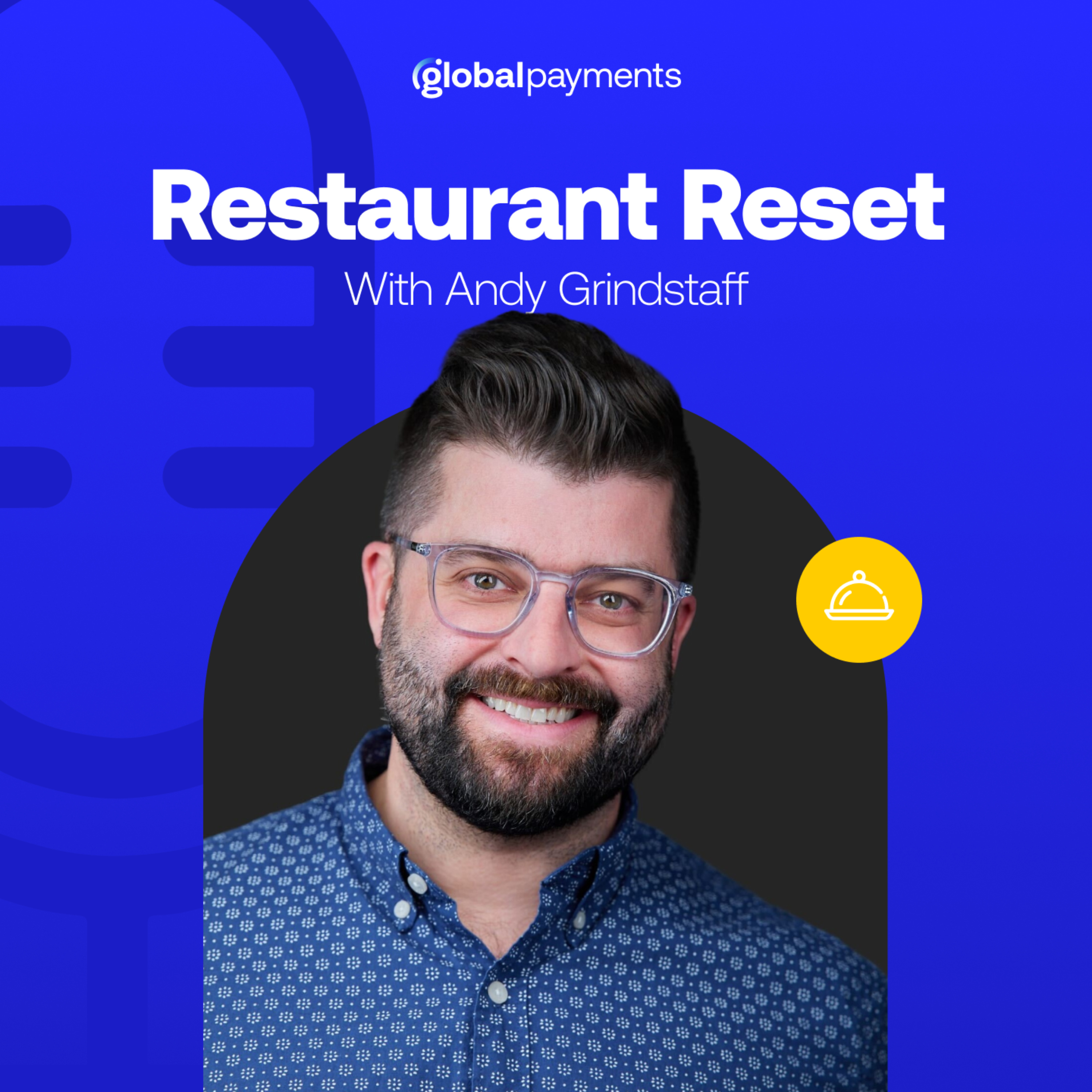
Restaurant Reset

PODCAST · business

Restaurant Reset

The restaurant industry is stretched thin. Margins are tight, labor is scarce, and guests want more for less. I’m Andy Grindstaff, and after years in both operations and restaurant tech, I’ve seen what works.Restaurant Reset is for leaders who know the old playbook is broken. We’ll share real stories, practical systems, and proven ways to run a tighter, smarter, more profitable operation.The industry isn’t dying. It’s evolving. Let’s reset.

  1. 21

    The Software Engineer Who Built a Michelin-Starred Restaurant Empire (By Letting Chefs Be Themselves)

    Roni Mazumdar is a software engineer from RPI who was working at Johnson & Johnson in 2011 when his father, a former fruit cart vendor and retired NYPD traffic cop, was getting close to retirement. Roni didn't want his dad to feel irrelevant. So he found a listing on Craigslist and they opened a 28-seat Indian restaurant together in New York's Lower East Side.His father ran the front of house at 75 years old. The Prime Minister of Malta dined there. And that tiny restaurant, Masalawala, became the first chapter of Unapologetic Foods, the restaurant group Roni has built into one of the most acclaimed Indian dining brands in America.Today, Unapologetic Foods is home to multiple celebrated restaurants, including Semma, which earned a Michelin star by doing something radical: letting Chef Vijay Kumar cook exactly the rural South Indian food he grew up eating. Bloomberg BusinessWeek named Roni one of the people who defined global business in 2021.What We Cover: The Immigrant Shackles: Why Indian restaurants spent decades adding heavy cream, softening spice levels, and asking "mild, medium, hot, or Indian hot?" and what that cost the cuisine What Hospitality Really Is: The fruit cart, the divorce, and why Roni's father understood something no MBA program can teach The Superpower of Authenticity: How Roni builds restaurants by letting chefs be fully themselves, and why that's the strategy, not a side benefit No Rules, No Apologies: What Roni learned watching his father break every hospitality rule in the book (and build the most loyal regulars in the Lower East Side) The Money Trap: Why the biggest restaurant mistakes start with the transaction, and what to lead with instead Take the Leap: Roni on what the accolades don't show you: the debt, the fear, and why the path to success runs straight through failure, not around itIf you've ever wondered what it takes to build something that genuinely doesn't apologize for who it is, this conversation is required listening.Restaurant Reset is brought to you by Genius™ (Link globalpayments.com/genius) from Global Payments, the restaurant point of sale system that can power orders, payments and services in any type of food and beverage setting.

  2. 20

    How Andrew Smith Built a $750M Restaurant Investment Platform by Doing the Opposite of Every PE Firm

    Andrew K. Smith is the co-founder and Managing Partner of Savory Fund, one of the most active restaurant investment platforms in the country. 13 brands. Owned, operated and scaled up to 575 restaurants in 29 states. Over $3 billion in cumulative sales. 40,000+ jobs created.But the story of how he got here starts with his wife Shauna.In October 2008, while the financial world was collapsing, she opened a Kneaders Bakery in Lehi, Utah. Andrew, a three-time tech CEO at the time, told her it was the dumbest idea in the world. She crushed it from month one. A few months later, he called her and said he wanted in. Her response: "Perfect. My dishwasher just called out."That's how a tech CEO ended up in the dish pit. And how the idea for Savory Fund was born.In this conversation on Restaurant Reset, Andrew goes deep on the thesis he's been pounding the table on for 18 years: that restaurants are essential services, not consumer.What We Cover:- Why Andrew says restaurants are essential services, not consumer (and what that misclassification costs operators raising capital)- How three tech exits and a bakery in Utah turned him into one of the most respected restaurant investors in the country- Why the old PE "financial engineering" playbook is now setting restaurant brands on fire- The Savory model: $4M-$15M checks, 65 in-house specialists, and a first-90-days playbook that does almost nothing on purpose- Inside the Mo'Bettahs journey from 6 locations to 63 to the 2025 F&B Deal of the Year- Why scaling from 10 units to 30 is exponentially harder than you think, and what breaks first- The hard truth Andrew tells every young founder who wants a shortcut to what he built- The one founder red flag that makes Savory walk away from a deal every time- How he and Shauna have stayed married 27 years while building two billion-dollar businesses together- Why restaurant failure looks more common than it actually is (and the real closure numbers after year 7)If you're a restaurant operator thinking about raising capital, a founder wondering whether your brand is ready to scale, or anyone building anything and trying to do it the right way, you should definitely listen to this episode of Restaurant Reset.Restaurant Reset is brought to you by Genius™ (Link globalpayments.com/genius) from Global Payments, the restaurant point of sale system that can power orders, payments and services in any type of food and beverage setting.

  3. 19

    The Rick Rubin of Restaurants: How to Build a Restaurant Empire by Making Chefs the Stars with Kevin Boehm

    Kevin Boehm co-founded Boka Restaurant Group in 2002 with a single restaurant in Chicago. Today, Boka operates 30+ restaurants across Chicago, Los Angeles, and Brooklyn, serves 2.5 million guests a year, and generates more than $250 million in annual revenue. Boka restaurant has held a Michelin star for 15 consecutive years. Kevin and his partner Rob Katz won the James Beard Award for Outstanding Restaurateur in 2019.He also co-founded the Independent Restaurant Coalition during COVID, helping secure $28.6 billion in federal relief for independent restaurants. He co-founded BIÂN, a 35,000-square-foot private wellness club in Chicago. He appeared as himself on Season 3 of The Bear. And in November 2025, he published his memoir, The Bottomless Cup, which Bloomberg named one of the best books of the year.This is a masterclass in what it means to build a restaurant group the right way.What We Cover:• The Chef Partnership Model — Why Kevin and Rob built Boka around chefs as stars, not just as employees. How they find chef partners, evaluate them, and structure creative and operational responsibility.• The Chef Audition Process — The exact science behind how Boka has started the partnership process with "a couple hundred" chefs and only gone all the way with about 14. (Spoiler: it starts with "do we think you're smart and do we like you?")• The Restaurateur as Producer — Kevin's Rick Rubin analogy for the restaurateur-chef relationship: "Rick Rubin isn't going to tell Paul McCartney how to write a song, but he might have a great idea Paul can execute."• The Argument That Changed Everything — The exact moment Kevin and Rob realized they had to stop growing and build infrastructure first. "We knew we had to go backwards to go forwards."• Michelin Pressure and What It Really Takes — Why maintaining a Michelin star for 15 straight years is harder than most people realize, and what that kind of sustained excellence actually demands.• Fear of Being Discovered as a Fraud — How "faking it" in the early days drove Kevin to learn faster than anyone around him, and why he built his identity from 20 different mentors.• Whiteboard Yourself — What Kevin would tell his 23-year-old self: get a therapist, study Buddhism, stop drinking, and stop thinking there's a finish line.• 3 Pillars of a Good Life — Kevin's simple framework for knowing if he's on track: purpose, people, and unedited footage.• The Independent Restaurant Coalition — How Kevin went from grieving restaurateur to testifying before Congress and helping secure $28.6 billion in relief. With zero political experience.• Accept People as They Are, Place Them Where They Belong — Kevin's framework for building teams without projecting unrealistic expectations.Kevin Boehm doesn't just build restaurants. He builds platforms for chefs, platforms for careers, and now, with The Bottomless Cup, a platform for honesty about what success actually costs.Restaurant Reset is brought to you by Genius™ (Link globalpayments.com/genius) from Global Payments, the restaurant point of sale system that can power orders, payments and services in any type of food and beverage setting.

  4. 18

    John Tesar: The Chef Bourdain Called a Genius, Dallas Called Its Most Hated, and Michelin Called a Star

    John Tesar's career is the kind of arc that sounds made up.Anthony Bourdain called him "the single most talented cook I ever worked with." He later wrote Tesar into Kitchen Confidential as Jimmy Sear,— a character defined by equal parts chaos and brilliance. In 2011, D Magazine put "The Most Hated Chef in Dallas" on its cover with John's face. Eleven years later, in 2022, he earned a Michelin star at Knife & Spoon in Orlando.Tesar has seen this industry from every angle: the celebrated highs, the very public lows, and the hard-won years of building something that actually works. He ran Knife, his Dallas steakhouse, to over $16 million in revenue from 83 seats over nine years. He's licensed that brand to hotels. He's been broke, written off, and rebuilt. And he came on Restaurant Reset this week with zero interest in sugarcoating any of it.This is one of the most honest conversations we've had on the show.What We Cover:• John's blunt reality check for operators who think they can outperform their own math• Why the math of restaurant finance works completely differently at different scales• How Knife became a scalable brand from a single 83-seat Dallas steakhouse, and the specific decisions behind that number• Why John gives up control, decision-making, and P&L upside when licensing Knife to hotel partners• His take on today's commercial real estate market• Why the wrong hire costs you more than a headcount• Why he'd rather put a human being behind a job than a machineJohn Tesar has lived more restaurant lives than most operators will ever know. This is the conversation you need if you want to understand the real business behind the kitchen.Restaurant Reset is brought to you by Genius™ (Link globalpayments.com/genius) from Global Payments, the restaurant point of sale system that can power orders, payments, and services in any type of food and beverage setting.

  5. 17

    From One Steakhouse to 13 Restaurants and a $75M Empire: Benjamin Berg on Ego, Debt, and Giving Up Control

    What does it actually take to build a restaurant empire from a single steakhouse without a famous name, without outside investors, and without ever letting your team see you doubt the destination?Benjamin Berg has the answer. And the war stories to prove it.Berg is the founder of Berg Hospitality Group, one of Houston's most dynamic restaurant companies: 13 concepts, 1,200 employees, and $75M+ in annual revenue. He started with B&B Butchers & Restaurant on Washington Avenue, built The Annie Café & Bar with James Beard Award-winning Chef Robert Del Grande, and has since launched Turner's, Trattoria Sofia, B.B. Italia, and more. He's a Cornell-trained hospitality operator who started as a bellman and bartender, survived a business partner who got deported and sued him for $1 million before he ever served a single table, navigated pandemic debt, and came out the other side with hard-won convictions every operator needs to hear.He doesn't sugarcoat. He doesn't perform. He just tells you the truth about what this business really takes.In this conversation, Andy and Ben get real about:• What you actually need to check off before you sign a lease (and why loving your product is not enough)• Why the best restaurant concepts aren't selling food at all, and how to engineer the emotional attachment that turns guests into loyalists• How Ben went from running his own payroll in QuickBooks to leading a $75M company — and why letting go was the hardest and best thing he ever did• Why giving 30% of your company to your leadership team might be the most high-leverage growth decision you'll ever make•Why "poor parking" can nuke an otherwise brilliant concept, and what making the guest experience effortless really looks like in practice• How Ben built most of his empire on cash flow, what happened when COVID forced him into debt, and the lesson he learned at 46 that now guides every decision he makesBen Berg is the real deal: direct, self-aware, and full of the earned wisdom that only comes from building, losing, and rebuilding. This one is required listening for anyone who owns a restaurant, manages one, or is seriously thinking about opening one.Restaurant Reset is brought to you by Genius™ (Link globalpayments.com/genius) from Global Payments, the restaurant point of sale system that can power orders, payments and services in any type of food and beverage setting.

  6. 16

    How to Build a Restaurant Brand Before You Sign a Lease with Sarah Gavigan @ Otaku Ramen

    What does it actually look like to build a cult restaurant brand in a boomtown city and then have the guts to pull back before it kills you?Sarah Gavigan didn't set out to open Nashville's first ramen shop. She moved back to Tennessee after two decades in LA film and music production, couldn't find a decent bowl of ramen anywhere in the city, and started cooking 50 pounds of pork bones at 2am in her backyard.Three years of pop-ups. No lease or culinary training or restaurant experience at all.In 2015, she opened Otaku Ramen in Nashville's Gulch. It was profitable from day one, because she'd spent three years building a brand before she ever built a kitchen. She expanded. She rode Nashville's boomtown momentum. And then she started to see what almost every hot-city founder misses until it's too late: the hype cycle ends. The developers fluff you. The taxes rise. The big boys move in. And the thing that got you here won't keep you here. Sarah closed her East Nashville location after 16 months. Then closed West.Her operating philosophy: "Screw Up Fast." Ego is expensive. Correction is free. And the founders who survive long-term are the ones who can tell the difference between the two before the market does it for them.What We Cover:• Why Sarah's #1 piece of advice to any founder is to survive three years as a pop-up before you sign a single lease (and what those three years actually build)• How private equity, skyrocketing development costs, and property taxes create a five-year shelf life for restaurants in "hot" cities — and how to spot the ceiling before you hit it• What Sarah's 48-hour framework actually looks like when something goes wrong with food, service, or numbers, and why ego is always the enemy of a fast fix• Why umami is a neurological response (not just a flavor), how stacking amino acids triggers serotonin and dopamine, and why Sarah says a ramen cook's only job is to create happiness in a bowl• Why Sarah's father told her never to hire consultants, why she didn't listen, and what she lost because of it — plus her argument for why founders need operating partners, not advisors• Sarah's bar for every aspiring restaurant owner: you need to be able to tell her your food costs and profit margins after three martinis. If you can't, you're not ready• How three years of ramen pop-ups gave Sarah something money can't buy — a loyal audience waiting on day one — and why the brand always has to come before the brick and mortar• The Super Happy Noodle story: why Sarah invested in a noodle manufacturing operation, why her customers rejected it, and what she learned about "if it ain't broke, don't fix it" • Book Recommendation: The Long Tail by Chris Anderson and why Sarah thinks the next generation of founders needs to study customer pattern behavior more than any business bookWhether you're running your first pop-up, thinking about signing your first lease, or managing multiple locations in a market that's getting hotter by the day… this episode is packed with honest, operator-level truth from someone who's lived every part of it.Restaurant Reset is brought to you by Genius™ (Link globalpayments.com/genius) from Global Payments, the restaurant point of sale system that can power orders, payments and services in any type of food and beverage setting.

  7. 15

    The Chef Who Almost Became a Pharmacist: Ben Diaz on Building a Brand Before the Brick-and-Mortar

    Ben Diaz didn't set out to become a chef. He thought he was going to be a pharmacist, until he followed a girlfriend to the California School of Culinary Arts and cooking took over. He never looked back.What followed was two decades of building in the most demanding kitchens in Southern California. Hotels. High-volume events. Catering for 1,000 people at JW Marriott, Omni San Diego, Luxe City Center… places that don't forgive improvisation. Places that force you to preset yourself the night before, because tomorrow doesn't wait. He trained formally in France, earned certifications most chefs never pursue, joined the boards of culinary organizations, and quietly built one of the most complete operational skill sets in the industry.Then he did something most chefs don't do: instead of rushing to sign a lease, he built the infrastructure first. CBDcuisine, his culinary consulting brand, has been running since 2010: menu engineering, SOPs, HACCP development, and yes, POS troubleshooting and KDS formatting (not something you see on many chef bios). He wrote a book. He launched Tacos El Chapin, a pop-up taqueria built on the flavors of Guatemala, Southern Mexico, and Central America. He built brand partnerships with Cambro, Lumina Farms, and Kikkoman. He's been on television. And through all of it, his message has stayed the same: it's never too late to learn, to pivot, or to start over, because the kitchen has room for anyone willing to put in the work.He's not in a rush to open his permanent restaurant. He's building it right.What We Cover in this episode of Restaurant Reset:• How Ben went from pre-pharmacy to culinary school on a whim• Why a chef's temperament is the single fastest way to lose or keep a kitchen• What Ben actually means when he says he's "in search of the perfect taco”• The specific zero-waste kitchen techniques Ben uses that never feel like cost-cutting to the guest• Ben's three-question framework for evaluating any distributor relationship• Why saying yes to every sponsorship deal is the fastest way to become forgettable• The operational instincts that high-volume hotel kitchens force you to develop and that most independent restaurant chefs don't learn until it's too lateIf you've ever wondered whether there's a smarter path to opening your own place, this episode is the blueprint. And if you're somewhere in the middle of a pivot, wondering if you're too late to start over in this industry, Ben's answer is clear: you're not.Restaurant Reset is brought to you by Genius™ (Link globalpayments.com/genius) from Global Payments, the restaurant point of sale system that can power orders, payments and services in any type of food and beverage setting.

  8. 14

    The Michelin-Rated Chef Who Won Top Chef and Walked Away from Fame: Nick Elmi's Story

    Nick Elmi won Top Chef Season 11 in New Orleans. Most winners parlay that into a media career, a fast-casual empire, or a product line. Nick went back to Philadelphia and opened a 22-seat restaurant called Laurel.For 12 years, he cooked in that kitchen. He earned a James Beard nomination for Best Chef: Mid-Atlantic. Michelin came to Philly and listed his restaurant. Before that, he trained under Georges Perrier (one of the greatest French chefs in American history) and built a mentorship tree of his own, sending cooks into kitchens across the country.Then, in November 2025, he closed Laurel. Not because it failed. Because the lease ended and he decided it was time.In this conversation, Nick opens up about why he chose the kitchen over the celebrity circuit, the math that every operator needs to do before they open (and most don't), and a personal transformation that changed everything: quitting drinking in September 2017… losing 20 pounds, becoming a better husband and father, and showing up for his restaurant in a way he couldn't before.Nick rarely does interviews. This one is different.What We Cover:• Why Nick turned down the ‘Top Chef’ fame machine and went straight back to the line, and what that choice cost him and earned him over 12 years• How you treat your team on Monday morning determines how they treat your guest on Friday night, and why most operators get this backwards• Nick's blunt advice for anyone with a "vision": sit down with a calculator first. Seats × turns × average check = your actual business. Dream later.Why Nick asks every candidate "Where are you coming from?" instead of "Where do you see yourself in 5 years?" and what it reveals• How getting sober in 2017 transformed Nick's leadership, his marriage, his body, and his ability to show up for his team every single day• What it looks like to end a 12-year run not in crisis, but in control and why more operators should think about their exit before they need one• Why Nick brings the same intensity to a $1.5M restaurant as a $7M one, and what that says about what actually drives great operatorsIf you've ever wondered what happens after you "make it" in this industry or if you're building something and want to hear from someone who did it quietly, did it well, and walked away with no regrets: this is the episode.Restaurant Reset is brought to you by Genius™ (Link globalpayments.com/genius) from Global Payments, the restaurant point of sale system that can power orders, payments and services in any type of food and beverage setting.

  9. 13

    Why Having Shaquille O'Neal as Your Business Partner Is Both a Superpower and a Curse with Josh Halpern @ Big Chicken

    What does it actually take to go from 2 locations to 50 (with hundreds more in the pipeline) without VC money and without losing your mind? Josh Halpern, Chief Business Officer of Crave Worthy Brands and the architect behind Big Chicken's explosive growth, sits down with Andy Grindstaff to pull back the curtain on one of the most unusual brand-building journeys in the restaurant industry.Yes, Shaquille O'Neal is involved. Yes, there's a Charles Barkley sandwich story that involves a live TV moment on TNT. And yes, Josh turned down over 6,000 franchise applications in three years. But underneath all the Shaq-sized stories is a deeply practical, hard-won playbook for how to scale a restaurant brand without torching your franchisees, your culture, or your quality.Josh came up through Fortune 100 giants (Procter & Gamble, Clorox, Anheuser-Busch) before landing in fried chicken. That CPG background gave him a lens most restaurant operators never develop: the difference between the shopper and the consumer. The person whose credit card taps the terminal and the person with the sandwich in their hand? They're often not the same person. And if your loyalty program, your promotions, and your marketing don't account for that gap, you're burning money and missing your actual customer entirely.Whether you're running one location or managing a multi-unit portfolio, this episode is packed with frameworks, stories, and hard truths that will change how you think about growth, guests, and what legacy actually looks like in this industry.Topics covered:• Why Shaq is the greatest trial mechanism on earth — and why that's also a massive risk• The shopper vs. consumer distinction that most restaurant loyalty programs completely miss• The Four Wins framework and how it applies to franchisees, suppliers, and guests• Six Sigma thinking applied to straws, ramekins, and franchise unit economics• Why Big Chicken merged into Crave Worthy Brands — and what multi-brand scale actually buys you• The Myers-Briggs profile of hospitality (and why AI can't replicate it)• How younger guests see themselves as brands — and what that means for your loyalty strategy• The one hard truth about scaling that founders refuse to face• Book recommendations: True North by Bill George, Founderology by Kathleen Wood, and Culture That Rocks by Jim KnightRestaurant Reset is brought to you by Genius™ (Link globalpayments.com/genius) from Global Payments, the restaurant point of sale system that can power orders, payments and services in any type of food and beverage setting.

  10. 12

    From Cashier to CEO: Carin Stutz on Building a 40-Year Restaurant Career (And Why We're Failing the Next Generation)

    Carin Stutz started working at McDonald's in high school to help pay for college. She never left the restaurant industry. Over the next four decades, she climbed from hourly employee to the C-suite… serving as COO of Red Robin, President of McAlister's Deli, CEO of Cosi and Native Foods, and holding leadership roles at Wendy's, Applebee's, and Brinker International (Chili's, Maggiano's).In 2022, she was inducted into the Fast Casual Hall of Fame. But ask her if it's easier for women to reach the top today, and her answer is immediate: "Absolutely not."In this conversation, Carin shares hard truths about restaurant leadership: from the real reason young workers see this as a "stepping stone" career (hint: we're doing it to ourselves), to why she was passed over for promotion seven times before a mentor told her the uncomfortable truth that changed everything.What We Cover:• The Restaurant PR Crisis – Why managers complaining about their jobs is killing our talent pipeline, and what "feeding people's souls" really means• Financial Literacy for Operators – How to read a P&L, why your Google rating determines if you "exist," and the STORM framework for turning around struggling restaurants• Women in Leadership – Carin's experience being told "How do I tell my wife I have a woman as a boss?" and why women today still face the same uphill battle• Franchising Done Right – What franchisors owe franchisees (and vice versa), why corporate needs "skin in the game," and how to balance innovation with protecting the brand•Technology + Hospitality – How to implement kiosks and automation without losing the human touch that keeps guests loyal• The GLEAM Network – Carin's mentorship organization that's paired over 600 people, runs a 9-week bootcamp for hourly employees, and hosts in-person leadership events to show emerging leaders this can be a real career• Career Advice That Changed Everything – The question Lou Klassen asked her that shifted her entire approach: "Who is in the room when the decision is made?"If you've ever wondered whether restaurants can be a viable long-term career—or if you're leading a team and want to inspire the next generation—this episode is required listening.Restaurant Reset is brought to you by Genius™ (Link globalpayments.com/genius) from Global Payments, the restaurant point of sale system that can power orders, payments and services in any type of food and beverage setting.

  11. 11

    The Boring Work That Will Save Your Restaurant’s Future with Carl Orsbourn

    Before “AI” became the buzzword on every restaurant tech panel, Carl Orsbourn was already leading the digital transformation of foodservice. The co-author of Delivering the Digital Restaurant and The Path to Digital Maturity, Carl has been on both sides of the industry: running 1,000 ampm convenience stores with $1.3 billion in sales before leaving it all to build ghost kitchens, dynamic pricing startups, and now lead AI innovation for global restaurant brands.In this episode, Carl joins Restaurant Reset host Andy Grindstaff for a brutally honest breakdown of what’s hype, what’s real, and why the boring stuff (clean data, integrated systems, and operational clarity) is the true foundation of every restaurant’s future.You’ll Learn:• Why 85% of restaurant AI projects fail (and how to be in the 15%)• The truth about ghost kitchens: what worked, what didn’t, and what’s next• How dynamic pricing could quietly change how restaurants manage margins• Why “bad data beats good AI every time” and how to clean yours up• What small operators can do right now to improve their digital maturity• Which tech trends are overhyped… and which ones are just getting started• Why AI should augment humans, not replace them• Carl’s career pivot from billion-dollar corporate exec to startup disruptor and what it taught him about reinventionCarl’s message is clear: you can’t automate passion, but you can use data to scale it. If you’re ready to future-proof your restaurant without losing your soul, this one’s for you.Listen to “Restaurant Reset” on Spotify, Apple, or wherever you get your podcasts.Restaurant Reset is brought to you by Genius™ (Link globalpayments.com/genius) from Global Payments, the restaurant point of sale system that can power orders, payments and services in any type of food and beverage setting.

  12. 10

    Culture Is Your Restaurant’s Secret Sauce with Marissa Andrada (Chipotle, Starbucks, Red Bull)

    Before she was known as The People Doctor, Marissa Andrada spent three decades leading people and culture at some of the world’s biggest brands: Chipotle, Starbucks, Red Bull, Kate Spade, and GameStop. Her career has touched over a million frontline employees, and she’s made one thing clear: you can’t scale a brand without scaling your people.In this conversation, Marissa sits down with Restaurant Reset host Andy Grindstaff to unpack why the future of restaurants isn’t just AI or automation… it’s human connection.She shares powerful stories and hard-earned lessons from turning Chipotle around post-crisis, helping Starbucks double down on its values, and teaching leaders to bring kindness, purpose, and empathy into the way they run teams.What You’ll Learn:• How to define a purpose and set of values that actually guide your restaurant day to day• Why “kind leadership” outperforms “nice leadership” and how to practice it• The 90-day rule that determines whether a new hire stays or leaves• How to turn hourly jobs into meaningful, upwardly mobile careers• Why understanding pop culture might be the smartest market research you’ll do this year• The surprising link between pets, well-being, and employee retentionMarissa’s approach is simple but profound: Lead with kindness. Build with purpose. Never forget that culture is your competitive advantage.🎧 Listen now on Restaurant Reset, available wherever you get your podcasts.Restaurant Reset is brought to you by Genius™ (Link globalpayments.com/genius) from Global Payments, the restaurant point of sale system that can power orders, payments and services in any type of food and beverage setting.

  13. 9

    Hard Truths Every Restaurant Owner Needs to Hear: A Q&A for Restaurant Leaders

    What happens when restaurant owners finally get honest about what’s breaking their business? In this special Q&A solo episode, Andy answers the toughest questions he’s received from operators… the ones that don’t have easy answers, but every leader needs to hear.He covers the hard truths about what’s really killing margins, why burnout isn’t a badge of honor, and how to make smarter, faster decisions in a rapidly changing industry.If you’ve ever felt stuck between rising costs, overworked teams, and too many tech tools that don’t talk to each other, this conversation will hit close to home. Andy breaks down practical, no-fluff frameworks you can actually use. These are drawn from years of working with some of the most innovative restaurant brands in the country.In this episode:• Why you can’t keep eating rising food costs and how to raise prices the right way.• The difference between a burnout problem and a delegation problem.• Simple frameworks for fixing broken inventory systems.• What makes loyalty programs actually work (and what doesn’t).• How to connect your tech stack without losing your mind.• What AI means for restaurants and how to tell real innovation from noise.This episode is a conversation every restaurant operator needs to hear and a reminder that you’re not alone in the chaos, and that sometimes, a few better systems can make all the difference.🎧 Listen to the full Q&A episode of Restaurant Reset now.Restaurant Reset is brought to you by Genius™ (Link globalpayments.com/genius) from Global Payments, the restaurant point of sale system that can power orders, payments and services in any type of food and beverage setting.

  14. 8

    Why Simplicity Beats Customization in Restaurant Technology, with Tony Roy @ Popmenu

    Tony Roy was leading international operations for a global tech giant when he made a bold decision: leave it all behind to build tools for single-location restaurants.Today, as the Co-founder and COO of Popmenu, Tony’s helped more than 10,000 independent operators grow smarter, simplify their systems, and save hundreds of hours a year through automation and AI.In this episode, Tony and Andy go deep on what makes great restaurant technology and why most companies get it wrong.They break down:• Why empathy beats enterprise when building for operators• The most overlooked challenges small teams face when adopting tech• How automation and AI can actually make restaurants more human• The real reason restaurants churn from tech platforms• What separates restaurants that are thriving from those struggling to keep upIt’s a masterclass in clarity, empathy, and execution… and a roadmap for the next decade of restaurant innovation.🎧 Listen to the full episode of Restaurant Reset wherever you get your podcasts.

  15. 7

    Why the Future of AI in Restaurants Starts at the Drive-Thru, with Jason Riggs

    When most people think of innovation in restaurants, they picture shiny new POS systems or loyalty apps.Jason Riggs wants you to look somewhere else: the edge of the operation. The headsets, timers, and drive-thru systems that quietly run the business.As the former GM of Hardware at PAR Technology and current strategic leader at Audivi AI, Jason has built everything from fleet tracking for truckers to livestreaming tech at GoPro (and now, some of the most advanced AI-ready systems in the restaurant industry).In this episode, Jason joins Andy Grindstaff to explore how operators can build technology that actually works for people, not against them. They break down:What you’ll learn:• Why the drive-thru became the new command center for restaurants• How to avoid “overinvesting in the current paradigm” and future-proof your systems• What most AI vendors aren’t telling you about “humans in the loop”• Why hardware is still the foundation of every great restaurant experience• How to think like an ecosystem builder, not a tech collector• What “tech spaghetti” is and how to stop serving it to your staff• The three questions every operator should ask before buying AIThis is one of the most practical, grounded conversations on restaurant innovation you’ll hear all year.If you care about where technology is really headed (and how to keep your systems (and your sanity) intact) this one’s for you.Learn more about Jason’s work here: https://mach10pm.com/🎧 Listen to the full episode of Beyond the Register wherever you get your podcasts.

  16. 6

    The Chef Who Left Fine Dining to Reinvent Vending Machines

    Nathan Downs went from cooking in Michelin-starred restaurants to building a technology company that’s rethinking how the world eats.As CEO and cofounder of FoodSpot, Nathan is leading the charge in smart vending: a growing industry that’s making fresh, high-quality food available 24/7 in hospitals, campuses, offices, and even food deserts. His mission is simple but ambitious: democratize access to fresh food and eliminate the massive waste built into America’s food systems.In this episode of Restaurant Reset, Andy Grindstaff and Nathan dive deep into:• Why Nathan left a prestigious chef career to enter food tech• How he built a hardware/software company without millions in VC funding• The 40% food waste crisis and why distribution is the real problem• What separates a vending machine that prints money from one that fails• The overlooked art of making unattended retail feel human• How AI and automation can empower chefs instead of replacing them• The future of food equity, brand access, and the “microstore” modelNathan’s journey is equal parts startup grit, culinary craft, and systems thinking. It’s a masterclass in how to blend technology and hospitality to build something that actually feeds people.Listen now to learn why the next restaurant revolution might not happen in restaurants at all.

  17. 5

    How Starbucks’ Digital Strategy Changed Every Restaurant Forever, with Adam Brotman

    When Adam Brotman joined Starbucks, the company didn’t even have free Wi-Fi. A few years later, he helped architect one of the most powerful digital ecosystems in restaurant history: the Starbucks app, Rewards program, and Mobile Order & Pay system that changed how every brand thinks about loyalty.In this episode of Restaurant Reset, Adam breaks down how it all happened and what every operator can learn from it.We cover:• How Starbucks built the “digital flywheel” connecting loyalty, mobile, and in-store ops• The five-year journey from idea to mass adoption• The operational chaos (and magic) behind Mobile Order & Pay• How to earn cross-functional trust across tech, ops, and baristas• The real value of guest data — and what happens when you don’t own it• Why AI will make loyalty more personal, not less• How operators can use ChatGPT to analyze data and optimize decisions• Why Adam believes AI is about to make hospitality more humanAdam also shares his playbook for evaluating new technology (from Web3 loyalty to AI-powered personalization) and the lessons he’s carried from Starbucks to J.Crew, Brightloom, and Forum3.If you’ve ever wondered how digital transformation actually happens inside a restaurant brand, this is the episode to study.Timestamps:00:00 — Intro01:30 — The moment Starbucks Rewards became a revenue engine03:10 — Building the Starbucks “digital flywheel”06:30 — Learning the business from ops before pitching innovation11:40 — How long it really took to launch Mobile Order & Pay16:50 — Balancing sexy tech with store-level practicality24:00 — The unseen problems new tech creates35:00 — Delivery apps and the cost of losing your data43:00 — How operators should really use ChatGPT45:00 — The next evolution of loyalty: personalization + community50:00 — AI and the future of hospitality53:00 — Adam’s top book recommendations

  18. 4

    How Jackson Kalb Turned Failure Into a Restaurant Empire

    Most operators try to scale their restaurants by tightening systems or adding tech and somewhere along the way, they lose the soul that made guests fall in love in the first place.Chef Jackson Kalb never made that trade.From being fired at 26 and sleeping in his childhood bedroom to now running seven successful restaurants across Southern California, Jackson has built a hospitality group that scales without sacrificing humanity.In this episode of Restaurant Reset, host Andy Grindstaff sits down with Jackson to unpack the lessons, systems, and failures behind his rise from rejection to resilience.You’ll learn how to operationalize gut instinct, design systems that listen to guests, and build culture that embraces iteration instead of fearing it.Episode Timestamps00:00 — Introduction and why breakfast burritos still matter01:30 — How a free burrito giveaway turned into a line around the block04:30 — The secret to the perfect breakfast burrito (and why details matter more than hype)06:00 — Balancing gut instinct and data when making big decisions09:00 — The power of learning through mistakes: “Mistakes aren’t optional. They’re required.”11:40 — Pivoting Jemma di Mare into Ospi Brentwood: how to evolve a concept without losing culture15:50 — Getting fired at 26, hitting rock bottom, and the vow that started it all20:30 — Raising $90K after 450 rejections and opening a 22-seat restaurant on $3K rent28:40 — Why ignorance can be an advantage when starting out34:30 — What competing on Top Chef without taste or smell taught Jackson about resilience40:00 — The invisible systems that make or break profitability44:20 — Scaling across cities: balancing standardization with local adaptability47:30 — How to use guest feedback as your most valuable data source48:00 — Why stoic philosophy powers Memento Mori Hospitality (“Remember you’ll die” really means “Remember you’re alive”)50:00 — Closing thoughts and what’s next for Jackson and Memento Mori HospitalityListen to this episode on: Spotify | Apple Podcasts | YouTubeAnd make sure you subscribe so you never miss an episode.

  19. 3

    How to Make Menu Innovation Actually Work (and Pay Off), with Mike Gieseman

    How do you bring a legacy restaurant brand back to life?Not with buzzwords. Not with gimmicks. But by giving people food they actually crave (and making sure your team can execute it flawlessly).Chef Mike Gieseman has spent two decades building craveable, profitable menu items for brands like Qdoba, Quiznos, and Taco Del Mar. As VP of Culinary & Innovation for REGO Restaurant Group, he led Quiznos’ comeback—reviving an iconic brand through smart menu design, operational discipline, and an obsession with flavor.In this episode of ‘Restaurant Reset,’ host Andy Grindstaff digs into:• The playbook for brand turnarounds and why it starts in the kitchen, not marketing• Why "approachability" beats novelty• The LTO formula that makes franchisees love innovation (and drives higher margins)• The story behind the Burnt Ends Sandwich and Bison Reuben that brought Quiznos back into the spotlight• The truth about plant-based proteins and what's next for sustainable innovation• Why outsourcing culinary is killing originality in restaurants• How to keep innovation craveable and operationally achievableMike’s approach blends chef creativity with business pragmatism: simplify the kitchen, respect your brand DNA, and make food that guests can’t stop talking about.Chapters:00:00 — The hidden world of culinary R&D03:00 — Why testing too much can kill innovation07:30 — The profitability formula behind LTOs14:00 — How to innovate inside a turnaround brand19:30 — Nostalgia vs. novelty: getting guests to try something new24:30 — Overhyped trends (sorry, Nashville Hot Chicken)29:00 — Why outsourcing culinary is killing creativity36:00 — The future of plant-based proteins40:30 — How to revive a tired brand without losing your identity

  20. 2

    Why Most Restaurants Bleed Talent (And Nick Sarillo Doesn’t)

    Under 25% turnover isn’t luck. It’s a proven system.Nick Sarillo (Nick’s Pizza & Pub) breaks down how a carpenter’s mindset turned two suburban Chicago units into high‑throughput, low‑churn operations: a purpose the team actually uses on shift, training that certifies to a 1–5 standard (not “shadow me”), a visible ladder (Rookie → Pro → Expert) tied to pay, and an accountability test that fixes problems fast: Don’t care, Don’t know how, Can’t do it. We also cover his open‑book huddles, the email that drove a 110% sales surge in five weeks, and the hard lessons from closing a Chicago location. If you lead a team, this is a blueprint you can steal tomorrow.If your “help wanted” budget is bigger than your training budget, you’re buying turnover. Nick shows the opposite approach—engineer the job, teach life skills, and make excellence objective. The result: sub‑25% annual turnover and a team of mostly first‑job teenagers who run a 9,000‑sq‑ft, high‑volume room with confidence.What you’ll learn:Write a purpose your team can use on shift. Start with a collective subject (“Our dedicated family…”), present tense, and specifics your competitors can’t copy. Put it in orientation and training; certify people by having them write down where they lived it with a guest.Replace “shadow me” with standards. Use a 1–5 scoring sheet per role; certify only when a team member hits 4s. Excellence becomes evidence‑based, not opinion.Make the restaurant a school. Post the Rookie → Pro → Expert ladder (3 skills per rung) and tie pay to certifications so progress = paycheck.Decompose complex stations. At the host desk, Nick trains four roles: Greeter, Seater, Filler (350 seats, headset, live map), and Host Coordinator (the strategist).Diagnose mistakes in 60 seconds. Don’t care, cDon’t know how, Can’t do it. If you hire for values, it’s usually #2 or #3 → retrain or reassign.Open‑book rhythms that matter. Weekly 20‑min huddles on sales & cash‑flow projections (not just post‑mortems) so everyone sees the runway.Leading through a crunch. In 2011, road construction cratered sales ~60%. Nick leveled with his community; the email (his team’s idea) drove a ~110% sales bump over five weeks and kept the doors open.Knowing when to walk away. He closed a Chicago location after a year: rent too high, runway too short, over‑optimistic sales. Lesson—get a conservative real‑estate model and a team that pushes back on assumptions.Scaling culture before units. Bake purpose, values, training, and communication tools into onboarding so culture scales with you.Chapters00:00 — Why Nick: sub‑25% turnover in two busy units01:16 — From carpenter to operator: design work that means something08:08 — Purpose that runs a shift (“Our dedicated family…”) + how to teach it10:58 — Onboarding & values: make culture a certifiable skill12:39 — Coaching & feedback: loop, performance, direct (life skills)14:47 — Training over recruiting: define A‑plus and teach to it16:14 — Don’t care / Don’t know how / Can’t do it (accountability test)20:04 — Host stand, decomposed: Greeter/Seater/Filler/Coordinator24:17 — The ladder: Rookie → Pro → Expert (pay tied to skills)33:44 — 2011 crunch: open‑book huddles + the 110% “save the shop” email38:08 — Chicago closure: rent, runway, realism41:20 — Scale culture before units: systems that survive growth43:15 — Reading list: Built to Last, Resonant Leadership, Emotional Intelligence 2.0, The Fearless Organization, Good Jobs (discussed)

Type above to search every episode's transcript for a word or phrase. Matches are scoped to this podcast.

Searching…

No matches for "" in this podcast's transcripts.

Showing of matches

No topics indexed yet for this podcast.

Loading reviews...

ABOUT THIS SHOW

The restaurant industry is stretched thin. Margins are tight, labor is scarce, and guests want more for less. I’m Andy Grindstaff, and after years in both operations and restaurant tech, I’ve seen what works.Restaurant Reset is for leaders who know the old playbook is broken. We’ll share real stories, practical systems, and proven ways to run a tighter, smarter, more profitable operation.The industry isn’t dying. It’s evolving. Let’s reset.

HOSTED BY

Genius For Restaurants

CATEGORIES

URL copied to clipboard!