
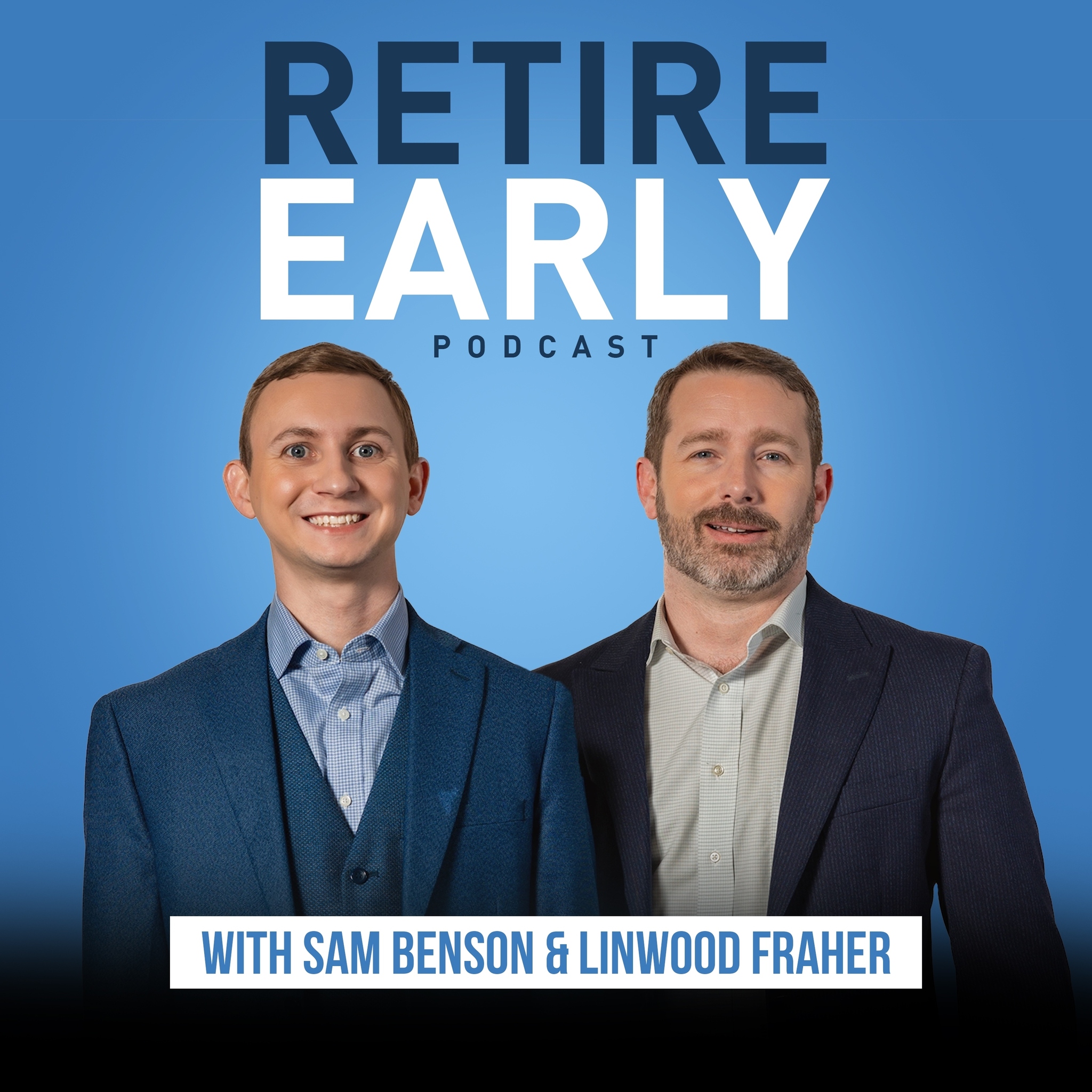
PODCAST · education
Retire Early Podcast
by Sam Benson & Linwood Fraher
Welcome to ”The Retire Early Podcast,” your essential guide to achieving the retirement you’ve always dreamed of—sooner rather than later! Hosted by Sam Benson and Linwood Fraher, this podcast is tailored specifically for individuals aged 50-65 who are passionate about retiring early and living their best lives.Each week, we’ll dive deep into essential retirement topics including tax-efficient strategies, smart investing, healthcare planning, income optimization, Social Security tips, estate planning, and actionable financial advice. We’ll feature expert insights, inspiring stories, and practical tools to empower you on your journey toward early retirement.Whether you’re planning to retire in 5 years or 15, ”The Retire Early Podcast” equips you with the knowledge and confidence to secure your financial future, maximize your wealth, and enjoy the retirement lifestyle you deserve.Subscribe today and join our community committed to retiring early and th
-
66
Trusts, Annuities, and IPOs Explained
In this episode of the Retire Early Podcast, financial advisors Sam Benson & Linwood Fraher of Martin Wealth Solutions answer listener questions on three important financial topics: inheritance trusts, annuities, and initial public offerings (IPOs). Sam and Linwood break down how inheritance trusts can help protect assets and provide direction for future generations, discuss when annuities may or may not make sense as part of a retirement strategy, and explain the risks and opportunities associated with investing in IPOs. Throughout the episode, they focus on helping listeners understand the practical considerations behind each topic rather than relying on headlines or marketing messages. Whether you're evaluating an inheritance plan, considering guaranteed income options, or curious about investing in newly public companies, this Q&A episode provides valuable insights to help you make more informed financial decisions. http://retirewithmartin.com/ ← Learn about working with us www.planwellretirehappy.com Episode Breakdown 00:00 Introduction to the Q&A episode 00:54 Meet the hosts 01:36 Question #1: What is an inheritance trust? 03:28 Benefits and limitations of inheritance trusts 05:22 How trusts can protect future generations 07:08 Common trust planning mistakes 08:54 Question #2: Are annuities a good retirement tool? 10:42 Understanding different types of annuities 12:34 Pros and cons of annuities 14:12 When annuities may fit into a retirement plan 15:48 Question #3: Should investors buy IPOs? 17:18 How IPOs work and why they attract attention 18:56 Risks and opportunities with IPO investing 20:20 Key takeaways from today's questions 21:40 Final thoughts and closing remarks Disclaimer Opinions expressed herein are solely those of Martin Wealth Solutions, unless otherwise specifically cited. Material presented is believed to be from reliable sources, but no representations are made by our firm as to another parties’ informational accuracy or completeness. Content provided herein is for informational purposes only and should not be used or construed as investment advice or a recommendation regarding the purchase or sale of any security. There is no guarantee that any statements, opinions or forecasts provided herein will prove to be correct. All information or ideas provided should be discussed in detail with an advisor, accountant or legal counsel prior to implementation. Past performance may not be indicative of future results. Indices are not available for direct investment. Any investor who attempts to mimic the performance of an index would incur fees and expenses which would reduce returns. Securities investing involves risk, including the potential for loss of principal. There is no assurance that any investment plan or strategy will be successful.
-
65
What Quiet Millionaires Do Differently
In this episode of the Retire Early Podcast, financial advisors and retirement planners Sam Benson & Linwood Fraher of Martin Wealth Solutions discuss the habits and behaviors they often see in people who quietly build significant wealth over time. Sam and Linwood explain that many millionaires don't look the way people expect. Rather than flashy lifestyles or risky investment strategies, lasting wealth is often built through consistent saving, disciplined spending, patience, and intentional decision-making. They explore the common characteristics that help people achieve financial independence and how those same habits can support an early retirement. Whether you're just beginning your financial journey or are already working toward retirement, this episode highlights practical behaviors that can help build long-term wealth and financial confidence. http://retirewithmartin.com/ ← Learn about working with us www.planwellretirehappy.com Episode Breakdown 00:00 Introduction to today's topic 01:02 Meet the hosts 02:08 What is a "quiet millionaire"? 04:04 Habit #1: Living below your means 06:12 Why spending less matters more than earning more 08:16 Habit #2: Consistent saving and investing 10:22 The power of long-term discipline 12:18 Habit #3: Avoiding lifestyle inflation 14:10 Making intentional financial decisions 16:06 Habit #4: Staying patient during market volatility 18:02 Habit #5: Having a long-term plan 20:04 Common misconceptions about wealthy people 22:08 How millionaires think differently about money 24:16 Lessons anyone can apply today 26:20 Mistakes that can derail wealth building 28:24 Key takeaways and action steps 30:18 Final thoughts and closing remarks Disclaimer Opinions expressed herein are solely those of Martin Wealth Solutions, unless otherwise specifically cited. Material presented is believed to be from reliable sources, but no representations are made by our firm as to another parties’ informational accuracy or completeness. Content provided herein is for informational purposes only and should not be used or construed as investment advice or a recommendation regarding the purchase or sale of any security. There is no guarantee that any statements, opinions or forecasts provided herein will prove to be correct. All information or ideas provided should be discussed in detail with an advisor, accountant or legal counsel prior to implementation. Past performance may not be indicative of future results. Indices are not available for direct investment. Any investor who attempts to mimic the performance of an index would incur fees and expenses which would reduce returns. Securities investing involves risk, including the potential for loss of principal. There is no assurance that any investment plan or strategy will be successful.
-
64
How to Make Sure Your Assets End Up with Who You Want
In this episode of the Retire Early Podcast, financial advisors and retirement planners Sam Benson & Linwood Fraher of Martin Wealth Solutions discuss how to help ensure your assets ultimately go to the people you intend them for. Sam and Linwood explain that protecting wealth isn’t just about growing it — it’s also about structuring accounts, beneficiaries, estate documents, and ownership correctly so assets are passed efficiently and according to your wishes. They discuss how outdated beneficiary designations, poor estate planning, lack of communication, and improper titling can unintentionally send money to the wrong people or create unnecessary conflict within families. This episode focuses on practical ways retirees and pre-retirees can better organize their financial lives, protect their legacy, and reduce the chances of confusion, delays, or unintended outcomes for loved ones. http://retirewithmartin.com/ ← Learn about working with us www.planwellretirehappy.com Episode Breakdown 00:00 Introduction to today’s topic 02:04 Why asset protection isn’t just about investing 04:08 How assets unintentionally end up in the wrong hands 06:12 The importance of updated beneficiary designations 08:20 Common estate planning mistakes 10:26 Account titling and ownership considerations 12:34 Why wills alone may not be enough 14:40 Trusts and other planning tools explained 16:52 Family communication and avoiding confusion 19:02 Protecting inheritances from unnecessary complications 21:08 Divorce, remarriage, and blended family considerations 23:18 Coordinating financial accounts with estate documents 25:26 Keeping your plan updated as life changes 27:40 The risks of poor organization and outdated documents 29:48 Working with professionals to coordinate your plan 32:02 Key takeaways and action steps 35:10 Final thoughts and closing remarks Disclaimer Opinions expressed herein are solely those of Martin Wealth Solutions, unless otherwise specifically cited. Material presented is believed to be from reliable sources, but no representations are made by our firm as to another parties’ informational accuracy or completeness. Content provided herein is for informational purposes only and should not be used or construed as investment advice or a recommendation regarding the purchase or sale of any security. There is no guarantee that any statements, opinions or forecasts provided herein will prove to be correct. All information or ideas provided should be discussed in detail with an advisor, accountant or legal counsel prior to implementation. Past performance may not be indicative of future results. Indices are not available for direct investment. Any investor who attempts to mimic the performance of an index would incur fees and expenses which would reduce returns. Securities investing involves risk, including the potential for loss of principal. There is no assurance that any investment plan or strategy will be successful.
-
63
Lump Sum or Monthly Pension? What You Need to Know
In this episode of the Retire Early Podcast, financial advisors and retirement planners Sam Benson & Linwood Fraher of Martin Wealth Solutions discuss one of the biggest financial decisions many retirees will ever make: what to do with a pension. Sam and Linwood explain why pension elections deserve careful analysis and how rushing the decision can create long-term consequences. They walk through the pros and cons of lump sum payouts versus monthly income options, survivor benefit choices, tax considerations, and how pensions fit into an overall retirement income strategy. This episode helps listeners understand the key factors to evaluate before making a pension decision — and how to avoid costly mistakes that can impact retirement for decades. http://retirewithmartin.com/ ← Learn about working with us www.planwellretirehappy.com Episode Breakdown 00:00 Introduction to today’s topic 01:36 Why pension decisions are so important 03:12 Lump sum vs. monthly pension payments 05:04 When guaranteed income makes sense 06:48 Evaluating the lump sum option 08:30 Tax implications of pension decisions 10:08 Survivor benefit considerations 11:46 Inflation and purchasing power concerns 13:20 How pensions fit into your retirement income plan 15:02 Common pension mistakes retirees make 16:42 Risk tolerance and income stability 18:18 Coordinating pensions with Social Security 20:02 Questions to ask before making a decision 21:44 Real-world planning considerations 23:18 Key takeaways and planning tips Disclaimer Opinions expressed herein are solely those of Martin Wealth Solutions, unless otherwise specifically cited. Material presented is believed to be from reliable sources, but no representations are made by our firm as to another parties’ informational accuracy or completeness. Content provided herein is for informational purposes only and should not be used or construed as investment advice or a recommendation regarding the purchase or sale of any security. There is no guarantee that any statements, opinions or forecasts provided herein will prove to be correct. All information or ideas provided should be discussed in detail with an advisor, accountant or legal counsel prior to implementation. Past performance may not be indicative of future results. Indices are not available for direct investment. Any investor who attempts to mimic the performance of an index would incur fees and expenses which would reduce returns. Securities investing involves risk, including the potential for loss of principal. There is no assurance that any investment plan or strategy will be successful.
-
62
Why Your Heirs May Get Less Than You Think
In this episode of the Retire Early Podcast, financial advisors and retirement planners Sam Benson & Linwood Fraher of Martin Wealth Solutions tackle an important — and often overlooked — question: how much of your wealth will your heirs actually receive? Sam and Linwood explain that the number you see on your account statement is rarely what ultimately gets passed on. They walk through how taxes, fees, timing, account types, and estate planning decisions can significantly impact what beneficiaries inherit. This episode helps listeners understand the hidden factors that can reduce an inheritance — and what steps can be taken now to ensure more of your wealth reaches the people you intend it for. http://retirewithmartin.com/ ← Learn about working with us www.planwellretirehappy.com Episode Breakdown 00:00 Introduction to today’s topic 01:34 Why inheritance numbers can be misleading 03:06 Taxes and how they impact what heirs receive 05:02 Differences between account types (IRA, Roth, taxable) 06:48 How timing affects distributions 08:26 Required distribution rules for heirs 10:10 The impact of estate planning decisions 11:54 Fees and administrative costs 13:28 Common mistakes that reduce inheritance 15:02 How to structure assets for efficiency 16:44 The role of beneficiary designations 18:18 Coordinating estate and tax strategies 20:02 Communicating your plan with heirs 21:36 Key steps to maximize what gets passed on 23:18 Real-world examples and considerations 24:45 Final thoughts and closing Disclaimer Opinions expressed herein are solely those of Martin Wealth Solutions, unless otherwise specifically cited. Material presented is believed to be from reliable sources, but no representations are made by our firm as to another parties’ informational accuracy or completeness. Content provided herein is for informational purposes only and should not be used or construed as investment advice or a recommendation regarding the purchase or sale of any security. There is no guarantee that any statements, opinions or forecasts provided herein will prove to be correct. All information or ideas provided should be discussed in detail with an advisor, accountant or legal counsel prior to implementation. Past performance may not be indicative of future results. Indices are not available for direct investment. Any investor who attempts to mimic the performance of an index would incur fees and expenses which would reduce returns. Securities investing involves risk, including the potential for loss of principal. There is no assurance that any investment plan or strategy will be successful.
-
61
Do You Still Need Life Insurance in Retirement if You've Saved Well?
In this episode of the Retire Early Podcast, financial advisors and retirement planners Sam Benson & Linwood Fraher of Martin Wealth Solutions tackle a common question for those nearing or entering early retirement: If you’ve already built significant savings, do you still need life insurance? Sam and Linwood explain that the answer isn’t always straightforward. They walk through how life insurance needs evolve over time and depend on factors like income replacement, debt, legacy goals, tax considerations, and overall financial independence. This episode helps listeners think through when life insurance may still serve a purpose — and when it may no longer be necessary — so they can make a more informed and intentional decision. http://retirewithmartin.com/ ← Learn about working with us www.planwellretirehappy.com Episode Breakdown 00:00 Introduction to today’s topic 01:34 Why this question comes up often 03:08 When life insurance is essential 05:02 Income replacement considerations 06:46 Debt and financial obligations 08:24 When life insurance becomes less necessary 10:06 Evaluating financial independence 11:48 Legacy planning and wealth transfer goals 13:26 Tax considerations related to life insurance 15:02 Types of policies and how they differ 16:38 Common misconceptions about life insurance 18:14 When it may make sense to reduce or eliminate coverage 20:02 Reviewing your policy as your situation changes 21:44 Key takeaways and decision framework Disclaimer Opinions expressed herein are solely those of Martin Wealth Solutions, unless otherwise specifically cited. Material presented is believed to be from reliable sources, but no representations are made by our firm as to another parties’ informational accuracy or completeness. Content provided herein is for informational purposes only and should not be used or construed as investment advice or a recommendation regarding the purchase or sale of any security. There is no guarantee that any statements, opinions or forecasts provided herein will prove to be correct. All information or ideas provided should be discussed in detail with an advisor, accountant or legal counsel prior to implementation. Past performance may not be indicative of future results. Indices are not available for direct investment. Any investor who attempts to mimic the performance of an index would incur fees and expenses which would reduce returns. Securities investing involves risk, including the potential for loss of principal. There is no assurance that any investment plan or strategy will be successful.
-
60
4 Habits That Can Help You Retire Early
In this episode of the Retire Early Podcast, financial advisors and retirement planners Sam Benson & Linwood Fraher of Martin Wealth Solutions break down four key habits they consistently see among individuals who successfully retire early. Sam and Linwood explain that building wealth for early retirement isn’t about luck or timing — it’s about consistent behaviors and disciplined decision-making over time. They walk through habits like goal setting, regularly reviewing your financial “GPS,” diversification, and maintaining composure during market volatility. This episode provides a simple framework listeners can apply to build momentum, stay on track, and improve their chances of reaching early retirement with confidence. http://retirewithmartin.com/ ← Learn about working with us www.planwellretirehappy.com Episode Breakdown 00:00 Introduction to today’s topic 01:32 Why habits matter more than timing 03:04 Habit #1: Be goal-oriented 04:48 Defining clear financial targets 06:22 Habit #2: Regularly check your “GPS” 08:06 Tracking progress and making adjustments 09:40 Habit #3: Don’t put all your eggs in one basket 11:18 The importance of diversification 12:54 Habit #4: Stay calm when markets get volatile 14:28 Avoiding emotional investing decisions 16:02 How these habits work together 17:38 Common mistakes that derail progress 19:06 Building discipline over time 20:32 Key takeaways and action steps 22:10 Final thoughts and closing Disclaimer Opinions expressed herein are solely those of Martin Wealth Solutions, unless otherwise specifically cited. Material presented is believed to be from reliable sources, but no representations are made by our firm as to another parties’ informational accuracy or completeness. Content provided herein is for informational purposes only and should not be used or construed as investment advice or a recommendation regarding the purchase or sale of any security. There is no guarantee that any statements, opinions or forecasts provided herein will prove to be correct. All information or ideas provided should be discussed in detail with an advisor, accountant or legal counsel prior to implementation. Past performance may not be indicative of future results. Indices are not available for direct investment. Any investor who attempts to mimic the performance of an index would incur fees and expenses which would reduce returns. Securities investing involves risk, including the potential for loss of principal. There is no assurance that any investment plan or strategy will be successful.
-
59
6 Important Financial Questions to Ask Before It’s Too Late
In this episode of the Retire Early Podcast, financial advisors and retirement planners Sam Benson & Linwood Fraher of Martin Wealth Solutions discuss six important questions that can make a meaningful difference for both your retirement plan and your family’s future. Sam and Linwood explain that retirement planning isn’t just about numbers — it’s also about clarity, communication, and preparation. They walk through key questions related to estate planning, financial organization, healthcare decisions, and legacy intentions, helping listeners ensure their families are not left guessing during critical moments. This episode highlights how asking the right questions now can reduce stress, avoid confusion, and create a smoother transition for loved ones down the road. http://retirewithmartin.com/ ← Learn about working with us www.planwellretirehappy.com Episode Breakdown 00:00 Introduction to today’s topic 01:32 Why these questions matter for your family 03:04 Question #1: Do your loved ones know your financial picture? 04:42 Question #2: Are your estate documents up to date? 06:14 Question #3: Who is responsible for key decisions? 07:52 Question #4: Have you communicated your wishes clearly? 09:26 Question #5: Are your accounts and beneficiaries organized? 11:02 Question #6: Is there a plan for healthcare decisions? 12:46 The importance of documentation and accessibility 14:18 Avoiding confusion during difficult times 15:52 Common planning gaps families face 17:24 How to start these conversations 18:54 Key takeaways and next steps Disclaimer Opinions expressed herein are solely those of Martin Wealth Solutions, unless otherwise specifically cited. Material presented is believed to be from reliable sources, but no representations are made by our firm as to another parties’ informational accuracy or completeness. Content provided herein is for informational purposes only and should not be used or construed as investment advice or a recommendation regarding the purchase or sale of any security. There is no guarantee that any statements, opinions or forecasts provided herein will prove to be correct. All information or ideas provided should be discussed in detail with an advisor, accountant or legal counsel prior to implementation. Past performance may not be indicative of future results. Indices are not available for direct investment. Any investor who attempts to mimic the performance of an index would incur fees and expenses which would reduce returns. Securities investing involves risk, including the potential for loss of principal. There is no assurance that any investment plan or strategy will be successful.
-
58
How Large Expenses Can Derail Your Retirement Plan
In this episode of the Retire Early Podcast, financial advisors and retirement planners Sam Benson & Linwood Fraher of Martin Wealth Solutions discuss a risk that can quietly derail even well-built retirement plans: large, unexpected expenses. Sam and Linwood explain how one-time costs — like home repairs, healthcare events, helping family members, or major purchases — can create significant strain on a retirement portfolio if not properly planned for. They walk through how these expenses differ from regular monthly spending and why they require a separate planning approach. This episode provides practical strategies for preparing for large expenses, maintaining flexibility, and protecting long-term retirement sustainability — especially for those pursuing early retirement. http://retirewithmartin.com/ ← Learn about working with us www.planwellretirehappy.com Episode Breakdown 00:00 Introduction to today’s topic 01:32 Why big expenses are often overlooked 03:04 The difference between fixed and unexpected costs 04:40 Common large expenses retirees face 06:08 How big expenses impact retirement portfolios 07:46 The timing risk of large withdrawals 09:14 Planning ahead for major costs 10:48 Building reserves for irregular expenses 12:12 Balancing growth and liquidity 13:46 Avoiding forced selling during market downturns 15:12 Incorporating big expenses into your plan 16:46 Common mistakes retirees make 18:02 Key takeaways and planning tips Disclaimer Opinions expressed herein are solely those of Martin Wealth Solutions, unless otherwise specifically cited. Material presented is believed to be from reliable sources, but no representations are made by our firm as to another parties’ informational accuracy or completeness. Content provided herein is for informational purposes only and should not be used or construed as investment advice or a recommendation regarding the purchase or sale of any security. There is no guarantee that any statements, opinions or forecasts provided herein will prove to be correct. All information or ideas provided should be discussed in detail with an advisor, accountant or legal counsel prior to implementation. Past performance may not be indicative of future results. Indices are not available for direct investment. Any investor who attempts to mimic the performance of an index would incur fees and expenses which would reduce returns. Securities investing involves risk, including the potential for loss of principal. There is no assurance that any investment plan or strategy will be successful.
-
57
8 Tax Planning Steps for Early Retirement
In this episode of the Retire Early Podcast, financial advisors and retirement planners Sam Benson & Linwood Fraher of Martin Wealth Solutions walk through a practical tax planning checklist designed specifically for those pursuing early retirement. Sam and Linwood explain that taxes don’t stop in retirement — and without a plan, they can quietly become one of the largest expenses you face. They break down key areas to evaluate, including withdrawal sequencing, account types, Social Security timing, and Medicare-related tax impacts. This episode provides a simple, actionable framework to help listeners stay proactive, avoid surprises, and build a more tax-efficient retirement strategy. http://retirewithmartin.com/ ← Learn about working with us www.planwellretirehappy.com Episode Breakdown 00:00 Introduction to today’s topic 01:36 Why tax planning matters in early retirement 03:02 Overview of the tax planning checklist 04:28 Step #1: Understand your income sources 05:56 Step #2: Plan your withdrawal strategy 07:34 Step #3: Evaluate tax diversification 09:06 Step #4: Consider Roth opportunities 10:44 Step #5: Be aware of Social Security taxation 12:18 Step #6: Plan for Medicare and IRMAA impacts 13:56 Step #7: Monitor required minimum distributions (RMDs) 15:28 Step #8: Coordinate with a tax professional 16:56 Common tax planning mistakes to avoid 18:20 Key takeaways and next steps Disclaimer Opinions expressed herein are solely those of Martin Wealth Solutions, unless otherwise specifically cited. Material presented is believed to be from reliable sources, but no representations are made by our firm as to another parties’ informational accuracy or completeness. Content provided herein is for informational purposes only and should not be used or construed as investment advice or a recommendation regarding the purchase or sale of any security. There is no guarantee that any statements, opinions or forecasts provided herein will prove to be correct. All information or ideas provided should be discussed in detail with an advisor, accountant or legal counsel prior to implementation. Past performance may not be indicative of future results. Indices are not available for direct investment. Any investor who attempts to mimic the performance of an index would incur fees and expenses which would reduce returns. Securities investing involves risk, including the potential for loss of principal. There is no assurance that any investment plan or strategy will be successful.
-
56
5 Tax Traps That Can Cost You in Retirement
In this episode of the Retire Early Podcast, financial advisors and retirement planners Sam Benson & Linwood Fraher of Martin Wealth Solutions break down some of the most common — and costly — tax traps retirees and pre-retirees face. Sam and Linwood explain how taxes don’t disappear in retirement — they simply change form. They walk through how poorly timed withdrawals, lack of tax diversification, and misunderstandings around Social Security and Medicare can lead to higher-than-expected tax bills. This episode highlights practical strategies to help listeners stay proactive, coordinate income sources efficiently, and avoid unnecessary tax drag so they can keep more of what they’ve worked hard to build. http://retirewithmartin.com/ ← Learn about working with us www.planwellretirehappy.com Episode Breakdown 00:00 Introduction to today’s topic 01:42 Why taxes don’t go away in retirement 03:18 Common retirement tax misconceptions 05:06 Tax Trap #1: Poor withdrawal sequencing 07:18 How withdrawals impact overall tax liability 09:04 Tax Trap #2: Lack of tax diversification 11:02 Pre-tax vs. Roth vs. taxable accounts 12:54 Tax Trap #3: Social Security taxation surprises 14:46 How income affects Social Security taxation 16:34 Tax Trap #4: Medicare premium surcharges (IRMAA) 18:22 How income thresholds impact premiums 20:06 Tax Trap #5: Required Minimum Distributions (RMDs) 21:54 How RMDs can push you into higher brackets 23:36 Coordinating income to reduce tax impact 25:14 Proactive tax planning strategies 27:02 Key takeaways and final thoughts Disclaimer Opinions expressed herein are solely those of Martin Wealth Solutions, unless otherwise specifically cited. Material presented is believed to be from reliable sources, but no representations are made by our firm as to another parties’ informational accuracy or completeness. Content provided herein is for informational purposes only and should not be used or construed as investment advice or a recommendation regarding the purchase or sale of any security. There is no guarantee that any statements, opinions or forecasts provided herein will prove to be correct. All information or ideas provided should be discussed in detail with an advisor, accountant or legal counsel prior to implementation. Past performance may not be indicative of future results. Indices are not available for direct investment. Any investor who attempts to mimic the performance of an index would incur fees and expenses which would reduce returns. Securities investing involves risk, including the potential for loss of principal. There is no assurance that any investment plan or strategy will be successful.
-
55
What If the Market Crashes Right Before You Retire?
In this episode of the Retire Early Podcast, financial advisors and retirement planners Sam Benson & Linwood Fraher of Martin Wealth Solutions discuss one of the biggest fears people have as retirement approaches: what happens if the market crashes right before you retire? Sam and Linwood explain how market downturns can affect retirement timing, income planning, and long-term portfolio sustainability. They walk through the concept of sequence of returns risk, why market declines early in retirement can have a disproportionate impact, and how thoughtful planning can help reduce the potential damage. This episode highlights strategies that can help retirees prepare for volatility — including diversification, income planning, and building flexibility into a retirement plan — so that market downturns don’t derail long-term goals. http://retirewithmartin.com/ ← Learn about working with us www.planwellretirehappy.com Episode Breakdown 00:00 Introduction to Today’s Episode 01:30 Why market crashes near retirement create anxiety 03:02 Understanding sequence of returns risk 04:42 Why timing matters more during retirement 06:14 How market declines impact withdrawals 07:54 The danger of selling investments during downturns 09:32 Diversification as a protection strategy 11:02 Creating income sources that reduce market pressure 12:48 The role of cash reserves and safe assets 14:26 Building flexibility into retirement plans 16:08 Adjusting spending during market volatility 17:46 Avoiding emotional decision-making 19:18 Stress-testing a retirement plan 20:54 Key takeaways and planning strategies Disclaimer Opinions expressed herein are solely those of Martin Wealth Solutions, unless otherwise specifically cited. Material presented is believed to be from reliable sources, but no representations are made by our firm as to another parties’ informational accuracy or completeness. Content provided herein is for informational purposes only and should not be used or construed as investment advice or a recommendation regarding the purchase or sale of any security. There is no guarantee that any statements, opinions or forecasts provided herein will prove to be correct. All information or ideas provided should be discussed in detail with an advisor, accountant or legal counsel prior to implementation. Past performance may not be indicative of future results. Indices are not available for direct investment. Any investor who attempts to mimic the performance of an index would incur fees and expenses which would reduce returns. Securities investing involves risk, including the potential for loss of principal. There is no assurance that any investment plan or strategy will be successful.
-
54
How Empty Nesters Can Accelerate Their Retirement Plan
In this episode of the Retire Early Podcast, financial advisors and retirement planners Sam Benson & Linwood Fraher of Martin Wealth Solutions discuss why the empty nest stage of life can become a powerful turning point for retirement planning. With children grown and major expenses beginning to fade, many households suddenly gain new financial flexibility. Sam and Linwood explore how this stage presents an opportunity to accelerate retirement savings, eliminate lingering debt, refine long-term goals, and potentially bring an early retirement timeline closer to reality. They also explain how lifestyle changes, housing decisions, and intentional financial planning during the empty-nest years can dramatically impact retirement outcomes. For those approaching or already experiencing this life transition, this episode highlights how to turn newfound freedom into long-term financial opportunity. http://retirewithmartin.com/ ← Learn about working with us www.planwellretirehappy.com Episode Breakdown 00:00 Introduction: The empty nest transition 01:34 Why the empty nest stage is financially important 03:02 Reduced household expenses and new flexibility 04:46 Redirecting former child-related spending toward retirement 06:24 Accelerating savings and investment contributions 08:10 Reassessing housing needs and potential downsizing 09:54 Paying down remaining debt 11:22 Evaluating retirement timelines 13:04 Lifestyle adjustments during the empty nest years 14:46 Avoiding lifestyle inflation once kids leave home 16:10 Strategic planning opportunities during this stage 17:48 Common mistakes empty nesters make 19:14 Key takeaways for maximizing this financial window Disclaimer Opinions expressed herein are solely those of Martin Wealth Solutions, unless otherwise specifically cited. Material presented is believed to be from reliable sources, but no representations are made by our firm as to another parties’ informational accuracy or completeness. Content provided herein is for informational purposes only and should not be used or construed as investment advice or a recommendation regarding the purchase or sale of any security. There is no guarantee that any statements, opinions or forecasts provided herein will prove to be correct. All information or ideas provided should be discussed in detail with an advisor, accountant or legal counsel prior to implementation. Past performance may not be indicative of future results. Indices are not available for direct investment. Any investor who attempts to mimic the performance of an index would incur fees and expenses which would reduce returns. Securities investing involves risk, including the potential for loss of principal. There is no assurance that any investment plan or strategy will be successful.
-
53
How to Replace Your Paycheck When You Retire Early
In this episode of the Retire Early Podcast, financial advisors and retirement planners Sam Benson & Linwood Fraher of Martin Wealth Solutions discuss one of the biggest transitions retirees face: replacing the steady paycheck that stops once you leave the workforce. Sam and Linwood explain why retirement planning shifts from accumulation to income generation and how retirees can structure their assets to create reliable cash flow. They walk through the importance of diversification, withdrawal strategies, and coordinating income sources like Social Security, investments, and other assets to replicate the consistency of a working paycheck. This episode provides practical insights for anyone planning an early retirement and looking for a strategy that provides both stability and long-term sustainability. http://retirewithmartin.com/ ← Learn about working with us www.planwellretirehappy.com Episode Breakdown 00:00 Introduction: The paycheck challenge in retirement 01:34 Why retirement planning shifts from saving to income 03:12 Understanding income needs in retirement 05:08 The concept of recreating a paycheck 07:04 Income sources retirees often rely on 09:12 Coordinating Social Security with portfolio withdrawals 11:00 Creating reliable monthly income streams 12:56 Managing market volatility while taking income 14:48 Withdrawal strategies and sustainability 16:40 The role of diversification in retirement income 18:22 Avoiding common retirement income mistakes 20:04 Building flexibility into your income plan 22:02 Key takeaways for early retirees Disclaimer Opinions expressed herein are solely those of Martin Wealth Solutions, unless otherwise specifically cited. Material presented is believed to be from reliable sources, but no representations are made by our firm as to another parties’ informational accuracy or completeness. Content provided herein is for informational purposes only and should not be used or construed as investment advice or a recommendation regarding the purchase or sale of any security. There is no guarantee that any statements, opinions or forecasts provided herein will prove to be correct. All information or ideas provided should be discussed in detail with an advisor, accountant or legal counsel prior to implementation. Past performance may not be indicative of future results. Indices are not available for direct investment. Any investor who attempts to mimic the performance of an index would incur fees and expenses which would reduce returns. Securities investing involves risk, including the potential for loss of principal. There is no assurance that any investment plan or strategy will be successful.
-
52
What Should You Do With Excess Cash?
In this episode of the Retire Early Podcast, financial advisors and retirement planners Sam Benson & Linwood Fraher of Martin Wealth Solutions tackle a common question for pre-retirees and early retirees: What should you do with excess cash? Sam and Linwood explain why holding too much cash can quietly erode purchasing power due to inflation — but also why having too little liquidity can create unnecessary stress and risk. They walk through how to evaluate emergency reserves, opportunity costs, investment timing, and risk tolerance when deciding how to deploy excess cash. This episode provides practical guidance for striking the right balance between safety and growth — especially for those pursuing early retirement. http://retirewithmartin.com/ ← Learn about working with us www.planwellretirehappy.com Episode Breakdown 00:00 – Introduction: The excess cash dilemma 01:32 – Why holding too much cash can be costly 03:10 – Inflation and purchasing power erosion 04:56 – The importance of emergency reserves 06:32 – Opportunity cost of idle cash 08:10 – Timing the market vs. strategic investing 09:46 – Matching cash levels to your risk tolerance 11:20 – Excess cash during early retirement 12:58 – Short-term needs vs. long-term growth 14:20 – Common mistakes with large cash balances 16:02 – Practical steps to deploy excess cash wisely Disclaimer Opinions expressed herein are solely those of Martin Wealth Solutions, unless otherwise specifically cited. Material presented is believed to be from reliable sources, but no representations are made by our firm as to another parties’ informational accuracy or completeness. Content provided herein is for informational purposes only and should not be used or construed as investment advice or a recommendation regarding the purchase or sale of any security. There is no guarantee that any statements, opinions or forecasts provided herein will prove to be correct. All information or ideas provided should be discussed in detail with an advisor, accountant or legal counsel prior to implementation. Past performance may not be indicative of future results. Indices are not available for direct investment. Any investor who attempts to mimic the performance of an index would incur fees and expenses which would reduce returns. Securities investing involves risk, including the potential for loss of principal. There is no assurance that any investment plan or strategy will be successful.
-
51
Emotional Investing: How Market Headlines Can Hurt Your Retirement Plan
In this episode of the Retire Early Podcast, financial advisors and retirement planners Sam Benson & Linwood Fraher of Martin Wealth Solutions tackle one of the biggest threats to long-term investing success: emotional decision-making driven by market headlines. Sam and Linwood discuss how news cycles, political narratives, and social media commentary can influence investor behavior — often in ways that hurt long-term results. They explain why reacting emotionally to short-term volatility can derail early retirement plans and how disciplined strategy, diversification, and perspective help investors stay on track. This episode provides practical guidance for tuning out the noise, focusing on long-term goals, and making rational financial decisions even during uncertain times. http://retirewithmartin.com/ ← Learn about working with us www.planwellretirehappy.com Episode Breakdown 00:00 – Introduction: Why headlines influence investors 01:44 – The psychology behind emotional investing 03:26 – How media amplifies fear and urgency 05:14 – Political narratives and portfolio decisions 07:02 – Market volatility vs. long-term performance 08:58 – The cost of panic selling 10:46 – Confirmation bias and echo chambers 12:32 – Why discipline matters more than predictions 14:18 – Building a strategy before emotions take over 16:06 – Diversification as emotional protection 18:02 – Common investor mistakes during market swings 19:56 – Practical steps to stay rational 21:42 – Evaluating risk without reacting 23:28 – Long-term thinking in early retirement planning 25:18 – Key takeaways and final thoughts Disclaimer Opinions expressed herein are solely those of Martin Wealth Solutions, unless otherwise specifically cited. Material presented is believed to be from reliable sources, but no representations are made by our firm as to another parties’ informational accuracy or completeness. Content provided herein is for informational purposes only and should not be used or construed as investment advice or a recommendation regarding the purchase or sale of any security. There is no guarantee that any statements, opinions or forecasts provided herein will prove to be correct. All information or ideas provided should be discussed in detail with an advisor, accountant or legal counsel prior to implementation. Past performance may not be indicative of future results. Indices are not available for direct investment. Any investor who attempts to mimic the performance of an index would incur fees and expenses which would reduce returns. Securities investing involves risk, including the potential for loss of principal. There is no assurance that any investment plan or strategy will be successful.
-
50
The Three Ps of Early Retirement: Plan, Practice, Prevent
In this episode of the Retire Early Podcast, financial advisors and retirement planners Sam Benson & Linwood Fraher of Martin Wealth Solutions break down what they call the Three Ps of Early Retirement: Plan, Practice, and Prevent. Sam and Linwood explain why retiring early requires more than just hitting a number. They discuss how planning your lifestyle in advance, practicing living on your future retirement income, and preventing major financial mistakes can dramatically improve your chances of success. This episode provides a practical framework for anyone considering early retirement and helps listeners think beyond investments to build a sustainable and fulfilling retirement plan. http://retirewithmartin.com/ ← Learn about working with us www.planwellretirehappy.com Episode Breakdown 00:00 – Introduction: Why early retirement requires a strategy 01:30 – What makes early retirement different 02:52 – P #1: Plan – Designing your retirement lifestyle 05:06 – Aligning goals with financial reality 06:48 – P #2: Practice – Living on your projected retirement income 08:44 – Identifying spending gaps before retiring 10:26 – Adjusting your plan while still working 12:08 – P #3: Prevent – Avoiding costly early mistakes 14:02 – Managing risk and sequence-of-returns concerns 15:48 – Avoiding emotional decision-making 17:06 – Key takeaways and action steps Disclaimer Opinions expressed herein are solely those of Martin Wealth Solutions, unless otherwise specifically cited. Material presented is believed to be from reliable sources, but no representations are made by our firm as to another parties’ informational accuracy or completeness. Content provided herein is for informational purposes only and should not be used or construed as investment advice or a recommendation regarding the purchase or sale of any security. There is no guarantee that any statements, opinions or forecasts provided herein will prove to be correct. All information or ideas provided should be discussed in detail with an advisor, accountant or legal counsel prior to implementation. Past performance may not be indicative of future results. Indices are not available for direct investment. Any investor who attempts to mimic the performance of an index would incur fees and expenses which would reduce returns. Securities investing involves risk, including the potential for loss of principal. There is no assurance that any investment plan or strategy will be successful.
-
49
Timeless Money Lessons Every Early Retiree Should Know
In this episode of the Retire Early Podcast, financial advisors and retirement planners Sam Benson & Linwood Fraher revisit timeless finance quotes and lessons that continue to hold true — regardless of market cycles, headlines, or economic conditions. Sam and Linwood break down well-known financial sayings and ideas, explaining why they’ve endured over time and how they apply to modern retirement planning. From discipline and patience to risk, behavior, and long-term thinking, they connect classic wisdom to practical decisions retirees and pre-retirees face today. This episode is a reminder that while markets change, the core principles of successful retirement planning remain remarkably consistent. http://retirewithmartin.com/ ← Learn about working with us www.planwellretirehappy.com Episode Breakdown 00:00 – Introduction: Why timeless financial wisdom still matters 01:38 – Why quotes and simple lessons endure 03:02 – Lesson #1: Discipline beats short-term excitement 04:46 – Lesson #2: Time in the market vs. timing the market 06:34 – Lesson #3: Risk is unavoidable — but manageable 08:20 – Lesson #4: Behavior matters more than strategy 10:06 – Lesson #5: Simplicity often outperforms complexity 11:54 – Lesson #6: Flexibility is essential in retirement 13:40 – Lesson #7: Planning is about confidence, not perfection 15:26 – How these lessons apply to retiring early 17:12 – Common mistakes when people ignore timeless advice 18:58 – Key takeaways and final thoughts Disclaimer Opinions expressed herein are solely those of Martin Wealth Solutions, unless otherwise specifically cited. Material presented is believed to be from reliable sources, but no representations are made by our firm as to another parties’ informational accuracy or completeness. Content provided herein is for informational purposes only and should not be used or construed as investment advice or a recommendation regarding the purchase or sale of any security. There is no guarantee that any statements, opinions or forecasts provided herein will prove to be correct. All information or ideas provided should be discussed in detail with an advisor, accountant or legal counsel prior to implementation. Past performance may not be indicative of future results. Indices are not available for direct investment. Any investor who attempts to mimic the performance of an index would incur fees and expenses which would reduce returns. Securities investing involves risk, including the potential for loss of principal. There is no assurance that any investment plan or strategy will be successful.
-
48
When to Hire a Financial Advisor: How to Know It’s Time
In this episode of the Retire Early Podcast, financial advisors and retirement planners Sam Benson & Linwood Fraher of Martin Wealth Solutions walk through one of the most common questions people face as their finances become more complex: When does it actually make sense to hire a financial advisor? Sam and Linwood discuss why many people start out managing their finances on their own — and why certain life events, retirement timelines, tax complexity, and emotional decision-making can signal it’s time for professional guidance. They explain what a good advisor really does beyond investment selection, how fiduciary advice differs from sales-driven recommendations, and how the right relationship can bring clarity, confidence, and coordination to your retirement plan. Whether you’re fully DIY, considering outside help, or already working with an advisor, this episode helps you evaluate when professional advice can add meaningful value. http://retirewithmartin.com/ ← Learn about working with us www.planwellretirehappy.com Episode Breakdown 00:00 – Introduction: The question of hiring a financial advisor 01:44 – Why so many people start as DIY investors 03:18 – Life events that often trigger the need for advice 05:06 – Retirement planning complexity vs. doing it alone 06:54 – Taxes, income planning, and coordination challenges 08:46 – Emotional investing and market volatility 10:38 – What a good financial advisor actually does 12:26 – Fiduciary advice vs. product-driven sales 14:22 – How advisors add value beyond investments 16:18 – Signs it may be time to hire an advisor 18:14 – Questions to ask before choosing an advisor 20:18 – Red flags to watch out for 22:10 – Key takeaways and next steps Disclaimer Opinions expressed herein are solely those of Martin Wealth Solutions, unless otherwise specifically cited. Material presented is believed to be from reliable sources, but no representations are made by our firm as to another parties’ informational accuracy or completeness. Content provided herein is for informational purposes only and should not be used or construed as investment advice or a recommendation regarding the purchase or sale of any security. There is no guarantee that any statements, opinions or forecasts provided herein will prove to be correct. All information or ideas provided should be discussed in detail with an advisor, accountant or legal counsel prior to implementation. Past performance may not be indicative of future results. Indices are not available for direct investment. Any investor who attempts to mimic the performance of an index would incur fees and expenses which would reduce returns. Securities investing involves risk, including the potential for loss of principal. There is no assurance that any investment plan or strategy will be successful.
-
47
Asset Classes Explained: Alternatives and Their Role in Retirement
In this episode of the Retire Early Podcast, financial advisors and retirement planners Sam Benson & Linwood Fraher of Martin Wealth Solutions continue their asset class series with a conversation around alternative investments — what they are, why they exist, and how (or if) they belong in a retirement plan. Sam and Linwood explain what qualifies as an alternative investment, including real estate, private investments, and other non-traditional assets. They discuss potential benefits like diversification and income, along with the trade-offs such as liquidity constraints, complexity, and risk. Most importantly, they emphasize why alternatives should be used intentionally and carefully within a broader retirement strategy — not as a silver bullet. This episode helps listeners understand when alternatives can add value and when they may create unnecessary complications for retirees. http://retirewithmartin.com/ ← Learn about working with us www.planwellretirehappy.com Episode Breakdown 00:00 – Introduction: What are alternative investments? 01:42 – Defining “alternatives” in simple terms 03:18 – Common types of alternative investments 05:04 – Why investors are drawn to alternatives 06:58 – Diversification benefits — and misconceptions 08:46 – Liquidity risks and access limitations 10:34 – Complexity, transparency, and fees 12:18 – Income potential vs. expectations 14:02 – Where alternatives may fit in a retirement plan 15:56 – When alternatives may not make sense 17:44 – How much exposure is too much? 19:32 – Common mistakes retirees make with alternatives 21:16 – Questions to ask before investing 23:04 – Key takeaways and final thoughts Disclaimer Opinions expressed herein are solely those of Martin Wealth Solutions, unless otherwise specifically cited. Material presented is believed to be from reliable sources, but no representations are made by our firm as to another parties’ informational accuracy or completeness. Content provided herein is for informational purposes only and should not be used or construed as investment advice or a recommendation regarding the purchase or sale of any security. There is no guarantee that any statements, opinions or forecasts provided herein will prove to be correct. All information or ideas provided should be discussed in detail with an advisor, accountant or legal counsel prior to implementation. Past performance may not be indicative of future results. Indices are not available for direct investment. Any investor who attempts to mimic the performance of an index would incur fees and expenses which would reduce returns. Securities investing involves risk, including the potential for loss of principal. There is no assurance that any investment plan or strategy will be successful.
-
46
Asset Classes Explained: Stocks & Equities in Retirement Planning
In this episode of the Retire Early Podcast, financial advisors and retirement planners Sam Benson & Linwood Fraher of Martin Wealth Solutions continue their asset class series with a deep dive into stocks and equities — how they work, why they matter, and the role they play before and during retirement. Sam and Linwood explain why equities are essential for long-term growth, how volatility should be viewed through a retirement lens, and why avoiding stocks altogether can create just as much risk as owning too much. They discuss diversification, time horizon, sequence-of-returns risk, and how equities fit into a sustainable income strategy. This episode helps listeners understand how to use stocks intentionally — not emotionally — as part of a balanced retirement plan designed to support both growth and longevity. http://retirewithmartin.com/ ← Learn about working with us www.planwellretirehappy.com Episode Breakdown 00:00 – Introduction: Why stocks deserve a place in retirement 01:52 – What we mean by “stocks” and “equities” 03:40 – Why equities drive long-term portfolio growth 05:36 – Common fears retirees have about stocks 07:24 – Volatility vs. permanent loss of capital 09:18 – Time horizon and sequence-of-returns risk 11:22 – How diversification works within equities 13:18 – Stocks before vs. after retirement 15:16 – Growth vs. income investing in equities 17:20 – The danger of being too conservative 19:18 – How equities support retirement income longevity 21:22 – Common mistakes retirees make with stocks 23:26 – Building an intentional equity allocation 25:18 – How equities fit with other asset classes 27:18 – Key takeaways from the equities discussion 29:00 – Final thoughts and closing Disclaimer Opinions expressed herein are solely those of Martin Wealth Solutions, unless otherwise specifically cited. Material presented is believed to be from reliable sources, but no representations are made by our firm as to another parties’ informational accuracy or completeness. Content provided herein is for informational purposes only and should not be used or construed as investment advice or a recommendation regarding the purchase or sale of any security. There is no guarantee that any statements, opinions or forecasts provided herein will prove to be correct. All information or ideas provided should be discussed in detail with an advisor, accountant or legal counsel prior to implementation. Past performance may not be indicative of future results. Indices are not available for direct investment. Any investor who attempts to mimic the performance of an index would incur fees and expenses which would reduce returns. Securities investing involves risk, including the potential for loss of principal. There is no assurance that any investment plan or strategy will be successful.
-
45
Asset Classes Explained: Fixed Income and Its Role in Retirement
In this episode of the Retire Early Podcast, financial advisors and retirement planners Sam Benson & Linwood Fraher of Martin Wealth Solutions continue their asset class series by taking a deep dive into fixed income — what it is, how it works, and why it plays such a critical role in retirement planning. Sam and Linwood explain the different types of fixed income investments, how they generate income, and why they behave differently from stocks. They discuss interest rate risk, credit risk, and how fixed income can be used to provide stability, income, and flexibility — especially as you move closer to retirement. This episode helps listeners understand how fixed income fits into a broader retirement strategy and why using it intentionally matters more than simply “playing it safe.” http://retirewithmartin.com/ ← Learn about working with us www.planwellretirehappy.com Episode Breakdown 00:00 – Introduction: Why fixed income matters in retirement 01:48 – What fixed income actually means 03:26 – Common types of fixed income investments 05:18 – How fixed income generates income 07:02 – Fixed income vs. stocks: key differences 08:58 – Interest rate risk and bond pricing 11:06 – Credit risk and quality considerations 13:04 – The role of fixed income in reducing volatility 15:02 – Fixed income and retirement income planning 17:04 – When fixed income can help — and when it can hurt 19:08 – Common mistakes retirees make with fixed income 21:16 – How much fixed income is appropriate? 23:18 – Building a balanced, intentional strategy 27:20 – Final thoughts and closing Disclaimer Opinions expressed herein are solely those of Martin Wealth Solutions, unless otherwise specifically cited. Material presented is believed to be from reliable sources, but no representations are made by our firm as to another parties’ informational accuracy or completeness. Content provided herein is for informational purposes only and should not be used or construed as investment advice or a recommendation regarding the purchase or sale of any security. There is no guarantee that any statements, opinions or forecasts provided herein will prove to be correct. All information or ideas provided should be discussed in detail with an advisor, accountant or legal counsel prior to implementation. Past performance may not be indicative of future results. Indices are not available for direct investment. Any investor who attempts to mimic the performance of an index would incur fees and expenses which would reduce returns. Securities investing involves risk, including the potential for loss of principal. There is no assurance that any investment plan or strategy will be successful.
-
44
Asset Classes Explained: The Role of Cash in Retirement Planning
In this episode of the Retire Early Podcast, financial advisors and retirement planners Sam Benson & Linwood Fraher of Martin Wealth Solutions kick off a deeper conversation around asset classes, starting with one of the most misunderstood: cash. Sam and Linwood explain why cash is more than just “money in the bank” and how it plays a strategic role in retirement planning. They discuss when holding cash makes sense, when it can quietly hurt long-term outcomes, and how to think about cash as a tool for stability, flexibility, and peace of mind — not just safety. This episode helps listeners better understand how cash fits into a well-balanced retirement plan, especially during periods of uncertainty, market volatility, and life transitions. http://retirewithmartin.com/ ← Learn about working with us www.planwellretirehappy.com Episode Breakdown 00:00 – Introduction: Why cash deserves a closer look 01:46 – What we really mean by “cash” as an asset class 03:18 – Why people feel safer holding cash 05:02 – The hidden risks of holding too much cash 06:56 – Inflation and purchasing power over time 08:52 – When cash plays a valuable role in retirement 10:48 – Cash as a buffer during market volatility 12:36 – How much cash is “enough”? 14:28 – Cash vs. opportunity cost 16:14 – Different uses for cash at different life stages 18:06 – How cash fits into an overall income strategy 20:02 – Common mistakes retirees make with cash 22:06 – Building intentional cash reserves 24:02 – Key takeaways for using cash wisely 26:10 – Final thoughts & closing Disclaimer Opinions expressed herein are solely those of Martin Wealth Solutions, unless otherwise specifically cited. Material presented is believed to be from reliable sources, but no representations are made by our firm as to another parties’ informational accuracy or completeness. Content provided herein is for informational purposes only and should not be used or construed as investment advice or a recommendation regarding the purchase or sale of any security. There is no guarantee that any statements, opinions or forecasts provided herein will prove to be correct. All information or ideas provided should be discussed in detail with an advisor, accountant or legal counsel prior to implementation. Past performance may not be indicative of future results. Indices are not available for direct investment. Any investor who attempts to mimic the performance of an index would incur fees and expenses which would reduce returns. Securities investing involves risk, including the potential for loss of principal. There is no assurance that any investment plan or strategy will be successful.
-
43
2025 in Review & 2026 Outlook: What It Means for Your Retirement
In this episode of the Retire Early Podcast, financial advisors and retirement planners Sam Benson & Linwood Fraher of Martin Wealth Solutions look back on the key financial themes of 2025 and discuss what may lie ahead in 2026. Sam and Linwood reflect on market behavior, interest rates, inflation, and economic trends that shaped the past year, then share perspective on how retirees and pre-retirees should think about planning going forward. Rather than making predictions, they focus on building flexible strategies, managing risk, and staying disciplined through changing conditions — all with the goal of helping listeners enter the new year with clarity and confidence. http://retirewithmartin.com/ ← Learn about working with us www.planwellretirehappy.com Episode Breakdown 00:00 – Introduction: Reflecting on 2025 and looking ahead 01:48 – Major financial themes that shaped 2025 03:42 – Market volatility and investor behavior 05:36 – Interest rates, inflation, and economic signals 07:58 – What surprised investors most in 2025 10:04 – Lessons learned from the past year 12:08 – Why long-term planning matters more than predictions 14:12 – Key factors to watch as we head into 2026 16:26 – How retirees should think about risk going forward 18:32 – Income planning considerations for the coming year 20:28 – Staying flexible in uncertain environments 22:18 – Common mistakes to avoid during transitions 24:06 – Action steps to start the year prepared 26:14 – Final thoughts and outlook for 2026 Disclaimer Opinions expressed herein are solely those of Martin Wealth Solutions, unless otherwise specifically cited. Material presented is believed to be from reliable sources, but no representations are made by our firm as to another parties’ informational accuracy or completeness. Content provided herein is for informational purposes only and should not be used or construed as investment advice or a recommendation regarding the purchase or sale of any security. There is no guarantee that any statements, opinions or forecasts provided herein will prove to be correct. All information or ideas provided should be discussed in detail with an advisor, accountant or legal counsel prior to implementation. Past performance may not be indicative of future results. Indices are not available for direct investment. Any investor who attempts to mimic the performance of an index would incur fees and expenses which would reduce returns. Securities investing involves risk, including the potential for loss of principal. There is no assurance that any investment plan or strategy will be successful.
-
42
Life Insurance in Retirement: Do You Still Need It?
In this episode of the Retire Early Podcast, financial advisors and retirement planners Sam Benson & Linwood Fraher of Martin Wealth Solutions break down one of the most common questions retirees and pre-retirees ask: Do I still need life insurance in retirement? Sam and Linwood walk through the different types of life insurance, how their purposes change as you approach retirement, and when it may make sense to keep, reduce, or eliminate coverage altogether. They also discuss how life insurance can play a role in income planning, legacy goals, debt protection, and surviving spouse needs — and why keeping the wrong policy for the wrong reason can quietly hurt your overall plan. This episode provides clarity to help you make confident, intentional decisions about life insurance as part of a broader retirement strategy. http://retirewithmartin.com/ ← Learn about working with us www.planwellretirehappy.com Episode Breakdown 00:00 – Introduction: Why life insurance decisions change in retirement 01:34 – The original purpose of life insurance 03:08 – Term vs. permanent insurance: key differences 05:02 – When life insurance may no longer be necessary 06:58 – Situations where keeping coverage still makes sense 08:52 – Life insurance for income replacement vs. legacy planning 10:44 – How debt and dependents affect coverage decisions 12:28 – Using life insurance for estate and tax planning 14:10 – Common mistakes retirees make with policies 16:02 – Reviewing policy costs and opportunity trade-offs 18:04 – How to decide what’s right for your situation 20:06 – Key takeaways and action steps Disclaimer Opinions expressed herein are solely those of Martin Wealth Solutions, unless otherwise specifically cited. Material presented is believed to be from reliable sources, but no representations are made by our firm as to another parties’ informational accuracy or completeness. Content provided herein is for informational purposes only and should not be used or construed as investment advice or a recommendation regarding the purchase or sale of any security. There is no guarantee that any statements, opinions or forecasts provided herein will prove to be correct. All information or ideas provided should be discussed in detail with an advisor, accountant or legal counsel prior to implementation. Past performance may not be indicative of future results. Indices are not available for direct investment. Any investor who attempts to mimic the performance of an index would incur fees and expenses which would reduce returns. Securities investing involves risk, including the potential for loss of principal. There is no assurance that any investment plan or strategy will be successful.
-
41
Talking Through Social Security Changes: What Retirees Need to Know
In this episode of the Retire Early Podcast, financial advisors and retirement planners Sam Benson & Linwood Fraher of Martin Wealth Solutions walk through potential and ongoing Social Security changes and what they could mean for current and future retirees. Sam and Linwood explain how Social Security works today, why changes are being discussed, and which areas are most likely to be impacted — including claiming age considerations, taxation, benefits for spouses and survivors, and long-term funding concerns. They also discuss how to plan proactively amid uncertainty, so Social Security can remain a reliable part of your overall retirement income strategy. http://retirewithmartin.com/ ← Learn about working with us www.planwellretirehappy.com Episode Breakdown 00:00 – Introduction: Why Social Security changes matter 01:54 – Why Social Security is back in the headlines 03:20 – How Social Security is funded today 05:08 – What “running out of money” really means 07:02 – Potential changes being discussed 09:24 – Full retirement age and claiming considerations 11:18 – How changes could impact current retirees 13:06 – What future retirees should be watching 15:02 – Taxation of Social Security benefits 17:14 – Spousal and survivor benefit considerations 19:08 – How Social Security fits into a broader income plan 21:26 – Planning strategies amid uncertainty 24:02 – Common mistakes and misconceptions 26:18 – Key takeaways and action steps Disclaimer Opinions expressed herein are solely those of Martin Wealth Solutions, unless otherwise specifically cited. Material presented is believed to be from reliable sources, but no representations are made by our firm as to another parties’ informational accuracy or completeness. Content provided herein is for informational purposes only and should not be used or construed as investment advice or a recommendation regarding the purchase or sale of any security. There is no guarantee that any statements, opinions or forecasts provided herein will prove to be correct. All information or ideas provided should be discussed in detail with an advisor, accountant or legal counsel prior to implementation. Past performance may not be indicative of future results. Indices are not available for direct investment. Any investor who attempts to mimic the performance of an index would incur fees and expenses which would reduce returns. Securities investing involves risk, including the potential for loss of principal. There is no assurance that any investment plan or strategy will be successful.
-
40
What Every Business Owner Should Know Before Selling
In this episode of the Retire Early Podcast, financial advisors and retirement planners Sam Benson & Linwood Fraher of Martin Wealth Solutions unpack the five biggest ideas every business owner should understand before selling their company. Selling a business is often the largest financial event in an owner’s lifetime — and Sam & Linwood break down the critical steps, timing considerations, tax implications, emotional dynamics, and planning strategies that can dramatically impact the final outcome. They discuss how to prepare your business for sale, what buyers really look for, how to protect your financial future after the sale, and why planning years in advance leads to fewer regrets and a better result. Whether you're thinking about selling soon or someday, this episode offers a practical and realistic roadmap. http://retirewithmartin.com/ ← Learn about working with us www.planwellretirehappy.com Episode Breakdown 00:00 – Introduction: Why selling a business is such a major life event The 5 Key Ideas Behind Selling a Business 01:42 – 1. Preparing early: Having a timeline 07:19 – 2. Having a team of professionals to assist 14:13 – 3. Valuation of Your Business 17:48 – 4. Taxes - A Big Consideration 22:02 – 5. Consultation with a Financial Planner 29:58 – Final advice from Sam & Linwood Disclaimer Opinions expressed herein are solely those of Martin Wealth Solutions, unless otherwise specifically cited. Material presented is believed to be from reliable sources, but no representations are made by our firm as to another parties’ informational accuracy or completeness. Content provided herein is for informational purposes only and should not be used or construed as investment advice or a recommendation regarding the purchase or sale of any security. There is no guarantee that any statements, opinions or forecasts provided herein will prove to be correct. All information or ideas provided should be discussed in detail with an advisor, accountant or legal counsel prior to implementation. Past performance may not be indicative of future results. Indices are not available for direct investment. Any investor who attempts to mimic the performance of an index would incur fees and expenses which would reduce returns. Securities investing involves risk, including the potential for loss of principal. There is no assurance that any investment plan or strategy will be successful.
-
39
Should You Downsize in Retirement? Pros, Cons & Key Questions
In this episode of the Retire Early Podcast, financial advisors and retirement planners Sam Benson & Linwood Fraher of Martin Wealth Solutions explore one of the biggest lifestyle and financial decisions retirees face: Should you downsize? Sam and Linwood break down the emotional, practical, and financial sides of downsizing — from reducing expenses and simplifying life to the potential surprises, hidden costs, and market conditions that can turn a “smart move” into a stressful one. They discuss who benefits most from downsizing, who may want to stay put, and the key questions to answer before making the decision. Whether you're considering a smaller home, relocating, or just curious about the pros and cons, this episode provides clarity on making the move that’s right for you. http://retirewithmartin.com/ ← Learn about working with us www.planwellretirehappy.com Episode Breakdown 00:00 – Introduction: Why downsizing is such a big retirement decision 01:32 – What “downsizing” really means today 02:58 – The financial benefits: lowering expenses & freeing up equity 04:45 – Lifestyle advantages: simplicity & less maintenance 06:18 – Hidden costs retirees often overlook 08:06 – The emotional side of leaving a longtime home 09:54 – When downsizing can backfire 11:36 – Housing market considerations 13:08 – Who is the best candidate for downsizing? 14:42 – Situations where staying put may be better 16:20 – How to evaluate whether now is the right time 18:06 – Key questions to ask before making the decision 19:42 – Practical steps to prepare for a downsize move Disclaimer Opinions expressed herein are solely those of Martin Wealth Solutions, unless otherwise specifically cited. Material presented is believed to be from reliable sources, but no representations are made by our firm as to another parties’ informational accuracy or completeness. Content provided herein is for informational purposes only and should not be used or construed as investment advice or a recommendation regarding the purchase or sale of any security. There is no guarantee that any statements, opinions or forecasts provided herein will prove to be correct. All information or ideas provided should be discussed in detail with an advisor, accountant or legal counsel prior to implementation. Past performance may not be indicative of future results. Indices are not available for direct investment. Any investor who attempts to mimic the performance of an index would incur fees and expenses which would reduce returns. Securities investing involves risk, including the potential for loss of principal. There is no assurance that any investment plan or strategy will be successful.
-
38
Why Retirement Planning Isn’t One-Size-Fits-All
In this episode of the Retire Early Podcast, financial advisors and retirement planners Sam Benson & Linwood Fraher of Martin Wealth Solutions break down one of the biggest misconceptions in personal finance: the idea that everyone should follow the same retirement plan. Sam and Linwood explain why strategies that work for one person may be completely wrong for someone else — even if their incomes, ages, or savings look similar on paper. They discuss how goals, risk tolerance, lifestyle expectations, taxes, family dynamics, and health considerations all play a role in shaping a truly personalized retirement strategy. This conversation helps listeners understand why customization is the key to long-term financial success, and why no single formula, investment product, or “rule of thumb” works for everyone. http://retirewithmartin.com/ ← Learn about working with us www.planwellretirehappy.com Episode Breakdown 00:00 – Introduction: Why “one-size-fits-all” doesn’t work 01:20 – Why retirement plans must be customized 02:26 – What makes each person’s goals truly unique 03:38 – Income, assets & savings: why similarities don’t equal sameness 05:06 – Risk tolerance and comfort levels 06:20 – The role of taxes & withdrawal planning 07:56 – Lifestyle choices that shape retirement needs 09:32 – Family dynamics, health, and personal values 11:10 – Why rules of thumb fall short 12:22 – Creating a retirement plan aligned to YOU 14:08 – Real examples of personalized planning 16:02 – Key takeaways for building your own roadmap Disclaimer Opinions expressed herein are solely those of Martin Wealth Solutions, unless otherwise specifically cited. Material presented is believed to be from reliable sources, but no representations are made by our firm as to another parties’ informational accuracy or completeness. Content provided herein is for informational purposes only and should not be used or construed as investment advice or a recommendation regarding the purchase or sale of any security. There is no guarantee that any statements, opinions or forecasts provided herein will prove to be correct. All information or ideas provided should be discussed in detail with an advisor, accountant or legal counsel prior to implementation. Past performance may not be indicative of future results. Indices are not available for direct investment. Any investor who attempts to mimic the performance of an index would incur fees and expenses which would reduce returns. Securities investing involves risk, including the potential for loss of principal. There is no assurance that any investment plan or strategy will be successful.
-
37
4 Year-End Money Moves to Strengthen Your Retirement
In this episode of the Retire Early Podcast, financial advisors and retirement planners Sam Benson & Linwood Fraher of Martin Wealth Solutions walk through a practical, easy-to-follow End-of-Year Financial Action Plan designed to help you finish strong and enter the new year with clarity and confidence. Sam and Linwood break down four essential steps — from reviewing spending and boosting retirement contributions to tax strategies, charitable giving, and setting next year’s financial goals. This episode provides a simple roadmap for anyone looking to strengthen their financial life before year-end. http://retirewithmartin.com/ ← Learn about working with us www.planwellretirehappy.com Episode Breakdown 00:00 – Introduction: Why year-end planning matters 01:26 – Overview of the year-end action plan The 4 Key Action Steps: 02:30 – 1. Review your beneficiaries & estate plan 05:35 – 2. Budget - know where your money is going & set goals 10:00 – 3. Look at your savings rate & re-adjust to maximize 13:14 – 4. Revisit your financial and personal goals from the past year 16:50 – Final thoughts and action items Disclaimer: Opinions expressed herein are solely those of Martin Wealth Solutions, unless otherwise specifically cited. Material presented is believed to be from reliable sources, but no representations are made by our firm as to another parties’ informational accuracy or completeness. Content provided herein is for informational purposes only and should not be used or construed as investment advice or a recommendation regarding the purchase or sale of any security. There is no guarantee that any statements, opinions or forecasts provided herein will prove to be correct. All information or ideas provided should be discussed in detail with an advisor, accountant or legal counsel prior to implementation. Past performance may not be indicative of future results. Indices are not available for direct investment. Any investor who attempts to mimic the performance of an index would incur fees and expenses which would reduce returns. Securities investing involves risk, including the potential for loss of principal. There is no assurance that any investment plan or strategy will be successful.
-
36
The Smart Wealth Milestone System to Financial Freedom and Early Retirement
In this episode of the Retire Early Podcast, financial advisors and retirement planners Sam Benson & Linwood Fraher of Martin Wealth Solutions walk listeners through the Smart Wealth Milestone System — a clear and practical framework designed to help you track your progress toward financial independence. They break down how this system simplifies the retirement journey into key stages — from building your financial foundation and maximizing savings to creating retirement income and planning your legacy. Sam and Linwood explain how understanding where you are today can help you confidently move toward where you want to be tomorrow. http://retirewithmartin.com/ ← Learn about working with us www.planwellretirehappy.com Episode Breakdown 00:00 – Introduction: What is the Smart Wealth Milestone System? 01:28 – Why having milestones matters in retirement planning 02:26 – Milestone 1: Building your financial foundation 03:34 – Milestone 2: Maximizing savings and reducing debt 04:42 – Milestone 3: Investing with purpose and tax efficiency 06:00 – Milestone 4: Structuring income for retirement 07:16 – Milestone 5: Protecting assets and loved ones 08:30 – Milestone 6: Creating lifetime income streams 09:48 – Milestone 7: Leaving a lasting legacy 11:06 – How to measure progress and stay on track Disclaimer Opinions expressed herein are solely those of Martin Wealth Solutions, unless otherwise specifically cited. Material presented is believed to be from reliable sources, but no representations are made by our firm as to another parties’ informational accuracy or completeness. Content provided herein is for informational purposes only and should not be used or construed as investment advice or a recommendation regarding the purchase or sale of any security. There is no guarantee that any statements, opinions or forecasts provided herein will prove to be correct. All information or ideas provided should be discussed in detail with an advisor, accountant or legal counsel prior to implementation. Past performance may not be indicative of future results. Indices are not available for direct investment. Any investor who attempts to mimic the performance of an index would incur fees and expenses which would reduce returns. Securities investing involves risk, including the potential for loss of principal. There is no assurance that any investment plan or strategy will be successful.
-
35
The Million-Dollar Retirement Reconsidered
In this episode of the Retire Early Podcast, financial advisors and retirement planners Sam Benson & Linwood Fraher of Martin Wealth Solutions revisit one of the biggest benchmarks in retirement planning — the idea that you need $1 million to retire. They break down why the “million-dollar rule” isn’t a one-size-fits-all target, exploring how lifestyle, inflation, taxes, and healthcare costs can make that number very different for each person. Sam and Linwood discuss how income planning, withdrawal rates, and investment mix matter more than chasing an arbitrary total. The conversation brings clarity to what your real retirement number should look like — and how to build a plan that supports your goals, not someone else’s. http://retirewithmartin.com/ ← Learn about working with us www.planwellretirehappy.com Episode Breakdown 00:00 – Introduction: Rethinking the “$1 Million” goal 02:14 – Where the million-dollar retirement idea came from 04:03 – Why the number doesn’t work for everyone 06:12 – Inflation, taxes, and spending — the real variables 08:20 – How to calculate your personal retirement number 10:18 – Income planning vs. total savings focus 12:24 – Case examples: different lifestyles, different needs 15:06 – How inflation impacts long-term purchasing power 17:11 – Building flexibility into your retirement plan 19:18 – Final thoughts and key takeaways Disclaimer Opinions expressed herein are solely those of Martin Wealth Solutions, unless otherwise specifically cited. Material presented is believed to be from reliable sources, but no representations are made by our firm as to another parties’ informational accuracy or completeness. Content provided herein is for informational purposes only and should not be used or construed as investment advice or a recommendation regarding the purchase or sale of any security. There is no guarantee that any statements, opinions or forecasts provided herein will prove to be correct. All information or ideas provided should be discussed in detail with an advisor, accountant or legal counsel prior to implementation. Past performance may not be indicative of future results. Indices are not available for direct investment. Any investor who attempts to mimic the performance of an index would incur fees and expenses which would reduce returns. Securities investing involves risk, including the potential for loss of principal. There is no assurance that any investment plan or strategy will be successful.
-
34
Rate Hikes & Retirees: What You Need to Know
In this episode of the Retire Early Podcast, financial advisors and retirement planners Sam Benson & Linwood Fraher of Martin Wealth Solutions explain what happens when the Federal Reserve changes interest rates — and how those decisions can directly impact your retirement plans. They break down how rate hikes and cuts influence savings accounts, bonds, mortgages, and investment returns — and why retirees should think differently about risk when the Fed acts. Sam and Linwood discuss the connection between inflation, borrowing costs, and portfolio income, offering practical insight for maintaining balance and stability during changing economic conditions. http://retirewithmartin.com/ ← Learn about working with us www.planwellretirehappy.com Timestamps 00:00 – Introduction: Why the Fed’s decisions matter 00:44 – Meet Sam & Linwood 01:22 – What the Federal Reserve actually does 02:31 – How interest rate changes ripple through the economy 04:08 – The impact on borrowing, saving, and investing 06:02 – Why rising or falling rates matter to retirees 08:10 – The emotional side of rate changes 10:07 – How to adjust your portfolio for changing rates 12:06 – Building flexibility into your retirement plan 13:48 – Final thoughts and key takeaways Disclaimer Opinions expressed herein are solely those of Martin Wealth Solutions, unless otherwise specifically cited. Material presented is believed to be from reliable sources, but no representations are made by our firm as to another parties’ informational accuracy or completeness. Content provided herein is for informational purposes only and should not be used or construed as investment advice or a recommendation regarding the purchase or sale of any security. There is no guarantee that any statements, opinions or forecasts provided herein will prove to be correct. All information or ideas provided should be discussed in detail with an advisor, accountant or legal counsel prior to implementation. Past performance may not be indicative of future results. Indices are not available for direct investment. Any investor who attempts to mimic the performance of an index would incur fees and expenses which would reduce returns. Securities investing involves risk, including the potential for loss of principal. There is no assurance that any investment plan or strategy will be successful.
-
33
Understanding Market Volatility: What It Is, What It Isn’t
In this episode of the Retire Early Podcast, financial advisors and retirement planners Sam Benson & Linwood Fraher of Martin Wealth Solutions unpack what market volatility really is (and isn’t), why it feels different when you’re near or in retirement, and how to build a plan that can weather the ups and downs. They explain volatility vs. risk, sequence-of-returns risk, and practical portfolio frameworks like cash buffers and bucket strategies. You’ll also hear actionable ideas on diversification, rebalancing, and tax-aware moves you can consider—so you can stay invested with confidence and keep your retirement on track. retirewithmartin.com ← Learn about working with us planwellretirehappy.com Timestamps 00:00 Welcome & today’s topic: Why markets swing 00:35 Meet the hosts & how volatility impacts retirees 01:20 Volatility vs. risk — what’s the difference? 02:40 Normal market pullbacks vs. real risk to your plan 03:35 Sequence-of-returns risk explained (timing matters) 05:00 Designing income around volatility: cash buffers & the bucket approach 07:05 Diversification that actually diversifies (stocks, bonds, cash, alts) 08:40 Rebalancing: a rules-based way to “buy low, sell high” 09:50 Dollar-cost averaging & adding during downturns 10:45 Guardrails & an Investment Policy Statement (IPS) you can stick to 12:00 Behavioral traps: headlines, fear, and recency bias 13:10 When to change allocation (and when not to) 14:30 What to do in a 10–20% pullback: a simple checklist 15:50 Tax-aware ideas in volatile markets (TLH, asset location)* 17:00 Stress-testing the plan & measuring “sleep-at-night” risk 18:10 Key takeaways & next steps 19:10 Wrap-up & how to reach the team *We are not CPAs; consult your tax professional. Disclaimer Opinions expressed herein are solely those of Martin Wealth Solutions, unless otherwise specifically cited. Material presented is believed to be from reliable sources, but no representations are made by our firm as to another parties’ informational accuracy or completeness. Content provided herein is for informational purposes only and should not be used or construed as investment advice or a recommendation regarding the purchase or sale of any security. There is no guarantee that any statements, opinions or forecasts provided herein will prove to be correct. All information or ideas provided should be discussed in detail with an advisor, accountant or legal counsel prior to implementation. Past performance may not be indicative of future results. Indices are not available for direct investment. Any investor who attempts to mimic the performance of an index would incur fees and expenses which would reduce returns. Securities investing involves risk, including the potential for loss of principal. There is no assurance that any investment plan or strategy will be successful.
-
32
Can You Retire If Your Business Is Your Biggest Asset?
In this episode of the Retire Early Podcast, financial advisors and retirement planners Sam Benson & Linwood Fraher dive into one of the most common challenges they see among business owners approaching retirement — how to transition from business wealth to personal wealth. Many entrepreneurs spend decades reinvesting in their companies but overlook how that affects their long-term retirement plan. Sam and Linwood unpack what it means to diversify beyond your business, how to value and eventually sell a company, and why timing matters. They also discuss strategies for converting business equity into sustainable retirement income, planning for taxes on a sale, and building a post-exit lifestyle plan that aligns with your goals. From personal experience working with owners who waited too long to plan, the hosts explain the “trapped wealth” problem — when most of your net worth is tied up in a business you can’t easily liquidate. They also share practical tips for starting early, involving professional advisors, and creating a smooth handoff that maximizes value and minimizes regret. Want to work with us? Visit: http://retirewithmartin.com/ Learn more: www.planwellretirehappy.com 00:00 Welcome and Today’s Topic 01:10 Why Business Owners Face a Unique Retirement Dilemma 03:22 When Your Business Is Your Retirement Plan 05:40 The Problem With Waiting Too Long to Sell 07:55 How to Start Valuing and Preparing Your Business for Exit 11:12 Diversifying Beyond the Business: Saving and Investing Personally 14:05 Tax Considerations and Timing the Sale 17:44 Real-World Example: The Business Owner Who Waited Too Long 20:28 Creating Income Streams Post-Exit 23:05 Lifestyle Planning After Selling the Business 25:50 Final Thoughts and Key Takeaways 27:10 Conclusion and Contact Information Disclaimer: Opinions expressed herein are solely those of Martin Wealth Solutions, unless otherwise specifically cited. Material presented is believed to be from reliable sources, but no representations are made by our firm as to another parties’ informational accuracy or completeness. Content provided herein is for informational purposes only and should not be used or construed as investment advice or a recommendation regarding the purchase or sale of any security. There is no guarantee that any statements, opinions or forecasts provided herein will prove to be correct. All information or ideas provided should be discussed in detail with an advisor, accountant or legal counsel prior to implementation. Past performance may not be indicative of future results. Indices are not available for direct investment. Any investor who attempts to mimic the performance of an index would incur fees and expenses which would reduce returns. Securities investing involves risk, including the potential for loss of principal. There is no assurance that any investment plan or strategy will be successful.
-
31
Q&A: Mortgages, Divorce at 50, and Should You Use Life Insurance to Save for Retirement?
In this episode of the Retire Early Podcast, financial advisors and retirement planners Sam Benson and Linwood Fraher of Martin Wealth Solutions tackle three of the most common—and most misunderstood—questions they hear from listeners and clients: (1) Should you pay off the mortgage early or keep the low-rate loan and invest? (2) If you’re divorcing in your 40s or 50s, how do you regroup financially without letting emotions derail the plan? (3) Can life insurance double as a retirement savings tool—and when might that make sense? They break down the math vs. emotions on mortgages, outline a practical recovery checklist for divorce (beneficiaries, Social Security divorced-spousal rules, catch-up contributions, and estate docs), and deconstruct the pros/cons of overfunding permanent life insurance (liquidity trade-offs, costs, realistic expectations vs. rosy illustrations). As always, the right answer depends on your goals, time horizon, and cash-flow reality. Want to work with us? Visit: http://retirewithmartin.com/ Learn more: www.planwellretirehappy.com 00:00 Welcome & why these three questions keep coming up 02:00 Mortgage payoff vs. invest: math, arbitrage, and the emotional side 06:10 Low mortgage rates & safe yields: when the calculation flips 08:20 Retirement cash-flow strain test: dollars-and-cents first, then emotions 10:05 Divorce in your 40s/50s: don’t make big money moves in a high-emotion window 12:00 Immediate checklist: budget/plan, beneficiaries, wills/trusts/POAs updated 13:45 Social Security after divorce: 10-year rule & divorced-spousal basics 16:10 Don’t drag it out: the real cost of delaying decisions during divorce 18:40 Life insurance as a retirement tool: what “overfunding permanent” really means 21:10 Liquidity, fees, and illustration realism (inflation matters) 23:20 When it might fit: high earners maxing tax-advantaged accounts & true coverage needs 25:30 Fiduciary second-opinion mindset & closing thoughts Disclaimer: Opinions expressed herein are solely those of Martin Wealth Solutions, unless otherwise specifically cited. Material presented is believed to be from reliable sources, but no representations are made by our firm as to another parties’ informational accuracy or completeness. Content provided herein is for informational purposes only and should not be used or construed as investment advice or a recommendation regarding the purchase or sale of any security. There is no guarantee that any statements, opinions or forecasts provided herein will prove to be correct. All information or ideas provided should be discussed in detail with an advisor, accountant or legal counsel prior to implementation. Past performance may not be indicative of future results. Indices are not available for direct investment. Any investor who attempts to mimic the performance of an index would incur fees and expenses which would reduce returns. Securities investing involves risk, including the potential for loss of principal. There is no assurance that any investment plan or strategy will be successful.
-
30
Active or Passive? The Early Retiree's Investing Question Answered
In this episode of the Retire Early podcast, financial advisors and retirement planners Linwood Fraher & Sam Benson dive into the ongoing debate of active vs. passive investing and how blending the two can create balance in a retirement portfolio. They explore the strengths and weaknesses of each approach, why relying solely on one strategy may expose retirees to unnecessary risks, and how diversification across styles can improve long-term outcomes. Linwood & Sam also share real-life client scenarios, discuss the importance of investor behavior, and emphasize the need for a strategy that aligns with both your goals and your comfort level. Want to work with us? Visit: http://retirewithmartin.com/ Learn more: www.planwellretirehappy.com 00:00 Introduction to Today’s Topic 00:43 Meet the Hosts 01:27 Why This Debate Matters for Retirees 03:05 Active Investing Explained 05:12 Passive Investing Explained 07:45 Pros and Cons of Active vs. Passive Strategies 11:38 Case Study: Balancing Both Approaches 15:21 The Role of Costs and Fees in Decision Making 18:30 Investor Behavior: Avoiding Emotional Mistakes 22:40 Why Blending Strategies Can Provide Stability 27:19 Final Thoughts and Action Steps Disclaimer: Opinions expressed herein are solely those of Martin Wealth Solutions, unless otherwise specifically cited. Material presented is believed to be from reliable sources, but no representations are made by our firm as to another parties’ informational accuracy or completeness. Content provided herein is for informational purposes only and should not be used or construed as investment advice or a recommendation regarding the purchase or sale of any security. There is no guarantee that any statements, opinions or forecasts provided herein will prove to be correct. All information or ideas provided should be discussed in detail with an advisor, accountant or legal counsel prior to implementation. Past performance may not be indicative of future results. Indices are not available for direct investment. Any investor who attempts to mimic the performance of an index would incur fees and expenses which would reduce returns. Securities investing involves risk, including the potential for loss of principal. There is no assurance that any investment plan or strategy will be successful.
-
29
Guaranteed Income or Hidden Costs? Understanding Annuities
In this episode of the Retire Early podcast, financial advisors and retirement planners Linwood Fraher & Sam Benson take a deep dive into annuities—what they are, how they work, and whether they make sense for your retirement plan. They explain the different types of annuities, their pros and cons, and how they can provide guaranteed income in retirement. Linwood and Sam also address common misconceptions about annuities, when they might fit into a retirement strategy, and when you may be better off with other investment options. This episode will help you cut through the noise and make an informed decision about whether an annuity belongs in your financial plan. Want to work with us? Visit: http://retirewithmartin.com/ Learn more: www.planwellretirehappy.com 00:00 Introduction and Welcome 00:47 What Is an Annuity? 03:15 Types of Annuities Explained 07:22 The Pros: Guaranteed Income and Peace of Mind 10:54 The Cons: Fees, Complexity, and Restrictions 14:38 When an Annuity May Be a Good Fit 18:45 When to Consider Other Options 22:10 Common Misconceptions About Annuities 25:30 Final Thoughts and Advice 27:05 Conclusion and Contact Information Disclaimer: Opinions expressed herein are solely those of Martin Wealth Solutions, unless otherwise specifically cited. Material presented is believed to be from reliable sources, but no representations are made by our firm as to another parties’ informational accuracy or completeness. Content provided herein is for informational purposes only and should not be used or construed as investment advice or a recommendation regarding the purchase or sale of any security. There is no guarantee that any statements, opinions or forecasts provided herein will prove to be correct. All information or ideas provided should be discussed in detail with an advisor, accountant or legal counsel prior to implementation. Past performance may not be indicative of future results. Indices are not available for direct investment. Any investor who attempts to mimic the performance of an index would incur fees and expenses which would reduce returns. Securities investing involves risk, including the potential for loss of principal. There is no assurance that any investment plan or strategy will be successful.
-
28
Take Action Today: 5 Simple Steps Toward an Early Retirement
In this episode of the Retire Early podcast, financial advisors and retirement planners Linwood Fraher & Sam Benson share five actionable steps you can take today to move closer to the retirement you’ve always wanted. From maximizing your savings opportunities to paying off high-interest debt, they break down practical strategies that create long-term financial freedom. They also discuss the importance of tax-efficient planning, keeping emotions out of investment decisions, and having a written roadmap to guide your retirement journey. Whether you’re a few years away or just beginning to think about retirement, this episode will give you clear, simple steps to start building confidence right now. Want to work with us? Visit: http://retirewithmartin.com/ Learn more: www.planwellretirehappy.com 00:00 Introduction and Welcome 00:36 Why Taking Action Now Matters 02:12 Step 1: Increase Savings & Capture Employer Matches 06:05 Step 2: Eliminate High-Interest Debt 09:48 Step 3: Build Tax-Smart Investment Strategies 14:22 Step 4: Create a Written Retirement Roadmap 18:17 Step 5: Avoid Emotional Investing & Stay the Course 23:40 Final Thoughts and Encouragement 25:05 Conclusion and Contact Information Disclaimer: Opinions expressed herein are solely those of Martin Wealth Solutions, unless otherwise specifically cited. Material presented is believed to be from reliable sources, but no representations are made by our firm as to another parties’ informational accuracy or completeness. Content provided herein is for informational purposes only and should not be used or construed as investment advice or a recommendation regarding the purchase or sale of any security. There is no guarantee that any statements, opinions or forecasts provided herein will prove to be correct. All information or ideas provided should be discussed in detail with an advisor, accountant or legal counsel prior to implementation. Past performance may not be indicative of future results. Indices are not available for direct investment. Any investor who attempts to mimic the performance of an index would incur fees and expenses which would reduce returns. Securities investing involves risk, including the potential for loss of principal. There is no assurance that any investment plan or strategy will be successful.
-
27
5 Estate Planning Must-Haves for Everyone Over 50
In this episode of the Retire Early Podcast, financial advisors and retirement planners Sam Benson and Linwood Fraher of Martin Wealth Solutions break down the five estate planning basics every retiree should have in place. They explain why these core documents aren’t just for the wealthy — but for anyone who wants peace of mind, control, and protection for their family. From wills and trusts to powers of attorney, Sam and Linwood walk through the essentials that help retirees avoid costly mistakes and ensure their wishes are carried out. You’ll learn how each piece fits into your retirement plan and why updating these documents regularly is just as important as creating them in the first place. Want to work with us? Visit: http://retirewithmartin.com/ Learn more: www.planwellretirehappy.com 00:00 Introduction to Today’s Topic 00:43 Why Estate Planning Matters for Retirees 02:11 Will Basics: Distribution & Guardianship Decisions 05:08 Trusts: Avoiding Probate and Retaining Control 08:42 Healthcare Directives and Living Wills 11:56 Powers of Attorney (Financial & Medical) 15:12 Beneficiary Designations: Retirement Accounts & Insurance 18:09 The Importance of Keeping Documents Updated 20:47 Final Thoughts and Next Steps Disclaimer: Opinions expressed herein are solely those of Martin Wealth Solutions, unless otherwise specifically cited. Material presented is believed to be from reliable sources, but no representations are made by our firm as to another parties’ informational accuracy or completeness. Content provided herein is for informational purposes only and should not be used or construed as investment advice or a recommendation regarding the purchase or sale of any security. There is no guarantee that any statements, opinions or forecasts provided herein will prove to be correct. All information or ideas provided should be discussed in detail with an advisor, accountant or legal counsel prior to implementation. Past performance may not be indicative of future results. Indices are not available for direct investment. Any investor who attempts to mimic the performance of an index would incur fees and expenses which would reduce returns. Securities investing involves risk, including the potential for loss of principal. There is no assurance that any investment plan or strategy will be successful.
-
26
7 Questions You Must Answer Before You Retire
In this episode of the Retire Early Podcast, financial advisors and retirement planners Sam Benson and Linwood Fraher of Martin Wealth Solutions tackle one of the most important conversations in retirement planning: the seven key questions you must be able to answer before deciding if you’re truly ready to retire. From assessing your income streams and healthcare coverage to evaluating lifestyle expectations and potential risks, Sam and Linwood walk through the essential checkpoints that can help you retire with clarity and confidence. Whether you’re just a few years away or still fine-tuning your long-term plan, this discussion will help you determine if you’re financially and emotionally prepared to make the leap into retirement. Want to work with us? Visit: http://retirewithmartin.com/ Learn more: www.planwellretirehappy.com 00:00 Introduction to the Seven Questions 00:41 Why Retirement Planning Is About More Than Money 02:00 Question 1: Do You Know Your Retirement Income Sources? 04:18 Question 2: Have You Accounted for Healthcare Costs? 06:40 Question 3: Are Your Debts Paid Off or Manageable? 09:02 Question 4: What Lifestyle Do You Want in Retirement? 12:10 Question 5: Have You Considered Longevity and Inflation? 14:35 Question 6: Are You Mentally and Emotionally Ready to Retire? 17:20 Question 7: Do You Have a Written Retirement Plan? 20:05 Final Thoughts and Next Steps Disclaimer: Opinions expressed herein are solely those of Martin Wealth Solutions, unless otherwise specifically cited. Material presented is believed to be from reliable sources, but no representations are made by our firm as to another parties’ informational accuracy or completeness. Content provided herein is for informational purposes only and should not be used or construed as investment advice or a recommendation regarding the purchase or sale of any security. There is no guarantee that any statements, opinions or forecasts provided herein will prove to be correct. All information or ideas provided should be discussed in detail with an advisor, accountant or legal counsel prior to implementation. Past performance may not be indicative of future results. Indices are not available for direct investment. Any investor who attempts to mimic the performance of an index would incur fees and expenses which would reduce returns. Securities investing involves risk, including the potential for loss of principal. There is no assurance that any investment plan or strategy will be successful.
-
25
The Six-Figure Myth: Why a Big Salary Won’t Secure Your Retirement
In this episode of the Retire Early Podcast, financial advisors and retirement planners Sam Benson and Linwood Fraher of Martin Wealth Solutions dig into the unique challenges of earning a six-figure income. While a higher salary may look like a clear advantage, it often comes with hidden pitfalls—higher taxes, lifestyle creep, and the pressure to “keep up” financially. Sam and Linwood break down how to recognize these challenges and share strategies to transform high income into lasting wealth and retirement security. Want to work with us? Visit: http://retirewithmartin.com/ Learn more: www.planwellretirehappy.com 00:00 Introduction and Today’s Topic 00:46 Meet the Hosts: Sam & Linwood 02:01 Six-Figure Income, Six-Figure Problems 03:30 Lifestyle Creep and the Pressure to Spend 06:42 Taxes: The Hidden Cost of High Earnings 10:25 Case Study: Turning Income into Wealth 14:05 Smart Strategies to Stay on Track 17:12 Why Discipline Beats Salary Size 19:45 Final Thoughts and Takeaways 21:30 Conclusion and Resources Disclaimer: Opinions expressed herein are solely those of Martin Wealth Solutions, unless otherwise specifically cited. Material presented is believed to be from reliable sources, but no representations are made by our firm as to another parties’ informational accuracy or completeness. Content provided herein is for informational purposes only and should not be used or construed as investment advice or a recommendation regarding the purchase or sale of any security. There is no guarantee that any statements, opinions or forecasts provided herein will prove to be correct. All information or ideas provided should be discussed in detail with an advisor, accountant or legal counsel prior to implementation. Past performance may not be indicative of future results. Indices are not available for direct investment. Any investor who attempts to mimic the performance of an index would incur fees and expenses which would reduce returns. Securities investing involves risk, including the potential for loss of principal. There is no assurance that any investment plan or strategy will be successful.
-
24
Get the Most from Your 401(k), IRA, and Roth
In this episode of the Retire Early Podcast, financial advisors and retirement planners Sam Benson and Linwood Fraher of Martin Wealth Solutions explain how to coordinate your retirement savings across multiple accounts and strategies. They walk through how different vehicles—like 401(k)s, IRAs, Roth accounts, and taxable brokerage accounts—work together to create a balanced retirement plan. Sam and Linwood also discuss contribution limits, tax advantages, and how to avoid common pitfalls such as overlapping investments or leaving money on the table with employer matches. Want to work with us? Visit: http://retirewithmartin.com/ Learn more: www.planwellretirehappy.com 00:00 Introduction to Coordinating Retirement Savings 00:48 Meet the Hosts: Sam Benson & Linwood Fraher 01:45 Why Coordination Matters in Retirement Planning 03:22 The Role of 401(k)s and Employer Matches 06:15 Roth vs. Traditional IRAs in a Coordinated Plan 09:20 Using Taxable Accounts for Flexibility 11:47 Avoiding Overlap and Redundancy in Investments 14:55 Sequencing Withdrawals for Tax Efficiency 18:32 Common Mistakes People Make with Multiple Accounts 20:40 Pulling It All Together: Creating a Unified Strategy 23:12 Final Thoughts and Next Steps Disclaimer: Opinions expressed herein are solely those of Martin Wealth Solutions, unless otherwise specifically cited. Material presented is believed to be from reliable sources, but no representations are made by our firm as to another parties’ informational accuracy or completeness. Content provided herein is for informational purposes only and should not be used or construed as investment advice or a recommendation regarding the purchase or sale of any security. There is no guarantee that any statements, opinions or forecasts provided herein will prove to be correct. All information or ideas provided should be discussed in detail with an advisor, accountant or legal counsel prior to implementation. Past performance may not be indicative of future results. Indices are not available for direct investment. Any investor who attempts to mimic the performance of an index would incur fees and expenses which would reduce returns. Securities investing involves risk, including the potential for loss of principal. There is no assurance that any investment plan or strategy will be successful.
-
23
3 Retirement Roadblocks—and How to Overcome Them
In this episode of the Retire Early Podcast, financial advisors and retirement planners Sam Benson and Linwood Fraher of Martin Wealth Solutions explore three common roadblocks that can delay or derail your retirement plans—and how to overcome them. They discuss the financial and emotional strain of supporting adult children, the dangers of making investment decisions based on emotion rather than strategy, and the uncertainty that comes from not having a written retirement plan. Sam and Linwood share practical tips for setting boundaries, sticking to a disciplined investment approach, and creating a clear, actionable plan so you can retire on time and with confidence. Want to work with us? Visit: http://retirewithmartin.com/ Learn more: www.planwellretirehappy.com 00:00 Introduction to Today’s Topic 00:53 Meet the Hosts: Sam Benson & Linwood Fraher 01:28 Roadblock #1 – Supporting Adult Children 06:05 Strategies for Setting Boundaries and Financial Independence 08:52 Roadblock #2 – Investing Emotionally Instead of Strategically 13:14 Why Discipline Outperforms Emotional Decisions 16:47 Roadblock #3 – Lacking a Written Retirement Plan 21:25 Creating a Clear Path to Retirement Success 25:10 Final Thoughts and Encouragement Disclaimer: Opinions expressed herein are solely those of Martin Wealth Solutions, unless otherwise specifically cited. Material presented is believed to be from reliable sources, but no representations are made by our firm as to another parties’ informational accuracy or completeness. Content provided herein is for informational purposes only and should not be used or construed as investment advice or a recommendation regarding the purchase or sale of any security. There is no guarantee that any statements, opinions or forecasts provided herein will prove to be correct. All information or ideas provided should be discussed in detail with an advisor, accountant or legal counsel prior to implementation. Past performance may not be indicative of future results. Indices are not available for direct investment. Any investor who attempts to mimic the performance of an index would incur fees and expenses which would reduce returns. Securities investing involves risk, including the potential for loss of principal. There is no assurance that any investment plan or strategy will be successful.
-
22
The Big Beautiful Bill and it's impact on you
In this episode of the Retire Early Podcast, financial advisors and retirement planners Sam Benson and Linwood Fraher of Martin Wealth Solutions break down the provisions of the recently passed “Big Beautiful Bill” and what it means for your retirement planning. They focus on the key changes affecting taxes, Social Security, and retirement accounts, explaining how these updates could impact your income, savings strategies, and long-term planning. Sam and Linwood share practical tips to adjust your financial plan in light of the new rules, while also discussing how the legislation could shape retirement for the next decade. Want to work with us? Visit: http://retirewithmartin.com/ Learn more: www.planwellretirehappy.com 00:00 Introduction to the Big Beautiful Bill 00:46 Why This Legislation Matters for Retirees 02:28 Key Tax Changes and Planning Opportunities 06:15 Updates to Social Security Rules and Benefits 09:42 Retirement Account Provisions: 401(k)s, IRAs, and More 14:27 Impact on Required Minimum Distributions (RMDs) 17:36 Strategies for Maximizing Benefits Under the New Law 21:18 Potential Long-Term Effects on Retirement Planning 23:54 Final Thoughts and Action Steps Disclaimer: Opinions expressed herein are solely those of Martin Wealth Solutions, unless otherwise specifically cited. Material presented is believed to be from reliable sources, but no representations are made by our firm as to another parties’ informational accuracy or completeness. Content provided herein is for informational purposes only and should not be used or construed as investment advice or a recommendation regarding the purchase or sale of any security. There is no guarantee that any statements, opinions or forecasts provided herein will prove to be correct. All information or ideas provided should be discussed in detail with an advisor, accountant or legal counsel prior to implementation. Past performance may not be indicative of future results. Indices are not available for direct investment. Any investor who attempts to mimic the performance of an index would incur fees and expenses which would reduce returns. Securities investing involves risk, including the potential for loss of principal. There is no assurance that any investment plan or strategy will be successful.
-
21
Building a SmartWealth™ System for Retiring Early
In this episode of the Retire Early Podcast, financial advisors and retirement planners Sam Benson and Linwood Fraher of Martin Wealth Solutions discuss the intricacies of planning for early retirement before age 65. They introduce the Smart Wealth System, designed to help early retirees plan smarter, reduce risk, and strategically navigate the pre-Medicare years. Key topics include stress testing income, avoiding tax surprises, and ensuring financial security. They outline the comprehensive steps of their milestone-based financial planning journey, from the initial FIT meeting to ongoing momentum planning, covering income strategy, tax planning, insurance and healthcare, legacy planning, and continuous financial adjustments. The hosts emphasize the importance of a structured and personalized approach to achieving a meaningful and secure early retirement. Want to work with us? Visit: http://retirewithmartin.com/ Learn more: www.planwellretirehappy.com 00:00 Introduction to Early Retirement Planning 00:41 Meet the Hosts: Linwood and Sam 00:52 The Importance of a Structured Process 01:58 The Smart Wealth Retirement System 03:27 The Fit Meeting: First Step in the Process 04:11 Strategy Session: Building Your Personalized Plan 05:35 Milestone One: Income and Investments 06:42 Milestone Two: Tax Planning 08:52 Milestone Three: Insurance and Healthcare 12:57 Milestone Four: Legacy Planning 15:38 Ongoing Planning: Maintaining Momentum 17:32 Conclusion and Next Steps 18:10 Disclaimer and Legal Information Disclaimer: Opinions expressed herein are solely those of Martin Wealth Solutions, unless otherwise specifically cited. Material presented is believed to be from reliable sources, but no representations are made by our firm as to another parties’ informational accuracy or completeness. Content provided herein is for informational purposes only and should not be used or construed as investment advice or a recommendation regarding the purchase or sale of any security. There is no guarantee that any statements, opinions or forecasts provided herein will prove to be correct. All information or ideas provided should be discussed in detail with an advisor, accountant or legal counsel prior to implementation. Past performance may not be indicative of future results. Indices are not available for direct investment. Any investor who attempts to mimic the performance of an index would incur fees and expenses which would reduce returns. Securities investing involves risk, including the potential for loss of principal. There is no assurance that any investment plan or strategy will be successful.
-
20
Investing Smarter as Retirement Gets Closer
In this episode of the Retire Early Podcast, financial advisors and retirement planners Sam Benson and Linwood Fraher of Martin Wealth Solutions tackle one of the most common pre-retirement questions: “Should I still own stocks, or is it time to diversify?” Through real-life client stories and practical analysis, Sam and Linwood break down the importance of time horizon, risk tolerance, and the peace-of-mind factor that comes with a well-diversified portfolio. Whether you’re 5 years out from retirement or already transitioning into the spend-down phase, this episode will help you rethink your allocation—and build a strategy that lasts. Want to work with us? Visit: http://retirewithmartin.com/ Learn more: www.planwellretirehappy.com 00:00 Introduction — Market Highs & What to Own Near Retirement 01:00 Meet the Hosts: Sam Benson & Linwood Fraher 02:05 Real Client Story: 62 and 98% in Stocks 04:10 The Danger of Out-of-Sync Risk Tolerance 06:12 Why “It’s Been Working” Isn’t a Plan 07:50 What Diversification Really Means 09:34 The Problem with Being 100% in Bonds 11:30 Why Stocks Still Matter—But So Does Your Time Horizon 14:05 The Power of ETFs for Diversification 16:30 GE Story: A Lesson in Concentrated Risk 18:35 Don’t Sleep on Fixed Income 21:05 The 3-Bucket Strategy for Retirement 24:14 Everyone’s Allocation Needs Are Different 26:05 Big Win Story: From $1.8M to $6.8M—Now What? 28:45 Peace of Mind > Portfolio Bragging Rights 30:12 Final Thoughts & How to Work With Us Disclaimer: Opinions expressed herein are solely those of Martin Wealth Solutions, unless otherwise specifically cited. Material presented is believed to be from reliable sources, but no representations are made by our firm as to another parties’ informational accuracy or completeness. Content provided herein is for informational purposes only and should not be used or construed as investment advice or a recommendation regarding the purchase or sale of any security. There is no guarantee that any statements, opinions or forecasts provided herein will prove to be correct. All information or ideas provided should be discussed in detail with an advisor, accountant or legal counsel prior to implementation. Past performance may not be indicative of future results. Indices are not available for direct investment. Any investor who attempts to mimic the performance of an index would incur fees and expenses which would reduce returns. Securities investing involves risk, including the potential for loss of principal. There is no assurance that any investment plan or strategy will be successful.
-
19
The FIRE Movement: Is this your ticket to an early retirement?
In this episode of the Retire Early Podcast, financial advisors and retirement planners Sam Benson and Linwood Fraher of Martin Wealth Solutions discuss the rapidly growing FIRE movement—Financial Independence, Retire Early. They delve into the principles of FIRE, including saving aggressively, living frugally, and planning effectively for early retirement. The hosts outline the different types of FIRE—lean, fat, barista, and coast fire—and emphasize the importance of financial literacy and personalized planning. Want to work with us? Visit: http://retirewithmartin.com/ Learn more: www.planwellretirehappy.com 00:00 Introduction to FIRE Movement 00:23 Understanding FIRE: Financial Independence, Retire Early 01:00 The Core Principles of FIRE 05:26 Types of FIRE: Lean, Fat, Barista, and Coast 14:12 Realistic Expectations and Challenges of FIRE 20:13 Tips for Embracing FIRE in Your 50s 22:51 Conclusion and Final Thoughts Disclaimer: Opinions expressed herein are solely those of Martin Wealth Solutions, unless otherwise specifically cited. Material presented is believed to be from reliable sources, but no representations are made by our firm as to another parties’ informational accuracy or completeness. Content provided herein is for informational purposes only and should not be used or construed as investment advice or a recommendation regarding the purchase or sale of any security. There is no guarantee that any statements, opinions or forecasts provided herein will prove to be correct. All information or ideas provided should be discussed in detail with an advisor, accountant or legal counsel prior to implementation. Past performance may not be indicative of future results. Indices are not available for direct investment. Any investor who attempts to mimic the performance of an index would incur fees and expenses which would reduce returns. Securities investing involves risk, including the potential for loss of principal. There is no assurance that any investment plan or strategy will be successful.
-
18
Healthcare Hacks for Early Retirees: What You Need to Know
In this episode of the Retire Early Podcast, financial advisors and retirement planners Sam Benson and Linwood Fraher of Martin Wealth Solutions discuss the crucial topic of managing healthcare costs for early retirees before Medicare eligibility at age 65. They dive into various healthcare coverage options such as COBRA, ACA Marketplace, Christian Health Sharing plans, and part-time work benefits. They emphasize the importance of planning for medical expenses, understanding potential pitfalls, and consulting with a financial planner to ensure a smooth transition into early retirement. Want to work with us? Visit: http://retirewithmartin.com/ Learn more: www.planwellretirehappy.com 00:00 Introduction and Podcast Overview 00:13 The Importance of Healthcare in Early Retirement 00:56 Personal Experiences and Client Stories 01:19 Healthcare Costs and Budgeting 05:21 Options for Healthcare Coverage Before Medicare 05:29 Cobra Coverage Explained 06:17 ACA Marketplace and Income-Based Subsidies 09:27 Faith-Based Health Sharing Plans 12:35 Part-Time Work for Health Coverage 16:04 Comparing Healthcare Plans 21:01 Conclusion and Final Thoughts Disclaimer: Opinions expressed herein are solely those of Martin Wealth Solutions, unless otherwise specifically cited. Material presented is believed to be from reliable sources, but no representations are made by our firm as to another parties’ informational accuracy or completeness. Content provided herein is for informational purposes only and should not be used or construed as investment advice or a recommendation regarding the purchase or sale of any security. There is no guarantee that any statements, opinions or forecasts provided herein will prove to be correct. All information or ideas provided should be discussed in detail with an advisor, accountant or legal counsel prior to implementation. Past performance may not be indicative of future results. Indices are not available for direct investment. Any investor who attempts to mimic the performance of an index would incur fees and expenses which would reduce returns. Securities investing involves risk, including the potential for loss of principal. There is no assurance that any investment plan or strategy will be successful.
-
17
Utilizing a side gig to Retire Earlier than you thought possible
In this episode of the Retire Early Podcast, financial advisors and retirement planners Sam Benson and Linwood Fraher of Martin Wealth Solutions explore how side gigs can play a strategic role in your retirement journey. Whether you're looking to retire early or add more flexibility to your finances, Sam and Linwood discuss how part-time work, freelancing, or passion projects can reduce portfolio withdrawals, delay Social Security, and keep you mentally engaged. They also highlight real-world examples and provide practical tips for making a side gig both purposeful and profitable in retirement. Want to work with us? Visit: http://retirewithmartin.com/ Learn more: www.planwellretirehappy.com 00:00 Welcome and Introduction 00:36 Why Side Gigs Are Worth Considering 01:17 Sam's Take on Real Estate Hustles 02:34 Linwood’s Side Gig Philosophy 03:41 Financial Flexibility Through Part-Time Work 04:53 How Side Gigs Can Delay Social Security 06:02 Tax Implications and Considerations 07:45 Finding Purpose and Fulfillment 08:55 Client Example: From Engineer to Consultant 10:01 Building Confidence Through Income 11:27 Wrap-Up and Key Takeaways Disclaimer: Opinions expressed herein are solely those of Martin Wealth Solutions, unless otherwise specifically cited. Material presented is believed to be from reliable sources, but no representations are made by our firm as to another parties’ informational accuracy or completeness. Content provided herein is for informational purposes only and should not be used or construed as investment advice or a recommendation regarding the purchase or sale of any security. There is no guarantee that any statements, opinions or forecasts provided herein will prove to be correct. All information or ideas provided should be discussed in detail with an advisor, accountant or legal counsel prior to implementation. Past performance may not be indicative of future results. Indices are not available for direct investment. Any investor who attempts to mimic the performance of an index would incur fees and expenses which would reduce returns. Securities investing involves risk, including the potential for loss of principal. There is no assurance that any investment plan or strategy will be successful.
We're indexing this podcast's transcripts for the first time — this can take a minute or two. We'll show results as soon as they're ready.
No matches for "" in this podcast's transcripts.
No topics indexed yet for this podcast.
Loading reviews...
ABOUT THIS SHOW
Welcome to ”The Retire Early Podcast,” your essential guide to achieving the retirement you’ve always dreamed of—sooner rather than later! Hosted by Sam Benson and Linwood Fraher, this podcast is tailored specifically for individuals aged 50-65 who are passionate about retiring early and living their best lives.Each week, we’ll dive deep into essential retirement topics including tax-efficient strategies, smart investing, healthcare planning, income optimization, Social Security tips, estate planning, and actionable financial advice. We’ll feature expert insights, inspiring stories, and practical tools to empower you on your journey toward early retirement.Whether you’re planning to retire in 5 years or 15, ”The Retire Early Podcast” equips you with the knowledge and confidence to secure your financial future, maximize your wealth, and enjoy the retirement lifestyle you deserve.Subscribe today and join our community committed to retiring early and th
HOSTED BY
Sam Benson & Linwood Fraher
CATEGORIES
Loading similar podcasts...
Frequently Asked Questions
How many episodes does Retire Early Podcast have?
Retire Early Podcast currently has 50 episodes available on PodParley. New episodes are automatically indexed when they're published to the podcast feed.
What is Retire Early Podcast about?
Welcome to ”The Retire Early Podcast,” your essential guide to achieving the retirement you’ve always dreamed of—sooner rather than later! Hosted by Sam Benson and Linwood Fraher, this podcast is tailored specifically for individuals aged 50-65 who are passionate about retiring early and living...
How often does Retire Early Podcast release new episodes?
Retire Early Podcast has 50 episodes. Check the episode list to see recent publication dates and frequency.
Where can I listen to Retire Early Podcast?
You can listen to Retire Early Podcast on PodParley by clicking any episode. We provide an embedded audio player for direct listening, and you can also subscribe via your preferred podcast app using the RSS feed.
Who hosts Retire Early Podcast?
Retire Early Podcast is created and hosted by Sam Benson & Linwood Fraher.
URL copied to clipboard!