
PODCAST · tv
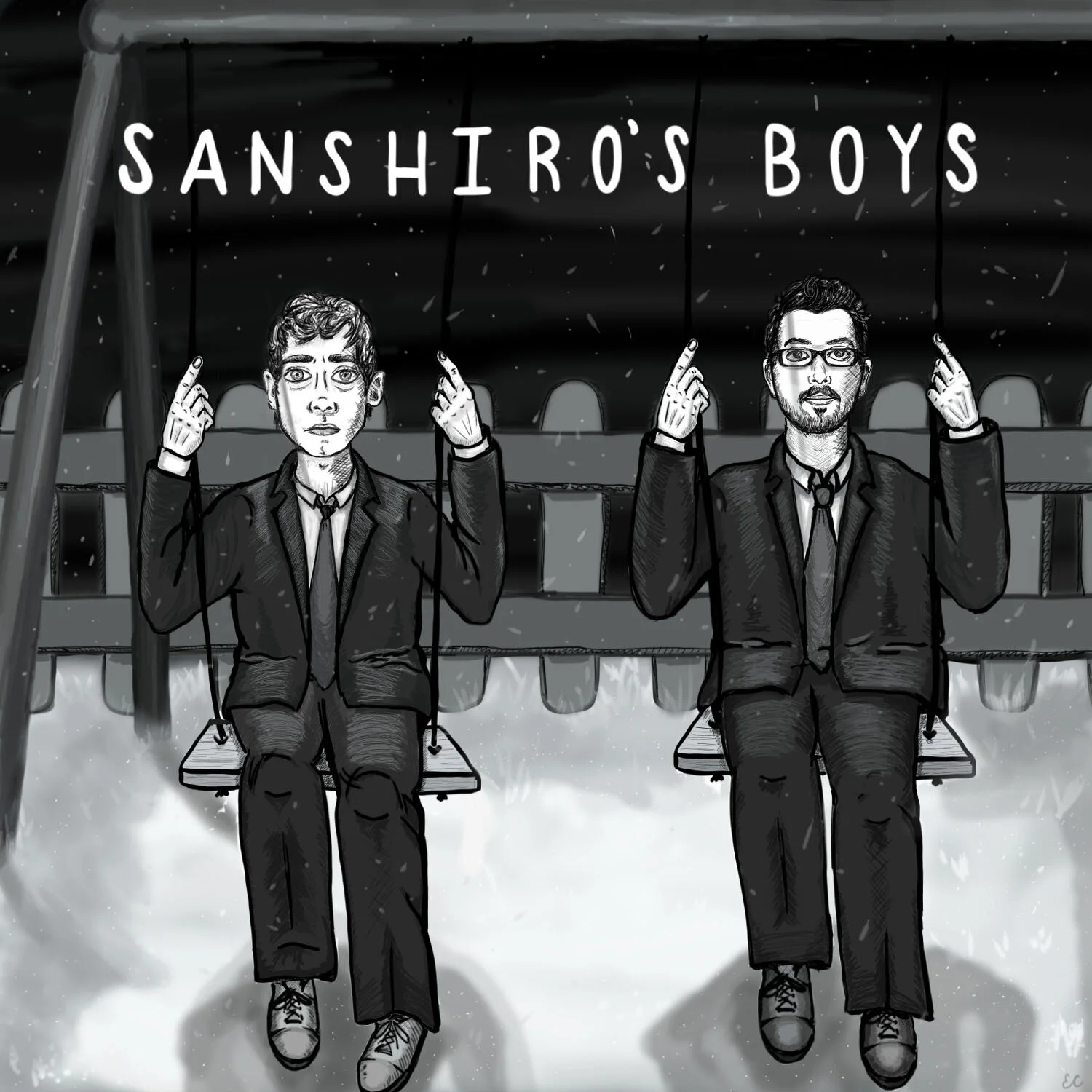
Sanshiro's Boys - Akira Kurosawa Retrospective
by Timothy Amatulli & Chris Côté
An Akira Kurosawa fanatic teams up with an Akira Kurosawa newbie for a casual, chronological look at all of the Japanese master’s films. Available on Spotify, Apple Podcasts, YouTube, and more. New episodes every Friday! https://linktr.ee/sanshirosboys
-
35
Ranking Akira Kurosawa's Filmography
After discussing every Akira Kurosawa film in detail on the show, we conclude our retrospective with the herculean task of trying to rank all of his films. Listeners, you’re in luck, because you’re getting two lists for the price of one! We each have our share of basic and hot takes, and hope that you have enjoyed going through this Japanese master’s filmography as much as we have. If we were able to teach you something new, introduce you to a film you otherwise may not have seen, or even just give you a chuckle every once in a while, we want to thank you for listening to Sanshiro’s Boys.Listen here: https://linktr.ee/sanshirosboys Be sure to leave a comment and let us know how you’d rank Akira Kurosawa’s films! If you want to keep up with what we’re watching now that this project is over you can email us at [email protected] or find us on social mediaTim’s Letterboxd - timothyamatulliChris’ Letterboxd - coolgeeseChris’ Twitter - @coolgeese
-
34
Madadayo (1993)
Akira Kurosawa’s final film Madadayo (Not Yet) recounts the stories of famed Japanese writer Hyakken Uchida and functions as a meta-commentary of the director’s historic career. Sanshiro’s Boys celebrate the 1993 film’s immaculate vibes, Kurosawa’s unproduced next film The Ocean Was Watching, and sadly, his death. Be sure to check in with us for our wrap up episode next week where we rank all of Akira Kurosawa’s films!Listen here: https://linktr.ee/sanshirosboys
-
33
Rhapsody In August (1991)
This is the one Richard Gere is in! Yes, that Richard Gere. In 1991, Akira Kurosawa returned one last time to a subject matter that has cropped up several times throughout his filmography: nuclear anxiety. Rhapsody In August, a small, intimate family drama, re-examines the scars of a nation still grieving over the atomic bombing of Nagasaki as their world becomes more interconnected to the West. We won’t lie, this is a difficult film to find, but we did manage to get our hands on a copy of it. Listen to Sanshiro’s Boys to figure out if you should too!Listen here: https://linktr.ee/sanshirosboys
-
32
Dreams (1990)
Despite starting his historic career in the 1940s, Akira Kurosawa was still making movies into the early 90s. He rang in the decade with a unique picture: Dreams, which consists of eight vignettes based on Kurosawa’s actual dreams. It also has one of the most unpredictable cameos of all time. Without much overarching plot to go on, Sanshiro’s Boys delve into the director’s psyche and try to discern if one man’s dream is another man’s nightmare.Listen here: https://linktr.ee/sanshirosboys
-
31
Ran (1985)
Last week we said goodbye to the OG Kurosawa king, Takashi Shimura. This week, we say goodbye to Tatsuya Nakadai, and boy did he go out with a bang. Nakadai headlines Akira Kurosawa’s third, final, and largest Shakespeare adaptation: Ran. This Japanese version of King Lear was created with a historic budget, vibrant colors, and produced some of the director’s most iconic and incredible imagery. Kurosawa’s final foray into epic filmmaking may be his best yet. Listen here: https://linktr.ee/sanshirosboys
-
30
Kagemusha (1980)
After the success of Star Wars, George Lucas and Francis Ford Coppola teamed up to executive produce Kagemusha (The Shadow Warrior), Akira Kurosawa’s triumphant return to large-scale filmmaking that took home the Palme d’Or at the Cannes Film Festival in 1980. Sengoku period Japan comes to life with a historic budget and massive, colorful armies to tell the story of the legendary Takeda clan’s downfall. With domestic and international distribution, this is the rare Kurosawa film with multiple versions, the differences between which we go into detail on. Listen here: https://linktr.ee/sanshirosboys Tim has a particular soft spot for this one and has a published article available on the Asian cinema website Filmed In Ether dissecting Kagemusha’s use of shadows and how they aptly reflect the film’s legacy 40 years later. Read it here: https://www.filmedinether.com/features/kagemusha-40-year-anniversary-kurosawa/
-
29
Akira Kurosawa's Influence On Star Wars (1977)
For our not at all subtly teased bonus episode, we’ve decided to shake up the formula and record a full length commentary to the original Star Wars. As much as possible, we discuss real-time comparisons and allusions to Kurosawa’s work in this film and throughout the franchise. If you’ve ever wanted to simulate watching a movie with Sanshiro’s Boys, feel free to pull up the cut of the film available on Disney+ by syncing the film with the timecode 00:04:30. Listen here: https://linktr.ee/sanshirosboys
-
28
Dersu Uzala (1975)
After the darkest period of his life, Akira Kurosawa was able to go abroad and make a film in the Soviet Union. The end result was Dersu Uzala, an adaptation of the touching true story of “Capitan” Vladimir Arseniev and the titular Goldi hunter who mapped the Ussuri region of Siberia together. As his only film shot outside of Japan, his only film not in Japanese, and his only film shot on 70mm, Dersu Uzala certainly stands out amongst Kurosawa’s formidable filmography. It also earned him the Academy Award for Best Foreign Language Film. Listen to Sanshiro’s Boys discuss how well it fits in with the rest. Listen here: https://linktr.ee/sanshirosboys
-
27
Song Of The Horse (1971)
Honestly, we have no clue what we’re even talking about this week. This movie is so weird and we can’t believe it even exists. Song of the Horse is Akira Kursoawa’s sole venture into the television world for a… documentary? Sort of… Dubbed a “visual poem” and the director’s “lost masterpiece” by the DVD box, it is truly unlike anything Sanshiro’s Boys have covered before. Special thanks to akirakurosawa.info for providing basically all of the information we could find about this. You can read more about the film here: https://akirakurosawa.info/song-of-the-horse/ Listen here: https://linktr.ee/sanshirosboys
-
26
Dodes'ka-den (1970)
Last week we said goodbye to Toshiro Mifune, but this week we’re saying hello to color! Dodes’ka-den, which translates to “clickity-clack,” launched the last act of Akira Kurosawa’s career, yet isn’t talked about much. After watching it, we can certainly confirm that it is, indeed, difficult to talk about. Tune in to Sanshiro’s Boys and hear us try to make sense of it! Listen here: https://linktr.ee/sanshirosboys
-
25
Red Beard (1965)
SANSHIRO’S BOYS - AKIRA KUROSAWA RETROSPECTIVE: EPISODE 25Sanshiro’s Boys close out the 16-film partnership between Akira Kurosawa and Toshiro Mifune with 1965’s Red Beard. This emotional epic transports us to the 19th century with extreme period accuracy and functions as a true manifesto for the director’s humanism. Chris has been meaning to watch this movie since the 7th grade. Did it live up to his expectations? Listen here: https://linktr.ee/sanshirosboys
-
24
High And Low (1963)
One of the many subgenres that owes a debt to Akira Kurosawa is the “police procedural.” To that end, 1963’s High and Low is his masterclass in suspense, detective work, class commentary, and ethical dilemmas. In one of his final Kurosawa roles, Toshiro Mifune plays Kingo Gondo, a wealthy industrialist extorted by a mysterious kidnapper who has captured his son and held him for Japan’s highest ransom. Only… the boy was actually his chauffeur’s son. Will Gondo still pay the outrageous ransom for someone else’s child? Can the cops catch a man who has conceived a seemingly perfect crime? Listen to Sanshiro’s Boys and investigate with us!Listen here: https://linktr.ee/sanshirosboys
-
23
Sanjuro (1962)
Following the enormous success of Yojimbo, Akira Kurosawa created his second and only sequel: Sanjuro. This satire of the average chambara film sees Toshiro Mifune reprising the titular role, once again opposite Tatsuya Nakadai in a completely different role. Sanjuro is another fun Kurosawa adventure and may be his most overt comedy, but how does it stack up to its predecessor? Tune in to Sanshiro’s Boys, or rather this week, Sanjuro’s Boys, and find out!Listen here: https://linktr.ee/sanshirosboys
-
22
Yojimbo (1961)
Sanshiro’s Boys are kicking off 2021 by discussing one of Akira Kurosawa’s most popular and often-imitated films: Yojimbo. Toshiro Mifune shows off his unmatched sword fighting skills as a wandering ronin caught between two rival gangs. We also get our first of many appearances of iconic Japanese actor Tatsuya Nakadai, as well as the return of Rashomon cinematographer Kazuo Miyagawa. This is truly what peak performance looks like.Listen here: https://linktr.ee/sanshirosboys
-
21
The Bad Sleep Well (1960)
With the official formation of his own production company, Akira Kurosawa makes a big return to contemporary times with The Bad Sleep Well. This neo-noir presents us with a scathing and still-topical critique of corporate corruption wrapped in a loose adaptation of Hamlet. It's not quite the show we wanted to release on Christmas morning, but alas here we are. Listen here: https://linktr.ee/sanshirosboys
-
20
The Hidden Fortress (1958)
We’re not reviewing Star Wars (yet), but we are here today to talk about its major inspiration: The Hidden Fortress from 1958. Akira Kurosawa outdoes himself yet again with bigger production value, new fighting styles, great comedy, and a surprise cameo that had us losing their minds. Join Sanshiro’s Boys as we take our first steps into a larger world, and a wider frame!Listen here: https://linktr.ee/sanshirosboys
-
19
The Lower Depths (1957)
Akira Kurosawa made a more successful return to Russian literature with The Lower Depths. Released the same year as Throne of Blood, yet quite the opposite in scale, this adaptation of Maxim Gorky’s early 1900s play features a strong ensemble of Kurosawa regulars for an atmospheric examination of poverty in Edo Period Japan. The Lower Depths is more loosely plotted than his other films, so this was certainly a difficult one to talk about, but Sanshiro’s Boys are going to try! Listen here: https://linktr.ee/sanshirosboys
-
18
Throne Of Blood (1957)
Sanshiro’s Boys return for Tim’s very first Akira Kurosawa movie: Throne Of Blood from 1957. This extraordinary adaptation of Macbeth transposes Shakespeare to feudal Japan through heavy fog and forests. Toshiro Mifune owns the screen as he descends into madness, as does Isuzu Yamada playing the rare Kurosawa villainess - Lady Asaji. The first of many large scale looks at the ancient armies of Japan’s past, this fusion of East and West is one not to be missed!Listen here: https://linktr.ee/sanshirosboys
-
17
I Live In Fear / Record Of A Living Being (1955)
I Live In Fear, also known as Record Of A Living Being, isn’t talked about a whole lot, despite being Akira Kurosawa’s follow-up to Seven Samurai. Quite the departure from hours of intense action, this 1955 film follows an old man trying to get his family to move to Brazil in order to avoid another atomic bomb striking Japan. As you might expect, Toshiro Mifune and Takashi Shimura are both in this one, but you may be surprised which of them is playing the old man… Sanshiro’s Boys are halfway done with their show and here today to discuss the sad backstory behind this film, say goodbye to Kurosawa’s close friend and composer Fumio Hayasaka, and try to figure out if this little-known film is worth rediscovering. Listen here: https://linktr.ee/sanshirosboys
-
16
Seven Samurai (1954)
Seven Samurai is Akira Kurosawa’s magnum opus. It’s a simple story about a poor farming village that hires seven samurai to protect them from an impending bandit raid, but there’s far more to it than that. Seven Samurai provides excellent character studies, thrilling action, hilarious comedy, and heart-wrenching tragedy. Kurosawa’s longest film is widely considered to be not only his best, but one of the greatest of all time. Will Sanshiro’s Boys agree that this is what peak performance looks like? Listen here: https://linktr.ee/sanshirosboys
-
15
Ikiru (1952)
After his noble effort to adapt one of the pillars of Russian literature to the big screen, Kurosawa set his sights on something easier: the meaning of life itself. Ikiru (To Live) is one of the most beloved Japanese films in history; a moving story of an aging bureaucrat finding purpose in his last days on Earth. Sanshiro’s Boys delve deep into the symbolism and unusual story structure of this Akira Kurosawa 1952 classic. Listen here: https://linktr.ee/sanshirosboys
-
14
The Idiot (1951)
For his follow up to Rashomon, Akira Kurosawa chose to adapt his favorite novel, Fyodor Dostoevsky’s The Idiot. The studio tore this film to shreds for its 1951 release and Sanshiro’s Boys are here to try and piece it back together. Chris has read the whole novel and delivers an in-depth book report. How well does this Russian classic translate to Japanese society?Listen here: https://linktr.ee/sanshirosboys
-
13
Rashomon (1950)
Welcome to what is probably your first episode of our podcast! We’re happy to have you. This is the big one. Akira Kurosawa’s Rashomon is one of the most important and often studied films in history, and with good reason. There’s a lot to talk about in this complicated tale of murder and morality.Listen here: https://linktr.ee/sanshirosboys
-
12
Scandal (1950)
Akira Kurosawa’s Scandal is many things: a courtroom drama, an indictment of fake news, a Christmas movie, but is it good?Listen here: https://linktr.ee/sanshirosboys
-
11
Stray Dog (1949)
Akira Kurosawa’s Stray Dog helped create a whole new genre: the buddy cop film. It’s the sweatiest film of 1949. And of all time.Listen here: https://linktr.ee/sanshirosboys
-
10
The Quiet Duel (1949)
The Quiet Duel from 1949 is another weird Akira Kurosawa film. It isn’t included in the Criterion Collection with all of his other movies from the time. This week we trade out tuberculosis for syphilis in a small-scale character drama helmed by a subdued Toshiro Mifune performance. Is this a little known film worth digging up? Or should we just have kept quiet about it?Listen here: https://linktr.ee/sanshirosboysThis is another movie you can watch on YouTube here: https://www.youtube.com/watch?v=3gMQ2gKtS0A&ab_channel=JAHPiRaT
-
9
Drunken Angel (1948)
Ladies and gentlemen… Toshiro Mifune has arrived.Listen here: https://linktr.ee/sanshirosboys
-
8
One Wonderful Sunday (1947)
1947’s One Wonderful Sunday marks the end of Akira Kurosawa’s pre-Mifune era. This movie shakes things up for the occasion, giving us a more neorealist tale of a poor couple trying to have a fun day in the city. You’d be surprised how easily you could make the same movie today - rent jokes have been around for years!Listen here: https://linktr.ee/sanshirosboys
-
7
No Regrets For Our Youth (1946)
Sanshiro Sugata himself recast as a hot himbo leftist? Famed Ozu actress Setsuko Hara? An artist finally free to express himself in his medium? 1946’s No Regrets For Our Youth is all of these things and more. The boys have plenty of regrets for their youths, but watching this hidden gem in Akira Kurosawa’s filmography isn’t one of them!Listen here: https://linktr.ee/sanshirosboys
-
6
Those Who Make Tomorrow (1946)
You’d be amazed how hard it is to review a movie that may not even exist, but we’re gonna try! Those Who Make Tomorrow is Akira Kurosawa’s “lost” movie made with Kajiro Yamamoto and Hideo Sekigawa during his brief… Communist phase? While there may not be any story to talk about on screen, there certainly is a lot to talk about behind it.Listen here: https://linktr.ee/sanshirosboys
-
5
The Men Who Tread On The Tiger's Tail (1945)
In the mood for an unusually short Kurosawa film? Well The Men Who Tread On The Tiger’s Tail clocks at a brisk 59 minutes. Made in the midst of Japan’s surrender during World War II, this film offers interesting glimpses into future Akira Kurosawa story elements, as well as his own Jar Jar Binks.Listen here: https://linktr.ee/sanshirosboys
-
4
Sanshiro Sugata Part Two (1945)
We, his loyal disciples, have returned to the holy land to review one of Akira Kurosawa’s weirdest films - Sanshiro Sugata Part Two. How will Japan’s greatest himbo adapt to state-sanctioned propaganda requirements? Does it even have a plot? Don’t miss our review of the so-bad-it’s-good Kurosawa movie!Listen here: https://linktr.ee/sanshirosboys
-
3
The Most Beautiful (1944)
The boys take a quick intermission from the Himbo Chronicles to look at Akira Kurosawa’s first piece of government propaganda - The Most Beautiful. Will it be… the most beautiful film in his filmography?Listen here: https://linktr.ee/sanshirosboys
-
2
Sanshiro Sugata (1943)
Akira Kurosawa’s “official” debut film Sanshiro Sugata established him as a filmmaker to look out for and offers fascinating glimpses of the director to come. Susumu Fujita’s portrayal of the titular judo fighter quickly became our idol and exactly the kind of himbo we want to grow up to be.Listen here: https://linktr.ee/sanshirosboys
-
1
Akira Kurosawa Retrospective Introduction / Uma (1941)
Welcome to Sanshiro's Boys! On this podcast, Tim and Chris will take their unique perspectives on all of Akira Kurosawa's films. For our first episode, we outline our plan, provide some background on our own relationship with Japanese cinema, and talk a little bit about Kurosawa's "first" film Uma, which would have been a lot easier if the picture quality was good and if there were English subtitles.Available on Spotify, Apple Podcasts, YouTube, and more. New episodes every Friday!https://linktr.ee/sanshirosboys
We're indexing this podcast's transcripts for the first time — this can take a minute or two. We'll show results as soon as they're ready.
No matches for "" in this podcast's transcripts.
No topics indexed yet for this podcast.
Loading reviews...
ABOUT THIS SHOW
An Akira Kurosawa fanatic teams up with an Akira Kurosawa newbie for a casual, chronological look at all of the Japanese master’s films. Available on Spotify, Apple Podcasts, YouTube, and more. New episodes every Friday! https://linktr.ee/sanshirosboys
HOSTED BY
Timothy Amatulli & Chris Côté
Loading similar podcasts...
Frequently Asked Questions
How many episodes does Sanshiro's Boys - Akira Kurosawa Retrospective have?
Sanshiro's Boys - Akira Kurosawa Retrospective currently has 35 episodes available on PodParley. New episodes are automatically indexed when they're published to the podcast feed.
What is Sanshiro's Boys - Akira Kurosawa Retrospective about?
An Akira Kurosawa fanatic teams up with an Akira Kurosawa newbie for a casual, chronological look at all of the Japanese master’s films. Available on Spotify, Apple Podcasts, YouTube, and more. New episodes every Friday! https://linktr.ee/sanshirosboys
How often does Sanshiro's Boys - Akira Kurosawa Retrospective release new episodes?
Sanshiro's Boys - Akira Kurosawa Retrospective has 35 episodes. Check the episode list to see recent publication dates and frequency.
Where can I listen to Sanshiro's Boys - Akira Kurosawa Retrospective?
You can listen to Sanshiro's Boys - Akira Kurosawa Retrospective on PodParley by clicking any episode. We provide an embedded audio player for direct listening, and you can also subscribe via your preferred podcast app using the RSS feed.
Who hosts Sanshiro's Boys - Akira Kurosawa Retrospective?
Sanshiro's Boys - Akira Kurosawa Retrospective is created and hosted by Timothy Amatulli & Chris Côté.
URL copied to clipboard!