
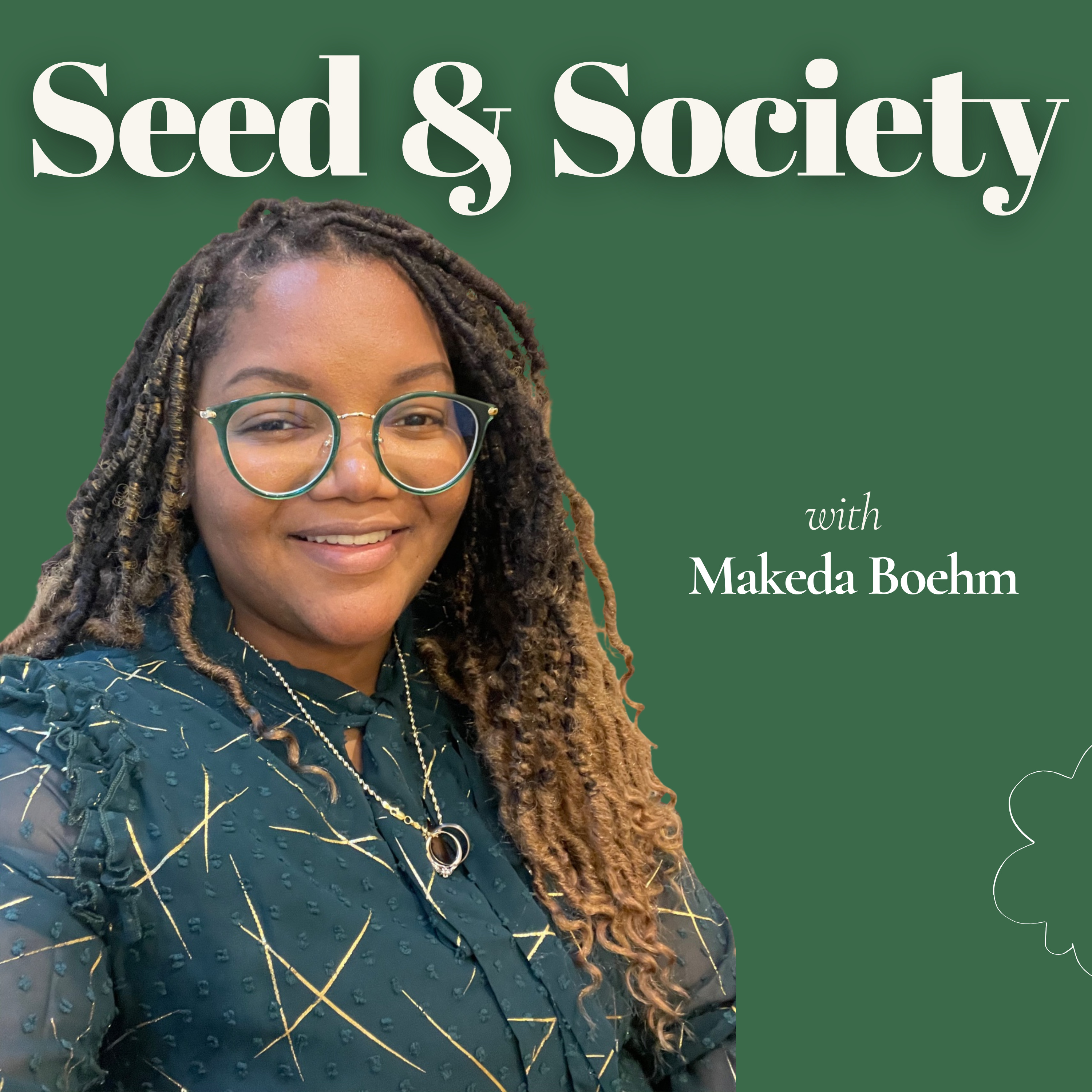
PODCAST · business
Seed and Society | AI, Systems, and Automation for Business Owners
by Makeda Boehm
Seed & Society is the podcast for business owners who want to scale without increasing hours or headcount. If your revenue slows down the moment you step away, you are the bottleneck. And if you’re tired of having to choose between work and presence, you’re in the right place.Here, we talk about AI systems, automation, and strategy so your business and life work, even when you don't. The mission? More money, time, and options.Hosted by Makeda Boehm, Strategic AI Advisor, keynote speaker, and data-obsessed social scientist who has sold millions in tech and earned seven-figures doing it.
-
37
The $20,000 Website I Built for Almost Nothing
If you've spent thousands on a website that still takes forever to update and still doesn't reflect what your business is worth, this episode is the way out. No developer, no five-figure invoice.I lived this exact problem. A year and a half of bouncing between Squarespace, Wix, Showit, WordPress, Framer, and every new A.I. builder that launched. Contractors on Upwork and Fiverr. Thousands spent on a site that still didn't work right. There was a weekend I sat at my table and cried over it. Then I rebuilt my entire brand site on a single flight from Nashville to San Francisco, with zero monthly hosting and no code, and in this episode I walk you through exactly how, so you can own yours the same way.In this episode:Why your website is your digital front door, and the exact moment a client decides what you're worthThe real cost of the Showit plus WordPress setup: templates, designers, hosting, and update headaches that never endEvery tool and platform I tried over more than a year, and why none of them stuckHow I rebuilt seedandsociety.com on one plane ride, start to finishWhy owning your infrastructure is now the cheaper optionWho this is for: Service-based business owners who are done renting their website and ready to own it.Subscribe to the newsletter for tools and resources at newsletter.seedandsociety.com, and take the free A.I. Employee Report at audit.seedandsociety.com.
-
36
The Stack: How Service Businesses Are Building Toward Seven Figures
Your service business has a ceiling built into the model, and trading more hours won't break through it. This episode maps the exact revenue stack that service-based business owners are using to build toward seven figures, with honest timelines and realistic numbers at every layer. I've closed nearly ten million dollars in tech sales over four years, earned seven figures doing it, and I've built my own ownership and resilience alongside that career. I'm not here to sell you a fantasy timeline. I'm here to give you the architecture, the real numbers, and the honest picture of how long the build actually takes. In this episode:- The math behind the service business ceiling and why billing more hours won't solve it- Layer by layer breakdown of the full revenue stack: A.I.-integrated services, productized expertise, non-dilutive capital, content revenue, and authority building- Realistic revenue ranges at each layer, including what's possible in year two and year three for operators who execute consistently- Why the seven-figure mark is real for solo operators but typically takes four to seven years, and what the path actually looks like- The honest truth about audience building, product market fit, and why most celebrated launch case studies took years of groundwork before they worked- Why the gap between where most service business owners are and where this stack puts them is a system gap, not a talent gap Who this is for: consultants, coaches, fractional executives, and other service-based business owners who are ready to stop depending on billable hours as their only revenue lever and want a realistic roadmap to build beyond the ceiling. Subscribe to the newsletter for tools and resources at newsletter.seedandsociety.com, and take the free A.I. Employee Report at audit.seedandsociety.com.
-
35
The Content Engine That Runs Itself
You're producing content every week and it still feels like you're on a treadmill, never building anything, just keeping up. This episode is the way off that treadmill. I've closed nearly ten million dollars in tech sales over four years, earned seven figures doing it, and I've built systems that let my content work like infrastructure, not obligation. The same architecture I use is available to any service-based business owner right now, for under a hundred dollars a month, in any language. In this episode:- Why a content engine is infrastructure, not a content calendar, and how the input, conversion, and output layers work together- The five-minute voice note workflow that replaces hours of staring at a blank page each week- How to build an A.I. project that knows your voice, your frameworks, and your formats so the output sounds like you- The content asset library that makes your body of work compound over time instead of disappear into the feed- How this architecture works in Spanish, Portuguese, French, Arabic, and any other language at the same cost and scale as English- Why solo service-based business owners can now outpublish ten-person marketing teams that haven't figured this out yet Who this is for: service-based business owners, consultants, coaches, and solo practitioners who are spending hours on content each week and want a system that converts their expertise into consistent, distributable content in twenty-five minutes. Subscribe to the newsletter for tools and resources at newsletter.seedandsociety.com, and take the free A.I. Employee Report at audit.seedandsociety.com.
-
34
Speaking Is a Revenue Stream. Are You Treating It Like One?
You are qualified to be on those stages. You just don't have the system that gets you in the room, and this episode builds it. I've closed nearly ten million dollars in tech sales over four years and earned seven figures doing it. I also own a mortgage-free homestead and run Seed & Society. The through-line in everything I teach is this: strong income, used strategically, buys you more money, time, and options. Speaking is one of the most underused levers service business owners have, and I'm walking you through exactly how to treat it like the revenue stream it is. In this episode:- What paid speaking actually pays, from local chamber events to corporate keynotes ranging from fifteen thousand to seventy-five thousand dollars, and why free gigs belong in your strategy too- The three reasons most service business owners miss speaking opportunities entirely, and why all three are solvable with systems- How to build an A.I. agent that monitors conference databases, scores opportunities by fit and fee potential, and drafts your submissions from your existing speaker assets- How to write a specific, problem-aware, outcome-oriented speaker topic that makes event organizers say their audience needs exactly this- The compounding credibility loop that makes every talk easier to book than the last- A specific recommendation for women building a paid speaking practice: Mic Drop Workshop, founded by Jess Ekstrom, where Makeda is a graduate and will be on the Mic Drop Live stage in Indianapolis in May Who this is for: service business owners, consultants, coaches, fractional executives, advisors, and anyone who trades expertise for income and wants to turn that expertise into a stage, a check, and a compounding credibility asset. Subscribe to the newsletter for tools and resources at newsletter.seedandsociety.com, and take the free A.I. Employee Report at audit.seedandsociety.com.
-
33
The New A-to-Z
You're turning away clients because the math doesn't work, and that conversation where you apologize and offer a lesser version of your service is costing you more than you realize. This episode is the path to a completely different answer. I've closed nearly ten million dollars in tech sales over four years and earned seven figures doing it, and I built Seed and Society to show service-based business owners how to use A.I., automations, systems, and agents to create more money, time, and options. What I'm laying out in this episode is the exact reframe that changes how you close business, how you price, and how many people you can actually say yes to. In this episode:- Why the old A-to-Z delivery model, where every step from proposal to final deliverable requires your time, is the reason clients walk away, not your price- How to use a meeting recorder and a single well-built prompt to generate a completely new service offering from a transcript before your next call- What it actually looks like to compress twenty-six delivery steps down to three, four, or six without reducing the client's outcome- Real examples of how a brand strategist, a business coach, and a copywriter each rebuilt their delivery model to serve three times the clients at a third the price- The honest math on front-loaded build work and what it actually buys you in compounding revenue and time on the back end- Why early adoption is a geography-free advantage, and why a service business owner in Lagos using these tools well is ahead of a consultant in San Francisco who hasn't tried them Who this is for: service-based business owners, consultants, coaches, and advisors who are fully booked or turning clients away at their current price and want to build a delivery model that serves more people without working more hours. Subscribe to the newsletter for tools and resources at newsletter.seedandsociety.com, and take the free A.I. Employee Report at audit.seedandsociety.com.
-
32
The Money You're Not Applying For
There is money available right now that you qualify for and have never applied for, and this episode shows you exactly how to fix that. I've closed nearly ten million dollars in tech sales over four years and built a mortgage-free homestead alongside my career. The principle behind all of it is the same: you need systems, not just effort. Non-dilutive capital, grants, fellowships, pitch competitions, paid speaking, is one of the most overlooked revenue streams for service-based business owners, and the reason it stays overlooked is almost never about qualification. It's about not having a system to find it and apply. In this episode:- Why most grants, fellowships, and pitch competitions go unclaimed, and why it has nothing to do with whether you were qualified- A breakdown of what non-dilutive capital actually includes, from government grants and corporate innovation challenges to paid speaking and press awards- How to build your own AI-powered application system inside Claude projects today, without waiting for any tool or product- Why portability is the real unlock, and how bringing your profile to any application anywhere changes the math on how many opportunities you can pursue- What Everfreely is, why I'm building it, and how the agent and portable tool layers work together- The exact steps to build your asset library and submit your first application this week Who this is for: service-based business owners, consultants, coaches, fractional executives, and solo professionals who want to add a non-dilutive revenue stream without trading more client hours for it. Subscribe to the newsletter for tools and resources at newsletter.seedandsociety.com, and take the free A.I. Employee Report at audit.seedandsociety.com.
-
31
How to Make More Money, Working Less
Stuck at the same revenue you hit two years ago? The ceiling isn't your work ethic. It's your business model. Here's how A.I. breaks the time-for-money ceiling in three specific ways, and what each one adds to your annual revenue.Most service-based business owners are stuck at the same revenue number they hit two years ago. Not because they got worse at their work. Because the math of their business has a ceiling, and they crashed into it. If you bill for your time, your revenue maxes out at your hourly rate times the hours in your week. That's the whole equation. And most people hit the wall at 5 or 6 figures and can't figure out why.This episode breaks down the three moves that raise that ceiling, how much more money each one makes, and how much less you'll actually work once the systems are built. No team. No weekends. No raising your rate until clients walk away.In this episode you'll learn:Why the "bill more hours or charge more" escape plan has a built-in expiration dateThe three specific A.I. shifts that add six figures to your revenue without adding hoursWhat a real million-dollar solo business actually looks like in 2026, layer by layerJoin the waitlist for EverFreely™ the revenue finding agent at everfreely.com The newsletter breaks down the exact agent setups, tools, and workflows mentioned in this episode. Sign up at seedandsociety.com 🎁
-
30
AI Models Decoded for Business Owners
You've heard the names. GPT. Claude. Gemini. But if someone asked you to explain what an AI model actually is, or why there are so many, or which one your business should actually pay for, you'd probably struggle to answer. This episode gives you the clear framework you've been missing. I've closed nearly $10M in tech sales over four years and earned seven figures doing it. I also own a mortgage-free homestead and run Seed & Society. I built all of it by making sharp decisions about tools, systems, and money. AI is the most leveraged tool available to service business owners right now, and the people building it have made it sound more complicated than it is. Let me fix that. In this episode:- What an AI model actually is, explained in plain terms without the technical noise- Why multiple models exist and how GPT, Claude, and Gemini each think differently based on how they were trained- How to navigate model tiers like Haiku, Sonnet, and Opus so you pay for what your task actually requires- What a context window is, why it matters for your business, and what to do when your AI starts losing track mid-conversation- How Claude projects use context windows to hold your brand voice, client details, and reference files across every conversation- The one decision that matters more than which model you pick Who this is for: service-based business owners, consultants, coaches, fractional executives, and advisors who want to use AI confidently without wading through technical complexity to get there. Subscribe to the newsletter for tools and resources at newsletter.seedandsociety.com, and take the free A.I. Employee Report at audit.seedandsociety.com.
-
29
Why Non-Technical People Are Winning at AI (And How to Join Them)
You've been telling yourself you're behind because you don't code, but the skills you've spent your career building are exactly what make you most equipped to win with A.I. right now. This episode is the proof. I've closed nearly $10M in tech sales over four years, earned seven figures doing it, and I've built A.I. systems, automations, and content engines without writing a single line of code. What I've learned is that the consultants, coaches, lawyers, and advisors who are getting the best results from these tools aren't the most technical people in the room. They're the most strategic ones. And that's already you. In this episode:- Why critical thinking, not coding, is the core skill A.I. rewards, and how training in fields like law, education, or the humanities is a direct advantage- How understanding context and questioning assumptions helps you use A.I. in ways that go beyond what the people who built these tools intended- Why your experience asking better questions on client calls, discovery sessions, or in the courtroom translates directly to getting better outputs from A.I.- How your professional training to move with incomplete information is exactly the mindset that makes A.I. iteration fast and effective- Why the real leverage is using A.I. to automate the non-human parts of your business so you can do more of the work only you can do- Where to start identifying which systems in your business are consuming your time without requiring your expertise Who this is for: Service-based business owners, including consultants, coaches, lawyers, accountants, and real estate agents, who have been hesitating on A.I. because they assumed their lack of technical background was a liability. Subscribe to the newsletter for tools and resources at newsletter.seedandsociety.com, and take the free A.I. Employee Report at audit.seedandsociety.com.
-
28
All About Claude: Chat, Co-work, and Code for Business Owners
You're running a service business with too much to do and not enough hours, and you're probably using A.I. like a fancier Google search. This episode breaks down what's actually possible right now, and how to use it. I've been inside Claude every single day for over a year. More than email. More than any social platform. It's how I write, research, build automations, draft proposals, analyze data, and think through strategy. When Claude co-work went generally available this week, I knew I had to break the whole ecosystem down, because most people don't know what they're sitting on. In this episode:- The three products inside the Claude ecosystem, what each one does, and when to use which- Claude Chat: how to use projects and skills to stop starting from scratch and build a version of Claude that actually knows your business- Claude co-work: the agent layer that executes tasks on your actual computer, manages files, runs recurring workflows, and can be controlled from your phone while you're at your kid's soccer game- Claude Code: how non-technical business owners are building functional client portals, proposal generators, and lead qualification tools in plain language with zero prior coding experience- The progression Makeda recommends: start with chat, move to co-work, explore code when you're ready to build- Why $20 a month right now represents a capability that used to require a full-time assistant, a researcher, and a junior developer, and why that price will not last Who this is for: service-based business owners, consultants, coaches, and advisors who want to understand exactly what Claude does and how to start using it to get real work off their plate. Subscribe to the newsletter for tools and resources at newsletter.seedandsociety.com, and take the free A.I. Employee Report at audit.seedandsociety.com.
-
27
Build It Once, Run It Forever (The Asset-Based Business Model)
Your income has a ceiling if it's tied to your hours, and the only way past it is to stop renting your time and start building assets that produce without you. This episode is the blueprint. I've closed nearly $10M in tech sales over four years, earned seven figures doing it, and I own my land mortgage-free. That financial position didn't happen by accident. It happened because I applied asset-based thinking to everything, my homestead, my business systems, and how I use A.I. What I'm teaching here is exactly how I'm building right now. In this episode:- Why effort-based income always hits a ceiling, and the five principles for building a business that produces beyond your active hours- How to own your tools and infrastructure instead of renting platforms that can change their terms overnight, including how I build on tools like Claude so I can move if I need to- Why you need to know your values before you prompt, and how A.I. amplifies your direction if you have one, or defaults to someone else's worldview if you don't- The perennial vs. annual revenue framework, how I have systems generating views, signups, and revenue with less than an hour of input per week- Why personal brand is still the long-term asset even in a world of automation and faceless content channels, and how to build it before you need it- How to start with one system, automate it, and let the freed capacity compound into the next, the exact sequence I used to get my content engine running in under three hours a week Who this is for: service-based business owners, consultants, coaches, fractional executives, lawyers, accountants, real estate agents, and anyone whose income stops when their effort stops, who are ready to build systems that change that. Subscribe to the newsletter for tools and resources at newsletter.seedandsociety.com, and take the free A.I. Employee Report at audit.seedandsociety.com.
-
26
The New AI Playbook for Service-Based Business Owners
Your revenue is capped by your hours, and every system you're running manually is making that ceiling lower. This episode is the blueprint for breaking through it. I've closed nearly $10M in tech sales over four years and earned seven figures doing it. I also own a mortgage-free homestead and run Seed & Society, and I built it all by using strong income strategically and letting automation do the heavy lifting everywhere else. What I'm sharing in this episode is exactly how I think about that. In this episode:- Why the manual-everything model just became obsolete for service-based businesses, and what the A.I.-augmented model looks like in practice- System 1: Research and Strategy. How speakers, consultants, and lawyers are cutting hours of prep work down to twenty to forty-five minutes using A.I. research agents- System 2: Content Production. The exact workflow I use, including Claude, ElevenLabs, and HeyGen, to turn one voice memo into a podcast, blog post, newsletter, LinkedIn posts, short-form clips, and more, in under five hours a week- System 3: Client Delivery and Onboarding. How to automate intake forms, welcome sequences, contracts, payments, and access delivery so clients onboard themselves- System 4: Revenue Operations. The invoicing, scheduling, CRM updates, and lead nurturing tasks that eat your week and can be automated with one-time setup- Why the capability gap between businesses that automate now and those that wait is compounding fast, and why the cost and access window on these tools won't stay open Who this is for: service-based business owners, including consultants, coaches, fractional executives, lawyers, accountants, and real estate agents, who are hitting a ceiling on their time and want a concrete system for scaling without hiring. Subscribe to the newsletter for tools and resources at newsletter.seedandsociety.com, and take the free A.I. Employee Report at audit.seedandsociety.com.
-
25
Hire Your First AI Employee (The Exact Playbook)
You're the bottleneck in your own business, and every hour you spend on research, content, onboarding, and follow-up is an hour you're not delivering, not resting, and not growing. This episode hands you the exact playbook to fix that without hiring a human you can't afford. I've closed nearly $10M in tech sales over four years and earned seven figures doing it, and I use that income strategically to build systems and ownership alongside my career. What I've learned is that the business owners pulling ahead right now aren't working more hours. They're deploying A.I. employees that handle the repeatable, high-volume work so their genius goes where it actually counts. I'm running these exact systems in my own business, and this episode breaks down how to build yours. In this episode:- The four A.I. employees every service-based business owner should hire first: the Research Analyst, the Content Producer, the Onboarding Specialist, and the Follow-Up Manager- Exactly what each role does, the specific use cases for consultants, coaches, accountants, speakers, and fractional executives, and the tools to build them- How one entrepreneur in my community built a complete client onboarding portal in a single day using a no-code tool called Lovable- The real cost comparison: a living-wage employee at $65 an hour versus A.I. tools at $20 to $50 a month, and why that math changes what's possible for solo and small-team businesses- Where to find free, world-class A.I. education right now, including Claude Academy and communities like Women Build A.I. run by Sabrina Ramonov- The Connector Method: why you start with one system, build evidence, and let that confidence carry you to the next one Who this is for: service-based business owners, consultants, coaches, fractional executives, accountants, lawyers, speakers, and advisors who are doing too much manually and are ready to build systems that work without them. Subscribe to the newsletter for tools and resources at newsletter.seedandsociety.com, and take the free A.I. Employee Report at audit.seedandsociety.com.
-
24
AI Is Moving at the Speed of Daily
You're watching competitors move faster, close more, and scale further, and you know A.I. is part of how they're doing it. This episode is the honest briefing on where the window is right now and exactly what you need to build before it closes. I've closed nearly $10M in enterprise software over four years and watched up close how technology advantage gets distributed. The organizations that move first lock in a capability gap that everyone else spends years trying to close. That pattern is repeating right now, and this time the barrier isn't budget. It's knowledge and speed of implementation. That's a solvable problem, and that's why I built this show. In this episode:- Why the A.I. window is open right now and what it actually looks like when it closes- How the tools available today deliver the same strategic capability to a consultant in Kampala that they deliver to an agency owner in Manhattan- What Season 2 of Seed and Society covers: A.I. employees, content automation, the knowledge economy shift, and asset-based business infrastructure- Why the Connector Method says to build now with what you have instead of waiting until you feel ready- How this podcast is itself the case study: one idea runs through an automated pipeline and produces a blog post, newsletter section, LinkedIn content, short-form clips, and Pinterest pins without additional active time- What A.I. is not: it's not taking your job, it's not requiring a technical background, and it's not skipping the ethical questions about access, bias, and who benefits Who this is for: service-based business owners, consultants, coaches, fractional executives, lawyers, accountants, and anyone else trading expertise for income who knows the window is open but hasn't started building yet. Subscribe to the newsletter for tools and resources at newsletter.seedandsociety.com, and take the free A.I. Employee Report at audit.seedandsociety.com.
-
23
The 3-Question Test for Any Major Purchase
Makeda walks through the exact decision-making framework she used when her car died and she needed to replace it fast. This matters for service business owners because the same three-question test she uses for personal purchases applies directly to business investments: software, team hires, office space, or equipment. In this episode: Why Makeda financed a brand-new Chevy Silverado with an 84-month loan despite owning a mortgage-free homestead, and how she determined it was a strategic debt decision rather than an emotional purchase The three non-negotiable requirements framework: how to separate actual needs from assumed categories when evaluating any major purchase, whether personal or business How a $8,000 repair bill on a car worth $6,500 became data instead of disaster, and why action reveals truth faster than research alone The math that showed a full-size truck cost less than a minivan while delivering more capacity, and how end-of-year incentives, veteran discounts, and inventory timing created the opportunity Why the same vehicle would have been a splurge before launching Seed & Society but became business infrastructure after, including content creation, speaking engagements, and potential revenue from equipment rental or hauling services The strategic debt decision tree: when to pay cash versus finance, how to negotiate no prepayment penalties, and why an 84-month term with a two-year payoff plan can make sense Who this is for: Service business owners who need a repeatable framework for evaluating major purchases and want to understand when financing makes more strategic sense than paying cash. Subscribe to the newsletter for tools, resources, and the free A.I. Employee Report at newsletter.seedandsociety.com.
-
22
Stop Choosing Between Work and Family
Makeda talks with Jake Isaacs, serial integrator and cofounder of Gathering the Kings, about the difference between visionaries and integrators in business, and why service-based business owners need to understand which role they play naturally. If you're building systems, hiring support, or scaling a consulting or coaching practice, this conversation shows you how to recognize your strengths and fill the gaps. In this episode: Why integrators execute the vision while visionaries set direction, and how understanding this framework helps you hire or partner more effectively The "grateful but not done" filter Jake uses to identify business owners worth working with, and why growth mindset matters more than past accomplishments How Jake built a career as the operator behind multiple entrepreneurs without needing to be the face of the brand, and what that means for service providers who prefer to let their work speak Why being willing to change your mind and try new approaches is critical when the world around your business is moving fast The challenge of building personal visibility in an age where attention equals currency, especially for operators who historically stayed behind the scenes How Jake's partnership structure works with a visionary co-founder, and what makes that division of labor successful in a mastermind business Who this is for: Service business owners who wonder whether they should stay in the weeds or hire someone to execute, and anyone trying to figure out if they're wired to generate ideas or get things done. Subscribe to the newsletter for tools, resources, and the free A.I. Employee Report at newsletter.seedandsociety.com.
-
21
Bucket List Acceleration & Asset-Based Wealth: Building An Authentic Life
This episode explores how to align your financial decisions with what you actually want, not what society tells you to want. Lisa Sakai, a financial consultant who focuses on bucket list acceleration, joins Makeda to discuss why financial freedom means doing what you want when you want, not waiting for traditional retirement to live authentically. In this episode: Why service business owners often plan endlessly but never take action on what they truly want, leading to burnout and a bucket list that feels overwhelming instead of exciting How being mortgage-free creates the resource freedom to show up authentically in your work and life without worrying about survival or staying hireable The difference between financial freedom (doing what you want, dropping clients you don't like, working from anywhere) and traditional retirement (stopping work entirely) Why social media algorithms and cultural pressure to "live large" keep you distracted from making conscious choices that fit your actual goals How focusing on what you genuinely want, rather than arbitrary milestones, helps you build a business and life on your terms Why curating your environment and information sources matters when you're building something that doesn't look like the default path Who this is for: Service business owners who generate strong income but feel trapped on a hamster wheel of shoulds, and want to use their earnings strategically to build real freedom and authenticity now, not decades from now. Subscribe to the newsletter for tools, resources, and the free A.I. Employee Report at newsletter.seedandsociety.com.
-
20
Building a Business From What You Know
This episode breaks down what a brand actually is and how to build a marketing strategy that extends your expertise without burning out on content creation. Audrey "The Tech Diva" Wiggins, founder of All Together Marketing and host of Tech Diva Biz Talks, shares how she built a 30-year marketing career by starting with what she already knew and turning side skills into client work. In this episode: How Audrey fell into marketing by being "the publicity person" for church groups and fashion shows before computers existed, and why starting from what you already do matters more than formal training. What a brand actually is: not just your logo, but the feeling, core values, and impact you have on clients, and how that shows up in your messaging, visuals, and the way people find you in search. Why 90% of podcasters quit by episode three, and how to treat your podcast like a marketing tool instead of expecting it to be the business itself. How to align your podcast, courses, and other content with your main business by keeping the same color scheme, messaging, and focus on your niche instead of talking about everything. Why marketing is more science than art, especially in the digital age where you can track numbers and quantify what's working instead of guessing. The difference between the "sexy" advertising work and the strategic marketing work, and why both matter when you're building visibility for a service business. Who this is for: Service business owners who want to use content and branding strategically to attract clients without treating every platform like a separate business. Subscribe to the newsletter for tools, resources, and the free A.I. Employee Report at newsletter.seedandsociety.com.
-
19
Why Hustle Alone Isn’t Enough For Success
Alan Lazarus built a global top 100 podcast and coaching business after a career in tech sales, but his path included financial collapse, family loss, and burnout at peak income. This episode breaks down why external achievement without internal alignment leads to exhaustion, and how redefining success creates sustainability for founders and service providers building long-term businesses. In this episode: Alan shares losing 95% of household income overnight at age 14 when his stepfather left, going from boats and ski trips to free lunch at school, and how that shaped his relationship with money and achievement How he climbed from $65k to nearly $200k in tech sales by age 26, paid off $84k in student debt in one year, and built $150k in investments by keeping expenses low and investing in what he understood The head-on car collision at 26 that triggered his quarter-life crisis and forced him to question whether peak corporate income equals actual success or fulfillment Why being a "social coward" who appeases everyone while privately grinding in fight mode creates burnout, even when you hit every external milestone The shift from hustle-driven achievement to heart-driven work that led him to start Next Level University, now reaching listeners in over 180 countries How believing in and investing in your vision before anyone else does is required for founders, and why early-stage obscurity is part of building something that lasts Who this is for: Service business owners who have hit income goals but feel misaligned, burned out, or questioning whether external success alone is sustainable or fulfilling. Subscribe to the newsletter for tools, resources, and the free A.I. Employee Report at newsletter.seedandsociety.com.
-
18
Why Making More Money Doesn’t Fix Stress (The 4-Step Financial Thermostat Reset)
This episode explores why earning more doesn't automatically reduce financial stress and introduces a four-step framework for resetting your relationship with money. Makeda talks with Pericles Relles, a money mindset expert with over 25 years of experience, about the hidden blocks that keep service professionals stuck at the same financial level even as revenue grows. In this episode: Why clients who increased their income still experienced the same financial stress, scarcity, and month-end shortfalls they had before making more money The concept of a financial thermostat that regulates how much you can earn, how much you can keep, and your emotional relationship with money regardless of revenue How money flows as a circular current (to you, through you, away from you, and back) and why blocks anywhere in that flow affect the entire cycle Common mental blocks in the flow of money coming to you: beliefs like "money is the root of all evil," "I hate the wealthy," or "money doesn't grow on trees" Blocks in the flow of money leaving you: hating to pay taxes or bills, refusing to pay people what they ask, or hoarding money out of fear Blocks in your ability to keep money: feelings of unworthiness, not being smart enough, or childhood messages like "having a lot of money will cost you your family" Why money is neither good nor evil but functions as an amplifier of who you already are Who this is for: Service business owners who have grown revenue but still feel stressed about money, can't seem to keep what they earn, or notice a glass ceiling they can't break through despite working harder. Subscribe to the newsletter for tools, resources, and the free A.I. Employee Report at newsletter.seedandsociety.com.
-
17
What No One Tells You About Conflict with Leah Brown
Conflict costs you time, energy, and money. In this conversation, corporate M&A lawyer and accredited mediator Leah Brown breaks down why most professionals communicate far less clearly than they think, and how that misunderstanding becomes expensive conflict in boards, partnerships, and client relationships. In this episode: Why most people assume they communicate clearly when they don't, and how messages get lost across Slack, email, calls, and meetings in modern service businesses The difference between board governance responsibility and operational execution, and why confusion between the two creates conflict in organizations How to use reflective listening ("What I heard you say is...") to catch misunderstandings before they escalate into disputes that drain your time Why separating the person from the problem helps you find solutions when you're stuck in conflict with a client, partner, or team member How different conflict styles (collaborative vs. adversarial) show up in professional relationships, and why understanding your own pattern matters when you're negotiating or problem-solving The questions Leah uses to help people see their own role in a conflict: "How much of your working week are you spending on this?" and "What if the other person never changed?" Who this is for: Service business owners who spend too much time managing difficult client relationships, partnership disputes, or team conflict instead of doing billable work. Subscribe to the newsletter for tools, resources, and the free A.I. Employee Report at newsletter.seedandsociety.com.
-
16
How To Monetize What You Know with Bart Merrell
Bart Merrell never had a traditional job. Instead, he built multiple income streams by spotting opportunities, taking action, and monetizing what he knew. For service business owners who want to break out of trading time for money, his approach to creating side hustles offers a practical roadmap. In this episode: Why Bart switched from pursuing an FBI career to building international business ventures, and how a closed door redirected him toward entrepreneurship How he defines luck as preparedness meeting opportunity plus action, and why all three elements are required The story of how he became a 1099 contractor in Japan running bungee operations, then expanded into importing vehicles and trailers with no prior experience How he identified market gaps by paying attention to what people needed and building businesses around those observations Why his father, a pig farmer who switched from cattle because pigs reproduce faster, taught him to make decisions based on what makes money sense Examples of recession-proof business models in industries where people always need what you're selling Who this is for: Service business owners who want to create additional income streams without needing all the answers upfront, and who are ready to act when opportunities align with their skills. Subscribe to the newsletter for tools, resources, and the free A.I. Employee Report at newsletter.seedandsociety.com.
-
15
Money, Prepping and Massive Bank Accounts with Paris Cluff
Paris Cluff, a licensed financial services agent with over 20 years of experience and certified financial education instructor, joins Makeda to talk about building what he calls a Massive Bank Account. This conversation is for service business owners who make good money but still feel like it's not enough, and who want to understand how to turn income into actual wealth and passive revenue streams. In this episode: Why Americans still feel financially stressed despite access to endless financial advice and technology, and what needs to change in how we approach money, habits, and beliefs How Paris built a six-figure passive income through his health insurance business while maintaining his advisory work, and the multiple failed businesses he tried before finding what worked The difference between financial advisors, financial planners, and financial coaches, and why Paris shifted from selling products to coaching people on implementation and behavior change Makeda's experience making close to half a million dollars in tech sales last year and still feeling like it wasn't enough, even with a mortgage-free 10-acre homestead and intentional spending Why the standard advice to cut out small expenses like daily coffee is insufficient, and why Paris and Makeda both believe everyone can and should be millionaires Paris's origin story starting as a 24-year-old who barely knew how to spell 401(k), teaching himself by reading extensively, then building his advisory practice as a side hustle while working full-time before going all-in Who this is for: Service business owners who earn well but feel trapped trading time for money, and who want to understand how to build passive income streams alongside their existing practice. Subscribe to the newsletter for tools, resources, and the free A.I. Employee Report at newsletter.seedandsociety.com.
-
14
What’s Your Money Type and Why It Matters w/ Linda Grizely
This episode breaks down why understanding your relationship with money matters more than following generic financial advice. Linda Grisley, a certified financial planner turned financial educator, explains how psychology and mindset shape financial decisions and why one-size-fits-all strategies often fail. In this episode: How early money stories and inherited advice (like "pay off your mortgage") can block sound financial decisions, especially when interest rates and market conditions have changed Why debt strategy should be personalized: the psychological win of the snowball method versus the math-driven savings of the avalanche method, and how to use AI tools like ChatGPT to model your actual numbers The Me Money Method, a budgeting approach that allocates guilt-free spending money for yourself, which works differently depending on whether you're naturally a restrictor or a spender How to use consolidation loans strategically to reduce interest payments without adding collateral risk, and why cutting up credit cards matters less in an Apple Pay world Why Linda moved from one-on-one financial planning into creating courses and doing motivational speaking focused on women and money psychology Who this is for: Service business owners who earn strong income but struggle with financial decision-making because they're following advice that doesn't fit their actual situation, personality, or goals. Subscribe to the newsletter for tools, resources, and the free A.I. Employee Report at newsletter.seedandsociety.com.
-
13
Opting Back Into My Life
Makeda shares how her 10-acre homestead has become a living system that teaches her about grace, patience, and building a life she doesn't need to escape from while maintaining her tech sales career. For service business owners caught between income goals and quality of life, this episode explores how to opt out of hustle culture without opting out of your business. In this episode: Why building a life you don't need a vacation from matters more than chasing passive income myths and how most "passive" business models require constant active work How working outside in natural systems has reduced brain fog, anxiety, and constant stress while improving presence in client relationships and family time The no-till garden bed approach as a lesson in regenerative thinking: short-term tilling kills soil long-term, just like short-term hustle depletes your capacity to sustain a business Why grace and working on nature's timeline translates to sustainable business systems instead of productivity for productivity's sake How to start a fall garden now with less pest pressure and grow through first frost, proving it's never too late to begin something new The reality of building resilient systems: her first garden beds were destroyed by deer, then overtaken by blackberries, but now her children harvest from those same "failed" beds Who this is for: Service business owners who feel like their business is consuming them instead of supporting the life they actually want to live. Subscribe to the newsletter for tools, resources, and the free A.I. Employee Report at newsletter.seedandsociety.com.
-
12
Why I'm Building The Connectors Market
Makeda shares why she's building the Connectors Market, a curated resource of tools, systems, and courses she actually uses across her tech sales career, homestead, and family life. For service business owners tired of endless research cycles, this episode explains how she tests solutions across multiple contexts so you can implement faster and build smarter. In this episode: Why Makeda positions herself as a connector rather than an expert in any single domain, and how living at the intersection of tech, homesteading, and parenting gives her a unique lens for vetting tools and systems The difference between tools that work in theory versus tools that hold up when life gets messy, and why she only recommends what she's tested extensively or actively uses How the Connectors Market is organized to help you move from research paralysis to implementation, with comparison matrixes that show which solutions fit different budgets and requirements Why she's building resources for people operating on multiple timelines, needing systems that work this quarter and also build toward long-term wealth and freedom Her belief that financial security and basic needs being met unlock the ability to operate from purpose rather than survival mode, and how that drives the entire Seed & Society mission Who this is for: Service business owners who are tired of spending weeks researching tools and want someone to curate what actually works across business operations, income building, and life logistics. Subscribe to the newsletter for tools, resources, and the free A.I. Employee Report at newsletter.seedandsociety.com.
-
11
Money Is a Tool. You’re the Architect.
This is part three of Makeda's conversation with Monica Kaufman, certified financial planner. Monica explains how to take ownership of financial systems, why confidence comes from proving to yourself that you can do it, and how raising independent thinkers applies to both parenting and building a business you don't need to escape from. In this episode: Why Monica uses a behaviorist lens in financial planning and focuses on teaching people to own the tools, not just follow instructions How she helps clients shift their mindset by proving to their subconscious that they can handle money through evidence and small wins The connection between raising independent children (Montessori principles, deferred gratification, natural consequences) and building systems that create freedom Why financial jargon is a red flag and how to recognize when an advisor is actually serving you vs. making you feel invisible What bonds and stocks actually are in plain language, and why most financial concepts are simpler than they seem Why service business owners should question the default retirement timeline and ask if they're building a life they don't need a vacation from now Who this is for: Service business owners who want to understand financial systems well enough to make their own decisions and stop deferring freedom to age 65. Subscribe to the newsletter for tools, resources, and the free A.I. Employee Report at newsletter.seedandsociety.com.
-
10
They Learn What They Live: Money, Parenting, and Breaking the Cycle
This is part two of Makeda's conversation with Monica Kaufman, a certified financial planner. They talk about how children absorb money behaviors from their parents, why emergency funds and debt payoff need to happen together, and the legal structures service business owners need to protect their income and family. In this episode: Why financially successful families teach their kids the money system openly, including how taxes work and what wealth-building tools exist, while many parents avoid these conversations entirely Monica's story about her mother working between second and third grade to buy school clothes, and how unspoken financial trauma gets passed down through generations The estate planning disaster: a mother's plan to leave money to her brother instead of setting up a trust, and why moral obligations are not legal obligations when it comes to protecting your assets Why building an emergency fund and paying down debt must happen at the same time, not sequentially, and what happened to the client who learned this lesson two weeks into the pandemic shutdown How Makeda used her employer's legal insurance benefit to get a $5,000-$6,000 trust created for $20/month after going through probate when her mother passed away The specific risks service business owners face without proper legal structures: divorce taking 50% of assets meant for kids, lawsuits exceeding insurance coverage, and outdated wills that reference minor children who are now adults Who this is for: Service business owners who are earning well but haven't set up the legal and financial systems to protect what they're building, especially if they have kids and want to teach them different money behaviors than they learned. Subscribe to the newsletter for tools, resources, and the free A.I. Employee Report at newsletter.seedandsociety.com.
-
9
How Building a Homestead Made Me a Better Seller + Strategist
This episode breaks down how the skills required to build systems on a homestead translate directly into stronger sales performance, strategic thinking, and wealth-building. If you're earning good income but struggling to convert that into actual wealth, time freedom, or compounding assets, these four frameworks will change how you evaluate every financial and business decision you make. In this episode: Why owner thinking beats consumer thinking: the difference between buying things that look like success and building systems that produce ongoing returns without your constant effort. How managing multiple timelines simultaneously (quarterly targets, annual goals, and decade-long asset building) creates strategic advantage that most professionals miss by thinking linearly. The real ROI framework: how to distinguish between actual investments that compound over time and expenses with good marketing, even when both feel important in the moment. Why systems always outperform heroic effort: how to move from optimizing for being impressive to building processes that scale with less input from you. How these four frameworks apply whether you're building on land or in a downtown apartment, and why most people know these concepts intellectually but haven't integrated them into actual decision-making. Who this is for: service-based business owners earning good money who want to turn that income into compounding wealth and time freedom instead of just funding a lifestyle that requires constant effort to maintain. Subscribe to the newsletter for tools, resources, and the free A.I. Employee Report at newsletter.seedandsociety.com.
-
8
Sunk Cost vs. Smart Strategy: When to Walk Away From a Bad Decision
This episode breaks down the sunk cost fallacy and how it traps service business owners into continuing with dead-end projects, tools, or strategies simply because they've already invested time or money. Makeda shares how recognizing this pattern helped her walk away from a doctorate program after one semester despite a 4.0 GPA, and how the same framework applies to homestead decisions, client relationships, and business investments. In this episode: Why high achievers are especially vulnerable to the sunk cost fallacy, continuing to chase dead-end client deals or maintain failing systems because of hours already invested instead of focusing on what will actually move the business forward The key question to cut through emotional attachment: "Would I buy this again knowing what I now know?" applied to software subscriptions, contractor relationships, and business strategies How Makeda recognized she was pursuing a doctorate in public administration because it seemed smart, not because it aligned with her actual vision, and how walking away freed up mental space for the AI systems and business she's building now Real examples from homestead projects, from replacing chickens without fixing the predator problem first to replanting gardens without addressing deer fencing, that mirror how service businesses often repeat failed approaches A four-part framework for strategic decision-making: the repurchase test, shifting from emotional loyalty to strategic clarity, treating past investments as education rather than chains, and installing six-month review checkpoints Why past investments are gone either way, and the only question that matters is what serves you moving forward, whether that's dropping a service offering, firing a difficult client, or changing your business model Who this is for: Service business owners who are holding onto strategies, tools, clients, or projects that no longer serve their goals simply because of what they've already invested. Subscribe to the newsletter for tools, resources, and the free A.I. Employee Report at newsletter.seedandsociety.com.
-
7
The Promotion Trap: Why Leveling Up Could Be Locking You In
Makeda explains why she pursued her MBA and MS in Data Science not to climb the corporate ladder, but to understand business systems well enough to build ownership and optionality alongside her tech sales career. This episode breaks down the three-question framework she uses to evaluate whether any skill, credential, or opportunity increases freedom or just creates more dependence. In this episode: The freedom versus dependency test: three questions to run every new skill, certification, or role through before you commit (does it make you more valuable in the market or just to one employer, does it teach you how systems work or just how to work within one system, does it increase your options or your need to stay put) Why most people use credentials to become "more valuable prisoners" while Makeda used hers to become a better escape artist The practical weekly audit: how to assess your current skills and identify what would actually help you rebuild from scratch versus what only makes you a better employee Strategic learning plan: for every work skill you develop, develop one ownership skill (project management at work pairs with project management for your side business, corporate finance pairs with personal wealth-building) The income conversion strategy: Makeda's 30% freedom allocation rule, where 30% of every dollar earned goes toward reducing dependence on needing to earn that dollar Why understanding systems (whether through an MBA or other learning) means you can choose how and when to engage with employment instead of being forced into it Who this is for: Service business owners and high earners who want to use their income and expertise strategically to build real optionality, not just climb higher in a system that still controls them. Subscribe to the newsletter for tools, resources, and the free A.I. Employee Report at newsletter.seedandsociety.com.
-
6
Stop Waiting for Familiar Faces to Understand Your Next Move
Most service business owners validate their ideas by asking friends and former colleagues if they would buy. Makeda explains why your immediate network is the worst place to validate a business idea, and shares the five-step framework she uses to test offers with strangers who actually have the problem and budget to solve it. In this episode: Why validation through your immediate circle creates false signals: friends are biased toward supporting you, they're usually not your target market, and they'll say "great idea" without ever intending to buy How to use AI to analyze thousands of forum posts and identify real pain points at a fraction of what consulting firms charge The five-step enterprise sales discovery framework Makeda adapted for testing service offers: find your people online, test content with strangers, offer free value first, test paid offers with real prospects, then analyze and iterate Why you should price properly from the start based on value and ROI, not hourly rates or discounted "testing" prices How Makeda is applying this framework right now to validate strategy sessions by sharing content with strangers in communities focused on high earners, lifestyle design, and homesteading Three immediate actions: identify online communities where your target market discusses problems, create helpful content addressing those problems, and offer free consultations to anyone who engages meaningfully Who this is for: Service-based business owners who want to validate their offers using real market data instead of feedback from people who already know and like them. Subscribe to the newsletter for tools, resources, and the free A.I. Employee Report at newsletter.seedandsociety.com.
-
5
You're Already Selling. Here's How to Do It On Purpose
Episode 5: You're Already Selling. Here's How to Do It On Purpose You're persuading, positioning, and advocating every day, whether you're pitching a client, negotiating a contract, or recommending a tool. This episode breaks down why ethical selling is a core business skill and how to practice it with intention so you can communicate your value clearly and build the income and freedom you're working toward. In this episode: Why selling is simply moving someone from problem to solution, and why service providers who can't articulate their value struggle to build sustainable businesses How Makeda generated over $7 million in recurring revenue by understanding what people need and connecting them with solutions that actually work The difference between ethical persuasion and manipulation, and why positioning your expertise is leadership, not pushiness A three-step audit to notice how often you're already selling, identify your core value, and practice clear positioning Why explaining what you do is less effective than stating the outcome you create for clients How every system you build, from digital income to land ownership, requires you to advocate for what you're building and sell people on a different way of living Who this is for: Service-based business owners who are excellent at their work but struggle to communicate why it matters, position their expertise confidently, or convert conversations into clients. Subscribe to the newsletter for tools, resources, and the free A.I. Employee Report at newsletter.seedandsociety.com.
-
4
How I Turned $1M in Tech Sales Into a Mortgage-Free 10-Acre Homestead
Episode 1: How I Turned $1M in Tech Sales Into a Mortgage-Free 10-Acre Homestead This episode is about how Makeda went from uninsured and underpaid in 2019 to earning nearly $500K in tech sales commissions by 2024, and why she used that income to buy a mortgage-free 10-acre homestead instead of upgrading her lifestyle. If you're earning good money but still feel trapped by monthly payments and endless hustle, this breaks down the mindset shift from "what can I buy?" to "what can I own?" In this episode: How Makeda moved from a $40K 1099 contractor role to over $450K in tech sales commissions while working remotely and raising two kids under five Why she and her husband bought their 10-acre Tennessee property outright with no mortgage, and how that decision created actual leverage instead of just higher income The concept of lifestyle creep and how to redirect earnings into real assets like land, food infrastructure, and income-generating digital systems instead of upgrades that require you to keep grinding What it means to build passive income through digital projects and products that serve others while you're clocked out, including specifics like Kindle royalties and affiliate marketing How AI functions as a tool to accelerate decision-making, automate tasks like email writing and financial analysis, and build systems that don't depend on you showing up every day Why this approach is not about quitting your job or living off-grid, but about stacking digital and physical infrastructure that works whether the economy, the grid, or your industry stays stable Who this is for: Service-based business owners and high earners who are making good money but feel like they're stuck on a treadmill, trading time for income with no real ownership or leverage to show for it. Subscribe to the newsletter for tools, resources, and the free A.I. Employee Report at newsletter.seedandsociety.com.
We're indexing this podcast's transcripts for the first time — this can take a minute or two. We'll show results as soon as they're ready.
No matches for "" in this podcast's transcripts.
No topics indexed yet for this podcast.
Loading reviews...
ABOUT THIS SHOW
Seed & Society is the podcast for business owners who want to scale without increasing hours or headcount. If your revenue slows down the moment you step away, you are the bottleneck. And if you’re tired of having to choose between work and presence, you’re in the right place.Here, we talk about AI systems, automation, and strategy so your business and life work, even when you don't. The mission? More money, time, and options.Hosted by Makeda Boehm, Strategic AI Advisor, keynote speaker, and data-obsessed social scientist who has sold millions in tech and earned seven-figures doing it.
HOSTED BY
Makeda Boehm
CATEGORIES
Loading similar podcasts...
Frequently Asked Questions
How many episodes does Seed and Society | AI, Systems, and Automation for Business Owners have?
Seed and Society | AI, Systems, and Automation for Business Owners currently has 34 episodes available on PodParley. New episodes are automatically indexed when they're published to the podcast feed.
What is Seed and Society | AI, Systems, and Automation for Business Owners about?
Seed & Society is the podcast for business owners who want to scale without increasing hours or headcount. If your revenue slows down the moment you step away, you are the bottleneck. And if you’re tired of having to choose between work and presence, you’re in the right place.Here, we talk about AI...
How often does Seed and Society | AI, Systems, and Automation for Business Owners release new episodes?
Seed and Society | AI, Systems, and Automation for Business Owners has 34 episodes. Check the episode list to see recent publication dates and frequency.
Where can I listen to Seed and Society | AI, Systems, and Automation for Business Owners?
You can listen to Seed and Society | AI, Systems, and Automation for Business Owners on PodParley by clicking any episode. We provide an embedded audio player for direct listening, and you can also subscribe via your preferred podcast app using the RSS feed.
Who hosts Seed and Society | AI, Systems, and Automation for Business Owners?
Seed and Society | AI, Systems, and Automation for Business Owners is created and hosted by Makeda Boehm.
URL copied to clipboard!