
PODCAST · health
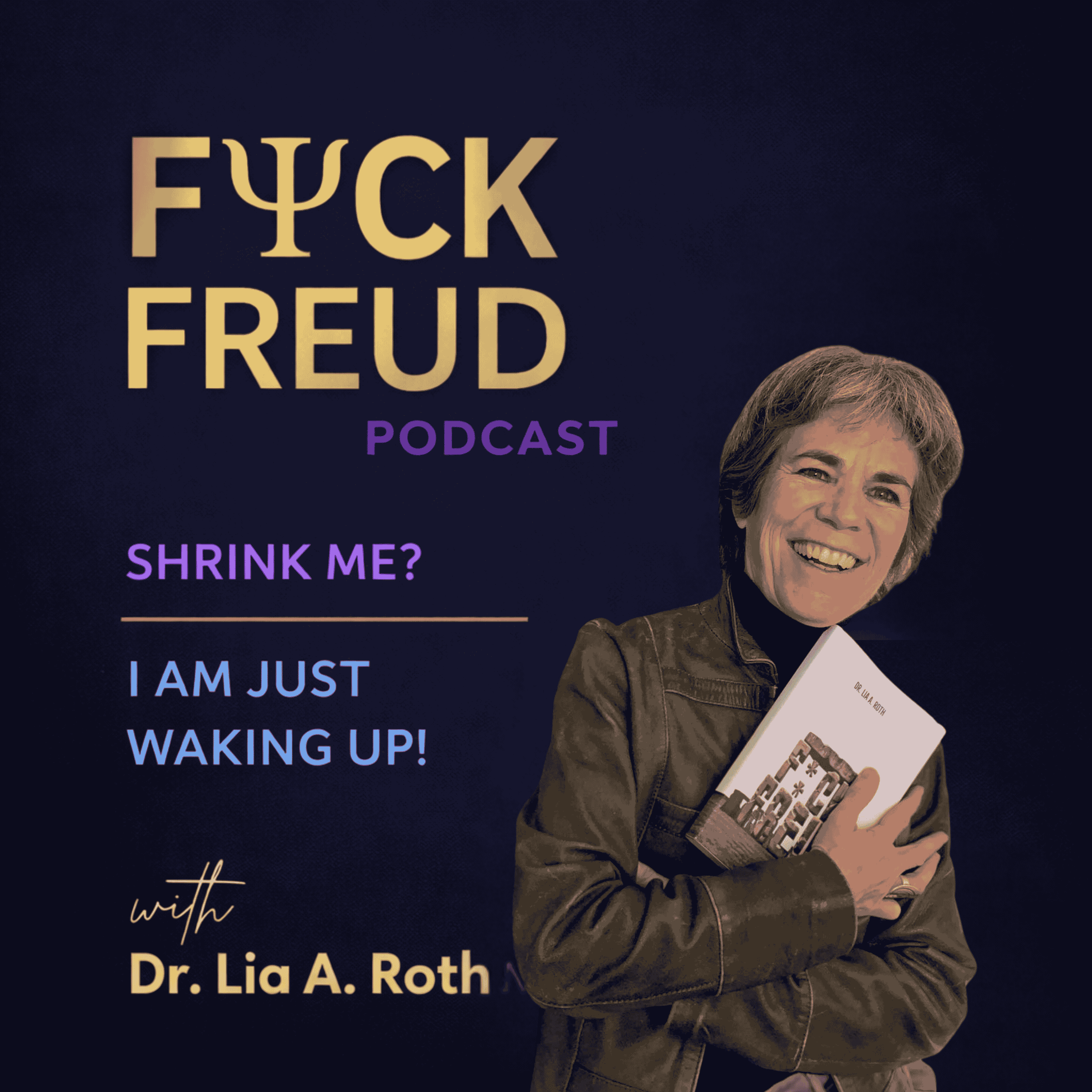
Shrink Me? I am just waking up
by Dr. Lia Roth
Fuck Freud. Shrink Me? I’m Just Waking Up isThe podcast for people who suspect their self-knowledge might be performing for an audience.Dr. Lia Roth — psychoanalyst, author, and professional detector of scripts people mistake for personality — takes apart the roles we slip into when the relational field stops feeling safe.Betrayal. Shame. Desire. Relational theory. Narrative identity. Meaning. Recognition. Autonomy. Attachment.No wellness platitudes. No soft-focus healing theater. Just short, sharp episodes about what the body registers before the mind writes the press release.Every Sunday, we clear the noise, spot the crack, and come back to what actually matters.Questioning your favorite self-description may have side effects. Fortunately, I'm not that kind of doctor, so this is not medical advice. It's worse. It might actually start to make sense.Topics: psychoanalysis, relational theory, betrayal, shame, attachment, narrative identity, meaning-making, autonomy, recognition vs
-
1
The Nod... Approval, Recognition, and the Stories We Tell Ourselves
Ray Dalio promised that if you examine yourself rigorously enough, you can become transparent to yourself. An entire industry rests on the same fantasy. This episode takes that promise apart, not because honesty is useless, but because most of what we call self-knowledge is construction in real time. A nod from a patient. A wave of relief. A clean explanation that arrives before the experience has finished forming. What we publish as insight is usually the press release.
-
0
Self-Blame or Responsibility? After Betrayal
Eighty-seven percent of betrayed partners blame themselves. Not because they caused the betrayal. Because self-blame is the mind's most affordable option when the alternative costs everything.In this solo episode, Dr. Lia Roth breaks down one of the most misunderstood psychological moves people make after being betrayed — the kind that sounds like maturity, feels like honesty, and quietly keeps the wrong person off the hook.You'll learn why self-blame is not a cognitive distortion but a cost-benefit calculation. Why it protects the betrayer more than it protects you. What the research calls the "psychic reversal" — and what Binary Relationship Theory calls it. And why giving up self-blame does not mean you had no part in the relationship. It means something more precise, and harder.Dr. Roth also draws a distinction most conversations about betrayal collapse: the difference between self-blame and self-betrayal. Self-blame says "I caused this." Self-betrayal says "I can see where I abandoned myself while trying not to lose the relationship." They are not the same thing. The confusion between them is where most people get stuck.What you will hear in this episode:— The function of self-blame and why it is a cost-benefit calculation, not a distortion— The psychic reversal: how the betrayed person becomes the crime scene while the betrayer becomes background— The difference between characterological self-blame, behavioral self-blame, and self-betrayal — and why the third is the one worth examining— How roles (Fixer, Performer, Martyr, Ghost) each produce their own version of self-blame — and what they are all avoiding— What responsibility actually asks, and what it does not— When forgiveness enters, and why it is not the goalThis episode draws on the theoretical framework developed in Binary Relationship Theory, found in Get in or Get Out, But Don’t Stay in the Freakn’ Middle, the forthcoming book Not Anymore, and the following works:Cornish, M. A., Maddikunta, S. R., Grey, C. J., Horton, A. J., & Cabirou, L. O. (2026). Trait responses after interpersonal offending: A dyadic examination of effects on romantic relationship quality. Journal of Family Psychology. Freyd, J. J. (1994). Betrayal trauma: Traumatic amnesia as an adaptive response to childhood abuse. Ethics & Behavior, 4(4), 307–329. — The 1996 book is also citable: Freyd, J. J. (1996). Betrayal trauma: The logic of forgetting childhood abuse. Harvard University Press.Goldsmith, R. E., Chesney, S. A., Heath, N. M., & Barlow, M. R. (2013). Emotion regulation difficulties mediate associations between betrayal trauma and symptoms of posttraumatic stress, depression, and anxiety. Journal of Traumatic Stress, 26(3), 376–384. Hollenbeck, C. M., & Steffens, B. (2024). Betrayal trauma anger: Clinical implications for therapeutic treatment based on the sexually betrayed partner's experience related to anger after intimate betrayal. Journal of Sex & Marital Therapy. Janoff-Bulman, R. (1979). Characterological versus behavioral self-blame: Inquiries into depression and rape. Journal of Personality and Social Psychology, 37(10), 1798–1809.Pitcho, S. (2026). The perpetrator–others–self (POS) economic model of blame among interpersonal trauma survivors. American Psychologist. [Volume/issue/pages not yet confirmed — verify at APA PsycNet before publication]
We're indexing this podcast's transcripts for the first time — this can take a minute or two. We'll show results as soon as they're ready.
No matches for "" in this podcast's transcripts.
No topics indexed yet for this podcast.
Loading reviews...
ABOUT THIS SHOW
Fuck Freud. Shrink Me? I’m Just Waking Up isThe podcast for people who suspect their self-knowledge might be performing for an audience.Dr. Lia Roth — psychoanalyst, author, and professional detector of scripts people mistake for personality — takes apart the roles we slip into when the relational field stops feeling safe.Betrayal. Shame. Desire. Relational theory. Narrative identity. Meaning. Recognition. Autonomy. Attachment.No wellness platitudes. No soft-focus healing theater. Just short, sharp episodes about what the body registers before the mind writes the press release.Every Sunday, we clear the noise, spot the crack, and come back to what actually matters.Questioning your favorite self-description may have side effects. Fortunately, I'm not that kind of doctor, so this is not medical advice. It's worse. It might actually start to make sense.Topics: psychoanalysis, relational theory, betrayal, shame, attachment, narrative identity, meaning-making, autonomy, recognition vs
HOSTED BY
Dr. Lia Roth
Loading similar podcasts...
Frequently Asked Questions
How many episodes does Shrink Me? I am just waking up have?
Shrink Me? I am just waking up currently has 2 episodes available on PodParley. New episodes are automatically indexed when they're published to the podcast feed.
What is Shrink Me? I am just waking up about?
Fuck Freud. Shrink Me? I’m Just Waking Up isThe podcast for people who suspect their self-knowledge might be performing for an audience.Dr. Lia Roth — psychoanalyst, author, and professional detector of scripts people mistake for personality — takes apart the roles we slip into when the relational...
How often does Shrink Me? I am just waking up release new episodes?
Shrink Me? I am just waking up has 2 episodes. Check the episode list to see recent publication dates and frequency.
Where can I listen to Shrink Me? I am just waking up?
You can listen to Shrink Me? I am just waking up on PodParley by clicking any episode. We provide an embedded audio player for direct listening, and you can also subscribe via your preferred podcast app using the RSS feed.
Who hosts Shrink Me? I am just waking up?
Shrink Me? I am just waking up is created and hosted by Dr. Lia Roth.
URL copied to clipboard!