
PODCAST · news
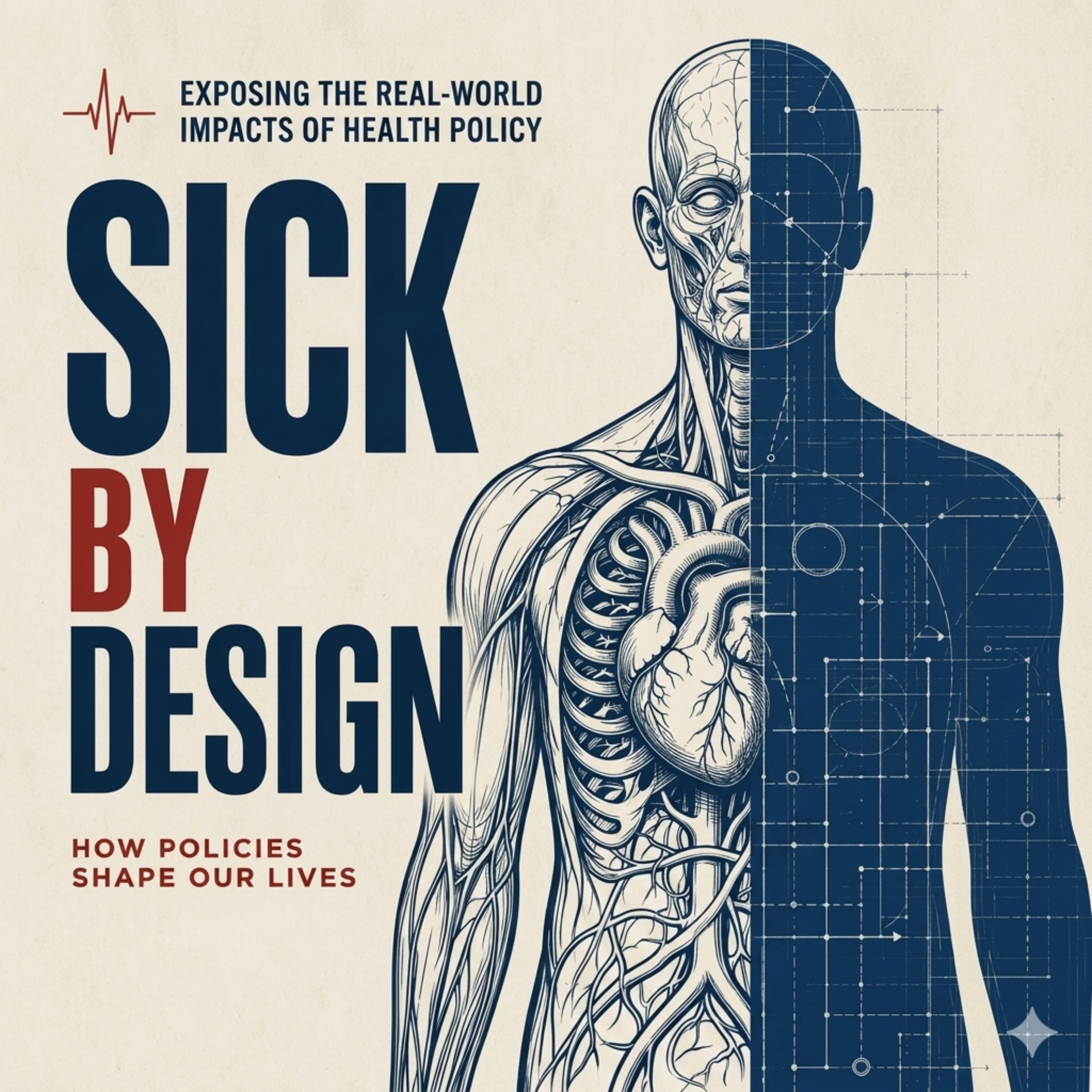
Sick by Design
by Rachel Spahnn
Through personal stories, expert insight, and deep dives into the systems shaping American healthcare, each episode explores how policy decisions translate into lived experience — and why the consequences are often felt most by the people with the least power to navigate them.From mental health services and insurance denials to hospital closures and public health failures, this show examines the gap between how healthcare is supposed to work and what actually happens to people inside the system.
-
6
It’s Not Usage—It’s the Price Tag
Why does a hospital charge $800 for a $1 saline bag? Americans don't use more healthcare than people in other wealthy nations—we just pay drastically higher unit prices. In this episode, we unpack the economic engines driving high medical bills: Chargemasters, hospital consolidation, CPT code gaming, prior authorization, and medical debt. Plus, a 5-step roadmap to audit and negotiate your hospital bill.SourcesReinhardt et al. (2003): It’s The Prices, Stupid (Health Affairs)Cooper et al. (2019): Hospital Prices & Consolidation (QJE)Himmelstein et al. (2020): U.S. Administrative Costs (Annals of Internal Medicine)AMA Survey: Prior Authorization Impact on PracticesPrice Benchmarking: Fair Health Consumer | Healthcare BluebookProtections & Charity Care: CMS No Surprises Act | Dollar ForGot a billing nightmare or prior auth battle to share? Email us at [email protected].
-
5
The Gross-to-Net Trap
Why does a medication invented a century ago still carry a sticker price of hundreds of dollars per vial? In Part 2 of our series on prescription pricing, host Rachel Spahnn pulls back the curtain on Pharmacy Benefit Managers (PBMs)—the powerful, hidden corporate intermediaries operating between drug manufacturers and your local pharmacy counter.We trace how the "gross-to-net bubble" incentivizes artificially high list prices, explore how rebate games determine which drugs end up on health plan formularies, and examine the human cost through the tragic story of Alec Smith, a 26-year-old who aged off his mother's health insurance and died rationing insulin he could no longer afford.Key Takeaways & Concepts Covered The PBM Oligopoly: How three corporate entities (CVS Caremark, Express Scripts, and OptumRx) control roughly 80% of all prescription claims in the United States.The Gross-to-Net Bubble: The widening dollar gap between a drug's official "list price" (Wholesale Acquisition Cost) and the "net price" the drugmaker actually keeps after paying back rebates and fees to middlemen.Formulary Placement Mechanics: Why PBMs often prefer high-list-price, high-rebate drugs over lower-cost alternatives because their revenue share is tied to the total rebate size.The Out-of-Pocket Penalty: How patients in high-deductible health plans or without insurance pay coinsurance based on the inflated list price rather than the negotiated net price.Sources & Referenced ResearchJAMA Network / Health Affairs:Assessment of Commercial and Mandatory Discounts in the Gross-to-Net Bubble for Top Insulin Products (2023). Documenting the expansion of insulin rebates from $4.9 billion in 2012 to over $22 billion by 2019.Estimation of the Share of Net Expenditures on Insulin Captured by US Manufacturers, Wholesalers, Pharmacy Benefit Managers, and Pharmacies (2021). Showing that while manufacturer net revenues fell by ~31%, the share retained by PBMs and intermediaries rose dramatically.Drug Channels Institute (DCI):The Gross-to-Net Bubble Hits $356 Billion (Dr. Adam J. Fein, 2024–2026). Definitive reporting on the dollar gap between list prices and net realization across brand-name pharmaceuticals.Federal Trade Commission (FTC):Interim Staff Report on Pharmacy Benefit Managers: Prescription Drug Middlemen Impacting Cost and Access (2024). Examining market concentration, vertical integration, and formulary steering practices among major PBMs.KFF (Kaiser Family Foundation):Understanding the Role of Pharmacy Benefit Managers (PBMs) in Synthetic Drug Pricing and Patient Deductibles (2023/2024).Legislative & Historical Context:The Alec Smith Emergency Insulin Act (Minnesota, 2020): Passed in memory of Alec Smith to provide emergency, 30-day safety-net insulin access for uninsured and underinsured individuals.
-
4
The Price of Discovery: Why Do Medicines Cost So Much?
Episode 4: The Price of DiscoveryWhy Do Medicines Cost So Much? — Part 1If you’ve ever stood at a pharmacy counter and wondered how a tiny bottle of pills could possibly cost so much, you’re not alone.In this episode of Sick by Design, we begin exploring one of the biggest questions in American health care: why does health care cost so much?We start with prescription drugs and follow the journey of a medicine from scientific discovery to the pharmacy counter. Along the way, we look at the remarkable story of Gleevec (imatinib), a breakthrough treatment for chronic myeloid leukemia that transformed a once-devastating cancer into a manageable disease for many patients.But scientific breakthroughs don't happen in a vacuum. Developing a new medicine can require years of basic research, clinical trials, enormous financial investment, and many failed attempts before a successful treatment reaches a patient.So who pays for that research? How much does drug development really cost? And how much of that work is publicly funded versus privately funded?We also examine the relationship between publicly funded scientific research and private pharmaceutical development, and the role that patents and market exclusivity play in determining when competitors can enter the market.Gleevec offers a fascinating case study. Novartis and Sun Pharma settled patent litigation in 2014, allowing Sun's generic imatinib to enter the U.S. market on February 1, 2016, approximately seven months after Gleevec's basic compound patent expired. The terms of the settlement were confidential, and the agreement has been characterized differently by critics and by Novartis.Once generic competition expanded, the price of imatinib fell dramatically compared with brand-name Gleevec.That illustrates an important point we'll return to throughout this series:The price of a medicine isn't simply a reflection of what it costs to invent or manufacture it.Patents, market exclusivity, competition, insurance design, negotiations, and the structure of the pharmaceutical supply chain all influence what different people and organizations ultimately pay.And that brings us back to the larger question at the heart of this series: how did we build a health care system in which scientific discovery, intellectual property, investment, insurance, and patient access became so tightly intertwined?This is only the beginning. In future episodes, we'll follow the different tributaries that feed into the cost of American health care—including patents, pharmaceutical pricing, pharmacy benefit managers, insurance, hospitals, and the complicated incentives connecting all of them.Because if we want to change the system, we first have to understand how we built it.Druker, B. J., et al. (2001). “Efficacy and Safety of a Specific Inhibitor of the BCR-ABL Tyrosine Kinase in Chronic Myeloid Leukemia.” New England Journal of Medicine, 344(14), 1031–1037.DiMasi, J. A., Grabowski, H. G., & Hansen, R. W. (2016). “Innovation in the Pharmaceutical Industry: New Estimates of R&D Costs.” Journal of Health Economics, 47, 20–33.Cleary, E. G., et al. (2018). “Contribution of NIH Funding to New Drug Approvals 2010–2016.” Proceedings of the National Academy of Sciences, 115(10), 2329–2334.Wong, C. H., Siah, K. W., & Lo, A. W. (2019). “Estimation of Clinical Trial Success Rates and Related Parameters.” Biostatistics, 20(2), 273–286.National Academies of Sciences, Engineering, and Medicine. (2018). Making Medicines Affordable: A National Imperative.U.S. House Committee on Oversight and Reform (2020). Unsustainable Drug Prices: Testimony from the CEOs (Part II).Novartis (2014). “Novartis Settles Patent Litigation on Gleevec with Sun Pharma Subsidiary.”
-
3
Why Does Healthcare Cost So Much?
Sick by Design is a podcast exploring the stories, history, policy, and incentives that shape the American healthcare system—one question at a time.Why does the United States spend more on healthcare than any other country in the world, yet so many patients still struggle to afford care?It's one of the biggest questions in American healthcare—and there isn't a single answer.In this episode of Sick by Design, we begin a new series exploring how our healthcare system evolved over the past century. Rather than searching for a single culprit, we examines healthcare as a collection of interconnected systems built over decades to solve different problems. Along the way, we introduce the framework that will guide the rest of the season: following real stories backward through history, policy, and incentives to understand why the system works the way it does today.This episode lays the foundation for future discussions on prescription drug pricing, patents, pharmacy benefit managers, prior authorization, employer-sponsored insurance, hospital financing, medical research, and more.If you've ever wondered why healthcare feels so expensive—and so complicated—this is where the investigation begins.Have a healthcare story to share?Whether you're a patient, caregiver, physician, nurse, pharmacist, researcher, administrator, attorney, or someone who has simply struggled to navigate the healthcare system, I'd love to hear from you.Submit your story using the link below. You can remain anonymous, and your experience may help shape a future episode of Sick by Design.Share your story with us.You don't need to have a dramatic story. Sometimes the most revealing healthcare experiences are the ordinary ones—a delayed prescription, a confusing bill, a referral that never happened. Those everyday experiences often reveal the biggest systemic issues.
-
2
How We Built a Fragile Mental Health System
In Episode 1, we explored what happened after Idaho cut Medicaid-funded Assertive Community Treatment (ACT) services for people living with severe mental illness. Providers warned that patients would become destabilized. Some warned that people could die. According to subsequent reporting, several patients did.But the deeper question is: how did American mental healthcare become fragile enough that removing one layer of support could have such immediate consequences?In this episode, I speak with nurse practitioner and patient advocate Jessina Graham about the history, policy decisions, and systemic failures that shaped the modern mental health system. We discuss deinstitutionalization, schizophrenia, continuity of care, correctional healthcare, childhood trauma, fragmentation across healthcare systems, and why prevention programs are often the first to face cuts.Together, we explore a fundamental question:What happens when a healthcare system is designed to respond to crisis rather than prevent it?Topics discussed:• The origins of community-based mental healthcare• Why severe mental illness is often misunderstood• Schizophrenia as a neurological disease• The development of Assertive Community Treatment (ACT) in Madison, Wisconsin• Mental illness, trauma, and correctional systems• Why continuity of care matters• The hidden costs of fragmented healthcare systems• Prevention, public health, and the politics of visibilityGuest:Jessina Graham, MSN, APRN, FNP-CNurse Practitioner, Patient Advocate, and Healthcare ConsultantSubstackSources and Further Reading:The New York Times:"Idaho Cut Mental Health Services. Patients Died."(Original reporting that inspired this series)Idaho Statesman:Reporting on Idaho's ACT program reductions and patient outcomesIdaho Capital Sun:Coverage of Idaho Medicaid mental health policy changes and community impactsAbout Sick by DesignSick by Design explores what happens when healthcare policy collides with real life. Through personal stories, expert interviews, and deep dives into the history and structure of American healthcare systems, the podcast examines how policy decisions shape patient outcomes—and why those outcomes often make sense once you understand how the system was built.Host: Rachel SpahnnComments? Questions? Experiences to share? Interested in contributing? [email protected]
-
1
When Care Disappears Overnight: Idaho’s Mental Health Cuts
In Idaho, cuts to a Medicaid-funded mental health crisis program left some of the state’s most vulnerable patients without intensive community-based support. In this first episode of Sick by Design, we examine the human stories behind those cuts — and how healthcare policy decisions translate into real-world consequences for patients, families, providers, and communities.Through reporting, policy analysis, and personal accounts, this episode explores the fragile systems holding severe mental illness care together in America — and what happens when those systems begin to fail.Sources for this episode include reporting from The New York Times, the Idaho Statesman, and the Idaho Capital Sun.https://www.nytimes.com/2026/04/07/health/idaho-mental-health-act-cuts.html https://idahocapitalsun.com/2026/03/12/fourth-patient-dies-after-idaho-cut-medicaid-mental-health-service/?utm_source=chatgpt.comhttps://idahocapitalsun.com/2026/04/01/citing-patient-deaths-idaho-senate-approves-restoring-cut-medicaid-mental-health-programs/?utm_source=chatgpt.comhttps://idahocapitalsun.com/2026/04/03/after-four-patients-died-idaho-governor-approves-restoring-cut-medicaid-mental-health-programs/?utm_source=chatgpt.comhttps://www.idahostatesman.com/news/politics-government/state-politics/article314549368.html?utm_source=chatgpt.comRachel SpahnnComments? Questions? Experiences to share? Interested in contributing? Email: [email protected]
We're indexing this podcast's transcripts for the first time — this can take a minute or two. We'll show results as soon as they're ready.
No matches for "" in this podcast's transcripts.
No topics indexed yet for this podcast.
Loading reviews...
ABOUT THIS SHOW
Through personal stories, expert insight, and deep dives into the systems shaping American healthcare, each episode explores how policy decisions translate into lived experience — and why the consequences are often felt most by the people with the least power to navigate them.From mental health services and insurance denials to hospital closures and public health failures, this show examines the gap between how healthcare is supposed to work and what actually happens to people inside the system.
HOSTED BY
Rachel Spahnn
CATEGORIES
Loading similar podcasts...
Frequently Asked Questions
How many episodes does Sick by Design have?
Sick by Design currently has 6 episodes available on PodParley. New episodes are automatically indexed when they're published to the podcast feed.
What is Sick by Design about?
Through personal stories, expert insight, and deep dives into the systems shaping American healthcare, each episode explores how policy decisions translate into lived experience — and why the consequences are often felt most by the people with the least power to navigate them.From mental health...
How often does Sick by Design release new episodes?
Sick by Design has 6 episodes. Check the episode list to see recent publication dates and frequency.
Where can I listen to Sick by Design?
You can listen to Sick by Design on PodParley by clicking any episode. We provide an embedded audio player for direct listening, and you can also subscribe via your preferred podcast app using the RSS feed.
Who hosts Sick by Design?
Sick by Design is created and hosted by Rachel Spahnn.
URL copied to clipboard!