
PODCAST · health
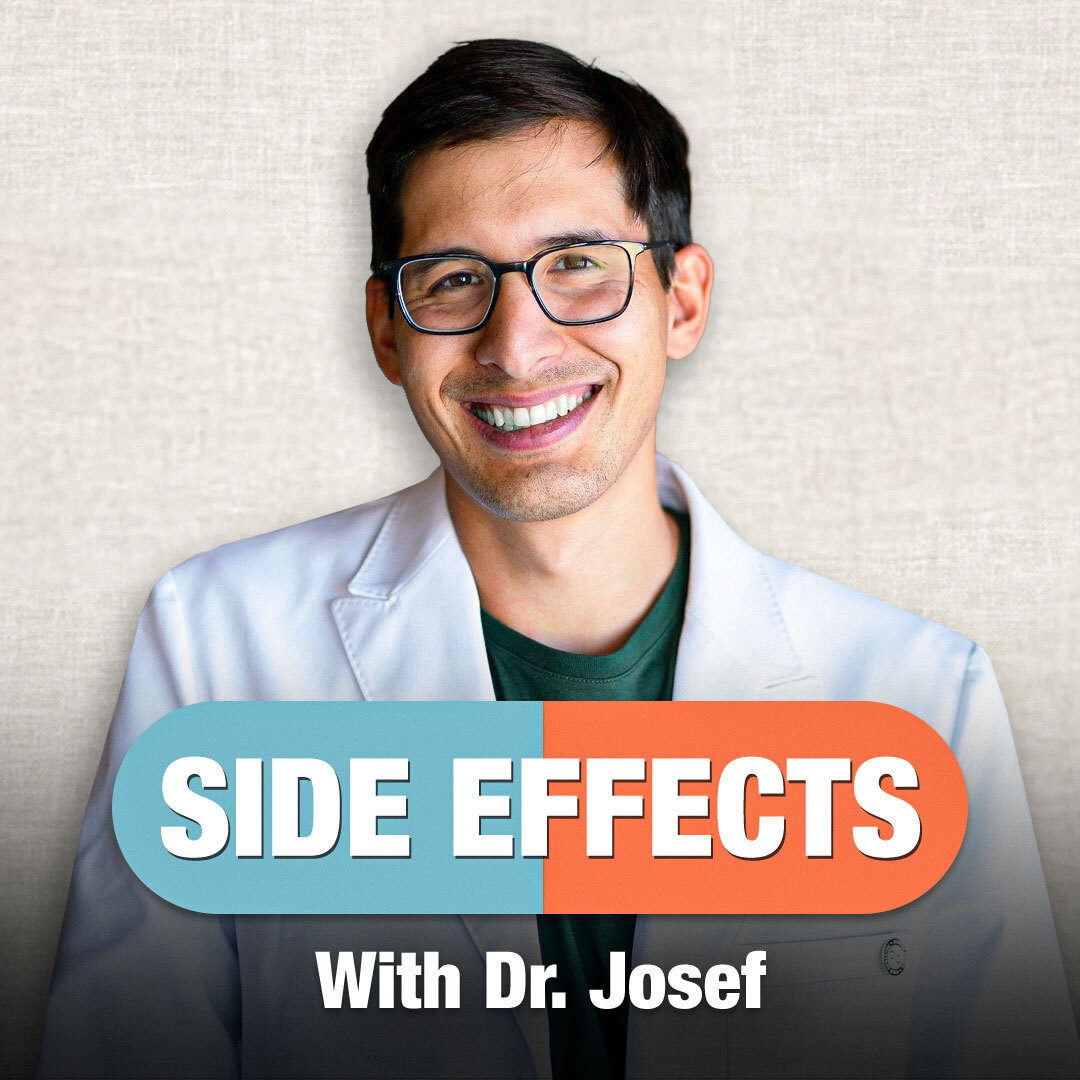
Side Effects with Dr. Josef
by Josef Witt-Doerring
Life on Less Meds is a podcast that reveals the truth about drug side effects and the best strategies to manage them. Your host, Josef Witt-Doerring interviews patients, victims and experts to cover topics such as adverse reactions, post acute withdrawal, benzodiazepine withdrawals, PSSD, and drug tapering. His mission is to raise awareness about the side effects and injuries caused from psychiatric medications to improve informed consent.This podcast is brought to you Witt-Doerring Psychiatry, a private practice that specializes in1) the treatment and management of adverse drug reactions 2) the management of most psychiatric conditions for patients who are seeking psychiatrists who try to manage their conditions with the lowest necessary medication use. Come visit us at: https://www.wittdoerringpsychiatry.com/Or watch our YouTube Channel:https://www.youtube.com/@witt-doerringpsychiatryDisclaimer: All of the information on this podcast is for educational purposes and not inten
-
100
The Hidden Brain Injury Behind WWE Superstar Kurt Angle
Click here for a free admissions assessment with our team who can help you: https://taperclinic.com/start-your-taper/ Make sure to get your free personalized Medication Injury Recovery Guide: https://taperclinic.com/quiz-injury/ WWE and Olympic legend Kurt Angle is one of the toughest competitors to ever step in the ring but his most dangerous battle happened away from the cameras. In this video, we break down Angle's harrowing history with painkillers, benzodiazepines, and alcohol, and use his story to explain the real medical science behind poly-substance dependence and safe recovery. Angle broke his neck multiple times over his career and leaned heavily on opioids to manage chronic pain, eventually taking 15 to 20 pills at a time to hold off withdrawal. Later prescriptions for morphine and Xanax created a dangerous chemical mix that contributed to four DUIs in five years and brought him to the lowest point of his life. In this video we cover: Kurt Angle's escalating dependence on opioids, benzodiazepines, and alcohol Why mixing these substances is so deadly, respiratory depression, coma, and the risk of death as they compound CNS suppression The long-term toll of benzodiazepine use, from cognitive and motor impairment to increased accident risk What withdrawal really feels like, pain, severe anxiety, insomnia, and tremors Why Angle's rapid 6-day detox was incredibly risky, and how cold-turkey cessation can trigger life-threatening seizures Protracted withdrawal injury and why abrupt benzodiazepine cessation can damage neurons for months or years Why modern medical guidelines favor slow, gradual tapers, often 12 to 18 months or longer for long-term benzodiazepine users CONNECT WITH ME: - Instagram: https://www.instagram.com/drjosefwittdoerring/ - TikTok: https://www.tiktok.com/@drjosefwittdoerring - X/Twitter: https://x.com/DrJosefWD - Facebook: https://www.facebook.com/drjosefwittdoerring/ - Website: https://taperclinic.com/ DISCLAIMER: All the information on this channel is for educational and/or entertainment purposes and not intended to be specific/personal medical advice from me to you. Watching the videos, or getting answers to comments/question, does not establish a doctor-patient relationship. If you have your own doctor, these videos can maybe help you prepare for your discussion with him. We do our best to spread awareness with these videos, but for legal reasons we can’t answer health questions in the comments. If you leave questions, we’ll make videos about common questions in the future! If we catch incorrect health information, hate speech, illegal solicitation of drugs in the comments, we will remove them.
-
99
Psychiatrist Reacts to World Cup Star's Pill Addiction
Click here for a free admissions assessment with our team who can help you: https://taperclinic.com/start-your-taper/ Grab our free Tapering Guide Here: https://taperclinic.com/free-guide/ A psychiatrist breaks down the career decline and sleeping pill addiction of English footballer Dele Alli and what his story reveals about the link between childhood trauma and addiction. Dele Alli's early life was marked by severe trauma. In this video, we look at how that history shaped his relationship with sedatives, why sleeping pills became a daily coping tool rather than a sleep aid, and how long-term benzodiazepine use may have quietly derailed a career that critics wrongly blamed on "laziness." What we cover: How childhood trauma can leave the amygdala over activated, driving chronic anxiety and the urge to "numb" internal pain Why sedatives and sleeping pills are often used to escape hyperarousal, not for pleasure How Alli went from taking sleeping pills for rest to using them during the day to mask emotional pain Why benzodiazepines (like Xanax) are inappropriate for chronic insomnia, especially for people with a trauma history The link between long-term benzo use and increased anxiety, depression, and cognitive decline How these effects likely contributed to Alli's drop in form and the truth behind the "lazy" label Why asking for help is a sign of strength, not weakness A critical warning: benzodiazepines must be tapered slowly to avoid severe, long-lasting withdrawal Recovery is possible, and no one should face these struggles alone. If you or someone you know is dealing with addiction or trauma, reaching out for professional support is a sign of strength. CONNECT WITH ME: - Instagram: https://www.instagram.com/drjosefwittdoerring/ - TikTok: https://www.tiktok.com/@drjosefwittdoerring - X/Twitter: https://x.com/DrJosefWD - Facebook: https://www.facebook.com/drjosefwittdoerring/ - Website: https://taperclinic.com/ DISCLAIMER: All the information on this channel is for educational and/or entertainment purposes and not intended to be specific/personal medical advice from me to you. Watching the videos, or getting answers to comments/question, does not establish a doctor-patient relationship. If you have your own doctor, these videos can maybe help you prepare for your discussion with him. We do our best to spread awareness with these videos, but for legal reasons we can’t answer health questions in the comments. If you leave questions, we’ll make videos about common questions in the future! If we catch incorrect health information, hate speech, illegal solicitation of drugs in the comments, we will remove them.
-
98
The Hidden Brain Injury Behind Stevie Nicks
Click here if you would like a free admissions consultation with our team to see if we can help you: https://taperclinic.com/start-your-taper/ Stevie Nicks & Klonopin: How One Prescription Nearly Destroyed Her Career For eight years, Stevie Nicks lived in what she called a "black hole." After leaving rehab for cocaine, a psychiatrist prescribed her Klonopin to prevent relapse, a benzodiazepine typically recommended for no more than nine weeks. She stayed on it for nearly a decade. In this video, we explore how Klonopin reshaped Stevie Nicks' life, creativity, and health: the weight gain that changed her relationship with the stage, the songs she couldn't write, the friendships she nearly lost, and the doctor she blames for repeatedly raising her dose. We follow her through the brutal 47 day detox in 1994, then unpack why coming off an eight year benzo habit that fast can be dangerously, even fatally, quick. We also go deeper into the science these drugs' users rarely hear: what benzodiazepines do to the brain over time, what "protracted withdrawal" really is, and why current guidelines from the American Society of Addiction Medicine now call for a slow, patient led taper of 12 to 18 months. CONNECT WITH ME: - Instagram: https://www.instagram.com/drjosefwittdoerring/ - TikTok: https://www.tiktok.com/@drjosefwittdoerring - X/Twitter: https://x.com/DrJosefWD - Facebook: https://www.facebook.com/drjosefwittdoerring/ - Website: https://taperclinic.com/ DISCLAIMER: All the information on this channel is for educational and/or entertainment purposes and not intended to be specific/personal medical advice from me to you. Watching the videos, or getting answers to comments/question, does not establish a doctor-patient relationship. If you have your own doctor, these videos can maybe help you prepare for your discussion with him. We do our best to spread awareness with these videos, but for legal reasons we can’t answer health questions in the comments. If you leave questions, we’ll make videos about common questions in the future! If we catch incorrect health information, hate speech, illegal solicitation of drugs in the comments, we will remove them.
-
97
How Cold Plunges Helped Him with Protracted Withdrawal
Click here if you need help quitting psychiatric medications: http://membership.taperclinic.com/signup/?utm_source=podcast Cold Plunge Cam is an Instagram influencer who has gained hundreds of thousands of followers, while sharing his mental health stories and experience with protracted withdrawal. Get your free personalized Medication Injury Recovery Guide: https://taperclinic.com/quiz-injury/ Join +6000 people learning how to taper on our newsletter: https://membership.taperclinic.com/newsletter CONNECT WITH ME: - Instagram: https://www.instagram.com/drjosefwittdoerring/ - TikTok: https://www.tiktok.com/@drjosefwittdoerring - X/Twitter: https://x.com/DrJosefWD - Facebook: https://www.facebook.com/drjosefwittdoerring/ - Website: https://taperclinic.com/ DISCLAIMER: All the information on this channel is for educational and/or entertainment purposes and not intended to be specific/personal medical advice from me to you. Watching the videos, or getting answers to comments/question, does not establish a doctor-patient relationship. If you have your own doctor, these videos can maybe help you prepare for your discussion with him. We do our best to spread awareness with these videos, but for legal reasons we can’t answer health questions in the comments. If you leave questions, we’ll make videos about common questions in the future! If we catch incorrect health information, hate speech, illegal solicitation of drugs in the comments, we will remove them.
-
96
Former FDA Medical Officer Exposes the Risks of Zoloft
Click here if you need help quitting psychiatric medications: http://membership.taperclinic.com/signup/?utm_source=podcast This video goes over everything you would possibly need to know about antidepressant protracted withdrawal. Get our free tapering course: https://taperclinic.com/free-guide/ Join +6000 people learning how to taper on our newsletter: https://membership.taperclinic.com/newsletter CONNECT WITH ME: - Instagram: https://www.instagram.com/drjosefwittdoerring/ - TikTok: https://www.tiktok.com/@drjosefwittdoerring - X/Twitter: https://x.com/DrJosefWD - Facebook: https://www.facebook.com/drjosefwittdoerring/ - Website: https://taperclinic.com/ DISCLAIMER: All the information on this channel is for educational and/or entertainment purposes and not intended to be specific/personal medical advice from me to you. Watching the videos, or getting answers to comments/question, does not establish a doctor-patient relationship. If you have your own doctor, these videos can maybe help you prepare for your discussion with him. We do our best to spread awareness with these videos, but for legal reasons we can’t answer health questions in the comments. If you leave questions, we’ll make videos about common questions in the future! If we catch incorrect health information, hate speech, illegal solicitation of drugs in the comments, we will remove them.
-
95
The Chemical Imbalance Theory is a LIE: Here's Why
Click here if you need help quitting psychiatric medications: http://membership.taperclinic.com/signup/?utm_source=podcast Is Depression Really a "Chemical Imbalance"? A Psychiatrist Breaks Down the Myth For decades we were told that depression comes from a chemical imbalance in the brain, too little serotonin, and that antidepressants simply correct it. But what does the evidence actually say? In this video, I (a board-certified psychiatrist) walk through why the "chemical imbalance" explanation doesn't hold up, where the idea really came from, and what psychiatric medications are actually doing when you take them. This isn't about telling anyone to stop their medication. It's about understanding it clearly so you can make better decisions about your own care. What we cover: → The serotonin story. A major systematic review found no consistent evidence that depression is caused by low serotonin or other serotonin abnormalities. → Where the myth came from. How pharmaceutical marketing in the 2000s, including ads for drugs like Zoloft, popularized the "imbalance" narrative. → What actually drives depression. Life events, trauma, physical health, and relationships often matter far more than any single brain defect. → How these drugs really work. Why medications create characteristic effects on the brain (sometimes emotional blunting) rather than "curing" anything, and why they may mask symptoms without touching the root cause. → The long-term problem. Tolerance, escalating doses, and research suggesting the brain can adapt in ways that work against the medication's acute effects. → Three ways this myth causes harm: fostering dependency while real problems go unaddressed, crowding out holistic care, and leading patients to misread medication side effects as their illness getting worse. Get our free tapering course: https://taperclinic.com/free-guide/ Join +6000 people learning how to taper on our newsletter: https://membership.taperclinic.com/newsletter CONNECT WITH ME: - Instagram: https://www.instagram.com/drjosefwittdoerring/ - TikTok: https://www.tiktok.com/@drjosefwittdoerring - X/Twitter: https://x.com/DrJosefWD - Facebook: https://www.facebook.com/drjosefwittdoerring/ - Website: https://taperclinic.com/ DISCLAIMER: All the information on this channel is for educational and/or entertainment purposes and not intended to be specific/personal medical advice from me to you. Watching the videos, or getting answers to comments/question, does not establish a doctor-patient relationship. If you have your own doctor, these videos can maybe help you prepare for your discussion with him. We do our best to spread awareness with these videos, but for legal reasons we can’t answer health questions in the comments. If you leave questions, we’ll make videos about common questions in the future! If we catch incorrect health information, hate speech, illegal solicitation of drugs in the comments, we will remove them.
-
94
The Chemical Imbalance Theory is a LIE: Here's Why
Click here if you need help quitting psychiatric medications: http://membership.taperclinic.com/signup/?utm_source=podcast Is Depression Really a "Chemical Imbalance"? A Psychiatrist Breaks Down the Myth For decades we were told that depression comes from a chemical imbalance in the brain, too little serotonin, and that antidepressants simply correct it. But what does the evidence actually say? In this video, I (a board-certified psychiatrist) walk through why the "chemical imbalance" explanation doesn't hold up, where the idea really came from, and what psychiatric medications are actually doing when you take them. This isn't about telling anyone to stop their medication. It's about understanding it clearly so you can make better decisions about your own care. What we cover: → The serotonin story. A major systematic review found no consistent evidence that depression is caused by low serotonin or other serotonin abnormalities. → Where the myth came from. How pharmaceutical marketing in the 2000s, including ads for drugs like Zoloft, popularized the "imbalance" narrative. → What actually drives depression. Life events, trauma, physical health, and relationships often matter far more than any single brain defect. → How these drugs really work. Why medications create characteristic effects on the brain (sometimes emotional blunting) rather than "curing" anything, and why they may mask symptoms without touching the root cause. → The long-term problem. Tolerance, escalating doses, and research suggesting the brain can adapt in ways that work against the medication's acute effects. → Three ways this myth causes harm: fostering dependency while real problems go unaddressed, crowding out holistic care, and leading patients to misread medication side effects as their illness getting worse. Get our free tapering course: https://taperclinic.com/free-guide/ Join +6000 people learning how to taper on our newsletter: https://membership.taperclinic.com/newsletter CONNECT WITH ME: - Instagram: https://www.instagram.com/drjosefwittdoerring/ - TikTok: https://www.tiktok.com/@drjosefwittdoerring - X/Twitter: https://x.com/DrJosefWD - Facebook: https://www.facebook.com/drjosefwittdoerring/ - Website: https://taperclinic.com/ DISCLAIMER: All the information on this channel is for educational and/or entertainment purposes and not intended to be specific/personal medical advice from me to you. Watching the videos, or getting answers to comments/question, does not establish a doctor-patient relationship. If you have your own doctor, these videos can maybe help you prepare for your discussion with him. We do our best to spread awareness with these videos, but for legal reasons we can’t answer health questions in the comments. If you leave questions, we’ll make videos about common questions in the future! If we catch incorrect health information, hate speech, illegal solicitation of drugs in the comments, we will remove them.
-
93
The Secret to Fixing your Mental Health
Click here if you need help quitting psychiatric medications: http://membership.taperclinic.com/signup/?utm_source=podcast Today we're listening to the story of how a mother took whole foods to improve their family's mental health problems and get off their medications. Get our free tapering course: https://taperclinic.com/free-guide/ Join +6000 people learning how to taper on our newsletter: https://membership.taperclinic.com/newsletter CONNECT WITH ME: - Instagram: https://www.instagram.com/drjosefwittdoerring/ - TikTok: https://www.tiktok.com/@drjosefwittdoerring - X/Twitter: https://x.com/DrJosefWD - Facebook: https://www.facebook.com/drjosefwittdoerring/ - Website: https://taperclinic.com/ DISCLAIMER: All the information on this channel is for educational and/or entertainment purposes and not intended to be specific/personal medical advice from me to you. Watching the videos, or getting answers to comments/question, does not establish a doctor-patient relationship. If you have your own doctor, these videos can maybe help you prepare for your discussion with him. We do our best to spread awareness with these videos, but for legal reasons we can’t answer health questions in the comments. If you leave questions, we’ll make videos about common questions in the future! If we catch incorrect health information, hate speech, illegal solicitation of drugs in the comments, we will remove them.
-
92
The WORST Sleeping Medication
Click here if you need help quitting psychiatric medications: http://membership.taperclinic.com/signup/?utm_source=podcast Doctors are prescribing Seroquel for sleep and that's a problem, in this video I explain why. Get our free tapering course: https://taperclinic.com/free-guide/ Join +6000 people learning how to taper on our newsletter: https://membership.taperclinic.com/newsletter CONNECT WITH ME: - Instagram: https://www.instagram.com/drjosefwittdoerring/ - TikTok: https://www.tiktok.com/@drjosefwittdoerring - X/Twitter: https://x.com/DrJosefWD - Facebook: https://www.facebook.com/drjosefwittdoerring/ - Website: https://taperclinic.com/ DISCLAIMER: All the information on this channel is for educational and/or entertainment purposes and not intended to be specific/personal medical advice from me to you. Watching the videos, or getting answers to comments/question, does not establish a doctor-patient relationship. If you have your own doctor, these videos can maybe help you prepare for your discussion with him. We do our best to spread awareness with these videos, but for legal reasons we can’t answer health questions in the comments. If you leave questions, we’ll make videos about common questions in the future! If we catch incorrect health information, hate speech, illegal solicitation of drugs in the comments, we will remove them.
-
91
Psychiatrist Explains His Battle with Insomnia
Click here if you need help quitting psychiatric medications: http://membership.taperclinic.com/signup/?utm_source=podcast Insomnia didn't care about my medical degree. In this candid sit-down, I open up about my own struggle with sleepless nights and team up with my sleep coach to break down what actually worked for me. We cover the things no one told me about insomnia, the mistakes that kept me stuck, and the practical guide that finally helped me get the rest I'd been chasing. Whether you've battled insomnia for years or just started losing sleep, I hope this honest conversation gives you something to hold onto. Get our free tapering course: https://taperclinic.com/free-guide/ Join +6000 people learning how to taper on our newsletter: https://membership.taperclinic.com/newsletter CONNECT WITH ME: - Instagram: https://www.instagram.com/drjosefwittdoerring/ - TikTok: https://www.tiktok.com/@drjosefwittdoerring - X/Twitter: https://x.com/DrJosefWD - Facebook: https://www.facebook.com/drjosefwittdoerring/ - Website: https://taperclinic.com/ DISCLAIMER: All the information on this channel is for educational and/or entertainment purposes and not intended to be specific/personal medical advice from me to you. Watching the videos, or getting answers to comments/question, does not establish a doctor-patient relationship. If you have your own doctor, these videos can maybe help you prepare for your discussion with him. We do our best to spread awareness with these videos, but for legal reasons we can’t answer health questions in the comments. If you leave questions, we’ll make videos about common questions in the future! If we catch incorrect health information, hate speech, illegal solicitation of drugs in the comments, we will remove them.
-
90
How to Correctly Stop Xanax
Click here if you need help quitting psychiatric medications: http://membership.taperclinic.com/signup/?utm_source=podcast Thinking about getting off Xanax? In this video I break down what a safe approach to stopping actually looks like. Why tapering matters, what withdrawal can feel like, and why working with a doctor is essential. Quitting benzodiazepines cold turkey can be dangerous, so this is about doing it the right way. Get our free tapering course: https://taperclinic.com/free-guide/ Join +6000 people learning how to taper on our newsletter: https://membership.taperclinic.com/newsletter CONNECT WITH ME: - Instagram: https://www.instagram.com/drjosefwittdoerring/ - TikTok: https://www.tiktok.com/@drjosefwittdoerring - X/Twitter: https://x.com/DrJosefWD - Facebook: https://www.facebook.com/drjosefwittdoerring/ - Website: https://taperclinic.com/ DISCLAIMER: All the information on this channel is for educational and/or entertainment purposes and not intended to be specific/personal medical advice from me to you. Watching the videos, or getting answers to comments/question, does not establish a doctor-patient relationship. If you have your own doctor, these videos can maybe help you prepare for your discussion with him. We do our best to spread awareness with these videos, but for legal reasons we can’t answer health questions in the comments. If you leave questions, we’ll make videos about common questions in the future! If we catch incorrect health information, hate speech, illegal solicitation of drugs in the comments, we will remove them.
-
89
Longterm Effects of Benzos on the Brain
Click here if you need help quitting psychiatric medications: http://membership.taperclinic.com/signup/?utm_source=podcast Benzodiazepines like Xanax, Valium, and Klonopin are among the most commonly prescribed medications for anxiety and insomnia but what happens to your brain when they're used over months or years? In this video, we break down what current research says about the long-term effects of benzos on memory, cognition, and the brain's GABA system, plus what's known about tolerance, dependence, and recovery after stopping. Whether you're taking them, considering them, or just curious, here's what the science shows. Get our free tapering course: https://taperclinic.com/free-guide/ Join +6000 people learning how to taper on our newsletter: https://membership.taperclinic.com/newsletter CONNECT WITH ME: - Instagram: https://www.instagram.com/drjosefwittdoerring/ - TikTok: https://www.tiktok.com/@drjosefwittdoerring - X/Twitter: https://x.com/DrJosefWD - Facebook: https://www.facebook.com/drjosefwittdoerring/ - Website: https://taperclinic.com/ DISCLAIMER: All the information on this channel is for educational and/or entertainment purposes and not intended to be specific/personal medical advice from me to you. Watching the videos, or getting answers to comments/question, does not establish a doctor-patient relationship. If you have your own doctor, these videos can maybe help you prepare for your discussion with him. We do our best to spread awareness with these videos, but for legal reasons we can’t answer health questions in the comments. If you leave questions, we’ll make videos about common questions in the future! If we catch incorrect health information, hate speech, illegal solicitation of drugs in the comments, we will remove them.
-
88
As a Doctor I'll Never Take These Pills Again
Click here if you need help quitting psychiatric medications: http://membership.taperclinic.com/signup/?utm_source=podcast After years in medicine, there are a few common pills I've quietly crossed off my own list and in this video, I'll tell you exactly which ones and why. From side effects most patients aren't warned about to better alternatives hiding in plain sight, here's what I'd want my own family to know. Get our free tapering course: https://taperclinic.com/free-guide/ Join +6000 people learning how to taper on our newsletter: https://membership.taperclinic.com/newsletter CONNECT WITH ME: - Instagram: https://www.instagram.com/drjosefwittdoerring/ - TikTok: https://www.tiktok.com/@drjosefwittdoerring - X/Twitter: https://x.com/DrJosefWD - Facebook: https://www.facebook.com/drjosefwittdoerring/ - Website: https://taperclinic.com/ DISCLAIMER: All the information on this channel is for educational and/or entertainment purposes and not intended to be specific/personal medical advice from me to you. Watching the videos, or getting answers to comments/question, does not establish a doctor-patient relationship. If you have your own doctor, these videos can maybe help you prepare for your discussion with him. We do our best to spread awareness with these videos, but for legal reasons we can’t answer health questions in the comments. If you leave questions, we’ll make videos about common questions in the future! If we catch incorrect health information, hate speech, illegal solicitation of drugs in the comments, we will remove them.
-
87
ADHD Isn’t What You’ve Been Told: Psychiatrist Explains
Click here if you need help quitting psychiatric medications: http://membership.taperclinic.com/signup/?utm_source=podcast Think you know ADHD? Think again. In this eye-opening conversation, a psychiatrist breaks down the biggest myths and misconceptions about ADHD and reveals what's really going on in the brain. Get our free tapering course: https://taperclinic.com/free-guide/ Join +6000 people learning how to taper on our newsletter: https://membership.taperclinic.com/newsletter CONNECT WITH ME: - Instagram: https://www.instagram.com/drjosefwittdoerring/ - TikTok: https://www.tiktok.com/@drjosefwittdoerring - X/Twitter: https://x.com/DrJosefWD - Facebook: https://www.facebook.com/drjosefwittdoerring/ - Website: https://taperclinic.com/ DISCLAIMER: All the information on this channel is for educational and/or entertainment purposes and not intended to be specific/personal medical advice from me to you. Watching the videos, or getting answers to comments/question, does not establish a doctor-patient relationship. If you have your own doctor, these videos can maybe help you prepare for your discussion with him. We do our best to spread awareness with these videos, but for legal reasons we can’t answer health questions in the comments. If you leave questions, we’ll make videos about common questions in the future! If we catch incorrect health information, hate speech, illegal solicitation of drugs in the comments, we will remove them.
-
86
The 3 Stages You Go Through on Xanax
Click here if you need help quitting psychiatric medications: http://membership.taperclinic.com/signup/?utm_source=podcast Ever wondered what taking Xanax actually feels like? In this video, I break down the three distinct stages you experience when on Xanax, from the initial onset to the peak effects and what happens as it wears off. Whether you've been prescribed it, are curious about how it works, or want to understand a loved one's experience, this video covers what to expect. Get our free tapering course: https://taperclinic.com/free-guide/ Join +6000 people learning how to taper on our newsletter: https://membership.taperclinic.com/newsletter CONNECT WITH ME: - Instagram: https://www.instagram.com/drjosefwittdoerring/ - TikTok: https://www.tiktok.com/@drjosefwittdoerring - X/Twitter: https://x.com/DrJosefWD - Facebook: https://www.facebook.com/drjosefwittdoerring/ - Website: https://taperclinic.com/ DISCLAIMER: All the information on this channel is for educational and/or entertainment purposes and not intended to be specific/personal medical advice from me to you. Watching the videos, or getting answers to comments/question, does not establish a doctor-patient relationship. If you have your own doctor, these videos can maybe help you prepare for your discussion with him. We do our best to spread awareness with these videos, but for legal reasons we can’t answer health questions in the comments. If you leave questions, we’ll make videos about common questions in the future! If we catch incorrect health information, hate speech, illegal solicitation of drugs in the comments, we will remove them.
-
85
Why Detox Centers Fail You
Click here if you need help quitting psychiatric medications: http://membership.taperclinic.com/signup/?utm_source=podcast If you're on a prescribed benzodiazepine and thinking about going to a detox center, please watch this first. Most detox centers are built for addiction, not prescription dependence. I've seen too many people get pushed through a rapid taper, leave on more medications than they started with, and end up destabilized for months or even years. In this video, I break down why benzo detox is so often the wrong answer, what an aggressive taper can actually do to your nervous system, and the slower, patient-led approach I recommend instead. If you're trying to come off a benzodiazepine, you need a plan that takes this seriously. My free tapering guide is linked below. Get our free tapering course: https://taperclinic.com/free-guide/ Join +6000 people learning how to taper on our newsletter: https://membership.taperclinic.com/newsletter CONNECT WITH ME: - Instagram: https://www.instagram.com/drjosefwittdoerring/ - TikTok: https://www.tiktok.com/@drjosefwittdoerring - X/Twitter: https://x.com/DrJosefWD - Facebook: https://www.facebook.com/drjosefwittdoerring/ - Website: https://taperclinic.com/ DISCLAIMER: All the information on this channel is for educational and/or entertainment purposes and not intended to be specific/personal medical advice from me to you. Watching the videos, or getting answers to comments/question, does not establish a doctor-patient relationship. If you have your own doctor, these videos can maybe help you prepare for your discussion with him. We do our best to spread awareness with these videos, but for legal reasons we can’t answer health questions in the comments. If you leave questions, we’ll make videos about common questions in the future! If we catch incorrect health information, hate speech, illegal solicitation of drugs in the comments, we will remove them.
-
84
I Asked 100 Spouses What Antidepressants Did to Their Marriage
Click here if you need help quitting psychiatric medications: http://membership.taperclinic.com/signup/?utm_source=podcast When someone starts an antidepressant, they're usually the one being asked how they feel. Their spouse rarely is. But the people living with them often notice things the patient can't see from the inside. Emotional flatness. Loss of interest. Changes in intimacy. A partner who is technically "better" but somehow not quite there anymore. In this video, I walk through what they told me, what it tells us about how these medications actually affect people, and what I think every couple deserves to know before one of them starts an antidepressant or decides whether to stay on one. Get our free tapering course: https://membership.taperclinic.com/free-taper-guide Join +6000 people learning how to taper on our newsletter: https://membership.taperclinic.com/newsletter CONNECT WITH ME: - Instagram: https://www.instagram.com/drjosefwittdoerring/ - TikTok: https://www.tiktok.com/@drjosefwittdoerring - X/Twitter: https://x.com/DrJosefWD - Facebook: https://www.facebook.com/drjosefwittdoerring/ - Website: https://taperclinic.com/ DISCLAIMER: All the information on this channel is for educational and/or entertainment purposes and not intended to be specific/personal medical advice from me to you. Watching the videos, or getting answers to comments/question, does not establish a doctor-patient relationship. If you have your own doctor, these videos can maybe help you prepare for your discussion with him. We do our best to spread awareness with these videos, but for legal reasons we can’t answer health questions in the comments. If you leave questions, we’ll make videos about common questions in the future! If we catch incorrect health information, hate speech, illegal solicitation of drugs in the comments, we will remove them.
-
83
Your Doctor Is Making You Worse: Here's Why
Click here if you need help quitting psychiatric medications: http://membership.taperclinic.com/signup/?utm_source=podcast Most doctors are not trying to make their patients worse. But I've watched it happen, over and over, for years. Patients come to me already on four, five, six medications. Each one was added in good faith, to solve a problem the last one created or failed to fix. By the time I see them, they're more anxious, more foggy, more exhausted, and more afraid than they were when any of this started. And they're being told the answer is another adjustment. In this video, I explain how this happens. Why well-meaning doctors keep making patients sicker, what's broken in the way psychiatry is being practiced right now, and what you can do if you suspect it's happening to you. If you've been on medications for years and feel worse than when you started, you are not imagining it. And you are not alone. Get our free tapering course: https://membership.taperclinic.com/free-taper-guide Join +6000 people learning how to taper on our newsletter: https://membership.taperclinic.com/newsletter CONNECT WITH ME: - Instagram: https://www.instagram.com/drjosefwittdoerring/ - TikTok: https://www.tiktok.com/@drjosefwittdoerring - X/Twitter: https://x.com/DrJosefWD - Facebook: https://www.facebook.com/drjosefwittdoerring/ - Website: https://taperclinic.com/ DISCLAIMER: All the information on this channel is for educational and/or entertainment purposes and not intended to be specific/personal medical advice from me to you. Watching the videos, or getting answers to comments/question, does not establish a doctor-patient relationship. If you have your own doctor, these videos can maybe help you prepare for your discussion with him. We do our best to spread awareness with these videos, but for legal reasons we can’t answer health questions in the comments. If you leave questions, we’ll make videos about common questions in the future! If we catch incorrect health information, hate speech, illegal solicitation of drugs in the comments, we will remove them.
-
82
A Mother's Honest Story about Her 12-Year Old's Suicide
Click here if you need help quitting psychiatric medications: http://membership.taperclinic.com/signup/?utm_source=podcast Charay's daughter was 12 years old when she died. She had been prescribed Prozac. In this conversation, Charay shares her story in her own words. What her daughter was like before the medication. What changed after she started it. What she noticed, what she questioned, and what she wishes she had known. If you are struggling, please reach out to someone you trust, or contact a crisis line in your country. Get our free tapering course: https://membership.taperclinic.com/free-taper-guide Join +6000 people learning how to taper on our newsletter: https://membership.taperclinic.com/newsletter CONNECT WITH ME: - Instagram: https://www.instagram.com/drjosefwittdoerring/ - TikTok: https://www.tiktok.com/@drjosefwittdoerring - X/Twitter: https://x.com/DrJosefWD - Facebook: https://www.facebook.com/drjosefwittdoerring/ - Website: https://taperclinic.com/ DISCLAIMER: All the information on this channel is for educational and/or entertainment purposes and not intended to be specific/personal medical advice from me to you. Watching the videos, or getting answers to comments/question, does not establish a doctor-patient relationship. If you have your own doctor, these videos can maybe help you prepare for your discussion with him. We do our best to spread awareness with these videos, but for legal reasons we can’t answer health questions in the comments. If you leave questions, we’ll make videos about common questions in the future! If we catch incorrect health information, hate speech, illegal solicitation of drugs in the comments, we will remove them.
-
81
5 Things Doctors Avoid Telling You About Antidepressants
Click here if you need help quitting psychiatric medications: http://membership.taperclinic.com/signup/?utm_source=podcast There are things I learned about antidepressants in practice that I never learned in medical school, and that most patients are never told before they start taking them. Not because doctors are hiding the ball on purpose. Most genuinely don't know. But that doesn't help you when you're the one taking the medication. I walk through 5 things I think every patient deserves to hear before they start an antidepressant, or before they decide whether to keep taking one. None of this is anti-medication. It's the conversation I wish more of my colleagues were having with their patients. If you're on an antidepressant, thinking about starting one, or trying to figure out whether yours is still helping you, this one is for you. Get our free tapering course: https://membership.taperclinic.com/free-taper-guide Join +6000 people learning how to taper on our newsletter: https://membership.taperclinic.com/newsletter CONNECT WITH ME: - Instagram: https://www.instagram.com/drjosefwittdoerring/ - TikTok: https://www.tiktok.com/@drjosefwittdoerring - X/Twitter: https://x.com/DrJosefWD - Facebook: https://www.facebook.com/drjosefwittdoerring/ - Website: https://taperclinic.com/ DISCLAIMER: All the information on this channel is for educational and/or entertainment purposes and not intended to be specific/personal medical advice from me to you. Watching the videos, or getting answers to comments/question, does not establish a doctor-patient relationship. If you have your own doctor, these videos can maybe help you prepare for your discussion with him. We do our best to spread awareness with these videos, but for legal reasons we can’t answer health questions in the comments. If you leave questions, we’ll make videos about common questions in the future! If we catch incorrect health information, hate speech, illegal solicitation of drugs in the comments, we will remove them.
-
80
If I was Depressed in 2026, Here's What I'd Do (Psychiatrist Guide)
Click here if you need help quitting psychiatric medications: http://membership.taperclinic.com/signup/?utm_source=podcast If I got depressed tomorrow, I would not start with a prescription pad. After years of treating patients who came to me already worse off than when they first started antidepressants, overmedicated, exhausted, foggy, and convinced something was wrong with them, I think very differently about depression than I did in residency. In this video, I walk through exactly what I'd do, in order, if I were depressed in 2026. What I'd rule out first. What I'd try before reaching for a medication. Where medication actually fits, and where it gets people into trouble. And the mistakes I'd be most careful to avoid, including the ones I watch psychiatrists make every week. This isn't an anti-medication video. It's a more honest one. If you're struggling right now, or you're stuck on meds that aren't working the way they used to, I hope this gives you a clearer way to think about your next step. Get our free tapering course: https://membership.taperclinic.com/free-taper-guide Join +6000 people learning how to taper on our newsletter: https://membership.taperclinic.com/newsletter CONNECT WITH ME: - Instagram: https://www.instagram.com/drjosefwittdoerring/ - TikTok: https://www.tiktok.com/@drjosefwittdoerring - X/Twitter: https://x.com/DrJosefWD - Facebook: https://www.facebook.com/drjosefwittdoerring/ - Website: https://taperclinic.com/ DISCLAIMER: All the information on this channel is for educational and/or entertainment purposes and not intended to be specific/personal medical advice from me to you. Watching the videos, or getting answers to comments/question, does not establish a doctor-patient relationship. If you have your own doctor, these videos can maybe help you prepare for your discussion with him. We do our best to spread awareness with these videos, but for legal reasons we can’t answer health questions in the comments. If you leave questions, we’ll make videos about common questions in the future! If we catch incorrect health information, hate speech, illegal solicitation of drugs in the comments, we will remove them.
-
79
Big Pharma Insider Speaks Out: "They did evil things"
Click here if you need help quitting psychiatric medications: http://membership.taperclinic.com/signup/?utm_source=podcast The biggest healthcare fraud settlement in U.S. history was $3 billion and one man risked everything to make it happen. Blair Hamrick had it all: a top pharmaceutical sales career, first-class flights, big bonuses, and a rising future. But behind the scenes, he watched his company illegally push dangerous drugs off-label to children with full knowledge of management. When Blair blew the whistle, he lost everything. His job. His income. His reputation. He moved back in with his mother, raising his young son alone, while others called him a failure. For more than a decade, a gag order kept him silent. This is the story of what really happened and what it cost him to tell the truth. If you've ever wondered how far a drug company will go to protect its profits, watch until the end. Get our free tapering course: https://membership.taperclinic.com/free-taper-guide Join +6000 people learning how to taper on our newsletter: https://membership.taperclinic.com/newsletter CONNECT WITH ME: - Instagram: https://www.instagram.com/drjosefwittdoerring/ - TikTok: https://www.tiktok.com/@drjosefwittdoerring - X/Twitter: https://x.com/DrJosefWD - Facebook: https://www.facebook.com/drjosefwittdoerring/ - Website: https://taperclinic.com/ DISCLAIMER: All the information on this channel is for educational and/or entertainment purposes and not intended to be specific/personal medical advice from me to you. Watching the videos, or getting answers to comments/question, does not establish a doctor-patient relationship. If you have your own doctor, these videos can maybe help you prepare for your discussion with him. We do our best to spread awareness with these videos, but for legal reasons we can’t answer health questions in the comments. If you leave questions, we’ll make videos about common questions in the future! If we catch incorrect health information, hate speech, illegal solicitation of drugs in the comments, we will remove them.
-
78
ChatGPT Will Now Prescribe SSRIs
Click here if you need help quitting psychiatric medications: membership.taperclinic.com/signup/?utm_source=podcast ChatGPT is out here recommending SSRIs like it's handing out candy, and I've got some things to say about it. Get our free tapering course: https://membership.taperclinic.com/free-taper-guide Join +6000 people learning how to taper on our newsletter: https://membership.taperclinic.com/newsletter CONNECT WITH ME: - Instagram: https://www.instagram.com/drjosefwittdoerring/ - TikTok: https://www.tiktok.com/@drjosefwittdoerring - X/Twitter: https://x.com/DrJosefWD - Facebook: https://www.facebook.com/drjosefwittdoerring/ - Website: https://taperclinic.com/ DISCLAIMER: All the information on this channel is for educational and/or entertainment purposes and not intended to be specific/personal medical advice from me to you. Watching the videos, or getting answers to comments/question, does not establish a doctor-patient relationship. If you have your own doctor, these videos can maybe help you prepare for your discussion with him. We do our best to spread awareness with these videos, but for legal reasons we can’t answer health questions in the comments. If you leave questions, we’ll make videos about common questions in the future! If we catch incorrect health information, hate speech, illegal solicitation of drugs in the comments, we will remove them.
-
77
Trump to Help Millions Avoid Antidepressants
Click here if you need help quitting psychiatric medications: membership.taperclinic.com/signup/?utm_source=podcast President Trump just signed a new executive order on health with RFK Jr. and Joe Rogan standing behind him. But does this actually do anything to improve American healthcare? In this video, I break down what's actually in the order, what it changes, and what it means for you. Get our free tapering course: https://membership.taperclinic.com/free-taper-guide Join +6000 people learning how to taper on our newsletter: https://membership.taperclinic.com/newsletter CONNECT WITH ME: - Instagram: https://www.instagram.com/drjosefwittdoerring/ - TikTok: https://www.tiktok.com/@drjosefwittdoerring - X/Twitter: https://x.com/DrJosefWD - Facebook: https://www.facebook.com/drjosefwittdoerring/ - Website: https://taperclinic.com/ DISCLAIMER: All the information on this channel is for educational and/or entertainment purposes and not intended to be specific/personal medical advice from me to you. Watching the videos, or getting answers to comments/question, does not establish a doctor-patient relationship. If you have your own doctor, these videos can maybe help you prepare for your discussion with him. We do our best to spread awareness with these videos, but for legal reasons we can’t answer health questions in the comments. If you leave questions, we’ll make videos about common questions in the future! If we catch incorrect health information, hate speech, illegal solicitation of drugs in the comments, we will remove them.
-
76
What to do if you Love Someone on Psychiatric Medication
Click here if you need help quitting psychiatric medications: membership.taperclinic.com/signup/?utm_source=podcast If you're watching someone you love slowly disappear on their psychiatric medications, this video is for me talking directly to you. I'm a board-certified psychiatrist, and I see this pattern constantly: someone started a medication during a real crisis, and at first it helped. But years later, they're on more drugs, at higher doses, and they're clearly worse. The warmth is gone. The humor is gone. They're fatigued, foggy, unmotivated, and a shell of who they used to be. In this video, I walk through what's actually happening and what you can do about it. What I cover: → Why medications that once worked can stop working, and how tolerance leads to the familiar cycle of higher doses and added prescriptions → How the side effect burden, sedation, emotional blunting, cognitive dulling, eventually outweighs any remaining benefit → The signs families notice first: withdrawal, loss of personality, loss of motivation, the sense that the person you know is no longer there → Why doctors often misread these signs as the underlying illness getting worse or label the patient "treatment-resistant," when the medications themselves may be driving the decline → Why patients on multiple medications frequently cannot advocate for themselves, and why a family member's instincts matter so much here → How to find a second-opinion physician who will actually sit down, listen, take a full history, and seriously consider that the current regimen is part of the problem → What a real path forward looks like: structured, careful tapering paired with non-drug support, nutrition, sleep, and tools to stabilize the nervous system If you're a family member watching this happen: Trust what you're seeing. You are often the first person to recognize that something is wrong, and you may need to be the one who pushes for a different kind of evaluation. Your loved one is not beyond help. There is a path back, but it has to be done carefully and with someone who understands this territory. I'll link to resources below, including guides on safe tapering that you can bring into conversations with your current providers. If this video resonates with your situation, please share it with someone who needs to hear it. Get our free tapering course: https://membership.taperclinic.com/free-taper-guide Join +6000 people learning how to taper on our newsletter: https://membership.taperclinic.com/newsletter CONNECT WITH ME: - Instagram: https://www.instagram.com/drjosefwittdoerring/ - TikTok: https://www.tiktok.com/@drjosefwittdoerring - X/Twitter: https://x.com/DrJosefWD - Facebook: https://www.facebook.com/drjosefwittdoerring/ - Website: https://taperclinic.com/ DISCLAIMER: All the information on this channel is for educational and/or entertainment purposes and not intended to be specific/personal medical advice from me to you. Watching the videos, or getting answers to comments/question, does not establish a doctor-patient relationship. If you have your own doctor, these videos can maybe help you prepare for your discussion with him. We do our best to spread awareness with these videos, but for legal reasons we can’t answer health questions in the comments. If you leave questions, we’ll make videos about common questions in the future! If we catch incorrect health information, hate speech, illegal solicitation of drugs in the comments, we will remove them.
-
75
50 Ways to Avoid Psychiatric Medication
Click here if you need help quitting psychiatric medications: membership.taperclinic.com/signup/?utm_source=podcast Most people don't need psychiatric medication. What they need is a serious look at how they're living, what they're eating, who they're spending time with, and whether their life has any real meaning in it. In this video, I walk through 50 rules I give patients who want to protect their mental health and stay off the prescription treadmill. These aren't theories. They're the same principles I come back to again and again in my practice, because they work, and because the alternative starting down the road of psychiatric medications is something I've seen go badly for too many people. I cover what to eat and what to avoid, how to protect your sleep, why daily movement matters more than most people realize, and why taking responsibility for your own health is something no fifteen-minute doctor visit can replace. I talk about building discipline, creating distance from your own thoughts, refusing a victim mentality, and acting before you feel ready. I go through the substances that quietly wreck people's mental health caffeine, nicotine, alcohol, high-potency cannabis and explain why I'm cautious about routine prescriptions and deeply cautious about psychiatric medications in particular, which tend to lead to more medications, not fewer. I also talk about the things that don't show up on a lab report but matter enormously: writing down your values, doing work that means something, living in service to other people, mentoring someone coming up behind you, and fighting for what you believe in. And I talk about relationships calling your friends, choosing a partner who wants you to grow, practicing forgiveness without becoming a doormat, and getting involved in the lives of children and family. If you're already on psychiatric medication and you want to come off safely, stay until the end. I've put together a free guide to help you start that process the right way. This video is for educational purposes and is not medical advice. Do not stop or change psychiatric medications without working with a qualified clinician. Get our free tapering course: https://membership.taperclinic.com/free-taper-guide Join +6000 people learning how to taper on our newsletter: https://membership.taperclinic.com/newsletter CONNECT WITH ME: - Instagram: https://www.instagram.com/drjosefwittdoerring/ - TikTok: https://www.tiktok.com/@drjosefwittdoerring - X/Twitter: https://x.com/DrJosefWD - Facebook: https://www.facebook.com/drjosefwittdoerring/ - Website: https://taperclinic.com/ DISCLAIMER: All the information on this channel is for educational and/or entertainment purposes and not intended to be specific/personal medical advice from me to you. Watching the videos, or getting answers to comments/question, does not establish a doctor-patient relationship. If you have your own doctor, these videos can maybe help you prepare for your discussion with him. We do our best to spread awareness with these videos, but for legal reasons we can’t answer health questions in the comments. If you leave questions, we’ll make videos about common questions in the future! If we catch incorrect health information, hate speech, illegal solicitation of drugs in the comments, we will remove them.
-
74
How to Manage Bipolar Disorder without Pills
Click here if you need help quitting psychiatric medications: membership.taperclinic.com/signup/?utm_source=podcast Most psychiatrists hand you a prescription and never look back. Nobody asks whether you still need it. Nobody explores what else works. Get our free tapering course: https://membership.taperclinic.com/free-taper-guide Join +6000 people learning how to taper on our newsletter: https://membership.taperclinic.com/newsletter CONNECT WITH ME: - Instagram: https://www.instagram.com/drjosefwittdoerring/ - TikTok: https://www.tiktok.com/@drjosefwittdoerring - X/Twitter: https://x.com/DrJosefWD - Facebook: https://www.facebook.com/drjosefwittdoerring/ - Website: https://taperclinic.com/ DISCLAIMER: All the information on this channel is for educational and/or entertainment purposes and not intended to be specific/personal medical advice from me to you. Watching the videos, or getting answers to comments/question, does not establish a doctor-patient relationship. If you have your own doctor, these videos can maybe help you prepare for your discussion with him. We do our best to spread awareness with these videos, but for legal reasons we can’t answer health questions in the comments. If you leave questions, we’ll make videos about common questions in the future! If we catch incorrect health information, hate speech, illegal solicitation of drugs in the comments, we will remove them.
-
73
Ultimate Guide to Getting Off Antidepressants
Click here if you need help quitting psychiatric medications: membership.taperclinic.com/signup/?utm_source=podcast Your doctor put you on this in 20 minutes. Nobody told you getting off would take a protocol. The dizziness. The brain zaps. The feeling that you're falling apart. That's not your depression coming back. That's your nervous system recalibrating after years of chemical dependency. There's a difference and most doctors don't know it. Antidepressant withdrawal fails for three reasons: undertrained prescribers, the wrong formulation, and no plan for the final stretch. This video covers all three. What you'll learn: → Why standard tablets make precise tapering nearly impossible → How compounded liquid formulations change everything → The 5–10% monthly reduction framework that works → The Traffic Light Method — how to read your body and adjust in real time → Why the last 25% of your taper is harder than the first 75% and what to do about it You've been on this long enough. You deserve a structured exit, not a guess. Watch the full protocol. Then book a call if you're ready to do this properly. Get our free tapering course: https://membership.taperclinic.com/free-taper-guide Join +6000 people learning how to taper on our newsletter: https://membership.taperclinic.com/newsletter CONNECT WITH ME: - Instagram: https://www.instagram.com/drjosefwittdoerring/ - TikTok: https://www.tiktok.com/@drjosefwittdoerring - X/Twitter: https://x.com/DrJosefWD - Facebook: https://www.facebook.com/drjosefwittdoerring/ - Website: https://taperclinic.com/ DISCLAIMER: All the information on this channel is for educational and/or entertainment purposes and not intended to be specific/personal medical advice from me to you. Watching the videos, or getting answers to comments/question, does not establish a doctor-patient relationship. If you have your own doctor, these videos can maybe help you prepare for your discussion with him. We do our best to spread awareness with these videos, but for legal reasons we can’t answer health questions in the comments. If you leave questions, we’ll make videos about common questions in the future! If we catch incorrect health information, hate speech, illegal solicitation of drugs in the comments, we will remove them.
-
72
A Psychiatrist’s Guide to Better Sleep
Click here if you need help quitting psychiatric medications: membership.taperclinic.com/signup/?utm_source=podcast The problem isn't your bedroom. It's your nervous system. Chronic insomnia isn't a nighttime problem. It's a daytime one. When your system runs on high alert for 16 hours straight, work, screens, pressure, performance, it doesn't know how to switch off at 11pm. That's not a sleep disorder. That's a system that's never been allowed to rest. In this video: → Why hyperarousal is the root cause most doctors miss → The cultural pressure driving a generation into sleeplessness → 5 things you can do today to start rewiring your nervous system → Why the anxiety about not sleeping is making it worse You don't need another sleep hack. You need to understand what's actually happening. Get our free tapering course: https://membership.taperclinic.com/free-taper-guide Join +6000 people learning how to taper on our newsletter: https://membership.taperclinic.com/newsletter CONNECT WITH ME: - Instagram: https://www.instagram.com/drjosefwittdoerring/ - TikTok: https://www.tiktok.com/@drjosefwittdoerring - X/Twitter: https://x.com/DrJosefWD - Facebook: https://www.facebook.com/drjosefwittdoerring/ - Website: https://taperclinic.com/ DISCLAIMER: All the information on this channel is for educational and/or entertainment purposes and not intended to be specific/personal medical advice from me to you. Watching the videos, or getting answers to comments/question, does not establish a doctor-patient relationship. If you have your own doctor, these videos can maybe help you prepare for your discussion with him. We do our best to spread awareness with these videos, but for legal reasons we can’t answer health questions in the comments. If you leave questions, we’ll make videos about common questions in the future! If we catch incorrect health information, hate speech, illegal solicitation of drugs in the comments, we will remove them.
-
71
Why Your Anxiety Isn't a Chemical Imbalance
Click here if you need help quitting psychiatric medications: membership.taperclinic.com/signup/?utm_source=podcast The "chemical imbalance" theory of anxiety has been repeated for decades, but the science tells a different story. In this video, I break down what research actually shows about anxiety, why the serotonin myth persists, and what a more accurate understanding of your nervous system means for how you approach treatment and recovery. Whether you've been told your anxiety is a lifelong condition you can only manage with medication, or you're just starting to ask harder questions, this one is worth your time. Get our free tapering course: https://membership.taperclinic.com/free-taper-guide Join +6000 people learning how to taper on our newsletter: https://membership.taperclinic.com/newsletter CONNECT WITH ME: - Instagram: https://www.instagram.com/drjosefwittdoerring/ - TikTok: https://www.tiktok.com/@drjosefwittdoerring - X/Twitter: https://x.com/DrJosefWD - Facebook: https://www.facebook.com/drjosefwittdoerring/ - Website: https://taperclinic.com/ DISCLAIMER: All the information on this channel is for educational and/or entertainment purposes and not intended to be specific/personal medical advice from me to you. Watching the videos, or getting answers to comments/question, does not establish a doctor-patient relationship. If you have your own doctor, these videos can maybe help you prepare for your discussion with him. We do our best to spread awareness with these videos, but for legal reasons we can’t answer health questions in the comments. If you leave questions, we’ll make videos about common questions in the future! If we catch incorrect health information, hate speech, illegal solicitation of drugs in the comments, we will remove them.
-
70
The Diet Cure for Schizophrenia
Click here if you need help quitting psychiatric medications: membership.taperclinic.com/signup/?utm_source=podcast What if the food on your plate was making your symptoms worse or better? Schizophrenia affects millions, yet conventional treatment almost never touches diet. A growing body of research is pointing to a surprising link between what we eat and how our brain functions, and for some patients, dietary changes have led to improvements that medication alone couldn't achieve. In this video, we dig into the science behind gluten sensitivity, gut-brain communication, and the nutritional deficiencies tied to psychosis and why this conversation is being left out of most psychiatric offices. Get our free tapering course: https://membership.taperclinic.com/free-taper-guide Join +6000 people learning how to taper on our newsletter: https://membership.taperclinic.com/newsletter CONNECT WITH ME: - Instagram: https://www.instagram.com/drjosefwittdoerring/ - TikTok: https://www.tiktok.com/@drjosefwittdoerring - X/Twitter: https://x.com/DrJosefWD - Facebook: https://www.facebook.com/drjosefwittdoerring/ - Website: https://taperclinic.com/ DISCLAIMER: All the information on this channel is for educational and/or entertainment purposes and not intended to be specific/personal medical advice from me to you. Watching the videos, or getting answers to comments/question, does not establish a doctor-patient relationship. If you have your own doctor, these videos can maybe help you prepare for your discussion with him. We do our best to spread awareness with these videos, but for legal reasons we can’t answer health questions in the comments. If you leave questions, we’ll make videos about common questions in the future! If we catch incorrect health information, hate speech, illegal solicitation of drugs in the comments, we will remove them.
-
69
Misdiagnosed Bipolar: Jennifer’s Real Story of Healing
In this interview, Jennifer shares her experience of being diagnosed with bipolar disorder, taking lithium and antidepressants for years, and how the medications affected her health, career, and relationships. She talks about being hospitalized, the side effects she endured, and the challenges of losing her stability. Jennifer also explains how she eventually came off the medications, discovered her struggles were more connected to ADHD and trauma, and how she has now been living medication-free for six years
-
68
Harvard Psychiatrist: I Stopped Prescribing Pills
In this episode, psychiatrist Dr. Matt Bernstein (founder of ACCORD) explains why metabolic therapies—ketogenic nutrition, circadian alignment, exercise, and mind-body work—often improve energy, mood, sleep, focus, and even psychosis, while enabling safer deprescribing. We dig into why standard care so often fails to restore function; what ketogenic diets can do in severe illness; why incentives from Big Food, Big Pharma, and insurers sideline foundational lifestyle care; and what families can start doing right now—because real change is likely to be grassroots.
-
67
Is This The Cure for Protracted Withdrawal?
In this interview, Dr. Jeffrey Wiegers (BioReset Medical) explains what MUSE stem cells are, how they differ from traditional mesenchymal stem cells, and whether they might help after neurological injuries—concussion/TBI, stroke, chemo neuropathy, or protracted withdrawal (including PSSD). We also cover safety, side effects, why sourcing and good manufacturing practice matter, and new state-level pathways in the U.S. https://www.bioresetmedical.com/
-
66
Everything They Told You About Benzos Is Wrong
John and Dee Foster were severely harmed by benzodiazepines—yet instead of staying silent, they spent years fighting for change. Their persistence paid off: the new ASAM benzodiazepine deprescribing guidelines now formally acknowledge physical dependence, protracted withdrawal, the need for slow, patient-led tapers that can take months to years, the importance of shared decision-making, and the role of peer and non-drug supports. John and Dee share what they won for patients, and why these guidelines could mark a turning point in holding the medical system accountable.
-
65
I Was Prescribed Meth… by My Doctor
In this interview, Cooper Davis shares his 13-year journey on psychiatric medications: starting with Ritalin in high school, moving through nearly every stimulant, and eventually adding multiple other drugs. What began as a dramatic improvement in focus and grades slowly turned into tolerance, side effects, and a growing medication stack that hurt his health, relationships, and career. He describes the moments that pushed him to quit, his withdrawal in a 12-step rehab, and the process of rebuilding life without medications. This is a candid look at both the benefits and costs of psychiatric drugs, and what life can look like after coming off.
-
64
-
63
Psychiatric Meds Keep You Stuck- Here's How
Clinical psychologist Anders Sørensen shares his journey from traditional talk therapy to becoming a leading voice in psychiatric drug withdrawal. After realizing that medications were emotionally blunting his clients and preventing meaningful therapeutic work, Anders began researching safe tapering strategies. Anders also discusses his new book Crossing Zero: The Art and Science of Coming and Staying Off Psychiatric Drugs, and shares practical insights from years of clinical experience, research, and collaboration with the withdrawal community.
-
62
-
61
"I Lost My Son To Cannabis" - Aubree Adams
What happens when legal marijuana leads to psychosis, addiction, and family collapse? In this powerful interview, Dr. Yosef speaks with Aubree Adams, founder of Every Brain Matters, whose son suffered from cannabis induced psychosis after using high-potency THC products like dabs. This is not “just weed” — it’s an industrialized drug that is hurting people, especially teens. Aubree shares her family's harrowing story of watching her son become delusional, suicidal, and hospitalized — all linked to marijuana use. She exposes how the cannabis industry, medical system, and public policy continue to mislead families while ignoring the clear science linking THC to psychosis, addiction, and long-term brain damage. We dive into misdiagnosis, lack of support, withdrawal, and the painful reality of parenting a teen through marijuana addiction. Whether you're a parent, a clinician, or someone questioning the safety of today's weed — you need to hear this.
-
60
This Psychiatrist Says Chemical Imbalance is a LIE - Joanna Moncrieff
In this conversation, Dr. Joanna Moncrieff discusses her book 'Chemically Imbalanced'. She argues that there is no compelling evidence for a chemical imbalance in depression and questions the continued prescription of antidepressants. We explore the interests of the pharmaceutical industry, the ethical implications of using drugs to mask symptoms, and the need for a paradigm shift in mental health treatment. We discuss the influence of the pharmaceutical industry on psychiatric literature and the defensive stance of the psychiatric profession against critical viewpoints.
-
59
Meet The Woman Psychiatrists See As a “Threat” - Laura Delano
Laura Delano shares her journey from being a 'professional psychiatric patient' for over a decade to becoming a leading voice in the psychiatric drug withdrawal movement. Diagnosed with bipolar disorder, Laura was prescribed a cocktail of medications that only worsened her mental and physical health. After a near-fatal suicide attempt, she began questioning everything she was told about her diagnosis and treatment. Laura discusses her harrowing tapering experience, the impact of psychiatric labels, and how she ultimately reclaimed her life by challenging the mainstream narrative. Today, she’s the founder of Inner Compass Initiative and the author of Unshrunk, where she continues to educate and support those questioning their psychiatric treatment.
-
58
The Antidepressant That Nearly Destroyed Her Life
Imagine this: you’re at rock bottom, balancing single parenthood with overwhelming mental health struggles. After seeking help, an antidepressant seems like the answer—until things spiral. What starts as relief transforms into a whirlwind of impulsive decisions, relocation to a remote Alaskan town, and a ‘bipolar disorder’ diagnosis that only brings more medications and more side effects. But what if those very medications were the root of the problem? Discover the inspiring journey of TaperClinic’s coach Neseret as she breaks free from over a decade of psychiatric misdiagnoses and medications to reclaim her life against all odds
-
57
Functional Psychiatry Is Changing Everything - Dr. James Greenblatt
Functional psychiatry is changing everything you know about mental health. In this powerful interview, Dr. James Greenblatt—founder of Psychiatry Redefined and leading voice in functional psychiatry—reveals how nutrient deficiencies, overlooked infections, and gut health can be the real cause of depression, ADHD, anxiety, and even schizophrenia. We cover everything from lithium orotate and B12 to the ketogenic diet, psychedelics, and why the current psychiatric model often fails. Dr. Greenblatt shares clinical cases, science-backed protocols, and why hope is very real, even for those labeled as “treatment-resistant.” If you or a loved one has been on multiple meds with little relief, this could be the interview that changes everything. Root-cause psychiatry is here, and it’s powerful.
-
56
From Paxil to a Fake Bipolar Diagnosis: Michael's Story
Michael Coughlin was an entrepreneur with no history of bipolar disorder—until he took an antidepressant. In this eye-opening interview, Michael shares how a doctor prescribed him Paxil for situational anxiety, triggering a terrifying spiral of adverse effects. Instead of recognizing the drug reaction, the mental health system labeled him bipolar and placed him on heavy antipsychotic medication.
-
55
Antidepressants Stole Her Life: Brooke Siem's Story
Brooke Siem shares her journey from being prescribed antidepressants as a teen to rediscovering life after withdrawal. She discusses the emotional and physical toll of coming off medications, the impact on her identity and relationships, and the challenges of rebuilding her life. Brooke discusses misconceptions about depression, the grief of lost time, and the role of curiosity in healing. Her story, as detailed in her memoir "May Cause Side Effects," offers hope and inspiration to anyone navigating similar struggles.
-
54
Amino Acids: A Breakthrough Therapy?
In this conversation, Dr. Josef and Laurie Hammer explore the transformative potential of amino acid therapy for mental health, particularly in treating anxiety and depression. Laurie shares her personal journey with amino acids, detailing how they helped her overcome her own struggles with mental health. The discussion covers the testing methods for neurotransmitter levels, the rapid effects of amino acids, treatment duration, costs, and the importance of vitamins and minerals in supporting neurotransmitter production. Laurie emphasizes that amino acids can provide immediate relief and are a viable alternative to traditional medications, while also addressing the risks and considerations involved in their use. The conversation concludes with Laurie's philosophy on treatment and who can benefit from amino acid therapy.
-
53
Benzodiazepines Destroyed My Life—And How I Fought Back
In this conversation, D E Foster shares his profound journey through protracted withdrawal from benzodiazepines, detailing the significant changes in his life, relationships, and career. He discusses the emotional and psychological impacts of withdrawal, the importance of support systems, and the gradual healing process he has experienced over the years. Foster emphasizes the need for community and understanding in navigating the challenges faced by those affected by drug injuries, while also highlighting the importance of environmental factors and personal sensitivities. He concludes with a message of hope, encouraging others to seek help and affirming that healing is possible.
-
52
How I cured my schizophrenia - Interview with Lauren Kennedy West
In this conversation, Lauren Kennedy West shares her journey of living with schizoaffective disorder, detailing her experiences with mental health struggles, the impact of her diagnosis, and her relationship with medications. She discusses the importance of vulnerability in sharing her story and the evolution of her YouTube channel, which aims to connect and support others facing similar challenges. Lauren also explores her transition to a ketogenic diet as a non-drug approach to managing her symptoms, reflecting on the profound changes in her life after reducing her medications. In this conversation, Lauren Kennedy West and Dr. Josef explore the complexities of mental health treatment, particularly focusing on the use of antipsychotic medications and the impact on identity. They discuss the societal perceptions of mental illness, the importance of patient empowerment, and the need for a broader understanding of recovery that goes beyond medication. The conversation also critiques the healthcare system's reliance on pharmaceuticals and the influence of pharmaceutical companies on treatment narratives. Throughout, they emphasize the emotional challenges faced by individuals navigating mental illness and the importance of community support in the recovery process.
-
51
What's it like coming off antipsychotics after 22 years?
Medicated for over two decades, Trudy Slaght faced life-changing side effects and lost dreams. Now, after five years off all psychiatric meds, she’s healthier than ever and ready to chase her dreams again. Discover how she did it and the powerful lessons from her journey. Life on Less Meds is a podcast that reveals the truth about drug side effects and the best strategies to manage them. Your host, Josef Witt-Doerring interviews patients, victims, and experts to cover topics such as adverse reactions, post-acute withdrawal, benzodiazepine withdrawals, PSSD, and drug tapering. His mission is to raise awareness about the side effects and injuries caused by psychiatric medications to improve informed consent. All My Links: https://beacons.ai/drjosef Disclaimer: All of the information on this podcast is for educational purposes and not intended to be specific/ personal medical advice from me to you. Listening to this podcast does not establish a doctor-patient relationship. The views and opinions of the podcast guests are their own and should not be taken as medical advice. [email protected]
We're indexing this podcast's transcripts for the first time — this can take a minute or two. We'll show results as soon as they're ready.
No matches for "" in this podcast's transcripts.
No topics indexed yet for this podcast.
Loading reviews...
ABOUT THIS SHOW
Life on Less Meds is a podcast that reveals the truth about drug side effects and the best strategies to manage them. Your host, Josef Witt-Doerring interviews patients, victims and experts to cover topics such as adverse reactions, post acute withdrawal, benzodiazepine withdrawals, PSSD, and drug tapering. His mission is to raise awareness about the side effects and injuries caused from psychiatric medications to improve informed consent.This podcast is brought to you Witt-Doerring Psychiatry, a private practice that specializes in1) the treatment and management of adverse drug reactions 2) the management of most psychiatric conditions for patients who are seeking psychiatrists who try to manage their conditions with the lowest necessary medication use. Come visit us at: https://www.wittdoerringpsychiatry.com/Or watch our YouTube Channel:https://www.youtube.com/@witt-doerringpsychiatryDisclaimer: All of the information on this podcast is for educational purposes and not inten
HOSTED BY
Josef Witt-Doerring
Loading similar podcasts...
Frequently Asked Questions
How many episodes does Side Effects with Dr. Josef have?
Side Effects with Dr. Josef currently has 50 episodes available on PodParley. New episodes are automatically indexed when they're published to the podcast feed.
What is Side Effects with Dr. Josef about?
Life on Less Meds is a podcast that reveals the truth about drug side effects and the best strategies to manage them. Your host, Josef Witt-Doerring interviews patients, victims and experts to cover topics such as adverse reactions, post acute withdrawal, benzodiazepine withdrawals, PSSD, and drug...
How often does Side Effects with Dr. Josef release new episodes?
Side Effects with Dr. Josef has 50 episodes. Check the episode list to see recent publication dates and frequency.
Where can I listen to Side Effects with Dr. Josef?
You can listen to Side Effects with Dr. Josef on PodParley by clicking any episode. We provide an embedded audio player for direct listening, and you can also subscribe via your preferred podcast app using the RSS feed.
Who hosts Side Effects with Dr. Josef?
Side Effects with Dr. Josef is created and hosted by Josef Witt-Doerring.
URL copied to clipboard!