
PODCAST · technology
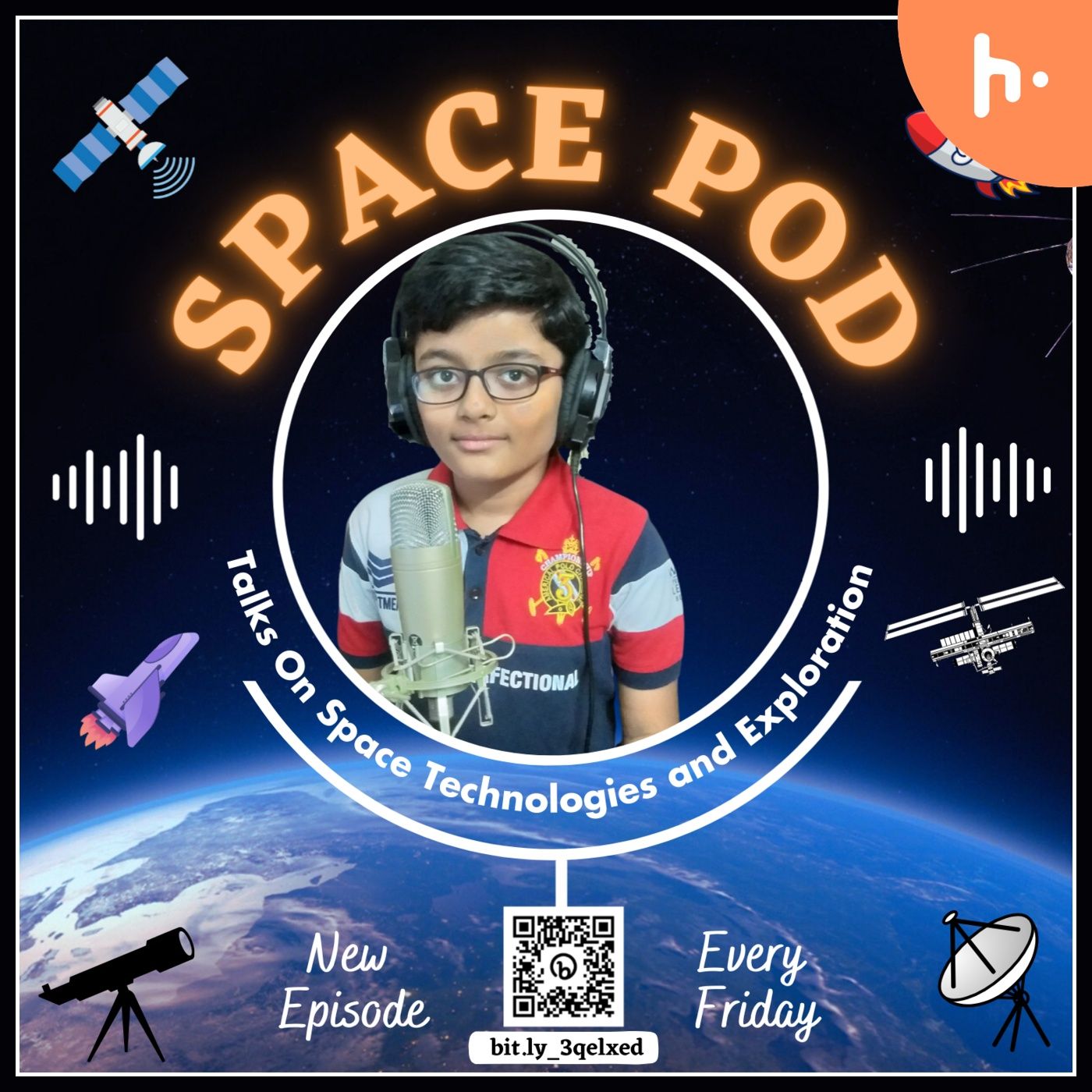
Space POD (Space Technologies and Exploration)
by VENKAT RAMAN PATNAIK
Hello my dear listeners, welcome to my new podcast channel. In the following episodes, I will talk about "All Things Space!". I will work on discussing and talking about Satellite Technology, Orbitals, Space Travel(Interplanetary, Interstellar, Intergalactic), and Human Spaceflight. I will also cover my opinions, solutions, and ideas in the podcasts too. Please stay tuned as I will upload podcasts every week. If you like my podcasts do consider sharing with other people too. Space is very important to us as Former NASA administrator Mike Griffin said: "If Dinosaurs had a space program, they would never be extinct" Let's keep space as a heritage and continue to keep pushing our boundaries and thinking beyond what we can imagine in space. These podcasts are made about such topics to discuss and promote more of it. Until next time, I am Venkat Raman Patnaik Signing Off! #satellites #colocation #debris #coordination #constellation #sattelliteoperations #spacescience #spacetech #orbits #geo
-
37
Episode 37-Starliner and Helium Leaks in Space
Hello Everyone! It has been about 1 month since Starliner has returned and some more info has come on how and why helium leaks happened.Listen to Episode 37 Space POD to learn more.Note: Both crew members are safe in space and will return by February of 2025.
-
36
Episode 36 - National Space Day Special: Chandrayaan 4 - To the Moon and Back
As we celebrate National Space Day, let us delve into the exciting possibilities of the Chandrayaan-4 mission. What is next on the moon. Building upon the remarkable success of Chandrayaan-3, we explore potential objectives, technological advancements, and the scientific discoveries that could be achieved. Join us as we imagine a future where India's lunar exploration continues to break new ground.This is a special episode recorded on National Space Day which is an occasion to honor India's achievements in space exploration and inspire future generations. It's a day to reflect on the incredible journey of ISRO and the countless contributions of Indian scientists and engineers. Let's celebrate this momentous day by exploring the boundless possibilities of space exploration.
-
35
Ep-35 Humans at the Moon
In this episode, we explore humanity's incredible journey to the Moon. We'll revisit the historic Apollo missions, highlighting the challenges and triumphs of landing astronauts on the lunar surface. We'll also delve into the present and future of lunar exploration, including NASA's Artemis program, which aims to return humans to the Moon and establish a sustainable presence. Join me as we uncover the profound impact of these missions on science, technology, and our collective imagination, and discuss why the Moon remains a compelling destination in our quest for knowledge and adventure.
-
34
EP-34 Bharatiya Antriksh Station
EP-34 Bharatiya Antriksh StationIn this episode, we explore India's ambitious plans for its own space station, the Bharatiya Antriksh Station. We discuss the technological challenges, potential collaborations, and the strategic importance of this initiative. Join us as we delve into how this project could position India as a key player in the global space industry.
-
33
Ep 33- Sounding Rockets: To The Upper Atmosphere And Beyond
In Episode 33, "Sounding Rockets: To The Upper Atmosphere And Beyond," I delve into the fascinating world of sounding rockets. These suborbital rockets are essential tools for scientific research, providing valuable data from the upper atmosphere to the edge of space. Venkat explores their history, development, and the pivotal role they play in advancing our understanding of space science. This episode offers a focused and insightful look into the technology and missions behind sounding rockets, highlighting their contributions to meteorology, astronomy, and other scientific fields. Whether you're a space enthusiast or a curious learner, join me for an engaging journey through the skies with sounding rockets.
-
32
Ep-32- Racing to the Future: Insights on NGLV and Beyond
In this episode, we delve into the advancements of ISRO's Next Generation Launch Vehicle (NGLV), exploring its potential to revolutionize space travel with enhanced payload capacity, reusability, and advanced technologies. Join us as we discuss the strategic implications of NGLV for India's space industry and global competitiveness.Find the X and Reddit link of the graphics:X: https://x.com/ISROSpaceflight/status/1750166397395640336Reddit: https://www.reddit.com/r/ISRO/comments/1afhajl/nglv_and_its_variants_based_of_recent_updates/Ep-32- Racing to the Future: Insights on NGLV and Beyond
-
31
Ep 31- Cloud Tech in GIS
Cloud technology is revolutionizing the geospatial sector by offering enhanced data processing, improved collaboration, and significant cost efficiencies. While there are challenges to consider, such as data security and technical complexities, the benefits far outweigh the drawbacks. Embracing cloud-based geospatial solutions is a strategic move for any organization looking to advance its capabilities and stay competitive in today's data-driven world.By leveraging the power of the cloud, the geospatial sector can achieve new heights in data analysis, collaboration, and innovation, ultimately transforming how we interact with and understand our world.
-
30
Ep-30 Sea Launching Rockets
Welcome to Space POD, where the vastness of space meets the tranquility of the sea. I'm Venkat Raman Patnaik, your solo guide on this cosmic journey, and today, we're setting sail into the uncharted waters of sea-launched rockets. Join me in 'Solitude in the Sea,' an episode that explores the mesmerizing world of launching rockets from the open ocean.In this solo adventure, we'll navigate the allure of sea launches, uncovering the unique advantages and captivating aspects that draw us to the intersection of rockets and waves. Without the distraction of guests, it's just you, me, and the cosmic wonders that unfold.Prepare to delve deep into the engineering marvels that make sea launches possible. From adapting rockets for maritime conditions to the intricate dance between technology and the dynamic sea environment, we'll uncover the secrets behind these awe-inspiring feats of human ingenuity.Precision is paramount in space exploration, and sea launches bring a whole new level of complexity. Join me as we unravel the technologies and strategies used to ensure pinpoint accuracy when rockets meet the rolling waves, exploring the solo challenges faced in navigating the dynamic seas.No solo sea launch exploration is complete without stories of the solitary pioneers who ventured into this unique realm. From triumphs to setbacks, we'll discover the incredible tales of those who dared to embark on solo missions into the vast expanse of the open ocean.So, buckle up and set your coordinates for 'Solitude in the Sea.' Whether you're a seasoned space aficionado or a curious newcomer, this solo episode promises a deep dive into the solitary side of space exploration. Until our cosmic paths cross again, keep gazing at the stars, and enjoy the voyage into the boundless depths of the sea and space.
-
29
Ep-29 Sounding Rockets
Welcome to [Space POD], where we embark on a celestial journey in our latest episode—unveiling the captivating world of Sounding Rockets. 🚀 Delve into the stratosphere with us as we explore their suborbital trajectories, reaching altitudes up to 1,500 km, and dissect their vital role in scientific breakthroughs. Discover the microgravity experiments, atmospheric studies, and technological advancements propelled by these high-flying pioneers. Join us as we unravel the historical significance of Sounding Rockets, fostering space exploration and shaping our understanding of the cosmos. Tune in for a cosmic adventure that transcends the boundaries of Earth. #SoundingRockets #SpaceExploration #ScientificDiscovery
-
28
Ep-28 Beyond the Stars: Unearthing the Riches of Asteroid Mining
Embark on a cosmic odyssey with "Cosmic Explorations" as we delve into the captivating world of asteroid mining in this episode, titled "Beyond the Stars: Unearthing the Riches of Asteroid Mining." Join our host as we navigate the asteroid belt, discovering the untapped wealth of resources hidden within these celestial bodies and the groundbreaking technologies propelling humanity into a new era of space exploration.From the rare metals and precious minerals nestled within the asteroids to the cutting-edge technologies that make extraction possible, we uncover the potential economic and scientific implications of mining the cosmos. We explore the legal and ethical considerations surrounding space resource utilization, diving into international agreements and the responsibilities that come with venturing into the final frontier.Featuring interviews with experts in the field, we shed light on the advancements made by both space agencies and private ventures in the race to unlock the riches of asteroids. As we gaze into the future, we contemplate the transformative impact asteroid mining could have on space travel, colonization, and the sustainability of humanity's presence beyond Earth.This episode promises a thrilling voyage through the cosmos, offering a glimpse into the extraordinary possibilities that lie "Beyond the Stars." Don't miss this exploration of the frontier that may reshape our relationship with space and redefine the limits of human potential. Tune in and prepare to be captivated by the wonders of asteroid mining!
-
27
Ep-27 GSO satellites mission advantages and challenges
In Episode 27 of Space Pod, we embark on an exploration of the fascinating world of Geostationary Satellite Orbit (GSO) missions, delving into the advantages and challenges that come with these revolutionary space endeavors.Join our hosts as they take you on a journey through the cosmos, unraveling the mysteries behind GSO satellites and the pivotal role they play in our interconnected global landscape. In this episode, we'll uncover the unique advantages that make GSO satellites a cornerstone in modern space technology.From providing continuous and stable communication capabilities to facilitating weather monitoring and Earth observation, these satellites stationed in geostationary orbits contribute significantly to our daily lives. We'll hear from experts in the field, sharing insights into the transformative impact of GSO satellite missions on telecommunications, broadcasting, and disaster management.However, every cosmic endeavor comes with its own set of challenges. Our episode will also shed light on the hurdles that engineers and scientists face when designing, launching, and maintaining GSO satellites. From complex technical issues to the growing threat of space debris, we'll explore the obstacles that must be overcome to ensure the sustainability and longevity of these missions. Tune in to Episode 27 of Space Pod to gain a deeper understanding of GSO satellite missions, their advantages, and the challenges that pave the way for future innovations in space exploration. Whether you're a space enthusiast or simply curious about the technological marvels orbiting high above, this episode promises to be an illuminating journey into the heart of geostationary satellite missions.
-
26
Ep-26 Engine Cooling Systems
Dive into the fiery world of rocket engines as we explore the critical role of cooling in the realm of space exploration! From the intense heat generated during propulsion to the innovative methods used to safeguard engines, we unravel the science behind keeping rocket engines cool. Join us on a journey through regenerative cooling, radiative cooling, and film cooling, as we discuss the challenges, innovations, and fascinating applications in the world of space propulsion.Key Topics:Regenerative CoolingRadiative CoolingFilm CoolingMaterial Challenges in Rocket Engines#RocketScience #SpaceExploration #RocketEngines #CoolingTechnology #SpaceTech #Podcast #SciencePodcast #Innovation #NASA #SpaceX #EngineeringExplained #TechTalk
-
25
Ep-25 Reusable Spacecrafts
In this episode, we soar through the skies of space exploration, focusing on SpaceX's Falcon 9 and the transformative concept of reusability. 🚀 Explore the groundbreaking features of Falcon 9, the engineering challenges surmounted, and the economic impact reshaping the commercial space industry. Buckle up for a quick journey into the future of reusable spacecraft technology! #SpaceX #Falcon9 #ReusabilityRevolution #SpaceTech
-
24
Ep-24 Heat Sheilding of Spacecrafts
In this episode of Space Pod, we embark on a thrilling journey through the scorching realms of space reentry, exploring the unsung hero: spacecraft heat shields. Join us as we delve into the fascinating world where cutting-edge engineering meets the fiery challenges of returning to Earth or venturing into uncharted territories.Highlights of What We Covered:Historical Odyssey: Unearth the gripping tales of iconic space missions where heat shields were the key to a safe return. From the Apollo missions to modern-day spacecraft, discover the evolution of heat shielding technology.Behind the Shield: Get an exclusive peek behind the scenes as we sit down with engineers and scientists at the forefront of spacecraft heat shield development. Learn about the materials, innovations, and challenges they face in creating shields that withstand the extreme heat of reentry.Mars and Beyond: Explore the unique challenges of navigating through the atmospheres of other planets. What does it take to design a heat shield for Mars missions? We break down the science behind entering the Red Planet's atmosphere.Close Encounters: Strap in for a fiery reentry as we share real astronaut experiences with the intense process of returning to Earth. Hear firsthand accounts of the sights, sounds, and sensations of plunging through Earth's atmosphere.Future Frontiers: Journey into the future of heat shielding technology. From space tourism ventures to upcoming interplanetary missions, discover the innovations that will shape the next era of space exploration.As promised some of the references for you to watch and interact:1. https://www.youtube.com/watch?v=HpuU1hd_xeY2. https://eyes.nasa.gov/apps/mars2020/#/home?time=2021-02- 19T02:12:24.515+05:30&id=TRN_valid_solution&rate=5#heatshield #exhaustheatshield #heatshields #exhaustshield #inflatableheatshield #nasaheatshield #orionheatshield
-
23
Episode - 23 The Affection of Zero Gravity on Human and Human Spaceflight
Embark on a gravity-defying journey with us in this episode as we delve into the captivating world of zero gravity and its profound impact on the human body and mind. From the basics of weightlessness to the physiological and psychological changes experienced by astronauts, we'll uncover the mysteries of space exploration.Join us as we shine a spotlight on the invaluable contributions of Indian scientists and astronauts to the field of space research. Discover how their expertise has played a pivotal role in advancing our understanding of the challenges posed by zero gravity and the innovative solutions being explored.We'll explore the physiological changes in the cardiovascular system, bones, and muscles, and delve into the psychological challenges faced by astronauts in the vast expanse of space. In the countermeasures and research segment, we'll unravel the strategies employed to combat the adverse effects of zero gravity on the human body. Learn about groundbreaking experiments conducted by Indian researchers that contribute to the global effort in space medicine.Tune in for a thought-provoking exploration of zero gravity and its profound implications, all while celebrating the remarkable contributions of Indian scientists and space pioneers to this awe-inspiring field.#science #physics #zero-g #weightlessness #vomitcomet #fire #space #gravity #microgravity #weightless #experiment #ZeroGplane
-
22
Episode 22 - Navigating the Future: The Marvels of GPS Technology
Welcome to Space Pod, where we unravel the mysteries behind the technologies that shape our world. In this episode, "Navigating the Future: The Marvels of GPS Technology and Indian Contributions," we embark on a journey through the vast expanse of space and delve into the intricate workings of the Global Positioning System (GPS).Join us as we demystify the basics of GPS, exploring the constellation of satellites that silently orbit overhead, connecting us to a world of unprecedented precision and convenience. But this isn't just a story about satellites and signals; it's also about the unsung heroes who have played a pivotal role in advancing this groundbreaking technology.In our exploration, we shine a spotlight on the significant contributions made by Indian scientists and engineers, adding a unique layer to the narrative. From the corridors of the Indian Space Research Organisation (ISRO) to the development of the Indian Regional Navigation Satellite System (NavIC), we uncover the crucial role India has played in enhancing global navigation capabilities.Discover the myriad applications of GPS that have seamlessly integrated into our daily lives, revolutionizing industries and transforming the way we navigate the world. From the bustling city streets to the vast expanses of agricultural lands, GPS technology has left an indelible mark, and we explore how it continues to shape our present and future.As we discuss the challenges faced by GPS, including signal interference and limitations in urban landscapes, we also look towards the horizon at the ongoing developments in this ever-evolving field. Learn about the exciting possibilities on the horizon, where GPS technology meets augmented reality and other cutting-edge innovations.In this episode, we invite you to take a closer look at the collaborative efforts that transcend borders, with a special focus on the contributions of India to the global landscape of GPS technology. So, fasten your seatbelts as we navigate through the past, present, and future of GPS, guided by the celestial dance of satellites and the brilliant minds behind the scenes. Welcome to "Navigating the Future: The Marvels of GPS Technology and Indian Contributions."#technology #technologyinventions #gpstechnology #thegpstechnology #microchiptechnology #satellitenavigationtechnology #technologies
-
21
Episode 21 - Orbital Oases: Exploring Space Station Stations
Check out my latest episode!In this captivating episode of "Exploring Beyond," we venture into the awe-inspiring world of space station stations. Join your host [Your Name] as we embark on a cosmic journey through the rich history, fascinating science, and international cooperation behind these celestial laboratories. We'll also shed light on the noteworthy contributions of nations like India in space exploration.Space station stations have played a pivotal role in unraveling the mysteries of the universe, serving as microgravity laboratories where astronauts conduct groundbreaking research. From Skylab to the iconic International Space Station (ISS), we'll delve into the historical milestones that paved the way for these orbiting oases.Ever wondered what it's like to live and work in space? We'll lift the veil on the daily lives of astronauts, exploring the challenges they face and the crucial experiments they perform in the cosmos. Along the way, we'll highlight the significance of international cooperation in making space station stations a reality and acknowledge India's contributions to this global endeavor.As we gaze towards the future, we'll discuss what lies ahead for the next generation of space stations and how India continues to play a vital role in advancing space exploration.Join us on this celestial adventure to gain a deeper appreciation for the extraordinary achievements of space station stations and the boundless potential of international collaboration in space. This episode is your passport to the cosmos and a celebration of the enduring spirit of exploration. Don't miss it!#spacestation #internationalspacestation #spacestations #mirspacestation #spacestationtour #spacestationlive #nasaspacestation #spacex starship #lifeinspacestation #issspacestation
-
20
Episode 20 Sustaining Life Beyond Earth: The Evolution of ECLSS in Space
Check out my latest episode!Join us in this exciting episode of our space podcast as we explore the incredible world of Environmental Control and Life Support Systems (ECLSS) in space. ECLSS is the unsung hero of space exploration, providing the life-sustaining resources that astronauts need to thrive in the challenging environment beyond our planet.We take a historical journey through the development of ECLSS, from its early days in space exploration to the cutting-edge innovations that keep astronauts safe and comfortable today. But this episode is not just about technology; we also highlight the significant contributions of India in advancing ECLSS, adding a unique Indian perspective to the global space narrative.We'll discuss the vital role of ECLSS in supporting long-duration space missions, the challenges astronauts face, and how this technology aligns with the goal of creating a sustainable human presence beyond Earth. Whether you're a space enthusiast or simply curious about the mysteries of the cosmos, this episode offers valuable insights while remaining neutral on any controversial topics.Get ready for an engaging and informative journey through the world of ECLSS, where science, technology, and Indian contributions combine to make life beyond Earth a reality.#space systems, #life support systems, #oxygen generation system, #environmental control and life support system, #environmental control and life support systems (eclss), #online courses environmental control and life support system, #chemistry, #input output elements, #water, #physics, #station, #international space station, #astronaut
-
19
Episode 19 - Exploring the Cosmos: An Insight into Orbital Mechanics
Check out my latest episode!In this episode of "Exploring the Cosmos: An Insight into Orbital Mechanics," we embark on a captivating journey through the intricate science of celestial motion. From the earliest understandings of orbits to the advanced mathematics and physics that guide space exploration, we unravel the fundamental principles of orbital mechanics that have shaped our understanding of the universe.Join us as we explore the different types of orbits, from geostationary orbits that keep satellites in sync with our planet, to low Earth orbits (LEO) that offer unique perspectives on Earth, and polar orbits that play a crucial role in global observation.We'll delve into the mechanics of launching and changing orbits, understanding the rocket equation, Hohmann transfer orbits, and how gravity assists from celestial bodies can propel spacecraft on their interplanetary journeys.This episode also celebrates the significant contributions of Indian astronomers and mathematicians to the field of orbital mechanics, shedding light on the rich history and promising future of space science in India.We'll examine real-world applications, including the achievements of the Indian Space Research Organization (ISRO), the critical role of orbital mechanics in communication satellites, and the awe-inspiring interplanetary missions that rely on these principles.However, as we navigate the cosmos, we must also address challenges, such as the growing issue of space debris. The episode discusses how orbital mechanics is involved in managing and mitigating this problem, and explores the exciting future developments in this ever-evolving field.Join us for a Q&A session where we answer listener questions related to orbital mechanics and highlight additional Indian figures who have made significant contributions.As we wrap up, we invite you to continue your exploration of this captivating field and encourage your curiosity about the mysteries of the universe. Your questions, ideas, and enthusiasm are essential to the progress of orbital mechanics and space exploration.#OrbitalDynamics #GeostationaryOrbits #HohmannTransfers #PolarOrbits #RocketEquation #SpaceOrbitals #CelestialPaths #SatelliteOrbits #AstroPhysics #SpaceMathematics #IndianAstrophysics #OrbitCalculations #GravityAssistMissions #SpaceScience #SpaceExploration101 #OrbitalMechanicsExplained #CosmicTrajectories #OrbitingTheCosmos #PodcastScience
-
18
Episode 18 - Beyond Earth: The O'Neill Cylinders and the Future of Space Settlements
Prepare for a cosmic journey as we venture "Beyond Earth" in this episode of [Your Podcast Name]. Join us as we delve into the cutting-edge concept of O'Neill cylinders and their pivotal role in shaping the future of space settlements. These colossal, self-sustaining habitats might just be the key to humanity's expansion beyond our home planet.Discover the awe-inspiring science and engineering behind these remarkable structures, designed to mimic Earth-like conditions in the vastness of space. We'll explore how the principles of physics, artificial gravity, and radiation shielding converge to create a haven for potential colonists.But this episode goes further. We ponder the implications of space colonization on society and culture, considering the promise of diverse, international cooperation in these ventures. We'll also address the challenges and risks in building and maintaining O'Neill cylinders and explore potential solutions and technological advancements that can make these dreams a reality.And speaking of reality, we'll provide insights into the current state of affairs in the field of space settlements, including any notable Indian contributions in this exciting arena. Discover the projects and research that are bringing us closer to a future where humans thrive beyond Earth.Join us as we embark on a journey of imagination and innovation, speculating on the limitless possibilities for our species beyond the confines of our home planet. The cosmos beckons, and O'Neill cylinders may be our ticket to a new era of space exploration and settlement.Tune in, and get ready to expand your horizons with [Your Podcast Name]. The future is limitless, and it's waiting just beyond the stars.Hashtags:#SpaceSettlements #O'NeillCylinders #SpaceColonization #FutureofSpace #IndianContributions #AstroPodcast
-
17
Episode 17 - Liquid Treasures Beyond Earth
Check out my latest episode!Water can be found in various forms and quantities on different space bodies in our solar system. Here are some notable examples:Earth: Earth is known as the "Blue Planet" because it has vast quantities of liquid water on its surface, covering approximately 71% of its surface area. Water is essential for life as we know it and plays a crucial role in our planet's climate and ecosystem.Mars: Mars has polar ice caps composed of water and carbon dioxide. Water ice is also found beneath the Martian surface, and there is evidence of liquid water in the past, such as ancient river valleys and lakebeds. The presence of water on Mars is of great interest for future human exploration and potential colonization.Moon: Water ice has been discovered on the Moon, primarily in permanently shadowed regions near its poles. This discovery has important implications for future lunar missions, as it could potentially be used as a resource for drinking water and to generate oxygen for astronauts.Europa (moon of Jupiter): Europa is believed to have a subsurface ocean of liquid water beneath its icy crust. This moon is considered one of the top candidates for the potential existence of extraterrestrial life due to the presence of this subsurface ocean.Enceladus (moon of Saturn): Enceladus is another moon with subsurface oceans. It has geysers that erupt from its icy surface, spewing water vapor and ice particles into space. These geysers have been studied for insights into the moon's subsurface ocean and its potential habitability.Ceres (dwarf planet): Ceres, the largest object in the asteroid belt between Mars and Jupiter, is believed to have a significant amount of water ice beneath its surface. It may also have a subsurface ocean. This makes Ceres an interesting target for future exploration.Titan (moon of Saturn): Titan has lakes and rivers of liquid methane and ethane on its surface. While not composed of water, these liquid hydrocarbons play a role similar to water on Earth in terms of shaping Titan's landscape and potentially supporting unique forms of life.Pluto (dwarf planet): Recent observations suggest that Pluto may have a subsurface ocean of water beneath its icy surface. The discovery of water on Pluto has expanded our understanding of the outer solar system.Comets: Comets are icy bodies that contain a mixture of water ice, frozen gases, dust, and rocky material. When comets approach the Sun, the heat causes them to release gas and dust, creating a bright coma and a tail. This is often referred to as the "dirty snowball" model.Indian Contribution:India has made significant contributions to the study of space bodies through its space agency, ISRO (Indian Space Research Organisation). ISRO has launched several missions to study celestial bodies, including the Mars Orbiter Mission (Mangalyaan), which has provided valuable insights into Mars.India has also contributed to international efforts to explore celestial bodies, such as its involvement in NASA's Mars missions and collaborations with other space agencies to study comets and asteroids.These are just a few examples of water's presence in various forms across different space bodies in our solar system, each offering unique scientific insights and potential opportunities for future exploration and research.
-
16
Episode 16 - Asteroid Mission and Mining
Asteroid missions and asteroid mining are two distinct but related concepts that involve the exploration and utilization of asteroids in space. Here's an overview of both:Asteroid Missions:Asteroid missions refer to spacecraft missions that are designed to study, explore, and gather data from asteroids. These missions can have various objectives, including scientific research, planetary defence, and resource prospecting. Some notable asteroid missions include:a. NASA's OSIRIS-REx (Origins, Spectral Interpretation, Resource Identification, Security, Regolith Explorer): OSIRIS-REx was launched in 2016 and arrived at the near-Earth asteroid Bennu in 2018. Its primary goal was to collect a sample of regolith (surface material) from Bennu and return it to Earth. The mission aimed to provide insights into the early solar system and the origin of life.b. JAXA's Hayabusa2: Japan's Hayabusa2 mission, which launched in 2014, visited the asteroid Ryugu. Like OSIRIS-REx, it collected samples from the asteroid's surface and returned them to Earth. Hayabusa2 provided valuable information about the composition and history of asteroids.c. ESA's Hera: The European Space Agency's mission, planned for the future, will visit the binary asteroid system Didymos and its moonlet, Dimorphos. It aims to study the impact dynamics of the asteroid-moon system and test technology for asteroid deflection, a potential planetary defence technique.Asteroid Mining:Asteroid mining involves the extraction of valuable resources, such as minerals, water, and metals, from asteroids for use in space or transportation back to Earth. The concept of asteroid mining has gained attention due to its potential economic and scientific benefits. Here are some key points about asteroid mining:a. Resource Prospecting: Asteroids are rich in resources, including precious metals like platinum, nickel, and rare-earth elements. They also contain water, which can be broken down into hydrogen and oxygen for use as rocket propellants and life support systems.b. Economic Potential: The abundance of valuable resources in asteroids has led to speculation about the potential profitability of asteroid mining. Some believe it could become a lucrative space industry in the future, especially for supplying resources to space missions and future space colonies.c. Technical Challenges: Asteroid mining poses significant technical challenges, including identifying suitable targets, capturing and transporting resources, and establishing mining infrastructure in space. Innovations in robotics, propulsion, and resource processing technologies are required to make asteroid mining a reality.d. Legal and Ethical Considerations: The legal and ethical aspects of asteroid mining are complex. The Outer Space Treaty, signed by many nations, prohibits the national appropriation of celestial bodies like asteroids. However, it does not explicitly address the issue of resource extraction, leading to debates about property rights and international regulations.Both asteroid missions and asteroid mining are areas of ongoing research and development in space exploration. While tasks provide valuable insights into the composition and nature of asteroids, mining holds the promise of accessing valuable resources in space to support future space endeavours.#AsteroidMissions #SpaceExploration #AsteroidMining #AsteroidScience #SpaceResources #PlanetaryDefense #OSIRISREx #Hayabusa2 #HeraMission #AsteroidResources #SpaceEconomy #SpaceColonization #SpaceInnovation #AstroMining #AsteroidProspecting #ExtraterrestrialResources #AsteroidScience #SpaceFuture #MiningInSpace #AsteroidIndustry
-
15
Episode 15- Going to Venus
Check out my latest episode!1. Venera Program (Soviet Union):Launch Date: 1961-1984Overview: The Venera program was a series of Soviet missions to Venus. It included numerous spacecraft, some of which successfully reached the planet's surface and transmitted data, including images, about Venus' harsh environment. Venera 7 was the first spacecraft to land on Venus in 1970.2. Magellan (NASA):Launch Date: 1989Overview: The Magellan spacecraft was sent to Venus to study its geology and map the surface using radar. It provided detailed images of Venus' surface, helping scientists understand the planet's geological history.3. Akatsuki (JAXA):Launch Date: 2010Overview: The Akatsuki spacecraft, also known as the Venus Climate Orbiter, was launched by the Japan Aerospace Exploration Agency (JAXA). Its primary mission was to study Venus' atmosphere and climate, focusing on its super-rotational winds and cloud formations.4. Venus Express (ESA):Launch Date: 2005Overview: The European Space Agency's Venus Express mission studied the Venusian atmosphere and climate. It provided valuable data on the planet's cloud cover, volcanic activity, and greenhouse effect.5. Parker Solar Probe (NASA):Launch Date: 2018Overview: While not a Venus-specific mission, the Parker Solar Probe conducts gravity assists with Venus to reduce its orbital distance from the Sun. It provides an opportunity to study Venus during these flybys and gather data about its atmosphere.6. Upcoming Missions:DAVINCI+ (NASA): Planned for launch in the late 2020s, DAVINCI+ (Deep Atmosphere Venus Investigation of Noble gases, Chemistry, and Imaging Plus) will study Venus' atmosphere, particularly its composition and history.VERITAS (NASA): Also planned for launch in the late 2020s, VERITAS (Venus Emissivity, Radio Science, InSAR, Topography, and Spectroscopy) will map Venus' surface and study its geology.EnVision (ESA): EnVision is an ESA mission set to launch in the early 2030s. It will focus on Venus' geology, studying its surface and subsurface to understand its geological history.These missions represent humanity's ongoing efforts to learn more about Earth's closest planetary neighbour, Venus, and to understand its complex and extreme environment. Since my last update was in September 2021, I recommend checking the latest news and space agency websites for any updates on new missions and discoveries related to Venus. #VenusResearch #ExploringVenus #SpaceScience #PlanetaryExploration #Astrobiology #VenusianMysteries #SpaceDiscoveries #VenusRendezvous (for missions involving flybys or orbiters) #VenusianGeology #SpaceTechnology ) #VenusSurface #VenusianClimate #Astronomy #SpaceData #VenusianAtmosphere #PlanetaryMissions #SpaceInnovation #VenusFlyby #CosmicExploration #VenusHistory
-
14
Episode 14 Interplanetary Missions and going beyond Mars
Check out my latest episode!Interplanetary missions, often referred to as interplanetary exploration or space exploration beyond Earth's orbit, involve sending spacecraft and missions to explore planets, moons, asteroids, and other celestial bodies in our solar system and potentially beyond. While Mars has been a major focus of recent interplanetary missions, there are many other fascinating destinations and goals in our cosmic backyard. Here's an overview:Jupiter, the largest planet in our solar system, and its moons have been subjects of interest. NASA's Juno mission is studying Jupiter's composition, gravity field, magnetic field, and polar magnetosphere. The Galilean moons, including Europa and Ganymede, have also attracted attention for their potential subsurface oceans, which could harbor life.Saturn and Titan: NASA's Cassini-Huygens mission explored Saturn and its moon Titan. The Cassini orbiter provided stunning images and data about Saturn's rings and atmosphere, while the Huygens probe successfully landed on Titan's surface, revealing a unique world with lakes of liquid methane and ethane.Venus: Venus missions like NASA's Magellan and more recently, the European Space Agency's Venus Express and Akatsuki, have aimed to study Venus's thick atmosphere, volcanic activity, and surface conditions, providing insights into the planet's extreme environment.Outer Solar System: Voyager 1 and 2 spacecraft have traveled far beyond the outer planets and are now in interstellar space. They provided invaluable data about Jupiter, Saturn, Uranus, and Neptune, as well as their moons and ring systems.As technology advances, human exploration of the outer solar system and even interstellar space remains a long-term goal. Concepts like crewed missions to Mars, robotic missions to the outer planets, and ambitious projects like the Breakthrough Starshot initiative (aimed at sending small probes to nearby star systems) demonstrate our ongoing interest in exploring beyond Mars and our solar system.#AsteroidMissions #SpaceExploration #AsteroidMining #AsteroidScience #SpaceResources #PlanetaryDefense #OSIRISREx #Hayabusa2 #HeraMission #AsteroidResources #SpaceEconomy #SpaceColonization #SpaceInnovation #AstroMining #AsteroidProspecting #ExtraterrestrialResources #AsteroidScience #SpaceFuture #MiningInSpace #AsteroidIndustry
-
13
Episode 13 - Aditya L1 and Solar Missions
Check out my latest episode!Aditya-L1 Mission:Objective: The primary objective of the Aditya-L1 mission was to study the outermost layer of the Sun, known as the corona, and its dynamics. Understanding the Sun's behaviour is crucial because it has a significant impact on space weather and can affect Earth's communication systems, power grids, and satellites.Payloads: The mission was expected to carry multiple instruments to observe the Sun in various wavelengths, including visible, ultraviolet, and X-rays. These instruments would help scientists gather data about the Sun's atmosphere and its magnetic activity.Orbit: Aditya-L1 was planned to be placed in a halo orbit around the first Lagrangian point (L1), which is a point in space where the gravitational forces of the Earth and the Sun balance out. This position would provide a continuous view of the Sun without being blocked by Earth's atmosphere.International Solar Missions:Other countries and space agencies, such as NASA (United States) and the European Space Agency (ESA), have also conducted or planned solar missions. These missions are aimed at studying various aspects of the Sun and its impact on space weather.Notable international solar missions include NASA's Parker Solar Probe, which was launched in 2018 to study the Sun's outer atmosphere and solar wind, and the ESA's Solar Orbiter, which was launched in 2020 to study the Sun's polar regions and its magnetic field.#Adityal1 #LagrangePoints #L1 #Solarmission #spaceweather #spacetechnology #spaceexploration #navigationsystems #satelite #weatherforecasting #weatherupdate #weatheralert #weatherintelligence #weatherstation #weatherdata
-
12
Episode 12 - Chandrayaan-3 Lunar Exploration and Its cutting edge parameters
Check out my episode 12 on Chandryaan 3In the realm of space exploration, each mission marks a significant step forward in our understanding of the cosmos. Chandrayaan-3, the latest endeavor by the Indian Space Research Organisation (ISRO), is poised to redefine our knowledge of the Moon with its ambitious parameters and groundbreaking objectives. As the successor to the successful Chandrayaan-2 mission, Chandrayaan-3 represents India's unwavering commitment to scientific advancement and technological innovation. With a keen focus on enhancing our understanding of the lunar surface, this mission is set to unveil new dimensions of discovery. Let's delve into the intricate details of Chandrayaan-3's parameters and the profound implications they hold for the future of lunar exploration with this episode. The Chandrayaan 3 was launched on 14th July 2023 from SHAR-ISRO, Sriharikota and landed on the moon on August 23rd, 2023 successfully making India the first-ever nation to have sucessfuly landed at the Moon's South Polar Region.We also talk about instruments like: Radio Anatomy of Moon Bound Hypersensitive Ionosphere and Atmosphere (RAMBHA)Chandra’s Surface Thermophysical Experiment (ChaSTE)Instrument for Lunar Seismic Activity (ILSA)Laser Retroreflector Array (LRA) RoverAlpha Particle X-Ray Spectrometer (APXS)Laser Induced Breakdown Spectroscope (LIBS) Propulsion ModuleSpectro-polarimetry of Habitable Planet Earth (SHAPE)etc...We also talk about sensors like:Laser Inertial Referencing and Accelerometer Package (LIRAP)Ka-Band Altimeter (KaRA)Lander Position Detection Camera (LPDC)LHDAC (Lander Hazard Detection & Avoidance Camera)Laser Altimeter (LASA)Laser Doppler Velocimeter (LDV)Lander Horizontal Velocity Camera (LHVC)Micro-Star sensoretc...We also talk about the comparison of Chandrayaan 2 and Chandrayaan 3 as the mission is really similar in dimensions shape and design.As Chandrayaan-3 embarks on its journey to the Moon, it carries with it the aspirations of a nation, the dedication of countless scientists and engineers, and the curiosity of humanity. The mission's carefully crafted parameters, designed to address the shortcomings of its predecessor, demonstrate ISRO's commitment to pushing the boundaries of space exploration.With its advanced technology, scientific instruments, and innovative approach, Chandrayaan-3 is not merely a mission; it is a testament to human ingenuity and the pursuit of knowledge. As the spacecraft navigates the challenges of space and touches down on the lunar surface, it paves the way for a future where mankind's reach extends far beyond our home planet.In the years to come, the data and insights garnered from Chandrayaan-3 will undoubtedly shape our understanding of the Moon's history, geology, and potential for supporting future exploration. It will stand as a milestone in India's space exploration journey, inspiring new generations of scientists, engineers, and dreamers to reach for the stars.#CelestialExploration #SpaceExploration #SpaceScience #AstroCommunity #SpaceEnthusiasts #SpaceTechnology #Chandrayaan #ISRO #MoonMission #LunarExploration #SpaceResearch #MoonProbe #IndianSpaceProgram #LunarScience #MoonRover
-
11
Episode 11 - Interplanetary Missions to the Moon and Mars - Part 2
Check out my latest episode!While there has been significant progress in the field of space exploration, including plans and discussions for potential Mars missions, no crewed mission to Mars has taken place yet. Here are some of the major challenges associated with sending humans to Mars:Distance and Travel Time: Mars is an average distance of about 225 million kilometers (140 million miles) away from Earth. The travel time to Mars varies depending on the alignment of the two planets, but it typically takes around 6 to 9 months one-way using current propulsion technology. This poses challenges in terms of spacecraft design, life support systems, and the health of the astronauts during the long journey.Radiation Exposure: Space travel exposes astronauts to higher levels of radiation compared to what they experience on Earth due to the lack of a protective atmosphere and magnetic field in space. The journey to Mars and the extended stay on the planet's surface could significantly increase the astronauts' risk of developing health issues related to radiation exposure, including cancer and other long-term health problems.Microgravity Effects: The microgravity environment of space can lead to various health problems in astronauts, such as muscle and bone loss, cardiovascular issues, and changes in vision. These effects can be particularly problematic during the long duration of a Mars mission.Life Support Systems: Developing reliable life support systems that can sustain a crew for the duration of the mission is crucial. This includes providing astronauts with breathable air, clean water, and sufficient food. Recycling and managing resources efficiently in a closed environment are essential for long-term missions.Entry, Descent, and Landing (EDL): Successfully landing a spacecraft on Mars is a daunting challenge due to the planet's thin atmosphere and the need to slow down a fast-moving spacecraft during the descent. The complex EDL process requires advanced heat shield technology, precise navigation, and reliable landing mechanisms.Surface Operations: Surviving and thriving on Mars' harsh surface environment presents additional challenges. The planet's thin atmosphere and extreme temperatures require specially designed habitats and spacesuits to protect astronauts from radiation, cold temperatures, and dust storms.#MarsMission #MarsColonization #DiscoveringMars #SpaceDiscovery #NewFrontiers #MissionSuccess #SpaceEngineering #Mars2020 #MarsSamples #AstronautsOnMars #RedPlanetResearch #MarsSurface #JourneyToMars #CosmicExploration #MartianLandscape #SpaceFuture #BeyondTheStars #SpaceTravel #MarsScience #MartianAdventures #MarsRocks #SpaceMission #MarsSociety #ExplorationGoals #SpaceTechnology #RedPlanetRovers #MarsBase #ColonizingMars #MarsMysteries #CosmicJourney #UniverseBeyond #BeyondTheHorizon #MarsHabitat #ExtraterrestrialLife #Astrobiology #MarsExpedition #SpaceInnovation #MarsMissionAccomplished
-
10
Episode 10 - Interplanetary Missions to the Moon and mars - PART-1
Check out my latest episode!Hello, my dear listeners! Welcome to the 10th Episode of Space Pod,In Episode 10 i.e. Part-1 of the Interplanetary Missions to the Moon and Mars. We cover about the reasons to to to the moon and lunar descent, the process of safely landing a spacecraft on the Moon's surface, presents a unique set of challenges due to the Moon's lack of atmosphere, the variability of the lunar terrain, and the need for precision in navigation and propulsion. Here are some of the challenges associated with lunar descent:1. Precision Navigation:Lunar landers must navigate with extreme precision to reach their intended landing sites. Variations in the Moon's gravitational field and uneven terrain make navigation complex. Accurate position and altitude control are crucial to avoid hazardous terrain features like craters, boulders, and steep slopes.2. Propulsion and Thrust Management:Lunar landers need propulsion systems that provide enough thrust for a controlled descent and landing, while also allowing fine adjustments to ensure a soft landing. Managing thrust and adjusting the descent trajectory to account for real-time observations and data is challenging.3. Redundancy and Reliability:Landing on the Moon requires redundant systems to ensure that critical components (such as engines, sensors, and communication systems) work as intended. Failures during descent can have catastrophic consequences, so systems must be reliable and capable of handling unforeseen situations.#MoonMission #LunarLanding #Moon2023 #Astronomy #CosmicAdventure #LunarRovers #Extraterrestrial #SpaceScience #BeyondOurWorld #InterstellarTravel #LunarSurface #ExploringTheUnknown #SpaceTech #DestinationMoon #HumanSpaceflight #MoonColonization #DiscoveringTheMoon #SpaceDiscovery #NewFrontiers #MissionSuccess #SpaceEngineering #MoonRocks #JourneyToTheMoon #CosmicExploration #LunarLandscape #SpaceFuture #BeyondTheStars #SpaceTravel #MoonScience #LunarAdventures #MoonSamples #SpaceMission #MoonSociety #ExplorationGoals #SpaceTechnology #LunarHabitat #Astrogeology #MoonExpedition #MoonMysteries #CosmicJourney #UniverseBeyond #MoonBaseCamp #ExtraterrestrialLife #MoonSettlement #LunarOutpost #MoonRocks #MoonMissionAccomplished
-
9
Episode 9 - Space Weather Management
Check out my latest episode!Space weather management refers to the study and control of various phenomena that occur in space, particularly those that can affect technology and infrastructure both in space and on Earth. Space weather is driven by solar activity and its interaction with the Earth's magnetic field and atmosphere. The primary source of space weather events is the Sun, which regularly emits charged particles, solar radiation, and intense bursts of energy in the form of solar flares and coronal mass ejections (CMEs).Space weather can have significant impacts on satellites, spacecraft, communication systems, power grids, aviation, and even astronauts in space. Understanding and managing space weather is crucial to ensure the safety and functionality of critical infrastructure and to protect our advanced technological society from potential disruptions caused by space weather events.Here are some key aspects of space weather management:Monitoring and Forecasting: Space weather monitoring involves observing and tracking solar activities and their effects on the Earth's magnetosphere and ionosphere. This includes monitoring solar flares, CMEs, solar wind, and geomagnetic storms. Various space agencies and organizations around the world, such as NASA and the National Oceanic and Atmospheric Administration (NOAA) in the United States, operate space weather monitoring systems and issue forecasts to alert stakeholders of potential impacts.Early Warning Systems: Early warning systems are essential for notifying satellite operators, power grid managers, and other critical infrastructure providers of impending space weather events. Timely warnings allow them to take precautionary measures such as satellite orientation adjustments, rerouting flights, and temporarily shutting down vulnerable systems to minimize potential damage.Spacecraft and Satellite Protection: Spacecraft and satellites can be vulnerable to the effects of space weather, especially during intense solar storms. Designing spacecraft with radiation shielding and improved electronics can help minimize the risk of damage from high-energy particles and radiation.Navigation Systems: Global Navigation Satellite Systems (GNSS), such as GPS, can be affected by space weather. Accuracy can be impacted during geomagnetic storms, leading to potential errors in navigation. Developing resilient navigation systems that can account for these variations is crucial for industries reliant on precise positioning, such as aviation and maritime sectors.Communication Infrastructure: Space weather can disrupt radio communication, especially at high latitudes. Robust communication protocols and backup systems are vital to maintain communication links during periods of heightened space weather activity.Overall, space weather management is an interdisciplinary field that involves space scientists, engineers, policymakers, and various industries working together to mitigate the potential risks posed by space weather events. As our reliance on space-based technologies continues to grow, understanding and managing space weather will become increasingly crucial for the safety and functioning of our modern society.#spaceweather #spacetechnology #spaceexploration #navigationsystems #satelite #weatherforecasting #weatherupdate #weatheralert #weatherintelligence #weatherstation #weatherdata
-
8
Episode 8 - Atmospheric Studies from Space
Check out my latest episode!Atmospheric tracking from space involves the use of satellites and other space-based instruments to monitor and study Earth's atmosphere. It plays a crucial role in understanding and predicting weather patterns, climate change, air quality, and other atmospheric phenomena. Here's an overview of the key aspects of atmospheric tracking from space:Satellite Observations: Satellites equipped with various sensors and instruments are used to observe different aspects of the atmosphere. These satellites can measure parameters such as temperature, humidity, air pressure, wind speed and direction, cloud cover, aerosols, and trace gases. Advanced satellites, such as those in the geostationary orbit, provide continuous monitoring of specific regions, while polar-orbiting satellites cover the entire globe over a series of orbits.Remote Sensing Techniques: Remote sensing is a technique used to gather information about Earth's surface and atmosphere without direct physical contact. Satellites employ various remote sensing techniques to collect data. For example, passive remote sensing involves measuring the natural radiation emitted or reflected by the atmosphere, while active remote sensing involves sending out signals or pulses and measuring the responses. Remote sensing techniques are employed to obtain data on cloud properties, precipitation, atmospheric composition, and more.Weather Forecasting: Atmospheric tracking from space significantly contributes to weather forecasting capabilities. By continuously monitoring the atmosphere, satellites provide valuable data that is assimilated into numerical weather prediction models. These models use complex algorithms to simulate the atmosphere's behavior and predict future weather conditions. Satellite observations help initialize these models, improving their accuracy and lead times for forecasting severe weather events like hurricanes, storms, and heatwaves.Climate Monitoring: Long-term satellite observations are crucial for monitoring climate change. By tracking various atmospheric parameters over extended periods, scientists can detect trends and changes in the Earth's climate system. Satellites provide essential data for monitoring variables such as temperature patterns, sea surface temperatures, ice cover, precipitation, and greenhouse gas concentrations. This information helps assess the impact of human activities on the climate and develop mitigation strategies.Air Quality Monitoring: Satellites play a vital role in monitoring air quality and pollution levels on a global scale. They provide measurements of air pollutants, such as nitrogen dioxide, ozone, aerosols, and particulate matter, which are important for understanding air pollution sources, distribution, and transport. By combining satellite observations with ground-based monitoring networks, scientists can assess air quality, track pollution sources, and support decision-making processes related to public health and environmental policies.Disaster Response and Management: Atmospheric tracking from space is invaluable during natural disasters and emergencies. Satellites provide real-time information about extreme weather events, including hurricanes, cyclones, wildfires, and floods. This data aids in disaster response planning, early warning systems, and emergency management efforts. Additionally, satellite observations help assess the extent of damage caused by disasters and support relief operations.In summary, atmospheric tracking from space using satellites and remote sensing techniques has revolutionized our understanding of Earth's atmosphere. It enables us to monitor weather patterns, study climate change, assess air quality, and respond to natural disasters more effectively. The continuous stream of data from space-based platforms enhances our ability to predict and mitigate the impacts of atmospheric phenomena on our planet and society.
-
7
Episode 7 - Satellite Constellation Management
Check out my latest episode!Satellite constellation management involves the planning, deployment, operation, and optimization of a group of satellites in space known as a satellite constellation. These constellations are designed to work together to provide various services, such as communication, Earth observation, navigation, and scientific research.Here are some key aspects of satellite constellation management:Planning and Design: Satellite constellations are carefully planned and designed to meet specific objectives. Factors such as coverage area, data capacity, orbital parameters, and the number of satellites required are taken into account during the planning phase. The goal is to achieve the desired coverage and performance while optimizing resources and costs.Orbit Selection: Satellite constellations can be deployed in different types of orbits, including Low Earth Orbit (LEO), Medium Earth Orbit (MEO), and Geostationary Orbit (GEO). Each orbit has its own advantages and limitations in terms of coverage, latency, data capacity, and cost. The choice of orbit depends on the specific application and system requirements.Satellite Deployment: Once the constellation design is finalized, the satellites are launched into their designated orbits. This process can be done in multiple launches over a period of time to gradually build up the constellation. Precise orbital insertion and separation techniques are used to ensure proper spacing and alignment between the satellites.Network Operation: Once the satellites are deployed, they are operated and controlled from the ground station. Satellite operators monitor the health and performance of each satellite, manage their orbits, and make necessary adjustments to maintain the desired coverage and connectivity. This includes tasks such as attitude control, stationkeeping, and collision avoidance.Inter-Satellite Communication: In many satellite constellations, the satellites communicate with each other in addition to communicating with ground stations. This allows for efficient data routing and enables services like satellite-to-satellite crosslinks and mesh networking. Inter-satellite communication is crucial for seamless coverage and handover as satellites move across the sky.Satellite constellation management is a complex and dynamic process that requires coordination between various stakeholders, including satellite operators, ground station personnel, and regulatory bodies. It plays a crucial role in ensuring the reliable and efficient operation of satellite-based services that we rely on in our daily lives.
-
6
Episode 6 - Space Mission Designing and Considerations
Space mission design involves the planning and execution of missions to explore and study various celestial bodies in space, such as planets, moons, asteroids, and comets. It encompasses a wide range of considerations, including mission objectives, spacecraft design, launch vehicles, trajectory planning, communication systems, power generation, and scientific instrument selection. Here are some basics about space mission designing and considerations:1. Mission Objectives: Clearly defining the scientific or exploration goals of the mission is crucial. It helps guide the design and planning process, determining the instruments and measurements needed, as well as the target destination.2. Target Selection: Identifying the celestial body or region of space to explore is an important decision. Factors like scientific interest, feasibility, and available resources need to be considered. Missions can target bodies within our solar system or venture into interplanetary or interstellar space.3. Spacecraft Design: The spacecraft design must be tailored to the mission requirements. Factors such as payload capacity, power generation, thermal management, radiation protection, propulsion systems, and communication capabilities are crucial considerations.4. Launch Vehicle Selection: The choice of launch vehicle depends on the mission's payload mass, desired trajectory, and destination. Different launchers have varying capabilities, costs, and launch windows, which need to be evaluated during the mission design phase.5. Scientific Instrumentation: The selection of scientific instruments depends on the mission's objectives. Instruments can include cameras, spectrometers, radar systems, magnetometers, and more. Considerations include the required measurements, data storage and transmission, and the instruments' power and size constraints.6. Mission Operations and Planning: Once the mission is designed and launched, ongoing mission operations involve monitoring and controlling the spacecraft, executing scientific observations, and managing data collection and transmission. Mission planning includes scheduling activities, optimizing data collection, and adapting to unforeseen events.Space mission design is a complex and interdisciplinary field that requires expertise in various scientific and engineering disciplines. It involves careful analysis, simulations, and trade-offs to ensure successful mission outcomes while considering the constraints and challenges of space exploration.
-
5
Episode 5 - Data Processing and Geoportal Analytics
Hello, my dear listeners:As promised, today is Friday and I welcome you all to Episode 5 on Data Processing for the Geo portal system!A geoportal system is a web-based platform that provides access to geospatial data and services. It serves as a centralized hub for discovering, accessing, and managing geospatial information from diverse sources. Geoportals are commonly used by government agencies, research institutions, and private organizations that deal with spatial data. Geoportals allow users to search for geospatial data based on various criteria, such as location, keywords, or data type. They provide metadata descriptions and previews of available datasets, enabling users to assess the relevance and suitability of the data. Geoportals also facilitate the retrieval and download of geospatial datasets. They provide standardized protocols, such as Web Map Service (WMS) or Web Feature Service (WFS), to access and retrieve specific layers or attributes of the data. We also talk about some amazing portals like Bhuvan (bhuvan.nrsc.gov.in), MOSDAC (mosdac.gov.in), and VEDAS (vedas.sac.gov.in).#VEDAS#MOSDAC#BHUVAN#geoportals#dataprocessing#WMS#WFS#VenkatRamanPatnaik#SpacePod
-
4
Episode 4 - Space Situational Awareness (SSA)
Hello listeners,Welcome to new podcast on Space Situational Awareness (SSA), Episode 4. Space debris refers to man-made objects and fragments that are in orbit around the Earth but no longer serve any useful purpose. It consists of defunct satellites, spent rocket stages, discarded equipment, and other debris resulting from human space activities. Space debris can vary in size, from small fragments to larger objects, and they can pose a significant threat to operational satellites and crewed spacecraft.Space Situational Awareness (SSA) refers to the knowledge and understanding of the space environment and the objects within it. It involves the monitoring, tracking, and characterization of space objects, including active satellites, inactive satellites, and space debris. SSA aims to provide accurate and timely information about the location, trajectory, and behavior of objects in space.Space situational awareness is crucial for a variety of reasons:Collision Avoidance: With the increasing amount of space debris, it is important to track and predict the movements of objects to avoid collisions. This is especially critical for operational satellites and crewed spacecraft.Satellite Operations: Satellite operators rely on SSA data to plan and execute maneuvers to avoid potential collisions with space debris. By monitoring the space environment, they can adjust the orbit of their satellites if necessary.Space Traffic Management: As more countries and private companies launch satellites, space traffic management becomes essential. SSA helps in monitoring and coordinating the movements of various satellites and objects to prevent congestion and collisions.Space Debris Mitigation: SSA contributes to the understanding of the space debris population, including its size distribution, orbital characteristics, and potential sources. This knowledge is vital for developing strategies and guidelines to mitigate the creation of space debris in the future.To achieve space situational awareness, space agencies, observatories, and organizations around the world use ground-based radars, telescopes, and other tracking systems to monitor and track objects in space. Additionally, they rely on data sharing and international cooperation to improve the accuracy and coverage of SSA efforts.#SpaceDebris#SpaceSituationalAwareness#SSA#SpaceTrafficManagement#STM#CillisionAvoidance#podcast #SPACEPod #satellites #space #india #indianspace #isro#spacescience #spacetech #orbits #geo #spacepod #VenkatRamanPatnaik #marscolonisation #mars #SpaceTechnology #SpaceExploration #telecommunication #Simulations #FlightDynamics #Avionics #Rocketry #SpaceSuit #Telemetry #HumanSpaceFlight #ReusableRocket #ReusableLaunchVehicle #NASA #SpaceEducation
-
3
Episode 3 - Human Spaceflight Management and Robotic Interaction with Humans
Hello My Dear Listeners,'In the third episode of Space Pod, we will be discussing Human Spaceflight and Robotic Interactions. Human Space Flight has became a trend more recently and has been making multiple agencies to prepare manned missions to Moon and Mars. Human space flight allows for easier space craft operatability and properly instructed space exploration. But future missions are to be a manned and unmanned collaboration.I have explained how robotic interaction with humans work and how are both species going to collaborate.
-
2
Episode 2 - Ground Station Systems and Spectral Bands
Episode 2 - Groundstaion Systems and Spectral BandsHello listeners,Today is Friday, and this is Venkat Raman Patnaik, your host in Space Pod with another episode on Ground Station Systems and Spectral Bands. Remember to tune into this podcast on every Friday to listen to a new episode on space technology and exploration.Here in this episode, you will listen about, 5G Technology, in satellite communication and X Band systems.X band refers to a specific range of electromagnetic frequencies in the microwave region of the electromagnetic spectrum. It is named "X" because it falls between the C band and the Ku band in frequency. The X band generally spans frequencies from 8.0 to 12.0 gigahertz (GHz).X band frequencies are commonly used for various applications, including communication systems, radar systems, satellite communications, and scientific research. Due to their relatively high frequency, X band signals have shorter wavelengths and can provide higher resolution and accuracy compared to lower frequency bands.In terms of communication, X band is often used in satellite communications for tasks such as television broadcasting, voice communications, and data transmission. It offers advantages such as narrower beams and reduced interference, making it suitable for long-range and high-capacity communication links.X band is also extensively used in radar systems, including weather radar, military surveillance radar, and air traffic control radar. X band radar can provide detailed information about the size, shape, and movement of targets with high accuracy.Overall, X band's characteristics make it a valuable tool for a range of applications that require precise and high-resolution communication and sensing capabilities.5G is the fifth generation of wireless technology that brings significant advancements over its predecessors. It is designed to provide faster data transfer rates, lower latency, higher capacity, and more reliable connectivity compared to previous generations like 4G.In satellite communication, 5G plays a crucial role in several aspects:1. Enhanced Connectivity: 5G offers significantly higher data transfer speeds, enabling faster and more efficient communication between satellites and ground stations. This high-speed connectivity enhances the overall performance of satellite communication systems.2. Low Latency: 5G reduces latency, the delay in transmitting data, to a minimum. This low-latency characteristic is beneficial for real-time applications that require instant responsiveness, such as remote control of satellites, telemedicine, and autonomous systems.3. Internet of Things (IoT) Integration: 5G facilitates seamless integration of satellite communication with IoT devices. Satellites can act as part of the 5G infrastructure, extending coverage to remote areas and enabling connectivity for IoT devices in various industries. This integration enables applications such as precision agriculture, asset tracking, environmental monitoring, and smart cities.4. Backhaul and Network Resilience: 5G can serve as a reliable and high-capacity backhaul link for satellite communication. Backhaul refers to the transmission of data between the satellite and ground networks. By utilizing 5G technology for backhaul, satellite networks can efficiently transfer large volumes of data to and from terrestrial networks, ensuring network resilience and efficient data management.5. Edge Computing: 5G's low-latency capabilities enable edge computing applications in satellite communication. Edge computing involves processing data closer to the source, at the edge of the network. By leveraging 5G's low-latency connections, satellites can perform computation-intensive tasks locally, reducing latency and improving the overall performance of applications such as video streaming, remote sensing, and real-time analytics.6. Mobility and Tracking: 5G enables seamless connectivity for mobile satellite communication. It allows vehicles, vessels, and aircraft to stay connected to the satellite network, even in areas with limited terrestrial infrastructure. This capability enhances tracking, monitoring, and communication in mobile operations or remote locations.In summary, 5G technology brings faster speeds, lower latency, increased capacity, and improved connectivity to satellite communication. It enables seamless integration with IoT devices, enhances network resilience, supports edge computing applications, and facilitates mobile communication and tracking, making it a vital component in advancing satellite communication systems.You can check out in this episode for further details about it!Until next time, I am Venkat Raman Patnaik Signing Off!https://www.linkedin.com/feed/hashtag/?keywords=groundstationsystems&highlightedUpdateUrns=urn%3Ali%3Aactivity%3A7070243066443382784 https://www.linkedin.com/feed/hashtag/?keywords=satellitecommunication&highlightedUpdateUrns=urn%3Ali%3Aactivity%3A7070243066443382784 https://www.linkedin.com/feed/hashtag/?keywords=groundstationtechnology&highlightedUpdateUrns=urn%3Ali%3Aactivity%3A7070243066443382784https://www.linkedin.com/feed/hashtag/?keywords=satellitetracking&highlightedUpdateUrns=urn%3Ali%3Aactivity%3A7070243066443382784https://www.linkedin.com/feed/hashtag/?keywords=groundstationnetwork&highlightedUpdateUrns=urn%3Ali%3Aactivity%3A7070243066443382784https://www.linkedin.com/feed/hashtag/?keywords=satellitegroundstation&highlightedUpdateUrns=urn%3Ali%3Aactivity%3A7070243066443382784https://www.linkedin.com/feed/hashtag/?keywords=groundstationoperations&highlightedUpdateUrns=urn%3Ali%3Aactivity%3A7070243066443382784https://www.linkedin.com/feed/hashtag/?keywords=antennasystems&highlightedUpdateUrns=urn%3Ali%3Aactivity%3A7070243066443382784https://www.linkedin.com/feed/hashtag/?keywords=satellitecontrolcenter&highlightedUpdateUrns=urn%3Ali%3Aactivity%3A7070243066443382784https://www.linkedin.com/feed/hashtag/?keywords=telemetryandcommand&highlightedUpdateUrns=urn%3Ali%3Aactivity%3A7070243066443382784https://www.linkedin.com/feed/hashtag/?keywords=spectralbands&highlightedUpdateUrns=urn%3Ali%3Aactivity%3A7070243066443382784https://www.linkedin.com/feed/hashtag/?keywords=microwaveband&highlightedUpdateUrns=urn%3Ali%3Aactivity%3A7070243066443382784https://www.linkedin.com/feed/hashtag/?keywords=infraredband&highlightedUpdateUrns=urn%3Ali%3Aactivity%3A7070243066443382784https://www.linkedin.com/feed/hashtag/?keywords=ultravioletband&highlightedUpdateUrns=urn%3Ali%3Aactivity%3A7070243066443382784https://www.linkedin.com/feed/hashtag/?keywords=visiblespectrum&highlightedUpdateUrns=urn%3Ali%3Aactivity%3A7070243066443382784https://www.linkedin.com/feed/hashtag/?keywords=radiofrequency&highlightedUpdateUrns=urn%3Ali%3Aactivity%3A7070243066443382784https://www.linkedin.com/feed/hashtag/?keywords=electromagneticspectrum&highlightedUpdateUrns=urn%3Ali%3Aactivity%3A7070243066443382784https://www.linkedin.com/feed/hashtag/?keywords=wavelengthrange&highlightedUpdateUrns=urn%3Ali%3Aactivity%3A7070243066443382784https://www.linkedin.com/feed/hashtag/?keywords=frequencybands&highlightedUpdateUrns=urn%3Ali%3Aactivity%3A7070243066443382784https://www.linkedin.com/feed/hashtag/?keywords=spectralanalysis&highlightedUpdateUrns=urn%3Ali%3Aactivity%3A7070243066443382784https://www.linkedin.com/feed/hashtag/?keywords=xband&highlightedUpdateUrns=urn%3Ali%3Aactivity%3A7070243066443382784https://www.linkedin.com/feed/hashtag/?keywords=satellitecommunication&highlightedUpdateUrns=urn%3Ali%3Aactivity%3A7070243066443382784https://www.linkedin.com/feed/hashtag/?keywords=microwavetechnology&highlightedUpdateUrns=urn%3Ali%3Aactivity%3A7070243066443382784https://www.linkedin.com/feed/hashtag/?keywords=xbandradar&highlightedUpdateUrns=urn%3Ali%3Aactivity%3A7070243066443382784
-
1
Episode 1 - Satellite Co-location and Debris Prevention
Check out my latest episode!Here I will talk about the efficient utilization of orbital resources. By co-locating satellites, particularly in geostationary orbit (GEO). GEO slots are highly sought after due to their fixed position relative to the Earth, which allows satellites to maintain continuous coverage over specific regions and prevent crashing satellites. Colocating satellites enables operators to coordinate frequency and position assignments to minimize interference between neighboring satellites. This is crucial for maintaining reliable and uninterrupted communication services. Colocating satellites from different organizations or countries can facilitate and make collaborative missions and forums to prevent the crashing of debris. It's important to note that satellite co-location requires careful coordination between operators to ensure interference-free operations and adherence to international regulations and guidelines. The co-location of debris is certainly important in the constellations of satellites and their usage.Enjoy the show.#satellites #colocation #debris #coordination #constellation #sattelliteoperations #spacescience #spacetech #orbits #geo #spacepod #VenkatRamanPatnaik
We're indexing this podcast's transcripts for the first time — this can take a minute or two. We'll show results as soon as they're ready.
No matches for "" in this podcast's transcripts.
No topics indexed yet for this podcast.
Loading reviews...
ABOUT THIS SHOW
Hello my dear listeners, welcome to my new podcast channel. In the following episodes, I will talk about "All Things Space!". I will work on discussing and talking about Satellite Technology, Orbitals, Space Travel(Interplanetary, Interstellar, Intergalactic), and Human Spaceflight. I will also cover my opinions, solutions, and ideas in the podcasts too. Please stay tuned as I will upload podcasts every week. If you like my podcasts do consider sharing with other people too. Space is very important to us as Former NASA administrator Mike Griffin said: "If Dinosaurs had a space program, they would never be extinct" Let's keep space as a heritage and continue to keep pushing our boundaries and thinking beyond what we can imagine in space. These podcasts are made about such topics to discuss and promote more of it. Until next time, I am Venkat Raman Patnaik Signing Off! #satellites #colocation #debris #coordination #constellation #sattelliteoperations #spacescience #spacetech #orbits #geo
HOSTED BY
VENKAT RAMAN PATNAIK
CATEGORIES
Loading similar podcasts...
Frequently Asked Questions
How many episodes does Space POD (Space Technologies and Exploration) have?
Space POD (Space Technologies and Exploration) currently has 37 episodes available on PodParley. New episodes are automatically indexed when they're published to the podcast feed.
What is Space POD (Space Technologies and Exploration) about?
Hello my dear listeners, welcome to my new podcast channel. In the following episodes, I will talk about "All Things Space!". I will work on discussing and talking about Satellite Technology, Orbitals, Space Travel(Interplanetary, Interstellar, Intergalactic), and Human Spaceflight. I will also...
How often does Space POD (Space Technologies and Exploration) release new episodes?
Space POD (Space Technologies and Exploration) has 37 episodes. Check the episode list to see recent publication dates and frequency.
Where can I listen to Space POD (Space Technologies and Exploration)?
You can listen to Space POD (Space Technologies and Exploration) on PodParley by clicking any episode. We provide an embedded audio player for direct listening, and you can also subscribe via your preferred podcast app using the RSS feed.
Who hosts Space POD (Space Technologies and Exploration)?
Space POD (Space Technologies and Exploration) is created and hosted by VENKAT RAMAN PATNAIK.
URL copied to clipboard!