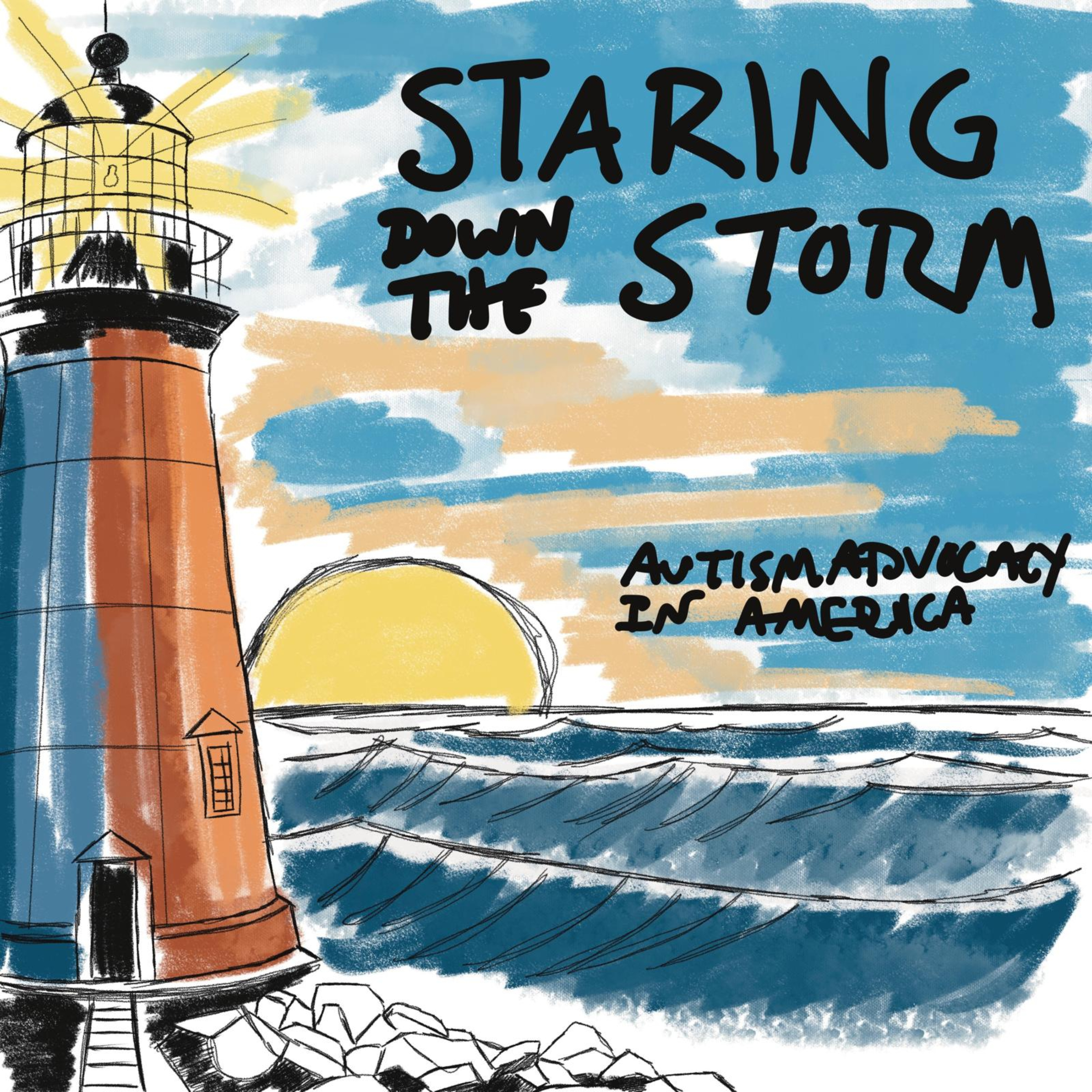
Staring Down the Storm: Autism Advocacy in America podcast artwork

PODCAST · kids

Staring Down the Storm: Autism Advocacy in America

Tabitha Zeigler hosts a fiery, truth-packed podcast filled with people doing the work in the trenches for autism and neurodiversity advocacy.These everyday heroes are leading the way for the next generation. At a time when so much is at stake, ordinary individuals rise up to fill the inequalities in our society.Join us in our struggles and triumphs while trying to provide resources, access, and programs for all.We welcome you to the fight.Learn more at https://staringdownthestorm.com

  1. 60

    The Disability System is Collapsing. With Taylor Hines

    I’m still thinking about my conversation with Taylor Hines where we didn’t sugarcoat a single thing. What’s happening to families navigating disability right now isn’t just frustrating—it’s unacceptable. Services are being slashed, hours reduced, and the people making these decisions? Many of them have never stepped foot into the lives they’re impacting. So I have to ask: who are these systems actually designed to serve?Taylor brought a perspective that hit hard: this isn’t just policy failure, it’s a values failure. When support drops from meaningful, consistent care to a bare minimum of hours, what are we really saying about these individuals and their families? That they’re too expensive? Too complicated? Not worth it? We talk a lot about “advocacy,” but how much of it is performative versus rooted in real, lived experience?We also got into the language we use, labels like “profound disability,” and how they quietly reinforce limitation instead of possibility. If we met people where they are instead of boxing them in, how different could outcomes look? And why aren’t the people writing policies required to witness that firsthand?At some point, we have to stop pretending this is just bureaucracy. This is about priorities. About greed. About who gets care and who gets left behind. I have to ask - what kind of society are we actually building here?*Find more info on Taylor here:*Connie's Clubhouse- https://www.conniesclubhouse.workDonate to Connie's Clubhouse active campaigns here!- https://givebutter.com/conniesclubhouse*Chapters*00:00 Autism Advocacy and Connie's Clubhouse05:51 Understanding the GI Bill and Educational Benefits for Veterans18:00 Changes in Behavioral Support Services and Funding29:49 Community and Government Responsibility in Disability Advocacy39:56 Navigating Sensory Challenges in Daily Life55:37 The Need for Real Advocacy and Representation01:07:57 The Role of Government in Disability Advocacy01:16:56 Navigating Bureaucracy and Advocacy01:23:42 The Impact of Medical Debt01:37:58 Empowerment Through Advocacy01:56:19 The Impact of Immigration Policies on Communities02:10:59 Navigating the Education System for Disabled Children02:22:10 The Need for Genuine Leadership and Empathy02:33:39 A Call to Action for Support and Connection*Contact Tabitha:*[email protected]://tabithazeigler.com/

  2. 59

    How Much Should a Parent Have to Fight to Keep Their Child Alive? With Erika Thomison

    I sat down with my friend Erica Thomison, and honestly, I’m still angry. Not at her—at the system. Because how is it that a mom with a master’s in social work, someone who knows how to navigate the maze, is still spending 20+ hours on the phone just to get life-saving medication for her son? What chance does anyone else uneducated in “the system” have? We say these things are in place to support families—but are they? Or are they quietly pushing people to the brink?Erica shared the reality of raising a child with complex needs—dialysis, transplant, constant advocacy—and what struck me most wasn’t just the medical journey. It was the bureaucracy. The endless finger-pointing between Medicaid and Medicare. The pharmacies that can’t “run the code.” The red tape that quite literally puts lives at risk. And we’re supposed to accept this as normal?Let’s talk about the part no one wants to say out loud: the mental toll. What happens when parents are already maxed out and then told to “try harder”? When survival mode becomes your entire identity? We’re not just failing families—we’re breaking them. And then we act surprised at the consequences.But here’s the other side of this conversation: community. The “village.” Spaces where you can say the hard things out loud without judgment. So I’ll ask you—who’s in your village? And if you’re drowning… Why are we still pretending you’re not?Find more info on Erika here:Independent Living for Adults with DisabilitiesChapters00:00 The Parent Cafe Experience06:08 Navigating Medicaid and Healthcare Challenges10:06 The Impact of Dialysis on Family Life18:29 The Ongoing Struggles with Healthcare Systems31:38 Mental Health and Parental Challenges34:20 Navigating Parenthood in Crisis39:06 The Weight of Judgment and Fear44:03 The Role of Social Workers and DCS50:11 Misuse of Resources and False Accusations56:03 Rethinking Domestic Violence Interventions01:01:08 Building Community and Support NetworksContact Tabitha:[email protected]://tabithazeigler.com/

  3. 58

    From Fighting Fires To Fighting For Florida. With Bernard Taylor

    I sat down with Bernard Taylor, a firefighter turned congressional candidate, and this conversation didn’t feel like politics - it felt like a reality check.When you’re responding to 911 calls and seeing how people actually live, you don’t get to hide behind talking points. You see the consequences of policy failures up close. So why are we still letting politicians sell us stories instead of showing us receipts?We got into something that should be obvious but isn’t: stop listening to rhetoric and start looking at voting records. It’s all public. So what’s the excuse? Are we just too comfortable voting for the letter next to someone’s name instead of holding them accountable? Because if we don’t demand better, why would they ever change?And then there’s education. Are we really underinvesting in it by accident—or is it intentional? What happens when people start thinking critically, asking questions, and pushing back? That’s a threat to a system that benefits from people staying uninformed. Bernard didn’t sugarcoat it, and honestly, neither will I.We also went where most conversations avoid—immigration, detention centers, war, and the value we place on human life. Why is it easier to fund destruction than dignity? At what point do we admit this isn’t dysfunction—it’s design?So here’s the question: if not us, who? If not now, when?Find more info on Bernard Taylor here:Bernard Taylor For CongressFacebookInstagramTiktokChapters00:00 Personal Journeys into Politics09:02 Community Organizing and Activism15:04 The Role of Truth in Political Discourse23:58 The Need for Change in Immigration Policies30:51 Representing the Working Class34:56 The Fight for Florida's Resources39:45 Integrity in Politics42:47 The Challenges of Campaigning45:34 The Importance of Diverse Voices51:13 A Call to Action for ChangeContact Tabitha:[email protected]://tabithazeigler.com/

  4. 57

    We’re Lying About War - And Veterans Are Paying For It. With Melinda Grisby

    We need to stop lying about war.Not softening it. Not dressing it up. Lying. Because what Melinda Grisby shared with me isn’t the version you see in movies—it’s the version we actively avoid. Limbs torn apart. Burned bodies. Children caught in the blast radius. So let me ask you—why are we still so comfortable romanticizing something this brutal?Melinda spent 10 years in the Air Force, serving two tours in Iraq as an ER medic. What she carries home isn’t pride—it’s images, smells, and trauma that don’t fade. PTSD doesn’t clock out. It follows you into your sleep, into your parenting, into every quiet moment. And yet we keep repeating “thank you for your service” like that somehow covers the cost. Does it? Or does it let us avoid actually facing what we’re asking people to endure?Here’s where it gets uncomfortable—we’re not just talking about war, we’re talking about systems that depend on it. Profit. Power. Manufactured narratives. Why are the loudest voices cheering for war the ones least likely to fight in it? And why are veterans the ones left to clean up the emotional wreckage—with barely enough support to survive it?If we’re serious about change, then we have to be honest. War isn’t heroic. It’s devastating. And until we’re willing to sit with that truth, we’re going to keep repeating it.Find more info on Melinda/Brown Girl Pride here: Brown Girl Pride Facebook Brown Girl Pride TikTokBrownGirlPride Instagram photos and videosCheck out Melinda’s Suggested Resources below:Veterans Of Foreign Wars (VFW)Get help from a VA accredited representative or VSOChapters00:00 The Reality of War: A Veteran's Perspective05:41 The Harsh Truth of Combat Injuries10:08 Mental Health Struggles Post-War14:53 The Challenge of Reintegration into Society20:37 The Misconception of War and Violence25:11 The Call to Action for Understanding Veterans30:12 The Complexity of Military Orders and Morality39:28 The Irony of Military Socialism49:40 The Unending Cycle of War55:13 The Dilemma of Military Service for Youth58:00 The Role of AI in Warfare01:04:14 Profit Over Humanity: The Economics of War01:10:01 The Manufactured Nature of War Narratives01:15:17 Reframing Choices for the Next GenerationContact Tabitha:[email protected]://tabithazeigler.com/

  5. 56

    Democracy for Who? Not You. The Truth About Ballot Access. With Bri Woodson

    I don’t think we talk enough about where leaders actually come from—and what they’ve had to survive to get here. In this conversation, Bri Woodson shares a story that is anything but polished politics. Addiction. Trafficking. A suicide attempt. Medical neglect. Grief. And somehow, through all of that, she didn’t just rebuild—she decided to run for Congress. So I have to ask: why are we still being told leadership has to look a certain way?What hit me hardest is how broken the system really is once you’re inside it. Ballot access fees, party gatekeeping, backroom conversations trying to push candidates out before they even start—who is this system actually built for? Because it’s clearly not built for everyday people. And yet, those are exactly the people Bri argues we need more of. Not career politicians. Not millionaires. Real people with real stakes.We also get into what “progressive” even means anymore. Is it just branding? Or does it require backbone? Because saying the right things isn’t enough if you’re not willing to stand on them when it matters. Where is the line? And who’s actually willing to hold it?At the end of the day, this conversation challenges something bigger: do we actually want authentic leadership—or are we more comfortable with the illusion of it? Because you can’t have both.Find more info on Bri Woodson here:Bri Woodson For CongressFacebookTikTokThe Controversial BlondeLearn more about stuff mentioned in the episode below:A Fever In The Heartland: The Ku Klux Klan's Plot to Take Over America, and the Woman who Stopped ThemChapters:00:00 Meet Bri Woodson: A Trailblazer in Politics02:00 Bri's Origin Story: From Addiction to Advocacy12:44 Mental Health Struggles and Recovery Journey19:08 Political Awakening: The Call to Action25:15 The Fight Against Greed and Corruption28:50 Barriers to Entry in Politics34:01 Defining Progressivism40:02 The Role of Women in Politics49:01 The Fight for Representation54:58 The Role of Social Media in Political Discourse59:58 Accountability and Responsibility in Leadership01:04:59 The Impact of Money in Politics01:19:43 Empathy and Historical Trauma01:23:57 Deconstructing Supremacy and Racism01:29:53 The Legacy of Hate and Its Modern Implications01:33:51 The Importance of Authentic LeadershipContact Tabitha:[email protected]://tabithazeigler.com/

  6. 55

    The Price of “Cost Cutting” in Disability Care: Protect Your Child's Future. With Yolanda Kincaid

    Last year, I met with Yolanda Kincaid, CEO of Sycamore Services, and we had one of those conversations that makes you stop and ask: who exactly are these policies supposed to help? Because right now, it feels like families are being told their child is “done” with support based on a number on a spreadsheet — not real life.We talked a lot about the proposed caps on ABA therapy in Indiana, and I’m just going to say it directly: a one-size-fits-all approach does not work for kids with disabilities. Some children might be fine with these limits. But what about the ones who aren’t? What happens when a child is pushed back into a school that isn’t prepared? Who carries that responsibility then?What really stood out to me about Yolanda is that she isn’t just talking about this from a boardroom. She’s showing up. She’s asking hard questions at town halls. She’s advocating not just as a CEO, but as someone who has seen firsthand what happens when people with disabilities are treated like an afterthought. And honestly — why aren’t more leaders doing the same?This episode is about more than ABA therapy. It’s about advocacy, accountability, and the uncomfortable truth that disability policy affects far more people than anyone wants to admit. So consider this: are we improving services… or quietly taking them away?Find more info on Yolanda here:Sycamore ServicesFacebookInstagramChapters00:00 Introduction, Impact of ABA Service Reductions on Children with Autism04:15 Comprehensive Services Offered by Sycamore Services06:43 Access to Services in Rural Communities09:09 Yolanda's Personal Background and Community Roots15:14 Advocacy and Community Engagement in Disability Services27:24 Investing in Local Businesses for Better Community Outcomes29:26 Transitioning from ABA to School: Challenges and Concerns32:04 Navigating Policy Changes and Their Effects40:26 Understanding Waivers and Service Accessibility44:49 The Importance of Language in Disability Advocacy48:04 Collective Responsibility in Disability IssuesContact Tabitha:[email protected]://tabithazeigler.com/

  7. 54

    AI, Data Centers, and Indiana Farmland: What’s Really Happening. With Barbara Bessolo

    This episode kicks off the first conversation in a new series I’m doing with Barbara Busolo, and let me tell you — we’re not easing into this topic gently. If you’ve been hearing nonstop hype about AI lately and wondering what’s actually real versus what’s marketing, you’re not alone. I’ve been asking the same questions.Barbara’s story alone is fascinating. She came to the United States from Argentina, built a career in technology and telecommunications, and now runs her own AI company, Dynamo Edge. But what really stood out to me is how she approaches AI: not as some magical chatbot solution, but as a tool that analyzes real-world data. Think race cars, automotive telemetry, and connected systems that can actually predict what will happen before it does. That’s a very different conversation than the one most of us are hearing.And then we got into something that deserves a lot more attention: the explosion of AI data centers, particularly here in Indiana. Why are companies suddenly leasing farmland for decades? Why are these deals so opaque? And why are taxpayers potentially footing the bill for massive energy infrastructure tied to projects most people don’t fully understand?This is just the beginning of the conversation. In this series, Barbara and I are going to dig into how AI is really impacting Indiana — our land, our energy, our economy, and our communities. The question is: are we asking enough questions before the decisions are already made?Find more info on Barbara here:DynamoEdgeCarmel businesswoman paving the way with breakthrough technologyChapters00:00 Barbara's Journey in Technology02:26 The Intersection of AI and Auto Racing04:30 Understanding AI in the Automotive Industry10:27 The Impact of Data Centers on Local Communities13:59 The Farmer's Perspective on Land Leasing19:04 Transparency and Accountability in ContractsContact Tabitha:[email protected]://tabithazeigler.com/

  8. 53

    The Political System Isn’t Broken — It’s Corrupt. Enough Is Enough. With Jackson Franklin

    I sat down with Jackson Franklin, and this wasn’t a polite political conversation. This was someone saying out loud what most politicians are too afraid to admit: the system isn’t broken by accident — it’s working exactly the way the powerful want it to. A combat medic, a paramedic, and now a congressional candidate, Jackson has literally watched veterans get sent home to die because they couldn’t afford healthcare. How are we still pretending this is normal? How are we still calling this the “best country in the world”?We talked about what real progressivism actually means — not the watered-down version politicians use when it’s convenient, but the version that fights for disability and trans rights, immigrants, veterans, women, and working-class people without apology. And yes, we went there: corporate money in politics, endless wars, billionaires controlling policy, and politicians who care more about donors than the people they claim to represent. If that makes people uncomfortable… good. It should.What this really comes down to is courage. Not branding. Not personality. Courage. Are you willing to stand up to corporate influence? Are you willing to call out injustice even when it costs you something? Because too many politicians aren’t.So, are we finally ready to vote based on policies? Or are we going to keep rewarding the same broken system over and over again?Find more info on Jackson Franklin here:Website: Jackson Franklin for CongressEmail: [email protected] Jackson’s suggestions below:Breaking Points w/Krystal Ball and Saagar EnjetiDrop Site NewsGround NewsIndivisibleMADVotersMuncie ResistsOpen Secrets Secular Talk w/Kyle Kulinski00:00 The Importance of Lived Experience in Politics12:00 Learning from Global Systems18:14 Defining Progressivism26:53 Women Influences32:59 Addressing the Trans/Immigrant Communities38:31 Term Limits/Congress Wealth Caps 51:00 Understanding Apartheid/Human Rights01:02:04 Housing Crisis/Young People's Future01:04:20 Environmental Concerns01:16:11 Identifying True Progressives01:19:29 Defunding ICE01:30:37 Accountability for the Powerful01:36:38 Universal Childcare/Education01:40:21 Advocating for Disability Rights01:53:19 Accountability/Candidate Track Records01:56:08 Commitment to the Cause02:02:24 Vision for the Future02:12:19 Empowering the Next GenerationContact Tabitha:[email protected]://tabithazeigler.com/

  9. 52

    Storytelling Transcends Labels: Disability, Empathy, and Advocacy. With Mitch Stevens

    We have two episodes for you this week!I’ve been thinking a lot lately about the stories we tell ourselves about other people. Especially when it comes to disability. Why do we assume limitation before we ever take the time to understand the person standing in front of us?In this episode, I sat down with Mitch Stevens, author of Transcending Labels, and our conversation challenged a lot of those assumptions. Mitch shares the relationships that shaped his work—friends like Robert, who has Down syndrome, and Stephen, who lives with significant cognitive impairments. And here’s the uncomfortable truth: the moment many people notice a disability, their expectations immediately drop. Why? What does that say about us?We also talked about the power of storytelling. Real stories. The kind that force you to slow down, listen, and actually see someone. Mitch describes meeting families in the autism and disability communities and learning firsthand that advocacy isn’t abstract policy work—it’s deeply human. It’s about connection, patience, and sometimes realizing how wrong our assumptions have been.And honestly, I find conversations like this refreshing. At a time when everything feels loud, divisive, and performative, here’s a reminder that empathy still matters. That community still matters.So maybe the real question is this: what would happen if we started assuming capability instead of limitation? What would change if we actually took the time to know people beyond the labels we assign them?Find more info on Mitch Stevens here:Website: https://www.mitchjstevens.com/Facebook: https://www.facebook.com/mitch.stevens.186Learn more about info discussed in the episode: Hal ElrodMonte MaderReal Words With Sam - J Brad BrittonSPELLERS - The MovieWhat If My Pieces Don't Fit? - Marya Sherron00:00 Introduction and Mitch’s Background06:38 The Importance of Family and Advocacy10:43 Exploring the Book: Transcending Labels15:11 Understanding Special Needs and Disabilities20:27 The Role of Masculinity in Advocacy26:12 Networking and Community in Advocacy30:05 The Impact of Advocacy and Future Goals43:10 Advocacy and Empowerment in the Autism Community48:05 Legislative Challenges and Opportunities for Change51:12 The Importance of Storytelling and Authenticity57:00 Faith, Humanity, and Community Engagement01:02:57 Finding Common Ground and Bridging DividesContact Tabitha:[email protected]://tabithazeigler.com/

  10. 51

    “Don’t Comply in Advance.” Courage in Rural American Politics. With Natasha Baker

    What happens when you grow up surrounded by one political worldview… and realize it just doesn’t fit?That’s exactly the journey Natasha Baker shares in this conversation. Raised in a deeply conservative Hoosier family, Natasha didn’t suddenly become “political.” She simply started asking questions.Why do policies hurt the very communities they claim to protect?Why are families struggling while the state sits on billions in surplus?And why are we so quick to ignore facts when fear is louder?Natasha is now running for Indiana State Senate, and she isn’t interested in playing the usual political games. As a teacher, a mom, and someone who has spent years in rural classrooms and communities, she sees firsthand what policies actually do to people’s lives.Healthcare access, autism services, education funding, food insecurity—these aren’t abstract debates. They’re real families trying to get through the day.But the heart of this conversation is courage. Natasha talks openly about fear in politics—especially in rural communities where certain voices dominate the conversation. Her message? Don’t comply in advance. Fear only wins when we silence ourselves before anyone even asks us to.Advocacy doesn’t always start with running for office. Sometimes it starts with a phone call, a yard sign, or a chat with a neighbor.But if we want a better future—for our kids, our schools, and our communities—then the question becomes unavoidable.Who’s willing to speak up?Find more info on Natasha Baker below: Website: Elect Natasha BakerFacebook: Natasha Baker for Indiana Senate District 22Donate HERE00:00 Natasha Baker's Origin Story06:07 Advocacy for Autism and Disability Services08:49 The Vaccine Debate and Public Health12:02 Concerns Over Eugenics and Autism Registries17:53 Addressing Homelessness and Systemic Issues26:58 Personal Values and Political Lines29:50 Healthcare Systems and Progressive Taxation32:57 Hoosier Values and Community Spirit46:26 Concerns Over Mark Rowan and Epstein Connections51:54 Protecting Children: A Mother's Perspective52:08 Preparing for Political Battle: A Candidate's Readiness55:12 Gun Ownership and Safety in Rural Indiana01:09:30 Women in Politics: Emotionality vs. Leadership01:14:43 Democratic Messaging and Inclusivity01:18:38 Big Money in Politics: A Call for Change01:20:03 Term Limits: A Solution for Political Complacency01:25:06 Why Choose Natasha: A Candidate's CommitmentContact Tabitha:[email protected]://tabithazeigler.com/

  11. 50

    “God Don’t Make No Junk!” With Dr. Stuart Jones, part 2

    Last week, Dr. Stuart Jones and I started a conversation about disability advocacy, faith, and the responsibility we all have to stand up for people who are too often ignored. This week, we keep going—and honestly, we go deeper.Stuart shares powerful stories about his brother Stephen and the simple but profound message that shaped his life: God don’t make no junk. It’s a phrase that sounds almost childlike, but if we actually believed it, our world would look very different. People with disabilities wouldn’t be treated as invisible. Services wouldn’t quietly disappear in budget meetings. And advocacy wouldn’t be left to a handful of exhausted families and allies trying to hold the line.We also get into something that’s making a lot of people uncomfortable right now: how faith is being used—and misused. Dr. Stuart makes a pretty direct challenge. If you call yourself a Christian, are you actually living like Christ? Because when you read the Gospels, Jesus wasn’t interested in judging people, hoarding wealth, or excluding the “undesirable.” He did the exact opposite.Which raises a hard question. When Christians call out injustice, defend vulnerable communities, and challenge harmful systems… why are they suddenly labeled radicals?Maybe the problem isn’t that people are being too faithful.Maybe the problem is that they’re finally taking Jesus seriously.Find more info on Dr. Stuart Jones below: https://www.authorstuartjones.com/ Buy For the Love of Stephen HEREChapters00:00 Advocacy and Personal Stories09:50 The Importance of Advocacy for the Disabled20:13 Finding Your Voice and Taking Action25:01 The Role of Faith in Advocacy31:31 Radical Actions and Christian Values34:41 Jesus and the Treatment of Women38:15 Wealth and the Christian Life43:40 Accountability in Faith Leadership48:14 Judgment and Acceptance in Christianity52:43 The Intersection of Faith and Politics58:18 Finding Your Compass in FaithContact Tabitha:[email protected]://tabithazeigler.com/

  12. 49

    The Invisibility of Disability: Stephen’s Story and the Fight to Be Seen. With Dr. Stuart Jones

    I sat down with Dr. Stuart Jones to talk about For the Love of Stephen — but this conversation is bigger than one book. It’s about who we decide is fully human. When Stuart’s brother Stephen was born in 1954, his parents were told to institutionalize him. Put him away. Out of sight, out of mind. They refused. And that decision shaped generations.With the powerful endorsement of Temple Grandin — who reminds us that “different is not less” — we dug into what authentic advocacy actually looks like. It’s not pity. It’s not performative inclusion. It’s asking a radical question: What if he can? What if we stopped obsessing over limitations and started building opportunities? Early intervention matters. Celebrating small milestones matters. And shaming parents? It’s useless and cruel.But let’s talk about the part that makes people uncomfortable. Why are disabled individuals always the last to the table when funding is allocated — and often the first to lose their seat? Who decided their lives were worth less? Legislators? Budget committees? The almighty dollar?Stuart’s brother, Stephen, didn’t have a disability as much as he had an invisibility. All he ever wanted was to be included. If we claim to value diversity, faith, and human dignity — do our policies reflect that? Or are we still hiding behind polite language while pushing people to the margins?Find more info on Dr. Stuart Jones below: Author Stuart JonesBuy For the Love of Stephen HERELearn more about topics discussed in this episode: Temple Grandin Documentaryhttps://www.templegrandindocumentary.com/Contact Tabitha:[email protected]://tabithazeigler.com/Chapters00:00 Introduction to Autism Advocacy02:53 The Journey of Writing 'For the Love of Stephen'08:55 Historical Perspectives on Autism and Disability14:56 Navigating Challenges and Misunderstandings21:12 Milestones and Celebrations in Autism Advocacy39:20 Advocacy and the Fight for Rights46:40 The Power of Representation in Legislation55:05 The Importance of Context in Storytelling57:00 Connecting Personal History to Broader Narratives01:08:00 Learning from Painful Conversations01:19:52 The Church's Responsibility to the Disabled Community

  13. 48

    “Jesus Would Be Flipping Tables.” Faith, Race & Refusing to Stay Silent. With Jaclyn Peterson

    What happens when your very existence challenges the boxes society demands you check?This week, Jaclyn Peterson and I go deep — into ancestry, apartheid, passing, and the audacity of being told to “pick a race.” From her South African Cape Colored heritage to growing up an Air Force brat in America, this story exposes how race isn’t just personal — it’s political, economic, and generational.Wealth was transferred. Identity was manipulated. Passports determined humanity. And people still say race doesn’t matter?We also confront the church. Not faith — the institution. The slave Bible. Scriptures twisted to defend abuse. Pastors protecting power not people.Why are survivors of domestic violence shamed while abusers are platformed? Why are women told to submit but men rarely told to love like Christ?This episode is raw. We talk about white nationalism hiding behind pulpits, and the courage it takes to speak when silence is safer. Jaclyn shares her journey as a survivor, a trauma-sensitive yoga teacher, and the founder of Christian Moms Heal — creating spaces where women reclaim their bodies, voices, and faith.So I’m asking you: Are we just building empires in Christ’s name, or actually following Him?More info on Ascend With Jaclyn here: Facebook: Ascend with Jaclyn Instagram: @ascendwithjaclynTkiTok: @ascendwithjaclynWebsite: https://ascendwithjaclyn.com/Learn more about: The Slave BibleFurther links from Jaclyn:Responding to Domestic Violence, Pastor Al MilesThe spiritual price of the Doctrine of Discovery,  Mark CharlesDecolonizing Yoga: Susanna BarkatakiNational Domestic Violence Hotline (US): 1-800-799-7233Contact Tabitha:[email protected]://tabithazeigler.com/Chapters00:00 Impact of Race on Immigration06:25 Language/Cultural Connections12:13 Reflections on Apartheid/Race Relations15:11 Generational Perspectives on Race21:15 The Legacy of Wealth/Race24:11 Understanding Mixed-Race Identities32:09 Understanding the Slave Bible, Historical Context43:55 The Hypocrisy of Religious Leaders and Their Actions46:58 The Importance of Supporting Survivors and Challenging Abusers51:45 Empowering the Next Generation to Stand Against Injustice56:36 The Call to Political Action/Advocacy01:15:48 The Rebel Nature of Christianity01:20:14 Jaclyn's Journey/New Podcast01:28:22 Trauma-Sensitive Yoga/Accessibility01:31:27 Building Community/Support for Survivors

  14. 47

    Who Told You Who You Are? Decolonizing Identity, with Melinda Grisby

    What if the system isn’t broken—what if it’s working exactly as designed?I sat down with Melinda Grisby to talk about decolonization as more than a buzzword. We unpack whiteness as ideology, privilege as proximity to power, and how nationalism and capitalism rely on keeping us divided. If we’re constantly reacting, exhausted, and fighting culture wars—who’s actually benefiting?We challenge the myth of American democracy and the comfort of believing we’re “free.” Melinda argues most oppression is psychological. That racial hierarchies, forced assimilation, and cultural homogenization didn’t happen by accident. And that healing starts with active listening, patience, and rebuilding community—not just calling out injustice online.We also talk representation—why moments of Latino pride matter, even inside systems we critique. Why genealogy can be resistance. Why children are the first battleground in conditioning. And why empathy isn’t optional.If we’ve been conditioned to see division as normal, are we willing to unlearn it?Here’s a summary of the safety tips Melinda shared in the episode:Safety first: Before helping, make sure the scene is safe. Move the injured person out of immediate danger (crowds, active threats, unstable areas). Keep roadways clear so emergency crews can access the patient.Control severe bleeding immediately: In trauma, stopping bleeding is the priority. Use clean cloth, clothing, or towels to pack the wound and apply firm, continuous pressure. Do not stop pressing.Tourniquet use: Place it high above the wound (never on a joint). Tighten until bleeding stops. Do not remove it once applied. If possible, note the time it was placed.Do not remove embedded objects: If something is stuck in the body, leave it in place and stabilize it with cloth to prevent movement. Removing it can cause severe bleeding.Eye injuries: Cover both eyes, even if only one is injured. The eyes move together, so covering both helps prevent further damage.Tear gas or pepper spray exposure: Protect yourself with goggles and a mask if possible. Flush eyes with distilled water or milk to help soothe irritation. Avoid contaminated water.Hands-only CPR: If someone is unresponsive and not breathing, perform continuous chest compressions about 2 inches deep in the center of the chest until paramedics arrive. Mouth-to-mouth is not required.Find more info on Brown Girl Pride here: Brown Girl Pride Facebook Brown Girl Pride TikTokBrownGirlPride Instagram photos and videosContact Tabitha:[email protected]

  15. 46

    Power, Pain, and the $30,000 Price Tag. With Sierra Martin, part 2

    Last week, Sierra Martin and I opened the door. This week, we walk straight through it.The baby is babbling in the background of this episode, and honestly, it’s the perfect soundtrack. Because this conversation is about who we claim to value—and who we actually take care of. Sierra was 18 when her body began shutting down—waking up day after day with a new joint that wouldn’t move. She was taking 22 pills a day at nineteen and wondering if this was a life she could endure. The eventual diagnosis? Psoriatic arthritis. The treatment? A $30,000 injection every three months.In the richest country on earth.But this isn’t just about chronic illness. It’s about the system that shrugs at it. It’s about giving birth in Indiana and walking away with a $30,000 bill. It’s about politicians who shout “pro-life” but vanish when families need healthcare, disability support, or basic dignity. It’s about extremist religion creeping into policy, mega churches that aren’t taxed, and leaders who seem far more accountable to corporate money than to constituents.If faith is about serving the least of these, who exactly are we serving?This episode focuses on pain—but it’s also about power and accountability. About civic courage. About refusing to normalize suffering as policy. If we say we value life, then we have to value it after the baby is born. We have to value it when bodies fail. We have to value it when it’s inconvenient.Follow the money. Watch who shows up. Watch who doesn’t. And ask yourself whether we are building a government that protects people—or protects profit.Are we awake enough to demand better?Things discussed in this episode: Tom LoBianco - 24sight NewsAbdul Hakim Shabazz - Indy PoliticsChapters00:00 Navigating Chronic Illness: A Personal Journey09:53 The Burden of Healthcare Costs20:01 The Intersection of Health and Politics30:01 Gender Roles and Parenting Dynamics39:59 Religious Influence on Society and Politics54:15 The True Nature of Faith and Power58:45 The Role of Faith in Education01:01:34 Connections and Accountability in Leadership01:15:35 The Importance of Civic Engagement01:40:32 The Call for Authentic LeadershipContact Tabitha:[email protected]

  16. 45

    How Power Betrays Communities - and Calls It Policy. With Sierra Martin, part 1

    I sat down with Sierra Martin - a full-time student, mother, and someone done pretending power is accidental.We talked about Arab history in Indiana, post-9/11 surveillance, how fear is manufactured to justify erasure.We traced the throughline from stripped cultural education to Zionism as a political project, the parallels between Palestinian dispossession and Indigenous removal in the U.S.We followed the money - through Congress, immigration policy, and environmental harm in rural communities - to the betrayal felt by people told they’re represented.Things discussed in this episode:Indiana University Indianapolis School of Liberal Arts Arabic & Islamic Studies Program (soon to be dismantled)https://liberalarts.indianapolis.iu.edu/academics/degrees-programs/world-languages-cultures/arabic-islamic-studies/index.html"Hi Jolly" (Hadji Ali), Ottoman-Syrian camel driver2017 documentary: https://www.imdb.com/title/tt7413656/American Muslims: A History Revealed https://www.pbs.org/show/american-muslims-a-history-revealed/Arab Indianapolis: A Hidden History https://www.pbs.org/show/arab-indianapolis-hidden-history/Arab Indianapolishttps://arabindianapolis.comThe Art of Syrian Cookery by Helen Corey https://www.goodreads.com/book/show/30178731-the-art-of-syrian-cookeryThe U.S. and the Holocausthttps://www.pbs.org/kenburns/us-and-the-holocaust/about-the-filmLearn about the Druze faith:https://en.wikipedia.org/wiki/DruzeThe Israel Lobby by John Hirschheimer & Stephen M. Walt https://www.goodreads.com/book/show/224127.The_Israel_Lobby_and_U_S_Foreign_PolicyThe Great Muslim American Roadtrip https://share.google/32JEDZLyZdmr1SDmRCHAPTERS00:00 Advocacy & Personal Roots06:10 Arabs in Indiana: A Hidden History11:57 Language, Schooling & Identity23:50 Arab Americans After 9/1129:57 Zionism in Historical Context35:58 Indigenous Rights & Palestine52:36 Political Conflicts of Interest56:05 Deportations: Obama vs Trump01:01:47 Thomas Paine’s Enduring Influence01:05:56 Money’s Grip01:10:44 When Politicians Lose the People01:15:56 Environmental Crisis in Rural America01:20:59 Special Interests vs DemocracyContact Tabitha:[email protected]

  17. 44

    Autism, Power, and the Women Who Were Never Heard, with Jennifer David

    I’m deep in my own origin story right now, so this conversation with Jennifer David landed hard. Jennifer is a board-certified behavior analyst, an autistic woman, and an advocate who understands—intimately—the cost of being the one who speaks up. We talk genealogy, identity, and the uncomfortable truth that autism didn’t suddenly appear in the modern era. It’s always been here. We just didn’t have language for it—and we especially didn’t listen to women.Jennifer shares a powerful family history that stretches from the Mayflower to the Mohawk Nation to the expansion of Mormonism, tracing how matriarchal strength, silence, adoption, and survival shaped generations of neurodivergent lives. What happens when women are expected to endure quietly? When caregiving becomes identity? When emotional labor is inherited instead of chosen?We get blunt about politics. Autistic people are constantly talked about, studied, and debated—but rarely represented. How do we keep having national conversations about autism without autistic voices in the room? Jennifer breaks down why running for office, or even remaining in advocacy spaces, can be physically and emotionally draining for neurodivergent people—and why advice like “just open your heart” can be actively dangerous.We also speak about a missing autistic child during this episode, Robert "RJ" Williams Jr. Since recording, we’ve learned that he was tragically found deceased. My heart is heavy for his family and for every family that knows this fear too well. I want to be clear that this conversation was recorded before those developments, and I share this with deep care and sorrow.If anything, this loss makes the conversation even more urgent. Water safety education, early intervention, and effective emergency response protocols are not optional—they save lives. And this isn’t only an autism issue. Children in disadvantaged and marginalized communities face disproportionate risk when systems fail, resources are limited, and responses are delayed. Awareness, education, and community-based safety efforts matter—for all our kids.So I’ll ask it plainly: who gets to speak for us, and why do we keep accepting anything less than our own voices?Find more info on Jennifer David here:Outward Bound Support ServicesTo read the official statement from Capt. William Carter about Robert "RJ" Williams Jr., click hereContact Tabitha:[email protected]

  18. 43

    Rethinking Stuttering, Disability, and Dignity: Conversation with Andy Fitzenrider

    We say we value communication — but do we really? Or do we only value it when it looks, sounds, and feels the way we expect it to?In this episode, I sit down with Andy Fitzenrider, a passionate advocate for people who stutter, to talk about what happens when society decides there’s only one “acceptable” way to speak.Andy shares his lived experience of growing up with a stutter in a world that treated it like a defect to be fixed instead of a reality to be understood. Years of speech therapy focused on correcting him, not asking him how he felt.The message was clear: be fluent, or be silent. And for a long time, silence felt safer — especially on the phone, where misunderstanding and cruelty came just often enough to leave scars.We dig into why speech disorders are still treated as punchlines, why hidden disabilities are so easily dismissed, and why measuring success purely by “fluency” misses the point entirely. What if the real question isn’t “How do we eliminate this?” but “How does this impact someone’s life — and how can we reduce harm?”This conversation is about dignity, independence, and advocacy. It’s about technology that empowers instead of erases. And it’s about standing up for yourself — even when it’s terrifying — because no one else is coming to do it for you.So I’ll ask you this: Are we actually creating inclusive communities, or just demanding conformity? And what would change if we truly listened?Find more info on topics discussed during the episode here:Relay Indiana http://www.relayindiana.comT-mobile Accesshttp://www.tmobileaccess.comThe Stuttering Foundation of Americahttps://www.stutteringhelp.org/Contact Tabitha:[email protected]:00 Introduction to the Podcast and Guest00:58 Andy's Background and Advocacy Work01:58 Understanding Stuttering: Personal Experiences10:06 The Challenges of Public Speaking and Communication19:57 The Role of Technology in Empowering Communication30:01 Advocacy and the Importance of Visibility40:12 The Impact of Stuttering on Daily Life49:46 Creating a Culture of Understanding and Acceptance01:00:11 Your Call to Action

  19. 42

    Every Life Has Value - Are We Acting Like It? Conversation with Mary Pat Torbeck

    When Mary Pat Torbeck first heard the word autism, the statistic she was given was one in thirty thousand. That was 1989.What happens when you raise children with autism before there were services, language, or even a willingness to say the word out loud?And what happens when, decades later, we start hearing whispers about bringing institutionalization back?This conversation is about memory, perspective, and truth. Mary Pat shares what it was like to fight for early diagnosis long before it was common, to navigate systems that barely existed, and to rely on community when there was little else to lean on. Her story is a reminder that progress didn’t happen by accident — it happened because families refused to disappear.We talk honestly about how raising children with disabilities reshapes entire families: marriages, siblings, mental health, faith, and identity.We talk about joy found in unexpected places, the lessons our kids teach us when we slow down enough to see the world through their eyes, and why independence is a myth we should probably stop worshiping.And we confront something uncomfortable: why are we, in 2026, even entertaining conversations about re-institutionalization? Who benefits from that, and who pays the price?Every soul has something to give. The real question is whether we’re willing to build a society that makes room for it.Find more info on the organizations Mary Pat recommends below:Damar Services: Homepage - Damar Services, IncDamar Village: Damar Village - Damar Services, IncVillage of Merici: https://villageofmerici.org/ILLAD: https://iladdinc.org/Chapters00:00 Introduction to Autism Advocacy02:51 Mary Pat's Journey with Autism05:46 Early Diagnosis and Access to Services09:00 Navigating Family Dynamics and Support11:58 Community Connections and Resources14:46 The Importance of Family Support17:49 Reflections on Institutionalization and Mental Health21:05 Finding Joy in Challenges24:13 The Role of Faith in Parenting26:58 Community Building and Inclusivity29:58 The Impact of Autism on Family Life33:04 Advocacy and Awareness36:13 The Power of Love and Connection42:04 Navigating Mental Health and Community Support45:53 The Emotional Toll of Caregiving52:57 The Impact on Families and Siblings56:20 Changing Perspectives on Disabilities01:01:05 The Importance of Community Engagement01:10:27 Innovative Solutions and Community Building01:19:08 The Legacy of Love and SupportContact Tabitha:[email protected]

  20. 41

    From Flight Attendant to Autism Advocate: Getting to Know Tabitha

    Did you know that Tabitha, our dear host and guide, grew up in rural Indiana, attended both University of Southern Indiana and Indiana State, learned French, considered the military, and then stumbled into the field she would end up working in for 17 years: a flight attendant in the airline industry?Today we present an "episode swap" - where a conversation appears on two podcasts: The MultiPod, which explores the lives and experiences of multipotentialites, and here, on Staring Down the Storm, Autism Advocacy in America.Why? Well, we often don't realize that as people come across our work, be it a podcast, newsletter, blog, YouTube channel or otherwise, there are parts of our story that may be obvious to us, but are completely unknown to our audience. And that journey typically forms the basis for our values, activities and the work we put out there into the world.And so get to know Tabitha a bit more: her interests, family, identity and distinct journey into motherhood. As a member of the LGBTQ+ community, this meant going down the path of sperm donation and artificial insemination.This may be where you can then pick up the story, the part where she ends up with three kids, the youngest being twins, all less than two years apart, and all three diagnosed with autism. Which in turn led to Tabitha herself learning she was autistic. And in the face of all the inherent challenges therein, compounded by the current political atmosphere, Tabitha found herself with a new calling: advocacy.Tabitha and I produced a miniseries documentary in late 2024 that expands on her story as a single parent of three young kids, all with autism, and her journey into advocacy: "My Caregiving Journey: Raising Three Children With Autism"Since then, we've launched her podcast, raising awareness and fostering connections within the autism advocacy space, highlighting the significance of community support, inclusivity, and the power of personal storytelling in driving change.Tabitha is here to connect with you, the listener, and to help build a powerful, determined community, both in Indiana and further abroad. So don't hesitate to reach out, send a message, introduce yourself, say hello, and make that connection!It's an honour to be a part of her podcast, and to present to you my friend Tabitha.- Ted Cragg, producerHow to Contact Tabitha:Website: tabithazeigler.comPodcast: staringdownthestorm.comContact: tabitha.zeigler [at] gmail.comInstagram:@tabitha.zeiglerFacebook: @tabitha.zeigler.52LinkedIn: @tabitha-zeigler-33825246

  21. 40

    From Pulpits to Pavement: Redefining Service, Faith, and Responsibility with Allies for Humanity

    The word gratitude gets thrown around a lot. But gratitude without action is just a performance. In this episode, I sat down with KT White and Brenda Killeen of Allies for Humanity to have an honest, necessary conversation about what real service actually looks like — especially when it comes to our unhoused neighbors. This isn’t a feel-good discussion. It’s a reality check.We talk about trust, trauma, and the exhausting truth of showing up every day while watching institutions offer words instead of solutions. Why are grassroots organizations doing the deepest work constantly in crisis mode, while larger systems continue to get funded for surface-level efforts? Why do we keep criminalizing homelessness instead of confronting the systems that create and maintain it? And why is faith so often preached instead of practiced?KT and Brenda challenge the idea that help should come with conditions — sermons for sandwiches, compliance for compassion. That isn’t love. That’s control. We get into trauma-informed care, indigenous wisdom, and the necessity of boundaries in service work. You don’t need a title, a building, or institutional approval to show up with dignity and integrity. You just need the willingness to do the work.This episode is both a call-out and a check-in. Because homelessness isn’t unsolvable — we’re just avoiding responsibility. So I’ll ask you the same question I had to ask myself: if everyone has something to give, why aren’t we giving it? And what does gratitude really mean if it never turns into action?Find more info on Allies For Humanity here:www.Alliesforhumanity.orgFacebookInstagramTo learn more about the Empowerment Plan, click here.Chapters00:00 Thanksgiving Reflections and Community Support02:55 Pivoting for Community Needs05:46 Building Trust with the Unhoused08:35 Addressing Naysayers and Community Challenges11:31 Volunteer Opportunities and Community Engagement18:33 Personal Stories of Service20:30 The Reality of Service Work23:24 Grassroots Action vs. Surface-Level Work26:05 Innovative Solutions for the Unhoused29:09 Crisis Mode in Nonprofits38:05 Empathy and Compassion in Advocacy40:56 The Role of Media in Social Issues43:41 Indigenous Wisdom and Community46:59 Spiritual Warfare and Human Connection56:30 Understanding Trauma and Its Impact01:00:25 The Complexity of Healing and Support01:07:53 The Role of Faith and Community in Service01:15:07 Navigating Boundaries in Nonprofit Work01:21:49 Call to Action: Community Support and InvolvementContact Tabitha:[email protected]

  22. 39

    When “Guidelines” Become Weapons Against Small Farmers, with Tad Streepey

    I grew up on a homestead, so I’ve always understood the value of growing your own food — not as a trend, but as a way of life. That’s why this conversation with Tad Streepey of Gypsy Rain Organics hit such a nerve for me. At its core, this episode isn’t just about organic farming. It’s about power, control, and who gets to decide what’s “safe” enough for our families.Tad is doing everything right — growing nutrient-dense food, using careful processes, serving his community — and still found himself shut down by vague, inconsistently enforced new health “guidelines.” Not laws. Guidelines. Meanwhile, massive commercial farms ship produce across the country, outbreaks and all, and somehow that’s acceptable. Why is the burden of proof always on small farmers doing the work responsibly?We also talk about food insecurity in a farming state — let that sink in — and how corporate consolidation, lobbying, and bureaucratic overreach are stripping communities of food choice, autonomy, and resilience. This isn’t theoretical. These policies affect school lunches, families with limited resources, and kids — including autistic kids — who benefit deeply from fresh, whole foods and hands-on learning environments like farms.So I’ll ask the uncomfortable question: when did convenience and profit become more important than health, nutrition, and community wellbeing? And why are we letting unelected systems quietly decide what we’re allowed to feed our families?Food freedom isn’t radical. It’s fundamental.Find more info on Gypsy Rain Organics here:Website: Gypsy Rain Organics Instagram: Gypsy Rain Organics Facebook: Gypsy Rain Organics YouTube: Gypsy Rain Organics To Learn More about Harrison County’s Community Services, click hereMeet Herbalist Karen Burr - Materia Medica Are PFAS forever chemicals in your water? Learn more here...Chapters00:00 Introduction to Organic Farming and Advocacy01:20 The Journey of Gypsy Rain Organics05:15 Challenges with Health Regulations12:52 The Importance of Fermentation and Food Safety16:46 Nutritional Value and Local Farming Benefits28:24 Engaging the Autistic Community with Farming32:55 Political Advocacy for Small Farms36:56 Community Support and Food Insecurity42:57 The Impact of Corporate Farming49:24 Future of Small Farms and Food FreedomContact Tabitha:[email protected]

  23. 38

    Neurospicy Families, Tracing Roots, and the Courage to Be Aligned, with Charlie Biluck

    Growing up in a neurodivergent family doesn’t come with a manual — it comes with chaos, humor, grief, resilience, and a crash course in empathy. In this conversation, Charlie Biluck and I get honest about what it really means to live inside a “neurospicy” family system, where love is fierce, advocacy is non-negotiable, and emotional regulation is a daily practice, not a buzzword.We talk about why society is so quick to romanticize autism while refusing to sit with the hard parts. What happens when disability isn’t visible? Why are parents judged instead of supported? And why do we still design public spaces that quietly exclude entire families? Charlie and I challenge the idea that inclusion means perfection — sometimes access looks like assisted vans, messy grocery trips, or simply being allowed to exist without apology.Charlie also shares his deeply personal journey of self-discovery — navigating ADHD, emotional regulation, gender identity, and what it means to live an aligned life. We dig into masking, burnout, late diagnoses, and how stepping away from noise can finally help you hear yourself. Why do we push people to conform instead of teaching them how to regulate, adapt, and thrive?And then we go further — into ancestry, genealogy, and heritage travel. Because knowing where you come from matters. Because history is complicated. Because truth is powerful. And because understanding our past might be one of the most radical tools we have for building our future - one of empathy, community and genuine connection.Chapters00:00 Introduction to Advocacy (and Punk Rock)05:58 Childhood Experiences and Family Dynamics12:04 Navigating Public Spaces with Neurodivergent Kids17:59 Creating Inclusive Spaces for Families25:18 Navigating Parental Advocacy and Community Support30:26 The Journey of Self-Discovery and Identity35:46 The Impact of Family Health History40:46 Genealogy and Its Connection to Identity51:14 Heritage Travel and Ancestral Connections01:01:30 The Intersection of Genealogy and Personal History01:07:47 RootsTech and the Future of Genealogy01:17:14 Getting Started with Genealogy ResearchFind more info on Ancestral Wanderlust here:Website: Ancestral Wanderlustemail: [email protected] Resources Click here to purchase your tickets to RootsTech 2026Family SearchThe Formidable Genealogist Contact Tabitha:[email protected]

  24. 37

    Transforming Disabilities into Abilities: The JD Angel's Family Care Story

    In this episode of Staring Down the Storm, I sit down with the incredible team from JD Angel’s Family Care to talk about what it really means to support individuals with intellectual disabilities—and why so many systems keep failing them. We dig into the origin of the organization, which started simply to meet a pressing housing need, but quickly grew into something much bigger: a place where clients gain life skills, confidence, and dignity.We talk about the daily realities—how structured programs, luxury living, and genuine care transform lives. But it’s not just about comfort; it’s about empowerment, advocacy, and teaching clients that their voices matter. From Medicaid challenges to voting, JD Angel’s pushes for community involvement and real agency. I keep asking: why are we still letting bureaucracy and politics decide who gets to live a full life?This conversation doesn’t shy away from grief, loss, and resilience. Personal stories—like the tragic death of Latia's son - a young community leader—highlight the urgency of their mission. But through it all, the focus is on building generational wealth, fostering mentorship, and proving that empowerment is contagious.JD Angel’s Family Care isn’t just an organization—it’s a family. And in this episode, I hope you’ll be challenged to think about what “community” truly means, and what it takes to stand together, across race, class, and circumstance, to lift everyone up.Find more info on JD Angel’s Family Care here:Website: https://www.jdangelsfamilycare.com/Facebook: JD Angels Family Careemail: [email protected]:00 The Origin Story of JD Angel's Family Care05:15 Transforming Lives: Daily Structure and Support10:10 Client Success Stories: Progress and Independence17:23 The Importance of Staff Training and Teamwork24:07 Navigating Medicaid Changes and Advocacy33:39 Empowerment Through Community Action36:55 The Impact of Personal Loss and Advocacy40:31 Building a Supportive Network50:59 A Vision for Unity and Generational WealthContact Tabitha:[email protected]

  25. 36

    A Bold Conversation with David Delisle: How Our Choices Shape Money, Culture & Community

    I’ll be honest: the conversation we should be having about financial literacy is so much bigger than budgets and bank accounts.It’s about values, agency, and the courage to question systems we treat as inevitable. That’s why I wanted to talk with David Delisle — because he’s not just teaching kids about money, he’s trying to reshape how families think about consumption, curiosity, and what actually makes a life meaningful.And here’s what keeps nagging me: why do we act like our choices don’t shape markets and culture? We say we hate monopolies, but we worship convenience. We claim to value sustainability, yet reward the cheapest option every time. David and I dig straight into that tension — the gap between the values we profess and the habits we actually live by.We also pull apart the cultural contrasts between Canada and the U.S. — healthcare, safety, community, political narratives — and what those differences expose about our beliefs around “freedom” and responsibility.From youth activism to misogyny, from consumer patterns to the rhetoric creeping into policy conversations, we come back to the same question: Are we curious enough — and honest enough — to challenge the stories we’ve accepted?Because the real question is simple: What do we truly value, and are we willing to act like it?Find more info about David Delisle here:Website: David DelisleInstagram: David DelisleFacebook:The Golden Quest | David DelisleYouTube: David Delisle | TV Personality & Speaker - YouTubeLearn more about David’s financial literacy essentials kit here: The FUN way for Kids (and adults) to Learn about MoneyWatch David’s latest Ted Talk: How to start spending, saving, and giving better | David Delisle | TEDxVictoriaContact Tabitha:[email protected]

  26. 35

    Turning Disability Advocacy Into Art: The Rise of The Gypsy King, with Caleb Banks & Amy Betzold

    I’m struck by how much of Caleb Banks and Amy Betzold’s journey began with one radical choice: taking Caleb’s ideas seriously. A single painted horse sparked The Gypsy King, and together they built an entire world from it. Why do we treat kids’ creative instincts as optional instead of worthy of real investment?What moves me most is how committed they are to doing this right. Historical fiction demands honesty, even when the truth is uncomfortable. They refuse to sanitize the 1840s or gloss over culture, race, or power. Instead, they’re seeking peer reviewers, consulting community voices, and holding themselves accountable. Isn’t that what we should expect from storytellers—people willing to ask the hard questions?Their process is just as powerful: setting goals, learning craft, surviving a complete rewrite of their opening chapters, and turning a social worker’s suggestion into a real deadline. Add the confidence that comes from speaking publicly and preparing for a book launch, and you see how momentum builds when someone believes in your story.Imagine what we could unlock if more of us created those environments—where kids, adults, and disabled storytellers are supported simply because their ideas matter. How many worlds go unwritten because we never give them the chance?More info on Caleb and Amy here: Facebook: Caleb Banks and Amy Betzold - AuthorsEmail: [email protected] your copy of The Gypsy King via:AmazonAuthorHouseTo learn more about the places Caleb & Amy visited, click below: Indiana State Museum & Historic Sites Chapters00:00 Introduction to the Gypsy King03:03 The Origin Story of the Book05:51 Researching Historical Accuracy09:02 Scouting Trips and Inspiration12:05 The Writing Process/Overcoming Challenges14:49 Feedback and Editing Journey18:09 Cultural Sensitivity in Storytelling21:01 The Levi Coffin House and Historical Context24:04 Character Development and Imaginary Friends27:00 Encouragement for Aspiring Writers33:40 Choosing the Right Publishing Path35:34 Costumes and Creative Processes38:46 Traveling for Inspiration42:48 The Artistic Process/Idea Generation48:34 Inspiring Stories of Success52:36 The Journey of Becoming an Author55:57 Advocacy and Encouragement for Others57:34 The Importance of Reading/Sharing Stories01:02:38 The Joy of Books and Community01:04:09 Exploring Historical Literature for Young Readers01:06:00 The Importance of Museums/Historical Education01:07:55 Influential Authors and Their Impact on Writing01:12:02 Community Engagement/Character Development01:15:05 Cultural Heritage and Local History01:20:09 Planning a Thematic Book Launch Party01:24:02 Marketing Strategies for Self-Published AuthorsContact Tabitha:[email protected]

  27. 34

    "Growing Up Misunderstood," The Neurodivergent Reality. Conversation with Erin Geddes

    In this episode, I sit down with Erin Geddes to explore the emotional and often overlooked experience of growing up neurodivergent without a diagnosis. She shares what it feels like to move through childhood and adulthood believing you’re “not trying hard enough,” when the real issue is that the world isn’t built to recognize or support different ways of thinking. And I have to ask—how many kids are still silently living that reality today?For Erin, writing her book wasn’t just a creative outlet—it was a process of self-understanding. She has lived her life navigating two different worlds: the neurotypical systems she was expected to fit into, and the neurodivergent identity that finally makes sense of her challenges and strengths. That dual perspective allows her to translate between experiences in a way most people can’t. And it raises an uncomfortable question: why do we keep asking individuals to adapt while our systems stay exactly the same?When we turn to education, the urgency becomes impossible to ignore. Teachers are overworked and under-supported. Parents are left to advocate alone. Kids are evaluated against standards that ignore the full spectrum of ability, learning styles, and human development. And we still pretend the problem is effort or discipline. Where is the baseline everyone should be guaranteed—food, safety, education, dignity?Erin argues that neurodivergent voices reveal weaknesses in our systems early and clearly. When we listen, we improve. When we don’t, everyone loses. Inclusion isn’t a favor—it’s how society evolves.---Find more info on Erin Geddes here:Get In Touch/School Speaker Requests: [email protected]: and_thats_okay_bookFacebook: ⁠ And That's OKAYYouTube: And That's OkayWhere to buy And That’s Okay: I’m Wired Differently: Direct from the publisher Redemption Press AmazonWalmartI reference a video about Martin Luther King discussing the Civil Rights Movement. You can watch that here:Eloquent Civil Rights Leaders Dialogue 1963---Contact Tabitha:[email protected]

  28. 33

    Allies For Humanity, part 2: "Community Engagement is Vital for Creating Change," with TK & KT

    We continue our conversation with TK & KT of Allies for Humanity, focusing on the importance of advocacy for autism and the need for community engagement to create meaningful change. We explore the impact of foster care on children, particularly those with autism, and emphasize the collective responsibility of humanity to support vulnerable populations. We also look at the role of music and community in healing and fostering hope, as well as the challenges posed by political systems in effecting change, especially in this day and age. We know that we can't rely on the status quo and powers that be to do much. But what kind of revolution will it take?Ultimately, TK, KT and I call for a shift in narrative and a commitment to action in order to create a better future for all.Allies For Humanity stands for:Dignified Housing - "Every person deserves a place to feel safe, supported, and free to be who they are. We co-create sustainable, empowering solutions with our neighbors—honoring housing as a fundamental human right and a foundation for healing." Holistic Well-Being - "True sovereignty begins with well-being. We cultivate mind, body, and spirit by empowering individuals to trust their own wisdom, walk their own path, and receive support through community and holistic healing practices." Radical Transparency - "Trust is built on openness. We practice full transparency in finances, decisions, and impact - ensuring clarity and accountability in all we do." Sacred Reciprocity - "We believe in the power of mutual support. Every act - whether offering skills, time, resources, or presence - plays a vital role in strengthening our community and creating lasting impact."You can learn more about Allies For Humanity here:Website: ⁠alliesforhumanity.org⁠Share your story: ⁠https://www.alliesforhumanity.org/way-to-engage/share-your-story⁠Facebook: ⁠⁠@allies-for-humanity⁠Contact Tabitha:[email protected]

  29. 32

    Allies For Humanity, part 1: "Showing Up in Love Fosters Positive Interaction," With TK & KT

    In the first of a two-part episode, I am so pleased to welcome my friends TK and KT to the podcast. They are the co-founders of Allies For Humanity in Indianapolis, an organization dedicated not just to housing those in need but to building strong, healthy communities.In part one, we explore the themes of autism advocacy, humanity, and the importance of creating safe spaces for individuals, particularly those who are unhoused. We discuss the significance of sovereignty, how small acts of kindness can have a significant impact, and how community support is essential for unhoused individuals.Small acts of kindness can make such a difference in this world, even when at the same time we fight for the necessity of systemic change to address homelessness and mental health issues. Everyone has the power to contribute to positive change.Allies For Humanity stands for:Dignified Housing - "Every person deserves a place to feel safe, supported, and free to be who they are. We co-create sustainable, empowering solutions with our neighbors—honoring housing as a fundamental human right and a foundation for healing." Holistic Well-Being - "True sovereignty begins with well-being. We cultivate mind, body, and spirit by empowering individuals to trust their own wisdom, walk their own path, and receive support through community and holistic healing practices." Radical Transparency - "Trust is built on openness. We practice full transparency in finances, decisions, and impact - ensuring clarity and accountability in all we do." Sacred Reciprocity - "We believe in the power of mutual support. Every act - whether offering skills, time, resources, or presence - plays a vital role in strengthening our community and creating lasting impact."You can learn more about Allies For Humanity here:Website: alliesforhumanity.orgShare your story: https://www.alliesforhumanity.org/way-to-engage/share-your-storyFacebook: ⁠@allies-for-humanityContact Tabitha:[email protected]

  30. 31

    "We Must Decide What Battles are Worth Fighting For." Conversation with Kari Sheward

    Kari Sheward of the Tangram organization in Indianapolis joins me today to talk about their coaching and support work for people with disabilities, but also her perspective on advocacy and choosing the battles that are necessary. We get pulled in many directions, but this is what brings us back to the collective responsibility to defend rights and advocate for those less able to do so themselves.We talk about how advocacy requires courage and a willingness to take risks, and how people are watching our actions and responses. Speaking out reduces fear and encourages others, it is collective action that creates that ripple effect. Community engagement can lead to positive societal change, whether in micro-actions or as an organizer or leader. Everyone's contribution is valued. This podcast is an effort to encourage that action, no matter where you live, and to bring people and ideas together. In this time of crisis and threat, it is so important to remember that you, I, we: We Are Not Alone.You can learn more about Kari and Tangram here:Website: thetangramway.orgInstagram: ⁠@thetangramwayLinkedIn: linkedin.com/company/tangram-business-resourcingFacebook: @thetangramwayContact Tabitha:[email protected]

  31. 30

    The Autism Female Empowerment Movement. Conversation with N'Kiyla Jasmine Thomas

    In this week's episode, I travel to Oklahoma to meet N'Kiyla Jasmine Thomas, candidate for US Senate, who shares her journey as an autism mom, nurse, and military spouse. Jasmine and I discuss the importance of indigenous rights, environmental stewardship, and the role of matriarchy in her culture. She also opens up about her personal experiences with motherhood, navigating healthcare systems, and the challenges of being a single mother. Jasmine's advocacy for autism awareness and the need for resources highlights the struggles faced by families in similar situations. This was such a wide-ranging discussion, and I'm thankful to Jasmine for her time. I think in turn she was appreciative of having the opportunity and the platform to dive deeper into these topics, to go past the sound bite and short clip. We explore the challenges faced by millennials and younger generations, including the impact of capitalism on mental health, the importance of empathy and community responsibility, and the role of young leaders in politics. We talk about the need for a more equitable society, the influence of money on social dynamics, and the complexities of racial identity. Ultimately, this conversation is a message about the importance of working together to build a better America for future generations. We need to be thinking not just 12 months or 2 years ahead, but what kind of society do we want to build, or dare I say: rebuild?You can learn more about Jasmine and her campaign here:Website: ⁠⁠⁠https://www.jasmineforok.comInstagram: @nkiylaforoklahomaTikTok: @jasmineforokFacebook: N’Kiyla 'Jasmine' Thomas: U.S. Senate 2026Contact Tabitha:[email protected]

  32. 29

    A Hopeful Future Includes a More Inclusive Workforce. Conversation with Jennifer Wiese

    Jennifer Wiese joins me to talk about the importance of including people with disabilities in the workforce, addressing the stigma and barriers that still exist. Jen is well placed to have a keen perspective on this, as she is the owner with her husband of BeeFree, producers of gluten-free snacks and a true Indiana success story. Through their non-profit arm, BeeFree Bakes, they provide jobs and resources for adults with autism and other disabilities, empowering them to thrive in a supportive environment. Their oldest son was diagnosed with autism when he was 8 years old, and in their search for resources and support they ultimately took their own initiative to provide these things to others in similar situations.Jen expresses hope for a future where employers recognize the value of diverse abilities, and see individuals with disabilities as valuable contributors to the workforce. Visibility and representation of people with disabilities is crucial, and we explore how the stigmas surrounding disabilities can be dismantled through awareness.Find Jen and BeeFree's info here:Website: ⁠http://beefreegf.com/https://www.beefreebakes.org/Instagram: @beefreeglutenfree⁠TikTok: @beefreeglutenfree, @hifromjenFacebook: https://www.facebook.com/BeeFreegfLinkedIn: https://www.linkedin.com/in/jennifer-wiese-7b98392aContact Tabitha:[email protected]

  33. 28

    Traveling with Accessibility in Mind. Conversation with Phoenyx Powell

    My friend Phoenyx Powell joins me to share her journey as an advocate for accessible travel, discussing her personal experiences with chronic illness, neurodivergence, and the impact of a traumatic brain injury. Phoenyx emphasizes the importance of pacing oneself while traveling, the need for disability awareness, and the significance of educating children about acceptance and differences. Through her story, Phoenix highlights the challenges but also the triumphs of living with a disability, the role of humor in coping, and the importance of open-mindedness in parenting. We both feel that there is a responsibility of the current generation to produce good in a complex world, and that travel and cultural immersion go a long way in fostering understanding and connection. This is a conversation about resilience and joy in navigating life's challenges, and paying it forward through advocacy.Find Phoenyx's info here:Website: https://phoenyxtravels.com/YouTube: @phoenyxtravelsInstagram: @phoenyxtravelsFacebook: @phoenyxtravelsTikTok: @phoenyxtravels⁠Pinterest: @phoenyxtravelsLinkedIn: @phoenyxpowellNew article: "Phoenyx Powell of Greenville, NC on Life, Lessons & Legacy" (Oct. 15, 2025) Contact Tabitha:[email protected]

  34. 27

    Improving Cultural Awareness thru Travel & Mindfulness. With Moulay Hicham Aamalki & Kenia Aamalki

    I have a bonus episode for you this week (in addition to my upcoming conversation with my friend Phoenyx), which features my friend Moulay Hicham Aamalki and his wife Kenia, who lead wellness retreats to Morocco.In fact, they have an upcoming trip that runs from October 26-31 and there is one spot left! If you think you can jump on it, visit the site here and let them know! https://easehealingretreats.com/Our chat today not just goes over their trip and back story running retreats, but why they want to make these trips available to the community, because they have a daughter with ADHD. Moulay Hicham and Kenia share their personal experiences with grief and healing, the importance of mindfulness, and the cultural richness of Morocco as a backdrop for their retreats. We talk about the significance of community, accessibility of healing practices like hammams, and the importance of family travel, cultural exposure for children, and the challenges of parenting, especially for those with children with disabilities. Healing is a journey that involves multiple stages, and retreats can provide healing and self-reflection opportunities. So whether it's right now, or in the future, consider looking after yourself, which helps empower you to look after the others in your life.Find more info on Ease Healing Retreats here:Website: easehealingretreats.comInstagram: ⁠@easehealingretreatsFacebook: ⁠Ease Healing Retreatsemail: hello at easehealingretreats.comContact Tabitha:[email protected]

  35. 26

    How Do We Depoliticize our Health Care? with Sarah McCorkle

    With the unfortunate and completely unnecessary "announcements" over the past couple weeks, trying to link Tylenol with autism, scaring mothers and pregnant women, and perhaps worst of all, dragging the stigma of shame and doubt back into families with autism - we need to talk.And that's what this podcast is for, to be able to respond and react to these kinds of events, and encourage our community to speak out. You are not alone, we do not each live in an island unto ourselves.I invited Sarah McCorkle (Episodes 6, 7 & 8) to join me again, so we could share our reactions and perspectives on how to respond to the so-called "directives." Our health care is far, far too politicized - is there anything these days that isn't? And it's having real, distressing impact on our every day lives. Again, something just completely unnecessary.Why are we so quick to abandon science and reason for some supposed short-term political gain?We need to emphasize critical thinking, community involvement, and the value of lived experiences in advocacy.Do you ever feel that these politicians are just treating all this as a game? Do they not understand the real impacts of their actions? Do they just not care? We can have a better society, one of compassion and humanity, and I know that authentic conversations are a big step to building one.Contact Tabitha:[email protected]

  36. 25

    How We Can Support Single Mothers of Autistic Children. Conversation with Christina McGairk

    My friend Christina McGairk joins me to share her the multifaceted journey of autism advocacy, and we focus focusing on our personal experiences as single mothers of autistic children. As always, there's so much to think about, things that people often forget, and the scale of it is immense. Hair care, dietary preferences, potty training, communication devices, educational experiences and school dynamics, navigating the challenges of autism and bullying, and that just scratches the surface.But we're here to highlight the significance of community support, mentorship, and advocacy in navigating the complexities of raising autistic children. Christina also shares insights from her journey of writing a devotional aimed at supporting single mothers of children with exceptional needs, and the need for awareness and action in the autism community.Further links and research related to this episode:Strength for the Weary Heart: A Devotional for Single Moms of Children With Exceptional NeedsWarm Edits Editing, email Christina at christina.mcgairk at gmail.comChristina on LinkedInon Facebookon Instagram (@lobolita78)Christina's column, "Single Mamas Seen"Uniquely You, Special Needs Monthly MagazineBrittany Allen, Hair Stylist in Fishers!Contact Tabitha:[email protected]

  37. 24

    The Unification of the American People: 'We Are Not Just White'." Ellerie Rollins, part 2

    In Part 2 with Ellerie, we address the importance of multiculturalism and diversity in the United States, reflecting on her personal experiences from military service to higher education. Ellerie is a deep believer in the power of curiosity. She puts a passionate emphasis on the value of being curious about others' lived experiences, and the need to address unconscious biases. We also share our thoughts on having difficult conversations, the obligation to stand against what is wrong, and the significance of a person's individual contributions in creating a positive impact. This all done through the lens of our current societal issues, such as the impact of transphobia in the military, and the responsibility of standing up for what is right.If Ellerie's spirit and energy speaks to you, she would love to hear from you. You can reach her via Instagram ⁠@courageous_whisper⁠ and ⁠LinkedIn.⁠Contact Tabitha:[email protected]

  38. 23

    The Fight for Freedom: Who Decides Who Belongs? Conversation with Ellerie Rollins, part 1

    My friend Ellerie Rollins joins me for a conversation about autism, the neurodiverse community, diversity, empathy, and curiosity, all from a lens of a recently retired United States Air Force Reservist. Ellerie spent years in the reserve as an airplane mechanic, and so can speak to the experience of being a different or unique person within a larger group or community.We chat about the historical and social aspects of American military service, including multi-generational service, the diversity of the military, and its impact on civilian life. Ellerie discusses the overlap between the military and the LGBTQ+ community, reflecting on recent developments concerning the trans community in the Air Force.Most of all, we underscore the importance of open conversations, curiosity, and embracing a multicultural approach to strengthen America. Especially in response to the example that our so-called 'leaders' are setting at the moment.Ellerie is a life coach who focuses on helping ex-military women transition to civilian life, taking those strengths and experiences to forge the life they want to live, on their own terms.You can reach her via Instagram @courageous_whisper and LinkedIn.Contact Tabitha:[email protected]

  39. 22

    "The Autistic Burnout is Real." Navigating the Massive Shift to Interdependence. Ed Roe, part 4

    In the final part of my conversation with College Internship Program (CIP) Program Director Ed Roe, we look at different practical situations where our children with autism can function and thrive, and Ed shares his experience observing the "autistic burnout" - when newly-arrived college students face too many life tasks all at once, and after about six weeks start to shut down.CIP's focus goes beyond just the concept of independence, but to recognizing "interdependence," how people of all backgrounds need to live and work together, and how neurodivergent students fit in to our world.Whether it's in the workplace or through travelling, we can create welcoming and comfortable environments for everyone involved. It just takes a bit of education and understanding.As Ed points out, the problem is that, "People are not incentivized to care." Yes, it's a question of money, funding, training and responsibility, legal or otherwise. But it's also about fostering a society as a whole that cares. Where people recognize that there are others less fortunate, who just need some extra support and understanding. Not only could one day that be us, or someone we care about, but empathy for others is a meaningful, genuine and very human trait to have.My thanks to Ed Roe for his time in this series, and for his wonderful work at CIP in Bloomington, Indiana and beyond.Further links and research related to this episode:⁠⁠⁠The College Internship Program (CIP) in Bloomington, Indiana⁠⁠⁠⁠⁠⁠Ed Roe's profile⁠⁠⁠⁠⁠⁠Ed on LinkedIn⁠⁠⁠Contact Tabitha:[email protected]

  40. 21

    "We Care About Your Kid in the Way That You Do." Conversation with Ed Roe, part 3

    Ed and I talk in part 3 about the emotional release of parents and caregivers arriving at CIP, and realizing that there are indeed others who care about their kid just as much as they do, and in the same way. Because they get it, the understand. You are no longer on an island unto yourself, support is here.We chat about understanding the "rules and norms" of society and how most of the CIP students are either rule followers or rule breakers. But what are those rules anyway? Could it be that our children are showing us a different way to approach functioning in society, not to mention how we work, how we communicate and how we interact with others? "Whatever your kid's thing is, especially if they have autism, find it, embrace it. Just let them do it. Let them do their thing and watch them light up." Further links and research related to this episode:⁠⁠The College Internship Program (CIP) in Bloomington, Indiana⁠⁠⁠⁠Ed Roe's profile⁠⁠⁠⁠Ed on LinkedIn⁠⁠Contact Tabitha:[email protected]

  41. 20

    The Beauty of Bloomington: "A Town That Accepts People For Who They Are." Ed Roe, part 2

    Ed Roe and I continue our conversation about the College Internship Program (CIP), and in part two talk about life in Bloomington, Indiana.Bloomington thus far remains an island of safety and acceptance for people of all different backgrounds and situations. But as we know, that status quo is constantly under threat, particularly in a red state such as ours. We've seen the University of Indiana be targeted just like so many other universities, and we have to be prepared for impacts to programs and support systems such as CIP, which are so vital for those in need.Ed himself has a multiracial marriage, a neurodiverse child, and of course is on the front lines of service and interaction with all kinds of unique families. He knows first hand the impact and importance of these programs.We'll then continue in part three, circling back to countering this concept of autism as a "burden," how we need to encourage our children to be themselves, and how to get them out there and interact with people. Our communities are so much better for it.Further links and research related to this episode:⁠The College Internship Program (CIP) in Bloomington, Indiana⁠⁠Ed Roe's profile⁠⁠Ed on LinkedIn⁠Contact Tabitha:[email protected]

  42. 19

    Autism is Not a Burden: Debunking Myths with CIP's Transformative Approach. Ed Roe, part 1

    Do you feel that autism in your family is a burden? I didn't think so. We need to get the real stories out there of the joy and wonder that neurodiversity brings to us all. In this week's episode, I'm joined by Ed Roe, the Program Director of the College Internship Program (CIP) in Bloomington, Indiana. Ed shares his journey from working in K-12 education to his current role at CIP, which supports neurodivergent students transitioning to adulthood by focusing on life skills, social skills, academic support, and career exploration.Ed emphasizes the importance of empowering neurodivergent students to achieve independence, and highlights the positive impact on both students and their families. CIP is known for a hands-on, individualized approach to education, for involving families, and for the importance of creating a safe and accepting environment for students.We also touch on CIP's strong stance against recent controversial statements about autism, reinforcing the inherent value and potential of neurodivergent individuals. Further links and research related to this episode:The College Internship Program (CIP) in Bloomington, IndianaEd Roe's profileEd on LinkedInContact Tabitha:[email protected]

  43. 18

    Travel and financial literacy & autism. Conversation with David Delisle

    My friend David Delisle is here to share his journey of promoting financial literacy through engaging and educational mediums, like his graphic novel, 'The Golden Quest.' David discusses his approach to making financial education engaging for both children and parents by focusing on money mindfulness and values. We also delve into David's recent trip to India with his sons, and how the challenging experience has strengthened their family bond and taught them resilience.It's a conversation that covers two grounds: financial literacy, and travel - two topics that have always interested me. But in particular, I want to encourage autism and neurodiverse families that you can pursue these things too.We share our parenting experiences, particularly in the context of raising neurodiverse children, and the impact of travel on building resilience and empathy. Coming from Canada, we get into cultural perspectives and contrasts, whether it's healthcare, religion or social issues.David agrees that we need to emphasize the importance of curiosity, empathy, and open-mindedness in understanding different viewpoints and fostering a kinder, more inclusive world.And, he also teases his upcoming projects, including a card deck, and a board game aimed at further promoting financial literacy in a fun and thoughtful manner.Further links and research related to this episode:The Awesome Stuff (www.theawesomestuff.com)Instagram (@theawesomestuff)TikTok (@theawesomestuff)YouTube (@theawesomestuff)Facebook (@OnlyBuyTheAwesomeStuff)David's Awesome Stuff playlist on SpotifyContact Tabitha:[email protected]

  44. 17

    Is Forced Institutionalization Coming Back? Conversation with Kathy Davis and John Dickerson

    Today we welcome John Dickerson and Kathy Davis for a conversation about the history, current state, and future of disability rights and services in Indiana. John shares his long tenure in advocacy starting in 1973 with the Arc of Indiana, recounting the evolution from institutionalization to more inclusive community-based services. Kathy, the Lieutenant Governor of Indiana from 2003-2005, reflects on her earlier pivotal role as Secretary of the FSSA during a crisis at Newcastle State Developmental Center and the subsequent reforms. We talk about the importance of high expectations, advocacy, and systemic changes that have led to more inclusive and supportive environments for individuals with disabilities. Recent threats from the Indiana government and federal government have suggested that disability rights could be rolled back, even to a return to forced institutionalization of decades past. As much as it is hard to believe that we may have to fight this fight again, we need to be clear-eyed and prepared for what may be coming in the near future.John and Kathy are here to stress the significance of building a better future through community involvement, policy innovation, and continuous advocacy.Further links and research related to this episode:John DickersonKathy DavisUnderstanding Trump’s Executive Order on Homelessness: A Return to Forced Institutionalization (Marcy Thompson, National Alliance to End Homelessness)The Final Years of Central State Hospital (Ellen Dwyer)New Castle State Developmental Center Investigation WISH-TV8, 1997 (YouTube; follow links in video for full series)Contact Tabitha:[email protected]

  45. 16

    Who Will Look After Your Dependents When You’re Gone? Conversation with Jeff Stinson, part 2

    I continue my important discussion with lawyer Jeff Stinson this week in part two, where we dig deeper into the complexities of guardianship issues, particularly concerning individuals with autism, ADHD, and other disabilities, and the unsettling national conversations around these topics. We discuss the historical and contemporary aspects of guardianship, the importance of alternatives to family guardians, and the resources available in Indiana. Jeff and I talk about special needs trusts, ABLE accounts, and the critical need for early and proactive planning for the futures of special needs individuals. We also circle back to the vital role of volunteers, the benefits of internships for young people considering elder law, and the necessity of educating families about legal options to prevent crises. devices, and ensuring comprehensive care plans are in place.How to reach Jeff Stinson and Stinson Law Firm:Website ⁠⁠⁠⁠⁠⁠⁠-⁠https://stinsonelderlaw.com/⁠Email - ⁠[email protected]⁠Address -650 East Carmel Drive, Suite 230,Carmel, IN 46032on ⁠⁠⁠⁠⁠Facebook⁠⁠⁠⁠⁠on ⁠⁠⁠⁠⁠⁠⁠LinkedIn⁠Contact Tabitha:[email protected]

  46. 15

    Essential Legal Strategies for Families with Special Needs. Conversation with Jeff Stinson, part 1

    My conversation this week is with lawyer Jeff Stinson of Stinson Law Firm, in Carmel, Indiana. Jeff specializes in Elder Law, and has a particular interest in how it applies to parents and caregivers of children with autism, and the broader disability community.Jeff emphasizes the importance of proactive planning, especially when a child with disabilities approaches the age of 18. He shares insights into Medicaid waivers, Supplemental Security Income (SSI), and the new supportive decision-making framework, while also highlighting the challenges and solutions related to transitioning to adulthood. Jeff also discusses his personal journey into this law specialty and the collaborative efforts of a coalition working to protect disability services in Indiana.How to reach Jeff Stinson and Stinson Law Firm:Website ⁠⁠⁠⁠⁠-https://stinsonelderlaw.com/Email - [email protected] -650 East Carmel Drive, Suite 230,Carmel, IN 46032on ⁠⁠⁠⁠Facebook⁠⁠⁠⁠on ⁠⁠⁠⁠LinkedInContact Tabitha:[email protected]

  47. 14

    Noble: 70+ Years of Dedication to Community and Inclusion. Conversation with Molly Lang

    Noble is a landmark organization and support system in central and eastern Indiana, dedicated to expanding opportunities and enhancing the quality of life for people with disabilities and their families through individualized services.Molly Lang is Director of Therapy Services, and joins me today to talk about how Noble has grown and evolved over the past 70 years. Originally started as a school, they now have several branches that provide services for adults with IDD. Some of their branches offer services to children, and Noble also provide autism services like ABA.Noble started by a group of parents coming together to form a school in the 1950s, when their children were otherwise excluded from school, and these parents believed that their children could learn. It has evolved into programs such as early intervention, summer camps, music therapy, and employment services.Of course, we are at a crucial juncture at this moment in time, and Molly provides insights into funding through Medicaid waivers, advocacy training, support networks for families, and practical steps for families seeking resources and services for children with disabilities.Noble has long been dedicated to not just improving quality of life for people with disabilities and their families, but to the importance of community integration, so that we can all live and thrive together. Because the more we stay in our own silos, the less understanding, appreciation and joy we will get from others in this diverse society.How to reach Molly Lang and Noble:Website ⁠⁠⁠- www.mynoblelife.org/Email - [email protected] ⁠⁠⁠Facebook⁠⁠⁠on ⁠⁠⁠Instagram⁠⁠⁠on ⁠⁠⁠YouTubeContact Tabitha:[email protected]

  48. 13

    Autism, Advocacy, and American Ideals. Conversation with Sarah McCorkle (Part Three)

    For Part Three of our conversation with Sarah McCorkle, our discussion centers on autism, genetic testing, and the emotions and ethical considerations faced by parents. We look at the fear of misuse of genetic data, distrust in political figures like RFK, government involvement in medical decisions, and the balance between scientific advancement and privacy concerns. The importance of community support, parental advocacy, and the need for society to become more inclusive of autistic individuals is paramount. Our conversation also touches on broader social and political issues, emphasizing the importance of human rights and the need for systemic change to protect vulnerable populations.How to reach Sarah:Website ⁠⁠We Rock the Spectrum: Kids Gym for all Kids - Carmel, IN⁠⁠on ⁠⁠Facebook⁠⁠on ⁠⁠Instagram⁠⁠on ⁠⁠TikTok⁠⁠Contact Tabitha:[email protected]

  49. 12

    We’ve Got Our Diagnosis. Now What? Conversation with Sarah McCorkle (Part Two)

    Activist and organizer Sarah McCorkle joins me for this series of conversations on autism and community. We had lots to cover, and are ever-conscious of the time of busy parents so we've split it into three parts!Sarah, with her mother, runs the 'We Rock the Spectrum Kids Gym' in Carmel, Indiana, a place for sensory-seekers, but moreover, a space for any and all children to interact with one another. It's so important for both neurodivergent and neurotypical children to play together and learn from each other. Sarah emphasizes the significance of creating a community for both parents and children, noting how isolating being an autism parent can feel. There's a lot of organic community-building that happens at the gym. We touch on the lack of resources in rural areas, and Sarah shares her own experiences as an autism mom, the challenges of navigating resources and the need to advocate for her children's needs.We also look at breaking generational attitudes and finding creative solutions to daily challenges faced by autism parents, especially in a current world fraught with backlash, misinformation and wedge politics. How to reach Sarah:Website ⁠We Rock the Spectrum: Kids Gym for all Kids - Carmel, IN⁠on ⁠Facebook⁠on ⁠Instagram⁠on ⁠TikTok⁠Contact Tabitha:[email protected]

  50. 11

    "Autism Looks Different for Everyone." Conversation with Sarah McCorkle (Part One)

    Activist and organizer Sarah McCorkle joins me for this series of conversations on autism and community. We had lots to cover, and are ever-conscious of the time of busy parents so we've split it into three parts!Sarah, with her mother, runs the 'We Rock the Spectrum Kids Gym' in Carmel, Indiana, a place for sensory-seekers, but moreover, a space for any and all children to interact with one another. It's so important for both neurodivergent and neurotypical children to play together and learn from each other. Sarah emphasizes the significance of creating a community for both parents and children, noting how isolating being an autism parent can feel. There's a lot of organic community-building that happens at the gym. We touch on the lack of resources in rural areas, and Sarah shares her own experiences as an autism mom, the challenges of navigating resources and the need to advocate for her children's needs.We also look at breaking generational attitudes and finding creative solutions to daily challenges faced by autism parents, especially in a current world fraught with backlash, misinformation and wedge politics. How to reach Sarah:Website We Rock the Spectrum: Kids Gym for all Kids - Carmel, INon Facebookon Instagramon TikTokContact Tabitha:[email protected]

Type above to search every episode's transcript for a word or phrase. Matches are scoped to this podcast.

Searching…

We're indexing this podcast's transcripts for the first time — this can take a minute or two. We'll show results as soon as they're ready.

No matches for "" in this podcast's transcripts.

Showing of matches

No topics indexed yet for this podcast.

Loading reviews...

ABOUT THIS SHOW

Tabitha Zeigler hosts a fiery, truth-packed podcast filled with people doing the work in the trenches for autism and neurodiversity advocacy.These everyday heroes are leading the way for the next generation. At a time when so much is at stake, ordinary individuals rise up to fill the inequalities in our society.Join us in our struggles and triumphs while trying to provide resources, access, and programs for all.We welcome you to the fight.Learn more at https://staringdownthestorm.com

HOSTED BY

Tabitha Zeigler

Frequently Asked Questions

How many episodes does Staring Down the Storm: Autism Advocacy in America have?

Staring Down the Storm: Autism Advocacy in America currently has 50 episodes available on PodParley. New episodes are automatically indexed when they're published to the podcast feed.

What is Staring Down the Storm: Autism Advocacy in America about?

Tabitha Zeigler hosts a fiery, truth-packed podcast filled with people doing the work in the trenches for autism and neurodiversity advocacy.These everyday heroes are leading the way for the next generation. At a time when so much is at stake, ordinary individuals rise up to fill the inequalities...

How often does Staring Down the Storm: Autism Advocacy in America release new episodes?

Staring Down the Storm: Autism Advocacy in America has 50 episodes. Check the episode list to see recent publication dates and frequency.

Where can I listen to Staring Down the Storm: Autism Advocacy in America?

You can listen to Staring Down the Storm: Autism Advocacy in America on PodParley by clicking any episode. We provide an embedded audio player for direct listening, and you can also subscribe via your preferred podcast app using the RSS feed.

Who hosts Staring Down the Storm: Autism Advocacy in America?

Staring Down the Storm: Autism Advocacy in America is created and hosted by Tabitha Zeigler.
URL copied to clipboard!