
PODCAST · business
Steve Blank Podcast
by Steve Blank
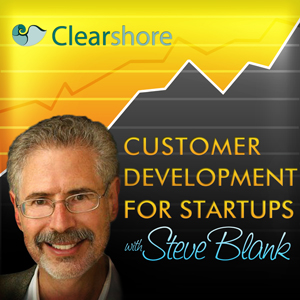
Steve Blank, eight-time entrepreneur and now a business school professor at Stanford, Columbia and Berkeley, shares his hard-won wisdom as he pioneers entrepreneurship as a management science, combining Customer Development, Business Model Design and Agile Development. The conclusion? Startups are simply not small versions of large companies! Startups are actually temporary organizations designed to search for a scalable and repeatable business model.
Episodes
-
Subterranean Warfare – An Urgent DoW Need Without An Owner
The DoW urgently needs to organize its scattered subterranean warfare assets into a single unified organization. Ideally, a Direct Reporting Portfolio Manager (DRPM) for Subterranean Warfare, reporting to the Deputy Secretary of War. (The Department already uses this model for unmanned systems,...
-
Lean LaunchPad – The Next Generation
This is a four-part series on how AI has impacted our Lean LaunchPad class and what we did about it.
-
The World Outside the Classroom Changed, The Class Didn’t
This is the third of four posts on how AI has impacted our Lean LaunchPad class and what we did about it.
-
AI Killed the MVP – Long Live the IUP
This is the second of four posts on how AI has impacted our Lean LaunchPad class and what we did about it.
-
The Year AI Came For Us: Teaching Entrepreneurship Will Never Be The Same
15 years ago, my Lean LaunchPad class changed how entrepreneurship is taught. The class is now taught in hundreds of universities worldwide and helped launch thousands of startups. But this past summer, I got thinking about whether AI killed our Lean LaunchPad class, and with it the Lean Startup...
-
Lean Launch Pad 2026 @ Stanford – Lessons Learned Presentations
We just finished the 16th annual Lean LaunchPad class at Stanford. In those 16 years, the class has gone from a radical idea – that the Lean method could provide a more productive framework for new startups – to something that everyone agrees is a way to build new startups.
-
Incorruptible
Every once in a while a book comes along that doesn’t just change your tactical thinking, but makes you see the world in a different way. Reading this book is like taking the red pill in the Matrix.
-
Hacking for Defense @ Stanford 2026 – Lessons Learned Presentations
We just wrapped up our Hacking for Defense class at Stanford. This was the 11th year we’ve taught Hacking for Defense, and the impact of asymmetric warfare, (drones, off-the-shelf technologies, etc.,) disruptive technologies (AI, commercial access to space) and a startup friendly DoW acquisition...
-
Anthropic Mythos – We’ve Opened Pandora’s Box
For a decade the cybersecurity community was predicting a cyber apocalypse tied to a single event – the day a Cryptographically Relevant Quantum Computer could run Shor’s algorithm and break the public-key cryptography systems most of the internet runs on. It’s possible that the first…
more -
AI and Teaching – The Brave New World
This is the 16th year we’ve been teaching the Stanford Lean LaunchPad class. This year, from the first hour of the first class, we realized we were seeing something extraordinary happen. It was both the end and beginning of a new era.
-
Nowhere is Safe
Drones in Ukraine and in the War with Iran have made the surface of the earth a contested space. The U.S. has discovered that 1) air superiority and missile defense systems (THAAD, Patriot batteries) designed to counter tens or hundreds of aircraft and missiles is insufficient against asymmetric...
-
Solving Yesterday’s Problems Will Kill You
The Department of War is in the midst of the most ambitious acquisition reform in 60 years. It’s just in time as drone and missile warfare lessons (autonomy, Counter UAS, etc.) from Ukraine and the War in Iran are top of mind and reshaping what the DoW is buying. Reorganizing the DoW into…
more -
Your Startup Is Probably Dead On Arrival
If you started a company more than two years ago, it’s likely that many of your assumptions are no longer true. You need to stop coding, building, recruiting, fund raising, etc., and take stock of what changed around you. Or your company will die.
-
Time to Move On – The Reason Relationships End
A while ago I wrote about what happens in a startup when a new event creates a wake-up call that makes founding engineers reevaluate their jobs. (It’s worth a read here.) Recently my wife and I had something happen that made us reevaluate a 25-year-old relationship. These two bookends made me...
-
You Only Think They Work For You
When I was a new VP of Marketing I got a painful lesson of who my PR (Public Relations) agency actually worked for. Later I realized that it was true for all of my external vendors. And much later I realized what I really should have been asking them to do. The lessons still apply even though AI...
-
Revisionist History – Aliens, Secrets and Conspiracies
And ye shall know the truth, and the truth shall make you free” John 8:32
-
Revisionist History – Aliens, Secrets and Conspiracies
Every once in a while you learn something new that makes you completely rethink how/why an event actually happened. And then you consider how it affects the rest of our country and our lives. This is one of those stories.
-
Making the Wrong Things Go Faster at The Department of War
The Department of War (DoW) senior Acquisition leadership (the people who decide what and how the DoW buys equipment and services) now is headed by people from private capital (venture capital and private equity.)
-
The Department of War Directory
In November 2025 the Department of War (DoW) unveiled the biggest changes in 60 years of how they will buy weapons and services. This month Congress, with bipartisan support, rapidly made them into law in the National Defense Authorization Act (the NDAA) – 3,096 pages of legislative text and...
-
The Department of War Just Shot the Accountants and Opted for Speed
The Department of War Just Shot the Accountants and Opted for Speed by Steve Blank
-
It only took 20 years, but the Strategic Management Society now Believes the Lean Startup is a Strategy
I’ve always thought of myself as a practitioner. In the startups I was part of, the only “strategy” were my marketing tactics on how to make the VP of Sales the richest person in the company. After I retired, I created Customer Development and co-created the Lean Startup as a simple methodology...
-
How to Sell to the Dept of War – The 2025 PEO Directory – Now with 500 more names
The October 2025 PEO Directory – Update 2. The Department of War (DoW) is one of the world’s largest organizations. If you’re a startup trying to figure out who to call on and how to navigate the system, it can be – to put it politely – challenging.
-
No Science, No Startups: The Innovation Engine We’re Switching Off
Tons of words have been written about the Trump Administrations war on Science in Universities. But few people have asked what, exactly, is science? How does it work? Who are the scientists? What do they do? And more importantly, why should anyone (outside of universities) care?
-
When Sh!t Hits the Fan – Founders in a Crisis
Great founders shine in a crisis.
-
How To Sell to the Dept of War – The 2025 PEO Directory
How To Sell to the Dept of War – The 2025 PEO Directory by Steve Blank
-
Blind to Disruption – The CEOs Who Missed the Future
How did you go bankrupt?” Two ways. Gradually, then suddenly.” Ernest Hemingway, The Sun Also Rises Every disruptive technology since the fire and the wheel have forced leaders to adapt or die. This post tells the story of what happened when 4,000 companies faced a disruptive technology and why...
-
Why Investors Don’t Care About Your Business
I’ve been having coffee with lots of frustrated founders (my students and others) bemoaning most VCs won’t even meet with them unless they have AI in their fundraising pitch. And the AI startups they see are getting valuations that appear nonsensical. These conversations brought back a sense of...
-
Lean Launchpad at Stanford – 2025
We just finished the 15thannual Lean LaunchPad class at Stanford. The class had gotten so popular that in 2021 we started teaching it in both the winter and spring sessions. During the 2025 spring quarter the eight teams spoke to 935 potential customers, beneficiaries and regulators. Most…
more -
Hacking for Defense @ Stanford 2025 – Lessons Learned Presentations
We just finished our 10th annual Hacking for Defense class at Stanford. What a year. Hacking for Defense, now in 70 universities, has teams of students working to understand and help solve national security problems. At Stanford this quarter the 8 teams of 41 students collectively interviewed…
more -
Teaching National Security Policy with AI
International Policy students will be spending their careers in an AI-enabled world. We wanted our students to be prepared for it. This is why we’ve adopted and integrated AI in our Stanford national security policy class – Technology, Innovation and Great Power Competition. Here’s what we did…
more -
How the United States Gave Up Being a Science Superpower
US global dominance in science was no accident, but a product of a far-seeing partnership between public and private sectors to boost innovation and economic growth.
-
The Endless Frontier: U.S. Science and National Industrial Policy: Part 6a The Secret History of Silicon Valley
The U.S. has spent the last 70 years making massive investments in basic and applied research. Government funding of research started in World War II driven by the needs of the military for weapon systems to defeat Germany and Japan. Post WWII the responsibility for investing in research split...
-
How the U.S. Became A Science Superpower
Prior to WWII the U.S was a distant second in science and engineering. By the time the war was over, U.S. science and engineering had blown past the British, and led the world for 85 years.
-
An MVP is not a Cheaper Product, It’s about Smart Learning
A minimum viable product (MVP) is not always a smaller/cheaper version of your final product. Defining the goal for a MVP can save you tons of time, money and grief.
-
The Elves Leave Middle Earth – Sodas Are No Longer Free
Sometimes financial decisions that are seemingly rational on their face can precipitate mass exodus of your best engineers.
-
How to get meetings with people too busy to see you
Asking, “Can I have coffee with you to pick your brain?” is probably the worst possible way to get a meeting with someone with a busy schedule. Here’s a better approach.
-
Lying on your resume
It’s not the crime that gets you, it’s the coverup.
-
Careers Start by Peeling Potatoes
Listening to my the family talk about dividing up the cooking chores for this Thanksgiving dinner, including who would peel the potatoes, reminded me that most careers start by peeling potatoes.
-
Nuke’em ‘Till They Glow – Quitting My First Job
I started working when I was 14 (I lied about my age) and counting four years in the Air Force I’ve worked in 12 jobs. I left each one of them when I was bored, ready to move on, got fired, or learned as much as I can. There was only one job that I quit when I feared for my life.
-
Agile Opportunism – Entrepreneurial DNA
Entrepreneurs tend to view adversity as opportunity.
-
You’ll Be Dead Soon – Carpe Diem
Remembering that I’ll be dead soon is the most important tool I’ve ever encountered to help me make the big choices in life. Because almost everything – all external expectations, all pride, all fear of embarrassment or failure – these things just fall away in the face of death, leaving only what...
-
Lies Entrepreneurs Tell Themselves
When I was in my 20’s I worked at Convergent Technologies, a company that was proud to be known as the “Marine Corps of Silicon Valley.” It was a brawling “take no prisoners,” work hard, party hard, type of company. The founders coming out of the DEC (Digital Equipment Corporation) and Intel...
-
Entrepreneurship is hard but you can’t die
We Sleep Peaceably In Our Beds At Night Only Because Rough Men Stand Ready To Do Violence On Our Behalf. Everyone has events that shape the rest of their lives. This was one of mine.
-
Balloon Wars: Part 16 of the Secret History of Silicon Valley
In 2023 China flying a “spy balloon” over the U.S. created an international incident. It turns out the U.S. did the same to the Soviet Union in the 1950’s.
-
Vertical Markets 3: Reducing Risk in Startups
Reducing Risk – Simulation versus Customer Development If you remember the first part of this discussion, startups face two types of risk; invention risk and/or customer/market risk. In either type of startup you want to put in place processes in place to reduce risk.
-
Faith-Based versus Fact-Based Decision Making
I’ve screwed up a lot of startups on faith. One of the key tenets of entrepreneurship is that you start your company with insufficient resources and knowledge.
-
Going to Trade Shows Like it Matters – Part 2
I wrote this “Going to Trade Shows Like it Matters” memo as a board member after I saw our company at a trade show. Part 1 of this post offered some suggestions on going to trade shows to generate awareness. This post offers suggestions if you are going to a trade show to generate leads.
-
Founders and dysfunctional families
I was having lunch with a friend who is a retired venture capitalist and we drifted into a discussion of the startups she funded. We agreed that all her founding CEOs seemed to have the same set of personality traits – tenacious, passionate, relentless, resilient, agile, and comfortable operating...
-
Vertical Markets 2: Customer/Market Risk versus Invention Risk
One day I was having lunch with a VC sharing what I learned from my students. “Steve,” he said, “you’re missing the most interesting part of vertical markets. Our firm has a portfolio of companies across a broad range of markets and the way we look at it is pretty simple – the deals fall into two...
-
Vertical Markets 1: Bad Advice – All Startups are the Same
In the past entrepreneurship was viewed (and taught) as a single process, with a single approach to creating a business plan and securing funding for a startup. The best entrepreneurship textbooks and blogs assume that advice to startups is generalizable. But as I learned from my students this...
We're indexing this podcast's transcripts for the first time — this can take a minute or two. We'll show results as soon as they're ready.
No matches for "" in this podcast's transcripts.
No topics indexed yet for this podcast.
Loading reviews...
ABOUT THIS SHOW
Steve Blank, eight-time entrepreneur and now a business school professor at Stanford, Columbia and Berkeley, shares his hard-won wisdom as he pioneers entrepreneurship as a management science, combining Customer Development, Business Model Design and Agile Development. The conclusion? Startups are simply not small versions of large companies! Startups are actually temporary organizations designed to search for a scalable and repeatable business model.
HOSTED BY
Steve Blank
CATEGORIES
Loading similar podcasts...
Frequently Asked Questions
How many episodes does Steve Blank Podcast have?
Steve Blank Podcast currently has 319 episodes available on PodParley. New episodes are automatically indexed when they're published to the podcast feed.
What is Steve Blank Podcast about?
Steve Blank, eight-time entrepreneur and now a business school professor at Stanford, Columbia and Berkeley, shares his hard-won wisdom as he pioneers entrepreneurship as a management science, combining Customer Development, Business Model Design and Agile Development. The conclusion? Startups are...
How often does Steve Blank Podcast release new episodes?
Steve Blank Podcast publishes regularly with 319 episodes available. Check the episode list for the typical release schedule.
Where can I listen to Steve Blank Podcast?
You can listen to Steve Blank Podcast on PodParley by clicking any episode. We provide an embedded audio player for direct listening, and you can also subscribe via your preferred podcast app using the RSS feed.
Who hosts Steve Blank Podcast?
Steve Blank Podcast is created and hosted by Steve Blank.
URL copied to clipboard!