
PODCAST · arts
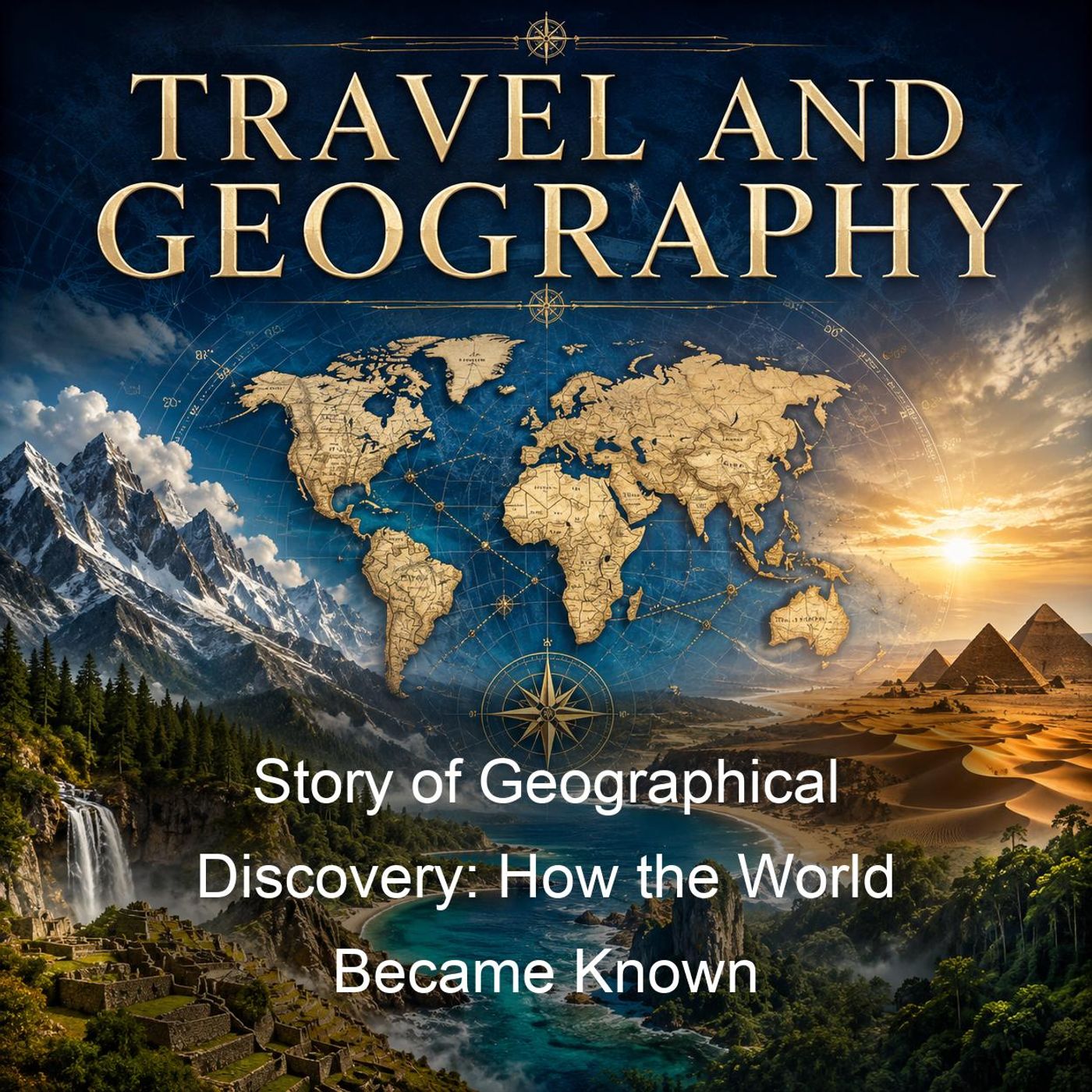
Story of Geographical Discovery: How the World Became Known
by Joseph Jacobs
Embark on a captivating journey through the annals of exploration and discovery with the podcast "Story of Geographical Discovery: How the World Became Known." This series invites listeners to delve into the intricate tapestry of human curiosity and ambition that has shaped our understanding of the planet. Each episode features a new complete audiobook, showcasing a diverse range of perspectives on the geographical milestones that have defined civilizations. From the ancient navigators who charted uncharted waters to the scientific breakthroughs that expanded our horizons, this collection presents a series of unique explorations that illuminate the forces—such as conquest, trade, and inquiry—that propelled humanity toward a more complete map of the world. Discover a new book with every episode and enrich your appreciation of the vast and interconnected narrative of our global history.
-
15
Abroad with Mark Twain and Eugene Field - Tales They Told to a Fellow Correspondent-Henry William Fischer
"Abroad with Mark Twain and Eugene Field" by Tales They Told to a Fellow Correspondent-Henry William Fischer invites listeners into the world of two iconic literary figures as they traverse foreign lands and share their unique perspectives. This audiobook captures the essence of exploration and cultural exchange, highlighting the enduring allure of travel and storytelling. The themes of curiosity and the quest for understanding resonate deeply in today's interconnected world, reminding us of the importance of embracing diverse experiences. Through witty anecdotes and vivid descriptions, Fischer's work celebrates the spirit of adventure that continues to inspire generations.
-
14
Letters Written During a Short Residence in Sweden, Norway and Denmark-Mary Wollstonecraft
This book was first published in 1897. It's a short work, but it encompasses a vast subject—nothing less than determining the detailed geographical plan of our entire world! In the process, Jacobs feeds us dates and names and events and places and maps in a dense stream. It's a bit like drinking from a fire hose, but see it through, and the reader (or listener) will acquire a surprisingly complete overview of world history as well as geography. It's well worth absorbing, even by those not so geographically inclined, if only as a source for winning endless bar bets. Beginning in ancient times, the author identifies three main forces that have contributed to our present understanding: wars of conquest, competition for trade, and (eventually) pure scientific curiosity. The Egyptians, Phoenicians, early Greeks, Babylonians, and many other Mediterranean peoples contributed, often unwillingly, the streams of knowledge that Ptolemy of Alexandria summed up in the great Ptolemaei Orbis (ca.150 AD), the first “real” map of the whole known world. The evolution of world maps to incorporate (and sometime conceal) new discoveries is a key theme of this fascinating work. (Summary by Steven Seitel)
-
13
History of London-Walter Besant
This book was first published in 1897. It's a short work, but it encompasses a vast subject—nothing less than determining the detailed geographical plan of our entire world! In the process, Jacobs feeds us dates and names and events and places and maps in a dense stream. It's a bit like drinking from a fire hose, but see it through, and the reader (or listener) will acquire a surprisingly complete overview of world history as well as geography. It's well worth absorbing, even by those not so geographically inclined, if only as a source for winning endless bar bets. Beginning in ancient times, the author identifies three main forces that have contributed to our present understanding: wars of conquest, competition for trade, and (eventually) pure scientific curiosity. The Egyptians, Phoenicians, early Greeks, Babylonians, and many other Mediterranean peoples contributed, often unwillingly, the streams of knowledge that Ptolemy of Alexandria summed up in the great Ptolemaei Orbis (ca.150 AD), the first “real” map of the whole known world. The evolution of world maps to incorporate (and sometime conceal) new discoveries is a key theme of this fascinating work. (Summary by Steven Seitel)
-
12
Culture and Anarchy-Matthew Arnold
This book was first published in 1897. It's a short work, but it encompasses a vast subject—nothing less than determining the detailed geographical plan of our entire world! In the process, Jacobs feeds us dates and names and events and places and maps in a dense stream. It's a bit like drinking from a fire hose, but see it through, and the reader (or listener) will acquire a surprisingly complete overview of world history as well as geography. It's well worth absorbing, even by those not so geographically inclined, if only as a source for winning endless bar bets. Beginning in ancient times, the author identifies three main forces that have contributed to our present understanding: wars of conquest, competition for trade, and (eventually) pure scientific curiosity. The Egyptians, Phoenicians, early Greeks, Babylonians, and many other Mediterranean peoples contributed, often unwillingly, the streams of knowledge that Ptolemy of Alexandria summed up in the great Ptolemaei Orbis (ca.150 AD), the first “real” map of the whole known world. The evolution of world maps to incorporate (and sometime conceal) new discoveries is a key theme of this fascinating work. (Summary by Steven Seitel)
-
11
Wild North Land, The Story of a Winter Journey with Dogs across Northern North America-William Francis Butler
This book was first published in 1897. It's a short work, but it encompasses a vast subject—nothing less than determining the detailed geographical plan of our entire world! In the process, Jacobs feeds us dates and names and events and places and maps in a dense stream. It's a bit like drinking from a fire hose, but see it through, and the reader (or listener) will acquire a surprisingly complete overview of world history as well as geography. It's well worth absorbing, even by those not so geographically inclined, if only as a source for winning endless bar bets. Beginning in ancient times, the author identifies three main forces that have contributed to our present understanding: wars of conquest, competition for trade, and (eventually) pure scientific curiosity. The Egyptians, Phoenicians, early Greeks, Babylonians, and many other Mediterranean peoples contributed, often unwillingly, the streams of knowledge that Ptolemy of Alexandria summed up in the great Ptolemaei Orbis (ca.150 AD), the first “real” map of the whole known world. The evolution of world maps to incorporate (and sometime conceal) new discoveries is a key theme of this fascinating work. (Summary by Steven Seitel)
-
10
Romance of Polar Exploration-G. Firth Scott
This book was first published in 1897. It's a short work, but it encompasses a vast subject—nothing less than determining the detailed geographical plan of our entire world! In the process, Jacobs feeds us dates and names and events and places and maps in a dense stream. It's a bit like drinking from a fire hose, but see it through, and the reader (or listener) will acquire a surprisingly complete overview of world history as well as geography. It's well worth absorbing, even by those not so geographically inclined, if only as a source for winning endless bar bets. Beginning in ancient times, the author identifies three main forces that have contributed to our present understanding: wars of conquest, competition for trade, and (eventually) pure scientific curiosity. The Egyptians, Phoenicians, early Greeks, Babylonians, and many other Mediterranean peoples contributed, often unwillingly, the streams of knowledge that Ptolemy of Alexandria summed up in the great Ptolemaei Orbis (ca.150 AD), the first “real” map of the whole known world. The evolution of world maps to incorporate (and sometime conceal) new discoveries is a key theme of this fascinating work. (Summary by Steven Seitel)
-
9
Charles Simeon-Handley Carr Glyn Moule
This book was first published in 1897. It's a short work, but it encompasses a vast subject—nothing less than determining the detailed geographical plan of our entire world! In the process, Jacobs feeds us dates and names and events and places and maps in a dense stream. It's a bit like drinking from a fire hose, but see it through, and the reader (or listener) will acquire a surprisingly complete overview of world history as well as geography. It's well worth absorbing, even by those not so geographically inclined, if only as a source for winning endless bar bets. Beginning in ancient times, the author identifies three main forces that have contributed to our present understanding: wars of conquest, competition for trade, and (eventually) pure scientific curiosity. The Egyptians, Phoenicians, early Greeks, Babylonians, and many other Mediterranean peoples contributed, often unwillingly, the streams of knowledge that Ptolemy of Alexandria summed up in the great Ptolemaei Orbis (ca.150 AD), the first “real” map of the whole known world. The evolution of world maps to incorporate (and sometime conceal) new discoveries is a key theme of this fascinating work. (Summary by Steven Seitel)
-
8
Dinner Club-Sapper
This book was first published in 1897. It's a short work, but it encompasses a vast subject—nothing less than determining the detailed geographical plan of our entire world! In the process, Jacobs feeds us dates and names and events and places and maps in a dense stream. It's a bit like drinking from a fire hose, but see it through, and the reader (or listener) will acquire a surprisingly complete overview of world history as well as geography. It's well worth absorbing, even by those not so geographically inclined, if only as a source for winning endless bar bets. Beginning in ancient times, the author identifies three main forces that have contributed to our present understanding: wars of conquest, competition for trade, and (eventually) pure scientific curiosity. The Egyptians, Phoenicians, early Greeks, Babylonians, and many other Mediterranean peoples contributed, often unwillingly, the streams of knowledge that Ptolemy of Alexandria summed up in the great Ptolemaei Orbis (ca.150 AD), the first “real” map of the whole known world. The evolution of world maps to incorporate (and sometime conceal) new discoveries is a key theme of this fascinating work. (Summary by Steven Seitel)
-
7
Court and Character of King James, with the Court of King Charles-Anthony Weldon
This book was first published in 1897. It's a short work, but it encompasses a vast subject—nothing less than determining the detailed geographical plan of our entire world! In the process, Jacobs feeds us dates and names and events and places and maps in a dense stream. It's a bit like drinking from a fire hose, but see it through, and the reader (or listener) will acquire a surprisingly complete overview of world history as well as geography. It's well worth absorbing, even by those not so geographically inclined, if only as a source for winning endless bar bets. Beginning in ancient times, the author identifies three main forces that have contributed to our present understanding: wars of conquest, competition for trade, and (eventually) pure scientific curiosity. The Egyptians, Phoenicians, early Greeks, Babylonians, and many other Mediterranean peoples contributed, often unwillingly, the streams of knowledge that Ptolemy of Alexandria summed up in the great Ptolemaei Orbis (ca.150 AD), the first “real” map of the whole known world. The evolution of world maps to incorporate (and sometime conceal) new discoveries is a key theme of this fascinating work. (Summary by Steven Seitel)
-
6
Tenting To-Night; A Chronicle Of Sport And Adventure In Glacier Park And The Cascade Mountains-Mary Roberts Rinehart
This book was first published in 1897. It's a short work, but it encompasses a vast subject—nothing less than determining the detailed geographical plan of our entire world! In the process, Jacobs feeds us dates and names and events and places and maps in a dense stream. It's a bit like drinking from a fire hose, but see it through, and the reader (or listener) will acquire a surprisingly complete overview of world history as well as geography. It's well worth absorbing, even by those not so geographically inclined, if only as a source for winning endless bar bets. Beginning in ancient times, the author identifies three main forces that have contributed to our present understanding: wars of conquest, competition for trade, and (eventually) pure scientific curiosity. The Egyptians, Phoenicians, early Greeks, Babylonians, and many other Mediterranean peoples contributed, often unwillingly, the streams of knowledge that Ptolemy of Alexandria summed up in the great Ptolemaei Orbis (ca.150 AD), the first “real” map of the whole known world. The evolution of world maps to incorporate (and sometime conceal) new discoveries is a key theme of this fascinating work. (Summary by Steven Seitel)
-
5
Underground Railroad, Part 2-William Still
This book was first published in 1897. It's a short work, but it encompasses a vast subject—nothing less than determining the detailed geographical plan of our entire world! In the process, Jacobs feeds us dates and names and events and places and maps in a dense stream. It's a bit like drinking from a fire hose, but see it through, and the reader (or listener) will acquire a surprisingly complete overview of world history as well as geography. It's well worth absorbing, even by those not so geographically inclined, if only as a source for winning endless bar bets. Beginning in ancient times, the author identifies three main forces that have contributed to our present understanding: wars of conquest, competition for trade, and (eventually) pure scientific curiosity. The Egyptians, Phoenicians, early Greeks, Babylonians, and many other Mediterranean peoples contributed, often unwillingly, the streams of knowledge that Ptolemy of Alexandria summed up in the great Ptolemaei Orbis (ca.150 AD), the first “real” map of the whole known world. The evolution of world maps to incorporate (and sometime conceal) new discoveries is a key theme of this fascinating work. (Summary by Steven Seitel)
-
4
Commentary on the Epistle of Paul the Apostle to the Galatians-John Calvin
This book was first published in 1897. It's a short work, but it encompasses a vast subject—nothing less than determining the detailed geographical plan of our entire world! In the process, Jacobs feeds us dates and names and events and places and maps in a dense stream. It's a bit like drinking from a fire hose, but see it through, and the reader (or listener) will acquire a surprisingly complete overview of world history as well as geography. It's well worth absorbing, even by those not so geographically inclined, if only as a source for winning endless bar bets. Beginning in ancient times, the author identifies three main forces that have contributed to our present understanding: wars of conquest, competition for trade, and (eventually) pure scientific curiosity. The Egyptians, Phoenicians, early Greeks, Babylonians, and many other Mediterranean peoples contributed, often unwillingly, the streams of knowledge that Ptolemy of Alexandria summed up in the great Ptolemaei Orbis (ca.150 AD), the first “real” map of the whole known world. The evolution of world maps to incorporate (and sometime conceal) new discoveries is a key theme of this fascinating work. (Summary by Steven Seitel)
-
3
One-Act Play Collection 015-Various
This book was first published in 1897. It's a short work, but it encompasses a vast subject—nothing less than determining the detailed geographical plan of our entire world! In the process, Jacobs feeds us dates and names and events and places and maps in a dense stream. It's a bit like drinking from a fire hose, but see it through, and the reader (or listener) will acquire a surprisingly complete overview of world history as well as geography. It's well worth absorbing, even by those not so geographically inclined, if only as a source for winning endless bar bets. Beginning in ancient times, the author identifies three main forces that have contributed to our present understanding: wars of conquest, competition for trade, and (eventually) pure scientific curiosity. The Egyptians, Phoenicians, early Greeks, Babylonians, and many other Mediterranean peoples contributed, often unwillingly, the streams of knowledge that Ptolemy of Alexandria summed up in the great Ptolemaei Orbis (ca.150 AD), the first “real” map of the whole known world. The evolution of world maps to incorporate (and sometime conceal) new discoveries is a key theme of this fascinating work. (Summary by Steven Seitel)
-
2
Imperialism and World Politics, Part 3 of 4-Parker Thomas Moon
"Imperialism and World Politics, Part 3 of 4" by Parker Thomas Moon delves into the intricate dynamics of imperialism and its profound impact on global politics. This exploration reveals how imperial ambitions shaped nations and influenced international relations, offering a critical lens on power, control, and cultural exchange. The themes of conquest and governance resonate deeply in today's world, as we continue to navigate the legacies of imperialism that affect contemporary geopolitics. Moon's insights remind us of the enduring complexities of global interactions and the historical contexts that continue to inform our understanding of world affairs.
-
1
Story of Geographical Discovery How the World Became Known - Joseph Jacobs
This book was first published in 1897. It's a short work, but it encompasses a vast subject—nothing less than determining the detailed geographical plan of our entire world! In the process, Jacobs feeds us dates and names and events and places and maps in a dense stream. It's a bit like drinking from a fire hose, but see it through, and the reader (or listener) will acquire a surprisingly complete overview of world history as well as geography. It's well worth absorbing, even by those not so geographically inclined, if only as a source for winning endless bar bets. Beginning in ancient times, the author identifies three main forces that have contributed to our present understanding: wars of conquest, competition for trade, and (eventually) pure scientific curiosity. The Egyptians, Phoenicians, early Greeks, Babylonians, and many other Mediterranean peoples contributed, often unwillingly, the streams of knowledge that Ptolemy of Alexandria summed up in the great Ptolemaei Orbis (ca.150 AD), the first “real” map of the whole known world. The evolution of world maps to incorporate (and sometime conceal) new discoveries is a key theme of this fascinating work. (Summary by Steven Seitel)
We're indexing this podcast's transcripts for the first time — this can take a minute or two. We'll show results as soon as they're ready.
No matches for "" in this podcast's transcripts.
No topics indexed yet for this podcast.
Loading reviews...
ABOUT THIS SHOW
Embark on a captivating journey through the annals of exploration and discovery with the podcast "Story of Geographical Discovery: How the World Became Known." This series invites listeners to delve into the intricate tapestry of human curiosity and ambition that has shaped our understanding of the planet. Each episode features a new complete audiobook, showcasing a diverse range of perspectives on the geographical milestones that have defined civilizations. From the ancient navigators who charted uncharted waters to the scientific breakthroughs that expanded our horizons, this collection presents a series of unique explorations that illuminate the forces—such as conquest, trade, and inquiry—that propelled humanity toward a more complete map of the world. Discover a new book with every episode and enrich your appreciation of the vast and interconnected narrative of our global history.
HOSTED BY
Joseph Jacobs
Loading similar podcasts...
Frequently Asked Questions
How many episodes does Story of Geographical Discovery: How the World Became Known have?
Story of Geographical Discovery: How the World Became Known currently has 15 episodes available on PodParley. New episodes are automatically indexed when they're published to the podcast feed.
What is Story of Geographical Discovery: How the World Became Known about?
Embark on a captivating journey through the annals of exploration and discovery with the podcast "Story of Geographical Discovery: How the World Became Known." This series invites listeners to delve into the intricate tapestry of human curiosity and ambition that has shaped our understanding of the...
How often does Story of Geographical Discovery: How the World Became Known release new episodes?
Story of Geographical Discovery: How the World Became Known has 15 episodes. Check the episode list to see recent publication dates and frequency.
Where can I listen to Story of Geographical Discovery: How the World Became Known?
You can listen to Story of Geographical Discovery: How the World Became Known on PodParley by clicking any episode. We provide an embedded audio player for direct listening, and you can also subscribe via your preferred podcast app using the RSS feed.
Who hosts Story of Geographical Discovery: How the World Became Known?
Story of Geographical Discovery: How the World Became Known is created and hosted by Joseph Jacobs.
URL copied to clipboard!