
PODCAST · arts
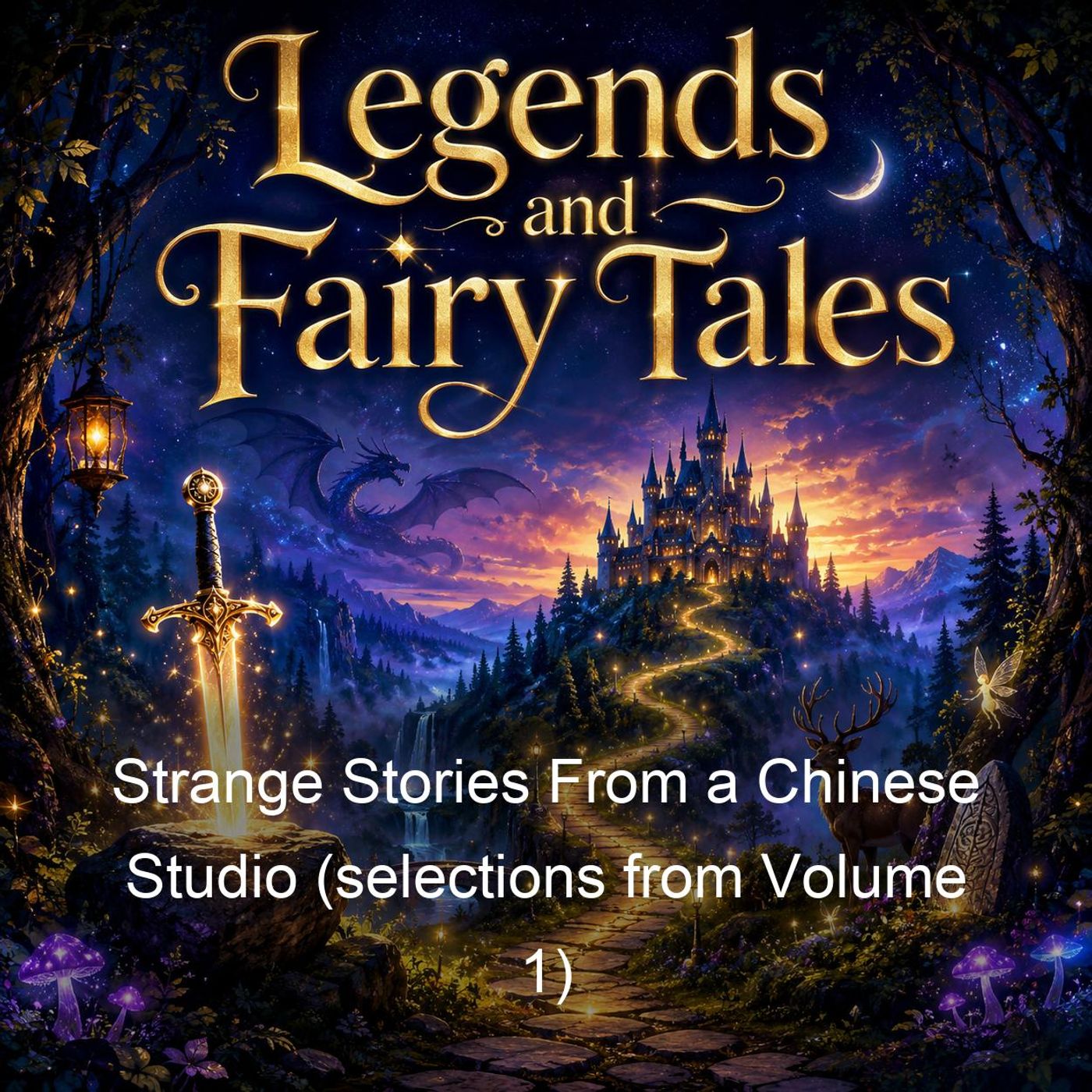
Strange Stories From a Chinese Studio (selections from Volume 1)
by Songling Pu
"Strange Tales from a Chinese Studio" or "Strange Tales of Liaozhai") is a collection of nearly five hundred mostly supernatural tales written by Pu Songling during the early Qing Dynasty. It was written in Classical Chinese rather than Vernacular Chinese. Pu is believed to have completed the majority of the tales sometime in 1679, though he could have added entries as late as 1707. He borrows from a folk tradition of oral storytelling to put to paper a series of captivating, colorful stories, where the boundary between reality and the odd or fantastic is blurred. The cast of characters includes vixen spirits, ghosts, scholars, court officials, Taoist exorcists and beasts. Moral purposes are often inverted between humans and the supposedly degenerate ghosts or spirits, resulting in a satirical edge to some of the stories. Ghosts and spirits are often bold and trustworthy, while humans are on the other hand weak, indecisive and easily manipulated, reflecting the author's own disillusion
-
1
More English Fairy Tales-Joseph Jacobs
Strange Tales from a Chinese Studio" or "Strange Tales of Liaozhai") is a collection of nearly five hundred mostly supernatural tales written by Pu Songling during the early Qing Dynasty. It was written in Classical Chinese rather than Vernacular Chinese. Pu is believed to have completed the majority of the tales sometime in 1679, though he could have added entries as late as 1707. He borrows from a folk tradition of oral storytelling to put to paper a series of captivating, colorful stories, where the boundary between reality and the odd or fantastic is blurred. The cast of characters includes vixen spirits, ghosts, scholars, court officials, Taoist exorcists and beasts. Moral purposes are often inverted between humans and the supposedly degenerate ghosts or spirits, resulting in a satirical edge to some of the stories. Ghosts and spirits are often bold and trustworthy, while humans are on the other hand weak, indecisive and easily manipulated, reflecting the author's own disillusionment with his society. (Summary from Wikipedia)
-
0
Folk-lore and Legends Russian and Polish-Charles John Tibbits
Strange Tales from a Chinese Studio" or "Strange Tales of Liaozhai") is a collection of nearly five hundred mostly supernatural tales written by Pu Songling during the early Qing Dynasty. It was written in Classical Chinese rather than Vernacular Chinese. Pu is believed to have completed the majority of the tales sometime in 1679, though he could have added entries as late as 1707. He borrows from a folk tradition of oral storytelling to put to paper a series of captivating, colorful stories, where the boundary between reality and the odd or fantastic is blurred. The cast of characters includes vixen spirits, ghosts, scholars, court officials, Taoist exorcists and beasts. Moral purposes are often inverted between humans and the supposedly degenerate ghosts or spirits, resulting in a satirical edge to some of the stories. Ghosts and spirits are often bold and trustworthy, while humans are on the other hand weak, indecisive and easily manipulated, reflecting the author's own disillusionment with his society. (Summary from Wikipedia)
-
-1
Wind Boy-Ethel Cook Eliot
Strange Tales from a Chinese Studio" or "Strange Tales of Liaozhai") is a collection of nearly five hundred mostly supernatural tales written by Pu Songling during the early Qing Dynasty. It was written in Classical Chinese rather than Vernacular Chinese. Pu is believed to have completed the majority of the tales sometime in 1679, though he could have added entries as late as 1707. He borrows from a folk tradition of oral storytelling to put to paper a series of captivating, colorful stories, where the boundary between reality and the odd or fantastic is blurred. The cast of characters includes vixen spirits, ghosts, scholars, court officials, Taoist exorcists and beasts. Moral purposes are often inverted between humans and the supposedly degenerate ghosts or spirits, resulting in a satirical edge to some of the stories. Ghosts and spirits are often bold and trustworthy, while humans are on the other hand weak, indecisive and easily manipulated, reflecting the author's own disillusionment with his society. (Summary from Wikipedia)
-
-2
Honey-Bee-Anatole France
Strange Tales from a Chinese Studio" or "Strange Tales of Liaozhai") is a collection of nearly five hundred mostly supernatural tales written by Pu Songling during the early Qing Dynasty. It was written in Classical Chinese rather than Vernacular Chinese. Pu is believed to have completed the majority of the tales sometime in 1679, though he could have added entries as late as 1707. He borrows from a folk tradition of oral storytelling to put to paper a series of captivating, colorful stories, where the boundary between reality and the odd or fantastic is blurred. The cast of characters includes vixen spirits, ghosts, scholars, court officials, Taoist exorcists and beasts. Moral purposes are often inverted between humans and the supposedly degenerate ghosts or spirits, resulting in a satirical edge to some of the stories. Ghosts and spirits are often bold and trustworthy, while humans are on the other hand weak, indecisive and easily manipulated, reflecting the author's own disillusionment with his society. (Summary from Wikipedia)
-
-3
Fasti-Publius (Ovid) Ovidius Naso
Strange Tales from a Chinese Studio" or "Strange Tales of Liaozhai") is a collection of nearly five hundred mostly supernatural tales written by Pu Songling during the early Qing Dynasty. It was written in Classical Chinese rather than Vernacular Chinese. Pu is believed to have completed the majority of the tales sometime in 1679, though he could have added entries as late as 1707. He borrows from a folk tradition of oral storytelling to put to paper a series of captivating, colorful stories, where the boundary between reality and the odd or fantastic is blurred. The cast of characters includes vixen spirits, ghosts, scholars, court officials, Taoist exorcists and beasts. Moral purposes are often inverted between humans and the supposedly degenerate ghosts or spirits, resulting in a satirical edge to some of the stories. Ghosts and spirits are often bold and trustworthy, while humans are on the other hand weak, indecisive and easily manipulated, reflecting the author's own disillusionment with his society. (Summary from Wikipedia)
-
-4
Ice-Maiden and Other Tales-Hans Christian Andersen
Strange Tales from a Chinese Studio" or "Strange Tales of Liaozhai") is a collection of nearly five hundred mostly supernatural tales written by Pu Songling during the early Qing Dynasty. It was written in Classical Chinese rather than Vernacular Chinese. Pu is believed to have completed the majority of the tales sometime in 1679, though he could have added entries as late as 1707. He borrows from a folk tradition of oral storytelling to put to paper a series of captivating, colorful stories, where the boundary between reality and the odd or fantastic is blurred. The cast of characters includes vixen spirits, ghosts, scholars, court officials, Taoist exorcists and beasts. Moral purposes are often inverted between humans and the supposedly degenerate ghosts or spirits, resulting in a satirical edge to some of the stories. Ghosts and spirits are often bold and trustworthy, while humans are on the other hand weak, indecisive and easily manipulated, reflecting the author's own disillusionment with his society. (Summary from Wikipedia)
-
-5
West African Folk Tales-William H. Barker
Strange Tales from a Chinese Studio" or "Strange Tales of Liaozhai") is a collection of nearly five hundred mostly supernatural tales written by Pu Songling during the early Qing Dynasty. It was written in Classical Chinese rather than Vernacular Chinese. Pu is believed to have completed the majority of the tales sometime in 1679, though he could have added entries as late as 1707. He borrows from a folk tradition of oral storytelling to put to paper a series of captivating, colorful stories, where the boundary between reality and the odd or fantastic is blurred. The cast of characters includes vixen spirits, ghosts, scholars, court officials, Taoist exorcists and beasts. Moral purposes are often inverted between humans and the supposedly degenerate ghosts or spirits, resulting in a satirical edge to some of the stories. Ghosts and spirits are often bold and trustworthy, while humans are on the other hand weak, indecisive and easily manipulated, reflecting the author's own disillusionment with his society. (Summary from Wikipedia)
-
-6
Orange Fairy Book-Andrew Lang
Strange Tales from a Chinese Studio" or "Strange Tales of Liaozhai") is a collection of nearly five hundred mostly supernatural tales written by Pu Songling during the early Qing Dynasty. It was written in Classical Chinese rather than Vernacular Chinese. Pu is believed to have completed the majority of the tales sometime in 1679, though he could have added entries as late as 1707. He borrows from a folk tradition of oral storytelling to put to paper a series of captivating, colorful stories, where the boundary between reality and the odd or fantastic is blurred. The cast of characters includes vixen spirits, ghosts, scholars, court officials, Taoist exorcists and beasts. Moral purposes are often inverted between humans and the supposedly degenerate ghosts or spirits, resulting in a satirical edge to some of the stories. Ghosts and spirits are often bold and trustworthy, while humans are on the other hand weak, indecisive and easily manipulated, reflecting the author's own disillusionment with his society. (Summary from Wikipedia)
-
-7
Hollow Tree and Deep Woods Book-Albert Bigelow Paine
Strange Tales from a Chinese Studio" or "Strange Tales of Liaozhai") is a collection of nearly five hundred mostly supernatural tales written by Pu Songling during the early Qing Dynasty. It was written in Classical Chinese rather than Vernacular Chinese. Pu is believed to have completed the majority of the tales sometime in 1679, though he could have added entries as late as 1707. He borrows from a folk tradition of oral storytelling to put to paper a series of captivating, colorful stories, where the boundary between reality and the odd or fantastic is blurred. The cast of characters includes vixen spirits, ghosts, scholars, court officials, Taoist exorcists and beasts. Moral purposes are often inverted between humans and the supposedly degenerate ghosts or spirits, resulting in a satirical edge to some of the stories. Ghosts and spirits are often bold and trustworthy, while humans are on the other hand weak, indecisive and easily manipulated, reflecting the author's own disillusionment with his society. (Summary from Wikipedia)
-
-8
House of the Wolfings-William Morris
Strange Tales from a Chinese Studio" or "Strange Tales of Liaozhai") is a collection of nearly five hundred mostly supernatural tales written by Pu Songling during the early Qing Dynasty. It was written in Classical Chinese rather than Vernacular Chinese. Pu is believed to have completed the majority of the tales sometime in 1679, though he could have added entries as late as 1707. He borrows from a folk tradition of oral storytelling to put to paper a series of captivating, colorful stories, where the boundary between reality and the odd or fantastic is blurred. The cast of characters includes vixen spirits, ghosts, scholars, court officials, Taoist exorcists and beasts. Moral purposes are often inverted between humans and the supposedly degenerate ghosts or spirits, resulting in a satirical edge to some of the stories. Ghosts and spirits are often bold and trustworthy, while humans are on the other hand weak, indecisive and easily manipulated, reflecting the author's own disillusionment with his society. (Summary from Wikipedia)
-
-9
Legends of Norseland-Mara L. Pratt
Strange Tales from a Chinese Studio" or "Strange Tales of Liaozhai") is a collection of nearly five hundred mostly supernatural tales written by Pu Songling during the early Qing Dynasty. It was written in Classical Chinese rather than Vernacular Chinese. Pu is believed to have completed the majority of the tales sometime in 1679, though he could have added entries as late as 1707. He borrows from a folk tradition of oral storytelling to put to paper a series of captivating, colorful stories, where the boundary between reality and the odd or fantastic is blurred. The cast of characters includes vixen spirits, ghosts, scholars, court officials, Taoist exorcists and beasts. Moral purposes are often inverted between humans and the supposedly degenerate ghosts or spirits, resulting in a satirical edge to some of the stories. Ghosts and spirits are often bold and trustworthy, while humans are on the other hand weak, indecisive and easily manipulated, reflecting the author's own disillusionment with his society. (Summary from Wikipedia)
-
-10
Aesop's Fables, Volume 09 (Fables 201-225)-Aesop
Strange Tales from a Chinese Studio" or "Strange Tales of Liaozhai") is a collection of nearly five hundred mostly supernatural tales written by Pu Songling during the early Qing Dynasty. It was written in Classical Chinese rather than Vernacular Chinese. Pu is believed to have completed the majority of the tales sometime in 1679, though he could have added entries as late as 1707. He borrows from a folk tradition of oral storytelling to put to paper a series of captivating, colorful stories, where the boundary between reality and the odd or fantastic is blurred. The cast of characters includes vixen spirits, ghosts, scholars, court officials, Taoist exorcists and beasts. Moral purposes are often inverted between humans and the supposedly degenerate ghosts or spirits, resulting in a satirical edge to some of the stories. Ghosts and spirits are often bold and trustworthy, while humans are on the other hand weak, indecisive and easily manipulated, reflecting the author's own disillusionment with his society. (Summary from Wikipedia)
-
-11
Lilac Fairy Book-Andrew Lang
Strange Tales from a Chinese Studio" or "Strange Tales of Liaozhai") is a collection of nearly five hundred mostly supernatural tales written by Pu Songling during the early Qing Dynasty. It was written in Classical Chinese rather than Vernacular Chinese. Pu is believed to have completed the majority of the tales sometime in 1679, though he could have added entries as late as 1707. He borrows from a folk tradition of oral storytelling to put to paper a series of captivating, colorful stories, where the boundary between reality and the odd or fantastic is blurred. The cast of characters includes vixen spirits, ghosts, scholars, court officials, Taoist exorcists and beasts. Moral purposes are often inverted between humans and the supposedly degenerate ghosts or spirits, resulting in a satirical edge to some of the stories. Ghosts and spirits are often bold and trustworthy, while humans are on the other hand weak, indecisive and easily manipulated, reflecting the author's own disillusionment with his society. (Summary from Wikipedia)
-
-12
Twinkle and Chubbins; Their Astonishing Adventures in Nature-Fairyland-L. Frank Baum
Strange Tales from a Chinese Studio" or "Strange Tales of Liaozhai") is a collection of nearly five hundred mostly supernatural tales written by Pu Songling during the early Qing Dynasty. It was written in Classical Chinese rather than Vernacular Chinese. Pu is believed to have completed the majority of the tales sometime in 1679, though he could have added entries as late as 1707. He borrows from a folk tradition of oral storytelling to put to paper a series of captivating, colorful stories, where the boundary between reality and the odd or fantastic is blurred. The cast of characters includes vixen spirits, ghosts, scholars, court officials, Taoist exorcists and beasts. Moral purposes are often inverted between humans and the supposedly degenerate ghosts or spirits, resulting in a satirical edge to some of the stories. Ghosts and spirits are often bold and trustworthy, while humans are on the other hand weak, indecisive and easily manipulated, reflecting the author's own disillusionment with his society. (Summary from Wikipedia)
-
-13
New Adventures of Alice-John Rae
Strange Tales from a Chinese Studio" or "Strange Tales of Liaozhai") is a collection of nearly five hundred mostly supernatural tales written by Pu Songling during the early Qing Dynasty. It was written in Classical Chinese rather than Vernacular Chinese. Pu is believed to have completed the majority of the tales sometime in 1679, though he could have added entries as late as 1707. He borrows from a folk tradition of oral storytelling to put to paper a series of captivating, colorful stories, where the boundary between reality and the odd or fantastic is blurred. The cast of characters includes vixen spirits, ghosts, scholars, court officials, Taoist exorcists and beasts. Moral purposes are often inverted between humans and the supposedly degenerate ghosts or spirits, resulting in a satirical edge to some of the stories. Ghosts and spirits are often bold and trustworthy, while humans are on the other hand weak, indecisive and easily manipulated, reflecting the author's own disillusionment with his society. (Summary from Wikipedia)
-
-14
Magic World-E. Nesbit
Strange Tales from a Chinese Studio" or "Strange Tales of Liaozhai") is a collection of nearly five hundred mostly supernatural tales written by Pu Songling during the early Qing Dynasty. It was written in Classical Chinese rather than Vernacular Chinese. Pu is believed to have completed the majority of the tales sometime in 1679, though he could have added entries as late as 1707. He borrows from a folk tradition of oral storytelling to put to paper a series of captivating, colorful stories, where the boundary between reality and the odd or fantastic is blurred. The cast of characters includes vixen spirits, ghosts, scholars, court officials, Taoist exorcists and beasts. Moral purposes are often inverted between humans and the supposedly degenerate ghosts or spirits, resulting in a satirical edge to some of the stories. Ghosts and spirits are often bold and trustworthy, while humans are on the other hand weak, indecisive and easily manipulated, reflecting the author's own disillusionment with his society. (Summary from Wikipedia)
-
-15
African Myths-Carter Woodson
Strange Tales from a Chinese Studio" or "Strange Tales of Liaozhai") is a collection of nearly five hundred mostly supernatural tales written by Pu Songling during the early Qing Dynasty. It was written in Classical Chinese rather than Vernacular Chinese. Pu is believed to have completed the majority of the tales sometime in 1679, though he could have added entries as late as 1707. He borrows from a folk tradition of oral storytelling to put to paper a series of captivating, colorful stories, where the boundary between reality and the odd or fantastic is blurred. The cast of characters includes vixen spirits, ghosts, scholars, court officials, Taoist exorcists and beasts. Moral purposes are often inverted between humans and the supposedly degenerate ghosts or spirits, resulting in a satirical edge to some of the stories. Ghosts and spirits are often bold and trustworthy, while humans are on the other hand weak, indecisive and easily manipulated, reflecting the author's own disillusionment with his society. (Summary from Wikipedia)
-
-16
Sylvie and Bruno (Version 2 Dramatic Reading)-Lewis Carroll
Strange Tales from a Chinese Studio" or "Strange Tales of Liaozhai") is a collection of nearly five hundred mostly supernatural tales written by Pu Songling during the early Qing Dynasty. It was written in Classical Chinese rather than Vernacular Chinese. Pu is believed to have completed the majority of the tales sometime in 1679, though he could have added entries as late as 1707. He borrows from a folk tradition of oral storytelling to put to paper a series of captivating, colorful stories, where the boundary between reality and the odd or fantastic is blurred. The cast of characters includes vixen spirits, ghosts, scholars, court officials, Taoist exorcists and beasts. Moral purposes are often inverted between humans and the supposedly degenerate ghosts or spirits, resulting in a satirical edge to some of the stories. Ghosts and spirits are often bold and trustworthy, while humans are on the other hand weak, indecisive and easily manipulated, reflecting the author's own disillusionment with his society. (Summary from Wikipedia)
-
-17
Faust I-Johann Wolfgang von Goethe
Strange Tales from a Chinese Studio" or "Strange Tales of Liaozhai") is a collection of nearly five hundred mostly supernatural tales written by Pu Songling during the early Qing Dynasty. It was written in Classical Chinese rather than Vernacular Chinese. Pu is believed to have completed the majority of the tales sometime in 1679, though he could have added entries as late as 1707. He borrows from a folk tradition of oral storytelling to put to paper a series of captivating, colorful stories, where the boundary between reality and the odd or fantastic is blurred. The cast of characters includes vixen spirits, ghosts, scholars, court officials, Taoist exorcists and beasts. Moral purposes are often inverted between humans and the supposedly degenerate ghosts or spirits, resulting in a satirical edge to some of the stories. Ghosts and spirits are often bold and trustworthy, while humans are on the other hand weak, indecisive and easily manipulated, reflecting the author's own disillusionment with his society. (Summary from Wikipedia)
-
-18
Aesop's Fables, Volume 11 (Fables 251-275)-Aesop
Strange Tales from a Chinese Studio" or "Strange Tales of Liaozhai") is a collection of nearly five hundred mostly supernatural tales written by Pu Songling during the early Qing Dynasty. It was written in Classical Chinese rather than Vernacular Chinese. Pu is believed to have completed the majority of the tales sometime in 1679, though he could have added entries as late as 1707. He borrows from a folk tradition of oral storytelling to put to paper a series of captivating, colorful stories, where the boundary between reality and the odd or fantastic is blurred. The cast of characters includes vixen spirits, ghosts, scholars, court officials, Taoist exorcists and beasts. Moral purposes are often inverted between humans and the supposedly degenerate ghosts or spirits, resulting in a satirical edge to some of the stories. Ghosts and spirits are often bold and trustworthy, while humans are on the other hand weak, indecisive and easily manipulated, reflecting the author's own disillusionment with his society. (Summary from Wikipedia)
-
-19
John Dough and the Cherub-L. Frank Baum
Strange Tales from a Chinese Studio" or "Strange Tales of Liaozhai") is a collection of nearly five hundred mostly supernatural tales written by Pu Songling during the early Qing Dynasty. It was written in Classical Chinese rather than Vernacular Chinese. Pu is believed to have completed the majority of the tales sometime in 1679, though he could have added entries as late as 1707. He borrows from a folk tradition of oral storytelling to put to paper a series of captivating, colorful stories, where the boundary between reality and the odd or fantastic is blurred. The cast of characters includes vixen spirits, ghosts, scholars, court officials, Taoist exorcists and beasts. Moral purposes are often inverted between humans and the supposedly degenerate ghosts or spirits, resulting in a satirical edge to some of the stories. Ghosts and spirits are often bold and trustworthy, while humans are on the other hand weak, indecisive and easily manipulated, reflecting the author's own disillusionment with his society. (Summary from Wikipedia)
-
-20
Sylvie and Bruno Concluded-Lewis Carroll
Strange Tales from a Chinese Studio" or "Strange Tales of Liaozhai") is a collection of nearly five hundred mostly supernatural tales written by Pu Songling during the early Qing Dynasty. It was written in Classical Chinese rather than Vernacular Chinese. Pu is believed to have completed the majority of the tales sometime in 1679, though he could have added entries as late as 1707. He borrows from a folk tradition of oral storytelling to put to paper a series of captivating, colorful stories, where the boundary between reality and the odd or fantastic is blurred. The cast of characters includes vixen spirits, ghosts, scholars, court officials, Taoist exorcists and beasts. Moral purposes are often inverted between humans and the supposedly degenerate ghosts or spirits, resulting in a satirical edge to some of the stories. Ghosts and spirits are often bold and trustworthy, while humans are on the other hand weak, indecisive and easily manipulated, reflecting the author's own disillusionment with his society. (Summary from Wikipedia)
-
-21
Sylvie and Bruno (Version 3)-Lewis Carroll
Strange Tales from a Chinese Studio" or "Strange Tales of Liaozhai") is a collection of nearly five hundred mostly supernatural tales written by Pu Songling during the early Qing Dynasty. It was written in Classical Chinese rather than Vernacular Chinese. Pu is believed to have completed the majority of the tales sometime in 1679, though he could have added entries as late as 1707. He borrows from a folk tradition of oral storytelling to put to paper a series of captivating, colorful stories, where the boundary between reality and the odd or fantastic is blurred. The cast of characters includes vixen spirits, ghosts, scholars, court officials, Taoist exorcists and beasts. Moral purposes are often inverted between humans and the supposedly degenerate ghosts or spirits, resulting in a satirical edge to some of the stories. Ghosts and spirits are often bold and trustworthy, while humans are on the other hand weak, indecisive and easily manipulated, reflecting the author's own disillusionment with his society. (Summary from Wikipedia)
-
-22
American Fairy Tales-L. Frank Baum
"American Fairy Tales" by L. Frank Baum invites listeners into a whimsical world filled with enchanting stories that capture the imagination. Baum, renowned for his ability to weave magic and moral lessons into his narratives, offers a delightful collection that reflects timeless themes of adventure, bravery, and the pursuit of dreams. These tales resonate today as they remind us of the power of hope and the importance of believing in the extraordinary, encouraging listeners to embrace their own journeys. With Baum's signature charm, this audiobook is a treasure trove of fantasy that continues to inspire and entertain audiences of all ages.
-
-23
Strange Stories From a Chinese Studio selections from Volume 1 - Songling Pu
"Strange Tales from a Chinese Studio" or "Strange Tales of Liaozhai") is a collection of nearly five hundred mostly supernatural tales written by Pu Songling during the early Qing Dynasty. It was written in Classical Chinese rather than Vernacular Chinese. Pu is believed to have completed the majority of the tales sometime in 1679, though he could have added entries as late as 1707. He borrows from a folk tradition of oral storytelling to put to paper a series of captivating, colorful stories, where the boundary between reality and the odd or fantastic is blurred. The cast of characters includes vixen spirits, ghosts, scholars, court officials, Taoist exorcists and beasts. Moral purposes are often inverted between humans and the supposedly degenerate ghosts or spirits, resulting in a satirical edge to some of the stories. Ghosts and spirits are often bold and trustworthy, while humans are on the other hand weak, indecisive and easily manipulated, reflecting the author's own disillusionment with his society. (Summary from Wikipedia)
We're indexing this podcast's transcripts for the first time — this can take a minute or two. We'll show results as soon as they're ready.
No matches for "" in this podcast's transcripts.
No topics indexed yet for this podcast.
Loading reviews...
ABOUT THIS SHOW
"Strange Tales from a Chinese Studio" or "Strange Tales of Liaozhai") is a collection of nearly five hundred mostly supernatural tales written by Pu Songling during the early Qing Dynasty. It was written in Classical Chinese rather than Vernacular Chinese. Pu is believed to have completed the majority of the tales sometime in 1679, though he could have added entries as late as 1707. He borrows from a folk tradition of oral storytelling to put to paper a series of captivating, colorful stories, where the boundary between reality and the odd or fantastic is blurred. The cast of characters includes vixen spirits, ghosts, scholars, court officials, Taoist exorcists and beasts. Moral purposes are often inverted between humans and the supposedly degenerate ghosts or spirits, resulting in a satirical edge to some of the stories. Ghosts and spirits are often bold and trustworthy, while humans are on the other hand weak, indecisive and easily manipulated, reflecting the author's own disillusion
HOSTED BY
Songling Pu
Loading similar podcasts...
Frequently Asked Questions
How many episodes does Strange Stories From a Chinese Studio (selections from Volume 1) have?
Strange Stories From a Chinese Studio (selections from Volume 1) currently has 25 episodes available on PodParley. New episodes are automatically indexed when they're published to the podcast feed.
What is Strange Stories From a Chinese Studio (selections from Volume 1) about?
"Strange Tales from a Chinese Studio" or "Strange Tales of Liaozhai") is a collection of nearly five hundred mostly supernatural tales written by Pu Songling during the early Qing Dynasty. It was written in Classical Chinese rather than Vernacular Chinese. Pu is believed to have completed the...
How often does Strange Stories From a Chinese Studio (selections from Volume 1) release new episodes?
Strange Stories From a Chinese Studio (selections from Volume 1) has 25 episodes. Check the episode list to see recent publication dates and frequency.
Where can I listen to Strange Stories From a Chinese Studio (selections from Volume 1)?
You can listen to Strange Stories From a Chinese Studio (selections from Volume 1) on PodParley by clicking any episode. We provide an embedded audio player for direct listening, and you can also subscribe via your preferred podcast app using the RSS feed.
Who hosts Strange Stories From a Chinese Studio (selections from Volume 1)?
Strange Stories From a Chinese Studio (selections from Volume 1) is created and hosted by Songling Pu.
URL copied to clipboard!