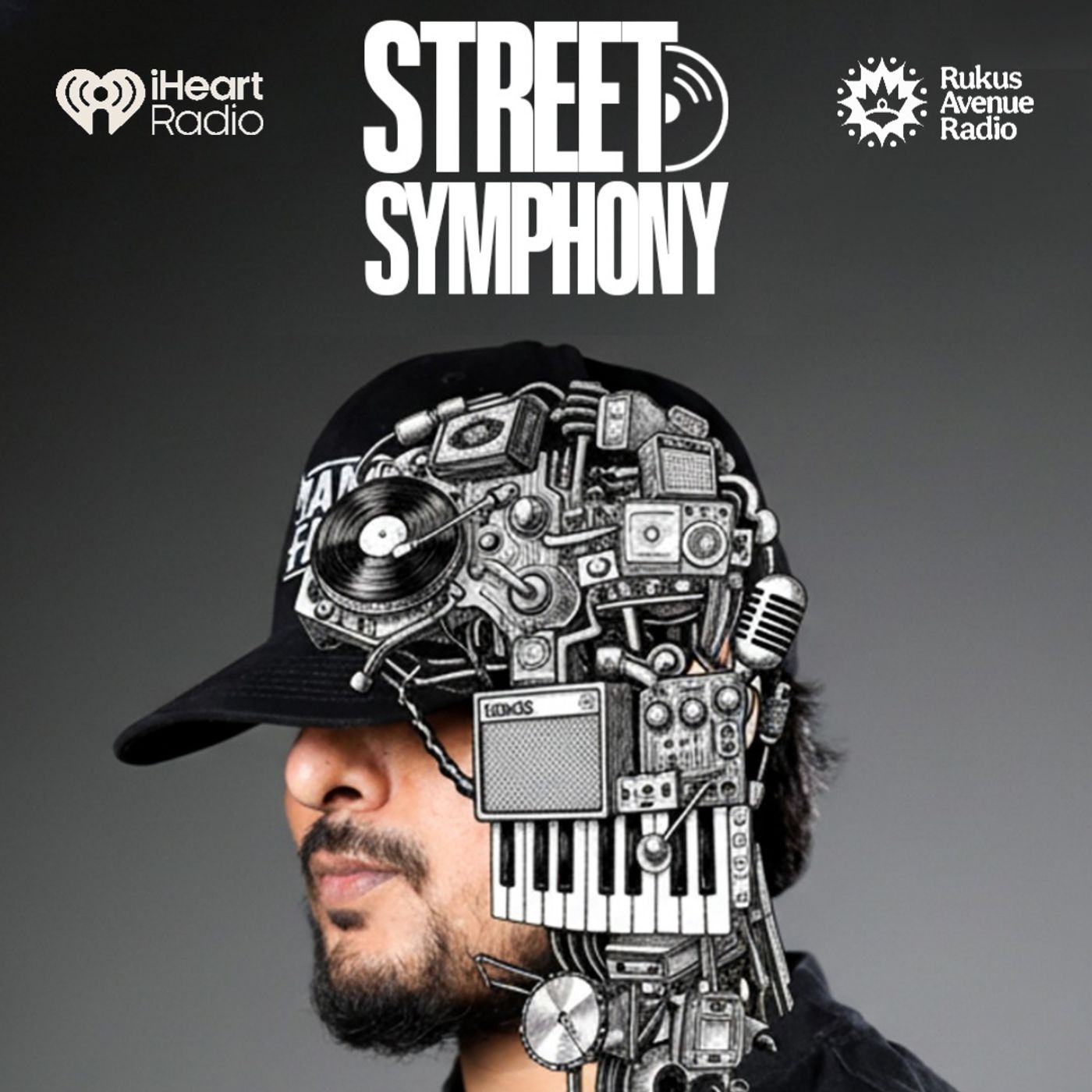
Street Symphony podcast artwork

PODCAST · music

Street Symphony

Step into the heartbeat of Hip Hop. Street Symphony takes you on a complete musical journey—uncovering the culture’s rich history, the origin stories of legendary artists, and the struggles that shaped their success. Each episode blends education with rhythm, spotlighting both underground gems and mainstream voices, while celebrating Hip Hop’s true significance. This isn’t just a show—it’s the sound of a culture that changed the world.Where Hip Hop speaks, and the streets listen.

  1. 11

    Jaal: The Engineering of Trap

    From the streets of Atlanta emerged a sound that would eventually dominate global charts. In Jaal, we step inside the technical architecture of Trap music—not just its vibe, but the precise engineering that gives the genre its hypnotic power.This episode breaks down the science behind the legendary 808 kick drum, where producers digitally manipulate sine oscillators and apply techniques like soft clipping to create deep, sustained sub-bass frequencies. The result is a bassline so powerful it can shake massive sound systems while still being audible on small speakers and earbuds.We also explore the rhythmic signature that defines Trap: the rapid, stuttering hi-hat triplets. Through modern production tools like Digital Audio Workstation (DAWs), producers program complex patterns that feel almost mechanical—sharp, unpredictable, and intentionally “inhuman.”Visionary producers such as Metro Boomin and Southside used these digital tools to push rhythm and bass to new extremes, crafting a sonic web where every hi-hat tick, bass drop, and silence is precisely engineered for tension and impact.Jaal reveals that Trap isn’t just a genre—it’s a carefully designed system of rhythm, bass, and atmosphere. A sound built with technology, shaped by Atlanta’s streets, and now pulsing through speakers across the entire world.

  2. 10

    Digital Kranti: The Blog Era (2007–2012)

    As the internet reshaped the music world, Hip Hop entered a new revolution—Digital Kranti. Between 2007 and 2012, power quietly shifted away from major labels and into the hands of the fans, bloggers, and independent artists who understood the language of the internet.This episode explores how fan-driven platforms like 2DopeBoyz, NahRight, and DatPiff became the new gatekeepers of the culture. Instead of radio stations and label executives deciding what the world would hear, blogs and digital communities began amplifying raw talent directly to listeners.Through this shift, a new generation of artists emerged—Drake, J. Cole, and Kendrick Lamar—who built loyal fanbases by releasing free mixtapes online, bypassing traditional industry barriers.One of the defining moments of the era came in 2010 when Wiz Khalifa dropped Kush & Orange Juice and distributed it freely through Twitter. The release became a cultural phenomenon, proving that an artist with internet savvy, authenticity, and direct fan engagement could shape their own destiny without waiting for industry approval.Digital Kranti marks the moment when Hip Hop fully embraced the digital age—when mixtapes became movements, blogs became stages, and artists learned that the most powerful connection wasn’t through labels… but directly with the people.

  3. 9

    Sarvavyapi: Hip Hop Without Borders

    Hip Hop was born in the Bronx, but its spirit was never meant to stay confined to one place. In Sarvavyapi, we explore how the culture crossed oceans, languages, and borders to become a universal voice for the unheard.This episode travels to France, where groups like IAM and Suprême NTM transformed rap into a powerful tool of social critique. In the marginalized banlieues surrounding cities like Paris, Hip Hop became a platform to speak about inequality, discrimination, and life on the edges of society.The journey then moves east to Japan, where pioneers such as Hiroshi Fujiwara helped shape a uniquely Japanese interpretation of the culture. Despite the Japanese language lacking the stress accents that traditional rap relies on, artists creatively adapted rhythm, cadence, and flow—proving that Hip Hop’s essence is not limited by linguistic rules.Sarvavyapi reveals how Hip Hop’s original purpose—as a voice for the marginalized and a mirror to society—resonated with communities far beyond America. What began as a local expression of struggle evolved into a global language of resistance, creativity, and identity.👉 From the Bronx to the banlieues to Tokyo’s streets—Hip Hop proved one truth: real culture knows no borders.

  4. 8

    Chamak: The Bling Era & the Master Plan

    As the 90s came to a close, Hip Hop entered a new phase—Chamak—where shine wasn’t just style, it was strategy. This episode explores how the culture shifted toward commercial dominance, ownership, and generational wealth, led by visionaries who rewrote the rules of the music business.We break down the independent blueprint pioneered by Master P and No Limit Records, proving that control and scale didn’t need major-label permission. The narrative then dives deep into the most audacious move of the era—the 1998 landmark deal between Cash Money Records and Universal Records.In rare detail, Chamak reveals how brothers Birdman and Slim secured a near-unprecedented agreement: 100% ownership of their masters and 85% of their profits—a masterclass in independent entrepreneurship that reshaped industry power dynamics.The episode also traces the rise of the Cash Money Millionaires, spotlighting a young Lil Wayne, whose ascent symbolized the era’s blend of hustle, visibility, and long-term vision.Chamak isn’t just about bling—it’s about the master plan. The moment Hip Hop learned to own its shine, control its destiny, and turn culture into capital.

  5. 7

    Yuddh: The Coastal War

    Yuddh unpacks the most tragic chapter in Hip Hop history — when brotherhood turned into rivalry, and competition escalated into a cultural war. This episode traces the heartbreaking shift from mutual respect to deadly division between Tupac Shakur and The Notorious B.I.G., two artists whose voices defined a generation.The story pivots on the 1994 Quad Studios shooting, where Tupac was shot five times and robbed — an incident that shattered trust and ignited suspicion toward the Bad Boy camp led by Sean Combs. What followed wasn’t just lyrical sparring; it was a media-fueled, industry-amplified conflict that hardened lines between the East and the West.The tension explodes at the 1995 Source Awards, when Suge Knight publicly dissed Bad Boy from the stage, and Snoop Dogg challenged a hostile New York crowd — moments that symbolized a culture on the brink.Yuddh concludes with the 1997 Peace Summit, led by Louis Farrakhan, an attempt to heal a wounded community after the unsolved murders of its two brightest stars. The episode reflects on how ego, misinformation, and industry pressure transformed competition into catastrophe — and what Hip Hop must remember to ensure history never repeats itself.

  6. 6

    Uday: The Rise of the South

    While the world argued East Coast vs West Coast, another sound was quietly rising from the shadows. Uday tells the story of the Southern coast of Hip Hop — the cities that fought for respect when the spotlight refused to look their way.This episode journeys through Miami, Memphis, and Atlanta, uncovering how each city built its own identity against industry neglect and coastal bias. From Miami’s bass-heavy club sound, to Memphis’ dark, raw street narratives, to Atlanta’s hustler-driven, forward-thinking wave — Southern pioneers refused to imitate. They created.We explore how these artists battled stereotypes, lack of radio support, and being dismissed as “regional,” while the East and West dominated headlines. Through persistence, innovation, and unapologetic authenticity, the South carved its own lane — one that would eventually reshape mainstream Hip Hop itself.Uday captures the moment when patience turned into power.When being ignored turned into motivation.When the South stopped asking for a seat — and built its own table.Presented in Hindi, this episode honors the hunger, grit, and growth of Southern Hip Hop — the rise that changed the balance of the culture forever.Segment NameIntro of the HostGlimpse of the 90's south coastAtlanta - Organic RevolutionMiami - Bass Ka BadshahMemphis - The Dark OriginsThe South RisesThe legacy of South

  7. 5

    Vidhwans: How Destruction Became Innovation

    Sometimes, creation begins with destruction. Vidhwans explores the moment Hip Hop producers broke every rule of music to build something louder, angrier, and unapologetically powerful.This episode dives into the revolutionary sound of The Bomb Squad and the fearless vision of Public Enemy—a partnership that turned noise into narrative and chaos into control. With layered samples, sirens, distorted loops, and relentless rhythms, they didn’t just produce beats… they weaponized sound.Vidhwans breaks down how this radical approach gave birth to a whole new sonic language—political, confrontational, and impossible to ignore. Their courage shattered industry norms and opened doors for future producers to experiment, disrupt, and speak truth without compromise.This wasn’t music made for comfort.This was music made for impact.In Vidhwans, we explore how destruction became innovation—and how breaking music became the blueprint for generations to come.Segment NameHost IntroBeginning the impossible missionTHE ORDINARY WORLD - The ProblemTHE CALL TO ADVENTURE - The MissionREFUSAL OF THE CALL - The DoubtsMEETING THE MENTOR - The TechniqueCROSSING THE THRESHOLD - The First SessionsTESTS, ALLIES, ENEMIES - The ChallengesAPPROACH TO THE INMOST CAVE - "Fight the Power"THE ORDEAL - Building the WallTHE REWARD - The BreakthroughTHE ROAD BACK - Success and ConsequencesTHE RESURRECTION - AdaptationRETURN WITH THE ELIXIR - The Legacy

  8. 4

    Samvedna: Hip Hop's Conscious Movement

    After revolt comes reflection. Samvedna explores the chapter of Hip Hop where the culture softened its voice, opened its heart, and discovered its emotional depth through the Native Tongues collective.This episode dives into how A Tribe Called Quest, De La Soul, Jungle Brothers, Queen Latifah, Monie Love and others shaped Hip Hop’s peaceful, conscious side. They showed the world that Hip Hop wasn’t only about struggle or rebellion — it could be soulful, thoughtful, joyful, and healing.We uncover how their playful wordplay, jazz-inspired production, Afrocentric themes, and community-focused approach created a warm new space in the culture. A space that welcomed love, positivity, spirituality, and self-expression.And it’s here that the seeds of Neo Soul were planted — a sound and feeling that blended Hip Hop’s rhythm with the depth of soul and jazz, later inspiring legends like Erykah Badu, D’Angelo, The Roots, and many more.In Samvedna, we explore how Native Tongues gave Hip Hop a softer voice, a fuller heart, and a new emotional vocabulary.Segment NameHost IntroThe Birth of Bohemian Hip HopThe Art of Digging in the CratesCollaboration over competitionAlbums that changed everythingInfluence on Neo-SoulThe Challenges & Industry pushbackPeak & DeclineThe Legacy & Re-UnionImpact on Modern Hip Hop

  9. 3

    Kranti: The West Coast Emergence

    Gangsta rap didn’t just arrive — it erupted. In Kranti, we dive into the moment Hip Hop turned into a weapon of truth on the West Coast, where the streets weren’t just rhymed about — they were documented.This episode unpacks how Ice-T, N.W.A, Eazy-E, Dr. Dre, Ice Cube, and later Snoop transformed rap into a revolutionary broadcast against reality:police brutality, racial profiling, crack era aftermath, gangs, poverty, and survival.We explore how Ice-T first shaped the narrative of street realism, and how N.W.A shattered the silence with Straight Outta Compton — not just an album, but an uncompromising report from the frontline.When they said “F**k tha Police,” it wasn’t shock value — it was resistance, a cry from communities punished, ignored, and unheard.Gangsta rap became the voice of the oppressed, the sound of a neighborhood fighting back.It wasn’t glamour — it was grit, anger, truth, and protest pressed into rhythm.In Kranti, we decode:how West Coast streets shaped the subgenrehow music turned into social rebellionhow rap evolved from party culture to political and personal warfare through wordsPresented in Hindi, Kranti reveals the moment Hip Hop stopped entertaining… and started challenging the system.Segment NameHost IntroPre Rap Era in LARise of Gangsta rap The World most dangerous groupStreet RevolutionCreator of the West Coast sound

  10. 2

    Sangharsh: The Struggle, The Rise, The Voice of Hip Hop Finding Its Power

    After Aarambh, comes Sangharsh — the struggle, the rise, the voice of Hip Hop finding its power. This episode traces the turning points when emcees transformed the movement from block parties to a global stage.It begins with Sylvia Robinson, the visionary who heard the rhythm in the streets and turned it into a revolution, producing “Rapper’s Delight” — Hip Hop’s first commercial hit. From there, Grandmaster Flash and the Furious Five changed everything with “The Message,” proving rap could carry social truth, pain, and power, birthing a new conscious subgenre.Then came RUN DMC, breaking barriers with their bold style, Adidas sneakers, and raw delivery — making rap a cultural and commercial force. LL Cool J, only 17, rose as Hip Hop’s first solo superstar, bringing charisma and emotion to the mic.Big Daddy Kane followed, blending slick confidence with lyrical finesse, redefining what it meant to be a smooth operator in Hip Hop. KRS-One, the “Teacha,” gave the culture purpose — using rap as a weapon of knowledge. And then Rakim, the “God MC,” arrived — rewriting the art of rhyming with his internal flows and complex cadences, elevating lyricism forever.Sangharsh captures the grind, genius, and growth of Hip Hop’s golden voices — the era when rap stopped being just a sound… and became a statement.👉 Tune in. Feel the struggle. Respect the evolution.Segment NameHost IntroHow rapper became centre point of Hip HopEvolution of rap new subgenreHip Hop 1st Corporate dealRise of 1st Solo SuperstarThe Voice of the Desi StreetsThe Smooth OperatorBlast Master KRS ONETHE GOD MC

  11. 1

    Aarambh: The Story of Hip Hop's Beginnings

    The story of Hip Hop begins here. In this episode, we take you back to the birth of Hip Hop—to the block parties of the Bronx where DJ Kool Herc first extended the breaks, where Grandmaster Flash revolutionized turntablism, and where Afrika Bambaataa shaped the movement into a culture. We uncover how graffiti became Hip Hop’s visual voice and trace the roots of the very term “Hip Hop.”Presented in Hindi, Aarambh is not just history—it’s the first step into understanding how a street-born expression grew into a global culture.

Type above to search every episode's transcript for a word or phrase. Matches are scoped to this podcast.

Searching…

We're indexing this podcast's transcripts for the first time — this can take a minute or two. We'll show results as soon as they're ready.

No matches for "" in this podcast's transcripts.

Showing of matches

No topics indexed yet for this podcast.

Loading reviews...

ABOUT THIS SHOW

Step into the heartbeat of Hip Hop. Street Symphony takes you on a complete musical journey—uncovering the culture’s rich history, the origin stories of legendary artists, and the struggles that shaped their success. Each episode blends education with rhythm, spotlighting both underground gems and mainstream voices, while celebrating Hip Hop’s true significance. This isn’t just a show—it’s the sound of a culture that changed the world.Where Hip Hop speaks, and the streets listen.

HOSTED BY

Jam Fam

Produced by Rukus Avenue Radio

CATEGORIES

Frequently Asked Questions

How many episodes does Street Symphony have?

Street Symphony currently has 11 episodes available on PodParley. New episodes are automatically indexed when they're published to the podcast feed.

What is Street Symphony about?

Step into the heartbeat of Hip Hop. Street Symphony takes you on a complete musical journey—uncovering the culture’s rich history, the origin stories of legendary artists, and the struggles that shaped their success. Each episode blends education with rhythm, spotlighting both underground gems and...

How often does Street Symphony release new episodes?

Street Symphony has 11 episodes. Check the episode list to see recent publication dates and frequency.

Where can I listen to Street Symphony?

You can listen to Street Symphony on PodParley by clicking any episode. We provide an embedded audio player for direct listening, and you can also subscribe via your preferred podcast app using the RSS feed.

Who hosts Street Symphony?

Street Symphony is created and hosted by Jam Fam.
URL copied to clipboard!