
PODCAST · arts
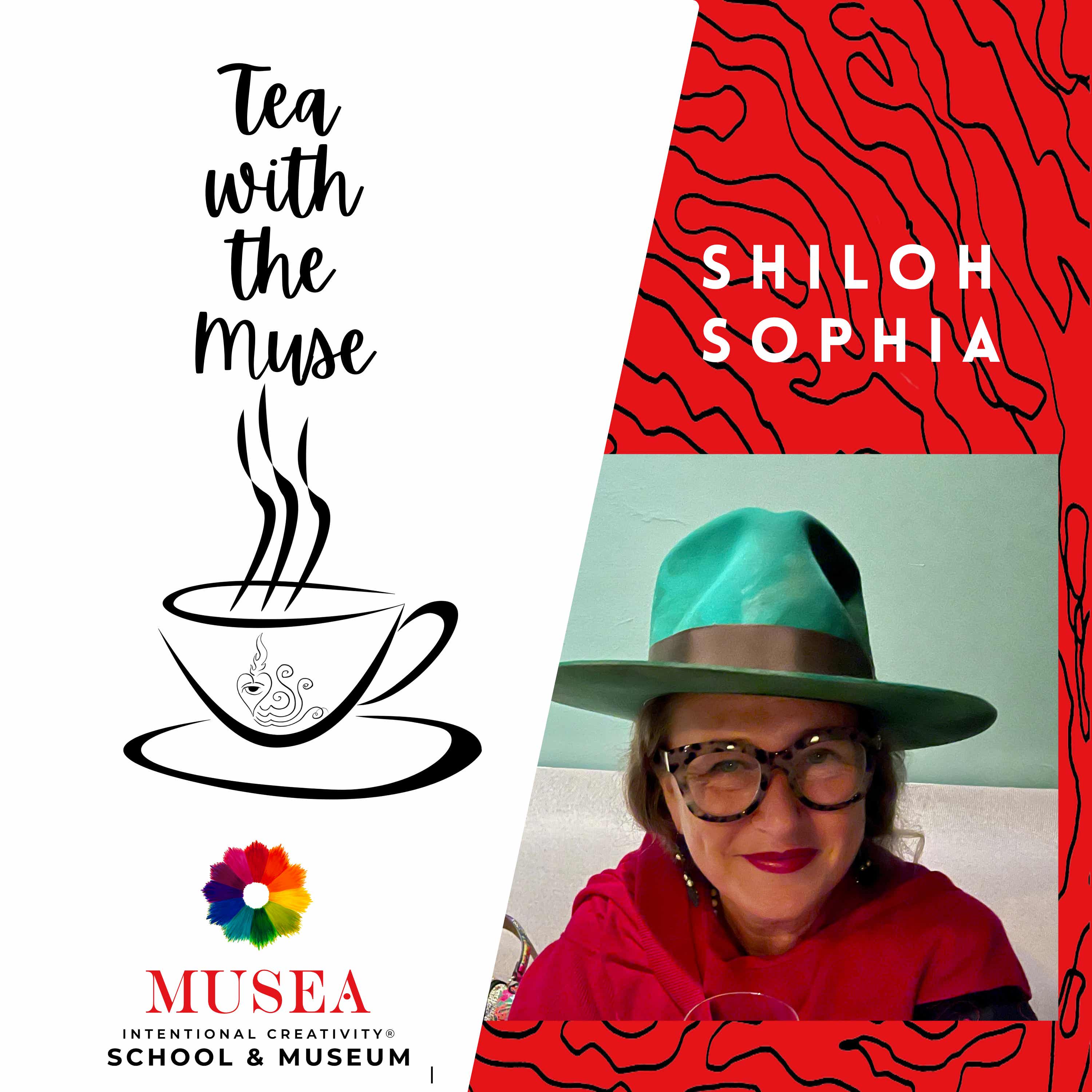
Tea with the Muse
by Shiloh Sophia
Encouraging stories, images, poetry, inquiries and dares from the Muse at Intentional Creativity® teawiththemuse.substack.com
Episodes
-
I am scared and we are starting soon
Hop on into my NeoShamanic Painting class NOW right here for 7 weeks starting today! Why I get afraid deep in my stardust bones when I’m about to teach intentional creativity to new people…is because after over 33 years, I stand in absolute astonishing awe at what painting makes available. Having...
-
A Case for the Muse
Making a Case for the Muse Well, it’s a silly thing to have to explain, making a case for the Muse, because anybody who’s navigating an insurance claim for a fallen tree or received a speeding ticket because the Rolling Stones came on and you just couldn’t help but dance and you pressed so hard…
more -
This is no time to turn back
Ancestor Ceremony - 24X48 if you are interested, it is available at 40% off. Please let me know! All upcoming events including in person circles, and free classes and book launches are available at www.musea.org Join us for the Elements of Grace book launch - with Bethany Zare - I illustrated the...
-
When I stop trying to be more…poetry happens…
BE HER NOW The sun is setting over the soft magenta anemones with golden centers where the bees drink. And I can’t stop wondering about where all of this began, this narrative to be more, do more, become more, achieve more, more, more than you are. More. More than you need to be. More. By someone...
-
A creature with features
Good morning everyone! I dreamed all night about the ranch. Here are my rambling thoughts about what Rose and an invitation for you to relate to where you live in a new way! Have a beautiful day! Get full access to Tea with the Muse at teawiththemuse.substack.com/subscribe
-
What’s the point?
Good morning! In today’s episode, I’m inviting you to design a point for yourself. To fall in love with the tedium. And to do five things today with With Me. Tune in to find out. Get full access to Tea with the Muse at teawiththemuse.substack.com/subscribe
-
Micro-bursts of Pleasure .:. A Muse Dare
How is your relationship with pain dominating your life? Do you create the space for pleasure? Today's podcast recorded from the convertible today on the way to the "spa" aka gym is a dare to do this practice three times today. The Muse is asking - will you listen? Get full access to Tea with the...
-
Leave Your Name at the Door 🚪- new poem
A poem about stepping outside of our comfort zones... and meeting the old woman of the forest. Get full access to Tea with the Muse at teawiththemuse.substack.com/subscribe
-
The Zen roots of tea with the muse!!
Get full access to Tea with the Muse at teawiththemuse.substack.com/subscribe
-
Medicine Woman poem
This is a reading from my book, Tea with the Midnight Muse, Invocations and Inquiries for Awakening. This one’s called Medicine Woman, and it goes way, way, way, way back to when I was 30 years old. It was at one time published inside of the Mother Tongue Publishing We Moon Calendar. And today I…
more -
Inviting the Muse starts with making the ritual of coffee - conscious - like this ☕️
Making ritual conscious. First, there are three long spoons laid upon a napkin from Hawaii, handmade on top of a cutting board made by a teenage daughter. A cup from Monet’s garden and the ingredients. First, filtered water in a teapot from New York. First, smelling roses from three beautiful...
-
Chronic health/stress and Kairos
Join me to paint the MUSE Dear One, If you happen to have a chronic stress or chronic health condition, please listen because this matters. The hours of your day are not neutral. They’re counting on your body’s clock. Hypervigilance over time wears the body down. You know this, but what you might...
-
“What is your religion?” She asked me
Get full access to Tea with the Muse at teawiththemuse.substack.com/subscribe
-
The Muse may speak in Flowers 🌺
Dear Ones, This Sunday - paint flowers with me and the Muses. A daylong paint and sip in Sonoma and virtually. No experience needed - really. Just come. You will have so much fun - there is still time to get cake and rose’ or sparkle water and brushes and a canvas a big as you choose. ~ Shiloh...
-
Manifesting Co-Creators are needed now!
Here's what's been on my heart: this is no time to stop creating what matters to you. When the world feels like it's coming apart — when the causes we've worked for our whole lives seem to be coming undone before our eyes — it's so easy to abandon ourselves. To decide that beauty, abundance, a...
-
The question I’m asking myself today
Here’s the beautiful tree I’m looking at in France 💗 Get full access to Tea with the Muse at teawiththemuse.substack.com/subscribe
-
3 Birthday Regrets & 3 Gratitudes
It’s my birthday and I’m sharing three gratitudes and three of regrets Get full access to Tea with the Muse at teawiththemuse.substack.com/subscribe
-
That night we crashed on the motorcycle…
When my father and I crashed on the motorcycle when my family picked up hitchhiker’s when my mother and I fled in the middle of the night all of this shaped my nervous system to be more comfortable with discomfort. Get full access to Tea with the Muse at teawiththemuse.substack.com/subscribe
-
I am a Genius! Audacious...right?
Can You Cultivate Genius? The question is: can you cultivate genius? What do you think? First, a quote from my mama, Caron McCloud. She says, “I decided early on that I mattered.” Today’s episode shares how my mom Karen McCloud encouraged me to cultivate my genius, why I think it’s important for...
-
Why does tea with the Muse matter so much?!
Get full access to Tea with the Muse at teawiththemuse.substack.com/subscribe
-
Uncolonizing Our Minds + Saturday's Class
What are the steps you can take to uncolonize your mind? I’m obsessed with this sacred form of activism. I’d like to share with you why and how I learned what I learned. AND the 9 areas that are so impacted even when we don't realise it! Get full access to Tea with the Muse at...
-
WHAT?! The ♥️ neuroscience 🧠 of self-expression 🎨 (so excited)
Hi Everyone I hope you can get just as excited about this research as I am. It has been around a while but I am just putting the peices together. References are below.I want you to EXPERIENCE THIS for yourself. Here are three ways NOW! Shiloh Sophia Book a call to explore our 9 month training...
-
Do I know you? ⭐️E=mc2=E+♥️ 👁️
Thoughts from Café with love With love ❤️ Shiloh Sophia Get full access to Tea with the Muse at teawiththemuse.substack.com/subscribe
-
What the Stone did not forget
What the Stone Did Not Forget The lineage of the sacred feminine from Neolithic Europe all the way to the Stardust Lineage. There is an image of a woman small enough to fit in the palm of your hand. She is less than four and a half inches tall, carved from Neolithic limestone over 28,000 years…
more -
Silencing our Voices (for generations) *video
Our voices have been silenced for generations This is a call to make it really conscious so we can answer our calling in real time. This message WILLL matter to you if you can taken just ten minutes. I made it FOR YOU. And class on Monday! Get full access to Tea with the Muse at...
-
Magdalene’s common thread with Matriarchy
Get full access to Tea with the Muse at teawiththemuse.substack.com/subscribe
-
I call my energy back
A few ideas to support you with regulating your nervous system and managing your energy throughout the day Get full access to Tea with the Muse at teawiththemuse.substack.com/subscribe
-
The Great Turning & My Graduation: Personal & Professional (big changes)
Reading of the Red Guild book of the Graduates of Intentional Creativity-since 2014 we have been signing this book at in person gatherings, this is at Wild Water Creek. Graduation as a Curate - being blessed by a red stole embroidered by Naa Kwarley and given to me by Liz. This is at Stardust...
-
Choosing Pleasure does not mean bypassing Pain
* Get full access to Tea with the Muse at teawiththemuse.substack.com/subscribe
-
Invitation to choice, to hope and to consciousness
I just want you to knowthat if you need love right now,love is here. Feel it flowing between us. Whoever needs hope right now—there are plenty of reasons to feel hopeless. But this message arriving to you right nowis evidence of hope. Hope is something cultivated between us.It doesn’t just…
more -
Busy Body Beta to Muse Alpha
Get full access to Tea with the Muse at teawiththemuse.substack.com/subscribe
-
Nervous System Hijack is a Strategy - Choose something else today
Yes, our nervous systems are being hijacked right now by intentional chaos and overwhelm. I’m going to share ideas You can do today to begin to rest. Choose yourself today. You can take a break. Here’s what I do and what I’m doing today. Get full access to Tea with the Muse at...
-
About Soul…3 ideas that inspire (and help)
Sharing three teachings about soul, which may or may not be true, but provide a wonderful point of inquiry… Get full access to Tea with the Muse at teawiththemuse.substack.com/subscribe
-
A Field of Creation
There is a field of creation and consciousness - do you remember? What is real? Get full access to Tea with the Muse at teawiththemuse.substack.com/subscribe
-
Is it time?
This practice that I’ve had since my early 20s feels life-saving for me and that’s why I wanna share it with you today Get full access to Tea with the Muse at teawiththemuse.substack.com/subscribe
-
Attunement Meditation with Music: body, heart, brain coherence Co-create + free class this week
WHAT YOU’LL EXPERIENCE IN THIS 20-MINUTE MEDITATION: * Build your personal attunement temple – a sacred space customized by your imagination, heart, and body (not just your mind) and I will meet you there. * Ground into earth energy and call in star energy – create the “weave” that holds you...
-
You might feel better if...
Tonight’s illustration acting as prayer… This might sound so simple. You will feel better if you pick up a pen and put it to paper. Your hands are craving the invitation to move. I am telling you the truth. These times require that we tend our hearts and bodies and minds. Pen and paper can help,...
-
Quantum Love - a new personal professional bridge from where I was to where I am going
Stardust Bones 2025 - Teaching Painting from one of the last Intentional Creativity Certifications, this is the painting that sparked the change. This is my story in a single image with hundreds of stories within… Dear Ones, Today I’m reminded of a letter that I received in 2020 from our Elder...
-
Rebels of Slowness: Cultivating beauty in the midst of the Chaos ♥️😜
Get full access to Tea with the Muse at teawiththemuse.substack.com/subscribe
-
The attack on Venezuela...and other sorrows and solutions for you
Oh my goodness dear ones….sigh. Big stuff happening…Here are a few invitations for how to care for yourself Sacred Time - to slow downSacred Space - walking in nature Sacred Self-Expression - become obsessed with your creativityand of course… Tea with the Muse These are ways to regulate your own...
-
Dazzling and Devastating Wounds
Get full access to Tea with the Muse at teawiththemuse.substack.com/subscribe
-
The 'Cult' that disprupts what women know (intuition) and what we carry ( abundance)
What is the cult that keeps scarcity enforced?What is the connection between intuition and money? What can we do about it. My revelations on Solstice! Get full access to Tea with the Muse at teawiththemuse.substack.com/subscribe
-
You are Starlight Sacred Happening
Get full access to Tea with the Muse at teawiththemuse.substack.com/subscribe
-
THE Quantum Shift in Intuitive Gifs
This is THE quantum shift in how you’ve been embodying your intuitive gifts and accessing your spiritual transmissions. And let me tell you, these two things... * How you are with what you know and * What you carry are impacting every single relationship you have. Time, about money, sex and...
-
Show Yourself to Me
Show Yourself to Me - A Fresh Prayer O great beings, source of life-infusing All of creation, I offer my hands to you this day so that I may assist in the great turning. May I discover the most abundant and gorgeous way to share the gifts I carry. I offer my heart to you this day. You, who are...
-
What is the optic of your desire?
“And the point is You have to design a point for yourself.” Caron McCloud Thinking of you ❤️ Today’s message includes * Activating the optic of desire TODAY * Three definitions of being in a body from my lineage * Overcoming dissolutionment through action * My beautiful dream and why I woke up...
-
Live Event! The Brain 🧠 and the Muse 🍌 Connection!
Event Monday! https://musea.org/musewithshiloh Get full access to Tea with the Muse at teawiththemuse.substack.com/subscribe
-
Mighty Muse Manifestation Magic
Dear Muses,Today’s meditatation is timely for what is happening in your life no matter what is going on… Would you like to manifest change today? Coolio! Then I invite you to * Become present to just where you are * Connect with your Muse to activate imagination * Choose an issue you need to work...
-
Are you up for a dare?
Dear Ones, People sometimes ask me - “What is tea with the muse?”Today’s podcast will share * What I do and how to try it * Why I do it and why you can try it too * Both hands of the Muse - she sees both sides * An invitation to a dare….Today is the last day to sign up for…
more -
Memorizing my mother
These words… Memorizing my mother… Came to me a few days ago, and I finally had a minute today while I was at the beach to just listen to what wanted to be spoken… ps this is very last call for Stardustbones.org Get full access to Tea with the Muse at teawiththemuse.substack.com/subscribe
We're indexing this podcast's transcripts for the first time — this can take a minute or two. We'll show results as soon as they're ready.
No matches for "" in this podcast's transcripts.
No topics indexed yet for this podcast.
Loading reviews...
ABOUT THIS SHOW
Encouraging stories, images, poetry, inquiries and dares from the Muse at Intentional Creativity®
teawiththemuse.substack.com
HOSTED BY
Shiloh Sophia
CATEGORIES
Loading similar podcasts...
Frequently Asked Questions
How many episodes does Tea with the Muse have?
Tea with the Muse currently has 272 episodes available on PodParley. New episodes are automatically indexed when they're published to the podcast feed.
What is Tea with the Muse about?
Encouraging stories, images, poetry, inquiries and dares from the Muse at Intentional Creativity® teawiththemuse.substack.com
How often does Tea with the Muse release new episodes?
Tea with the Muse publishes regularly with 272 episodes available. Check the episode list for the typical release schedule.
Where can I listen to Tea with the Muse?
You can listen to Tea with the Muse on PodParley by clicking any episode. We provide an embedded audio player for direct listening, and you can also subscribe via your preferred podcast app using the RSS feed.
Who hosts Tea with the Muse?
Tea with the Muse is created and hosted by Shiloh Sophia.
URL copied to clipboard!