
PODCAST · education
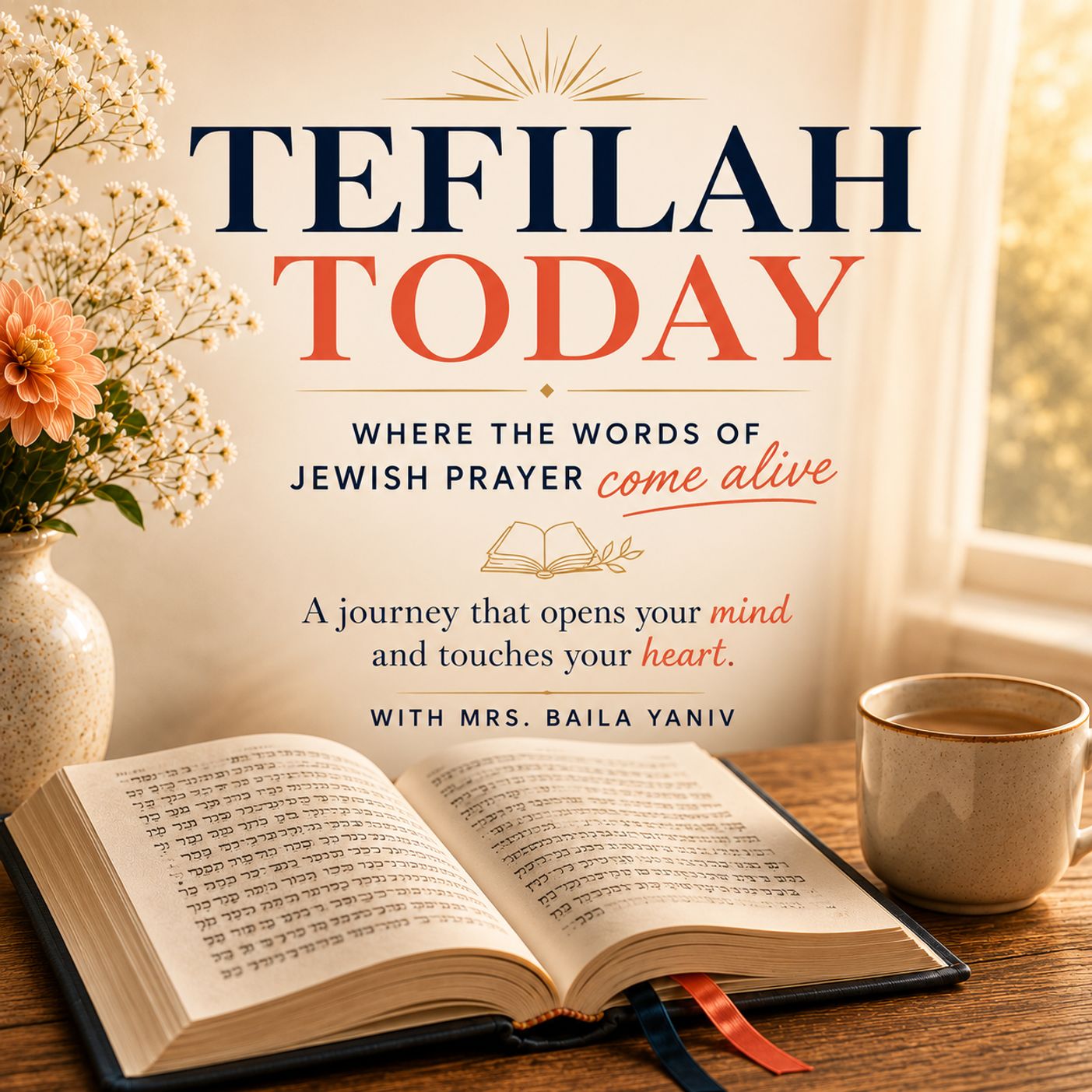
Tefilah Today
by JewishPodcasts.fm
The words of Jewish prayer may be familiar, but their meaning can still surprise us. Tefilah Today uncovers the Torah sources, questions in the wording, structure, and personal messages within the prayers we say—helping us approach Hashem with greater understanding and connection. Hosted by Mrs. Baila Yaniv.
Episodes
-
ברוך שאמר 70 — From Hashem’s Words to Ours
Why does ברוך שאמר begin with Hashem’s power of speech? Discover how the extraordinary gift of our own words can shape the lives of those around us, deepen our tefilah, and influence the choices we make every day.
-
69 Baruch She’amar — What Does “Baruch” Mean?
One of the most familiar words in tefillah may be asking more of us than we realize. What does baruch really mean, and why does Baruch She’amar begin there?
-
68 Baruch She’amar: Blessed Is Whom?
Why does Baruch She’amar begin with “Baruch...” before clearly naming Hashem? In this episode, we explore how the tefillah leads us from noticing Hashem’s actions to recognizing before Whom we are standing.
-
67 Ben Bris: The Reality of our Choices
Why does the Yehi Ratzon describe a harsh opponent as a ben bris or she’eino ben bris—and why does it conclude with Gehinnom? Episode 67 explores how the language of bris reminds us not only who the other person is, but who we are. Through the story of Dovid and Avigayil, we discover that…
more -
66 SHETATZILEINI SAVE ME WHERE MY EFFORTS END
Why do two consecutive Yehi Ratzons repeat the same dangers—and even the same words, hayom u’v’chol yom? Yaakov Avinu’s Hatzileini helps us uncover what we are truly asking when we turn to Hashem and say, “Save me.”
-
65 Vihi Ratzon: Who Are We Becoming?
Birchos HaShachar seems to prepare us for independence: our eyes open, our strength returns, and our feet begin to move. Then comes Vihi Ratzon—a quiet admission that strength is not enough. Episode 65 explores the hidden forces that shape who we become, and why true readiness begins with...
-
64 Hamaavir Shaina MaEinei - Take Hold of the Day Before the Day Takes Hold of You
Our eyes are open. We have gotten out of bed. The day has begun. But are we fully awake? HaMa’avir Sheinah seems to thank Hashem for removing sleep from our eyes. Yet the tefillah does not end there. It asks Hashem to help us enter the day with Torah, mitzvos, discipline, and the right…
more -
63 When You Don’t Know Where You’ll Find the Strength - Hanosein Layaef Koach
Some mornings, we wake up tired before the day has even begun. Yet the bracha does not thank Hashem for giving strength to the strong. It thanks Him for giving strength specifically to the weary. Why? Episode 63 explores what ya’eif really means—and why our moments of exhaustion may reveal...
-
62 Oter Yisroel B'Sifara - The Crown of Living as a Torah Jew
Every morning, we thank Hashem for crowning Am Yisrael with tiferes. But what is this crown—and when do we wear it? Episode 62 explores how an ordinary morning bracha quietly reminds us that being part of Am Yisrael is not only an identity. It is a responsibility we carry into the day.
-
61 Ozeir Yisroel Bigvurah — Gathering Strength for Our Journey
Why do we thank Hashem for strength while getting dressed? Ozeir Yisrael Bigvurah transforms an ordinary morning act into a question about what strength really means. Episode 61 explores why gevurah is not simply the power to act—but the ability to prepare ourselves for what Hashem asks us to do.
-
60 She’asah Li Kol Tzarki - What Does “Everything I Need” Really Mean?
What if “all my needs” doesn’t mean comfort — but mission? In this episode, we explore She’asah Li Kol Tzarki, the bracha said when putting on shoes, and how the Gemara teaches that Hashem prepares our steps and gives us what we need to walk them. Through Avraham Avinu’s bakol, we learn that a...
-
59 HaMeichin Mitzadei Gaver — Divine Guidance, Daily Life, Purpose, Morning Blessings
In this episode of Tefilah Today, we continue the morning brachos with HaMeichin Mitzadei Gaver — “Who prepares the steps of man.” This brachah is not only about the ability to walk. It is about direction, purpose, and the way a Jew moves through Hashem’s world. From Adam HaRishon to the Mabul,...
-
58 Roka Ha’aretz Al HaMayim - Why Does Hashem Give Us Ground to Stand On?
In this episode, we explore Roka Ha’aretz Al HaMayim — Hashem Who spreads the earth over the waters. After Adam HaRishon, mankind’s choices continued to spiral until the Mabul. Yet Hashem did not give up on the world. He brought the land back, preserved creation, and gave humanity another chance…
more -
57 Matir Asurim and Zokef Kefufim - From Feeling Trapped to Standing Tall
This week on Tefilah Today, we continue the journey from Adam and Chava into the brachos מתיר אסורים and זוקף כפופים. What does it mean to be inwardly trapped, and what does it mean to stand upright again before Hashem? This episode explores how these brachos teach us to live with daas, choice,...
-
56 Malbish Arumim - Restoring the Body to the Neshama
This episode traces מלביש ערומים back to Adam and Chava and explores its message for us: how I begin each morning by carrying my body with dignity, under the guidance of my neshamah, in order to live my day’s tafkid as an eved Hashem.
-
55 Pokeach IVRIM — Part 2
Part 2 explores how this morning brachah teaches us to ask Hashem for vision before the challenge arrives. Through Torah sources and everyday examples, this episode reflects on learning to see clearly before our habits, reactions, or emotions cause us to miss what matters.
-
54 POKEACH Ivrim — More Than Opening Our Eyes
In this episode of Tefilah Today, we explore the morning blessing Pokeach Ivrim — “Who opens the eyes of the blind.” Why does the Siddur use the word pokeach, and what does it teach us about seeing beyond physical sight? Through Torah sources and the structure of Birchos HaShachar, we discover…
more -
53 Shelo Asani Isha and SheAsani Kirtzono - Not Comparison But Calling
Why does a woman say “She’asani kirtzono” — and not “Shelo asani ish”? Real tefilah asks: Who did Hashem create me to be — and how do I receive my avodah with dignity and purpose?
-
52: Shelo Asani Eved: What Is Trying to Own Me?
This week on Tefilah Today: Shelo Asani Eved — “Who did not make me a slave.” Why does the bracha say eved, and not “who made me an eved Hashem”? We explore how Hashem formed us into a goy kadosh, redeemed us from Mitzrayim, and gave us the freedom to serve Him. What is trying to own my mind, my...
-
51 Shelo Asani Goy - Part 2 What Was I Made For?
Why does the brachah say asani — “You made me” — and not barani — “You created me”? In this episode, we follow the Torah’s language from Adam to Avraham to Sinai, uncovering how the Siddur forces us to ask: if I was not made into the general story of the nations, what was I made for? A deeper…
more -
50 Shelo Asani Goy - What Does It Really Mean to Live as a Jew?
Why not say she’asani Yisrael? This episode opens up the deeper meaning of Shelo Asani Goy and shows how Chazal use contrast to awaken gratitude, responsibility, and awareness of the covenantal life a Jew has with Hashem.
-
49: Hanosein LaSechvi Binah - What Should We Notice First Each Morning?
Why does this brachah use the word sechvi? Why would Chazal choose that word to open a Jew’s day? In this episode, we begin to uncover the brilliance behind הנותן לשכוי בינה and why this brachah may be asking far more of us than we first realize.
-
48. Hanosen Lasechvi Bina - What Does Waking Up Each Morning Have to Do With Har Sinai?
From Sinai to a rooster—discover why the first blessing is about awareness, not action.
-
47. Hamachazir Neshamot Lifgarim Meisim — My Soul Is Personal—So Why Does the Bracha End With Every Soul?
Why does Elokei Neshamah begin with “the soul You gave within me” in the singular, but end with neshamot in the plural? A deeper look at how this closing brachah moves from the personal gift of life to the larger Torah truth that life, soul, and return all remain in Hashem’s hand.
-
46. Ribon Kol Hama’asim, Adon Kol Haneshamot - Who Holds My Actions—and Who Holds My Soul?
Why does Elokei Neshamah use these two different names for Hashem? What is each one teaching us about the world, the soul, and the way we quietly deflect even when we know better? A deep look at how Chazal shaped this brachah to train our daily consciousness.
-
45 Elokei Neshamah — Who Am I Really—My Body or My Neshama?
A closer look at Elokei Neshamah through the words Atah berasah, Atah yatzartah, Atah nafachtah bi — and what they reveal about who you really are.
-
44 Elokei Neshamah — My Soul Was Given to Me—But Why Was It Placed Within Me?
Two tiny words change the whole brachah: bi (within me, not to me) and natata (You gave, not samta—You placed). A focused, practical insight that turns one line of tefilah into a clearer way to live your day—with intention, humility, and purpose.
-
43 Elu Devarim: What Is This List of Mitzvos Teaching Me About How to Live as a Jew?
Did Hashem record the life of Avraham Avinu to teach the lived building-blocks of Torah society—so that when Chazal later structured Elu Devarim as our daily framework of peiros and keren, it reads like a distilled map of the very derech Avraham modeled?
-
42 Elu Devarim: Why Does the Siddur Speak About Olam HaBa So Early in the Morning?
We have barely begun the day, yet the Siddur is already directing our attention toward Olam HaBa. Why place that thought here—before we have entered the demands, distractions, and uncertainties of ordinary life? This episode uncovers how one brief line may be preparing us to see the entire day...
-
41 Elu Devarim: What Does It Really Mean to Live as Hashem’s Chosen People?
Being chosen can sound like a title we inherited. But what if it is really a way we are being asked to live? Through the values listed in Elu Devarim, we explore how Jewish chosenness becomes visible in the quiet choices we make for other people and for Hashem.
-
40 Why Begin Every Day With Mitzvos That Have No Limit?
Each morning we recite a Mishnah about mitzvos that have no measure. In this episode we explore why the Sages placed it at the very start of the day, and what it means for how a Torah Jew lives with responsibility and purpose in 2026. Rather than defining a minimum or completing a checklist…
more -
39 Who Is Really Blessing Me?
Part 5 - The Kohanim lift their hands and speak the words—but then Hashem adds a final promise: “And I will bless them.” Why is that sentence necessary? Hidden in those few words is a discovery about where bracha truly comes from and what it means to stand before Hashem as the One personally…
more -
38 Yisa Hashem Panav Elecha - What Does It Mean for Hashem to Turn Toward Me?
We ask Hashem to lift His face toward us. But Hashem is everywhere—so what could it mean for Him to “turn” toward one person? This episode enters the deeply personal language of Birchas Kohanim and asks what kind of relationship those words invite us to feel.
-
37 Ya’er Hashem Panav Elecha - What Would It Feel Like for Hashem’s Face to Shine on Me?
Part 3 - We say these words so often that we may no longer hear how intimate they are. What are we asking for when we ask Hashem to make His face shine toward us? Together, we uncover why this blessing may be speaking not only about receiving goodness, but about recognizing the loving Presence...
-
36 What Does My Neshama Receive Through Birchas Kohanim?
irchas Kohanim appears to bless our lives with protection, grace, and peace. But beneath those familiar words may be a carefully unfolding journey for the neshama itself. This episode explores what each stage of the blessing may be building within us—and why the order matters.
-
35 Why Do We Say Birchas Kohanim Every Morning?
Birchas Kohanim belongs to one of the most elevated moments in communal prayer. Why, then, did Chazal place its words into the private beginning of every Jewish morning? This episode looks at what we may be meant to carry from that blessing before we step into the day.
-
34 The Birchas HaTorah in Pesukei D'Zimra - Why Do These Two Torah Brachos End So Differently?
The two blessings over Torah appear closely connected, yet they arrive at strikingly different conclusions. Why does one focus on learning Torah while the other focuses on Hashem choosing Klal Yisrael? By listening carefully to their endings, we begin to discover that each bracha may be asking us...
-
33 Laasok B'Divrei Torah - How Does Torah Recenter Me Every Morning?
Each morning, before the day begins pulling us in every direction, we make a bracha over Torah. Is it only permission to learn—or is it recalibrating who we are before we begin living? This episode explores how Torah gives a Jew an inner center from which the rest of the day can unfold.
-
32 V’haarev Na: How Does Torah Become Part of Us—and Flow Into Our Children?
We ask Hashem to make the words of Torah sweet in our mouths—and then immediately ask that they remain with our children and future generations. What connects sweetness to transmission? This episode explores how Torah moves from something we know into something that becomes part of us—and…
more -
31 Hamelamed Torah L’Amo Yisrael -What Changes When I Realize Hashem Is Teaching Me?
We usually think of Torah as something we learn from a sefer, teacher, or shiur. Yet the bracha identifies Hashem Himself as the One teaching Torah to His people. What changes when learning Torah becomes not only the study of His words, but an encounter with the One still teaching them?
-
30 Why Does the Siddur Move From My Body—to Torah—to Being Chosen
Asher Yatzar, La’asok B’Divrei Torah, and Asher Bachar Banu may seem to address three separate subjects. But why did Chazal place them in this precise sequence? This episode follows the movement from body, to mission, to covenant—and asks what the Siddur is quietly teaching us about becoming…
more -
29 Can My Physical Body Bring Me Before Hashem’s Throne?
Asher Yatzar speaks openly about the most physical and vulnerable functions of the human body—yet it concludes by placing us before the Kisei HaKavod. How can those two realities belong in the same bracha? This episode uncovers the unexpected holiness of the body and what it allows the neshama to...
-
28 What Does Asher Yatzar Teach Me About the Miracle of Being Alive?
We often say Asher Yatzar only after something has gone wrong—or while moving quickly to the next part of the morning. But the bracha pauses over openings, closings, fragility, and life itself. This episode invites us to hear how much wonder Chazal placed inside words that can so easily become...
-
27 Why Do I Need the Siddur’s Words to Find My Own Voice?
Wouldn’t prayer be more personal if we simply spoke to Hashem in our own words? Why did Chazal give us a carefully structured Siddur instead? This episode explores how words written long before our own lives may help us express parts of ourselves that we could not have reached alone.
-
26 Netilas Yadayim — Why Do We Wash Our Hands Before Beginning the Day?
Washing our hands seems like the simplest physical act at the beginning of the day. Yet Chazal transformed it into the first deliberate preparation for avodas Hashem. What are we leaving behind—and what are we preparing ourselves to enter—when the water first touches our hands?
-
25 What Is the Kindness That Brings the World Back to Life?
Each morning, the world seems to return: light reappears, movement begins, and the neshama is restored. But why does tefilah describe this renewal through the language of kindness? This episode explores the quiet chesed hidden inside the fact that life begins again at all.
-
24 What Does It Mean to Truly Wait for Mashiach?
We say that we wait for Mashiach every day—but what does waiting look like when life continues normally and redemption still feels distant? This episode examines whether waiting is passive hope or a way of living now, with our eyes and actions directed toward the future Hashem promised.
-
23 Gomel L'Ish Chesed K'Mifalo Do My Choices Really Matter to Hashem?
So many of our most important choices happen quietly, without recognition from anyone around us. Does Hashem respond to what we choose, even when no one else sees it? This line of Yigdal opens a larger question about responsibility, consequence, and the meaning our actions carry before Him.
-
22 Tzofeh Veyodea Sisareinu - Does Hashem See the Parts of Me No One Else Sees?
There are struggles, intentions, and acts of courage that remain hidden from everyone else. When we say that Hashem sees and knows our secrets, is that meant to frighten us—or can it also be a source of profound comfort? This episode explores what it means to be completely known by Hashem,...
-
21 — Lo Yachalif HaKel Velo Yamir Daso, Le’olamim Le’zulaso — The Torah That Will Never Be Replaced
Hashem will never change His Torah or give it to another. Because He is perfect and unchanging, His Torah is timeless—an eternal covenant with Am Yisrael, le’olamim le’zulaso.
We're indexing this podcast's transcripts for the first time — this can take a minute or two. We'll show results as soon as they're ready.
No matches for "" in this podcast's transcripts.
No topics indexed yet for this podcast.
Loading reviews...
ABOUT THIS SHOW
The words of Jewish prayer may be familiar, but their meaning can still surprise us. Tefilah Today uncovers the Torah sources, questions in the wording, structure, and personal messages within the prayers we say—helping us approach Hashem with greater understanding and connection.
Hosted by Mrs. Baila Yaniv.
HOSTED BY
JewishPodcasts.fm
CATEGORIES
Loading similar podcasts...
Frequently Asked Questions
How many episodes does Tefilah Today have?
Tefilah Today currently has 93 episodes available on PodParley. New episodes are automatically indexed when they're published to the podcast feed.
What is Tefilah Today about?
The words of Jewish prayer may be familiar, but their meaning can still surprise us. Tefilah Today uncovers the Torah sources, questions in the wording, structure, and personal messages within the prayers we say—helping us approach Hashem with greater understanding and connection. Hosted by Mrs....
How often does Tefilah Today release new episodes?
Tefilah Today has 93 episodes. Check the episode list to see recent publication dates and frequency.
Where can I listen to Tefilah Today?
You can listen to Tefilah Today on PodParley by clicking any episode. We provide an embedded audio player for direct listening, and you can also subscribe via your preferred podcast app using the RSS feed.
Who hosts Tefilah Today?
Tefilah Today is created and hosted by JewishPodcasts.fm.
URL copied to clipboard!