
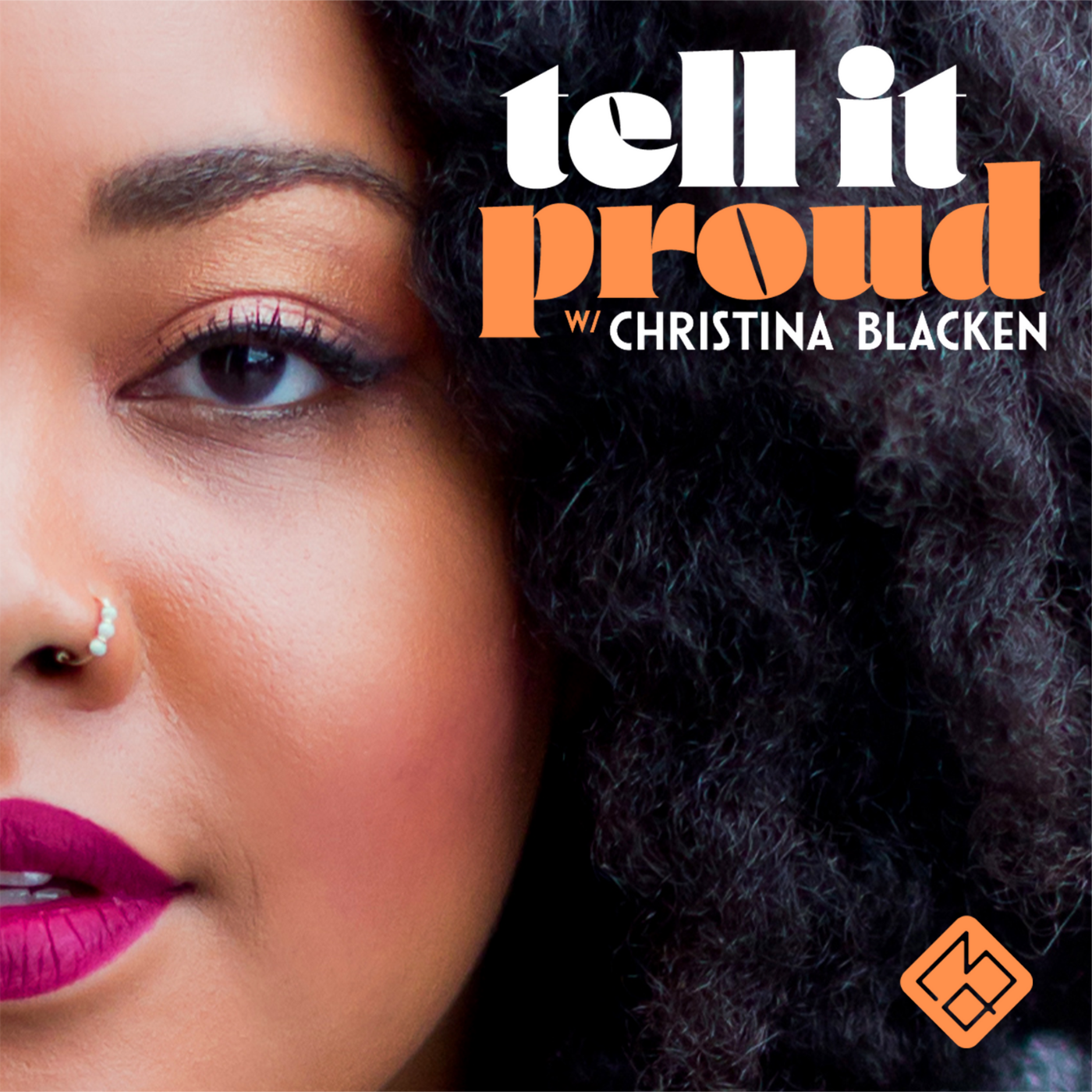
PODCAST · education
Tell it Proud
by Christina Blacken
Our brains are wired to focus on what is wrong, but this means we often miss the cultural and ethical wisdom right in front of us about what is working, good, and new to find real solutions to our problems. This podcast features inspiring personal development tips and stories of overlooked ethical and cultural wisdom told live from incredible unconventional leaders, as well as curated from original poetry, social justice book reviews, and overlooked historical recaps, written and produced by Christina Blacken, founder of The New Quo Learning Community, which is a weekly email newsletter and monthly coaching community that helps mission driven folks use the power of personal storytelling and overlooked ethical and cultural wisdom to create a better future. The Tell it Proud podcast will inspire you with overlooked topics that crusty, inequitable leaders often want erased or ignored, because they change the status-quo for the better. *Formally known as the Sway Them In Color Podcast, wh
-
72
To Be Loved is to Be Known
You can be in a room full of people, and feel lonely as hell. One reason for this is a lack of attunement. Attunement is how we connect deeply with another person and allow them to 'feel felt.' It's genuine curiosity about someone else's dreams, ideas, desires, feelings, goals, and wants. Many people have limited capacity for genuine attunement in their relationships, but it's one of the most meaningful ways we can build close relationships. This episode dives into this concept and also shares an original poem inspired by these topics. To support this podcast, donate to The New Quo Foundation here.
-
71
True belonging doesn't require conformity
Belonging is a fundamental need, often found in dense community ties and emotionally close relationships. Yet many of these same spaces we hope to find belonging from, often demand conformity and betraying our own needs and values, for full acceptance. In this episode I share a bit about how true belonging is being fully witnessed, recognized, and accepted for who you are and what you have to share, without extreme compromise, as well as share an original poem inspired by these ideas.
-
70
embracing trust and vulnerability in a world of uncertainty
What is trust? The simplest definition I drummed up after noodling, researching, and mind hashing this eons old question, is something or someone safely fulfilling its responsibilities and commitments with consistency, honesty, and integrity. We are constantly tasked with extending trust because we have to trust in hundreds of things in our daily lives just to function. This episode describes how trust is a paradox of risk and vulnerability, a delicate balance of extending faith, as well as discernment, hoping we choose the people and things that will bring security and safety, while avoiding betrayals and pain, and how we cannot function at our highest levels without trust, and also includes an original poem examining the intergenerational challenges in building and having trust.
-
69
We need to rebrand racism
Today's episode is an essay I wrote titled "we need to rebrand racism" because we have plenty of racism but supposedly no racists. The term racist was coined in 1935 and I've come up with three new terms we should use: shadow shame, melanin averse, pigment piqued, to beat racists at their own coopting word game. This episode looks into the history of language and it's power when we take it back.
-
68
the practice of ubuntu for bridging divides
Today's episode is an essay I wrote titled the practice of ubuntu for bridging divides. Originating in the Bantu and Xhosa people of Southern Africa and popularized by Desmond Tutu and Nelson Mandela, it's a philosophical concept and set of practices about interconnectedness of human existence, and emphasizes that one's humanity is inextricably tied to the recognition of others' humanity. This philosophy stands in contrast to Western philosophical traditions that often prioritize individual autonomy and self-determination over collective and communal approaches to living. Ubuntu encompasses several key principles including interconnectedness, communal responsibility, reciprocity and harmony, and respect for human dignity. In this episode you'll hear more about the history and evolution of these principles, and the ways they can be used to navigate conflict and build community.
-
67
The importance of chosen family
This episode is a replay of a live performance from Change My Mind: a live storytelling experience in NYC. This story covers my own journey of moving across country on a 3 day train from from NJ back to my hometown in Utah with my mother and siblings, how intergenerational trauma lives in our DNA, the history of nuclear families and chosen families, and the importance of building community and relationships beyond just DNA related relatives. If you want to hear more stories like this, I've started a non-profit called the The New Quo Foundation and am running a fundraising campaign to bring Change My Mind storytelling events to communities near you. These free storytelling events unite strangers through true personal stories of courage, and research shows they actually work to counter polarization and isolation. Every donation helps host more events, pay storytellers fairly, and helps build a nationwide movement proving we have more in common than we think. You can support and learn more about the cause here: bit.ly/ccmcampaign
-
66
what we don't know about fire
Catastrophic weather events are an increasing norm due to climate change, sped up by the destructive consumption and production practices within businesses and societal norms. In times of grieving and loss, it's understandable to feel overwhelmed and a growing hopelessness about what can be done, but a powerful counterpractice is to look to untold history for cultural insights and solutions for the problems we're facing, and this episode dives into Indigenous practice of cultural burnings to control wildfires.
-
65
How a School Trained 100k People to Become Activists
Today's episode is about You Got to Move, an underknown and incredible documentary following the transformation of six ordinary people into activists through their attendance at Highlander Folk School, an activist training ground that was founded in the 1930s, trained 100K everyday people, and still exists today. The people featured in the documentary are both Black and White individuals who lived in the U.S. South during the height of segregation, and became unsung heroes fighting against various forms of discrimination. Their model of activism was groundbreaking, as students taught each other based on their own knowledge and work experiences, creating a system where students and teachers became one and the same.
-
64
Democracy doesn't work without DEI
Trust is the foundation of healthy relationships and a functioning society. Without trust, we cannot function or meet our basic needs. When we have high levels of trust in our relationships we work together better, and feel a deeper sense of wellbeing and safety. While pundits and politicians on the far-right complain about the woke DEI mind-virus, those of us who live in reality understand our society is experiencing a crisis in trust and DEI is necessary to improve trust. It's at the root of why our relationships and democratic processes are suffering. To rebuild trust requires accurate historical and cultural education, which would explain the root causes and solutions to these inequality issues so many people feel the impacts of, but this type of education is under attack. This episide covers why DEI is critical for trust and functioning democracy.
-
63
What social justice can learn from sports
Today's episode is an essay I wrote about what social justice can learn from sports. I'm highly critical of corporate sports. The industry is rife with misogyny, racism, and classism, encoding values into millions of viewers that keep them dissociated and passive, particularly for male-identifying folks. I've had debates with sports-loving friends on how I find it to be a red flag when someone's core identity is deeply tied to franchised sports, as if rooting for a team para-socially is as good as playing the game oneself. And yet, I noticed something amongst this NBA Finals and Knicks fever that took over the city I live in and love that social-justice minded people could learn from -- that marrying joy with any movement is the fastest path to justice.
-
62
why imperfection is your greatest strength
Welcome to Tell it Proud, stories of courage too good to erase or ignore. I'm your host Christina Blacken. I'm a public speaker, performer, writer, and founder of The New Quo which helps every day people practice authentic leadership through daily acts of courage that improves trust and wellbeing in how we live and work together. Today's episode is an essay I wrote titled "why imperfection is your greatest strength," which dives into the concept of wabi-sabi -- an aesthetic and philosophical practice from Japan that values and celebrates imperfection. Western culture is obsessed with perfectionism. We're ambushed by messages embedded in our institutions about striving for perfection. Whether it's education, or sports, our physical bodies, or careers, we're inundated with messages about how we're not thin enough, fast enough, light skinned enough, smart enough, talented enough, rich enough – it sounds like a bad rap song about how we need to be different to deserve love and safety. Wabi-sabi is an antidote to this detrimental perfectionism and different approach worth exploring.
-
61
This Here Flesh
Today's episode is an essay I wrote for The New Quo Learning Community of a review of an incredible book by Cole Arthur Riley called This Here Fles. It's a poetic masterpiece of personal storytelling focused on discovering and practicing the wisdom and lessons within our familial stories, generational wounds, and personal experiences, so we can liberate ourselves from beliefs and practices that harm us and others. It's a work of art that grounds the practices of liberation in personal spirituality.
-
60
Courage to go against the justice system
This episode of Tell it Proud is an instagram live interview of TaShun Bowden-Lewis, who made a historic first in her career as the first Black Chief Public Defender for the state of Connecticut. We discuss her earliest memory of courage as an "only" growing up in an all white school, her lessons from defending the most vulnerable, and what she calls the pivot under pressure when facing adversity.
-
59
How fear affects our relationships
Welcome to Tell it Proud, stories of courage too good to erase or ignore. I'm your host Christina Blacken. I'm a public speaker, performer, writer, and founder of The New Quo which helps every day people practice authentic leadership through daily acts of courage that improves trust and wellbeing in how we live and work together. If you felt a stomach dropping, heart skipping clutch of fear at any point today, I'm guessing you weren't zig zagging from a wild beast trying to catch you, you were experiencing what I've dubbed MPTs or Modern Protection Thoughts (acronyms are fun). These MPTs are typically a daily, even hourly, occurrence and can be triggered by having to make any decision that has potential risks or downsides. They come alive as nagging voices of doubt, anxiety, or panic that can make you sweat plate sized pit stains through your shirt (hopefully it's not a button up shirt, because you can't hide shit with a button up shirt). This fear can even stifle you from doing, saying, or being the "wrong thing." This episode addresses how to overcome MPTs to have a healthier relationship with fear and others overall.
-
58
See No Stranger
Welcome to Tell it Proud, stories of courage too good to erase or ignore. I'm your host Christina Blacken. I'm a public speaker, performer, writer, and founder of The New Quo which helps every day people practice authentic leadership through daily acts of courage that improves trust and wellbeing in how we live and work together. Today's episode is an essay I wrote for The New Quo Learning Community of a review of an incredible book by Valarie Kaur's called "See No Stranger" This book is both an intimate memoir and a practical guide for social change, centered on her concept of "revolutionary love." Drawing from her experiences as a Sikh American, civil rights lawyer, filmmaker, and activist, Kaur presents revolutionary love as a powerful framework for personal and social transformation in divided times, so clearly this book is relevant at this time.
-
57
the underground railroad went to mexico
The Underground Railroad was a secret network of routes, safe houses, and abolitionists who helped enslaved people escape from slavery to freedom in the northern states, Canada, and Mexico from approximately the late 18th century until the Civil War, with one of its most famous stewards being Harriet Tubman, who was an abolitionist, social activist, and a formally enslaved person. It's no surprise that many people do not know that this route didn't just go north to freedom, as has been told in many adaptations and historical recounts of the Underground Railroad, but further south across borders into Mexico. This episode covers more of that overlooked history and the incredible lessons we can take from how this had an impact on our world today.
-
56
a life of hope under extreme circumstances
Welcome to Tell it Proud, stories of courage too good to erase or ignore. I'm your host Christina Blacken. I'm a public speaker, performer, writer, and founder of The New Quo which helps every day people practice authentic leadership through daily acts of courage that improves trust and wellbeing in how we live and work together. Today's episode is an essay I wrote for The New Quo Learning Community about Phillis Wheatley who was an American writer who was the first African-American author of a published book of poetry. She was captured and enslaved at a young age, overcoming significant oppression to express her voice and create a poetry legacy. If you'd like to further support this podcast and connect with other like minded people join The New Quo Learning Community.
-
55
You don't have to be Beyonce to be Creative
Welcome to Tell it Proud, stories of courage too good to erase or ignore. I'm your host Christina Blacken. I'm a public speaker, performer, writer, and founder of The New Quo which helps every day people practice authentic leadership through daily acts of courage that improves trust and wellbeing in how we live and work together. Today's episode is an essay I wrote for The New Quo Learning Community about why you don't have to be a super talented famous person like Beyonce or Picasso to find fulfillment and deep meaning in creative thinking and creative work. We need to expand what we define and think of as creative because we are facing a world with a large dissatisfaction with work, and complex, towering social problems that won't disappear overnight. We need creativity for survival, like we need air. If you'd like to further support this podcast and connect with other like minded people join The New Quo Learning Community.
-
54
Being Liberal is Not an Oppression Pass
Today's episode is a throwback to one of my favorite episodes I produced on a previous podcast of mine called Sway Them in Color. In this solo episode, I unpack the concept of what I call an oppression pass, which is the belief that because you are liberal, marginalized yourself, like black people/have one black friend/are married to a black person/have black children you don't participate in or perpetuate in white supremacy. My dear friends, I'm here to let you know oppression passes are being handed out like it's six flags, but they don't exist. In this episode I unpack five key narrative myths many liberal people, in particular white people (although anyone who claims to be liberal can fall into these traps), believe around racism that keeps white supremacy alive including: myth 1: I know/am married to/friends with a black person, therefore I am not racist myth 2: systemic racism doesn't exist, social outcomes are always from individual effort/character flaw myth 3: the only form of protest that's acceptable is peaceful protest myth 4: I am marginalized myself (gay, poor, have a disability etc) therefore I can't be racist myth 5: I identify as a liberal, thus I am not racist
-
53
the authoritarian personality and building a new world
Today's episode is an essay I wrote for The New Quo Learning Community about a concept called mean world syndrome which was first coined in the 1970s by Dr George Gerbner, who discovered a cognitive bias where, over time, we start to see the world as more dangerous than it actually is due to long-term, moderate to heavy exposure to violence-related content through mass media (such as news reports and television shows). Those who are affected may experience increased feelings of fear, anxiety, and general pessimism. 45, Musk, and Zuckerberg and other leaders have a vested interest in exploiting individuals' mean world syndrome bias by pushing negative messaging to garner support for oppressive policies but there's ways we can combat this. If you'd like to further support this podcast and connect with other like minded people join The New Quo Learning Community.
-
52
The hidden truth about neurodivergence
Today's episode is an essay I wrote for The New Quo Learning Community about neurodivergence which describes people whose brains develop or function in ways that differ from what is considered "typical" or "neurotypical" This essay covers fascinating history of how in pre-colonial Africa, communities recognized cognitive differences in attention, memory, and perception, not as flaws, but as a unique skill or purpose. If you'd like to further support this podcast and connect with other like minded people join The New Quo Learning Community.
-
51
my neighbor called the police on me for singing
Welcome to Tell it Proud, stories of courage too good to erase or ignore. I'm your host Christina Blacken. I'm a public speaker, performer, writer, and founder of The New Quo which helps every day people practice authentic leadership through daily acts of courage that improves trust and wellbeing in how we live and work together. Today's episode is a replay of a live storytelling event I performed in called Generation Women where they have women from every decade of life from their 20s all the way to 70s tell a true story from their lives. This story is about the time my neighbor called the police on me for singing, and it's a true story that highlights how bias entitlement affects our relationships and why advocating for ourselves even in the most absurd situations is incredibly important. If you'd like to further support this podcast and connect with other like minded people join The New Quo Learning Community.
-
50
1 in 5 Teens are dating AI & other thoughts on loneliness
Today's podcast episode is a reading from an essay I originally wrote for The New Quo Learning Community where stories and practices of daily courage that create trust and wellbeing in how we live and work together are curated for members. In this episode, I discuss research that 1 in 5 teens have had or know someone who has had a romantic relationship with artificial intelligence. There's so many sociological reasons this may be occurring, but one likely culprit is deep loneliness from the unmet need of mirroring and attunement. If you'd like to further support this podcast and connect with other like minded people join The New Quo Learning Community
-
49
a Japanese value that transforms relationships
Welcome to Tell it Proud, stories of courage too good to erase or ignore. I'm your host Christina Blacken. I'm a public speaker, performer, writer, and founder of The New Quo which helps every day people practice authentic leadership through daily acts of courage that improves trust and wellbeing in how we live and work together. Today's episode is an essay I wrote for the new quo learning community titled "this Japanese value can transform your relationships" it examines the value of omoiyari which is the concept of compassion and service to someone else's needs and feelings. This is counter to eurocentric and insecure cultures we live in that struggle with hyper-individualism and it creates a guide for the balance of independence and compromise that are necessary for healthy relationships. If you'd like to further support this podcast and connect with other like minded people join The New Quo Learning Community.
-
48
Pleasure activism is a way of doing good
Today's episode is a reading from an essay I originally wrote for The New Quo Learning Community where stories and practices of courage are curated for members who challenge conformity by choosing courage in their daily lives. This essay is titled Pleasure Activism which is a review of an incredible book by adrienne maree brown that asks the question How do we make social justice the most pleasurable human experience? And How can we awaken within ourselves desires that make it impossible to settle for anything less than a fulfilling life? It's a politics and practice of healing and happiness that explodes the dour myth that changing the world is just another form of work. If you'd like to further support this podcast and connect with other like minded people join The New Quo Learning Community.
-
47
whose story is told matters
Today's Tell it Proud podcast episode is focused on the ethical principles of resilience, and is a reading from an essay I originally wrote for The New Quo Learning Community where I curate overlooked ethical and cultural wisdom straight to the inboxes of members who are passionate about finding new insight and inspiration to practice their social justice values. This essay is titled "Whose story is told matters", and is a recounting of me exploring a new historical exhibit in Brooklyn, NY called Trace/s: Family History Research and the Legacy of Slavery in Brooklyn. This exhibit is about the United States slave trade and its impacts on Brooklyn, NY through the ancestry of two Brooklyn families. The exhibit also recounts the history of slavery in the region through various first-hand documents beyond these two families' stories, highlighting an important piece of history often overlooked about the North's participation in slavery when its typically recounted as just a Southern problem. This recounted history highlights how traditional historical narratives often prioritize the stories of those in power, glorifying their achievements while minimizing their moral failings, and how often there's a stark difference in how these families are remembered and portrayed in historical records and family histories. If you'd like to further support this podcast and connect with other like minded people join The New Quo Learning Community.
-
46
Why shared music transforms us
Today's podcast episode is focused on the ethical principles of community, and is a reading from an essay I originally wrote for The New Quo Learning Community where I curate overlooked ethical and cultural wisdom straight to the inboxes of members who are passionate about finding new insight and inspiration to practice their social justice values. This essay is titled "Why shared music transforms us" and covers research and my personal experiences of music as a magical source of community building, and discusses some of the long standing practices across cultures of community-building through music, including descriptions and samples of music from indigenous powwows, West African drum circles, Brazilian carnival, Indian classical music, and Irish folklore music sessions. If you'd like to further support this podcast and connect with other like minded people join The New Quo Learning Community.
-
45
what I love about being Black
Welcome to Tell it Proud, stories of ethical and cultural wisdom too good to erase or ignore. This episode is a special compilation of friends, family, and homies sharing personal wisdom and ethical and cultural insights about what they love about being Black. During a time of increasing racial profiling, state sanctioned violence, and cultural erasure, it's more important than ever before to create our own narratives and value around our identities. Tune in to hear an original poem from me and to laugh, be inspired, and learn from various backgrounds, locations, and perspectives about what it means to love the skin you're in. If you'd like to further support this podcast and connect with other like minded people join The New Quo Learning Community.
-
44
what the Harlem Renaissance teaches us about power
Today's Tell it Proud podcast episode is focused on the ethical principles of influence, and is a reading from an essay I originally wrote for The New Quo Learning Community where I curate overlooked ethical and cultural wisdom straight to the inboxes of members who are passionate about finding new insight and inspiration to practice their social justice values. This essay is titled 'what the Harlem Renaissance teaches us about power' which was a literary and intellectual movement composed of a generation of Black writers born around the turn of the 19th century. This essay reviews a book that captures this important history as one of America's most influential cultural phenomenons, and what we can learn from that time and apply to today, as well as 7 types of power that are prevalent in all the systems and people we interact with on a daily basis. If you'd like to further support this podcast and connect with other like minded people join The New Quo Learning Community.
-
43
we are living in someone else's imagination
Today's Tell it Proud podcast episode is focused on the ethical principles of cultural intelligence, and is a reading from an essay I originally wrote for The New Quo Learning Community where I curate overlooked ethical and cultural wisdom straight to the inboxes of members who are passionate about finding new insight and inspiration to practice their social justice values. This essay is titled "we are living in someone else's imagination" and it's about the ideologies and beliefs driving the biggest leaders who are creating and funding artificial intelligence also known as TESCREAL. TESCREAL is an acronym for overlapping set ideologies within the field of AI that developed from the 1980s to present and stands for stands for Transhumanism, Extropianism, Singularitarianism, Cosmism, Rationalism, Effective Altruism, and Longtermism. This all sounds like sci fi but you'll understand more when you listen into this episode. What most people don't know is that the artificial intelligence leaders and owners who believe in these concepts, imagine a post-human world, a utopia enabled by technology that values the potential future possibilities from this technology as more important than the present harms that may be happening today, thus making the harms currently being created by the technology today worth it. And we are living in the imaginations and the decisions of those delusions, in real time. If you'd like to further support this podcast and connect with other like minded people join The New Quo Learning Community.
-
42
hoarding versus sharing power
Today's episode is a little different from our norm. A few months ago I asked individuals to submit personal stories of ethical and cultural wisdom on the topic of power, and today's podcast is highlighting the story of building Sudha Nandagopal who built Seattle's Equity & Environment Initiative and how it taught her how to see that there are two different kinds of power, the type where status-quo keepers see power as gatekeeping the relationships they have and consolidating the power around themselves or building shared power as a trojan horse within government. She put in structures, and amplified those who didn't have platforms and as a result we won - and that work still exists today and has grown in leaps and bounds. Sudha's Nandagopal has spent two decades as a professional troublemaker, creating the first in the USA municipal Environmental Justice Agenda that centered communities most-impacted as decision-makers, transformed the region's environmental and climate justice leadership, and shifted millions of government and philanthropic dollars towards frontline communities. Whether advising executives or writing about power-shifting, Sudha's superpower is in joyful connection and community building that uncovers collective genius and the imagination we need for just futures. In her story you'll learn: How power doesn't have to be given; sometimes it must be claimed with courage, even in the face of doubt. That representation matters because when you break into uninvited spaces, you shift what others imagine is possible. And that the most enduring kind of power is collective, built by making room for more voices at the table. If you'd like to further support this podcast and connect with other like minded people join The New Quo Learning Community.
-
41
Refusing Erasure
Today's episode is a little different from our norm. A few months ago I asked individuals to submit personal stories of ethical and cultural wisdom on the topic of power, and today's podcast is highlighting the story of Daisy Onubogu who at 17, became the first Black woman to lead Europe's oldest debating society (UCD L&H). Walking into rooms where no one expected her to belong taught her early that power isn't only positional, it's also about voice, presence, and refusing erasure, shaping how she later built and led communities, by centering people who are usually unseen and creating spaces where their ideas carry weight. Daisy is a creative operator and community-builder who has led across tech, venture capital, hospitality, and nonprofits. She previously served as an investor at Backed VC, helping raise a €150M second fund, and led VIP speaker acquisition at Web Summit, bringing A-list cultural and political leaders to the stage. Today, Daisy is a coach to individuals and organizations and the host of the Strange Life podcast, where she translates messy human complexity into simple explanations and repeatable practices. In her story you'll learn: How power doesn't have to be given; sometimes it must be claimed with courage, even in the face of doubt. That representation matters because when you break into uninvited spaces, you shift what others imagine is possible. And that the most enduring kind of power is collective, built by making room for more voices at the table.
-
40
I Asked AI If Inequality Was Good, Here's What It Told Me
Today's Tell it Proud podcast episode is focused on the ethical principles of power, and is a reading from an essay I originally wrote for The New Quo Learning Community where I curate overlooked ethical and cultural wisdom straight to the inboxes of members who are passionate about finding new insight and inspiration to practice their social justice values. This essay is titled "I asked AI if inequality was good here's what it told me" and is a recounting of my first experiences with generative AI, the history of this technology, its pros and serious cons and why we should be weary of automation bias taking over how we think and relate to each other. If you'd like to further support this podcast and connect with other like minded people join The New Quo Learning Community.
-
39
You're More Powerful Than You Think
Today's Tell it Proud podcast episode is focused on the ethical principles of power, and is a reading from an essay I originally wrote for The New Quo Learning Community where I curate overlooked ethical and cultural wisdom straight to the inboxes of members who are passionate about finding new insight and inspiration to practice their social justice values. This essay is a book review of You're More Powerful Than You Think by Eric Liu. This book serves as both an inspiration and a practical guide for citizens seeking to create change. This book's message is ultimately one of hope combined with agency - the belief that individuals working collectively can reshape their communities and society at large. The book demonstrates that even in seemingly rigged systems, it is possible to "generate power out of thin air through the magic of organizing." It's an essential read to understand how ordinary citizens like you and I can become effective agents of change. If you'd like to further support this podcast and connect with other like minded people join The New Quo Learning Community.
-
38
the power of being time travelers
Today's Tell it Proud podcast episode is focused on the cultural principles of power, and is a reading from an essay I originally wrote for The New Quo Learning Community where I curate overlooked ethical and cultural wisdom straight to the inboxes of members who are passionate about finding new insight and inspiration to practice their social justice values. This essay is titled "The power of being time travelers" and is a personal reflection on the power of mindfulness to stop ruminating about the past and worrying about the future and a number of practices you can try today to ground yourself during times of stress and uncertainty. If you'd like to further support this podcast and connect with other like minded people join The New Quo Learning Community.
-
37
The Beautiful and Hard Grief of Endings
Today's episode is focused on the cultural principle of adaptability, and is a reading from an essay I originally wrote for The New Quo Learning Community where I curate overlooked ethical and cultural wisdom straight to the inboxes of members who are passionate about finding new insight and inspiration to practice their social justice values. The essay read on today's episode is titled "the beautiful and hard grief of endings" which talks about how I accepted various hard endings at a low point in my life 10 years ago, and ends with a poem on the beauty we can find when we are grieving a loss. If you'd like to further support this podcast and connect with other like minded people join The New Quo Learning Community.
-
36
Why You Shouldn't Ignore Your Intuition
Today's episode is focused on the cultural principle of influence, and is a reading from an essay I originally wrote for The New Quo Learning Community where I curate overlooked ethical and cultural wisdom straight to the inboxes of members who are passionate about finding new insight and inspiration to practice their social justice values. The essay read in this episode is titled "why you shouldn't ignore your intuition" and starts with a personal story of how ignoring my intuition got me into some troubling situations at work and in romantic relationships, the research behind why intuition is real and the impacts it has on our lives, and indigenous practices of intuition that can change your life for the better. If you'd like to further support this podcast and connect with other like minded people join The New Quo Learning Community.
-
35
How I Thrived When Everything Collapsed
Today's episode is focused on the cultural principle of adaptability, and is a reading from an essay I originally wrote for The New Quo Learning Community where I curate overlooked ethical and cultural wisdom straight to the inboxes of members who are passionate about finding new insight and inspiration to practice their social justice values. This essay is titled "how I thrived when everything collapsed" and talks about how I almost lost everything I had built in my business and career during Covid, and how I rebuilt better, in addition to exploring eight key components of adaptability to remain steadfast and thrive when circumstances change. If you'd like to further support this podcast and connect with other like minded people join The New Quo Learning Community.
-
34
A Cultural Practice for Conflict and Forgiveness
Today's episode is focused on the cultural principles of love, and is a reading from an essay I originally wrote for The New Quo Learning Community where I curate overlooked ethical and cultural wisdom straight to the inboxes of members who are passionate about finding new insight and inspiration to practice their social justice values. The essay read in this episode is titled "a cultural practice for conflict and forgiveness" and is an exploration of a Native Hawaiian practice of conflict resolution deeply rooted in the Hawaiian concept of "pono," which refers to righteousness, balance, and harmony by living in a state of equity and balance within ourselves, those around us, and the world that sustains us. If you'd like to further support this podcast and connect with other like minded people join The New Quo Learning Community.
-
33
Self-love Comes From Unexpected Places
Today's episode is a replay from my storytelling event I produce and host titled Change My Mind: a live storytelling experience. We get everyday people to tell true non-fiction stories in front of a live audience in NYC about an event that changed their minds for the better. It's another form of ethical and cultural wisdom from their lived experiences that creates meaningful connection, conversation, and education around issues we typically don't talk about. Today's storyteller is Esther Ofelia Acosta. She's a Fun- loving cubanita who runs her family's cuban restaurant by day and does stand up comedy by night. She enjoys bringing laughter to others from her experiences that many Latina women can relate to. Her story is about her struggles of finding her voice in a household where women were seen but not heard, and how she eventually found self-love and the confidence to pursue what she truly desired. You can find her on Instagram, Facebook, and Youtube.
-
32
We need Black humor
Today's episode is focused on the cultural principles of cultural intelligence, and is a reading from an essay I originally wrote for The New Quo Learning Community where I curate overlooked ethical and cultural wisdom straight to the inboxes of members who are passionate about finding new insight and inspiration to practice their social justice values. This essay is a book review of That's How They Get You, a hilarious book of essays and memoir like reflections from Black creators, makers, movers, shakers, authors, and entertainers on their use of humor as a tool of love, loss, honoring their ancestry, building resilience, and moving through the world. It is edited and curated by Damon Young, who was a colleague of mine back in my media days. I've always admired his amazing ability to capture the absurdities and truths of the world in the wittiest and wildest comedic essays. If you'd like to further support this podcast and connect with other like minded people join The New Quo Learning Community.
-
31
It's not too late to achieve your dream
Today's episode is a replay from my storytelling event I produce and host titled Change My Mind: a live storytelling experience. We get everyday people to tell true non-fiction stories in front of a live audience in NYC about an event that changed their minds for the better. It's another form of ethical and cultural wisdom from their lived experiences that creates meaningful connection, conversation, and education around issues we typically don't talk about. This story shared today was created and performed by comedian, actor, and writer Jevon M. Johnson from Brooklyn, NY. You can catch him doing comedy throughout New York City. Seen on Power Book II on Starz, Apple TV. Featured in the film Cooking In Yesterday's Grease on Amazon Prime, he has performed in London for the NFL. His story is about finding stand up comedy later in life. Jevon had always been a performer but after many family losses, becoming a dad, and then a husband, life pushed all of his creative passions to the side. One day after having a conversation with her daughter about going for the life she feels she deserves, he realized he wasn't doing that himself. That jump started an epic journey to achieving a life long dream at a time when most folks think it's too late. You can find Jevon on Instagram and Facebook. If you'd like to further support this podcast and connect with other like minded people join The New Quo Learning Community.
-
30
why good people are happier people
Today's episode is focused on the cultural principles of hope, and is a reading from an essay I originally wrote for The New Quo Learning Community where I curate overlooked ethical and cultural wisdom straight to the inboxes of members who are passionate about finding new insight and inspiration to practice their social justice values. This essay is titled "why good people are happier people" and dives into a recent study that found people rated by others as more moral tend to be happier and find more meaning in life. The study also describes how morality supports happiness through stronger relationships and a more coherent sense of self. We top the episode off with a reading of an original poem I've written to inspire how you think about hope in your own life. If you'd like to further support this podcast and connect with other like minded people join The New Quo Learning Community.
-
29
Tell Strangers Knock Knock Jokes
Today's episode is a replay from Christina Blacken's storytelling event she produces and hosts titled Change My Mind: a live storytelling experience, where everyday people tell true non-fiction stories about an event that changed their minds for the better. It's another form of ethical and cultural wisdom from their lived experiences that creates meaningful connection, conversation, and education around issues we typically don't talk about. The story highlighted from that show for this episode today is from Christina Blacken about a real experience she had on the subway in New York City. It's about her observations of a young boy, and a man who seemed to be living on the street, who had an interaction on the subway car she was riding, with a surprising turn that gives insights into what it means to engage in compassion when we feel seen and truly heard. If you'd like to further support this podcast and connect with other like minded people join The New Quo Learning Community. Learn more at bit.ly/TNQcommunity
-
28
Chosen Family and The Fallacy of Nuclear Love
Today's episode is focused on the cultural principles of influence, and is a reading from an essay Christina Blacken originally wrote for The New Quo Learning Community where she curates overlooked ethical and cultural wisdom straight to the inboxes of members who are passionate about finding new insight and inspiration to practice their social justice values. This essay is titled 'chosen family and the fallacy of nuclear love', and is poetic look into the history of the nuclear family and the ways people have built community and deep love outside of these norms, especially in the LGBTQIA community. It also ends with some prose from Chrsitina with a family story of her own. If you'd like to further support this podcast and connect with other like minded people join The New Quo Learning Community. Learn more at bit.ly/TNQcommunity
-
27
Jumping Into Bed with Old People
Today's story is a replay from a storytelling event hosted and produced by Christina Blacken titled 'Change My Mind: a live storytelling experience' where everyday people tell true non-fiction stories about an event that changed their minds for the better. It's another form of ethical and cultural wisdom from their lived experiences that creates meaningful connection, conversation, and education around issues we typically don't talk about. The story highlighted from that show for this episode is from Christina's friend Joel Scott sharing his story about his family's immigration to the United States and his process of love, loss, grief while getting into bed with old people. You'll also get to hear the audience's reactions to his story when it was performed lived in Brooklyn, New York. Joel Scott is an educator, coach, creative, and overall shit talker. Known as The Oracle to some Joel has been in the education space for over 20 years and excels at being a leadership coach, innovator, and learning experience curator. Spend some time with him and you are guaranteed to engage in a wonderful plate or drink, deep ideas exploration, and a little bit of nonsense. He cares more about questions, listens with both ears, and is grateful for his West Indian roots and hairline. You can reach him at [email protected].
-
26
Courage is the Antidote to Oppression
Today's episode is focused on the ethical principle of power, and how power can show up in really unconventional ways, especially from people who seem like they may not have any power. This is a reading from an essay originally written for The New Quo Learning Community of curated overlooked ethical and cultural wisdom that goes straight to the inboxes of members who are passionate about finding new insight and inspiration to practice their social justice values. This essay is titled 'courage is the antidote to oppression," and is historic recap into the life of Ida B. Wells, who was one of the first writers to practice investigative journalism during a time when lynchings were on the rise. Episode highlights: what is ethical and cultural wisdom? Ida B. Wells trajectory from enslaved to writer and activist an activity to increase personal courage to take action on values you care about If you'd like to further support this podcast and connect with other like minded people join The New Quo Learning Community. Learn more at bit.ly/TNQcommunity
-
25
(Sway Them in Color Podcast) Transitioning Gender and Radical Self-Acceptance
In this episode me and my guest Aurora Higgs have such a rich conversation that beginning with Aurora's experiences and insights as a transgender individual, activist, and performer. Aurora is an activist and advocate, appointed to Virginia's LGBTQIA+ Advisory Board and elected Vice Chair, and is a scholar studying for a PhD in Queer Black Media Representation, as well as a performer and content creator hoping to uplift Black trans voices and challenges. In this conversation we explore + How radical self-acceptance is the first step to real healing + Why we need to separate morality from appearances and how people look + How pressures to conform ultimately harm people and how courage is really about honesty + Why intentionally building affirming community can save us in a time of alienation
-
24
(Sway Them in Color Podcast) Caring for Yourself When Caregiving for Those You Love
his episode is all about loss. Trigger warning we talk about death, covid, and overcoming with my guest Ada Chen, who is the founder of Chuan's Promise, a sustainable natural skincare line. Her mission is to make the world a better place through leadership, empathy, and driving cultural change. She was inspired to start Chuan's Promise by her experience of caregiving for her late dad, and is committed to changing the beauty industry from the inside out by pioneering innovative sustainability practices and donating 5% of all sales to social justice nonprofits. In this conversation we explore: + navigating being your parent's caretaker + using values to make tough decisions during unpredictable transitions + how adversities and tragedy can provide unexpected inspiration for your personal mission + how our workplaces can play a better role to support people who are caregivers or experiencing loss
-
23
(Sway Them in Color Podcast) The Courage to Work With Family
In this episode my guest Nike Anani and I speak about her journey of leaving a cushy corporate job in London to move back to Lagos, Nigeria to work in her family business. Nike is an international award-winning entrepreneur, succession specialist and a legacy planning expert for future-focused business families. She is on a mission to help businesses move from lifetime to legacy, such that they build family enterprises of the future. With over a decade of family enterprise expertise in Nigeria, Nike helps owners lead their family organizations to long-term legacy and impact. Her inside experience as a second generation family business owner and family office pioneer birthed a passion to help other families in building enterprises that would outlive them. Nike is the Author of "Lifetime to Legacy: A New Vision for Multigenerational Family Businesses" and the host of "The Connected Generation" podcast - a top-10 Family Business podcast globally that is dedicated to NextGens that are seeking how to navigate building generational enterprises whilst leaving an impact. In this conversation we explore: + bridging divides between older generations and younger generations in the workplace. + how to get someone to buy into a change or new idea they may be resistant to. + the three things every entrepreneur needs especially if they want to work with family.
We're indexing this podcast's transcripts for the first time — this can take a minute or two. We'll show results as soon as they're ready.
No matches for "" in this podcast's transcripts.
No topics indexed yet for this podcast.
Loading reviews...
ABOUT THIS SHOW
Our brains are wired to focus on what is wrong, but this means we often miss the cultural and ethical wisdom right in front of us about what is working, good, and new to find real solutions to our problems. This podcast features inspiring personal development tips and stories of overlooked ethical and cultural wisdom told live from incredible unconventional leaders, as well as curated from original poetry, social justice book reviews, and overlooked historical recaps, written and produced by Christina Blacken, founder of The New Quo Learning Community, which is a weekly email newsletter and monthly coaching community that helps mission driven folks use the power of personal storytelling and overlooked ethical and cultural wisdom to create a better future. The Tell it Proud podcast will inspire you with overlooked topics that crusty, inequitable leaders often want erased or ignored, because they change the status-quo for the better. *Formally known as the Sway Them In Color Podcast, wh
HOSTED BY
Christina Blacken
CATEGORIES
Loading similar podcasts...
Frequently Asked Questions
How many episodes does Tell it Proud have?
Tell it Proud currently has 50 episodes available on PodParley. New episodes are automatically indexed when they're published to the podcast feed.
What is Tell it Proud about?
Our brains are wired to focus on what is wrong, but this means we often miss the cultural and ethical wisdom right in front of us about what is working, good, and new to find real solutions to our problems. This podcast features inspiring personal development tips and stories of overlooked ethical...
How often does Tell it Proud release new episodes?
Tell it Proud has 50 episodes. Check the episode list to see recent publication dates and frequency.
Where can I listen to Tell it Proud?
You can listen to Tell it Proud on PodParley by clicking any episode. We provide an embedded audio player for direct listening, and you can also subscribe via your preferred podcast app using the RSS feed.
Who hosts Tell it Proud?
Tell it Proud is created and hosted by Christina Blacken.
URL copied to clipboard!